A Fiasco of EVIL When Jobs Collide! “Punto Rojo” reviewed! (MVD Visual / Blu-ray)

“Punto Rojo” on MVD Visual Blu-ray!

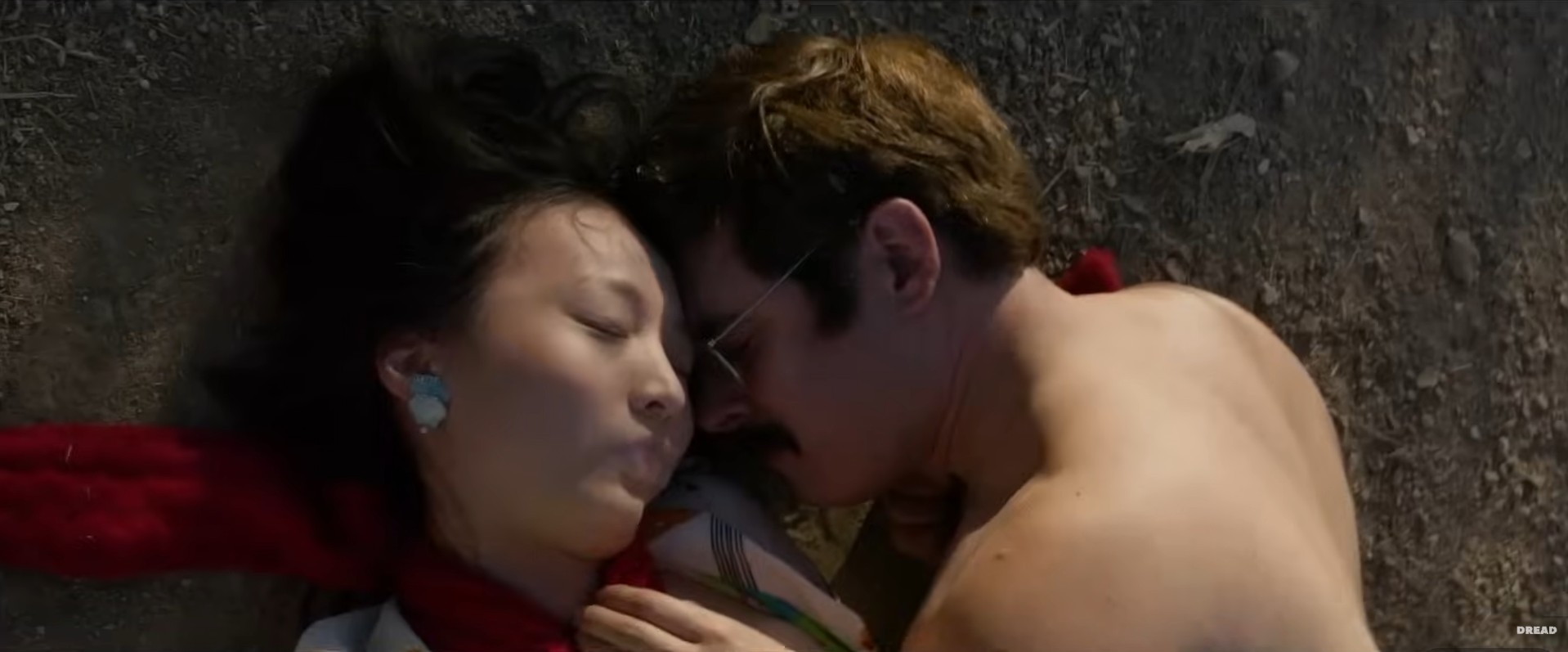
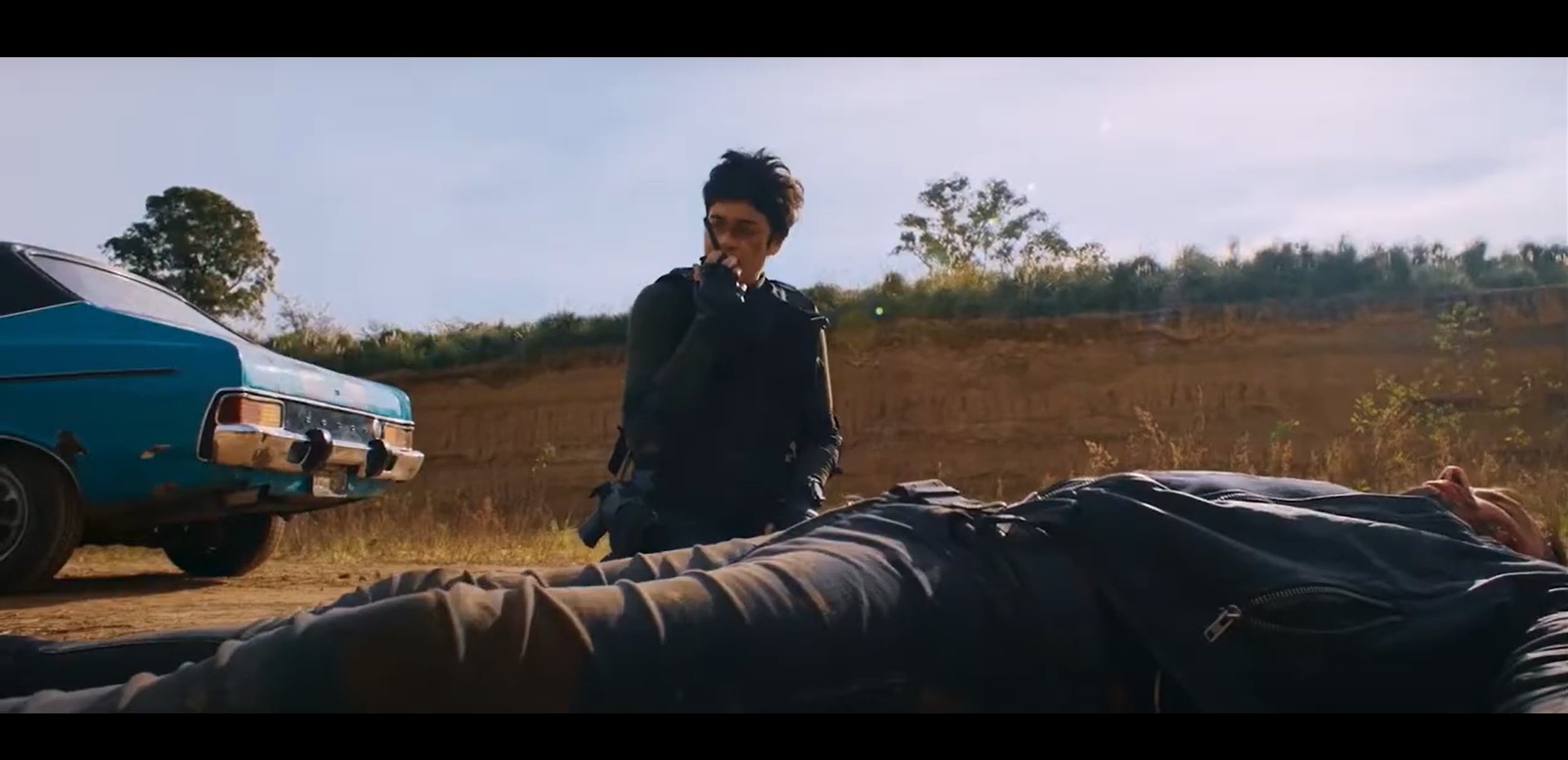
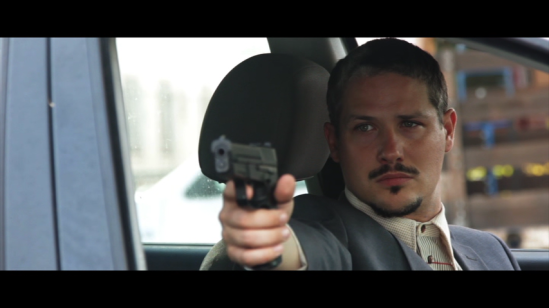
Diego, an imperial member of a hooligan gang dedicated to a fútbol club, sits and waits in a car in the middle of nowhere and listening in on a radio quiz show about his club’s sport where contestants can win $200,000 if they answer the questions correctly.  Having more knowledge than any run-of-the-mill caller, Diego rings up the radio station and passes easily to the next round, providing him a chance to win the jackpot once he passes the two more rounds he’ll be called upon to answer later in the day.  After hanging up, a man falls from the sky and lands dead on the hood of his car, a plane crashes in the distance, and a combat ready agent parachutes down and points a gun directly at him.  When brought around to his trunk, a tied-up man lies inside seemingly knowing the armed agent.  Two illegitimate jobs collide and go sideways when one faction underestimates the other in a fiery dance of fists, bullets, and explosions between hooligans, gangers, and law enforcement. 

A pulpy crime comedy-thriller tapped from the same snappy, vicious vein as such film as Guy Ritchie’s “Lock Stock and Two Smoking Barrels, David Fincher’s “Fight Club,” and Joe Canrnahan’s “Smokin’ Aces,” this Argentinian-produced, writhing black comedy titled “Punto Rojo,” translated to English to “Red Point,” is written-and-directed by “Necrophobia 3D” writer Nicanor Loreti, credited as Nic Loreti.  The 2023 film delivers eclectic, colorful characters, a contortioned, nonlinear narrative, and has knockaround and kick it in the teeth clout told partly in a violence-laden flashback fashion.  Loreti self produces the crassly club leitmotif and high level-level compositional film alongside Damian Loreti, Lucas Accardo, and Orlana Castro under the product flags of Boitkot Films, Otto Films, and the government nationalized INCAA, the National Institute of Film and Audiovisual Arts. 

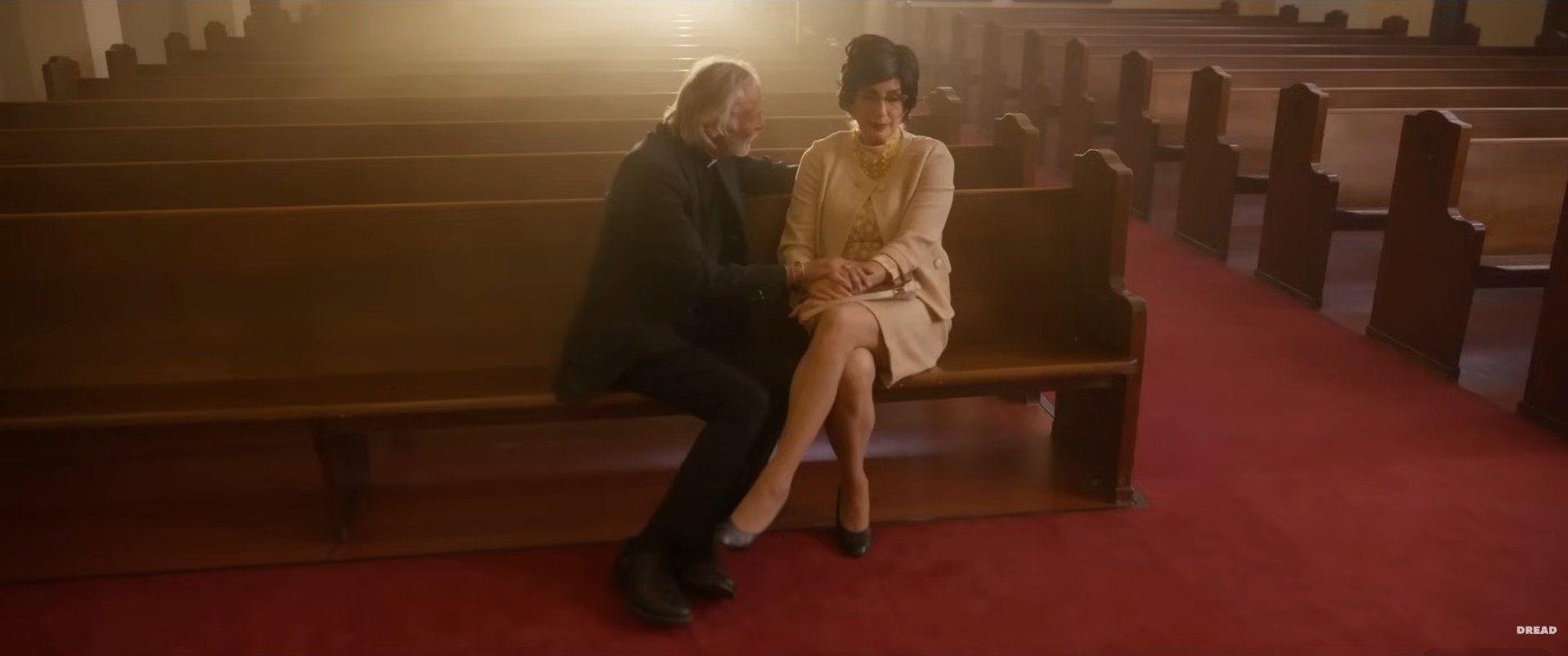
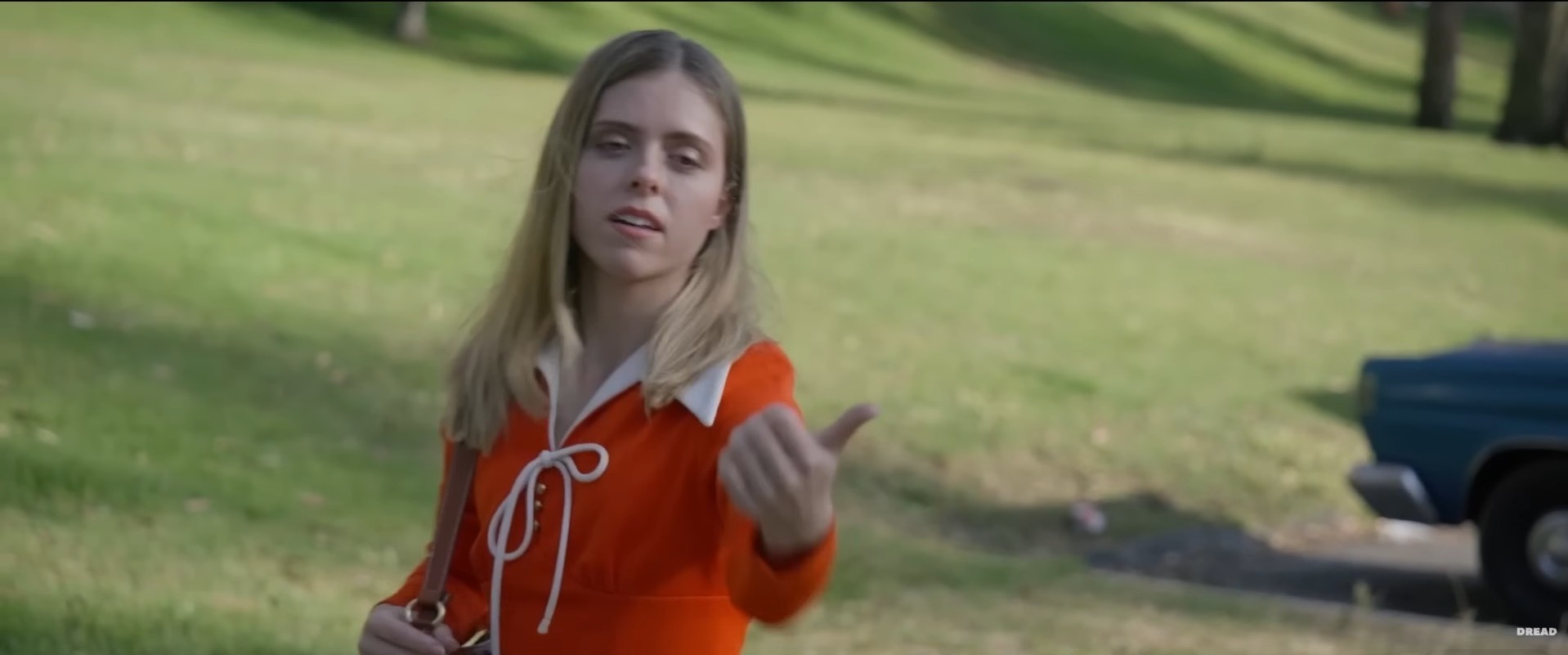
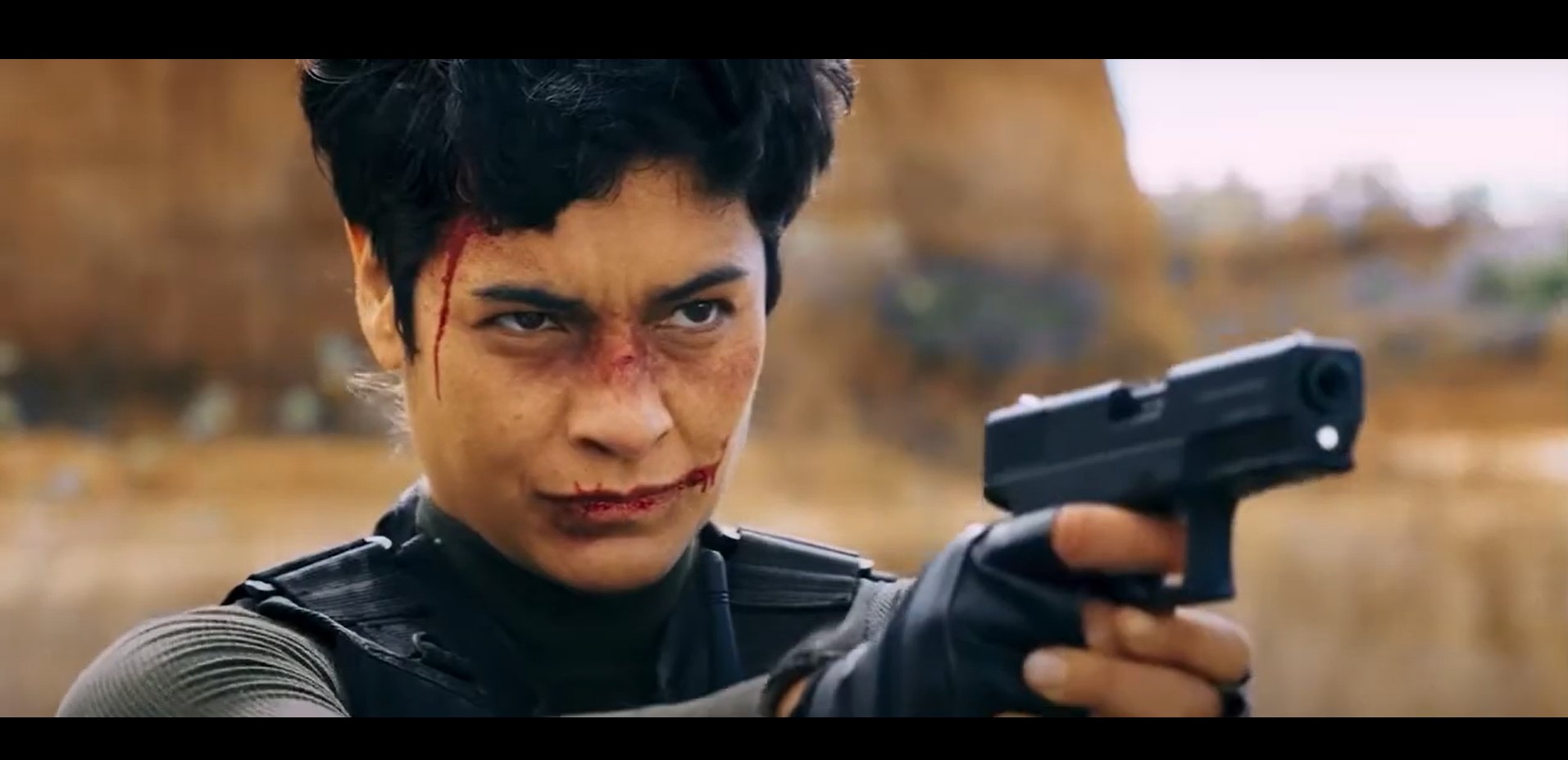
“Punto Rojo” begins quietly enough with Diego, played by the ruggedly intense features of Demián Salomón (“Terrified,” “Satanic Hispanics”), car sitting alone in, you guessed it, Red Point, a pediplain-esque area with not a soul surrounding him.  That is until a sleek, aero-suited skydiver crashes onto the hood ruins his euphoric fun of scoring first run success on-air of a radio quiz show.  Salomón dually presents the brutish outward appearing Diego as one-dimensional until he’s face-to-face with Paula, an Interpol officer also dressed in a sleek, skydiver area-suit and sporting a pixie cut from Mariana Anghileri (“On the 3rd Day”), then Diego’s simplicity turns complex in a more than meets the eye rough and tumble character pitted to hold his own in a brief cat-and-mouse game against an Interpol agent whose worked months, if not years, undercover to take down a high-powered criminal organization transporting a characterized atomic bomb.  Diego turns into one of those takes a hit and keeps on ticking tough guys as Paula has to work out and resolving the crumbling operation at hand.  Anghileri can act tough, be tough, and look tough during an operation gone awry and while both Diego and Paula square off in an advantage taking tit-for-tat, they’re unknowingly intertwined and sequestered by two different reasons that makes their fighting comically, and brutally, erroneous unfounded.   “Punto Rojo” fills out the cast with Juan Paolomino, Matías Lértora, Paula Manzone, and Pablo Sala.

While not based on the Argentinian comic book series of the same name, penned by Fernando Calvi, and published by Totem Comics, one can’t help believe Calvi’s metaphysical superhero somehow slipped in and brushed a bit of influence upon Nic Loreti’s pulpy design that sees screen filling, voulou text, brief live scene-to-comic transformative illustration filters, and, of course, the absurd ultraviolence that allows for a great deal of forgiving punishment in the name of entertainment value.  The nonlinear narrative told through a couple of extended flashbacks fills in the first acts’ gaps mechanized by an all-in-one, up-to-speed process to fully explain how and when the two lead principals came to meet but then suddenly becomes muddled when the patiently and systematically cared for first two acts hastily unfolds by the rapid fire ending that doesn’t have an ounce, or even a chance for, coherency.  The ending almost resembles the unfortunate process of an unfinished film that is quickly cut for wrapping and presentation as a last-ditch effort to accrue a pocket change profit from the investment and the crude finale is cheaply glued together, pieced slapdashedly, and arranged with crisscross confusion.  The ending also drops that comic book style used early on, bringing the integrated audio score combined to flex with the enlarged, ostentatious text and vivid panache to a grinding halt against what could have been a stellar ending from the short-lived laid out and shocking material we do get to experience.  By no means is “Punto Rojo” a bad story, just mixed up technically and arranged, and that hurts the viewership the most when an intriguing, weaving concept falls short of expectations. 

MVD Visual brings this South American quagmire of a story Stateside with a new Blu-ray release. The AVC encoded, 1080p high-definition, BD25, presented in an anamorphic 2.39:1 aspect ratio, captures in full frame Loreti’s long shots held in landscape view without a touch of grading to betone the natural exterior features. Mariano Suárez (“When Evil Lurks”) works the camera angles, dollies, cranes, and, I suspect, drones to blueprint and definition an extremely near sea of brown and tan around the more thrilling elements, such as the characters, that bring the drab set to life with a pop of color. No real issues with compression as the quality in color and, aside from the superimposed, gimcrack plane explosion, details remain unwavering, to which to also note that black levels, and there are many in flashbacks, render a solid inky darkness. The Spanish language audio options come in two lossless formats: a DTS-HD master audio 5.1 and a LPCM 2.0 stereo. The infusion of Pablo Sala’s (“Witch”) guttural guitar notes into the opening and closing credits, as well as isolated and detached to denote significant plot points, has potency inside the channels, as well as having a pleasantly diversifying grating of our ears, but never insidious replaces or missteps into the dialogue’s solid top track amongst the variable fray of explosions, skirmishes, and thematic atmospherics of the setting that do slither into the right auditory fields. Option subtitles are available and are timely moderately well with only a single mistake noted. Special features include Nic Loreti’s short film “Pinball” and the original theatrical trailer, both in high-definition. In the audio options, director Nic Loreti and producer Lucas Accardo’s English commentary can be sourced for more feature-length insight. Coming in a standard Blu-ray Amary case, the mesh screen-topped, blood red graded cover lacks that format fixation for marketability but gets the point across of the principal players involved in the fracas. The disc is pressed with a cropped version of the front cover and there is no insert included. The region free MVD Visual release comes not rated and has a runtime of 80 minutes.

Last Rites: Good start, bad finish. “Punto Rojo” lurid charisma out the gate lures audiences into a world of deceit, action, and violence that promises a backfill to fulfill a middle-of-the-story beginning; however, the climatic bomb dropped on us, or rather U.S., had no time to dissolve into our nervous system and what “Punto Rojo” greatly constructs with its economic desperation and black humor is quickly demolished in a blink of an eye in the sky.

“Punto Rojo” on MVD Visual Blu-ray!

EVIL Slums In The Company of Others. “Hausen” reviewed! (Sky Atlantic / Eps. 1-4 / Digital Screeners)

Jaschek moves into a property supervisor position of a slum housing complex with his 16-year-old son, Juri, after the tragic fiery death of his wife. Trying to rebuild and rebound on what’s left of his and his son’s life and waiting for the insurance money to pay out, Jascheck tends to the decrepit building maintenance and, over time, meeting the cold, strung out, and peculiar tenants while Juri attends school and becomes interested with the building’s discretionary drug pushing youths. When a young couple’s baby goes missing, the mysterious disappearance motivates Juri into an investigation, leading his curiosity to discover that the building itself, and the insidious sludge that oozes nearly from every crevice, feeds on the suffering and pain of the inhabitants.

When a black, wet stain on the wall embodies a biological presence of asexual spores and elicits the instinctual first thought of alarm sounding bells ringing to back away in your mind, this is how Till Kleinert and Anna Stoeva injects fear and biotic crud with their new horror television series, “Hausen.” It’s Bloggin’ Evil got to sample the first four episodes of the German 8-episode series that showcases director Thomas Stuber’s dank complexion of anthropomorphized leeching of the lower class, filmed partially inside an East Germany, 20 plus year abandoned hospital, once known as the GDR Hospital, located in Berlin. Kleinert is the writer and director of 2014’s “Der Samurai,” pulling from his film the lingering disembodied or dreamlike and integrating that surrealism imagery for the new series, and collaborates with first time writer, long time producer Anna Stoeva, one half of the boutique film production company, Tanuki Films. “Hausen” is a production of the Berlin-based company Lago Film, who co-coordinated the production on David Cronenberg’s “A Dangerous Method,” under department head, producer Marco Mehlitz.

“Hausen” primarily focuses around a reestablishing father and son, Jaschek and Juri, after a tragic house fire that claimed the life of Juri’s mother. The series starts off with the two driving up to the housing complex and breaking themselves right away into a runaway rundown building that needs more than just a sprucing up. “Transporter: The Series'” Charly Hübner plays the handy father, Jaschek, with non-expressive can-do attitude that becomes a block of interrelation between him and his son Juri in another unreadable performance from Tristan Göbel of Lago Film’s “Goodbye Berlin. That inexpression is the intentional tone of “Hausen’s” entire cast of tenant characters who float through a barely-living existence, most living grubbily, few living in humble comfort, but all being exploited by the organic narcotic that’s living, breathing, and striving from the inhabitant suffering. Hübner and Göbel impassively shepherd along the story along that introduces new characters into new episodes that digs deeper into the complex’s black, oozy, heart symbiotically connected to a caretaker known as Kater, the very first character Juri and Jaschek meet upon arriving at the building for the first time. The autodidact Alexander Scheer touts an unkempt, dirtied, and made to look like a complete hobo in Kater who, unlike his onscreen cohorts, vitalizes the screen with wild-eye expressions and an unsurmountable jocularity and puckish wit. The series rounds out with stars Lilith Stangenberg (“Bloodsuckers – A Marxist Vampire Comedy”), Stefan Haschke (“Krabat and the Legend of the Satanic Mill”), Daniel Sträßer, and Andrea Guo.

“Hausen’s” intended aloof pulse courses consistently throughout, at least in the first four episodes, that piece together and induce layers of grayscale personalities that have been cross affected by the building’s malevolent life force and the subjugating delinquent class that feel no need to make their surroundings better as their stuck in a vicious cycle rut of drugs and despondency. “Hausen” allegorically uses horror to intensify the already tragic aspects of corrupted ethical life choices people make when drugs are prioritized as more important than others and even their own lives. The first episode features a young couple with an infant and as they attempt to stay clean and withhold what little money saved for a new and better apartment, the building reacts by taking measures in the form of tormenting the husband’s brittle sobriety as he’s caring for the baby alone. He passes out and wakes to find the familiar narcotic he can’t seem to escape on his person. The scene mirrors good intentions of abusers who fall into withdraw with the withdraws being symbolically displayed as the building’s evil doings to keep the pain profit flowing. Overall, “Hausen” drips with underbelly exploitation that doesn’t stop with just the adverse, malignant housing as it spreads into Juri and Jaschek’s tense relationship and into the ounce of good left inside them, fleshed out in scenes that become a crossroad of choices where choice A) is to do the worst thing possible to compromise the smidgen of hope left or choice B) to reserve themselves into taking the harder, but good moral standing, road and work at rekindling a tattered bond that would go against everything the “Hausen” has thrown at them.

A skyscraper of bleak and austere horror, “Hausen” houses a slick secretion of mystery in every crevice. The Sky Germany produced horrifying mystery-thriller is now out in the UK on Sky Germany’s sister-programming, Sky Atlantic. A statically lit doom and gloom scenes never venture away from the tinted battleship gray and blue color scheme that goes hand-and-hand with a cleaned up GDR hospital shots from cinematographer, Peter Matjasko, that’s reminiscent of David Fincher films = think “Alien 3” but with way less yellows. The black sludge is a satisfying unnatural pigment of midnight black that contrasts nicely against said tinted lens coloring, providing a catheter of continuously streaming tenebrosity. We’ll have to wait and see how Juri, Jaschek, and the rest of the tenants fair in the last four episodes that shafted us with a plummeting cliffhanger midway through and, hopefully, ItsBlogginEvil.com can provide more coverage on the unnerving new television series that will put a stain your soul.

EVIL Exploits Your Fears in “Phobic” reviewed! (Samuel Goldwyn Films / Digital Screener)

The most vulnerable are being chained to chairs and tortured by the terrifying weight of their own extreme phobias until their bodies can no longer take the stress, fatally collapsing where they sit due to heart failure.  Homicide detective Riley Sanders notices frightening similarities to her own abduction months earlier where the kidnapper tortures the stunned detective with an intense light on repeater.   Refusing to believe her abduction and the case she’s investigating are linked, her partner, Paul Carr, continues to insist that her traumatic experience might be key to solving the homicides and finding the killer.  As the detectives dig deeper into a radical psychiatrist’s phobia program whose patients are showing up the killer’s victim list, they find themselves at the center of a disturbing experiment that aims unleash an inner, and only ever theorized, phenomenal ability.

Bryce Clark’s psychological cop thriller, “Phobic,” tales an irregular and irrational serial killer objective derivative of David Fincher’s “Seven” twisted quietly with elements from the superhero universe. Darkly toned exploitation of forcing the worst of the worst fears upon the those already cripple down by their distinct aversion, the 2017 shot “Phobic” marks the return of a Clark written and directed full length feature since the filmmaker’s 2012 debut in both categories with a romantic-comedy starring Mischa Barton.  Both polar opposite films were shot on location in Salt Lake City, Utah, Clark’s residential city, surrounded by picturesque ice capped mountains overlooking the illuminated, pedestrian-saturated metropolitan area home to the story’s wicked psychotronic experiment that literally frightens people to death.  “Phobic’ is a production of Storylab and Pale Moon Entertainment.

Two detectives continue to peel back the arcane layers of the unusual case before them with detective Riley Sanders at the heart of the matter being linked to the recent string of methodical abductions tailored specifically with the victim.  “Looking Glass” actress Jacque Gray dichotomizes Riley not only as a persistent investigator eager to bring this case to an end but also as a struggling closeted neurotic with her own fears that bleed through the celluloid.  Clark makes sure to underscore Riley’s nightly routine before going to bed with her constantly turning on and off lights in her path to represent a lingering but indeterminate phobia response.  Riley is supposed to be this tough, but law abiding cop, who survived a harrowing ordeal, but Gray hardly expresses Riley’s scarred rigid soul, representing more so in the lines of coloring her disposition by the numbers that refuse to waiver outside normalcy.  Devin Liljenquist is even more so vanilla as Riley’s partner, Paul.  As his introductory feature film, Liljenquist’s doesn’t carry the range of a cop who cares, topping out with a straight-faced sleepwalk that challenges the stakes and can be considerably creepy, like subtly sexual grooming predator, when Paul is trying to convince Riley to open her fears with him.  The character audiences deserved, or better suited as Riley’s partner to provide contrast, would have been the third scarcely screened detective on the case that occasionally popped in as the first investigator on scene of a crime in Alex Nibley’s Detective Hank Ferry.  The slightly elder detective, complete with Nibley’s stark white, Anderson Cooper hairstyle, had a quick, dark wit and cavalier presence about him that breached the Riley and Paul uncharismatic stiffness with a relieving change of pace dynamics between colleagues.  You couldn’t wait to see Detective Ferry to make a reappearance, but sadly, his character is sorely underutilized for only a couple of moments.  “Phobic’s” in-and-out supporting cast includes James Jamison, Tiffani DiGregorio, Fred Spencer, and Ernie Lively as Riley Sanders secret-keeping father.

“Phobic” follows a basic detective thriller in tracking down a homicidal maniac with a niche kill tactic that bread crumbs one of the investigating officers into being subverted by a conflict of interest stemmed from her past. However, out of Salt Lake City’s blue skies, Clark suddenly pivots in his script, diverting from a dark, gritty Finchian narrative to an acutely forged new shape of revival and hope, a shape that bares no cape, no mask, or no bald, psychic power yielding man bound to a wheelchair playing headmaster of a school that serves as a façade for an elite team of powerful, do good mutants. If my hint wasn’t overly blunt, let me be utterly clear, “Phobic” has no distinct x-factor but goes from fears to fight with the psychotronic theory where energy and strength derive from stress and fear over the witnessing the impending doom of a loved one. Urban legend surrounding the notion of hysterical strength siphons away the psychosomatic element from the grooves of the cop thriller and Clark copiously throws in crucial red herrings to keep viewers muddling and not Professor X cerebral filling in the gaps unraveling an unlikely and unrealistic prospect of superhuman truth, but “Phobic’s” off-the-cuff pivot is a quick to squander all that’s been built in what’s essentially Bryce Clark’s house of cards to discombobulate an audience with polarizing story principles, rebranding an assayed horror-thriller into rabid conceit.


Easily one of the most idiosyncratic and unanticipated films of 2020, “Phobic” induced fear into audiences panic-stricken hearts this past December 15th onto multiple digital platforms courtesy of Samuel Goldwyn Films, the distributor that brought you “Daniel Isn’t Real” and “Pet.” Brandon Christensen’s tenebrous cinematography is shot on a 6k red epic dragon with ultra definition displaying full range of details in every scene and despite the somber tones created by a slew of gaffer up lighting, we get some really rich natural coloring, even in the baby blue eyes of Ernie Lively, when Christensen isn’t blue or red tinting the lens to underscore the killer’s aftermath crime scene. While the cinematography is good, the editing can be pestilent expression of style to represent Riley’s sporadic and continuous reliving of a reoccurring memory. The stock score is just that set on autoplay for nearly the length of the 81 minute runtime with engineered eruptions in the pitch to denote the jump scares. There were no bonus features included with the digital screener nor were there any bonus scenes during or after the credits. The bland acting hurts “Phobic’s” exploration of the psychological symbiotic energies between that of the mind and body, but the film boils down to have a fascinating perspective on the detective thriller by reshaping the surface with bold expectations of an uncharacteristic, dormant fear free all.

Own or Rent “Phobic” by Clicking the Poster!

Time Travel to an Evil Future! “Counter Clockwise” review!

vlcsnap-00001
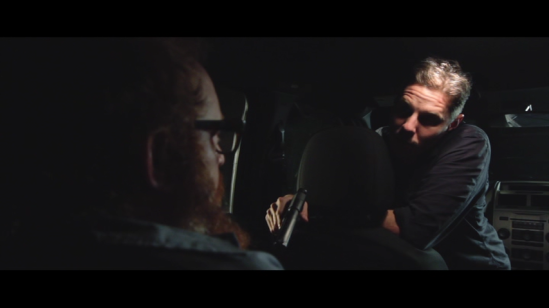
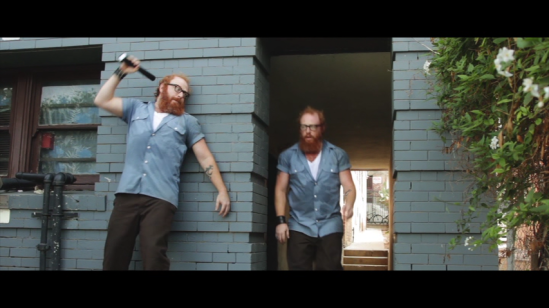
Ethan Walker is a brilliant scientific engineer, though he doesn’t look it with his long fire-hued beard and pot-belly midsection, but Walker, along with his colleague, believe to have accomplished the impossible: teleportation. When Walker decides to try his machine on himself, the realization of something terribly wrong overwhelms him. Walker didn’t invent a teleporter, he accidentally constructed a time machine, sending himself six months into a grim future where his wife and sister have been brutally murdered and he’s the sole prime suspect. The only way to make sense of the future and to solve the crime against him is to travel back to the past multiple times to unravel a sinister plot and stop the murder of those close to him.
vlcsnap-00002
To simply and conventionally tagline “Counter Clockwise,” George Moise’s 2015 directorial debut can easily be described as Terry Gilliam meets David Fincher. Part sci-fi thriller part dark comedy, the adventure of Ethan’s misadventures ingeniously signifies a harsh outlook on the saltiness of our predetermined universe while encountering outrageous and weird characters along the time warp. Ethan, no matter what he does or how he does it, has to use the accidental time machine to thwart the brutal death of his wife and sister and while his reasoning sounds fairly comical being the groundwork of what Albert Einstein calls madness, on-screen it’s rather heartbreaking and tragic to see this guy, an everyday looking joe, desperately attempt to deconstruct, from the unsolicited help of his future selves, a dastardly plot that will destroy everything he holds dear.
vlcsnap-00003
Penned also by George Moise, based off a story by brother Walter Moise, along with the film’s lead star, Ethan himself, Michael Kopelow, “Counter Clockwise” will change the way critics will perceive time travel storylines by not as a means of zipping back only once to change the forsaken past, but as a respawning Shakespearean tale of tragedy in order to continue to amend a hapless situation. A respawned Super Mario had more luck saving Princess Peach through the thicket of Koopa Troopas and the fire breathing Bowser. Though the character Ethan repeats his voyage, the way “Counter Clockwise” is written doesn’t convolute itself in the repetition, staging clues as a window into beyond the present and generating eerie and problematic, if seriously disturbed, episodes that doesn’t give Ethan a minute from tirelessly being objective. Combine those elements with George Moise’s neurotic direction and the result seizes to capture not only science fiction aficionados, but movie enthusiasts of every category in this genre-breaking feature. From the first moment of the opening scene, a strong familiar inkling of Ridley Scott’s “Alien” washes over you; the subtle hum of machinery, the slow panning from side-to-side, the very soft touch George Moise applies is uncanny and so endearingly respectful that the direction doesn’t feel like an absolute rip of Scott’s 1979 space horror classic.
vlcsnap-00004
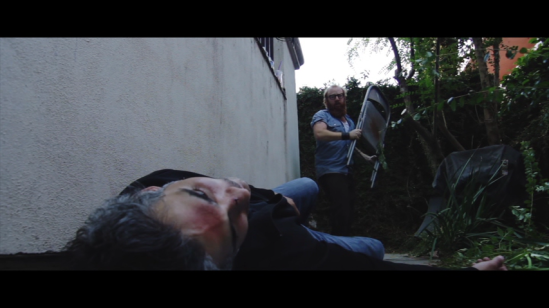
Kopelow is the centerpiece that glues the story whole. As Ethan, Kopelow’s gentle giant approach is such a stark contrast to the surrounding darkness that has embodied nearly every other location and character, even his lip flapping, hard loving mother. Extreme opposite on the polar spectrum is voice actor Frank Simms as Roman, head of major corporation aiming to steal pioneered technology from Ethan at any cost. Simms’ talent has two settings in this film, hot and cold; his sound binary method works to composite a character so reasonably rational that when Roman snaps, a trickle of pee squeezes out and runs down your leg at his abrupt and menacing counter personality. The rest of the cast follows suit with pinpoint precision on their coinciding characters and even the eccentric cameo performances were otherworldly good from Chris Hampton’s relishing water fountain patron to Marty Vites one-eyed creepy landlord. Ethan’s landed in bizarre world that hums a very familiar tune in Terry Gilliam’s “Fear and Loathing in Las Vegas” while the amount of downbeat content spurs moments of gritty David Fincher thrillers, especially in one particular scene with the brawny New Jersey native Bruno Amato being the ultimate bad guy henchman by raping a dead woman for spite and for pleasure. The cast fills out with Devon Ogden, Kerry Knuppe, Joy Rinaldi, Alice Rietveld, and Caleb Brown.
vlcsnap-00006
The Sex Scene Crew production, “Counter Clockwise,” is not an effects driven project. The indie sci-fi film relies on the trio of coordination efforts in refined editing, camera angles, and practical effects to deliver the intended message. Like I said before, George Moise is neurotic, providing the attention and detail to every scene as if a climatic money shot. Value is placed in the story and in the direction rather than diluting and cheapening with overrated, big budget computer generated special effects that can snap a film’s heart and soul like a thin twig. The biggest effect comes in the form of a composite, placing two Ethans in the same scene and working action off each other. Even the time traveling sequences are a basic edit that’s well timed with simple lighting techniques, gentrifying low budget films more toward a respectable level of filmmaking.
vlcsnap-00007
Artsploitation Films’ DVD release of “Counter Clockwise” is an edgy rip in space time continuum sci-fi thriller presented in a widescreen 2.35:1 aspect ratio with Dolby Digital 5.1 surround sound audio option. Image quality pars well with modern releases and the same can be said about the audio, especially with the prevalent dialogue. Aside from conventional specs, Moise adds a sensory surplus to stimulate sight and sound hell-bent to strike an unnerving chord strummed simultaneously with providing an awesomely surreal effect. The DVD contains bonus features include “The Making of Counter Clockwise featurette, going behind the scenes of pre-production, production, and post-production. There are also five deleted scenes with commentary and a trio of commentary tracks that include the director, director and editor, and director and co-writer. “Counter Clockwise” is 91 minutes of time hopping suspense, packed with adversity and pitch black humor from start to finish and finish to start.

Click Above to Time Travel to Amazon and Buy this Title Today! (And not six months from now…)