Mother Russia’s Most EVIL Serial Killer is “Evilenko” reviewed! (Unearthed Films / Limited Collector’s Edition 4K UHD and Blu-ray)

Limited Collector’s Edition 4K and Blu-ray Available Here!

Kyiv, 1984 – An aging schoolteacher named Andrej Evilenko is stuck in Josef Stalin’s quickly dwindling sociopolitical communism party and finds himself dismissed from the school after being accused of attempted rape of one of his preteen students.  His release from vocation obligates him to write letters to the Communist party still clinging to control and from those letters comes a job with the KGB under the guise of a railroad inspector.  Evilenko’s empowerment by the party drives his dangerous urges to rape, kill, and cannibalize women and children over years around Kyiv and Crimea, using his position of inspector to travel.  In 1987, Magistrate inspector, Vadim Lesiev, is assigned by the D.A. to hunt down the serial killer who has by then murdered over 30 victims.  Over the course of the next eight years, Lesiev finds himself chasing his tail and fearing for his own family’s safety against a monster that has all of Kyiv frightened. 

Based off the true crime story of notorious Soviet Russian serial killer Andrei Chikatilo, “Evilenko” tells the fantastically frightful tale of the real “Butcher of Rostov” who did confess and was convicted for rape, murder, and the cannibalization of 52 young women and children, of both sexes, from 1978 to 1990.  The Italian-English production is spearheaded by Italian filmmaker David Grieco who directs the film as well as supplies the story’s base material from his own semi-biographical novel on Andrej Chiktilo, entitled “The Communist Who Ate Children” (“Il comunista che mangiava i bambini”).  Grieco, the son of the of the founding members of the Communist party, finds a financial means to produce a visual adaptation from Britain’s Pacific Pictures consisting of Michael Cowan and Jason Plette of “Killer Tongue” and produced by Italy’s Mario Cotone (“Malena”), representing the MiBAC, the Italian Ministry of Cultural Activity.
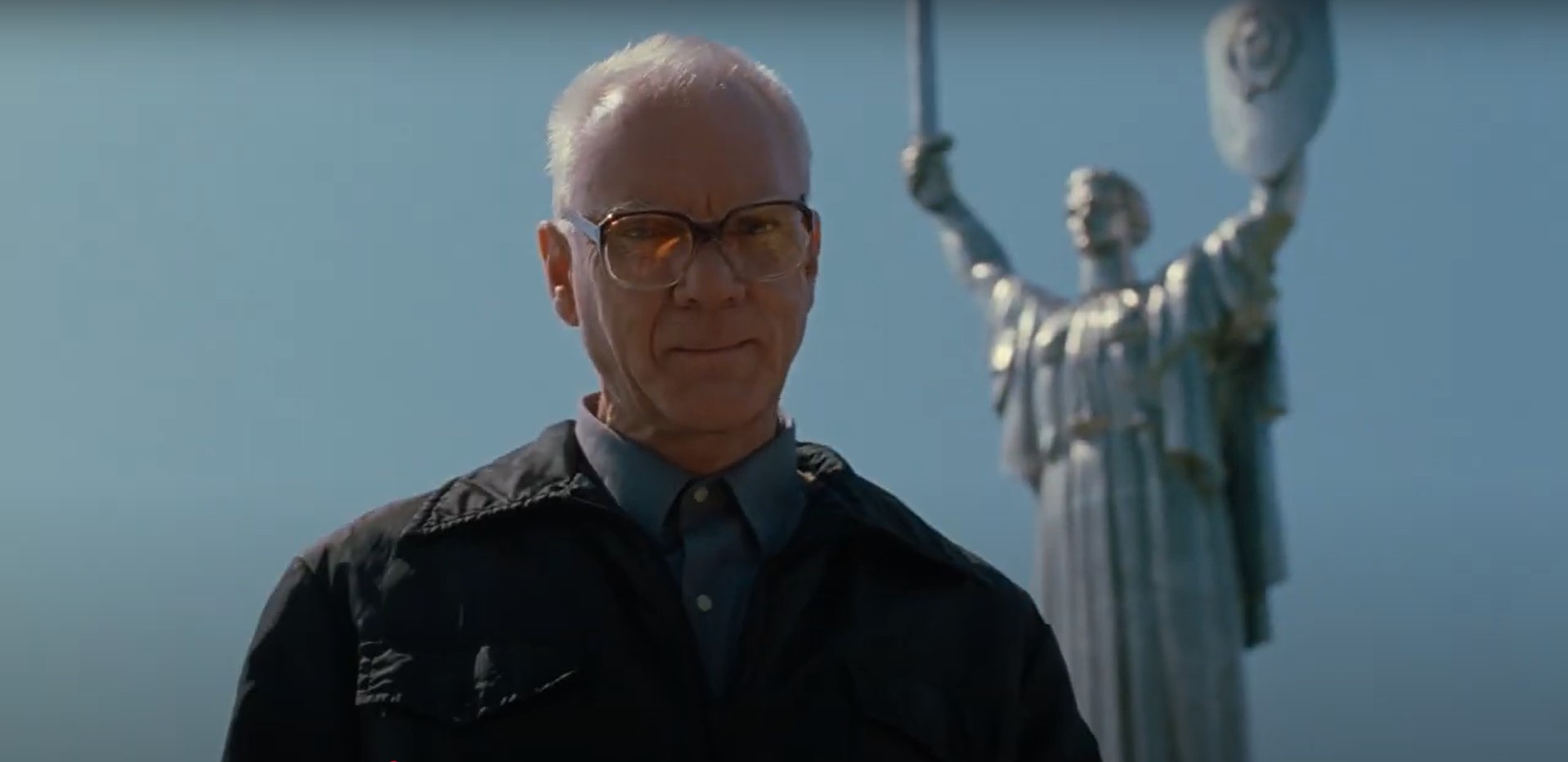
Who better than to portray a variant of the child molesting, murdering, and eating Soviet Andrej Chikatilo than Malcolm McDowell, the British actor who is no stranger to controversial films and performances having the lead roles in both Stanley Kubrick’s celebrated violence in a dystopian society in “A Clockwork Orange” and in the pornography spliced infiltrated titular performance film of the sultry period drama “Caligula.”  Being older and wiser doesn’t phase McDowell to shy away from committing to difficult scenes involving minor aged costars, especially scenes with sexually ambiguous dialogue and being pants less while speaking it, and while not a physically demanding role for McDowell nor is it filled with the intense-eyed actor’s usual fiery fervor, but in the shoes of Evilenko, he nails down the real serial killer Chikatilo’s exterior appearance, despite attempting to make McDowell appear younger with just only a wig to convince audiences of the 20-year span in the story, and touches upon the oddities and the quirks that make Chikatilo a delusionally faithful comrade, justified by his own investment into the communist party.  Evilenko’s archnemesis comes in the form of district attorney magistrate investigator Vadim Lesiev, played by the underutilized New Zealand born actor Marton Csokas (“Lord of the Rings,” “Cuckoo”).  “Evilenko” is clearly the Malcolm McDowell show but Csokas gives his all to a man not only doing his duty as an official of the Russian pervading prosecution but also as a family man haunted by his inadequacies and his inabilities to catch the perverted serial killer that might just strike close to home, putting Lesiev on edge with that nagging worriment.  Grieco’s editing and story development greatly undercurrent Csoka’s motivations and plights, distorting his complexities to a minor key of his true self, and letting McDowell have free reign over his subsidiary counterpart.   Yet, neither character is fleshed out definitively, none to compel a reason for their idiosyncratic methods and behaviors, which goes hand-in-hand with the purgatorial editing that is loose with the timeframe.  Ruby Krammer (“Alien Exorcism”), Frances Barber (“Superstitition”), Vladimir Levitskiy, Ihor Ciszkewycz, John Benfield (“Hitler’s S.S.:  Portrait in Evil”), and Ronald Pickup (“Zulu Dawn”) as a psychotherapist assisting tracking down the killer.  
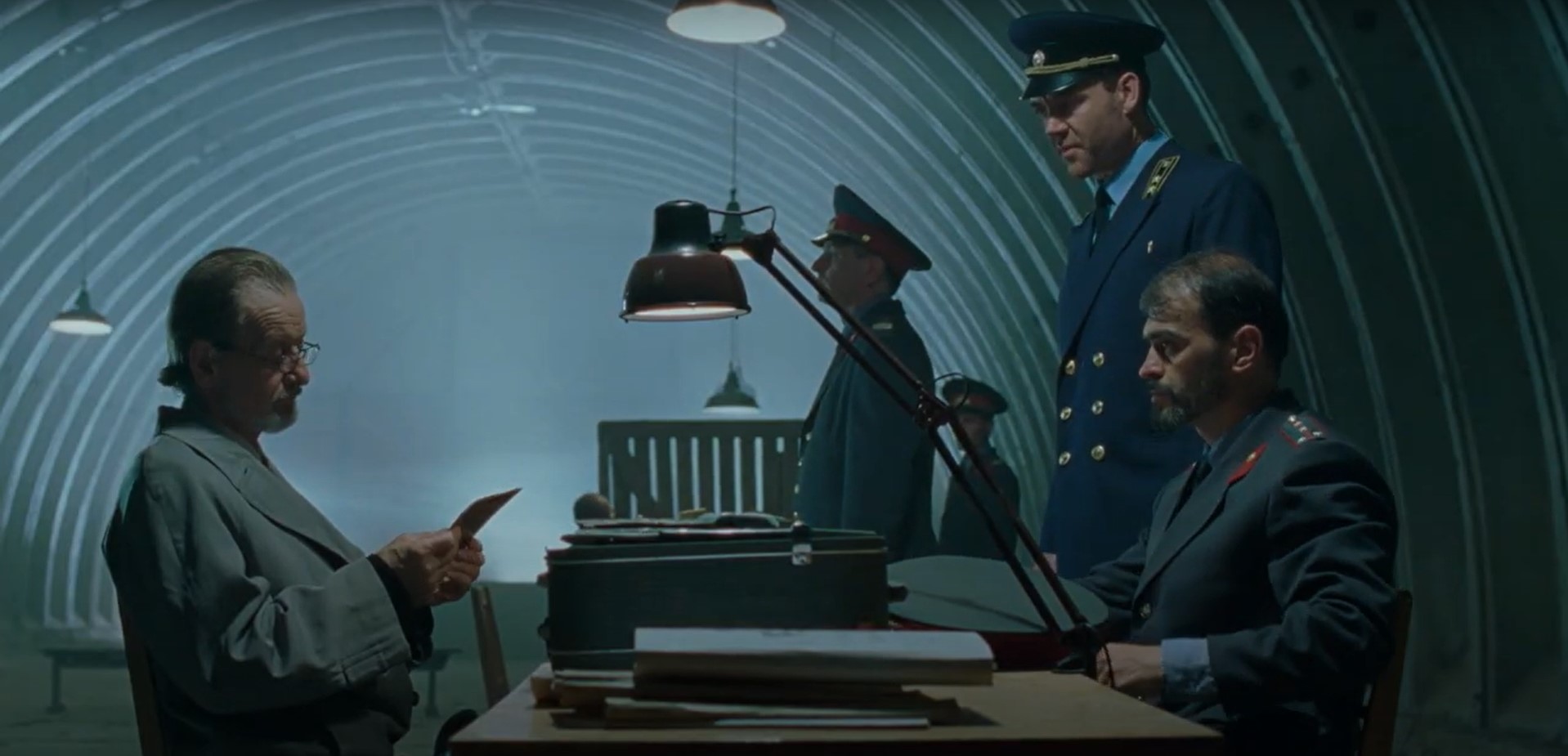
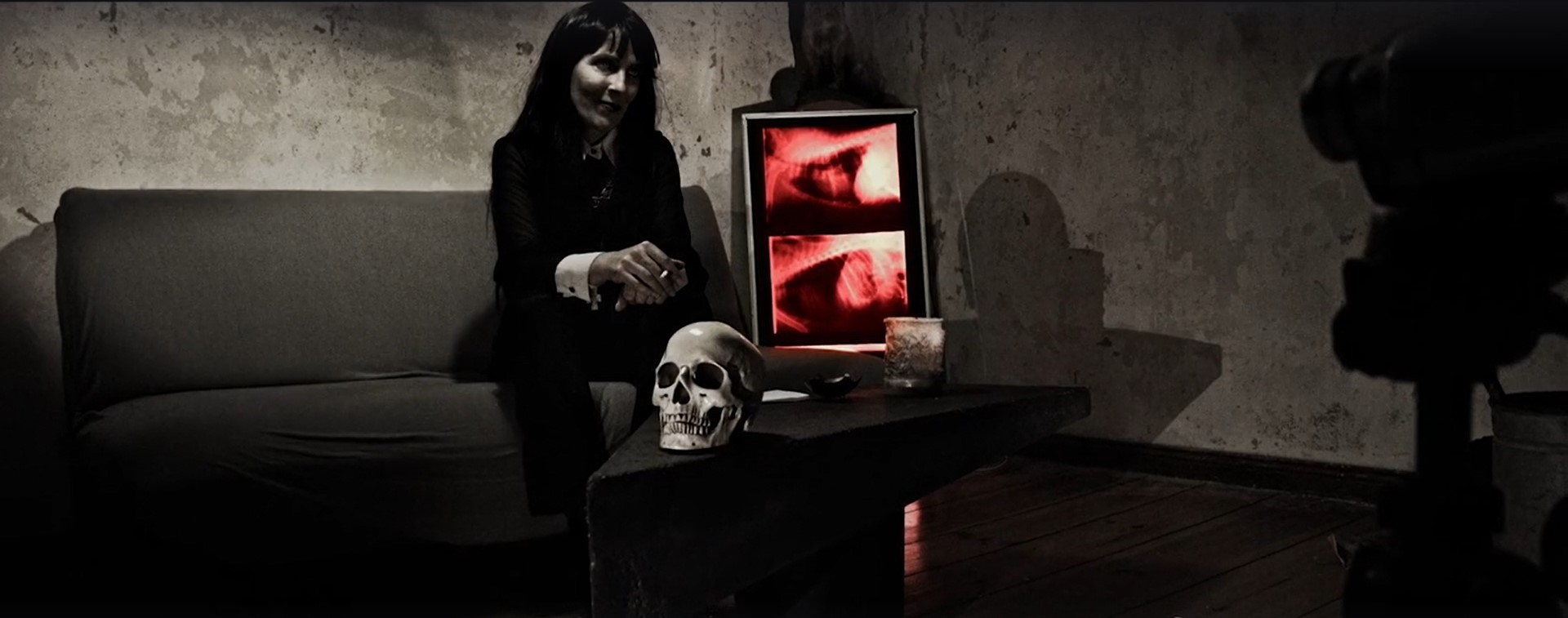
As much as the Grieco and McDowell dynamic works to monstrously depict a coldhearted and crafty serial killer coupled with a sliver of slithering supernatural propensities to lure women and children in a fixed trance or, in more conventional means, into doing what he wants with an spellbinding combination of stares, manipulative conversation, or just overall emitting a towering communist cloud of authority, “Evilenko” is deflated by the story’s time lapsing.  Opening with Kyiv 1984 and then subsequently in Crimea five years later in 1989, the noting of years or periods is hereafter eliminated from the narrative that becomes a back-and-forth yarn between a select of Evilenko’s pied piper lures and kills and magistrate Lesiev always behind the eightball pursuit of the elusive, unknown killer.  There’s a loss of sight on Lesiev’s psyche that is very important to the story and more so at the climatic interrogation scene where both men are stark-naked in a power and controlling situation that harks back to Evilenko’s mesmerizing tactics used against the adolescent prey and Lesiev’s fear and obsession of losing his family to what once was an uncatchable slaughterer who hallmarked with mutilation and devouring.  Grieco’s willingness to be grisly is tamer than the expected based off the prologue scenes of Evilenko exploiting and nearly raping a preteen girl but doesn’t take away the effect that the entire narrative arouses an uncomfortable experience teased to always be on the edge of overly graphic but never breaking that threshold; “Evilenko” is one of the biggest blue balls instigators is in last 20 years and that rush of not seeing or knowing can be more thrillingly charged for some than anything totally explicit ever could produce. 

Unearthed Films limited collector’s edition has 2-disc, dual format capacity with a 4K UHD and Blu-ray.  The second 4K UHD from the label, behind their release of “The Guyver,” solidifies the extreme horror company a player in the ultra high-definition game.  The New 4K transfer restoration of the original camera negative is HVEC encoded, presented in a widescreen 1.85:1 aspect ratio with 2160p UHD, on a massive three layered BD100.  The Blu-ray comes AVC encoded, 1080p high-definition, on a BD50, presented in the same aspect ratio.  What’s gathered from both presentations is that there’s nothing to fault them with as both excel to their max output abilities.  In fact, the transfers are pretty much identical, integrally achieved by digital optimization of an already optimized digital camera, a Sony PMWEX3 with 35mm adapters, which at that time was the bigger brother and flagship model of the Sony line.  A slight grading reduction instills a sense of austere or lackluster coloring that mocks a communist Russia veneer.  Close ups on McDowell’s unique features and the expound of particulars in the surroundings, especially when engulfed in leaf-covered and tree-thick woods, tell of the emerged details and textures in a higher pixel count.  An English DTS-HD 5.1 Master Audio is the sole mix available.  The back and side channels are essentially used sparing for a few flakes of brief ambient hubbub in what’s mostly a frontloaded conversational piece of mostly McDowell in one of his great monologuing moments. We get some nice oblong orchestral pieces from the late David Lynch regular composer Angelo Badalamenti (“Lost Highway,” “Twin Peaks”) that incorporates haunting harmonies and soft, ethereal vocals that play into the loss of innocence theme. Dialogue’s healthy and prominently favorable next to the unchallenged low ran range. English subtitles are available for selection. The BD100 offers only the feature, and a new commentary track with director/writer David Griece and star Malcolm McDowell while the Blu-ray offers the same commentary plus Evilenko Dossier: Andrei Chikatilo, the examination of the real killer against the onscreen rendition, cast and crew interviews with Grieco, McDowell, and Badalamenti, a photo gallery, and the original film trailer all within the bonus content of a fluid menu with Badalamenti’s and vocalist Dolores O’Riordan’s main track “Angels Go to Heaven.” The limited collector’s edition is housed in a cardboard slipcover of one of the many variants of Malcolm McDowells face slathered in soviet red. The black Amaray has the same cover art with no reversible cover. The discs are snap-locked in place on opposite sides, pressed with another slathered in red image pulled from powerful interrogation scene between Evilenko and Lesiev. Both formats are not rated, locked region A encoded, and have a runtime of 111 minutes.

Last Rites: “Evilenko” is a heavy story that needed to be told. You don’t hear much about the USSR vulnerability and the real-life serial killer had frightened the proud, the stoic, and the impoverished alike as “Evilenko” seers as a case study mental illness, is a metaphor for deteriorating Communism, and a tale too terrible to forget and despite some pacing issues and timeline infractions, Grieco and McDowell pull off a rather nasty semi-doc of one of the worst killers to ever live.

Limited Collector’s Edition 4K and Blu-ray Available Here!

Under an Urban Club Scene, EVIL Horrors Connect Us All. “Flesh City” reviewed! (Wild Eye Releasing / DVD)

“Flesh City” Yearns for Connection on DVD!

An insomnious city pulsates with an industrial soundtrack and claws cantankerously at denizens without pity. Under one of the raging night club scenes, enamored raver Vyren follows the beautifully alluring Loquette, an inspiring electronic DJ, down into the club’s labyrinth of old stone corridors. Their coquettish play becomes the monitored study of Professor Yagov, a glowingly cadent and mad experimenter of anthropology. The two lovers are drugged and abducted by the Yogav with the intent of genetic mutating the couple’s anatomy that renders Vyren’s hand displaced with a bulbous nub and Loquette impregnated with an ingestible sludge. What becomes of their affliction insidiously infects the entire city population with a flesh tentacle curling through the city’s underground sewer and drainpipe infrastructure in what amasses to a single connection of brain-invading techno-horror.

“Flesh City” annexes our individuality for the sake of connective solidarity conveyed in an electronically infused and alternatively aesthetic experimental film from Germany’s own jack of all independent media and artistic trades, Thorsten Fleisch. The 2019 released feature is Fleisch’s first and only written-and-directed full-length film depicting his feverish analog avant-garde, reflecting the filmmaker’s menagerie of orthodox-shredding short films, video art, and written and produced music. Overseeing “Flesh City’s” cinematography and special effects, Fleisch has complete and utter autonomy of the visuals to obtain a harshly discordant image melody edited together, which Fleisch also manages, into an agglomerate of acetic aesthetics to shock and stress the audio and visual cortexes. Once under the working titles of “Berlin Blood” and “Zyntrax: Symphony of Flesh,” “Flesh City” is entirely shot in Berlin, Germany, produced by the director and United Kingdom producers Arthur Patching and Christian Serritiello, and is a feature of Fleischfilm and Tropical Grey Features.

One of the film’s coproducers and musical artists, Christian Serritiello (“Streets of East L.A.”), is at the front lines of “Flesh City’s” afterthought cast of characters with Vryen as essentially the naïve and lured-in Alice chasing the white rabbit Loquette, played by Eva Ferox (“Love Songs for Scumbags”), down the twisted rabbit hole of a cellar dwelling doctor.  I say afterthought because the characters take a backseat to Fleisch’s contortion of reality and the analogical subtext generated by Fleisch’s love for analog anomalies, using them as supporting pawns to carry out his visceral vision of vitality.  Music videos, psychedelic montages, and grotesques images of beetles absorb screen time like formless or arthropodal principals.  Even Professor Yagov (Arthur Patching”) is obscured by a rainbow shimmer, never visually seeing his face as an individual seemingly between two dimensions.  “Flesh City” is a very multiverse, multidimensional nightmare-scape of unconventional color that has culminated from Fleisch’s imaginative idiosyncrasies over the years and that’s what being intently showcased here with more evident display of a less-character driven, shapeless story within the technical aspects of the DVD release where the soundtrack drowns the dialogue into a muffled deaf tone, like any good loud music venue would subdue.  “Flesh City’s” urbanites fill out with Marilena Netzker (“Love Songs for Scumbags”), Shaun Lawton (“Possession”), Denis Lyons (“German Angst”), Anthony Straeger (“Call of the Hunter”), Maria Hengge (“Love Songs for Scumbags”), Helena Prince (“12 Theses”), and Thorsten Fleisch in a Max Headroom meets Total Request Live-like host role of Quantum 1337.

“Flesh City” will not be everyone’s approx. 90 minutes of how to spend their time choice.  The experimental film will only speak to a few select souls with a filmic affinity for Lynchian peculiarities, Terry Gilliam’s bold fantasy, David Cronenberg’s body horror, and a hellish capriccio along with an eclectic music palate for noise rock, henpecking alternative, and strident industrial bass.  I wouldn’t go as far as saying Fleisch’s film is akin to nails on a chalkboard but can be boisterously unpleasant to the ears at times while, in the same breadth, be stimulating visually, even if that stimulation may induce a photosensitive epileptic seizure.  Fleisch’s non-traditional narrative design splices in music videos from various underground and indie artists with him providing introduction as an illusionary host in a virtual world, breaking up the Vyren and Loquette’s post-punk-adelic core quandary with a teetering melodic cacophony of feedback rock electronic, a hostile rhythm, and bizarre lyrics and visuals.  Fleisch pushes the taboo envelope with not only liberal nudity, to which Germans are very at ease with their body image, but also within the unconfined stylistic creativity of multi-formats that razzle-dazzles like the innards of radiant plasma globe; the Tesla coil electrons that’s drawn to your conductive flesh won’t hurt you but provide a feeling of captivated wonder.  Yet, don’t expect to be thrilled in a traditional predator-and-prey sense as “Flesh City” appeals more to our disconnect from each other and how to reconnect must be through some kind of inclemency. 

Likely to transmit under the radar, “Flesh City’s” biomorphic body horror arrives onto unrated director’s cut DVD home video courtesy of cult and independent distributing label Wild Eye Releasing in association with Tomcat Films.  The DVD5 presents the transfer in a widescreen 2.35:1 aspect ratio with varying levels of image quality due to different types of equipment and methods used to create Fleisch’s tripped out vision that contains, but isn’t limited to, black and white, color, stylistic lighting, analog equipment, digital equipment, stock footage, and so forth.  This mishmash movie makes for divisible degrees of signal quality that can be look crystal clear in one scene and then heavy noise interference the next, but the overall clarity is remains stable without any scenes being rifted because of visual vagueness.  The audio comes in two formats:  a English Dolby Digital 5.1 surround sound and a English Dolby Digital 2.0.  Frankly, the original English dialogue track is feeble under the tremendously potent soundtrack and sound design that makes comprehending Vyren and Loquette subterranean exchanges under the industrial rumble of the score virtually impossible to discern.  Even Quantum 1337’s cyber-stutter chat softly introduces us into his world, essentially leading the blind into a mound of musical mania. Bonus features only include other Wild Eye Releasing trailers with the physical aspects of the DVD come with a misconception cover art that has a terrifying gaunt and fleshy, humanoid creature front and center, but that creature doesn’t exist in the film until maybe at the climax that’s nebulously discernible at best what viewers are supposed to see. Inside the standard DVD snapper, the disc art is pressed with the same front cover image but with no accompanying insert. The region free disc features the unrated film with a runtime of 84 minutes. “Flesh City” is a delicacy of distortion, but the Thorsten Fleisch film is an acquired taste that general audiences won’t have taste for but, then again, general audiences are not Wild Eye Releasing’s target audience, now are they?

“Flesh City” Yearns for Connection on DVD!

Before Careful What Hotel You Book Online. There Just Might be an Ancient EVIL Lurking in the Basement! “The Ghosts of Monday” reviewed! (Cleopatra Entertainment / Blu-ray)

 “The Ghosts of Monday” is now on Blu-ray Home Video!  Click to Cover to Purchase!

A small film crew of ghost hunters travel to the Grand Hotel Gula, a magnificent resort that accommodated tourists from all over the world, to document the hotel’s horrible past on a rare 53rd Monday of a year when the hotel befell into notorious tragedy as guests attending a party were poisoned and the three owners had committed suicide soon after.   Eric, the director of the show, is on his last leg to make the show a success as he becomes pressured by local benefactors and even the show’s host personality, Bruce.  At the request of Bruce, Eric brings his wife Christine who Bruce raised as a child.  From day one, the empty stunning foyer and luxurious accommodates pale against the ambient creepiness of the dark corridors and basements and the ominous sounds that lurk from within the shadows.  When the shooting commences into an investigation, the unsuspecting filmmakers find themselves in an ill-boding situation with an ancient evil that has been kept hidden away from the world for eons.

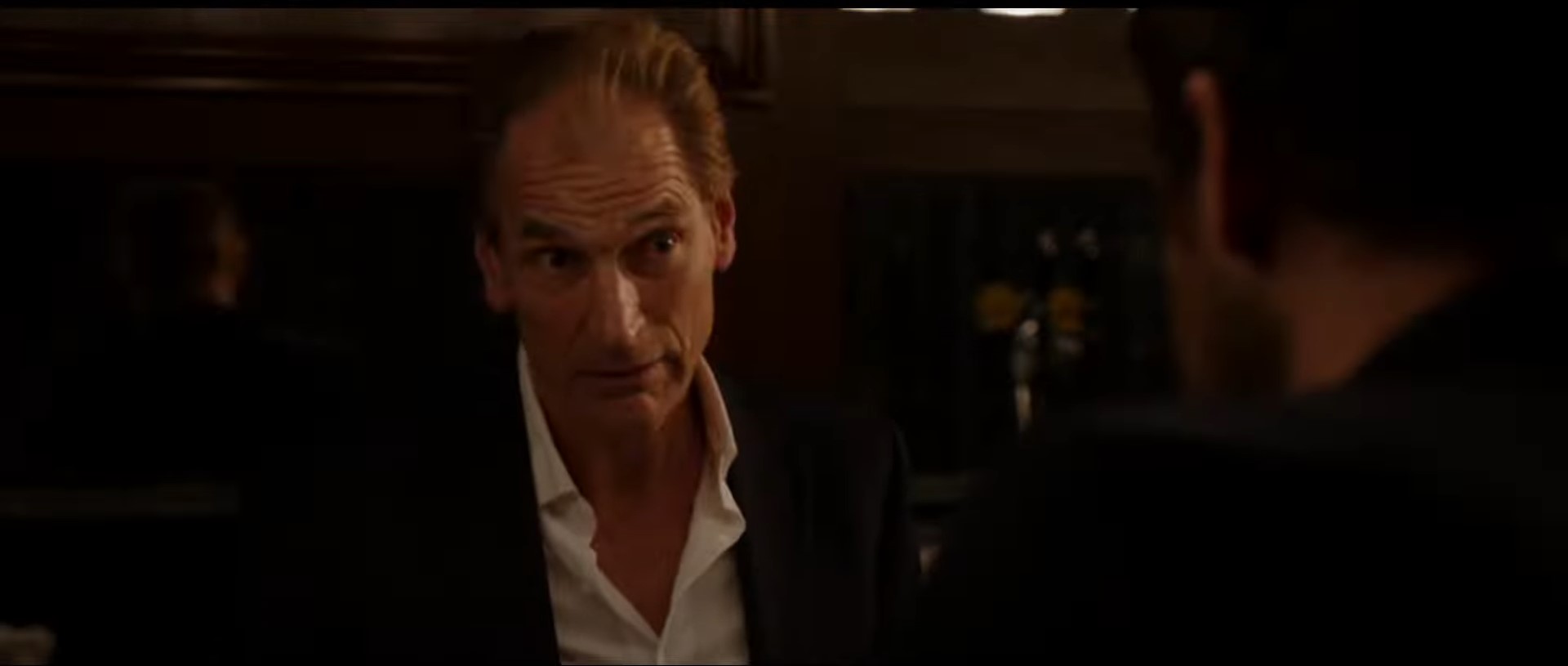
I want to prelude this review by saying that my thoughts are with Julian Sands family and if there is any hope left to grasp onto, we want sincerely to yearn for the outcome of Julian Sands disappearance in the hiking region of Mount Baldy, California to be a positive one and see the actor, the husband, the father of three alive and well.  As an entertainer, Sands gave us a malevolent sorcerer in the “Warlock” trilogy and providing us with notable performances in David Lynch’s “Naked Lunch” and the fear of spiders-inducing “Arachnophobia.”  Since the turn of the century, Sands has more-or-less fell out of the limelight with sustaining his presence mostly on direct-to-video releases and appearances on TV series.  The British actor’s latest low-budget horror “The Ghosts of Monday” is a film helmed by Italian director Francesco Cinquemani on the little-known getaway island of Cyprus, a country located in the Mediterranean Sea.  Cinquemani, who typically directs his own scripts, co-writes the film with Andy Edwards (“Zombie Spring Breakers,” “Midnight Peepshow”), Mark Thompson-Ashworth (“POE 4:  The Black Cat”), and Barry Keating (Killer Mermaid,” “Nightworld: Door of Hell”).  “The Ghosts of Monday” appears to be a blend of region myth and cultural belief pulled locally and from the stories of Greeks Gods into one abandoned hotel horror full of cult sacrifice and betrayal, produced by the “S.O.S.:  Survive or Sacrifice” producing team of Loris Curci (“The Quantum Devil”), Marianna Rosset, and Vitaly Rosset under the Cyprus production company, Altadium Group.

Julian Sands might not be the principal lead of the story but is a major player in what culminates into an ambuscade of doomsday deliverance at the expense of others.  As the documentary’s host and a Cyprus local, Sands plays the eccentric, often frisky, heavy drinker Bruce who has been a father, or the adopted father-figure as it’s not entirely clear, to Sofia (Marianna Rosset, “S.O.S.:  Survive or Sacrifice”).  Christine is distant and disordered returning to her Cyprus homeland with her husband Eric, the director, played by “The Turning’s” Mark Huberman.  Almost seemingly estranged from each other, Eric and Sofia display some noticeable pensive and tension-riddled issues between them that the story never fully fleshes out for the audience.  Christine is under medication for a sleep disorder, Eric’s feeling the pressure from powerful producers, and none of that external strain has defined or even as much delineated itself in full in their aloof relationship that has glimmers of hope and smiles as the wall between them is more up than it is down despite Eric’s constant vigil over her.  Performances from Rosset and Huberman meet the need of concern, desperation, and pressure forced upon them more from in the outside than in, especially in Huberman with a slightly better angle on his creative-driven, project-lead sudden derailed from his narrow focus to deliver a quality product as his career careens out of control and that brings out his rougher edge we see in the latter half of the story.  In comparison, the more iconic and recognizable figure, Julian Sands, doesn’t land his role well in what could be seen as if his performance landing gear only had one wheel down before touching pavement but was able to jerry-rig a not-big-enough wheel to get him safely through.   “The Ghost of Monday” has some mysteriously odd and menacing individuals in hotel owner Frank (Anthony Skordi, “Carnal Sins”), his wife Rosemary (Maria Ioannou, “Waiting Room”), and the producer couple Dom (Loris Curci), and Pat (Joanna Fyllidou, “Girls After Dark”) as hovers, prowlers, and the overall conventional creeps in the corner, watching you.  On the other side of the coin, you have a film crew who are more or less victim fodder for the evil powers to be with Anna (Kristina Godunova) and suspected lesbian lovers in sound designer Christine (Elva Trill, “Jurassic World:  Dominion) and cinematographer Jennifer (Flavia Watson) because A/V is just another acronym for LGTBQ+.  With the exception of Frank and Rosemary’s background on why they bought the forsaken hotel, none of the other characters constitute a piece of the pie as they are thrown into the mix, sprinkled with tidbits of intrigue, before their dispatched into the feast or famine categories.

We have ghosts in the title. There are cult members, sometimes shrouded in obscuring clothing, sometimes just lingering exposed outright. We have silent but deadly twin girls with kitchen knives. There is also a slithering creature lurking in the basement. “The Ghost of Monday” is a variety show of vile villains with very little coherence to bring the elements together, but what is clear is a mythical being at the center of the surrounding maelstrom that’s quickly closing in on the protagonists. With the script penned by a cohort of writers experienced in resort massacres and killer aquatic creatures, all director Cinquemani has to accomplish is the effectuation of ideas, but what results is haphazard derision from what feels like “Ghostship” in a hotel and looks like “The Shinning” without the isolating madness all in the confines of a very shaky and marred cinematography. The core of the story is inadvertently lost amongst the competition of where audiences should retain their attention which is a shame because at the core is a deeper, broader, and more mythically rich in Grecian horror with a gorgon immortal that’s equated as the devil itself and linked to life’s destruction if not sacrificed a corporeal shell.  Viewers will be treated to only a glimpse of that circling terror during the climatic end and, more than likely, budgetary reasons ground the story’s larger-than-life concept with only a mixed bag clash of content leading up to the end.

Plugged as Cyprus’s first native horror production, “The Ghosts of Monday” arrives onto a Blu-ray home video release from the Cleopatra Entertainment, film division of Cleopatra Records, and Jinga Films with MVD Visual distributing.  The featured release is presented in a widescreen 2.35:1 aspect ratio, shot on what IMDB has listed as the Sony CineAlta Vince with a Zeiss Supreme Prime Lens.  The AVC encoded Blu-ray retains a quite a bit of compression issues throughout the entire digitally recorded package as video ghosting is the biggest image culprit.  I’m sure that type of ghost was not what “The Ghosts of Monday” were referring to in the title.  Aliasing, banding, and small instances of blocking also appear occasionally and in conjunction with the ghosting which makes this transferred format nearly impossible to watch with hardly any detail in what should be a high-definition release that renders closer to 480 or 720p as the video decodes at a low 22 to 23Mbps average.  The Blu-ray has two audio options, an English 5.1 Dolby Digital and a LPCM Stereo 2.0. Though both outputs render nearly identical because of the lack of explosions or an extensive ambient track, the surround sound mix offers a better side to the A/V attributes with a barren-disturbance sound design and a solid score that keeps the concerned glued to the television sets, waiting for something spooky to pop out from behind. Dialogue doesn’t perceive with any issues with clear and clean conversation, as expected with most digital recordings, and is greatly centered and balanced without sounding echoey and out of depth’s scope. The bonus features are scantily applied with only an image slideshow and feature trailer, plus trailers from other Cleopatra Entertainment productions, such as “The Long Dark Trail,” “Frost,” “A Taste of Blood,” “Baphomet,” “Scavenger,” “The Hex,” and “Skin Walker.” The physical attributes of the release come with a traditional Blu-ray snapper cast with latch and cover art, that’s slightly misleading, of a glowing apparition. The region free release has a runtime of 78 minutes and is unrated. “The Ghosts of Monday” doesn’t buck the trend for Cleopatra Entertainment’s string of C-grade horror but is an unusual, new venture in the sense of strictly being a horror story without an eclectic soundtrack of signed artists to carry it through to the end.

 “The Ghosts of Monday” is now on Blu-ray Home Video!  Click to Cover to Purchase!

No Film is Complete Without a Flying EVIL Baby! “The Necro Files” reviewed! (Visual Vengeance / Blu-ray)

A

I Want To Believe…That You Will Check Out “The Necro Files” on Blu-ray!

An unhinged serial rapist terrorizes the young women of Seattle, ripping into shreds their internal innards and even dabbles in tasting their flesh.  Two detectives hellbent on stopping his reign of terror intercept the killer in the middle of an attack.  Though too late to save the girl, the detectives shoot six slugs into the rapist, stopping his continuous, heinous sexual assaults and grisly murders…at least for nine months later, when a satanic cult resurrects the zombie cannibal rapists from the grave after sacrificing the rapist’s bastard baby from his only surviving victim.  The killing spree begins again and this time being undead provides superhuman strength and a larger penis.  The two detectives, now embroiled in their own corruption, must embark on another manhunt while two of the satanic cult members, seeking to undue the horrors they’ve unleashed, willingly summon a demon into the dead baby to counteract the zombie cannibal unbeknownst to them the demon baby will kill anyone it’s in airborne trajectory.

Just from the above synopsis, this film sounds nuts, darkly funny, and depraved all wrapped into one undisclosed file of sex, gore, and floating baby dolls.  And, you know what?  It’s all true.  The creator behind all this madness is Matt Jaissle who helms the shot-on-video “The Necro Files” as an underground horror spoof of a popular science fiction you made have heard of – “The X-Files.”  The Truth is out there.  Well, the truth is actually not in the sky, it’s under the dirt, it’s inside some scantily cladded woman being molested by a rotting corpse, and it’s in a doped-up cop looking to wipe all the scumbags off the face of the Earth.  The 1997 released is co-written between long time Jaissle collaborators Todd Tjersland (“Faces of Gore” series) and Sammy Shapiro, based off of Tjersland sleazy horror comic series “Psycho Zombie Love Butcher,” and is the third film from Jaissle that solidifies the filmmaker as a certifiable depravity and gore-meister that has themes of rape, necrophilia, heartless exploitation, and disembowelment clothed as clearly a comedy.  Filmed around the surrounding Seattle, Washington area, “The Necro Files” is produced by Jaissel with Tjersland serving as executive producer Washington state-based Threat Theatre International production banner.

The acting pool that “The Necro Files” plucked their talent from must have been severely limited with a cast more concerned about their robotic performances rather than the unsavory story content.  Fine by me!  I don’t expect award-winning caliber thespianism on campy SOV D-movies where the main focus is guts, girls, and the grotesque.  The two detectives, Martin Manners and Orville Sloane, and the killer, Logan, are the principals caught in the middle of everything that is eloquently evil of “The Necro Files.”   Isaac Cooper plays Logan the Rapist aka Zombie Logan the Rapist and the wild-eyed, chimpanzee-running Cooper doesn’t have a lot of dialogue with his unpleasant roles with many of talking parts going toward a third character of a drug pusher before having his head blown off by a traumatized and unstable Det. Manners.  By the way, Steve Sheppard, who plays Det. Manners, has the best monologue about wiping out scumbags while sitting in the police car, looking maniacal, and just admiring his handgun next to a more rational, more off-cue Gary Browning as his partner, Det. Sloane.  “The Necro Files” cast isn’t doesn’t end there as Snell’s film has a surprisingly sizeable, small role contingent, mostly of playing Satanists, drug dealers and sexual miscreant males, and women in compromising positions.  The actresses playing the latter roles are mostly under pseudonyms, alternate aliases that provide more to the film’s campy nature.  Names like Anne R. Key (Anarchy) and Jenn O’Cide (Genocide) are a couple.  Present day, Jenn O’Cide is actually a sideshow performer, belly dancer, and an overall alternative, fearless woman of the strange and usual fine (dark) arts while keeping her stage name.  Another is Dru Berrymore and no, not the “Firestarter” and “Scream” Drew Berrymore we all know of horror fandom.  This Dru Berrymore comes from Germany and is a pornographic actress who’s had bit pars in Katheryn Bigelow’s “Strange Days,” David Lynch’s “Lost Highway,” and even in “Die Hard 2”.  Each of these ladies, including a fourth in Theresa Bestul, are supposedly claimed from the local strip club and don’t mind being the plaything for undead’s wicked whims in their simply objectifiable credited rolls as Shower Girl, Doll Lover, Camping Girl, and S&M Amazon.  The cast rounds out with Todd Tjersland, Jeff Nelson, and Christian Curmudgeon and Jason McGee has hapless Satanists. 

“The Necro Files” bares very little resemblance to the show it spoofs but bares it all with an opening shower scene containing full frontal nudity.  From the get-go, “The Necro Files” plays into schlocky, campy attire with an unpretentious, unapologetic swagger.  The story doesn’t really make much sense and is terribly choppy from a continuation standpoint.  We’re fed fleeting moments of connective information that hardly tether scene-to-scene let alone the nine-month gap where Logan’s baby must be sacrifice by a Satanist cult to randomly resurrect one of the vilest murderers for unknown reasons and then immediately regret it as part of an oopsie, what did I do moment.  Yet, at the same time, these random bits of tongue-and-cheek leave the door open for unknown possibilities and seeing a clear path on how “The Necro Files” case will close is about as predictable as selecting all the Mega Millions lottery numbers right. Matt Jaissle’s gonzo-gore-a-thon is nonetheless a winning jackpot of underground, sadistic-splaying horror with an extensive as it is impressive DIY blood-and-guts effects and makeup by Jaissle and Tjersland. You can’t name your film “The Necro Files” and not have a deluge of viscera be a collective hematoma of popped blood vessels in every other scene in what’s an all ghoul and girls brazen bloodbath of demonism and dark humor.

“The Necro Files” is the second catalogued title for Wild Eye Releasing’s new kid-sister sublabel of extreme, SOV cult and horror films called Visual Vengeance. The Blu-ray release comes with a precaution of video quality, stating that the original elements were pulled from consumer grade equipment and SD video tape masters. The final product is better-than-passable and better-than-expected based off the source material as the 1.33:1 presented feature has an abundance of interlacing, aliasing, and macroblocking throughout. The video format plays into much of the problems with soft color palette and details in which not one single scene looks particular sharp enough to call Blu-ray’s best. For underground SOV horror, the quality is what was expected, if not better, and will continue to expect with future Visual Vengeance releases. Audio options give viewers two formats to select from: An English language Dolby Digital 2.0 and an English DTS-HD MA 2.0. The DTS track is the winner between the two audio arrangements with a slightly hefty decibel soundtrack and a better job isolating the already isolated lo-fi ambient and Foley. Dialogue, to the naked ear, sounds relatively the same with the lossy strength and level inconsistencies (again with 1997 video equipment issues), but overall free from obstructions. English subtitles are option. Special features include two audio commentary tracks with director Matt Jaissle on one and with Matt Desiderio of Horror Boobs and Billy Burgess of the Druid Underground Film Festival on the other, a brand-new graveyard self-chat with Matt Jasissle providing background color on making movies in general and a little history of himself, Dong of the Dead: The Making of the Necro Files with a talking head interview of Matt Jaissle, with spliced in movie clips, speaking on the complete genesis and completion of his film, the original and Visual Vengeance trailer, the super 8 short “The Corpse,” and a bonus movie, the sequel “The Necro Files 3000!” Physical release bonus material includes a reversible Blu-ray cover, a 2-sided artful insert with Blu-ray produced acknowledgements, a mini poster, a Wild Eye VHS sticker set, a cardboard slipcover, and the official “The Necro Files” condom not intended for actual use. Probably just a little something to ward off unplanned evil floating babies! The film comes unrated, region free, and the feature clocks in at 72 minutes with another 65 minutes on the sequel. “The Necro Files” is 137 minutes of sleazy-zombie humpfest that you won’t (you can’t!) forget.

I Want To Believe…That You Will Check Out “The Necro Files” on Blu-ray!

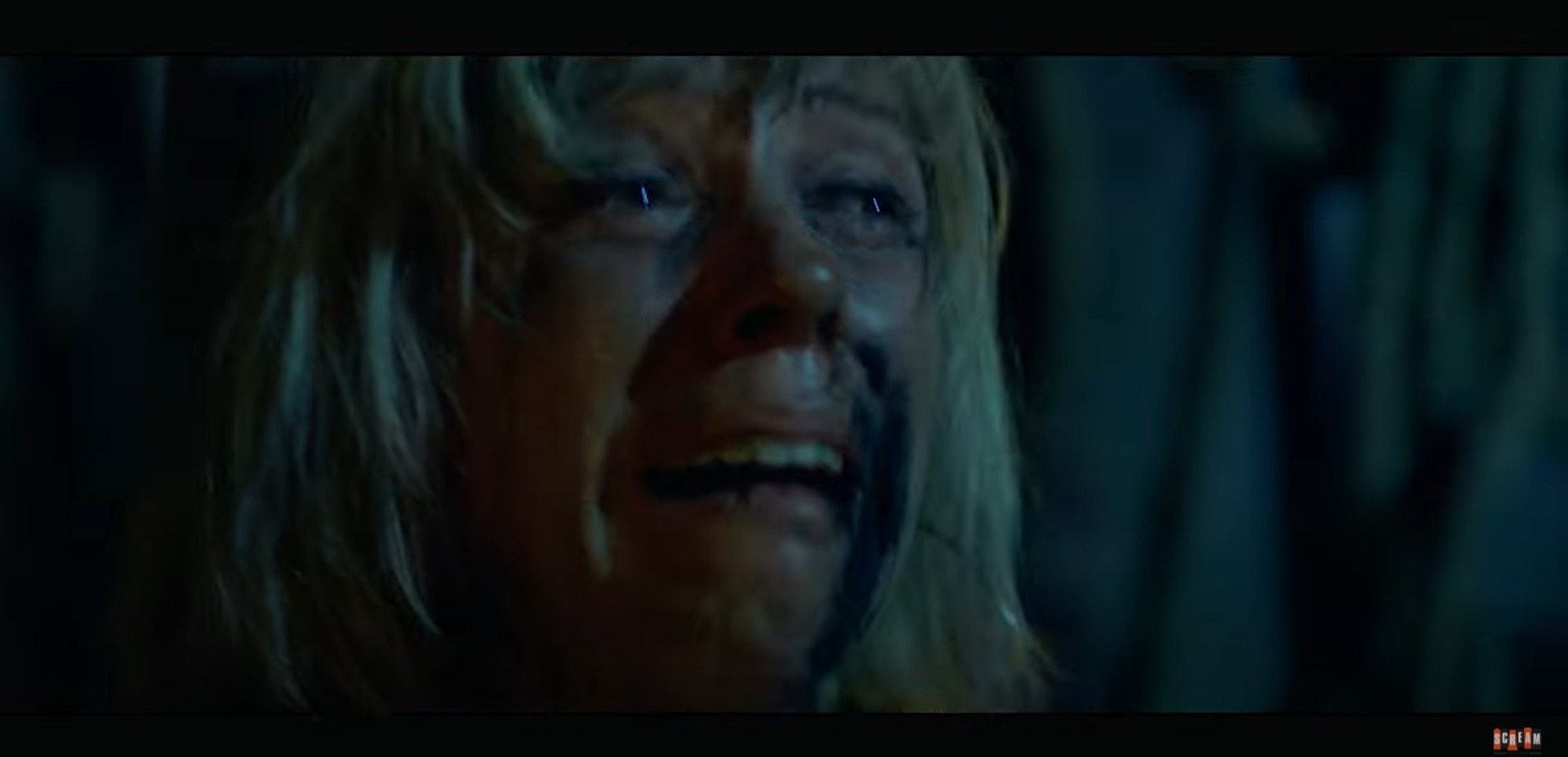
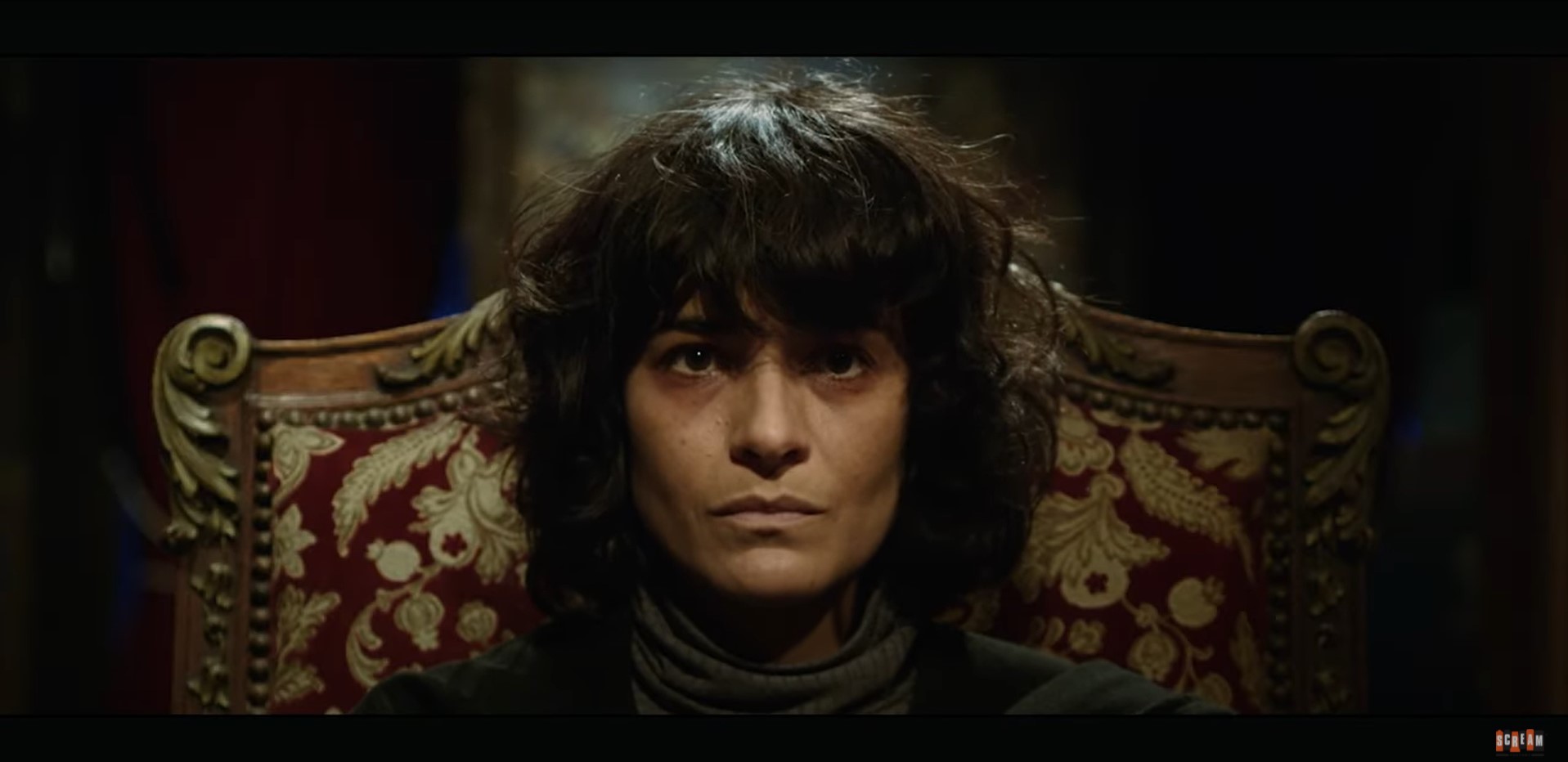
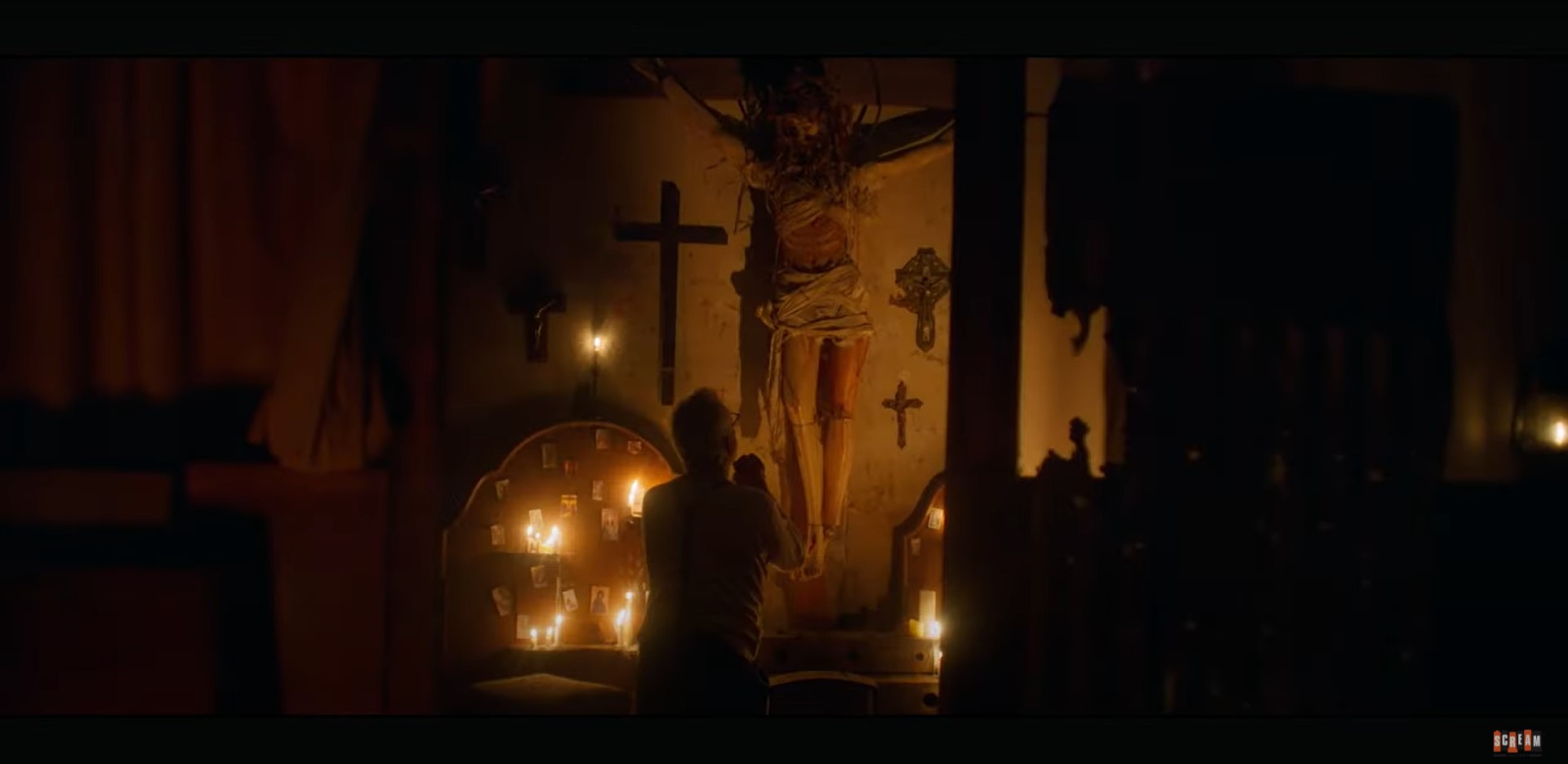
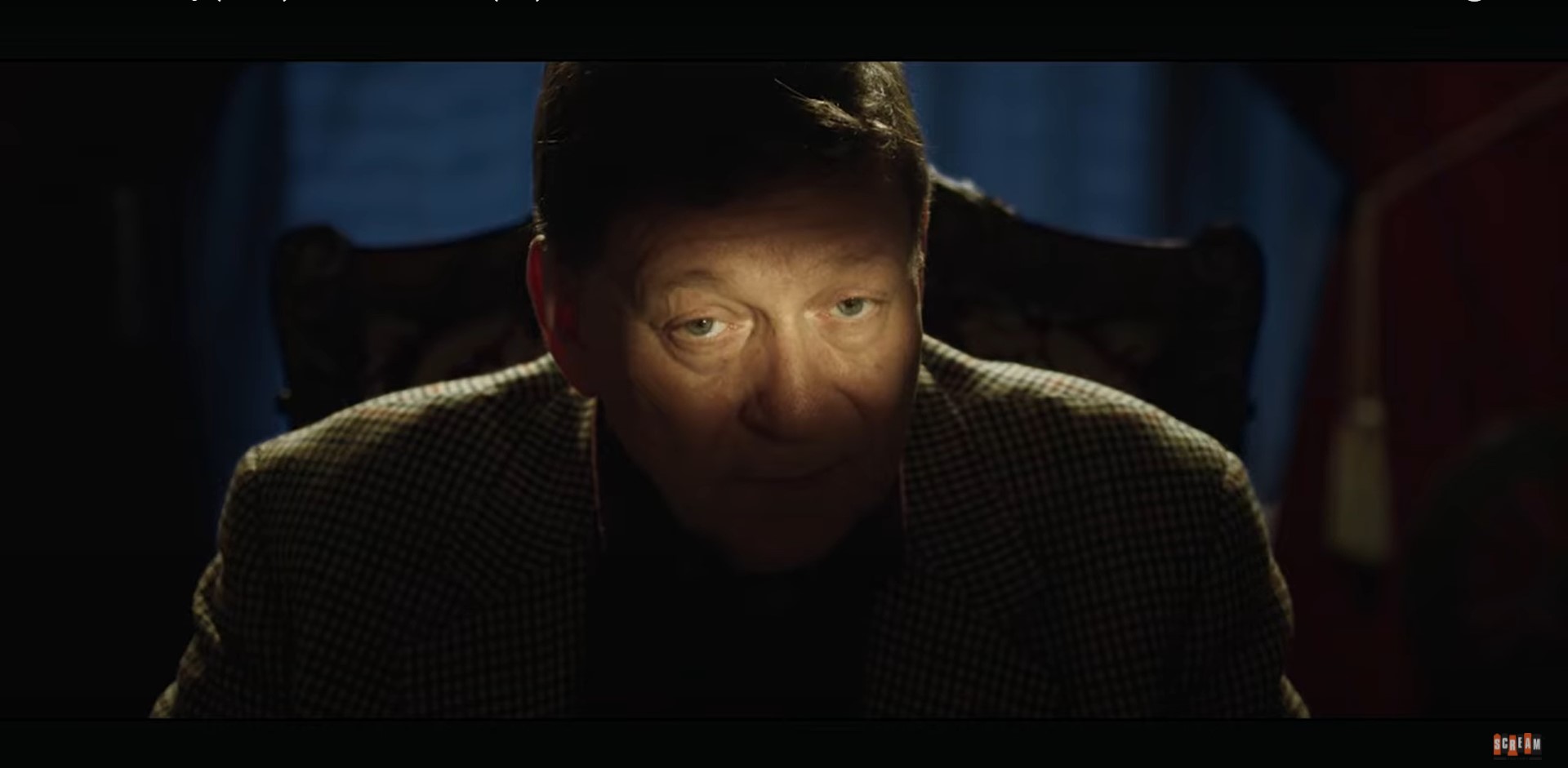
EVIL Comes Not on the 1st Day, or the 2nd Day, but “On the 3rd Day!” reviewed! (Scream Factory! / Blu-ray)

“On the 3rd Day” arrives onto Blu-ray on March 29th!

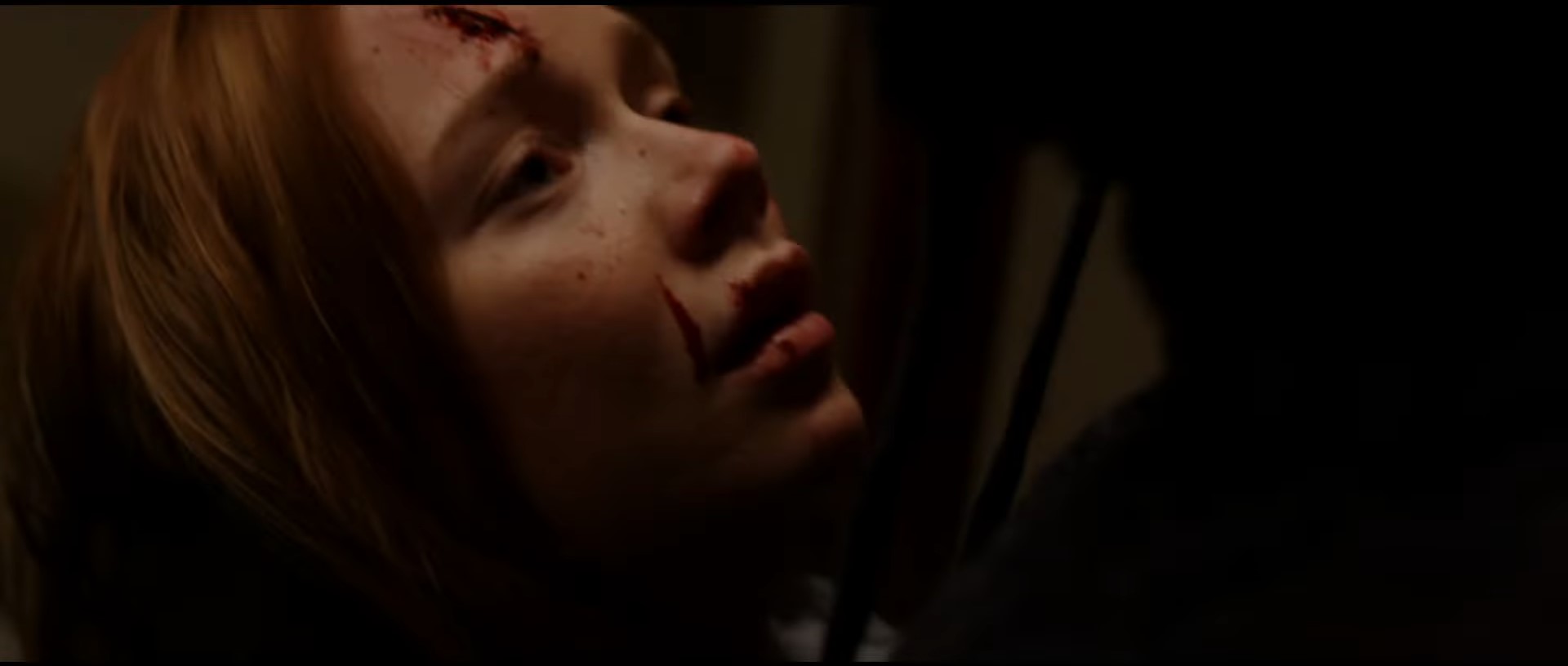
A car accident leaves Cecilia dazed and confused as she wakes up in an abandoned warehouse unsure of what crashed into her and how she arrived inside the vacant area.  Her son, Martin, who was also in the car with her, is missing.  Plagued by disturbing visions being reflected through mirrors, an agitated and frightened Cecilia escapes the hospital and with the help of an empathetic, young doctor, they employ a hypnotist to extract her post-accident whereabouts and possibly locate her missing son, but what is unleashed through hypnosis is more terrifying than imagined.  Meanwhile, the other crash victim, a hermit priest, sets forth to reclaim an ancient and deadly Catholic secret lost in the wreckage and will stop at nothing and do anything to get it.  When Cecilia and the priest converge, the truth of what really happened will be profanely revealed with spilled blood.

“On the 3rd Day” is one of those movies that needs tiptoeing around when reviewing it to not divulge spoilers.  The Daniel de la Vega mystifying horror hails from Argentina and is penned by the screenwriting duo of Alberto Fasce and Gonzalo Ventura, the latter of whom authored the 2017 novel “3 Days” (3 días) in which the film is adapted from.  What can be divulged about Vega’s film is that context revolves around a classical monster fans know and revere to be a staple of horror iconography but “The Chronicle of the Raven” director ventures deep into a disoriented mother’s puzzling gap in time, working backwards through her mind’s murky-dirty window to then make the picture wretchedly clear.  “On the 3rd Day” blends abusive relationships and ugly divorce with traditional and appreciable genre tropes to fully convey that those who are to be loved and protected the most out of dissolving unions are those who are ultimately the ones hurt most of all.  Del Toro Films’ Néstor Sánchez Sotelo, who produced Vega’s 2016 supernatural thriller, “White Coffin,” produces alongside the filmmaker in a coproduction with Furia Films.

“On the 3rd Day” pursues the storyline of two principal characters: Cecilia, a mother recouping her memories after a shocking car accident, and Padre Enrique, an off-the-grid priest guarding the Catholic Church’s dark secret. The Buenos Airos-native actress Mariana Anghileri becomes lost in Cecilia’s constant struggle against the forces guiding her down a subconscious alter ego path that’s unveiled at the tale-telling end while at the opposite end of the spectrum, Padre Enrique, played with a feverously somber faith from Gerardo Romano, who also had a role in Daniel de la Vega’s “Necrophobia 3D,” knows exactly what’s at stake after accidently crashing his truck into Cecilia’s car and the displaced crate he was hauling to Santa Cruz at the behest of the church opens and sets loose an unspeakable evil to lurk. Romano is purposeful in Padre Enrique’s mission with a scrap of uncertainty splayed on his face, but never discloses a sense of true concern or panic-stricken hopelessness which makes the character refreshing in his confidence rather than tense in his unwavering assurance. The same can’t be said about Cecilia who suffers a continuous reeling over the missing gap of time. However, locating the sincerity in Anghileri is difficult as the actress doesn’t convey that primo motherly instinct of a sudden and violent detachment from her child properly. Anghileri wonderfully denotes an obfuscate posture but condoning her as a loving parent just doesn’t seem justifiable, even in the finale that is while still impactfully poignant, misses utterly gutting audiences with Anghileri’s lukewarm care. “On the 3rd Day” rounds out the cast with Osvaldo Santoro, Mathias Domizi, Lautaro Delgado, Susana Beltrán, Octavio Belmonte, Sergio Boris, Rodolfo Ranni and Verónica Intile.

“On the 3rd Day’s” first act didn’t fill me with confidence. I was about as lost as Cecilia waking up disoriented in a vacant warehouse. Vega jumbles sequential order and interjects flashbacks into an already copiously edited narrative with a slither of surrealism to the style of early David Lynch or Terry Gilliam. We’re thrust into Cecilia’s post-crash nightmare, witnessing irrational visions through standing oval mirrors and departing characters who don’t come out alive on the other end of meeting her. Vega seldomly gives into definitive trope context as he reshapes with miniscule precision what we already know traditionally about this particular monster into seemingly something new. By the second and third act, Vega begins whittling down obscuring barriers, leaving more dead bodies in Cecilia’s wake although we definitely don’t ever see death by her hand as it’s always just implied between before and after cuts. The script also pieces in more clues with Padre Enrique’s razing of collateral damage stained with the blood that is not their own. I’m enamored by this phrase that embodies a mystery on the tip of the tongue hungry to be solved and as the padre proceeds to liquate an innocent bystander because of clues he only recognizes, his character, however vilified Vega makes him out to be, becomes far more interesting in a role as a priest with a less than a pastoral posture and as a persistent caretaker of an ominous being, cleaning up after whoopsie daisy incident in losing his oversight. What “On the 3rd Day” boils down to, thematically, is when the sight is lost on what is most important, there becomes an indefinite loss that can’t be put back safely into the box. Between Cecilia’s radical escape from an ex-husband and Padre Enrique’s hastiness, they both take their eye of the prize and ultimately suffer loss in the worst possible way, turning “On the 3rd Day” into a distilled gaslight of unquestionable terror.

Hopefully, to this point, I have not spoiled Daniel del la Vega’s “On the 3rd Day’s” elusive revelation. One of the only ways to see what happens, to see the shocking ending, check out “On the 3rd Day’s” on Blu-ray from Scream Factory arriving Tuesday, March 29th! The AVC encoded, region A Blu-ray is presented in 1080p high definition and in a widescreen 2.39:1 aspect ratio. Mariano Suárez carries over the tenebrous “Terrified” low lighting to provide a tonal dreary environment akin to noir, which “On the 3rd Day” fashions itself. Skin tones, practical effect textures, and even the retro-esque compositional special effect flush out nicely. What’s a little disappointing is the forced English dub track on both the audio options: DTS-HD Master Audio 5.1 and 2.0 stereo. With no alternative languages to opt into, even a native Spanish track, the English dub is obvious desynched between the speech and delivery. The ambient range and depth fairs better with adequate detail and an Italianomysterio soundtrack by Luciano Onetti, who worked on the modern giallo films “Francesca” and “Abrakadabra” with brother and co-founder of Black Mandala productions, Nicolás Onetti. English subtitles are available. The 85-minute film releases not rated and without extras other than the snapper case sheathed inside an image redundant cardboard slipcover and a wide still capture on the reverse Blu-ray cover. “On the 3rd Day” starts messy but ends in a gothic aghast that sets the seal on Daniel de la Vega’s slow burn evolution as a genre filmmaker.

“On the 3rd Day” arrives onto Blu-ray on March 29th!