Invincible-Seeking EVIL Loves to Hide Behind Strip Clubs! “Decadent Evil 2” reviewed! (Full Moon Features / Blu-ray)

The Sequel “Decadent EVIL II” Bites Hard! Check It Out!

After barely surviving Morella, Dex and Sugar, along with carrying around the homunculous Marvin, traverse across the country to find a vampire master.  Their plan is to take a drop of his blood needed for a resurrection ritual to bring vampire hunter and Marvin’s son Ivan Burroughs back to life after sacrificing himself to stop the deadly, megalomaniac Morella.  Ivan’s golden tracking cross brings them to midwestern gentleman’s club full of possible seedy suspects as the master vampire – the vampiric-attributed club owner Janos, the stern and scary club manager Burke, or even the club’s beautiful top dancer Lena are all suspects.  To uncover the master vampire, Dex and Sugar work their way to being hired at the club in order to snoop around.  Meanwhile, dancers and customers are winding up dead nearby.  As the investigation continues, Dex, Sugar, Marvin, and even the undead Ivan must work together to find the master vampire and stop him from continuing what Morella started. 
“Decadent Evil II” is a direct sequel to the 2005 original that returns Full Moon founder Charles Band (“Puppet Master”) to the director’s chair and writer Domonic Muir to pen the follow-up.  Same vampire tricks, more topless strippers, and a ragtag team of vampire trackers has this 2007 subsequent feature feel like a heel biter by keeping the story going without a lot of time lapsed.  Band retains his personal interest in pint size creatures and nude women in the sequel while keeping costs down as much as possible with limited locations and special effects fields filled in mostly with strippers doing their routines in between.  Band also returns as producer alongside Bill Barton (“Blood Forest”) and Joe Magna (“Dangerous Worry Dolls”) with James Synder, Jon Morrey, and Dana K. Harrloe serving executive producer under Band’s Wizard Entertainment, now Full Moon Productions.
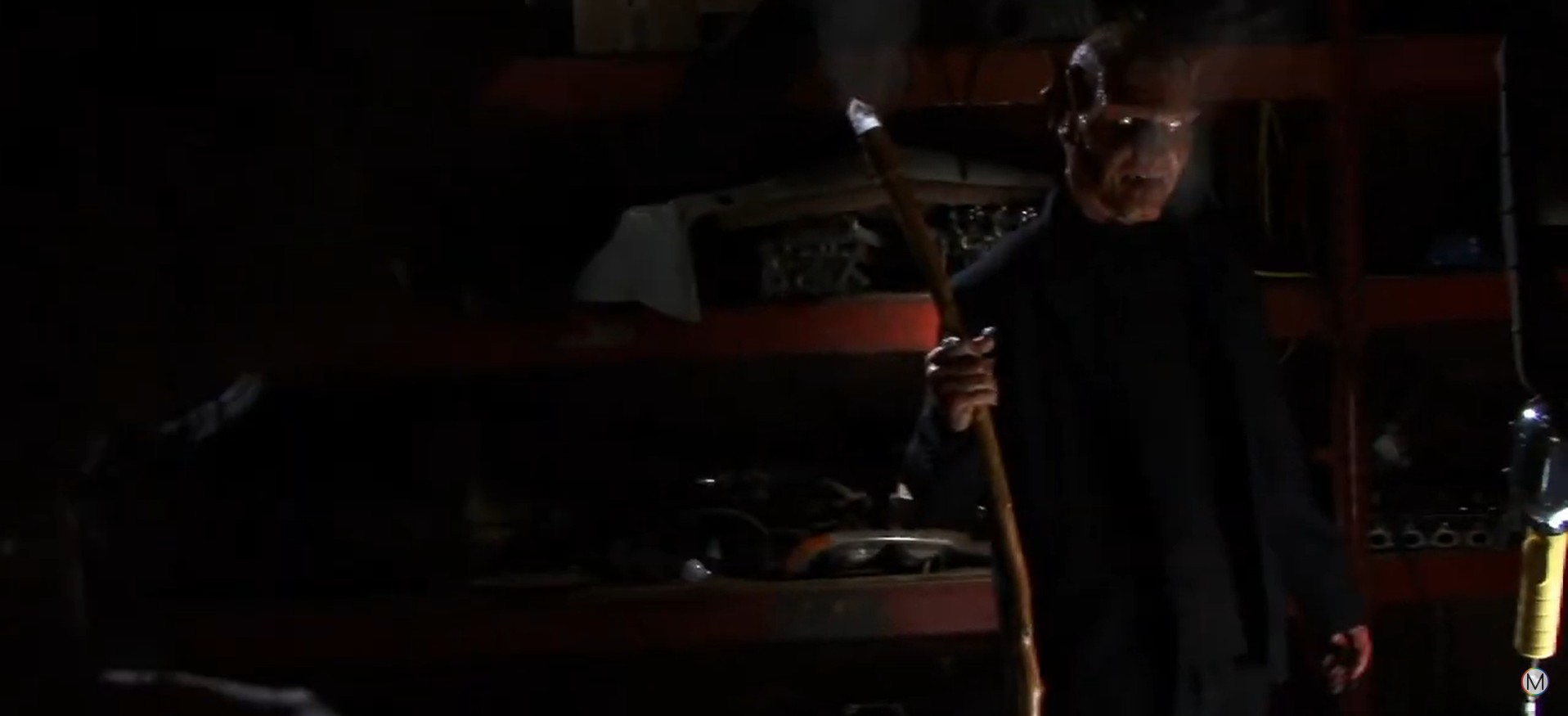
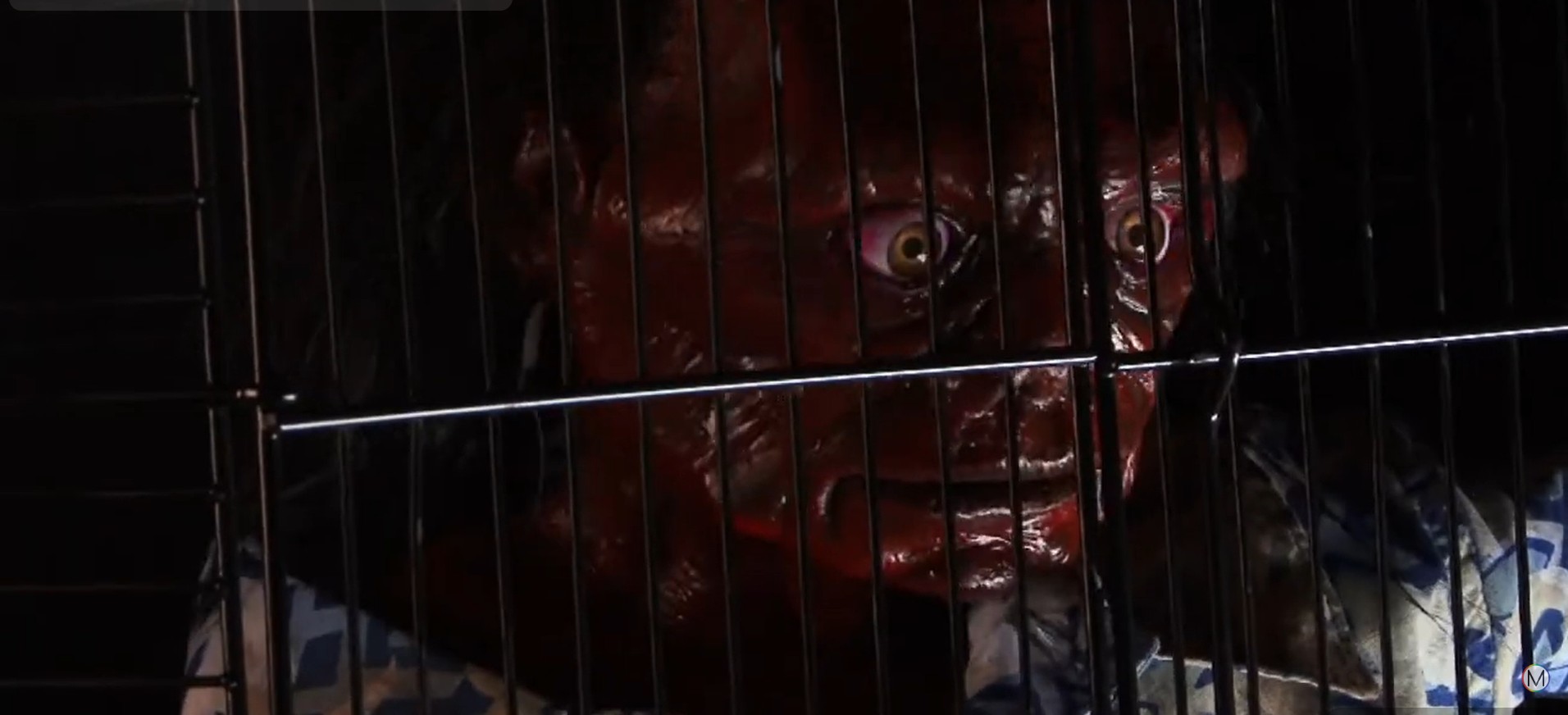
Jill Michelle and Daniel Lennox return to their respective roles of being a vampire-human love story couple, Sugar and Dex.  No longer hiding secrets from one another and on-the-road together, going from one dingy hotel to the next, the carry around the corpses of Ivan Burroughs in hopes to one day resurrect him by securing master vampire blood.  Ivan Burroughs, unfortunately, is played by a new actor, one who in my opinion is an upgrade from the already great Phil Fondacaro (“Land of the Dead”).  Ricardo Gil replaces Fondacaro as the vampire hunter with a vindictive vendetta.  Gil does have similar features to Fondacaro but has more personality in his delivery, making Ivan Burroughs more sarcastic and rougher around the edges than the first subdued portrayal with less snarkiness, and that gives the sequel more notability against the first film.  The vampire lot doubles in villainy with a master vampire purposing sporting his beastly side of a red vampire bat head, complete with pointy airs, conical snout, and elongated fangs, and which, in all honesty, makes him look more like the Prince of Darkness of traditional appearance.  The master vampire hides amongst the human pool of the gentleman’s club to mist the air with mystery of who it is with a suspect list including a club owner Janos (Jon-Paul Gates, “Alice in Terrorland”), club’s top stripper Lena (Jessica Morris, “The Haunted Casino”), and club manager Burke (James C. Burns, “A Haunting at Silver Falls”).  Mike Muscat, Lillie Nyx, and Rory Williamson make up the rest of the cast.
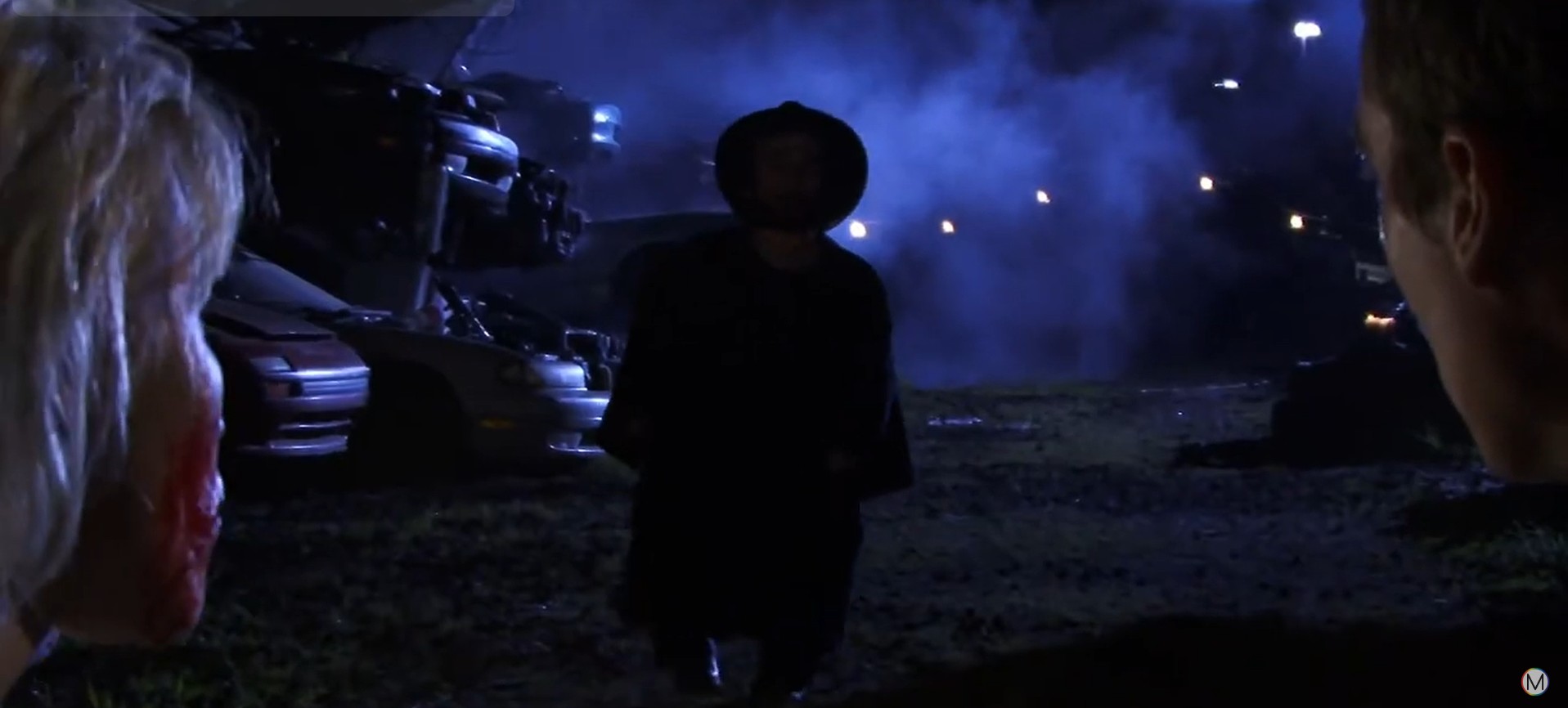
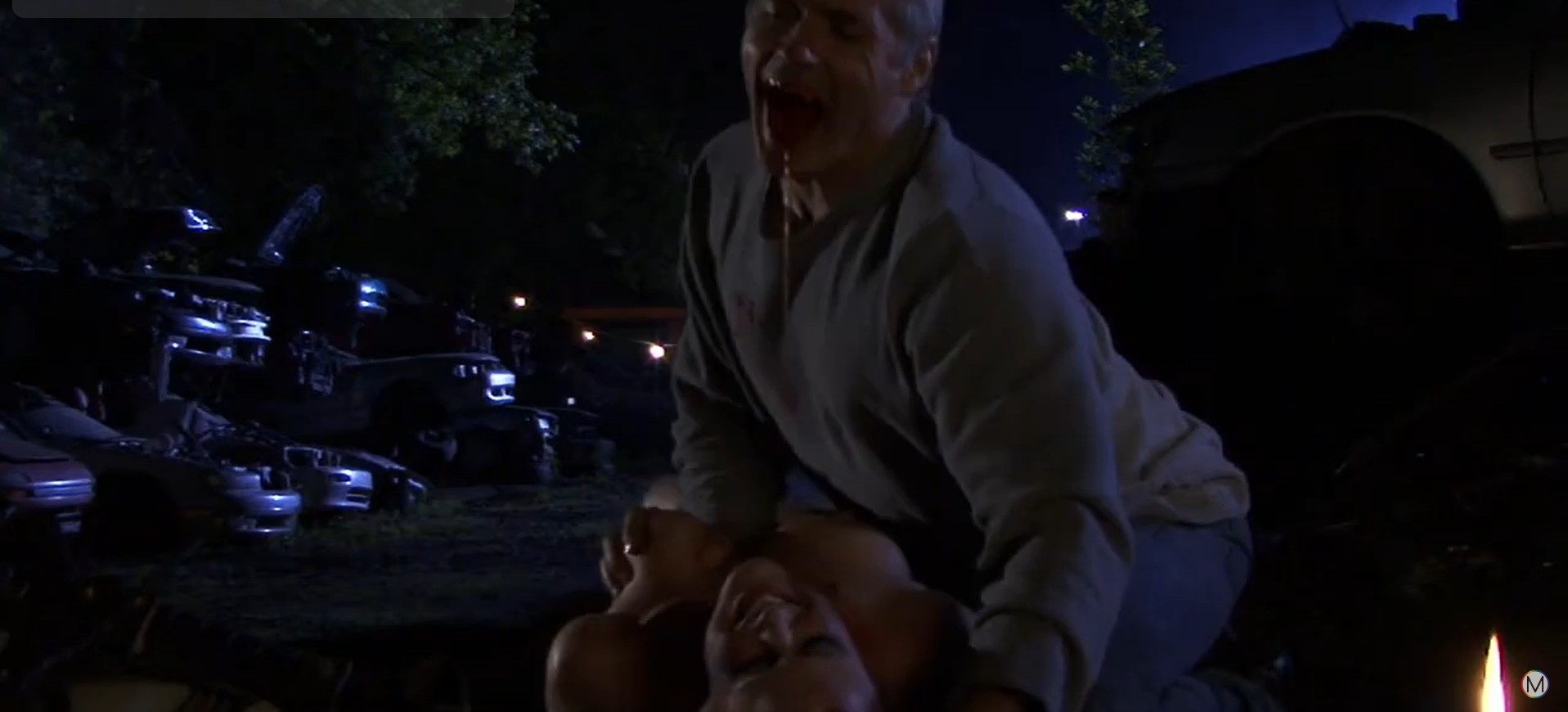
“Decadent Evil II” is comparable to the original film with both being watermarked by Charles Band need for small creatures, campy horror, and substantial number of topless women, the latter being more prominently risky in the sequel with extra suggestive stripper poses that focus on the crotch area to lay gingerly into that filmmaking golden role of bigger and better for a sequel.  “Decadent Evil II” does teeter that idea with also a doubled antagonist pool and a higher body count but not necessarily containing, and also being a sorely lack of, gore that more-or-less stays the same from the original film with a rivulet trickles of blood running down necks and chins.   Band and Muir do take the vampire out of the Gothic setting, one that Morella had resided herself into living at a mansion of marble and stone, and they trade it for an automotive junkyard, an ill-fitting home for a well-dressed vampire whose lived centuries in human culture.  One locale that has remained constant throughout both Band’s films are strip clubs and channeling the success of such gentleman’s club with bloodsuckers as “From Dusk till Dawn, both films prominently display them with great grandeur for the B-roll stripper moves.  With being a sequel, I held quite a bit of disappointment for the story that follows the same thematics as the first, the main being a singular master vampire garnering souls to become invincible and there’s nothing to accentuate that idea even further as it’s surrounded by, again, much of the same – Dex, Sugar, and Ivan, the inexplicable homonculous and his strange attributes, and a strip clubs.  Even the final scene remains familiarity with instead of Marvin making love to another homunculous, he makes doggy love to a full-size person in a cringy and uncomfortable last scene moment.
Charles Band’s “Decadent Evil II” receives it’s Hi-Def Blu-ray as a part of a long and arduous of converting Full Moon’s films to Blu-ray.  The AVC encoded, 1080p resolution, BD25 offers Full Moon’s catalogued 239 title a new pixel perspective of a saturated color palette inside its darker shaded tone.  The details are mediocre as much of the finer points are lost in low light, gel lighting, and haze but the compressions aim to be stable without any artefacts to note on lowest capacity Blu-ray.  Plenty of inky and less visible delineating contrast is a credit to the gaffing and director of photography Terrance Ryker for a soap opera-noir aesthetic.  For the first time ever, the film is presented in HD in a widescreen 1.78:1 aspect ratio.  The audio options are an English LPCM 5.1 surround and a stereo 2.0 that caters to District 78’s alternative, indie rock during the club sequences but elucidates and livens up the dialogue to where nothing obstructed with ambiguity.  Hardly any depth to the sound design as characters never wade beyond medium shots and range is limited to mostly the dialogue track along with imitation actions one would see in a low budget production or cartoon.  English subtitles are not available on the Blu-ray.  Extra features include a behind-the-scenes, a 42-minute featurette Battle of the Bands with a little stroll down memory lane for Charles Band as well as musical ventures for the film, stripper auditions for the Visions Night Club, the original trailer, and Full Moon trailers.  The physical presence is much of the same from Full Moon with a standard Blu-ray Amaray with relatively new artwork focusing on the homunculous rather than the vampires.  The sleeve is one sided with no inserts inside.  The region free Blu-ray has a runtime of 81 minutes and is not rated.

Last Rites: Like stuck on repeat, “Decadent Evil II” doesn’t offer a different type of narrative but ups the amount of nudity and vampires without much formidability in this lackluster sequel.

The Sequel “Decadent EVIL II” Bites Hard! Check It Out!

Stranded and Terrorized, Longtime Friends Must Confront Their Own EVIL Past! “The Boat” reviewed! (Breaking Glass Pictures / DVD)

Kee Your Enemies Close but Your Friends Even Closer! “The Boat” Now Available on DVD

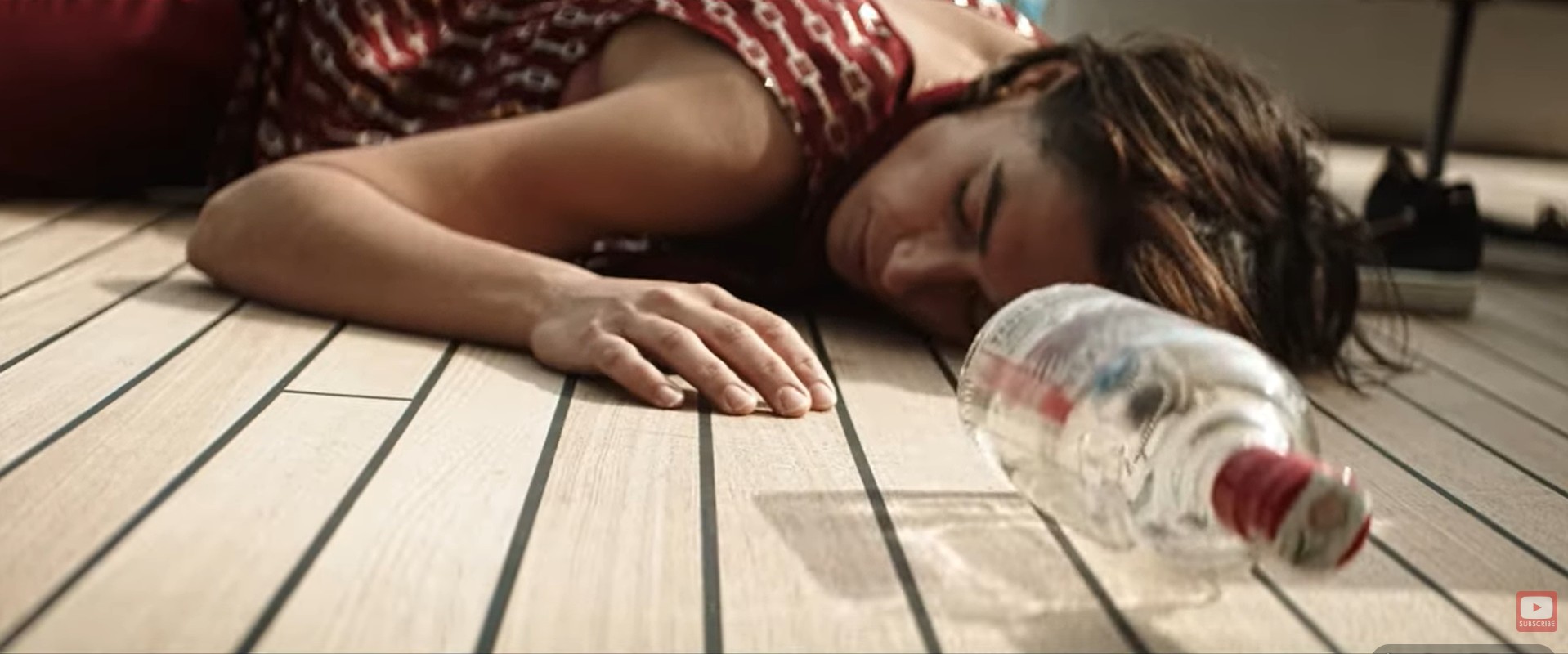
Three well-off couples party on a luxury, personal yacht for a holiday getaway and to celebrate Enrico’s birthday.  Sizzling romance, boozy-filled dancing, and smoking weed relaxes the group on the calming waves as the party goes through into the night but when morning comes, they find themselves coming out of a stupor and in the middle of the ocean with the yacht having been sabotage and adrift with no food, water, or means of communication.  A mysterious voice comes over a hidden walkie-talkie poised to punish those onboard in a plight of revenge for a past transgression involving them all and expose the groups’ dark secret kept from each other.  Tensions rise and their tormentor slowly unveils the truth through a series of chastising games that turn the tide on the group’s closeknit friendship for the worse but not everything is what it seems that’ll shed a light of truth on certain ill-conceived perceptions of the past.

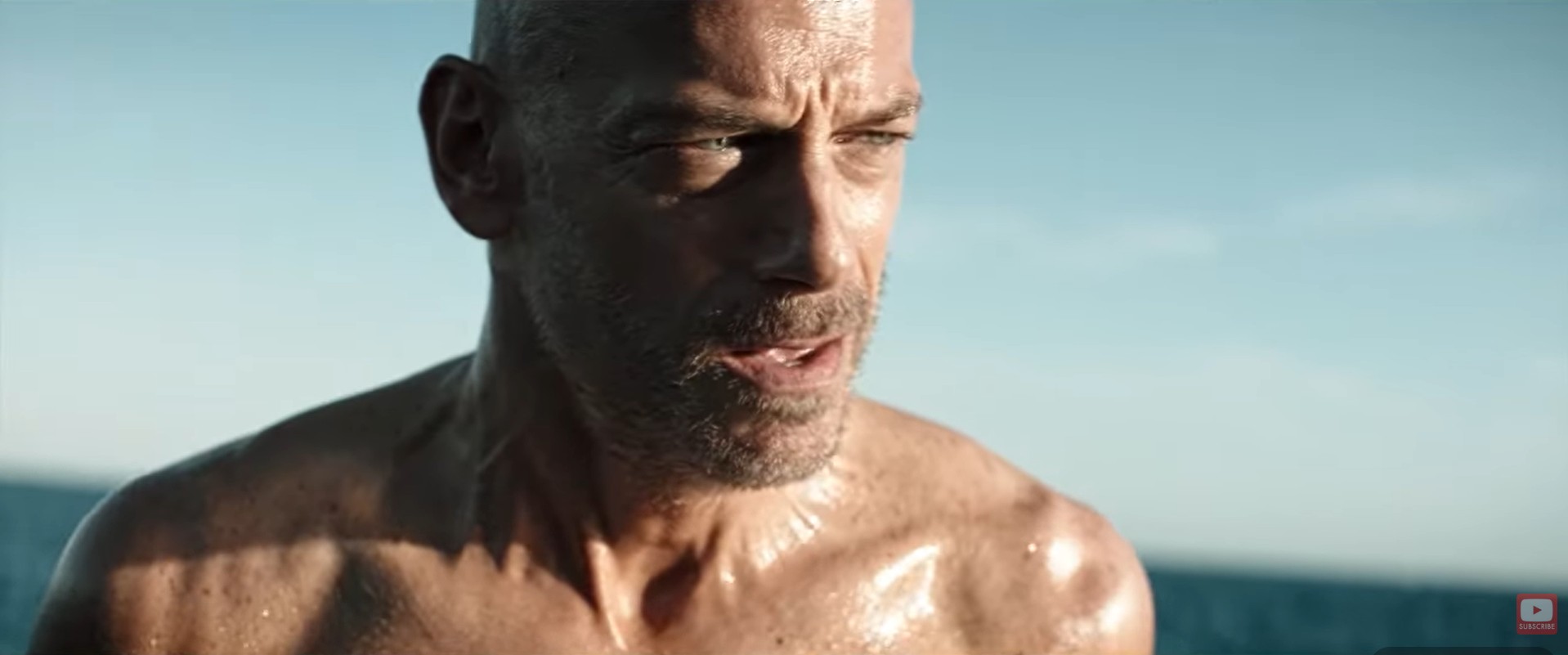
Waking from a party-filled night that can’t be remembered and quickly realizing there’s something inherently wrong about the situation, no land in sight with the yacht drifting further out into the ocean, is a sweat-inducing nightmare scenario that has immense palpable fear with a person’s severe disconnect from land and, to make matters worse, all the life-sustaining supplies and modern day conveniences have strangely vanished.  That’s the primal premise setup for the mystery-thriller “The Boat,” a 2025 released Italian-made film from director Alessio Liguori (“In the Trap,” “Shortcut”) and a trio of writers in Gianluca Ansanelli, Nicola Salerno, and Ciro Zecca.  Filmed just off the port of Piano di Sorrento and in the Amalfi Coast, including the illusion of open water scenes, “The Boat” is a Lotus Production, a subsidiary of Leone Film Group, and Rai Cinema feature under producer Marco Belardi and executive producer Enrico Venti.

Reviewing Marco Belardi and Enrico Venti’s producing film repertoire suggests that the duo have hardly tasted tension and experienced thrilling tenterhooks with a more comedic, period piece, and melodramatic works that revolve around the tough, sometimes scathing, human dynamics.  The cast resembles similarly in their credentials, using the melodramatic, soap opera feigns of being hurt, lost, confused, and damaged inside a tight group of longtime friends getting together for a holiday only to find that maybe they’re not so good friends after all, definitely not good people, harboring hazardous secrets.  Diane Fleri (“Ghost Track”) and Filippo Nigro (“Deep in the Wood”) play the epitome of a wealthy yacht owning couple, the reoccurring nightmare plagued Elena and her breadwinning husband Flavio, Alessandro Tiberi (“The House of Chicken”) and Marina Rocco are the fast-lane lovers Federico, the filmmaker, and Claudia, a social media influencer, and Marco Bocci (“Caliber 9”) and Katsiaryna Shulha (“Hypersleep”) play unemployed birthday boy Enrico with his much younger, new girlfriend Martina make up the struggling confounded stranded on a boat.  The once carefree, ready to party friends fall quickly from a standard of grace by a mysterious man radioing from a nearby boat, instructing and commanding them under his thumb with his own set of terms and in a position of authority by holding all the cards as they slept off the hidden sedative, and soon after, they’re perfectly perceived lives are craved in two from a superficial shell of money laundering, betrayal, and murder.   Eduardo Valdarnini (“Bad Habits Die Hard”) helms the calculated antagonist with a plan but his character isn’t kept faceless as first introduced and has his intentions unmasked way too early, running the impact of what naturally would have been a twist moment where it all clicks and makes sense his reason for retribution.  Valdarnini’s depth is in focus, a clear means with a strong case for a longstanding grudge, but the targeted friends rapidly decline into spineless and spiritless absorbents of their fate and are willing to roll over for reside or kill over an emotionally distraught act despite the situation they’re in, both not fitting the narrative bill 

“The Boat’s” strength resides mostly in the first act setup of each couple’s time together before boarding the yacht with tidbit hints of their idiosyncratic lives and their private opinions of each other.  This establishes personas and mindsets that become, or at least should have become, important later to test their surface laid out bond.  The second act transitions from partying the night away into a quickly devolving situation the next morning, discovering their boat adrift and no supplies left on board in apparently robbery.  By now, the tension is high and not set internally amongst the friends as their bewilderment extends to the audience who are too looking for answers.  Only when the mysterious voice over the radio comes a calling do the third act fail to secure a clean sweep of next level thriller.  There’s little-to-no fight in the mostly pampered elite apart from Enrico who only fits in because of his allotted friendships with the other passengers and he brings in the only outsider, his young girlfriend Martina, to which his friends casually mock the age difference behind his back further clueing us in on their true colors, but even Enrico’s fight is reserved for more diplomatic head-way with a man with a vendetta, especially with a gun pointed at him, but his explanation of involvement in past events is too easily taken to heart by the opposition rather than be questioned for its validity.  This leaves an opening of hope and sacrifice that ill-fits the story’s framework and causes an unlikeable situation based either on truth or the mattes of the heart, both of which are never challenged to the extent they should be in a crusade to bring down the affluent guilty.

Sailing up to DVD is “The Boat” from the Philadelphia-based label Breaking Glass Pictures.  The single-layered MPEG-2 video codec on a DVD5 provides a less than crystally defined picture quality in it’s 720p standard resolution, available for converted upscale.  Presented in a widescreen 2.35:1 aspect ratio that truly engulfs the anamorphic image with isolating oceanic oppression, “Orgy of the Dead’s” Mirco Sgarzi’s ability to retain depth without it being washed away in the vast waters creates anticipating moments of visual stimuli with the example being Flavio sitting solo in a life raft with the mysterious man cruising toward him in the background, an iconic culmination of objects in one frame that can be seen in “Jaws 2” when the shark moves in for the kill on a stationary Sheriff Brody holding a powerline while sitting in a raft.  As mentioned, details are shaky at best with objects often appear fuzzy around contouring lines and darker areas are chalky, but the image is more than suitable enough for DVD image delineating.  “The Boat” comes with a mostly Italian, some English PCM 5.1 Surround Sound audio mix that’s cinematically balanced between a forefront and clear dialogue track and a background of diegetic and non-diegetic of ocean grabs, such as waves splashing, distant gull calls, and the roar of a high-powered boat engine.  “Here After’s” Fabrizio Mancinelli’s score doesn’t have an inspiring bone in its ocean body with a route low-key pulse score; it fails to instill that alone enthralling alchemy of being lost at sea with a maniac great-white-circling and looking for blood.  English subtitles are available for selection and while they pace well, there are a couple of infractions on the translation that won’t ruin the visual picture or transcription.   Special features include only a photo gallery and a trailer with the DVD houses inside a standard Amaray case with an aerial pictorial that provides a strong lured interest.  The region 1 DVD comes not rated and has a runtime of 94 minutes.

Last Rites: “The Boat” sails a nautical knot of secrets to reveal not all old friends are faithful and true with a past that eventually catches up to them. The waters will be tested on this newly released Breaking Glass Pictures DVD.

Kee Your Enemies Close but Your Friends Even Closer! “The Boat” Now Available on DVD

The Demon Concubine Is After the EVIL Power of Demon Summoning Upon Earth! “Saga of the Phoenix” reviewed! (88 Films / Limited Edition Blu-ray)

Own “Saga of the Phoenix” on Blu-ray from 88 Films!

For 660 years, Ashura, the Holy Virgin of Hell, has used her powers to resurrect demons from the underworld.  With the help of virtuous fighters Lucky Fruit and Peacock from the spirit realm, has renounced her temperamental intentions to use her powers for evil ever again and live beside the mortals under the warmth of sunshine.  When she accidently summons demons on Earth, Ashura is brought before Master Jiku and the Divine Nun to access the damage and reign judgement.  They sentence her to live in cell of the relaxed Buddha for all of eternity, but she persuades them one chance to live amongst the humans for seven days, just enough time to live under and enjoy the only thing she wants, the sun.  The Demon Concubine has a different plan for Ashura.  Seeking her demon resurrection powers, the Demon Concubine aims kill her but with the help of Lucky Fruit, Peacock, and her new human friends, Ashura will battle against the Demon Concubine and her demonic forces. 

“Saga of the Phoenix” is the Golden Harvest produced, 1989 released sequel following quickly behind the 1988 released “Peacock King.”  Based off the Japanese manga “Peacock King” written by Makoto Ogino from 1985 to 1989, the action-fantasy film was codirected by returning “Peacock King” director Ngai Choi Lam (“Riki-Oh: The Story of Ricky,” “The Cat”), aka Lam Nai-Choi, and newcomer to the series Sze-Yu Lau (“Forced Nightmare,” “My Neighbors are Phantoms!”) with “Game of Death” actor Biao Yuen stepping away from writing the follow-up and be more involved on the acting by returning to one of the main roles from “Peacock King.”  The script is from a confluence of Japanese and Hong Kong screenwriters, initially scripted by Japanese manga adaptation to television screen writer Hirohisa Soda and then adapted by Tsui-Wah Wong, You-Ming Leung (“Once Upon a Time in China”), and Sau-Ling Chan, none of whom were involved in “Peacock King.”  Hong Kong’s cult and genre film product Lam Chua (“Erotic Ghost Story, “A Chinese Torture Chamber Story”) serves as producer on the Golden Harvest and Paragon Films Hong Kong-Japanese coproduction. 

Gloria Yip returns as the Holy Virgin of Hell, Ashura.  Having never seen “Peacock King,” I’m not sure what type of temperament Ashura donned in a role where the character seems like one of the main antagonists according to the synopsis, but for “Saga of the Phoenix,” Ashura is joyful, childlike mischievous, and humble and is the center focus between the forces of good versus evil.  Als returning is Biao Yuen, but not in his screenwriter role.  Yuen, known for starring alongside female martial artist and star Cynthia Rothrock in “Righting Wrongs,” reprising Peacock, a fierce spirit realm guardian who befriends Ashura along with fellow guardian Lucky Fruit, played by Hiroshi Abe (“Godzilla 2000”) who replaced Hiroshi Mikami from the first film.  Much of Yuen is taken out of the story while being in frozen captivity by the Demon Concubine, leaving Abe and Yip to better struggle one-on-one connecting in the human world, facing human problem, and accessing the threat from the Demon World.  Yip’s candid antics exact the innocence of a young child like making snarky faces when corrected or obsessing over trivial things like sunshine, and especially when Ashura befriends a small, gremlin-like troll or creature named Tricky Ghost and holding it like a favorite stuffed toy, and this leaves Abe to be the role model, or the parental guardian if you will, stoic in stance and a reasonable thinker for his character.  It all comes off as silly until Ngai Suet and the Demon Concubine enters the frame.  The “The Ghost Ballroom” actress Suet takes on the evilly empowered role armed with seven demon subjects to do her bidding, such as trying to kidnap Ashura, and Suet runs with the role caked in a pale makeup, high pointy eyebrows that open up her eyes, and shoulder-padded dark dress.  Embroiled in the spirit world clash are two mortal siblings in Chin (Loletta Lee, “Mr. Vampire Saga IV”), who saves unintentionally saves Tricky Ghost, and her mad scientist brother Tan (Shek-Yin Lau, “Resort Massacre”) who finds himself in bitter rivalry with Tricky Ghost’s mischief ways spurring some comic relief into the fantastical brew and they represent the workable relationship between man and godlike individuals.  “Zatoichi” series actor Shintarô Katsu is in the role of Master Jiku, “Carmen 1945’s” Yûko Natori is the Divine Nun, and Noriko Arai (“Death Note”), Megumi Sakita (“Bodyguard Kiba”), and Yukari Tachibana (“The Scissors Massacre”) as the three nun warriors to round out the Hong Kong-Japanese cast.

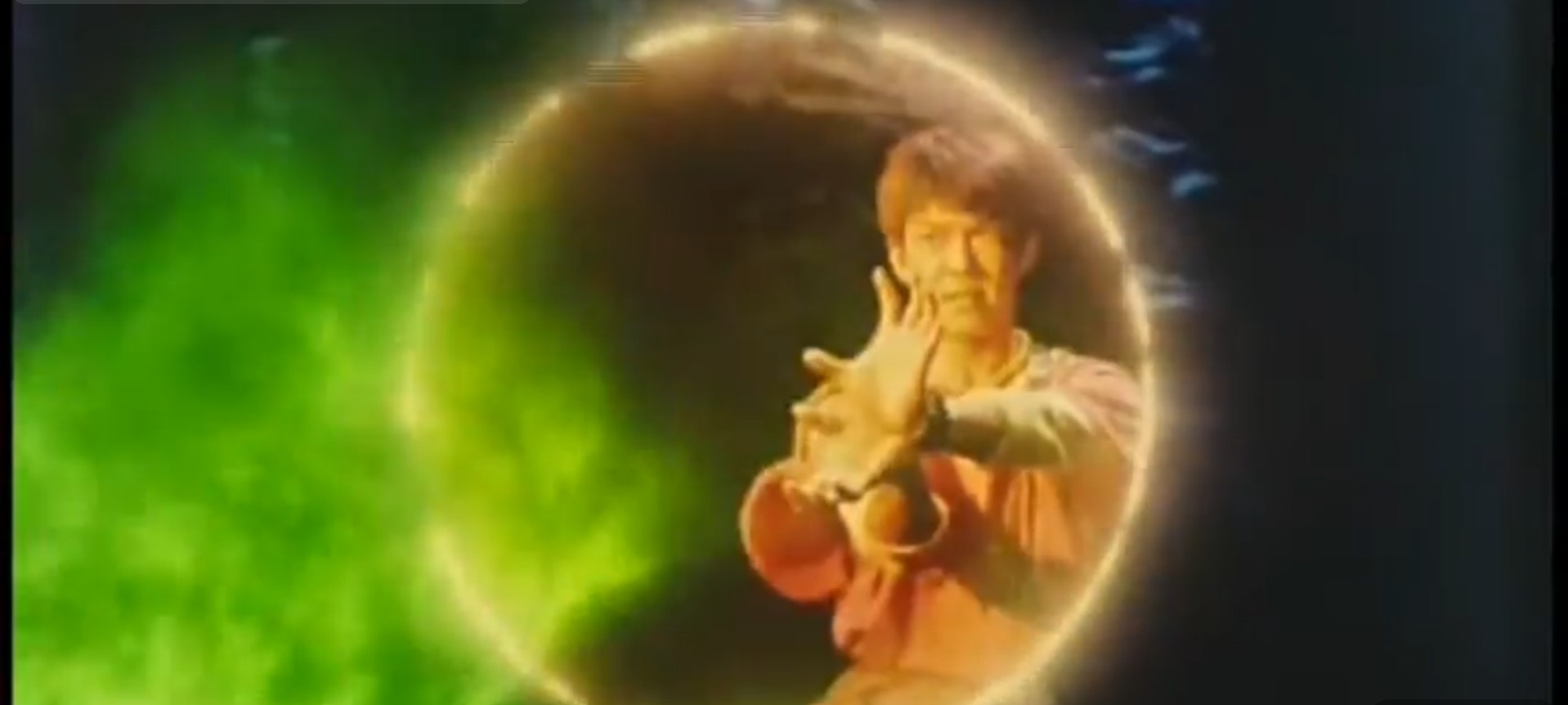
If you’re familiar with director Lam Nai-Choi, then it comes no surprise to you the kind of practical effects juggernaut “Saga of the Phoenix” can become and, in the end, doesn’t disappointment.  Choi often overscales the effort of tangibility, bringing unbelievable imagination and larger than life objects to manifestation without much, if any, assistance from computer generated imagery, and in the late 1980s, that technology wasn’t exactly perfected to what modern cinema sees today with skilled visual artistry and the introduction of artificial intelligence that’s on the verge of possibly shoving itself into the actor pool once the kinks are worked out.  In “Saga of the Phoenix,” the palpable physical presence involved is mostly at the finale third act where good versus evil face off between Ashura, Peacock, and Lucky Fruit and the ravenously aggressive Demon Concubine, the latter transforming like a Power Ranger Megazord into a gray-skeletal winged creature large enough to tower over the heroes and wide enough to swallow them nearly by three times.   Of course, this is not to say there hasn’t been other practical effects along the way which include demons inhabiting dragon statues, high wire acts of characters soaring during fight sequences, and the little mischievous imp, Tricky Monkey, from being a manipulated puppetry that weirdly reminisces Jim Henson’s “Labyrinth.”  The painted optical tricks to render color bolts of energy weaponry are a nice classic touch toward a pop of color as well as creating the inherent superhuman element of the principal players.  For someone going into “Sage of the Phoenix” headfirst without having seen or any knowledge of “Peacock King,” room for the film to standalone is rather thin but not egregiously reliant on the first film.  There’s a bit of recapping at the begging with narrative voiceover and get some clue-ins about the past from the dialogue but there’s still quite a bit unexplained, such as Ashura’s behavior fabled to be a powerful demonic necromancer who has somewhere along the way had a change of heart and we’re not privy to why.  That sense of uncertainly never really goes away through the comedy, action, and laser-firing, high-flying martial arts sinew, that something is innately missing from the story that’s saturated with wuxia themes. 

If looking to increase your bicep’s muscle mass, 88 Film’s limited-edition Blu-ray is weighty with content and it’s only one disc!  The AVC encoded, 1080p high-definition resolution, BD50 is encoded with a cherished updated 2K restored transfer from the original 35mm negative that looks unquestionably majestic on screen.  Vibrant and diffused evenly colors, high decode rate, and flawless textures, there’s nothing to dislike about this release, visually technical.  Deep in the color range and Chi-Kan Kwan’s sundry cinematography that offers vast length shots and a warm neon haze of blue and magenta through tint or gels, with a matted golden peacock rising against the monstrosities of the demon world, “Saga of the Phoenix” resurrects an aesthetic only Lam Nai-Choi could manifest from pure imagination.  The original negative is virtually pristine with no signs of damage or wear to note, nor any compression issues to note.  The uncompressed PCM Cantonese 2.0 mono offers a forward heavy diegetic sound that separate each layer favorably diversified. Clean and clear ADR make for easy discernability, capturing every bit of dialogue despite the post-production mis-synchronous acceptance. Laser action, creature roars, and other detailed measured sounds really give “Sage of the Phoenix” body, depth, and range that makes it an overall A/V highlight amongst its wuxia genre counterparts that tend to omit the smaller particulars of a scene. English subtitles pace just fine and are errorfree in a UK text. Most of the heavy lifting is done by the physical presence of the 88 Films Blu-ray that’s housed in a rigid slipbox and sheathed in a cardboard O-Slip, both containing new arranged illustrated artwork by R.P. “Kung Fu Bob” O’Brien that’s takes the true elements from the film and places them on the cover in a sure-fire canvas of what to expect. The clear Amaray cases also has O’Brien artwork as the primary cover art with the reverse side featuring the original Hong Kong poster art. Along with the O-slipcover, other limited-edition contents include a two-sided collectible art card and a 40-page illustrated book with color pictures and essays from Andrew Heskins (From Panel to Screen) and David West (The Japanese Connection), along with featured Japanese cover art Kujakuoh-Legend of Ashure. If the physical properties were not enough, the encoded content, available on the LE and Standard Edition, will bring this set home as it details with an audio commentary by Hong Kong Cinema Experts Frank Djeng and F.J. DeSanto, alternate footage from the Japanese cut of the film, executive producer Albert Lee discusses the international distribution plan from Golden Harvest Sage of Golden Harvest – The International Connection, an image gallery, and the original trailer. The 88 Films release is unrated, has region A and B playback, and has a runtime of 94 minutes.

Last Rites: Wuxia movies like “Saga of the Phoenix” are no surprise to where John Carpenter found influence for “Big Trouble in Little China” and it’s the director Lam Nai-Choi who didn’t shy away from the difficulties and inauthentic problems of physical effects but the film has its own innate issues with story that downgrade from a saga to just being an epic picture with winged creatures, bright energy blasts, and a lovely Gloria Yip succumbing to age, and status, regression with her Holy Virgin From Hell role.

Own “Saga of the Phoenix” on Blu-ray from 88 Films!

Welcome Proclaimed EVIL Into Your Home! “Video Psycho” reviewed! (SRS Cinema / Blu-ray)

“Video Psycho” on Blu-ray and DVD home video!

On his way back home, Jason picks up a Ryan, a hitchhiker looking for a new start in town, goaled to achieve three things:  a place to call his own, to obtain a job that pays minimum wage, and to find a girlfriend.  Empathetic to Ryan’s new beginnings having gone through himself, Jason invites the hopeful drifter to stay at his shared home with girlfriend Julie and little sister Kylie.  One night drinking between Jason and Ryan, Ryan confesses to killing a man and even delivers video proof with his own recorded snuff film the act.  Disregarding the video and Ryan’s confession immediately as a joke, Jason lets the man stay until another snuff video involving someone Jason knows puts Ryan in the driver’s seat that could set up Jason as the suspect.  Weeks go by and Ryan basically has the run of the house with Kylie and Julie being fed up with his intrusion and Jason’s illogical reasoning for continuing to let him stay.  With Kylie in his romantic sight, Ryan is on his path to achieve his goals. 

A SOV-horror that proves you should never pickup strange hitchhikers and also proves that there are really unsuspecting, trusting, and overall dumb people out there willing to open up themselves, their home, and their family members to complete strangers, even after adamantly admitting to their heinous crimes.  That’s the essential takeaway for Del Kary’s directed, shot-on-video thriller “Video Psycho,” co-written by Kary and Pete Jacelone, a long independent horror producer and writer who began his writing career on the 1997 film and went on to write an abundant of horror you’ve likely never heard of, such as the “Psycho Sisters” series, “The Killer Clown Meets the Candy Man,” and the eyebrow raising “Duck!  The Carbine High Massacre.”  Kary’s career is not as lustrously tarnished with two films in the late 90s, including this one and “Snuff Perversions:  Bizarre Cases of Death,” and not another until last year’s “Cheater, Cheater,” a slasher based off the childish rhyme cheater, cheater pumpkin eater.  Kary solely produces the PsYChO Films production, shot in Yakima, Washington. 

“Video Psycho” embodies that home movie aesthetic that was shot with poor equipment but amongst good friends, and probably a few beers too.  The cast is compromised a bunch of one-and-done actors with Kary’s film being their only credit as the story follows more from the perspective of serial killer Ryan, played by James Paulson.  With a soul patch, poofy dark features, and thick eyebrows that slant down in a malevolence manner, Paulson contains that judgy general appearance of a psychopath and distills apathetic patterns that are nonchalant and blunt.  While Paulson thrives as killer, Jason is the daftest, most gullible person to ever live in the cinematic universe.  Now, I’m not saying actor Adam Kraatz is the blame, performance has nothing to do with the way the character is written by Kary and Jacelone and that’s their own doing, but Jason’s inactivity to do anything or warn anyone is more frightening than the antagonist.  Girlfriend Julie (DeAnna Harrison) and baby sister Kylie (Jennifer Jordan) also can’t understand the man of the house’s submissiveness to a complete stranger who has this power over him.  When they both begin to question his authority and rational when weeks past and this random guy from off the road is still hanging around, Jason reverse psychologizes the two people closest to him which makes us wonder who the real villain is in the story.  The only other characters with substance are Kylie’s boyfriend Rick (Jared Treser), who has little impact being a buffer between sociopath Ryan and his tender beloved Kylie, and video store manager Steve (Art Molina), who does a better buffering job deflecting Ryan’s unwanted and stalkerish advances until Ryan has his way with him.  Outside the principal lot, the rest of the cast fills in with Ryan’s videoed victims, most come in a single montage of analog recorded murder, with Jason Alvord, Chris Valencia, Shannon Dimickl Brandy Jordan, Jack Meikle, Heidi Munson, and Charles Summons.

Lo-fi and dry, “Video Psycho” presents an invariability that ultimately kills any intrigue, tension, and fear.  With the cast being what it is, an adequate of inexperience, the narrative needed a lift to cannon itself beyond the routine of motiveless stranglers who kills for the love of killing.  Kary and Jacelone’s attempted twist for high impact is Ryan showcasing his snuff body of work to newfound friend and host Jason and for Jason to think nothing of it and let the maniac stay with him and his closest loved ones.  At this point, audiences will slap their foreheads so hard aspirin couldn’t handle the amount of pain to follow and attention to the rest of the story will begin to wane as disbelief ad improbability start to set in like a bad side effect of an illicit drug that clearly has said side effects.  Acts two and three barely blip on the developmental and dynamic activity meter between the characters conversations of the Ryan confoundment.  Essentially, they all talk about the inaction of others and give the benefit of doubt rather than taking action themselves to alleviate Ryan’s squatting.  Ryan’s the other character enacting real change during his weeks’ stay by videotaping every count like it’s his last and insidiously inflicting himself creepily toward Kylie.  Kary does output a few notable scenes of unsettlingly imagery, such as Kylie’s haunting dream of Ryan calling her name and getting closer to her bed as she sleeps while in strobe light and with the lo-fi videotape quality, the effect is definitely dream surreal, at least that is what “Video Psycho” has going for it.

SRS Cinema’s newly restored and re-mastered Blu-ray edition is on AVC encoded onto a 25GB BD-R with 1080p high-definition resolution.  Not that the pixel count really matters with “Video Psycho” and it’s lo-fi videotape that’s neutralizes textures and color and comes with its share of interlacing and tracking issues.  To worry about compression problems, to which there is none within the uncomplex file and its size used for the codec, would be a waste of mental and visual space with an image that does delineate objects to differentiate, implies true hue, and does the job of lower grade, SOV-horror with authentic commercial SOV-qualities of home S-VHS camcorders.  SRS Cinema never really cared about being the picture of health when it comes to quality, so this isn’t off brand for their content and schtick but does heavily play more into the little-known obscurity of home-grown thrillers within its full frame 1.33:1 aspect ratio.  The English mono track offers parallel quality to the video with a static and lo-fi quality that won’t have the pithy impact of a robust and all-inclusive surround sound or even stereo.  Kary’s produced in minor key minimalism and dread score is one of the element’s that be elevated. Dialogue’s hit-or-miss with clarity that’s often impeded by the said interference and poor mic placement, or just the intrinsic issues of an on-board mic.  There are no subtitles available.  With poor A/V quality, why release this film on Blu-ray?  The answer is simply because of the wide-ranging special features that include interviews with the actors who play Ryan’s on-screen and video victims, such as Art Molina, Jennifer Jordan, and Adam Kraatz.  There’s also a feature paralleling commentary track, behind-the-scenes rehearsal footage, deleted scenes, alternate takes, and outtakes.  Plus, the official and teaser trailer along with additional SRS Cinema previews.  The company continues to commission some pretty rad artwork and that is also true here with Belgium graphic artist STEMO who electric saturations of purple, red, pink and blue make for a eye-catching and intriguing roadside killer artwork, even if a bit literal with a thumb up hitchhiker holding a video camera on the side of a blood soaked road in the foreground.  The artwork fits snuggly in between the film layer of a standard Blu-ray Amaray and the disc is pressed with the same front cover image.  The 75-minute feature comes not rated and the Blu-ray is available region free.

Last Rites: An unremarkable, home brewed, strangler picture with little to say, “Video Psycho” has unimaginative idiocy with characters and a narrative conclusion that can be seen a mile away, leaving the SRS Cinema’s title worth only to watch because of its catfishing artwork.

“Video Psycho” on Blu-ray and DVD home video!

A New Drug, A New Promised Cure, a Result of EVIL Side Effects! “Mirror Life: Modern Zombies” reviewed! (Cleopatra Entertainment / DVD)

“Mirror Life” on DVD from Cleopatra Entertainment!

An experimental drug known as Dumitor has the promise to cure all known ailments but while the animal testing proved encouraging, scientists Donovan and Taylor need to prove their miracle formulation on people.  The formulation creates a mirror reversal of the right-handed nucleotides and the left-handed amino proteins in the biological DNA sequence that could contrary the effects of chronic sickness.  Halfway through the experiment trial, Dumitor appears to be working until one of the participants comes down with hallucinations stemmed by an overload of endorphins resulting in violent behavior.  A failed lockdown and execution of all infected puts the world on the precipice of a pandemic and video journalist Tracy aims to find out what happened to her cousin, one of Dumitor’s trial members, who has mysteriously disappeared.  As Tracy gets closer to the truth, the pandemic spreads, the violence spreads, and the coverup to debunk accusations and prominent names out of the media has turned to desperate aggressive measures by Dumitor’s benefactors.

Based on the actual scientific and controversial theory called Mirror Life and transposed as the basis for the 2025, American horror-thriller, “Mirror Life,” the movie, depicts the cinema sensationalized effects from the synthesized molecular theory put into practice on the human body and mind as the be-all and end all cure for persistent ailments, turning usually mild-mannered and sensible people into crazed and delusion killers being masked under a whitewashing umbrella.  Also known as “Mirror Life:  Modern Zombies,” the film is written and directed by former amateur boxer turned filmmaker Kazy Tauginas in what would be listed as his debut writing credit and directorial.  With that being said, “Mirror Life” is actually a doubled up and mirrored concept of itself in some weird kind of way as a different cut of the Brian Kazmarck written-and-directed “Terminal Legacy” from 2012 that has Tauginas as the story creator.  The plot above is essentially the same with the original shoots being spliced with the integrated documentary investigation from Jordan’s cousin Tracy and her cameraman, interwoven as a non-linear parallel extension to the original concept and re-released with a new title, with the genre hot term zombie thrown into the subtitle for good measure.  “Mirror Life” or “Terminal Legacy” part deux is a production from Crapshoot Productions, New Lease Films, Ugly Puppy Productions and Open Fire Films, produced by Aidan Kane, Louise M. Peduto, Nat Prinzi, Stanislav Puzdriak, Brian Smith, and Kazy Tauginas.

Tauginas also costars in the film as Jordan, a surviving trial participant and Tracy’s missing cousin who finds himself chin deep in Dumitor contagion and a prime target in a containment massacre of his fellow trial mates Lindsay (Tationna Bosier, “Supernaturalz:  Weird, Creepy, & Random), Rosemary (Elise Rovinsky, “Fog Warning”), and Keith (Corey Scott Rutledge) when disturbing signs of infection show.  The small sample group have a decent dynamic with Jordan and Lindsay become hot for each other, Keith donning the bad boy antagonist persona, and Rosemary bringing up the rear as the withdrawn woman as they interact with the three doctors conducting the experiments in a cautious and courteous Dr. Taylor (Cuyle Carvin, “Dolls”), a more confident formulation scientist Donovon (Bristol Pomeroy, “Devil and the Nail”), and a more charge-forth with testing and results in Dr. Campbell (“The House on Tombstone Hill) who have their own contentious dynamic when fast and loose trial and error butts heads with steady-as-she-goes testing.  The original “Terminal Legacy” shot cast has their story spliced with a documentary style investigation by Jordan’s concerned cousin Tracy, played by Courtney Cavanagh who was also in anthological spinoff short of “Terminal Legacy” subtitled “Lost Souls” which doesn’t connect with the Kazmarck feature.  Both “Terminal Legacy” and it’s subsequent, unconnected short tread into being a lesser-known version of the popular sci-fi horror series and movies of “Black Mirror,” hence the word mirror being used to attach “Mirror Life” onto the success of the Charlie Brooker written and produced creation.  The cast fills out with Lawrence Ballard, Sally Greenland, Erica Becker, Mako San, Marc Reign, and Brian O’Neill.

Two shoots from two different times mashed together to form a single narrative structure doesn’t come without any issues, also being a non-linear story that toggles time and characters also doesn’t help.  Yet, “Mirror Life” bulldozes its way to being sound with little overlap puzzlement and only sustaining portions of a la carte plot holes.  Kazmarck’s 2012 script and direction nail a successfully conceive pre-apocalyptic thriller narratively designed like a Steven Soderbergh’s “Contagion” released a year prior snuggly fit into the “Black Mirror” like mold.  Where “Mirror Life” becomes a choppy is with the present tense portion of the shot of video documentary, added in as surplus offshoot to perhaps clean up and close out “Terminal Legacy” with fleshier reel and complexity toward the coverup concept.  By using interchangeable lensed cameras and mock security CCTVs, the spliced in sections create a whole new aesthetic and feels that grasping connection to the original film.  Plus, Tracy’s connection and motivation doesn’t appease her drive to make a documentary or even explain why the compulsive, go-getting cousin is compelled to do the extra leg work for her cousin other than their quickly mentioning their blood relation; there needed to be a deeper conversation of exposition out of Tracy’s emotional vault to get the audience on her side for hounding doctors, sneaking into apartment buildings, and the, essentially, putting herself and her crew in harm’s way for Jordan.  In short, “Terminal Legacy” had the makings of a sufficient sci-fi and apocalypse thrills and chills but without actually seeing the film in its entirety, there’s no way to know if the Kazmarck production went into being development hell, shelved for budget reasons, or had a more incongruous outcome that warranted a redo.

Cleopatra Entertainment distributes “Mirror Life:  modern Zombies” onto DVD home video with a MPEG2 encoded, upscaled 720p, DVD 5.  Presented in a widescreen 1.78:1 aspect ratio, image quality ranges from a third person graded digital capture, a first person raw digital capture, and pseudo-CCTV filter.  For lower DVD storage and the range of perspectives, compression issues are limited to smaller banding issues albeit plenty of darker and negative space opportunities for those milky arch lines to appear.  The grading, however, has a bit of milky residue but not terribly soaked but does keep the black saturation diluted.  Textures around skin and clothing have limited emersion with a smooth or slightly splotchy limitation from the 5-gigabyte compression that has a feature plus bonus content and a soundtrack menu.  For Cleopatra Entertainment, “Mirror Life” is a rights only distributed release, meaning they do not own the music, or rather soundtrack, from the parent company Cleopatra Records.  However, the mix is still an encoded English Dolby Digital 2.0 that has some bite in decibel volume but still can’t quite compare to an uncompressed stereo with “Mirror Life’s” gun-firing, fist-throwing, and the infected guttural sounds; however, the Dolby compression factors into saving space for a decent picture and its accompanying special features.  More importantly, dialogue comes through clearly and prominent.  Bonus features include a director’s DVD commentary, outtakes, deleted scenes, a slideshow, and theatrical trailer.  Cleopatra Entertainment has been constant on packaging with a standard DVD Amaray containing stark and intriguing cover art, especially with “Mirror Life’s” Kerry Russell and Alexandria Deddario-esque Sally Greenland appearing manically and sepia toned with a pair of scissors on the DVD and disc cover.  There are no other physical supplements on the region free DVD that houses an 89-minute, unrated feature.

Last Rites: “Mirror Life” mirrors itself from 2012 with a retouched version of the original film, “Terminal Legacy,” with little-to-no differences and another name slapped on in the director’s section. The horror comes from an effective, scientific relevant story of side effects and coverups but does the Modern Zombies subtitle really, and I mean really, come into play here? It’s a stretch to say the least.

“Mirror Life” on DVD from Cleopatra Entertainment!