EVIL Cabbie Takes Beautiful Women for the Ride of their Lives. “Maniac Driver” reviewed! (ReelGore Releasing / Blu-ray)

Hail down the “Maniac Driver” on Blu-ray!

Taking a taxi should be a reliably safe to get from point A to point B and once you settle the serviceable transaction with payment, you can forget you ever saw that taxi driver again.  But what if that taxi driver follows you home, obsesses over you, and has psychotic plans to take your life as well as his own?  One Tokyo cabbie has those very inclinations toward the beautiful women.  These women intoxicate his severe guilt over a past personal tragedy involving the merciless murder of his wife.  He scours his passenger pool for the perfect beauty to be his closing opus, a gift to society that dealt him the same hand and will take her life as a maniacal masked killer with a blade before he turns the blade on his own neck. 

From the director of “Gun Woman” and “Karate Kill” comes the latest gore-soaked, nudity-laden, psychotronic grindhouse picture from Tokyo filmmaker Kurando Mitsutake.  Labeled as a Japanese giallo film, the writer-director Mitsutake pulls inspiration from one of most influential and prolific Italian giallo filmmakers ever, the late Lucio Fulci, and stylizes his idolizing film with his own proclivity for flair.  The 2020 released film is a thirst trap of the subgenre upon reading the heavily enticing description and its basic but effective cover art of a leather glove and jacket cladded masked maniac holding tightly onto a half-naked woman, almost in an embracing manner rather than a malice one.  Sex and blood sell and “Maniac Driver” doesn’t disappoint but what about the story?  What drives the killer from one woman to the next and does it all make sense?  “Maniac Driver’s” title suggests not, and I believe Kurando Mitsutake felt the same way when writing the script, produced by “After Life” and “Paster Shepherd” producer Mami Akari under the Akari Pictures banner.

Titling the story around the maniac driver binds the film solely to the cab driver, much in the same way William Lustig’s “Maniac” focuses on Joe Spinell’s spiraling madness and scalping mutilations, and we’re pretty much left with the driver’s innermost thoughts, about his process, about his reasons, and about his plans.  Essentially, the maniac driver drives the narrative with a contemplative fare.  Tomoki Kimura has surpassed the challenge with a pendulum crazed performance sought to not only express his derangement but can also infect the viewers with the character’s warped mind.  Kimura keeps his expression stoic and sour in a role that barely requires him to speak as we mostly hear prosy, abstract, and murderous inner thoughts.  In regard to the women the driver stalks and involves himself sleazily with, Kurando Mitsutake goes the JAV actress route and is familiar with as having the alluring Asami star pretty much naked through the entirety of “Gun Woman.”  With adult actresses, Mitsutake receives uninhibited support for the victimized characters the maniac driver fantasizes over and kills as well as Mitsutake’s satirical whims in exploiting the subgenre’s penchant for gratuitous flesh.  Adult starlets from softcore actress Saryû Usui (“Sex Detective Hatenashi”) to the hardcore Ai Sayama (“Date with a Busty Nymph”), Ayumi Kimito (“Love Kimomen”), and SOD (Soft on Demand) Create’s Iori Kogawa (“One Wife + 10 Husbands) add a little titillation with gratuitous exposure, bondage, and fornication to the max. 

“Maniac Driver” paves its own neo-giallo path that swerves away from the traditional calling cards. Instead of a typical Italian murder-mystery, Mitsutake intentionally divulges the killer cab driver with a delusional hunger and fate. All the other hallmarks of a giallo killer are there in a Fulci tribute form with leathery glove hands, a gleaming blade, a masked face, and a killer who makes a duck-like sound that’s far more menacing than comical. “Maniac Driver” also pulls from other inspirations, such as Lustig’s “Maniac” as well as Martin Scorcese’s “Taxi Driver” with Tomoki Kimura channel his best Robert De Niro impression with the iconic You Talkin’ To Me line. Behind the whole ghastly facade and polychromatic style, entrenched is a theme of survival’s guilt that leads the cab driver to the point of no return. Severely injured and helpless to save his wife from a crazed killer, he’s wrought with putting forth into the world exactly what was taken from him in the same fashion, but how the deeper we spiral with and into his derangement, piecing together his mental episodical puzzle might not be so easily pegged. Mitsutake’s seemingly straight forward narrative is a blindsiding blade to the throat when looking in the opposite direction, expecting a different outcome, and when the principal character is kept to his innermost thoughts, viewers are treated with only the maniac’s disenchantment of life. The curveball is more than welcome despite all evidence being in plain view, but with the bizarre fiendishness, schizo-universe, and the T&A, to see clear through it all is impossible, especially when Mitsutake really goes off the rails with the maniac driver’s fantasies that mesh seamlessly with reality. Scenes with Iora Kogawa and Tomoki Kimura are intolerably hazy as the actors engage coquettishly as an exquisite, kimono dressed female passenger and a public transportation service man peering his eyes through the review mirror and this leads to an explicit one-on-one encounter that includes some bondage as well as a Iaido showdown with swords drawn. Through Mitsutake’s various closeups and depth-shots, sprinkled with tight up shots to emphasize body parts and to create an oppressive world, “Maniac Driver” ebbs and flows that sort of satirical, aggrandized chaos to make light of the oversexualization, as skirts hike up while running and exposed chest flop out underneath tightly bound tops, and the sheer madness of a broken mortal man. “Maniac Driver” is an uber giallo of sleaze and psychosis, a steady ride of burning yearning, and is gory where it counts.

To be honest with you, I thought I’d never see a ReelGore Releasing again. When speaking with Cult Epics founder Nico B., who launched the label with producer Steve Aquilina (“Violent Shit: The Movie”) in 2016, I had asked the popular curator of cult cinema whether he would continue with banner that sought to specialize in the release of extreme, violent horror after the releases of the ItsBlogginEvil generally well received “The Orphan Killer” and “The Curse of Doctor Wolfenstein?” The answer I received was a flat out no from Nico B. because, simply, the label didn’t generate enough profit. Well, lo and behold, ReelGore Releasing has been resurrected and the blood is flowing once again with a pair of new titles with “Manic Driver” being one of them. Though Nico B. has confirmed no involvement with the releases, it’s still great to see the label back in action again. “Maniac Driver” is released on a ReelGore Releasing AVC encoded Blu-ray, a BD25, and presents the Mitsutake film in 1080p, high definition and a 2.35:1widescreen aspect ratio. Despite heavily saturating to a blur scenes with brilliant, primary coloring, familiar to the giallo subgenre, the overall details are quite pleasant and palpable. Mitsutake utilizes different lighting and shadowing techniques to create different atmospherics but never seems to inherently kill the textures as they maintain a sharp, tactile presence. The Japanese DTS-HD 5.1 audio track, with forced English subtitles, is vibrant with an 80’s inspired blend of synth and riff-rock. Japanese dialogue is strong, clear, and innately clean with the digital recording, balanced by an error free and aptly timed English subtitles. “Maniac Driver” has a robust, yet sometimes overelaborated, sound design that outputs nicely through the side channels. The killer’s leather glove sounds can be overkill with every scene being loused with the individual stretches of the fabric while the energy-thumping engine combined affixed shots around the tire and grill is a powerful effect of the cab driver’s routine hunting method. The release also comes with French and Spanish subtitles. Bonus features include a making of featurette with interviews with the cast and crew, an audio commentary with director Kurando Mitsutake, photo slideshow, and the trailer. There are no stinger scenes during or after the credits. The physical appearance sheaths the 25GB disc inside a sleek red Blu-ray snapper case with reversible cover art that has two alternate posters on the inside. The film is not rated, region free, and has a run time of just under 75 minutes. “Maniac Driver” is no passenger in the giallo subgenre; the Kurando Mitsutake might be a bundle of homages and inspirations but takes the wheel of the Japanese sexploitive-giallo gas guzzler with deranged brutality.

Hail down the “Maniac Driver” on Blu-ray!

EVIL Surfs the Fresh Powder. “Shredder” reviewed! (Ronin Flix / Blu-ray)

“Shredder” on Blu-ray at Amazon.com

Mount Rocky Summit ski resort has been closed and abandoned for years because of the tragic death of a young skier at the hands of intoxicated snowboarders not following the resort’s rules.  Years later, a group of snowboarders sneak onto the resort property to snow surf the untouched slopes despite the local’s steep warnings of a haunted mountain and an easily influenced sheriff’s waning attempt to remove them from trespassing.  The snowboarding teens should have heeded the ominous warnings as a masked skier dressed all in black begins a massacre on the mountain, brutally killing the ignorant and reckless snowboarders one-by-one for defying the resort and lift safety guidelines and rules.  Before realizing what was happening, accusations and panic set in as trust and survival become key to surviving a total gnarly wipeout. 

“Shredder” – no, I’m not talking about master Oroku Saki aka The Shredder, high leader of the criminal ninja syndicate known as the Foot Clan and main antagonist for the Pizza-loving crimefighters, the Teenage Mutant Ninja Turtles.  The “Shredder” that I’m referring is the unheeded 2001 slasher from writer-director Greg Huson and co-written by Craig Donald Carlson.  “Shredder” is every bit the essence of the late 90’s slasher-dash made in the early 2000s with a pop-punk soundtrack, radical attitudes, and an incorporated extreme sport built-in to stand out amongst the others in the genre with its snowboarder and skier themed horror model.  Filmed in and around the Silver Mountain Ski resort in Kellogg, Idaho and known as Jason Z and Ski Weekend in other parts of the world, “Shredder” comes during a slasher renaissance that began with Wes Craven’s game-changing “Scream” designed to plant the killer in plain sight and keep the audience guessing and analyzing who just might be the masked murderer blazing the bunny slope. Idahoans Rory Veal (“Lover’s Lane”) and Geof Smith (writer of “DeepStar Six”) produce the cult feature distributed direct-to-video by MGM.

Though “Shredder” is a campy horror-comedy, the feature does take itself rather seriously and the actors soak themselves into their stoked, stoner, and sex-driven characters of a variety volitions. Scott Weinger, the voice actor whose claim to fame is being the original voice of Aladdin in Disney’s 1992 animated “Aladdin” and its various sequels and spinoffs, finds himself on the opposite side of the spectrum in a not-so-kid-friendly film about a skier who axes, beheads, hangs, and stabs inappropriate snowboarders to death. Weinger plays the lead principal character as the lead on a leash boyfriend, Cole, with a veil that keeps him from seeing his trollop rich girlfriend Kimberly Van Arx, played by Lindsey McKeon (“Indigenous”). Weinger and McKeon wear their roles well enough to feel Cole’s good guy mold, his hero of character, being cuckolded by Lindsey’s wondering eye and brazen attempts to sleep with the hot European hitchhiker Christophe (Brad Hawkins, “From the Dark”). Kimberly Van Arx isn’t the only lady sex cuckoo for Christophe as Kimberly’s friend Robyn (Holly Towne) slathers on the seduction by hanging out of her clothes for much of the interior scenes. Much of the flirtation and hanky-panky is fairly overboard to the point that even the imbedded amateur cam-recording videographer and virgin Skyler (Billy O’Sullivan but credited as Billy O) becomes involved and handsy with another trespassing skier outside of their group who takes a shine to him instantly. Now, you can’t have an early 2000s slasher film without the token druggie and that role Peter Riggs (“Roulette”) as Kirk, professional snowboarder testing out new boards to dislodge himself as number two snowboarder in the world. Individually, the characters a fine. Together, the cast creates a body of personalities to sympathize and hate and also not bog down what’s really a mediocre-made slasher with decent gore. “Shredder’s” cast rounds out with Juleah Weikel, Candace Moon, Ron Varela, and Seth Reston.

When I say mediocre-made, I mean script sets up characters to die arbitrarily. There’s no means to their ends and the majority of the kills are as quick as a snowboarder finishing a run down the slalom. That’s not to say that “Shredder” doesn’t bring the gore with an opening and an ending that’ll make you lose your head or just become shredded skier meat in a giant snow grinder truck that has entertainable yet questionable visual effects results. What’s admirable about “Shredder” is the production doesn’t skimp out on landscapes and ski equipment to sell the whole winter resort theme. This partly becomes why “Shredder” is a cult horror hit with skiers and snowboarders. Doesn’t hurt that the filmmakers were able to utilize the Silver Mountain Resort complete with ski lift and lots of fresh snow for the spliced in shots of snowboarding runs with character stand-ins. Alongside the postmodern human and the cliched tropes lies the mystery maniac just waiting to be exposed in a coda showdown with the final girl or boy, but the problem with “Shredder’s” obscurity is its very transparent. Designed by force to misdirect our attention to a potential person was poorly crafted and made Cole seem foolish when he struggles to make a case about the killer’s identity with no foundation to stand on. Instead, Huson and Carlson write in a minor role that quickly evolves into the unmasked major player but unlike “Shredder’s” predecessors, such as “Scream” or “Urban Legend,” picking out the killer is made-easy and takes the fun out narrowing out the suspects. There’s plenty to like about “Shredder” – motley crew of characters, solid kill scenes, and Holly Towne checking the nudity box – but the cult worthy film definitely deserved to go direct-to-video as an average archetype of the subgenre.

Hit the sanguinary slopes with “Shredder” now on a 1080p, high-definition Blu-ray from Ronin Flix, Scorpion Releasing, and distributed by MVD Visual. Presented in a widescreen 1.85:1 aspect ratio, the AVC encoded BD25 has softer details that are not amply delineated but are suitable as a lot of light bounces off the snow and washes away some of the depth. Far and near exterior landscapes are breathtakingly immersive in the scale and textures and the interior scenes are kept dark and claustrophobic with only dancing flashlights and fires to light the anxiety mood. I find fascinating that in early 2000s, 35mm celluloid film was still be used here and the transfer appears to have weathered any kind of wear or aging, granted we’re only talking about two decades worth of time passed. There’s light, natural grain with some white speckled moments here and there that don’t affect viewing and no real issues with compression on the lower storage disc that maintains bright color, blacks, and an overall stabilized picture. The Blu-ray comes with a single audio option, an English DTS-HD 2.0 master audio, that manages appropriately an ample amount of output through the dual channels. All tracks are rich and robust with dialogue clear, clean, and audible, a punk rock soundtrack that underscores and supports the exterior snowboarding runs with vitality, and a plentiful range of sound effects that might have been better suited with more defined depth. Optional English subtitles are available. Special features include a brand-new interview with actress Lindsey McKeon that chiefly and briefly goes through her career up until now, a brand-new audio commentary with director Greg Huson, outtakes aka deleted scenes, and the original theatrical trailer. The physical features include the traditional Blu-ray snapper case with illustrated artwork by Devon Whitehead with his trademark style of the main villain looming overhead a chaotic mixture of scene depictions. The 86-minute, region A encoded release is rated R for violence, gore, sexuality, language and some brief drug use. Not a downhill yard sale as one would expect and if you happen to be not a regular mountain adrenaline junkie, director Greg Huson does helm a fairly resilient and agreeable masked slasher with a winter avocational theme.

“Shredder” on Blu-ray at Amazon.com

The EVIL Fat Man Delivers a Sack Full of Slaughter in “Christmas Cruelty!” reviewed! (Unearthed Films / Blu-ray)

Oh, Its Starting To Look a lot Like “Christmas Cruelty! on Blu-ray!

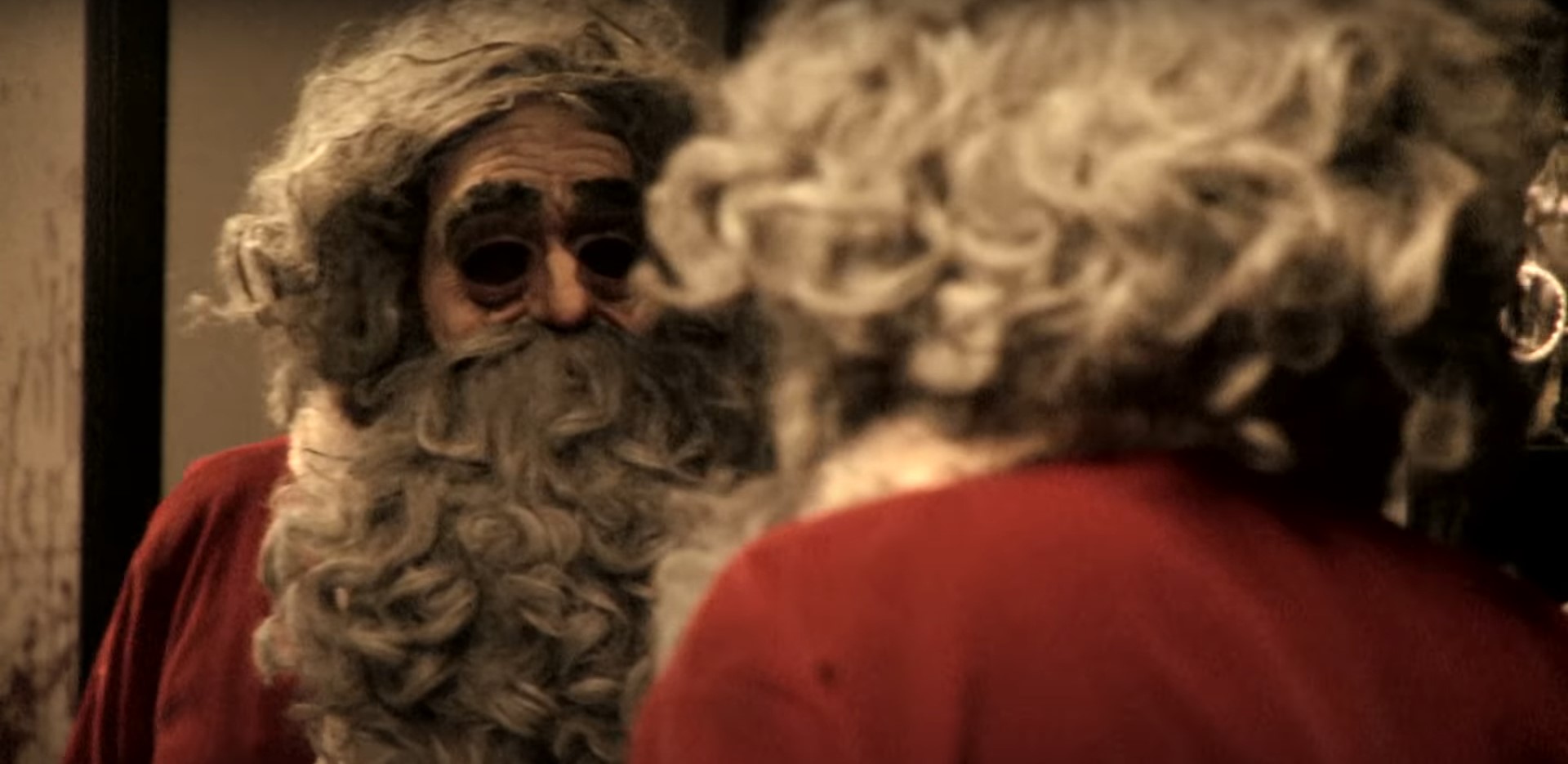
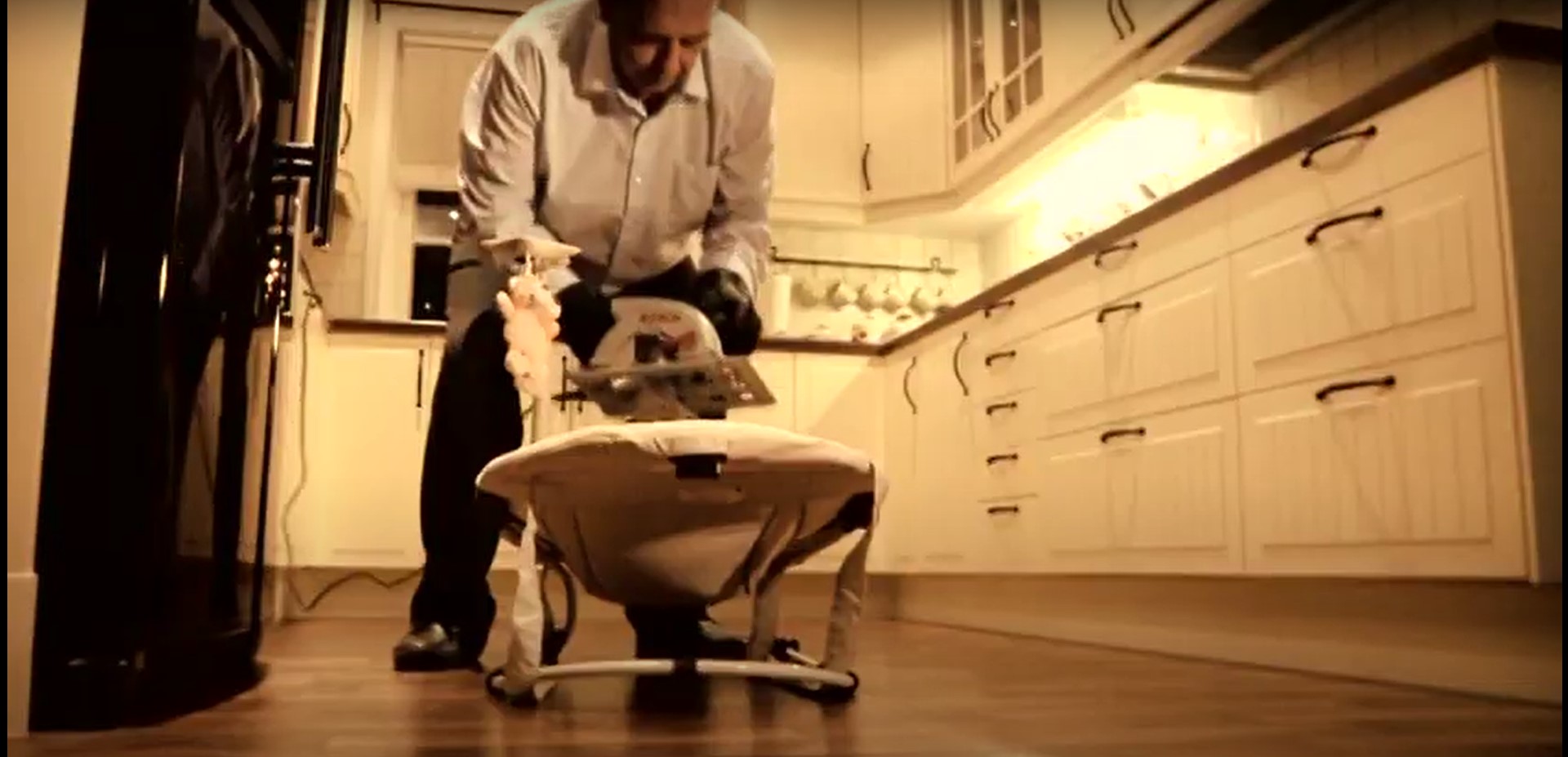
Eline, Per-Ingvar, and Magne are three close and eccentric friends preparing for the jolliest time of year, Christmas. Concocting a unique Christmas spirit of their own with scarring passers dressed as Krampus and brewing an alcohol infused cocktail, the unconventional celebration reflects their individual perspectives on the holiday: a knowledgeable Eline embraces more traditional values, Magne goes against the grain with a loose grasp on the concept of it all, and the lack of mental acuity for wheelchair bound Per-Ingvar leaves him in naive, gullible belief. All the while the friends prep the groundwork for a Christmas party, a homicidal sociopath tracks and records their every movement, habits, and personal attributes and when Christmas comes, the meticulous and brutal serial killer dresses as Santa and infiltrates what turned from being a joyous bash into Santa bashing in heads with a hammer, decapitates party guests, and rip-roars a chainsaw with blood splattering apathy.

It’s that time of year again to ride the Christmas slay down the hills covered with blood-red snow. Santa, usually a sign of pure good and jovial togetherness, is transformed to embody terror and evil across the holiday season. In 2013, Norwegian filmmaker Per-Ingvar “PIT” Tomren (“Bonzai Motherfucker!”) and his co-director Magne Steinsvoll (producer of “Killungard” and “Lyst”) not only star in another Yuletide horror that yields itself to violence and blood but also adds their perspective entry into the vast Scandanavian subgenre of ole’ Saint Nick, or an imposter of the jolly fat guy, going postal in the worst possible way. Tomren and Steinsvioll work into their debut feature film off a script penned by principal co-star Eline Aasheim as well as Janne Iren Holseter, Anita Nyhagen, and directors Tomren and Steinsvoll. Originally entitled “O’Hellige Jul!” in Norwegian, the 2013 released “Christmas Cruelty” is a Stonewall Productions and presented by DC Medias under the producing credits of Magne Steinsvoll, Kim Haldoersen, and Raymond Volle (“Saga”).

Instead of hiring an outside cast for a serial rapist and killer Santa flick, why not just star in the film yourself? In order to get their feet wet in film production as well as learning the rigors of acting, Per-Ingvar Tomren, Magne Steinsvoll, and Eline Aasheim essentially portray themselves as the three friends spending unique quality time together during Christmas. Per-Ingvar works into the script the corporeal truth of this delicate skeletal structure that battles brittle bone disease aka osteogenesis imperfecta. Confined almost entirely to his wheelchair, Tomren curbs his wellbeing for the sake of art as the filmmaker doesn’t exempt himself from the various physical altercation scenes to have a stuntman take the glory. The same kind of sentiment can be said for Eline Aasheim whose character must endure an invasive attack, one that’s deeply uncomfortable and intimate in nature surrounded by a virtually an all-male cast which includes offscreen friendships. Then there’s Magne. If Per-Ingvar and Eline embodied metaphorically everything that is good about the Christmas spirit, Magne was the complete opposite as a complaining, sexist, and indelicate sourpuss living in the moment rather than grasping his own barbed attitude. The malarky between the three friends on screen is perhaps very mirrorlike offscreen as there is a comfortability level with each other performances that keeps the dynamic on the edge of combusting but yet you never feel like a change in their relationship will ever mount, keeping their friendship close, tight, and compact. The outsider, the Serial Santa, is played mid-50’s Norway actor Tormod Lien. I mention Lien’s age because he is older than the other principal characters and that plays into his character’s wisdom as a family man who takes notes on who’s halls he will soon deck. Calm, organized, and deviant, Lien plays into the apathy without a twinkle of empathy and engineers a bloody show of planned homicide with some comedic bits put on by Lien when Serial Santa has to go off script because of interruptions.

In my mind, there are two types of Christmas horror films: the uncanny universe where Santa, or something related to Santa, such as his toyshop elves or Krampus, world’s lives and breathes in a twisted malevolency while the other type resides in fact with sociopathic and mentally unstable Santa impersonators who go on a merry murdering spree. “Christmas Cruelty!” falls in that latter category with serial killer, dressed as Santa and a grotesque mask, gatecrashes the good protagonists’ party for the nefarious primordial urge to hurt, rape, and kill. Maybe even dabble in a little cannibalism. “Christmas Cruelty!” is a lump of extreme exploitation for next level nihilism. I’ve seen my fair share of messed up movies, but the Tomren and Steinsvoll defiling picture doesn’t even have a millimeter of morality. Without a theme, a message, or a basic point, “Christmas Cruelty!” is hollow atrocity for the sake of shock and slaughter. The principal goods are either too afraid to help each other, too unwilling to help each other, or are too conceited to even take notice that something is amiss. Instead, it’s the Serial-Santa who has his ducks in order, unabashed to simply walk into a room and start his plan of cold-hearted perversion, but before even getting to that moment with deliciously diabolical practical special effects that can produce a gut-wrenching impact, the story goes static with the principal goods chitchatting about history of Christmas, their likes and dislikes of the season, and nursing a hangover from hell. This portion to build character doesn’t actually build character as we’re skirted around victimized trio’s reason for to deserving of our sympathy. Yeah, there’s a person with learning disabilities in a wheelchair and a young woman with an inkling of a moral compass but I find them aimless, sleepwalking through life, and without purpose.

Christmas comes early with the release of “Christmas Cruelty” on Blu-ray home video from our friends at Unearthed Films and MVD Visual. Presented in 1080p with a widescreen 1.78:1 aspect ratio on an AVE encoded BD50, Unearthed Films rendering of the transfer goes without a hitch, but the stylistic choices of Tomren and Steinsvoll are an eyesore with a mustard yellow overlay intended for a grindhouse veneer that also correlates with the large font and embossed opening credits. Much of the details and natural look are lost in the yellow tint. The erratic editing is supposed to reflect Serial Santa’s fragmented mind which idiosyncratically finds footing but can be off-putting to its experimental quality. The Norwegian language DTS-HD 5.1 surround sound mix reflects no issues with depth and range despite having limited need for both and has mostly clear dialogue albeit some obstruction from the soundtrack that is heavily integrated into the sound design and becomes a character in itself with a blend of English-lyrical Christmas themed tunes, instrumental string melodies, acoustic solos by Magne Steinsvoll, generic rock tracks, and folksy jamming that ends with the loud roaring of a chainsaw slicing through body parts. The bonus features include an audio commentary with co-director Per-Ingvar Tomren and producer Raymond Volle, retrospective interviews in How Cruelty Changes Our Lives featurette, blooper outtakes, photo gallery, The Last Rebels hit “Endless Highway,” an interview with Morten Haagensen, “Tradition” short film, Press Conference, a watch-a-long session with Flesh Wound Horror, and teaser trailer. The Unearthed Films menu options were a bit cumbersome to navigate when trying to play the movie as the next screen goes to the three audio options – either two commentaries that run along with the film and the play movie without commentary, but the options are not terribly intuitive and had to go through the options before I was able to play just the movie. The physical release comes in a traditional blue snapper case with the soulless, dead eyes of the Santa mask illustrated with liver sports and aged wrinkles on the front cover. Unearthed Films’ release comes not rated, region A encoded, and has a runtime of 94 minutes. Probably not the perfect holiday gift for the conventional horror filmgoer, “Christmas Cruelty” is difficult to ingest and digest as not only an extreme exploitation film but as a film as whole, but with the callous chunks of coal and the striped blood red candy cane of scrumptious special effects, the Norwegian definitely offers a good stocking stuffer.

Oh, Its Starting To Look a lot Like “Christmas Cruelty! on Blu-ray!

EVIL Bigfoot is All About the Amputating and Mutilating! “Suburban Sasquatch” reviewed! (Visual Vengeance / Blu-ray)

“Suburban Sasquatch” On Sale Now at Amazon.com!

A mystical, murderous beast of lore has suddenly appeared in the woods of a small Pennsylvanian town.  Hikers, fishermen, urbanites, and even grandmothers are not safe from the carnage dished out by Bigfoot.  Sniffing around crime scenes is eager freelance reporter Rick Harlan to unearth the truth about the recent string of grisly attacks and make a name for himself as a journalist.  Harlan finds himself in the middle of a police coverup, a Native American woman-warrior, and one suburban playground where a phasing in-and-out Sasquatch can make a killing whenever and wherever.  The Native American, Talia, is destined to square off against the evilest anthropoid her tribe has ever faced, one that thirsts for blood and does the unspeakable with the women it abducts.  The story and clash of the century may be Rick and Talia’s last in this brutal man versus beast showdown. 

As an aficionado of the horror genre, I’m on what seems to be an eternal quest to unearth the best (I’ll even settle for just good at this point) Bigfoot/Sasquatch film that really can scare the pants off viewers while providing a good storyline and solid special effects for the hairy big guy. Is that so much to ask?  The next undertaking to flash across our eyes, like a brisk fur of man-beast in the forest thicket, is the classic SOV-shot and shamelessly spooled special effects endeavor that is “Suburban Sasquatch.” The 2004 Dave Wascavage film is the sophomore project for the writer-director, following up from his deadly fungi party comedy-horror, “Fungicide,” with a shot at the title for best-worst, or is it worst-best, Bigfoot movie in the early 2000s. Shot in my old stomping grounds of West Chester, Pennsylvania, the suburban setting is authentically captured in that piece of the Commonwealth state with sprawling neighbors that give wide berth of land between houses and plenty of parks and wooded areas to Sasquatch-suit tramps. Wascavage produces the film himself, while also wearing multiple hats in many other crew roles and creates the feature under the filmmaker’s very own Troubled Moon Films, a production company that prides itself on low-cost video production and storytelling in which Wascavage self-proclaims Z grade movie making results.

“Suburban Sasquatch” is a pendulum swing between character perspectives, disassociating any one character from being a main lead and focusing more on a group of principals that even includes the suburban sasquatch itself.  If focusing on the heroes of the story, or the hero-ish types, then Rick Harlan (Bill Ushler, “Viscera”), Talia (Sue Lynn Sanchez), and the two officers – John Rush (Dave Bonita) and Steve Parker (Juan Fernandez) – would be your best bet as the unorganized protagonists deal with the beastly menace in their own way.  The acting is forced and rigid all around but not entirely at the cast’s culpability.  The script is extremely breathy and scenes last too long by lingering exposition that resulted in the film’s too-lengthy 100-minute runtime, likely drafted as a shorter run film but dialogue was added to flesh out a full-fledged feature.  Even so, performances are blankly vanilla and, to be fair, that’s to be expected inside the low-budget market. Dave Weldon, Rush, Parker, and even director Wascavage himself enact Bigfoot’s posturing and behavior familiar to a mountainous silverback gorilla with wild cupped hands waving overhead and while this seems silly in the obviously cost-efficient makeshift suit packed with unnatural folds of the stomach, a bulging bosom, and a mouth that chews like a latex-fitted gumming grandmother, the trio make the best of Bigfoot’s monstrosity and hirsute lumbering to the point of knowing what you’re getting in a sasquatch for the rest of the film. It’s all about consistency, especially when four actors interpret the movements. Wes Miller, Dallas Quinn, Troy Stephen Sanders, Loretta Wascavage, Edward Wascavage, and David Sitborn, who I thought had the most natural dialogue in the entire story, rounds out “Suburban Sasquatch’s” mania.

Has “Suburban Sasquatch” become the Bigfoot film of my long-awaited dreams? Unfortunately, no. However, what the 2004 inexpensive picture offers is invaluable cabbalism that theorizes one reason why Bigfoot is only briefly caught out of the corner one’s eye, a peripheral phantom, with a phasing feature that allows Bigfoot to go in and out of reality. Like a good b-movie horror writer-director, Wascavage also capitalizes on the creature’s stature by not only arranging a towering comparison against his enemy and food but also by fabricating a big hairy foot, larger than man’s chest, to emphasize more on the beast’s epithet. In order to achieve the height, Wascavage uses easy, practical tricks to jumboize, such as playing with different depths, but Wascavage, in another one of his many hats, also attempts his hand at crude computer generated graphics that stretch beyond the images’ limits to achieve his desired effect. Pixelated and warped without any depth or any amount of smoothness, the cut and paste photoshopped animation is jerry-built “Monty Python” at its worst in a so bad its worth seeing phenomena and certainly priceless for internet memedom, especially when coupled with severed appendages doctored from the local Spirit Halloween flying in all different directions in a Bigfoot’s fit of animalism. A couple of slashing eviscerations, a head-popping decapitation, caricature arrows and tomahawks, attack crows, and a whole lot of thwacks summarize much of the monkey business violence “Suburban Sasquatch” unfurls and while not completely bottom-of-the-barrel terrible, translating better than most SOV post-work, this Bigfoot berserker extends the search for a better entry in the subgenre.

Much like the first three predecessors on the Wild Eye Releasing Visual Vengeance banner, “Suburban Sasquatch” receives a massive, special features loaded Blu-ray upgrade coming in catalogued at number four. Also, like the first three volumes, Visual Vengeance precautions viewers about the source material quality, an array of standard definition master tapes. The region free release is presented unrated in full-frame 1.33:1 aspect ratio and the picture quality fairs better than most SOV releases. While still heavy on the electrical interference with dancing pixels finding difficulty delineating the image, there is less tracking line obstructions and no macroblocking. Details are standard definition quality with softer details, more like smudgy, in the natural color tones and lighting. The English language lossy stereo audio mix has no punch behind unlike Bigfoot who comes out swinging like Rocky Balboa in every human encounter. I would take a wild guess and say the audio is more mono as every aspect from the dialogue to the soundtrack sounds muffled or muted, likely door to poor audio recording equipment and no boom mic, making the actors’ articulation often difficult to hear. Sound effects are the only mix that has any kind of stereo potency with an overboard variation of the impact or ambient sound that adds to “Suburban Sasquatch’s” slipshod satire. Optional English subtitles are available. But if you’re buying the release because you’re interested in the special features, then Visual Vengeance has you covered with a brand new 2021 audio commentary featuring director David Wascavage, a second commentary with Sam Panico of B&S About Movie and Bill Van Ryn of Drive-In Asylum, and a third commentary track, a RiffTrax episode special, that provides hilarious MST3K-like comedy throughout the feature. Other bonus material includes an archival behind the scenes featurette, the designing of the Bigfoot costume, outtakes, the so-called CGI making-of, an interview from David Wascavage, a behind-the-scenes image gallery, the original teaser and theatrical trailer, and other Visual Vengeance trailers. The physical release itself comes with a cardboard slipcover with artwork with new artwork, a reversible Blu-ray cover with the original artwork on the inside, a two-sided insert, retro VHS stickers, and a mini poster. All that is missing, beside the link, is the kitchen sink. To conclude, Visual Vengeance ample format and bonus material enrichment doesn’t take away from the fact that “Suburban Sasquatch” remains the trashiest sasquatchsploitation on SOV ever!

“Suburban Sasquatch” On Sale Now at Amazon.com!

Caribbean EVIL is No Vacation. “Zombie Island Massacre” reviewed! (Troma Films / Blu-ray)

“Zombie Island Massacre” on Blu-ray here at Amazon.com

American vacationers in Jamaica book tickets to tour guide Chumlee Jones’s Sunshine Tours. Their destination is Santa Maria Island for a rarely seen religious voodoo ritual. After the unsettling experience involving live goat sacrifices and the necromancing of the dead, the tourists become stranded when the bus driver has vanished from his post. With no transportation to the seaport, a menace lurks amongst the darkness and is picking them off by-one-by. With no other options, the afeared excursionists trek through island thicket in search for a passed remote house but will they survive the perilous journey with an unseen murderous predator or predators camouflaged in the dense foliage?

Jamaica isn’t all about rum punch and ganja, mon. Voodoo is a big part of Jamaican culture. It’s so much a part of the Caribbean Island culture, the practice is a certified religion complete with voodoo priests and public ceremonies to exact a range of obeah spells – most for good, few for spiritual bedlam. For “Zombie Island Massacre,” a theme of mystic voodoo pitches the tale of two sides of every coin as the unknown and the usual differ from one’s own customs begins to swirl unnatural thoughts of fear, trepidation, and censure while other malevolent forces behind the veil may be at work. Also known under the working title of “The Last Picnic,” “Zombie Island Massacre,” a rather arbitrary and common structured title of choice, is the released Jamaican-shot inchmeal killer thriller from director John N. Carter, an industry editor with his one and only directorial credit to his name. The script is penned by Logan O’Neill and William Stoddard based off the O’Neill and David Broadnax concept story. Broadnax serves as producer alongside executive producers Abraham Dabdoub and Dennis Stephenson on a feature that undoubtedly was inspired by the 1982, George Romero influenced, Marion Girolami directed “Zombi Holocaust” in what is arguably influenced by title only as a marketing cash-in of the early 80’s Zombie success.

Stories that progress with a group of unfortunate souls trapped in a dire straits situation and there’s no way out but unwisely toward the path of danger in hope of salvation are some of my favorite types of threatening circumstances.  Think “Poseidon Adventure.”  Think “Predator.”  Think “Deep Rising.”  Any movie where a desperate group of diversified dog chow characters have to move from point A to point B without being swallowed by the darkness around them is great fun in its pick off pattern.  Archetypes of this linear lap through hell can be fairly conventional with its persona of characters where you have the strong hero type, the gorgeous level-headed love interest, the angry shmuck, the slower-downer, and there might even be a cultural token character to round the group out plus a red-shirted body or two for good carnage measure.  By design, there’s a need for these stereotypes and “Zombie Island Massacre” has a hit-and-miss, middle-of-the-road batting average with its cast of characters, beginning with a shared lead man role for Tom Cantrell and David Broadnax.  With his idea for the story and serving as producer, it makes a lot of sense why Broadnax co-ops the lead as a lone wolf, tough as nails photojournalist.  Cantrell, on the other hand, is just another pretty tall boy who becomes more-or-less a babysitter of the group while Broadnax stays behind to leave directional notes for lag behinds and to keep the retirees company when their tickers go South in the heat of turmoil and walking uphill.  This turns the co-op into more of a dog and pony show where the pony just stands there and dog runs around doing most of the entertaining.   Diane Clayre Holub is Cantrell’s love interest as a painter on holiday in Jamaica and the character is more than just reasonable and a pretty face that comes unexpectedly apparent in the third act of attacks.  Broadnax, Cantrell, and Clayre do not bring the star power to “Zombie Island Massacre” and that trend continues with the fourth top billed Rita Jenrette who brings more than just her pretty face to the table too in more of a full-bodied contextualized kind of way who ends up sliding into, if not encroaching into, Clayre’s assigned love interest role without a lick of love.  “Zombie Island Massacre’s” cast fills out with Ian McMillan, Harriet Rawlings, Emmett Murphy, Bruce Sterman, Deborah Jason, Tom Fitzsimmons, Christopher Ferris, Kristina Marie Wetzel, Debbie Ewing, Dennis Stephenson, George Peters, and the “Ghostbusters II” “The Titanic Just Arrived”-guy Ralph Monaco. 

Big kudos to story creators David Broadnax and Logan O’Neill for delivering a narrative with an unpredictable twist that immerses you deep into the voodooist rituals and gets your blood pumped for the monikered title to deliver flesh-eating, blood-thirsty zombies only to be hoodwinked into a genre trap and a good one at that too.  Sneaky and subtle are the hints that not everything is what it seems on the island that hits you like a flashbang grenade when the truth is revealed, shocking the sensory system with a welcome voltage of sleight of hand.  I never saw it coming though I will say that the creature or creatures roaming the woods initially looked shoddy draped in blue trash bags with patchwork foliage sticking out but remaining relatively obscure from view that implored more of a slasher design than one of the undead one. However, “Zombie Island Massacre” is too by far a good film with precarious burlesques that result in a tacky feigning of thrills and chills hubbub. Only a handful of kills rendered a golden touch, such as the slow-motion bashing in of a man’s head with a large stick is effectively gruesome, but yet lots of the kills are done off screen and implied which can be a deficit for a slasher-like story that takes pleasure in and makes whoopee of the big bloody death scene. Some kills are even half-hearted in their execution. For example, one unlucky tourist has his head chopped off with a machete in slow-motion and audience has full view of the entire act; yet the machete snags on the initial slice point into the neck but the head still severs cleanly. The scene, likely needed to be done in one take, makes the cut…pun intended. “Zombie Island Massacre” wiggles peacockishly into the realm of island horror with a mawkish audacity but the wild pragmatic pivot is worth every second of humble hoodooism.

Lloyd Kaufman and Michael Herz presents a Troma team release with “Zombie Island Massacre” on a new region free, uncut, director’s cut Blu-ray. The HD 1.78:1 aspect presented John N. Carter film has favorable surface arrayal with natural grain off the 35mm film stock that comes with very little, yet still noticeable unobtrusively, vertical scratches and white dust specks. Skin hues appear natural, island bush backgrounds are lush despite some contrast issues deep into the background, and no blatant touchup enhancements awkward stand out, confirming that the transfer was in good shape to begin with and compression upon the BD25, churning out an average of 30Mbps, didn’t cause a technical gaff. The English language mirrors the Vinegar Syndrome release with a DTS-HD MA 2.0 and the audio isn’t as near flawlessly fortunate as the image transfer with voice trailing hissing and lots of noticeable crackling and white noise interference which can eat into the already soft and muted dialogue from time-to-time and downsize the details of audio clarity. Plenty of range of sound effects to go around in the story but the depth just isn’t there to elevate it. Harry Manfredini’s score is essentially a reworked composition of “Friday the 13th” and if you close your eyes and listen, you’ll nearly hear the ch ch ch, ha ha ah and have visions of a headless Mrs. Voorhees and a hockey mask stuck in your head. Special features are mostly Troma-related as expected with any Troma Team release. There’s Toxie and Uncle Lloyd smoking ganja introduction at the beginning of the feature. In sectionalized bonus menu option, the film’s theatrical trailer, a promo reel of all the kills under Harry Manfredini’s original “Friday the 13th” score, a 3-part special effects tutorial plucked from various Troma videos through the years, a super-short film “Blood Stab,” and other Troma feature trailers. “Zombie Island Massacre” is an excursion to remember lined and studded with Caribbean macabre that sink tapered teeth into the skin only to have just barely missed the pulsating vein for the kill.

“Zombie Island Massacre” on Blu-ray here at Amazon.com