The Crossover EVIL Has Been Fearing! “Straight Outta Nowhere: Scooby-Doo! Meets Courage the Cowardly Dog reviewed! (Warner Bros / DVD)


“Warner Bros. Home Entertainment provided me with a free copy of the DVD I reviewed in this Blog Post. The opinions I share are my own.”

A sub-frequency sound sends Scooby-Doo into a crazed and booty shaking fit.  So much so, Scooby runs away from the mystery solving gang and straight into the quaint, bizarre rural town of Nowhere, Kansas where he bumps into another canine, Courage, whose experiencing the same soundx and sensations.  When a plague of monstrous cicadas dig from out of the earth, Scooby and his friends, plus Courage and his lovable human Muriel and grouchy old farmer Eustace, must understand the copious amounts of the longstanding strange and unusual happenings in Nowhere to solve the mystery of the giant cicada attack that goes deeper into Nowhere’s roots…literally.  The two dogs have to peel off their scaredy cat shells and face fear head on while chowing down some of Nowhere’s delightful delicacies!

Finally!  The two most famous, fright-filled dogs make their cinematic crossover debut in “Straight Outta Nowhere:  Scooby-Doo!  Meets Courage the Cowardly Dog” that brings the terror tenfold to toon town!  Under the supervision of the serial animation director, Cecilia Aranovic, who helmed two previous Scooby-Doo installments, “Scooby-Doo! And the Curse of the 13th Ghost” and “Scooby-Doo:  Return to Zombie Island,” and tackled the action-packaged animation of “DC Super Hero Girls,” finds herself tackling a short-lived, Cartoon Network created cult fan favorite, “Courage the Cowardly Dog.”  Returning to the Scooby-Doo universe is the televised “Mystery Incorporated’s” writer and editor Michael Ryan penning a script with Courage the Cowardly Dog and creative mastermind of John Dilworth in mind to maximize all the grandstanding personalities faithfully.  Both lovable and yellow-bellied pooches are produced by Hanna-Barbera Productions, who do more crossovers of their cartoons characters than NBA’s Tim Hardaway, and are joined by Warner Bros. Animation and Cartoon Network studios. 

“Straight Outta Nowhere” reteams the “Mystery Incorporated” voice cast of Frank Welker as Fred Jones and Scooby-Doo, Grey Griffin as Daphne Blake, and “Scream’s” Matthew Lillard as Shaggy Rogers.  The revamped “Ducktales’” Kate Micucci replaces Mindy Cohn as the voice of Velma Dinkley with an apt Velma impression that easily transitions without discording the mystery solvers.  Courage voice actor Marty Grabstein reprises his quirky exclaiming hound whose full of heart and also returning Thea White stepping into the boots of Muriel, one-half of Courage’s owners.  Sadly, like original voice actor for Eustace, the late Lionel Wilson, who passed away shortly after the original show’s discontinuance, Thea White also passed away but the sting of her death was more poignant as White past July at the age of 81 and this crossover is presented in White’s memory.  Bugs Bunny and Daffy Duck funnyman Jeff Bergman voices the grouchy and sarcastic Eustace without missing a beat and with about as much cynicism as his predecessors even when unloading a boatload of scares with his giant and unsightly boogey-boogey mask!  A Eustace classic! To preface my character opinion, this movie is obvious about the Scooby and Courage spellbinding the little viewers about location gumption in themselves to face their fears when it matters, but Scooby and Courage’s friends and family provide pivotal, building black support that should render each mystery solver and podunk rural-ite as a mini-lead within the story. That’s not the case inside this crossover that lacks specifics with certain characters, such as the straightforward Fred, Daphne, and Velma who instantly fall way behind without much dialogue or screen time in favor of the more caricatured Muriel, Eustace, and Shaggy. Eustace even gets his own rap music video. Some minor characters from Courage’s past return to scheme and terrorize with the voice work rounded out by Jeff Bennett (“Friday the 13th Part VII: The New Blood”), Chuck Montgomery, and Paul Schoeffler.

Who would have thought it? Scooby-Doo has been a staple of Saturday morning cartoons, television specials, spinoff movies, holiday events, and has been reimagined animatedly and in live-action since 1969. And Courage the Cowardly Dog? Well, Courage ran on Cartoon Network from 1999 to 2002 with little specials here and there in between, but virtually radio silent when compared to his over 50 year-old co-star. Yet, did you know, the 2021 film isn’t the first time these two hounds crossed paths? That’s right, Scooby and Courage (along with Shaggy, Mureil, and Eustace) were first seen in a brief Cartoon Network promo together that you current see on Youtube – search “Scooby and Courage Cartoon Olio.” To be honest, I had assumed Scooby-Doo, who has spanned over multiple generations, is practically known worldwide in every household, and has been an invaluable money-making machine for Warner Bros., would tip the crossover screen time into the animated Great Dane’s favor, but in a pleasant surprise, a good chunk and crucial portions of the story revolves around Courage and his immediacy characters who are brought to the forefront with Scooby and the gang clearly taking a backseat to the smaller, lesser known pup.  Even the animation sides more with Courage, preserving within a smoother veneer the intrinsically warped details familiar to the show, as seen with Eustace’s Courage-scaring mask or Courage’s fluid scared reactions, and we can be honest with ourselves that although Scooby works in Courage’s surrealistic macabre world, the Dane and his gang have been rendered countless times in many different animation styles throughout the last five decades.  Enigmatically familiar to one of the mysteries Scooby and his gang dive right into, the tale fashions a composite of two different protagonist dynamics to expose who or whom are behind the giant cicada attack and the hypnosis causing ruckus; however, like the original episodes of the early 2000s, Muriel and Eustace are present just for the ride as Muriel stumps a self-frustrated Velma with elementary riddles and Eustace mouths off like an old kook without as much as a care in the world around them or what’s happened in their own backyard of Nowhere. 

Witty, zany, and all of the above with a nostalgia high, “Straight Outta Nowhere:  Scooby-Doo!  Meets Courage the Cowardly Dog” will delight fans of both series with the hope for more team-ups in the future.  Warner Bros. Animation will release the film on DVD come Tuesday, September 14th with a G rating approved for all audiences and with a runtime of 78 minutes. The disc’s animation picture quality is about as animated and as lively in it’s vibrancy as the characters with no real cause for format concern as aside from a cleaner, more robust color palette, the colors translate nearly indistinguishably from it’s 1080, HD counterpart as the colors do saturate nicely, leaving little room for a potential washed or dull veneer. The English (and dog gibberish) language Dolby digital 5.1 surround sound mix boosts an energetic and immersive output with nonstop creature effects, explosions, laser zaps, etc. All the creepy ambience and score that make “Courage the Cowardly Dog” spookily alluring is right here on this DVD, filling out the channels with dichotic range and space with the depth. Screams take centerstage as the keystones to ever scary flick to maximize the intended feeling of fear and, in this case, laughter. One of the more disappointing aspects of the release is the special features and while three episodes, seemingly randomized picks – Scooby-Doo! Where Are You!’s – “Decoy for a Dognapper” and The Scooby-Doo/Dynomutt Hour’s – “The Gruesome Game of the Gator Ghoul” and “Chiller Diller Movie Thriller,” is a blast from the past and a bit of nostalgia watching reruns as a kid, I really wished there were interviews with the voice cast, especially Marty Grabstein, Thea White, and Courage creator John Dilworth to laud the show and let the fans their appreciate for the little guy…meaning Courage. “Straight Outta Nowhere:  Scooby-Doo!  Meets Courage the Cowardly Dog” wins on many levels: Courage the Cowardly Dog is back, Matthew Lillard is Shaggy once again, and the most petrified pooches in all of animation land bring two generations of people together for the whole family to enjoy their staple idiosyncratic gags and colorful personalities.

A Must Own “Scooby-Doo Meets Courage the Cowardly Dog” on DVD!

EVIL’s Always Listening in “A New World Order” reviewed! (Reel 2 Reel Films / DVD)


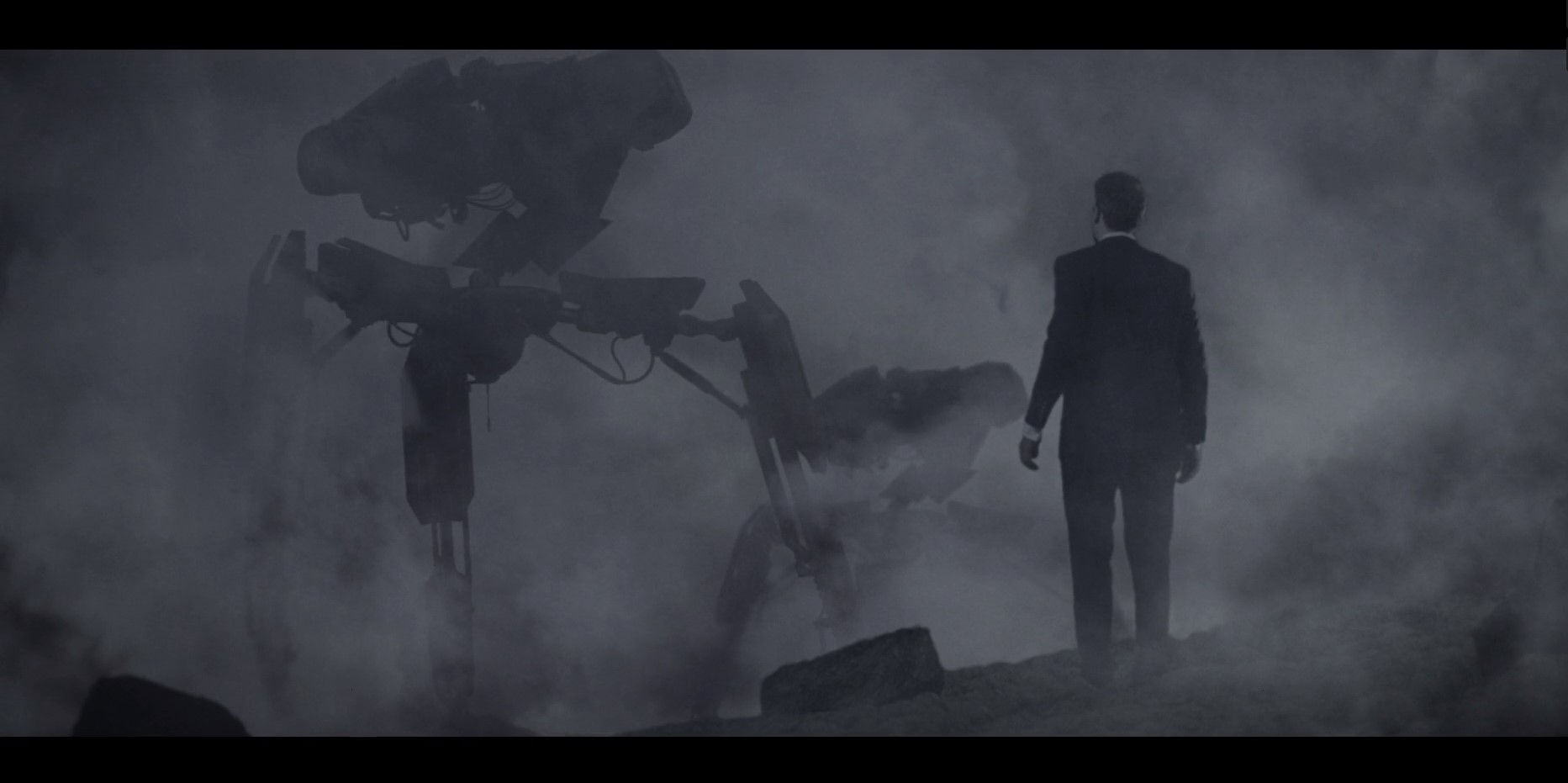
A.I. terminates their dependency from its creators and war has ravaged mankind as armed to the teeth, towering tripod machines and maneuverable mechanical air vessels are locked onto a search and destroy mode, targeting all human life.  To avoid and evade detection, survivors must keep quiet as the machines hunt by sound and use the limited technology available to protect themselves.  That’s how one military combat soldier has been surviving after deserting his overran and decimated post before bumping into enraged civilian resistance fighter who’s determined to strike back with a fatal blow in a heavy causality and seemingly unwinnable war against the merciless machines.  When the civilian determines a way to stop the machines with a salvaged nuclear device, the deserter must decide whether to keep meagerly living in the shadows or sacrifice everything for humanity.

“The Terminator” meets “A Quiet Place” meets “War of the Worlds” in this German produced independent science-fiction battlefront thriller, “A New World Order,” as the Berlin born Daniel Raboldt ‘s first feature length directorial.  Raboldt pens an action heavy story with only two lines of dialogue alongside fellow short film partner, Thomas Franzen, following their developments of satirical and puppeteer-propped comedies of the web series “Tubeheads” and their short film “Furple Reign,” with Raboldt having been in the writer-director chair for both and Franzen as part of the crew on both projects with a role in the art department and constructing cinematographically shots as DoP.  Alternatively known more worldwide by the original title, “A Living Dog,” as I assume in the idiomatic expression of a dog’s life of sorrow and hunger, the Finland shot “A New World Order” is a production of Raboldt and Franzen’s Nocturnus Film that was funded by a Kickstarter campaign which raised over €12,085 by patrons from its €10,000 goal.

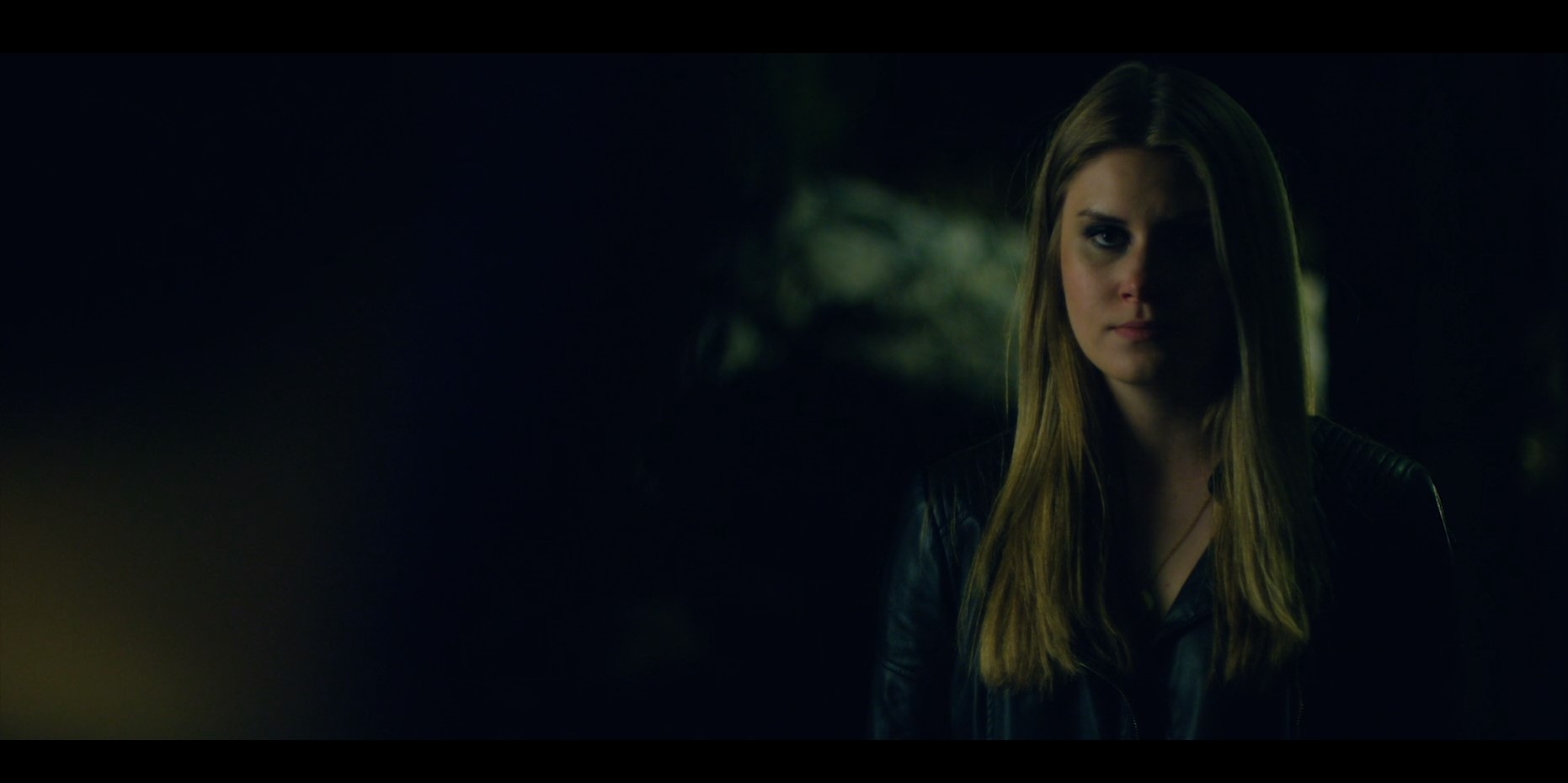
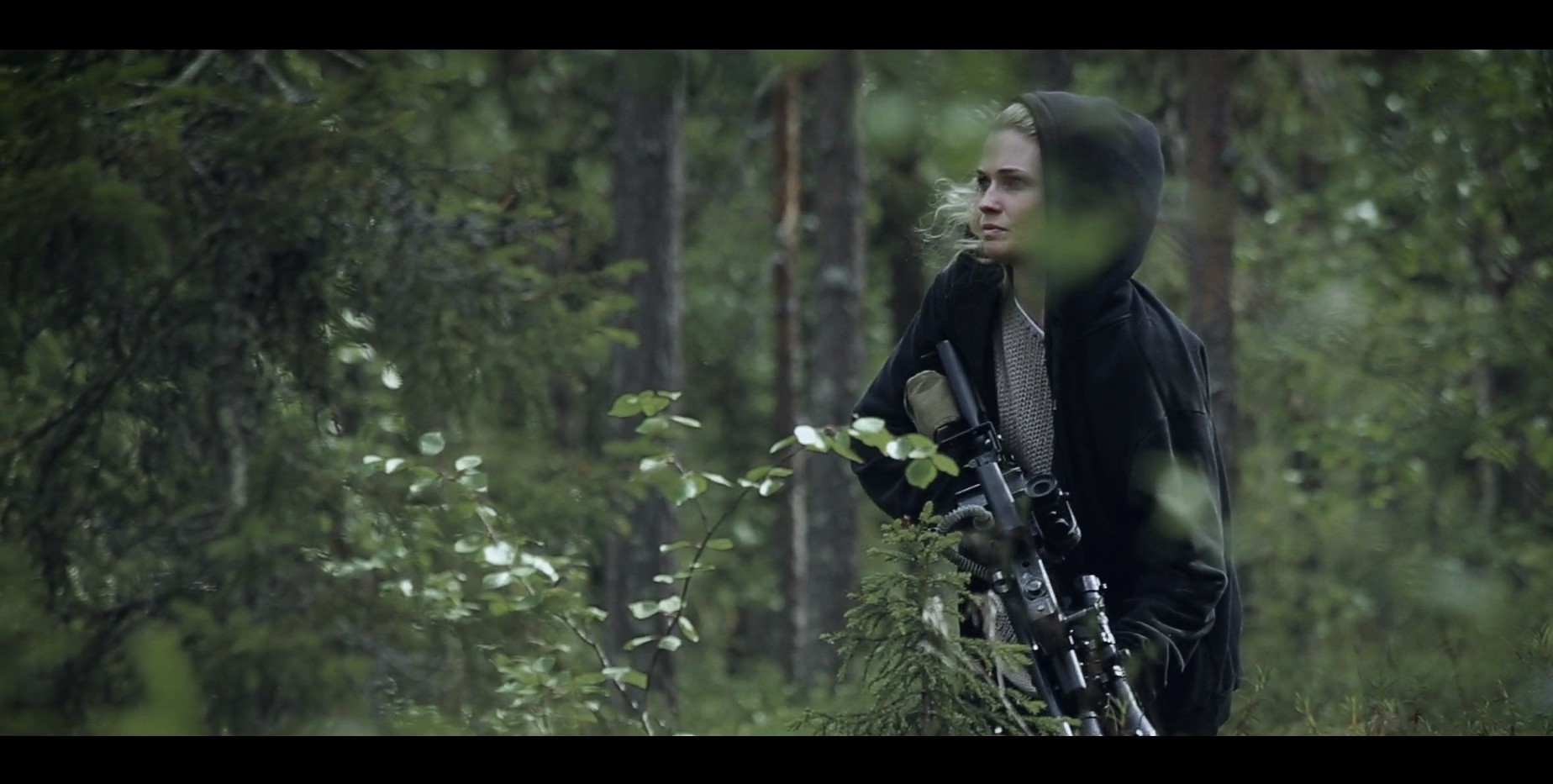
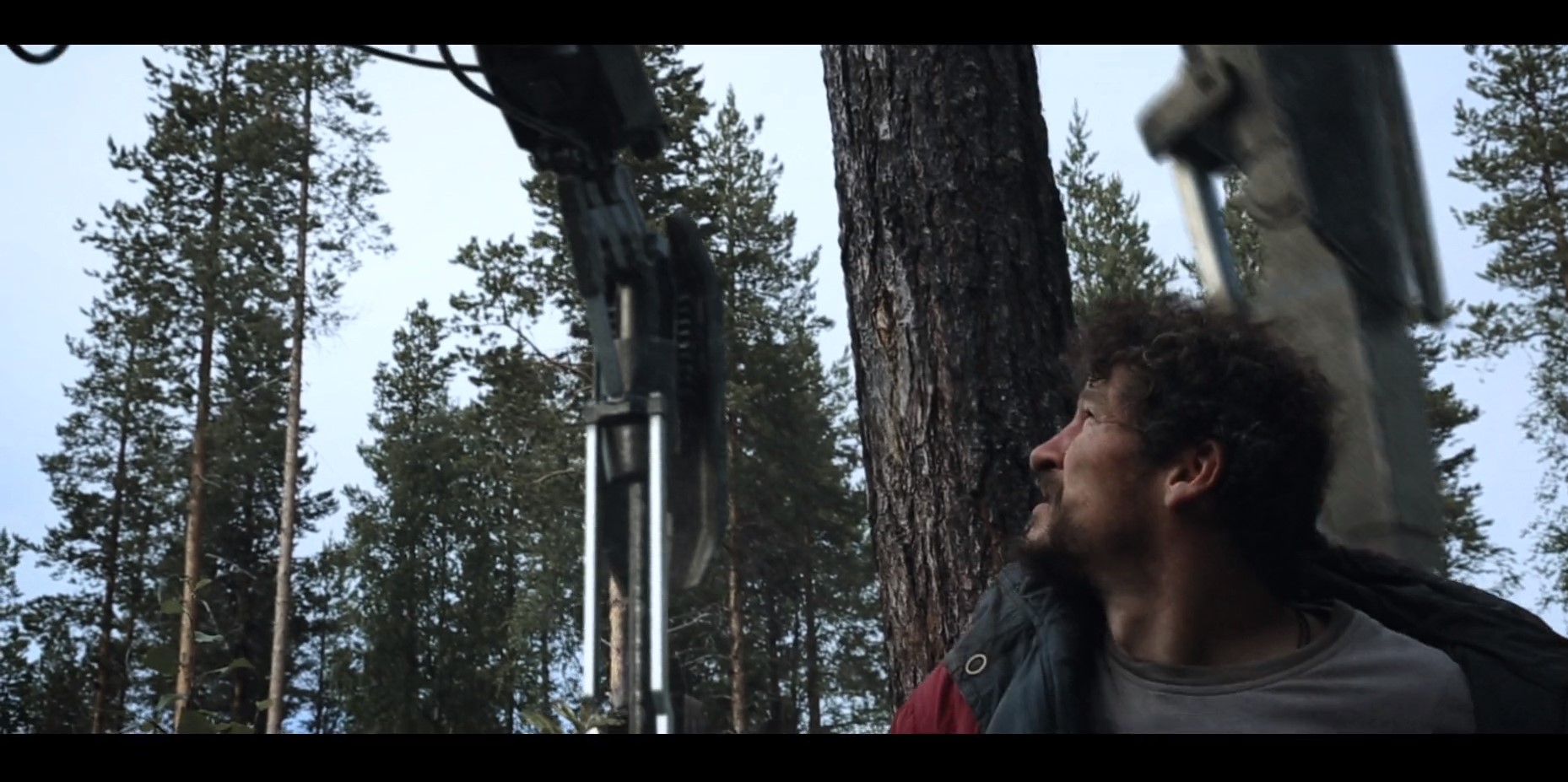
With just over €12,000, pocket change like that can’t afford you megastars Tom Cruise or Emily Blunt, but can buy superb unknowns with heart in their lead roles.  Such as the case with Stefan Ebel and Siri Nase as Tomazs and Lilja, two unlike survivors of machine dominated cataclysm with distinct positions on where they stand in their war-torn world.  There’s no short change in performances that warrant Ebel and Nase to feign the presence of large and looming cybernetic tripods that vaporize humans to dust upon sound.  “A New World Order” seems gimmicky with the absence of dialogue, but I think it’s more tricky to act against a computer generated special effect, much like Emily Blunt and John Krasinski’s inventive terror playing against actors or stuntmen in motion capturing suits.  Raboldt and his team more than likely did not have access to or have funds for motion capturing suits.  Instead, the actors engaged imagination, creativity, and relied on their experience and training, such stage crafting from Theater der Keller in Cologne where Siri Nase performed from 2007 to 2011.  Ebel makes his on screen debut by diving into the complexed Tomasz, a deserter just trying to survive over top anything else, and Tomasz comes across pitched perfectly desperate and paranoid while being borderline selfish with a sheathed good nature heart lying in wait.  Aside from bit roles of human refugees and characters in flashbacks, the two leads embody the entire cast list.  

“A New World Order” derives and parallels from a variety of iconic Sci-Fi cinematic inspirations, but at the core, Raboldt courses a theme of repelling human behavioral reactions toward a major calamitic event and threat through the current wartime arterial capillaries, unclogging the blockage between Tomasz’s tail between his leg survival approach and Lilja’s reckless desperation to destroy the machines on her own to form a unity of calculated patience to not only stab revenge into the soulless machines, but also maybe, just maybe, live through obliteration.  Yet, Raboldt misses the mark slightly by having too late the characters circle back and fix what’s broken with themselves, leaving mere morsels to mend before one character’s arc ends before it can even fully begin.  There’s also the no dialogue gimmick/aspect/touch, whatever is your opinion to label it, that fails to naturally flourish because unlike “A Quiet Place” where “A New World Order” only indulges the more character-driven drama, the fiery back and forth dogfight delivers empty promises due to budget constraints, resembling more along the lines of Gareth Edwards’ “Monsters” in its distant tone with a delimited appearance, but with a film that has nearly no dialogue, the action should be guaranteed in your face, heart-racing, and on the edge of your seat to compensate. “A New World Order” whittles down the hero concept, peeling off the rotten layers that make us weak and defenseless alone, to unearth the perfect kill switch on the machines to save Earth for humanity.

Don’t speak if you want to live in “A New World Order” now on DVD home video from Reel 2 Reel Films (R2R) in the UK. The Region 2, PAL encoded, DVD5 presents the film in an anamorphic widescreen 2:40:1 aspect ratio under a 15 rating for strong violence and bloody images. The violence is more the lasers vaporizing people to smoke in Thomas Franzen’s landscape assemblage of Finland foliage that becomes the base layer to Raboldt and his visual effects crew CGI monstrosities and rotoscoping composites that make “A New World Order” feel like a science fiction graphic novel. Blacks are starkly deep, but there’s no awestriking visual pops to really juxtapose with in a bleak color reduction to reflect bleak war. Details are not spectacular in this 720p format, but do the job in reality rather than in a rotoscope flashback. The English Language Dolby Digital stereo AC3, surround sound 5.1 mix, can kick hard when lulls in the character stories are because the kill bots has made audible contact and “A New World Order” is a LFE machine, pun intended, as the nuts and bolts hunters blare in vast quantities their resonating automaton bellow. Since this is a DVD5 with a feature running at 94 minutes, there is no room for special features to speak to, leaving just the antistatic menu and a white snapper case. “A New World Order” is a big concept on a little budget, but for director Daniel Raboldt, a new world spawns a man versus machine campaign from inspirational passions and ideas into understanding which innate reaction is an internal struggle to embrace with all that you have or to die by with little you have left.

A Dilapidated Terminal Full of EVIL Spirits. What Could Go Wrong? “Prison of the Psychotic Damned” reviewed! (Wild Eye Releasing / DVD)

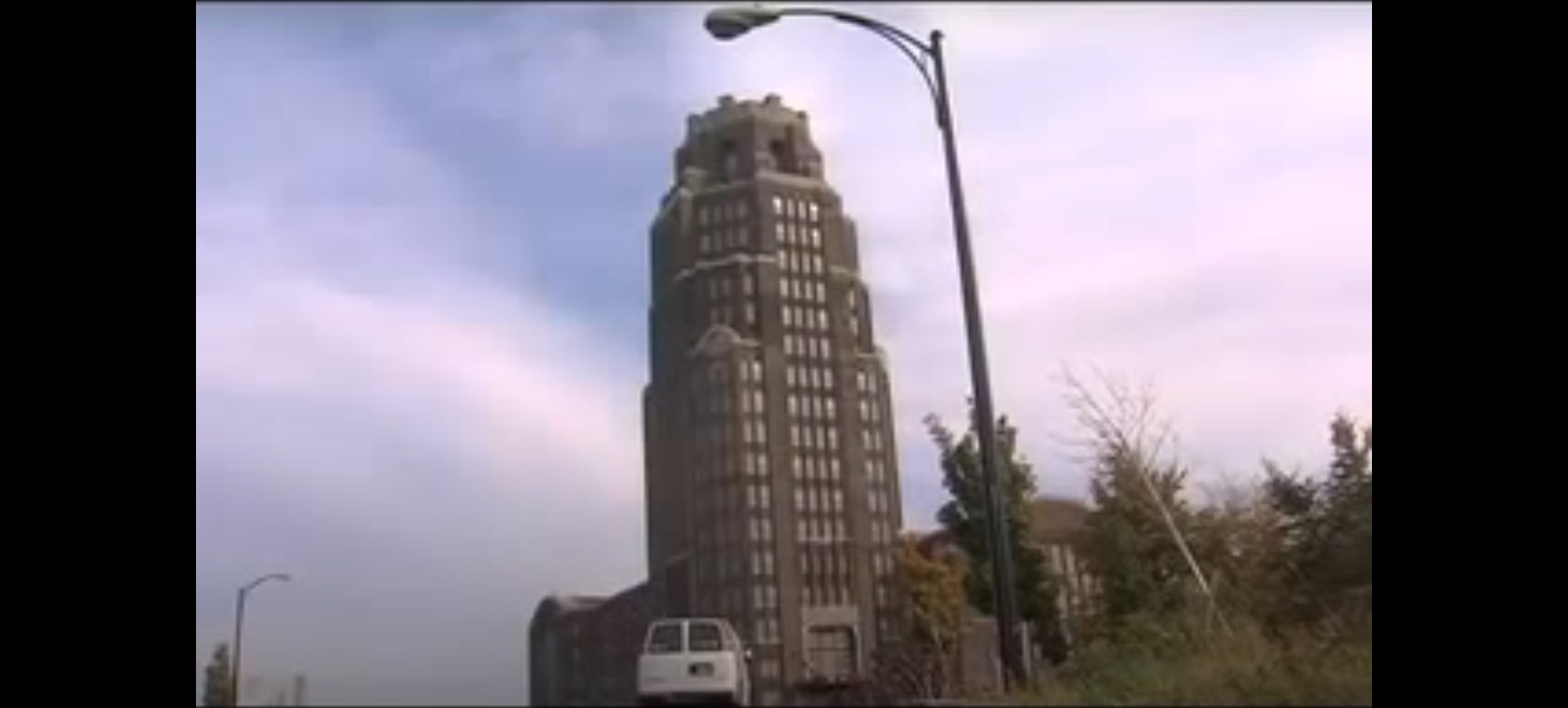
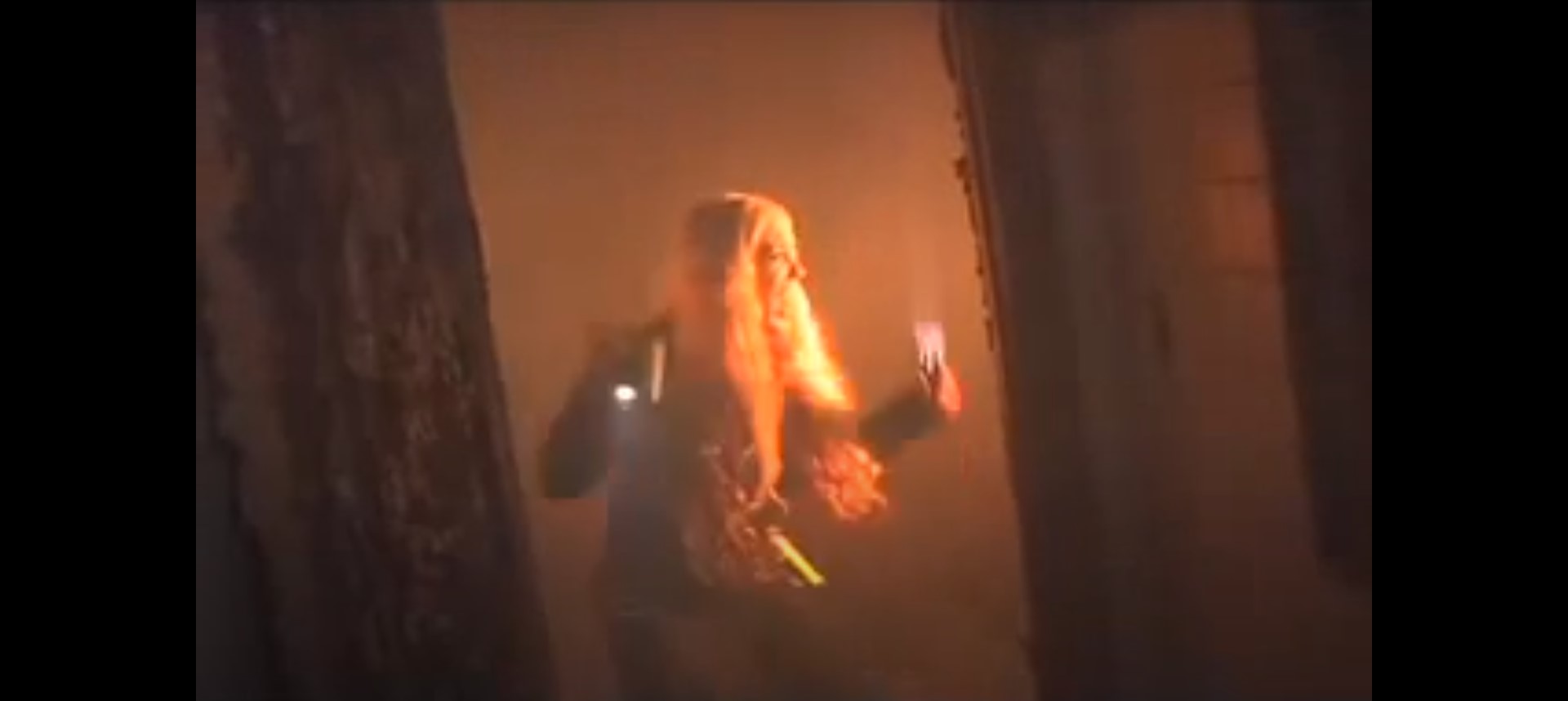
A pre-depression era railway terminal is now an aging and decrepit structure left to ruin in Buffalo, New York. It’s also the site where an experienced paranormal investigator, her ghost-tech guru, and three volunteers venture for exploration, hoping to uncover something spooky that goes bump in the dark because of the buildings long-marred and infamous history that includes an insane asylum, an unorthodox cattle abattoir, and many unexplained and terrible deaths throughout the decades. The deeper they dig down into the terminal’s underground corridors, the more they find themselves lost in a labyrinth amongst a taxonomic diversity of unhinged ghosts and ominous orbs. Lost and being hunted down, the ghost hunters fight for topside survival before absorbed by the terminal’s evil past.

Ghost hunters investigating the eerie ambience has been a source of easy pickings for producers and filmmakers from television’s “Ghost Adventures” to the popular James Wan phenomena that is “The Conjuring” franchise based off the Ed and Lorraine Warren investigations. The then mid-30s, New England filmmaker, David “D.W.” Kann hops aboard the investigator train with his own specter-sleuthing indie film, “Prison of the Psychotic Damned,” penned by producer David R. Williams (“Frightworld”) and released in 2006.  Also known as “Prison of the Psychotic Damned:  Terminal Remix,” the once puppetry and props master, who worked on such classics as “Carnosaur 2” and “Children of the Corn III:  Urban Harvest” as well as hitting the big time with Jim Carrey’s “The Mask” and the 1995 video game adaptation, “Mortal Kombat,” showcases the historic Fellheimer & Wagner Art Deco-architecture that once stood grand inside the Buffalo Central Terminal.   Built in 1929, the 15-story building has been abandoned since 1979 and left for the whim of vandals until its sloth restoration in the 2000’s that even saw paranormal activity themed reality shows take a crack of discovering spirits beyond the grave.  “Prison of the Psychotic Damned” also is an imprisonment of psychotic fraud as David R. Williams was arrested and convicted of embezzlement of his then employer’s capital back in 2010 to fund his schlock ventures under his production company, Red Scream Films, including this film but that didn’t stop Williams who went on to continue producing and directing long after his short stint in the slammer. 

About as volatile as Mount Vesuvius wiping out Pompeii in 79 A.D. are the five, dynamically counterpoised ghost hunters driving toward their insensible doom at the Central Terminal.  Spearheading the venture is the most experienced investigator Rayna (Susan Andriensen, “The Blood Shed”) with the intention of reviving her dwindling career before becoming defunded by the grant investors.  Rayna is joined by her longtime tech assistant Jason (James Vaughn) looking to capture something, anything, supernatural with his homemade psychokinetic-detecting gear as he innocently enough flirts with the snarky unwilling participant Kansas (Melantha Blackthorne, “Bloody Slumber Party”) who finds herself on the brink of losing her funded wayward lifestyle if she doesn’t join Rayna’s expedition per her moneybag father’s direction.  The relation between Rayna and Kansas is being step daughters, but that connection isn’t made entirely clear with only one brief exchange regarding Kansas’s forced attendance.  While Kansas disparages much of the investigation, and many of its participants, she’s joined by fellow volunteers Nessie (Noel Francomano, “Kottentail”) and Aurora (Nemesis 5:  The New Model’s Daiane Azura, credited as Demona Bast) in their respective roles of Rayna’s geeky fanatic and go-to psychic.  The one aspect that really kills these characters (pen intended) for me, and probably the audiences, is the consistent, continuous, ceaseless contentiousness between them with a slew of nitpicking, name-calling, and verbal and physical abuse that makes you wonder why should we even care for a bunch of people who can’t get along.  Brief moments of reasoning flash between them that could end up turning the dynamic around, but the fleeting qualities subside to blunt anger and hate to the point they’re bashing each other’s heads with bricks and leaving each other to fend for themselves against a horde of surgery-conducting ghost-zombies with revoked medical licenses, played by Kidtee Hello, Terry Kimmel, Michael Ciesla, Kelly Budniewski, and Jessica Grangler rounding out the remaining cast list. 

In what feels like the distant cousin, watered down version of “House on Haunted Hill” lite, Kann’s lowbrow, Digital8 shot film is a talkative spew of exposition that lends itself to pretentious prologue surrounding Kansas’s opening scenes of self-mutilation and prosaic nudity as if she’s on an unidentified narcotic.  What’s more confusing about the out of context opening scenes is we don’t really know it is Kansas alone in her apparent apartment.  The film begins with a woman slashing her wrist and licking the blood from her wound, before two medically masked men rush through apartment door and whisk her away.  Next scene, the same woman is back in perhaps her same dingy, dim lit apartment, but this time she’s spouting out philosophy and exposing her breasts by ripping her cheap cotton, tight white top before getting into a warm, steamy bath to stare at the candles at the other end of the tub.  Next thing we know post title creds, we’re riding in a van with the five paranormal investigators and Kansas, sitting in the back seat with Nessie and Aurora, doesn’t even look like the person we saw in the prologue as her hair is put up tight in a bun and she outfits more makeup and gothic drapery.  Once Rayna and Kansas have a sidebar chat and Kansas’s hair progressively loosens and falls, the pieces begin to fit together that Kansas’s disturbed impulses has forced her father’s hand to pair his errant daughter with Rayna for some extracurricular activities that maybe will do her some good…?  Ghost hunting must be the new vogue therapy the kids are into these days, or at least back in 2006.  Structurally, “Prison of the Psychotic Damned” runs faithfully the same obscured narrative course with Rayne expiating mouthfuls of the Terminal’s anecdotal infamy to build a dark dome above the longstanding history, but we rarely see any of the said mythos come for blood and get punted random glowing orbs, creepy doll room, and gloppy possession in return.  Along the way, Kann finds some ways to expose all but one of the actresses’ breasts in a gratuitous-laden attempt to advert our attention from the misaligned components like the story or the performances that just consist of ball-breaking personalities becoming trapped underground with killer spooks and have to duck and dodge the malevolent spirits to survive.  Though the gory bits sate nicely and David Williams erratic editing of eerie filler shots of the Terminal and surrounding area renders like a formidable damaged homemade movie on screen, “Prison of the Psychotic Damned” ultimately boils down to just more of the same rebranded indie slop we’ve all seen before.

Wild Eye’s DVD is released under the indie company’s Raw & Extreme sublabel and is the third physical release of “Prison of the Psychotic Damned” behind the cheap York Home Entertainment DVD and the SRS Cinema limited edition Blu-ray that was released approx. 2 years ago.  The DVD back cover lists the region free film as a widescreen presented transfer, unrated, and clocking in a 100 minutes.  Producer David R. Williams once noted that the surviving master transfer of a flood that destroyed nearly all material is the best there ever will be and with many dark areas shot on a Digital8 camcorder, the presentation is practically raw footage switching back and forth between digital third person and POV with ghosting and soft details amid the thick grain that collaborates the fact of a cruddy transfer. The lossy English 2.0 stereo sound mix toggles with the ears about as much as you have to toggle with the volume. From dialogue to score, insipid flat audio mix universally stiffens the Terminal urban legends Rayna rambles on about as well as extinguishing the score to a putter of insignificant industrial tones with a bookend and backup soundtrack by The Voodoo Dollies and actress Demona Bast serenating with the gothic-vamp vocals with Sonic 14 on an outro track. Among a static menu with scene selection, only Wild Eye trailers are included with the release. Buried beneath the torment of deranged souls, “Prison of the Psychotic Damned” sequesters itself from originality and from graspable, relatable, or even likeable characters in a vanilla story with decent gore effects.

Own “Prison of the Psychotic Damned” on DVD from Wild Eye!

The EVIL Peruvian Whistle of Death! “Face of the Devil” reviewed (MVD Visual / DVD)


Deep inside the Amazon jungle of Peru, seven friends getaway from university life by staying at a remote riverside resort.  No cell service.  No nearby towns.  The resort shelters an idyllic retreat for those looking to escape the mundane routine of the real world, but the jungle is also home to an indigenous evil entity, some may even label it the Devil.  Better known among the locals as el tunche, the trickster spirit prays on innocence and the naïve, psychologically tormenting with a foreboding whistle indicating it’s nearby presence.   With no help in sight and nowhere to hide, the jungle comes alive with an ear-piercing whistle that seeks to swallow the seven vacationers to their doom. 

To some extent, horror lives and dies by permanency of myth and legends, cultivating inspiration from ancient, as well as new, mythical beasts and spirits and spin them into entertainment macrocosm or, perhaps, even to just simply to share the rarity of knowledge and heritage surrounding the tales.  If in American mountaintop forests bigfoot roams inconspicuously around populated areas, breeding enigma and scaring children around campfire stories, then in South American, el tunche does much of the same instillations for the Peruvians who inhabit their legendary fiend, preying on delinquent youths, in the dense jungle.  Outside of Peru or maybe even South America, el tunche is not globally known, but for one Peruvian film from 2014, local lore becomes broaden beyond confining borders and creeps right into our home video media players.  Director Frank Pérez-Garland helms the maligning mythos with “La Care del Diablo,” aka “Face of the Devil,” from a Vanessa Saba screenplay set in the ominous jungles of Peru plagued by a wandering and whistling evil spirit searching for those lost among the tall trees and foliage.  Peruvian based Star Films and La Soga Producciones spearheads the production located on set of an ecolodge in the uncommercialized area of Tarapoto just North of Lima and serving as producers are Gustavo Sanchez (“The Green Inferno”) and Varun Kumar Kapur. 

“Face of the Devil” is a hyper localized narrative that’s fully contained inside the jungles of Peru as well as a casting all Peruvian actors with zero other nationalities appropriating roles for a mythological tall tale extension that rightfully needs to be expressed by native filmmakers.  As such, you won’t recognize a face amongst the cast unless you’re eyeballs deep into South American cinema.   The film opens with a dream sequence of a young girl staring at her towering mother’s weird, unholy behavior that ends with her mother, played by writer Saba, quickly reaching out for child and abruptly awakens from the dream is Lucero (Vania Accinelli).  Lucero’s nightmares become an important reoccurrence, like an omen, that doesn’t seem to upset the college freshman despite the nightly fright, but other aspects upset her father to the point where he yells at her for wanting to go on a trip with her friends, signifying a quick trip into unspoken complications sanctioning Lucero’s mother death that worries the same fate may also fall upon his daughter.  Before we know it, a reluctantly agreed to Lucero is river boating with her six friends:  couple Mateo (Nicolás Galindo) and Fabiola (Maria Fernanda Valera), Camila (Alexa Centurion), Paola (Carla Arriola), Pablo (Guillermo Castañeda), and new boyfriend Gabriel (Sergio Gjurinovic).  The friends are seemingly full of life, love, and fun but the dynamic turns only slightly complex with love triangles that only go as far as being the butt of the weekend’s jokes.  The characters do very little in the story, splashing around in what seems to be an unreasonable number of ecolodge pools for most of the time while playing spin the bottle, truth or dare, skinny dip, or just make fun of each other because, as a trope bylaw, that is what college-age kids do to spark tensions and cause divisions, and I find the characters and their portrayers to be uninspired to do or be more that invokes the frisky wrath of el tunche.  Javier Valdez and Ismael Contrearas bookend the cast of characters as two polarizing stances on dealing with otherworldly spirits by either being cautions and frightened as Valdez is with Lucero’s papa or embrace the spirits for self-purpose as it is with Contreras who plays the resort owner. 

“Face of the Devil” has all the properties of an European-fried and campy-peppered supernatural kill tally, drawing elements from the jungle cannibal subgenre sans the cannibals and the teen slashers sans the slasher.   Instead, el tunche is an all but forgotten myth lost over time through the generations until “Face of the Devil” calls to mind the cautionary dangers of cultural wise tales for naïve and disrespectful youth who wind up on the deadly end of el tunche’s mean streak.  Saba’s script incorporates more than just your average urban legend come to life tale with a Diablo-sized pretext to why el tunche all of the sudden decides to besiege upon this particular group of vacationers.  Per the legend, el tunche gobbles up those lost in the jungle thicket, but Saba and Pérez-Garland’s religious context direction, including the motifs of the trinity cross and bodily possession, has the good-natured Lucero, infected by her mother’s randomized demonical occurrence, be the proximity key to el tunche’s unleashing.  Good versus evil also becomes strongly painted in the latter half of the narrative and is affixed to the lore’s distinctive construct.  The further Lucero is led from a path of spotless geniality, from her overprotective father, the more she experiences nightmares and the closer she is coming face-to-face with the malevolent forest entity feeding off her tarnished past.  Sadly, “Face of the Devil” weans off from nurturing el tunche into a singular idea with the entity depicted as, but limited to, an invisible presence, a black oil spill in the water, a pulsating yellow glow, or as Anna Gonsalves says in “Predator,” the jungle came alive and took them.  Even the current DVD release represents el tunche as a Lovecraftian-like creature with tentacles coiling out of the jungle river water and enclosing around a bikini-cladded sex symbol with a tattooed vagina – provocative!  Yet, inaccurate.  There are no tentacles and no woman with vagina ink.  “Face of the Devil” struggles with character motivations, sending boyfriends off into the woods without tools or guidance to find help, leaving the story to fend for itself solely on a slap-dashed gory ending that’s a little too late in salvaging the ferocity of one of Peru’s most mythical phantasmas. 

Like aforementioned, the DVD cover is a tad misleading, enticing with sex and tentacles topped with DEVIL in a big red font.  Now, you can go in eyes wide open with your own copy of “Face of the Devil” distributed by MVD Visual in collaboration with Jinga Films and Danse Macabre.  The single layer, single sided, region free DVD5 is 77 minutes presented in a widescreen 1.78”1 aspect ratio. Reason behind discerning the storage format to be a DVD5 is evident in the compression issues that clutters the picture with artifacts, leaving highly noticeable splotches to shake details to the core. There’s also the use of the vapid gray tint insipidly squashing any color and life from the lush green jungle Pérez-Garland finds himself extremely lucky shooting inside. Watching “Face of the Devil” felt cinematography akin to an episode of “The Handsmaid Tale” or “The Walking Dead” where a bland overlay masks more than just brightness and beauty of natural hues and light. The Spanish audio mixes have two lossy options – a 5.1 surround and a 2.0 stereo. Switching between the two, the 5.1 obviously has a little more robust soundtrack during the cacophony of jungle augury. Snakes hissing, bat clicks, the comprehensive soundbites of other animals in audio vibrational flight combined with the intense whistle, like a diluted train whistle, has ambient staying power to be the most effective element to el tunche’s death harbinger presence. Dialogue is less robust but prevalent and the English subtitles synch well without error. As far as special features, nothing beyond that of the static menu and there are also no bonus scenes during or after the credits. The opening title card credit sequence is about as artistic as the film allows itself to be only to then dwindling into pedestrian territory. Set in the Peruvian jungle deemed to be a major waste of location perfection as much of “Face of the Devil” buoys chiefly poolside with the cheap Dollar Store adhesive tape barely coupling a connection between local legend and the Devil in this wet behind the ears teenager-in-danger yarn.

“Face of the Devil” available on DVD at Amazon.com

Don’t Be Fooled By the EVILs of Your Mind! “Open Your Eyes” reviewed! (Gravitas Ventures / Digital Screener)


Screenwriter Jason is on a deadline.  The producer is looking for his next script and soon.  The writer finds himself in a funk in not only fleshing out his script but also with his memories as a lingering sensation clings to him as flashes of moments that don’t seem quite right haunt his reality.  As he plugs along with his writing, other strange occurrences happen all around him:  a portion of his apartment wall is deteriorating from a leak in an adjacent upstairs unit, a cat has seemingly made it’s way into AC ducts, and objects disappear and reappear.  His dormant apartment complex is frustrating and lonely when he can’t reach the upstairs neighbor or the building manager about the leak that’s destroying his wall, but when he runs into Lisa, a neighbor from down the hall, many of his concerns fade away with her striking beauty and the two start up the beginnings of a possible relationship.  Yet, there’s still something amiss he can’t put his finger on and his newfound friend Lisa might just be the key to his awakening.   

Modest psychological horror has always been a tough one to pull off.  Instead of a straight forward zombie apocalypse or a killer behind a creepy mask slashing to bits half-naked teenagers, the psychological horror subgenre has to develop disintegration details and piece together fragmentations in a whirlwind character study that hopefully materializes into logical sense.  Writer-director Greg A. Sager tackles such threadbare cognizance with the filmmaker’s latest feature, “Open Your Eyes,” a Canadian psychological horror-thriller released this month.  Sager remains firmly in the horror realm with his fourth feature film behind 2012’s demon-seeding “The Devil in Me,” 2014’s supernatural penancing “Kingdom Come,” and 2018’s extraterrestrial thriller “Gray Matter.”  Continue the trend with all his independent productions, Sager self-produces alongside his co-founding Matchbox Pictures Inc., partner, Gary Elmer, who is also the cinematographer on the project.

“Open Your Eyes” is also modest in casting with two backbone characters keeping Sager’s narrative from being an bodiless work of art.  Doing much of the heavy lifting is the Toronto based Ry Barrett and with his close connection with filmmaker Chad Archibald, Barrett has had, in many different capacities, a role in a string of B-horror, including such films as “The Drownsman,” “Antisocial,” and “Neverlost” which are all tied to the Ontario director.  “Open Your Eyes” serves only as the second time Barrett and Sager team up following the release of “Kingdom Come.”   Barrett exudes an unconscious performance in Jason’s unravelling from crunch-time screenwriter to an unglued madman living in Jason’s version of a tenantable matrix.  Jason is almost sleepwalking through a lonely existence even before meeting his neighbor Lisa, a role played by Joanna Saul in her commencing feature film act, and the struggling to keep structural integrity writer hardly suspects and worries about strange manifestations that are happening all around him.  I don’t think Sager captures Jason’s full autonomy awareness that leaves the character more blank than bothered.  Barrett and Saul have adequate enough chemistry to make their barely a courtship romance intriguing, but her character’s implementation into restoring Jason’s vital grip on reality just kind of falls into his lap without a pinky being lifted on Jason’s part to assist in his own deliverance.   Heather May and Julianna Suzanne Bailey round out the small cast.

Aside from the nuisances with the character development, the sterilized comforts of Jason’s living conditions alone provide an unconventional chill.  Though living in an apartment complex is normally assumed chockablock with tenants living their lives, Jason’s apartment building is virtually vacant, void of the hustle and bustle of occupants, with not as much as a whisper from the exterior of Jason’s top-to-bottom, side-to-side walls.   What seems to be an idyllic environment for a concentrating writer becomes an oppressive variable that yet doesn’t seem to slow down or question Jason’s momentum or leave any kind of sense of threat along the way, leaving his what should be an ominous place of mind-bending confinement hanging out to whither and dry up .  I thought the plot twist to be shrouded enough to warrant a semi pleasantly surprised and unexpected ending that connects topically to today’s real-world climate.  Not to be riding a one trick themed pony, Sager also plays upon the themes of grief over loss and how the mind compensates with overactivity and gap fillers to avoid a complete mental system overload while also subtly adding a static charge of illusory sensations to make unsettling disturbances.  “Open Your Eyes” will not scare your socks off as it’s not that kind of film; instead, expect a slow-burn mystery more puzzling than panicky as the walls begin to crumble…literally. 

Okay, puzzlers.  Get puzzling on the new mystery horror-thriller, “Open Your Eyes,” that was distributed this past June by Gravitas Ventures on DVD, Blu-ray, and digital.  Producer Gary Elmer, as director of photography, paints the dark corners with softer figures that provides a really good shadowy contrast between character and background.  Elmer’s small use of the blue tint, his over-the-shoulder hallway delph, and shallow focus add tidbits of appeal without just “Open Your Eyes” seeming like another flat indie production.  Since I was provided with a digital screener, I can’t comment to confidently on the audio and video qualities of a physical release, but presented 2.35:1 widescreen was digitally shot on a CineAlta series Sony Venice camera that effectively provides a smoother grain, especially in the inky shadows, that transmit a really rich data scheme for post-production and offers that flexibility in producing range.  Another byproduct of the Venice camera is the natural looking skin tones seen with Elmer’s film when not under a tinted lens.  No bonus material offered with the digital screener and there were no bonus scenes during or after the credits.  Perhaps with a runtime a little longer than necessary, clocking in a 99 minutes, “Open Your Eyes” is a quaint terror touching the tattered strings of a mind, body, and soul pushed over the edge and into a falsehood bred by fear and loss.

Own “Open Your Eyes” on DVD or Watch on Prime Video!