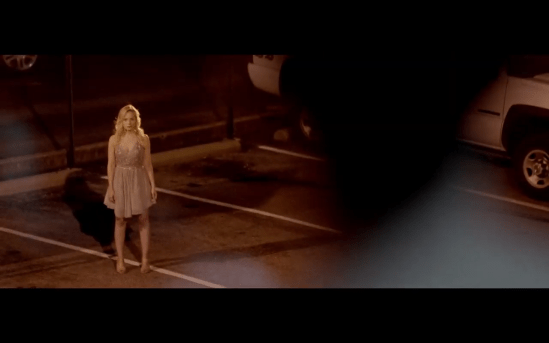
Recently dumped and severely panicked around women, the prospect of ever dating again seems like a long shot to Jim. Self-assured Alex sees the opposite for his best mate as a golden opportunity for him to get Jim laid before his 30th birthday. When Alex finally coerces and assists Jim on scoring a double date with two sisters, Jim can’t believe his stuttering awkwardness actually proved fruitful, but little do Jim and Alex know that the sisters, Kitty and Lulu, are out for blood. The sisters seek a virgin to sacrifice to bring their long deceased father back from the dead and to complete their trio-family once again at the expense of Jim’s involuntary celibate lifestyle. Night clubs, fast cars, and visits to the parents take the four through a series of dark and drug fueled misadventures and the unexpected moment of falling love that makes this double date one to die for!
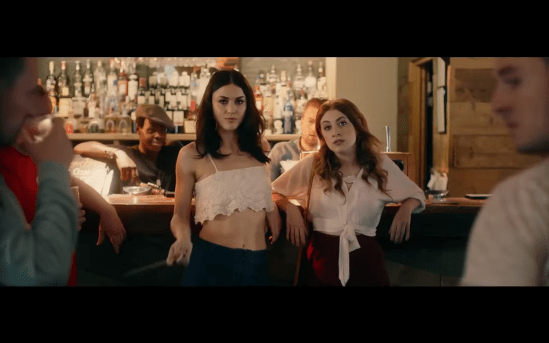
First dates are always inherently frightening. The idea of being alone with a stranger, who you’re kind of attractive to and trying to impress, yet don’t really know a single thing about them, can be daunting, if not paralyzing. First date in a double date is supposed to ease that overwhelming fear and take the strain off from the lack of possible interest in the other person, but for director Benjamin Barfoot’s amusing horror-comedy, “Double Date,” all bets are off and all tensions are on edge when dating goal sights are deadly different. Danny Morgan pens a comedic gem in which he stars as the bumbling virgin, Jim, joining his long time collaborating partner, Barfoot, to complete their first feature film together. The British made and produced film gives glimpses of London’s fung shui through the pubs, clubs, and overall eclectic nightlife to the aristocratic mansion homes to the likes of “Downton Abbey” resulting in a slight blend of the past and present into a well-oiled story embodied with terror and fun.

Funny man Danny Morgan stars as the awkward and blundering Jim whose plagued with fumbling qualities around women that usually leaves him somewhere in the inner circle of the friend zone. Morgan brilliant showcases Jim’s stunting inadequacies that eventually come to flower while maintaining a solid naturally slapstick presence of self-deprecation that turns into a full-blown bull in a china shop. The scene with his parents and himself singing his birthday song in front Lulu in audience, while tripping on drugs, is cathartically enjoyable and a riot of inner laughter. Morgan’s joined by “Being Human” actor, Michael Socha, as Jim’s very good friend, but all talk confident friend, Alex. Alex is certainly the yang to Jim’s yin on screen and off screen as Morgan and Socha have a certifiably fresh dynamic that makes them very entertaining to digest. Socha brings a different kind of comical energy that compliments Morgan’s dry humor that diversifies the content. In fact, all the characters bring a little something different to the table, such as with the sisters, Kitty and Lulu, played respectively by Kelly Wenham (“Dracula: The Dark Prince”) and Georgia Groome (“The Cottage”). Training like an elite athlete, Wenham takes the role to heart being a dark and beautiful villain that’s inarguably alluring as she’s cold and deadly. The Cheshire born actress, whom hands down can be the next Megan Fox, sinks her teeth into the performance and excels in the physical role that’s showcases her range of talent. Then, there’s Georgie Groome as Lulu, the timid opposite of Kitty. Also known as the girlfriend of Harry Potter’s Rupert Grint, she nails being the one in the shadows, relinquishing control mostly to Wenham for most of the film, and then slowly build character confidence and strength.

“Double Date” is a great blend of horror and comedy. The climax has this satirical and retro quality about that seems unfitting, but is stitched carefully to fit without bursting and popping a seam (or scene?) to the point of overly obtrusive. Benjamin Barfoot also has a keen eye to capture the pivotal and incandescent moments that make scenarios have more an impact, whether that being a facial expression, an awkward dance, or any kind of verbal or action exchange between characters. Doesn’t hurt that Barfoot’s rapport with Danny Morgan is a relationship riding the same director-actor level plane, similar to the dynamics between Adam McKay and Will Ferrell, with a synonymous cerebral synergy that clicks well for the silver screen.

From the independent film company who delivered “The Man Who Killed Hitler and then the Bigfoot,” Sparky Pictures releases the Screen International/FrighFest awarding winning horror-comedy, “Double Date”, onto digital, DVD, and Blu-ray come September 9th in the United Kingdom. Unfortunately, an in-depth review of the video and audio specifications will not be covered as a BD screener disc was provided, but what can be said about the soundtrack, performed by GOAT, is pure primitive gold and the appearance by Big Narstie is equally solid. Bonus material, on this check disc, included an extensive behind-the-scenes, from conception to wrap, of Danny Morgan and Benjamin Barfoot’s roller-coasting adventure on getting their film made. There’s also a commentary with cast and crew, deleted scenes, photo gallery, and trailers. “Double Date” is a true black comedy and a whole lot of fun that should skyrocket filmmakers Danny Morgan and Benjamin Barfoot toward future endeavors as a rising, powerhouse duo, contending to be the next hit in the satirical category.
Tag Archives: dvd
EVIL is in the Eye of the Beholder! “Perception” reviewed!

When developer project manager Daniel, on the verge of a lucrative deal in flattening an old rental property , meets Nina, a clairvoyant who rents space on the property, an mystifying, and on the house, psychic reading opens up old wounds of Daniel’s previous life involving the death of his beloved artist wife, Maggie. The successful developer becomes frantically obsessed with reaching Maggie from the other side, believing he is paying Nina handsomely to be a vessel conduit, but as a single mother on the verge of losing everything, Nina exploits Daniel’s fixation on the past that’s more dangerous than initially presumed. Daniel and Nina become sexually and spiritually entangled on two false pretense fronts while behind the scenes, a malevolent presence orchestrates a sinister campaign of perverse revenge.

In her fiction feature film debut, Ilana Rein writes and directs “Perception,” a 2018 suspense thriller aimed unsheathe and reactivate the agonizing secrets and those who reap the benefits from them. Rein, who previously helmed documentaries that includes the award winning Battlestar Galatica fandom documentary, “We Are All Cyclons, pivots from non-fiction into creative invention alongside producer and writing partner Brian Smith. “Perception” tackles various themes from severe mental illness, to dangerous obsession, to how we initially and naively perceive individuals without knowing exactly who they really are, especially when they’re in the white collar, high dollar, social category. Rein focuses on rooting out psychotic and sociopathic qualities through the power of flashbacks while chucking in a scornful spirit into the background for good climatic measure.

“Perception” perceives hard bodies and chiseled faces over a few recognizable ones, which typically isn’t a bad aspect of filmmaking but may not draw a wide viewership. Though in the entertainment industry for some time, Wes Ramsey is one of those fresh faces, headlining as Daniel, the successful developer with an unhealthy mania for his deceased wife. Ramsey has seen more roles in television than in feature films, but the “Brotherhood of Blood” and “Dracula’s Guest” actor pockets horror theatrics here and there and uses his tall, dark, and handsome charm to be a good source for Daniel as the presumptuous, if not stereotypical, good guy. Opposite Ramsey is Meera Rohit Kumbhani, an Indian American actress with beautiful big and round eyes, to star as the clairvoyant Nina. Kumbhani has solid onscreen sincerity and a sexiness to match, but as Ninia’s has a principle crises, Kumbhani is able to sell practically a RickRolls performance that fools us all as uncertainty clouds judgement about her ethics when it’s whether to exploit a desperate widow or pay for her troubled young son’s educational necessities. Together, Ramsey and Kumbhani contently compliment each other’s performances and when you mixed the specter playing Chaitlin Mehner in flashback sequences, an out-of-body love triangle experience ensues. Rounding out the cast is Max Jenkins, J Ro, Vee Kumari, and J. Barrett Cooper as the only face I recognize more recently from Nathan Thomas Millinar’s “A Wish for the Dead.”

The depth of the story, especially with main characters Daniel and Nina, really hinders judgement on the outputted result. Not enough vivid and harrowing memories of Daniel and Maggie’s rocky relationship stir very little toward a stroppy receipt for disaster. Their coupling went from casual to 120 mph in two scenes flat never laying down a sturdy foundation on why viewers should put stock into their story if there’s no stock to really sell. Same can be said for Nina and her son’s simmering obtuse relationship where Nina believes all is hunky-dory, despite her son’s suddenly mute stature, and her unmotherly attentiveness to his disturbingly illustrated clues to his inner demons. Stronger supporting characters saw through the boy’s facade, such as Nina’s friend J Ro (who plays himself, by the way) and her mother; both of whom are on the polar opposite sides of the clairvoyant spectrum. Those underwhelming characters flaws suck the energy out from the main arteries in Daniel and Nina’s carnal exploits and meddling to thwart the very fiber of “Perception’s” thrilling suspense.

Ilana Rein’s “Perception” comes to DVD home video courtesy of Gravitas Ventures and presented into a widescreen, 16:9 aspect ration. Image quality is obvious clean as with all digitally shot, yet the hues are a slightly warm, favoring more of a yellowish tint into every scene, and while maintaining solid definition, some scenes bask in a softer glow at times. Stylistically, not much to report as the film follows conventional strides. The English language 5.1 surround sound has strong, dialogue favoring, and balanced with depth and range. There is also a dual channel track available, but not really needed, as enough dramatics flare up to tip into the five channel. As bonus features go, there are none. Ilana Rein’s debut into the feature film market could have been worse, but “Perception” is a strong entry into the horror-thriller market with some Hitchcockian undertones. Definitely sexy and psychotic, “Perception” puts onto a pedastal humanity’s worst when the sheep’s clothing has finally shed and that’s worth reviewing.
Taking the Vindictive Fight Against EVIL! “Girl Number Three” reviewed!

Art major Max lives a disciplined life, especially in the love department which is constantly challenged by her roommate to play the field, but Max aims for true love and will consummate her feelings toward longtime boyfriend, Brian, whose patience will be rewarded with a sexy maid costume at a Halloween party that will eventually lead back to the bedroom. Before the party, Max is kidnapped by masked men at gunpoint and taken to an abandoned textile factory. Surrounded by All Hallows Eve zealots and eight other hooded and bound women, Max becomes the ritualized girl number three, a number bestowed upon her as a chosen sacrifice amongst the brotherhood for sex and, most likely, death. When part of the crumbling building collapses, Max seizes the opportunity to flee, but as escape from the building seems impossible and other women screams echo through the vacant hallways, girl number three has been pushed too far and picks up an old fire axe, concluding that she must kill them all.

The second Shami Media Group distributed production to come across our chop block in a matter of weeks. First, the Nathan Thomas Milliner directed “A Wish for the Dead” written by Herschel Zahnd was the fitting entry film to ease into and extract our thoughts, takes, and opinions. Overall, Milliner’s film sold a solid product. Now, here’s Herschel Zahnd directing “Girl Number Three” that’s written by Nathan Thomas Milliner and Zahnd guides us down a completely different pathway from Milliner’s wish granting of undead havic and into a conceivably relevant sadistic exploitation and vengeance thriller. Released a decade ago in 2009 and based off of a Milliner’s short graphic novella, which seems to be a reoccurring and fruitful source of material for their production company Renegade Arts Productions, Zahnd’s ice breaker into the feature film market with “Girl Number Three” precedes the Milliner’s “A Wish for the Dead,” kickstarting the duo’s long wrong together into independent filmmaking.

With the two filmmakers so intwined, of course there are others, in the cast, that have had starred or have had bit parts in both films. Leading lady, Julie Streble, is one of them. Streble’s tackles the titular character who shoulders more than just being a conventional final girl; in fact, far from it as she’s a girl who makes things final…forever. Streble has an absolute vision as a scorned and beguiled woman to well-round Max’s initial love is true nature and her ideology slowly unravels as Max’s day trek becomes nothing more than an objectifying daily journey as the film progresses. From being bumped into twice by men, without an apologetic gesture, and being googly-eyed and hit on with unwelcome advances, Zahnd forces Max’s everyday struggle with the opposite sex down the audience’s already #MeToo’d cultured throats – remember, this film was made 10 years ago before many of the current movements. Other characters are not thoroughly developed to be systematically a part of the story to unfold in such importance, but play significant parts in her physical and mental reshaping of being a killer elite and the actors and actresses in those role include Kent Carney, Shawn Dolphin, Jess White, Jason Crowe (“Don’t Fuck in the Woods 2”) and “A Wish for the Dead” troupe – Dennis Grinar, Lori Cooke, Melissa Hoff-Decker, Chuck Lee Miller, and Adam Pepper.

“Girl Number Three” has a story that drives down a one lane road, a road certainly headed for Max to give her abductors hell, but a proverbial fork in the road puts a monkey wrench into gears already in motion. There won’t be any spoilers to be had here, but the outcome of “Girl Number Three” discerns differently in a social context that maintains another variant of disturbing exploits. A welcoming trickster’s commodity might change perceptions or might insight and evoke counter attitudes of how Max unravels her newfound vindictiveness. I praise Zahnd and Milliner for their foresight of a cultural that’s abrasively pandemic and how the structure of their film decimates one demeanor to seamlessly flow into another without a speck of hesitation. However, the latter borders being undercooked, and perhaps favors an unchancy raw red center, in not dumping more into the backstory or even circumnavigate with a savage shocker of an ending. The end scene was good enough to call the film quits, but not without leaving much to be desired.

MVDVisual and Shami Media Group ups the kill counter with the Renegade Arts Production, “Girl Number Three,” releasing the 80 minute unto DVD home video. The singer layer DVD is presented in a widescreen, 16:9 aspect ratio. Filmed in black and white, the devoid of hues reinforces the subject tone while also appearing to shade obvious low-budget obtrusions. With a story that mainly takes place inside a ramshackle building, black and white was an obvious choice as colors receptacles would be sorely underused and everything would just appear vapid and monotonous, like looking at the same four walls in a prison cell or a high school classroom. However, there’s always a downside to shooting black and white, such as contrasts levels on an unstable picture and the evident presence of digital noise. Exteriorly, the blown up moon and glowing yellow building windows composite was superficial at best, but clever in a pinch. The English language 2.0 stereo mix had the worse of the two major technical aspects with a low-bit rate that caused some hissing flare ups, the lossy metal soundtrack lacks robust fidelity, and there’s was also a complete disregard for depth. For example, when Max is exiting a store on her cell phone, her vocals remain on the same audio level from the background to the foreground. The mix is what it is, but there are solid points for a decent range and an agreeable dialogue track. There are no bonus features available other than a static menu, with two options to proceed into the feature. Don’t know why. The DVD art from SMG is a gorgeous illustration of the titular character that’s sexy, raw, and retro. “Girl Number Three” has grindhouse bones and director Herschel Zahnd fractures conventional storytelling with a notable plot twist, but Max and her cobwebbed axe doesn’t just rack up a body count as the intertwinement of the person and the instrument of destruction only eviscerates temporary contentment waned much more cognition.
One Wish Sparks a Lifetime of Evil. “A Wish for the Dead” reviewed!

Ever since his wife’s life has staggered on the near brink of death, John’s mental state has been thrust into constant turmoil. Unable to get straight answers from doctors and stuck inside the vapid white walls of a hospital, John remains by his unconscious wife’s hospital bed. When a mysterious man with a severely disfigured face wrapped in bandages offers him a locket that will grant him a single wish, John’s desperation to try anything to save her soul stretches beyond logic and reality, overpowering his rational principles. Despite coming with an ambiguous warning on how to detail his wish, John heedlessly requests that death cease to exist. The locket grants endless life not only for John’s wife, but for everyone as the dead rise from their eternal slumber in perpetual anguish that sends them into a frenzy of violence without a means to an end.

“A Wish for the Dead” is the first venture into a Renegade Art production and a Shami Media Group, or SMG, release for Its Bloggin’ Evil and, to be frank, the viewing re-establishes a couple of important things: 1) “A Wish for the Dead” has tremendous bite for an under the radar flick and 2) never rule out modestly financed films based on their technical appearances. The 2014 micro-budget indie horror from the short film director of “The Confession of Fred Kruger,” Nathan Thomas Milliner, along with the editing, photography, and co-writing assistance from “Girl Number Three” writer Herschel Zahnd, takes the cautionary tale themed with a careful what you wish for approach when despondency has one backed against the wall that leads to direly lethal negligence. Milliner’s film that’s based off a comic book of the same title might not be “Wishmaster,” starring Andrew Divoff, but can certainly be grouped into that similar genre realm where the ugliness of mysticism mischief can be personally devastating instead of gratifying. The film can also be lassoed into the over saturated zombie category because, well, you know, the whole arise of the undead thing.

“A Wish for the Dead” has a fairly large cast, but doesn’t have definitive leads. Instead, Milliner and Zahnd scribe a tale with miniature, personal scenarios for characters with John being a considerable catalyst or, an interpretation, of a centralized character. John’s played by Chris Petty, who had a bit part in the Zac Efron Ted Bundy biopic “Extremely Wicked, Shockingly Evil and Vile,” and despite the character being fairly one dimension, Petty sells the performance of a grieving, greedy husband. John encounters the mysterious, disfigured stranger in a trench coat, head wrapped like a mummy, and nodding John over like a he’s going to sell him a knockoff Rolex from the inside lining of his coat, in Robert Hatfield that tempts him with the wish granting locket. Hatfield version of a biblical villain has charismatic and devilish value, but nothing new to note the rendition from previous performances of shallow humor and sly mischief upon an cutting grin. Branch off stories that indulge into supporting characters un-charmed, demised lives fill in the gaps and provide fuel for the undead fire and these supporting characters include Lori Cooke (“Girl Number Three”), Kristine Renee Farley (Hi-8 – Horror Independent 8), Adam Pepper (“The Zombie Movie”), Julie Strebl (“Volumes of Blood: Horror Stories”) and Ashley Anderson.

The beginning of this film starts off oddly as soon as the title credits roll for the feature film and coming to the realization that the viewer is actually not submersed into the actual story yet. First slither portion of the film is a short thriller, noted at the conclusion as being directed also by Milliner, that becomes clearly distinct from the rest of the plot line. The abnormal sequence snaps the story’s fluidity as a seamed segue that then constructs the multiple-tiered building blocks for the heart of the feature. Once the short has past, much to our chagrin that we believed to be the actual film, “A Wish for the Dead” goes into a precision mode with coordinating individually wrapped death backstories and while Milliner attempts to get us to care about these characters, all is washed away and lost when death revokes all their previous, present, and future terminations. The backstories become null and void when not circled back to for the exception of John and his wife that find’s a sweet ironic malevolency making “A Wish for the Dead” satisfying in the end.

MVDVisual and Shami Media Group courteously releases Nathan Thomas Milliner’s “A Wish for the Dead” onto a not rated DVD home video. Presented in a stretched 16:9 aspect ration, the lossy video quality and the lack of color, mostly in a squashy greenish-yellow, chap into sore spots along the 80 minute runtime to the almost the point of SOV quality. Darks are plagued with digital noise that remove the sharp quality from the image, leaving the story to fend for itself and make up for the lack of presentation. The English 2.0 stereo sound mix pops during the higher pitches of dialogue and of some action points, but the dialogue is in the forefront and nicely balanced amongst depth and range considering. There are no bonus features on this release, but as an interesting note, Milliner illustrated much of Scream! Factory’s home video artwork (releases such as “Halloween II and III”) and for HorrorHound Magazine. The artist and filmmaker’s graphically detailed and perfectly suited talents grace the SMG cover as well. A wish granted for the major win with “A Wish for the Dead” as a macabre success story for independent filmmaking for aspiring artists despite the post-production engineering for a cleaner release, but death isn’t pretty, is it?
Edna is EVIL According to the “Reform School Girls!” Reviewed!

After being apprehended for robbery, underage Jenny is sentenced to 3 years at Pridemore reform school where she immediately clashes with an iron fisted dorm administrator named Edna and her intimate inmate enforcer Charlie Chambliss. With a few friends on the inside, Jenny’s group becomes the target of Edna’s biased infraction system and Charlie sets her domineering sights on breaking the girls’ wills into submissive followers. The school is controlled by an equally sadistic, evangelically abusive Warden Sutter and Jenny’s multiple attempts at reforming the reform school with the assistance of a sympathetic psychologist staff member, and even her attempt to escape, have failed with torturous consequences. As Edna tightens her grip, Jenny and the girls seethe more violently as the weeks pass up to an inevitable uprising, snapping the young girls’ spirits when enough is enough.

Wet, wild, and womanizing, Tom DeSimone’s 1986 satirically women in prison film, “Reform School Girls,” is a cavity invasive good time all around! DeSimone, who also penned the script, has a revolutionary background as a male gay porn filmmaker, but made the crossover into cult genre films after his successful runs with “Chatterbox” featuring exploitation starlet Candice Rialson and “Hell Night,” starring “Exorcist’s” Linda Blair. Yet, “Reform School Girls” is hardly separation from the director’s once moonlit experiences other than the cast is almost entirely made up of beautiful, naked women showering together and when they’re not fully nude and wet, they might as well be wearing nothing while cladded in skimpy outfits and lingerie as a few characters copulate insinuatingly instead of explicitly. The only thing DeSimone was probably uncomfortable with was his last two WIP features, “Concrete Jungle” and “Prison Girls,” as they struggled to find an appreciative audience and thus “Reform School Girls” was constructed to be a mockery of the whole WIP market, exploding it violently, and sensationally, with the genre tropes that, ironically, skyrockets this film’s cult success.

The incarcerated characters offer a wide variety of individualities that are ultimately filled by big personalities themselves. Sometimes, those personalities come with a little head scratching questions. Such is the case with lead actress Linda Carol who isn’t the headliner of the “Reform School Girls,” but she’s certainly one of the main leaders, Jenny, of an imprisoned pack. Born in 1970, Carol had to be no more than 14 to 16 years of age at filming and was cleared for a number of nude scenes, especially around other nude women, but Carol had fire in her performance; in fact, the cast from specified roles to the undesignated titled roles were all highly stimulating in their presence and demeanor. When first entering dorm 14, teased hair and underwear was the unofficial name of the scene that spoke about the genre of the decade in a matter of a few minutes. This is where we meet Charlie Chambliss, a buff, scantily-cladded, totalitarian gang leader of dormitory 14, played fluorescently by rocker Wendy O. Williams. The then mid-30-year-old Williams was a bit of a duck out of water in a role that was for a teenage girl, but the front woman of The Plasmatics was awfully charismatic, brash, and a real illustrated performer who exaggerated dramatics to the next welcoming level in her knee high platform boots. While Williams had sexy hot-to-trot flair, Pat Ast leisurewear offered nothing more than a dull white coat over matron garb, but Ast punctures through anything matriarchal and goes full blown maniacal as dorm keeper Edna. Ast goes over the top and beyond with a love to hate – scratch that – kill character. If you think the evil that embodies Charlie and Edna ends there, you’re wrong! “The Howling II: Your Sister is a Werewolf’s” Sybil Danning’s apex of evil, Warden Sutter, struts around the school like a German commandant with a soapbox of vile and wretched women in a perverted Biblical sense and mastermind behind the abusive culture at Pridemore. The cast concludes with Charlotte McGinnis, Sheri Stoner, Denise Gordy, Laurie Schwartz, Tiffany Helm (“Friday the 13th: A New Beginning”), Darcy DeMoss (“Friday the 13th Part VI: Jason Lives”), and Winnifred Freedman.

Shooting from the hip on first viewing impressions, “Reform School Girls” is nothing like we’ve ever seen before. Sure, we’ve all see women in prison films, from “Big Bird Cage” to even making an argument on Netflix’s “Orange is the New Black,” and we’ve also see cheeky 1980’s comedy that if made today would be grossly lambasted with politically incorrect protestors. Yet, DeSimone’s satire take undercuts the stern nature of the WIP genre with great flamboyancy toward institutional exploitation and the ugly invasive issue of sodomy and rape that the themes can be easily pushed aside without so much of an inkling of consideration. Explosions, gunfire, skimpily dressed women, shower sequences, bitter tongue and cheek, and anything and everything that was omitted from grindhouse market place in this film constructs a smoke and mirrors effect that pivots sharply before getting ankle deep into the issues, no matter the severity just as long as Pat Ast crunches her face into a luffa shape and appoints a barely clothed inmate to a mandatory cavity search and the viewers would be just as captivated.

Umbrella Entertainment and Lakeshore Entertainment release the International Cinevision and New World Pictures production of “Reform School Girls” on a PAL 4 region DVD, presented in a widescreen, 1.77:1 aspect ratio; a slightly cropped version of the original film format. Whatever is cropped out is too trivial and the image picture supplies a palatable presentation with bold hues and bare, but naturally colored, skin tones, despite some fake tanning. One noticeable fleeting moment of an 35mm stock cigarette burn in the upper left corner of a scene, but in-and-out in a blink of an eye. The stereo 2.0 Dolby Audio mono track has balance that singles out the robust dialogue against a leveled down ambient and score recording. The range is good amongst all the reform girl chatter in the dorm rooms. A handful of shower and bathroom scenes have some muffled echoed moments, but the discord in these moments is still extremely low. Surprisingly, there isn’t one single bonus material on this disc, not even a static menu as the film goes right into play feature mode. “Reform School Girls” makes light of wretchedness, revels in the fun of unsavory fraternizing, and is unapologetic of a carnal and wicked tone on and off the screen, harboring one hell of a women in prison cinematic guilty pleasure.