The Demon Concubine Is After the EVIL Power of Demon Summoning Upon Earth! “Saga of the Phoenix” reviewed! (88 Films / Limited Edition Blu-ray)

Own “Saga of the Phoenix” on Blu-ray from 88 Films!

For 660 years, Ashura, the Holy Virgin of Hell, has used her powers to resurrect demons from the underworld.  With the help of virtuous fighters Lucky Fruit and Peacock from the spirit realm, has renounced her temperamental intentions to use her powers for evil ever again and live beside the mortals under the warmth of sunshine.  When she accidently summons demons on Earth, Ashura is brought before Master Jiku and the Divine Nun to access the damage and reign judgement.  They sentence her to live in cell of the relaxed Buddha for all of eternity, but she persuades them one chance to live amongst the humans for seven days, just enough time to live under and enjoy the only thing she wants, the sun.  The Demon Concubine has a different plan for Ashura.  Seeking her demon resurrection powers, the Demon Concubine aims kill her but with the help of Lucky Fruit, Peacock, and her new human friends, Ashura will battle against the Demon Concubine and her demonic forces. 
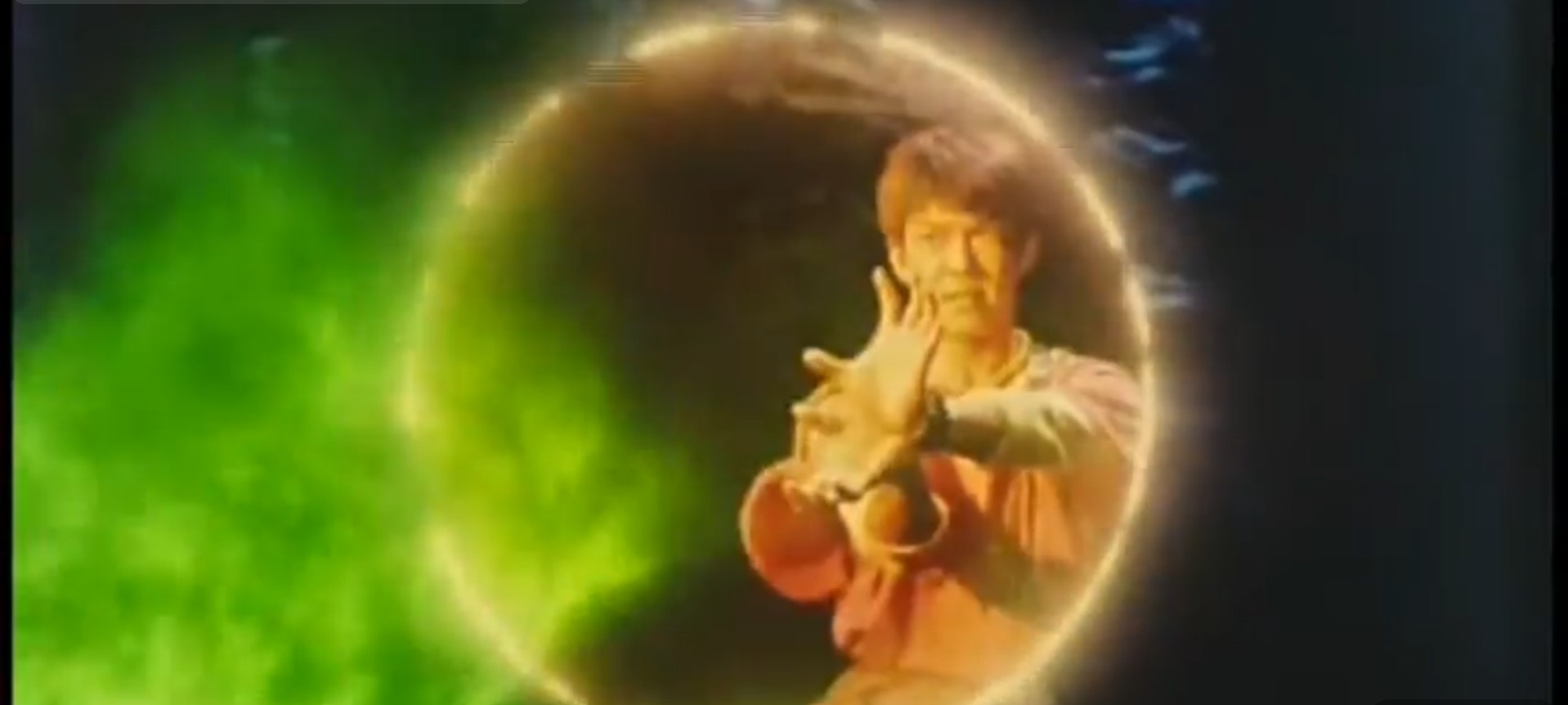
“Saga of the Phoenix” is the Golden Harvest produced, 1989 released sequel following quickly behind the 1988 released “Peacock King.”  Based off the Japanese manga “Peacock King” written by Makoto Ogino from 1985 to 1989, the action-fantasy film was codirected by returning “Peacock King” director Ngai Choi Lam (“Riki-Oh: The Story of Ricky,” “The Cat”), aka Lam Nai-Choi, and newcomer to the series Sze-Yu Lau (“Forced Nightmare,” “My Neighbors are Phantoms!”) with “Game of Death” actor Biao Yuen stepping away from writing the follow-up and be more involved on the acting by returning to one of the main roles from “Peacock King.”  The script is from a confluence of Japanese and Hong Kong screenwriters, initially scripted by Japanese manga adaptation to television screen writer Hirohisa Soda and then adapted by Tsui-Wah Wong, You-Ming Leung (“Once Upon a Time in China”), and Sau-Ling Chan, none of whom were involved in “Peacock King.”  Hong Kong’s cult and genre film product Lam Chua (“Erotic Ghost Story, “A Chinese Torture Chamber Story”) serves as producer on the Golden Harvest and Paragon Films Hong Kong-Japanese coproduction. 
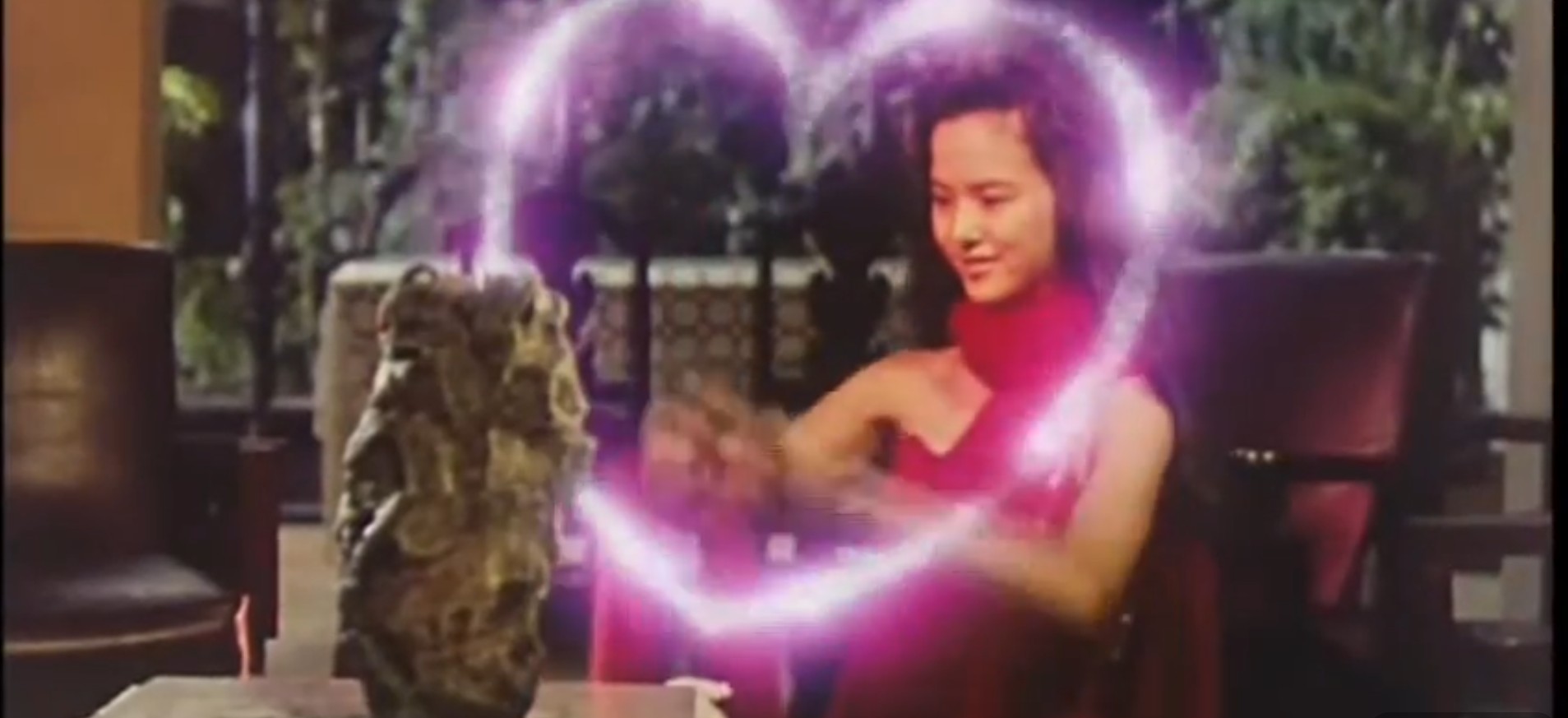
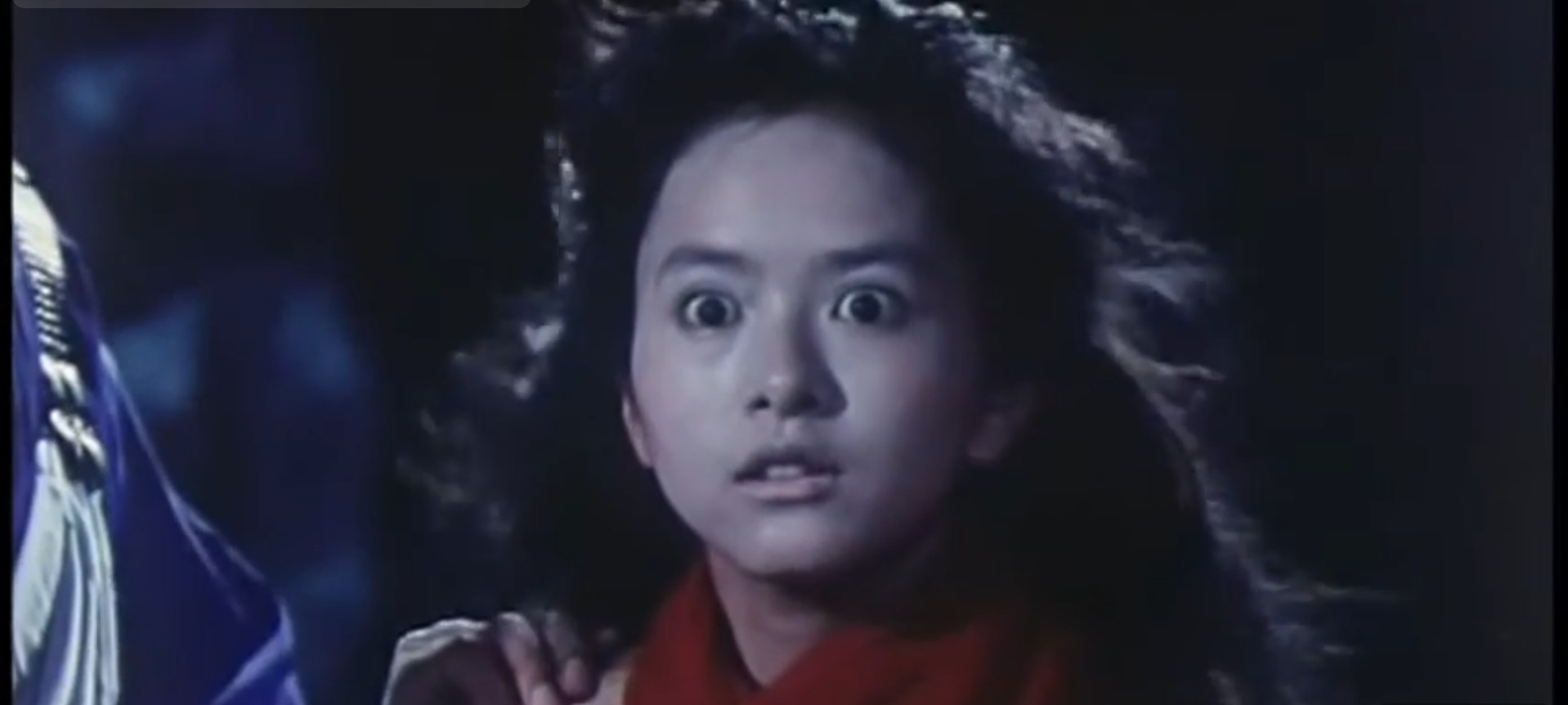
Gloria Yip returns as the Holy Virgin of Hell, Ashura.  Having never seen “Peacock King,” I’m not sure what type of temperament Ashura donned in a role where the character seems like one of the main antagonists according to the synopsis, but for “Saga of the Phoenix,” Ashura is joyful, childlike mischievous, and humble and is the center focus between the forces of good versus evil.  Als returning is Biao Yuen, but not in his screenwriter role.  Yuen, known for starring alongside female martial artist and star Cynthia Rothrock in “Righting Wrongs,” reprising Peacock, a fierce spirit realm guardian who befriends Ashura along with fellow guardian Lucky Fruit, played by Hiroshi Abe (“Godzilla 2000”) who replaced Hiroshi Mikami from the first film.  Much of Yuen is taken out of the story while being in frozen captivity by the Demon Concubine, leaving Abe and Yip to better struggle one-on-one connecting in the human world, facing human problem, and accessing the threat from the Demon World.  Yip’s candid antics exact the innocence of a young child like making snarky faces when corrected or obsessing over trivial things like sunshine, and especially when Ashura befriends a small, gremlin-like troll or creature named Tricky Ghost and holding it like a favorite stuffed toy, and this leaves Abe to be the role model, or the parental guardian if you will, stoic in stance and a reasonable thinker for his character.  It all comes off as silly until Ngai Suet and the Demon Concubine enters the frame.  The “The Ghost Ballroom” actress Suet takes on the evilly empowered role armed with seven demon subjects to do her bidding, such as trying to kidnap Ashura, and Suet runs with the role caked in a pale makeup, high pointy eyebrows that open up her eyes, and shoulder-padded dark dress.  Embroiled in the spirit world clash are two mortal siblings in Chin (Loletta Lee, “Mr. Vampire Saga IV”), who saves unintentionally saves Tricky Ghost, and her mad scientist brother Tan (Shek-Yin Lau, “Resort Massacre”) who finds himself in bitter rivalry with Tricky Ghost’s mischief ways spurring some comic relief into the fantastical brew and they represent the workable relationship between man and godlike individuals.  “Zatoichi” series actor Shintarô Katsu is in the role of Master Jiku, “Carmen 1945’s” Yûko Natori is the Divine Nun, and Noriko Arai (“Death Note”), Megumi Sakita (“Bodyguard Kiba”), and Yukari Tachibana (“The Scissors Massacre”) as the three nun warriors to round out the Hong Kong-Japanese cast.
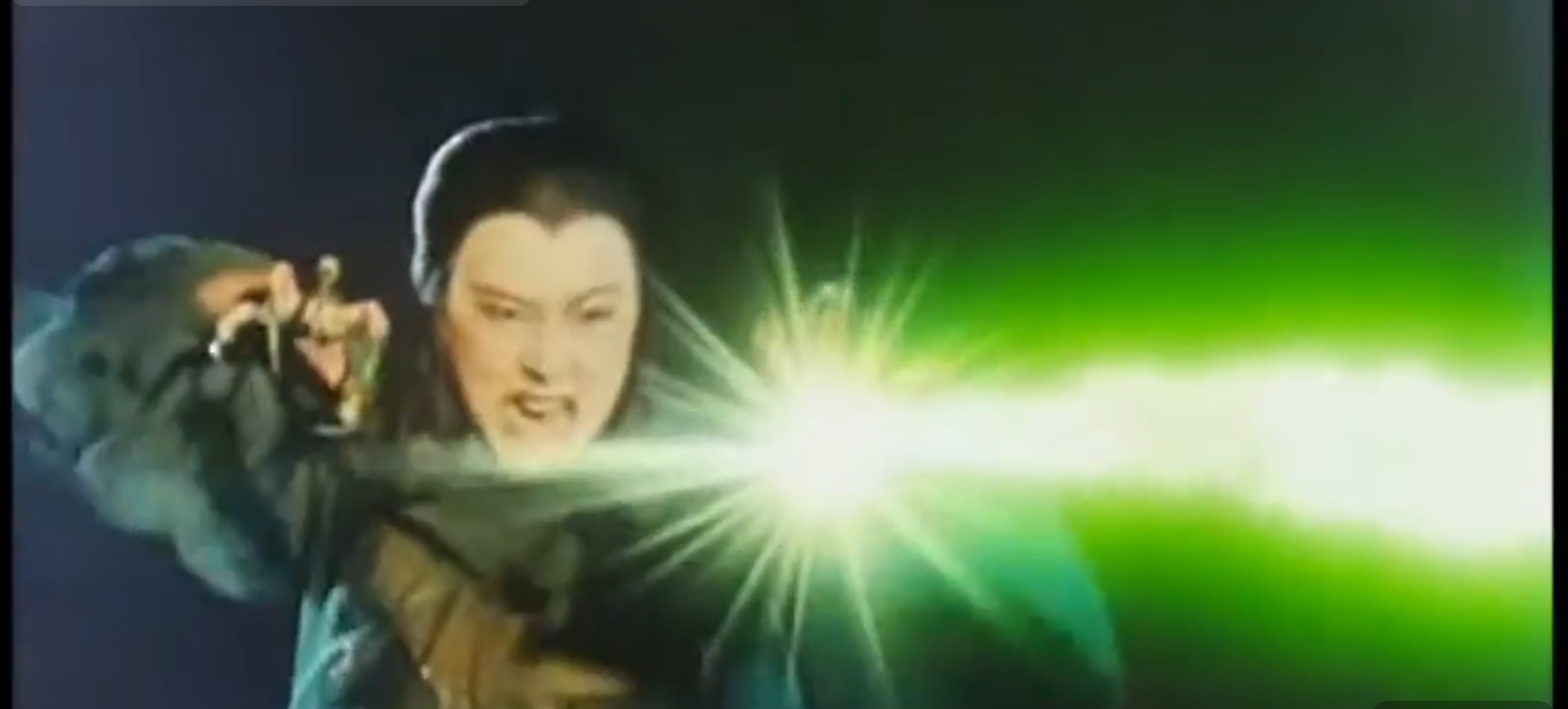
If you’re familiar with director Lam Nai-Choi, then it comes no surprise to you the kind of practical effects juggernaut “Saga of the Phoenix” can become and, in the end, doesn’t disappointment.  Choi often overscales the effort of tangibility, bringing unbelievable imagination and larger than life objects to manifestation without much, if any, assistance from computer generated imagery, and in the late 1980s, that technology wasn’t exactly perfected to what modern cinema sees today with skilled visual artistry and the introduction of artificial intelligence that’s on the verge of possibly shoving itself into the actor pool once the kinks are worked out.  In “Saga of the Phoenix,” the palpable physical presence involved is mostly at the finale third act where good versus evil face off between Ashura, Peacock, and Lucky Fruit and the ravenously aggressive Demon Concubine, the latter transforming like a Power Ranger Megazord into a gray-skeletal winged creature large enough to tower over the heroes and wide enough to swallow them nearly by three times.   Of course, this is not to say there hasn’t been other practical effects along the way which include demons inhabiting dragon statues, high wire acts of characters soaring during fight sequences, and the little mischievous imp, Tricky Monkey, from being a manipulated puppetry that weirdly reminisces Jim Henson’s “Labyrinth.”  The painted optical tricks to render color bolts of energy weaponry are a nice classic touch toward a pop of color as well as creating the inherent superhuman element of the principal players.  For someone going into “Sage of the Phoenix” headfirst without having seen or any knowledge of “Peacock King,” room for the film to standalone is rather thin but not egregiously reliant on the first film.  There’s a bit of recapping at the begging with narrative voiceover and get some clue-ins about the past from the dialogue but there’s still quite a bit unexplained, such as Ashura’s behavior fabled to be a powerful demonic necromancer who has somewhere along the way had a change of heart and we’re not privy to why.  That sense of uncertainly never really goes away through the comedy, action, and laser-firing, high-flying martial arts sinew, that something is innately missing from the story that’s saturated with wuxia themes. 
If looking to increase your bicep’s muscle mass, 88 Film’s limited-edition Blu-ray is weighty with content and it’s only one disc!  The AVC encoded, 1080p high-definition resolution, BD50 is encoded with a cherished updated 2K restored transfer from the original 35mm negative that looks unquestionably majestic on screen.  Vibrant and diffused evenly colors, high decode rate, and flawless textures, there’s nothing to dislike about this release, visually technical.  Deep in the color range and Chi-Kan Kwan’s sundry cinematography that offers vast length shots and a warm neon haze of blue and magenta through tint or gels, with a matted golden peacock rising against the monstrosities of the demon world, “Saga of the Phoenix” resurrects an aesthetic only Lam Nai-Choi could manifest from pure imagination.  The original negative is virtually pristine with no signs of damage or wear to note, nor any compression issues to note.  The uncompressed PCM Cantonese 2.0 mono offers a forward heavy diegetic sound that separate each layer favorably diversified. Clean and clear ADR make for easy discernability, capturing every bit of dialogue despite the post-production mis-synchronous acceptance. Laser action, creature roars, and other detailed measured sounds really give “Sage of the Phoenix” body, depth, and range that makes it an overall A/V highlight amongst its wuxia genre counterparts that tend to omit the smaller particulars of a scene. English subtitles pace just fine and are errorfree in a UK text. Most of the heavy lifting is done by the physical presence of the 88 Films Blu-ray that’s housed in a rigid slipbox and sheathed in a cardboard O-Slip, both containing new arranged illustrated artwork by R.P. “Kung Fu Bob” O’Brien that’s takes the true elements from the film and places them on the cover in a sure-fire canvas of what to expect. The clear Amaray cases also has O’Brien artwork as the primary cover art with the reverse side featuring the original Hong Kong poster art. Along with the O-slipcover, other limited-edition contents include a two-sided collectible art card and a 40-page illustrated book with color pictures and essays from Andrew Heskins (From Panel to Screen) and David West (The Japanese Connection), along with featured Japanese cover art Kujakuoh-Legend of Ashure. If the physical properties were not enough, the encoded content, available on the LE and Standard Edition, will bring this set home as it details with an audio commentary by Hong Kong Cinema Experts Frank Djeng and F.J. DeSanto, alternate footage from the Japanese cut of the film, executive producer Albert Lee discusses the international distribution plan from Golden Harvest Sage of Golden Harvest – The International Connection, an image gallery, and the original trailer. The 88 Films release is unrated, has region A and B playback, and has a runtime of 94 minutes.

Last Rites: Wuxia movies like “Saga of the Phoenix” are no surprise to where John Carpenter found influence for “Big Trouble in Little China” and it’s the director Lam Nai-Choi who didn’t shy away from the difficulties and inauthentic problems of physical effects but the film has its own innate issues with story that downgrade from a saga to just being an epic picture with winged creatures, bright energy blasts, and a lovely Gloria Yip succumbing to age, and status, regression with her Holy Virgin From Hell role.

Own “Saga of the Phoenix” on Blu-ray from 88 Films!

Welcome Proclaimed EVIL Into Your Home! “Video Psycho” reviewed! (SRS Cinema / Blu-ray)

“Video Psycho” on Blu-ray and DVD home video!

On his way back home, Jason picks up a Ryan, a hitchhiker looking for a new start in town, goaled to achieve three things:  a place to call his own, to obtain a job that pays minimum wage, and to find a girlfriend.  Empathetic to Ryan’s new beginnings having gone through himself, Jason invites the hopeful drifter to stay at his shared home with girlfriend Julie and little sister Kylie.  One night drinking between Jason and Ryan, Ryan confesses to killing a man and even delivers video proof with his own recorded snuff film the act.  Disregarding the video and Ryan’s confession immediately as a joke, Jason lets the man stay until another snuff video involving someone Jason knows puts Ryan in the driver’s seat that could set up Jason as the suspect.  Weeks go by and Ryan basically has the run of the house with Kylie and Julie being fed up with his intrusion and Jason’s illogical reasoning for continuing to let him stay.  With Kylie in his romantic sight, Ryan is on his path to achieve his goals. 

A SOV-horror that proves you should never pickup strange hitchhikers and also proves that there are really unsuspecting, trusting, and overall dumb people out there willing to open up themselves, their home, and their family members to complete strangers, even after adamantly admitting to their heinous crimes.  That’s the essential takeaway for Del Kary’s directed, shot-on-video thriller “Video Psycho,” co-written by Kary and Pete Jacelone, a long independent horror producer and writer who began his writing career on the 1997 film and went on to write an abundant of horror you’ve likely never heard of, such as the “Psycho Sisters” series, “The Killer Clown Meets the Candy Man,” and the eyebrow raising “Duck!  The Carbine High Massacre.”  Kary’s career is not as lustrously tarnished with two films in the late 90s, including this one and “Snuff Perversions:  Bizarre Cases of Death,” and not another until last year’s “Cheater, Cheater,” a slasher based off the childish rhyme cheater, cheater pumpkin eater.  Kary solely produces the PsYChO Films production, shot in Yakima, Washington. 

“Video Psycho” embodies that home movie aesthetic that was shot with poor equipment but amongst good friends, and probably a few beers too.  The cast is compromised a bunch of one-and-done actors with Kary’s film being their only credit as the story follows more from the perspective of serial killer Ryan, played by James Paulson.  With a soul patch, poofy dark features, and thick eyebrows that slant down in a malevolence manner, Paulson contains that judgy general appearance of a psychopath and distills apathetic patterns that are nonchalant and blunt.  While Paulson thrives as killer, Jason is the daftest, most gullible person to ever live in the cinematic universe.  Now, I’m not saying actor Adam Kraatz is the blame, performance has nothing to do with the way the character is written by Kary and Jacelone and that’s their own doing, but Jason’s inactivity to do anything or warn anyone is more frightening than the antagonist.  Girlfriend Julie (DeAnna Harrison) and baby sister Kylie (Jennifer Jordan) also can’t understand the man of the house’s submissiveness to a complete stranger who has this power over him.  When they both begin to question his authority and rational when weeks past and this random guy from off the road is still hanging around, Jason reverse psychologizes the two people closest to him which makes us wonder who the real villain is in the story.  The only other characters with substance are Kylie’s boyfriend Rick (Jared Treser), who has little impact being a buffer between sociopath Ryan and his tender beloved Kylie, and video store manager Steve (Art Molina), who does a better buffering job deflecting Ryan’s unwanted and stalkerish advances until Ryan has his way with him.  Outside the principal lot, the rest of the cast fills in with Ryan’s videoed victims, most come in a single montage of analog recorded murder, with Jason Alvord, Chris Valencia, Shannon Dimickl Brandy Jordan, Jack Meikle, Heidi Munson, and Charles Summons.

Lo-fi and dry, “Video Psycho” presents an invariability that ultimately kills any intrigue, tension, and fear.  With the cast being what it is, an adequate of inexperience, the narrative needed a lift to cannon itself beyond the routine of motiveless stranglers who kills for the love of killing.  Kary and Jacelone’s attempted twist for high impact is Ryan showcasing his snuff body of work to newfound friend and host Jason and for Jason to think nothing of it and let the maniac stay with him and his closest loved ones.  At this point, audiences will slap their foreheads so hard aspirin couldn’t handle the amount of pain to follow and attention to the rest of the story will begin to wane as disbelief ad improbability start to set in like a bad side effect of an illicit drug that clearly has said side effects.  Acts two and three barely blip on the developmental and dynamic activity meter between the characters conversations of the Ryan confoundment.  Essentially, they all talk about the inaction of others and give the benefit of doubt rather than taking action themselves to alleviate Ryan’s squatting.  Ryan’s the other character enacting real change during his weeks’ stay by videotaping every count like it’s his last and insidiously inflicting himself creepily toward Kylie.  Kary does output a few notable scenes of unsettlingly imagery, such as Kylie’s haunting dream of Ryan calling her name and getting closer to her bed as she sleeps while in strobe light and with the lo-fi videotape quality, the effect is definitely dream surreal, at least that is what “Video Psycho” has going for it.

SRS Cinema’s newly restored and re-mastered Blu-ray edition is on AVC encoded onto a 25GB BD-R with 1080p high-definition resolution.  Not that the pixel count really matters with “Video Psycho” and it’s lo-fi videotape that’s neutralizes textures and color and comes with its share of interlacing and tracking issues.  To worry about compression problems, to which there is none within the uncomplex file and its size used for the codec, would be a waste of mental and visual space with an image that does delineate objects to differentiate, implies true hue, and does the job of lower grade, SOV-horror with authentic commercial SOV-qualities of home S-VHS camcorders.  SRS Cinema never really cared about being the picture of health when it comes to quality, so this isn’t off brand for their content and schtick but does heavily play more into the little-known obscurity of home-grown thrillers within its full frame 1.33:1 aspect ratio.  The English mono track offers parallel quality to the video with a static and lo-fi quality that won’t have the pithy impact of a robust and all-inclusive surround sound or even stereo.  Kary’s produced in minor key minimalism and dread score is one of the element’s that be elevated. Dialogue’s hit-or-miss with clarity that’s often impeded by the said interference and poor mic placement, or just the intrinsic issues of an on-board mic.  There are no subtitles available.  With poor A/V quality, why release this film on Blu-ray?  The answer is simply because of the wide-ranging special features that include interviews with the actors who play Ryan’s on-screen and video victims, such as Art Molina, Jennifer Jordan, and Adam Kraatz.  There’s also a feature paralleling commentary track, behind-the-scenes rehearsal footage, deleted scenes, alternate takes, and outtakes.  Plus, the official and teaser trailer along with additional SRS Cinema previews.  The company continues to commission some pretty rad artwork and that is also true here with Belgium graphic artist STEMO who electric saturations of purple, red, pink and blue make for a eye-catching and intriguing roadside killer artwork, even if a bit literal with a thumb up hitchhiker holding a video camera on the side of a blood soaked road in the foreground.  The artwork fits snuggly in between the film layer of a standard Blu-ray Amaray and the disc is pressed with the same front cover image.  The 75-minute feature comes not rated and the Blu-ray is available region free.

Last Rites: An unremarkable, home brewed, strangler picture with little to say, “Video Psycho” has unimaginative idiocy with characters and a narrative conclusion that can be seen a mile away, leaving the SRS Cinema’s title worth only to watch because of its catfishing artwork.

“Video Psycho” on Blu-ray and DVD home video!

Sometimes It Takes EVIL To Bring Out the EVIL In Us All. “Jacob” reviewed! (Crazed House and MVDVisual / Unrated, Director’s Cut Blu-ray)

“Jacob’s” EVIL is Coming to Blu-ray! Order Here!

In the Texas smalltown of Melvin Falls, a dark history engulfs the Kell family.  Edith Kell and her two children have lived in ostracized notoriety for years amongst their neighbors as Edith’s husband, obsessed with restoring a suddently inherited house immersed in haunted opine, walked into the town crowded bar and started violently killing patrons before being shot dead by the local sheriff.  Years later, Edith’s son Jacob is now a quiet, large, and lumbering young man with a death stare that’s akin to looking into the abyss, but Jacob’s underlining rage and psychopathic tendencies are comforted by his younger sister, Sissy, when tensions rise between his mother and her boyfriend, the abusive town drunk Otis.  When Otis inadvertently kills Sissy, Jacob’s bloody rampage is unleashed and the townspeople, led by a capital punitive sheriff, form a posse to bring down the vengeful Jacob, if they even can, in another Kell family massacre.

IMDB.com

Larry Wade Carrell writes-and-directs the dysfunction family and rural community horror “Jacob,” released over a decade ago in 2012.  The film is Carrell’s debut solo directorial that earned the filmmaker best Indie Fantasy-Horror, Best Young Actress, and Best Music Score at the WorldFest Houston before embarking into more recent horror of the last decade with “She Rises,” “Girl Next,” and “The Quantum Devil” that run the subgenre gamut with supernatural terror, trafficking abductions, and evil on a whole other plane of existence.  Carrell’s humble backwoods basket case thriller has broad stroke inklings of a supernatural catalyst.  Filmed in and around Richmond, Texas, “Jacob” is the last feature from Odyssee Pictures and the first for Javaline 98 Productions, produced on a low budget by Carrell, Odyssee Picture’s Stacy Davidson and Jeremy Sumrall (“Domain of the Damned,” “Sweatshop”), William B. Davis, Catherine and Frederick Rushford, James Martinelli, and Chuck Norfolk (“Conjoined”).

IMDB.com

Like most indie features, multiple hats are being worn in front of and behind the camera.  Not only does director Larry Wade Carrell write the script, he also dons the twin brother roles of drunkard abuser Otis and the gentile deputy Billy.  Edited so the two characters are never fully faced in a scene together, Carrell manages to pull off contrast personalities by portraying, essentially, the epitome of bad versus good with the no-good delinquent and intoxicated aggressor Otis up against the mild-mannered solicitous nature of Billy, a deputy.  While Carrell may be the core of the story playing two characters, he’s written a narrative that has to battle out against the titular character Jacob, played by Dylan Horne, and the venerated genre name of Michael Biehn (“Terminator”), in what can be considered as the worst impersonation of a whoopie-exclaiming Podunk, literally with the character yelling whoopie when learning of inheriting a house.  Aside from Biehn’s cringy performance, the acting is generally positive and compelling.  Carrell goes beyond the bar in melodramatics but manages to keep grounded by much of dynamic interactions supplied by scrupulous actors with Krystn Caldwell (“Psychic Experiment”) as Edith Kell, the staying in victim of abuse, Leo D. Wheeler (“Domain of the Damned”) as the manbun sheriff with a firm but gentle approach, and Grace Powell (“Hell of a Night”) as Jacob’s soothing little sister Sissy.  Horne, in the Jacob role, is voiceless throughout but imparts Jacob’s ogre-esque killer from inside out but is still overshadowed by Carrell’s double-edge role that takes away from his menancing run through the simpleminded townsfolk.   Dustin Lane (“The Darq’), Travis Hester, Sandy Ray (“Hairmetal Shotgun Zombie Massacre: The Movie”), Shane Stewart, Karen Schlag (“Domain of the Dead”), Nick W. Nicholson (“Pickaxe”), and Deke Garner (“The Void”) rounds out the “Jacob” cast.

IMDB.com

“Jacob” is one of those horror-thrillers that wears the trope suit of a large, quiet, countryside hulk with little intelligence but makes up for with strength and goes on a killing spree when a cataclysmic moment, usually spurred by external elements like peer bullying or the death of significant person, in this case the death of his sister, Sissy, breaks Jacob’s dammed violent tendencies and what ensues is a deluge of body mangling carnage in a big ole heap of misunderstanding as the Melvin Falls residents believe, with prior judgement and without a doubt, Jacob finally snapped and murdered his sweet baby sister, though far from the truth.  However, the reason for Jacob’s turn to madness is a little more complex than just dead sister vindictiveness.  In this case, less is more would have suited Carrell’s film more aptly as Carrell adds in a supernatural element with Jacob’s father inheriting a supposed haunted house.  As the father attends to the house rehab, a montage of him finding a book and able to read and be beguiled by the demon scripture inside causes him to slowly become obsessed and insane while fixing their newfound home which then leads to the bar massacre Jacob witnesses.  Jacob also comes in contact with his father’s spilled blood that night and that presumably passes whatever supernatural forces the father was affected by to his son, an evident metaphorical theme of hereditary genes gone wild through blood lineage that’s also demonstrated within Sissy who mentions hearing the house’s callings to her but she was not tainted by the touch of her father’s blood with her being inside mother’s womb. There’s a lot to digest and decipher but not properly arranged or the demonic mainspring is sorely underplayed to really nail the occult supernaturality on its head.

The Unrated, Director’s Cut of Larry Wade Carrell’s “Jacob” lands onto Blu-ray from Carrell’s current release company Crazed House and distributor MVDVisual.  The AVC encoded, 1080p, BD50 and presented in a widescreen 1.78:1 aspect ratio.  Picture quality is a bit all over the place and its likely not from the compression codec but rather stylistic choices for flashbacks for a narrative that goes into a flashback while already inside a flashback, creating multiple tonal layers to distinguish the vying eras.    Carrell really gets his hands into a sepia and desaturated grading that sucks the color out in a fit leaning toward overexposure taking with it much of the finer detail points.  Combined with digital stock, the gritty tone Carrell goes for often loses the battle to an ultra-sheen effect.  The English LPCM 5.1 surround sound plays to the rigors of the dialogue.  The loquacious script, delivered on point by the actors, goes unobstructed with a prominent dialogue layer underscored by its Iain Kelso score that evokes a slightly better grittier tone Carrell attempts to achieve with the film’s appearance.  Range is limited to just what’s in frame and within the nucleus bubble and that often goes together with eliminating much of the depth when all the centered focus objects are making all the noise in the room and scene, diegetic speaking.  English subtitles are available.  The director’s cut has special features that include two commentaries with one including writer-director Larry Wade Carrell and the other including Stacy Davidson, a behind-the-scenes documentary The Journey of Jacob that has retrospective cast and crew interviews as well as raw footage and film footage of the film’s from alpha to omega, an interview at the “Jacob” Canadian premiere hosted by Yell Magazine, actors screen test, extended and deleted scenes with Carrell commentary, a storyboard comparison with Carrell commentary, and the theatrical trailer.  There is no stinger scene post credit.  The cover art screams low-budget and photoshop but is an adequate shoe that fits the rural horror and lumbering maniac concept.  “Jacob” comes in a standard Blu-ray Amaray for its region free, 92-minute feature presentation.

Last Rites: “Jacob’s” a good first effort in the big chair for filmmaker Larry Wade Carrell with solid acting, interesting characters, and palpable bloodshed. Where the weaknesses lie is with the story’s inability to connect the demonic, haunted house, ghost story, or whatever supernatural force may be to the essence of backwater calamity and dysfunctional family lineage.

“Jacob’s” EVIL is Coming to Blu-ray! Order Here!