Second Sight Delivers the EVIL Goods Yet Again! “You’re Next” reviewed! (Second Sight Films / Blu-ray)

Limited Edition and Standard Edition Sets of “You’re Next” Available At Amazon!

Celebrating 35 years of marriage, Paul and Aubrey Davison invite their four children – Drake, Crispian, Aimee, and Felix – to their rural weekend manor along with their respective spouses for the occasion.  Tensions amongst strained family ties begin to boil over as siblings quarrel before they even share the first meal all together.  Yet, that’s the least of the family’s problems when animal masked intruders shoot crossbow arrows through the windows and are found hiding, waiting under the bed with machetes.  The surprising attack sends a surge of shock through them but not Crispian’s girlfriend Erin who intends on fighting back and defending herself with survival knowhow.  As the night carries on, the family is being brutally executed one-by-one in what is seemingly random acts of violence.  Unsure how many assailants are outside and the cell service not working, Erin and the rest of survivors attempt to survive the night until help arrives. 

Before being the directorial face behind the recent string of mega blockbusters, literally, in the “Godzilla vs. Kong” films, Adam Wingard had more humbling beginnings as an original horror storyteller.  From working with “Texas Chainsaw Massacre: Part II’s” Bill Moseley as a demented door-to-door salesman in “Home Sick,” to interlacing themes of drug addiction and haunting visions in “Pop Skull,” to thrill with an abusive pursuit of an escaped convict tracking down his ex-girlfriend in “A Horrible Way to Die,” Adam Wingard had a knack for extracting small time horror in a big way.  Although all three of those examples saw success at some level, the glass ceiling never really broke until a juncture point just after the turn of the decade in 2010 with “You’re Next.”  Screenwriter Simon Barret, who also before writing “Godzilla x Kong:  The New Empire,” wrote the U.S. home invasion and slasheresque horror-comedy as the fourth film under Wingard’s direction, following “A Horrible Way to Die,” “Autoerotic,” and “What Fun We Are Having;” however, Barrett has found moderate success of his own with “Frankenfish” and, one of my personal favorites, “Dead Birds,” with an early performance from Michael Shannon.  Barrett, alongside Jess Wu and Keith Calder of Snoot Entertainment, Chris Harding, Kim Sherman, and Brock Williams produce the Snoot Entertainment in association with HanWay Films production.
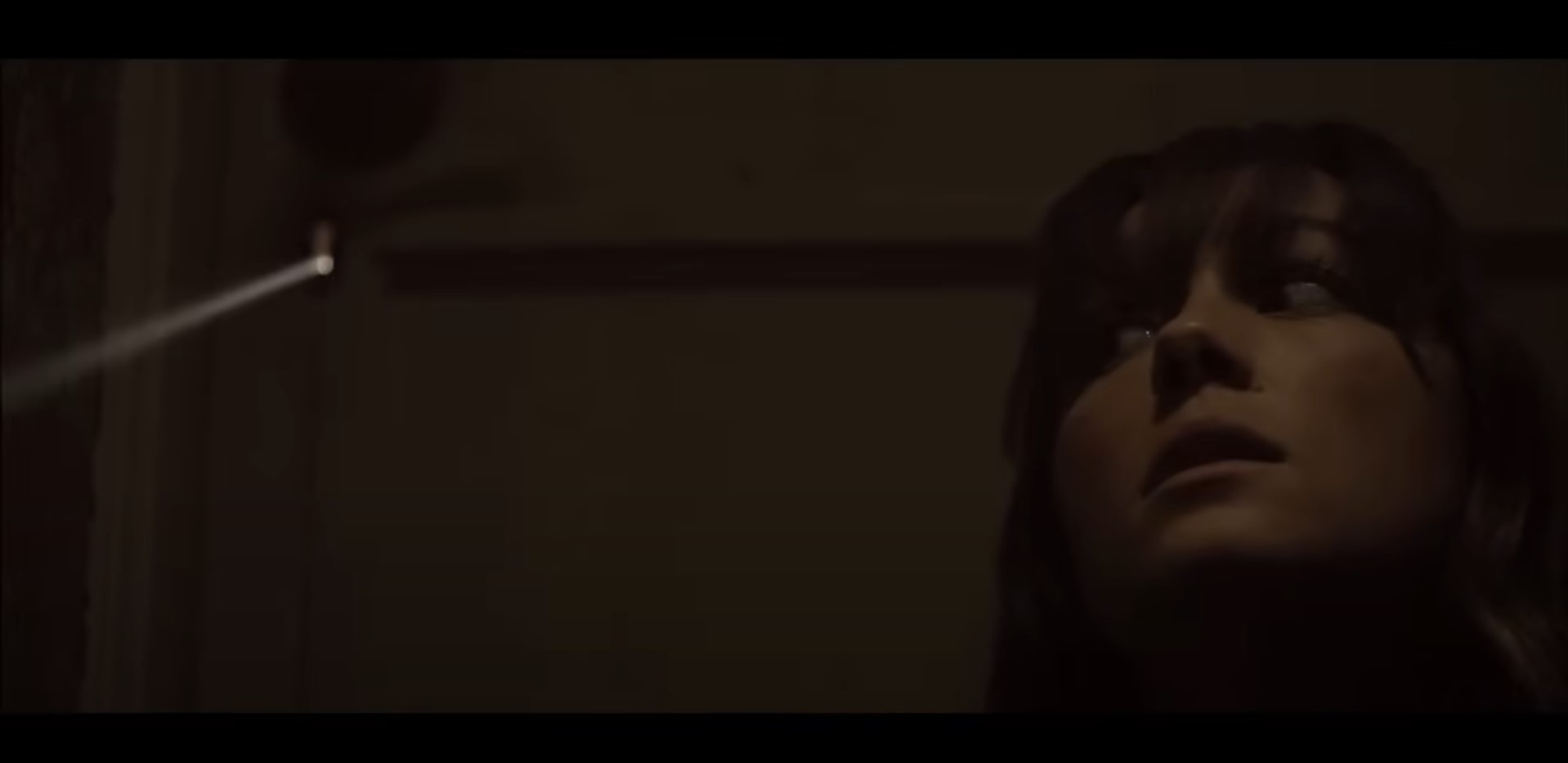
“You’re Next” reunites a cast of Wingard regulars, interchanged with good friend and fellow horror filmmaker Ti West (“The House of the Devil”) that has all but nearly faded the higher the filmmaker climbs the Hollywood latter.  The entourage includes “Hatchet II” and “The House of the Devil’s” A.J. Bowen as the pacifist academic Crispian, “Alien:  Covenant” and “Pet Semetary’s” Amy Seimetz as Crispian’s starving filmic sister Aimie, “The Sacrament” and Autoerotic’s” Joe Swanberg as the pompous older brother Drake, and “Pop Skull,” and “V/H/S’s” Lane Hughes as the Fox masked killer all of whom were in Wingard’s “A Horrible Way to Die” a year earlier.  Plus “Home Sick” and “Pop Skull’s” L.C. Holt dons a killer’s mask and director and friend Ti West of the highly popular X film series also has a brief role that plays into their whole dark nature of storytelling.  The inner circle of friends and usual casting smooths out to fills voids by adding a couple of marketable and genre renowned names to add a solidifying agent to “You’re Next’s” magnetism with “Habit” and “The Last Winter” actor-director Larry Fessenden as well as un-retiring one of the genre’s more respected and timeless scream queens and final girls in Barbara Crampton (“Re-Animator,” “Frome Beyond”) to be playing matriarch and host of the family being invaded upon.  Though marking her return back to horror, Crampton relinquishes her reins on the final girl trope, swallows her stardom by moving aside, and letting have that particular subcategory role to Australian actress Sharni Vinson (“Bait”) in one of her first handful of roles in a feature film.  Vinson will send shockwaves through audiences on her quick turn of character from a lovely, liberal oblique woman to a complete cutthroat badass that not only turns the tables on the attackers but also shepherds in a new fear or thrill – a worriment encompasses over the sociopathic bad guys.  “You’re Next” puts up a high body count with the rest of the cast body including the late Nicholas Tucci (“Choose”), Wendy Glenn (“11-11-11”), Margaret Laney (“Absence”), Rob Moran (“There’s Something About Mary”), and Kate Lyn Sheil (“She Dies Tomorrow”).

Before the film’s release in 2011, the home invasion genre saw an explosion of examples from class that wasn’t exceeding in quantity but rather rocketing skyward in quality.  The French had a good handle on concept with a bleak, ultra-violent coating that completely engrossed viewers as well as rocked their core with how nihilistic and cynical characters could become without a heroic, saves-the-day, or survival outcome, such as is the cast with 2007’s “Inside” and 2008’s “Martyrs.”  The American industry also attempts to capitalize on the niche market with “Funny Games” released in 2007 but that too is based off a European script from Austrian filmmaker Michael Haneke’s original film a decade earlier of the same title.  In all fairness, Haneke also helmed the remake starring Tim Roth and Naomi Watts.  Yet, American audiences adored their own success with Bryan Bertino’s “The Strangers” in 2008 and a remake of Wes Craven’s “The Last House on the Left” by director Dennis Iliadis in 2009 that conveyed that sort of callous violence and anarchial analogies.   Then in steps Adam Wingard and Simon Barrett’s entry of “You’re Next” of shared sadism and pessimism but sprinkles it gallows humor through the dialogue exchanges and impressions of character attitudes to make a hybrid that pulls inspiration from the likes of “Funny Games,” “The Strangers,” and “The Last House on the Left” and still finding individuality amongst the like without suffering from an identity crisis.   Protagonists and antagonists swerve through an interchangeable junction, flipping the script just when you think you’ve plotted the course of the storyline, and yet, a found sense of cold cock shock lands squarely when all is said and done and bits and pieces of the royale rumble characters are strewn about the battled ground mansion. 

“You’re Next” arrives at the UK label and friend to physical media Second Sight Films.  Second Sight’s single disc Blu-ray comes AVC encoded with 1080p hi-def resolution and dual layered with a BD50, projecting a consistent 24FPS.  There’s not much to terribly note about Second Sight’s quality release of Adam Wingard’s over 20-year-old, 4K shot film as digital stock hasn’t necessarily changed significantly for the better over the last two decades.  Presented in a widescreen 2.39: aspect ratio, Wingard and cinematographer Andrew Droz Palermo (“The Green Knight”) choose a warmer color pallet of mustard yellows and burgundies, accentuated by enveloping three-point lighting and the tweed dinner jackets and turtlenecks, to give it a retro 70s or 80s veneer in a modern time.  No banding issues or digital compression anomalies with the ample disc space.  Range is fine but limited to mostly the aforementioned color scheme.  Depth is almost limited in what is mostly a series of medium to closeup shots in an interior setting, but we’re treated to a mixed melee of close-up violence that sees splatter scatter the dark syrupy blood.  A DTS-HD 5.1 Master Audio mix layers a lossless fidelity consistency.  Dialogue has no issues with obstructions, favoring a clean and clear presentation of exchanges without losing inflection, tone, and vitality during the chaos, calmer moments, and tensioned exchanges.  A fugitive depth doesn’t sustain any kind of depth; again, with the close quarters action, we tend to forget Larry Fessenden’s blaring music left on repeat and noted to have at least three layers of depth from within the stereo’s room, between rooms, and outside the house.  Organic and inorganic ambience and action have seamlessly admixed without a sense of artificial notice.   A compilation of artist soundtrack isn’t invasive or intrusive with the assailants and that kind of dampens the effect but it’s an overall workable mix from Mads Heldtberg, Jasper Justice Lee, Kyle McKinnon, and Wingard himself.  Optional English subtitles are available.  Second Sight Films reliability to earn the right to re-release another modern production stands through again another special features laden release that includes a brand-new audio commentary with director Adam Wingard and writer Simon Barrett as well as archive audio commentary with Wingard, Barrett, and actresses Sharni Vinson and Barbara Crampton.   Another new feature is an approx. hour long interview Children of the 80s with Wingard and Barrett recollecting and going through the details for the genesis of the story and film.  Other new interviews include producers Keith and Jess Wu Calder the Most of Us, actor AJ Bowen Script is a Blueprint, actor Joe Swanberg Down in the Basement, actor Amy Seimetz Be Funny or Die, and production designer Tom Hammock Falling into Place.  Animated storyboards, an archival making of What’s Next?, and a video essay from Tim Coleman Slashers Don’t Die fill out the immensely packed second layer.  House in the standard Second Sight green Blu-ray Amaray for their standard lot, the front cover is gruesomely beautiful with a blood illustration of Sarni Vinson in character that’s also very telling of the film’s tone.  Like all their standard releases, this one comes with no inserts inside or other tangible bonus content.  The disc is pressed with another illustration of one of the masked killers.  The UK certified 18 release contains strong bloody violence, as well as language and brief nudity for those of us Americans wondering at home, in a 95-minute duration to which is encoded with a region B playback. 

Last Rites:  “You’re Next” denounces the helpless and the defensive character topes aimed to be slaughter like cattle in an abattoir.  Instead, this final girl and ferocious slasher and home invasion thriller goes against the grain and has gruesomely fun with its kills and thrills.   

Limited Edition and Standard Edition Sets of “You’re Next” Available At Amazon!

Open Up Your Mind to EVIL! “Conjuring the Beyond” reviewed! (DVD / Breaking Glass Pictures)

“Conjuring the Beyond” on DVD at Amazon.com!

Divorced and left to wallow in her own self-pity, Wanda Fulcia moves into her brother and wife’s house but her inability to secure a job and act responsible has proved difficult with her hosts as she continues to ask for favors, such as borrowing her brother’s car to drive to a paid sleep study in the middle of a nearly deserted small town.  Dr. Pretorious, the head clinician of the study, seeks to hypnotize his four, sleep paralysis unaffected, participants to open their portion of the brain to produce night terrors and sleepwalking in order to treat the condition.  What the participants are really opened to is a nightmare state of being paralyzed while aware of an old, animalistic hag surveying them as they lie powerless to move.  At dawn, they all convey recalling the same dream and realize one of them is missing.  The recorded video shows the missing participant sleepwalking from his room without a trace of where they’ve gone.  The next night, the ordeal repeats itself and another member of their party goes missing.  Wanda and those left must uncover the mystery behind their night terrors before they back to sleep again. 

Borrowing from the tall story superstitions that sleep paralysis was the work of demons while also plucking ideas from Stuart Gordon’s perceptually other-dimensional horror film, “From Beyond” and James Wan’s spirit-investigating “The Conjuring,” Calvin Morie McCarthy writes and directs his own unofficial, unauthorized, and unsanctioned sublevel spinoff with “Conjuring the Beyond.” The Vancouver, Washington born 30-year-old filmmaker has been through his fair share of direct-to-video horror refuse, even etching himself into the running joke of “Amityville” titled cheapies with his entry “The Amityville Poltergeist” that has garnered a general public rating of 2.2 on IMDB.com. That low score doesn’t tarnish our objective goal to look at “Conjuring the Beyond” impartially without the blatant cash-in title affecting our sound judgement because, trust me, we’ve seen our lion’s share of reused, reworked, and rehashed titles. The film marks the first 2022 release for McCarthy and is produced by Chad Buffet of the Renton, Washington based special effects and props company, Raptor FX Studio, along with Joe Dietrich’s co-created company 7th Street Productions with McCarthy and Richard Wolff of Breaking Glass Pictures who distributes the film with an at-home release.

At the heart of the story is Wanda Fulcia played by Victoria Grace Borrello in her feature film debut. The Loyola University graduate of the arts, Borrello offers a new face and a serious craft performance toward a recently divorced person who has become lost in themselves. Wanda’s written to be entrenched into any kind situation that befalls her whether be with her own troubles of self-discovery or the beleaguering troubles of a cerebral doorway opened to let a malevolent entity into her subconscious. Who opened that mental gateway is the potentially guileful psyche-physician, Dr. Richard Pretorious. Pretorious, as all horror fans know, is a homage to “From Beyond’s” Dr. Edward Pretorious, the main antagonist who used a machine called The Resonator to expand a person’s mind into other dimensions. “Mutant Vampire from the Planet Neptune’s” Steve Larkin certainly does not portray the diabolism in her version of a Pretorious Doctor but there is this underlining itch that can’t exactly be scratched regarding the character’s true intentions. This unfinished business happens between both Wanda Fulcia and Dr. Richard Pretorious and that takes away from completing well-rounded characters who never see themselves cross that arc finish line. Essentially, both are stuck in a disappointing stasis of unfulfillment, and their morals and their emotional baggage are carelessly left to the wind. I found the secondary principals more impressive and a little more understandable with tidbits of themselves being dropped like breadcrumbs through the variable time on screen. Cocky boxer Porter (Jon Meggison, “The Haunting of Ravenwood”), a tarot card floozie Margo (Jax Kellington, “Cross Hollow”), and midwestern drunkard Theo (Tim Coyle, “I Need You Dead!”) are the other three participants of the sleep study and each provide a unique image that continues to keep us interested and where they possible might end up retired on the runtime scale. Neil Green, Erik Skybak, and Chynna Rae Shurts as the skulking Sleep Demon.

With an amusing banter of well-written dialogue, a passable night terror demoness, and a nodding homage or two to a couple of horror powerhouse films, “Conjuring the Beyond” has scrappy potential to be something a touch more than just a capitalizer of better and already completed novel ideas. “Conjuring the Beyond” ends like an unfinished thought that asks more questions than provides answers in its thematic night terror framework. Shurts’ Sleep Demon is sorely underused and mostly not present to be invoking scares from the feature. Shurts is cladded on a budget but well adequate to eerie up the antagonist enough with fake long nails, fake gnarly teeth, and a dark shawl or robe attire that slinks and creeps in-and-out of alert sleep paralysis patients. McCarthy also dives into another theme of shared experiences or mutual dreams that then send a shiver of petrifying terror zipping through a collective’s inner being. More precisely in that theme is one’s person’s affliction affects or infects the surrounding others; we also see this at the beginning with a Wanda’s brother Nick and his wife negatively feeling Wanda’s ability to rebound from an ugly divorce. However, not all scenes make complete sense. The prologue of a man trembling in his bed and watching the Sleep Demon slither into his room before snatching him from his bed is detached from the trunk of the story much like a dead branch lying next to not it’s tree provenance. Yes, the branch part of a tree, just not this tree. Other aspects of the film also don’t make much sense or lack explanation is the participants who disappear reappear as sleep walking zombies under the control, possession, or will of the Sleep Demon and to what purpose is far from being seen.

“Conjuring the Beyond” evokes images of demons and terror onto a DVD home video from the Philadelphia based, provocative independent film distributor Breaking Glass Pictures.  The MPEG-4 encoded DVD5 is a NTSC, region 1, unrated U.S. release presented in a CinemaScope widescreen 2.35:1 aspect ratio.  The lossy codec compression appears to sustain a relatively good picture throughout the 90-minute runtime with little-to-no banding or issues and toned-down artifacts concentrated more so around darker scenes around the delineation of objects in the background. Noticeable post-production issues don’t go unnoticed when the visual effect of compositing CCTV footage on a computer screen was left undone and so there is a scene where the sleep study participants and Dr. Pretorious are huddled around a laptop staring at a blank, black screen while providing commentary on the disappearance of a fellow member of their group. The lossy English dual-channel stereo mix offers a mediocre, yet still strongly inclusive, audio output that has slight issues maintaining consistent decibel levels at times. Dialogue can sound muted at times or distant and then suddenly be more robust in the same breath. English subtitles are available if opted. Depth and range work well with the fear atmospherics and environments. The release is feature only with only a static menu on the DVD that’s encased in a normal black snapper case with egregiously deceptive artwork of a woman floating above her bed; no floating happens in the film. Perhaps less misrepresentative if titled something more original, “Conjuring the Beyond” holds tightly to the coattails of other iconic horror films but tweaks the story just enough to tease a fresh take toward the unharnessed and terrifying dimensions stemmed by the power of the mind.

“Conjuring the Beyond” on DVD at Amazon.com!

This Bundle of EVIL has a Dirty Diaper! “Baby Oopsie” reviewed! (Full Moon / Blu-ray)

“Baby Oopsie”  The Baddest Baby in Town on Blu-ray!

Who would have thought that playing with dolls could be deadly.  Sybil Pittman certainly didn’t think so as she hosts her internet streaming doll vlog showcasing her collection of pint sizes doll babies most of which Sybil has restored back to life…literally.  When a mysterious package arrives with the battered and stitched together head of Baby Oopsie, a severely bullied and neglected Sybil locks herself in the basement to work tirelessly on repairing Baby Oopsie’s head and mechanical body that includes, unbeknownst to Sybil, one special gear under a satanic spell to for collecting souls.   Baby Oopsie, the once pride and joy of Sybil’s restorations, has been resurrected from the toy junkyard and aims to claim the lives of Sybil’s tormentors to sustain it’s own diabolic animation.  When all of Sybil’s adversaries are eliminated, Baby Oopsie still requires lives to live and turns on Sybil’s friends and Sybil herself that becomes a battle to the death.

Full Moon knows how to run and market a good product that can last a lifetime and they continue to stroll through their finely tuned niche of deranged doll other pint-sized psychos to this very day with brand new produced features hitting the physical and streaming retain shelves in 2022.  Following the success of “Don’t Let Her In,” one of those new features aforementioned, is the return of the evilest rug rat known to infant kind, Baby Oopsie, from the “Demonic Toys” universe.  William Butler, who I fondly remember playing sweet country boy Tom being blown up and having his corpse feasted on in Tom Savini’s “Night of the Living Dead” remake, continues his long-standing tenure with Charles Band and Full Moon that began in 1986, under the Charles Band Empire Pictures company production and Stuart Gordon directed “From Beyond,” with a new written-and-directed feature “Baby Oopsie,” a concentrated, standalone spinoff of “Demonic Toys.”  This isn’t Butler’s first go-around with the go-go-ga-ga-gut your guts dolly as the filmmaker helmed “Demonic Toys 2:  Personal Demons” in 2010.  Charles Band and Butler produce the film with regular Full Moon executive producer Nick Blaskowski under the Full Moon Features in association with Candy Bar Productions.

Viral sensation the McRib Queen versus demonic toy Baby Oopsie. Stand up and character comedienne, Libbie Higgins, debuts in her first feature headlining role as Sybil Pittman, the repressed and intimidated vlogging doll queen living in abusive hell with tyrannical stepmother after the death of her beloved father. Higgins, who has an Onlyfans page for only $8 a month for all you obsessed fans out there, adorns a wig, glasses, and meme cat sweaters to get into the head of Pittman’s secluded world and where outsiders browbeat her into a reserved submission and wishful thinking only provides little comfort returning the hurt played out internal sadistic fantasies. For her breakout role, Higgins transcends her comedienne persona and into an anxiety-riddled outcast wretched by life’s punches and horror-struck by a doll that walks, talks, and kills like a macho-sadist. Before going head-to-head with the berserk Baby Oopsie (voiced by newcomer Jill Barlett), Sybil is caught between the devil and a saint with her brash, overbearing, stepmother played by Lynne Acton McPherson (“Improbus”) and the attentive and caring subletter played by Marilyn Bass, who tries very hard to be Full Moon sexy and skin-revealing without showing the camera too much. Her “best friend” Ray-Ray tips the scales toward believing in Sybil’s beauty and craft, befriending the doll queen despite her large radius of shunning those want to get closer to her, such as the mailman or the gardener, because of the depressive self-pity. Yet, Ray-Ray brings to the light and so does the actor who portrays the upbeat Hey Hunny sassy-mouth in TikTok and Youtuber influencer Justin Armistead. Armistead is magnetically chipper onscreen compared to Higgins story-obliged monotone placidness that balances out quite nicely the duo’s vanilla and peanut-butter-marshmallow swirl relationship. “Baby Oopsie” is full of character and characters, rounding out it’s smorgasbord of victims and supports with Diane Frankenhausen, Shamecka Nelson, Joseph Huebner, Michael O’Grady, Michael Carrino, Christopher J. Meigs, Tim Dorsey, and Josephine Bullock.

Set and filmed in Cleveland, Ohio at the proclaimed Full Moon estate, a 60’s-70’s anachronous house with many rooms becomes the playground setting for “Baby Oopsie,” the cast, and the crew. The location that reflects an era no longer modern, a dated obsoletism, to match Baby Oopsie’s classic and ideal bald-bald in a night gown form. However, normal Baby Oopsie also comes with that grotesque, malformed face that only a doll obsessed mother could love and would cause the toughest of horror fans to fear in their pants in on glance at the augmented representation of a human infant. It’s the creepy old doll look you definitely don’t want to see sitting in a dark corner blankly staring at you.  Of course, the special effects are not the classic Full Moon stop motion you see with the “Puppet Master” flicks as “Baby Oopsie” deals in tangibility with a bait and switch editing between the number of diverse molded Oopsie dolls created by special effects supervisor Greg Lightner (“Corona Zombies,” “Don’t Let Her In”) that include an open mouth and sneering face or a set of glowing eyes to provide a sense of evil.  Oopsie fits right into Sybil’s down on her luck story that is nicely compact and complete for an indie horror quietly but surely touches upon Sybil’s life in various key scenes, such as the gardener who hangs around because her father was much beloved or how much Sybil is despised at work between the dragooning, nitpicking, and strict boss and the snickering colleagues that look down at her.  Butler’s sweet-and-salty route delegates a fine line between her friends and foes that make the stakes clear when Oopsie decides impulsively to go off the bad-guy only rails. “Baby Oopsie” is far from cute and cuddly. “Baby Oopsie” is closer to being ugly and uncouth as the prime and pinnacle sequel of anthropomorphic toy horror in today’s Full Moon toy chest of films.

Spinoffs have become the new favorite amongst audiences, “Baby Oopsie” even pays a sideswiping jab to “Annabelle” of the “Conjuring” universe, and while we see a lot of spinoffs in television, the concepts and ideas are beginning to spill more frequently for filmgoing fans and, as such, “Baby Oopsie” is reborn onto her (or is it him? or it?) own Blu-ray home video from Full Moon Features. The region free, high-definition release, presented in a widescreen 1.78:1 aspect ratio, is the epitome of digital recording without much of a single critique or compression issue. Inundated with a more realism than stylism presence in front of the camera with the exception of a few edited in art renditions of satanic imagery, Butler and cinematographer Josh Apple apply a clean, high-resolution coating that undeniably very familiar to Full Moon’s repertoire. What’s also a motif straight out of Full Moon’s bag of goodies in the carnivalesque score. The Dolby Digital 5.1 surround soundtrack raises the volume on the Fred Rapoport and Rick Butler above a superseding level that swallows the English dialogue at times. You really want to absorb Jill Barlett’s vulgarities as Baby Oopsie but need to fight the soundtrack to do so during key moments when Oopsie’s profanity-laden Tourette like behavior kicks in. The release also comes with a second audio option with a Dolby digital 2.0 stereo. Bonus features include a behind-the-scenes featurette with cast and crew interviews on their experience making the film and poking fun at each other at times in a well-edited jest, a Videozone featurette that’s essentially a mini panel with producer Charles Band, director William Butler, and stars Libbie Higgins, Marilyn Bass, and Lynne Acton McPherson taking a break in the midst of filming to talk about their characters, to talk about the film itself, and for Band to plug his streaming service and new projects, there’s a mini-featurette All Dolled Up! that has Libbie Higgins in character, Justin Armistead self-recording in his bathroom, like on TikTok, and Baby Oopsie announce the winner and runner-up’s of a contest to win a Full Moon prize package. Bonus content rounds out with Full Moon trailers. The Blu-ray comes unrated, and feature has a runtime of 78 minutes. “Baby Oopsie” is not the addendum to the profane book of “Demonic Toys” but rather an extenuating chapter that opens the door for all the misfit and maniacal toys to one day have their own independent rampaging furtherance that are likely already drafted, budged, and ready to shoot at a moment’s notice.

“Baby Oopsie”  The Baddest Baby in Town on Blu-ray!

Book an EVIL Getaway Rental from the “Superhost” reviewed! (Acorn Media International / Blu-ray)

Never Again Feel Welcome After Watcing “Superhost” on Blu-ray Available at Amazon

Airbnb reviewer vloggers Claire and Teddy are bleeding viewership fast.  To save their monetized video channel, their financial independence, and possibly live happily ever after as man and wife, the duo was finally able to rent a highly demanded location set in isolated in the forest when it became available.  The house is more than they could ever hope for with beautiful floor-to-ceiling windows, spacious accommodations, and breathtaking idyllic mountain views.  The one little hiccup about the residential stay is the quirky superhost, Rebecca, who has been more than overly friendly.  An unsuspecting guest from the past turns the tables on Claire and Teddy as Rebecca slowly unravels her true intentions in a nerve-wracking game of life and death with all the amenities.

From the director of the supernatural baby-snatching “Still/Born” and the imaginary friend from Hell in “Z” comes Brandon Christensen’s next written-and-directed demented thriller “Superhost” that takes the automated vacation rental methodology and breaks them in half.  Shot just outside Las Vegas in the rural area of Mount Charleston, Christensen provides the illusion of a far trek away from busy street society with a cabin in the woods what if’er of an overzealous hosting homeowner making weird and uncomfortable conversation with their tenants on a daily or nightly basis.  Tacked onto that idea is the new age monetizing of vlogs and racking up subscribers that overtake or make us blind to what’s really important.  The Superchill and First Look Releasing production is executive produced by the Ty and Darren Siversten and produced by Christensen, Kurtis David Harder (“Spiral,” “V/H/S/94”), and stars Sara Canning and Osric Chau.

Aforementioned, Sara Canning (“Z,” “The Banana Splits Movie”) and Osric Chau (“Supernatural”) star in the film as vlogging couple Claire and Teddy.  Whether be the actors’ performances or the blind obsession toward their monetized YouTube platform to secure financial freedom, the on-screen chemistry between the couple didn’t jive.  What doesn’t help is there’s no real romance being displayed during their time together nor was there any expositional or any form of mentioning what their life looked like before becoming internet influencers.  Being influencers makes up a sizeable portion of what the audiences (us as viewers and not their video channel followers) know about the couple sans the miscellaneous background of Teddy’s parents providing rent aid whenever needed and Teddy’s top-secret engagement plan in which he also vlogs to his viewers behind Claire’s back.  We experience a little more where Teddy comes from, but Claire is a complete mystery much in the same way as superhost Rebecca.  However, as the crazed host, the enigma surrounding the jovially expressed Rebecca, eager to help with clog toilets and whip up pancakes, adds to her strange and frightening demeanor.  I would never want Gracie Gillam (“Fright Night” ’11, “Z Nation”) to uninvitedly walk into my vacation rental in her full Rebecca form.  I would forego my deposit lickety-split and hightail away from a much-needed getaway to literally save my skin from Rebecca’s crackpot revelry. Popping into the frame a couple of times is genre veteran and overall fan favorite is Barbara Crampton (“From Beyond,” “Re-Animator”) as Vera, a disgruntled property owner who tracks down Claire and Teddy for a vindictive, rock-throwing rant but becomes unsuspectedly ensnared in the Rebecca’s mare’s nest.

Brandon Christensen is no stranger to small productions with a small cast, but “Superhost” is a micro-production with a micro-cast and, somehow at no surprise, busts out a truly terrifying lunacy that can make you double think before clicking that confirmation button on the vacation rental reservation. “Superhost” is unsettling and invasive as if privacy is nonexistent and the ever-watchful eye is always looming. In fact, it is! With security cameras installed in basically every room, there’s 24-hour CCTV footage of every moment of Claire and Teddy, but isn’t the moment captured and being filmed constantly is what their livelihood and vocation is all about? Christensen has that paradoxical undertone packed exceedingly well beneath the veneer of voyeurism, inescapability, and troubled relationship issues that the theme becomes a backburner hit on the tail end in that what the thing that provides Claire and Teddy a reason to be free as individuals is the also the very thing that they can’t flee from and become merely a battered object of one’s mad person’s whims much like their more critical reviews can be ruinous to others. While “Superhost” can feel a bit slow for the first two acts, the story showcases a development and escalation of Grace Gillam’s Rebecca as a woman with more than one loose screw. Of course, Rebecca’s not seen for who she really is by the compulsion to film not just the rental, but also her, as gold-plated viewership material. “Superhost” admonishes a tread carefully thriller to beware and adhere the signs of mania danger and all those Rebeccas out there.

Trust me – cancel that reservation, plan on a staycation, and watch the Shudder-exclusive “Superhost” now on Blu-ray home video from Acorn Media International. The region 2, PAL encoded, Blu-ray is presented in an anamorphic widescreen aspect ratio of 2.35:1. Nothing terrible to note here as much of the digitally captured, RED Gemini images are about as crisp as they come with a natural presentation all around from cinematographer Clayton Moore (“It Stains the Sands Red”) with the exception of the unfiltered handheld camera and CCTV footage, which is also very authentic. The English language Dolby Digital 5.1 surround sound rustles together clearly and discernibly ever creak of the floorboards and every gushy stabbing sound for full impact purposes. Dialogue track is clean with pronunciation clarity and the bottom-and-bass dropping score by instrumental band Blitz//Berlin (“Psycho Gorman,” “The Void”) continue to impress with their original soundtracks. The special feature includes a director’s commentary, a behind-the-scenes that talks about Mount Charleston location, the annoying tiny beetle swarms, and how amazingly small the production crew was, a solid blooper reel, “Superhost” VFX featurette with green screening and matting car scenes and the ultra-graphic knife through the mouth effect, a behind-the-scenes still gallery, and episodes 1 and 2 of Brandon Christensen’s television shorts, “Scaredycats.” Remember, guys, hit that like bottom and subscribe to follow Brandon Christensen’s descension of guests becoming unaccommodated by a psychotic “Superhost!”

Never Again Feel Welcome After Watcing “Superhost” on Blu-ray Available at Amazon

All Hail the EVIL Slumbering One! “Sacrifice” reviewed! (101 Films / Digital Screener)

Years after being quickly whisked away to America as a small child from his remote Norwegian island birthplace, Isaac returns nearly 30-years later with his new, pregnant wife, Emma, after the death of his mother leaves the empty family home in his inheritance.  With their heart set on fixing up and selling the house before the birth of their child, Isaac and Emma learn that marketing the seaside and scenic estate comes with a tragic past when the local sheriff discloses the brutal murder of Isaac’s father inside the home.  The dreadful information and the bizarre locals with their customary traditions doesn’t alarm Isaac who, instead, feels a strong connection and is drawn to staying whereas Emma, plagued by terrifying nightmares ever since stepping onto the island, is eager to sell and return to American as soon as possible, fleeing a community that worships an aquatic deity beneath the water’s surface.   

Based off dark fantasy and science fiction writer Paul Kane’s short story, “Men of the Cloth,” found in the author’s “The Colour of Madness” collective works, “Sacrifice” is an alienating folklore horror bound by the influence of a Lovecraftian core under the direction of a filmmaking due in Andy Collier and Toor Mian.  As their sophomore film as collaborating directors, following their 2017 psychological cop horror “Charismata,” Collier and Mian tackle Kane’s short story head-on by changing only a few details, such as location, family structure, and the title from formally known as Kane’s “The Colour of Madness” to “Sacrifice”, but keep rooted the foremost principles of “Men of the Cloth’s” cultish discomfort that’s greatly inspired with the otherworldly sensation of an amiss atmosphere akin to Robin Hardy’s “The Wicker Man.”  Filmed around the idyllic and mountain enclosed shore town of Bjørk, Norway and in the town of Volda, Norway, the 2020 film seeks to plop strangers into a strange land as a production of the London-based companies, Loose Canon Films and Hydra Films RKM, in association with Dread.

Over two years ago was the last time we reviewed a Barbara Crampton movie with “Death House,” that included a plethoric cast of her all-star genre brethren with Kane Hodder, Bill Moseley, Dee Wallace, and others, and, now, Crampton makes her glorious return to the Lovecraftian turf that nostalgically brings most of us horror fans back to the New York-born actress’s “From Beyond” and “Re-Animator” days.  “Sacrifice’s” Cthulhu spirit finds Crampton playing a small town Norwegian sheriff, Renate Lygard, in which Crampton, under the training of a dialect coach, surprises us with a fair Norway accent as she provides a quasi-warm hospitality set of manners upon island outliers in Isaac (Ludovic Hughes) and Emma (Sophie Stevens) Pinkman. Hughes and Stevens nudge their way into a solid man-and-wife, but their dynamic density becomes crispy at times and pale from their initial arrival soon after rustling with the natives. The lack of vitality doesn’t stem from the wedge being driven between from the lure of Isaac being called by the natural phenomena of the Northern Lights, the drunken friendly benevolence of Gunnar (Lucas Loughran) and Ledvor (Jack Kristiansen), and the full frontal skinny dipping of Renate’s beautiful daughter, Astrid, an eye-opening film introduction from Johanna Adde Dahl; instead, the Pinkman’s bond held together about as tight as using kindergarten grade craft glue that bled into the performances as well that came off stiff and unnatural. Aside from Hughes and Stevens hailing from the United Kingdom and Crampton from the U.S., the remaining cast was curtailed to Norway nationals, as such with Loughran and Kristiansen, rounding out the cast with Erik Lundan, Dag Soerlie, and Ingeborg Mork Håskjold.

“Sacrifice’s” cult mania lays on a thick coating of grass roots that really set the tone for an foreboding outcome.  An idyllic Norway fishing village propped between the eclipsing mountain range and marine inlet intrinsically obscures an already unspoken secret that’s only been rendered on the faces and actions of the residents.  At the center of village’s idiosyncrasies are the two hapless protagonists venturing into unknown territory with only an inherited house in their back pocket and a vague sense of youthful recollection; this sets up for an obvious antagonism theme of locals with a sense of xenophobic nationalism, especially against two Americans.  The initial friction opens the flood gates for cultural customaries to be weaponized against Isaac, who wants to strongly embrace his heritage, and Emma, who can’t seem to grasp the village’s peculiar beliefs and even goes as far as being naïve of and mocking the village’s traditions and deity.  The tension is compounded by the ominous presence of the labeled slumbering one, sleeping beneath the glossy surface of the inlet waves, but conjuring up tangible and intense nightmares that plague the every island inhabitant, a mystery Emma can’t explain, won’t entertain, and ignores exploring that turns Emma floundering more into Isaac’s sudden disinterest in her albeit soon-to-be-parents.  “Sacrifice’s” climatic, tell all scene harbors more secrets regarding Isaac and Emma’s purpose on the island that are to be interpreted by the audience, but don’t connect back to any string along clues leading up to a poignant and sharply-shocking ending.  Instead, “Sacrifice” acutely wraps up not only the story but also the characters like a paper wrapped fish at the fish market ready for sale without any huff about where, why, and how that particular bug-eyed fish became the gutted victim of man’s delicacy.

“Sacrifice” shores folklore horror swelled with Lovecraftian roots and is docking digitally today, March 15th, in the UK courtesy of 101 Films. The film has a runtime of 87 minutes and is presented in a widescreen 2.35:1 aspect ratio, shot on a Sony CineAlta Venice camera. Co-director Andy Collier tackles his first credit director of photography gig with interesting shots looking up through all different angles and vessels that hold water. Whether boiling eggs, taking a bath, or in small cove, Collier, and Mian, put eyes on the bottom surface, promoting all varieties of water within it a lurking presence and the imagery is done extremely well with depth and space to pull off the illusion. A fair amount of soft lighting, moments of bright primary color glow, and the specs of well-placed lighting to barely illuminate a scene is broodingly worthwhile. Tom Linden’s original score is fiercely compliment as a folklore staple, harsh-chord intensity that lingers well after the boiling blood levels drop to a mere tentacle dwelling simmer. There were no extra features or bonus scenes included with the digital screener. While the build up didn’t pay off at the bloody end, the two-tone terror of “Sacrifice” wrecks the nerves and frays warm pleasantries with wicked wallowing, slumbering, nearby in the shallows.