Back to the Past to Hunt Down EVIL! “Trancers” reviewed! (Full Moon / 4K Ultra HD and Blu-ray)

Become a Slave to “Trancers” on 4K Ultra HD and Blu-ray!

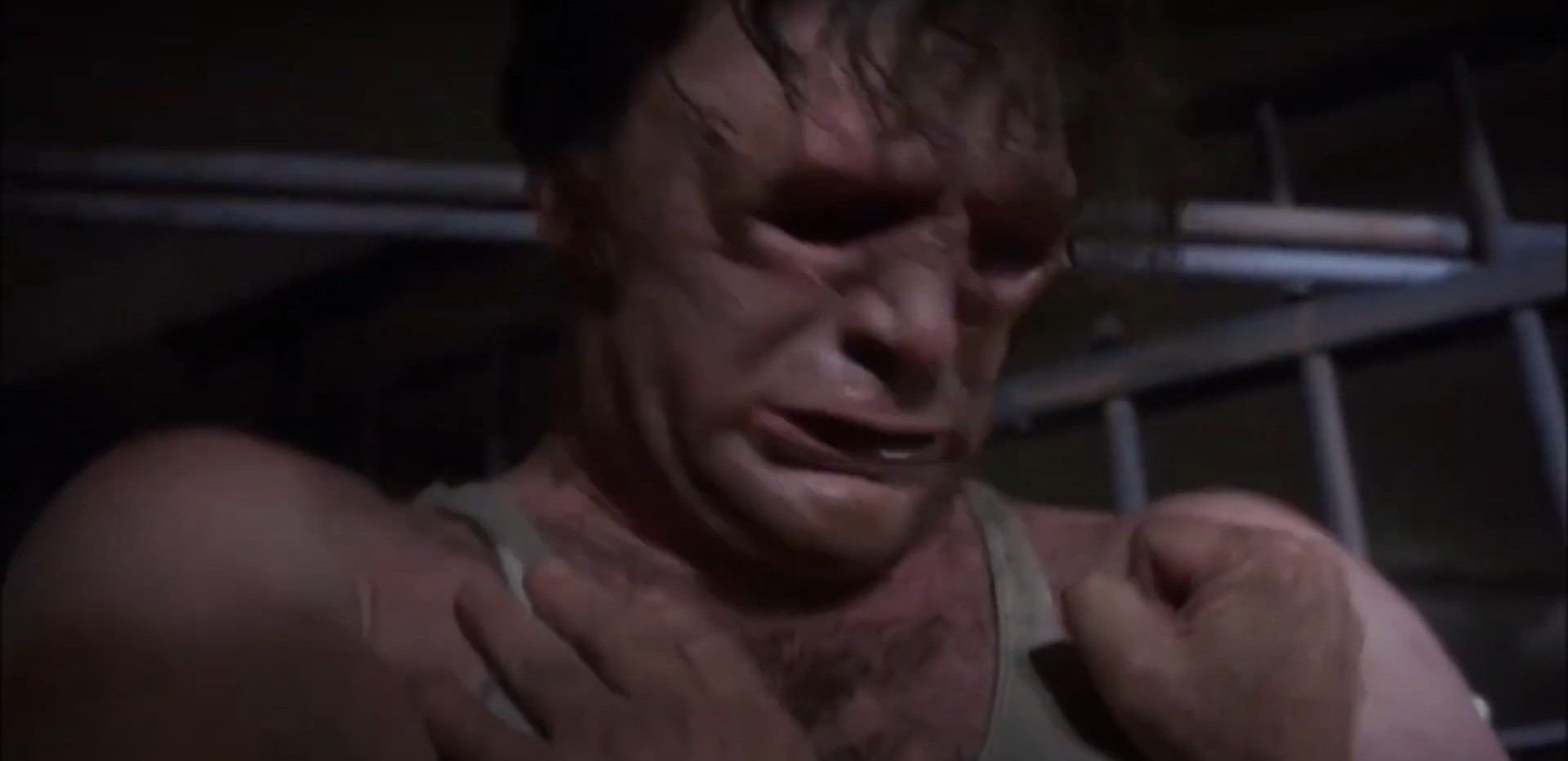
In the post-apocalyptic ravaged 23rd century, Jack Deth, a brusque and hardened trooper, hunts down Trancers, a group of easily influenced and entranced people turned zombified slaves by a power-hungry hypnotizer named Whistler.  With Whistler killed, Deth lives out his raged-filled days vindictively bounty hunting Trancers still beckoning to Whistler’s lingering snake charming after one of Trancers kills his wife, but when Whistler appears to have cheated death and sent his conscious mind to the year 1985 into a Police detective relative to assassinate ancestors of the Trooper council and gain control of what’s left of the future world, Deth gives chase, sending his consciousness into a journalist predecessor with a fast car, a relaxed lifestyle, and in the arms of a beautiful young woman who Deth must recruit and rely on if he wants to survive the past.
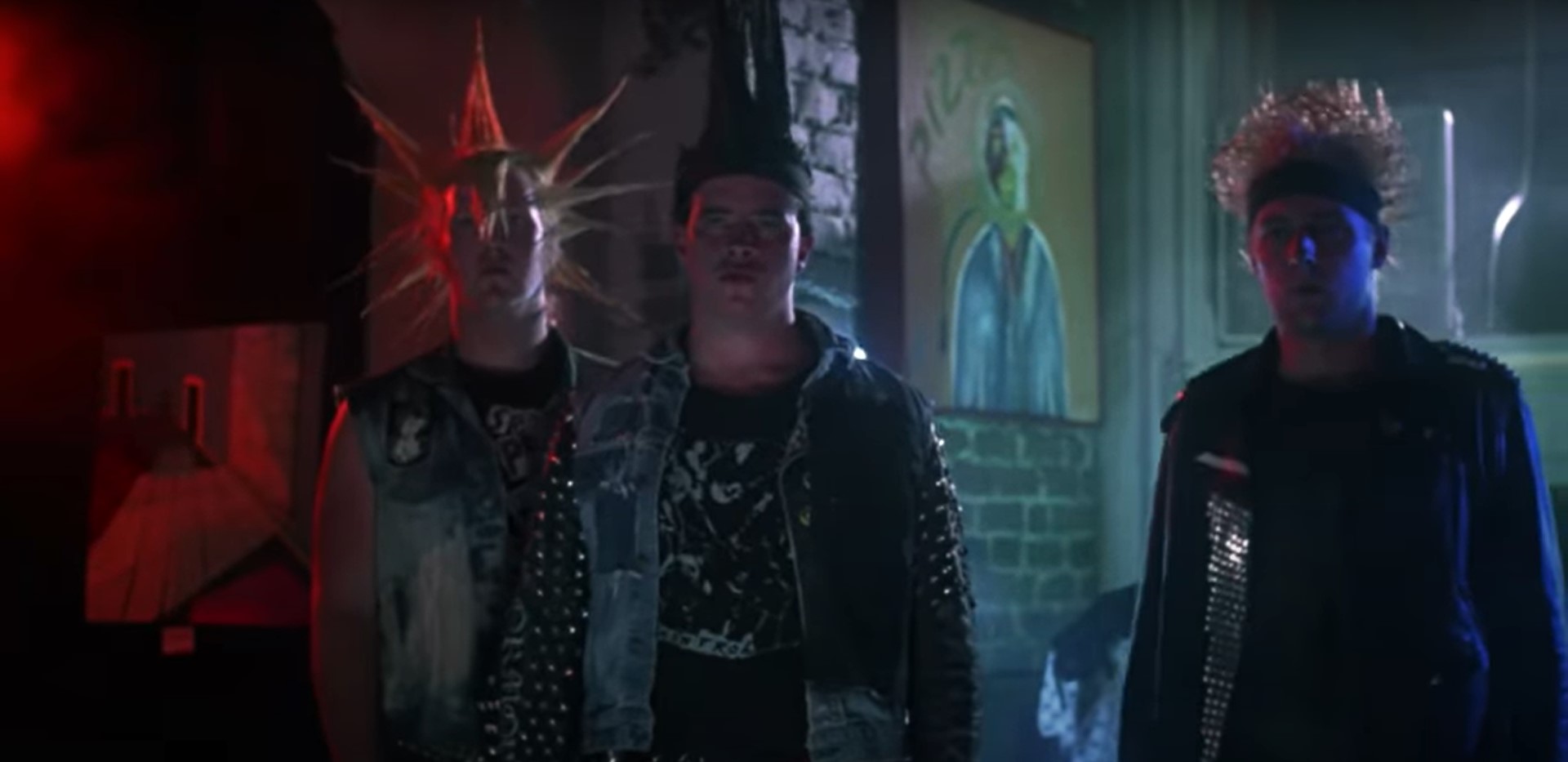
Charles Band’s Homeric Sci-fi opus “Trancers” is time-travelling neo-noir at its boldest.  With a limited budget and loads of talent, the 1984 future bounty hunter with a grudge actioner, the first of a franchise that spawned five sequels stretching over two decades, was penned by then Band hired screenwriters Danny Bilson and Paul De Meo, whose careers have run the variety spectrum of treatments from the Empire days of WWII soldiers battling aliens in a UFO in “Zone Troopers” in the mid-80s to finding themselves on the same credits screen as Spike Lee in the filmmaker’s post-war Vietnam drama ‘Da 5 Bloods.”  “Trancers” has nothing to do with war but has everything to do with a crumbling society, a hardnosed cop, and acrid acolytes with purple chapped lips and a yellowish green tinted complexion.  Also known as “Future Cop” in other parts of the world, the Los Angeles-shot “Trancers” is produced by the “Puppet Master” Charles Band and Debra Dion under Band’s Empire Pictures.

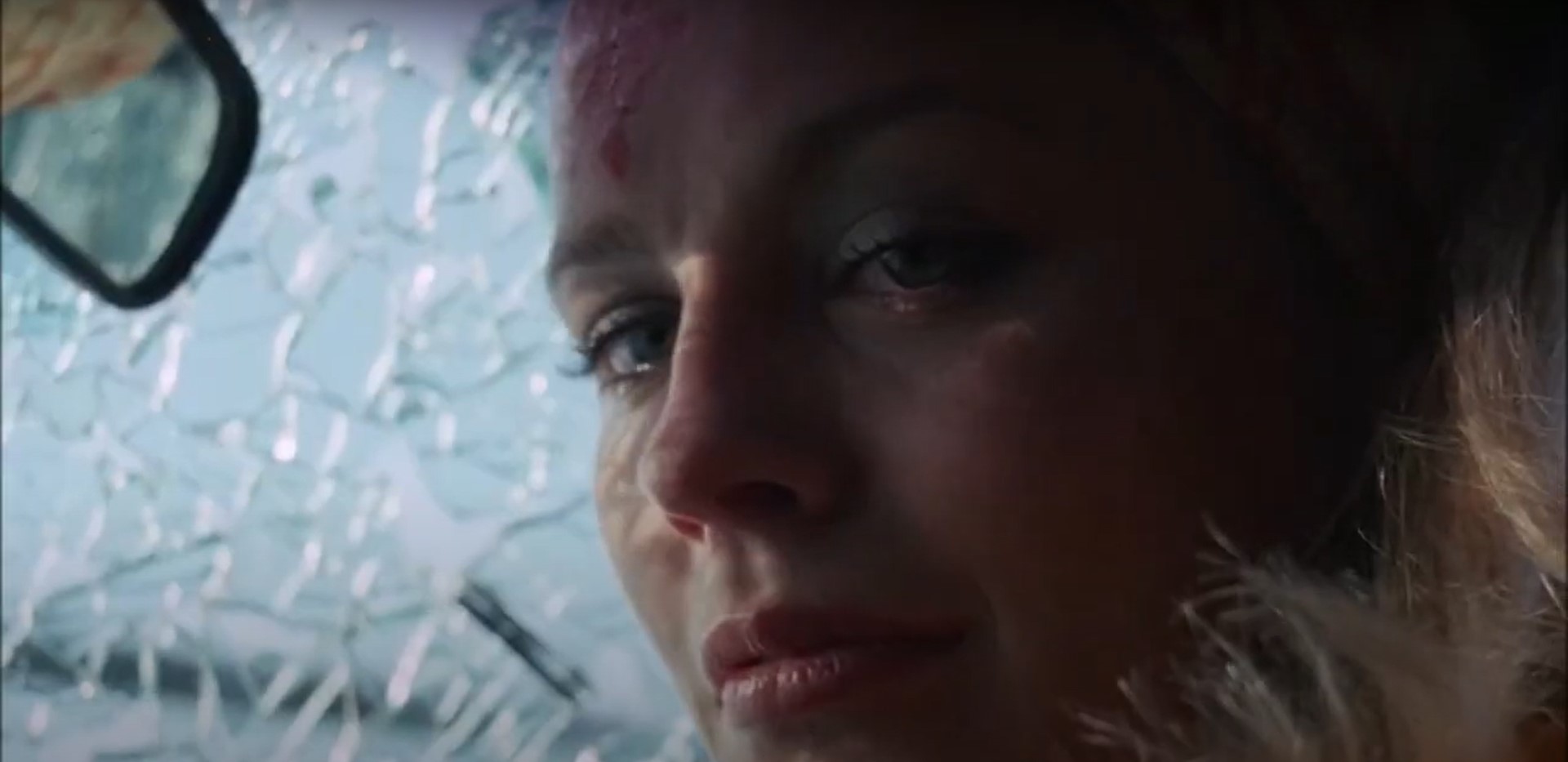
One of the aspects I adore most of the early Full Moon productions, before Charles Band even dubbed his Empire Pictures as Full Moon, was the star power behind the pictures.  Tim Thomerson is a versatile actor who can star in just about anything from microbudget indie productions (“Dollman,” “Left in Darkness”) to big Hollywood celluloids (“Air America,” “Iron Eagle”) as one of the most recognizable faces amongst viewers.  In “Trancers,” Thomerson relishes playing the 5 O’clock shadowed, brooding in a long trench coat, Sam Spade-type detective, Jack Deth, with skin in the game and a gruff attitude to take him to the edge.  Thomerson makes for a good grouchy gumshoe as Deth goes plays the cat-and-mouse game with his onscreen nemesis Whistler, played by Michael Stefani in his one and only feature film credit and also marks his last acting appearance.  Stefani has the long-ominous stare of a conventional villain, but I yearned for more toe-to-toe action between Thomerson and Stafani that what appears on screen in what was only a brief less than handful of moments that weren’t edge of your seat encounters, even the finale was underwhelmingly brisk.  More of the penetrating thrills were held in the future when Jack Deth is ambushed by an old Diner lady wielding a clever or when Deth laser blasts Whistler’s unconscious body to explosive smithereens.   What’s nurtured more in the past is the relationship between Deth and the half-his-age Leena, a role donned by a young Helen Hunt (“Twister,” “As Good as It Gets”) as the L.A. 80’s pop-goth girl with a thing for older men.  Thomerson and Hunt have chemistry that would turn heads clouded with ageism but they’re cute enough to work, especially when they ride matching mopeds around the city to either thwart Whistler’s plans or escape the police under Whistler’s control. The rest of cast that rounds out “Trancers” is just as inundated with individualism as the principal leads with Anne Seymour (“Big Top Pee-Wee”), Biff Manard (“Blankman”), Richard Herd (“Get Out”), and legendary supporting actor, Art LeFleur (“The Blob”).

With any story dealing with time traveler, undoubtedly, plot holes will exist and will stick out like a 23rd century cop time-hopping to 1985. “Trancers” is no different. When Whistler eventually assassinates an ancestor of one of the future council members, the memory of the slain still exists to those in the future. Though the council member never existed in the 23rd because his ancestor was wasted by a mind-melding maniac, their energy and presence is remembered and so that would suggest the 23rd century and the 20th century timelines coexist and move at the same time rate and once the future is written, the memory of can’t be undone? This transtemporal travel stymie comes early into the story and leaves me to chew on this paradoxical gobstopper for the rest of the film, but my advice to other views is to manage it just like I did with forcing that problematic plot hole into the backseat recesses of your mind and focus more on enjoying the nonstop clash and laughs high of a “Trancers” sci-fi speedball. Production value and location security is key to “Trancers” success and Band and his filmmaking team score multiple locations around Los Angeles that are often small but are neon lit or are crazed dress to reflect an era that offer relatability and style. Composited laser beams and vaporized dead bodies effects are an effulgence of neon layered with digitized 8-bit audio bytes for that futuristics flair. The matte work landscapes and set interiors of a crumbling Los Angeles with a blend of new styles are a thing of beauty. Iconic buildings engulfed by the ocean’s rising tides that never ebbed, the neo-totalitarian architecture, and the retrofuturism of a classic interior diner with a newfangled facade borders a dystopian metropolis on the brink of collapse and only held together by the glue of the council and the troopers who enforce the law.

“Trancers” receives the 4K Ultra HD treatment with a 2-disc release from Full Moon Features with the second disc a high-definition, 1080p Blu-ray, distributed MVD Visual. The 4K comes from a scan of the original camera negative; however, the Blu-ray and the 4K are fairly even in detail and clarity. Each format, presented in a widescreen 16:9 aspect ratio, decodes at a disconcerting average of 25Mbps and maintain the luminescence, detail repressive glow which tells me a regrading wasn’t completed to counter the intense neon on darker scenes. The glow shouldn’t be emanating half a foot off of characters. Despite a couple of minimally invasive spotty print damage, details are better in the natural lit and gaffer lit scenes though still quite soft around skin textures. Two English audio are available – a DTS-HD 5.1 surround sound and a Stereo 2.0. As soon as the Empire Pictures logo seizes the screen and the soundtrack begins, I knew the 5.1 was going to be worthwhile with a robust multi-channel output that leverages the Phil Davies (“Society”) synth-beat, adrenaline-producing score while still maintaining an even-keeled and appropriately layered ambient and dialogue track. Dialogue remains clear and clean throughout that compliment a range of action track like an exploding body with a short burst LFE explosion, the pew-pew-esque laser shots as discussed earlier, and the scattering of shattered glass when a moped goes through a sugar glass window. Bonus features are identical on each formatted disc with a commentary from Charles Band and Tim Thomerson, a 2013 documentary of the making of “Trancers,” the complete short film “Trancers: City of Lost Angels, Trancers: A Video Essay, the official trailer, archival interviews, and a still gallery. The physical attributes include a blacked-out Blu-ray snapper case with a cardboard slipcover, both the snapper and the slipcover have the same front artwork of Jack Deth pointing a gun out of a floating open door in space. The region free release has a runtime of 76 minutes and is rated PG-13. With a name like Jack Deth, you can’t go wrong with the science fictional film noir that is “Trancers,” a rustling time-travel good versus evil showdown with the future hanging in the balance.

Become a Slave to “Trancers” on 4K Ultra HD and Blu-ray!

A Gondola Ride of EVIL! “Gore in Venice” reviewed! (Full Moon Features / Blu-ray)

Check out “Gore in Venice” on Blu-ray at Amazon.com!

A man stabbed to death in the abdomen. A few feet away, a drowned woman, pulled from an adjacent Venice canal, wearing no underwear beneath her dress. A double murder of a husband and wife has baffled a young, hardboiled egg-eating Inspector named De Pol, but the inspector knows one thing for sure, drugs were certainly involved. As the inspector digs deeper into the horribly confounding case, he learns that husband and wife were into a wide variety of kinky perversions that may have led to their untimely demise. Unable to make sense of some of the case’s facts and as more bizarre murders flare up all over town, De Pol leans on the behavior expertise of the department’s medical examiner as well as anecdotes by key suspects to piece together a prurient plot of perversion-killings sought to be handled quietly and quickly before tourists catch wind of what’s happening, and more dead bodies are discovered in the unparalleled canal-laden landscape of Venice.

Sex, drugs, and eggs run rampant on the walkway bridges and watery canals of the beautifully conglomerated Venice, Italy in Mario Landi’s “Gore in Venice.”   Also known by other titles such as Giallo a Venezia, Mystery in Venice, and Thriller in Venice around the globe, the “Supersexymarket” and “Patrick Still Lives” director Landi helms one of the more controversial Italian crime mysteries to come out of the golden age of giallo horror during the turn of the decade of 1979.  A script that houses a hellbent killer in super cool and reflective aviator shades, a sex-crazed married couple, and a detective racking his brain to connect the motive dots is the last treatment penned by writer Aldo Serio in what’s a non-linear, flashback driven, sordid piece of salacious culprit candy that’s more sexually explicit than is a whodunit thriller.  “Gore in Venice” is one of the few productions of Elea Cinematografica produced by Gabriele Crisanti who has produced “Satan’s Baby Doll, “Malabimba,” “Burial Ground:  The Nights of Terror,” and many others notorious for their sleazy and gory controversial content.

In the cast’s lead of this Italian production is an American actor.  The California-born, “Weapons of Death’s” actor Jeff Blynn has lived in Italy for much of his career and had become tapped to play youthful inspector De Pol, an arrogant prodigy of Venice sleuths with a habit of constantly cracking open and eating hard boiled eggs in the office, out of the office, at the crime scene, during the questioning in suspect’s home, and in just about every single scene Blynn is messing with an egg in a symbolic gesture of trying to trying to crack a strange case is to crack an egg strangely.  Blynn’s pale complexion, large perm afro, and thick caterpillar mustache make him stick out against his Italian counterpart costars that include Leonora Fani (“The House by the Edge of the Lake”) and Gianni Del (“Sex, Demons and Death”) as the deceased wife and husband, Flavia and Fabio.  Fani and Del’s impeccable Euro traits are flaunted all over Venice as sexual maniacs, exhibitionists, and voyeurs who take their relationship to the next level every time they step outside their character’s love nest full of erotica books and wall-to-wall mirror bedroom.  However, trouble in paradise sends the couple hurling toward jagged rocks with salacious orgy photos involving a prostitute (Maria Mancini), a drug-dealer named Marco (Maurizio Streccioni), and Flavia’s best friend Marzia (Mariangela Giordano, “Killer Barbys”) that omits no one from the suspect pool.  Not even Flavia’s ex-lover, a cartoonist Bruno Neilson (Vassili Karis, “An Angel for Satan”) is safe from Inspector De Pol’s investigation.  Unlike traditional giallo films, we’re already privy to the killer, a voyeuristic madman (Andrea Caron) with slick aviators and a complex hardon to kill everyone involved in the orgy and it’s up to Del Pol and his troupe of professional colleagues and chums, who provide not only the vigor (“Private House of the SS’s” Eolo Capritti’s gung-ho assistant to the inspector) but also sage, scientific guidance surrounding sexual deviancy (“Satan’s Baby Doll’s” Giancarlo Del Duca as the case’s pathologist).

As noted in the previous paragraph, “Gore in Venice” is less giallo than one would expect despite an alternate title denoting the film as such in Italy as “Giallo a Venezia.” Does the killer have gloved hands? Yes. Is Landi’s film stylish enough to pass criteria? Absolutely. Does “Gore in Venice” live up to the eponymous title? Blood flows freely. Yet, why doesn’t “Gore in Venice” feel like a traditional giallo? One of the more clinching reasons is the mystery dissolves roughly halfway into the story by exposing the unmasked, unconcealed killer, trailing off from that unsolved perplexity of who the killer might be at the conclusion. However, one could argue that though the killer is revealed, the question of why all the carnage still remains, leaving the giallo more or less intact. Violent tropes aside, Landi’s film abundantly saturates itself into carnal exploits that linger on-and-on more than necessary to get the point across. These scenes of masturbation, public exhibition, and raging erotic zigzag along a blurry, indistinct line of pornography, coming (and coming!) away from the intended murder-mystery subgenre with more skin and slaughter. That’s not the say “Gore in Venice” fails to live up to the moniker as the kills are as grisly as implicitly promised with a large blade to the vaginal cavity, one poor soul gas drenched and lit up like a bonfire, and a one gal having the naked legs cut out right from under her complete with an extreme closeup of the sawing pellicle perfection. Whether because of Mario Landi’s direction or Aldo Siro’s script, the explicit eroticism eats way too far into the story that, in turn, ultimately betrays any kind character development aside from the tragic perversive arc of Fabio and Flavia. Inspector De Pol often skirts around much of the action being only an investigator continuously trapped in the accounts of other people’s tales of debauchery and always one step late to the crime scene party that baffles his keen scrutinizing eye. I’m not one to deprecate graphic sexual content, especially in works that display actual fondling and masturbation in their art, but “Gore in Venice” mildly entertains as a low-end giallo albeit a spectacularly vivid and vehement blood show in front of the unique waterways of Venice.

Under one of the more slapped together and detailed shrouded cover arts I’ve seen this year comes “Gore in Venice” onto Blu-ray home video as one of the revisited classics purchased and redistributed by Full Moon Features. The Blu-ray is an AVC encoded, region free, 1080p presentation of an uncut (and uncensored) remastered feature exhibited in a full frame 1.66:1 aspect ratio. The Full Moon back cover mentions the transfer was compiled from the best available materials, but, honestly, the original 35mm print looks great with only sparse dirt specks and an occasional frame omission. Details look good as well despite the flat coloring. The Italian language LCPM 2.0 and 5.1 offer nearly identical outputs with no real composition distinction between the two others than a slightly more complex background track of motorboats ripping through the canals. There are no bonus materials with this feature only release that’s house in a standard blue snapper case and a red on black, cheesy, Eurotrash cover art for the 99-minute film. Libidinous with a capital L, expect more of sesso e depravazione with profound tidbits of gore than an engrossingly intelligent crime thriller in Mario Landi’s “Gore in Venice.”

Check out “Gore in Venice” on Blu-ray at Amazon.com!

Surrounded by Aquatic EVIL, No One Can Escape “The Island of the Fishmen!” reviewed! (Full Moon / Blu-ray)

Check out the scantily-cladded woman encroached upon on “The Island of the Fishmen” Blu-ray!

A French prisoner ship sinks to the bottom of the Caribbean leaving only a handful of prisoners and the Left Lieutenant Claude de Ross, the ship’s doctor, stranded on a lifeboat for weeks until they a mysterious force drives them through the fog and crash them on the rocks of a seemingly deserted volcanic island. Only a few prisoners and the doctor manage to survive the wreckage, stumbling upon a ritualistic area of empty graves and abandoned artifacts of an island society. This is where the haggard and hungry men meet the beautiful Amanda Marvin on horseback and follow her through the island jungle to a clearing where the edifice of Edmond Rackham sits imposing on them. Having left his home country, Rackham settled upon this uncharted island, garnering local Caribbean inhabitants as servants, and being a greedy treasure hunter who might have just discovered the lost city of Atlantis. There’s only one problem, the city is surrounded by aggressive fishmen kept at bay by Amanda’s famed disgraced biologist father who has fallen severely ill, charting a course for the good doctor, Lt. Claude de Ross, to be unharmed in order to care for perhaps the only person who knows how to manage the wrath of the fishmen.

A swimmingly aquatic creature feature with an all-around gratifying men in costume pastiche, familiar to the style of “The Creature from the Black Lagoon,” in Sergio Martino action-adventure horror “The Island of the Fishman.” Also know under the revamped shots of “Screamers” aka “Something Waits in the Dark,” here we have the original film in all it’s natural glory from the director of “Your Vice Is a Locked Room and Only I Have the Key” and “Torso” director Martino from a script by Martino, Sergio Donati (“Orca”), “Slave of the Cannibal God’s” Cesare Frugoni who workshopped with Sergio Martino’s older brother, Luciano Martino, (“So Sweet… So Perverse”) on the original story. Some would also say that “The Island of the Fishmen” is also a crossbreed between H.G. Wells’ “The Island of Dr. Moreau,” H.P. Lovecraft’s “The Shadow Over Innsmouth,” and, aforementioned, “The Creature from the Black Lagoon.” The 1979 Italian production stars an international cast shooting along various locations in Italy and is produced by Luciano Martino under Dania Films and Medusa Distribution.

American, United Kingdom, and, of course, Italian come together to form “The Island of the Fishmen” cast that doesn’t stray too far away from their individual innate dialects. The most pompous is he Essex-born Richard Johnson’s sadistic and fortune hungry Edmond Rackham with a caricature of a voice that isn’t like anything in his performance in Lucio Fulci’s “Zombie.” As Rackham, the inflections reminisce of a British Humphrey Bogart mixed with a one Dick Dasterdly and so Johnson comes off a bit cartoony and overly dramatic compared to the film’s panache malnourished yet earnest hero in Italian actor Claudio Cassinelli (“Murder Rock,” “The Scorpion With Two Tails”) as Left Lieutenant Claude de Ross, a ship’s doctor who suddenly becomes the medical caretaker and leading guard over a lifeboat full of hardened prisoners, some who have blood on their hands. Franco Javarone and Roberto Posse play a pair of surviving convicts, especially two at odds on how they should treat their next in rank penal officer. Though being thrust into the oversight position, the Lieutenant doesn’t have to worry about his prisoners for too long as the island’s baleful environment with jungle death traps, poisonous water, voodoo priestess, a sadistic lord of estate, and mutant fish people swimming in circles around the island’s parameter and through the cut through waterways sees to their wellbeing. “Island of the Fishmen” does have a few predominant male figures of different caliber but there are also a pair of women inhabiting the island who, too, have counteracting roles. Bond girl Barabara Bach (“The Spy Who Loved Me”) became plagued by the ocean’s frightening fishmen only two years later as the captive dame of Edmond Rackham who holds her hostage as he pushes her father (Joseph Cotton, “The Survivor”) to continue with his mind control potion over the fishmen. Then, there’s Shakira. No, not the Brazilian singer-song writer with the hypnotizing booty shaker. This Shakira is a voodoo priestess, played by Jamaican actress Beryl Cunningham (“Dorian Gray”), who works for Rackham but ultimately envisions foreboding doom on the volcanic island. Giuseppe Castellano and Franco Mazzieri round out the cast.

A whole lot is going on in this film that from the surface seems, surfacing meaning the home video covers and posters, to focus chiefly on the hostile half-fish half-man creatures that bubble to surface, check out top side for any unwanted visitors, and quickly dispatch them before disappearing under the glassy waters of the Caribbean. I adore the design of the rather stiff but crudely convincing creature suits with buggy fisheyes, razor piranha like teeth, and cladded entirely green and scaley in a design by Massimo Antonello Geleng who by vocation was more a production designer with credits including this film along with “Cannibal Holocaust,” “City of the Living Dead,” “The Church,” and “Dellamorte Dellamore” to name a few. Yet, the fishmen were not a sole source of danger on an island that had a deadly schemer in Edmond Rackham, the motif of voodoo and jungle trap throughout, a volcano ready to erupt and engulf the island with lava, and the lost city of Atlantis as the grand epic finale that pivots this story on an acute elbow left that shows a mighty ambitious story on an Italian slim budget. To put it frank, Sergio Martino was able to put all the elements together into a cohesive, coherent plot with action, horror, exploitation, and mad science fiction albeit the story’s wild and diverging concepts.

Though many U.S. audiences know this film as Roger Corman’s highly altered, New World Pictures presented cut retitled as “Screamers,” Full Moon features releases the original oeuvre of Sergio Martino with a remastered Blu-ray release from the original 35mm negative. The 99-minute film is presented in a widescreen 2.35:1 aspect ratio that captures in perfect matte composition and frame the locational miniatures, such as the manor house or the underwater Atlantis temples, in a compression that doesn’t make the structures obvious fakes. Slightly tinged yellow, the overall color palette is renders out well enough to suit the release with a pristine transfer seeing no signs of real significant damage. The English language tracks come in two formats – a PCM 2.0 and a Dolby Digital 5.1 surround sound. The English-speaking actors have their original tracks intact while the Italian cast have their original dialogue re-dubbed in English for posterity on new releases such as this one. Dialogue, nor any of the corresponding audio tracks, show any signs of fidelity issues or damage, but do feel muffled, even on the 5.1 as if the sound was boost stifled and left with some of the channels lacking vigor. Aside from Full Moon trailers, the R-rated film rides solo on this hi-def release. “Island of the Fishmen” is a small film fighting hard to swim upstream and really does a number on many different levels regarding where the audiences should focus their attention on, but I can see why Roger Corman wanted to give Martino’s film a second run after a commercial flop with a new, gory scenes edited right into the heart of “Island of the Fishmen’s” flexible, cartilaginous bones. Despite Corman’s efforts, Sergio Martino’s unmolested, original reeling reel is the one and only catch of the day for this purist.

Check out the scantily-cladded woman encroached upon on “The Island of the Fishmen” Blu-ray!

EVIL is in the Eye of the Beholder! “Mansion of the Doomed” reviewed! (Full Moon / Blu-ray)

“Mansion of the Doomed” on Blu-ray.  Hold Onto Your Eyeballs!

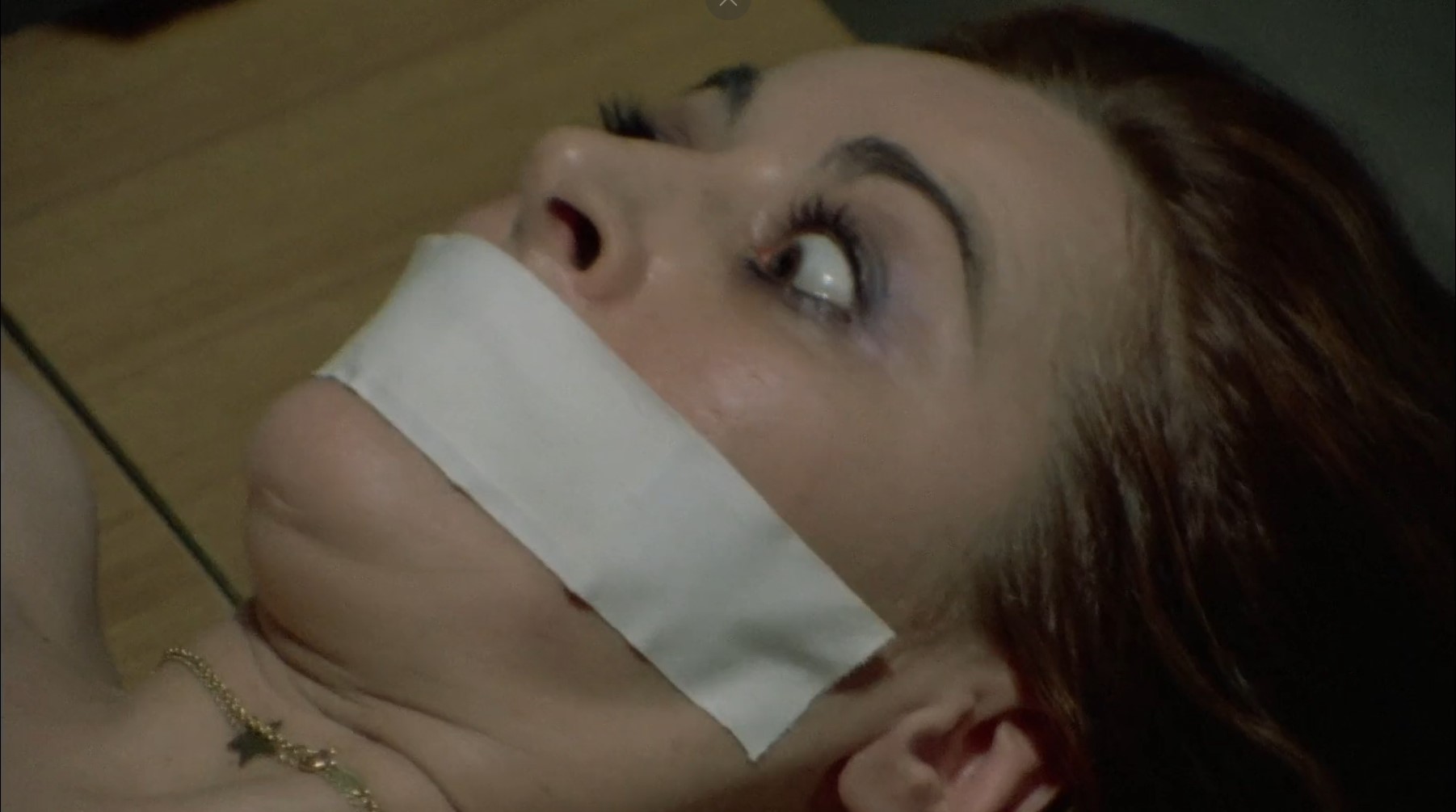
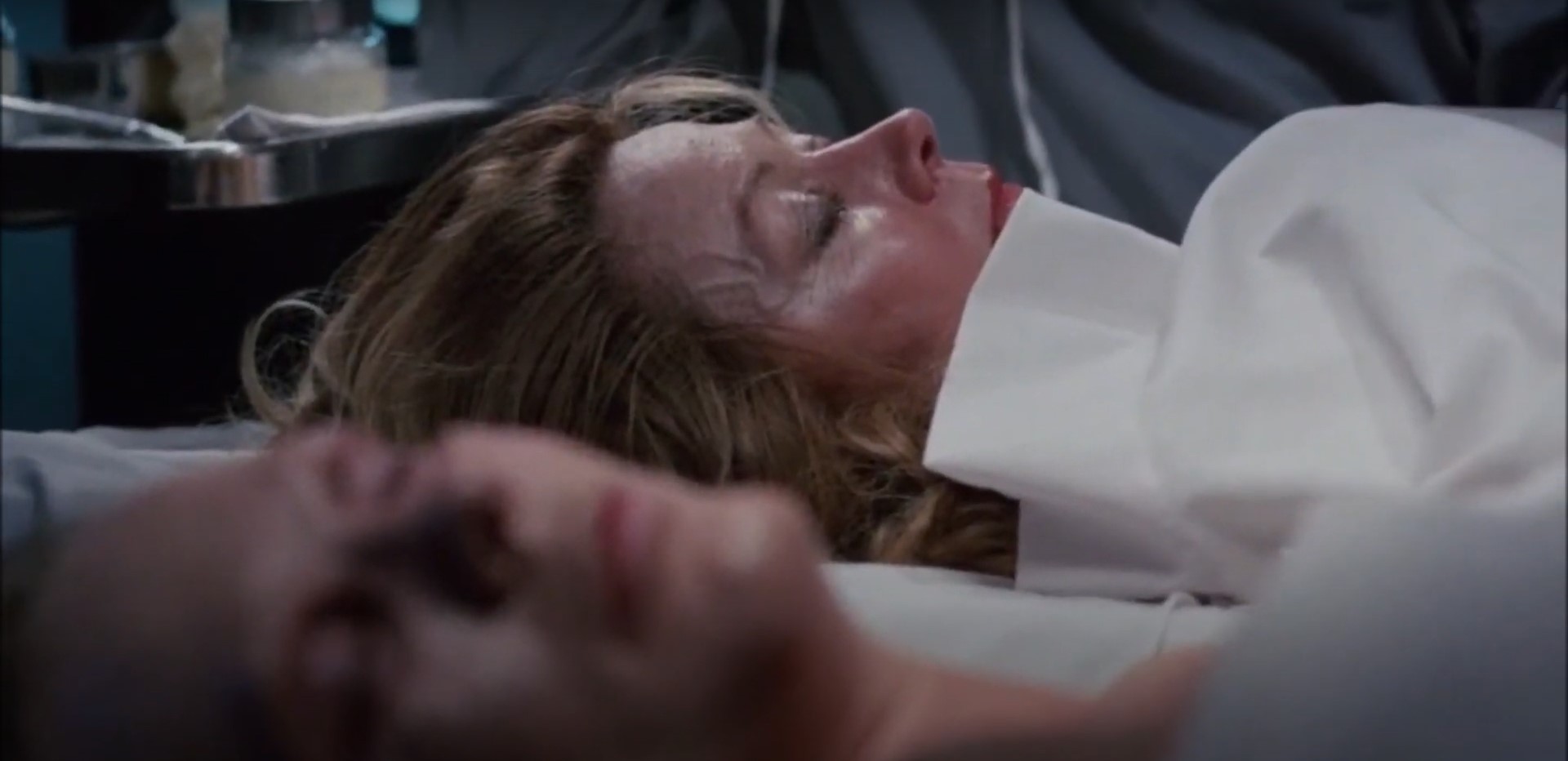
In a stroke of irony, renowned optometrist surgeon Dr. Leonard Chaney had a car accident that accidently causes his young adult daughter permanent blindness.  Obsessed by guilt and determined for her to see again, Chaney moves toward a not only radical procedure but also unethical one of a full eye transplant.  The catch for this type of surgery to be successful is the eye has to be extracted from a living patient.  Unwilling to wait for a donor, Chaney employs every deceptive tactic to lure unwillingly healthy and beautiful globular organ donors into his dark basement where he drugs them unconscious, surgically plucks out their entire eyes, and leaves them locked in a cellar cage, blind and crudely healed with scar tissue but still alive.  With each failed attempt at restoring her eyesight, the reminders of his experiments linger down below, screaming in pain, and pleading for their lives.  Soon, those pleas will ultimately catch up to him. 

Before his fascination with mini-sized maniacs of killer animated toys and malicious experimental oddities, Charles Band used to produce other types of original horror and the “Mansion of the Doomed” was one of them.  The 1976 Frank Ray Perilli (“Dracula’s Dog,” “Alligator”) written and the “Dead & Buried” and “Halloween 4: The Return of Michael Myers” actor Michael Pataki directed mad surgeon “Mansion of the Doomed” was the first feature film Charles Band officially stamped his actual name onto along with father and western screenwriter, Albert Band, as financial executive producer.  While “Mansion of the Doom” is known by various other titles around the world – “Massacre Mansion,” “Eyes,” “Eyes of Dr. Chaney,” “House of Blood,” “Eyes of the Living Dead,” and “The Terror of Dr. Chaney” – the one aspect that the film is firm in is its Hancock Park and estate shooting location in Los Angeles as one of the very first features to come out of Charles Band Productions company.

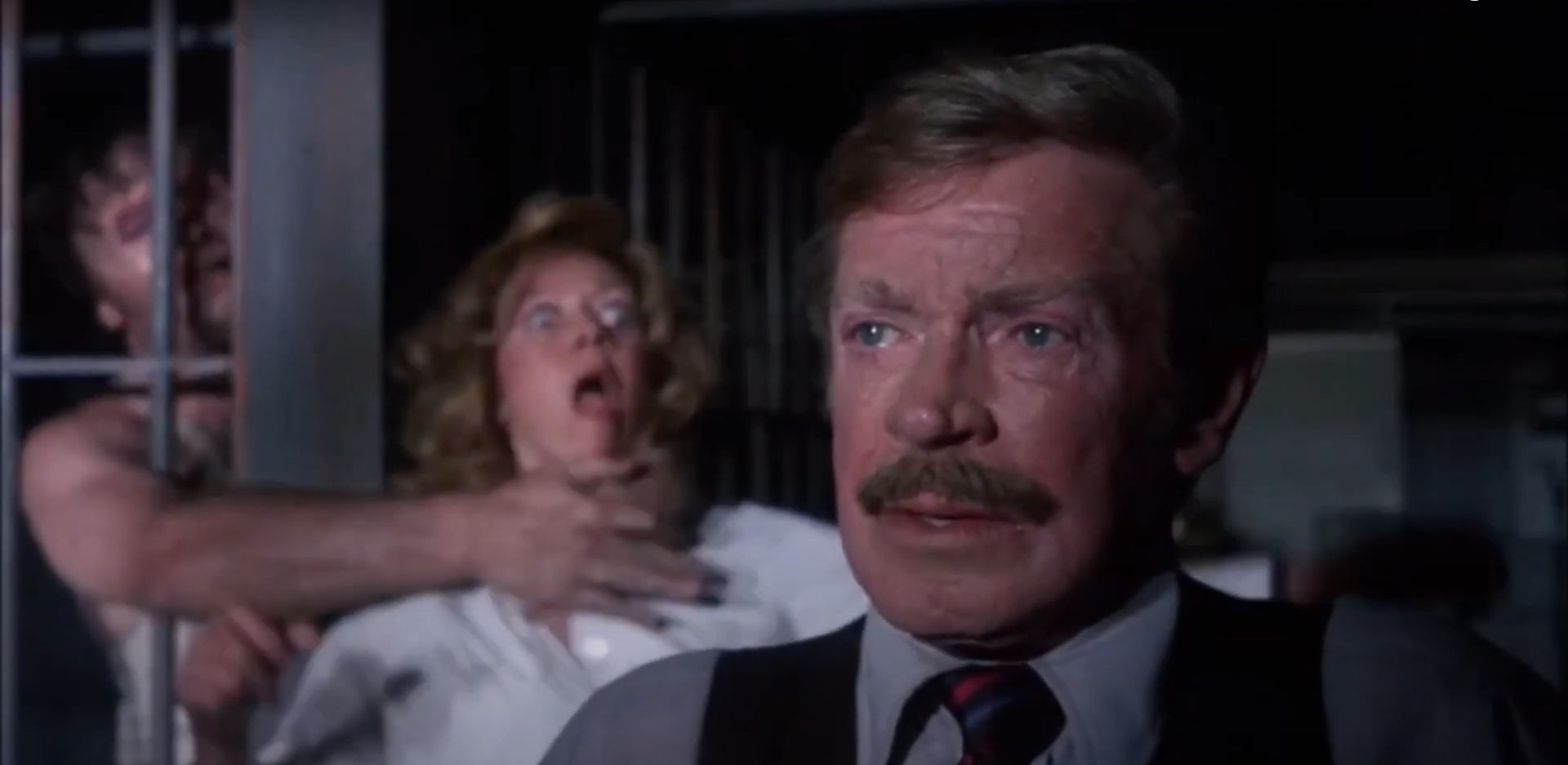
Lance Henriksen.  You know name, right?  Sounds familiar, yes?  The “Aliens” and “Pumpkinhead” actor, hot off the success of “Dog Day Afternoon” with Al Pacino, begins his tour de force of horror and dark science fiction with the Pataki mad doctor eye opener.  Dr. Chaney uses his misguided experimental expertise first on Dr. Dan Bryan, played by Henriksen, after Dr. Bryan’s recent romantic relationship breakoff with the recently blind daughter of Dr. Chaney, Nancy (Trish Stewart).  Before he became the narrating voice in TV’s “Knight Rider,” the veteran actor Richard Basehart, who also had a role in the 1977 “The Island of Dr. Moreau,” became his own inhumane medical malpractice physician in Dr. Chaney.  Though Basehart makes for the epitome of a professional doctor, his performance was the weakest link in the cast’s locks that didn’t exhibit the stress and desperation of a man continuously exploiting and disfiguring people for his own personal guilt release.  The guilt was not compounding as much as the story wanted to suggest, but we feel more empathetic to Dr. Chaney’s longtime assistant in Gloria Grahame (“Blood and Lace,” “Mama’s Dirty Girls”) who we can see her character dissolve with each abducted patient and affected to the core by their sightless screams.  “Mansion of the Doomed” rounds out the cast with Al Ferrera (“Dracula’s Dog”), Marilyn Joi (“Black Samurai”), Donna Andersen, JoJo D’Amore (“Dracula’s Dog”), and Katherine Stewart.

Michael Pataki’s “Mansion of the Doomed” is an eye-peeling shocker that’s dark and grim to the core and has an eye for cynicism. I could keep the eye puns going but that would be too easy to pluck out. Perilli’s story is rather plainly spoken with not a lot of fluff diving into medical or procedural jargon to bore you down into a loss of interest. Instead, the good doctor character goes right to work getting his hands elbows deep into the eye sockets of his victims and that’s how this particular exploitation perfectly crafted the balance by tabling the under stimulating medicalese with caged disfigured patients left to live in agony. Where Pataki and Perilli faltered some is in the preface by skimming the surface of the Dr. Chaney caused accident that rendered Nancy blind when she face-planted right into the doctor’s windshield as he swerves to not runover a mutt. In driver’s ed, you’re supposed to hit the small animal that runs in front of you in order for these kinds of accidents don’t happen! Told in the inner thought of a flashback, the force between the two immovable objects shatters the glass but leaves Nancy unscathed physically yet, somehow, she loses her sight in both of her eyes and while Dr. Chaney is unable to best the blindness with everything the surgical optometrist throws at it, perhaps that’s the unsolvable mystery that beleaguers abashedly an expert at the summit of their excellence. ‘Mansion of the Doomed” is not a feel-good film as not one single character has a positive outcome and having lost more than just their sight but also, to name a couple, their humanity and their hope.

Uncut, restored, and remastered onto a new Blu-ray release, Full Moon Features re-release “Mansion of the Doomed” onto 1080p, full high definition, from the original 35mm negative. Source material held up over father time with a pristine 85-minute uncut transfer to retouch in a pop of color and refine the details in a softer, more airy-soft image, presented in a widescreen 1.85:1 aspect ratio. Full Moon offers two audio options available with an English Dolby Digital 5.1 surround sound and a Dolby Digital 2.0 PCM. Though slightly staticky in the ambient and dialogue tracks, the balance works and is full-bodied around more essential scenes of surgery and the cries of anguish. Dialogue doesn’t sound overly boxy or hissy and the cult composer Robert O. Ragland’s (“Deep Space,” “Q”) classic orchestra score come across with a powerful range that speaks the scene without exposition. The region free Blu-ray has no extra features, leaving this release as a bare bone, feature only. “Mansion of the Doomed’s” harrowing ending induces stupefying blank stare and feels like a brick just walloped you in the face knowing that every pawn in this story loses at the hands of man disillusioned in playing God.

“Mansion of the Doomed” on Blu-ray.  Hold Onto Your Eyeballs!

When That Sexy Roommate Turns Out to be an EVIL Hexing Hag! “Don’t Let her In” reviewed! (Full Moon / Blu-ray)

“Don’t Let Her In” on Blu-ray from Full Moon Features and Distributed by MVD Visual

Young artist couple Amber and Ben live downtown in a spacious single floor loft.  To afford rent and earn a little extra cash on the side, they decide to sublet a portion to Serena, a beautiful, and recently single, new age jewelry bowl artist who crafts old age product.  Some would say Serena’s craft is witchcraft as the alluring artist is actually being inhabited by an ancient, malevolent demon.  As she settles into her new abode, Serena slowly works her way between Amber and Ben, seducing and bedding both for her reasons to prolong a legacy on Earth.  When Ben is suddenly whisked away for an unexpected rock tour, Amber finds herself cornered by the demon in human skin and, to her on the pill surprise, pregnant because of Serena’s daily bewitching manipulation and incessant satanic chanting.

As a part of the new Full Moon lineup of 2022, principal Full Moon filmmaker Ted Nicolaou, the mastermind behind “TerrorVision” and the longstanding director of the “Subspecies” franchise, returns with another vision of terror, a beautifully demonic roommate from Hell, in “Don’t Let her In.”  Shot entirely on location at the historic Nate Starkman and Sons Building in Los Angeles, home to an array of productions from inside Paddy’s Bar of “Always Sunny in Philadelphia” to appearing in a handful of iconic horror series, such as “Candyman:  Day of the Dead” and “Wishmaster 2:  Evil Never Dies,” the 1908 erected factory is said itself to be haunted, adding to the miscreant charm of a shapeshifting fiend plaguing the innocence of a young couple.  Charles Band, like all of his productions, serves as chief producer and executive producer with the cannabis friendly Nakai Nelson, this side of the century Full Moon Feature producer with credits such as the “Evil Bong,” “Weedjies,” and a pair of more recent “Puppet Master” films to her name. 

“Don’t Let Her In” has an intimate cast comprised of four actors who have to pull in different, varying levels of character dynamics and frames of mind depending on how Serena’s orchestrating of the strings upon her marionette subjects favor in or from her dastardly ambition.  At the center is first time Full Moon actress Lorin Doctor as the pleasantly chic but unpleasantly succubus-like Serena who wants more than just a place to sojourn from an ex-boyfriend.  Serena is the kind of role where you have to applaud Doctor for not only pulling off grimacing in the shadows and being able to keep up the rhythms and beats of complex chanting but also be comfortable in the facial prosthetic makeup and make like a troll for a creepy crouch walk in a backwards reel speedup effect.  Kelly Curran and Cole Pendery are also newcomers to Full Moon’s world of strange and unusual T&A horror as the loft-residing couple Amber and Ben.  Curran and Pendery make up for an okay, downtown twosome with hints toward a checkered past of philandering that’s irritated by Serena’s provocative presence, but that’s doesn’t quite blossom into more of an issue as Amber is quickly eager to just go with the flow without being too bothered by the prospect that Serena and Amber did the bedsheet whoopee next to Amber as she slept.  The four and last character Elias Lambe is by far the most lacking in development and substance as an important piece of Serena’s puzzle that quickly becomes shoved under the rug.  Austin James Parker plays the part that’s mostly standing outside the building on the street corner looking gothically mirthless rather than ominous and before realizing how Lambe fits into the narrative, the long haired, trench coat-cladded, vampire-esque backstory is quickly snatched away with not a morsel left of his bigger part as suggested.

“Don’t Let Her In” is a refreshing addition to the Full Moon feature line that maintains a lot of hallmarks of the company, such as heavy use of body prosthetics, an expensive veneer on an indie budget, and, of course, nudity.  Though many other audiences draw comparisons to “Rosemary’s Baby,” Nicolaou relates only a smidgen in the story alone without the Roman Polanski pin drop suspense of subjective narration.  Instead, Nicolaou embodies Full Moon’s quirky and special effects greased terror fried to a familiar taste all fans have known from the past 40 years and that’s not terribly a bad thing.  “Don’t Let Her In” feels like an original piece of storytelling, much like “Castle Freak” or  “The Dead Hate the Living,” that detaches itself from Charles Band’s obsession with miniature maniacs, but Full Moon has no shame in telling us we’re still watching one of their films, gratuitously plopping easter eggs of their films all throughout “Don’t Let Her In” (i.e. Poster artist Amber’s current project, a rendering of “Corona Zombies,” and “Castle Freak” playing on the television set as Amber and Serena spend an evening as a pair of winos).  Serena’s demoness rat-faced makeup does appear stiff and inane at times, but the way Nicolaou mostly presents Serena in true form is through a blend of quick-sufficient editing, a manipulation of lens and pace, and the to-and-fro from the human façade that ultimately makes rodent Serena become scary Serena when accompanied by Charles Band’s strike of forte notes when not being melodiously carnivalesque.

Lesson here, kids, is to always background check you potential roommates because they might end up being a demon. Happens all the time. Fortunately, Full Moon Features delivers the entertainingly sapid “Don’t Let Her In” onto Blu-ray home video, presented in region free and a widescreen 1.78:1 aspect ratio. Full high-definition and 1080p resolution, this release has a strong, robust presentation in favor of Nicolaou’s often in your face with evil style despite the single loft location. The fact that this Full Moon feature is toned down from the usual moody, tenebrous gothic style shows a bit of range can be good for the collection. There are two available audio options: a 5.1 surround sound and a dual channel 2.0 stereo. If you want more fluff to your sound design, the 5.1 offers extra street ambiance while characters converse, sawing through the dialogue with car horns, traffic, and other urban outdoor racket as if they’re living right in the middle of Times Square. Yet, all outdoor scenes show little car or foot traffic that makes this fluff foolish. The dialogue is otherwise clean and Charles Band’s soundtrack interposes pizzazz and dread in this brawny audio output. Bonus features include a “Don’t Let Her In” behind-the scenes with snippet interviews from director Ted Nicolaou, actresses Lorin Doctor and Kelly Curran, and producer Nakai Nelson and rounding out with an array of Full Moon trailers. “Don’t Let Her In” has vim and vigor for an indie guise horror that’s erotic as it is fun surrounding a small cast and single location; yet there is also an evoking pathos in its decimation of young, naive artists and couples with career ending consequences.

“Don’t Let Her In” on Blu-ray from Full Moon Features and Distributed by MVD Visual