God Works in Miracles, Man Works in EVILs. “Immaculate” reviewed! (Neon / Blu-ray)

Mary Didn’t Have This Much Trouble. “Immaculate” on Blu-ray!

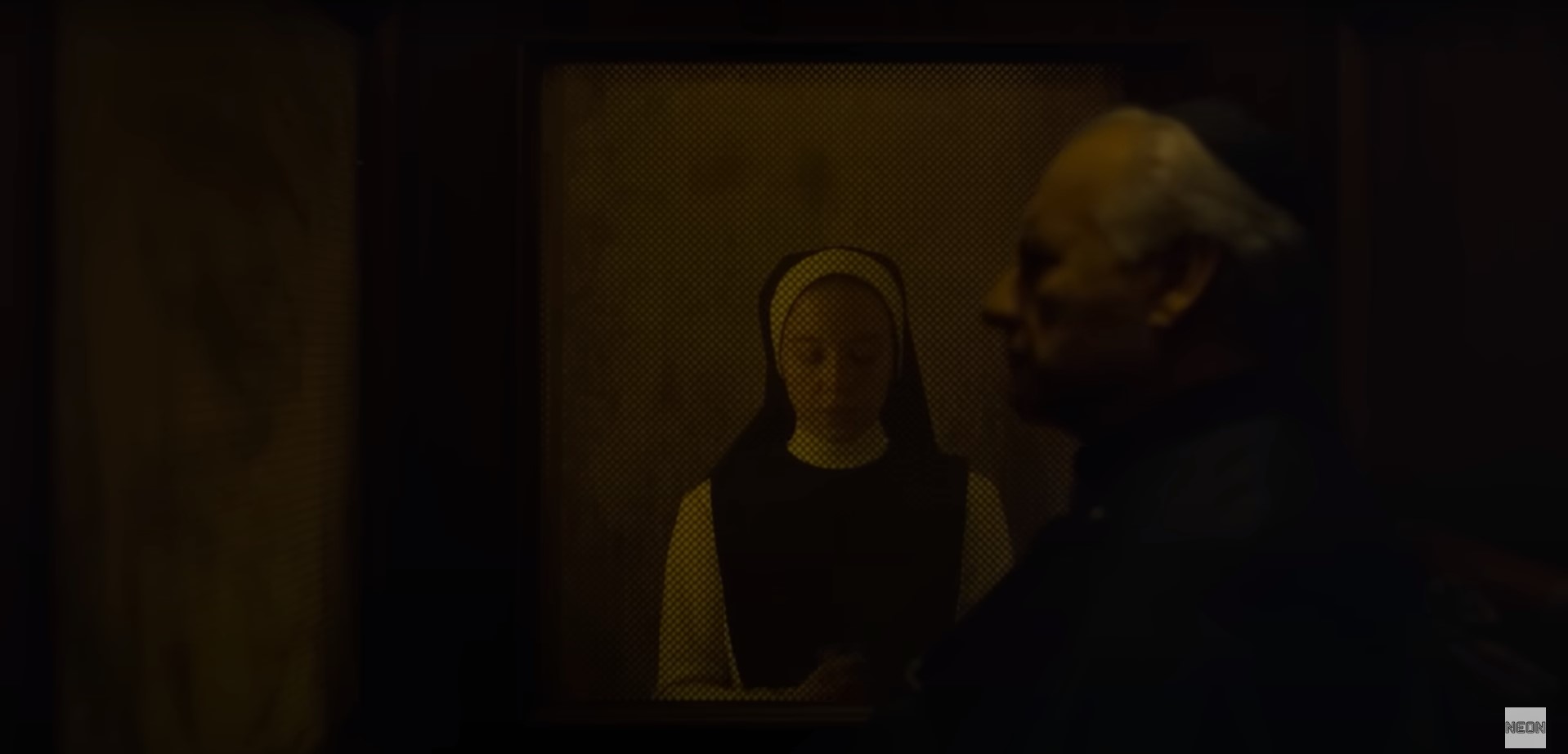
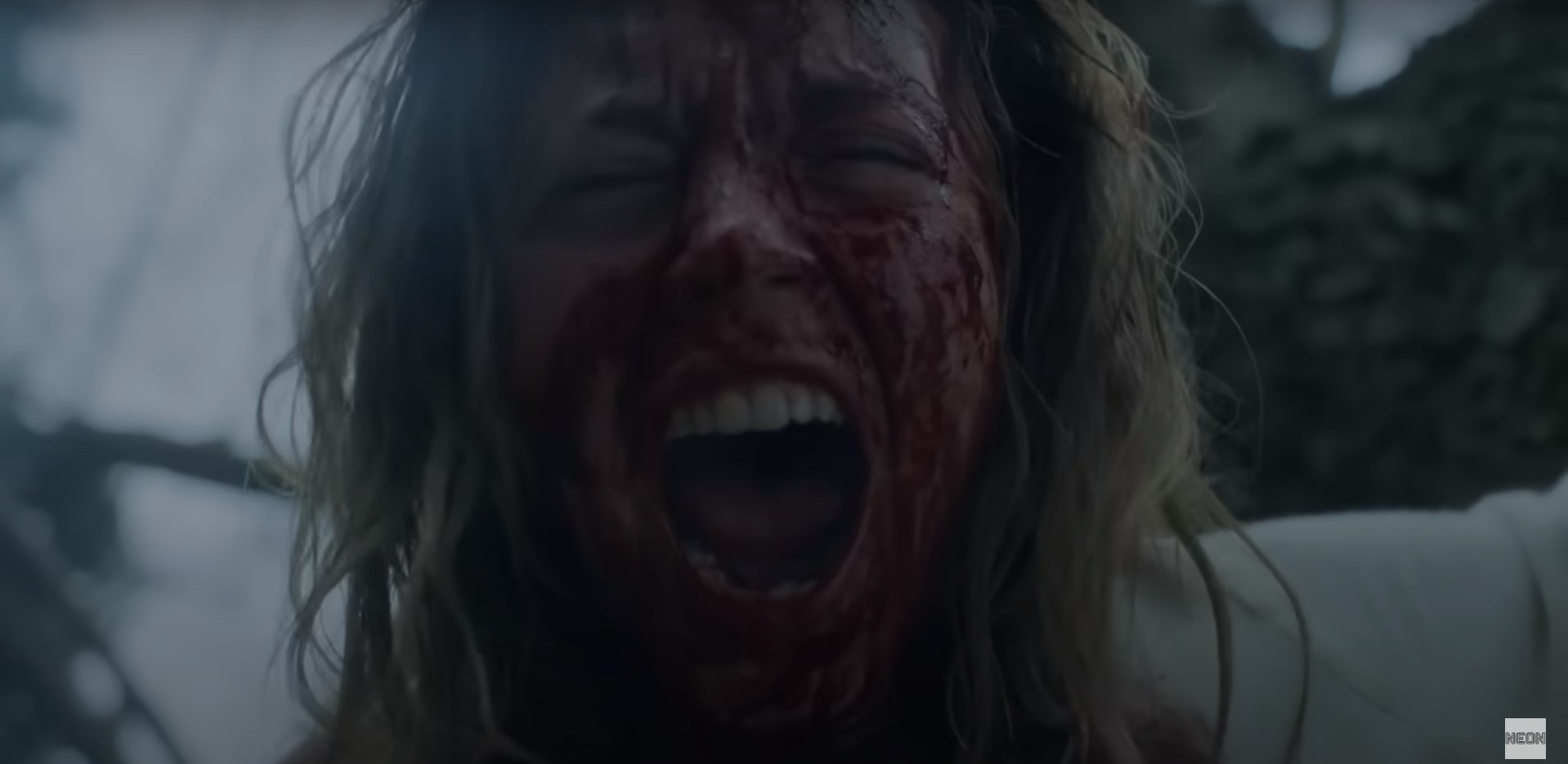
Devout American nun, Sister Cecilia, has been appointed a position in the Italian countryside, a historical convent where terminally ill nuns live in the sisterly comfort of hospice.  Feeling blessed for the opportunity to serve and her faith remaining second to none, the young nun believes she found her true calling and takes her devotional vows in the eyes of God and Jesus Christ, amongst other young nuns in confirmation.   During her training of changing out bedpans and beheading chickens for meals, an uneasiness washes over Cecilia ever since the night of her confirmation reception and being granted to behold one of the stakes that was impaled through the hand of Christ.  As if by miracle, an explanation suddenly and terrifyingly reveals itself not only to her complete shock but the entire convent when she’s discovered to be pregnant through immaculate conception.  As weeks turns to months, Cecilia is forced to focus on baby instead of chores but there’s something dark and malevolent happening behind the convent doors that result in her unable to leave the convent grounds, fellow outspoken nuns disappear, and one sister commits suicide.  The once blessed opportunity has turned into unimaginable terror with no way out. 

Sydney Sweeney is so hot right now.  With her provocative success on HBO’s take of youth and vices in “Euphoria” and a nihilistic teenage daughter in the same premium channel’s series, “The White Lotus, the now 26-year-old Washington state-born actress has also peppered her career with horror films, even at a childish age with her first appearance, a minor role, in a comedy-horror “ZMD:  Zombies of Mass Destruction” and continuing her fresh and new vocation with notable parts directed by notable directors, such as John Carpenter’s “The Ward” and Tibor Takács “Spiders,” that would subsequently offshoot into principal leads of less heeded, moderately successful thrillers when in adulthood with “Along Came the Devil,” “Dead Ant,” and “Nocturne.”  Her latest venture is one she became personally invested in, a modern-day nunsploitation titled “Immaculate,” reteaming Sweeney with her 2021 “The Voyeurs’” writer-director Michael Mohan at the helm of their latest collaborative effort.  Mohan, however, did not write the film with feature film newcomer Andrew Lobel taking the job that would take a decade to fruition once Sweeney, who auditioned for the role when she was 17 years old, made it her passion project to see it come to life  Alongside Sweeney producing is Ben Shafer, Riccardo Neri, Michael Heimler, David Bernard, Jonathan Davino, and Teddy Schwarzman with Neon distributing the Black Bear presentation of the Fifty-Fifty Films and Middle Child Films coproduction. 

Sweeney exacts the very definition of virginal innocence, a small-town girl with a miraculous backstory that nearly cost her her life.  As a sincerely devout Catholic in Sister Cecelia, Sweeney must shape up an intake of naivety that blinds her to the subtle sinisterism amassing around her.  To do that, a medley of personalities must dupe her, sway her, disparage her, and comfort her to keep the character balanced before the blindsiding shock that surprises her with a twisted misconception and exploitation of God theme. Heading up the mix of madness is the convent’s resident priest, Father Sal Tedeschi, played by Spanish actor Álvaro Morte, indoctrinating a warm welcome as a guise for advantageous deceptiveness, but for what, we yet don’t yet know.  The alarming setup pins Cecelia to the convent grounds, surrounded by equally unconscionable characters in an insistent Cardinal Franco Meroa (Giorgio Colangeli), a benignly sweet Mother Superior (Dora Romano), and a disparaging Sister Isabelle (Giulia Heathfield Di Renzi”), and with little options of escape, or even allies within the walls, Cecelia is truly alone against a rogue Catholic sect that seeks to resurrect Christ in an unconventional and unnatural way against Canon law.  Cecelia’s arc fully embraces the change through Sweeney’s rather transfigured understanding of the religious institution Cecelia devotes her life to and, in the same breath, the nun keeps with the organization’s traditional principles of God’s will and not man’s interference and must be the righteous hand of wrath.  “Immaculate’s” cast rounds out with Benedetta Porcaroli, Giampiero Judica, Giuseppe Lo Piccolo, and Simona Tabasco, who has a “White Lotus” connection with Sydney Sweeney.

If you’re like me and avoid most trailers, reviews, or spoilers to try and keep an unbiased opinion, you may be taken aback by “Immaculate’s” gargantuan twist that goes against everything you may know and believe about the Catholic Church’s dogma and principles.  Granted, several non-Catholics likely believe the Church is corrupt and with recent years’ newsworthy scandals, those Church cynics’ fire has had a continuous stream of fueling fodder.  “Immaculate” plays into the fear, pessimism, and beyond reproach suspicion by subverting religion as a false façade and integrates unlikely, go-against-the-grain coupled themes of genetics tampering, bypassing God, murdering in His name, and even exploiting the Catholic hierarchy with slivers of patriarchal governance over a woman’s body.  We get the latter from the very first opening sequence of Cecelia having just arrived in Italy and is brought before two custom officials who remark, in Italian in order for her now to understand, that her religious vocation to be obedience, impoverished, and chaste wastes her youthful beauty. Then again, “Immaculate” is not beautiful; it’s grotesque, perverted, and shocking and at the core, a purity that’s being sullied by deranged power and evil enlightenments.  Cecelia represents a beacon of hope in a maelstrom of immorality. 

Shudderingly intense and sordidly messed up, “Immaculate” arrives onto a Neon Blu-ray home release.  Presented in a widescreen, Univisium aspect ratio of 2:00:1, the AVC encoded, 1080p high-definition, feature is housed on a single-layered 25 gigabyte disc.  Curious the reason why Neon would choose a lower capacity for such a purposefully soft and dark videographic image that creates a solemn tone inside a harsh appearance of an unpronounced period piece, perhaps set around the 1960s-1970s judging by the wardrobe, suitcases, and other set dressings.  Not also to exclude the premature notions of genetic manipulations that have made giant modernized leaps in the contemporary day-and-age.  Even with emaciated encoded, “Immaculate” looks pretty good around skin tones and textures and not a tone of compression follies to report.  With darker images on lower capacities banding and blocking rear their ugliness but there’s not a tone of that here. Saturation reduction plays into the time period and mood and the specified range of grading is kept to a modestly warm yellow, greens, and reds surfacing above ever so slightly through thick shadows of inkier, key-lit or candle-lit frames and even making a miniscule presence in daylit moments, boarding classical noir on some occasions.  The English-Italian DTS-HD 5.1 Master Audio has lossless appeal that wriggles out clean atmospheric genre cues through the multiple, surrounding channels.  Creaky doors and floors, deep footsteps, cavernous echoing, all play into the ambience track’s gothic timbres.  Conversating dialogue mounts a clear fixed positioning that sharp and clean through Sweeney’s character’s slight Midwestern intonation to the heavily and broad Italian accents from native vernacular to second language English speakers.  A descriptive English 2.0 audio track is also available as well as optional English and Spanish subtitles for the primary track.  One reason “Immaculate” is on a BD25 is because of the only bonus feature available is a feature length commentary track with director Michael Mohan.  The physical side of the Neon release includes a slipcover with the same tones mentioned above with a pious looking Sydney Sweeney in habit and also covered stoically in blood from the collar down.  The backside of the slipcover scarcely has technical information which is pleasant to see the limited real estate being used for something else other than the nuts and bolts that should remain on the Blu-ray’s Amaray case.  Its slightly reminiscent of the way certain boutique labels design their limited slips.  However, what’s not reminiscent of boutique design is the same slipcover front and back image is used for the Blu-ray case too.  Inside is sparse with only the disc with a simple yet effective black background, red titled pressing.  Rated R for Strong and Bloody Violent Content Grisly Images, Nudity, and Some Language, the Neon release has a runtime of 89 minutes and is encoded for region A playback.

Last Rites: “Immaculate” is blessed be the fruit of present-day Nunsploitation themed with power trips that attempt to bypass God and the laws of nature. The finale powerfully depicts and deciphers the principles of one’s firm held faith under God’s will, and perhaps wrath, in its ugliest form.

Mary Didn’t Have This Much Trouble. “Immaculate” on Blu-ray!

Do You Know Why EVIL is Fun the Life of the Party? Because He’s a Fungi! “Gaia” reviewed! (Decal / Digital Screener)


Checking and repairing motion capturing surveillance cameras in one of the last untouched forests in the world, a park ranger becomes severely injured while tracking a downed drone.  She finds herself in the company of a nature survivalist, a father and son, living outside the means of the modern world and becoming acolytes to waking entity underneath the forest ground, sprouting up and assimilating the living organisms topside, including people, into spore-growth mutated creatures.  Despite the father and son’s devotion to the being, essentially integrating themselves seemingly uninfected by the airborne spores, they avoid the blind drones who hunt by sound and the survivalist know most of the tricks in the book to dodge their incessant wrath, but the ranger brings new dangers to their sanctuary forest home being an outside influence on the son who takes a keen fascination to her beauty as well as instill in him an interest beyond the edge of the wilderness.  Battling two fronts and keep his devotion to the ancient being, the father must do anything in his power to avoid the corruption of his son even if that means making a sacrificial pact with his God. 

If you dug unearthing Ben Wheatley’s “In the Earth” that released earlier this year, then travel from the United Kingdom to South Africa and definitely follow up with another subterranean deity at the crust of breaking through to our plane of existence with Jaco Bouwer’s nature versus man, out of body experience, thriller “Gaia.”  “Gaia,” from Greek mythology is one of the primordial deities of Earth, plays on themes of youth into adulthood, the parental struggles of children leaving home, and the dangers of a forgotten and neglected nature from a script from South American screenwriter Tertius Kapp, collaborating once again with Bouwer after their work in their respective roles on the crime horror series “Die Spreeus.”  Filmed in the Tsitsikamma forest of South Africa, “Gaia” is a production of the new Film Initiative Africa company in partnership with kykNet Films.

With only less than a handful of actors, four to be exact, the characters are quickly overshadowed and swallowed by the dense growth of an uncultivated forest.  Couple that with an insidious fungi that unhurriedly alters the exposed with toadstools and mushrooms shoots growing from the inside out onto their skin and face until they’re a part of the forest or a syncytial creature and you have an isolating setting of dichotomized terror between the beauty of nature’s miracle and it frighteningly growing right on your forehead. The story opens with park rangers Gabi (“Die Spreeus'” Monique Rockman) and her more playfully cautious partner Winston (Anthony Oseyeme, South African television’s “The Dead Places”) kayaking down river with Gabi using a drone to scout the forest ahead. Eventually, Gabi and Winston become separated because Gabi feels compelled to track down the downed drone alone and Winston bumbles the his watertight inappropriate walkie-talkie right into the river, making it useless and easily setting up obstacles to make reinstating their partnership extremely difficult in a forest that’s literally trying to eat them so to speak. This is where Gabi encounters the austere father and son living on dogma Gabi has yet to be schooled until the pundit father, Berend (“Blood Drive’s” Carel Nel), educates her on him and his son vocation, the forest deity, and, eventually, her own fate. Berend’s son Stefan (Alex van Dyk) is a child raised in the thicket, lamed by his father about the outside world because of his own insecurities. Nel and van Dyk are charismatically mysterious snaking themselves through the woods as one unit and ping well of each other in silent action as they collect spores and set primitive traps. Only when Gabi becomes an inadvertent wedge that lights a small flame of interest under Stefan, who’s at the edge of adulthood as a young man with hormones and a sense of wonder, does Nel and van Dyk begin to dissolve the father and son union that turns into a love triangle, of sorts, to which no parent will ever win when it comes to new and shiny objects and a sexual drive bigger than any spirit dwelling forest.

“Gaia’s” disturbing and omnipresent world imagery creates thought-provoking allegory of nature fighting back against the rapid infestation known as people.  As mankind creeps closer to the borders of naturally preserved habitats, singeing ancient ecosystems with deforestation and various grades of Earth withering pollution, the idea that a planet has a champion of defense, eager to rid the land of detrimental flesh and bone with a fungus cleanse, in an unseen mythological terrestrial being personified as this worshipped-by-few deity is great creative story telling. Paralleling the concept is a secondary of dynamics, the growth of life within the destruction of life. Stefan is nothing more than a boy without knowledge beyond the forest limits until he meets an resident of that outside world with the power to influence and we all know beautiful women have this mystifying power of young men. While Berend sees corruption, a tainting of purity that is his son, Gabi depicts more than just an aesthetic influencer and good-doer eager to save a boy from an unadorned existence, she is also the full-bodied, well-endowed representation of everything persuasive to impressionable minds. Bouwer works the characters interactions inside an imagery soup that bob with meat chunks, that gleam off the edges of rigid noodles, under a milky broth that looks so unnatural that only nature can be the very architect of it’s organic design. The hallucinations, the nightmares, the floating, hazy spores douse the senses, the psyche, with undiluted uneasiness and that’s Bouwer’s defining moment with a trip down a rabbit hole made with cautionary tale fibers too unreal and fantastical to forget.

Part ecological horror, part posture on pollution, and part Biblical narrative with The Binding of Isaac, “Gaia’s” value is as immensely somber as it is scary. “Gaia” is planned to be unearthed to the public exclusively in theaters on June 18th and everywhere digitally one week later, June 25th, as the inaugural feature from the new distribution company, Decal. Jorrie van der Walt’s eye for contrast and distressing imagery is enriching to a soul hungry for the subtle and striking caliginous brink of apocalypses. Bordering pure performance art tinged with intense closeups, Walt easily interchanges the grand forest presence with tight personal trepidation as if nothing else in the world was as important as that exact moment, as you’ll see in the screenshots. The digital effects coupled with the makeup work tilts more to a less textured desire, but integrates well enough into the madness of phantasmagoria. “Gaia” is beautifully shot, edited, acted, written, and directed as a pondering piece for the reality of Anthropocene principles rooted by elemental horror.

HELLelujah! God Does Not Deliver Us From EVIL! “We Still Say Grace” reviewed! (101 Films / Digital Screener)


A family living in deliberate solitude looks to God to provide them with everything they need to sustain.  Harold’s two teenage daughters have never experienced beyond the 14 acres of land their father and mother own, but the youngest, Maggie, can’t help but think of the wonders outside her father’s god-fearing, draconian sheltering.   When three teenage boys travelling to California suddenly break down on Harold’s remote land, an eager Maggie can’t wait to taste a mere glimpse of their perception of the outside world.  Being a good Christian man, Harold welcomes the hapless travelers into his home and convinces them to follow the rules and stay the night, but the boys’ seemingly happenstance car troubles is manipulated into an unavoidable sign of God’s will, or at least so in Harold’s eyes, and he decides to carry out a predetermined family suicide pact for him and his family to be welcomed into the gates of Heaven.

The one think learned, or maybe had shed more light on, out of this pandemic is the unstable relationship people have with God.  Religious extremist have weaponized the Powerful and Almighty against every day people like you and myself with contentious, hate-filled vocabulary such as damnation, burning, hell, etc., for those who do not seek his glory the way asininely seek it.  “We Still Say Grace” epitomizes that very lifestyle of devout fanaticism that has also been highlighted with buffoonery as the very same people who verbally condemn others usually don’t walk-the-walk but only talk-the-talk or are a charlatan involved in a more sinister plan.  “The Lodge’s” Brad Helmink and John Rauschelbach write and direct the film that has become their second feature horror film produced by the filmmakers under their Brothers Shamus Pictures, Mark Sonoda of Dauntless Studios, Room in the Sky Films, and Lexicon Entertainment. 

Now, I’m not a religious man or spread the word of the divine in my reviews, but God love Bruce Davison as the “Dahmer” and “X-Men” actor is a silver fox crazy man of God living rurally with his wife and two teenage daughters.  Davison relentlessly rallies Harold’s madness and is having a good old time performing as a man with a hidden agenda.  Harold is an intriguing character with little-to-no information about the character’s background or reasoning for being unreasonable, but that doesn’t seem to faze the legendary actor who had cut his teeth into horror 50 years ago as the original rat-speaking avenger, “Willard,” as Davion trots down a path of deceitful radicalism and manipulative exploitation.  Those he unscrupulously cons with pious smoke and mirrors are his own family in wife Betty (Arianne Zucker, “Days of Our Lives” daytime soap opera), Sarah (Rita Volk), and Maggie (Holly Taylor, FX’s “The Americans”).  As a viewer who is currently, at this very moment, chin deep in catching up on FX’s Cold War espionage thriller series of Soviet spies living as ordinary Americans in Washington, D.C. as they carry out missions in the name of Communism, I found difficult in separating Holly Taylor from her the 2018 series that ended its successful run in 2018 when she was a teenager.  Taylor’s roll in “We Still Say Grace” typecast the actress as another teen though having filmed the movie as a young adult woman, but the lighting is different and I don’t mean in a literal illuminating sense.  Taylor steps out from “The Americans’” 80’s setting and into, what I presume, is the 1990’s based off some wardrobe choices, car models, and the time frames that fit into those constructs and while she still has this inkling of suspicion that her parents are up to something, a parallel that has carried over, there hasn’t been this much ill-fitting reverence of a man hellbent on belting those he breaks bread with on a daily basis.  There is hesitancy and fear in Taylor eyes and that’s breaks up her from a reoccurring teenager role.  When the three teens (Dallas Hart, Frankie Wolf, and Xavier J. Watson) show up at the front door, that’s when things go, more than usual for Maggie, terribly awry. 

Aside from Bruce Davison, the other performances muster little faith in their roles with overplayed tropes, especially the stranded teens who could be plucked out as the Three Stooges of horror they’re so easily identifiable across the genre.  The premise itself isn’t exactly novel of a Bible thumping person teaching and preaching self-sacrifice, aka suicide, as a way to transcend beyond the heathens of this Earth but marketable and attainable as a small independent production with a California desert location, minor but effective special effects, and a handful of actors where much of the money is spent on talent.  “We Still Say Grace” is structurally very loose with character development and plot points, leaking continues dribbles of minor shifts that never patch themselves up on the backend.  For example, Harold’s not the black and white evangelical nut he seems to be but that is where his arc pauses and doesn’t backtrack into reasoning.   Helmink and Rauschelbach do better on the scene setups and interiors that make Harold uncomfortably fearsome and hostile in any context as he sometimes looms in the shadows of his farm chic house or toys with people, even his own family, like rats in a maze as he guides them along to their doom.

Premiering for the first time in the UK courtesy of 101 Films, “We Still Say Grace’s” penitent themed horror-thriller releases digitally this month of May.  As for the imagery presentation, and take this with a grain of salt with any digitally released film, the nearly 94 minute runtime seems to be filmed with a sun derived dust and light haze that I would compare the appearance more akin to trying to look through the bottom of a hard water stained glass.  Under the cinematography of Douglas Quill, the haziness plays into the rustic and dusty atmospherics that give age to the story and Quill frames Harold as a dominant and isolated figure, especially amongst the holy trinity ablaze in human flesh, as if he was the sole antagonist against the world.  The moment for shattered lives remains intent on the very edge of our corneas with the holy hell of “We Still Say Grace’s” patience brittle villain ready to gaslight and sacrifice anyone resisting against the grain of God’s good graces. 

Youtubers EVILlog a Malevolent Presence Inside Their Home! “8ight After” reviewed! (PovertyWorks / Digital Screener)

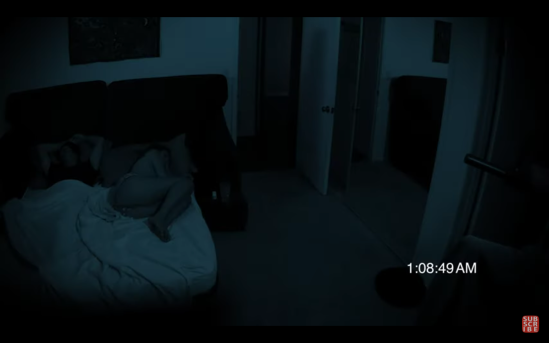
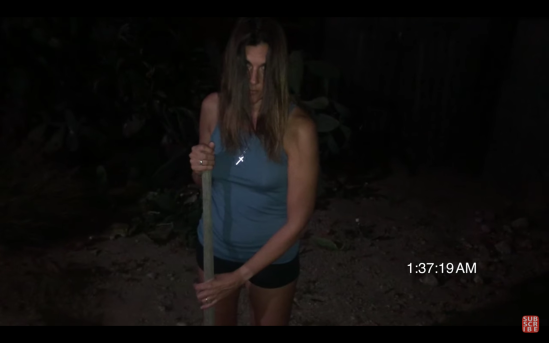
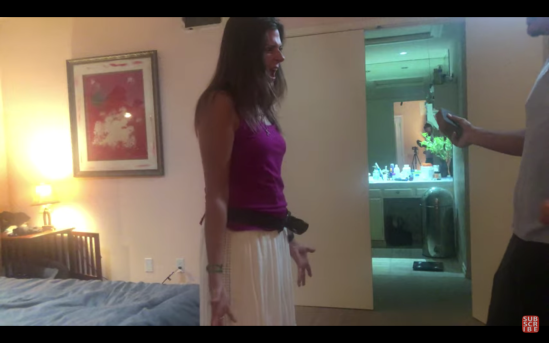
Vlogging husband and wife, Vince and Deanna, digitally showcase their married life to the world from their vacation travels to exotic coastlines to the day-to-day, mundane tasks that includes home renovations.  When they demolition a wall in order to install a French door in the master bedroom, they discover a mysterious box containing a Portate (carrying) cross hidden within the wall.  Every night since then, Godfearing Deanna has felt a profound presence in the house, experiencing supernatural phenomena, such as grabbing at her feet and possessing her body, almost on a nightly basis, especially 8 minutes after 1:00 AM.  The compilation of footage from Vince and Deanna’s vlog cameras around the house capture the seemingly malevolent events, but Vince, being the ever agnostic skeptic, tries to invalidate any paranormal occurrences, passing them off as more feasibilities explanations.  Yet, the bumps in the night continue to place Deanna in inexplicable danger, forcing Vince to reconsider his position on God in order to save his wife.

CCTV horror has been quiet over the last few years, but 2020 has seen a fair share of the stale, declining genre that’s become more repellant than a draw for audiences; yet these new ventures into CCTV horror have splashed into a Lazarus pool, rejuvenating a slither of lifeforce within genre, with limited theatrical and VOD releases into the volatile cinema market.  Vincent Rocca’s written and directed multi-camera spectral thriller, “8ight After,” is a found footage horror-comedy that is an analogue releasing on the heels of moderate success, following the making-of an active shooter thriller, “Mother of Monsters,” and the hellish hotel imprisonment of souls of “Followed,” another apparitional aghast blending CCTV and handheld footage in a vlog style.  Rocca’s sophomore directorial comes nearly a decade and half after his 2006 feature film debut, a comedy entitled “Kisses and Caroms,” and is produced by Rocca’s less-is-more production company, PovertyWorks Productions, that aims to produce funny and profitable films and shorts on a miniscule budget.  In “8ight After’s” case, the production cost totaled a whopping zero being Rocca’s own actual camera footage of and around his home and the use of handheld’s and phone cameras when out and about. I’m also positive he didn’t pay his wife a dime.

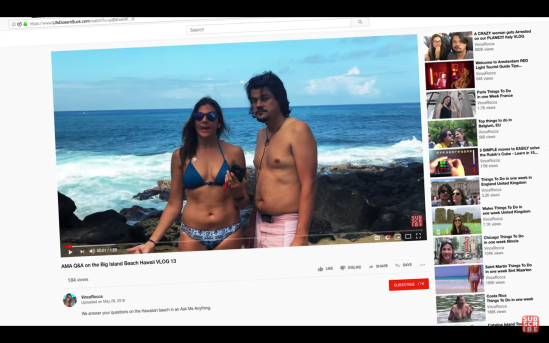
“8ight After” fits right into the PovertyWorks’s comedy portion of its business model, especially with Vincent Rocca in the lead role as a practical joker-goofball of a husband (who really has the vocal projection of the late Bill Paxton), leading the charge of the voyeuristically invasive vlogging lifestyle as well as being a religiously laidback soul with an atheist belief set.  In stark contrast to his convictions is his wife Deanna, played by his real wife Deanna Rocca, who brings a knowledge of faith for a subplot of inner family squabbles about their mixed relationship to God.  When I say “8ight After” is invasive, I mean the film is a truism of invasiveness that not only is a near tell all of Vincent’s life as a videophile and Deanna’s vocation as a zoo vet but also fractures into the story their recorded travel escapades from their VinceRocca Youtube channel show, “Life Doesn’t Suck,” that discusses and logs their destination highlights of various locations from around the world.  The energy from their Youtube channel transcends over into the scenes committed to the necklace narrative with a bout between comedy and horror that peers Vince and Deanna’s religious fervors.  Deanna shoulders more of the in character plights with the subtle, but effective, person plagued by a unremitting presence and has to become possessed, sleepwalk, and look menacing toward her husband when the time is right for the all-seeing camera.  

Compiled like a documentary (or mockumentary?) and presented in a meta format by spinning and weaving the Rocca’s exuberant régime of life and love into an undercurrent of hidden terror, “8ight After” has unique cinematic properties, utilizing his reality television fluff techniques and editing, and tackle themes of family upheaval contentious topics like religion and gun control, to wrap “8ight After” complete on a zilch budget that rides the seams of fact and fiction.  For the most part, “8ight After” tenderly progresses organically with little staged affect as the high school sweethearts play to their most innate strength – 20 years of marital bliss – and chips in sparsely the sarcastic wit of Vince Rocca (did I mention he sounds exactly like Bill Paxton?) through a tech-recorded compiled story that’s well built up initially with convincing acting and strange and spooky incidents that, like most found footage films, point to specifics pieces important to the narrative. There are even a couple of homages to great horror classics like “Jaws” and “Exorcist III.” But then in a turn of sudden events, the revealing climax fizzles like the air wheezing quickly out of an inflated balloon.  The finagled ending stinted completing something uniquely branchlet from the found footage genre and something that had solid momentum and steam of an escalating snowball toward the essence of a presence, but became grounded by the acute conclusion to the matter in such a matter-of-fact fashion that it completely killed the mood, tone, and disposition “8ight After” carried in preponderance.

Become wrapped up in the lives of a pair of vloggers and see them suffer the wrath of a stubborn spirit in “8ight After” that was released October 15th on various digital retailers, including Amazon’s Prime Video. The film is unrated and has a runtime of 97 minutes and has an accompanying English language 5.1 surround sound audio mix with optional English subtitles. There were no bonus material included, but you can live vicariously through Vincent and Deanna’s touristy adventures of swimming with manatees, paddle boarding, and visiting breathtaking waterfalls. Also, you can purchase Vincent Rocca’s journal notes put into paperback, of the same title as the movie and also on Amazon, that goes hand-and-hand with the film; it’s also available as an audiobook. “8ight After” tempers with a well braided blend of found footage comedy and horror from a pair of seasoned Youtubers that then suddenly trails off, leaving us holding the baby in trying to make sense of an nonsensical ending.

Watch “8ight After” on Prime Video!


Read or listen to the book on Prime Video!


Pray EVIL Isn’t This Cruel. “Suffering Bible” reviewed! (Sub Rosa Studios/DVD)


Welcome to the Suffering Bible, a collection of violating and gory interpreted religious allegories digging into stark contrasts of sin and piety and illuminating the darker side of these allegories with a lacerating gruesome perspective. These short stories include the internal strife of a psychopaths strong urge for forbidden lesbian companionship with the contentious, bigoted teachings of finding forever friends inside God’s eyes, a visceral performing depiction of the Incredulity of St. Thomas, an extreme mortification of the flesh, the prideful consequences with a Devil’s pact, and the murderous portrayals of lost souls needing redemption into God’s good graces.

Right in time for the Easter holiday, where Jesus Christ has risen back from the dead for our salvation, comes Davide Pesca’s written and directed “Suffering Bible” of sinfully derived tales of reverent and irreverent perfervid images. The Italian made and produced anthology that’s a contexture of stories is forged together with a wraparound story of the Adam and Eve in the Garden of Eden apologue. “Suffering Bible” begins with a title card excerpt, Tear thy neighbor as thyself, from an unknown storyteller named saamang Ruinees with a skewed version of the second commandment, Love thy neighbor as thyself, subtly denouncing the evils in popular religious culture and then slithering them, not so subtly, into the shorts of those suffering at behest of the bible. Pesca’s shock efforts have come across ItsBlogginEvil.com’s radar once before with another short framed macabre tale, “Hemophobia,” from Artsploitation’s home distributed release of “A Taste of Phobia” anthology and “Hemophobia” is and feels more commercialized with less than salutary toward mutilation and variety body meat, but the filmmaker does fly on a parallel body horror plane and has had his shorts featured alongside with fellow Italian auteur and shock director, Domiziano Cristophario (“House of Flesh Manniquins,” “Red Krokodil”) with a more rudimentary, analogue-video-feel approach. “Suffering Bible” is self-produced by his independent production and distribution company – Demented Gore Productions.

Being an Italian made cast functioning on the performances grounds of a heel budget writing up about “Suffering Bible’s” actors and actresses past credits, influences, methods and so on is proving to be a challenging task. Most of the cast is comprised of alternative, half-naked women, such as Nicola Fugazza and Mary Rubes who are the sole credited on IMDB.com. Rubes, an erotic model, becomes “Suffering Bible’s” inadvertent poster girl that graces the Sub Rosa Studio’s DVD cover and static menu as her seductively deceptive solo performance of body and genital self-mutilation is the most unsettling story revolving around mortification of the flesh. Rubes has previously worked with Pesca on a 2017 short film entitled “Fame de Vampira,” which also co-stars Beata Walewska. Both Rubes and Walewska sizzle in the Italian action scene with “Rage Killers” by director Roger A. Fratter, who co-directed “Fame de Vampira.” As you can see, a casting inner circle is starting to form, but that’s the extent of the network with Simon Rocca, Simon Macleod, Catlin Strange, Pate Douce, Paolo Salvadeo, Emilio Stangalini, Paolo Borsa, Emanuela La Neve, Chiara Digonzelli, and Marilena Marmo.

On the surface, “Suffering Bible” has a unwieldly, pigeonhole affect that places the impervious shutters around one’s peepers and thinking cap for the pleasures of gore and nudity that run continuously rampant, but Davide Pesca has a connect-the-dot vision that aims to unveil the worst of religious culture, using graphic imagery in a reverse psychological and divinity experience that’s wildly novel inside a less commercialized parameters and the more I stew on this film, the more I like it. Without this review not seeming to be a theoretical paper on Davide Pesca and the “Suffering Bible,” examples of the filmmaker using gore as the pain and suffering vessel for those struggling to be closer to God can be modeled from the first short, “My Only God” aka “Friends Forever,” in which a woman stitches herself to her now dead friend to be closer to her, as if their friendship, which was severed insinuated by the dead woman, will continue in the afterlife. Same can be said about the last, if not more potently gristly, short, “The Redemption of Last Souls,” where a druggie, a terminal ill person, and a homeless man who has lost family connectivity have nothing left to lose, have lost faith, and seek redemption through being chair strapped subjects of a snuff film. While “My Only God” and “The Redemption of Lost Souls” caters to the barbaric rite of celestial passage, Davide Pesca’s specialty falls more within the lines of body horror as the filmmaker has saturated himself in the infatuation of the Body Modification culture, reflected in his “St. Thomas” and “In The Name of The Father” that include Doubting Thomas reaching protractedly into a crucified Jesus’s side slit and include the extreme mortification of the sinful flesh – eyes, breasts, and clitoris – by a devout devotee.

“Suffering Bible” is a throwback moxie livid on sin and body destruction and it’s a title coming to you on DVD home vide like a disastrous, break faith, miracle from SRS Home Video and MVDVisual. Though listed as a retro release by SRS, “Suffering Bible” released in 2018, shooting over the course of a few years prior more than likely, with a combination sepia-color approach and the result outputted a strained and digitally cursed image of a widescreen, 1.78:1 presentation that suffers from severe compression artifacts in conjunction with digital interference. The errs are absolved by the very label of a throwback “erotic art house horror” gracing the retro, faux-VHS DVD back cover. The single channel stereo has limited flexibility with some ostentatious, if not laughable, Foley work. Aside from a little dialogue in two of the shorts, “Suffering Bible” takes a vow of silence and speaks volumes in actions alone; this creative choice, along with some probable glitch art, saves much of the technical woes already plaguing Pesca’s stain on profane. The robust grunge-brood style of OKY’s prolong guitar distortions, delicate strum and percussion echoing, and reverse melodies bedazzles in a cathartic relief that no dense, run of the mill metal band is attached to the soundtrack. Special features include a short interview with Davide Pesca, which turned out to be more of a behind-the-scenes look at handful of shorts for the film, a lengthy ultra violent and gory showreel for Pesca’s “Tales from the Deep Hell,” and SRS trailers. More grimly poetic than sleazy gore-porn, the book of the “Suffering Bible” can open eyes to the unsettling infernal of holy virtue with transfixing horrid death rooms.

Shock, gore, profane! “Suffering Bible” DVD has it all!