EVIL Embarks with Cons and Cops in “Project Wolf Hunting” reviewed! (Well Go USA Entertainment / Blu-ray)

“Project Wolf Hunting” on Blu-ray and Available for Purchase by Clicking the Cover Art!

After a disastrous Philippines-to-Korea extradition processing of criminals that resulted in an airport suicidal bombing with multiple casualties, the procedure to transport dangerous criminals moves to a decommissioned Cargo ship known as the Frontier Titan.  The 3-day journey is expected to be a safer option to extradite Korea’s most wanted as highly trained and experienced detective accompany the criminals as armed escorts.  Every contingent has been covered except for what lies in the belly of the cargo ship.  Hidden in the bowel, underneath the engine room, a top secret biological weapon, involving an ancient wartime prisoner’s chromosomes commingled with the agility, strength, and prowess of a wolf, being transported across the sea.  When the criminals plan an elaborate seizing of the ship, the monstrous hybrid man known as Alpha is also inadvertently released and kills his caretakers, leaving him free to roam the ship and engage the good and bad guys alike as fair game to hunt.
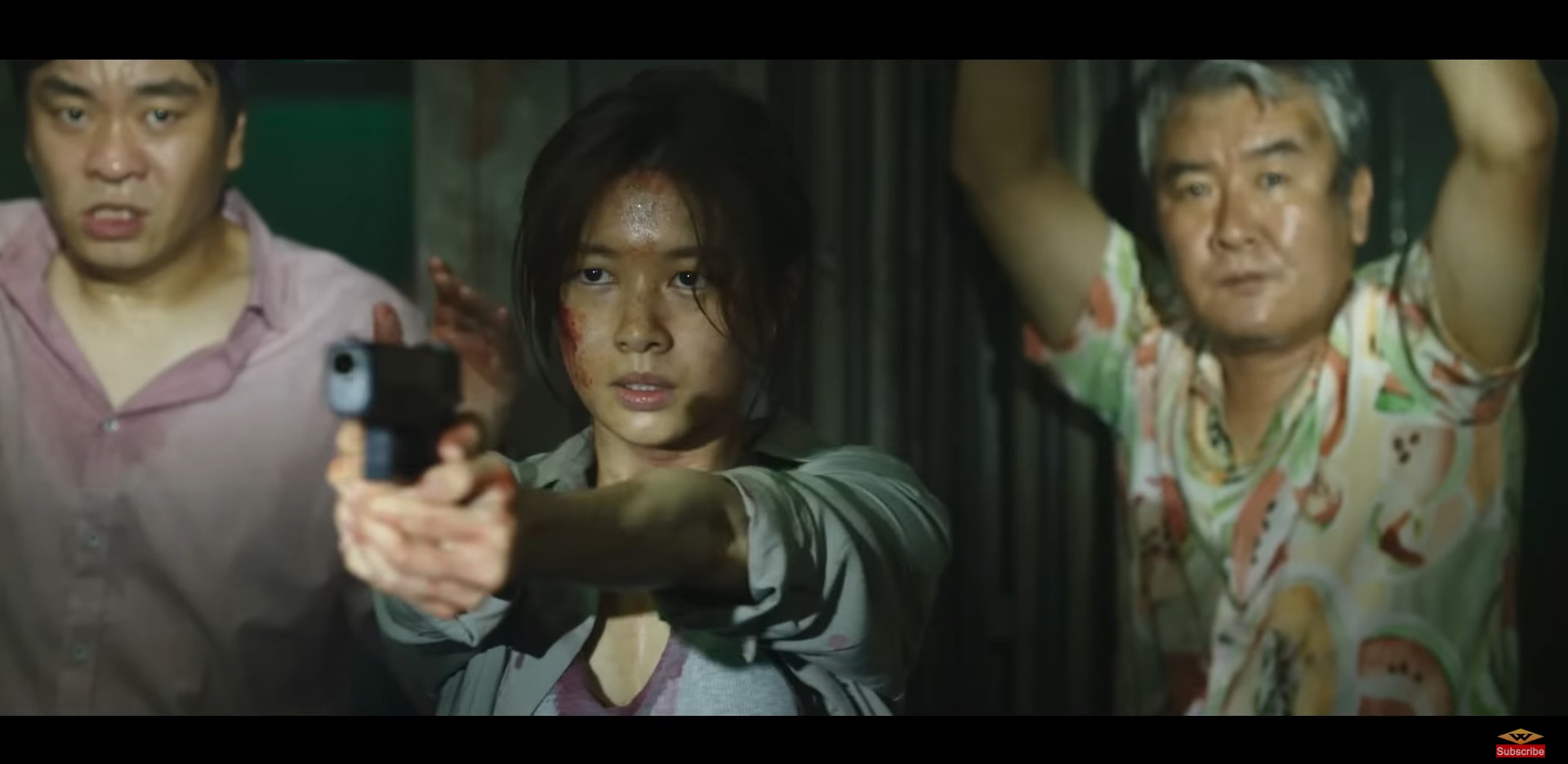
Only a handful of times in my life have I’ve seen a film with so much blood.  “Project Wolf Hunting” is one of the bloodiest, most violent, Korean films to come out of 2022.  The hybrid action-horror with a genetically hybrid superhuman is the latest effort from writer-director Hongsun Kim, sticking with the horror genre after his positive reviewed 2019 evil spirit family drama “Byeonshin.”  The title, in reference to the operation of transporting Alpha through to East China Sea, into the Korean Strait, and dock at Busan, is the international marketing title for the Korean name “Neugdaesanyang” and is a film I can confidently and merely describe as “Predator” meets “Con Air” on a cargo ship.  Seasoned civic officers of the law, hardened criminals with sordid pasts, a special op consisted of superhuman soldiers are up against the odds to stop the Alpha, the original specimen.  Film between the ports of Busan, Korea and Manilla, Philippines, “Project Wolf Hunting” is the Korean venture production from Content G with Gu Seaon-mok serving as producer and is presented theatrical by The Contents On in association with CJ CGV.
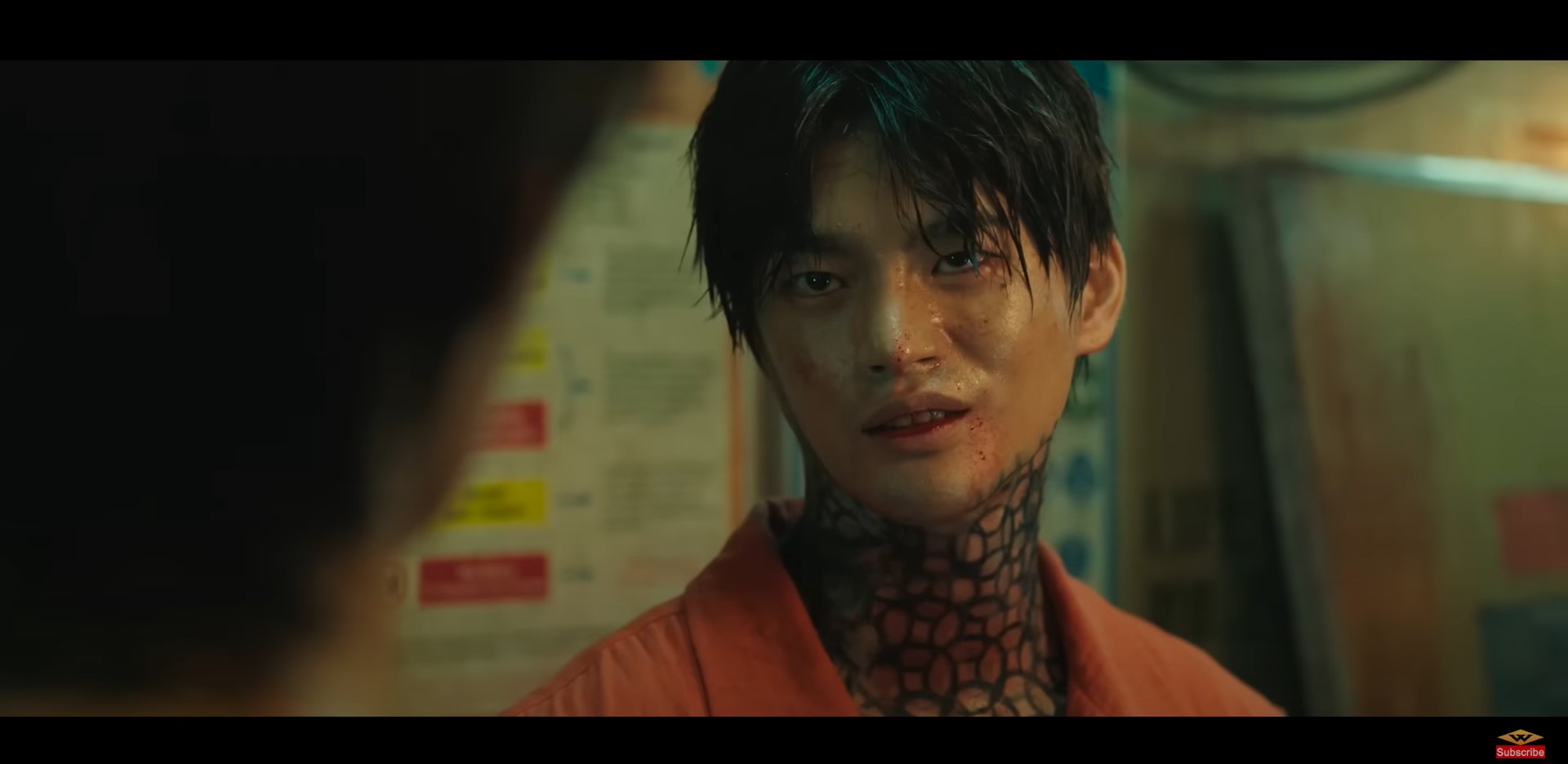
What’s interesting about Korean cinema is what you know what you’re getting with the characters who are greatly upfront, unpretentious, and full of attitude.  There are not a lot of false veneers with the cast of characters, something that can be said with most films spawned out from the Asia Pacific industry.  I might dangerously be overgeneralizing but from my viewings and writeups, but I’m fairly locked into my statement with confidence as “Project Wolf Hunting” paints a stark contrast of who’s who from the beginning without casting any doubt or even suspicion. Even with the some of the ship’s crew, Hongsun Kim clearly delineates their allegiances despite not coming right out with it initially and the cast immerse themselves into the appointed role with well-designed idiosyncrasies that seeing them out of character can be a bit of shock. Park Jong-doo perhaps is the most archetypical with Seo In-Guk, in his first feature performance, becoming the despot amongst the thieves. Guk transforms his appearance with full body tattoos to denote mafioso status and even takes that extra step with a few naked from the rear scenes to establish a conspicuous nonchalance for what anyone else has to think, say, or do. When many of the insurrectionary inmates take the ship, Jong-doo’s counterpart, Lee Do-il, isn’t so easily intimidated but is reserved and quiet in his strong posture. Dong-Yoon Jang offers a less violent option only to bide time for what’s ahead of them, the Alpha. Gwi-hwa Choi, who been hot right now in Korean cinema with having roles in “Train to Busan” and “The Wailing,” is the extraordinary and mysterious monster prowling to kill every single person on and off the ship’s manifest. With Alpha’s eyes stapled shut, maggots feeding off the festering tissue inside his mouth, and has a near spartan approach to liquidating, Choi completely transforms into the silent hunter with unstoppable and wild violent mode, but Alpha is only a name and the implicit meaning of the name does change hands throughout the course of the film that makes “Project Wolf Hunting” all that more the interesting. Female principals are not meek, weak, or helpless in his all-out brawl in a confined space with Jung So-Min as an eager cop with acumen and Jang Young-Nam as the dangerously uncouth companion to one of the mafia’s leadership and the fact that none of them are a love interest, or become even remotely involved romantically, sexually, or even innocently, speaks volumes on “Project Wolf Hunt’s” no room for romance rampage. The large cast lends to a high body and the acting pool rounds out with Dong-il Sung (“Byeonshin”), Park Ho-San (“The Call”), Chang-Seok Ko (“Lady Vengeance”), Lee Sung-wook (“Spiritwalker”), Jung Moon-sung (“The Cursed”), and Son Jong-hak (“Thirst”).
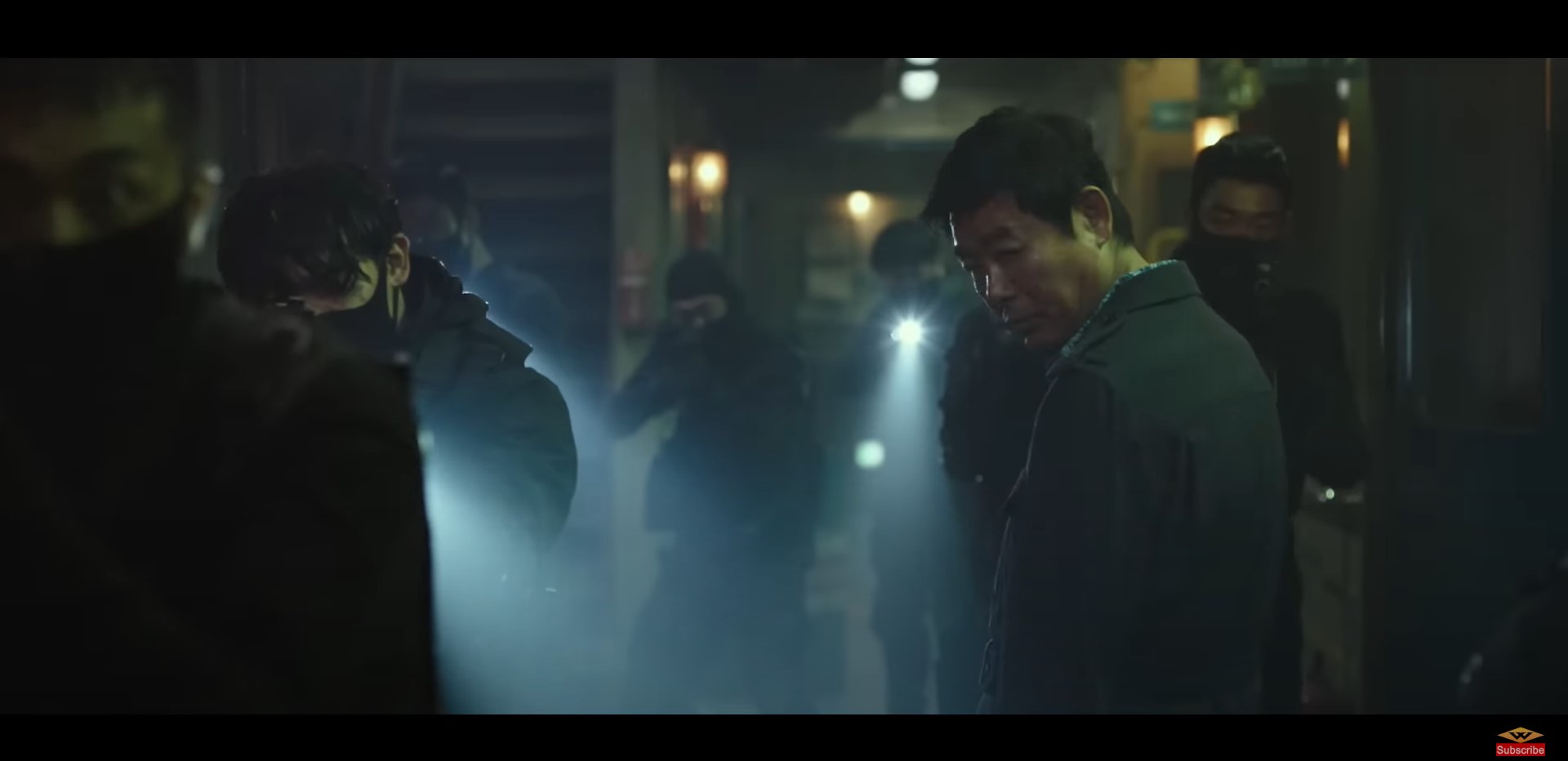
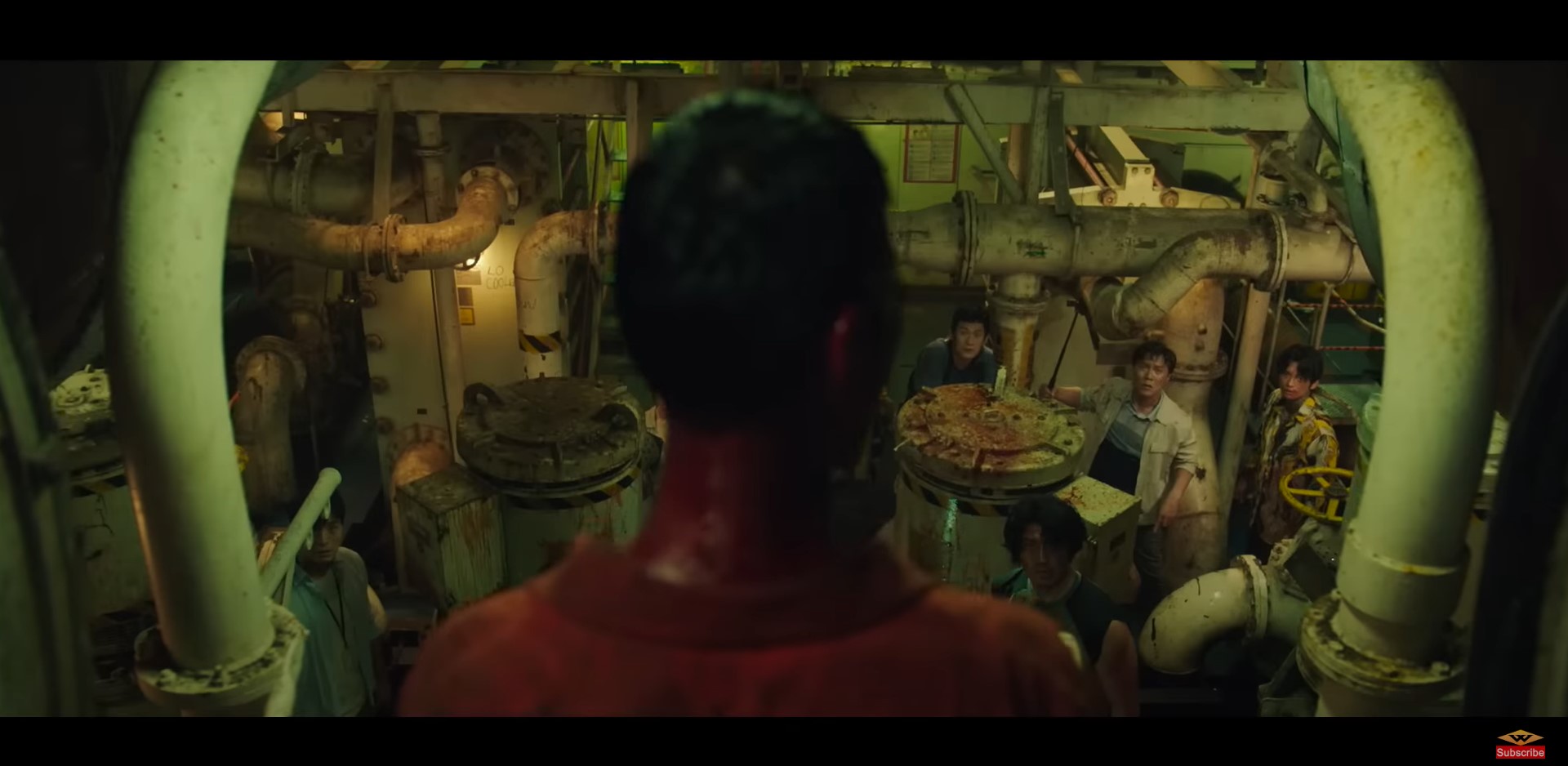
There’s so much blood. That statement was worth repeating. “Project Wolf Hunt” is reminiscent of the Japanese samurai films of yore or the absurd comedy gore film with geyser sprays of red with every blow.  Literally, tons of fake blood was used to coat the sets crimson in an impressive feat of movie magic carnage.  I’m also doubly impressed how the special effects team was able to achieve multiple sprays from out of the nostril cavities in what might seems small, insignificant, and simple looks amazingly palpable on screen that stopping to think about the difficulty in how that effect can be accomplished can be easily overlooked.  The blood sprays are only a fraction of the wide variety of violence and gore put on display and we’re treated to an abundance of slaughter and a superb, choreographed melee in each and every tightly confined skirmish that makes “Project Wolf Hunting” captivatingly adrenalized.  Production design creates the illusion of a cargo ship without question and the visuals, though soft in some scenes, sell the nautical voyage through clear skies and a storm rough patch.  Much of a part of “Project Wolf Hunting’s” success is cinematographer Ju-Hwan Yun’s framing.  The example I like to use is the post-elevator attack when the hoisting cord snaps that sends the lift plummeting down the chute with Alpha inside.  Yun then sends the shot from the top down the chute to the exposed opening of a mangled lift to see Alpha turn his eye-stapled face upward toward the narrowly escaping prey.  The shot gets the heart pumping and relays, in one sequence, the unkillable nature of Alpha.  If “Project Wolf Hunting” isn’t already thrilling enough with the brimming, cutthroat tensions spilling onto every deck between the police detectives and the criminals in their custody, the evolutionary plot twist that welds the age-old divide between the two frictions is a bloodbath you don’t see coming and one you’ll enjoy experiencing. 
Action, horror, human experimentations, and with a complemental nod to the hard-hitting Asian cop films of 90’s, “Project Wolf Hunting” has teeth and stamina for 123 minutes of knockaround bloodshed. A winning Blu-ray release for Well Go USA Entertainment, the film is presented in a widescreen 2.39:1 aspect ratio. The AVC encoded BD50 offers a topnotch 1080p resolution that translates well to the big screen with granular detail in the interior and exterior of the cargo ship set and displays the stylistic choice of a warm color scheme consisting of prominently yellows and greens, providing less shadowy, higher contrast areas to suggest there is nowhere survivors can hide. Though quite a bit of CGI throughout the film, the end result doesn’t appear half bad with more fleshed out textures built into the renders to make them less gummy-looking. The release offers four audio options – a Korean and dub English 5.1 DTS-HD Master Audio and a Korean and dub English 2.0 stereo. Obviously, you receive more bang for your buck with the amped up surround sound option and don’t have to contend with dubbing if you go the original Korean language route. A high velocity range sounds strong through the rear channels with gunshots, the ship’s indiscreet hum, and the overall ricochets, clinks, and skirmish shuffles submerge an enveloping blanket of directional sounds right in your ears. The Korean dialogue is clean, clear, and vociferous in Korean inflections. English subtitles are optional and available well synched and error-free. Like status quo with other Well Go USA Entertainment releases, bonus features are an ornately produced, one-sided interview vignettes with the cast and crew and of the behind-the-scenes making of the film as well as a making of Alpha which was more actor Gwi-hwa Choi’s excitement about this different kind of role per his usual. The trailer is also available in the bonus content. Physical features include a traditional Blu-ray snapper with latch with the grisly, dirty face of Alpha blended into a black background. The film is unrated and is coded region A for disc playback. Despite minor convoluted expounding, “Project Wolf Hunting” kept the attention at high alert with a high body count, an indomitable super soldier, and a cargo ship load of blood.

“Project Wolf Hunting” on Blu-ray and Available for Purchase by Clicking the Cover Art!

Never Tour Mistakenly into an EVIL Murder Bar! “La Petite Mort” reviewed! (Unearthed Films / Blu-ray)

“La Petite Mort” is Orgasmically Gory and on Blu-ray!

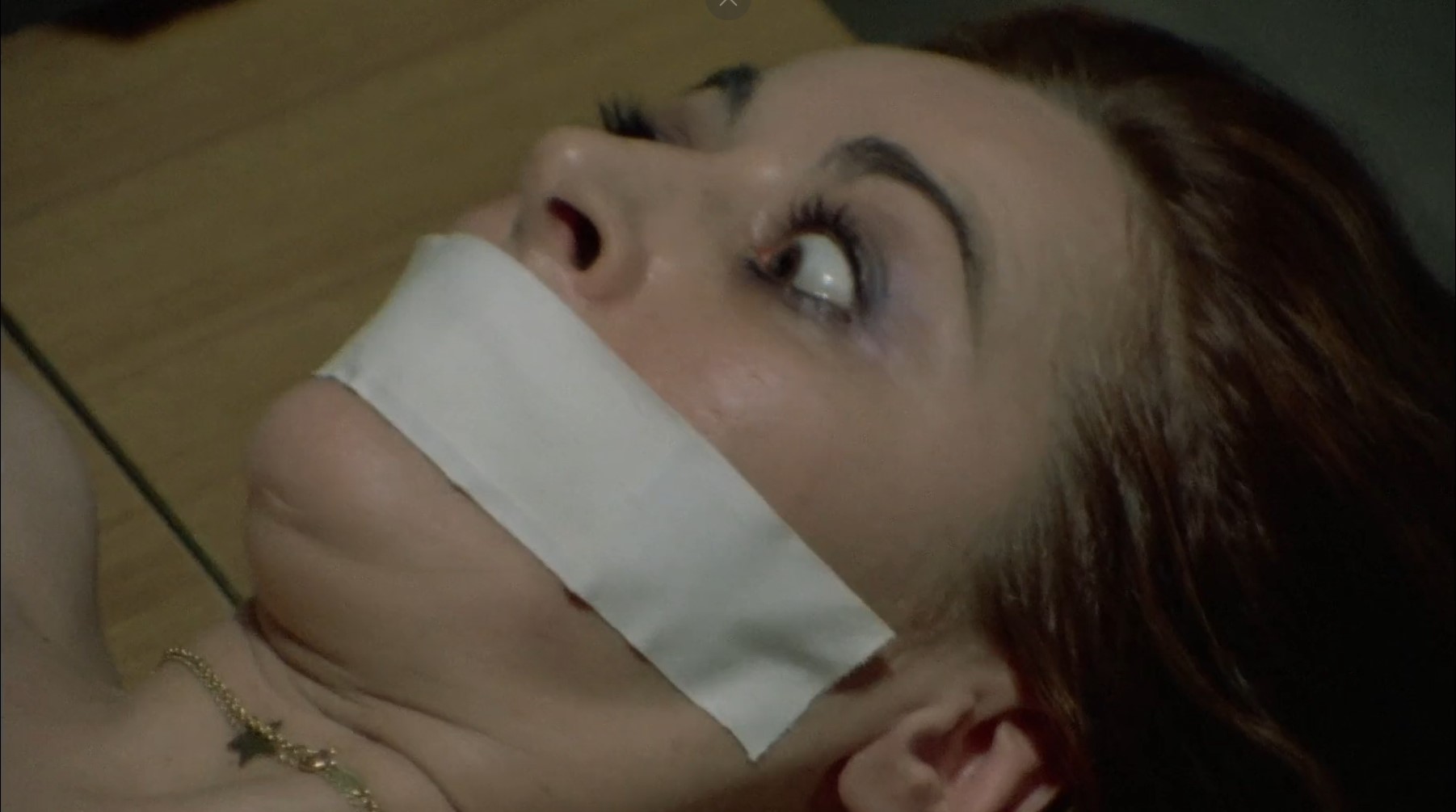
Vacationing to Mallorca should have been a relaxing getaway for Simon, his blind girlfriend Nina, and their longtime friend, Dodo, but their flight layover in Frankfurt leaves down idle town to explore the city that’s only a mere two hours from home. Tension between them begin to bubble to the surface when uncertain emotional steps to take relationships to the next level arise and they become inadvertently scammed by a local grifter. Exhaustion sets in and forces them to take refuge in a local dive bar with a specialty for S&M play. The bar is actually a front for the Maison de la Petite Mort, an underground snuff house owned a sadistic woman named Maman who livestreams kink-murders and sells hapless victims to wealthy businessmen with whimsical and perverse deviancies. The flight to Mallorca will be indefinitely delayed as the three friends are now a part of the bloody basement decor awaiting the horrors before them.

“La Petite Mort,” translated from French as literally the little death, is also known as the post-orgasmic sensation, such as a weakness or loss of conscious, that serves as an analogy to death. The phrase is also the title of the 2009 torture-gore film written-and-directed by the German-born Marcel Walz more than a decade before the formation of his now Neon Noir production company. Walz, who later in his career went on to remake the Herschel Gordon Lewis 1963 film, “Blood Feast,” blossoms as a torture porn filmmaker as Walz’s directorial catalogue contains more blood than a blood bank and often stretches the subgenre range of plot machinations from cannibals to dark web to snuff. Made on a few thousand-dollar budget and shot in a real sex club in Mannheim, Germany, “La Petite Mort” touches upon all three plot devices to create a dungeon of splatter and sadism using elements of an unsolved true crime case of a couple gruesomely murdered in an underground murder house as the narrative base. Before Neon Noir, Walz and filmmaker Michael Effenberger, director of “Tortua,” formed Matador Films that became the company behind “La Petite Mort” with Thomas Buresch (“Unrated: The Movie”) and feature actor and director of photography, Andreas Pape (“Toxic Lullaby”) producing.

Films like “La Petite Mort” is a special breed not because of the torture and gore-porn element, which can be an acquired taste for consumers with dark thoughts, fantasies, and morbid curiosities (I fall into the latter category if you’re wondering), but rather the story caters to no singular principal lead nor does is the focus on an ensemble cast.  “La Petite Mort” transitions from one group, the naïve backpacking travelers, to the S&M snuff-makers in a flip-flop of point of view and storytelling.  All the relationship complexities between the out of concern love from Simon (Andreas Pape) to his even keeled blind girlfriend, Nina (Inés Zahmoul, “La Isla”) as well as the insignificant tiffs and spats between Simon and friend Dodo (Anna Habeck, “Popular”) to see who is in Nina’s favor are quickly swept aside when the trio is trapped and tethered to the S&M spider web of Maman’s Maison de la Petite Mort.  While the three travelers produce a mild interest spun out of frivolous dramatics to the like of the normal human population and very much up played by Walz for that very purpose to produce stark contrast against what’s normal for sadomastic pleasure-seekers, Maman, the orchestrator of pain and profit, is the most earnest of principals with a crone-like presence, played inexorably and ruthless by French punk-goth singer Manoush.  The certified gypsy and former bodybuilder has made a name for herself in a plethora of extreme, Germanic horror pictures over the last decade, but “La Petite Mort” came early in Manoush’s career and is exhibits why she’s so good at horror, especially at the sadism brand.  Maman’s schadenfreude business employs two lesbian dominatrixes, Dominique and Angélique, with strong-stomachs and a healthy bloodthirst.  The beautiful femme fatales serve Maman’s unquestionably, almost mindlessly, that only glimpses into possibilities of how the two women became betrothed to do Maman’s bidding.  Annika Strauss, who’s been in the screen queen business about as long as and has starred alongside with Manoush on a number of films, is also a Marcel Walz regular casted actress who fits and transforms into just about every character under the black sun of ghoulish and macabre material thrown her way.  As Dominique, Strauss is provided more depth to why and how the brunette basket case has come under Maman’s greedy and depraved thumb as the actress shows some slither of concern for the captives while explaining she had no choice just they like them and exhibiting more reserve than her blonde counterpart Angélique (Magdalèna Kalley, “Violent Shit 4”) when the cameras are rolling.  Conversations rooted into provocative thought, sympathy, or reason are often few and far in between the constant pleas for help and the screaming matches of pelting threats.  “La Petite Mort” finalizes the cast with Martin Hentschel (“Zombie Reanimation”), Tanja Karius (“Necronos”), and Thomas Kercmar (“Space Wolf”) as Klaus der Kobold, a Napoleon-sized elitist wealthy enough to buy people’s lives and enjoy seeing them horrifically mutilated.

One scene overwhelms the diagnostic side of my brain and that is why Maman is torturing Dodo with needles as Manoush delivers a surprising genuine villainous monologue about sadomasochists being judged by normal people and how her character has a liberated, uninhibited sexuality in a moment that is a powerful argument in favor for sadomasochism to exist without shame.  Thinking about this, I’m not aware of any publicized S&M clubs, especially those that aren’t criticized for being deviant, perverse, and secular.  After that one moment of vulnerability, “La Petite Mort” turns into a choke-down bloodbath with some great and some not-so-great special effects by one of Germany’s gore film greats, Olaf Ittenbach, director and F/X artist of “Premutos:  The Fallen Angel” and “Legion of the Dead.”  Ittenbach brings me to another overwhelming scene, one that churns the contents of your stomach, involving a meat grinder, a hand, and a chalice.   “La Petite Mort” has other notable grisly moments of scalping, castrating, eye-plucking, and disemboweling, all of which are in great gooey-gory detail.  What takes away from the gore scenes is Walz fluttering effect or grindhouse-esque edited framed overlay that, in my wildest guess, is supposed to enhance the extreme acts of violence, torture, and death in conjunction with composer Michael Donner’s industrial rumble and pulsing synth score. Instead, the effect becomes nothing more than a cinematic nuisance, an eyesore that dilutes Ittenbach’s best handywork because that scalping scene is the chef’s kiss of tactual realism. Based on a true story that I can’t seem to find any record of, “La Petite Mort,” for a brief few minutes, becomes a promulgating champion for alternate sexualities and is also a showcase for Olaf Ittenbach to shock and disgust but for what the feature is worth, “La Petite Mort” offers only emptiness in both character conviction and story narrative.

A fitting entry into the shockingly weird and grotesque “Unearthed Films'” independent film catalogue, “La Petite Mort” arrives onto a high definition, 1080p Blu-ray home video. Presented in a 2.35:1 widescreen aspect ratio, Walz bookends his callous-cladded cult film with a yellowish-tan tint while the girth of the story is laced with more gel coloring under no hinderance of tint. Low lighting with low contrast markers, mixed with tropical-warm gel coloring and strobe flashing fabricates the sunless and dank murder basement but any exterior shots, even the bookend act one and act three are rendered with poor resolution for digital recording. Only a single audio track is available with a German LPCM 2.0 with burned-in English subtitles and what’s rendered is likely the best quality to get from the masters from the lossy format. Dialogue is often unrefined, and the levels vary, but for the most part clean and free from obstruction. The track has limited ambience and harps heavily on the gory moments while Michael Donner’s dark industrial score takes the brunt of the overall soundtrack. Subtitle synchronization varies as well with millisecond flashes of translations that are impossible to read or even pause perfectly on, but the translations appear flawless and consolidated from the dialect for easy reading. The Unearthed Films’ bonus content is aplenty with a new commentary and interview with director Marcel Walz. Also included is a feature-length making of “La Petite Mort” with raw handheld camcorder footage, shot by The Bad Boy character in the film, behind-the-scenes footage, and even some 16mm footage that go reel deep into the effects and life of independent filmmakers. An archived interview with special effects artist Olaf Ittenbach, deleted scenes, photo gallery, teaser trailer, official trailer, “La Petite Mort 2” trailer, and the VHS intro that’s essentially a Marcel Walz introduction of the VHS home video release round out the bonus content. The physical attributes are a clear, Blu-ray snapper case with reversible cover art with the inside sleeve containing a more graphic torture not suited for retail shelves. The region A encoded, 77-minute feature is not rated. If invested for the kills, “La Petite Mort” pleases to overindulge the desire and is a solid first torture-porn effort from a then young Marcel Walz who continues to rise in the niche market.

“La Petite Mort” is Orgasmically Gory and on Blu-ray!

The EVIL Fat Man Delivers a Sack Full of Slaughter in “Christmas Cruelty!” reviewed! (Unearthed Films / Blu-ray)

Oh, Its Starting To Look a lot Like “Christmas Cruelty! on Blu-ray!

Eline, Per-Ingvar, and Magne are three close and eccentric friends preparing for the jolliest time of year, Christmas. Concocting a unique Christmas spirit of their own with scarring passers dressed as Krampus and brewing an alcohol infused cocktail, the unconventional celebration reflects their individual perspectives on the holiday: a knowledgeable Eline embraces more traditional values, Magne goes against the grain with a loose grasp on the concept of it all, and the lack of mental acuity for wheelchair bound Per-Ingvar leaves him in naive, gullible belief. All the while the friends prep the groundwork for a Christmas party, a homicidal sociopath tracks and records their every movement, habits, and personal attributes and when Christmas comes, the meticulous and brutal serial killer dresses as Santa and infiltrates what turned from being a joyous bash into Santa bashing in heads with a hammer, decapitates party guests, and rip-roars a chainsaw with blood splattering apathy.

It’s that time of year again to ride the Christmas slay down the hills covered with blood-red snow. Santa, usually a sign of pure good and jovial togetherness, is transformed to embody terror and evil across the holiday season. In 2013, Norwegian filmmaker Per-Ingvar “PIT” Tomren (“Bonzai Motherfucker!”) and his co-director Magne Steinsvoll (producer of “Killungard” and “Lyst”) not only star in another Yuletide horror that yields itself to violence and blood but also adds their perspective entry into the vast Scandanavian subgenre of ole’ Saint Nick, or an imposter of the jolly fat guy, going postal in the worst possible way. Tomren and Steinsvioll work into their debut feature film off a script penned by principal co-star Eline Aasheim as well as Janne Iren Holseter, Anita Nyhagen, and directors Tomren and Steinsvoll. Originally entitled “O’Hellige Jul!” in Norwegian, the 2013 released “Christmas Cruelty” is a Stonewall Productions and presented by DC Medias under the producing credits of Magne Steinsvoll, Kim Haldoersen, and Raymond Volle (“Saga”).

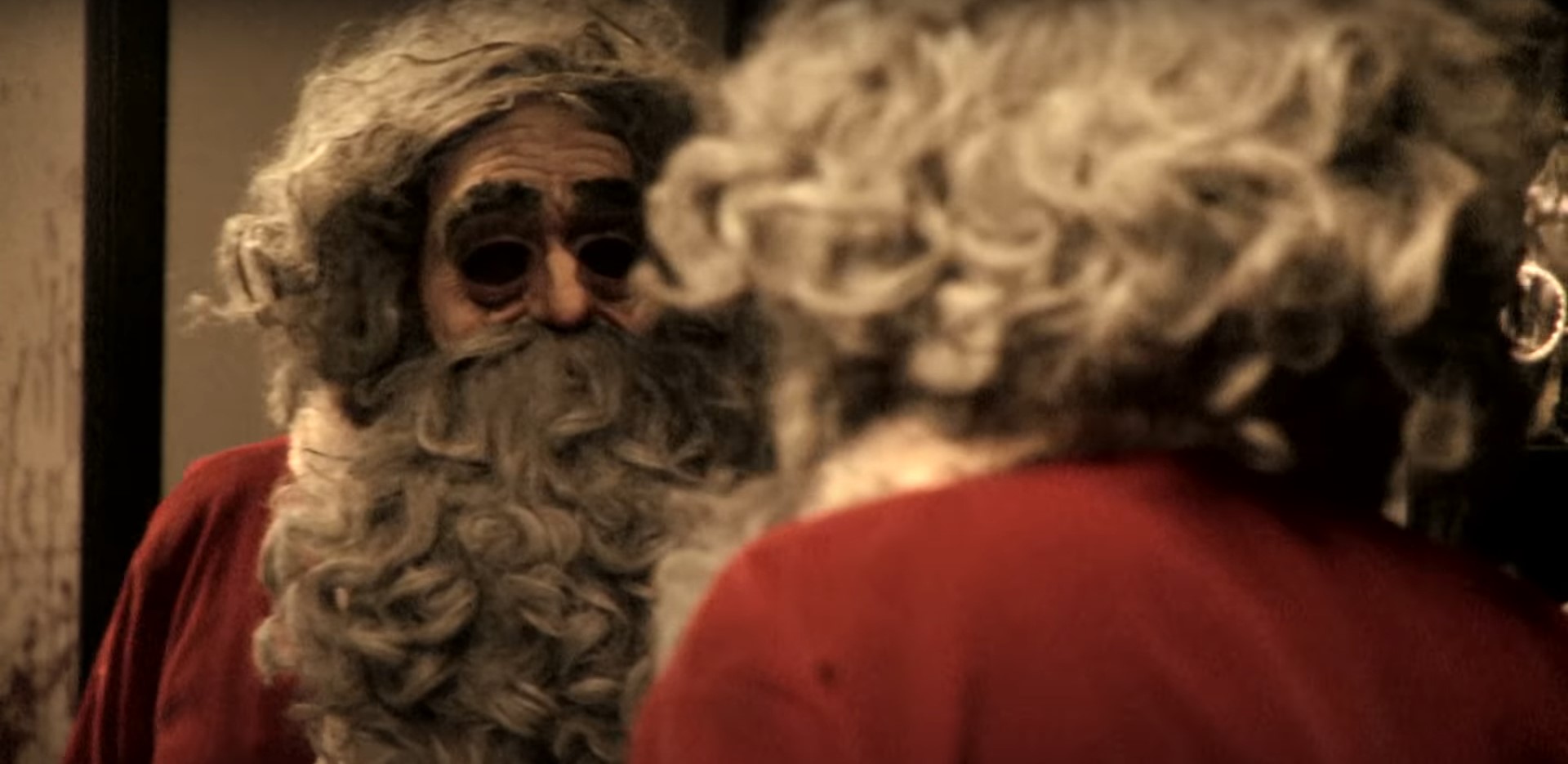
Instead of hiring an outside cast for a serial rapist and killer Santa flick, why not just star in the film yourself? In order to get their feet wet in film production as well as learning the rigors of acting, Per-Ingvar Tomren, Magne Steinsvoll, and Eline Aasheim essentially portray themselves as the three friends spending unique quality time together during Christmas. Per-Ingvar works into the script the corporeal truth of this delicate skeletal structure that battles brittle bone disease aka osteogenesis imperfecta. Confined almost entirely to his wheelchair, Tomren curbs his wellbeing for the sake of art as the filmmaker doesn’t exempt himself from the various physical altercation scenes to have a stuntman take the glory. The same kind of sentiment can be said for Eline Aasheim whose character must endure an invasive attack, one that’s deeply uncomfortable and intimate in nature surrounded by a virtually an all-male cast which includes offscreen friendships. Then there’s Magne. If Per-Ingvar and Eline embodied metaphorically everything that is good about the Christmas spirit, Magne was the complete opposite as a complaining, sexist, and indelicate sourpuss living in the moment rather than grasping his own barbed attitude. The malarky between the three friends on screen is perhaps very mirrorlike offscreen as there is a comfortability level with each other performances that keeps the dynamic on the edge of combusting but yet you never feel like a change in their relationship will ever mount, keeping their friendship close, tight, and compact. The outsider, the Serial Santa, is played mid-50’s Norway actor Tormod Lien. I mention Lien’s age because he is older than the other principal characters and that plays into his character’s wisdom as a family man who takes notes on who’s halls he will soon deck. Calm, organized, and deviant, Lien plays into the apathy without a twinkle of empathy and engineers a bloody show of planned homicide with some comedic bits put on by Lien when Serial Santa has to go off script because of interruptions.

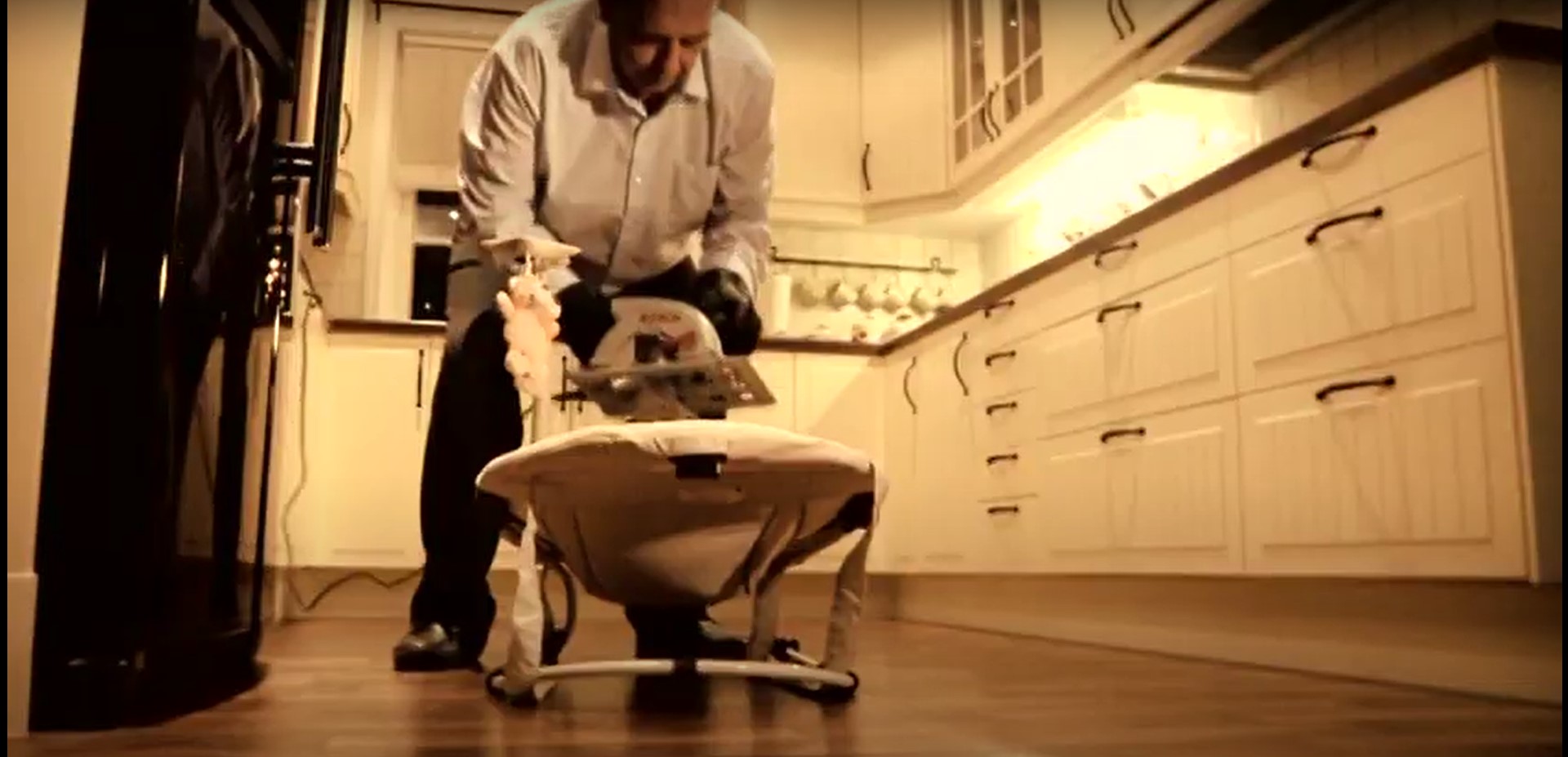
In my mind, there are two types of Christmas horror films: the uncanny universe where Santa, or something related to Santa, such as his toyshop elves or Krampus, world’s lives and breathes in a twisted malevolency while the other type resides in fact with sociopathic and mentally unstable Santa impersonators who go on a merry murdering spree. “Christmas Cruelty!” falls in that latter category with serial killer, dressed as Santa and a grotesque mask, gatecrashes the good protagonists’ party for the nefarious primordial urge to hurt, rape, and kill. Maybe even dabble in a little cannibalism. “Christmas Cruelty!” is a lump of extreme exploitation for next level nihilism. I’ve seen my fair share of messed up movies, but the Tomren and Steinsvoll defiling picture doesn’t even have a millimeter of morality. Without a theme, a message, or a basic point, “Christmas Cruelty!” is hollow atrocity for the sake of shock and slaughter. The principal goods are either too afraid to help each other, too unwilling to help each other, or are too conceited to even take notice that something is amiss. Instead, it’s the Serial-Santa who has his ducks in order, unabashed to simply walk into a room and start his plan of cold-hearted perversion, but before even getting to that moment with deliciously diabolical practical special effects that can produce a gut-wrenching impact, the story goes static with the principal goods chitchatting about history of Christmas, their likes and dislikes of the season, and nursing a hangover from hell. This portion to build character doesn’t actually build character as we’re skirted around victimized trio’s reason for to deserving of our sympathy. Yeah, there’s a person with learning disabilities in a wheelchair and a young woman with an inkling of a moral compass but I find them aimless, sleepwalking through life, and without purpose.

Christmas comes early with the release of “Christmas Cruelty” on Blu-ray home video from our friends at Unearthed Films and MVD Visual. Presented in 1080p with a widescreen 1.78:1 aspect ratio on an AVE encoded BD50, Unearthed Films rendering of the transfer goes without a hitch, but the stylistic choices of Tomren and Steinsvoll are an eyesore with a mustard yellow overlay intended for a grindhouse veneer that also correlates with the large font and embossed opening credits. Much of the details and natural look are lost in the yellow tint. The erratic editing is supposed to reflect Serial Santa’s fragmented mind which idiosyncratically finds footing but can be off-putting to its experimental quality. The Norwegian language DTS-HD 5.1 surround sound mix reflects no issues with depth and range despite having limited need for both and has mostly clear dialogue albeit some obstruction from the soundtrack that is heavily integrated into the sound design and becomes a character in itself with a blend of English-lyrical Christmas themed tunes, instrumental string melodies, acoustic solos by Magne Steinsvoll, generic rock tracks, and folksy jamming that ends with the loud roaring of a chainsaw slicing through body parts. The bonus features include an audio commentary with co-director Per-Ingvar Tomren and producer Raymond Volle, retrospective interviews in How Cruelty Changes Our Lives featurette, blooper outtakes, photo gallery, The Last Rebels hit “Endless Highway,” an interview with Morten Haagensen, “Tradition” short film, Press Conference, a watch-a-long session with Flesh Wound Horror, and teaser trailer. The Unearthed Films menu options were a bit cumbersome to navigate when trying to play the movie as the next screen goes to the three audio options – either two commentaries that run along with the film and the play movie without commentary, but the options are not terribly intuitive and had to go through the options before I was able to play just the movie. The physical release comes in a traditional blue snapper case with the soulless, dead eyes of the Santa mask illustrated with liver sports and aged wrinkles on the front cover. Unearthed Films’ release comes not rated, region A encoded, and has a runtime of 94 minutes. Probably not the perfect holiday gift for the conventional horror filmgoer, “Christmas Cruelty” is difficult to ingest and digest as not only an extreme exploitation film but as a film as whole, but with the callous chunks of coal and the striped blood red candy cane of scrumptious special effects, the Norwegian definitely offers a good stocking stuffer.

Oh, Its Starting To Look a lot Like “Christmas Cruelty! on Blu-ray!

A Gondola Ride of EVIL! “Gore in Venice” reviewed! (Full Moon Features / Blu-ray)

Check out “Gore in Venice” on Blu-ray at Amazon.com!

A man stabbed to death in the abdomen. A few feet away, a drowned woman, pulled from an adjacent Venice canal, wearing no underwear beneath her dress. A double murder of a husband and wife has baffled a young, hardboiled egg-eating Inspector named De Pol, but the inspector knows one thing for sure, drugs were certainly involved. As the inspector digs deeper into the horribly confounding case, he learns that husband and wife were into a wide variety of kinky perversions that may have led to their untimely demise. Unable to make sense of some of the case’s facts and as more bizarre murders flare up all over town, De Pol leans on the behavior expertise of the department’s medical examiner as well as anecdotes by key suspects to piece together a prurient plot of perversion-killings sought to be handled quietly and quickly before tourists catch wind of what’s happening, and more dead bodies are discovered in the unparalleled canal-laden landscape of Venice.

Sex, drugs, and eggs run rampant on the walkway bridges and watery canals of the beautifully conglomerated Venice, Italy in Mario Landi’s “Gore in Venice.”   Also known by other titles such as Giallo a Venezia, Mystery in Venice, and Thriller in Venice around the globe, the “Supersexymarket” and “Patrick Still Lives” director Landi helms one of the more controversial Italian crime mysteries to come out of the golden age of giallo horror during the turn of the decade of 1979.  A script that houses a hellbent killer in super cool and reflective aviator shades, a sex-crazed married couple, and a detective racking his brain to connect the motive dots is the last treatment penned by writer Aldo Serio in what’s a non-linear, flashback driven, sordid piece of salacious culprit candy that’s more sexually explicit than is a whodunit thriller.  “Gore in Venice” is one of the few productions of Elea Cinematografica produced by Gabriele Crisanti who has produced “Satan’s Baby Doll, “Malabimba,” “Burial Ground:  The Nights of Terror,” and many others notorious for their sleazy and gory controversial content.

In the cast’s lead of this Italian production is an American actor.  The California-born, “Weapons of Death’s” actor Jeff Blynn has lived in Italy for much of his career and had become tapped to play youthful inspector De Pol, an arrogant prodigy of Venice sleuths with a habit of constantly cracking open and eating hard boiled eggs in the office, out of the office, at the crime scene, during the questioning in suspect’s home, and in just about every single scene Blynn is messing with an egg in a symbolic gesture of trying to trying to crack a strange case is to crack an egg strangely.  Blynn’s pale complexion, large perm afro, and thick caterpillar mustache make him stick out against his Italian counterpart costars that include Leonora Fani (“The House by the Edge of the Lake”) and Gianni Del (“Sex, Demons and Death”) as the deceased wife and husband, Flavia and Fabio.  Fani and Del’s impeccable Euro traits are flaunted all over Venice as sexual maniacs, exhibitionists, and voyeurs who take their relationship to the next level every time they step outside their character’s love nest full of erotica books and wall-to-wall mirror bedroom.  However, trouble in paradise sends the couple hurling toward jagged rocks with salacious orgy photos involving a prostitute (Maria Mancini), a drug-dealer named Marco (Maurizio Streccioni), and Flavia’s best friend Marzia (Mariangela Giordano, “Killer Barbys”) that omits no one from the suspect pool.  Not even Flavia’s ex-lover, a cartoonist Bruno Neilson (Vassili Karis, “An Angel for Satan”) is safe from Inspector De Pol’s investigation.  Unlike traditional giallo films, we’re already privy to the killer, a voyeuristic madman (Andrea Caron) with slick aviators and a complex hardon to kill everyone involved in the orgy and it’s up to Del Pol and his troupe of professional colleagues and chums, who provide not only the vigor (“Private House of the SS’s” Eolo Capritti’s gung-ho assistant to the inspector) but also sage, scientific guidance surrounding sexual deviancy (“Satan’s Baby Doll’s” Giancarlo Del Duca as the case’s pathologist).

As noted in the previous paragraph, “Gore in Venice” is less giallo than one would expect despite an alternate title denoting the film as such in Italy as “Giallo a Venezia.” Does the killer have gloved hands? Yes. Is Landi’s film stylish enough to pass criteria? Absolutely. Does “Gore in Venice” live up to the eponymous title? Blood flows freely. Yet, why doesn’t “Gore in Venice” feel like a traditional giallo? One of the more clinching reasons is the mystery dissolves roughly halfway into the story by exposing the unmasked, unconcealed killer, trailing off from that unsolved perplexity of who the killer might be at the conclusion. However, one could argue that though the killer is revealed, the question of why all the carnage still remains, leaving the giallo more or less intact. Violent tropes aside, Landi’s film abundantly saturates itself into carnal exploits that linger on-and-on more than necessary to get the point across. These scenes of masturbation, public exhibition, and raging erotic zigzag along a blurry, indistinct line of pornography, coming (and coming!) away from the intended murder-mystery subgenre with more skin and slaughter. That’s not the say “Gore in Venice” fails to live up to the moniker as the kills are as grisly as implicitly promised with a large blade to the vaginal cavity, one poor soul gas drenched and lit up like a bonfire, and a one gal having the naked legs cut out right from under her complete with an extreme closeup of the sawing pellicle perfection. Whether because of Mario Landi’s direction or Aldo Siro’s script, the explicit eroticism eats way too far into the story that, in turn, ultimately betrays any kind character development aside from the tragic perversive arc of Fabio and Flavia. Inspector De Pol often skirts around much of the action being only an investigator continuously trapped in the accounts of other people’s tales of debauchery and always one step late to the crime scene party that baffles his keen scrutinizing eye. I’m not one to deprecate graphic sexual content, especially in works that display actual fondling and masturbation in their art, but “Gore in Venice” mildly entertains as a low-end giallo albeit a spectacularly vivid and vehement blood show in front of the unique waterways of Venice.

Under one of the more slapped together and detailed shrouded cover arts I’ve seen this year comes “Gore in Venice” onto Blu-ray home video as one of the revisited classics purchased and redistributed by Full Moon Features. The Blu-ray is an AVC encoded, region free, 1080p presentation of an uncut (and uncensored) remastered feature exhibited in a full frame 1.66:1 aspect ratio. The Full Moon back cover mentions the transfer was compiled from the best available materials, but, honestly, the original 35mm print looks great with only sparse dirt specks and an occasional frame omission. Details look good as well despite the flat coloring. The Italian language LCPM 2.0 and 5.1 offer nearly identical outputs with no real composition distinction between the two others than a slightly more complex background track of motorboats ripping through the canals. There are no bonus materials with this feature only release that’s house in a standard blue snapper case and a red on black, cheesy, Eurotrash cover art for the 99-minute film. Libidinous with a capital L, expect more of sesso e depravazione with profound tidbits of gore than an engrossingly intelligent crime thriller in Mario Landi’s “Gore in Venice.”

Check out “Gore in Venice” on Blu-ray at Amazon.com!

Cannibals’ EVIL Break a Family’s Bond. “Blood for Flesh” reviewed! (SRS Cinema / DVD)


“Blood for Flesh” has a healthy amount of both!

Primitive cannibals sexually violate a brother and sister by a campfire ritual while feasting on entrails.  A family in the throes of hatred and forbidden incest is torn apart between death and mercy.  When these two powerful moments spur friction amongst the family, blood and betrayal runs like an unstoppable torrent.  Animalistic urges take over and neither brother, sister, or father are safe from the cannibals or each other in a landscape of barren and sociopathic madness.  Who will survive and come out on top of the internal upheaval when bloodlust is at its highest?

“Sangre Para la Carne,” or for the single-lingual, English-comprehending audiences, “Blood for Flesh,” is the 2019 ultraviolent and in your face gore-and-shock short-feature film from Mexican director Alex Hernández.  Though completed in 2019, “Blood for Flesh” gains traction into the at-home market three years later, finding distribution on multiple independent physical media distributors as well as video streaming services.  In his debut directorial, which doesn’t list the filmmaker as the screenwriter but is likely the architect of its abstract, Hernández caught the eye of another extreme auteur in “House of the Flesh Mannequins” and “Xpiation” director Domiziano Cristopharo and Italian-based TetroVideo to lift “Blood for Flesh,” fitting right into TetroVideo’s cache of erotic and extreme horror, into production and home video distribution. Shot in the arid depths of Tlaxcala, Mexico, labeled the epicenter in internationally trafficking female sex slaves to the United States, “Blood for Flesh” deluges itself with more unsavoriness, produced by Porfirio Hernández and Rodrigo Tellez Pérez.

To put it simply, “Blood for Flesh” is madness of unchecked immorality and to make something this deranged, Hernández would have needed a likeminded cast small enough to pull off callous scenes of rape, torture, and merciless death as well as aberrant scenes of incest surrounding three members of a truly messed up family. Beginning with the patriarch who is only know as the Father, played by Juan Manuel Martínez, whose subsequently becomes the violently persecuted by his own spawn after groveling at his daughter’s feet in a moment of bawling seeking forgiveness. Bound and gagged, beaten, and hung upside, the Father receives no mercy from his children and there’s no real revelation to why he’s become a subject of torture. Brother (Luis Navarro) and Sister (Erika López) fashion a complex relationship of courtship and collusion. As the Brother notes more than once in a divulging of truth the longing for his sister and his regretful reluctance in continuing the mistreatment of his father, its the Sister who seemingly has the upper hand, the hypnotic spell, over her love stricken brother and as Hernández dives into Sister’s unhinged scenes, especially where she marks her face and body with makeup, we come to realize that Sister just might not be right in the old cabeza. Now, how the cannibals – played by Christian Camara, Daniel Cruz, Enrique Diaz Duran, Aldo Palacios, and Marisela Plaza – fold into the family’s unraveling is a bit of a mystery but I’d like to think their naked savagery represents the rupture and hate between family and the cannibalism is kind of this dog-eat-dog mentality to come out on top by exploiting the other.

No matter which way you slice it, no matter how sharp the blade divides the skin, the muscle, the meat, or the bone, making sense of “Blood for Flesh” will never, ever happen as the almost an hour runtime feature, setup into chapters, is a bundle of biting brutality possibly representing a wide variety of real-world complications. The non-linear structure formulates no sensical path from beginning to end as you’re plopped right into the family’s madness from minute one and though I’m no stranger to undisguised abstract art in indie film, I can usually piece together to symbolic impressions or the weave a clear justification for most scenes in arthouse horror. With “Blood for Flesh,” I’m about as lost as a 5-year-old in a mall whose wander off from his inattentive shopaholic mother perusing the hot deal clothes racks at JCPenney’s the day after Christmas. I watch as Erika López strip away her clothes and her character’s mortality in every scene, I ponder and consider Juan Manuel Martínez’s Father’s compulsive reactions to seek forgiveness as well as to be vindictive toward his off-color and off-their-rocker offspring, and I am beguiled by Luis Navarro’s need to be inside his sister and, yet I feel nowhere near grounded to “Blood for Flesh’s” message if there is even one to be grounded to. Maybe we’re not supposed to connect with such corrosive content in what’s supposed to be just purely unabated shock content to rock the core of typicality. The cannibal scenes seem to be just an object of the director’s fascination with the ugly side of tribal horrors in a stereotyped rendition that depict them as nothing more than basal beasts that take what they want without an out of compassion and my mind continues to lean toward that high degree of barbarism to equate to a family built upon by hate, loathing, and individual interests.

“Blood for Flesh” could have easily fit in the catalogue of other extreme and underground horror labels, but this experimental purge of images and sins has found a home at SRS Cinema on the company’s Nightmare Fuel banner DVD distributed by MVD Visual. The single layer, region free, and unrated DVD is presented in a widescreen 1.85:1 aspect ratio that decompresses content around 5-6 Mbps, hovering around par for the course when considering DVD picture quality. Generally, the cinematography is bleak, like it’s content, with muted coloring or shot in the dark to avoid any colorful hues. Only when stark red filters are used, which is only one or two scenes, is when color unloads in every inch and corner of the frame. There’s some aliasing and banding in certain scenes that cause momentary distortion that make it hard to delineate exactly what you’re looking act – is it an open and bloody slit or gash or is a cheeseburger? That’s always a fun game to play. The Spanish language audio tracks come in two formats – a PCM Stereo 2.0 and a Dolby Digital 2.0. The PCM is, again, muted with a lack of robust quality the Dolby Digital has much more vigor in all the sub-tracks. Unfortunately, the pieced together soundbites lack creativity and are poorly spliced together that continuously drop off in an instant on the backend. The forced English subtitles synch okay and are captioned well. Bonus features include a filmmaker’s commentary track, interviews with the cast that come with awful Spanglish translations, and the film’s trailer. If Domiziano Cristopharo saw something unique in Alex Hernández, I have yet to see it as I’m not sold on the director’s fringe horror film that aims to just be randomize acts of violence for 59 minutes.

“Blood for Flesh” has a healthy amount of both!