EVIL is the Will of the Gods. “Malpertuis” reviewed! (Radiance Films / Limited Edition Blu-ray)

“Malpertuis” Now Available at Amazon!

Jan, a young sailor returns home from a voyage to find his family home gone.  After getting into a scuffle with pimp at a night club, he’s knocked unconscious by a blackjack and wakes up to his sister Nancy taking care of him and in the bed inside the Malpertuis home of his draconian uncle, Cassavius, a wealthy, stern, and impatient man on the verge of death with terminal illness.  The sailor finds they’re not alone in the large labyrinth estate with peculiar relatives, nearby acquaintances, and longtime servants.  Before his death, Cassavius has his will read with everyone present bedside, announcing the distribution of the immense inheritance amongst the close assembly who’ve either worked and slaved hand and foot for Cassavius or have been on the outside clawing up into his good graces for their greed.  Yet, to receive their portion, they must abide by one stipulation:  they can never leave the Malpertuis.  Jan plunges himself into Cassavius’s unfathomable parting will and design, seeking to unearth Malpertuis’s warren secrets, but all a while, a killer begins to pluck away potential beneficiaries.

The 1943 gothic novel of the title by Belgium author Jean Ray serves as the film adaptation source for Harry Kümel’s 1971 gialli-like and surreal maddening “Malpertuis.”  Released in the U.S. as “The Legend of Doom House,” the Belgium and Dutch co-production creates phantasmic journey down the rabbit hole that unravels a mystery of pantheon proportions.  The “Daughters of Darkness” directing Belgium filmmaker helms the faultlessly fantastical adaptation and script by Jean Ferry, who would also collaborate with Kümel on “Daughters of Darkness” as well as pen original and adaptations of Franco-Italiano melodramas from “The Wayward Wife” to “The Foxiest Girl in Paris.”  Pierre Levie (1969 “The Witness”); and Paul and Ritta Laffargue (“The Mushroom”) produce the gothic and Greek movie under Artemis Film and Les Productions Artistes Associés.

“Malpertius” houses an international cast that ranges from the native English-speaking countries of Britain and America to the European republics of France, Belgium, Germany, and the Netherlands.  The biggest headliner out of the bunch, and perhaps the biggest drunk at the time too, is none other than “Citizen Kane’s” Orson Welles in the boisterous patriarchal role, Cassasvius, on the brink of death.  Welles commands the screen in his short lived but striking hard every note performance that simply overpowers an otherwise Eurocentric cast fashioned with off the wall characters.  The narrative circles around the ingenuous Jan freshly off the boat for a little R&R.  Played by Mathieu Carrière in one of his earliest performances of his copiously filled career that includes horror-based credits like “Born for Hell,” “Nurse Massacre” and “The Murdered Young Girl,” Jan refrains from mostly having a voice but rather actions his will to discover Cassavius’s secrets within Malpertius’s walls as well as extract his fellow beneficiaries aenigmas, such as why the lovely Euryale won’t ever look him in the eye though she’s destined to be his wife per Cassasvius’ will, his sister Nancy’s inexplicable need to leave Malpertuis with her lover, and Alice, one of three intrusive and gossipy sisters, with her cozy up urge to bed Jan while also sating the sexual desires of his greedy cousin and sneaky creep Charles Dideloo (Michael Bouquet, “The Bride Wore Black”).  All three women are played by a single actress.  Hailing from the UK, “The Violent Enemy” actress Susan Hampshire goes into complete incognito mode that disguises her physical attributes and character personalities with mere makeup and temperament tonal shifts too genuine to easily notice Hampshire being all three women.  Hampshire deserves much of the credit and earns a trifecta win by facing down the challenge without compromising character.  Perhaps a little unfair to single out Hampshire as such but the entire “Malpertius” cast deserves recognition for their titan acts, representing humanity-cladded divinity in the most simplistic of human limitation that none of them, apart from one being more recognizable against the others, can be pinpointed definitively who they’re roleplaying.  Charles Janssens, Jean-Pierre Cassel, Walter Rilla, Dora van der Groen, Daniel Piol, Sylvie Vartan, Jenny Van Santvoort, Jet Naessens, Cara Van Wersch, Fanny Winkler, and Bob Storm fill out the cast.

There’s nothing quite like a good film adaptation of a novel.  Author Jean Ray’s four-part narrative isolates characters more exclusively that delineates the individual storylines of the whole gothic affair inside , and outside in parts, of the crumbling Malpertuis estate.  The Harry Kümel and Jean Ferry vision set out to make “Malpertuis” cinematic by collapsing the subset storylines into a single perspective narrative bestowed upon Jan, who is also the main protagonist in Ray’s novel under Jean-Jacques Grandsire, but less involved in comparison to the film version.  This forces audiences to see through Jan’s eyes, a curious, naïve and perhaps good nature fellow, a nationalized sailor of sorts who cares more about his home and sister than the depravity of sailors on shore leave, and what Jan experiences is nothing short of exploitation, sexualization, and torment amongst Cassasvius’s most prized collection of heirs.  Which brings me to uncle Cassavius who is set up, through the remarks of his nephew Jan, as nothing more than a gruff and stern, ill-tempered man living in the gloomy prison-like structure that is Malpertuis, but Cassavius transforms in a postmortal light as no longer a wealthy grouch but as an omnipotent collector that instills a great power upon him albeit his once feeble condition that took his life.  His house is very much like himself, confounding, mysterious, and surreal now pact with peculiar beings that look, sound, and feel human, or at least to Jan, and in appearances to the audiences too.  There’s a theme of limitless power over power itself but with the caveat that everything must come to an end and “Malpertuis” has one Mount Olympus-sized end. 

What’s also definitive is the limited-edition Blu-ray set from Radiance Films.  A beautifully curated boxset encasing a dedication to the undervalued “Malpertuis” with a AVC encoded, 1080p resolution, BD50 set that’s presented in a 1.85:1 widescreen aspect ratio.  In the midst of Malpertuis’s dark corridors and staircases, its classically drab common rooms, and a bleakly deserted grayness to the seaport town that exemplifies the intentionally restored stark and severe grading overseen by director Harry Kümel, the 4K scan, compiled by the shorten Cannes cut and Kümel’s directors cut, depicts quite a bit of localized saturation that pops into play that creates stand out characters in tandem with their eccentric personalities.  There’s a meticulousness in the details that greatly heighten Malpertuis into a prison-like character, one that is personified holding the living, breathing characters into a stasis though they’re freedom to leave is unobstructed, the Lamplighter is a good example of this by appearing to be a near skin and bones, unkempt in appearances, and wailing in disquietude about Cassavius putting out the light, as if Cassavius himself was some sort of jailor and, in a way, he is.  No compression issue within the dim-lit black areas, the ruckus of various action, or any macroblocking during the decoding.  Though there is a language version somewhere in the world, Radiance Films supplies only the original Dutch ADR mono.  The post-production dialogue does have an asynchronous measure between picture and sound, especially between the non-native Dutch speakers, but the track is clear and prominent overtop a mysterious and unobtrusive Georges Delerue (“Platoon”) soundtrack, letting the actors and the action take the helm of the narrative with a low-toned menacing as well as hopeful score pieces that drive their curiosity and individual pecularities.  The diegetic dynamism denotes a defined design to be character driven rather than creating the immense suspense built by an edge of your score and omnipresent nondiegetic sounds.  The faultless and well-paced UK English subtitles are available and can be toggled.  Encoded special features include a 2006 audio commentary from director Harry Kümel and assistant director Françoise Levie, new interviews with Kümel and gothic horror writer Jonathan Rigby, an archival and behind-the scenes documentary on the making of the film with interviews Kümel, lead actor Mathieu Carriere, and director of photography Gerry Fisher, archival interviews with Kümel, Michael Bouquet, and Jean Ray with an archival featurette on Orson Wells and actress Susan Hampshire, Malpertuis Revisted takes audiences on location where the movie was shot with Kümel’s descriptions, the Cannes cut of the film, which is approx. 20 minute short than Kümel’s director’s cut and is viewable in the English and French language for selection, Kümel’s short film “The Warden of the Tomb,” and the trailer. Limited to 3000 copies, “Malpertuis’s” physical presence is palpable with a hard cardboard slipbox with Greek themed compositional artwork with a wraparound Obi strip denoting synopsis, bonus features, and technical aspects. Inside, a clear Blu-ray Amary comes primarily with a front and back still image cover given the artistic liberty treatment. The cover can be flipped from more traditional cover artwork, and all artwork provided is by Time Tomorrow. Heavier than the slipbox and the Amaray is the accompanying 78-page booklet with cast and crew acknowledgements, transfer notes and special thanks credits, and 2025 produced essays by Jonathan Owen, Willow Catelyn Maclay, Lucas Balbo, Maria J. Perez Cuervo, and David Flint. The region free release is region free and houses two runtimes with the main feature being the 125-minute producer cut and the Cannes cut, domiciling in the special features, clocking in at 100-minutes.

Last Rites: No one can top Radiance Films’ “Malpertuis” limited-edition Blu-ray set with its comprehensive insight into one of the more original adaptations surrounding Greek mythology, the harnessing and control of great, immense power, and the how that power is transposed and shaped into the human context where greed, sex, and love are the core contentions.

“Malpertuis” Now Available at Amazon!

Eric Bana Embraces EVIL’s Infamy! “Chopper” reviewed! (Second Sight Films / Blu-ray)

Mark “Chopper” Read is one of Australia’s bestselling authors.  Read is also one of Australia’s most notorious criminals having wrote his autobiography in prison.  The pathological criminal’s life begins in the H Division of the Pentridge Prison in the late 70s where he quickly establishes himself a leader of a small three-man gang and viciously murders a rival leader at the chagrin of his acolytes, Jimmy Loughnan and Bluey Barnes.  When Jimmy turns on Chopper, stabbing him multiple times and then accusing him of attacking first, the ordeal has a subtle effect on the wildly shrewd and wayward Chopper who 8 years later is released with massively suppressed paranoia as old flings and old acquaintances are believed to be going behind his back or contracting a kill order on his head.  Under the delusions of working for the police, a paranoid, suspicious-filled, and unpredictable Chopper takes the opportunity to revisit old accomplices, such as the treacherous prison mate now turned drug addicted family man Jimmy Loughnan, after rumors circulate of Loughnan’s involvement in placing a contract on Chopper that results in conspiracy and murder.

Not to be confused as being completely autobiographical, or even semi-biographical, “Chopper” is a highly-stylized and self-proclaimed embellished account of the late Mark Brandon Read.  The Australian feature written-and-directed by Andrew Dominik (“Killing Them Softly”) was once the highest grossing Australian films of all time and still marks as a predominant, early 2000 release to accentuate Chopper’s high energy, erraticism, and violent behavior along with a stellar, method-acting performance from the lead star Eric Bana, who before turning into one of Hollywood’s most recognizable Australian actors was a former sketch comedian and stand-up comic.  Shot in Melbourne, Victoria, “Chopper” is produced by Michele Bennett and Michael Gudinski (“Wolf Creek,” “Cut”) with Al Clark (“Gothic”) and Marin Fabinyi (“Bait’) as executive producers under the state funded Australian Film Finance Corp. as well as Mushroom Pictures and Pariah Entertainment. 

As mentioned, Eric Bana, star of Ang Lee’s “Hulk,” and having villainous roles in the J.J. Abrams “Star Trek” prequel and “Deadfall” alongside Olivia Wilde, helms the titular character with a plumped-up version of himself, grows a wicked handlebar mustache, and engrosses himself into the peculiar persona that is Mark Brandon Read.  “Chopper” really puts Bana’s range on display with a crucial to success performance and the actor lets Read sublease headspace in what is an aberrated humor and darkly concerning ball of a biography.  Bana manages to make Chopper likeable yet terrifying, funny yet ferocious, and human yet monstrous as an unpredictable juggernaut of paranoia and survival that only knows how to protect himself by thwarting violence with violence.  Chopper mingles with other unsavory, carnivalesque characters in his journey through a jailbird’s life with what he considered his number one mate in prison Jimmy Loughnan (Simon Lydon, “Blackrock”), an old foe in Neville Bartos (Vince Colosimo, “Daybreakers”), and druggie girlfriend Tanya (Kate Beahan, “The Return”).  In Chopper’s post-near death eyes, enemies and friends are now subject to his suspicions, making him truly lonely in his own world of crime.  Performances shepherd in waves of volatility, intensity, and even immodest humor that force the scenes between them and Chopper into a pool of frigid and death-calling ice water, yet somehow, in the same breath, Dominik is able to take those performances in “Chopper” and turn them into one-giant joke at Read’s expense while still managing to keep afloat some sort of baseline truth to this period in time of his existence.  “Chopper’s” cast fills out with other colorful roles from Dan Wyllie, David Field, Gary Waddell, Hilton Henderson, Kenny Graham, Brian Mannix, Sam Houli, Robert Rabiah, Skye Wansey, and Terry Willesee. 

Most Americans will likely never understand “Chopper” as the comedy Dominik intends.  Bana does so damn good at his job, especially in his feature film debut, and Dominik’s black humor becomes murky by subsequent and sudden jerks toward humanization that audiences will grasp in different directions on how they’re supposed to feel and relate toward a character who stabs a man to death in the face and then cry in compassion for him or beats his girlfriend and then next scene unzips his pants and pulls out his manhood under the bar countertop to show his now ex-girlfriend while talking to two police investigators about his delusions of undercover responsibilities at the other end of the bar.  In its two-tone theme of the 1970’s thin, assured, and incarcerated Read and the decade later bulkier, paranoid, and free Read, “Chopper” has paradoxical and against the grain tones of wildly encompassing visualized thoughts stitched stylistically in the same fashion for pure entertainment value to symbolize Read’s emotively internalized expression.   Though fully linear, Dominik’s narrative structure can also be off-putting to audiences, digging into the entertainment value with crude edits and choppy segues that hardly shapes a timeframe and that can be tough for viewers invested in a particular storyline only to be abruptly pulled out of it and placed into another decade and an entirely different situation altogether.  Then again, “Chopper” essentially has no conventional plot other than the fleeting, distinct stages of a bumpy and insecure Mark Brandon Read’s course through crimes of contract and charisma of character. 

“Chopper” arrives onto a Second Sight Films Limited Edition Blu-ray set and a Standard Edition Blu-ray in association with Vertigo Releasing.  This reviewer was able to get hands on the Standard Edition that’s an AVC encoded BD50 with 1080p High-Definition resolution of a 2K graded, restored scan presented in a widescreen 1.78:1 aspect ratio.  A steely graded first act leads into vivid variability with color, matching Chopper’s descent tenor from shaking stability to a rocky road of mistrust. Decoding at a bitrate of approx. 23Mbps, Second Sight Films’ scan has elevated the details within the tumble of stylistic choices that closely symbolizes specific Chopper eras in which a very different Chopper is exclusive to one or the other while retaining a great amount of natural grain of the 35mm print. Audio specs include an English DTS-HD Master Audio 5.1 which, though lossy, has great compressed fidelity mostly in the dialogue department. Plenty of reverberations captured onsite at the Pentridge Penitentiary scenes that add a slither of realism instead of isolating solely the actors’ discourse. Dialogue itself is clean and clear without obstruction. When moved past Pentridge, the environment layers are scaled back to more isolated effects driven by the actors, i.e. gunshots, scuffles, etc., and so we lose that bit of realism deeper we go into Chopper’s psyche and the soundtrack from “Deliver Us From Evil’s” Mick Harvey pumps a little harder. Optional English subtitles are available. Though missing out on some of the physical lot in the bonus content, the standard release still offers a bountiful built-in special feature of old and new with fresh commentaries by Australian critic and author Alexandra Heller-Nicholas and Australian film scholar Josh Nelson, new interviews by writer-director Andrew Dominik Stand-up Comedy and Violence, new interview with composer Mick Harvey Not your Typical Film Composer, and a new interview with editor Ken Sallows A Tale of Two Halves. Archived bonus material regains new life and traction with commentaries from Chopper himself Mark Read and one with Andrew Dominik, a behind-the-scenes that sees raw film footage and cast and crew tidbits, a Weekend With Chopper is raw and untouched home video footage of Andrew Dominik and Eric Bana spending a couple of days with a wildly excited Read giving anecdotal accounts of his prison life and discussing his disbelief with a film where the subject is himself, and deleted scenes with optional director’s commentary. This particular Second Sight release comes off a little different than past dispersions in physical attributes with a clear green Amary Blu-ray case, something I have not seen before from the UK label. Detail illustration of Eric Bana as the titular Chopper holding a gun to his head in ebullience is quite striking and explicit in its purple-green coloring. Inside is what you roughly get with any standard release with no insert, but the disc is pressed with the same cinereal-alike art representing one of the Chopper’s frequent locations in the story. ”Chopper” is regionally locked on B for the feature that has a 94-minute runtime and is UK certified 18 for strong bloody violence and very strong language. Unlike any criminal to have ever lived and to have ever been represented on screen, “Chopper” wily tussles with Western audiences despite the dedication of Eric Bana but the work and the film can’t be denied as anything but great about an unusual man in a hyper dramatization that pierces more truth than fiction and now Second Sight cements a next level, Hi-Def release to better legitimize the irregular gang member and thug Chopper into cinema homes around the globe.

The Death of a Daughter Leads Down to a Psychological Path of EVIL! “The Haunting of Julia” reviewed! (Imprint / Blu-ray)

Limited Edition of “The Haunting of Julia” Available at Amazon.com!

This morning was like any other as the Julia rustles up breakfast for her all-business husband Magnus and their lively vivacious daughter Kate, but when Kate violent chokes on a piece of apple and Julie performs a bloody, untried tracheotomy in a state of panic in order to save her daughter’s life, their lives are forever changed as Katie dies in Julia’s arms. For weeks, Julia’s melancholic depression commits her to hospital care. When she’s ready for release per the Doctor’s recommendation, Julia avoids returning to Magnus as their relationship was never a mutually loving one but rather a normal route connected by the presence of their daughter Kate. In order to restart her life, Julia separates from a controlling Magnus and purchases a magnificent London house only to then be plagued by ghostly occurrences she suspects is the work of her late daughter. What Julia comes to find out is the troubling history of her newfound home.

Mia Farrow solidified herself as a genre actress by starring in the archetype for films revolving around the prince of darkness, Satan, in 1968 with “Rosemary’s Baby.”  Unlikely seeing herself as a prominent woman of a notable rite horror, Farrow quickly understood her value in the genre as a complex female lead in the unsettling and gothic protuberance atmosphere style.  Nearly a decade later, Farrow stars in the Richard Loncraine directed “The Haunting of Julia,” similar only to the menacing supernatural child component but digs deeper in manipulative complacency, psychological guilt, and of that distorted reality created by the stout motherhood connection.  The “Slade of Flame” director set his sights off of Rock’N’Roll inspired dramas around the ugliness of the music industry and onto the filmic adaptation of the Peter Straub novel “Julia,” penned by the Dave Humphries and “Xtro” trilogy director Harry Bromley Davenport.  The joint United Kingdom and Canadian production, titled originally as “Full Circle” in the UK, is produced by Peter Fetterman (“The Exorcism of Hugh”), under Fetterman Productions, and Alfred Pariser (“Shivers”) of the Canadian Film Development Corporation. 

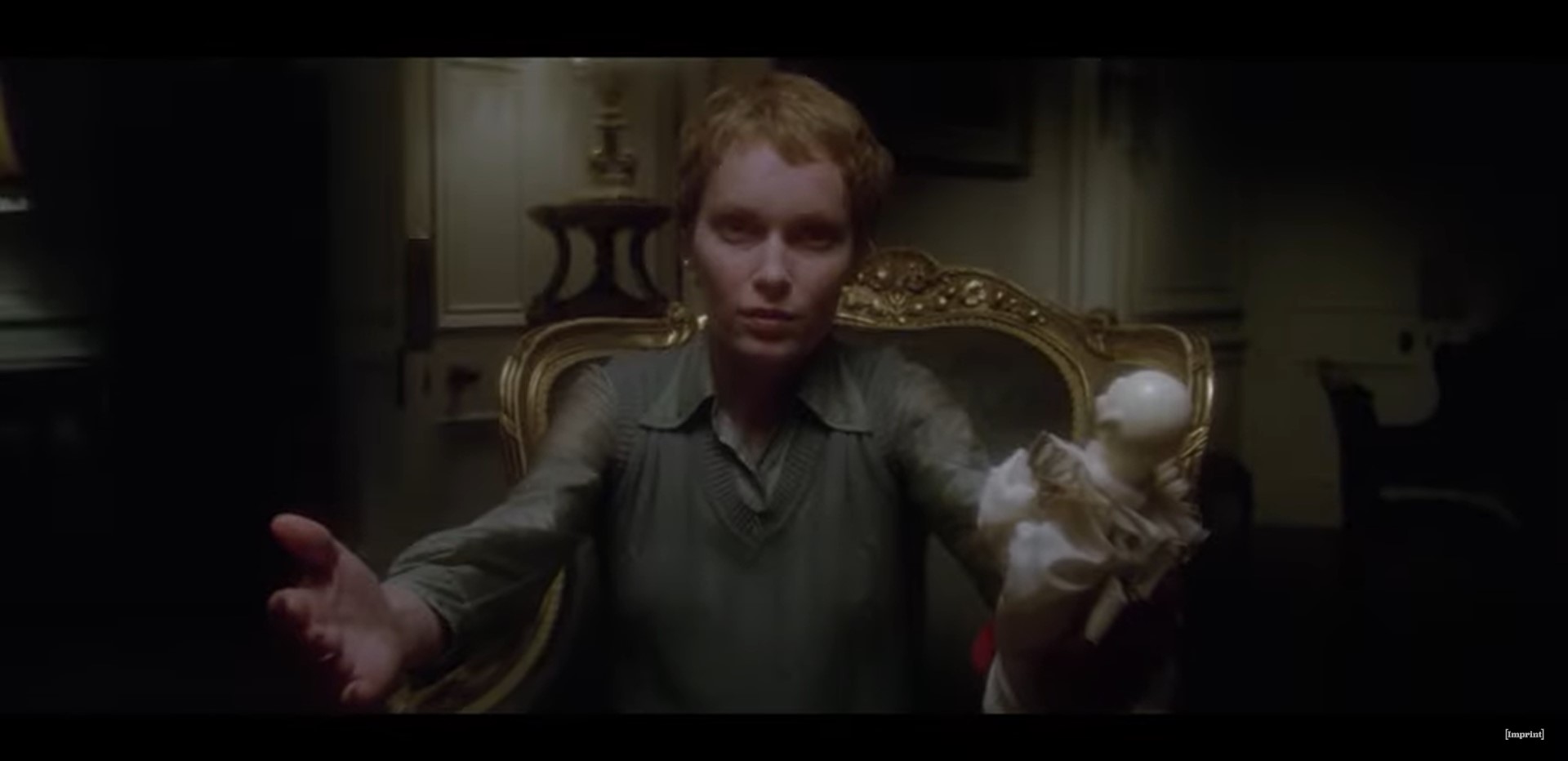
Mia Farrow’s distinct reactions and acting style very much engulfs the majority of horror experienced in “The Haunting of Julia,” as well as exhibited in “Rosemary’s Baby.”  The glassy eyed, long stares, the frightened, coiled emotions that swirl seemingly out of control, and the switch-gear ability to be strong and compliant in tense-riddled situations that just only involve herself in the scene.  While “Rosemary’s Baby’ and “The Haunting of Julia” may exact the same gothic aperture for child-themed horror and both are adapted literary works, “The Haunting of Julia” unfolds not in the anticipating of child birth but rather postmortem with the aftermath affliction of a child’s sudden and terrible demise that occurred in the frantic mother’s misguided embrace to take a knife right to her child’s jugular in hopes of dislodging an air denying obstruction.  This opening scene shocks us right into a grim framework that simultaneously divides trust and empathy for Julia as circumstances unveil what we might suspect all along, that Julia’s mental health suffered immensely.  What pushes Julia into undue stress is her controlling, dispassionate husband Magnus. Played by “Black Christmas’s” Keir Dullea.  Dullea pulls off the unsympathetic impassive father who just lost a child and can’t see the underlying psychological unrest his wife suffers.  In short, Magnus attempts to gatekeep Julia’s damaged psyche by trying to strong arm her back into normalcy, even going as far as manipulating Julia and his own sister Lily (Jill Bennett, “The Skull”) into slipping his foot into the door with a wife who fled from his grasp as soon as released from the hospital for essentially shutting down after their daughter’s death.  That toxic pressure is coupled with the seemingly unnatural incidences in her new home that clash her old life, chained to an unconsciously broken family, with her new life that seeks to decompress from a pair of diverse traumas.  “The Haunting of Julia” rounds out the cast with Tom Conti (“Blind Revenge”), Mary Morris (“Prison Without Bars”), Anna Wing (“Xtro”), Pauline Jameson (“Night Watch”), Peter Sallis (“Frankenstein:  The True Story”), Susan Porrett (“Plunkett & Macleane), Edward Hardwicke (“Venom”), and Sophie Ward (“Book of Blood”).

More or less forgotten by U.S. audiences due to no fault of the film’s own acclamatory measure or the audiences willing participation, the international produced “The Haunting of Julia” wasn’t publicized in the U.S. despite the two American leads – Mia Farrow and Keir Dullea.  Richard Loncraine’s film has incredible merit to the idea of a mother’s loss within the construct of gothic horror, which, in another aspect of unfathomable irony, resembled more closely to the American gothic style of the supernatural sequestered dark house.  Yet, this house is in London, wedged in like row homes, but as mentioned numerous times in the film, the house has distinction and grandeur that overlooks the buried ghostly history of the previous owners.  Julia absorbs the stories, filters through them, and comes to believe her own daughter is either trying to reach out to her or is hellbent on revenge for the amateur hour tracheotomy.  Loncraine does the phenomenal job of shocking our core with the early choking death scene of Julia’s daughter but once that dust settles, the pacing becomes more rhythmic to the point of building, slowly, Julia’s encounters with unknown forces that, at first, are just seemingly bizarre happenstances of left on bedroom plug-in radiators and playground visions of a girl that resembles her daughter cutting up another kid’s pet turtle.  These events play into their evident conspicuousness to push audiences deep into Julia’s mysterious milieu, officially sealing something isn’t right with the clairvoyant Ms. Flood’s scarred-screaming vision of a bloody child.  Julie become engrossed into learning the truth, eager to determine if that child is her late daughter and is fed tidbits of the house’s history that not only continues her own investigation but other research into other house tragedies that fork-split her presumptions.  As all this noise tornadoes around Julia, the stories, the occurrences, the deaths, viewers will never deduce to a reason closer to home, to Julia herself, until possibly too late at the end with a grisly open-ended finale that what Julia has been experience may have been done at her own forlorn hand. 

Atmospherically sound, undoubtedly creepy, and spearheaded by strong performances, “The Haunting of Julia” is the unspoken heroine of late 1970s supernatural horror – until now.  Imprint and Via Vision of Australia release a limited edition, high definition 1080p, 2-disc Blu-ray set with an AVC encoded BD50 of a new 4K scan transfer of the original 35mm negative. Presented in an anamorphic widescreen 2.35:1, the 4K scan is super sharp with virtually no compression issues on the formatted storage. Blacks, and negative spaces in general, are rich and void, despite Peter Hannan’s low-contrast and hazy surreal veneer that definitely plays into a psychotronic dreaminess. The resolution goes unaltered, and the natural grain maintains the original theatrical presentation for a revered 4k transfer. The English LPCM 2.0 mono track mix audibly delineates a viable one input split to make the dialogue and all other tracks comprehendible. Despite some slight here and there hissing, dialogue is amped up nicely for better resolved results that still remains mingled with the ambience in an all for one, one for all audio format. “Space Trucker’s” Colin Towns’s insidious and distinctly composed soundtrack reaches into the recesses of soul and strikes at the very nerve of fear with an unsettling score, perfectly suited for a mother drowning in the pitfalls of a supernatural sanctum. Optional English Hard-of-Hearing subtitles are available. The first disc special features include two audio commentaries – one with director Richard Loncraine and Simon Fitzjohn and the second, brand new, commentary with authors Jonathan Rigby and Kevin Lyons, new interviews with composer Colin Towns Breaking the Circle, cinematographer Peter Hannan Framing the Circle, and Hugh Harlow Joining the Circle, a new video essay by film historian Kat Ellinger Motherhood & Madness: Mia Farrow and the Female Gothic, the original trailer, and an option to play the film with either “The Haunting of Julia” or “Full Circle” opening title. The second disc is a compact disc of Colin Town’s 11-track score featuring 20 minutes of previously unheard music out of 60:52 of music. The limited-edition set comes with a neat lenticular cover on front of the hard box of what we assume is Julia’s ghost glaring at you from all angles as her eyes follow you. Inside is a clear Blu-ray snapper that’s a little thicker than your traditional snapper and comes with a built-in secondary disc holder. The cover art is simply Mia Farrow cowering outside the bathroom door but the reversible cover displays an original “Full Circle” poster as the front image. The disc arts are illustrative and compositions with the feature presentation disc the same as hard box lenticular without it being lenticular and CD pressed with Mia Farrow’s face in the background and a child’s cymbal banging toy in the foreground. Also in the hard box is a 44-page booklet feature an historical background essay by critic/writer Sean Hogan that has black and white and color photos and various poster art. The film, which comes in as Imprint catalogue # 218, runs at 97 minutes, is unrated, and, is assumed, for region A playback as it’s an Australian release – there is no indication on the package. “The Haunting of Julia” is Mia Farrow’s shining, yet lost effort post Roman Polanksi and is a remarkable look at subtle disconnection from extreme guilt when in every corner, every sign, is thought to be about your lost child.

Limited Edition of “The Haunting of Julia” Available at Amazon.com!


EVIL in the Family Tree Makes for a Terrifying “Reunion” reviewed! (101 Films / Digital Screener)

Recently separated from her philandering fiancé, a pregnant Ellie moves in with her estranged mother, Ivy, whose staying at Ellie’s recently-deceased grandparents family home and packing up home furnishings to put the house on the market.  Strained with going through a pregnancy alone and tirelessly working on her theoretic book of modern medicine deriving from the roots of barbaric magic and medieval practices, Ivy pledges to take care of her while providing space to let Ellie continue research work, but the house lends to the painful memories long thought suppressed in Ellie’s mind, manifesting visions of her adopted sister, Cara, who died suddenly in house when they were children.  As the visions become more prominent, stronger, and real, Ellie questions her remorseful memories and her mother’s recollection of events that sheds light on her family’s horrendous secret of anatomical science.

From the start, the realization that Jake McHaffy’s “Reunion” isn’t going to be a happy one comes as soon as Ellie crosses the threshold into her late grandparents’ home and is immediately swathed with a blanket of unsettling ambiance.  The “Wellness” and “Free the Deed” McHaffy writes-and-directs his third film with a steadfast sense of dread in the New Zealand mystery-thriller that tackles human inbred themes of long suffering guilt, prenatal anxiety, and the role of an estranged family during a time of need.  McHaffy compounds layered fears by compositing them with the confines of an old dark and creaky house witness to all the past secrets.  “Reunion” is a production from a conglomerate of New Zealand and U.S. companies that embark on independent filmmaking endeavors by Greyshack Films, the strong female character supporting Miss Conception Films, Overactive Imagination, and Water’s End Films in association with New Zealand Film Commission, MPI Media Group, and Department of Post.

“Reunion” obviously isn’t going to be your typical relative gathering shindig with your bad joke-telling uncle wisecracking over his 10th Miller Lite or a nose picking brat of a cousin cheating at horseshoes near the pit; instead, “Reunion” a tightknit cast playing the roles of mother, father, daughter, and adopted daughter drawn together not by the sake of longing for bloodline companionship but by necessity and circumstance and imploding by the unfun games of revelations hidden inside the closest deepest and darkest of descendants. “Witches of East End” stars Julia Ormond in a nearly unrecognizable far cry of her more glamourous bewitching role in Joanna Beauchamp on the FOX produced Lifetime Television series. The English actress, who hails from Surrey, assumes the matriarchal presence of a helicopter mother overextending herself beyond the limits of her control in order to seize some kind of power she once had living in the archaic house. Ormond bounces off mother-daughter indignities with her sole child, Ellie, played by Emma Draper in her first feature lead performance. Thick tension between them causes reserved friction Ormond and Draper do well to nurture throughout while a stammering posture by “Lord of the Rings” actor John Bach as the wheelchair bound infirmed father adds a whole new layer of irregular rigidity to Ellie’s nerves and to Ivy’s patience. Aside from being blood related, father, mother, and daughter also have another thing in common – present in the moment of the death of Cara (Ava Keane). Peeling back each emotion output struggles, in a good way, to grasp the character mindset made murky by uncontrollable shaking and crying, sneaking and conniving, lies and deceits, and the disillusioned rambles that vortex around the house without pure clarity. “Reunion” rounds out the cast with Nancy Brunning, Cohen Holloway, and Gina Laverty as young Ellie.

Jake McHaffy’s “Reunion” has the hairs on the back of your neck standing from beginning to end with prolonged foreboding leading up to a shocking finale.  Between the manic and enigmatic performances from Julia Ormond and Emma Draper, a chance to rekindle the past feels like a distant thought and a lost cause being blockaded by the past’s poignant trauma they share.  McHaffy isn’t hesitant about revealing a stymieing history with flashes of image splices and flashbacks cut with an antiquated VHS-style playback producing a statically charged visual incumbrance.  The stress and strain burden’s Ellie’s pregnancy, dam breaking flood of memories, her research into the occult, and the surrounding chaotic state of the house contributes to teetering mental stability creating a visceral unintelligible and augmented reality that is too real for Ellie to keep an authentic perspective and the longer she stays and the more she’s immerse into Ivy’s poisonous maternal supremacy, only fabricating a new and scary world can Ellie dig herself out of her family’s troubling past.  There’s much going on in McHaffy’s story to be bog down fully understanding what you’re seeing and trying to piece together the puzzle is nearly impossible – I, frankly, still don’t understand much of it – but the beleaguered attention of beguiling imagery and that overwhelmingly wild ending entrusts “Reunion’s” place in psychological terror. 

Modern gothic has never looked this good as “Reunion” rises to be a stalwart of horror. 101 Films and MPI Media Group has released “Reunion” digitally this month of March, one year after the start of the pandemic that has kept families away from each other and when eases of restrictions set in that’ll shorten the gap between estranged loved ones that becomes a distressing reunion in itself. Quite a masterful brush stroke from director of photography Adam Luxton building the house into the frame and framework of the story, which goes hand-and-hand with a house that’s deemed a toxic surrounding symbolized by the black sludge that drips out of the sink and into Ellie, as well as crossing video outputs and weaving them in as well. Luxton’s imagery has formulation maturity that combines hard and soft lighting, blurring, a range of depth shots, delineated night scenes, and the capitalization of utilizing the clutter of boxes and knickknacks to tell an eclectic visual odyssey culminating toward an all-consuming finale. The 95 minute runtime film is presented in a widescreen 1.85:1 aspect ratio with no bonus scenes during or after the credits. “Reunion” creeps unsuspectingly into the skin, eyes, and soul as a metastasizing slow growth of appalling family drama.

A Disciple of EVIL! “The Brides of Dracula” reviewed! (Scream Factory / Blu-ray)

Marianne Danielle travels alone on the mucky and fog-riddled roads of Transylvania, traversing from France to be a student-teacher at a prestigious dance school for girls. When her coachmen departs without warning, leaving her stranded at a village inn, the Baroness Meister extends an invitation for Marianne to stay with her an the illustrious manor house, but the sign of compassionate hospitality turns into a near deadly encounter as Marianne discovers the Baroness’ son, the Baron Meister, chained against his will in an isolated room. As Marianne is tricked into removing his shackle, she unwittingly releases a conniving vampire into the surrounding village who prays on young women, but, nearby, Dr. Van Helsing has been summoned the Transylvania countryside by the local priest to hunt down the disciples of Dracula, the most powerful vampire Van Helsing had fought and prevailed. In order for the vampire plague to not spread like a virus, Van Helsing will stop at nothing from slaying the Baron Meister to stop the metastasizing of Dracula’s curse against mankind.

Let’s take a step back into time, 1960 to be exact, when Hammer Horror brought a flair for the dramatic to iconic monsters, lush with not only vibrant color schemes, but also in elaborate production designs that scaled the imagination while evoking fear of Satan’s most prolific profaner, the vampire, in Terence Fisher’s “The Brides of Dracula.” The sequel to “Horror of Dracula,” starring Christopher Lee as the titular character, staked vitality two years after the first film’s success and sought to return Peter Cushing back into the good doctor’s shoes once again to battle evil. Shot on lot at Bray Studios and with the grand house exteriors of the nearby Oak Court, “The Brides of Dracula” had greatly masqueraded the elegance and sophistication of the gothic design, bringing settings to life with monumental attention to detail. Before the shooting draft was ready, the script saw numerous rewrites which caused the narrative to fall into numerous hands and, so, the script is built on an overlapping composition of writers, such as Jimmy Sangster (“Horror of Dracula”), Peter Bryan (“The Plague of the Zombies”), Anthony Hinds (“The Curse of the Werewolf”), and Edward Percy. Hinds financed the film under Hammer Film Productions in association with Universal International.

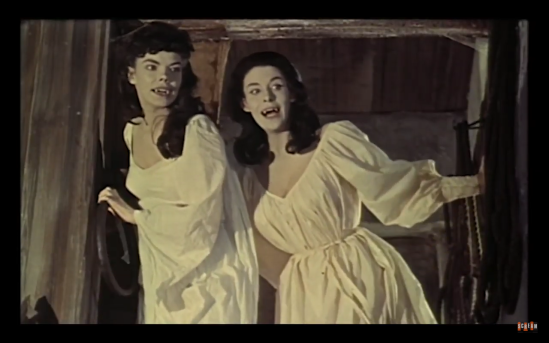
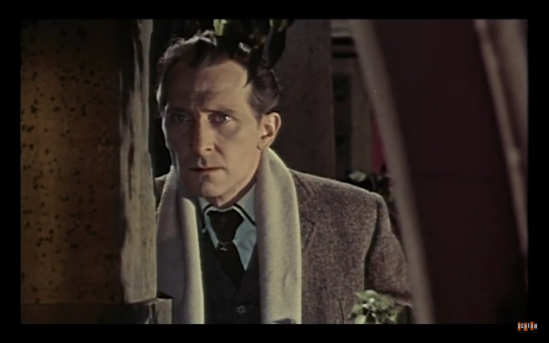
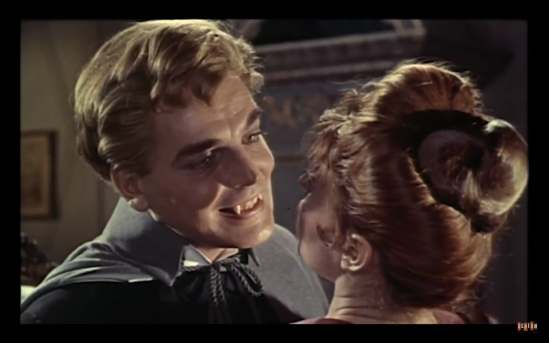
In stark contrast to Christopher Lee’s dark veneer that ennobled Dracula’s arcane and evil presence, David Peel brought a different kind of vampire stemmed off of Lee’s main bole as a disciple of the Prince of Darkness turned because of the Baron Meister’s uninhibited living the life of Riley. With blonde hair and a lighter complexion, Baron Meister became something of a pretty boy vampire that definitely propelled Peel into something of a sex symbol after the film’s initial release. While Peel’s terrific performance goes without wane, Baron Meister sticks out like a sore thumb with the lighter hair color and babyface dermis. The Meister is hunted down by the one and only legendary vampire hunter, Dr. Van Helsing, from Bram Stoker’s novel. Peter Cushing revives his performance from “Horror of Dracula” with a another meticulous and defining act that epitomizes the character’s nature as a knowledgeable and dignified combatant against the dark arts. Cushing versus Lee is the epic King Kong versus Godzilla faceoff that doesn’t leave much room for David Peel in a fight that’s more like King Kong versus King Koopa. The leading role went to French actress Yvonne Monlaur who, at the time, spoke really good English with a thick accent. The “Circus of Horrors'” Monlaur added beauty and innocence being ruthlessly taken advantage of as the hapless Marianne Danielle. With striking red hair and definitely a sex symbol, Monlaur was paraded as one of Hammer Horror’s finest leading ladies to ever grace their terrorizing tenure in genre. “The Brides of Dracula” has a supporting cast like none other with performances from Martita Hunt as the Baroness Meister, Freda Jackson as Baron Meister’s Renfield-like caretaker, Andree Melly as Marianne’s colleague, Gina, Miles Malleson as a greedy blowhard physician, and Mona Washbourne and Fred Johnson as the dance school’s proprietors.

“The Brides of Dracula” has lush, expensive looking production designs from Bernard Robinson that delicately acknowledge a 19th century coach and buggy society and creates a gothic tincture to brood in the bat-flying, eye-catching, blond-haired vampire sinking his canine’s into the untarnished flesh of young women. Yet, Fisher’s follow-up doesn’t add anything to the vampire etymology nor does it tack onto the mythos and, instead, clings barely to a compelling good versus evil narrative closely suited more toward one of the working titles, Disciple of Dracula. “The Brides of Dracula” bewilders as a final title that not once broaches the women stalked by the bloodsucker who seems to attack the random village virginals and, also, barely references Dracula, whom the harem of titular vampires are not at the crook of his pale elbow, but the now 60-year-old film, which I can still remember seeing on television back 30-year-ago, remains as one of the most memorable Hammer productions. Was it because of the enriched looking, old-fashion look? I’d say yes. Was it because of the soap opera designed performances that lavished in melodrama? I’d say yes. Was it because of the undertones of lesbianism, rape, and other taboo-esque themes? I’d say it was all of the above that drove “The Brides of Dracula” in not only being an opening day success but also encapsulating the legacy of Hammer Horror.

“The Brides of Dracula” is the unholy, unceremonious matrimony from hell and has come far from its run on the television with a new high definition Blu-ray collectors edition from Scream Factory, the horror sublabel of Shout Factory! Presented in two formats, a widescreen 1.85:1 and standard 1.66:1, the Blu-ray sustains the deluxe technicolor through the high-res, 1080p, video image that went through a new 2k scan from the interpositive master and absolutely appeals to the visual cortexes with an extensive color palette and very miniscule film imperfections from a super preserved 35mm stock. The English language DTS-HD Master Audio mono track is a resounding success with a grand big band score from debuting composer Malcolm Williams that juxtaposes significantly with the dialogue to only be a support device rather than be a main stage act. With many Scream Factory releases, “The Brides of Dracula” comes with exclusive and previously recorded special features included a new audio commentary with film historian Steve Haberman and Constantine Nasr, a making-of the film that includes a graveyard introduction goes into interviews with the late Yvonne Monlaur, screenwriter Jimmy Sangster, assistant director Hugh Harlow, continuity supervisor Pauline Harlow, art director Don Mingaye, model maker Margaret Robinson, and producer Anthony Hinds, and rounds out with a still gallery and theatrical trailer. The Blu-ray is sheathed in a cardboard slipcover with a cover illustration by Mark Maddox and inside is a reversible front cover. Irrefutably a classic, despite some quirks, “The Brides of Dracula” is vintage vampire stock, a pedigree of it’s time, of hallmarking the classical villain in a different, blonder light.

Own the collector’s edition of “The Brides of Dracula” on Blu-ray!