Dolly Deadlies Exact an EVIL Revenge! “Doll Graveyard” reviewed! (Full Moon Features / Blu-ray)

“Doll Graveyard” Available for Purchase Here!

In 1911, little Sophia is accidently killed by her verbally abusive stepfather.  He buries her lifeless body in the backyard dirt along with her favorite toy dolls that were the subject of his current tirade.  Nearly a century later and in the same house, Deedee, a teenage high school girl, throws a small party with friends while her father is out for the night.  Her action figure-enthusiastic little brother Guy discovers one of buried dolls in the backyard.  When a couple of older high school boys bully Guy, the spirit of Sophia emerges and pendulates possession of Guy’s mind and body, resulting in the turning of inanimate dolls into killers come alive to protect a hurt Sophia.  Drugs, alcohol, and teen sex quickly come to an end by a seize of small, dangerously armed toys hellbent on spilling blood just to protect a hurt little girl.  Those left still standing must find a way to reverse Sophia’s revenge.

Charles Band’s obsession with toys, dolls, dwarfs, goblins, or a sundry of the mix has yet to slow down his 50-year-career in making independent movies.  The now 72-year-old Band can sit on top of his Full Moon empire and enjoy his repertoire of ravenous rascal horror, including “Doll Graveyard,” the 2005 standalone doll slasher that’s not too dissimilar from the likes of Band’s foremost and unremitting doll franchise, “Puppet Master.”  Band directs the film based off his story and a screenplay treatment by the late director Domonic Muir, credited under the pen name of August White, in what would be one of his first few films with Full Moon in the first decade.  Muir also wrote “Critters,” “Evil Bong,” and venture into the “Puppet Master” series before his untimely death with pneumonia.  Band would produce the feature alongside Jeremy Gordon and Jethro Rothe-Kushel, filmed in Hollywood, California.

A small cast is all that’s required when the dolls resurrect and begin their assault on the youth with their individual ability.  At the story’s core is Guy, an action-figure enthusiast played by Jared Kusnitz (“Dance of the Dead,” “Otis”), and his older sister Deedee, an angsty, boy-hungry, rule-breaker played by Gabrielle Lynn.  Guy and Deedee play the trope fatigued dynamic of a feuding brother and sister complete with blackmail attempts and lots of name calling, opening the door of opportunity to connect in a time of great adversity – in this case, a living doll assault.  Then, of course, no slasher can go without the kill fodder and “Doll Graveyard” has a group of partying teens who come over after Guy and Deedee’s single parenting father, played by Ken Lyle (“Foreseen”), goes off on a date.  Their sneaky, adolescent transgressional gathering of beer drinking, pot smoking, and foreplay into possible copulation is driven by Deedee’s promiscuous best friend Olive (Kristyn Green, “Evil Bong”), a tagalong, morally incorruptible Terri (Anna Alicia Brock), and party-crashing jocks with the insatiable horny Rich (Brian Lloyd, “Candy Stripers”) and Deedee’s lover boy Tom (Scott Seymour, “Garden Party”).  Muir’s story does attempt to branch out from the conventionally themed pathway of authorized partygoers meet their doomed fate with sidebar weaving of past, present, and future relation connections.  Olivia and Rich once had a casual romp that has faded and Rich seeks more difficult challenges with the more prudent Terri while Terri has puppy dog interests into the younger Guy as they share some similar interests.  Meanwhile, Deedee and Tom take their relationship to the next level with precuring steps toward the bedroom that signals the beginning of he end, as the old recurrent theme goes.  The “Punk’s Dead: SLC Punk 2” and “The Amazing Spider-Man” actress Hannah Marks, who makes her film debut in the Charles Band’s film, rounds out the cast as young and unfortunate Sophia.

Eventually, one must ask themselves how many times can someone reinvent the wheel and still think it’s new, innovative, and fresh?  With Charles Band’s proclivity for small malevolence, especially in dolls or puppets, the one of the faces in venerable horror filmmaking has, in a broader sense, regurgitated the same movie over the decades now, tweaking bits and pieces here and there to make it ever so delicately unique.  Yet, “Doll Graveyard” feels very much like an extension of “Puppet Master” without bringing new elements to the table or even really linking “Doll Graveyard” to Full Moon’s more popular, longstanding franchise “Puppet Master,” which is essentially the face of the Band’s company.  We see Blade, we think Full Moon.  We see Six-Shooter, we think Full Moon.  We see Tunnler, we think Full Moon.  But if you show me “Doll Graveyard’s” rustic Samurai or The German with spear tipped helmet, coming around to Full Moon may not be the first to pop into the old thinker.  The story also feels a bit half-baked with the dolls coming to life by unexplained means and audiences would really need to put effort into surmising a reason, such as my own theory that Sophia’s departing soul, trapped beneath the dirt, absorbs into the dolls, giving them animated life and loyalty to Sophia.  None of that hypothesis is authenticated and we’re stuck with little-to-no answers in a film created for the sake of creepy dolls doing creepy things to creep out some cretin kids.

Those suffering from pediophobia probably should stay far away from “Doll Graveyard.” For everyone else, “Doll Graveyard” is now available on Blu-ray home video from Full Moon Features with AVC encoded, 1080p high-definition, single-layered BD25. Presented in a 1.78:1 widescreen aspect ratio, back cover states transfer elements were remastered from the original 35mm negative. The original negative print has withstood the test of time with no visually acute damage, granted the print is less than 20-years-old; however, there is noticeable dust and dirt speckles, some of which measure more toward a vertical tilde. Textures are softer than expected for a rather young film in the grand scheme of cinema with rounded and smoothed over contours, especially around defining facial features, that create more of a splotch than an edge. A bright spot is the palette with a diffusion and delineation balance around stock lighting. The lossy English Dolby Digital 5.1 mix is difficult to distinguish between the other audio option available, a Dolby Digital 2.0, as there’s not enough atmospheric or ambient rampage in the side and rear channels when dolls go deadly, which is mostly in the medium closeup to extreme closeup range. Taking hold of the audio reigns, mostly, is the District 78 soundtrack. Likely where the remastered elements come into play with its gothic rock opening credits score, this Charles Band production trades the jaunty carnivalesque for reinforced horror theme elements of isolated piano and electronic notes the musical production has accolades for and this translates throughout when presenting the dolls ominously and when they strike and into the coda credits with a full-on instrumental rock and wordless vocal background piece that’s very circa 2000s. English subtitles are available to select. Special features include a making-of featurette with snippet interviews from the cast with an introduction from Charles Band, a blooper reel, and the trailer amongst other Full Moon prevuews. There are no after or during credit scenes. The traditional blue Amaray goes along with the current Full Moon remastered trend of their horror catalogue with yellow-green primary art, no inserts or tangible features, and a disc press cropped of the focal primary cover art. The region free release has a brisk runtime of 73 minutes and is not rated.

Last Rites: A pedestrian, pale comparison to Full Moon’s maniacal line of moppets, “Doll Graveyard” stands far too short being the lower rung runt among giants in the company’s lineup.

“Doll Graveyard” Available for Purchase Here!

Screenland’s Bright Lights Can Turn One Lonely Man EVIL! “Hollywood 90028” reviewed! (Grindhouse Releasing / 3-Disc Blu-ray and CD)

“Hollywood 90028” 3-Disc Collector’s Edition Can Be Preordered Here!

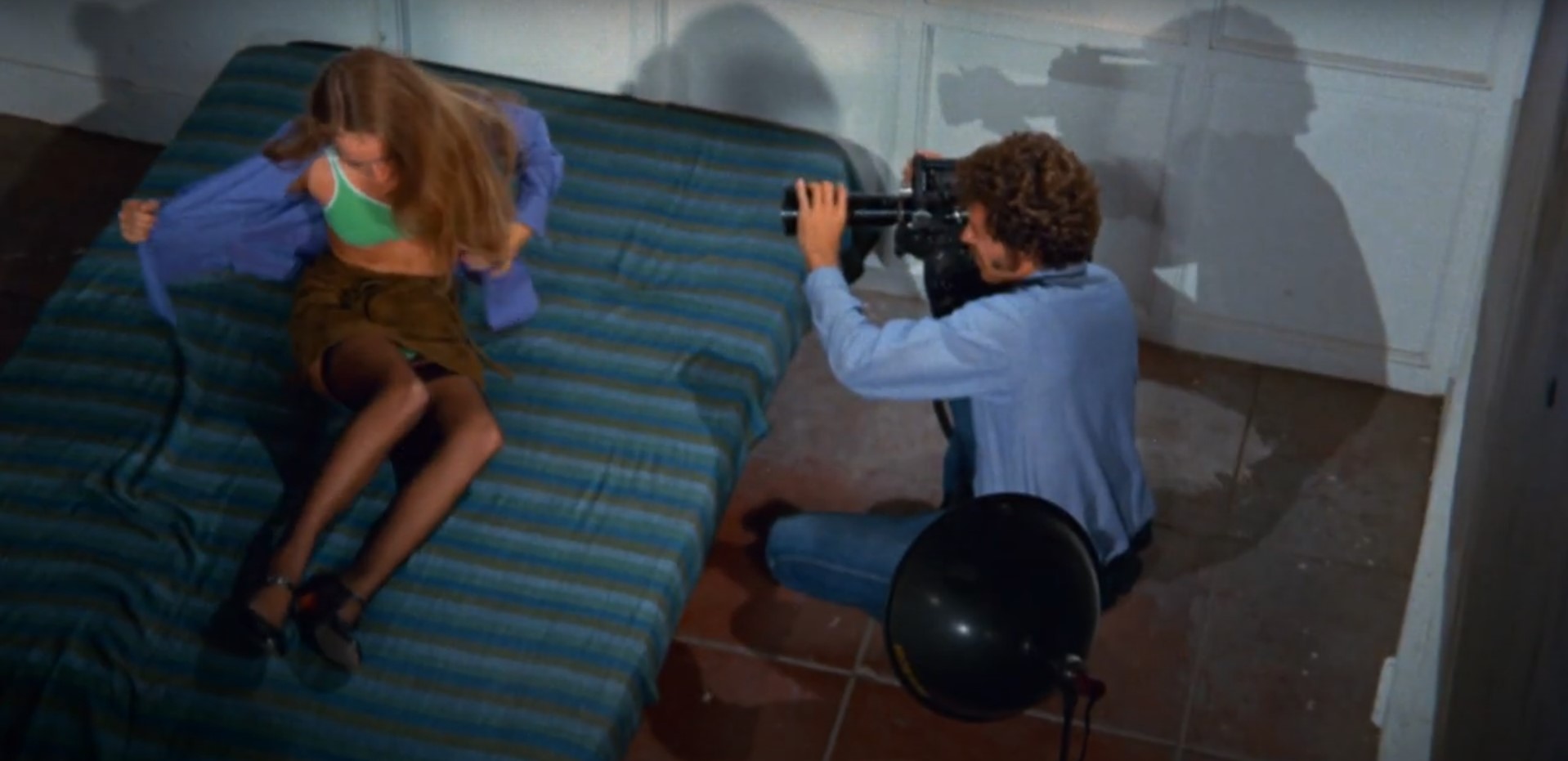
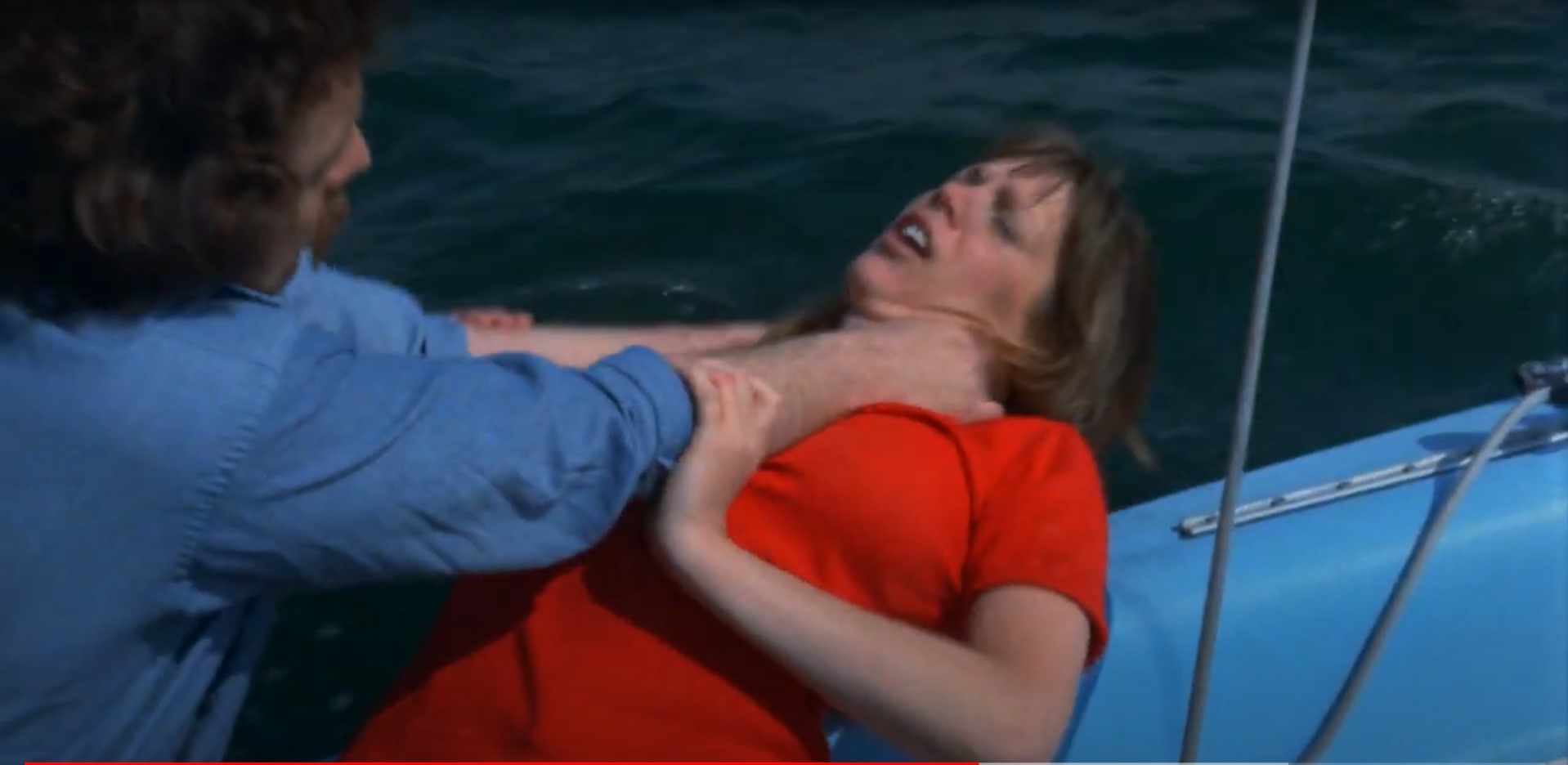
Having moved West from a small Ohio town a few years back, photographer and video cameraman Mark found himself stuck shooting nudie reels for a low-budget porn producer.   A solitary life lends Mark more freedom then most to wonder about and driver around on the streets of Hollywood with ambitions for a legit job of shooting regular material that doesn’t humiliate him.  Troubled about his childhood past involving the death of a younger brother and with his frustrations within his video film capturing vocation, Mark finds himself in the company of young, attractive women who find him easy to talk to and attractive as well, but when Mark reaches a limit, aberrant thoughts take over and he strangles them to death.  When he meets starlet Michele on one of his shoots, Mark believes he’s found the woman for him, one that can relieve the pressures of life and work with nothing more than her beauty.  For Mark’s abnormal mind, love at first sight might not be that easy.

Writer-director Christina Hornisher tackles trauma induced behavior and the Hollywood pull of small-town aspirations chasing dreams in the drama-suspenser character piece of “Hollywood 90028.”  Hornisher’s debut feature film released in 1973 also became her only feature credit as a director who supplied arthouse substance but also embodied a different kind of substance, the grueling confiscation of hope for work, stardom, and love, perhaps even sliding into a bit of escapism, as the bright lights of Hollywood draw the flies to the flame.  Shot on location in and around the Hollywood, Los Angeles area that also had scenes fillmed directly at and underneath of the self-referential hillside Hollywood sign landmark before the iconic, globally recognized attraction had been fenced-off with visitation restrictions post-film in the 1980s and further protected with security systems in the mid-1990s.  Hornisher also self-produced the film which was also known under alternate titles as “The Hollywood Hillside Strangler,” “Twisted Throats,” and “Insanity.” 

Christopher Augustine, who would also have a part in “The Doll Squad” of the same year, played Mark the calm and restrained pornography cinematographer and editor.  Not as sleazy as his title, Mark’s reserved nature doesn’t stop him from photographing and working diligently on splicing film without completely cutting off from the world but does make him quiet, observant, and intriguing, or so does Michelle thought.  Michelle’s a smalltown girl who moved West to work in the fame industry who soon finds herself being financially forced out of legit paying gigs for more sordid, sleazy work.  Played by Jeannette Dilger, who would actually have a role in the adult film “Young, Hot ‘n Nasty Teenage Cruisers” a few years later, she would spark chemistry with the mustached Augustine that allows their Mark and Michelle to fall in love that isn’t amorously glamorous but has innocent notes of flirtation and a lot of walk-and-talk realism onscreen relationships tend to omit.  Hornisher determines Mark to be the centerpiece of her character study.  Every scene caters to Mark’s interactions with Michelle, his professionalism with sleaze producer Jabol (Dick Glass), and the two other women he meets and eventually strangles.  Where Hornisher isn’t her best is in the building up of Mark’s suppressed sociopathic behavior, stemmed from a brief opening montage of a preteen Mark and his large family that implies his involvement in the accidental death of a younger brother, with ever delicate triggering that doesn’t solidify calling back to his aggressive-resulting trauma.  “Hollywood 90028” cast rounds out with Dianna Huntress, Beverly Walker, Kia Cameron, Ralph Campbell, Melonie Haller and Gayle Davis.

Though her first feature credit, Hornisher had the makings of a competent, auteur filmmaker.  “Hollywood 90028” evaded the conventional narrative structure and one-trick pony photography with more arthouse ambition that saw not only panning and tracking in her cinematic cache, but a stunning and incredibly quick finale zoom out from the Hollywood sign of smooth drone quality but completed in 1973 with a helicopter soaring over the Hollywood district.  Use of spliced-in cells of modeled sex representation as well as sign denotations of the character’s dialogue and thoughts, a kaleidoscope lens utilized during an intimate love scene, and the greater use of off-screen dialogue over on-screen conversating creates a thin layer of psychological realism in contrast to the actual realism between Mark and the rest of the characters.  Mark’s sullen display of emotions throughout the story culminates with his unconscious destructive demise after finally expressing a sliver of elation with Michelle but that’s also when he realizes that his tragic past and present psychosis will never let him go and will destroy anything that tries to replace it.  In one theory, Hornisher might have kept Mark in the same clothes throughout most of the picture to depict a deranged mental image; his constant choice of clothes is a hangup that can’t be let go for sharp-eyed viewers who wish he’d change out of his denim, long-sleeved shirt and denim jeans.  Unlike Mark’s unchanging denim statement, Hollywood in Hornisher’s film is a city captured in time; much like the Hollywood sign had gone from an area of loitering to now protected from the public, the fornicated fleapits and the colorful and character-building structures of Hollywood have long since been razed and rebuilt into the more glamourous, if not still snakebitten, Hollywood you see today. 

Grindhouse Releasing has gone the extra mile in not releasing a standard version of “Hollywood 90028” with standard fare and a rink-a-dink, barely passing muster transfer, but releasing a definitive chef-d’oeuvre of this lost Christina Hornisher film.  The new 4K restoration created from the original 35mm negative makes a statement that they underrated, underappreciated and the underbelly of indie cinema will not be ignored and, instead, be celebrated in retrospect, recoloring, and painstaking supervision in the efforts of all areas of rejuvenation.  The 3-disc, Blu-ray and CD set has an AVC encoded, 1080p high-defintion, 50 gigabyte capacity on the feature disc.  Presented in anamorphic widescreen 1.85:1, the Grindhouse Releasing restoration gives “Hollywood 90028” a fresh coat of paint on a precise saturation spectrum and illuminates details from the limitations of untouched, processed 35mm triacetate.  The original negative appears to have survived the test of time with barely perceptible, thin vertical scratches that were more sporadically sparse than a nagging nuisance.  Grain’s healthy and natural looking in the overlap and the contrasts levels clarify stark delineation and depth, attributing to finer details on textures and skin tones when mostly interior scenes.  Exteriors lose some definition because of the natural lighting and contrast levels typically lower to more create deeper shadows and amalgamation between object and background.  Video bitrate decodes a nice low 30s Mbps. The back cover does not provide explicit specs for the audio but my setup picks up the English language mix as a DTS-HD master audio stereo (the menu setup states mono) is the adequate acquaintance to the visual elements with an ADR dialogue recording, that to note has nothing to do with the release’s presentation, does feel detached in some regard to the visual character temperament despite its well-preserved clarity and projection, but the real star of the audio makeup is the Basil Poledouris (“RoboCop”, “Starship Troopers”), remastered by Jussi Tegelman soundtrack that is a delicate and absorbing mix of piano, wind-instrument, and percussive that reflects Mark’s wondering loneliness and reserved longing as well as introducing jazzier sax and guitar tracks for livelier montage moments.  Suddenly, we’re thrust into string-laden, semi-dark and low-tones for Mark’s buried spiraling. English subtitles are available.  Grindhouse Releasing had some so bonus content they added a second disc with the first containing audio commentaries with film enthusiast Marc E. Heuck, the film’s editor Leon Ortiz-Gil, and cult and porn director Tom DeSimone who attended UCLA with Hornisher, the original, unrestored, X-rated alternate scenes, Christina Hornisher’s experimental 16mm short films, cameraman outtakes, still galleries, radio spots and trailers under the “Hollywood Hillside Stranger,” the “Hollywood 90028” trailer, and the Grindhouse Releasing coming attractions.  The second disc contains retrospective interviews with stars Christopher Augustine, Jeannette Dilger, Gayle Davis, and editor Leon Ortiz-Gil in a near feature length making-of, a theater presentation discussion with Christopher Augustine, and a Tom DeSimone retrospect on Christina “Tina” Hornisher.  The third disc, a soundtrack CD of Basil Poledouris eclectic composition, is 17-tracks deep and comes in a customer sleeve inside the beautifully illustrated and tactile slipbox.  Instead, a slightly larger than normal Blu-ray Amaray case without the Blu-ray logo with the original poster art as primary cover with the new slipbox art on the reverse side.  The Blu-rays set on top of each other, staggered, on the right side while the left houses a 24-page booklet filled with color pictures, poster art, and historical, anecdotal, and analytic context essays from Marc E. Heuck, David Szulkin, Richard Kraft, and Jim VanBebber.  Grindhouse Releasing’s region free “Hollywood 20008” hits retail and online stores November 26th and has an 87-minute runtime under it’s not rated package

Last Rites: Grimy Tinsel Town sets the backdrop and insidiously swirls inside the mind of the forefront encased and bejeweled inside a Grindhouse Releasing special that’ll never have you look at Hollywood the same again.

“Hollywood 90028” 3-Disc Collector’s Edition Can Be Preordered Here!

Evil Wants to Make a Triple Feature! “The House with 100 Eyes” review!

vlcsnap-2015-06-06-11h32m06s156

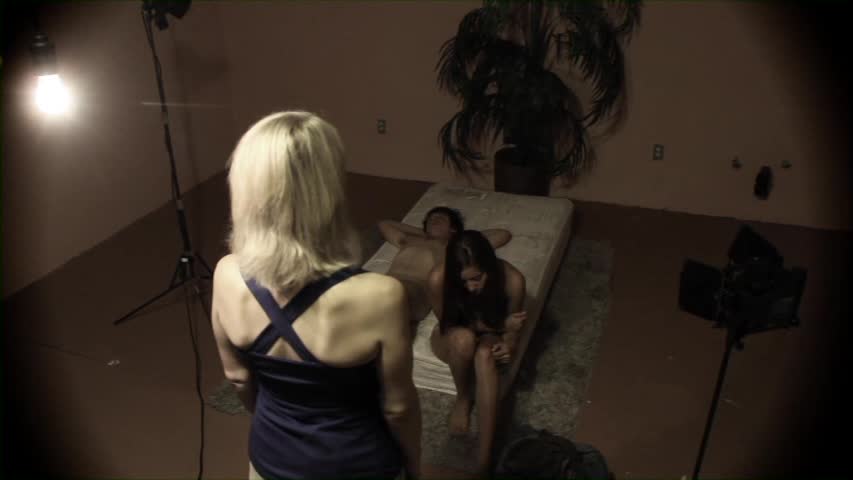
Anything goes in Hollywood, California and anybody can be a star. Just ask amateur filmmakers Ed and Susan, an average middle class married couple, who are searching the streets, scouting for their three actors to star in Ed and Susan’s Red Studios produced snuff film. Ed is hellbent on making his next film a never before seen triple feature – three kills in one night. After days of scouting the streets and coming up with no potential stars, Ed and Susan finally happen upon three homeless youths and offer them $500 each to star in, what the believe to be, just a harmless porno film. Things don’t go as planned as what was suppose to be Ed’s perfect triple feature night turns to be a nightmare for all parties involved. The story is told through Ed’s staged house cameras and the cameras have a night of death to tell.

I’ve only experienced one other Jay Lee directed movie prior to “The House with 100 Eyes” and that was with “Zombie Strippers!” starring Robert Englund and Jenna Jameson and while I solely purchased that title for personal entertainment and didn’t write up a review, I remember “Zombie Strippers!” being ridiculously gory. Jay Lee hasn’t strayed too far from his element with “The House with 100 Eyes” and teams up with co-director and lead actor Jim Roof (who had a part in “Zombie Strippers!”) to bring gore and shock to a mockumentary about creating a snuff film.
output_jZcEEv
Unlike anything I’ve ever seen before, “The House with 100 Eyes” labels itself as horror-comedy, but in reality, the overtone deems itself more factual about the human condition. Married couple Ed and Susan couldn’t be any more realistically different; Ed is a sadistic psychopath who gets off on his addiction of suffering and murder while Susan’s more organized, structured, and satisfies her desires through death by poisoning. Not much information is explicitly given about Ed or Susan except tidbits shared by each character through self interview commentary; Ed grew up torturing animals and watching their reactions through the results of his torment while Susan went through a string of abusive husbands and her torment feels more man-made. Now while I’ve just described two very disturbed individuals, their marriage couldn’t be any more comically stereotypical; small marital spouts, sexual frustrations, “happy homemaker” wife, etc. Ed and Susan even have a pet – a young female victim named Maddie who had all her limbs severed and is probably going through Stockholm Syndrome with Ed and Susan. The comedy element is their marriage as it’s actually not a facade for making a horrific snuff film.
output_C6I5av
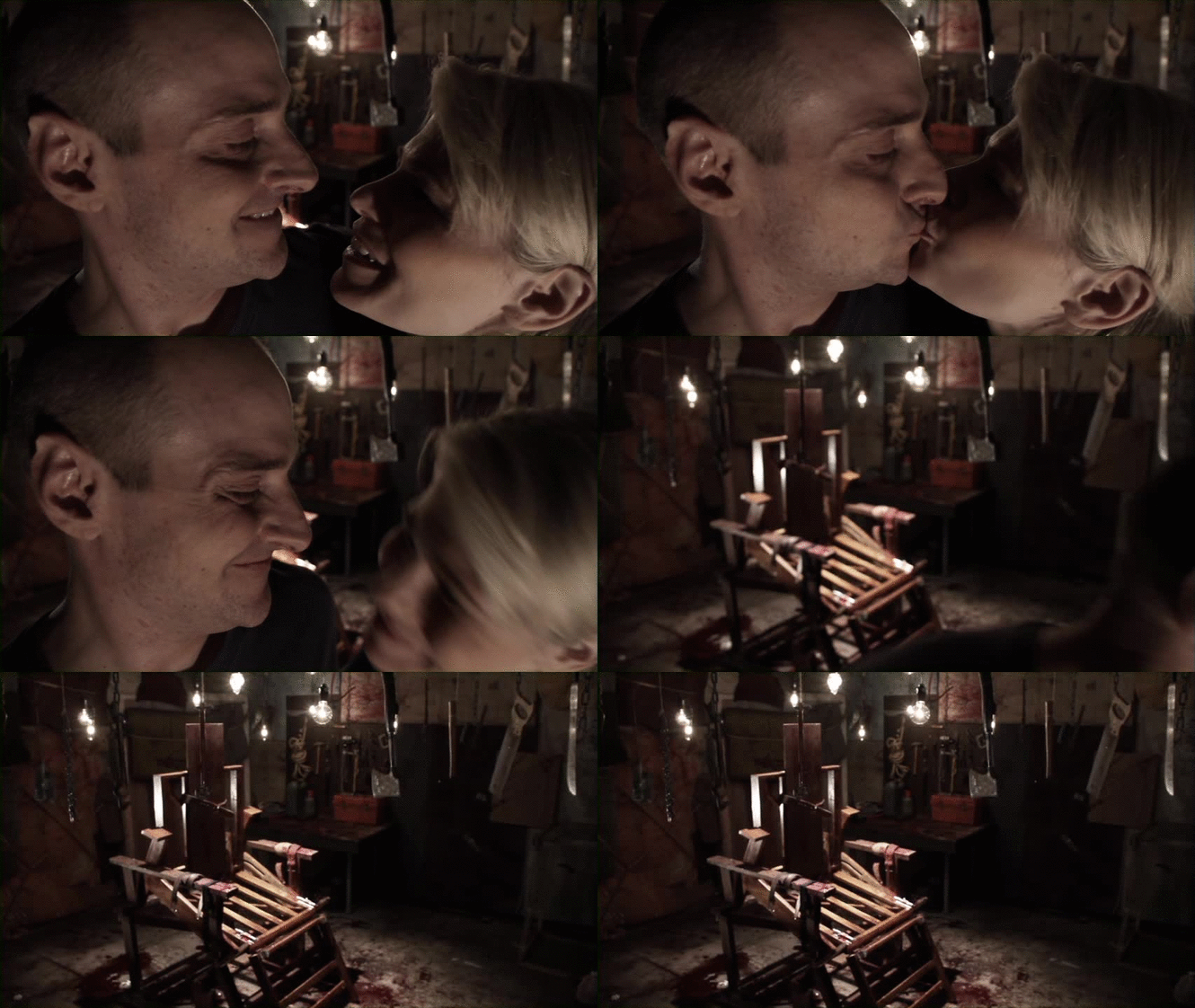
The gore brings the viewer back to the subject matter of the film and the effects couldn’t be anymore gut wrenching. Ed’s torture chair has to be the most frightful part of story, strapping in his victims and just going to town on them with whatever tool inspires him. Ed slices, dices, breaks, guts, hammers, and chisel aways until the very last breath and his merciless demeanor, conveyed very well by Jim Roof, sells icy cold-heartiness. While Jay Lee didn’t linger too much on the gory scenes, Lee’s ability to inflict the anguish of the quick shots by implementing screeching audio interference from one of Ed’s stand cams, heightening the reflection of pain of torture. Ed is well complimented by his wife Susan, portrayed by Shannon Malone, who is a wolf in sheep’s clothing. Susan might be pleasant and even tempered when compared to Ed, but once the sweet kiss of death reaches near her nostrils, she can’t help herself to take it upon herself to inject a vicious, blood-vomit inducing poison into her prey. This makes Susan just as deadly, if not more so, than Ed.
vlcsnap-2015-06-06-11h32m27s118
Now while I might be putting “The House with 100 Eyes” on a tall pedestal, I’m not too pleased with the intentional censorship of nudity. The purpose of Ed’s snuff film is for sexual gratification; he wants the double whammy of dirty sex and grisly murder. When the two lovers, Clutch and Jamie, remove their clothing, their privates are censored by close up framing or blurring out techniques. The censorship practice puts a damper on the film’s ugly subject matter, dumbing down and unbalancing the violence and the nudity. The way the filmmakers worked around this was a heed before the presentation that Ed’s tapes were all made public to expose, which the authorities thought were a hoax, the atrocities of Ed and Susan but the victim’s humility was to be kept intact.
vlcsnap-2015-06-06-11h33m19s123
Another miscue for me was the open ending, leaving the conclusion up for interpretation. I’m usually one for open endings, but the way “The House with 100 Eyes” set itself up in the beginning with the “public release” should have forcibly led to a closed ending, wrapped in a nice little red bow. The ending considers the audience to be left frightened or wondering if their support for the victims will be justified, but the ending was more of an abrupt cut away from what could have been a more effective, plot defining ending.

The Artsploitation Films DVD release runs an unrated 76 minute feature presented in a 1.78:1 widescreen transfer through many digital cameras accompanied by 5.1 surround mix. The film looked sharp and clear with only minor digital noise interference during some of the more darker scenes. The well-placed screeching audio was a nice touch for fear effect, but does become a bit ear-stiffening after prolonged use. On the inside of the DVD casing, a note from the directors Jay Lee and Jim Roof give you a bit of insight on what to expect and don’t sugar coat about the dark comedy. It’s purely a film about absolute evil.
vlcsnap-2015-06-06-11h34m05s73
Overall, Jim Lee and Jay Roof along with a solid cast deliver a cringe-worthy found footage mockumentary that mind behind the eyes of the malevolent and being very happy to do so with a evil smirk on their faces. Make sure you send your kids to be early before viewing the Artsploitation Films’ release of “The House with 100 Eyes.”

Evil Has Fallen Far From the Father Tree. “Auteur” review!

output_Si8AS4

A failed filmmaker sets forth to claim is stake in fame by creating a documentary about a legendary horror director who disappeared during his latest highly anticipated masterpiece “Demonic.” The filmmaker is hellbent on finding the director and discovering the truth on why the director had a melt down during filming and stole all the film’s footage. After sitting down with various interviewees and finding the long lost director, this film has become notorious for it’s dark background of death that surrounded some of the cast and crew and their families. The notion seems to becomes evident that “Demonic” should have never been made and that some films should never be released or else more peoples’ lives would be in grave danger.

I surely wanted to believe that Cameron Romero had the same masterful skill set as his father George or also I wouldn’t have mind if Cameron went into a total opposite direction of his zombie king father and create a whole new and eloquent horror genre that puts his name on the map. “Auteur” is my first look into Cameron Romero’s work and my hopes hit the highest of ceilings and anxiousness and eagerness helped drive me to pop this disc into the player as soon as able to without interruption. Unfortunately, I found myself glancing through friends’ comment walls on Facebook and watching various PornTube videos because I was so disappointingly bored with the result of “Autuer.”
vlcsnap-2015-04-20-16h11m31s130
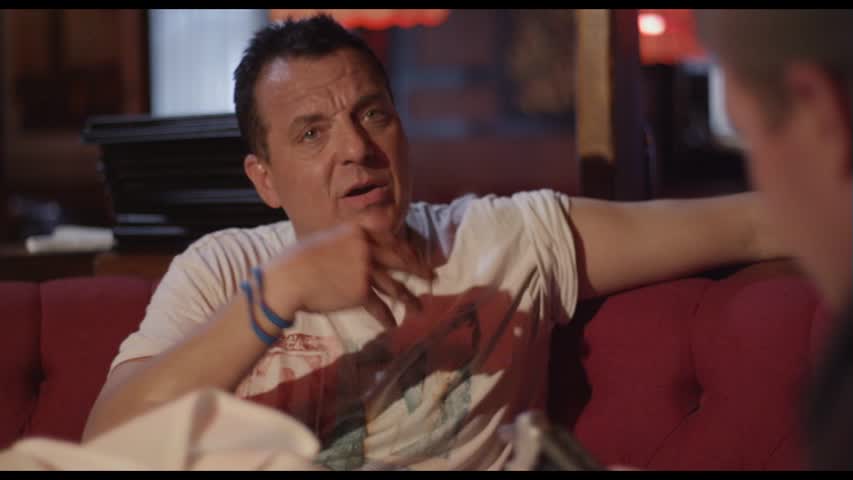
My heart knew something was amiss when Tom Sizemore headlines a movie and sure enough my heart was right and I should have been more perceptive to it’s warnings. Now, I have a soft side for Sizemore; I enjoy the man’s earlier work in Harley Davidson and the Marlboro Man, The Relic, and in Saving Private Ryan – all very great material – but Sizemore has lost his knack as of late. Also, Sizemore doesn’t really have anything to do with headlining “Auteur.” His runtime is no more than maybe 15 minutes tops and I swear he’s reading off cue cards in the restaurant scenes with actor/producer BJ Hendricks playing the documentarian who’s trying to make a documentary about “Demonic” in which Tom Sizemore stars in – got that? Sizemore is just a recognizable name to try and sell home entertainment units.
vlcsnap-2015-04-20-16h10m21s198
What really hurts “Auteur” is that it’s too much of a talking head movie. Basically, BJ Hendricks drives around searching for Ian Hutton’s character, the great director Charlie Buckwald, and does a number of interviews with cast and crew members along with other interviews with people who met Charlie outside the studio. Not until in the middle of Act three does the film get somewhat appealing with the levitation scene of Madeline Merritt’s character Kate Rivers. There some scare appeal there that would have been nice if implemented perhaps through the rest of the movie.
vlcsnap-2015-04-20-16h11m44s7
What also could be construed about “Auteur” that would compare to most of his father work is that Cameron attempts to convey some social commentary about Hollywood and their stressed out, coming to a breaking point actors and directors losing their cool and jumping off the deep end into a psychotic break abyss and that there are directors and producers out in Hollywood that would jump the wagon to try and make a easy dollar by exploiting their downfall. Cameron, hypothetically, turns the table on the exploiter making this ambulance chaser pay with the story being more sinisterly deadly. In that regard and if that has any truth what Cameron was trying to accomplish, then I applaud him on successfully mocking Tinseltown.
vlcsnap-2015-04-20-16h11m58s141
No one should certainly take my word on whether one should watch Cameron Romero’s “Auteur” or not, that’s up to them. I only give my humble critique and my overall impression with the film had cold heartedly, but quietly, crushed my hopes in being something I would enjoy from the next generation of Romeros. But hey, Cameron’s father had to start somewhere and build upon that and that is what I suspect Cameron will do as well.  It’s great to see that Cameron did give a little nod to his father in the DVD store scene – twice. You can buy “Auteur” from MVDVisual on DVD Home Entertainment on April 21st.

Nudity Report

No nudity 😦

nonudity