Always Wear Protection From EVIL! “It Follows” reviewed! (Second Sight Films / Blu-ray)

“It Follows” You Home on Blu-ray and 4K Home Video!  

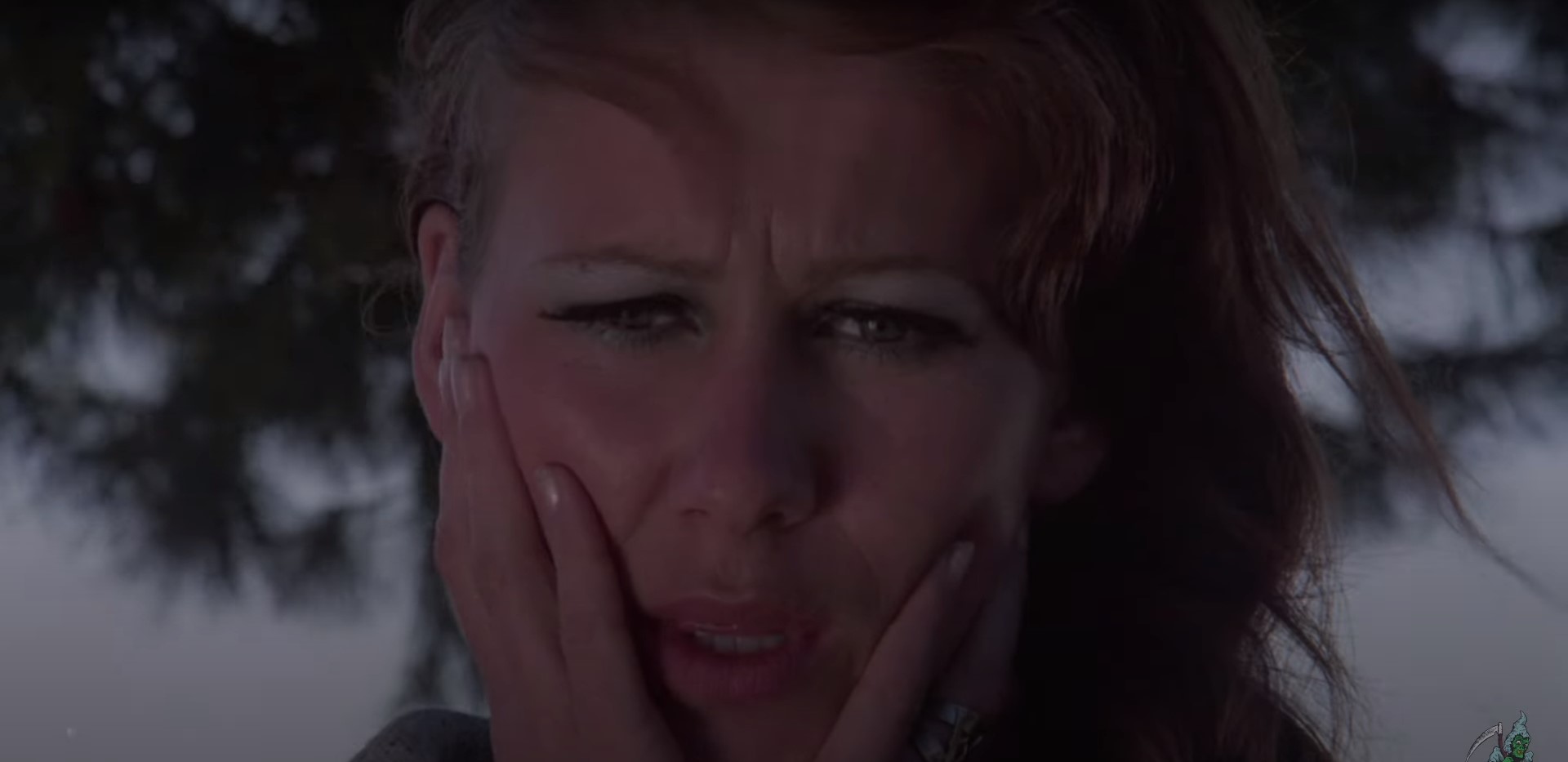
After sleeping with a young and handsome man in the back of his car, Jay wakes up strapped to a wheel cheer in an abandoned and dilapidated Detroit warehouse.  The panicked and apologetic man explains that having sex passed something to him and now he has passed it to her.  What it is is a supernatural force, a shapeshifter, always walking toward the last person implanted with an imperceptible sexually transmitted beacon.  Slowly but surely, the entity continues with a steady pace until reaching the infected person and brutally murdering them.  The only way Jay can unload this burdensome curse is to pass it along to someone else, but her tightknit group of friends aim to help her despite not being able to see the entity and drive her out beyond the stretches of her Detroit suburb home.  Yet, no matter how far Jay travels the entity eventually catches up to her, endless following her to wherever she goes, leaving her and her friends without options to alleviate her paranoia and fear.

David Robert Mitchell’s breakout horror success “It Follows” is the 2014 released supernatural teen terrorizer with an immutable edge of not only absolute apprehension but also with a distorted real-world dreaminess not based in vague abstraction.  Mitchell, who not only directed by wrote the film as well, is the sophomore feature from the “The Myth of the American Sleepover“ director who persists in the unravelling of apparent teenage problems, dramas, and sensations in the metro area and in the suburban borders of Detroit, Michigan, the state in which Mitchell was born.   “It Follows” barely scratched a significant budget for production but managed to succeed expectations earning domestically here in the U.S. 13x the film’s budget amount plus the additional international box office revenue and at-home media sales saw Mitchell’s indie horror a major sleeper amongst surprised genre fans who couldn’t get enough of the sexual transmitted spook.  Mitchell, along with Erik Rommensmo, Roby K. Bennett, Rebecca Green, Laura D. Smith Ireland, and David Kaplan, produced the venture under production companies Animal Kingdom and Two Flints with Northern Lights Films presenting.

At the center of a parentless predicament are a group of friends with the nucleate being the followed Jay under the performance of Maika Monroe, who also saw simultaneous and unexpected success in another 2014 thriller, “The Guest.”  Monroe’s slow burn sauntering becomes hit with complete shock when her lover betrays her, sends her spiraling in post-trauma harm, and instills a paranoia that can’t be ignored.  Jay no longer floats in life’s little wonders of love and romance; instead, she finds herself on the other side of the idyllic fantasy with the repercussions of her choices amplified by the supernatural spin.  At her side is her sister Kelly (Lili Sepe, “The Intruder”), childhood friends Paul (Keir Gilchrist, “Dead Silence”) and Yara (Olivia Luccardi, “Kappa Kappa Die”), and the across the street cool guy Greg (Daniel Zovatto, “The Pope’s Exorcist”).  Each play a role in Jay’s post-sex paranormal plight, some are a conductor of relief, such as providing a comforting presence as bodyguards per se or even become the next person to pass along the curse while others project future spurs of ominous ambiguity without the direct intention of doing so.  Though Mitchell might be invoking a dream state of events that may play into the following, I still found the groups’ idle hands to be concerning, especially during a school period from which we see Jay and Greg sitting in class together in one scene.  The cadence of time and responsibility doesn’t exist and that can be really jarring to our sense of natural order where school is an afterthought, juvenile attention is an afterthought, and the only thing that really matters is Jay’s imperceptible anxiety without any other exterior consequences pressuring their decision making.  “It Follows’” complete cast consists of Jake Weary, Bailey Spry, and Leisa Pulido.

Many of the film critics and analysts deconstruct and piece “It Follows” as an allegory for the sexually transmitted disease that will always be with you and how easily, or naively, it can be spread amongst friends and peers in casual intimacy and while that point can be seen as valid, there’s definitely merit behind that theory, I have come to an alternate conclusion of what the entity might represent that has been following me much like the entity has been following Jay. Since parents, or adults in general, are faceless, absent, or represented as attackers, Jay and her friends represent teens having to deal with the peak problematic adolescence with suggestions of suicide, drugs, neglect, abuse running rampant without ever having to be laid out in exposition or be straightforward and evident. The entity represents time running out in their youth dwindling quickly with every adult choice that they make, sex being the main sample of a larger grouping. No matter how hard the teens try to run from their issues, time never ceases and will eventually cause their mortal coil to succumb at an early age. Mitchell’s weirdly timeless set productions and props add systematic value in what has been longstanding through the decades of wriggling deviant teenage behavior. The indifference adult caregivers in themselves can be much scarier than the entity itself, a lack of experience and control often turns wild, unpredictable, and irrational, and set the story’s backdrop as the tatterdemalion surroundings of a once booming Motor City and you have a complete and total degradation of city to soul in one tailgating terrifier.

Follow Second Sight Films for a special release of David Robert Mitchell’s “It Follows” on an AVC encoded, high-definition 1080p, United Kingdom Blu-ray with an anamorphic widescreen aspect ratio of 2.39:1. Looking sharp and retaining original grading, this particular new Second Sight product, the standard Blu-ray version of the two-part deal along with a 4K UHD release, doesn’t hinge on perfecting or upgrading the digitally record video. Still, image quality renders like definite de facto distinctness that separates objects with delineated depth and a realistic color palette while the master of the slow pan, Mitchell, keeps scenes alive with an ever-moving camera shooting alternative, odd angles. Backside of the Blu-ray suggests a bitrate decoding at 23 Mbps but I had clocked it higher at low 30s that better suppresses any kind of compressions issues on the more than adequate BD50. The release comes with two English audio options: a Dolby Atmos produced by Second Sight and a DTS-HD 5.1 master audio surround sound. The Atoms provides a pedestal for the original composed score by Disasterpiece aka Richard Vreelord with his note firmly pressed on the slasher pulse while keeping a discordant arm’s length away from being too terribly catchy; instead, we shrill in fear with ever crescendo in letting us know the entity is here and near, foot-over-foot toward the target. Depth and range fathom well to create space and provide more than just a dialogue robust narrative with suburban ambiance as well as the exertion surrounding motivation to stay alive or to be followed and killed. Though not an A/V level up, Second Sight pours all their love and respect in new special features including new experience and opinion-laden interviews with Keir Gilchrist Chasing Ghosts, a new interview with Olivia Luccardi Following, a new interview with produce David Kaplan It’s in the House, new interview with composer Disasterpiece (Rich Vreeland) Composing a Masterpiece, and a new interview with production designer Michael Perry A Girl’s World that focuses on the out of time and oddly placed set dressings for era ambiguity. There’s also new commentary by author Joshua Grimm, an archived commentary with authors/film scholars Danny Leigh and Mark Jancovich, and a Joseph Wallace video essay surrounding “It Follows” Architecture of Loneliness, providing a deep-dive look into Mitchell’s curation of isolating loneliness in all areas of the cinematic story. The green Blu-ray casing has new simple, yet effective, artwork of Maika Monroe floating head bathed in small strips of rainbow glints contrasted against a dark background. No reversible cover or insert inside the Blu-ray but the disc pressing contains an equally color arrangement to the front cover with Monroe bound to the wheel cheer from a plot point moment. The region locked B release plays at a 100-minutes and is UK certified 15 for strong threat, sexualized nudity, violence, gory images, and strong language. Architecturally sound to be great horror movie of originality and inspiration, “It Follows” never succumbs to the frustratingly breeziness with when the entity enters the picture as director David Robert Mitchell is able to keep us ever vigilant with high suspense, stunning visuals, and keep characters from wandering too far off path.

“It Follows” You Home on Blu-ray and 4K Home Video!  

The Only Fire This EVIL Monster is Afraid of is the One in His Pants! “Frankenstein ’80” reviewed! (Cauldron Films / Blu-ray)

“Frankenstein ’80” on Blu-ray from Cauldron Films!

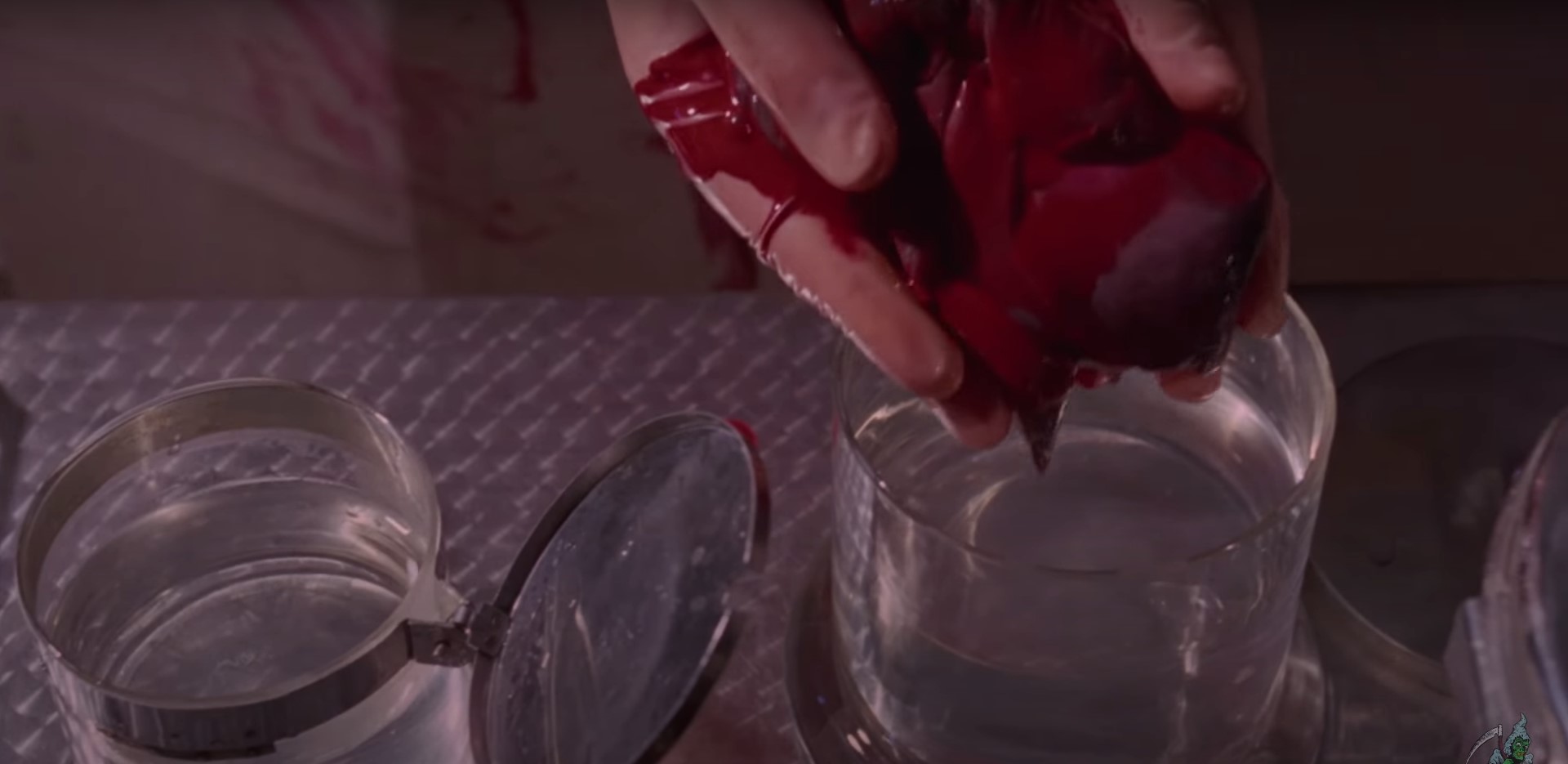
At a renowned German hospital, Professor Schwarz has pioneered a new serum that has proven animal-testing results on stopping or reducing the process of organ transplant rejection.  Also, at the same hospital in another wing, a disgraced surgeon, now a posthumous examiner, named Dr. Otto Frankenstein toils away in the morgue, dismembering bodies and piecing together the limbs and organs into a new being he has named Mosiac.  The scarred and lumbering monster has an increase sexual libido and is always in pain from organ rejection, driving him to sexually assault and kill women in the shadows.  Frankenstein steals his colleague’s only batch of serum that could have saved reporter Karl Schein’s ill sister from organ failure.  Now, Karl is on the hunt for the thief along with hot headed police Inspector Schneider that have pieced together a connection between the stolen serum and the grisly deaths of young women. 

Straight from the pages of Mary Shelley’s timeless book, the Frankenstein monster was born out of mad science, or rather the fear of science gone too far, and the deep shadows of Gothic romanticism and tragedy.  The Italian took the creature and patchworked a new take on the reborn monster giving life from expired flesh and jolts of electricity.  Frankenstein took shape as a caricature, a wildly exaggerated shell of the original exterior with an increase sexual appetite and murderous rage that shifts the story from the conflictions of mad scientist to solely the exploits of his mad creation.  That’s what is Frankenstein and his creature succumb to in the 1972 Mario Mancini film “Frankenstein ’80.”  Also known by other various titles such as “Midnight Horror,” “Frankenstein 2000,” and “Mosaic,” the short stinted cinematographer, whose works include “French Sex Murders” and “Vengeance is My Forgiveness,” tackles his own directorial from a co-written treatment penned with Ferdinando De Leone.  M.G.D. Film banners as production company with Benedetto Graziani and Renato Romano (“Seven Blood-Stained Orchids”) producing the sewn-skin and flesh-exposed feature with a concupiscent creature. 

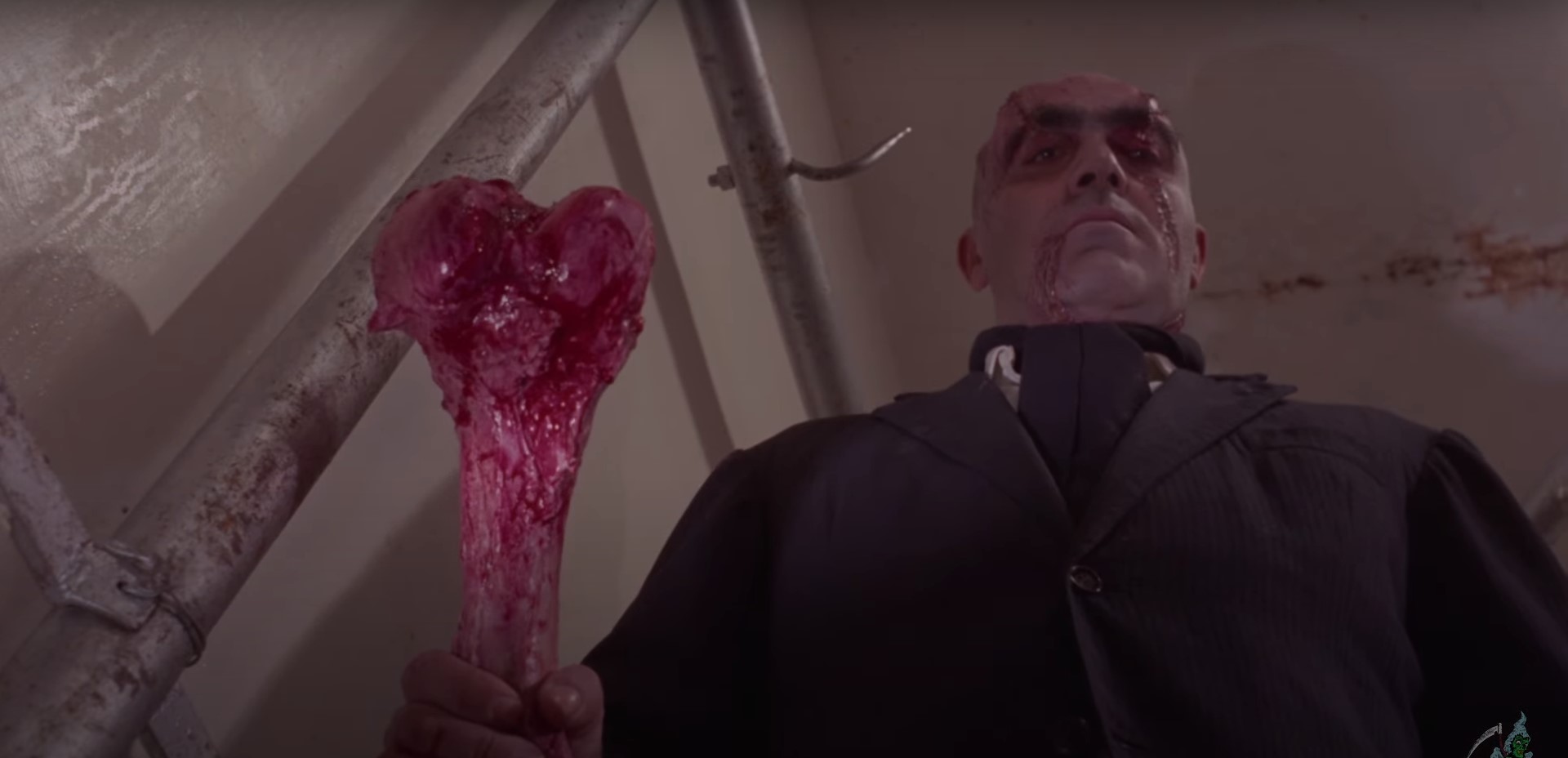
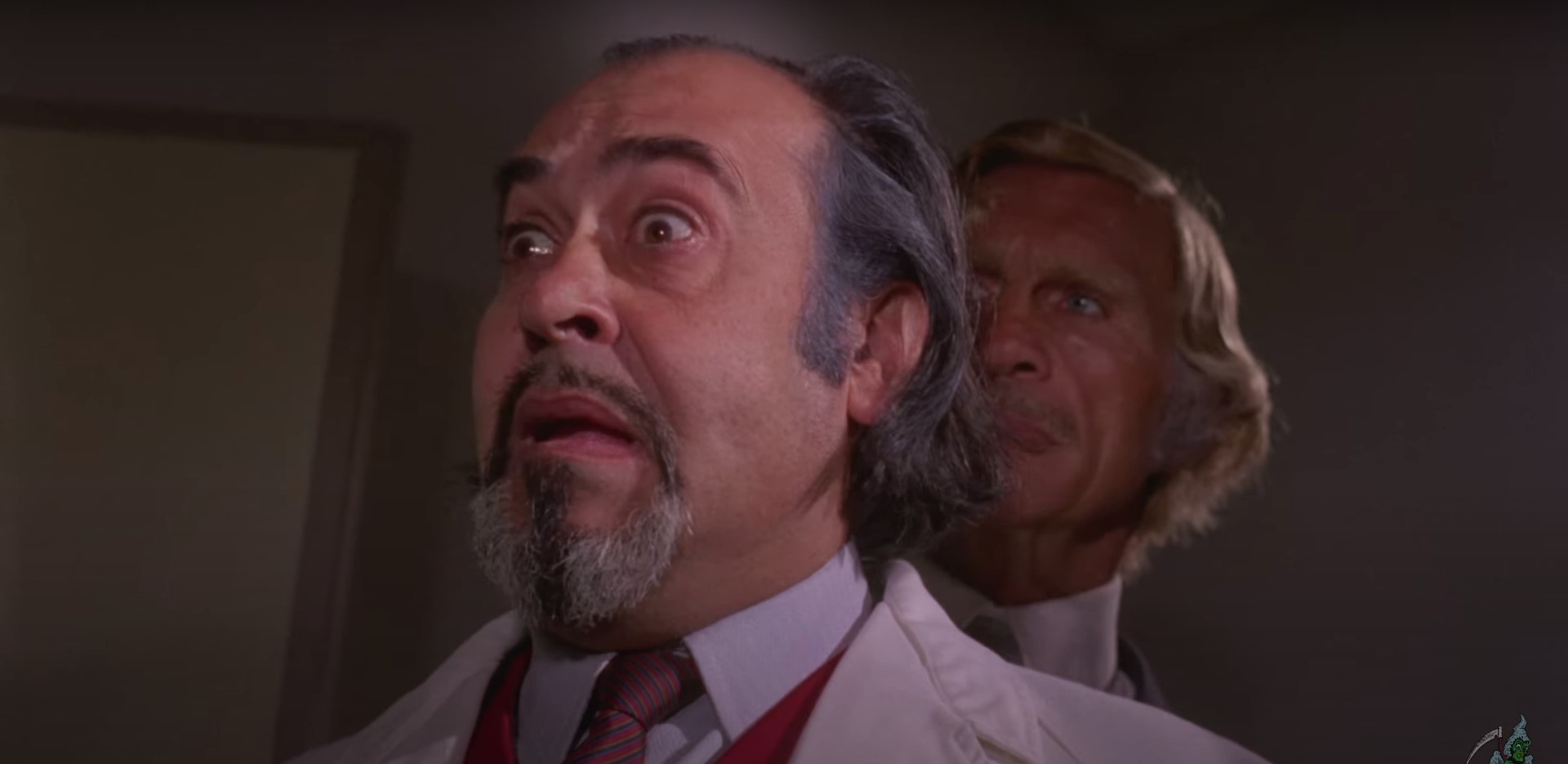
“Frankenstein ‘80” is full of colorful characters that clash literally and figuratively on screen with grandiose personalities that seek to topple over another.  The only normie of the bunch the truth-seeking reporter Karl Schein, played by British actor John Richardson (“Black Sunday,” “Torso”), in the aftermath of a criminal act and tragedy when miracle serum vanishes and his sister (Gaby Veruksy) dies on the operating room table due to potentially her unnecessary organ failure.  Bearing a lookalike tinge of schlock genre director Jess Franco, Roberto Fizz stiffens up to the be academic and scientific creator of the serum in Prof. Schwarz.  His mad science intending to make the world a better place is balanced by Dr. Otto Frankenstein’s sordid abomination and his own self-interest, a wonderfully portentous and arrogantly calm role filled to the brim by the distinguished faced genre veteran and America-born bodybuilder Gordon Mitchell (“Emanuelle, Queen of Sados,” “Malevolence”).  Mitchel doesn’t display his brawniness here as an extinguished gentleman, disgraced surgeon but his unique face with an 1000-yard stare and his tall height made him for a good imposing puppeteer on the brink of losing control of his erratically around and constantly in pain creation Mosaic by Xiro Papas.  With his behavior performance, Papas blended Golden Age horror with new wave violence by being voiceless face of stoic fear who would eventually ravage his beautiful prey.   With all these characters creating havoc and abnormalities, it’s Inspector Schneider that causes the most distress with a cocaine level high performance Renato Romano on the verge of stroking out with him and his men’s own incompetence sleuthing in solving the murder cases.  The diverse nationality cast rounds out with Dalila Di Lazzaro (“Phenomena”) as Karl’s love interest and adopted niece of Dr. Frankenstein, Inspector’s two leading investigators in Fulvio Mingozzi (“Deep Red”) and Enrico Rossi, Lemmy Carson as the suspicious male nurse, and Dada Gallotti (“The Sinful Nuns of Saint Valentine”) as the Bucher with hardly any clothes underneath the butcher frock.

Frankenstein of the future!  Or, at least, that was the idea for the 1972 released sleazy-schlocker to be conceived as “Frankenstein ’80,” a new generational and bastardized terror with speckles of the original Mary Shelley vision stuffed with horrid-sex aggression and grim depravity.  Blindly held together by it’s key actors, “Frankenstein ‘80” has a pervasive perversity against the unrationalized cowboy science.  We never know just why this particular Dr. Frankenstein is so keen on creating a jerry-rigged juggernaut of mixed-bag blood types and assorted body parts.  Is it because his discredited shame has driven him delusional and mad?  Or is Dr. Frankenstein hellbent on showing the world what abnormal science can accomplish?  Jolting electricity and hunchback henchmen are taken out of the equation altogether in his water version of Frankenstein; we don’t even know where Dr. Frankenstein’s disasterpiece is source from or how the body was brought to be assembled, dismantled, and assembled again over and over as there’s no mention of grave robbery or is just a slabbed soul who fell in the unfortunate hands of a crazed surgical practitioner.  “Frankenstein ‘80’s” has plenty of mania, sleaze, and misshapen aspects that not only include it’s scared and fragmentally pieced together monster that promote Italian ostentation inside the country’s own modern genre elements rather than originating English Gothicism. 

“Frankenstein ‘80” rises alive for the first time North American Blu-ray home video release from Cauldron Films.  The high-definition, 1080p, AVC encoded Blu-ray is pulled from a 35mm print restoration and is presented in a widescreen 1.85:1 aspect ratio.  Stored amply on a BD50, the original print is elevated to a rich color palette that buoys, never dipping below the natural appearing skin tones, compromising the vivid warm grading, or shying away from the inky black voids.  There are spot horizontal scratches that are transparently faint and infrequent.  The release comes with two audio ADR-produced options, an English DTS-HD 2.0 Master Audio and an Italian DTS-HD 2.0 Master Audio.  The ADR razes the spatial depth a bit but the overall general clarity and prominence is excellent albeit insubstantially faint hissing.  “Frankenstein ‘80” has a nationality diverse cast between the Italian majority and peppered with British and American principals and you’ll see the dub synch better with the native English or Italian proficient depending on the audio track selected.  Range concentrates around the immediate surroundings, limiting the environment to virtually around just the character actions. English subtitles and English SDH are optionally available. Special features include Dalila Forever, an Italian audio recorded message from actress Dalila Di Lazzaro over a still gallery of what is essentially her life as she reminisces about her career, Little Frankensteins, a featurette that pays homage through Italian audio host Domenico Monetti on the assortment of Italian-made Frankensteins that stray from the original story and into a culture phenomenon through a time warp of Italian entries surrounding the creature, and last is an English audio commentary by film historian Heather Drain. The Cauldron Films’ clear-cased Blu-ray displays new art on the front cover, or from at least I can tell without digging up only a handful of one sheets and original posters., with the reverse providing the art from previous DVD versions. Beautifully blood red macabre and psychotronic, both colorfully cover contrasted cover illustrations are a testament to the film’s era and living up what’s on the encoded disc inside, pressed in pure black with a dripping blood red title. The region free Blu-ray comes with an 88-mintue, uncensored final product. Forget what you already know of the stitched together flat-top with pale skin and towering stature of resurrection and death after life as “Frankenstein ’80” embarks on savagery pieced together in the natural stink of science’s putrid decay with an unnatural libido leap into the arms of the unwilling, unsuspecting woman.

“Frankenstein ’80” on Blu-ray from Cauldron Films!

Magnetism Will Separate the EVIL from the Rest of You! “Black Circle” reviewed! (Synapse Films / Blu-ray)

Cosmic horror is the “Black Circle.”  2-Disc Blu-ray/CD on Amazon!

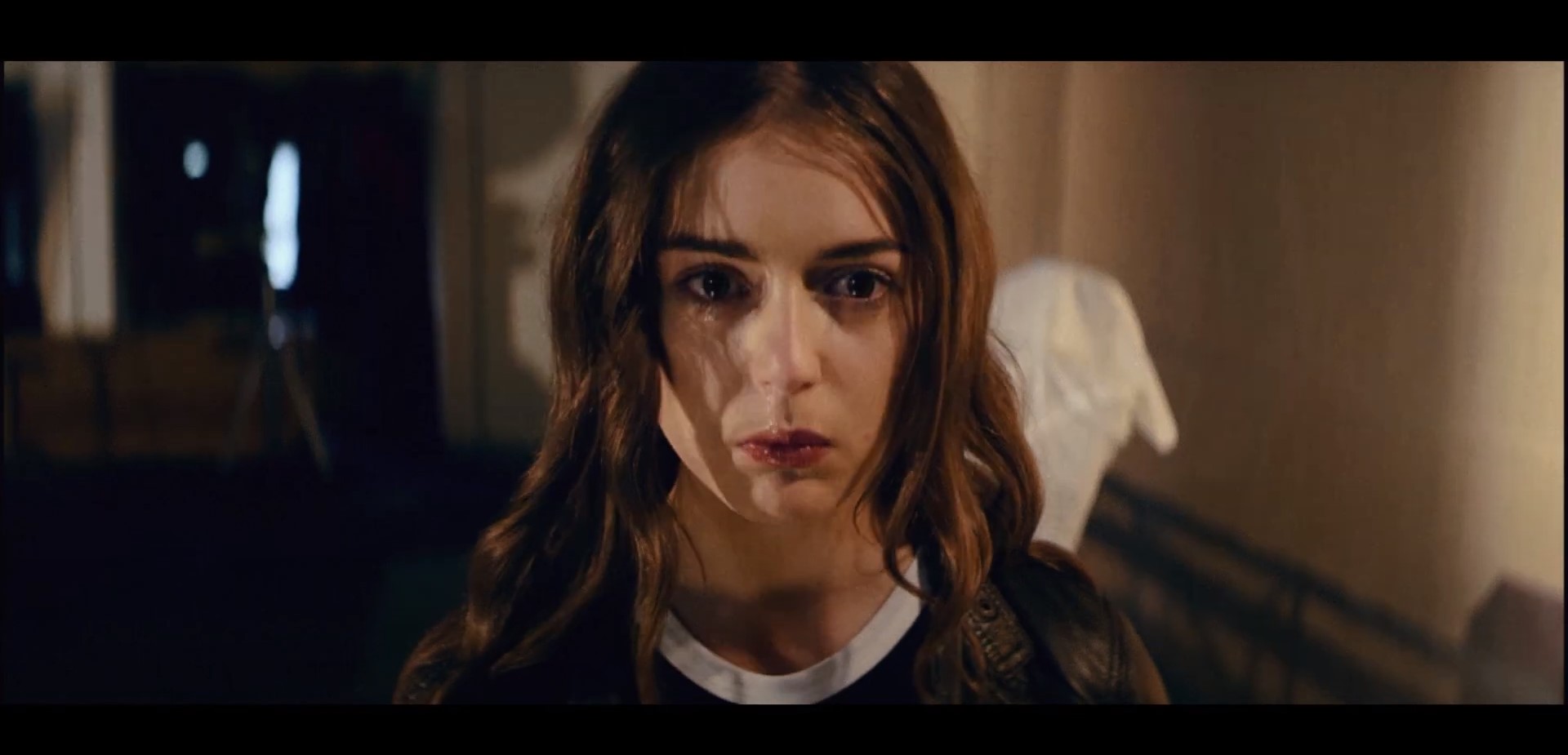
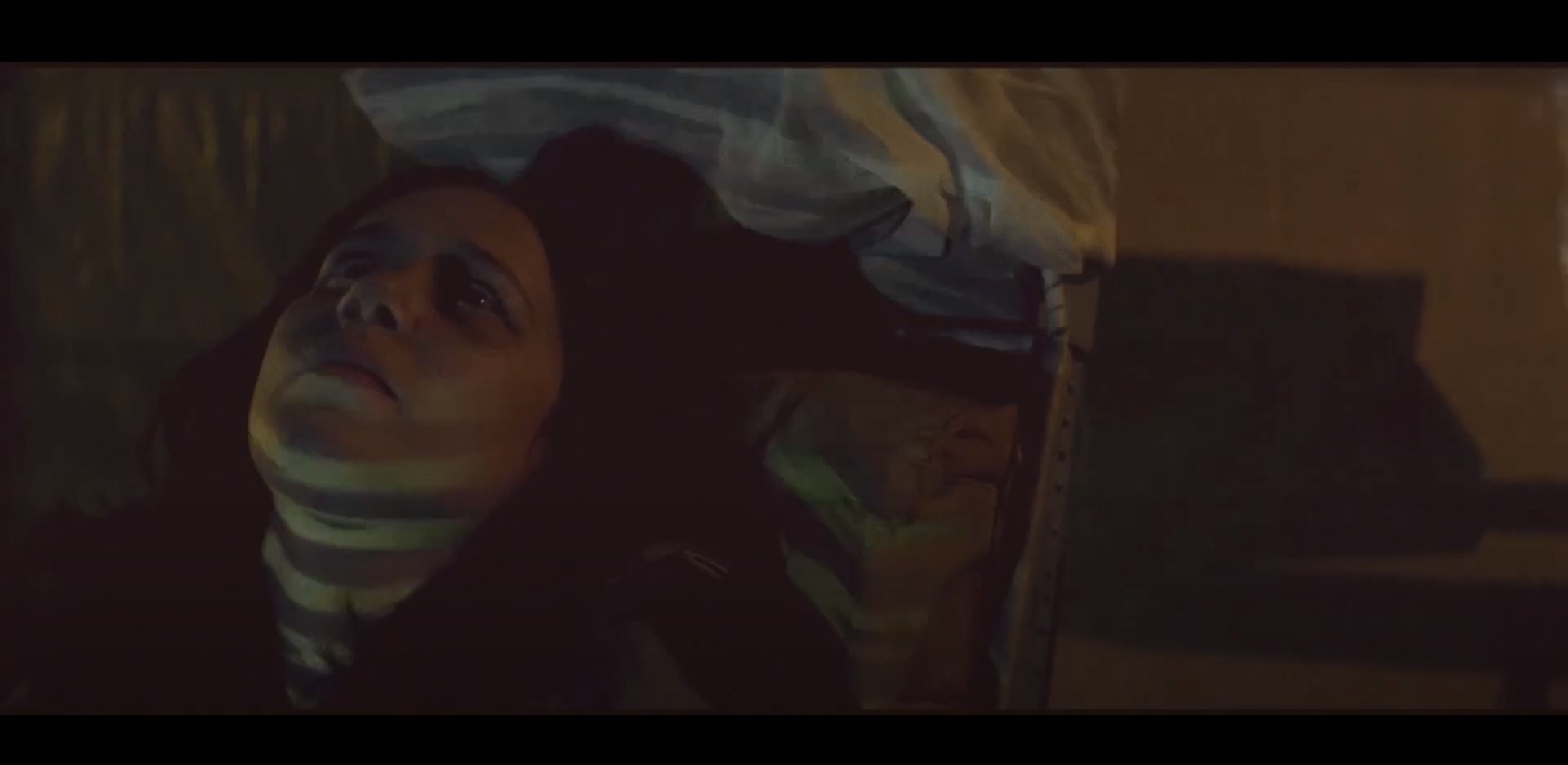
After Isa manages to clean up her life and obtain a upper management job, she’s eager to share her tremendous focus secret with sister Celeste, a university student hitting a mental wall with an important term paper.  Isa says the key to her success came after cleaning out the belongings of their grandmother’s deceased cousin, where she unearthed a record LP on magnetism produced decades ago by a master of the craft.  Celeste is instructed to listen to the LP’s backside right before going to sleep with the promise of her life changing for the better.  After setting the needle, Celeste wakes up next morning feeling unburdened by the challenges ahead and is able to knock out her paper in one day, but she senses another presence following her, watching her, and having vivid dreams of a monstrous double of herself from being inside what the LP calls the black circle.  Shortly after, Isa has disappeared, exiting her new job with erratic and paranoid behavior, only to resurface on Celeste’s doorstop ranting about LP’s frighteningly powerful suggestion and that she’s being followed by someone driving her car.  The sisters track down Lena, creator of the LP and master of magnetism, where they also meet a pair of young psychics who explain the unforeseen, accidental harmful side effects of the LP she thought were all destroyed.  Lena agrees to save the sisters who are faced with losing themselves from themselves. 

Hypnotism has diminutively entranced storytelling, scratching only a limited surface of films with only a few being widely known, such has “Office Space,” “Stir of Echoes,” or “The Cabinet of Dr. Caligari” to name a select few recognizable titles.  To further hypnotism into obscurity, a similar spellbinding field is introduced by filmmaker Adrian Garcia Bogliano.  The Spanish writer-and-director of “Here Comes the Devil” and “Come Play with Me” chills us with a cosmically laced and existentialism albatross with his 2018 “Black Circle.”  The Swedish production, natively titled “Svart cirkel,” pulls loose inspiration from the often-controversial works of German physician Franz Anton Mesmer, as in mesmerize, who first coined animal magnetism as an invisible force within the human body that can be manipulated by skilled magnetizer.  “Black Circle” is produced by Bo and Rickard Gramfors and Bogliano’s longtime collaborator Andrea Quiroz within a conglomerate of production companies that include Klubb Super 8, Njuta Films, Salto de Fe Films, and Evilinski Productions.

Felice Jankell (“The Bunker Game”) and Erica Midfjäll play the two sisters, Celeste and Isa, embroiled in magnetism bad luck happening up on an old of circ 1970s-1980s LP in today’s age.  There’s quite a bit of tension between the two sisters who are not conjoined at the hip like most close-in-age siblings as they battle their own personal demons that are only talked about rather than exhibited.  Yet, we get the sense of their daily struggles through Jankell’s body language for Celeste and the recollecting conversations both sisters have regarding Isa’s troubles keeping glued together and those existential problems are what connects them, or rather what connect us all as sentient beings, making the characters relatable.  Isa exposes Celeste to the LP in hopes to help Celese regain control over her life but what ensues is not only a weight lifted off her capacity to overcome but also an underlining fear of being followed, watched, and frightened by grotesque dreams of herself in a monstrous form.  At this point, Isa and Celeste are experience parallel psychosis spurred by the record that leads them, and us, to the headliner of film, genre icon Christina Lindberg   The once sweet-faced Swedish brunette, who once donned an eyepatch and took a shotgun to her rapists in the role of Madeleine in “Thriller:  A Cruel Picture” and who once debuted as a 16-year-old virginial maiden in the sexploitation “Maid in Sweden,” has now grown up to become a woman basking in the essence of power and control at all times with Lena, a magnetism expert attempting to rectify unintended mistakes distributing a soul separating, charmed-grooved vinyl from decades earlier.  Lena has rich history that’s dropped in segments from the moment she’s introduced on screen, almost immediately displaying her limitless power on two young, intrusive psychics (Johan Palm and Hanna Asp) who enter her home by the summoning Supreme, an exterior planed creature who supervises the psychic realm.  Performances are incredible skintight as actor brings an elevated show for their individual role, including the rest of the supporting cast in Hans Sandqvist, Iwa Boman, Inger Nilsson, and Erica Midfjäll’s twin sister, Hanna, to sell the “Black Circle’s” premise and promise more convincingly terrifying.

If you were forced to only see one indie contemporary release this year, “Black Circle’ should be it.  Bogliano’s “Black Circle” doesn’t dazzle with a ton of effects nor is production value or exotic and grand set locations applied to lure in viewers, but what Bogliano does do well, and what ultimately instills a fascinating story, is the well-written script, character developments, and the subtle effects that bore a fear of the unknown dread persistently and consistently throughout.  Bogliano delivers a unique story sold on the rarity of proto-hypnosis with a premise fashioned around the development of his own mythos of psychic realm rules and beings. Best part about Bogliano’s piece of the macrocosmos is the way he chapters the narrative, ushering viewers gently and with explanation inside a context construction that uses phantasmagorical visuals and voice over narration to interpret magnetism jargon or to provide inside to setup the next chapter. This processing style of breaking up the acts accentuates, or offsets, the rather raw Dario Goldgel cinematography of the reality story, turning “Black Circle” in pedagogic inside into the basis of the wildly scrutinized, often criticized, hypnosis. What’s also neat about “Black Circle’s” story is the lack of a clearcut antagonist. Neither Lena, the two psychics, or even the monolithic, fazing Supreme serve as opposition against the two sisters but, in a twist of the tale, the sisters are actually their own worst enemies with doppelganger trouble in what afflicts us all at one point or another – existence. Yes, “Black Circle” is about the existential encounter that relates to good and evil, a theme of duality done without a tale of twins (or if you want to get technical, “Black Circle” was casted with a set of twins) and involves more with a separation of, what the story calls, an ethereal double that will eventually absorb itself into being the stronger, dominant replacement if the magnetism vinyl continues to be listened to in enough times it will weaken the original, strengthen the evil carbon copy, and there will be no going back.

Become entranced by Adrian Garcia Bagliano’s “Black Circle” now available on a Synapse high-definition Bluray release. The AVC encoded, 1080p, dual-layered BD50, presented in a 2.40:1 to really grab the space of tighter quarters and lengthen the berth, has less transfer complications than let’s say most of Synapse’s catalogue. The digitally recorded video doesn’t require as much remastering as a decades old production on celluloid or videotape, but the narrative does feign video degradation or aging in the more elucidation scenes on magnetism 101. Details are fine and textured, blacks are especially inky and void-encompassing, and no signs of compressions issues with a bitrate average around low-to-mid 30s. The light sepia grading envelopes a welcoming, steely coldness around the characters and their astral plight. The Blu-ray comes with a Swedish DTS-HD 5.1 surround sound mix and an English dub Dolby Digital 2.0. With being reliant on pulsing waves to match the hypnotic scheme, the backdropped soundtrack adds to the unsettling pensiveness, like the metallic hum of a tuning fork, that never protrudes outright and even into the character’s dialogue space. Not a ton of spacing depth between dialogue and ambient but enough to sate directional awareness and atmosphere. English subtitles are optionally available. Bonus features include an audio commentary with the director, two individual interviews with director Andrea Garcia Bogliano and star Christina Lindberg, both in fluid English, an Inside Black Circle behind the scenes featurette, a still gallery, and the original teaser trailer. Synapse’s release is actually a 2-disc set containing a CD of producer Rickard Gamfors score. Inside the black Blu-ray casing, a red and black insert card with the three faces of main principal characters, the sisters and Lena, in linear composition overtop the black circle with the title underneath. On the backside, the complete 18-piece CD track list complete with instrument and mixing acknowledgements. Also in the insert liner is a 2023 Synapse product catalogue. Front cover art has retro appeal with a black background emphasizing the perfect spiral red and black circle being touched by disembodied and flat matted red hands. The disc itself mirrors the front cover’s spiral but sheens like a vinyl LP but in red and black alternate rings. Dread the duplication, fear the far-side of yourself, when becoming magnetized by magnetism of the underutilized genre that knows no limits and has a plethora of petrifying possibilities inside the “Black Circle.”

Cosmic horror is the “Black Circle.”  2-Disc Blu-ray/CD on Amazon!

Staying in the Closet Can Lead to an EVIL Series of Events! “The Latent Image” reviewed! (Cinephobia Releasing / DVD)

Out today on DVD “The Latent Image” from Cinesphobia Releasing!

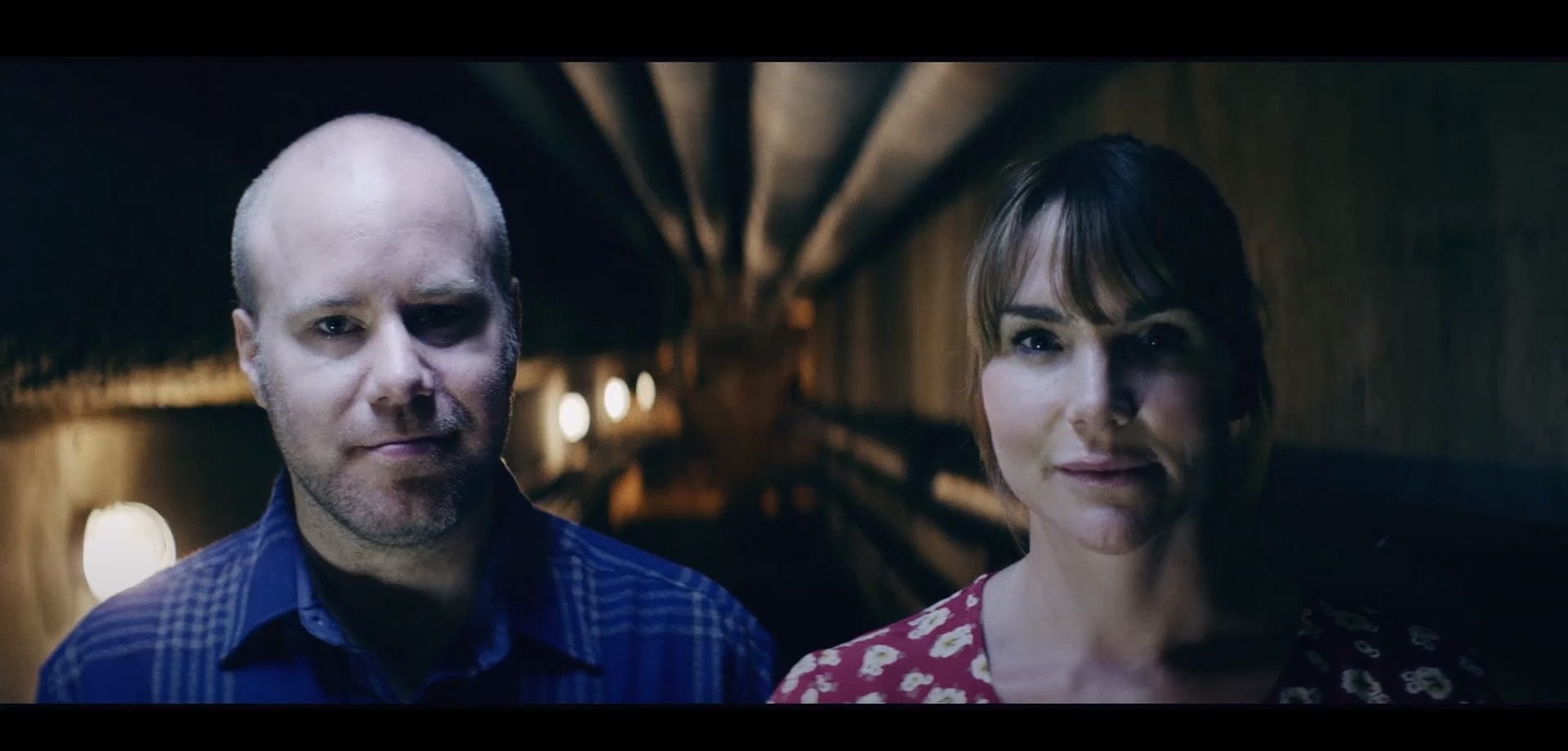
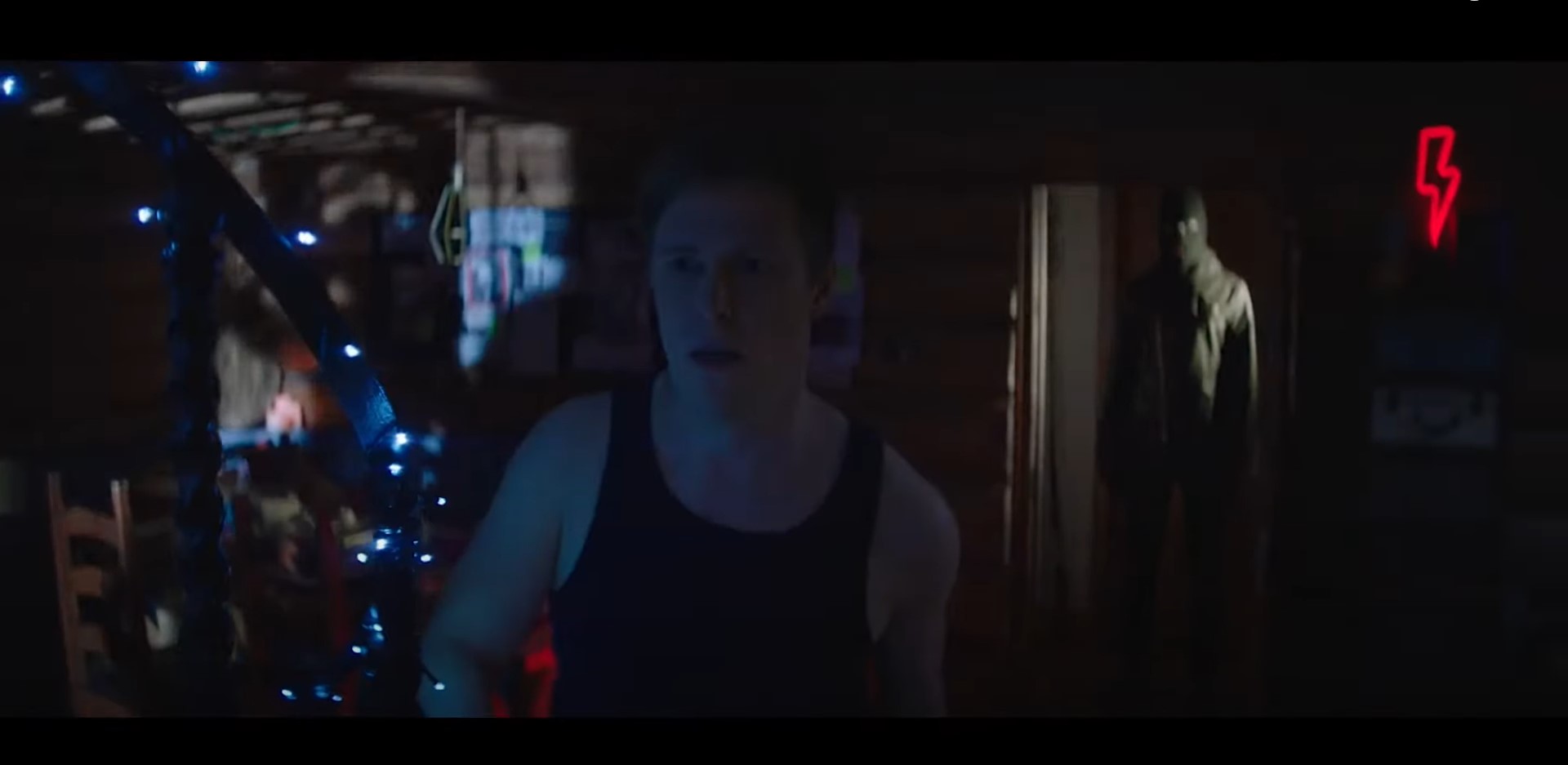
An aspiring novelist isolates himself in a secluded cabin to write his work-on-progress thriller without distractions, especially avoiding he contentious ones with his longtime boyfriend. Working through the night hours on the precipice of a storm, a mystery man drifts into the cabin, injured and claiming car trouble. After letting him stay the night on the couch and knowing he should ask the drifter to leave, the man’s rough allure instills deep desiring dark fantasies to bubble up to the surface that result in keeping his lingering presence around while also the experience doubles as subject inspiration for his novel. Yet, there’s something off about his unexpected and unusual visitor that lends to curiosity into what’s being hidden or being unsaid. The drifter’s trunk becomes an object of obsession that turns into wild speculation. Fear and fantasy collide into an explosive and destructive cat-and-mouse game of downlow and deadly secrets.

Based on the 2019 short film of the same title, writer-director Alexander McGregor Birrell (“Braincell,” “Sleepaway Slasher”), alongside co-writer and star Joshua Tonks, return to “The Latent Image” for a 2022 full script treatment to flesh out a fleshy grass isn’t always greener on the other side homoerotic thriller.  “The Latent Image” is Birrell’s third feature length film of essentially is Joshua Tonks inaugural writing and producing credit into the United Kingdom production that clashes tantalizing and dangerous one-time temptations with the safety and security of routine and longevity woven out of being inside a complicated gay relationship that stings with old systematic-induced worries and consequences.  Latent Image defines as an exposed picture or film not yet developed and Birrell and Tonks use that to purposely shield viewers from the utmost truth until the petrifying picture is clear.  Latent Image LLC in association with the queer community storytelling serving June Gloom Productions are the picture’s production handlers with the latter company’s Brandon Kirby and Michael Varrati as executive producers and Tonks and Birrell co-producing their debut feature collaboration.

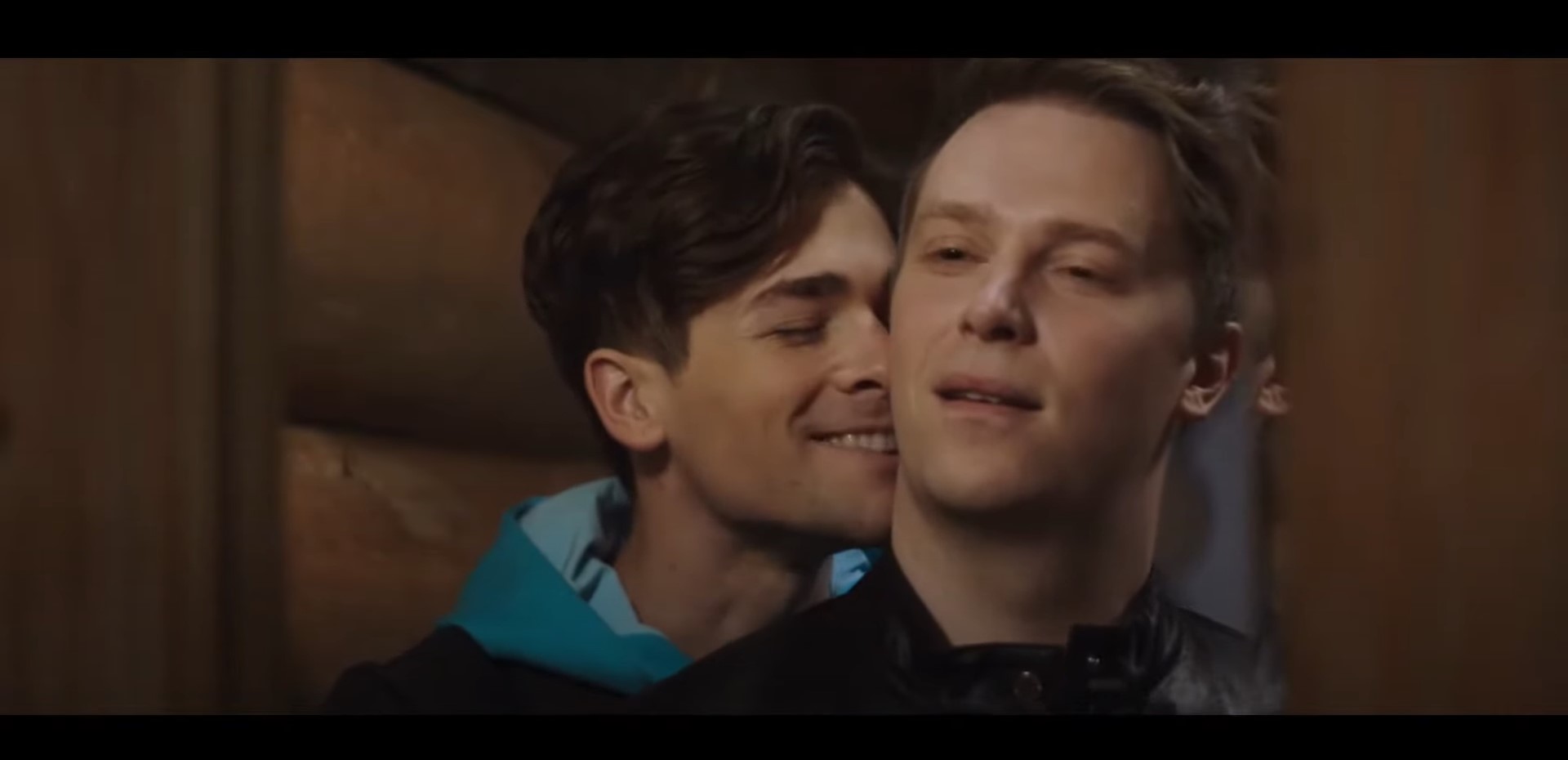
Being Joshua Tonks’s grandstand into his first feature production and as the lead character, the British-born, Vancouver film school-trained actor reprises his short film part with only two significant differences:  one being a principal name change from Robert to Ben and the other in providing Ben with more substantial backstory in the form of reveries or creative abstractions of a linear trickster narrative.  Ben’s old school, a reflection seen through his love for old photography without a display screen, his typewriting of the novel, and filming on celluloid film stock with a Super 8 camera.  This affinity for the antiquated matches his sexual stigmas, a flaw that shepherds in more harm than good.  Tonks readily handles Ben’s technological quirks as well as deepen his character’s philandering fantasy life with sexual daydream and night terror trances of being pursued, abused, and enjoying it.  Tonks works off the more indelicate stranger-danger of fellow Vancouver film school graduate Jay Clift.  Long hair, leather jacket, rugged approach, Clift in the role simply known as The Man portrays patience as weapon to wield to win over the quasi confidence and trust of the lonely and relationship confused novelist with an active imagination, a deadly combination to be caught with your pants down.  Clift becomes the character interloper in Ben’s life in more ways than one, some more subtle than others, and equivocally provides baited lure to either seduce the novelists or setup him for a fate far worse.  To complicate matters, Ben’s boyfriend, who he has a current agitated relationship with and viewers will initially think is safe and cozy back at their abode, will eventually enter the picture with newcomer William Tippery in the role to complete the all-male, three-man cast.

“The Latent Image” plotline doesn’t justify Birrell’s picture as anything else but another stranger showing up at cabin in the woods thriller.  However, beyond the shallows of the film’s surface level tension are deeper waters surrounding Ben’s parting of pathways.  The novelist not only struggles to conjure up a decent spinetingling narrative, but he also struggles personally with an uncertainty of where he fits into his relationship with at-home boyfriend Jamie and with this new, dark fella wandering into the cabin in rake portance.  From the beginning, Birrell and Tonks often visits Ben’s unconscious chimera but also often feels very real in its merge of reality and fantasy of what Ben’s sometimes wishes would happen, but don’t expect this thriller to be a based in psychosis.  “The Latent Image” is not a mental health movie of one man’s isolation snaps his baseline reality.  That would have overdone, overcooked, and overserved with stale bread and flat soda.  What “The Latent Image” taps into is not the age-old tale of a drifter’s in doubt motivations but rather a fear of being found out or fear of oneself when they themselves are unsure of who they are as a person and that can be a scary thought to let the imagination run wild. 

“The Latent Image” lands a debut distribution deal with the Philadelphia based Cinephobia Releasing.  The single layer DVD, arriving on retail shelves September 12th, is a compressed MPEG presented in anamorphic widescreen 2.39:1 aspect ratio.  Between the use of anamorphic lens, split lens, Super 8 reverse stock, and a ton of mood lighting, “The Latent Image” really pops cinematically with a variety of visuals and looks that can induce a breadth of emotions.  For a DVD presentation in an age where Hi-Def continues to the upward climb, the Cinephobia Releasing has tremendous sharpness and detail inside and out of the fuzzy warmth and often the vividly brilliant, focused lighting that induce back and front shadowing, decoding at average of 8 to 9 Mbps that eliminates any prospect of compression complications.  The English audio options include a Dolby Digital 5.1 surround sound and a Dolby Digital 2.0.  The 5.1 trumps the 2.0 In offering much environmental elements of rustled foliage and depth of character actions.  Dialogue conveys strongly, securing its spot Infront of the other tracks where depth allows.  English optional closed caption subtitles are available in the setup menu.  Special features include an audio commentary with director Alexander McGregor Birrell and stars Joshua Tonks and William Tippery going over their mindset of the characters, background, and visual and stylistic choices in an enlightening discourse, the 2019 short film “The Latent Image,” the audio commentary for the short featuring just Birrell, and other Cinephobia Releasing trailers.  The 83-minute film is released not rated and has region 1 layback, untested for other regions.  Well executed indie suspenser with a subtext clout to one’s essential nature and a smartly planned story has exposed “The Latent Image” as impressively top-notch and worth seeing. 

Out today on DVD “The Latent Image” from Cinesphobia Releasing!

The Little EVIL in the Cupboard. “The Abomination” reviewed! (Visual Vengeance / Blu-ray)

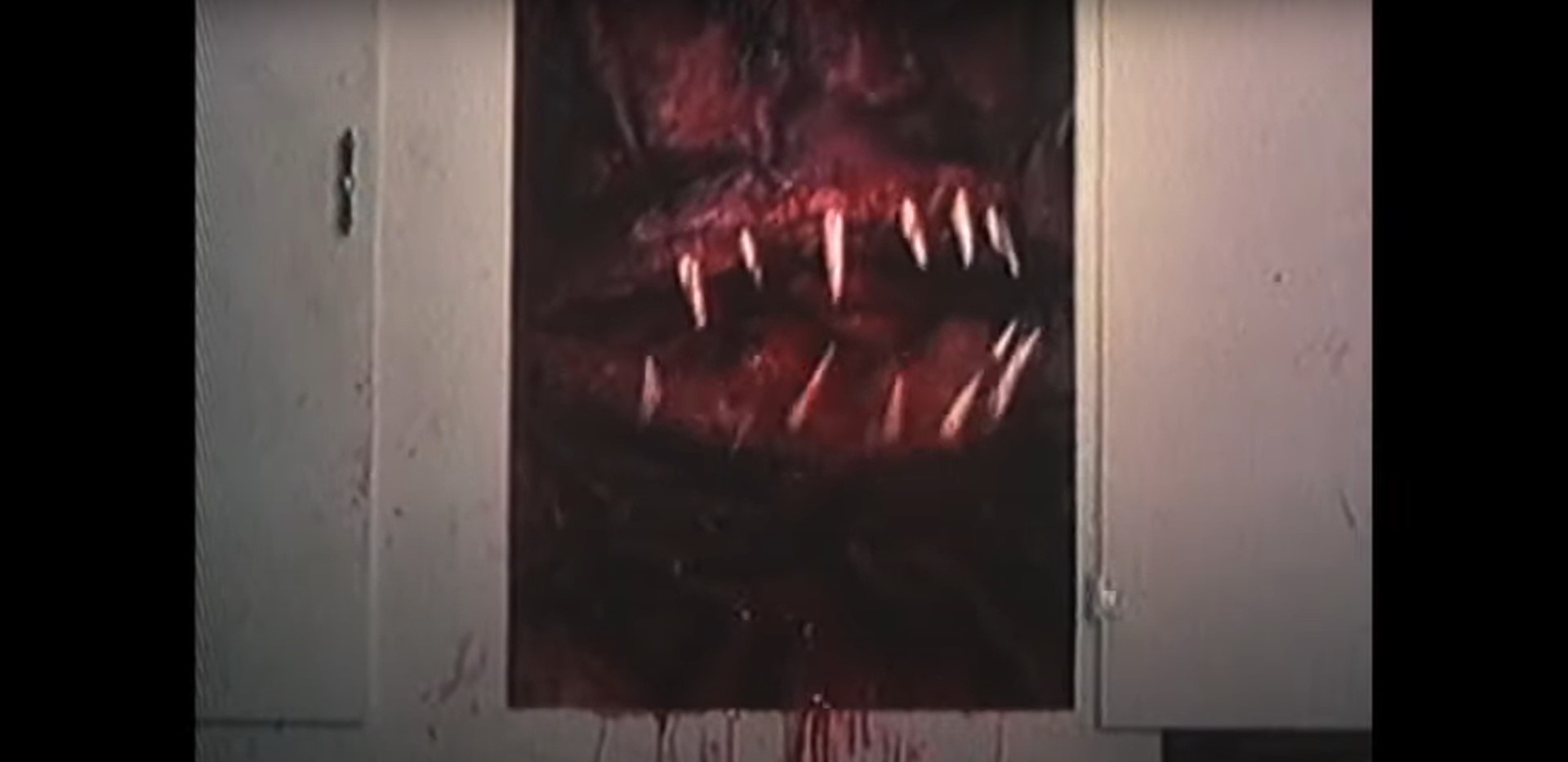
Cody’s devout mother has a large tumor growing in her lung.  Her piety believes will cure her from the ailment or so says the televised evangelical priest Brother Fogg who once listened to her plea.  When she coughs up the tumor onto the kitchen floor one night, the relieved woman becomes ecstatic having been miraculous cured by brother Fogg’s channeling of the holy spirit and her $20 donation to him but little does she know that the tumor is actually a blood lusting demon that slithers down Cody’s sleeping throat, turning the young man zombified and obedient to the demon’s ever starvation for human blood and flesh in order to grow.  Inhabiting Cody’s house like a shell and monstrous with tentacles and large teeth chomping from out of cupboards and the top loading washing machine, Cody heads out into the world to brutally murder his own boss, friends, and even family to serve and feed the abomination living in his home.

Tantamount to “A Little Shop of Horrors” and released the very same year as the Rick Moranis remake of the original Roger Corman killer-plant picture, writer-director Bret McCormick waters to grow his gelatinous creature-feature “The Abomination” onto the home video market.  Ultra-violent and gory against the more, what would be considered in comparison, family-friendly and Hollywood produced rowdy giant flytrap ravenous to devour victims, “The Abomination” is by no means a musical but delivers a tone of tentacle-laden terror around a subtle theme of mental health.  Shot in Poolville, Texas, from the then future filmmaker of “Repligator” and “Highway to Hell” under his pseudonym of Max Raven, the guts-galore indie was also produced by McCormick as well as with longtime partner Matt Devlen, director of “Ozone:  The Attack of the Redneck Mutants” and producer of “The Upstairs Neighbor” with “Woodchip Massacre” and “Cannibal Hookers’” Donna Michelle Productions picking up the film for at-home VHS distribution rights.

However unlikely it may seem with these types of splatter films and with a cast credited with different stage names and pseudonyms, “The Abomination” is undoubtedly a family affair.  Bret McCormick has employed a great deal of his once intact family into filmic roles as creature fodder, which some of us would like to dish up on a daily basis.  Well, McCormick did it from his brother Brad McCormick as Ike, mother Victoria Chaney (“Christmas Craft Fair Massacre”), former father-in-law Van Connery, and even his wife, now ex-wife, Blue Thompson (“Ozone:  The Attack of the Redneck Mutants,” “Highway to Hell”).  Relatives appear game to be in a next-to-nothing splatter horror that offers a soup kitchen of out of body organs being pitchforked fed into gaping jaws living a cupboard.  Performances render suitably as bored rural clodhoppers who fear God, work at junkyards, and give into evangelical sermon with Cody (Scott Davis) and his friends often the more sensible foursome of youth yearning for fun and beer as they race down dirt roads and yuk it up on the back of their 4×4 truck beds.  All of the dialogue is done in post with ADR and so we’re not offered the actors’ original gutturals, conversations, and screams with the silver lining in the audio track being a clean post-principals photography recording of the dialogue.  One shortcoming of the dialogue track lies with Cody’s mother Sarah, played by Jude Johnson (“Tabloid”), with earsplitting screams set on linger as she discovers the truth.  With a small, intimate cast with most being within McCormick’s inner circle, every character is essentially core to the story with the rest being rounded out with performances from Suzy Meyer, Gaye Bottoms, Matt Devlen, and Rex Morton as the equivocally moral televangelist Brother Fogg.

There’s something to be said for low-budget, do-it-yourself, indie horror films with exaggerated and practical special effects.  “The Abomination” is one of those said features that’s’ more splatter than substance but the splatter and the palpable puppetry are the driving force behind McCormick’s attempt to enter the gonzo-gory market of cost nothing commodities popular at the time.  “The Abomination” evokes the very truth of the titular creature without being ambiguously metaphorical, becoming a character, much like Audrey II in “The Little Shop of Horrors,” in itself even if it didn’t talk or sing with boisterously briar.  Before delving into the core narrative, skipping the opening dream sequence/montage may be in your favor as the series of random images of grotesque violence, splatter, and such sum up the film’s entirety in a disordered delusion of dreams. If you can fast forward the montage, the opening secondary setup of Cody and Dr. Russell’s voiceover conversation will suitably add the necessary layer to peel back not only to expose the carnages to come but also sneaks in a thought-provoking twist that will leave audiences reeling over the bookend voiceover conversation between a distraught Cody and the doctor in the final moments.  Not to be exceedingly overshadowed by the immense deluge of blood, the pint size pivot juts out like a nail in a floorboard, insignificant across the entire square footage but once you step on it, the punctured wound leaves an unforgettable impression that makes the entire floor feel the need to be tiptoed around because of the dreadful sensation of sharp, pointy objects covering the entire area.  Narratively, the linear structure works as a son and his mother struggling on the precipice of her cancerous death while believing the televangelist Brother Fogg’s wisdom and spiritual healing will come to her rescue before her demise, but the one element that doesn’t quite work, or is more so unclear, is Brother Fogg’s part in the much darker side of the abomination’s arrival.  In scene, Fogg’s has all the hallmarks of a fire and brimstone swindler but no other clues hint to his involvement in the scourge spawn other than a few dropped lines by other indirect characters that more disconnect the dots then link them.

You have to continue to love Visual Vengeance for their pastime presentation of splatter and obscure VHS films.  “The Abomination” slithers out of incubation as one of their latest releases onto a full-bodied Blu-ray with new artwork, new bonus features, and a new high-definition transfer! The AVC encoded, 1080p, BD50 is presented in a 1.33:1 aspect ratio. McCormick filmed “The Abomination” on Super 8 but had converted the feature through a U-matic VHS playback, resulting in two very different technical looks with the grainy celluloid of a Super 8 integrated into the softer gauze and tape degradation of VHS. We usually see this in the reverse with modern releases being played back through VHS to obtain that SOV/retro look. Visual Vengeance continues to preface all their releases with a warning of quality with their obtaining the best possible standard definition tape masters that may still render poor video and audio quality. A/V does convey a softer simulacrum and a pallid color palette with the occasional tracking lines and even seldom frame damage, but the overall finished product is visually rock solid. The English Dolby Digital stereo mix has the same pallidity as the video but is balanced within the amplification ilk where fading or becoming distorted is virtually nonexistent. Automated dialogue replacement as well as overstepping foley is evident from the start that does provide an undertow of clear consistency without fluctuation. Soundtrack and sound design by Kim and Richard Davis and John Hudek really shines through with a pulsating ghoulish synth-piano key that hints at giallo undertones. Optional English subtitles are available. Visual Vengeance really did outdo themselves with sizeable supplementals beginning with a pair of commentary: Bret McCormick joins Visual Vengeance’s Rob Hauschild and Matt Desiderio while Tony Strauss of Weng’s Chop Magazine goes solo. There’s also a new feature-length interview with McCormick Monster Kid Movie Maverick that entails McCormick starting his life story from Super 8 home movies to the present, a new interview with Blue Thompson, a new interview with Victoria Chaney, and an interview with Michael Jack Shoel of the original Donna Michelle Productions’ VHS distributor. McCormick provides a new location tour between his involvement in “The Abomination” and “Ozone,” raw footage of the testing the tumor and the death of Cody’s boss, McCormick’s Super 8 movies from his youth, a multi-page text screen interview with “The Abomination,” a behind the scenes image gallery, and a trailer archive. Release number 10 on the spine, this Visual Vengeance piece of home video art comes with The Dude Designs’, aka Tom Hodge’s, illustrated rendition of “The Abomination” with phallic tentacles, blood-stained teeth, and a mustard yellow title. Sheathed inside is an even more beautiful front cover art adapted from the iconic scene that left a lasting impression with this reviewer. The uncredited cover, or uncredited because I could not locate the signature or the credit, possesses more depth in detail than the comic book-esque slipcover, a comparable contending front cover from the original VHS art on the reverse side. Visual Vengeance provides hefty insert material that not only includes their staple retro sticker sheet but also a 14-page, black and white official comic book illustrated by Marc Gras, a trifold essay entitled The Tumor that Came to Fort Worth: Apocalypse on a Budget by Tony Strauss, and a folded mini-poster of the front-facing cover art inside the clear Blu-ray case. The disc art has the same The Dude Design slipcover art cropped to fit the BR disc. Bret McCormick fed his ferociously tumorous feature with all that he had, spellbinding with shocking serration, and now three and half decades later, Visual Vengeance celebrates McCormick’s cancerous creature with one hell of a soul-swallowing souvenir!

There’s Nothing Abominable About “The Abomination” Release!