Hide Your Children! EVIL Comes For Them! “Achoura” reviewed! (Dark Star Pictures / Digital Screener)


“Achoura” now available on Prime Video!

Broken by witnessing the kidnapping of their friend Samir, Ali, Nadia, and Stephen’s lives are plagued by the past and turmoiled in the present as adults.  When Samir is miraculously discovered alive, a realization of truth begins to flood back into their memories as the kidnapper’s intentions were to stop a malicious, child-devouring entity by stowing the demon away in Samir’s body as an encapsulating prison.   The demon, known as the Bougatate, uses the joyous celebration of the Muslim holiday Ashura to snack on beguiled youth and is now free to feed upon ripe, happy children once again, especially Ali and Nadia’s young son.  The four friends must band together and seek to destroy Bougatate on his own turf, a decrepit rural French house engulfed in nightmarish lore. 

Nothing says originality and mind-broadening concepts more than when international filmmakers weave the fabric of their folklore, the sequin of traditions, and the raw materials of cultural customs into their fabrication of creativity.  Director and co-writer Talala Selhami takes us on that very journey through Morocco with a tale based off the concepts of a shifty Djinn-like urban legend terrorizing children of the Ashura celebration with a shadowy, jaw-opening and jowl-extending monster devouring children like a snake in this 2018 released supernatural, child-be-vigilant thriller, “Achoura.”  Selhami’s sophomore film comes 8 years after releasing the cutthroat hiring practices of Corporation authority over the applying individual in “Mirages.”  The French-born director helms a script penned by Jawad Loahlou and David Villemin showcasing the horrors of loss, sometimes forgotten, amongst the Arab-Berber population.  The half-crescent coast of Casablanca becomes the main shooting location for the Moroccan-French co-production under Moon & Deal Films, Overlook Films, Orange Studio, and Black Lab VFX produced by Selhami and Lamia Chraibi with executive producers in Caroline Piras (“Among the Living”) and Rachida Saadi.

“Achoura” has been described as the Moroccan “IT” where four childhood friends reunite to face a preadolescent predator known as Bougatate.  That analogical sentiment is extremely on-point to the detriment of “Achoura’s” North American release; I, myself, before reading any other external comments, had thought “Achoura’s” story walked the same line as the 2017 remake and strongly resembled Pennywise in intentions and, in some ways, specific ways he – or rather it – tricks and consumes children.  The four friends are also similar to certain characters in the Loser Club, but the Sofiia Manousha is the least affected by her past, reimagining what happened to her friend, Samir (Omar Lotfi), as nothing more than being an abducted whim of a pervert’s fantasy.  Samir is the younger brother to Nadia’s estranged husband Ali (Younes Bouab), a brooding, sleepless detective ceaselessly on his brother’s case as he dives deep into old investigative interview footage and cigarette packs he continuously bites the filter off of each cancel stick.  The pain Ali bottles up is complete poison wonderfully conveyed as well as the interpretation of trauma from the last friend of four in painter, Stephen or Stéphane as the character is credited.  Played by the Spanish born Iván González, whose worked on a pair of intense thrillers – “The Divide” and “The Crucifixion” with director Xavier Gens, Stephen singles himself the only person that remembers what actually happens as González glosses the artist with starry eyes and a verbally shaken recollection of monstrous images.  The one performance thought to be the weakest link was Omar Lotfi’s Samir, an imprisoned man-child imprisoning a demon with him, and Lotfi’s infantility as a grown man freed from confinement and a demon crossed too intractable goofiness, leading the Samir away from being a sympathetic character into more of a cartoon of one.  The cast is relatively comprised of the four friends with minor parts here and there in roles from Mohamed Wahib Abkari, Jade Beloued, Abdellah El Yousfi, Celine Hugo, Gabriel Fracola, Mohamed Choubi, Noé Lahlou, and Moussa Maaskri as The Guardian incarcerating Bougetate inside Samir, who we assume is the same boy from the film’s prologue setup but never actually verified.

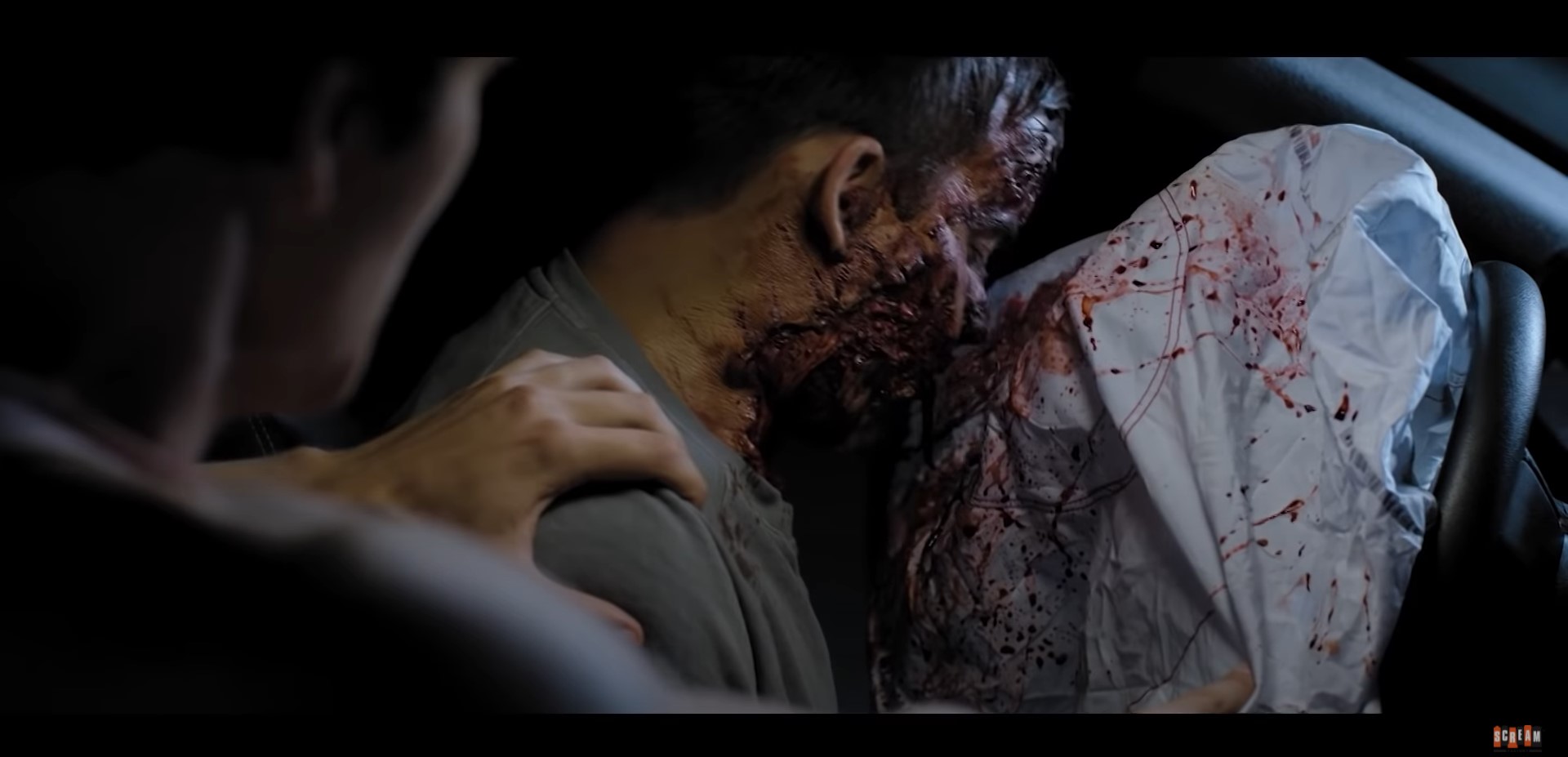
While “Achoura” draws many comparisons to “IT,” Selhami sepulchers itself into an overwrought, yet hugely overworked subgenre of shrouded gangly presences lurking from the darkest corners of the room to bring antagonism toward children.  “The Babadook” comes to mind with the manifestation of grief descending upon a single mother and her child.  Same theme can be extracted from “Achoura’s” grief and trauma over the loss of their friend and how they represent the condition in different ways:  Nadia chooses to reimagine the event to a safer, saner memory, Stephen expresses his horror through painting, and Ali’s guilt drives him to unhealthy habits in looking for his brother.  The Bougatate is akin to a pedophile robbing children of their innocence, a motif that extends from the very beginning of the story with a preteen boy expressing his affection for a girl his own age before Bougatate seizes upon them.  Their innocent and charming clandestine affair is kept from her betrothed husband, who’s creepily decades older, in a mind-boggling and unpleasant idea of children arranged marriages that sets the misguided tone for a sordid underlayer that sparks Bougatate’s resurgence into the world.   Though I like the tone of the film albeit a vague carbon copy of others like it, what I find to be tone deaf is the often clunky special effects surrounding the entity’s polished look.  One attribute belonging to Bougatate is the legion of flies that constitute his form in what has diminutively become just a bunch of nano byte specks moving in menacing unison and swallowing (or being swallowed) anything in their path. The non-linear format that double culminates the unravelling in present and in flashback past retains a sustainable 90-mystery.

One of the last horror films to be released in 2021, “Achoura” came to digital platforms and DVD home video this past December from Dark Star Pictures, the same company who released the phenomenal Veracruz folklore and Bruha horror, “The Old Ways,” and the Mickey Reece’s perfectly subtle nod to vampires and depression in “Climate of the Hunter.” Since a digital screener was provided, commenting on the DVD audio and video quality is a no-go, but the Mathieu De Montgrand offers harsh hard lit scenes vast in depth, a breadth of landscape between the countryside of France and Casablanca shoreline, and excellent action and tracking shots to instill the appearance of a big-time movie. Montgrand is definitely not just a point and shoot cinematographer as he can build suspense purely on his angles along with Julien Foure’s editing of the flashback montage that tells a bigger side of the four friends’ history yet to be revealed. “Achoura’s” bleak analogy of children’s innocence being consumed by the complexities of adulthood problems understands the unstoppable crossbreeding crisis of blending youthful naivety with seasoned reality to the point of no return that one day all unspoiled exuberance will simply be eaten into oblivion.

“Achoura” now available on Prime Video!

Superpowers Can Be Just as EVIL as They are Good. “The Unhealer” reviewed! (Scream Factory / Blu-ray)

“The Unhealer” on Blu-ray home video from Scream Factory!

An old graverobber unearths the supernatural powers of an ancient Native American burial ground that gives him the ability to heal as well as to be resilient against injury with self-restoring powers.  When exploiting the local residents of his newfound “Godly” gift, a botched healing of a bullied teenage Kelly with severe pica disorder transfers the powers to him, curing his disorders and restoring his health while also leaving the old graverobber to die.  With a new lease on life, Kelly pursues his dreams, standing up to his relentless tormenters, and even finding the courage to ask out a girl, but when the powers prove to be addiction beyond control and the bullies never let up on their aggression on him, Kelly uses his newfound gifts to exact a deadly course of revenge. 

“Pet Sematary” meets “Christine” – a Stephen King-esque bully-revenge, supernatural thriller “The Unhealer” from the Argentinean born director Martin Guigui.  The music video and feature film director returns to American horror nearly a decade later after helming the 2011 “Beneath the Darkness,” starring Dennis Quaid, with a thrilling teen angsty script penned by first time screenwriters Kevin E. Moore and J. Shawn Harris that recalls a narrative very familiar to the late 80’s to early 90’s with oppressive high school bullying by the jocks and the turning point revenge by the receiving end pipsqueak.  Originally scripted under the title “Pica Boy,” “The Unhealer” reveals the dangers of severe polarities between one disorder to the next with the humbling fragilities trapped inside one’s own psychological disorder to the over-confidence of feeling invincible due to physical anomalies that result in no pain being suffered, losing one’s empathetic reasoning.  “The Unhealer” is produced by writer J. Shawn Harris and his sibling actress, “Night of the Demons 2” and “Night of the Scarecrow’s” Cristi Harris along with star Natasha Henstridge and “Why?” filmmakers Corbin Timbrook and Galen Walker with Horror Business Films and 7 Ideas serving as production companies.

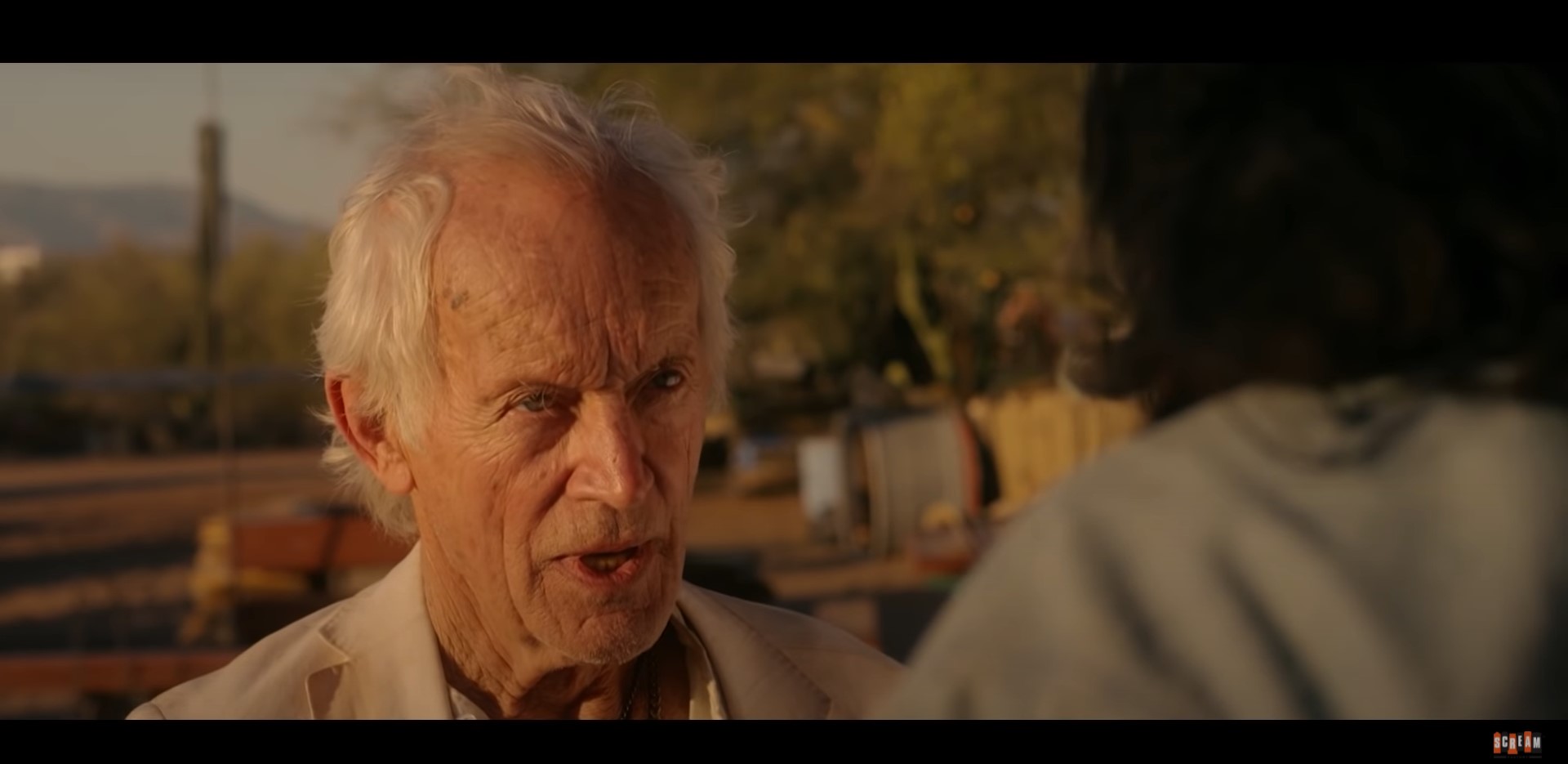
Headlined with three big and recognizable names inside the genre circles and out, the film stars Lance Henriksen (“Pumpkinhead,” “Aliens”), Natasha Henstridge (“Species,” “Ghost of Mars”) and Adam Beach (“Windtalkers,” “New Mutants”) playing variable degrees in their roles important to “The Unhealer’s” story progression and each performance never overlaps prominent personalities that can sometimes stall out and unbalance a production.   Henriksen plays a long in the tooth snakeoil salesman named Pflueger who exploits the locals with his newfound healing powers and when he’s hired by Kelly’s desperate mother, Natasha Henstridge, the scene becomes a passing of the torch as Pflueger unintentionally transfers his powers to Kelly (Elijah Nelson, “Chain of Death”) that magically heals him of his longtime psychological Pica disorder. Not so much a youthful soul anymore, Henriksen has tall tell signs of showing his age, but the 81-year-old New York City born actor can still sear memorable performances into our psyche with a wisecracking charlatan conman in Pflueger, dressed from head to toe in a shabby white suit and tossing up awkward hand gestures when deriding burial ground protecting Shaman Red Elk, played by long time serial supporting man Branscombe Richmond (“Commando,” “Hard to Kill”). More awkward in his reaction to receiving an unexplainable supernatural gift is Elijah Nelson who goes from deaths door to want to join the Navy Seals in a matter of minutes after the Pflueger plot point passes. The writing doesn’t exactly assist in Kelly’s transition with an acceptance of power without an inkling of trying to comprehend is as Kelly tries to hurt himself and tries to encourage being pounded by bullies as if he already fully understands the immense reality of his abilities. Even his mother, who under the understanding that she has tried everything possible scientific medicine man has to offer to cure her only child, is instantly okay with Kelly’s rushing into the unknown. A nearly unrecognizable Natasha Henstridge from her “Species” franchise days after a thyroid autoimmune disease diagnosis doesn’t stop the late 40’s blond beauty from being just that – a beauty – in an overly protective mother role desired by the local single men from the house visiting doctor to the Adam Beach’s Native American Sheriff Adler. Beach becomes the absent father figure for Kelly and a person who has a foot in both the Native American spiritual world and in the Anglo-Saxon realities and melodramatics. Beach proceeds as the main lead of the third act, following Henriksen and Henstridge to keep a constant, recognizable presence throughout and providing his own stamp as the voice of reason whereas the first two culminated extreme biases toward Kelly. Kayla Carlson, Angeline Appel, Gavin Casalegno, David Gridley, Mike Gray, Thomas Archer, Will Ropp, and one my new personal favorite actors in Chris Browning (“Agnes”) fills out the remaining cast.

Very early on initial reactions toward “The Unhealer” were poor mainly because of the luridly unflattering dialogue and perplexing transitions between scenes that don’t exactly hit the mark matching up character intentions, but the more I watched, the more an optimistic sensation started to arise in me. Starting small in the recesses of my cerebral film database then growing until metastasizing fully into my mind and, eventually, into my nostalgic-detecting ticker is “The Unhealer’s” robust recollection toward how fun bully-revenge-thrillers from two to three decades ago can be with a carbon copy simulation ingrained with a novel narrative surrounding Midwest Native American mysticisms carrying with it that age old “Spiderman” insinuation that with great power, comes great responsibility, but in “The Unhealer’s case, as the tagline suggests, comes great pain. Screenwriters Moore and Harris burden Kelly with a King Midas touch that no matter how hard the character tries to contain his nearly invincible power, outside forces influences and unforeseen happenstances steer Kelly toward self-destructing disaster. Between a group of buffed up and obnoxious high school jocks as unyielding tormenters, Kelly pushed into a self-protecting corner despite a generous passive attitude, especially being run over with car at one point, and the unpredictable and limitless avenues built as substory awry to make “The Unhealer” a joyful hidden gem, the Martin Guigui film on the outside appears to be a cheap, indistinguishable, B-movie, but if you dig deeper, dig until you unearth a medicine man’s ancient dusty bones, and you’ll discover deep seeded veneration, a gripping story, and dark magic carnage.

“The Unhealer” will undoubtedly fly under many viewers’ radars but is a must watch from (Shout!) Scream Factory’s distribution label in a cooperation release with VMI Worldwide (“Orphan Killer”). The full HD, 1080p Blu-ray of the 2020 production is an encoded region A release with unrated certification and a runtime of 93 minutes, presented in a widescreen 2.35:1 aspect ratio. Generally nothing to swing image quality from one spectrum to the next with a RED Weapon Dragon digital shot. Already decent at compression, the RED camera provides a crisp demarcating image in the forefront and capture the textures in a literal closeup with focus precision. “The Unhealer’s” lighting and set dresses cater less to the supernatural phantasmagoria with Massimo Zeri’s realistic Arizona landscapes and suburbia venues that don’t excite the camera with its cold truth realism rather than the mise-en-scene tropes of horror atmospherics. The English DTS-HD Master Audio 5.1 also has zip to complain about with high resolution quality with a surprising ample range of effects. Dialogue is prominent and clear as well. English SDH subtitles are an available option. Special features include one-sided individual cast/character behind-the scenes interviews which is basically cut and edited footage of the actors describing their characters in footnote fashion. The gag reel is a better feature that takes the same interview format, intertwines it with music, and lines up the gags with an instrumental soundtrack in one seamless show of goofs and hijinks throughout production. Deleted scenes and extended/alternate scenes, surrounding mostly around Kelly and Dominique’s coy love interest, cap the features. At first glance of the final package, “The Unhealer” looks totally like a rip off inside and out of the cardboard slipcover with a “Star Wars'” lightsaber color scheme and a character illustrated design underneath the title dressed in “Stranger Things” font, but don’t let parroting cover fool you as “The Unhealer’s” dark journey from being the bullied to the bully is an unabated and inescapable catch-22.

“The Unhealer” on Blu-ray home video from Scream Factory!

When EVIL Literarature Jumps Right Off the Pages and Starts to Hunt You Down! “Monsters in the Closet” reviewed! (Gravitas Ventures / Digital Screener)


Watch Monsters in the Closet” on Prime Video!

Eccentric horror novelist Raymond Castle mysteriously dies alone in his New York City apartment.  His daughter Jasmin, who never had a loving relationship with her father, returns to her childhood home, self-negative reminiscing about the strenuous verbal arguments between father and daughter with usual themes surrounding her playing with his valuable horror collectibles and her continuous use of the Spanish language despite his desires for an English only language household, but instead of finding the contents of his will or answers to who he really was a person, as a father, Jasmin discovers her father’s latest novel, an anthology collection based off the black magic spells of a 17th century that brings his short stories to life right there in the apartment with her. 

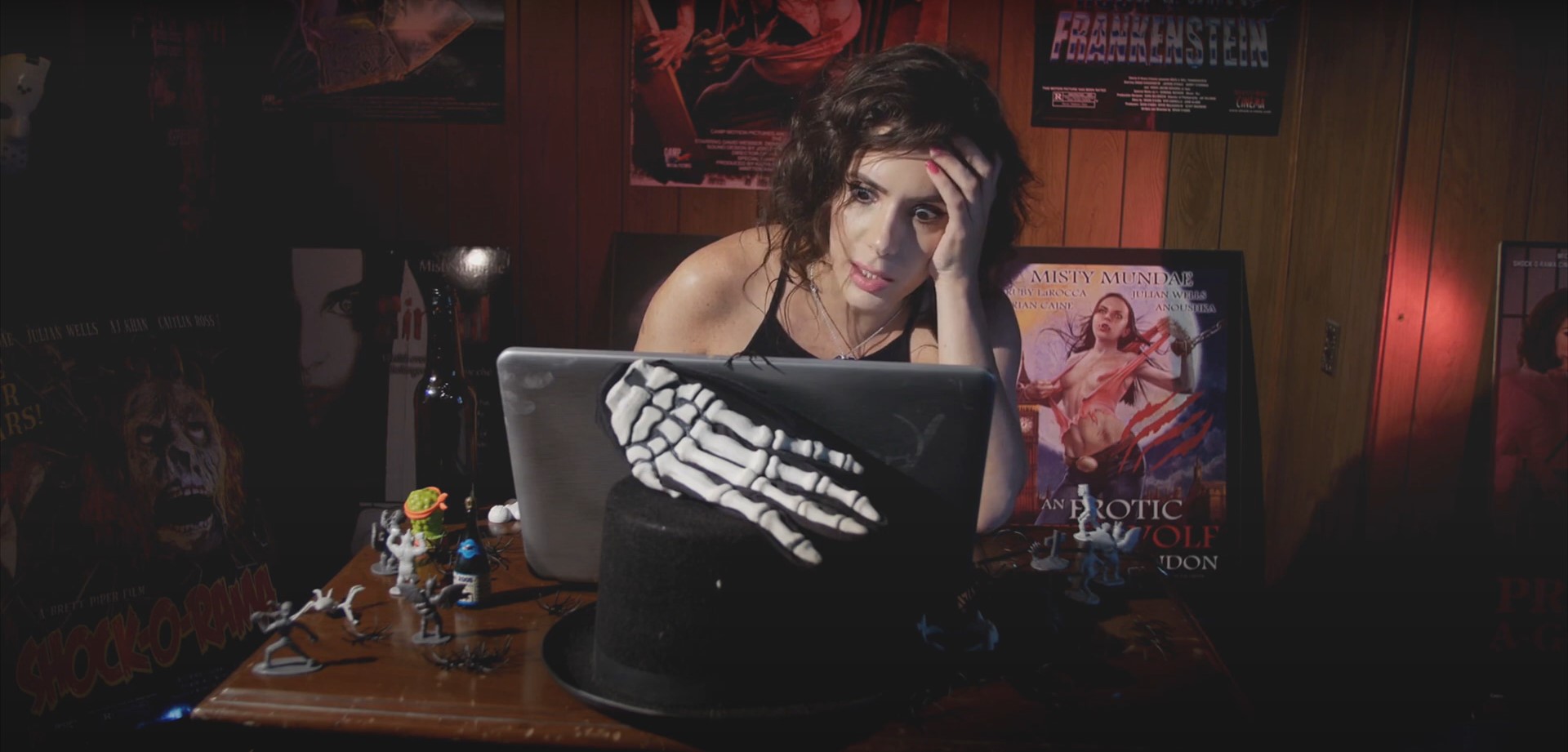
I said it once and I’ll say it again until the day I die:  horror anthologies are not my cup of tea.  Sure, there are excellent oldies, aka classics, out there, like “Creepshow” and “Body Bags,” from the masters of horror and a handful of more modern, done-right, anthologies from filmmakers on their way to such a grandiose title within the “V/H/S” series, but the majority of micro-narratives nowadays are collected from the scrapings of the low-budget trash barrel due in part to the cost-efficiency of short films, shot over a lengthy stretch of time, brought together into a single feature and the types of slim budget stories can sustain a better reception in a shorter format instead of full-length one.  Now, I’m not saying Zack and Spencer Snygg collaborated “Monsters in the Closet” falls into the latter category but as one of the first released films of 2022 to come across our ever-critical desk, the indie horror-comedy anthology needed to punch the living daylights out of use to begin the year and whether the Snyggs’ 4-episode, plus wraparound story, anthology slammed dunk or airballed will be covered below. “Monsters in the Closet” is a kickstarter project and a self-produced venture funded by a pair of sub-Hollywood filmmakers in Spencer Snygg, who has worked behind the scenes in the lighting department on some major films over the recent year, and a veteran indie softcore-horror director Zack whose has involvement with indie production companies like Troma and the New Jersey based E.I. Cinema, as you’ll see with a large, splayed display of E.I and Alternative Cinema posters strategically arranged as background fodder. It’s like a Misty Mundae poster celebration on exhibition.

The outer shell narrative that encompasses and unites each separate story entities begins with a frantic Tom C. Niksson as the diehard believer in his own success horror writer Raymond Castle, covered in blood, manically talking to himself, and in the throes of typing away before a cloaked stalker wielding a knife closes in on him. Niksson, who worked under Zack Snygg’s pseudonym, John Bacchus, in that Easter holiday E.I. Cinema favorite, “Beaster Day: Here Comes Peter Cottonhell,” steps into that looming, ever-present figurehead from the grave, delivering random dad joke dialogue while cozying up the audiences for an audiobook rendition of Castle’s latest bestseller, a black magic spell anthology of horror stories that come to fruition when read aloud. Other than his talking head role, Niksson’s involved in some contentious flashbacks with Jasmin as a child, but we never see Niksson and the adult Jasmin Flores (Jasmin) ever in the same scene together as the flashbacks are Jasmin voiceovers. Nikkson’s theatrical behavior perfectly suits the stagecraft atmospherics in erecting the gameshow-esque of a horror host whereas Flores is often stiff as a dry plank of wood. Limitations drawn from her lack of experience keep the actress’s timing and delivery often subdued in an obtuse and ungraceful character when escaping the ever-changing fiction-to-non-fiction villain of the minute. Jasmin, the character, is already inherently underwhelming in a role that has no purpose or buildup to understand her headspace surrounding the sudden death of her father. What do those flashbacks mean to her or are they just melancholic gibberish? And why isn’t she more interested in his death or even showing a lack of care for it? Throughout “Monsters in the Closet,” a fair amount of pleasantly surprising performances from the anthological works pull the overall project together better than those in the wraparound story. Along with a first person view zombie tale as the first short, Luke Couzens and Carmilla Crawford play newlywed new homeowners going through the frustrations of DIY Hell until they off each other with tools, the silver spoon Jordan Flippo becomes tarnished when a camping accident turns this rich daddy’s girl into an unstoppable killing machine to protect her immaculate image, and side-splitting John Fedele (“The Vampire’s Seduction”) as the humbly polite mad scientist Frankenstein who can’t get over the death of Mrs. Frankenstein (Valerie Bitner) and keeps resurrecting her despite her wishes to stay dead.

What I like and thought interesting about the “Monsters in the Closet” corpora is that they’re written in-house by at least one of the Snygg brothers, sometimes both.  This extends style and control over the entire body of work boundless to the ideas and the panache of other filmmakers and showrunners without having to associate themselves.  The Snyggs’ balanced anthology comes with equal levels of comedy and horror that unearths the humor in humorless scenarios sans the sometimes tired gags that can devalue a project into tedium and, ultimately, into worthlessness and since we’re already being beholden to more than one narrative that jumbles the mind, the mental capacity is too low to withstand different numerous tales in one sitting as well as to try and struggle with the bad unfunny bits.  “Monsters in the Closet” at least has a whimsical darkness about it, a sinister playful attitude, and isn’t afraid to get gory from time to time beginning with the Spency Snygg directed zombie existentialistic “Please Kill Me Again” that takes the viewpoint of a recently turned woman with normal inner thoughts and intentions, but the cravings begin to take over.  The Snygg brothers follow up with darkly satiric “Home Improvement” involving a new couple’s adversary journey to fix up their rundown new home to the point where they can’t take any more of the repairs or of each other and the overflowing sardonic banter starts to spill blood; this bit is fun, more than you know it relatable, and gets real nasty at the end. The weakest short is “The One Percenters” with a nob’s daughter eager to mingle amongst the common folk during a seemingly harmless camping trip that turns deadly after she accidently kills her boyfriend.  Conceptually, the message is sound with the wealthiest subverting the law theme and Jordan Flippo is stunning as a plutocrat’s high expectations daddy’s girl, but the story lacks enough obstacle and tension-filled stuffing for an interesting enough short. “Frankenstein’s Wife” spotlights John Fedele’s equable, light-hearted humor in affectionately reconstructing and resurrecting the wife he accidently kills and with each attempt at bring her back from the dead, her corporeal temple becomes less and less of herself through Frankenstein’s botched cosmetic surgeries. The lovesick cycle is both deranged and full of laughs from Fedele’s riotous desperation take of a classic character.

Gravitas Ventures unchains all the creatures loose in their digital distribution of The Snygg Brothers’ “Monsters in the Closet” anthology now available on-demand and digital platforms this January. None of the audio or visual aspects will be covered since the feature is not a digital release, but when I say The Snygg Brothers self-produced the film, I mean they literally wore nearly every single departmental hat, including director of photography and visual effects that impresses with a wide range of shots from drone, to hand-held, and to tracking done with depth and various levels of focus. There is no one trick pony behind the camera. Some of the digital effects, such as the bullet holes that riddle the basement floor and walls, cheapen the already cheap production and, for the most part, the practical effects reach the passing bar with the obvious lay figure body parts and crude masks/getups. There are no special features or bonus scenes with this release that runs unrated at 88 minutes. Anthology bias be damned, “Monsters in the Closet” is a rarity in a dying breed subgenre with a jocular sense of sinister, social commentary humor braided into a tenebrous fray between man versus man and man versus monster.

Watch “Monsters in the Closet” on Prime Video!

Don’t Mind the Glowing, Ominous Hole in the Wall. That’s Just a Gateway to Evil. “Beyond Darkness” reviewed! (Severin / Blu-ray)

A witch acolyte of Ameth, an underworld demon, is executed on multiple counts of child murder.  The priest who oversaw the witch’s last rites came in with a doubtful heart and upon researching Ameth through an unholy book, disavowed his own religion only to fall into a near drunken stupor of atheism.  Months later, a new priest and his family move into a home arranged by the archdiocese, but soon after settling into the old house, a series of disturbances point to a closed in wall behind a door that’s uncovered to be a gateway to another plane of existence; an existence where the child killing witch is granted access to seek the souls of the priest’s young children.  Fighting with his own struggles of faith, the ex-Jesuit assists the priest and his family in an attempt to cast out evil once and for all. 

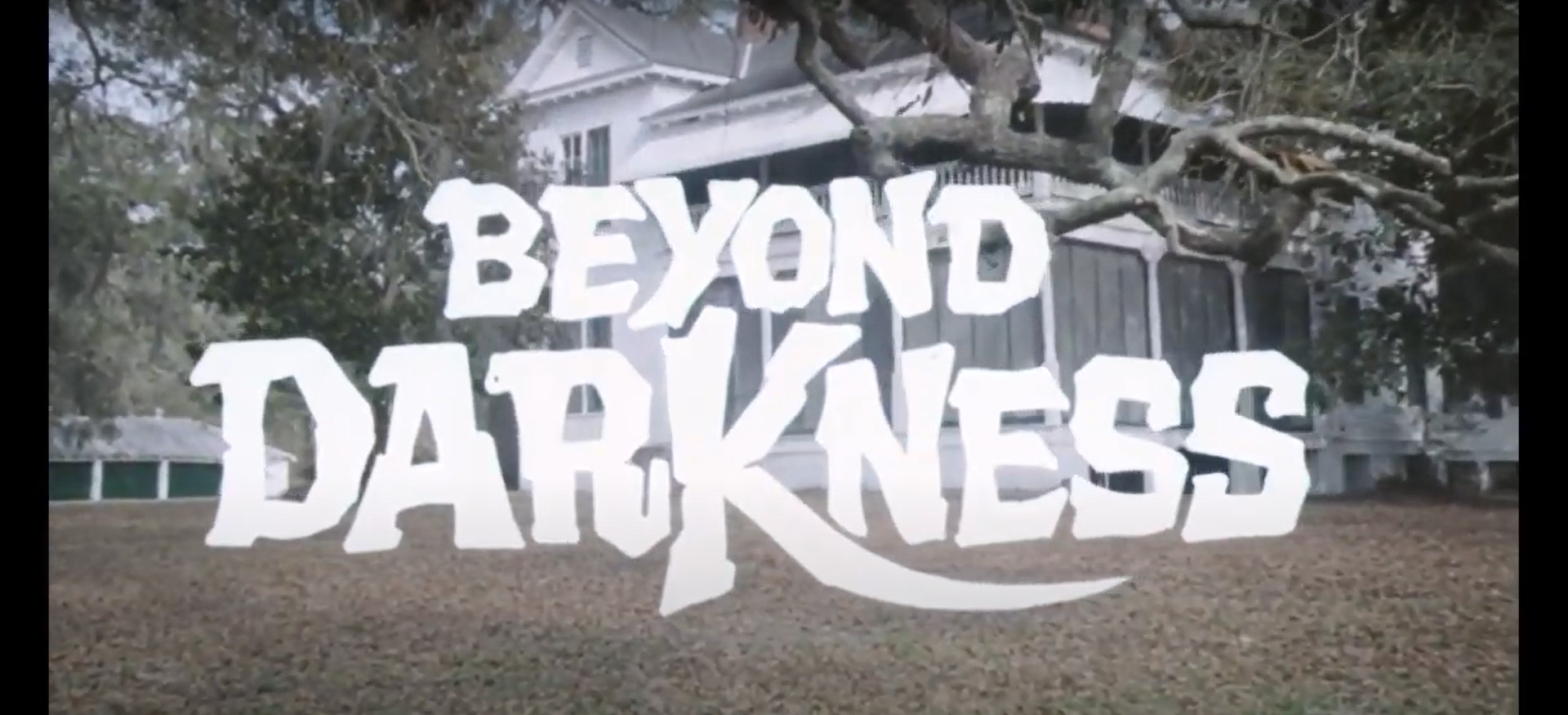
Perhaps common knowledge amongst diehard horror fans, but not so much among the casual curiosities of an oblique coursed moviegoer is the fact that “Beyond Darkness” and Sam Raimi’s “The Evil Dead” share a cinematic series connection.  Well, not one in any official capacity one at least.  Drained from the same bloody vain that unofficially corrals Lucio Fulci’s “Zombi 2” as a sequel to George Romero’s “Day of the Dead,” retitled in Italy as “Zombi,” the American-made, Italian-orchestrated “Beyond Darkness” too fell upon the slew of Italian title changes sword with a rechristening into the “La Casa” series.  With the success of “The Evil Dead” in the U.S., Raimi’s video nasty was renamed to “La Case” and “Beyond Darkness” became the fifth “sequel” in the series as “La Casa 5.”  Since Italy has no copywrite laws, a light breeze can easily change any filmic title.  Even the director, Clyde Anderson, dons a false pretense as the Americanized alter ego of Italian director Claudio Fragasso.  The “Scalps” and “Troll 2” Fragasso pens “Beyond Darkness” with longtime script confederate Rossella Drudi, under the Sarah Asproon pseudonym.  “Beyond Darkness” is shot in the deep American South of Louisiana under the Joe D’Amato (aka Aristide Massaccesi) founded Filmirage (“Anthropophagus: The Grim Reaper,” “Deep Blood”), produced by D’Amato, as the Filmirage Production Group.

While behind the camera is mostly an Italian production team, in front of the camera is a cast of American and English actors with an opening Louisiana penitentiary pre-execution theology debate between Bette the witch, played by Mary Coulson, and Father George, a priest having a crisis of faith, played by one of D’Amato’s regulars in English actor David Brandon (“StageFright,” “The Emperor Caligula:  The Untold Story”).  Coulson’s role may be punitively small as the “Beyond Darkness’” lead witch and predominant face of the core evil, but the actress puts all into the Bette character comprised of a maniacal laugh and a lots of very European skin-tag makeup effects whereas the classically trained David Brandon has an array of lively emotions and facial expressions sized to fit Father George’s clerical shirt and white tab collar when he’s not sloshed with doubt.  Both characters interweave into the life of a new-to-the-area priest, his wife, and two kids who move into an old house, built on unholy ground, to start his new chapter in priesthood.  Days later, as the kids become instantly okay with a giant black swam rocking horse in the middle of their bedroom, the family is terrorized by flying kitchenware, flooded with a bayou mist, and frightened by figures in black, tattered shrouds seeking to steal their children’s souls.  Christopher Reeve’s lookalike Gene LeBrock (“Night of the Beast”) fails at double father duty in his poorly lit excuse of a worried father with his children being lured to the realm of the spirit side and as a grounded in faith Father combating the forces of evil without a solid sense of what to do.  Both parents are equally written off as incompetents who continue to stay in the house despite on the continuous threat of Baba Yaga wannabes knocking at every door in the house.  As the mother, Barbara Bingham felt as if she had a little more skin the game.  Perhaps having just come off the legacy success of a “Friday the 13th” sequel (“Jason Takes Manhatten”) she felt the responsibility of maintaining a more diligent approach toward being a mother coursing through occult’s dire straits.   Michael Paul Stephenson (“Trolls 2) and Theresa Walker excel much better in their roles as the two kids, Martin and Carole, who’ve become the centerpiece of Bette’s maliceful desires. 

“Beyond Darkness” will come across as very familiar amongst both horror fans and fans of movies in general with a story pulling inspiration from films like William Friedkin’s “The Exorcist” and Tobe Hooper’s “Poltergeist.”  Fragasso picks and chooses a blanket of trope elements to rework with great malleably in order to not be a total copy.  However, for those who know anything about low-budget Italian horror, Fragasso’s rousing similarities to major and independent hits should come as no surprise.  Notoriously renowned schlock horror directors Joe D’Amato and Bruno Mattei, amongst a sea of others, use to fabricate out of fame at every opportunity by gobbling up successful films, chewing them up, and spitting out their Italian produced counterparts without a second thought just to cash in on just a fraction of the original narrative’s success.  The way I see it, the method was (and still is) an honorable form of flattery. Yet, flattery doesn’t cure sloppiness and “Beyond Darkness” is about as sloppy as sloppy joes. Plot hole after plot hole stack up on Fragasso’s inability to amalgamate elements in an entirely coherent way. There are underwhelming revelations to anticipating character build ups that fizzle; such as a thick-tension mystery behind the local archdiocese and their involvement to place a good Christian family in a house built on evil land or what precisely convinced Father George of Ameth’s power to sink him into an alcoholic pit of despair? I already mentioned Martin and Carole’s inept parents on not fleeing the house at first sign of poltergeist activity or any activity since then so don’t get me started. The story needs some fine tuning but not after is amiss. The acting is not entirely a humdrum of monotony, Carlo M. Cordio’s eclectic synthesizer riff and haunting keynotes score is on another level akin to a composition pulled right out of a survival horror video game, and Larry J. Fraser, another one of Joe D’Amato’s pseudonyms, has an honesty about his scenes unlike we’ve ever seen before in a D’Amato production as the cinematographer captures the fog luminously and effervescently surrounding and chasing the family from out to in.

“Beyond Darkness” is no “The Evil Dead” but is a solid demon and ghost dog and pony show from 1990. Now, the Claudio Fragasso (or is it, Clyde Anderson?) classic is heading straight to your level room television set with a new 2-disc Blu-ray. The hardcoded Region A is presented in widescreen 1.66:1 aspect ratio in a full high definition and 1080p resolution. With only a possible color touch up here or there, I would venture to say the transfer used is the most pristine copy with hardly any damage or any age deterioration. The grain looks amply checked and no cropping or edge enhancing at work in an attempt to correct any issues, if any ever existed. Severin offers two audio options: an English language DTS-HD master audio 2.0 and an Italian dub of the same spec. With dual channels, there retains an always room for growth inkling and with the film’s broad range in sounds, a difficult to swallow lossy audio pill plays the aftertaste tune of, man, this could have been way better. Yet, the track is solid enough, if not more so, with virtually zilch damage. Dialogue comes across clean and clear, but there tails some minor hissing. Like with many Severin releases, new interviews are the star of the special feature show with one-side, talking head interviews with writer-director Claudio Fragrasso Beyond Possession, co-writer Rossella Drudi The Devil in Mrs. Drudi, and actor David Brandon Sign of the Cross. Though the theatrical trailer rounds out the first disc special features, Severin also includes Carlo M. Cordio’s superb soundtrack as disc number two along with a two-page booklet with an introduction to the ingredients of a horror score and to Cordio himself as well as a listing of all 17 tracks. “Beyond Darkness” is Claudio Fragrasso’s unbridled mutt, a motley of motion picture royalties rolled up into an adulating and piggybacking horror beyond comparison.

“Beyond Darkness” 2-disc Special Edition Blu-ray Available on Amazon

Be Creative, Be EVIL! “Scare Me” reviewed! (Acorn Media / Blu-ray)

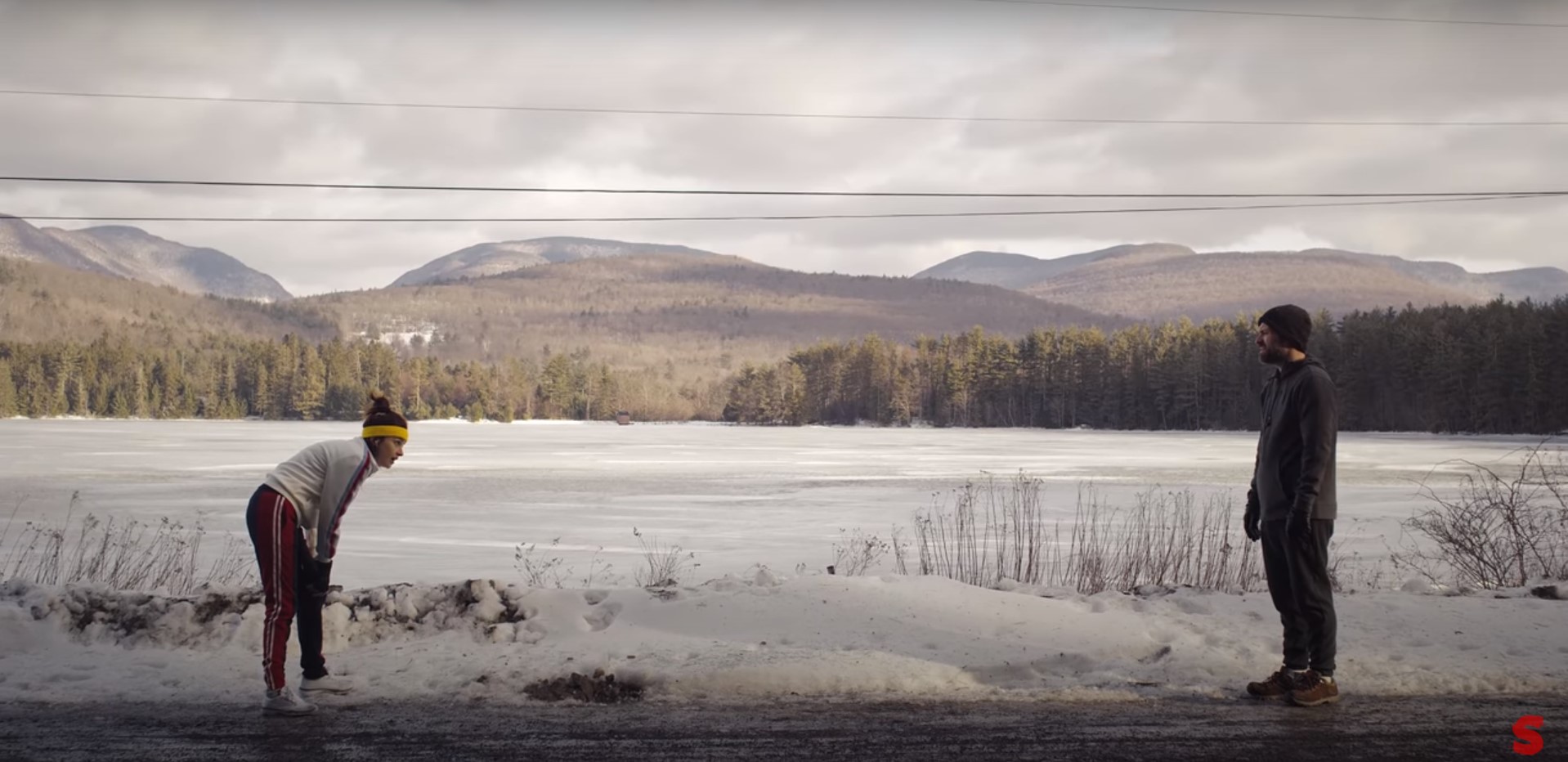
The down on luck Fred and a celebrated Fanny are both horror writers. Well, sort of. You see, Fred is an aspiring horror writer with unpretentious stories acted out by his creativity whereas Fanny is the hot, popular artist who just came out with an acclaimed novel everybody is talking about, even Fred. When their paths cross on a remote, snowy getaway during power outage, they consolidate to one cabin to stave off boredom by telling each other off the cuff scary stories, acting out every minor detail to flesh out the macabre tidbits in order for a good scare. As the night carries on and the stories become more involved, Fred’s night has been a rare highlight in recent days and now that day is on the brink of breaking, Fred has one more emotionally-driven scary story to tell the weary Fanny.

You wanna see something really scary? No, not the line from that wraparound story with Dan Aykroyd and Albert Brooks driving late a night in “The Twilight Zone: The Movie,” but rather really see a scary story come to life before your eyes with enthusiastic performances between two horror writers? Josh Ruben’s “Scare Me” does just that with the filmmakers’ 2020 horror-comedy hit. Ruben, whose latest comedy genre film, “Werewolves Within,” has been a critic success, writes and directs a petite cast packing a powerful punch pitched perfectly more so than this mouthful attempt at an awfully awkward alliteration. “Scare Me” is also produced by Ruben along with Alex Bach and Daniel Powell under a conglomerate of productions companies including Artists First (“Hell Baby”), Last Rodeo Studios (“Save Yourselves!), and Bach and Powell’s Irony Point with Shudder distributing.

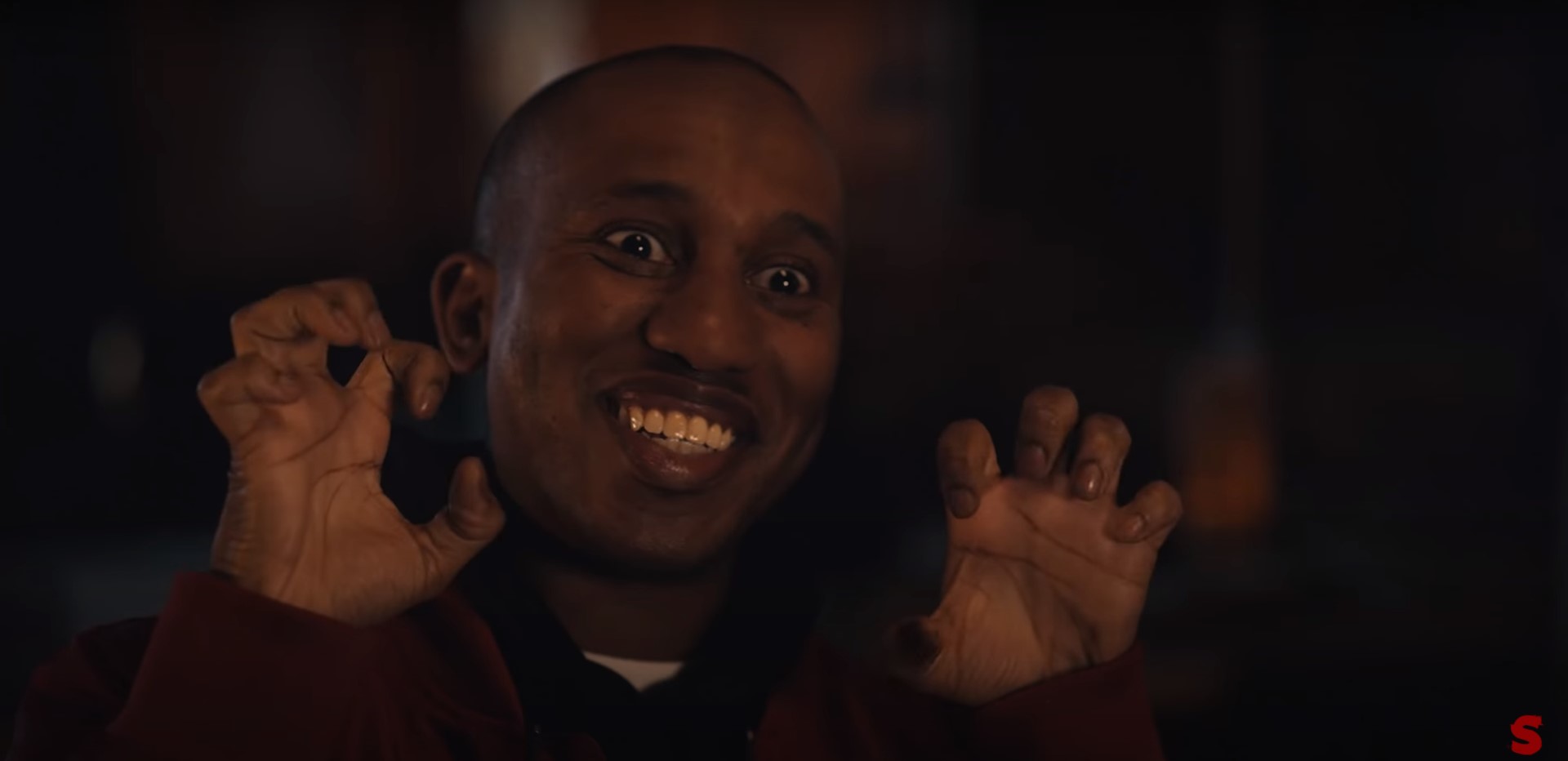
Ruben not only writes, directs, and produces his film, he also co-stars as Fred. With this Andy Serkis like looks, motions, and vocal talents, Ruben is a master at amplifying impressions and slapstick from the beginning as Fred using his unrestraint, and probably unstable, imagination to try and write a bestselling horror novel to help him get out of a life funk. Then, their is Aya Cash, who I have personally adored since her villainous role on Prime Video’s “The Boys.” Much like that role’s personality of the super-sadist Storm Front, Cash just dons snarky assertive woman to perfection as she continues the trend by embodying bestselling new age novelist Fanny with such. Fanny downright emancipates…I mean, emasculates…Fred at every chance and at every step along the way despite her warming up to Fred’s kooky lackadaisical first impressions with a side dish of caution for those who yearn for story ideas. Ruben and Cash bounce incredibly well off each other to the point of credibility between the dynamic and the dynamic is far from being a romantic love interest but more so an unlikely best friend; a best friend who constantly proclaims white male privilege whenever the opportunity presents itself. The funnies also keep on coming, especially mixed into the dialogue details, that are sharpened by Ruben and Cash’s timing and delivery telling their individual stories and the reactions each have during them, but then blend into that batter of bust-a-gut with comedian and “Vampires vs. the Bronx” actor Chris Redd, consider your every funny bone in your body rigged for explosion with the trio’s insanely charismatic skits and a musical number about a Devil possessed pop star to die for. Bringing up the rear of the comedic cast is “Key and Peele” writer Rebecca Drysdale.

If you had told me that “Scare Me’s” premise was two writers telling each other scary stories during a power outage, the film would have been near the forgotten bottom of my must-watch list with the inane dancing of “Orgy of the Dead” and the prosaic “Paranormal Activity 4.” After watching the film, all I have to say is this, Mr. Ruben, please accept my heartfelt apology for manifesting one single brain cell of doubt as “Scare Me” is the five-star movie everybody needs to see. I am not worthy. The idea behind the movie is simple, yet novel, that never ceases to peak as Ruben’s film perpetuates a steady incline of sharp-witty dialogue, an involved and spot-on sound design to create the stories’ allusions, and a trope-less ending that fits “Scare Me’s” unique, unbridles nature without being a grandiose end-all finale. Without the punctuating special effects, Ruben definitely curved a workaround with smart dialogue, entertaining writing, and with a cast who couldn’t sell the idea any better. The work lies severely on the shoulders of Cash, Redd, and Ruben and without them, “Scare Me” would probably been acerbically be retitled as “Bore Me” under the breath of many frustrated genre fans. Also, just because there isn’t knock-your-socks-off special effects, that doesn’t mean there was zilch as Fred, Fanny, and Carol (Redd) enact each stories, a slither of their dread-addicted imaginations comes to fruition like window glimpses into their minds and, damn, they can really sell their fear-stroking dark fantasies by telling classic tale spinoffs that could parallel cult favorites, many that were namedropped throughout the 104 minute runtime. “Scare Me” is without a doubt pure love of the genre and a tinseling homage to the macabre.

Better late than never, they say, in viewing Josh Ruben’s bewitching “Scare Me” on UK Blu-ray distributed by Acorn Media International. The region 2, PAL encoded BD25 presents the film in 1080p on a streaming platform dictated 2:1 aspect ratio. Aside from the bookend snowy landscapes and exteriors, much of the setting is located inside the compact two story cabin in the woods in which cinematographer Brandon H. Banks breaks into his debut feature with getting the precise angles to reassure and reaffirm Fred and Fanny’s telling of scary stories. As far as visuals go, the digital recording compression seems to hold up on the BD25 while still flaunting a good amount of bonus material and an English language Dolby Digital 5.1 surround sound. No issues here with the audio with phenomenally clarity in the diversity of sound bites and in dialogue even with Ruben and Cash’s modifying their voices for story characters. There isn’t a lot of actions to hone on and rein in the depth, but with this type of story inside, as aforementioned, a compact cabin, depth won’t make or break the audio report card. Special features include a director and cinematographer commentary, short interviews with the Ruben and Cash that run through their favorites things inside the horror genre, a behind the scenes photo gallery, a Make Cool Shit Podcast, outtakes, and “Feel the Music, Feel the Light” music video. I’m always up for a good tale of Fright and “Scare Me” slashes all the boxes with a traditional layout themed by envy and has a cast that illuminates each and every scene with funnies and fear.