Cartagena’s Secrets are Mountainous EVIL Aliens! “Top Line” reviewed! (Cauldron Films / Blu-ray)

When Everyone’s Out To Get You, You Get “Top Line” on Blu-ray!

Washed up, alcoholic feature journalist Ted Angelo drinks himself into a stupor on the porticos of Columbia.  Having just been fired by his magazine editor for lack of content, Angelo scores big when led down the path of ancient tribal artifacts that proves the terminus of one of Europe’s famous new world explorers, rewriting history of the disappeared pioneer, but what he truly discovers is bigger, and more frightening, than history itself as he unearths a large alien spacecraft hidden within the Columbian mountains, big enough to enclose the explorer’s lost mast ship.  The discovery of a lifetime becomes the bane of Ted Angelo’s existence as he’s suddenly on a kill list and every organization, from the C.I.A., to the K.G.B., to former Nazis, is hunting him and wanting him dead.  Unable to trust anyone and nowhere to run and hide, the desperate writer is determined to expose the secret-to-kill-for to the world but not if the aliens have anything to say about it. 
Let’s talk about a film that is a bit of a smorgasbord with tapas plate tastings of just about every genre that exists.  That’s one way to serve the description of Nello Rossati’s “Top Line” with an inarguable action coating menu overtop the varietal lifeblood veins of science fiction, espionage, drama, parody, horror, and driven by a sensationalized historical context.  Directed under Rossati’s Americanized pen name, Ted Archer, and known alternatively as “Alien Terminator,” “Top Line” tries to appeal to western audiences with brazenly broad script cowritten by “The Woman in the Night” director and Roberto Gianviti (“Don’t Torture the Duckling,” “Murder Rock”) at the height of Italian ripping of popular American movies.  Filmed on site in Cartagena, Colombia, the Italian production was produced by Luciano Martino (“The Island of the Fishmen”) and productionally sanctioned under companies Dania Film, Reteitalia and the National Cinematografica. 
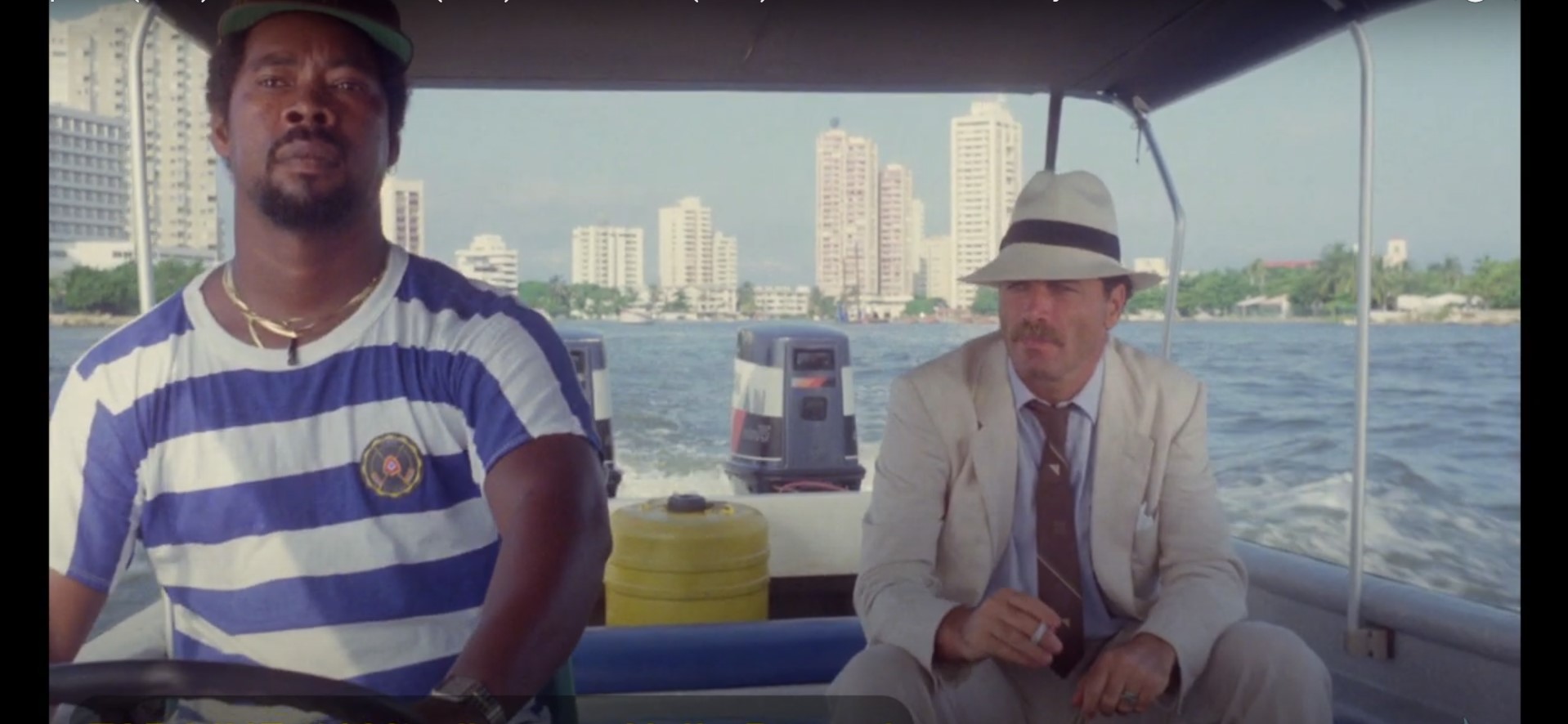
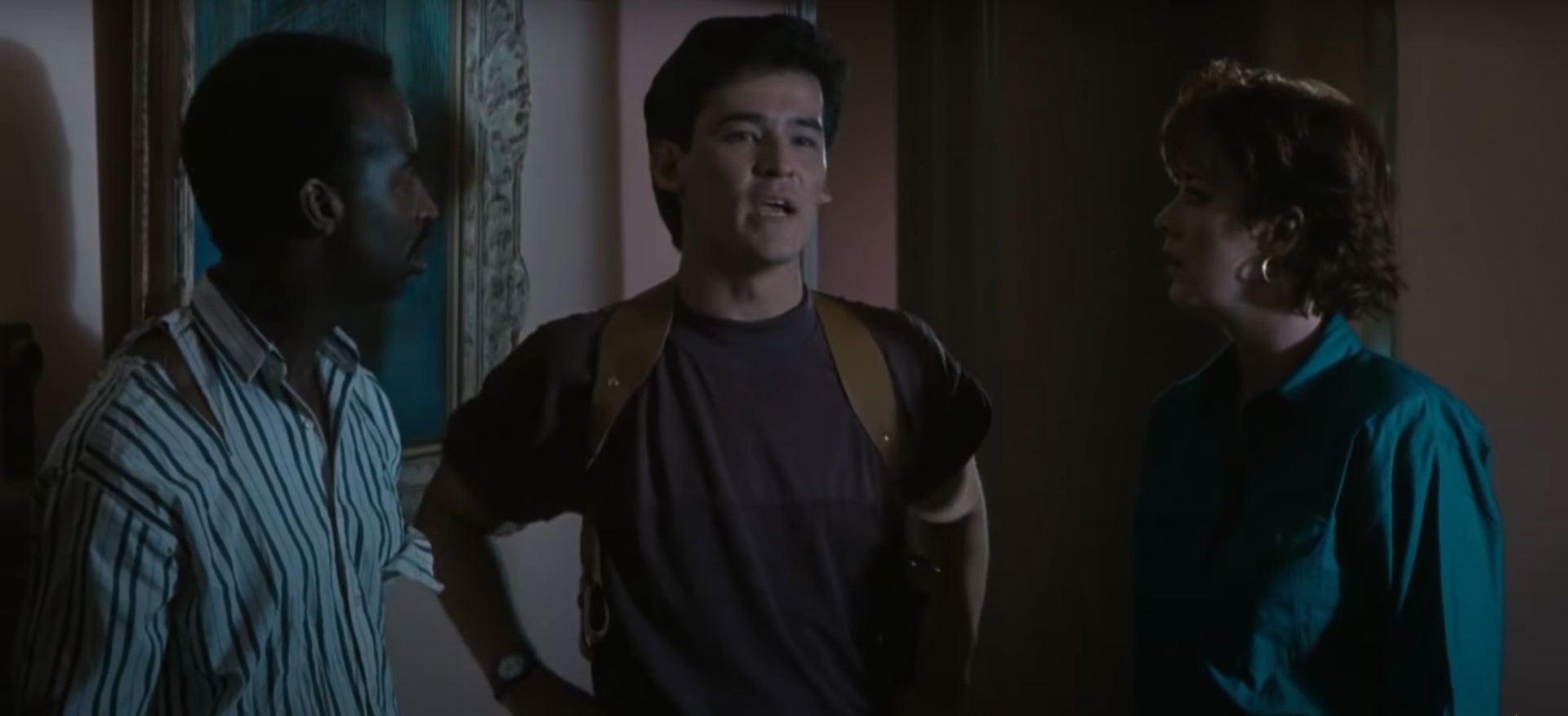
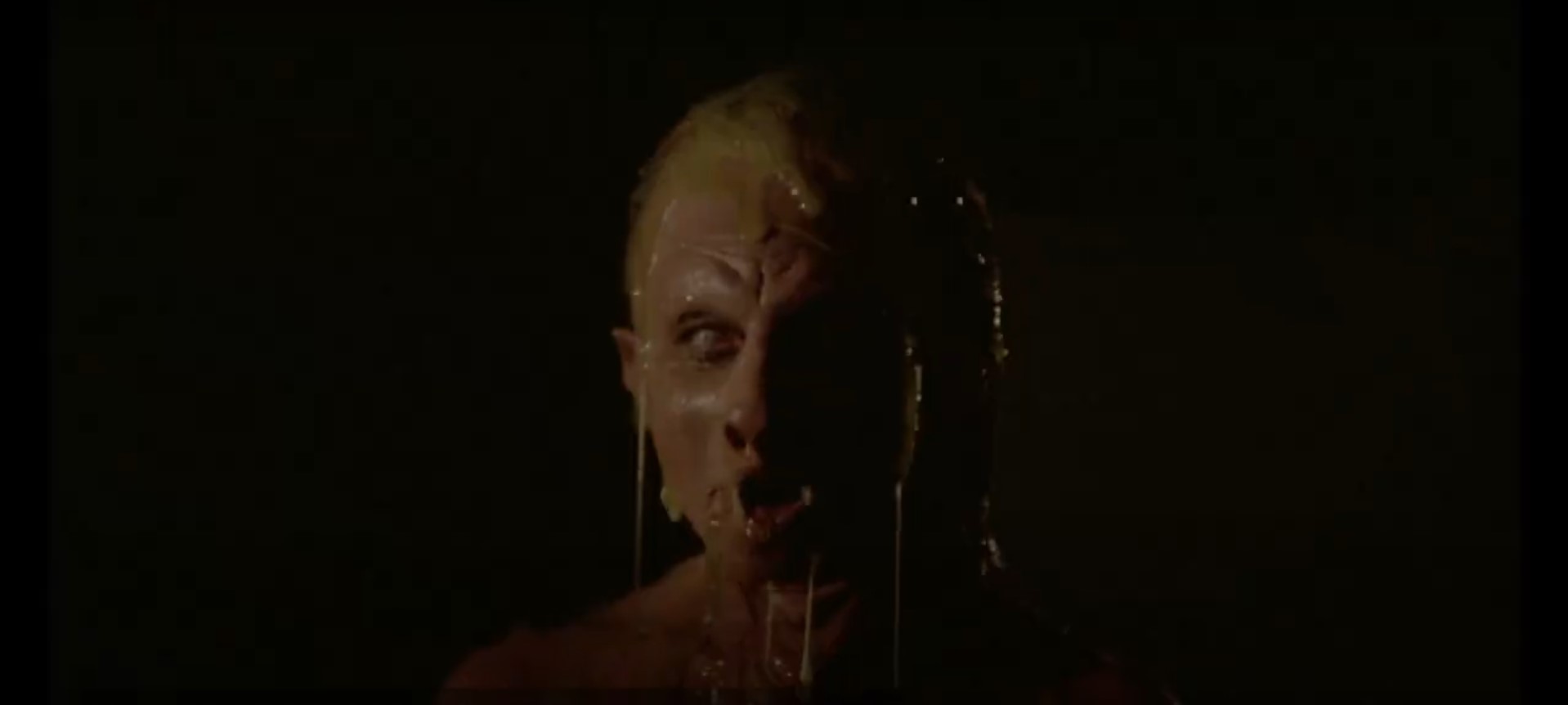
What’s likeable about Ted Angelo is he’s simply a writer.  He’s not a crack-shot, he’s not a world-class fighter, and he’s not one for conjuring up a complex master plan.  Instead, Ted Angelo is a flawed man under the influence of a bottle and is a low-level womanizer where the bedroom interests are more about local information than about the sexual activities.  Franco Nero (“Django,” “High Crime”) goes against his multifaceted ruggedness and muscular physique to be the more of an adaptable and instinctual hero that tries to make up for slouching about Columbia’s drink selection.  Nero’s the hero while Deborah Moore, of “Warriors of the Apocalypse” and daughter of former James Bond Roger Moore, tiptoes about the love interest trope after her character’s senior colleague, who is also Angelo’s good friend, is murdered in the plot and the two become intwined and more goal oriented in unearthing the reason in a minor ploy of revenge.  Yet, the trick is on them after discovering a U.F.O. right in their mountainous backyard and the hunt for their lives is on by a former Nazi and antiquities collector Heinrich Holzmann (George Kennedy, “Naked Gun”), a whole slew of clandestine organization spooks, and Rodrigo Obregón (“Savage Beach”) doing his best Arnold Schwarzenegger “Terminator” act as a large cybernetic man with a stoic and half-exposed face.  “Top Line” supporting cast includes William Berger (“Devil Fish”), Sherly Hernandez, Larry Dolgin (“Caligula:  The Untold Story”), Steven Luotto, Robert Redcross, and Mary Stavin (“House”) as Ted Angelo’s ex-blonde beauty editor girlfriend.
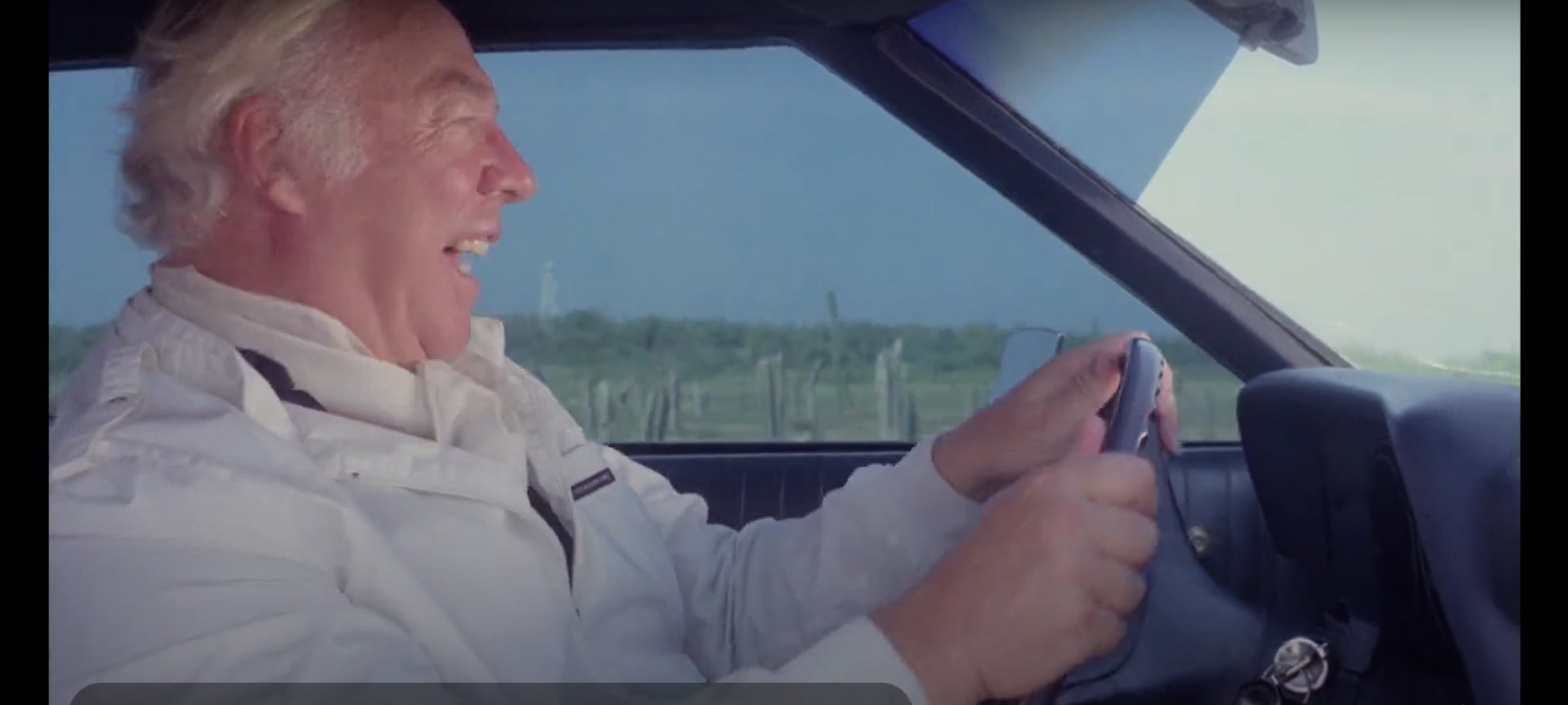
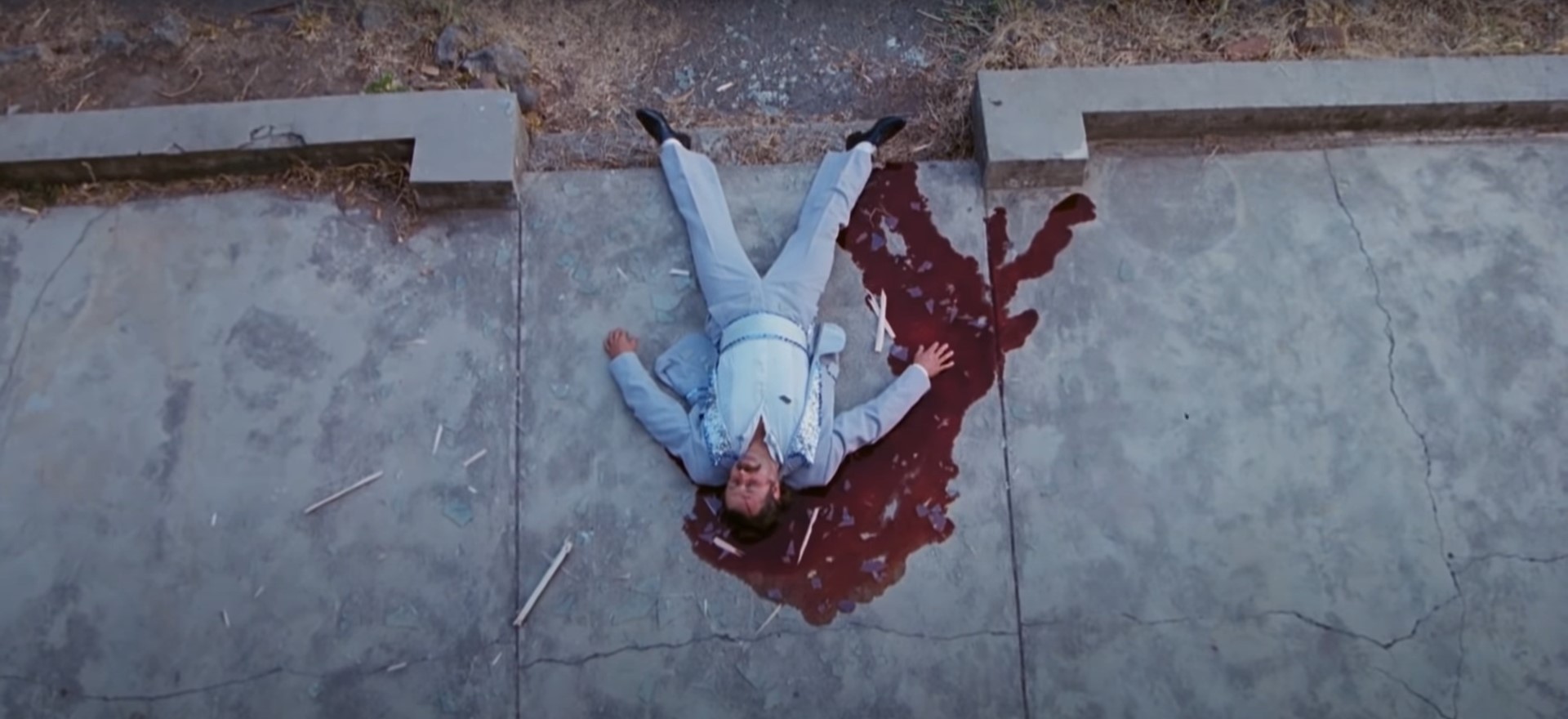
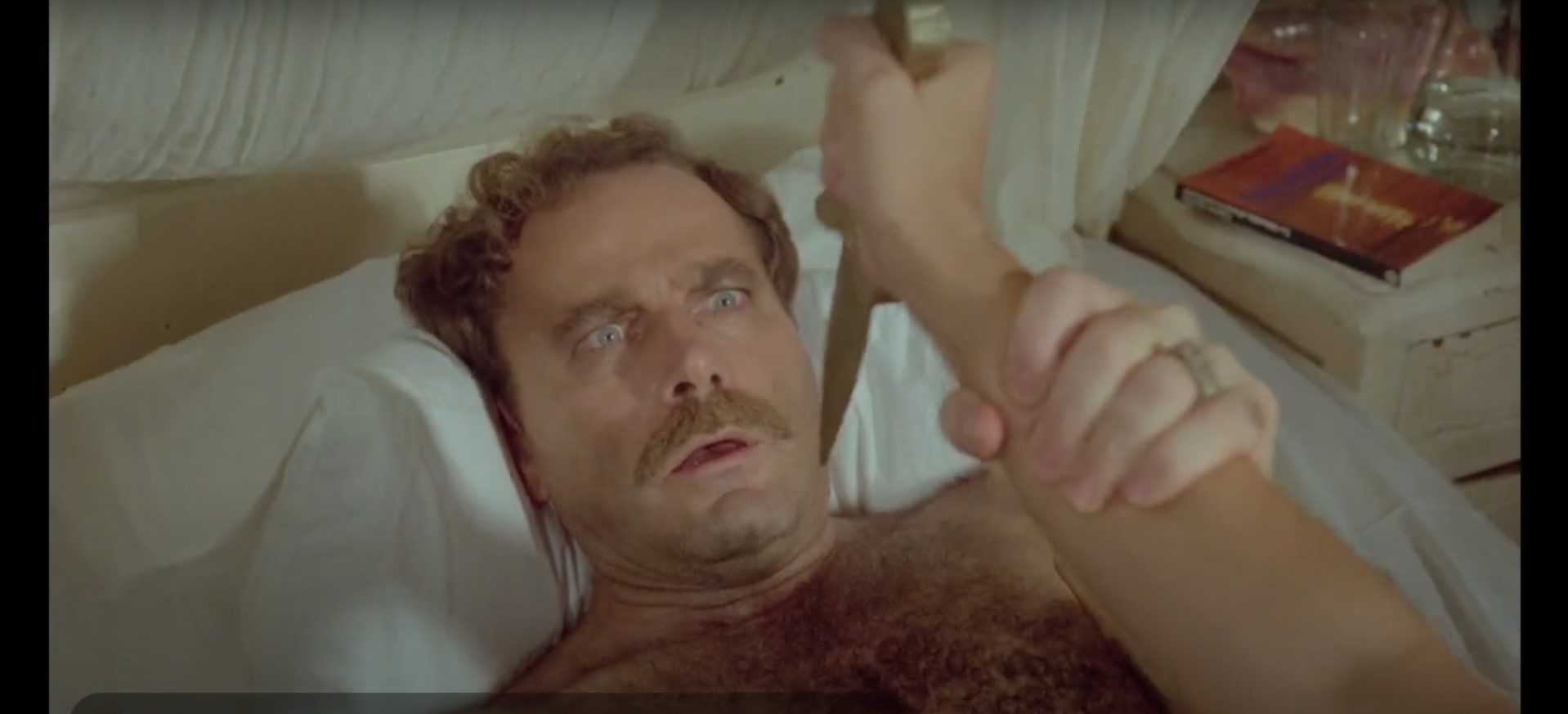
“Top Line” has one of those cinematic stories that’s all over the place pieced together by western inspiration like some sort of genre stitched together Frankenstein’s monster.  Unlike the flat top and bolt-necked creature born of electrical current and held together by suture and mad scientist sorcery, “Top Line” doesn’t have any hideous scars or an unfavorable attitude deterrent but what the Nello Rossati film does feature similarly are the monstrous best parts, such as unpredictability, a pendulum of excitements, and an everyone has grabbed their pitchforks and is out to get you sentiment.  “Top Line” is a wild, exciting, volatile ride set in the heart of a landscape and culturally showcased Cartagena and the ever game, Italian actor Franco Nero at the helm steering what at first appears to be an adventurous escapade of treasuring hunting and covert coverups in act one and two suddenly careens into an assault of astro-terrestrials forces to the tune of the fourth Indiana Jones film, “The Kingdom of the Crystal Skull, by crescendoing third act.  “Top Line” is just as theatrically thrilling without the whipcrackin’, fedora-wearing, family friendly archaeologist with multiple blood squib shootouts, a superb tongue-and-cheek car chase down winding mountainside road, and the hydraulics-driven special effects transfiguration your eyes need to see to below.
Cauldron Films proudly presents “Top Line” onto Blu-ray for the first time, the resulting 2K transfer sourced from the camera negative. The AVC encoded, 1080p high-definition, BD25 decodes a clean, color stable picture that feels organic around the diffused color scheme, and that palette pops without being artificially enhanced. Grain appears in check, natural, and consistent throughout. Presented in the original aspect ratio, a widescreen European ratio 1.66:1, does capture the grandiose of a 17th century exploration ship inside the cavernous mountain without a squeeze of the frame, providing more depth with the help of the art direction to visualize and construct an actual set. Textures, fibers, and other tactile s are limited around the jungle setting that does offer a nice leafy and lush setting that depicts a thicket of a developing country without just being a smear of the same color arrangement but outside of that, what does source de facto is sumptuous textural material. Two audio options are available to choose from with an English DTS-HD Master Audio 2.0 mono and an Italian DTS-HD Master Audio 2.0 mono. The Italian is done in post with ADR and has that nagging space between action and voice while the English track goes through less dubbing, or more exact dubbing, with Franco Nero, and other cast, having their voice heard in scene and in synch. The only issue concerning comes with George Kennedy’s dialogue which is dubbed to be more archetypical German of the Nazi-era; however, this route was not heavily travelled with very few lines being delivered by Kennedy, or rather Kennedy’s voiceover actor. Ambience travels amply and disseminates well for a single signal to travel through a stereo output and this jumps the eclectic range of action from the speakers to your ears. Granted, the action is very selective as you don’t every nuisance of jungle skirmishes and the other village landscapes, but there is enough and what’s not covered is often overlayed with Maurizio Dami’s tribal, tropical paradisio percussion and parallel synth with echoing vocal snips, such as whistling, and peppered with scene bytes – the chase sequence where the first batch of armed men running down Ted Angelo is audio composition gold. Special features on Cauldron’s standard Blu-ray contain an exclusive, new interview with lead man Franco Nero Black Top!, an interview with Eugenio Ercolani The Strange Case of Ted Archer, parapolitic researcher Robert Skvarla takes at examples of known alien sightings and speculations in Alien Terminated: The Alien Theories, an audio commentary by film historian Eric Zaldivar that includes interviews from Deborah Moore and Robert Redcross, and with additional insight on Italian cult films from actors Brett Halsey and Richard Harrison. The clear Amaray Blu-ray houses reversible cover art, both representing original artwork from the film’s release. The primary art is more adventurously exciting with Angelo’s arm wrapped around Moore and a rope, reminiscent of “Romancing the Stone,” while the interior cover plays to the science fiction side of the story, more “Terminator-y” to be exact. There are no inserts or other tangible items included. The 92-minute feature is presented unrated with a hard encoded region A playback.

Last Rites: “Top Line” is a top tier title with a little bit of everything for everybody that’s accentuated by a on-the-run Franco Nero performance with a new, gorgeous 2K transfer Blu-ray packed with special features from our friends at Cauldron Films.
When Everyone’s Out To Get You, You Get “Top Line” on Blu-ray!

A Father Goes Looking for His Missing Daughter but All He Finds is EVIL! “The World of Kanako” reviewed! (Drafthouse Films and MVD Visual / Blu-ray)

Purchase “The World of Kanako” From Drafthouse Films and MVD Visual

A washed-up former lieutenant detective now working as a lowly security guard becomes the first person to stumble into the aftermath of a gruesome, convenient store triple homicide.  After being questioned by police who suspects him of being involved because of his manic-depressive disorder, stemmed by his historical violent behavior and ugly divorce that virtually left him with nothing but his medication, the indecorous alcoholic floating through life receives a frantic call from his ex-wife about their teenage daughter, who he hasn’t seen in years and has suddenly gone missing for nearly a week.  Eager to have his family back in his life, he takes on the responsibility of investigating his daughter’s disappearance but the deeper he digs into her whereabout the more of the ugly truth surfaces between his daughter and the criminal underworld where deception, prostitution, and murder tells a different story than the one in his muddled head. 

In 2004, novelist Akio Fukamachi wrote “Hateshinaki Kawaki,” the rummaging into a lurid and pulpy underbelly of crime network through the eyes of one charismatic high school girl and her former detective father pursuing answers to her disappearance.  Fast-forward a decade later to 2014, director Tetsuya Nakashima (“Kamikaze Girls,” “Confessions”) adapts the novel’s darkness into a visual descent into lunacy under the title “The World of Kanako” from a script by Nakashima cowritten with collaboration writers Miako Tadano and Nobuhiro Monma of “3 Year Pregnant.”  The adaptation retains fidelity to the original Fukamachi story filled to the brim with violence, yakuza, sordid themes, and coldness that translates effortlessly and is well received in the likes of Japanese cinema that has decades of trenchant crime films under its wing.  “The World of Kanako” is no different yet still stands alone as an engaging entry produced by Satomi Odake (“Himizu”) and Yutaka Suzuki (“Confessions”) under the production of Gaga Communications.

The film interweaves the past and present with a bi-story to help unearth cruel intentions from what starts off as a seemingly routine plotted mystery with a degenerate, deadbeat father looking to make recompences using his investigative skills to find his daughter to quickly spiraling recklessly into an abyss of bombshell revelations.  Yet, Akikazu Fujishima continues his crusade out of his own self-pity to a more deserving, rewarding, and if not, diverting objective that reveals just about as much of his cataleptic state of being than the exhuming of his daughter’s disappearance from out of the criminal underground.  Veteran, international actor whose had roles in such films as “Memoirs of a Geisha,” “Pulse,” and “Babel,” Koji Yakusho gives a conscious performance of a flawed man with flawed tactical awareness charging headfirst and sternly stubborn into a complex web where the giant carnivorous spider of seediness hides behind the veil.  At the opposite end of the casting table is then newcomer Nana Komatsu (“Destruction Babies”) making her filmic debut in a past timeline as the titular Kanako, paralleling her father’s story by accompanying fellow high school student and constantly bullied narrator of the historical account in Hiroya Shimizu (“The Outsider”).  Kanako’s story unfolds a yakuza narrative that’s nasty and perverse while shepherding in Kanako’s role that teeters upon the audience’s perception throughout.  What Akikazu fleshes out and discovers is the reason for all the mayhem that has, more-or-less, started with him, retorting whatever sliver of moral intentions he had begun with with the fact we can’t change who we are and the children we raise in a Darwin nature or nurture, or perhaps in this case both, environment.  Akikazu and Kanako meet a variety of unsavory characters along the way that ends shockingly and cynically, completely obliterating the happy family and happy ending conventionalities.  Satoshi Tsumabuki (“Tomie:  Re-Birth”), Asuka Kurosawa, Ai Hashimoto (“Another”), Fumi Nikaidô (“Lesson of the Evil”), Aoi Morikawa (“The Killing Hour”), Miki Nakatani (“Ringu”), Mahiro Takasugi (“12 Suicidal Teens”), Munetaka Aoki (“Godzilla:  Minus One”) and Jun Kunimura (“Ichi the Killer”) portray some of those uncharacteristic archetypes.

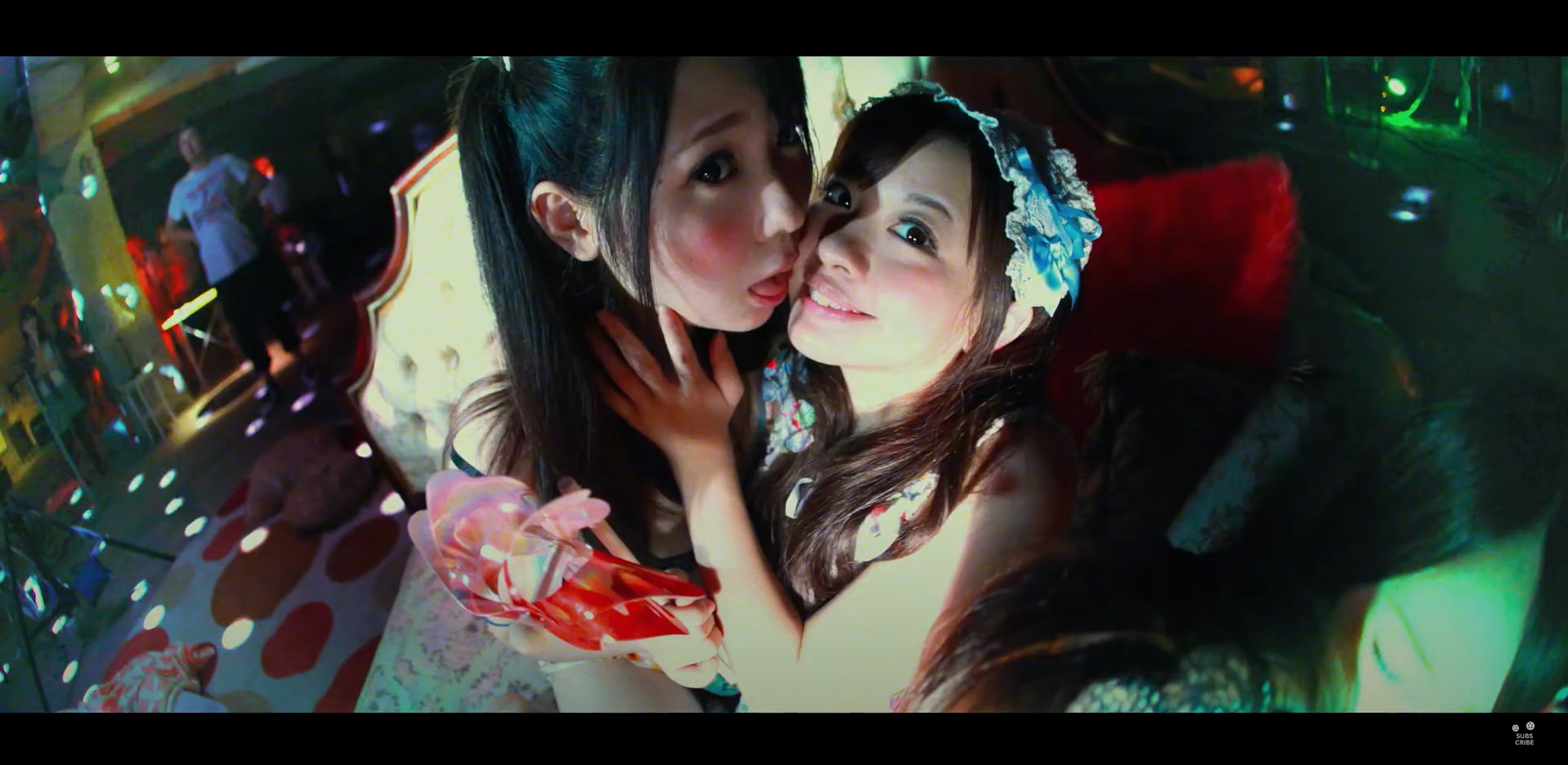
Stylish, pulpy, and darkly themed, “The World of Kanako” has a modern grindhouse pastiche of the hardboiled Japanese noir.  The story is a wrecking ball of all good ideals and hopes, a genuine cynical representation of an unpleasant situation.  An 80/20 mixture of live action and animation splice ins, Kanako’s world is certainly represented as a chaotic coup d’état over pedestrian storytelling and dissects the human condition to test family ties, reveal lost bonds, and really scrutinize hereditary genetics.  The film’s opening is a flurry of converging images, past and present, live and animation, and narration, soundtrack, and bits of dialogue that open with the gruesome convenient store murders of three people, seemingly strangers, setting the stage and tone for the rest of the Tetsuya Nakashima’s film that’s bleak to the dying core.  The rapid editing style doesn’t incur fluff or filler moments in a slimmed down for exactly what we’re supposed to experience.   While Akikazu Fujishima may not be the best example of a hero, a loafer with anger issues, physical abuse tendencies, glutton for food, alcohol, and manic-depressive pills, a rapist, and perhaps even engaging in incestual pedophile, the protagonist majority pushes forward with relentless determination and beyond the scope of being a good father to find his daughter, but for what purpose is about as ambiguous as the imbalanced human mind and Akikazu mind sizzles with insanity that affects his legacy to the point where he feels responsible for taking care of his own.  On the flipside of the protagonist narrative, Kanako begins as a savior of bullies, working to remove the threat from those too weak to defend themselves only for them to be exploited by that defenseless and vulnerability when the yakuza and more extremists take from their emotions and bodies.  

Tetsua Nakashima speaks an entirely new language in “The World of Kanako,” derived from a mix of the compellingly twisted story of “Old Boy” and the appalling violence of filmmaker Takashi Miike.  Drafthouse Films and MVD Visual re-release “The World of Kanako” on a high-definition Blu-ray.  The 2024 release comes with AVC codec on a dual-layer BD50 and presented in a widescreen 1.78:1 aspect ratio.  The various animation styles spliced into the live action coupled with some choice primary color grading in the opening gives “The World of Kanako” a very nostalgic touch of passé pink films of the 1980s and slight arthouse surrealism feel to the likes of Nobuhiko Obayashi (“House”).  The mixture doesn’t meld into one another with detrimental effect and leaves a stark impression between the formatted visuals that creates definitive delineation.  Details also don’t bleed in the sharp textures of character faces and clothing with objects being distinct and well defined.  Darker scenes are enshrouded in intentional shadow amongst grittier interiors to better understand the gritty context, losing some details but no issues with compression, such as blocking or banding. Two audio options are available, and both are in Japanese with a lossless DTS-HD Master Audio 5.1 and a DTS-HD Master Audio 2.0. Presented with fidelity, “The World of Kanako” produces no issues with either audio track with a clear and absolute. The ambience denotes a nicely spaced standard fare of common routine movements and actions around the environment setting. Outside of that, punches and kicks knock with an authenticity and same goes with gunshots and the hit-and-runs during more tense and thrilling heights. Yes, there was a lot of hit-and-runs with Akikazu behind the wheel for most of them. English subtitles synch well and appear to be error free. Bonus features a making of featurette in Japanese with English subtitles, an equally as long interview with principal leading actress Nana Kamatsu, an interview with Akio Fukamachi, and the theatrical trailer and teaser for the film. Physical features pale in comparison to Drafthouse’s first release that came with a 11″x17″ folded mini-poster and color booklet with essays and acknowledgements. This re-release favors the slimmer model with no tangible goodies inside. The standard Blu-ray Amaray has a stark front cover image of Kanako starring forward with a blood smear behind her; the disc is also pressed with this image. The Not Rated presentation has a runtime of 110 minutes and has region A playback.

Last Rites: Welcome to “The World of Kanako,” a savage acceptance of responsibility down the rabbit hole of malfeasance. Family ties be damned as one father takes it upon himself to ensure the deed is done right by his own destructive hands.

Enter “The World of Kanako” On Blu-ray Now Available at Amazon!

Heart and Body Reunited Forges Immortal EVIL! “Witchtrap” reviewed! (MVD Visual / Blu-ray)

Get Caught in the “Witchtrap” on Blu-ray!

A motley crew of parapsychologists and private security are hired to investigate the haunted house of powerful warlock and accused serial killer Avery Lauter.  Before the graveyard side home can be turned into a themed Bed & Breakfast by Lauter’s inheriting next of kin, the team is brought in to eradicate the infamous house of any kind of malevolent spirits after the mysterious and gruesome death of a magician who agreed to stay at the house as a test run of the level of malignance.  When the investigators make contact with a confident and evil Lauter, the warlock tricks them by using the team’s physical medium to murder a far-too-inquisitive investigator one-by-one in order to finish a satanic ritual he started before his death that will make him immortal.  It’s up to non-believer, and wise-cracking, private detective Tony Vincente to make sense of the murders and put an end of Lauter’s reign of terror from beyond the grave before it’s too late.

A necromantically-charged slaughterhouse of a film, “Witchtrap” is the 1989 phantasmal thriller of the omnipresent, omni-powerful dead versus a group of clueless living always one-step behind in attempting to make sense of everything.  Also known as “The Haunted” or “The Presence,” the Kevin S. Tenney written-and-directed film succeeds the director’s cult classic “Night of the Demons” and Tenney’s debut film “Witchboard,” which is not a sequel to “Witchtrap” despite a similar title and the hiring of some of the same actors.  Shot in Fairfield, California on a 400K budget, the independence production showcases topnotch gore and pyro effects from makeup artist Judy Yonemoto (“Dance or Die,” “The Newlydeads”) and special effects supervisor Tassilo Baur (“House,” “DeepStar Six”) and is produced by Tenney alongside Daniel Duncan under Mentone Pictures; Duncan also produced Tenney’s “Brain Dead” later in the filmmaker’s career.  Cinema Plus, represented by executive producer Ryan Carroll, serves as the presenting company.

Tenney has been noted saying “Witchtrap” was a gift for the actors who have stuck with him over the years, playing pivotal parts in his student films that pole-vaulted his career into being a cult horror director.  “Witchtrap’s” leading man, James W. Quinn, has worked with Tenny since grade school and was cast in a principal role in “Witchboard” as well as in a minor role in “Night of the Demons.”  Quinn’s Tony Vincente is by far the best dialogue deliverer of the principal ensemble with a smartass ex-cop script that highlights Quinn to be the good guy but while being a complete jerk.  The rest of the cast is painfully flat, with little-to-no inflections, and a severe lack of dynamism or gesticulation that, despite how interesting their character backgrounds are, are just too dull with monotone script-reading.  “Night Visitor’s” Kathleen Bailey is likely the second best to liven up her character of Whitney O’Shea, the religious and reluctant physical medium with shark thrashing spams every time Avery Lauter channels her for to violently wipe out a parapsychologist team member, spearheaded by an eager ghost trapper Dr. Agnes Goldberg (Judy Tatum, “Witchboard”) and her mental medium husband Felix (Rob Zapple), and the accompanying private security forces that also include Vincente’s partner Levi Jackson (Clyde Talley II) and boss man Murphy (Jack W. Thompson).  Dangerous ambitions and irrational greed stir the pot between each of these groupings that side with personal stake over the safety of their existence that make for better character building underneath the rickety performance framing.  And, of course, we can’t neglect mentioning Linnea Quigley bringing up the rear with her rear as the bleached blonde, cropped seater topped A/V technician that can capture ghosts with her ectoplasm detecting gear.  Quigley, and also Judy Tatum, provide a bit of T&A, especially Quigley with an eye-popping full frontal in the prime of her career.  The remaining cast includes Hal Havins (“Sorority Babes in the Slimeball Bowl-O-Rama”) as the creepy groundskeeper and J.P. Luebsen (“Witchboard”) as the cap-wearing and wild-eyed bearded warlock Avery Lauter. 

Oddly enough, what makes “Witchrap” entertainingly great, is Tenney’s attractive and amusing dialogue.  Between the quips, banters, diatribes, and the depth conversations, Tenney formulates a dialogue that can match or even surpass the outstanding special effects that course through the narrative.  Without Vincente’s brutal mockery of the entire paranormal research and investigation scheme as well as an unmercifully, nonstop degrading position toward his contentious boss, left with only the tedious prosaic to hear, “Witchtrap” would be one of those great-gore, dull-dialogue features that force your hand to fast-forward to the good parts in order to not pass out asleep from the in between drag.  Instead, “Witchtrap” is 80’s cult-horror treasure, comfortably embedded somewhere between the cinematic Earth’s lithosphere and asthenosphere layers just waiting for someone to unearth and dust off its sheening crimson colored cabochon.  Definitely not elevated horror that makes one think about the auteur intended message, the feature remains true to Tenney’s previous like-mad credits with an outlandish and mortally fair game theurgy that’s surface-level eye candy and audibly dulcet, despite the audio recording snafu that sent the entire dialogue track to the post-production recording studio.  Though producers and marketing attempted to cash-in on “Witchboard’s” moderate success with a similar, familiar title, “The Haunted” and “The Presence” are no more than generic designation fodder that lacked tremendous flavor; “Witchtrap’s” a kitschy and blunt title that works and literally estimates what audiences should and will expect although Avery Lauter is a Warlock and not necessarily a witch per se. 

A part of the Eric Wilkinson’s throwback video club and Rewind Collection series from MVD Visual, “Witchtrap” arrives a fully restored, high-definition Blu-ray, presented on an AVE encoded, 1080p, BD50 and in a widescreen 1.85:1 aspect ratio.  This transfer essentially mirrors the Vinegar Syndrome release a few years back that had reinstated many of the MPAA cuts the general public hasn’t laid eyes for nearly 30 years until 2016.  Picture quality retains a fresh, renewed look without compromising the natural characteristics, such as grain, of the 35 mm celluloid.  There are sporadic scenes that slip due to generational loss but, for the most part, a solid 2K scan restoration of the interpositive. The English LPCM 2.0 mono track is post-production concomitant due to an inexperienced sound mixer that resulted overbearing hum throughout the dialogue. ADR was introduced in post subsequently diminishing depth and creating an artificial sounding mix with a silver lining being a near perfect match for actor emotionality, inflections, and synchronization. Optional English subtitles are available. Bonus material includes a commentary track with director Kevin Tenney, producer Dan Duncan, Cinematographer Tom Jewett, and actor Hal Havins. Also included are interviews with Kevin Tenney, Linnea Quigley, Tom Jewett, and Tassilo Baur who more-or-less say a lot of the same retrospective accounts regarding “Witchtrap’s” sound issues, pranks on Kevin Tenny, cheap film hints outside of L.A., and how constrained the budget was. This release also comes with the edited VHS version at 92-minutes, same as the Blu-ray, a photo gallery, and the original trailer. Physical features include a sweet throwback cardboard O-Slipcover of the original poster compressed inside a 1-inch, matte red border that’s back and front. The O-slip covers a clear Blu-ray case that holds a reversible Rewind Collection cover art that’s roughly the same as slipcover poster art with cropped out credits for a vivid red filled, white-lined title. On the other side of the cover is alternative European cover art of a puffy white cloud merged with a demonic face hovering over a white picket fenced house, reminiscent of the MGM “Return of the Living Dead” or the original Columbia “Fright Night” DVD covers. Inside the case is a folded mini-poster of the factory-wrapped front cover. MVD’s release is rated R and comes region free. “Witchtrap” epitomizes restless ghost syndrome with a head coup de grace motif and is a seance that conjures potent witty dialogue to hoist Kevin Tenney’s third feature up to another plane of existence.

Get Caught in the “Witchtrap” on Blu-ray!

Is Your Home this Evil? House (Hausu) review!

Japanese horror isn’t something I pride myself on having a lot of knowledge of or contain much material about, but I do find enjoyment in what I come across even if the resemblance to an anime style becomes apparent in the storytelling.  I’ll be straight forward with you right here and now, I’m not a fan of Japanese anime.  No, sir.  Can’t say that I am.  However, my latest venture into the J-horror sends me back in time to the groovy year of 1977.  The film is called House and no, not the Steve Miner feature from ’86.  Also known by it’s Japanese name Hausu, House is a simple ghost tale with ambitious and groundbreaking special effects that dared much of the decade to catch up with the times.

Continue reading