Football, God, Family, and EVIL! “Him” reviewed! (Universal Pictures / Blu-ray)

“Him” Collector’s Edition Now Available from Universal Pictures!

Cameron Cade’s father has been firmly preparing his son to be a football GOAT since Cam was a young boy.  Inspired by the 8-time champion Isaiah White, star quarterback of the Saviors, Cam had trained and played through the years and ranks to be the game’s next promising rising superstar athlete.  When a mascot-dressed manic derails Cam with a head trauma-induced attack, Cam takes a step back from competing in the football showcase but receives hope when he receives an invitation from the Saviors to work with Isiah White at his isolated training camp deep in the desert.  Before long, a dream-come-true turns into a terrifying nightmare as the training sessions go deeper into something far more sinister and Isiah’s greatness may be contributed to unnatural forces bound by limited contracts.  How far and how much will Cam have to sacrifice to be the best football player ever and to live up to his idolized hero before the game and those who control it swallow his own soul. 

Jordan Peele, once skit comedian with Keegan-Michael Key in “Key and Peele” turned provocative social commentary director of such films as “Get Out” and “Us,” produces the next potshot at cultural critiquing with 2025 released “Him,” a football themed psychological horror that puts sacrifice for the game over family, intensifies the pressures of equating performance with success, and a misguidance from fatherhood/mentorship that intends on grooming a young person into superstardom.  “Him” is the sophomore feature length film for Justin Tipping who also cowrite the script along with Two-Up Productions cofounders Skip Bronkie and Zack Akers as the first major movie release for the company associated with Peele’s Monkeypaw Productions that not only produces his Peele’s own films but also invests into minority-driven projects, such as “The Candyman” remake, “Monkey Man” with Dev Patel, and Spike Lee’s the “BlacKKKlansman.” 

At top bill of “Him’s” roster is an established comedian, writer, and producer with an even more well-established and famous last name.  Marlon Wayans’s breakout project was the sketch comedy TV show “In Living Color” that also highlighted and rocketed the career of Jamie Fox and Jim Carrey but was also considered a family affair as Marlon’s siblings, Shawn, Kim, Keenan Ivory and Damon Wayans, cohosted with him the African-American centric comedy show.  In “Him,” Marlon plays the 8-time champion quarterback for a football team that is as venerated as his character Isiah White playing for the Saviors.  Wayans, known for his comedic role stints in favorites “Don’t Be a Menace to South Central While Drinking Your Juice in the Hood,” “Scary Movie,” and “White Chicks,” has a surface scratched darker side to his onscreen personas that leave him no stranger to a role like Isaiah White that’s dispassionate yet ferocious – his drug addiction role in  “A Requiem for a Dream” is one of those examples.  Opposite Wayans is the strong, muscular facial features underneath soft, piercing eyes of Tyriq Withers.  The then mid 20-year-old is in peak physical condition for his rising star quarterback Cameron Cade under the pressure cooker of family, agents, and a football league that expects greatness on every level.  Withers’ recent principal parts in perceptively pointless and under-the-radar remakes of classic cult films, “Don’t Tell Mom the Babysitter is Dead” and “I Know What You Did Last Summer,” didn’t elevate the Florida born actor into the spotlight, preparing him for an upcoming lead in a more visible original psychological horror themed around one of America’s favorite sports, but Withers meets the challenge with a promising performance for his promising character that makes “Him” standout above the rest and being his biggest role of his career catalogue.  Wayans and Withers battle out with testosterone trumping into a gray area of occultism that’s not so unlikely from the reality of professional sports.  The principal leads are supported by an eclectic supporting cast of eccentric oddities of the isolated training camp with Julia Fox (“Presence”) as Isiah White’s fast-and-loose, high-end wife Elise, standup comedian Jim Jefferies as White’s personal athletic physician Marco with baggage regrets, Tom Heidecker (“Us”) as Cade’s hype manager Tom, Indira G. Wilson (“The Perfect Host”) as Cam’s mother, and Richard Lippert (“Scare Us”) as the saviors behind-the-scenes owner. 

“Him” came and went from its theatrical run so fast it feels like only yesterday trailers were being played on commercial breaks and on online previews, denoting Justin Tipping’s movie offering not finding a significant audience for the anti-pro sports treatment of players message.  That’s what “Him” powerfully engrosses with is an anti-football message of dog-eat-dog cruelty that cannibalizes itself for what’s best of the sport and discard those who give the sport it all once their eliteness has been completely emaciated, as if the sport is a vampire and drains their athleticism through the carnivorous canines of fans, team, and ownership.  Tipping and his cowriters integrate religious and Roman motifs that relate the gridiron as Church or the blood of the GOAT coursing through another that offers divine playing sacrifice and supremacy while certain aspects of the film regard the football fields as coliseum with players being gladiators with even the finale reenacting scenes similar to that of “Gladiator.”  Along with those strong imageries, iconographies, and representations, Tipping’s linear telling of the story feeds off the phantasmagory and being on the edge of experimental that, in turn, puts into question Cameron Cade’s reality as everything he experiences from the ominous weirdness pulsating his path forward in football to the macabre training and cultish indoctrinations of Isiah White’s desert training camp don’t come about until Cam’s whacked over the head with a long handled and ornate hammer.  Then, the question becomes, is Cam in dead and a warped purgatory?  Is Cam hallucinating?  Or is Cam actually experiencing the darker side of a game he’s been bred to believe in and be the best at.  All of those existential and surreal components overload “Him’s” highbrow and social commentary horror that will fly over the audiences’ head like pre-game ceremony fighter jets. 

“Him” arrives onto a collector’s edition Blu-ray and digital combo set from Universal Pictures.  The AVC encoded, 1080p high-definition, film is stored on a BD50, ensuring room for a visually and audibly stimulating tryout of pigskin piety.  Infused darker tones of shadows, Brunswick greens, and plenty variations of brown from the football to the desert located training camp, there are a very few contrasting moments that embolden cinematographer Kira Kelly (“Skin in the Game”) to emerge out from the hefty draping shadows that obscure much of the compounding and confounding irrationality of the insular football fanaticisms.  Kelly utilizes an array of long to closeup shots from different scenes or even the same scene to throw off the balance and provide depth when needed for the moment.  In addition, the same moments can be implanted with a personal bubble of surrealism through Cameron’s perception of events, never leaving other characters to define the atmosphere or the behaviors that are inherently set by the principal lead character, who or who may not be suffering from an intense concussion untreated unintentionally by the internal turmoil of family politics.  Detailed textures and skin tones have organic qualities, and the X-ray vision has seamless segue with all its intensified bone crunching hits.   “Him” is presented in a widescreen 2.39:1 for an extra stretch of spherical sighted surroundings that work to enclose on Cameron the deeper he’s in with the mentor’s program as well as to fully embrace his destiny with obstinance in the grandest of finales.  The Blu-ray has encoded four audio option a with English Dolby Atmos, a Dolby Virtual Speaker 2.0, a Spanish Dolby Digital Plus 7.1, and a French Dolby Digital 7.1.  All options offer extended reach into the audio localization areas of the compressed, multiple channel formats, and even the DVS adds a little extra to throw sound inside a three-dimensional space which is important for “Him’s” haunting and bizarre oneiric structure.  The Atmos provides more depth and richer lagniappe effort where it comes with Cameron’s perceptive discords of racing arguments and whispering inceptions.  Dialogue is clean and clear throughout, and no issues imposed on The Haxan Cloak aka Bobby Krlic’s subtle descent of a score.  English, French, and Spanish subtitles are available.  Bonus contents include feature commentary with director Justin Tipping touching upon production areas and the cast to create his footprint as a movie artist, an alternate ending, a removed end credits scene, a handful of deleted scenes, two deconstruction of scenes on how they’re made, Becoming Them looks at Tyriq Withers and Marlon Wayans transformation into elite athletes, The Sport of Filmmaking featurette offers a behind-the-scenes look at production of “Him,” and the Hymns of a G.O.A.T. has composer Boby Krlic’s detailing the elements in creating his movie score for the film.  The collector’s edition also comes with a digital code insert to stream or download from anywhere on any device.  The physicality of the collector’s edition is more to the tune of a play fake that doesn’t allow the release to run with an overloaded package.  Instead, Universal laterally passes with a cardboard slipcover with an embossed title for some smooth font texture.  Instead, the standard VIVA case houses the same artwork as the slipcover without the raised lettering and the disc is translucently pressed with the title and film and format technical credits.  “Him” has a runtime of 97 minutes, region A encoded playback, and is rated R for strong bloody violence, language, sexual material, nudity, and some drug use.

Last Rites: If you’ve ever thought professional sport players were commodities before, “Him” brings the blitz of putting football above it all by bringing divine blood, sweat, and tears into a cult of sadists and stardom.

“Him” Collector’s Edition Now Available from Universal Pictures!

Awesome Boy and Bludgeon Man Fight EVIL at “Slaughter Beach” reviewed! (SRS Cinema / DVD)

July 4th Is Here! Time to hit “Slaughter Beach” on DVD!

Ralph and Barry are best buds.  They’re best buds freeloading off Barry’s father’s shore house during the height of Slaughter Beach’s Summer season.  When Barry’s father becomes annoyed by his adult son and friend’s loafing, his ultimatum to them is to get a job or get out, but the touristy destination of Slaughter Beach has nearly become all but a ghost town as businesses and tourism shut down or come to a slow crawl after a string of mysterious disappearances along the beaches and boardwalk.  Barry’s idea to become vigilante crime fighters, under the hero names of Awesome Boy and Bludgeon Man of the duo’s moniker The FenderBenders and hoping to resurrect the once booming vacationing hotspot back to its full former glory, reels in a boatload of trouble when a salty, horseshoe crab fisherman behind the disappearances casts his deadly fishhook line toward the wannabe crime fighters to make chum out of them and anyone else who crosses his path. 

“Slaughter Beach” is the buddy horror-comedy and slasher set on the American Eastern shorelines of not the actual Slaughter Beach of Sussex County Delaware but actually shot 25 miles north in the more populated Rehoboth beach.  The 2022 released, Daniel C. Davis written-and-director feature is “The Scarecrow’s Curse” and “X Knight Escape from Warp Hell” actor’s third film in a decade span.  The Delaware-born, Wilmington University graduate continues his grow his independent filmmaking career in his home state and the surrounding metropolitan, tri-state area.  His latest directorial lands him on the Eastern beaches of Delaware with filming done mostly at night during the tourism offseason, allowing more wiggle room for shooting, less hassle from onlookers, and a better chance at snagging shooting locations that would be, perhaps, heavily trafficked during peak months.  “Slaughter Beach” runs under Davis and Brett Taylor’s production company, Clockout Films, and is produced by the two filmmakers alongside Jim Cannatelli (“Yester-Years”).

“Slaughter Beach” is amazingly well dialogued in the comedy context for a low-budget, independent feature and without the principal leads, the hapless and hero-lite buddies, of Jon McKoy, who I still recall his similar performance in “Easter Sunday,” and Ethan Han, in his debut feature film role, “Slaughter Beach” would have flop hard like a fish out of water, gasping for a watery breath.  Between McKoy and Han, Ralph and Barry’s antics are contrived out of dunce energy with good intentions that slow churns infectious wit to character likeability.  Their crude innocence faces impossible trials when against a foe that tests their trying not-very-hard heroic vigilantism on the shore’s boardwalk.  Jim Cannatelli, yes, producer Jim Cannatelli, dons the Sou’Wester hat and chest waders for the crazed Fish Man Sam’s crusade on hooking Lilith, the mythical and monstrous horseshoe crab, with his special human bait from wielding a weaponized line and lure and fishhook to gut and chum his victims.  In an appearance very similar to The Fisherman in “I Know What You Did Last Summer,” Cannatelli’s twist hits the old seadog stereotype complete with nautical vernacular and is a fine comic book antagonist to the campy, counterpart sideshow that is Ralph and Barry.  However, the standoff between good versus evil is held to the very end with Fish Man Sam angling boardwalk and beach patrons to their deaths, that’s closer to shooting fish in a barrel with support bit parts performances from mostly Davis casting regulars, such as Amy Lynn Patton, Michelle Qenzel, Keith Crosby, Shawn Shillingford, Heather Street, Kiyneeanay Dykes, and Ethan Han’s actual father, Oscar Aguilar, playing Barry’s dad.

There’s no shortage of zaniness, slapstick, or waggishness in Davis’s “Slaughter Beach.”  Same goes with the horror façade that’s well framed around the comedic core.  “Slaughter Beach’s” terror won’t be a trepidant of tension or knock off your tacklebox with fright, but Davis shows obvious signs of paying attention to the what-works in horror motifs with the crafting of looming angles, danger-building and coherent editing and score, and a villain that might be a caricaturable and an exaggeration vocally but appears damn right creepy in the background as the obscured and shadowing lurking fisherman.  A gory practical effects décor by Trauma Queen FX special makeup and effects artist, Isabelle Isel, elevates the feature’s victim pool to an anticipation level amongst the audience to see what Fish Man Sam has in store next for his ice chest full of horrors.  While visually alarming and usually frightening in nature, the villainous veneer and gore-soaked effects are not excluded from the comedy tone with the fishing themed gallows humor that’s about as ridiculously funny as it sounds.  What isn’t as fleshed out as hoped was Fish Man Sam’s obsessive and radical pursuit of bagging the giant horseshoe crab he’s bestowed as Lilith.  Its an important motivation factor that drives the deranged angler left to swim upstream and doesn’t elaborate and relay Ralph and Barry’s foe sympathetically as a man on a mission.

The Clockout Films production has been picked up by the longstanding zero-budget genre label, SRS Cinema, for the at home DVD release.  “Slaughter Beach” is MPEG-2 encoded onto a single-layer DVD5 with a 720p resolution and is ungraded.  With nearly zip on the hue saturation and stick with a lower resolution, “Slaughter Beach” is able to compress adequately, suppressing any major artefact issues to lesser posterization, and keeping a soft, yet relatively clean image that doesn’t focus on stylistic highlights but rather draws all the attention onto the buddy heroes and the gore.  Lighting is retained by the array of brightly lit Boardwalk bulbs, some specialized muted-colored uplighting for a slightly retro feel, and natural lighting, reducing much of the beachy backdrop to a black void that centers the characters without much depth to delineate within the widescreen 1.85:1 aspect ratio.  The English LPCM 2.0 stereo track musters enough strength from the blemish-free boom recording.  No crackling, hissing, or any other kind of distortions on the dialogue or LFE layers, suggesting that care was put into the audio, and it rightfully shows a coherent and competent mix with alternative-punk-ska tracks from The Jasons, Station, and Skatune Network.  Dialogue clear, clean, and prominent.  There are no optional subtitles available.  Special features include a feature length commentary with a roundtable, ride along discussions with director Daniel C. Davis, stars Ethan Han and Jon McKoy, producer and principal Jim Cannatelli, and director of photography Brett Taylor.  Also included is a raw footage gag reel and SRS trailers, one of which is for “Slaughter Beach.”  The extremely detailed and aesthetically illustrated cover art gives the physical DVD a lucrative eyeful but the release do not credit the artist, nor do I see a signature hidden inside the tonal shades. The region free SRS DVD has a runtime of 80 minutes and is not rated.

Last Rites: “Slaughter Beach” is more than a head in the sand thriller; the Daniel C. Davis horror-comedy paces to deliver timely laughs as well as casting flesh-ripping, barbed lures that easily hooks us for more giggles and gore.

July 4th Is Here! Time to hit “Slaughter Beach” on DVD!

The EVIL is Inside Me! “Nightmare Man” reviewed! (Ronin Flix / Blu-ray)

“Nightmare Man” Is Here To Haunt Your Dreams in High-Definition!  Blu-ray Available at Amazon.com

To channel mystical help with her and her husband’s fertility issues, Ellen purchases a mask from overseas that supposed to provide fruitful results.   Instead, Ellen is plagued by nightmares of a demon figure, forcing himself onto her with a maniacally grin.  Diagnosed a paranoid schizophrenic and on medication to dilute the vivid dreams, Ellen’s husband chauffeurs her to the mountain isolated Devonshire Institute to commit her for treatment, but when the car runs out of gas and her husband ambles for gas, Ellen finds herself alone in the car at night and with the nightmare man lurking outside,   Escaping barely with her lift now that the physical form of her tormentor is no longer just in her dreams, Ellen takes refuge with a pair of couples celebrating an engagement party.  Rambling erratically about an entity no longer inside her, a debate between the group of friends question Ellen’s sanity until the nightmare man shows up and slaughters anyone in his path, but the party’s just beginning when another killer has been freed from suppression.

Pivot stories are the best!  The investments into a foundation roots a focus, provides a clear understanding of the forthcoming, and can be, for better or worse, an expectation of narrative structure.  What happens when a monkey wrench is thrown into the story and completely bends the storyline at a 90-degree angle onto another totally unexpected path?  Some would be too jarred by the jerk toward another direction, coming out of the film with a severe case of whiplash that joggles and boggles the mind, while others, like myself, would find a refreshing phoenix out of the tired ashes of a stale genre and welcome it with open, grateful arms to keep my rear-end sewn to the couch and eyes glued to the television to see what happens next!  Writer-Director Rolfe Kanefsky (“There’s Nothing Out There,” “Art of the Dead”) alters the early 2000s post-“Scream,” masked-slasher with a twist and never second guesses the decision to bounce from out of one subgenre and into another without skipping a beat.  “Nightmare Man” is a production of Delusional Films and is non-SAG, shot in the area of Big Bear, California, produced film by the father-son team of Rolfe and Victor Kanefsky and Esther Goodstein, and Frederico Lapenda.

What’s very curious as well as fascinating about “Nightmare Man’s” character hierarchy is that there isn’t just one lead principal throughout the film.  In fact, lead principals change hands at least three times and also misleads audiences into thinking someone is going to charge of the situation only to be cut down in a blink of eye and a jolt to the normal hardwires of our cerebral higher functioning.   The titular star of Rolfe Kanefsky’s “Jacqueline Hyde,” Blythe Metz, returns to work with the filmmaker as a woman overwhelmed by dreams of a demonic dybbuk of sorts who chases her and tries to force himself onto her, into her, in a violating way.  Metz convinces much later as someone suffering from delusions and paranoia but her Ellen character, a woman who is supposed to be wealthy from some of the dialogue bits, is a bit more lucid and grounded early into the story with only her frustration to lean back on to warrant being committed, which seems like a harsh and unconvincing setup for the character that also induces early suspicion on her husband’s (Luciano Szafir, “Hopekillers”) eagerness to check his wife into a mental institution.  Before long, we’re introduced to two couples, played by Jack Sallfield (aka Jack Sway), Johanna Putnam (“Feast II and III”), James Ferris (“Jacqueline Hyde”), and every fan’s favorite scream queen, who’s currently playing a reoccurring character in season 3 of “Picard,” Tiffany Shepis (“Abominable,” “The Black Room”), partaking in an intimate celebration and partaking in what mostly early 2000s portrayed characters love to participate in – sex themed conversation, games, and forbidden secrets.   Soon, the two parties collide when Ellen is chased through the woods by her African horn-masked dream stalker (Aaron Sherry) and then the situation turns into mice in a glass cage with a snake circling hungry.  Shepis doesn’t stray terrible too far from her normal cache of credits or Tromaville antics as a provocative, promiscuous, and downright master of her domain with intent.  While Shepis doesn’t necessarily compete with any other onscreen personas, as the long-time horror vet can steal a show with ease, we’re also treated to strong performances from her costars, such as Metz splitting into thirds with her diagnosed paranoid-schizophrenia, and we’re introduced to Johanna Putnam in her debut role as an engaged woman has who a dangling lesbian secret from her past hanging over her head.  The dynamic works not in a dramatic means but rather as a comedy portico tossed into the narrative structure to spruce up character conversing toward something humorous and interesting as arrows plunge into chests and knives are puncturing through lower jaws.  “Nightmare Man” rounds out the cast with Richard Moll.  Yes, Bull from Night Court, as well as “Scary Movie 2” and “Sorority Party Massacre, makes brief cameo appearance as the local sheriff and you need look very closely because the scene is so dark, you can barely tell it’s him. 

The one theme that keeps popping up in the recess of the mind is perhaps the one theme that eludes being talked enough about when overhauling “Nightmare Man” as a message bearer. Being an early 2000’s horror in the long established and well-dipped into the shadow of the “Scream,” “I Know What You Did Last Summer,” and “Urban Legend” franchises that defined the turn of century before it even happened might have had something to do with “Nightmare Man’s” lack of enticements for distributors to feel love for the man of nightmares and notice it for the novelty and the theme for what it is, an instilled paranoid fear that one’s sexual attacker leaves behind as a post-traumatic stress bomb that is everything all consuming. Kanefsky patterns the hallmarks of rape trauma stealthily into the script, disguised as a shadow, with a teethy mask, and vividly glowing and menacing eyes. Some other scenes are more obvious than others, such as Ellen’s dreams of the sinister smiling figure pinning her to the attic floor and spreading her legs right before she wakes or when she cries out, “I still feel him inside me,” while held up inside the cabin, with Kanefsky painting with a broader brush on “Nightmare Man’s” obscured presence and masked killer with an agenda that attaches itself directly in avoidance of calling a spade a spade. The kills and gore effect gags can stand up against any big budget, Hollywood production and are just unique enough to make the killer interesting in diversity and brutal enough to give “Nightmare Man” an edge sharper than the knife he wields.

If a Tiffany Shepis fan, or a fan of Tiffany Shepis in her underwear holding a crossbow and won’t be rattled by the bent elbow plot pivot, the Rolfe Kanefsky picture is an enjoyable, campy romp that gives homage to the horror films that have set the scene for “Nightmare man” to exist.   Ronin Flix plucks “Nightmare Man” out of standard definition dreamland and into the reality of high-def, 1080p Blu-ray.  Presented in an anamorphic widescreen 1.78:1 aspect ratio, the story is set almost entirely at night with more household lighting for interior shots and not too much exterior lighting to brighten objects or even cast hard-edged shadows.  While this creates more realistic atmospherics of isolating apprehension in the woods horror, Kanefsky and cinematographer Paul Deng (“Trancers 6,” “Song of the Vampire”) bathe many of the night shoots in deep blue tint and the Ronin Flix transfer appears to display in low contrast and is very dark, leaving focal objects nondelineated and obscured.  I haven’t checked out the Lionsgate After Dark DVD print of this film so I can’t compare.  There some dip in the compression decoding as the release hovers in the mid-30Mbps for good periods of time but does dip into the lower 20s and it shows with light phasing macroblocking.  When not bathed in blue, skin tones and grading often look natural and palpable.  The English language DTS-HD 5.1 Master Audio is balanced between all levels tracks, putting the dialogue in the forefront, keeping the range of ambient noises at an appropriate depth, and a soundtrack that maintains tensions rather than over intensifies to a fault.  I will say that the multi-channel lacked a significant stalwart production that didn’t provide the anticipated strength of audio.  Dialogue is clean and clear with no perceptible issues and the overall package track can be said the same.  English SDH are optional.  With the Ronin Flix release, new bonus supplementals extend more background and insight with retrospective discussions and distribution challenges associated with “Nightmare Man,” such has a new interview featurette with director Rolf Kanefsky, producer Esther Goodstein, and star Tiffany Shepis in There’s Something Out There:  The Making of Nightmare Man and a new audio track isolating the film score by Christopher Farrell (“Bus Party to Hell”).  Also included is Creating the Nightmare:  The Making of Nightmare Man – a raw footage behind-the-scenes look at some of special effects, makeup, and off-the-cuff tomfoolery during in between take down time, extended scenes, Tiffany’s Behind-the-Scenes of Tiffany Shepis weaponizing a handheld camera with her flare of sexualized humor and potty-mouth pizazz, an audio commentary track, on the audio setup, with director Rolf Kanefsky, producer Esther Goodstein, and star Tiffany Shepis, Flubbing a Nightmare Gag Reel, still photos, and a promo reel.  The physical features include a David Levine package design of an abract-esque composite of the Nightmare Man mask, Tiffany Shepis in a bra, and a knife all splashed in red lined inside a traditional Blu-ray snapper case with no insert.  The release is locked on Region A playback and the film has a runtime of 87 minutes and is rated R for horror violence, gore, some sexuality/nudity, and language – what Tiffany Shepis release wouldn’t include all of that?  “Nightmare Man” is a dream of a subgenre-bending film; sexy, gory, intense, and unpredictable, all the prefigures of a hell of a good time.

“Nightmare Man” Is Here To Haunt Your Dreams in High-Definition!  Blu-ray Available at Amazon.com

First There Was a Good Guy Doll. Then, There Was a Turkey. Now, EVIL Comes In the Form of a “Killer Piñata” reviewed! (Darkside Releasing / Blu-ray)

A father purchases 3 piñatas for his young child’s birthday party the day before going on a weekend getaway.  His college age eldest child, Lindsay, stays behind to have a night of drinking with her best friends, one of them being her ex-boyfriend who hasn’t figured out that her romantic interests no longer lay with the entire male sex.   With the pink piñata done in at the party and the other Captain American-resembling one bashed to smithereens by Linday’s friend, the surviving donkey piñata, possessed with the bullied and vindictive soul of a piñata factory worker, is fueled by bloodthirsty vengeance and on a campaign of death as one-by-one Lori’s friends fall casualty at the paper macheted hooves of the candy-filled sinister piñata and it’s up to Lindsay and a hook for a hand, old Latina piñata shopkeeper to stop the carnage.

I, personally, never whacked a sweet-treated stuff piñata on a joyous, celebratory occasion in my 37 years of growing up (in retrospect, my childhood didn’t seem very fun) and after watching Stephen Tramontana’s farcical horror-comedy, “Killer Piñata,” the 2015 release, receiving an enhance 2021 Blu-ray director’s cut, has now instilled a crippling fear of the inanimate that secures the fact that I, and probably my kids and my kids’ kids, will never take a baseball to those cute little piñatas ever!  With a penchant for the worst-of-the-worst horror movies and being an acolyte of the Jordan Downey’s brazen killer holiday turkey masterpiece, “ThanksKilling,” Tramontana, along with his entrepreneurial cohorts who started out in the healthcare field and have turned into amateur B-horror filmmakers, helms his crowdfunded sophomore feature, but first donkey piñata bloodbath, and co-wrote alongside fellow screenwriters Nick Weeks and Megan Macmanus who spun a wild fantasy into cinematic reality.  The 8 day shoot around Chicago’s Logan Square employs Tramontana’s investment partners Jennifer Kunkel as producer and Paul Summers as cinematographer, editor, and score artist under their pun of a production banner, Angry Mule.

“Killer Piñata” casts Chicago regional actors who thought starring in a film about a murderous piñata would be a once in a lifetime opportunity as well as a challenge to broaden their craft by working with puppets and, boy, were they right!  Stage actress Eliza-Jane Morris stars as Lindsay, battling not only a party donkey figure but also her sexual preference ignorant ex-boyfriend, Scott (Billy Chengary).  Much as Lindsay in herself is a trope of what is known as the final girl in horror, the script is riddled with trope characters just to make it abundantly clear “Killer Piñata” means funny business. Scott is the clingy, insecure ex who can’t see between his legs why Lindsay is no longer interested. His pal, Chad (Nate Bryan), resides on the opposite side of the spectrum as the confidently shameless, hypersexualized, and vain best friend who is equally matched in being confidently shameless, hypersexualized, and not terribly vain with Lindsay’s bestie, Rosetta (Lindsay Ashcroft). Martin (Daniel Hawkes) rounds out the group of the ill-fated soirée as Rosetta’s much hated bothersome cousin who is perhaps the only character out of the five to feel any morsel of pity for as he’s incessantly bludgeoned by insults, especially by his own Rosetta, and doesn’t have a single clue what’s in store for him. The most seasoned talent on set played a fiesta Latina shopkeeper with a “I Know What You Did Last Summer” hook for a hand; “High on the Hog” and “Asylum of Fear’s” Joette Waters gives an over-the-top Dr. Loomis performance. Cast rounds out with a fair amount of bit roles from Elvis Garcia, Sheila Guerrero-Edmiston, Steven James Price, and Elias Acevedo who all indulge in the nonsense of a superficial inanimate villain horror.

A piñata running rampant in a suburb home with poisonous candy being expelled from it’s paper and cardboard rectum and able to mechanize corpses like in Gundam with a simple transfer of hoof-to-spine energy awards Tramontana and his thinking outside the box team a 9×9 baking dish full of creative brownie points. “Killer Piñata” can also be funny indicative to all by the nonsensical title and if you’re not stiff as a board in the humor department, you’ll find one scene to be unsettling shocking with a lingering piñata blowjob death that’s literally jaw-dropper and a teary eyeful. While the film is by no means an in earnest attempt at a serious plot, continuity mistakes, in scene goofs, minor equipment quality issues, and narrative pacing drag down Tramontana’s quaint pintsize slasher and even drags a little more apathetically with tired jokes, farting gags, and formulaic routines albeit some okay puns and a smirk inducing making weapons montage. Not until around the plot point of the third act is when the death scenes start to hit the fan, briefly hovering up to the “ThanksKilling” gore-and-gags level, splattering the blood splatter here and there while the first two acts barely register on the oh, damn Geiger counter in what’s an interior imbalance of how to set the tone of a killer piñata video diagram.

Only five years after the initial release of “Killer Piñata,” Darkside Releasing proudly releases an enhanced Blu-ray director’s cut of the film that saw an overhaul and rejuvenation on the color grading, a brand new sound mix, and a quicker pacing, which I still think could have been tweaked better.  Presented not rated in a widescreen, 1.85:1 aspect ratio, with a runtime of 84 minutes (originally 87 minutes but trimmed in the new director’s cut for pacing), there is some early on banding in the opening shot’s blue sky over Chicago, but for an indie production on a budget less than 5k, or now maybe more with a facelift in the new release, the coloring has a brighter glow and is not as flat some of the original footage appeared. The anecdotal animation nicely becomes an intermission to the story and a change of pace in the par quality with simple, but well illustrated, sketch animated backstory.  I never knew the original score, but the Paul Summers pulsating electro-club rescore homages the works “Killer Piñata” is inspired by with an upbeat soundtrack mingled with a traditional minor key soundboard.  Special features includes a new audio commentary, a recollection of pre-, post-, and during production in “A Look Back at Killer Piñata,” a reason why we never saw a sequel follow up title “Whatever Happened to Killer Piñata 2?,” the making of featurette with a few key scenes, and bloopers & deleted scenes.  Stay put after the credits for a bonus scene that aims to piece together things for the potential sequel director Stephen Tramontana promises.  The future for “Killer Piñata” is not yet certain and I firmly believe, in what I consider to be the promising next steps for the murderous inorganic party-pooper, is that the genre needs and should receive a crossover of Turkie vs Piñata in a showdown of the possessed puppets or in an egregious alliance to take a good chunk of mankind’s population down a peg!

Take a Whack at the Killer Piñata Director’s Cut on Blu-ray!


Evil Medical Technicians. “Old 37” review!

14412
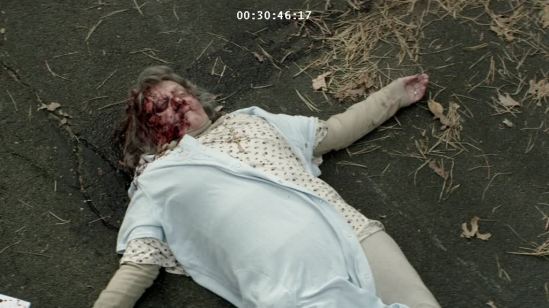
Under the sadistic thumb of their ruthless father, two physically and mentally abused brothers as children follow in their father’s footsteps in adulthood, falsely portraying to be EMT’s in old ambulance 37 and slaughtering those who desperately need medical attention on an infamous and isolated stretch of road. When the brothers’ loving mother becomes the victim of a hit and run by a group of young teens, the brothers’ quest to kill gets personal. Unbeknownst to them as the brothers’ targeted prey, the arrogant and rowdy teens live their complex and immature lives, overflowing with trivial matters such as fast cars, dating, and cosmetic surgeries.
vlcsnap-2016-01-18-19h06m49s251
“Old 37” (aka “Ambulance 37” or aka “Death Call”) wrecks before reaching the finish line. Bittersweetly, the story by Paul Travers, written also by Paul Travers and Joe Landes, is an interesting concept of life savers taking lives and, interestingly enough, a similar idea was in the news recently where a supposed unmarked cop cart pulls over young women, but the driver is actually a cunning rapist instead of an actual officer of the law. “Old 37” is essentially art mimicking real life.  We feel safe when an emergency civil servant or agent is present or tells us not to worry, as exhibited in “Old 37.”  “Don’t worry, I’m a paramedic,” says one of the demented brothers.
vlcsnap-2016-01-18-19h16m41s31
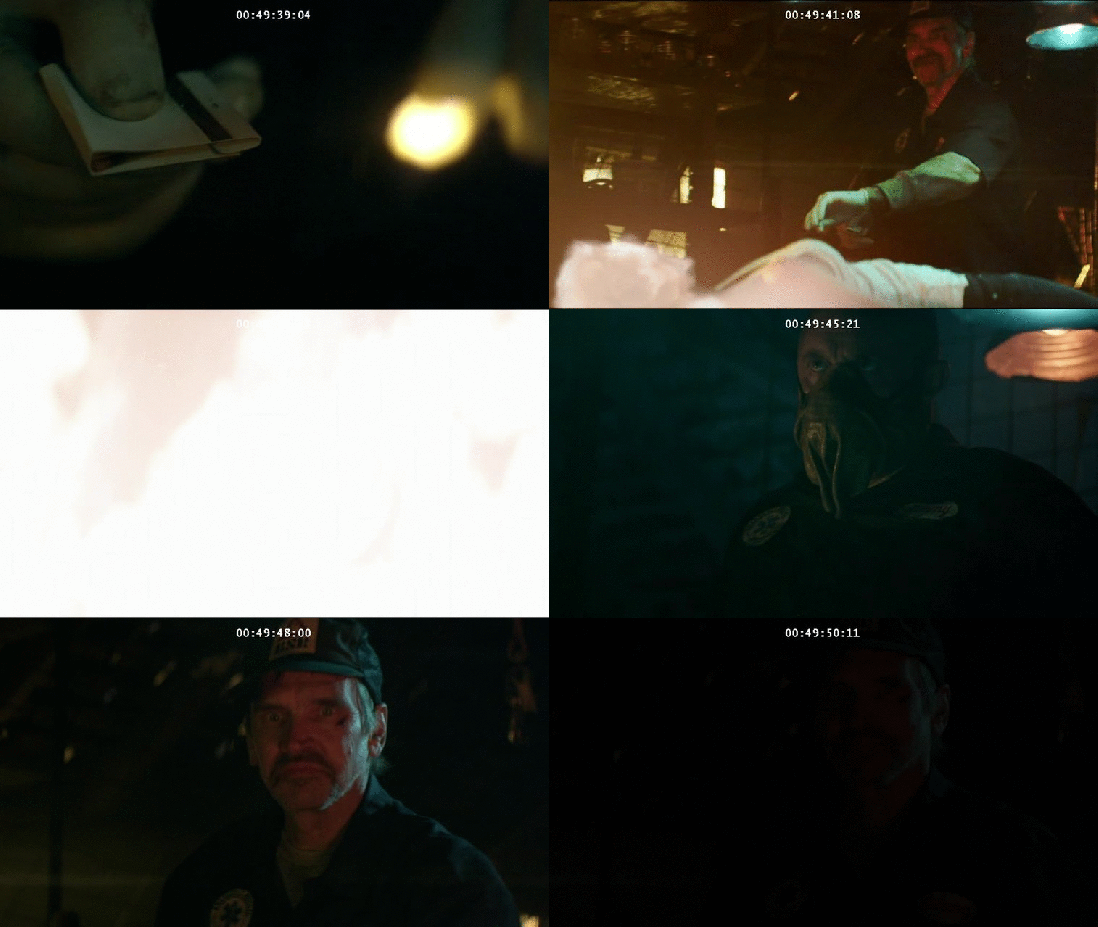
“Old 37” greatly has much going for the Three Point Capital funded movie.  Three Point Capital has backed many other notable films such as “Insidious:  Chapter 2,” “Nightcrawler,” and Kevin Smith’s “Red State.”  Partnered up with Joe Dante’s “Burying the Ex’s” post-production company Siren Digital, the two companies had the mucho dinero to sleekly design, which it does, and to hire a moderately formidable cast, which they do.  Kane Hodder and Bill Moseley headline, being the pair of horror icons forced to be reckoned with, and slide into the shoes of the two ambulance driving, bloodthirsty brothers, intercepting 911 calls via their scanner for victims.  Hodder hasn’t lost that Jason Voorhees gait and menacing body motions and Moseley, without even trying, has the uncanny ability to sinister up an entertaining and terrifying persona. Together on screen, a powerhouse of an unimaginable magnitude as they are, hands down, the highlight of “Old 37.”
output_wTBXrG
With high-end production value and two of probably the most prolific names in horror attached, what could go wrong? Well, the first wrong is “Old 37” is mostly an unfunny teen comedy rather than a horror movie. It’s more “She’s All That,” than “Scream.” It’s more “American Pie,” than “I Know What You Did Last Summer.” It’s more “10 Things I Hate About You,” than…you get the picture. Horror didn’t surface into full eligibility until about the last 20 minutes with the archetypical final girl chase finale and even then was the horror story still underdeveloped. The teen characters’s lives are too complex as they take over the story, including one awkward, self-loathing lead character, Samantha, eager to fit in (even though she does), eager to look beautiful (which she already does), and eager to obtain breast augmentation (though she doesn’t need them). The breast enhancement scenes drastically change the direction of the film, throwing me for a serious loop for various reasons: Samantha gets the okay right away when she asks her mother for new breasts, she gets new breasts in a matter of days, and she isn’t sore or in pain directly after receiving them. Time is an illusion when two the contrasts display Samantha throughout going forward from the entire beginning to end process for new flesh pillows while one of her crude friends gets murdered. Something doesn’t add up.
vlcsnap-2016-01-18-19h24m45s1
Special effects guy Pete Gerner and his talented crew do blood spattering justice with the sanguinary written murders and while I feel the brutality and the blood is amongst the film’s aurora, the gooey gory scenes are quickly edited, taking away the time to where we can’t fully appreciate, fully engulf, nor fully digest the “I Sell The Dead” Gerner effects. The final nail in the coffin is director Alan Smithee. If you Google Alan Smithee, results will show that Alan Smithee is a pseudonym used by directors who want to disown a project. Christian Winters removed his name from “Old 37” because he thought his control over the film wasn’t his anymore. And that’s fairly accurate as “Old 37” seems and feels incomplete, much like Rob Schmidt’s 2011 unfinished debacle “Bad Meat,” directed under his pseudonym Lulu Jarmen, and just like “Bad Meat,” “Old 37” has the potential, the substance, and the talent to what could have been a solid horror narrative.

Overall, “Old 37” has the financial backing, has some serious blood that made the cut, has a great soundtrack assortment, and has motherfuckin’ Bill Moseley and Kane Hodder. What the disowned film lacks is a well-written narrative, contains poorly written and idiotic teenage characters, and needs a director with an eye for direction instead of a producer with greedy big pockets. “Old 37,” under the name “Death Call,” will be hitting DVD shelves from UK distributor High Fliers films. If you’re a fan of Hodder and Moseley, but don’t expect a typical horror movie as this film goes through multiple genre transitions and doesn’t settle just on one at any point. There is one delicate scene of Olivia Alexander which I’m sure will be pleasing to any viewer.