Sacrifice and Intestines Make Great EVIL Slashers! “Ikenie Man” and “Harawata Man” reviewed! (Wild Eye Releasing / DVD)

“Ikenie Man” Available on DVD Home Video!

“Ikenie Man”

Four university friends involved in a movie making club trek deep into the remote, phone service-snuffing forest eager to make their esteemed stamp on the slasher genre, or rather just the director does, as frustrations build between them, exploding furiously into an inability to find cohesive creativity, and their lead actress quits and walks off location in a fit of distaste for horror and their Prima donna director.  Idea and idea between the rest of crew of how to recoup their film from being a total failure and loss has been rejected by the nitpicking auteur looking for that novel concept to make him famous until he and the crew stumble upon a group of eight campers who all conveniently fit into conventional tropes of horror characters.  A plan quickly arranges to use their masked and knife-wielding movie villain to scare the unsuspecting campers with guerilla filmmaking tactics but there’s more to these seemingly innocent young campers than what meets the eye. 

A meta horror self-aware to all the necessary components that make a great horror movie becomes upended in a topsy-turvy tumbling machine of all the aligning mechanisms you thought you knew about a horror story.  Yu Nakamoto (“Phone of the Dead,” “Teacher! It’s a Slit-mouthed Woman!”) writes and directs the meta, self-deprecating, indie Japanese horror-comedy “Ikenie Man.”  Ikenie, translated literally to the word Sacrifice, is used to describe the in-story director’s deranged masked killer the direct himself portrays and finds himself at the sharp end of a knife, barbed wired baseball, razor edges of a chainsaw, and etc.  The 2019 released film is an open-faced hotdog of an absurd horror comedy, slathered with gory ketchup, and self-produced by the then 28-year-old, Hiroshima-born Yu Nakamoto as his sophomore short feature length film under his indie credited production company of Nakamoto Films. 
Also, Follow Up With “Harawata Man” on DVD Home Video!

“Harawata Man”

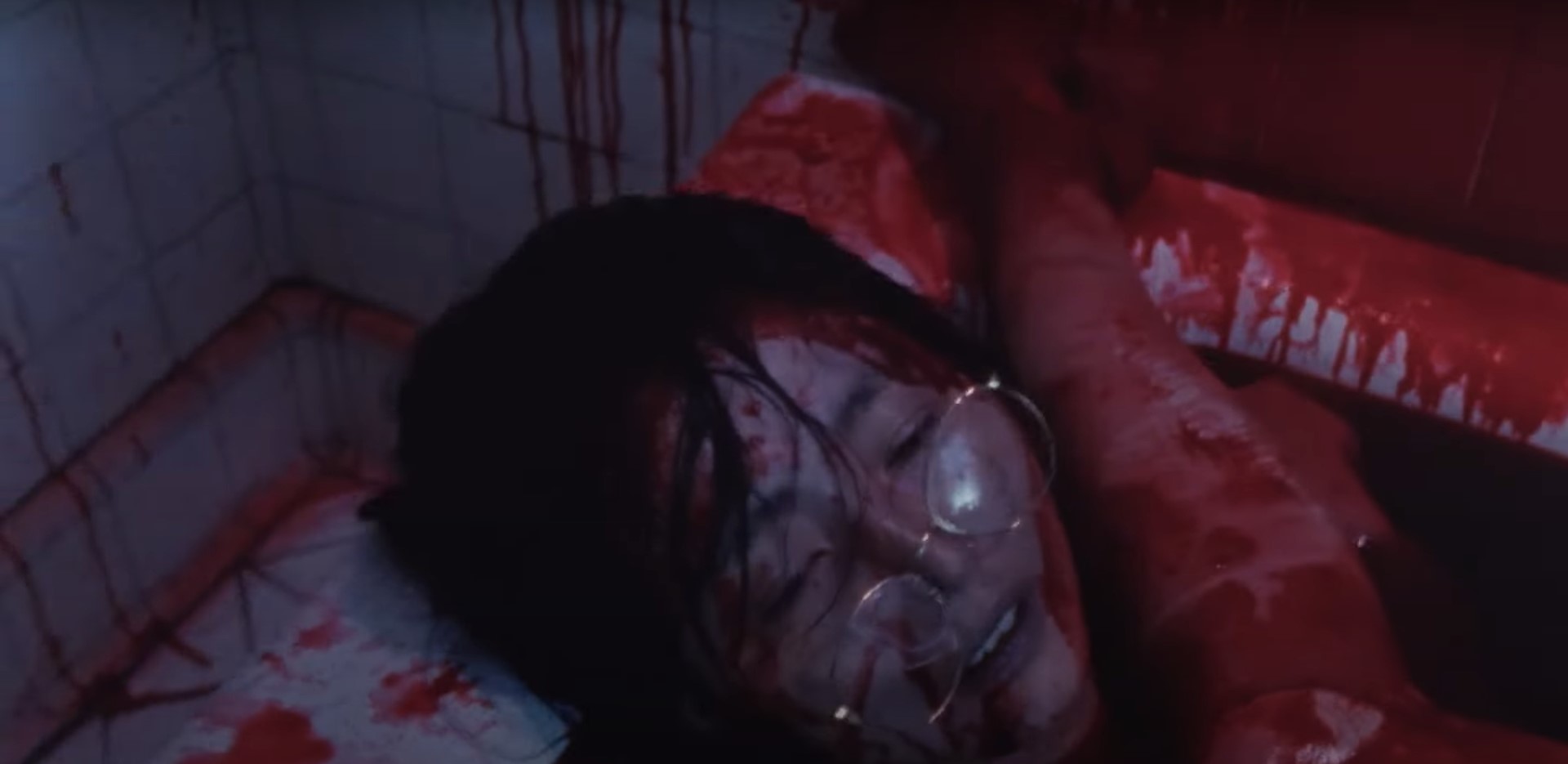
One year after the terrifying ordeal in the woods, the university movie club has evolved with the departure of the director and lead actress after graduation.  The two remaining members are joined by newcomers with an actor, actress, sound engineer, and camera operator to work on another masked slasher, titled “Harawata Man.”  When directed to meet up and shoot inside an abandoned manufacturing plant, the crew praises the location’s creepy atmospherics, but they run into another film crew shooting simultaneously on a project of their own.  Mistaken as the hired assistant crew members, they jump at the opportunity to work on a bigger-scale film until an actress is brought into the scene, sat in the middle of the room, and is bludgeoned to her actual death by the story’s plastic apron killer.  The opportunity of a lifetime just became a snuff film nightmare they can’t escape.

“Harawata Man” sequentially follows on the heels of “Ikenie Man” by taking place one year after the events of the first film and moving the setting from one genre-staple setting of the thick woods to the next best location of an abandoned factory.  Released the same year as “Ikenie Man,” one could deduce that both “Ikenie Man” and “Harawata Man” were shot essentially back-to-back with some down time in between productions and that might explain the mark of no return of some principal characters that didn’t, or couldn’t, appropriately fit into the new story, which would align with the absence of the titular “Ikenie Man.”  Harawata translates to the ever-delicate word Intestines describes the story’s small indie film crew’s killer who rips out the victim’s guts.  “Harawata Man” is a less meta than its predecessor film by relying more on its comedic context as another Yu Nakamoto Film production. 

_______

So, because I do not know the Japanese alphabetical language of hiragana, katakana, and kanj and there’s limited information on IMDB.com, as well as other referential sources, the cross reference of cast to characters is not obviously clear.  Instead, going through the character carousal to understand motivations and journeys has become a forced prudence.  “Ikenie Man’s” setup is an expositional setup from the indie filmmaking foursome to run through what us genre aficionados already know:  character tropes, emblematic motifs, and traditional character arcs, such as the rise of the final girl.  “Scream” had highlighted and called out the trade ingredients of recipe elements to make Grandma’s stew that much more appetizing to a new, inexperienced market of up-and-coming fans.  The franchise’s sequels to follow leaned into the rules of subsequential follow ups with each tweaking just a little to make them worthwhile.  Nakamoto flips the script for more campy devices into an un-genre-like routine that sees the virgin killed right away, the nerd is secretly a jock under his four eyes wear, and the only masked “killer” in the story turns out to be the unwilling hero.  “Harawata Man” takes a step back toward more familiar plot grounds of an independent film crew winding up into unfortunate chanceful circumstances and having to defend themselves against sociopathic snuff filmmakers.  However, it’s the way the misfortunate film crew becomes fortunately favored is how they use slasher rudiments to defends themselves that dips the toes of this sequel into the meta pool, taking on the role of maniacs and omnipresent killers who slice and dice with authority and the snuff filmmakers run, yell, and scream for their live becoming the hapless kill fodder.  Yûta Chatani, Maki Hamada (“Tokyo Gore Police”), Tomoaki Saitô (“Phone of the Dead”), Yasunari Ujiie, Yûko Gotô, Marie Kai, Tanabe Nanami, Tsugumi Sakurai, Sumre Ueno (“Ghost Squad”), Yû Yasuda (“Rise of the Machine Girls’), and Shigeo Ôsako (“Grotesque”) are the cast listed.

As far as Japanese gore films go, Nakamoto films are lite when looking at the niche genre as a whole, paling in comparison to such films as “Toyko Gore Police” or “Audition,” but that doesn’t stop “Ikenie Man” or “Harawata Man” from decapitation, severing, eviscerating, and perforating at will with fountainous blood splatter, one of the better absurd keynotes seen in gory J-horror that goes back to Japan’s samurai films of yore.  Gore certainly dangles the carrot of catching these films on either the preferrable home video or, dare I say it, Tubi, but Nakamoto refuses to make it the focal backbone of his films; instead, the story’s meta comedy goes hard with assurances toward every genuine horror fan out there will recognize Nakamoto’s admiration for the genre.  “Ikenie Man” and “Harawata Man” not only spoof horror but also adapt into a new breed of that line of thinking that reminiscent of how “Tucker & Dale vs. Evil” brought upon role reversals through character perception.  Plot paths switch to an unrecognizable gear, much like the films’ official synopses try to mislead with a generic framework, but these new directions still sate that blood thirst to keep interest, tone the black humor to be less wincingly slapdash, and keep the pacing fair, drive practical-effects with intent, and the intense horror-comedy upright in a saturated genre market.

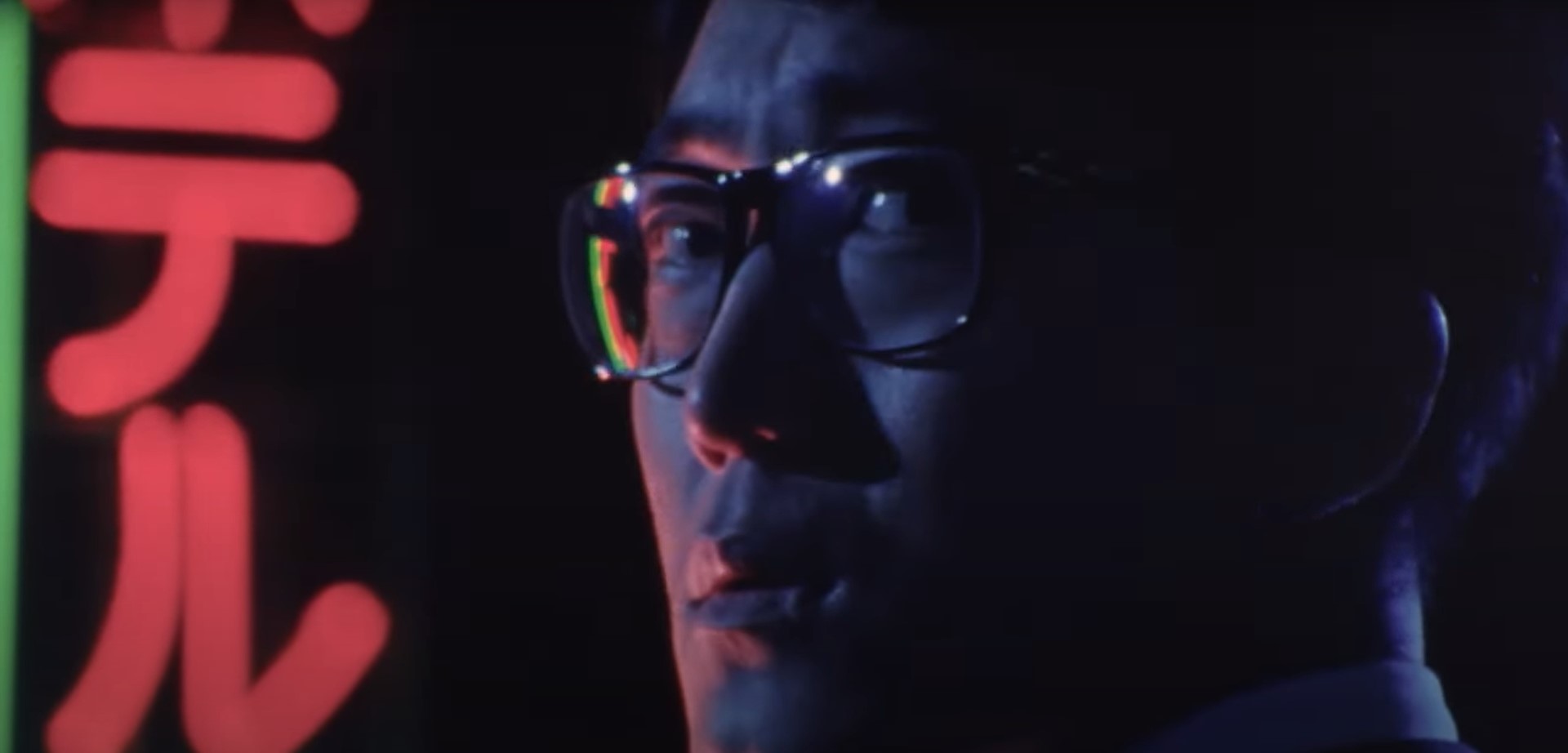
Now available from Wild Eye Releasing is “Ikenie Man” and “Harawata Man” on DVD, encoded on a MPEG-2 compression DVD-5 with upscaled 1080p resolution. Curious enough, the opening company credits list both films as part of the Raw & Extreme sublabel but the physical cases list no such notation in what appears to be a regular Wild Eye Releasing title. Presented in a 1.78:1 aspect ratio, the uncredited same camera and unlisted cinematography process by Yu Nakamoto is used for each production with “Ikenie Man” using gel filters to get a nice wide variety of primary glow splashed along character faces during night and light fog sequences. “Harawata Man” forgoes a colorful visual tone for more key lighting in a darker, basement dwelling. Picture quality and detail from the digital capturing translates fine from original print to reproduction with adequate compression of a short feature film with virtually no extras encoded. A LPCM uncompress Stereo 2.0 lines both audio tracks with fair fidelity in a clean and prominent pitch-accented Japanese language, balanced between two very contrasting scores of an energetic synth and “Halloween”-esque piano tracks of “Ikenie Man” compared to the generic stock of hurried, lower keyed tones that pale against Nakamoto’s first score. Depth is good and the range of sounds, such as the ripping of the chainsaw or the thwacking of kicks and punches, have a mixed realism that plays into the comedy side of the horror-comedy. Between hectic moments, you can recognize the unfiltered growling of a generator in the background in “Ikenie Man” to be able to shoot in the woods, a little indie film audio easter egg to discern. English subtitles are forced on both Japanese tracks and while the pacing is good and there are no misspellings, you can tell the translator is not a native English speaker as the written grammar is more literal and unnatural. Only trailers grace both films’ bonus features, but each individual physical set comes with new original compositional poster art front covers from Japanese artist Kit Nishino, staying the tried-and-true course of Wild Eye Releasing’s outrageous physical media facades, as well as the reversible sleeve contains the original Japanese poster art. Both discs are pressed with their respective primary cover arts and there are no inserts included. The Wild Eye Releases are region free, not rated, and have brief, under 60-minute runtimes of 52-minues for “Ikenie Man” and 46-minutes for “Harawata Man.”

Last Rites: Yu Nakamoto’s small but mighty meta slashers make a good double bill, an on its head combo of a run amok head decapitations for the sake of playing the reverse card to mix things up on a respectable homage, comedy, and horror scale that gives Wild Eye Releasing’s “Ikenie Man” and “Harawata Man” more than just the self-referential mediocrity treatment.
“Ikenie Man” Available on DVD Home Video!

Also, Follow Up With “Harawata Man” on DVD Home Video!

The EVIL Anti-Abortion Film You Never Knew You Wanted. “Evil Dead Trap 2” reviewed! (Unearthed Films / Blu-ray)

Aki is a self-solitude movie theater projectionist who avoids talking to men and to pretty much everyone in general.  Her high school friend, Emi, is the complete opposite, a socialite of sorts, with a previous celebrity career as a singer and a high profile television news reporter.  While Emi thrusts her unusual interests upon encouraging her married boyfriend, who is more than game, to sleep with Aki, the projectionist has a secret of her own in being the culprit of a string of grisly murders involving young women with their ovaries ripped from the inside out.  When these murders occur, Aki is in a feverish, yet reserved state of mind that borders being sexually and dangerous uninhibited and totally blackout deranged.  She discovers mementos of the night before in her home and questions her actions, especially as the kill count grows and Aki’s mind wanders between reality and the supernatural as a mysteriously eerie boy keeps popping up everywhere, even at the crime scenes.  Emi’s dangerous game and her smug prodding of Aki sends her friend down a rabbit hole of a disturbing past. 

If you’ve seen “Evil Dead Trap” then essentially forget everything you knew about the first film as the sequel is not a direct follow-up and concerns a different tale of prenatal byproduct revolving around a common moniker that connects both films.  That name of evil that binds would be Hideki with the sequel titled “Evil Dead Trap 2:  Hideki,” bestowed the subtitle to ensure proper acknowledge.  Another aspect that’s different is the person in the director’s chair as “Akira’s” screenwriter Izô Hashimoto helms the 1992 sequel from a script cowritten between Hashimoto and the then early in career Chiaki Konaka who would go on to pen teleplays for a number of Ultraman series and get his hands colorfully deep within various anime project, such as the Digimon series.  With such anime talent behind one of the more brutally savage renditions to sow the seeds early in the J-horror supernatural genre that incited the widely popular “Ringu” and “Ju-on” franchises less than a decade later, “Evil Dead Trap 2” pelts a supernatural and homicidal esoteric storyline riddles with themes of abortion, guilt, and deriding judgement.  Naokatsu Itô and Mitsuo Fujita produce the Japan Home Video production, the company behind metal-horror “Tetsuo” and the Yakuza-zombie film “Junk.” 

“Evil Dead Trap 2” washes the slate clean with a new cast enveloped into a ghastly chaos the abhorrent an the unnatural.  The story takes on a bold female lead in Shoko Nakajima at the beginning of her career and the fresh faced actress doesn’t also have the typical physique of leading lady.  Nakajima is not only a fascinating and curious choice to be the centerpiece principal but her performance is rock solid with an unsettling, mild-manner manic approach of a night stalker of women opposite her appearance.  Now, whether Hashimoto intended juxtaposition is completely unknown to me, but I find the affect potent nonetheless in unification with Nakajima’s near-subdued and muted act.  On the flipside, there’s “Last Frankenstein’s” Rie Kondoh as Aki’s good friend Emi.  Emi’s a hotshot in her mind fabricated from the television reporter’s brief stint with fame and is cavalier in nature when it comes to her friends and flings.  The contrast between the two is often playfully contentious that never settles on firm ground about how these two become to be friends to begin with, but when their friendship comes to a head in a heated and bizarre one-on-one skirmish with a boxcutter and film sheers, all bets are off and all our conclusions about the two friends are thrown to the wind.  What sets them off is a man, Kurahashi to be exact, a role filled in by Shirô Sano (“Infection”) playing a boyish-behaving philanderer between the two women.  The character of Kurashashi, much the same as Aki and Emi, have his own offshoot piece of the narrative pie with an unsound wife who waits for son to return home – the only problem is, Kurashashi’s wife never had a child.  This is where the 3 characters arcs begin to meld together in a disorder of surrealism between reality and nightmare and those entangled in that web are, for lack of a better phrase, entering a consuming darkness from which they can’t escape, and Hideki is in the middle of it all.  Performances are perfectly unhinged and coy, a variety of personas that make “Evil Dead Trap 2” engaging enough until the end, with a cast list that fills out with Sei Hiraizumi (“Orgasm: Mariko”), Kazue Tasunogae (“Ring 0:  Birthday”), and Shôta Enomoto as the ominous, tangible presence of Hideki.

Comparing the original to the sequel is like comparing worn infested apples to bloody rotten oranges.  The melding of the characters in the third act succumbs to an arthouse avalanche of symbolism, upon symbolism, upon symbolism.  The audience is expected to piece together the chunks of sinew and connect the dots of sibylline secrets of a past contrition. There are strong themes of abortion that persist up into every other few scenes and mostly allude to Aki as the one who gave up a child that has somehow manifested into living, breathing, perceptible and tangible man-child. Aki’s haunted under her fragile, if not delusional, state and while making sense of the manifestations, that hasn’t quite come clear, yet the mental noise leads her to murder when provoked and has her staggering out into the middle of the night to be willingly ravaged by strange men. A logical response to Aki’s action is that internally grieved recluse has snapped, coming unhinged outside the guise of regret as she kills exclusively around a maternity ward that has since closed and is under heavy construction. However, you can’t disregard the supernatural element so easily as Aki visits a miko, a Japanese shaman of sorts, who is senses Aki’s connection to the other side. Multivocal like primordial Hell, Hashimoto works in beautifully shot scenes with brilliant urban lighting that collocates looming, in-your-face figure over the head of the antisocial Aki and shepherds the characters’ darkest secrets to summit before the entity rips them a part in a bloody showcase of madness.

Unearthed Films continues to reverse coagulation and let the blood flow once again with another obscure Japanese gory horror, “Evil Dead Trap 2: Hideki,” onto a new Blu-ray home video coming in at number nine on the spine for company’s Unearthed Classics banner. The release’s image is presented in a widescreen 1.85:1 aspect ratio and retains much of the luminescent coloring of heavy neon-lighting and intended gel filters to play down the story moment’s stitch in questioned reality. Skin textures appear really defined and that also translates into much of the other details as well. No bulky discolorations, splotchiness, or banding stand to say that there were no real compressions with this release albeit having virtually no special features to go along with the single layered feature. The release comes with two audio options, a lossy Japanese LPCM mono and a far more robust LPCM stereo. Both tracks outline a clean and clear passage with no real threats to the audio with only minor white noise in the background. Optional English subtitles provide an error-free experience and pace well with the film. Aforementioned, a lack of bonus features is reduced to only a photo gallery of scene stills and Unearthed trailers, “Evil Dead Trap 2: Hideki” included. “Evil Dead Trap 2: Hideki” challenges each and every one of us to think outside its basket case box and dredge up reason from an addled, abortion-deviled, and serial murdering narrative.

“Evil Dead Trap 2:  Hideki” on Blu-ray Home Video from Unearthed Films!

No Sam Raimi. No Bruce Campbell. Just the EVIL! “Evil Dead Trap” reviewed (Unearthed Films / Blu-ray)


Nami, a Japanese late night show host, is seeing her ratings dipping.  Though not in danger of losing her all-female produced show, Nami decides take her team on an investigation of a mysterious snuff tape that was mailed to her specifically.  Left for her is a bread crumb trail of directions to an abandoned military base, Nami and her crew explore the campus’s rundown structure, searching for evidence, a body, a story that they can televise.  Ignoring the dangerous presence around them, they dig deeper into the dilapidating labyrinth where they horrifying discover something waiting for them laid out in a cruel plan of deadly traps with a maniac pulling at all the strings. 

Bred out of a pedigree of pinkusploitations and a nation’s crisis of identity after the Second Great War, “Evil Dead Trap” is a greatly symbolized Japanese machination tale helmed by pink film director Toshiharu Ikeda (“Sex Hunter,” “Angel Guts:  Red Porno”) and penned by an equally historical pink film screenwriter and “Angel Guts” manga series creator Takashi Ishii (“Girl and the Wooden Horse Torture,” “Angel Guts” series).  Also known under its original Japanese title, “Shiryô no wana,” as well as, and my personal favorite, “Tokyo Snuff,” in Spain, “Evil Dead Trap’s” smorgasbord of rape, torture, and gory death naturally shocked viewers upon release and continues to do so as one of J-Horror’s branched out films that segued out from the brutal and depraved pink film inspired context into the new longstanding ghost genre we’ve seen over the last few decades with “Ringu” (“The Ring”) or “Ju-on” (“The Grudge”).  The production company Joy Pack Films, behind the 1980’s obscure Japan films, such as Genji Nakamura’s “Go For Broke” and Banmel Takahashi’s “Wolf,” houses the “Evil Dead Trap” from executive producer Tadao Masumizu.

If you recognize a couple cast members, or maybe just their naked bodies, then there’s something depraved about you!  With all kidding aside, but no seriously, if Rei (Hitomi Kobayashi) or Kondo (Masahiko Abe) look familiar, then you my friend are pink film aficionados as Kobayashi has starred in “Hard Petting” and “Young Girl Story” and Abe was in these pink film hits the “Pink Curtain” trilogy and “Female College Dorm Vs Nursing School Dormitory.”  If these faces didn’t touch you in any kind of sensual way, no worries, leading lady Miyuki Ono brings the star power.  The “Black Rain’s” Ono plays Nami, a go-getter television host/personality with her sights set on ramping up her late night show’s ratings, but also sucked into the posted snuff film’s darkest allure that’s personally calling her into to a precarious story lead.   Nami could also be a homage to one of screenwriter Takashi Ishii’s manga-inspired pink films entitled “Angel Guts: Nami” and the title might not be the only aspect paid honor to with that particular Nami written with a journalistic vocation drawn into and obsessed with a serial rapist’s attacks, making a striking parallel between the two stories that are nearly a decade apart. Eriko Nakagawa and Aya Katsurgagi fill out Nami’s investigating team as Rei and Mako. As a whole, the characters lack personality; Rei and Kondo tickle with relationship woes that are snuffed out before fruition, Rie’s timid innocence barely peaks through, and Nami and Mako’s thicker bond compared to the rest of the team is squashed to smithereens way before being suckled into note worthy tragedy. This late night show team has been reduced to slasher fodder and, honestly, I’m okay with that as we’re only here for the deadly traps. Noboru Mitani, Shinsuke Shimada, and Yûji Honma, as the mystery man looking for his brother, complete “Evil Dead Traps” casting.

“Evil Dead Trap” boasts a melting pot of inspirations, a mishmash of genres, and spins a nation’s split identity variation crowned in aberration. Diversely colorful neon-hazy lighting complimented by a Goblin-esque synth-rock soundtrack from Tomohiko Kira (“Shadow of the Wraith”), Toshiharu Ikeda shadows early Dario Argento inside and outside the popularity of the Italian giallo genre as the “Evil Dead Trap” murder-mystery horrors resemble more of a westernized slasher with a killer concealed behind a mask stalking a fringed, neglected compound in a conspicuous outfit. While the killer dons no hockey mask or snug in a mechanic’s jumpsuit, an equally domicile, yet more calculated, antagonist taunts more brains than brawns, especially with the severity of traps that seemingly float from out of nowhere. The fun is chiefly in the imagination of how the trap designs operate in the void of physics of a slasher fodder film so wipe clean the Jigsaw and the “Saw” films from your mind completely and relax to enjoy the outlandish kill scenes. Some of the kills are imperialistically inspired by Imperial Japan, that is, to blend the wartime nation’s atrocities with how the proud country wants to distance itself from that old-fashion, war-criminal, stoically perverse superstratum layer, but that’s were “Evil Dead Trap” pulls for most of the juicy parts as well as supplementing with Argento lighting, some, believe it or not, “Evil Dead” elements of that menacing presence bulldozing through the spiritual world, and an divergent climatic finale stuck to the narrative body that’s akin to pulling off the head of a doll and replacing it with T-Rex head’s. The uniformity quells under the pressure of how to end Nami’s and her attacker’s coda with pageantry weirdness that’s typical status quo Japanese cinema. Lots of symbolism, little modest explanation.

Get caught in “Evil Dead Trap” now back in print and on Blu-ray courtesy of Unearthed Films, distributed by MVD Visual, as part of the extreme label’s Unearthed Classics spine #5. The Blu-ray is presented in a matted 1.66:1 aspect ratio, a format rarely used in the States but widely used in other countries. Reverting to the 1.66:1 from Synapse’s 1.85:1 crop, Unearthed Films showcases more of the European feel, heightening that colorful vibrancy of the Argento-like schemes. Image quality has peaked on this transfer with natural grain with the 35mm stock, but details are not granularly sharp in an innate flaw of the time’s equipment and lighting. Shinichi Wakasa’s unobscured practical effects heed to the details and don’t necessary suffer the wrath of miniscule soft picture qualities when you’re impaling someone or birthing a slimy evil twin…you’ll see. Add in Ikeda’s wide range of shooting techniques, you’d think you’re watching Hitchcock or Raimi and the focus really lands there with the differently camera movements and techniques. The Japanese language single channel PCM audio fastens against that robust, vigorous quality to make “Evil Dead Trap’s” diverse range and depth that much more audibly striking, but there’s a good amount of silver lining in there being no damage albeit discernable, but not intrusive static to the audio files, dialogue is unobstructed and prominent, and the stellar synth-rock soundtrack nostalgically takes you back to when you first watched “Suspiria” or “Dawn of the Dead.” English subtitles are available but display with a few second delay which can be cumbersome if trying to keep up. Special features includes three commentaries that include director Toshiharu Ikeda and special effects supervisor Shinichi Wakasa, filmmaker Kurando Mitsutake (“Gun Woman”), and James Mudge of easternKicks. Plus, a Trappings of the Dead: Reflecting on the Japanese Cult Classic retrospect analysis from a Japanese film expert, Storyboards, Behind the scenes stills, promotional artwork, trailers, and a cardboard slipcover with phenomenal artwork. Highly recommend this atypical Japanese slasher, “Evil Dead Trap,” now on Blu-ray home video!

Own “Evil Dead Trap” on Blu-ray!

Is Your Home this Evil? House (Hausu) review!

Japanese horror isn’t something I pride myself on having a lot of knowledge of or contain much material about, but I do find enjoyment in what I come across even if the resemblance to an anime style becomes apparent in the storytelling.  I’ll be straight forward with you right here and now, I’m not a fan of Japanese anime.  No, sir.  Can’t say that I am.  However, my latest venture into the J-horror sends me back in time to the groovy year of 1977.  The film is called House and no, not the Steve Miner feature from ’86.  Also known by it’s Japanese name Hausu, House is a simple ghost tale with ambitious and groundbreaking special effects that dared much of the decade to catch up with the times.

Continue reading