To Be EVIL, It Takes a Little Backbone. “The Fifth Thoracic Vertebra” reviewed! (IndiePix Unlimited / DVD)

Own “The Fifth Thoracic Vertebra” on DVD. Purchase Here!

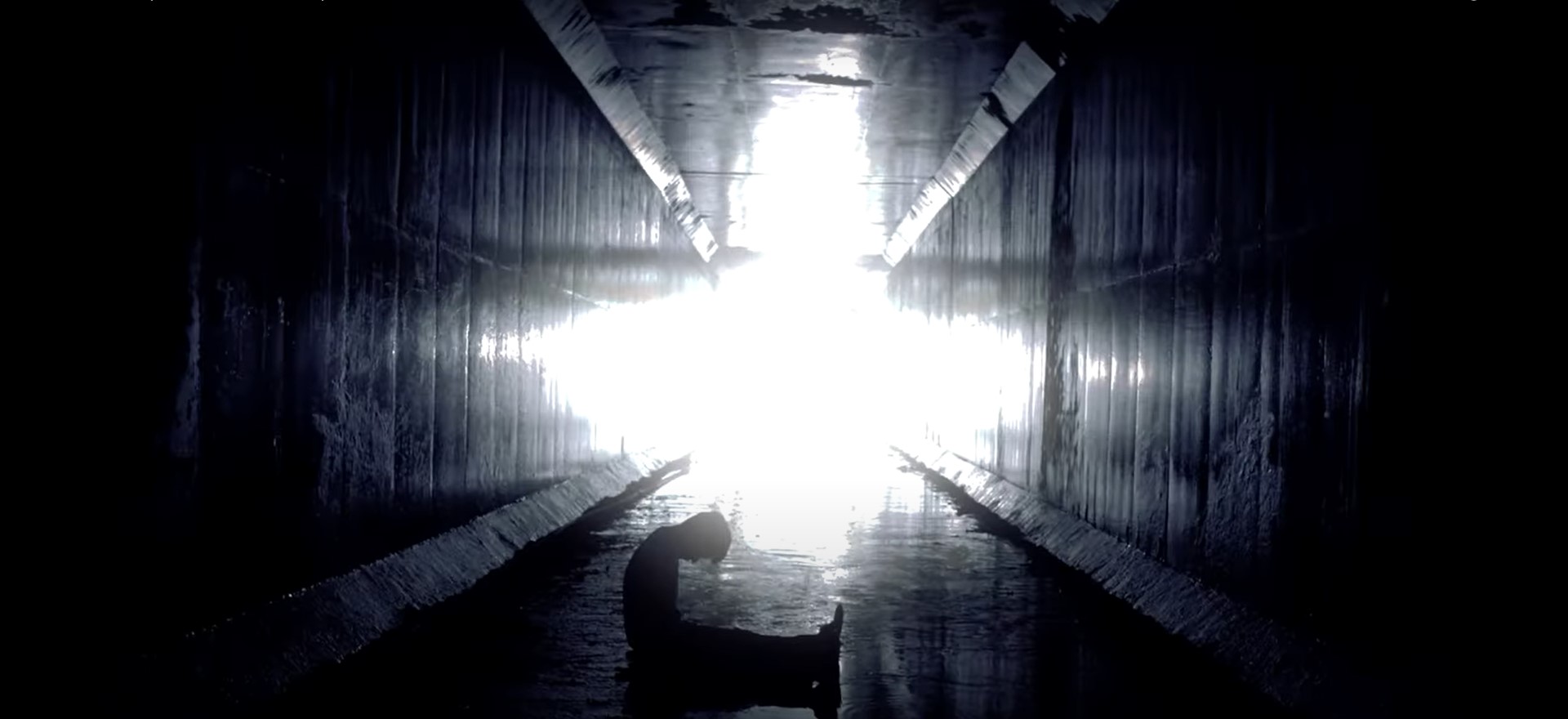
In the Gyeongbuk region of South Korea, a brand-new mattress is being delivered to a young couple’s new apartment but upon arrival, the fed-up delivery men take off when no one answers the door and leave it for the job endeavoring girlfriend who must lug up the mattress herself as she finds her boyfriend asleep on the floor. After more than year together, the threadbare relationship inevitably ends and the girlfriend vacates the apartment, but during all that time together, a mysterious mold formulates from within the mattress and surfaces on the pillow top. The mold turns sentient and uses an outgrowth protuberance to latch onto and extract the boyfriend’s vertebra for nourishment. From then on, the mattress is discarded into the world, being picked up and used by unsuspecting nourishments for the interior mold. Travelling across Korea land to difference providences, feasting on the vertebrae that becomes the building blocks of a new being, the growing mold digests to integrate itself into a human world. Absorbing the miscellanea range of emotions from its victims, what was once small fry fungi has become self-aware, compassionate, and even more hungry to live.

How do you write-up the depth of a film that’s undeniably indescribable? Syeyoung Park’s “The Fifth Thoracic Vertebra” trembles on the edge of being the epitome of that very sentiment with an abstract creature feature concept bred out of people’s raw emotions. The 2022 South Korean phantasmagoric horror, fattening itself off the dysphoric and euphoric morsels, is written-and-directed by Park as the filmmaker’s debut feature film credit that tackles life birthed out of death, such as the symbolic end of relationships and literal death, and becomes a metaphor stemmed by the natural growth phenomena of fungi, a new lifeform that grows out of rot. The Moonstone Productions indie picture is a festival favorite amongst the Fantasia Film Festival and others and is distributed onto physical media by the s streaming platform IndiePix Unlimited.

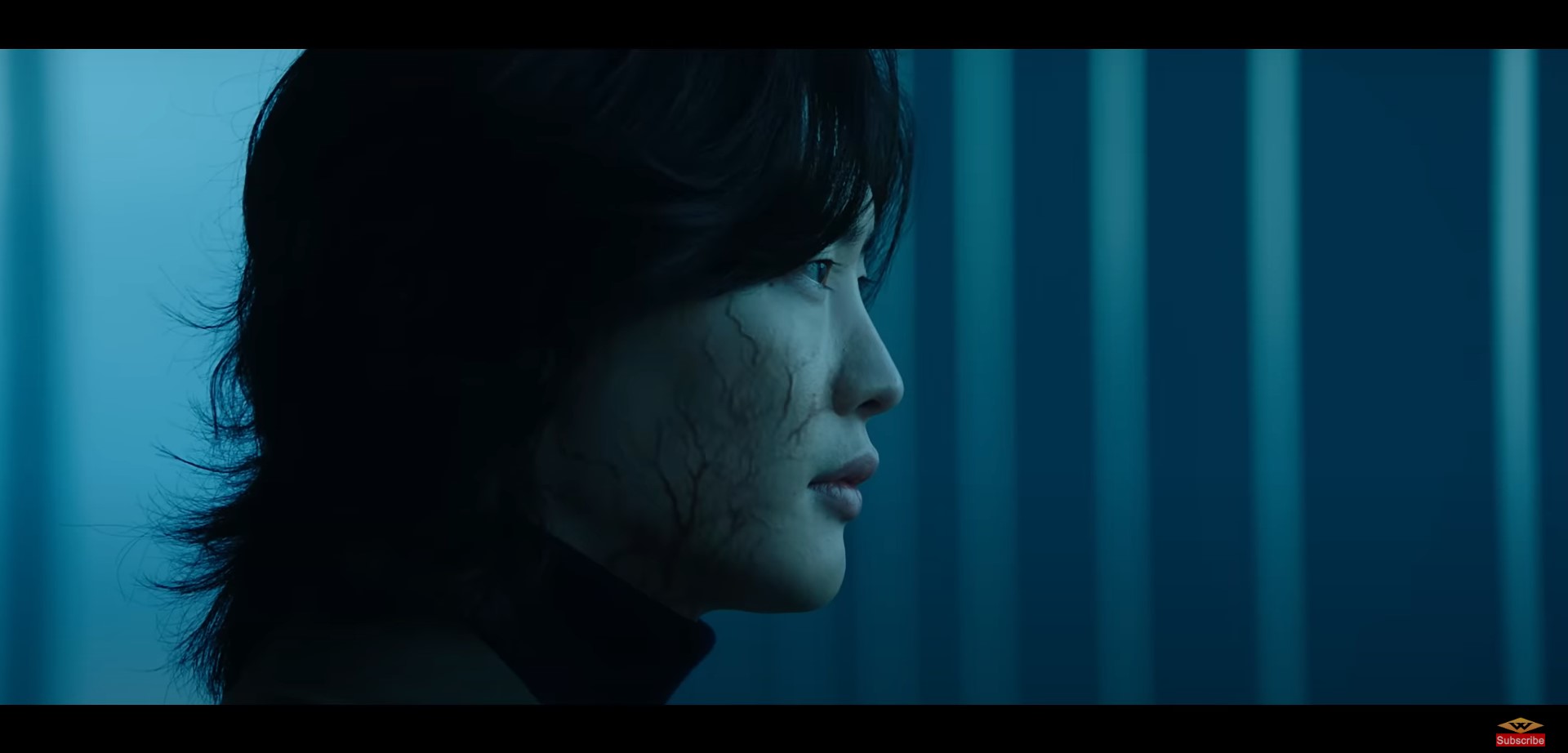
“The Fifth Thoracic Vertebra” doesn’t hone into and latch onto one core group of principals characters; instead, the travelling, moldy mattress has episodic events with interactions to various emotionally-turbulent or charged people that the being inside the dingy mattress not only cuts out and extracts a physical piece of who these characters are but also absorbs their emotional weight, in what could be considered as an incident in molding the mold into what it itself can come to be.  One-sided care and love, a tempestuous connection, contempt, amorous spontaneity, loneliness, and death feed the fungus and shape its mildewy putrescence on the mattress like the coating of an incubation chamber to ensure growth, maturity, and nutrition.  The episodic events hit and miss the gravitational pull needed land firmly on what’s being conveyed.  The woman on death’s bed was perhaps the most impactful written with regret left unsaid, unaccounted for, and is shouldered by the thing in the mattress to fulfill with a letter to the woman’s daughter to let her know about the mother’s definitive adoration.  Other instances are fleeting, perhaps lost in translation, of the evocative impression intended as the mattresses does a reach around for a clean vertebrae excision.  In either case, the now-vertebrae-less don’t even notice when a large part of their backbone is literally ripped from them in the moment; only in post-snatch do they double over in pain and unable to stand and straighten from their crippling past.  The film’s cast includes Mun Hye-in, Ham Sukyoung, On Jeong Yeon, Jung Soo-min, Kim Ye-na, and Park Jihyeon as the humanoid creature.
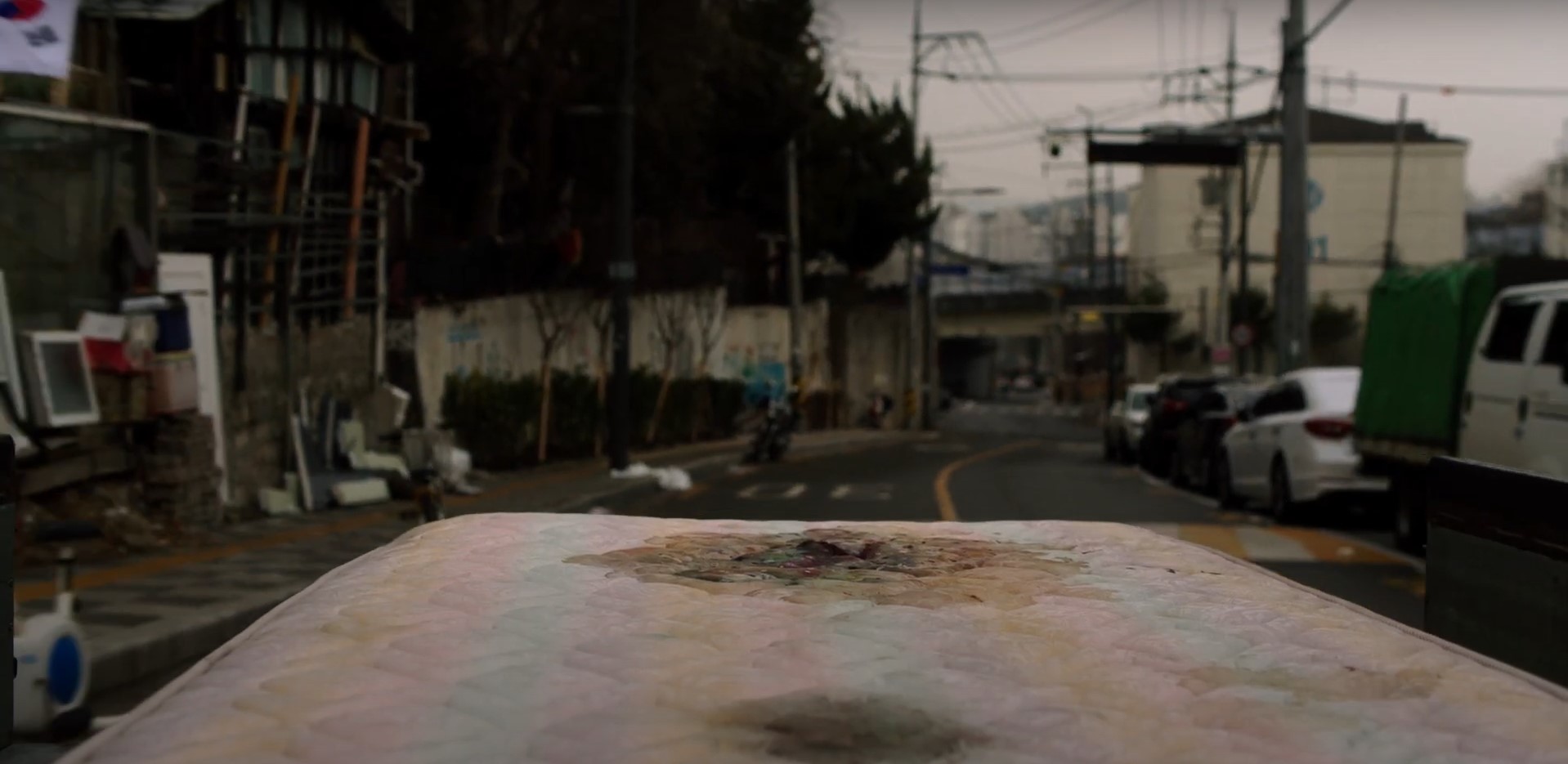
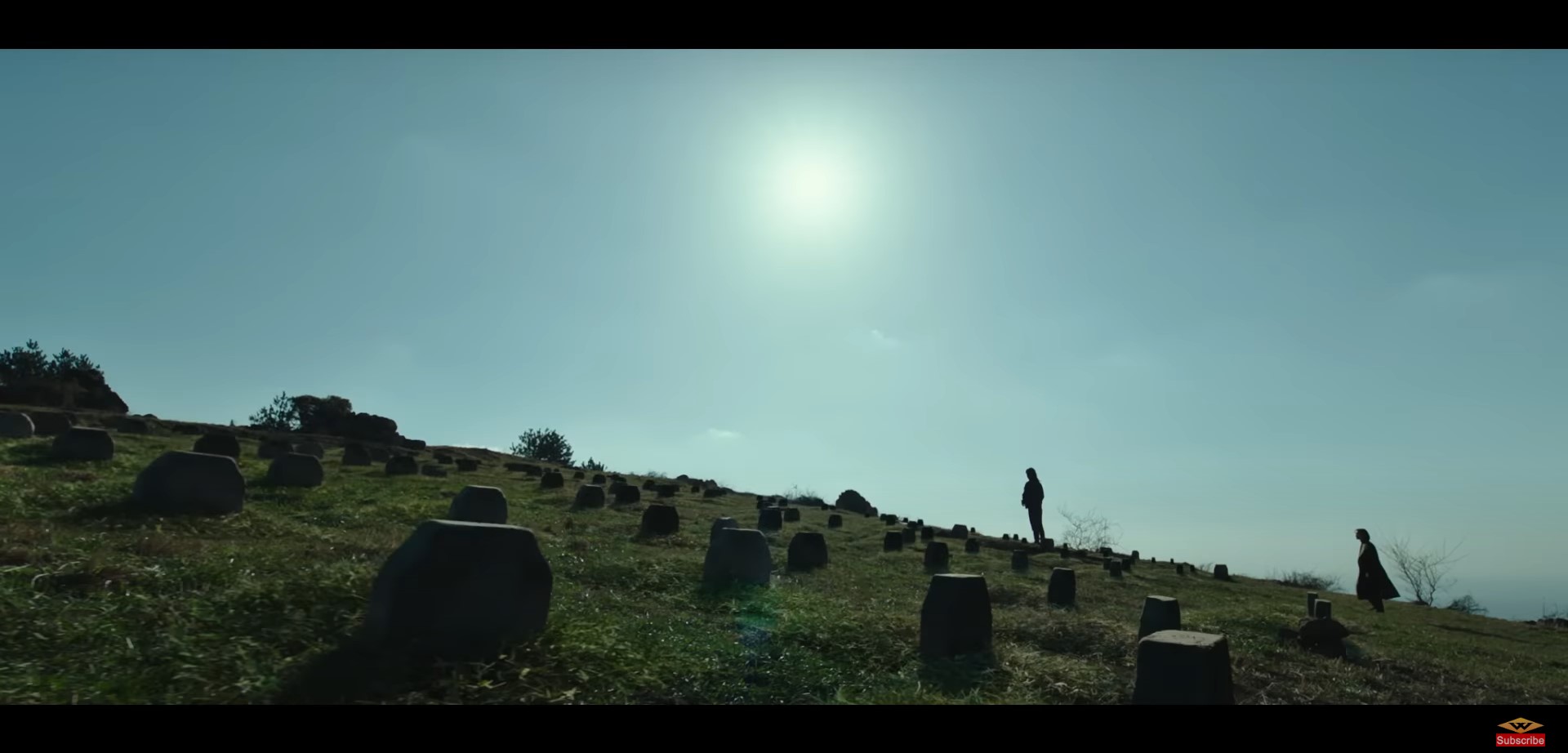
The fifth thoracic vertebrae, the T-5 spine part and not the film’s title, is located near the top-center of the spine in the thoracic grouping and it supports the abdominal muscles and feeds into the chest wall coinciding with the muscles around the rib cage, lungs, and diaphragm, to assist with breathing.  In Sye-young’s abstract, “The Fifth Thoracic Vertebra” does not brace audiences for metaphorical monsters surrounded by dreamlike imagery and esoteric purposes.  With no explanation, visual or verbally articulated, piecing together the strange circumstances is heavily relied upon our own personal experiences in life, our past mistakes, our relationship fails, our giddy fondness, and so forth to interpret Sye-young’s theoretical philosophy on the unfinished leftovers of a kaput relationship.  I believe Sye-young also felt the need to explain his film in a director’s statement on the back of a DVD that questions the whereabout “bits and scraps” of a failed relationship by anthropomorphism means and relating it all to the cycle of fungus.  While a difficult conceptual pill to swallow, “the Fifth Thoracic Vertebrae” can display beauty and disgust in a composite of odd juxtaposition in a peculiar world where a dirty, moldy mattress is an acceptable roadside pickup and debilitating excised bones of the body go without being questioned.   There’s an aloof presence that speaks symbolic volumes to the relationships depicted and with an open mind and broad, thoughtful strokes, one may see through the director’s expressionism.
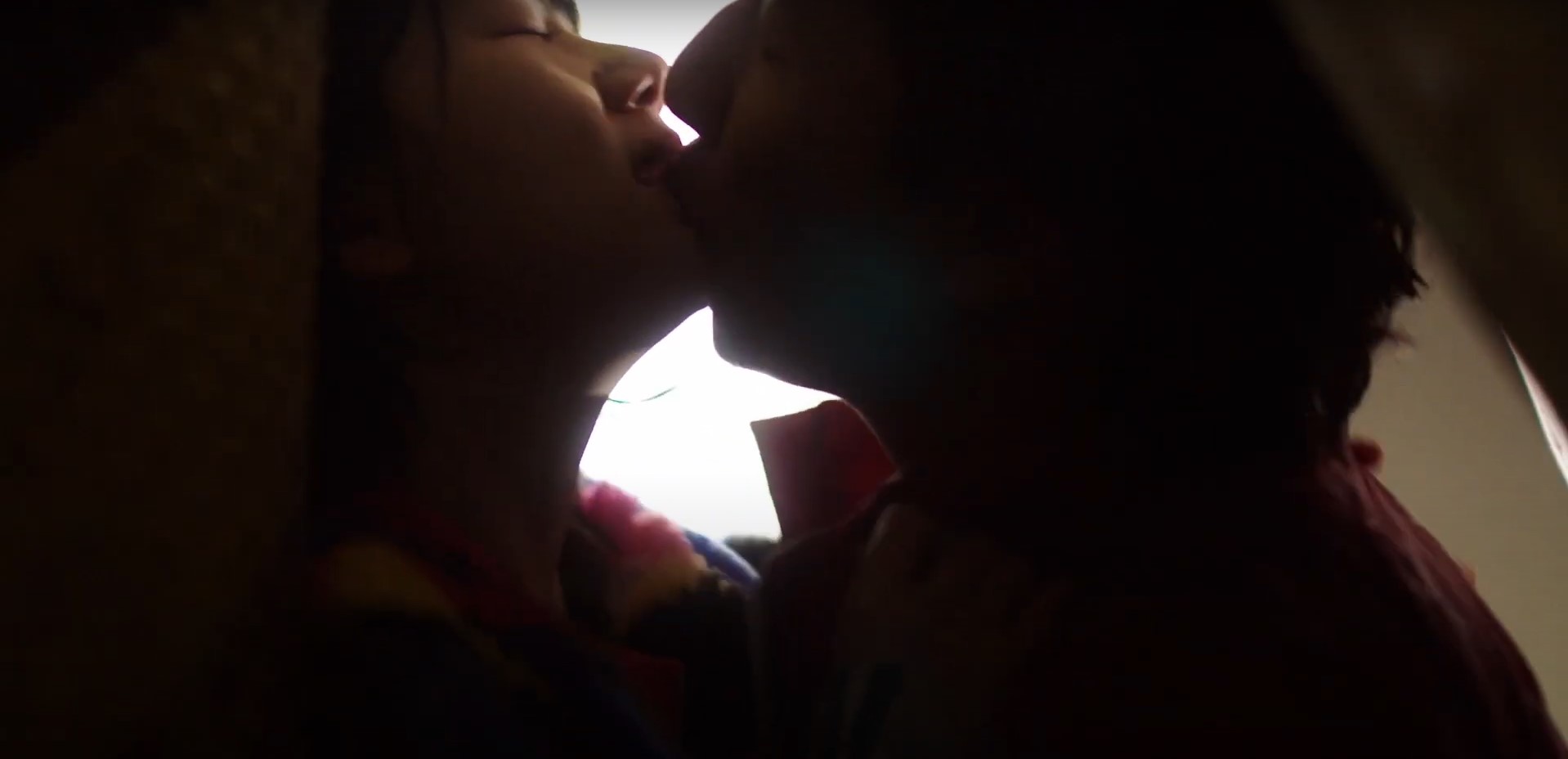
Indiepix Unlimited, an online streaming service dedicated to independent films, also caters to the physical media market with a DVD release of “The Fifth Thoracic Vertebra.”  Encoded onto a single layered 5GB DVD-R, it’s been a while since I’ve seen an official release on the recordable DVD format and for the visual picture quality that’s already on a standard definition 720p resolution, we receive a middle-of-the-road 1.78:1 widescreen aspect ratio presentation. Posterization, in voids and on the skin, is the main artefact culprit in a stylish context of warm gel yellows and greens and the seldomly naturally lit hues which are not as richly saturated but can hold its own for a DVD-R.  There’s not a ton of detail in the mattress mold and any clear view frames are obscured by distance, the cover of darkness, and the cover of blankets as, much like all else, the contours are nicely delineated but the overall color scheme of the film blend together. The South Korean uncompressed LPC 2.0 mix has a pleasing enough unassuming range and depth field that hits all the notes and presents ambience with basically what is needed to envelope the immediate surroundings around the principal objects, all balanced through the dual channels.  The burned in English subtitles are not flawless but are synched well and seemingly translated okay.  The release comes feature only and the standard DVD Amary casing comes with an eye-catching, or rather eye-starring, front cover with no outer coverings or inserts.  The disc art deliberately yells DVD-R with a plain white, barely unique logoed, ring splay.   The release comes not rated with a runtime of 65 minutes and is confirmed to play on region 1 playback.  Untested for other regions. 

Last Rites: “The Fifth Thoracic Vertebra” impresses with forlorn residue in what is an offbeat creature feature where the creature is inside the mattress rather than under it.  Yet, the story stretches the imagination too far and near a snapping point that allows for no breathing room in what is a tale of lamentable remnants that creepingly germinates spores into a melancholic mycelium overtime. 
Own “The Fifth Thoracic Vertebra” on DVD. Purchase Here!

This One Has the EVIL Touch! “The Hand” reviewed! (Synergetic / DVD)

“The Hand” Pops Onto DVD at Amazon! Click Here to Purchase.

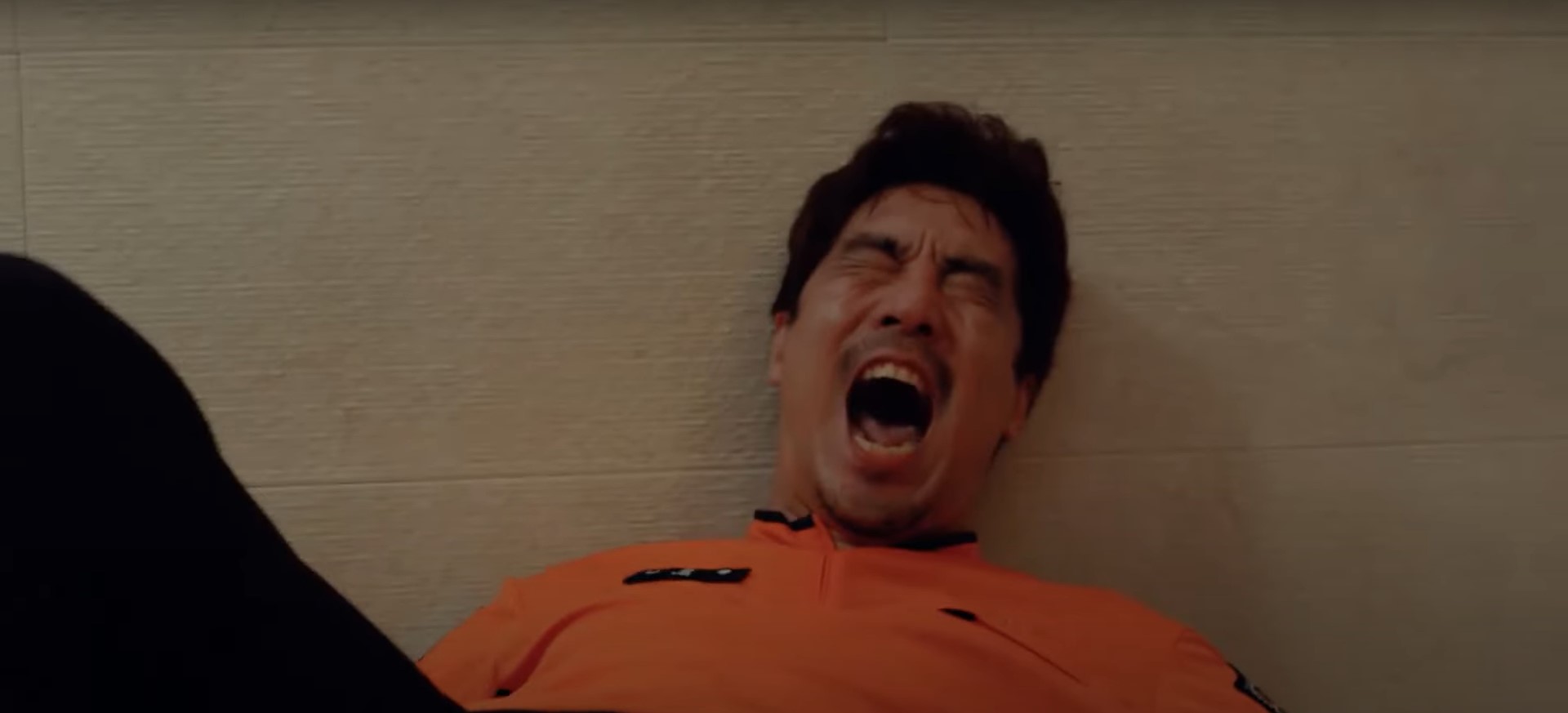
After a night of heavy drinking, Bong-soo wakes up from a strange nightmare.  The nightmare continues when he habitually walks into the bathroom and discovers a grotesque hand sticking up and out of the toilet bowl.  The confused yet calm Bong-soo wakes his wife who passes out at the sight after the hand twitches right in front of them.  Bong-soo calls 911 to report the strange occurrence and when his residence’s security guard and the dispatched EMTs check out the scene and see his wife passed out on the floor and a supposed severed hand sticking out of the toilet, the unbelievable scenario spirals into suspicion and Bong-soo is detained for suspected gruesome acts of foul play, but when the hand violent moves again and the bathroom door suddenly becomes stuck, those left standing, out of the hand’s deadly reach, are left with only toiletries at their disposal to do battle against the a force their unable to flush.

Preying on one of the more irrational fears that something will slither up the toilet while you make the business, “The Hand” extends that fear with a supernatural startlement.  Shot in 2020 but released in 2023, “The Hand,” or “The Hand:  Attack of the Things” is to the degree of a ghostly-demonic thriller sprinkled with dry humor from South Korea by writer-director Choi Yun-ho, claustrophobically shot inside an apartment bathroom which, and let’s be being honest, is roomier than most bathrooms in two-story houses.  Toilet horror is a subgenre that’s not everyone’s cup of eau de toilette but has resiliently found a niche audience and continues to live quietly in the indie shadows, such as with Evan Jacob’s “Death Toilet” films, Matthew Mark Hunter’s “Killer Poop” franchise, and the Asian market, specifically, has an interest in potty horror-humor, “Zombie Ass:  Toilet of the Dead” instantly comes to mind.  However, the absurdity of these titles doesn’t infect Choi Yun-ho’s less feces-filled horror, focusing more on the curled, demonically-skinned hand from out of the toilet.  “The Hand” is a feature presented by Korea Creative Content Agency and Inoi Media and a production of Spooky House, and R202 studio.

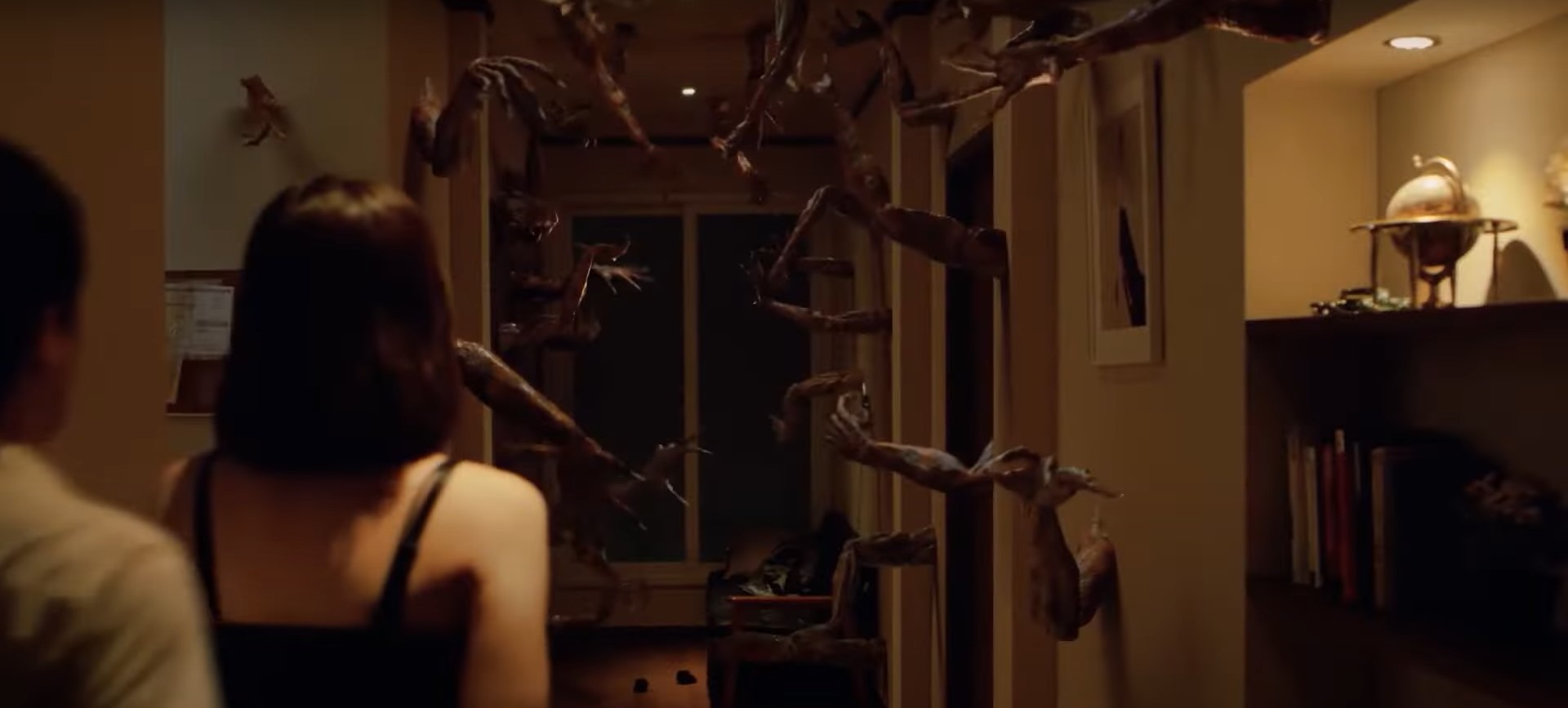
With an intimate setting comes an intimate cast to do battle with the mysteriously unknown monstrous hand.  Lee Jae-won is up to the task, or, well, placidly taking in the situation with subtle caution, as the expressionless alcoholic husband Bong-soo.  The regular Korean television actor infiltrates into his first leading man feature, or perhaps barely a feature with a film runtime of under 60-minutes, tackling close-quarter dynamics and a computer-generated thing with finger fingers, elongated fingernails, and a reach that turns the already compact bathroom into practically the size of a coat closet.  Considering the mention of his drinking problem more than once, Bong-soo’s alcoholism isn’t one of the more centric elements, especially at the chagrin of his wife Joohee (Jeong Seo-ha) to create a dynamic hurdle to arc over.  Once the building security guard (Soo-ho Ahn) and 3-person 911 team, with Park Sang-wook portraying lead paramedic, the energy devolves to a humorous suspicion of Bong-soo and the pigeon-hearted presence of the lead paramedic as the two men ever so lightly buttheads in a confounding position and through the progression of the ordeal, the squabbling pair form along the way a bond out of insta-desperation.  When the wife finally revives, another breakthrough moment between Bong-soo and his wife becomes realized that they’ll never take each other for granted again as they do slow motion poses and battles with an army of apartment wall-protruding hands who carry a deadly touch.  The jagged line graph tone maintains a comedic constant right through the heart of “The Hand” that lets the characters sway freely in various complexions without jarring their principles too flippantly. 

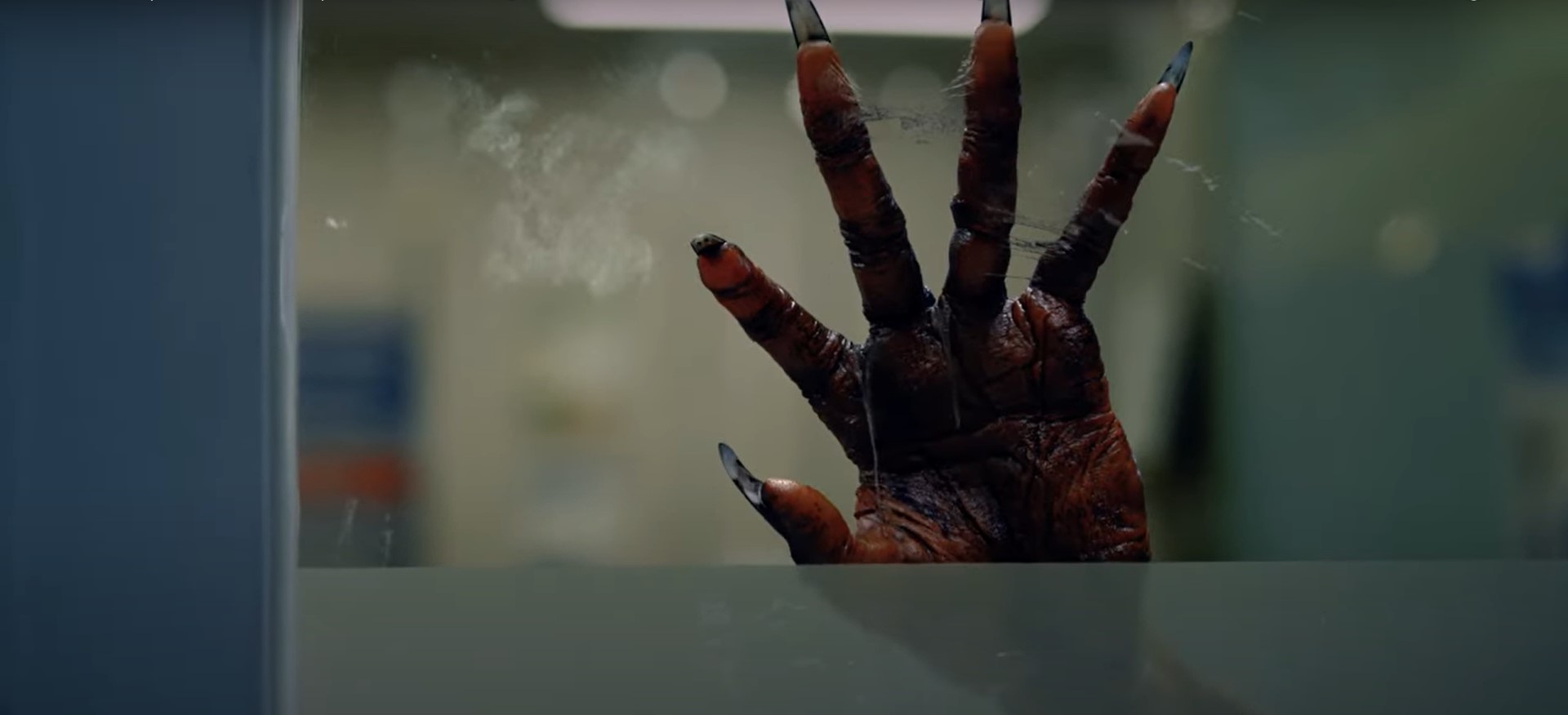
The titular hand is a fully operational character in itself.  A complete CGI mockup straight from the backstory sewers of Hell, conceived from a threadbare anecdote of a woman found dead in a nearby sewer tunnel with her arm missing a few days prior told by the paramedic leader.  That arm, with gnarled hand attached, is thought and assumed to be the same wretched one sticking ominously straight up and out from the toilet bowl.  Texturally, the synthetically composited hand looks pretty darn good with barely a trace of smoothed over plastic-splash veneer.  These scenes are also intermixed with a rubber hand cast with obvious contrast against the CGI hand.  That is until the arm extends feet beyond its chamber pot dwelling to tightly grip unsuspecting prey, like a crocodile lying in wait.  When in more a realistic scale, the hand’s movements are tremendously naturally looking with the help of green-suited animator and between appearance and mobility, the captured result, though miniscule in size appropriate for the indie film, has realistic attraction that edges “The Hand” out of the absurdity of circumstances and into more thrilling territory while still focus lit by comedic lighting.  The characters themselves are the more farcical models in comparison with representatives often aloof or arrogantly confident with ostentation as terror responses straddling between nonsensical and pragmaticism.  

“The Hand” arrives onto DVD home video from Synergetic, presented in a widescreen 1.78:1 aspect ratio on a MPEG2 encoded, standard definition, DVD5.  Decoding at a fairly high compression rate of 7 to 8Mbps, image quality has a fair amount of detail and color saturation from off the lesser disc capacity.  Facial details can appear soft throughout, sometime blotchy or waxy that fuses the contours and skin without delineation, and the CGI hand, though textured nicely, can have an early day video game blockiness about it in a handful of scenes.  The surround locations, such as bathroom and apartment, are hue balanced and display distinct visual variation.  The Korean Dolby Digital 2.0 mix is the only audio option available that comes with burned in English subtitles.  Dialogue renders over clearly inside the natural digital recording and prominent amongst the rest of the mix, isolating the changing levels of inflections and tones of what the moment calls for.  The English subtitles synch consistently with the action, but there are spot grammatical errors.  Aside from the play and chapter menu selection on the static menu, there are no selectable bonus features.  The after credits contains how the CGI scenes are composited together so stay tuned after the movie.  The scroll-like artwork with a monstrous hand, illustrated with a mock age-fading, is really neat visually and well-done.  Inside the bendy Amary case is just the disc with the same artwork in concise form.  With the region free playback, the Synergetic release runs at 62 minutes and, assumingly, comes unrated, as the rating is not listed on the back cover.

Last Rites:  Comedy and horror create stationary white-knuckle tension in “The Hand” despite not reining in a tightfisted backstory on the hand itself which ultimately turns the five fingered paw into more of a marginal footnote. 

“The Hand” Pops Onto DVD at Amazon! Click Here to Purchase.

EVIL Embarks with Cons and Cops in “Project Wolf Hunting” reviewed! (Well Go USA Entertainment / Blu-ray)

“Project Wolf Hunting” on Blu-ray and Available for Purchase by Clicking the Cover Art!

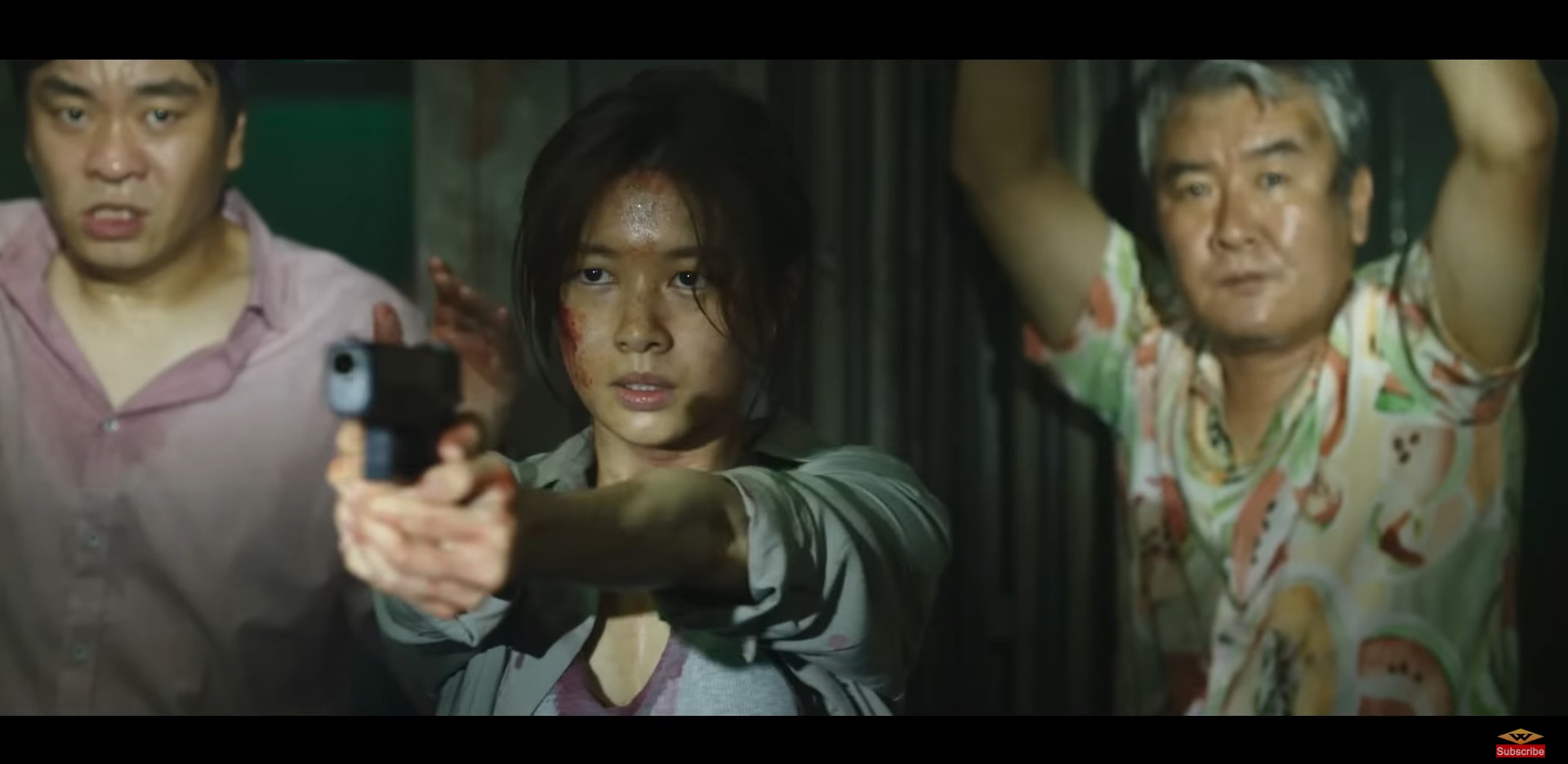
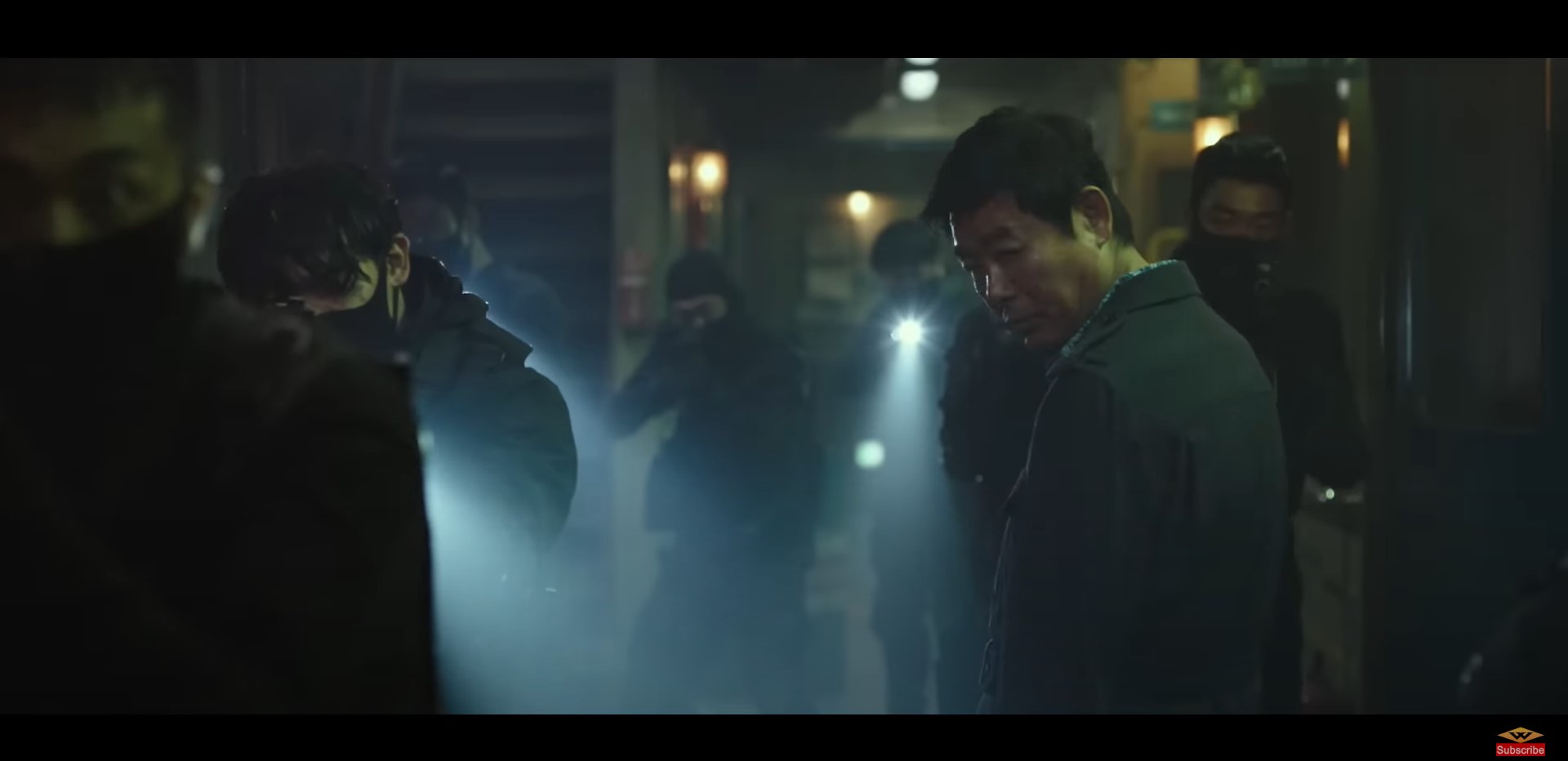
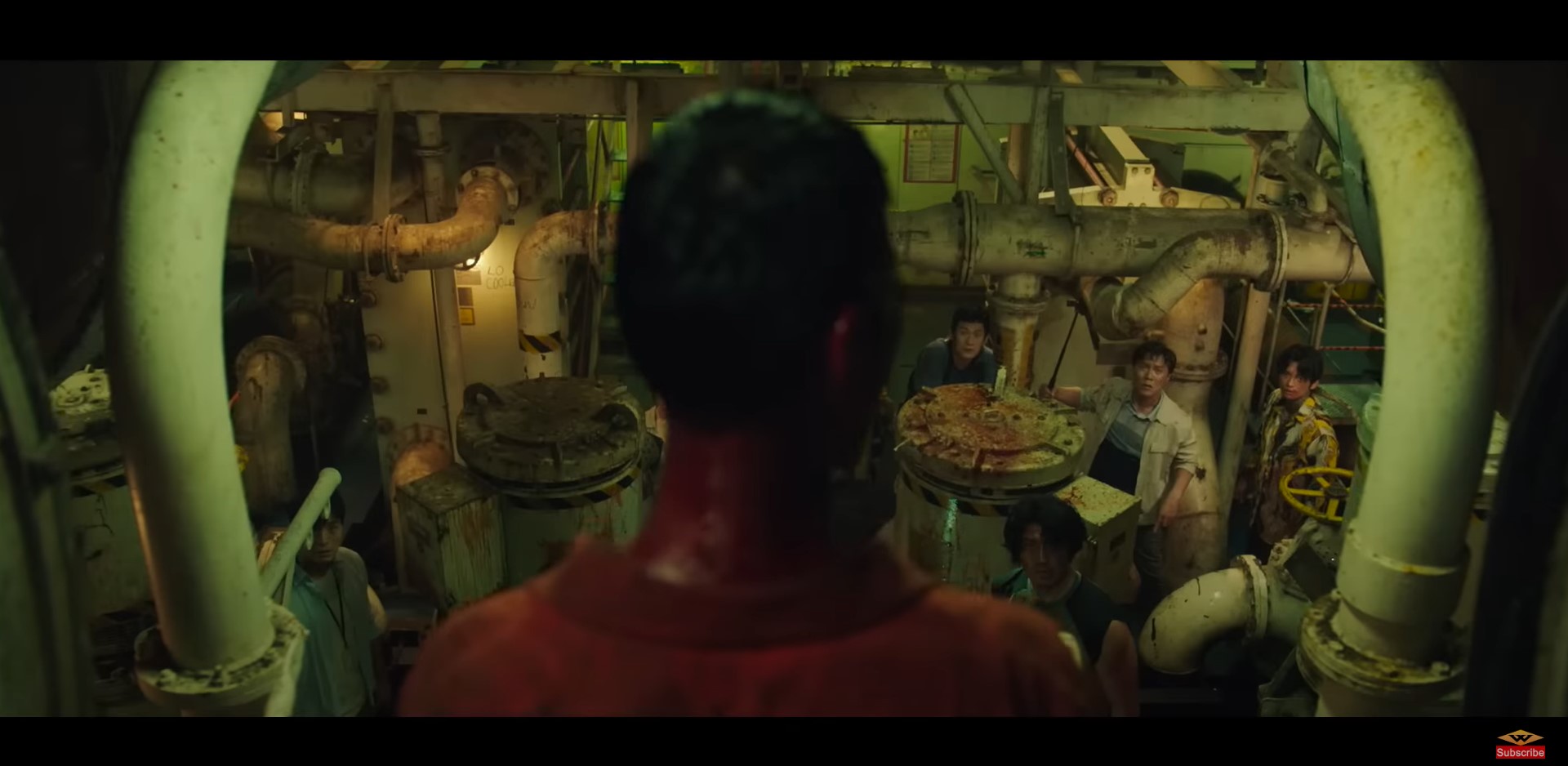
After a disastrous Philippines-to-Korea extradition processing of criminals that resulted in an airport suicidal bombing with multiple casualties, the procedure to transport dangerous criminals moves to a decommissioned Cargo ship known as the Frontier Titan.  The 3-day journey is expected to be a safer option to extradite Korea’s most wanted as highly trained and experienced detective accompany the criminals as armed escorts.  Every contingent has been covered except for what lies in the belly of the cargo ship.  Hidden in the bowel, underneath the engine room, a top secret biological weapon, involving an ancient wartime prisoner’s chromosomes commingled with the agility, strength, and prowess of a wolf, being transported across the sea.  When the criminals plan an elaborate seizing of the ship, the monstrous hybrid man known as Alpha is also inadvertently released and kills his caretakers, leaving him free to roam the ship and engage the good and bad guys alike as fair game to hunt.

Only a handful of times in my life have I’ve seen a film with so much blood.  “Project Wolf Hunting” is one of the bloodiest, most violent, Korean films to come out of 2022.  The hybrid action-horror with a genetically hybrid superhuman is the latest effort from writer-director Hongsun Kim, sticking with the horror genre after his positive reviewed 2019 evil spirit family drama “Byeonshin.”  The title, in reference to the operation of transporting Alpha through to East China Sea, into the Korean Strait, and dock at Busan, is the international marketing title for the Korean name “Neugdaesanyang” and is a film I can confidently and merely describe as “Predator” meets “Con Air” on a cargo ship.  Seasoned civic officers of the law, hardened criminals with sordid pasts, a special op consisted of superhuman soldiers are up against the odds to stop the Alpha, the original specimen.  Film between the ports of Busan, Korea and Manilla, Philippines, “Project Wolf Hunting” is the Korean venture production from Content G with Gu Seaon-mok serving as producer and is presented theatrical by The Contents On in association with CJ CGV.

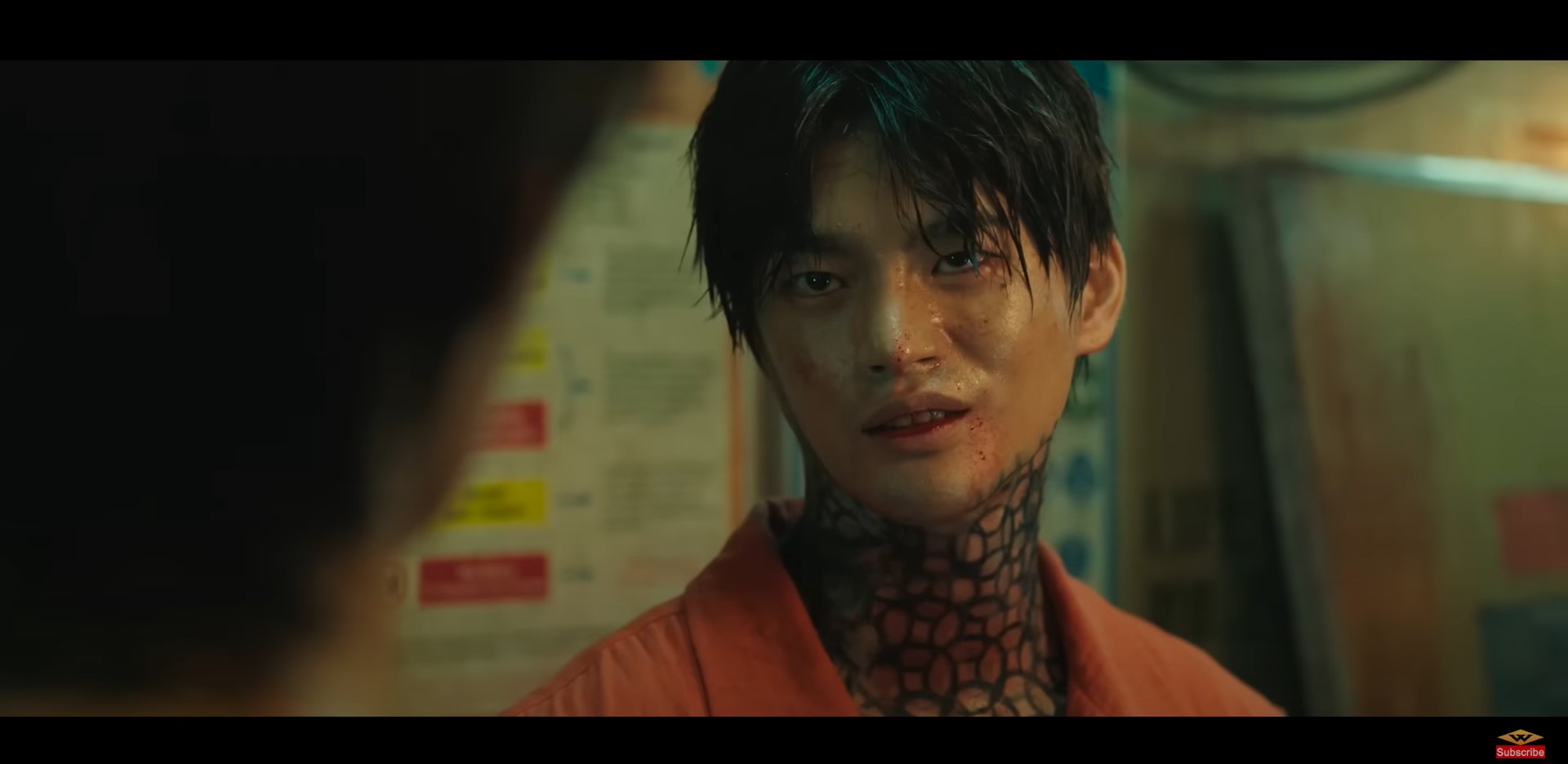
What’s interesting about Korean cinema is what you know what you’re getting with the characters who are greatly upfront, unpretentious, and full of attitude.  There are not a lot of false veneers with the cast of characters, something that can be said with most films spawned out from the Asia Pacific industry.  I might dangerously be overgeneralizing but from my viewings and writeups, but I’m fairly locked into my statement with confidence as “Project Wolf Hunting” paints a stark contrast of who’s who from the beginning without casting any doubt or even suspicion. Even with the some of the ship’s crew, Hongsun Kim clearly delineates their allegiances despite not coming right out with it initially and the cast immerse themselves into the appointed role with well-designed idiosyncrasies that seeing them out of character can be a bit of shock. Park Jong-doo perhaps is the most archetypical with Seo In-Guk, in his first feature performance, becoming the despot amongst the thieves. Guk transforms his appearance with full body tattoos to denote mafioso status and even takes that extra step with a few naked from the rear scenes to establish a conspicuous nonchalance for what anyone else has to think, say, or do. When many of the insurrectionary inmates take the ship, Jong-doo’s counterpart, Lee Do-il, isn’t so easily intimidated but is reserved and quiet in his strong posture. Dong-Yoon Jang offers a less violent option only to bide time for what’s ahead of them, the Alpha. Gwi-hwa Choi, who been hot right now in Korean cinema with having roles in “Train to Busan” and “The Wailing,” is the extraordinary and mysterious monster prowling to kill every single person on and off the ship’s manifest. With Alpha’s eyes stapled shut, maggots feeding off the festering tissue inside his mouth, and has a near spartan approach to liquidating, Choi completely transforms into the silent hunter with unstoppable and wild violent mode, but Alpha is only a name and the implicit meaning of the name does change hands throughout the course of the film that makes “Project Wolf Hunting” all that more the interesting. Female principals are not meek, weak, or helpless in his all-out brawl in a confined space with Jung So-Min as an eager cop with acumen and Jang Young-Nam as the dangerously uncouth companion to one of the mafia’s leadership and the fact that none of them are a love interest, or become even remotely involved romantically, sexually, or even innocently, speaks volumes on “Project Wolf Hunt’s” no room for romance rampage. The large cast lends to a high body and the acting pool rounds out with Dong-il Sung (“Byeonshin”), Park Ho-San (“The Call”), Chang-Seok Ko (“Lady Vengeance”), Lee Sung-wook (“Spiritwalker”), Jung Moon-sung (“The Cursed”), and Son Jong-hak (“Thirst”).

There’s so much blood. That statement was worth repeating. “Project Wolf Hunt” is reminiscent of the Japanese samurai films of yore or the absurd comedy gore film with geyser sprays of red with every blow.  Literally, tons of fake blood was used to coat the sets crimson in an impressive feat of movie magic carnage.  I’m also doubly impressed how the special effects team was able to achieve multiple sprays from out of the nostril cavities in what might seems small, insignificant, and simple looks amazingly palpable on screen that stopping to think about the difficulty in how that effect can be accomplished can be easily overlooked.  The blood sprays are only a fraction of the wide variety of violence and gore put on display and we’re treated to an abundance of slaughter and a superb, choreographed melee in each and every tightly confined skirmish that makes “Project Wolf Hunting” captivatingly adrenalized.  Production design creates the illusion of a cargo ship without question and the visuals, though soft in some scenes, sell the nautical voyage through clear skies and a storm rough patch.  Much of a part of “Project Wolf Hunting’s” success is cinematographer Ju-Hwan Yun’s framing.  The example I like to use is the post-elevator attack when the hoisting cord snaps that sends the lift plummeting down the chute with Alpha inside.  Yun then sends the shot from the top down the chute to the exposed opening of a mangled lift to see Alpha turn his eye-stapled face upward toward the narrowly escaping prey.  The shot gets the heart pumping and relays, in one sequence, the unkillable nature of Alpha.  If “Project Wolf Hunting” isn’t already thrilling enough with the brimming, cutthroat tensions spilling onto every deck between the police detectives and the criminals in their custody, the evolutionary plot twist that welds the age-old divide between the two frictions is a bloodbath you don’t see coming and one you’ll enjoy experiencing. 

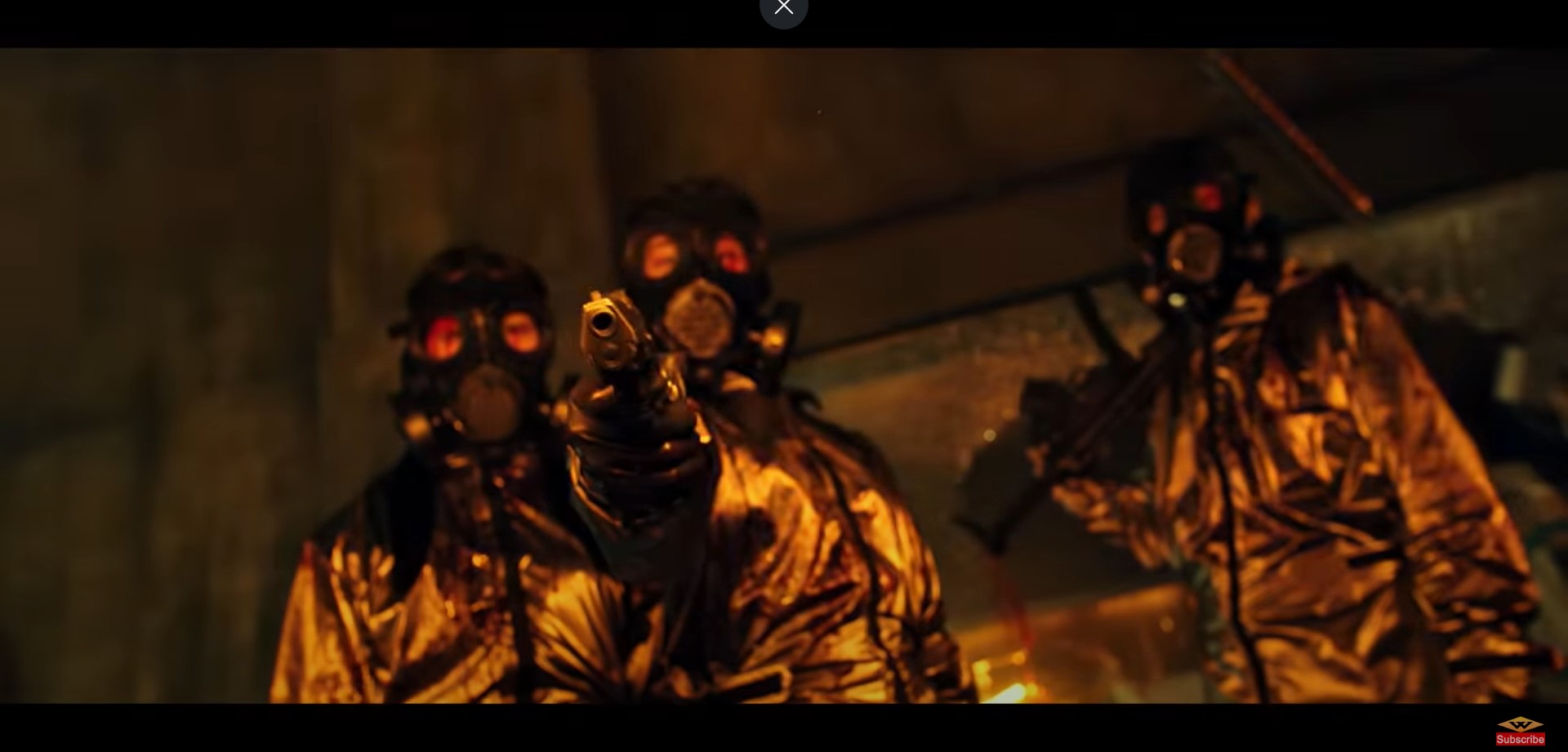
Action, horror, human experimentations, and with a complemental nod to the hard-hitting Asian cop films of 90’s, “Project Wolf Hunting” has teeth and stamina for 123 minutes of knockaround bloodshed. A winning Blu-ray release for Well Go USA Entertainment, the film is presented in a widescreen 2.39:1 aspect ratio. The AVC encoded BD50 offers a topnotch 1080p resolution that translates well to the big screen with granular detail in the interior and exterior of the cargo ship set and displays the stylistic choice of a warm color scheme consisting of prominently yellows and greens, providing less shadowy, higher contrast areas to suggest there is nowhere survivors can hide. Though quite a bit of CGI throughout the film, the end result doesn’t appear half bad with more fleshed out textures built into the renders to make them less gummy-looking. The release offers four audio options – a Korean and dub English 5.1 DTS-HD Master Audio and a Korean and dub English 2.0 stereo. Obviously, you receive more bang for your buck with the amped up surround sound option and don’t have to contend with dubbing if you go the original Korean language route. A high velocity range sounds strong through the rear channels with gunshots, the ship’s indiscreet hum, and the overall ricochets, clinks, and skirmish shuffles submerge an enveloping blanket of directional sounds right in your ears. The Korean dialogue is clean, clear, and vociferous in Korean inflections. English subtitles are optional and available well synched and error-free. Like status quo with other Well Go USA Entertainment releases, bonus features are an ornately produced, one-sided interview vignettes with the cast and crew and of the behind-the-scenes making of the film as well as a making of Alpha which was more actor Gwi-hwa Choi’s excitement about this different kind of role per his usual. The trailer is also available in the bonus content. Physical features include a traditional Blu-ray snapper with latch with the grisly, dirty face of Alpha blended into a black background. The film is unrated and is coded region A for disc playback. Despite minor convoluted expounding, “Project Wolf Hunting” kept the attention at high alert with a high body count, an indomitable super soldier, and a cargo ship load of blood.

“Project Wolf Hunting” on Blu-ray and Available for Purchase by Clicking the Cover Art!

EVIL Comes in Pairs. “The Witch: Part 2 – The Other One” reviewed! (Well Go USA / Blu-ray)

“The Witch:  Part 2 – The Other One” – A Whole New Blu-ray Tale of Intensity.

A top-secret lab, known as the Ark 1 of Jeju Island where The Witch project is being conducted, is raided by ruthless mercenaries armed to the teeth with weapons and an enhanced superpowers resulting from The Witch project.  Eradicating every living person in the tundra camouflaged facility, one teenage girl emerges bloody from the carnage and wanders off into a neighboring snow-covered forest.  She’s rescued by Kyung-hee and her brother Dae-gil who inherited the land from their recently killed father.  The siblings are in a contentious situation of their own with a gangster uncle, Yong-du, who will stop at nothing to get his hands on the property, especially when he took care of the previous landowner.  With her Witch powers, the girl helps her kind rescuers to fend off a Yong-du shakedown, but the problems only begin there as the Ark 1 mercenaries are tracking down the girl’s whereabouts to finish what they started and a tactical team, enhanced with Witch powers too, has also been dispatched to eliminate the girl as an unpredictable global threat.  When all forces collide, the Earth will shake in a bloodbath of superpowers. 

A direct, but not an entirely direct sequel to the 2018 high-action Korean thriller “The Witch:  Part I – The Subversion,” writer-director Park Hoon-jung (screenwriter of “I Saw the Devil”) returns with a follows up the long awaited sequel “The Witch:  Part 2 – The Other One” that promises to be just as excitingly unrestrained with more players in the superpower game culminating to an explosive head that plays out like a hard-hitting Guy Richie storyline of intersecting plot threads except without wisecracking Englishmen.  The sequel follows another, and a handful of others in sperate, funneling threads, like the first installment’s principal character Koo Ja-yoon with insurmountable supernatural abilities except now everyone and their brother can “Twilight”-jump and Wolverine-heal, making the field even-steven to a known extent up until the grand finale.  Park returns as producer as well as newcomer Hyun-woo Kim, producer of “I Saw the Devil” and “Snowpiercer,” with Next Entertainment World and Goldmoon Films serving as production companies.

The sequel does not specifically revolve around first film femme fatale Koo Ja-yoon and turns the focus on a new prodigal Witch who has been cooped up in a lab since birth, hence why the film is not a full-fledged direct sequel as the storyline goes into an offshoot that later intersects. The face of the new witch is played by Shin Si-ah who makes her feature film debut.  When not covered in blood, Shin’s mostly reserved performance opens to light-hearted and childlike wonder as her character is experiences everything for the first time outside the Ark 1 lab.  Kyung-hee (Park Eun-bin, “Death Bell 2:  Bloody Camp”) and Dae-gill (Sung Yoo-bin, “Manhole”) take in the girl and become the warm absorption resemblance of family life or a life with romantic interests that can quickly be ripped away at any moment, sending the emotionally teetering girl into battle mode.  However, that sensation of relationships and tenderness hardly translates well on screen.  Perhaps losing some impact in literal translation, the trio’s dynamic retains a goalless fruition of connecting with other people, especially the superhuman powerless ones.  I found more complexities in the two factions seeking the same target – the girl.  Enigmatically opening with the mercenary raid on the secret Ark 1 lab and executing all in their path, we’re not immediately introduced to, and then barely given an introduction at all, is “The Cursed Lesson’s” Chae Won-bin’s mercenary boss lady and her squad of lesser-though of subordinates who all carry this overly murderous confidence with the latter being often measured inside their own group.  The other group is quite the opposite with the official tactical response team deployed by the Witch project head Dr. Baek (Jo Min-soo), a returning character from “The Subversion.”  Compiled as chief agent Jo-hyeon (Seo Eun-soo) and her second-in-command, a South African named Tom (Justin John Harvey). Seo and Harvey have a better act as the exchange is degrading and goofy in a comical manner with Jo as a workaholic lone wolf leader of an elite group of special ops while Tom brown noses his commander with new tech and offers helpful suggestions to which his commander either breaks or doesn’t use the new tech and views him as more of a warmhearted nuisance. Jin Goo completes the principal cast as a high-level gangster boss that would be big time in reality but in “The Witch’s” universe equates to an insignificant goon in a fancy coat. With an entourage of loyal henchmen, Jin Goo rubs elbows with his business smarts to get in bed with a clandestine organization as well as staying alive as long as he can in order to rob property right from under his niece and nephews’ nose. Goo plays the part with sly astonishment as he creates a pompous persona mildly shocked by awesome abilities of a young girl with the strength of 100 men.

What garnered much fascination with the 2018 film was the Korean dark, neo-noir tone intermixed with the uncanny abilities of a mystery person who can’t remember jack about their past. Park Hoon-jung essentially removes the simplified spine of “Part 1” and transplants it as the basis of “Part 2” with the similar added angles of a destroyed lab that supposedly no one survives but one person ultimately does and a pair of benevolent landowners who rescue, nurse, and essentially adopt the amnesiac girl back to 100% percent. “Part 2′” mirrored storyline is then targeted by at least three different angles represented by each bird-dogging group to add elements of change that include a contrast of comedy and austere posturing, the former being refreshingly novel to the two-film series that promises more to come after an open-ended finale. Returning to the sequel is the insane visual effects of “Twilight”-esque rapid movements and epic fight sequences with large explosions, a cold and bloody violent complexion, and high body count and while that’s all good and dandy for surface level popcorn effects, what’s agonizing is the how sped up they are as if every super occurrent was purposely depressed on fast forward by the power of three. If Park and his creative visual supervisors and gurus could have tempered down every other two moments with instead of having thrown cars, and among other things, seemingly skip multiple frames would have had more of a plausibility impact. The mélange complexity of multiple pursuers armed to the teeth and converging onto an unexpected teenage girl shacked up in a humble abode is a great classical spell of barnstorming besiegement that has the same improbability odds of survival as before betting on David versus Goliath until upended unto the aggressors, with all their guns and knives, who now need a prayer and much more against the prodigal youth with a considerably more amount of Witch power.

A fierce force of controlled power, and unforeseen surprises, the long-anticipated sequel, “The Witch: Part 2 – The Other One,” has finally landed post-pandemic. Well Go USA Entertainment, who released the first installment on Blu-ray, has picked up the rights to release the sequel on the high-definition format, presented in a sleek and sharp 16:9 aspect ratio. Virtually no issues with the digital presentation, the Blu-ray’s 1080p heightens every aspect of detail, even to a fault with the wonky visual effects as mentioned earlier. The overall darker lit tone and range can sometimes give off the appearance of softer details but with solid contrasting, the outlining shapes up more so than often and there’s no compression distortion to render an ill-defined texture. The Korean-English Dolby Digital 5.1 mix, also available is a Dolby Digital 7.1 Atmos and a Stereo 2.0, delivers a formidable, comprehensible, and frenzy-favorable mix of balanced action and dialogue. Depth perfectly pitches the focus properly while the range fuses together mostly during the fighting sequences until there’s a deep and punch-packed explosion mushrooming into a ball of crackling fire. No evident issues with dialogue and the English subtitles synch well with no flaws. Bonus content features a glossy and sped-cut behind-the-scenes featurette and the theatrical trailer. Physical features include the original Blu-ray snapper case with a cardboard slipcover featuring the same cliff-note touching cover art as the snapper case. The NTSC Blu-ray come region A hardcoded, is unrated, and has a runtime of 130 minutes. Time flies when you’re engrossed in “The Witch: Part 2 – The Other One’s” take no prisoner thriller of transcendent turbulence.

“The Witch:  Part 2 – The Other One” – A Whole New Blu-ray Tale of Intensity.

EVIL’s Off the Train and onto the “Peninsula” reviewed! (Well Go USA / Digital Screener)


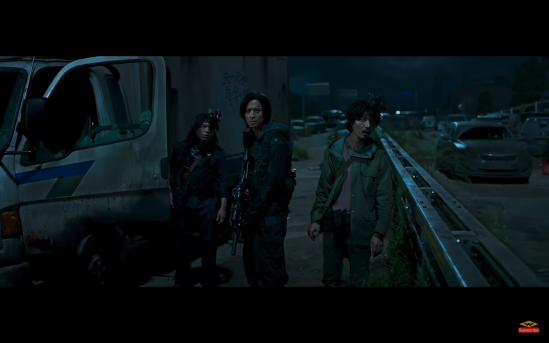
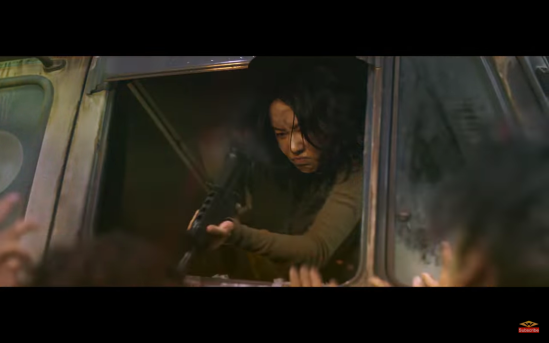
For four years after the initial zombie outbreak, a unified Korean peninsula is completely quarantined from the rest of the world with the remaining survivors having to fend for themselves. A former Korean Captain, Jung Seok, who was one of the last survivors to escape pre-quarantine and now lives in Hong Kong, is hired for a four man team to return to the peninsula and retrieve an unmarked and abandoned truck stowed with $20 million dollars in U.S. currency. With a promise from a Hong Kong mafia boss to keep part of the loot for their recovery services in order to start a new life, the team agrees to the terms and embarks on the seemingly succeed mission only to find survivors who have gone mad, pillaging their mission and conscripting them into a malicious betting game of survival in a watery pit full of zombies.

The highly anticipated sequel to South Korea’s 2016 sleeper zombie hit, “Train to Busan,” docks into U.S. theaters and VOD services on August 21st and is entitled simply, “Peninsula.” From the bullet train rails to the a devastated Korean port, the predecessor film’s director, Yeon Sang-ho, returns with a zombie overrun post-apocalypse that completely metastasized Korean derived from a biological agent quickly spreading throughout the two cinematically unified, North and South Korea. Joo-Suk Park returns as co-writer alongside Yeon to provide heart clenching, brutal action-horror suspense and a human sense of selfless compassion that won the hearts of many genre fans with “Train to Busan.” Zombie hordes rampage down streets, alleyways, and toppling over cars, fences, and other structures as a collective flesh easting unit that specializes in dominating and ravaging for the pure motive of infection and while that sounds all hip and cool that the “War World Z” and “I Am Legend” running zombie pandemonium makes for a glitzy entertainment feedbag, the Next Entertainment World and RedPeter Film production punches down on the gas pedal of gaslighting audiences with more of a “Fast and Furious: Tokyo Drift” with zombies, revving more to the tune of an exasperated exhaust rather than finishing strong with gripping storytelling.

As a standalone film, the story doesn’t return the surviving characters from “Train to Busan.” Instead, a whole new set of characters reset the parameters of expectations, starting with the guilty conscious of the grief-stricken ex-soldier, Jung Seok, played by Dong-won Gang, who will star in Scott Mann’s upcoming disaster film “#tsunami.” Seok’s a reserved and stoic individual whose good a gun play, but isn’t the thinker when a plan is needed in place and while Dong-won Gang gives a par performance, the overall package of the lead character is sorely two-dimensional. This leaves room for other characters flourish, such as the mother and children Seok attempts to save on a second go-around. The mother, played by Lee Jung-hyun, has more grit that clearly defines her underlining hope for not only her salvation, but also her children who’ve known nothing but death, destruction, and meaning of being devoured growing up in the midst of a zombie apocalypse. On the slim change of success, she implements a plan to infiltrate Unit 631, former military turned murderous scavengers, to steal back a satellite phone and a truck full of cash while not becoming zombie chow or get caught in Unit 631’s sadistic survival methods. That brings us to the villains, the real villains, where are not the zombies, but the section 8 soldiers of Unit 631, Captain Seo (Koo Kyo-hwan) and Sergeant Hwang (Kim Min-jae). Though Seo and Hwang bring internal tension to the table, a mental game of cutthroat chess, they’re inevitably soft against the main threat, a combined effort of Jung= Seok and Min-jung, and don’t spill enough blood and craziness onto the screen to make them worthy of the antagonist position. “Peninsula” rounds out the cast with Kim Do-yoon, Lee Re, Lee Ye-won, Moon Woo-jin and Bella Rahim.

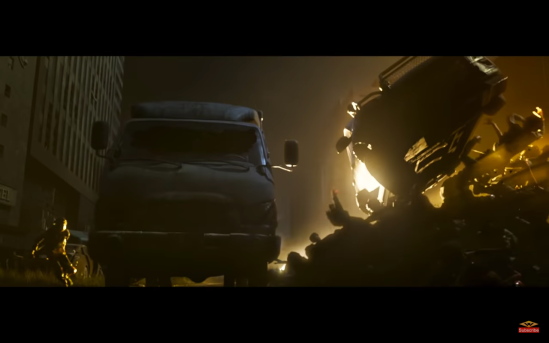
As almost methodical as it is with any second film in a series, “Peninsula” failed to be a rejuvenating and transcending sequel to “Train to Busan,” abandoning the first story’s benevolence for CGI flair that extends to not only the zombie hordes, but to the car chases. As excellent as the rendered zombies are slammed against the drifting cars can be represented, in what “Peninsula” can be described as an “Escape from L.A.” meets “Land of the Dead” meets “Mad Max: The Road Warrior,” the cars themselves are a product of computer imagery with little authentic driving happening. While the effects are not bad (they’re pretty good chiefly obscured by dim lit night scenes), the sensation of being scammed can’t be ignored as the vehicles operate unnaturally and maneuver in impossible situations without blowing a tire or upending or just frankly be dead in the water with an overheated and stress tussled engine that frags zombies left and right, becoming a collective character to have the highest kill count. That disingenuous feeling also spreads to the overly long-winded ending that tries really, really hard to capture a courageously defiant and heroic moment of family and personal redemption and much of the blame lies on director Yeon Sang-ho with a drawn out awkwardness and edit that made it seem satirical. In light of some positive words for “Peninsula,” the zombies are a greater, gigantic force that swarm on a colossally epic scale more so than the much more compact “Train to Busan” and, as aforementioned, the structured CGI isn’t of the degraded detail variety so the hordes never look cheap or obviously artificial alongside the more palatable, practical versions. What’s also interesting about “Peninsula” and what makes it separate from “Train to Busan,” which perhaps laid the foundation for, is “Peninsula” has integrated the western counterparts as English speaking actors chime in as U.S. Military, U.N. peacekeepers, or English mafia bosses based in the U.K. This challenges the Korean actors to speak a few different languages, especially English, inclining “Peninsula” as more of a global problem than an isolated Korean one.

The zombie genre isn’t just defined by the ungodly amount of undead bodies reaping the world of every living soul, but is also defined by the diversity of chaos-driven social structures people find themselves confronted with in the action-heavy “Peninsula,” arriving into U.S. theaters on August 31 and distributed by Well Go USA Entertainment. This review will not contain the A/V aspects of the release as it’s a theatrical screening of the feature, but the theater specs will look something like this: projection is in scope lens format at an aspect ratio of a widescreen 2.39:1, a surround sound 5.1 stereo mix, Korean/English/Cantonese language with English subtitles, and has a runtime of just under two hours at 116 minutes. I will note that some scenes are very dark, but this only adds to the complete blackout of a civically desolated Korean peninsula. From fast trains to fast cars, “Peninsula” has retained the adrenaline popping rampant style with weaving, bobbing, and chassis chucking zombie bodies like the ball in a pinball machine despite a facile approach, but is ultimately missing that down-to-Earth social context complexity aimed to provoke thought and shed a few tears as an inferior part two of the “Train to Busan” universe.