EVIL is in the Eye of the Beholder! “Mansion of the Doomed” reviewed! (Full Moon / Blu-ray)

“Mansion of the Doomed” on Blu-ray.  Hold Onto Your Eyeballs!

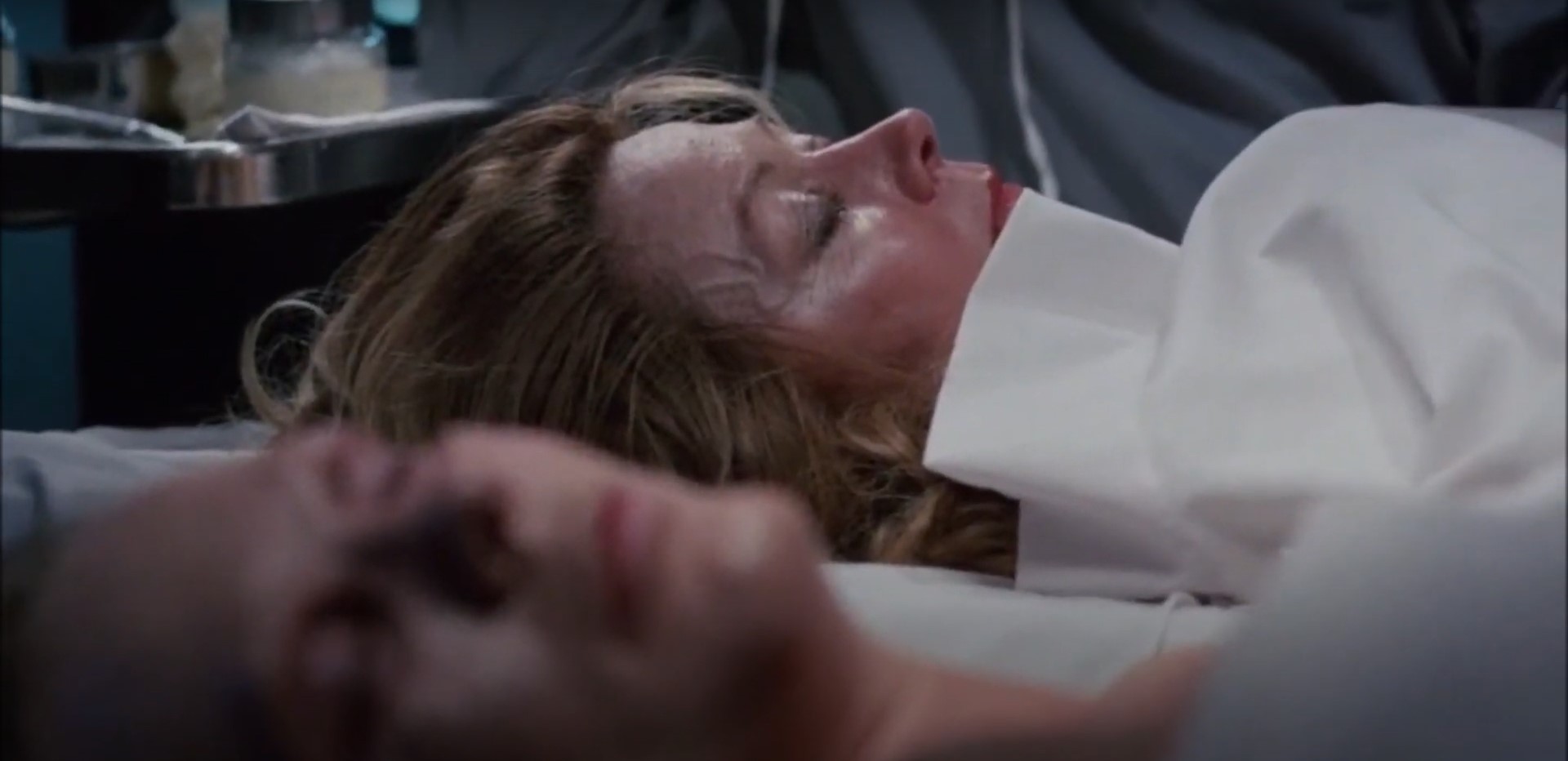
In a stroke of irony, renowned optometrist surgeon Dr. Leonard Chaney had a car accident that accidently causes his young adult daughter permanent blindness.  Obsessed by guilt and determined for her to see again, Chaney moves toward a not only radical procedure but also unethical one of a full eye transplant.  The catch for this type of surgery to be successful is the eye has to be extracted from a living patient.  Unwilling to wait for a donor, Chaney employs every deceptive tactic to lure unwillingly healthy and beautiful globular organ donors into his dark basement where he drugs them unconscious, surgically plucks out their entire eyes, and leaves them locked in a cellar cage, blind and crudely healed with scar tissue but still alive.  With each failed attempt at restoring her eyesight, the reminders of his experiments linger down below, screaming in pain, and pleading for their lives.  Soon, those pleas will ultimately catch up to him. 
Before his fascination with mini-sized maniacs of killer animated toys and malicious experimental oddities, Charles Band used to produce other types of original horror and the “Mansion of the Doomed” was one of them.  The 1976 Frank Ray Perilli (“Dracula’s Dog,” “Alligator”) written and the “Dead & Buried” and “Halloween 4: The Return of Michael Myers” actor Michael Pataki directed mad surgeon “Mansion of the Doomed” was the first feature film Charles Band officially stamped his actual name onto along with father and western screenwriter, Albert Band, as financial executive producer.  While “Mansion of the Doom” is known by various other titles around the world – “Massacre Mansion,” “Eyes,” “Eyes of Dr. Chaney,” “House of Blood,” “Eyes of the Living Dead,” and “The Terror of Dr. Chaney” – the one aspect that the film is firm in is its Hancock Park and estate shooting location in Los Angeles as one of the very first features to come out of Charles Band Productions company.
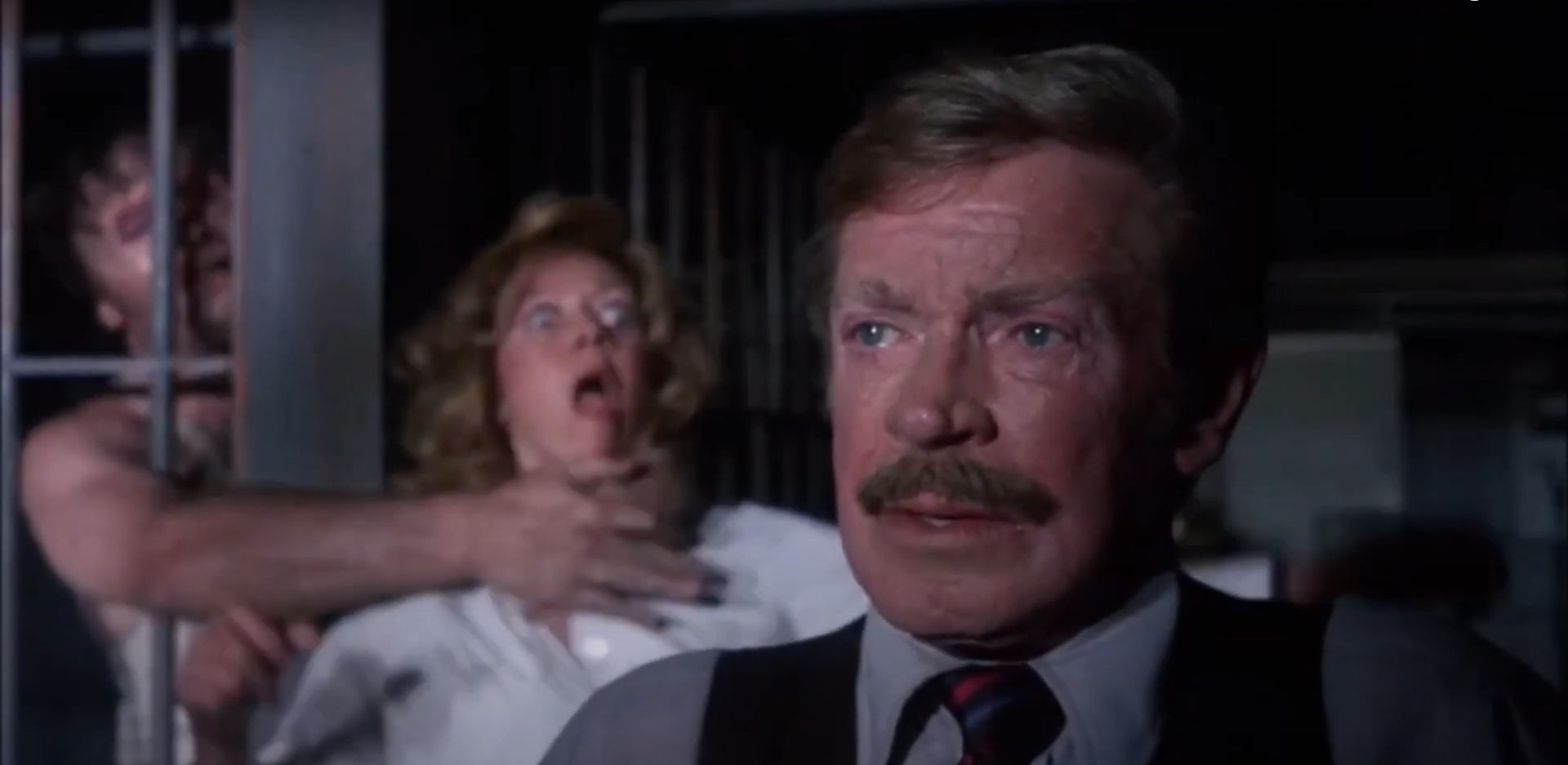
Lance Henriksen.  You know name, right?  Sounds familiar, yes?  The “Aliens” and “Pumpkinhead” actor, hot off the success of “Dog Day Afternoon” with Al Pacino, begins his tour de force of horror and dark science fiction with the Pataki mad doctor eye opener.  Dr. Chaney uses his misguided experimental expertise first on Dr. Dan Bryan, played by Henriksen, after Dr. Bryan’s recent romantic relationship breakoff with the recently blind daughter of Dr. Chaney, Nancy (Trish Stewart).  Before he became the narrating voice in TV’s “Knight Rider,” the veteran actor Richard Basehart, who also had a role in the 1977 “The Island of Dr. Moreau,” became his own inhumane medical malpractice physician in Dr. Chaney.  Though Basehart makes for the epitome of a professional doctor, his performance was the weakest link in the cast’s locks that didn’t exhibit the stress and desperation of a man continuously exploiting and disfiguring people for his own personal guilt release.  The guilt was not compounding as much as the story wanted to suggest, but we feel more empathetic to Dr. Chaney’s longtime assistant in Gloria Grahame (“Blood and Lace,” “Mama’s Dirty Girls”) who we can see her character dissolve with each abducted patient and affected to the core by their sightless screams.  “Mansion of the Doomed” rounds out the cast with Al Ferrera (“Dracula’s Dog”), Marilyn Joi (“Black Samurai”), Donna Andersen, JoJo D’Amore (“Dracula’s Dog”), and Katherine Stewart.
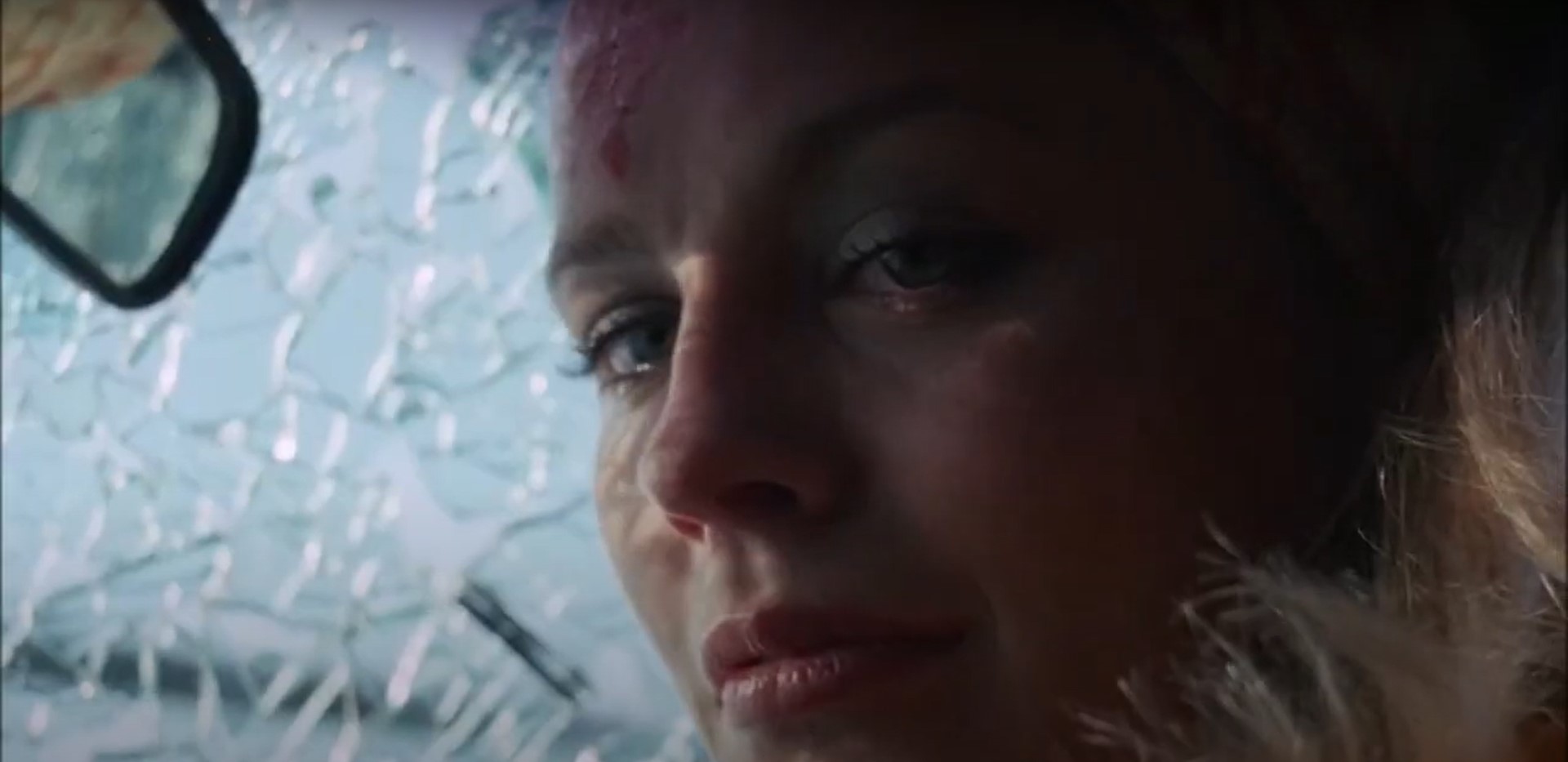
Michael Pataki’s “Mansion of the Doomed” is an eye-peeling shocker that’s dark and grim to the core and has an eye for cynicism. I could keep the eye puns going but that would be too easy to pluck out. Perilli’s story is rather plainly spoken with not a lot of fluff diving into medical or procedural jargon to bore you down into a loss of interest. Instead, the good doctor character goes right to work getting his hands elbows deep into the eye sockets of his victims and that’s how this particular exploitation perfectly crafted the balance by tabling the under stimulating medicalese with caged disfigured patients left to live in agony. Where Pataki and Perilli faltered some is in the preface by skimming the surface of the Dr. Chaney caused accident that rendered Nancy blind when she face-planted right into the doctor’s windshield as he swerves to not runover a mutt. In driver’s ed, you’re supposed to hit the small animal that runs in front of you in order for these kinds of accidents don’t happen! Told in the inner thought of a flashback, the force between the two immovable objects shatters the glass but leaves Nancy unscathed physically yet, somehow, she loses her sight in both of her eyes and while Dr. Chaney is unable to best the blindness with everything the surgical optometrist throws at it, perhaps that’s the unsolvable mystery that beleaguers abashedly an expert at the summit of their excellence. ‘Mansion of the Doomed” is not a feel-good film as not one single character has a positive outcome and having lost more than just their sight but also, to name a couple, their humanity and their hope.
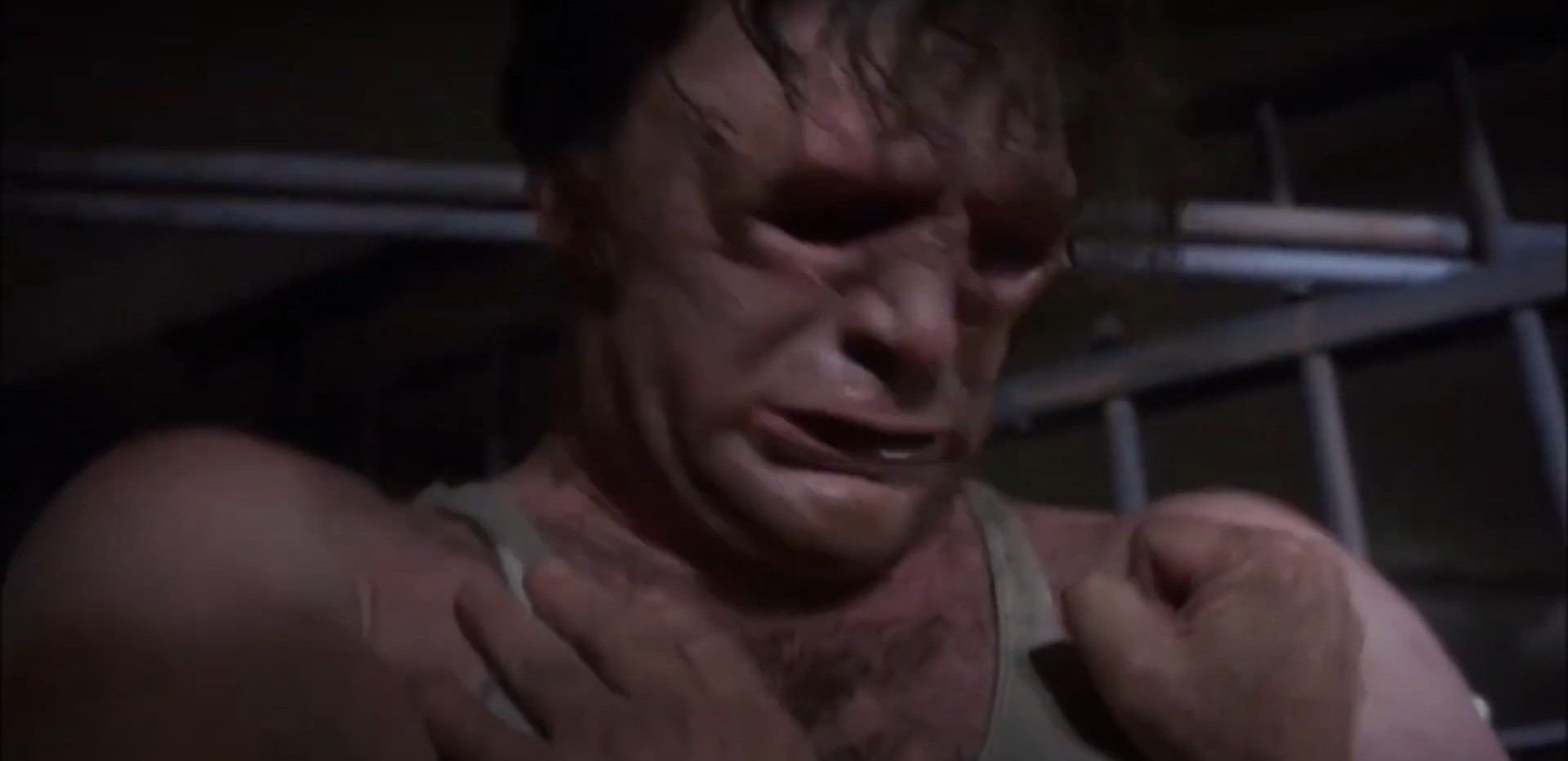
Uncut, restored, and remastered onto a new Blu-ray release, Full Moon Features re-release “Mansion of the Doomed” onto 1080p, full high definition, from the original 35mm negative. Source material held up over father time with a pristine 85-minute uncut transfer to retouch in a pop of color and refine the details in a softer, more airy-soft image, presented in a widescreen 1.85:1 aspect ratio. Full Moon offers two audio options available with an English Dolby Digital 5.1 surround sound and a Dolby Digital 2.0 PCM. Though slightly staticky in the ambient and dialogue tracks, the balance works and is full-bodied around more essential scenes of surgery and the cries of anguish. Dialogue doesn’t sound overly boxy or hissy and the cult composer Robert O. Ragland’s (“Deep Space,” “Q”) classic orchestra score come across with a powerful range that speaks the scene without exposition. The region free Blu-ray has no extra features, leaving this release as a bare bone, feature only. “Mansion of the Doomed’s” harrowing ending induces stupefying blank stare and feels like a brick just walloped you in the face knowing that every pawn in this story loses at the hands of man disillusioned in playing God.

“Mansion of the Doomed” on Blu-ray.  Hold Onto Your Eyeballs!

Superpowers Can Be Just as EVIL as They are Good. “The Unhealer” reviewed! (Scream Factory / Blu-ray)

“The Unhealer” on Blu-ray home video from Scream Factory!

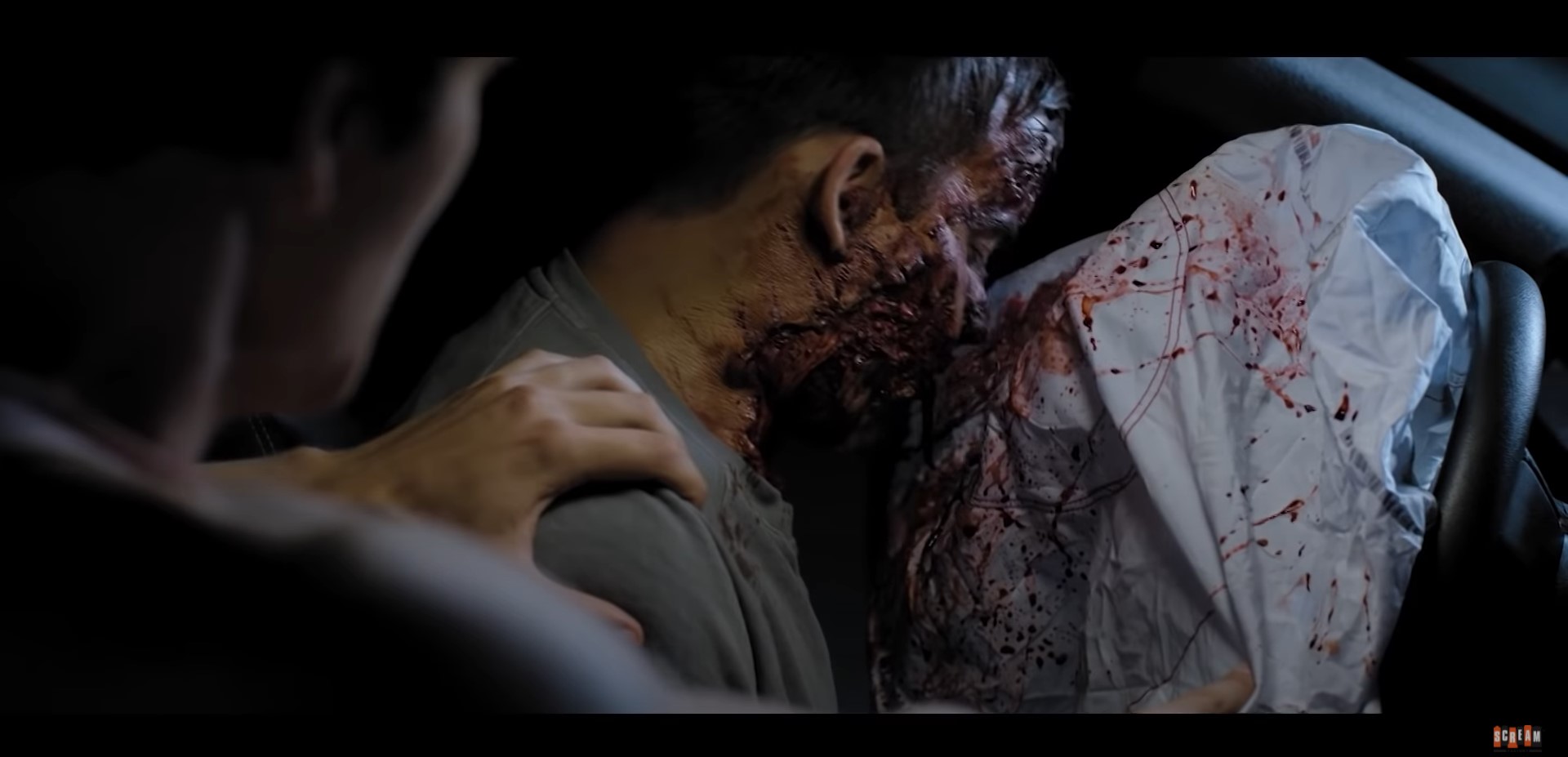
An old graverobber unearths the supernatural powers of an ancient Native American burial ground that gives him the ability to heal as well as to be resilient against injury with self-restoring powers.  When exploiting the local residents of his newfound “Godly” gift, a botched healing of a bullied teenage Kelly with severe pica disorder transfers the powers to him, curing his disorders and restoring his health while also leaving the old graverobber to die.  With a new lease on life, Kelly pursues his dreams, standing up to his relentless tormenters, and even finding the courage to ask out a girl, but when the powers prove to be addiction beyond control and the bullies never let up on their aggression on him, Kelly uses his newfound gifts to exact a deadly course of revenge. 

“Pet Sematary” meets “Christine” – a Stephen King-esque bully-revenge, supernatural thriller “The Unhealer” from the Argentinean born director Martin Guigui.  The music video and feature film director returns to American horror nearly a decade later after helming the 2011 “Beneath the Darkness,” starring Dennis Quaid, with a thrilling teen angsty script penned by first time screenwriters Kevin E. Moore and J. Shawn Harris that recalls a narrative very familiar to the late 80’s to early 90’s with oppressive high school bullying by the jocks and the turning point revenge by the receiving end pipsqueak.  Originally scripted under the title “Pica Boy,” “The Unhealer” reveals the dangers of severe polarities between one disorder to the next with the humbling fragilities trapped inside one’s own psychological disorder to the over-confidence of feeling invincible due to physical anomalies that result in no pain being suffered, losing one’s empathetic reasoning.  “The Unhealer” is produced by writer J. Shawn Harris and his sibling actress, “Night of the Demons 2” and “Night of the Scarecrow’s” Cristi Harris along with star Natasha Henstridge and “Why?” filmmakers Corbin Timbrook and Galen Walker with Horror Business Films and 7 Ideas serving as production companies.

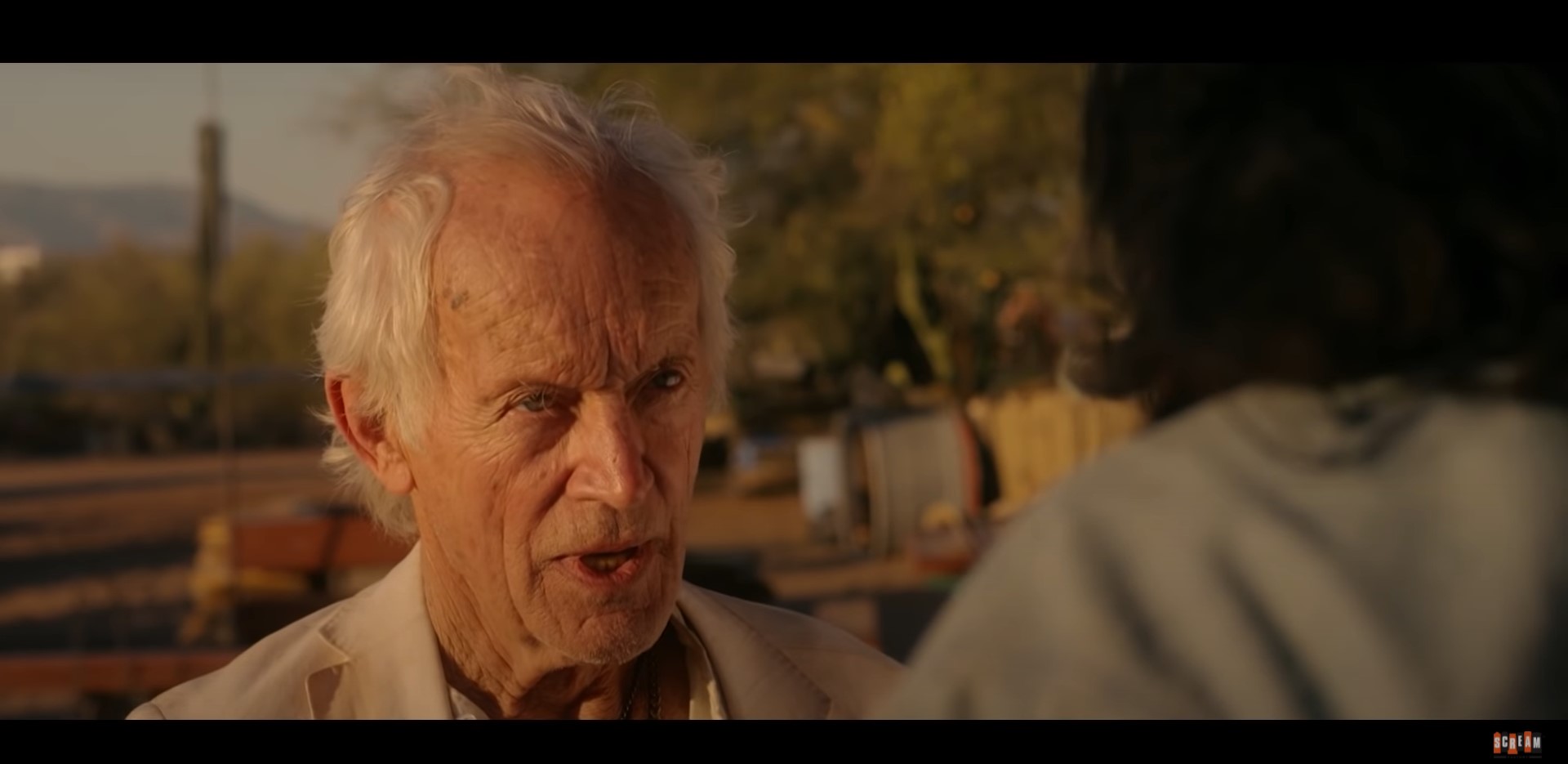
Headlined with three big and recognizable names inside the genre circles and out, the film stars Lance Henriksen (“Pumpkinhead,” “Aliens”), Natasha Henstridge (“Species,” “Ghost of Mars”) and Adam Beach (“Windtalkers,” “New Mutants”) playing variable degrees in their roles important to “The Unhealer’s” story progression and each performance never overlaps prominent personalities that can sometimes stall out and unbalance a production.   Henriksen plays a long in the tooth snakeoil salesman named Pflueger who exploits the locals with his newfound healing powers and when he’s hired by Kelly’s desperate mother, Natasha Henstridge, the scene becomes a passing of the torch as Pflueger unintentionally transfers his powers to Kelly (Elijah Nelson, “Chain of Death”) that magically heals him of his longtime psychological Pica disorder. Not so much a youthful soul anymore, Henriksen has tall tell signs of showing his age, but the 81-year-old New York City born actor can still sear memorable performances into our psyche with a wisecracking charlatan conman in Pflueger, dressed from head to toe in a shabby white suit and tossing up awkward hand gestures when deriding burial ground protecting Shaman Red Elk, played by long time serial supporting man Branscombe Richmond (“Commando,” “Hard to Kill”). More awkward in his reaction to receiving an unexplainable supernatural gift is Elijah Nelson who goes from deaths door to want to join the Navy Seals in a matter of minutes after the Pflueger plot point passes. The writing doesn’t exactly assist in Kelly’s transition with an acceptance of power without an inkling of trying to comprehend is as Kelly tries to hurt himself and tries to encourage being pounded by bullies as if he already fully understands the immense reality of his abilities. Even his mother, who under the understanding that she has tried everything possible scientific medicine man has to offer to cure her only child, is instantly okay with Kelly’s rushing into the unknown. A nearly unrecognizable Natasha Henstridge from her “Species” franchise days after a thyroid autoimmune disease diagnosis doesn’t stop the late 40’s blond beauty from being just that – a beauty – in an overly protective mother role desired by the local single men from the house visiting doctor to the Adam Beach’s Native American Sheriff Adler. Beach becomes the absent father figure for Kelly and a person who has a foot in both the Native American spiritual world and in the Anglo-Saxon realities and melodramatics. Beach proceeds as the main lead of the third act, following Henriksen and Henstridge to keep a constant, recognizable presence throughout and providing his own stamp as the voice of reason whereas the first two culminated extreme biases toward Kelly. Kayla Carlson, Angeline Appel, Gavin Casalegno, David Gridley, Mike Gray, Thomas Archer, Will Ropp, and one my new personal favorite actors in Chris Browning (“Agnes”) fills out the remaining cast.

Very early on initial reactions toward “The Unhealer” were poor mainly because of the luridly unflattering dialogue and perplexing transitions between scenes that don’t exactly hit the mark matching up character intentions, but the more I watched, the more an optimistic sensation started to arise in me. Starting small in the recesses of my cerebral film database then growing until metastasizing fully into my mind and, eventually, into my nostalgic-detecting ticker is “The Unhealer’s” robust recollection toward how fun bully-revenge-thrillers from two to three decades ago can be with a carbon copy simulation ingrained with a novel narrative surrounding Midwest Native American mysticisms carrying with it that age old “Spiderman” insinuation that with great power, comes great responsibility, but in “The Unhealer’s case, as the tagline suggests, comes great pain. Screenwriters Moore and Harris burden Kelly with a King Midas touch that no matter how hard the character tries to contain his nearly invincible power, outside forces influences and unforeseen happenstances steer Kelly toward self-destructing disaster. Between a group of buffed up and obnoxious high school jocks as unyielding tormenters, Kelly pushed into a self-protecting corner despite a generous passive attitude, especially being run over with car at one point, and the unpredictable and limitless avenues built as substory awry to make “The Unhealer” a joyful hidden gem, the Martin Guigui film on the outside appears to be a cheap, indistinguishable, B-movie, but if you dig deeper, dig until you unearth a medicine man’s ancient dusty bones, and you’ll discover deep seeded veneration, a gripping story, and dark magic carnage.

“The Unhealer” will undoubtedly fly under many viewers’ radars but is a must watch from (Shout!) Scream Factory’s distribution label in a cooperation release with VMI Worldwide (“Orphan Killer”). The full HD, 1080p Blu-ray of the 2020 production is an encoded region A release with unrated certification and a runtime of 93 minutes, presented in a widescreen 2.35:1 aspect ratio. Generally nothing to swing image quality from one spectrum to the next with a RED Weapon Dragon digital shot. Already decent at compression, the RED camera provides a crisp demarcating image in the forefront and capture the textures in a literal closeup with focus precision. “The Unhealer’s” lighting and set dresses cater less to the supernatural phantasmagoria with Massimo Zeri’s realistic Arizona landscapes and suburbia venues that don’t excite the camera with its cold truth realism rather than the mise-en-scene tropes of horror atmospherics. The English DTS-HD Master Audio 5.1 also has zip to complain about with high resolution quality with a surprising ample range of effects. Dialogue is prominent and clear as well. English SDH subtitles are an available option. Special features include one-sided individual cast/character behind-the scenes interviews which is basically cut and edited footage of the actors describing their characters in footnote fashion. The gag reel is a better feature that takes the same interview format, intertwines it with music, and lines up the gags with an instrumental soundtrack in one seamless show of goofs and hijinks throughout production. Deleted scenes and extended/alternate scenes, surrounding mostly around Kelly and Dominique’s coy love interest, cap the features. At first glance of the final package, “The Unhealer” looks totally like a rip off inside and out of the cardboard slipcover with a “Star Wars'” lightsaber color scheme and a character illustrated design underneath the title dressed in “Stranger Things” font, but don’t let parroting cover fool you as “The Unhealer’s” dark journey from being the bullied to the bully is an unabated and inescapable catch-22.

“The Unhealer” on Blu-ray home video from Scream Factory!

Planning a Jailbreak off an Evil Corporation’s Island Prison! “Escape from Absolom” review!


In the year 2022, Special Forces solider, Captain Robbins, is court martialed for putting a bullet in the head of his commanding officer. After escaping two maximum security prisons and a record of rebellious activity, a corrupt and power hungry warden of the Lactivus prison ships Robbins off to an off shore island called Absolom, where prisoners can roam free with no chance of escape due to 24/7 surveillance by Satellite and rocket launcher armed helicopter gunships surrounding the island perimeter. Island prisoners separate into two factions: the Outsiders and the Insiders. Each with the respective camps, the lawless Outsiders overwhelm the Insider’s numbers by 6 to 1, leaving the small manned community in constant fear of attack and pillage by the Outsider’s merciless leader, Walter Marek. When the insiders learn than Robbins has faced Marek and lived, they take the former solider into their community, but Robbins sole desire is to escape off the condemning rock and with the help of a few good men from the Insiders’ camp, the chances of escape and survival are greater together as long as Marek and his band of starving cutthroats don’t seize the endangered community first.

“Escape from Absolom,” also known as simply “No Escape” in the U.S., is a Martin Campbell directed action film from 1994 that’s futuristic and violent, fun and thrilling, and kitschy without being too cheesy. Campbell, who went on to direct not one, but two, James Bond films, begins a base of epic action that’s toweringly ambitious and pulled off nicely with the stunts and the editing. Based off the Richard Herley novel “The Penal Coloney,” the script is penned by Michael Gaylin who puts pen to paper to scribe a playful, passively aggressive dialogue, but fun and energetic on a the same coy lines of other high visibility action films. Gaylin was able to conform to a story that has no dynamic with the opposite sex in one of the few films that exhibits a rare all male cast.

“Goodfella’s” star Ray Liotta finally got his time to shine as the butch and badass action hero that is Captain Robbins, a highly skilled special forces solider and killing machine whose pragmatic intentions, at first, are hard to read. The cockiness overtop a well-cloaked deadly skill set works to the advantage of the blue-eyed actor for New Jersey. Opposite Liotta is Stuart Wilson (“Hot Fuzz”) as Walter Marek, a 7-year island lifer with dreadlocks and nose bridge piercings to match his psychotic leadership. Wilson does psychotic just fine, but the look resembles John Travolta’s atrocious attire from Battlefield Earth. Lance Henriksen, One of the most recognizable legendary genre actors, has a more serene approach in being a mentor and the leadership figurehead of the Insiders camp when compared to conventionally eccentric, sometimes maniacal performances, but Henriksen has a mellow side to him that conveys are very affectionate kumbaya approach, but any personality compared to Stuart Wilson’s internal rampage would be a stark contrast. “Ghostbusters'” Ernie Hudson has his role as security office in the Insiders camp and the sole black man of the film, for obvious reasons, stands out, but Hudson just adapts to anything you put him in though the Michigan born tended to sway toward the thrilling fantasy/sci-fi genre in the height of his career. Rounding out the cast is Kevin Dillon (“The Blob” remake), Kevin J. O’Conner (“Lord of Illusions”), Don Henderson (“The Ghoul”), Ian McNeice (“Dune”), and Michael Lerner (“Maniac Cop 2”).

All things considered, “Escape from Absolom” is a torrent men-in-prison extravaganza that’s one part Sylvester Stallone “Judge Dredd,” one part Chuck Norris “Missing in Action,” and, as a whole, an endangered brand of droll entertainment. Speaking of Stallone, Ray Liotta did it first as a character who is an expert at escaping the inescapable maximum security penitentiaries and instead of Arnold Schwarzenegger and Dave Bautista as contentious, yet supportive allies, the friendly, yet solidly statured Ernie Hudson and Lance Henriksen share Liotta’s Captain Robbin’s unquenchable lust for freedom, even if it to provide unsheathe exposition of the unethical corporate penal system practices. Far from being a perfect film and extremely blantant on a no underlying message, Martin Campbell undoubtedly has a fine tuned niche of capturing the casual eye with large scale action sequences and an affable character allure.

Umbrella Entertainment releases “Escape from Absolom” on a region-all Blu-ray, presented in 1080p, widescreen 16:9 aspect ratio. The coloring is phenomenally remastered and stable compared to previous transfers. There are times when depth becomes two-dimensional or flat, skewing the picture noticeably, but the overall picture quality is spectacular in the vast amount of Australian landscapes and even in the night scenes that show hardly any enhancing, such as sharpening or contrast. The English DTS-HD Master Audio 2.0 track is laid out nicely with audible poise and precision balance. Dialogue is prominent while explosions have just the right amount of oomph under an exact LFE recipe. The release sports other language Dolby Digital audio tracks such as a German 2.0, Spanish 2.0, Italian 2.0, and a French 2.0. Optional English SDH subtitles are available. Bonus material includes a two part making of featurette from around the production of the film with interviews with cast and crew, four TV spots, trailer, and a reversible cover. Runtime is 118 minutes. Martin Campbell’s “Escape from Absolom” is dystopian dynamite, explosive and aggressive with a flare for enjoyable banter amongst defined and diversified characters inhabiting an utopian island of mostly societal scum.

Evil Big Enough to Bite Your Face Off Clean! “Abominable” review!


Six months after a tragic climbing accident that left his wife dead and him crippled and bound to a wheel chair, Preston Rogers has been ordered by his doctor to return home, near the site of accident, with the assistance of a nurse to unify Preston’s shattered psyche. Next door, five, young party girls check in for an all-girls party weekend. However, they’re not alone. In the woods, lurks a monstrous living legend, blood thirsty, and ready to feast on the flesh and bone of animal and human alike. As Preston witnesses one death after another from a perched view while sitting in his wheel cheer, he becomes desperate to reach the survivors’ attentions and no one, from police to his uncouth nurse assistant, believe his story of a vicious, hairy creature skulking in the woods, leaving Preston by himself to save others as well as himself.

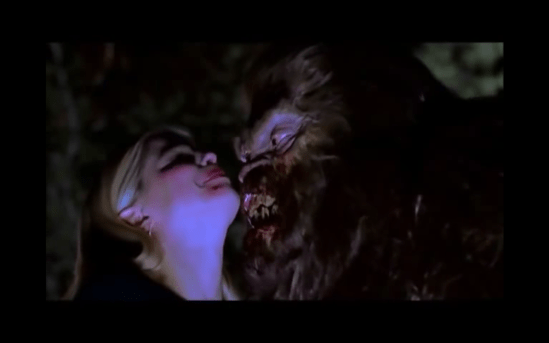
They don’t make monster movies like this anymore! “Abominable” is the 2006 blood splattering creature feature from writer-director Ryan Schifrin. The director’s freshman film is a wallop of entertainment with ton of homage and a plenty of gruesome kills that you can revisit over and over again on some kind of morbid repeat in this high caliber, independent, coal-coated gem that’s “Read Window” meets a whole hell of a messed up version of “Harry and the Hendersons.” You don’t want this ginormous meat eater breaking in your couch or raiding your fridge! The tightly knit set locations that might usually stagnant a story are easily compensated with a graphic and bloody violence that stems from the many full frontal visuals on the towering, practical effects monster. “Abominable” also looks and feels really expensive and not a slapped together, last minute production.

Now, Ryan Schifrin might not agree with me here and the director might say that it was his passion that attracted some of the genre’s biggest names to have small roles in first time feature, but I’m pretty confident that his well-known composer father, Lalo Schifrin whose composed for movies “The Amityville Horror” and “The Class of 1984”, had some influential help other than also being the orchestrating composer for his son’s film. In leading with “Abominable’s” main star, I remember this actor from his charismatic boyfriend material character in “Deep Star Six;” Matt McCoy plays the crippled Preston Rogers who must rely on his smarts rather than his physical strength. McCoy’s piecing blue eyes and solid acting chops has him being a believable character in an unbelievable movie. McCoy’s character and his at odds dynamic with skeezy male nurse Otis Wilhelm, dedicatedly played in a first time performance by special effects artist Christien Tinlsey, is probably one of the better shallow pissing matches around. The five party girls are Karin Anna Cheung, Natalie Compagno, Ashley Hartman, genre scream queen Tiffany Shepis, who has one of the best death scenes ever, and rounding off with Haley Joel in the female lead. Hold onto to your hats, because we’re not done yet with the star-studded cast list that includes Rex Linn (“Cliffhanger”), Phil Morris (“Dark Planet”), Dee Wallace Stone (“E.T.”), Lance Henriksen (“Aliens”), Jeffrey Combs (“Reanimator”), and Paul Gleason (“Breakfast Club”). Dialogue between Henriksen and Combs is pure magic and just adds that cherry on top of something already pretty sweet.

Schifrin’s “Abominable” is a down to Earth horror. Practical, small, and a straight shooter that doesn’t try to gimmick a way to fame and cult fandom. Schifrin, with the help of the late “Blairwitch Project” director Neal Fredericks, was able to capture the atmosphere and the creature without having to burden themselves with computer generated imagery or relying heavily on camera tricks or crafty edits to progress the story that certainly needed to be blunt. Fredericks cinematography creates the allusion of a bigger world, a world where Schifrin’s creature lives, breathes, and hunts as the urban legend of the Flatwoods Monster. McCoy sells his role of a challenged individual; one whose on the cusp of giving up with he realizes there’s hope in saving these young girls when he could not save his wife or the use of his legs. Auxiliary cast members are not two-bit nobodies with lifeless personalities of backwoods piss ants; instead, Jeffrey “The Frighteners” Combs and Lance “Pumpkinhead” Henrikson are the best backwoods creeps with shotguns and oxygens canisters to act the roles. The monster’s absolutely and gratifying heinous with the Frito-razor teeth, the dingy string hair, and the mouth that opens up a foot wide.

“Abominable” reclaims a home on the MVD Rewind Collection label with a brand new 2K definition transfer 2-disc, DVD (Standard Definition) and Blu-ray (1080p) combo set, presented in a widescreen, 1.78:1 aspect ratio; however the ratio is stretched to fit the entire screen. The image quality is rather clean, but has a fuzzy, soft overlay that’s true to form with a film originally shot in 35mm coming into contact with some electrical interference. The version of “Abominable” is also a all new cut of the film with improved CGI-effects, which there were some, and were overseen by director Ryan Schifrin and editor Chris Conlee. The release continues with a forthright note about enhancing the color timing and correction to further the experience which epitomizes more clearly in a scene where the blue eyes of Matt McCoy and Haley Joel are depicted overly brilliant when staring at each other in the darkness or in the lighted room or, in fact, anything that’s blue, i.e. Joel’s blue jeans or Otis’s nurses getup is indistinguishable being any other hue. This edition comes with an English 5.1 surround audio, uncompressed PCM on the Blu-ray, and the balance is remarkable. Dialogue is poignant and punctual with the beast’s belly deep roars echoing through with such range and depth that it heightens the monstrous terror. Lalo Schifrin’s score comes out clean enough despite slightly schlocky in comparison to his son’s material. New extras include a new introduction from director Ryan Schifrin and bonus material from other releases become rebranded on this combo release with an audio commentary by Schifrin, Jeffrey Combs, and Matt McCoy, a making of featurette, deleted and extended scenes, outtakes and bloopers, “Shadows” – short film by Ryan Schifrin at USC Student Film school, “Basil & Mobius: No Reast for the Wicked” short by Schifrin that features a score composed by Lalo Schifrin, the original theatrical trailer, poster and still gallery, stoyboard gallery, and a collectible mini poster insert! Whew! MVD Rewind Collection went big and landed huge with Ryan Schifrin’s “Abominable.” The mammoth release will surely be a definitive cut for the scarcely heard of creature feature that’s made with deep reverence for the classic monster movie and denotes a sincere and unwavering passion for the genre, making “Abominable” a lovable tribute of beast slaughtering stowed with paralyzing anxiety and symbiotic with pure, addictive joy.


“Abominable” is a must own!