Michelle Yeoh Versus the EVIL Japanese Imperial Army! “Magnificent Warriors” reviewed! (88 Films / Blu-ray)

“Magnificent Warriors” Now on an Amazing Blu-ray from 88 Films!   Click The Poster to Purchase!

Ming-Ming is an adventurous, mercenary pilot unafraid to herself mixed up in the worst of trouble and against the tremendous odds.  When her patriotic grandfather and military uncle present Ming-Ming a mission of resistance against the Japanese Imperial Army during World War II, the odds, again, will be stacked up against her as she must track down China’s top-secret agent to extract the City Lord of Kayi City, a fortified Chinese city on the outskirts under Japanese control with ambitions to build a strategic, poisonous gas plant.  When Ming-Ming’s is shot down by a Japanese fighter pilot and the mission proves to be more difficult than expected, a small band of unlikely heroes become resistance fighters that inspire Kayi City to rise up against an oppressive, super nation threat to take back their home.  The city of spears and arrows must defend its people from an overwhelming army of rifles, mortars, and tanks in a fight to the death.
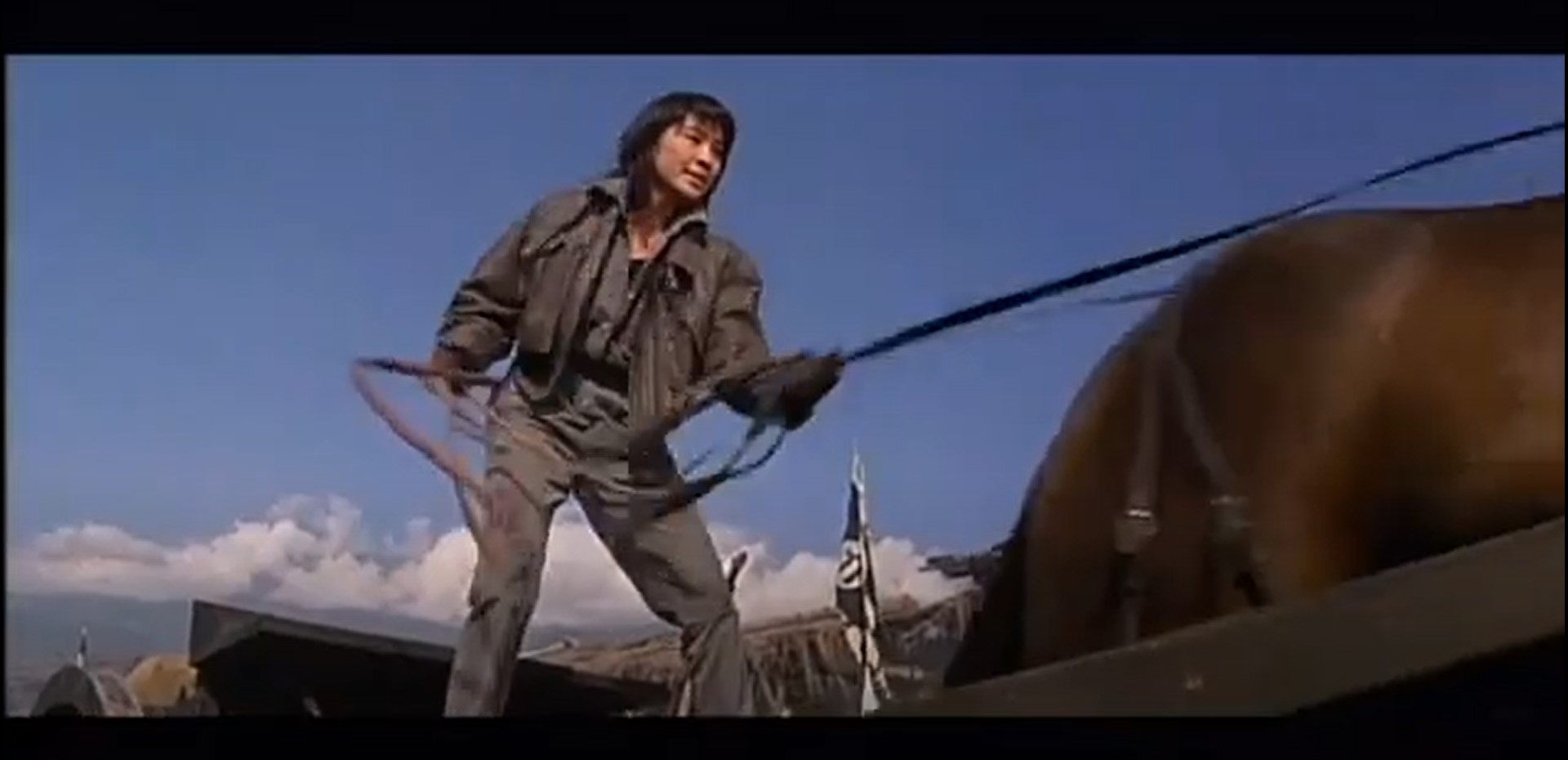
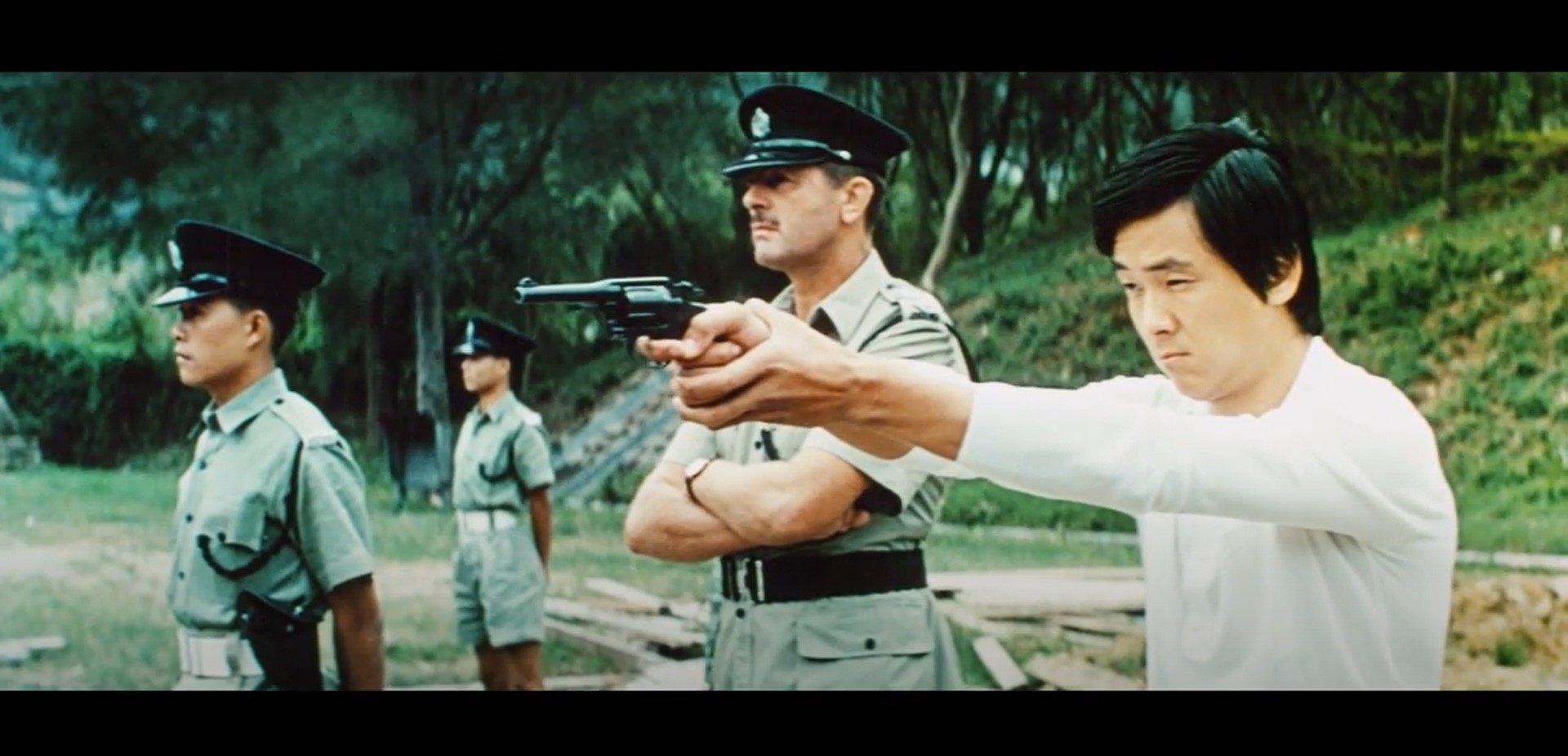
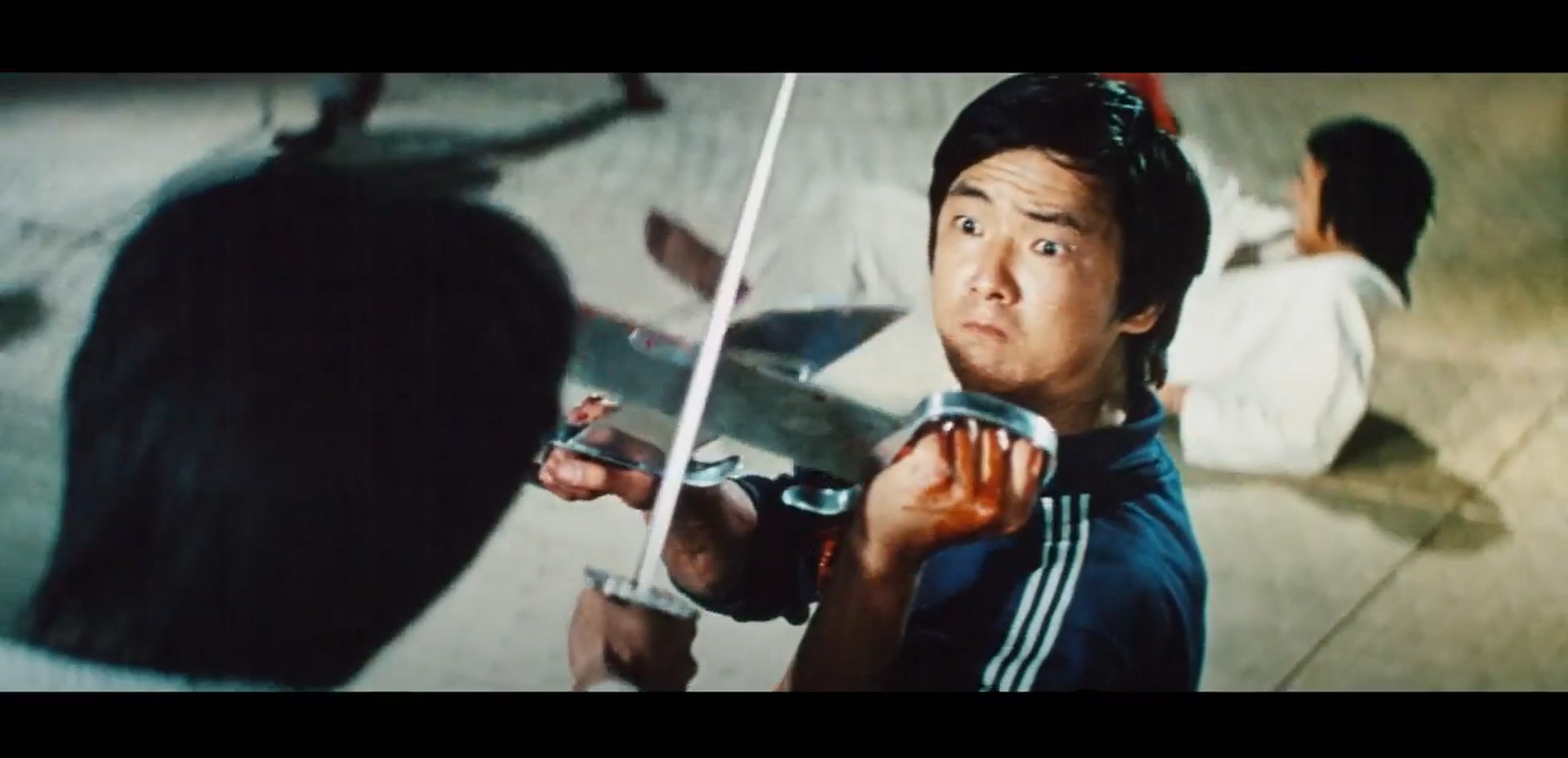
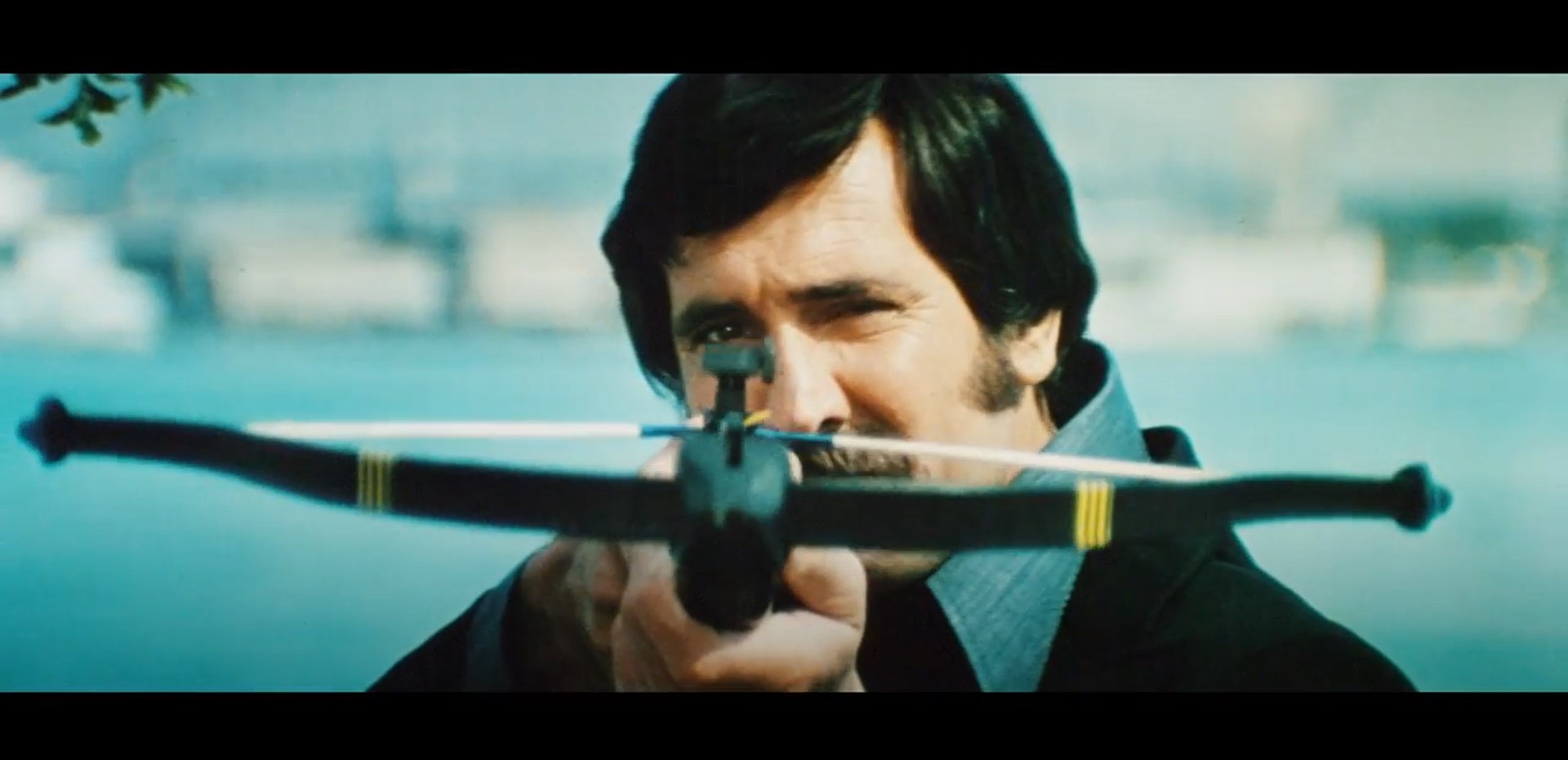
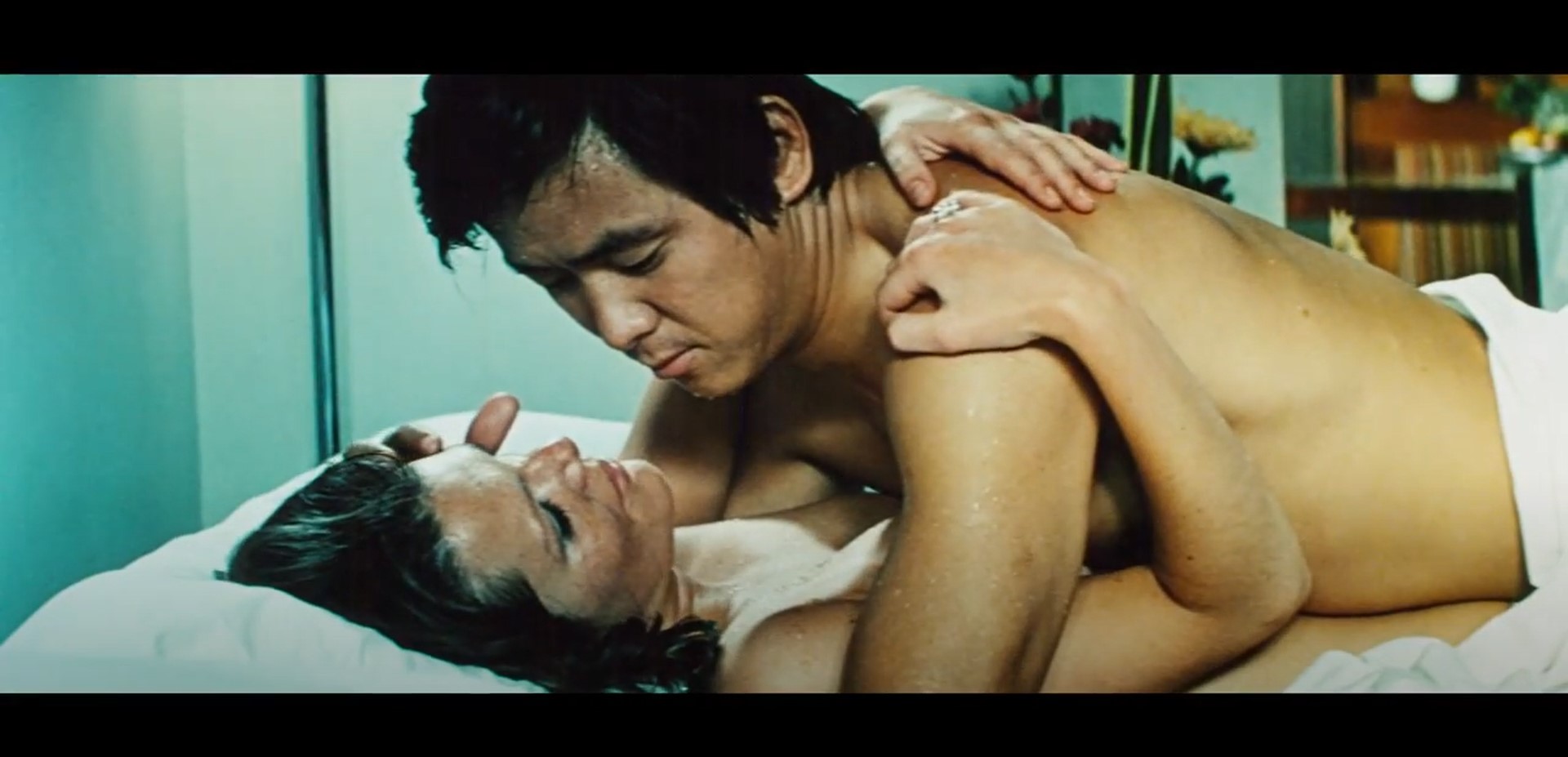
Michelle Yeoh is so hot right now.  The Malaysian-born, long-time actress has been under the U.S. mainstream radar for decades up until recently.  Before now, she was well enough for her roles in Ang Lee’s four-time Academy Award winner “Crouching Tiger, Hidden Dragon” without Yeoh receiving a nomination.  Twenty-two years later, Yeoh receives her first Academy Award nomination for “Everything Everywhere All at Once,” but we all knew she deserved the coveted U.S. award well before now.  U.S. audience never got to experience Yeoh earlier in her career as an Asian action star that rivals the likes of male counterparts Jackie Chan and Chow Yun-Fat.  In “Magnificent Warriors,” Yeoh’s diligence to the demanding workload foretells a superstar in the making.  The David Chung directed Hong Kong picture is relentless and action-packed with stunning and intense choreographed martial arts and having a large-scale showmanship of numerous grand explosions and a vast production pocket that include countless background actors.  The script is penned by frequent Stephen Chow collaborator Kan-Cheung Tsang who has wrote many of Chow’s directorial films, such as “Kung Fu Hustle,” “Shaolin Soccer,” and “The Mermaid.”  “Munificent Warriors,” also known as “Dynamite Warriors” is produced by Linda Kuk (“Hard Boiled”) and David Chung’s “Royal Warriors” producer John Sham and executive producer Dickson Poon under the D&B Films banner.
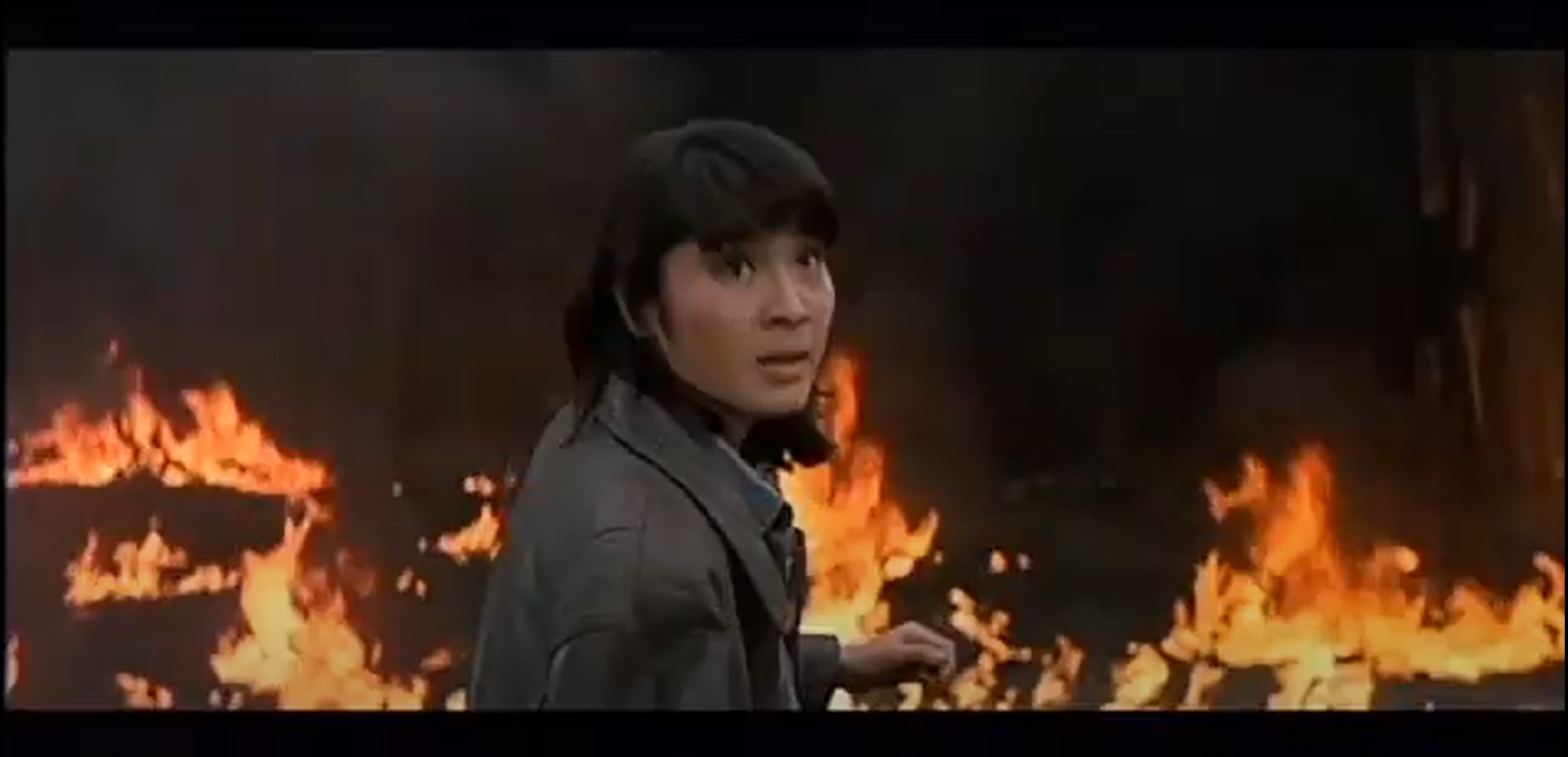
In a career that spans decades plotted by a number of strong female characters, Michelle Yeoh has embodied strength, intelligence, and beauty for this generation.  Under her early credited name of Michelle Kahn, the actress, who in the last five years has entered the Marvel Universe, the Star Trek Universe, and is slated to be in the upcoming James Cameron “Avatar” sequels,” is the driving force behind what makes “Magnificent Warriors” so engrossingly magnetic.  Trained to use a bullwhip and able to accomplish major stunts, unsafely I might add, on her own, Yeoh pulls off the demanding role with sheer confidence radiating from her performance.  So much confidence that the quality beams from her eyes to the point that her gaze nearly appears to be a sadistic grin of her own masochism.  Yeoh seizes Ming-Ming’s adventurous spirit, fully embraces it even, and stands out, but meshes well, amongst the mix of characters, including a hapless and bumbling drifter played by Richard Ng.  The “Mr. Vampire Part 3” star has a recognizable and distinguishable face as a well-known Hong Kong actor from China.  In “Magnificent Warriors,” Ng’s character is clearly the odd man out with zero ambitions and zero fighting skills, providing roughhouse comedic relief with lucky escapes with his life, but as far as character arcs go, the drifter, who cheats and scams gamblers for money and thinks about saving his own skin, succumbs to the resistance call of helping China and becomes one of the leaders of the core Kayi City defenders.  There are three others in this band of five with the City Lord (Lowell Lo, “Spider Woman”) who has a similar character arc as the drifter in being a bit of a scaredy-cat as a traitor against the Japanese Imperial Army but sees the light of his people needing his boiled down bravery and leadership, and his involvement with Shin-Shin (Cindy Lau), a daughter of a Japan loyalist who is obsessed romantically with the City Lord and can kick ass as well that surmises a feminism theme that women are just as strong as men and can have a better moral compass, especially compared to the bumbling man in power, the City Lord, and the drifter con artist.   The weakest fifth character, with an equally weak performance, in the group is Secret Agent No.1, as he’s described in the subtitles, played by Derek Yee (“Black Lizard”).  Though pivotal to the resistance operations to succeed, Secret Agent No. 1 fails to make his impact like the others, character divulging a vague history of his climbing to be China’s best secret agent and also teetering on the supposedly feelings for Ming-Ming that doesn’t ever come despite blatant suggestions to the contrary.    Matsui Tetsuya, Hwang Jan Lee (“The Drunken Master”), Meng Lo, Fung Hak-on, Jing Chen, and Ku Feng round out the “Magnificent Warrior’s” cast.
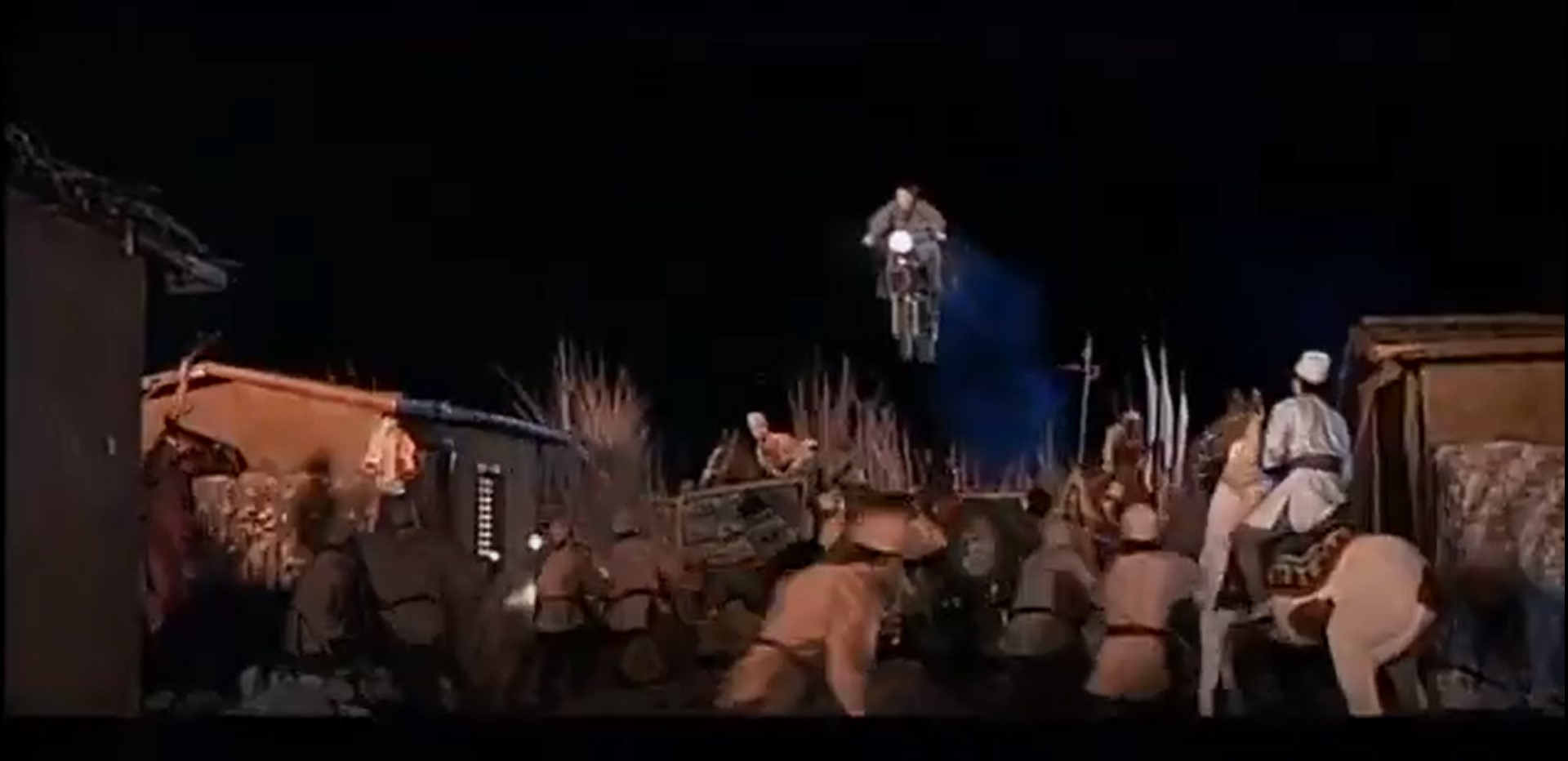
With extraordinary martial arts choreography, the impossible become possible in what can be experienced as an epic ballet of fists, kicks, and dueling weapons.  Every battling moment translates perfectly on screen without the flinch of error, though I’m sure many takes were took.  Back when outside Hollywood film studios relied on their determination and skill, with a pinch of luck, to get them through tough and rigorous stunts without the aid of wire, pads, or any union approved safety measures for that matter in what feels remarkably alien, like being on a whole other world where the rules of physics and safety do not apply.  “Magnificent Warriors” is truly a magnificent stunt-driven, wartime story revolving around revolutionism, a contemplation of the relationship between a home and its people, and a principled life of standing up for what’s right.  Director David Chung manages to massage out the numerous themes under the façade of a great thrust of nonstop action.  The set pieces, locations, and wardrobe are all fitting for the late 1930s-1940s era, especially with the Japanese uniforms that extend into their armored vehicles, such as in the brief, for show, scenes of its war plane and handful of Type 95 Ha-Go tanks. It’s refreshing to see an older film have a different angle on the overplayed World War II narrative; instead of the typical European or Asian Pacific campaigns involving American troops, “Magnificent Warriors” goes granular into The Second Sino-Japanese War during the Second Great War the world has ever experienced. Japanese implemented chemical warfare into their strategy of expanding their dominating military advances and establishing a footprint in China. “Magnificent Warriors” embellishes the poisonous gas narrative with the imperial army seeking to use Kayi City as a chemical producing plant, steering the film’s epic grapple over the city from out of underlying truth of the actual conflict. Every stage of story progresses into a larger scale of the previous skirmish which bottles up the grossing pressure between the imperial army, the resistance fighters, and the collateral damaged city folk caught in the middle. Sprinkled with comedy and charisma, and an ever so delicate dark tone, “Magnificent Warriors” is impeccable Hong Kong cinema and exposes the world to an underrated performance by Michelle Yeoh who kicked ass then in this film and still kicks ass today.

UK distributor 88 Films releases the “Magnificent Warriors” onto an AVE encoded, 1080p, high-definition Blu-ray, presented in a 2K restored transfer of the original theatrical cut on the company’s USA line. Exhibited in the original 2.39:1 aspect ratio, the anamorphic picture can appear globular at times, resulting in a packed image but more on so on pan shots than anything else. The overall picture quality suggests a pristine original print of the theatrical cut with a clean presentation from start-to-finish. Mostly warm with a flaxen degree of a desert background within a Mongolian Mountain valley, when the story does transition to a night shot or to interiors, the grain roughly sustains the change to keep a unified picture consistency that lives in a low contrast field without any deep shadow work or hard lined delineation. Compression issues are non-existent and there’s not obvious, unwanted touchups here to note. The release comes with two audio options: A Cantonese DTS-HD Mono and an English dub DTS-HD Mono. Preferrable choice is always the original intended language; however, this film’s audio options are both dubs but the Cantonese synchs better with grammatically suitable English subtitles albeit their breakneck speed to keep pace. Dialogue is clean, clear, and the action sound design is audibly potent with pinpoint precision on the homogenous strike. There are moments I thought the quick editing, especially during the plane chase, would hinder the ambient effects to keep up but I was pleasantly surprised, and the prop and gunfire intensity presents a nice exchange of open aired depth, range, and dynamisms. Software bonus features an archive interview with Michelle Yeoh (circa early 2000s), an archive interview with stunt coordinator Tung Wai, an English credits opener, the Hong Kong and International trailer, and still gallery. The hardware features are a tad better with a double-sided A3 poster, a 35-page color picture booklet with historical and filmic essay by Matthew Edwards, a limited cardboard slipcase featuring new art by Sean Longmore, and a reversible cover art in which shares its illustration with the booklet. The case isn’t the traditional slim Blu-ray snapper as it’s thicker to handle the booklet and poster. The release comes not rated, region A coded, and has a runtime of 92 minutes. Drawn into a big war shieled and overlooked by a bigger war, “Magnificent Warriors” not only time capsules a piece of Asian history but does it with fantastical fight and character that delivers one Hell of a timeless film with Michelle Yeoh at the helm.

“Magnificent Warriors” Now on an Amazing Blu-ray from 88 Films!   Click The Poster to Purchase!

EVIL Lights Up When Peeling Skin! “Human Lanterns” reviewed! (88 Films / Blu-ray)


Own this beautiful release from 88 Films of the “Human Lanterns”

Two respected and wealthy Kung-Fu masters have a long rivalry, trying to one-up each other at any cost even if that means stooping into their personal life to gain the most public admiration.  With the annual lantern festive approaches, to have the best and brightest lantern would sustain at least a year of gloating over the other master.  When a lantern maker with a retaliation mindset against one of the more boastful masters is hired to make his festival entry, the lantern maker exacts horrifying revenge by fueling their feud behind the scenes. Kidnapping beautiful women who are dear to each master and exploiting their soft delicacies for his crazed creations, the maniac lantern maker turns the village upside down, forcing the local constable into an impossible investigate into the village’s most popular residents when none of the evidence points to the other.

“Ren pi den long,” aka “Human Skin Lanterns,” aka “Human Lanterns” is a grisly Kung-Fu murder-mystery that’ll make your skin crawl right off from your body. The stylishly colored and ethereally varnished 1982 Hong Kong film is written-and-directed by Taiwanese director Chung Sun (“Lady Exterminator) that blended the likes of a giallo mystery into the well-choreographed martial arts mania with the profound Kung-Fu screenwriter, Kuang Ni (“The One-Armed Swordsman,” “The Flying Guillotine”), co-writing the script alongside Sun. While not as ostentatiously gory or as cinematically profane as the 80’s released Category III certified films that rocked Hong Kong audiences, and the censor board, with shocking, gruesome imaginary and content, “Human Lanterns” does sit teetering on the edge with mostly a tame Kung-Fu feature that quickly turns into the blistering carnage of a basket case, or in this a lantern maker, who uses hiding as a double entendre. “Human Lanterns” is a Shaw Brothers Studio production executively produced by the oldest of two brothers, Rumme Shaw, and, then new to the Shaw Brothers’ board of directors, producer Mona Fong.

“Human Lanterns” starred two the renowned names in martial arts films from the 1970s and well into the 1980s with “Fist of Fury” and “The Swordsman and the Enchantress’s” Tony Liu as the impeccably arrogant Lung Shu-Ai with a self-image to protect more than the women in his life and “Bloody Monkey Master” and “Return of the Bastard Swordsman” Kuan Tai Chen sporting a sweet mustache as Lung’s longtime rival, Tan Fu. Shu-Ai and Chen have really spot on, well-versed, fight sequences together braided into their play off each other’s character’s haughty personas. While behind the curtain of overweening and defiance between the two masters, Chao Chun-Fang unceremoniously sneaks into the fold by happenstance as Lung offers him money for the best lantern this side of the lantern festival. Lung and Chao Chun-Fang, played with a demented, idiosyncratic duality from Leih Lo (“The Five Fingers of Death,” “Black Magic”), another master in the art of fighting in his own style, have an inimical past…well, at least thought so by Chun-Fang. In a sword dual over a woman, Lung defeats Chun-Fang and purposefully scars him above the left eye, causing him the inability to look up, and while the lantern maker has stewed for many years, training all the while to be the best fighter, his tormentor Lung Shu-Ai has nearly all forgotten about the incident and found trivial enough to ask Chung-Fang to make him a lantern and offer him out for drinks for being old buddies of yore. However, this yard pulls the wool over the eyes of self-centered, the upper class, and the unruffled nonchalant as Chung-Fang takes advantage of the Kung-Fu masters naivety and uses the rival as a screen to cover up his kidnapping deeds of the women in their lives, played by Ni Tien (“Corpse Mania”), Linda Chu (“Return of the Dead”), and Hsis-Chun Lin. “Human Lanterns” rounds out the character list with a hired assassin in Meng Lo (“Ebola Syndrome”) and a competent but out of his league village constable in Chien Sun (“The Vampire Raiders”).

The look of “Human Lanterns” is often dreamy. No, I don’t mean dreamy as in gazing into the strong blue eyes of your tall and dark fantasy man. The dreamy I’m speaking of is produced by cinematographer An-Sung Tsao’s luminescence that radiates of background and the characters through the wide range of primary hues. Tsao’s colorful and vibrant eye doesn’t clash with the vintage era piece consisting of impressively detailed sets, a costume design plucked straight from the 19th, and hair, makeup, and props (which I’ve read some of the blades were authentic) to bring up the caboose of selling the completed package of delivering a spot-on period film. When Leih Loh dons the skull mask, an undecorated and unembellished human skull, with wild, untamed hair sprouted from every side of the eyeless mask, Loh transforms into a part-man, part-beast jumping, summersaulting, leaping, and seemingly flying through the air like a manically laughing ghost. The visual cuts petrifyingly more than described and if you add an extensive amount of Kung-Fu to the trait list, “Human Lanterns” has a unique and unforgettable villain brilliantly crafted from the deepest, darkest recesses of our twisted nightmares. “Human Lanterns” has a wicked and dark side that balances the more arrogantly campiness of Lung and Tan’s hectoring rivalry. When Lieh Loh is not skinning in his workshop or Lung and Tan are not bullying each other into submission, there’s plenty of action with the heart stopping, physics-defying martial arts that just works into the story as naturally as the horror and the comedy. With shades of giallo and fists of fury, “Human Lanterns” is Hong Kong’s very own distinctive and downright deranged brand of good storytelling.

88 Films lights the way with a new high-definition Blu-ray of the Shaw Brothers’ “Human Lanterns” from the original 35mm negative presented in Shawscope, an anamorphic lensed 2.35:1 aspect ratio that more than often displays the squeeze of the picture into the frame. One could hardly tell the upscale to 1080p because of the very reason I explained in the previous paragraph of the airy An-Sung Tsao façade that softly glows like bright light behind a fog. Nonetheless, the image quality is still stunning and vivid, a real gem of conservation and handling on this Blu-ray release. The Mandarin dubbed DTS-HD 1.0 master audio is synched well enough to the action for a passing grade. The foley effects, such as the swipes and hits, are often too repeated for comfort, but adds to “Human Lantern’s” campy charm. The newly translated English subtitles are synchronous with the picture and are accurate but, in rare instances, come and go too quickly to keep up with the original language. The release comes not rated with a run time of 99 minutes and is region locked at A and B. Why not go full region free is beyond me? Licensing? Anyway, special features include an audio commentary by Kenneth Brorsson and Phil Gillon of the Podcast On Fire Network, “A Shaw Story” interview with then rising Hong Kong star Susan Shaw who talks about the competitive and easy blacklisting Hong Kong and Tawain cinema market, “The Beauty and the Beasts” interview with in story brothel mistress played by Linda Chu often harping upon not wanting to do nudity despite directors begging her, “Lau Wing – The Ambiguous Hero” interview with Tony Liu that comes with its own precaution title card warning of bad audio (and it is really bad and kind of ear piercing) as the lead man really regales his time on set and in the industry between Golden Harvest Productions and Shaw Brothers Studios, and rounding out the main special features is the original trailer. The package special features is a lantern of a different color with a limited edition cardboard slipcase with new artwork from R.P. “Kung-Fu Bob” O’Brien, a 24-page booklet essay entitled “Splicing Genres with Human Lanterns” by Barry Forshaw accompanied by full colored stills, posters, and artwork by O’Brien, a double-sided fold out poster, and reversible Blu-ray cover art that can be flipped from the same, yet still awesome, O’Brien slipcover art to the original release art. The new 88 Films’ Blu-ray set conjures a renaissance satisfaction like none other for a highly recommended, genre-ambiguous, vindictive affray.

Own this beautiful release from 88 Films of the “Human Lanterns”

One Man Takes on the EVIL Australian Crime Syndicate! “The Man from Hong Kong” reviewed! (Umbrella Entertainment / Blu-ray)

“The Man From Hong Kong” on the Ozploitation Classics Blu-ray from Umbrella Entertainment!

A newly formed Australian narcotics unit busts up a major drug deal that lands a crime syndicate pusher into the custody of the authorities.  The pusher, low on the totem pole of a larger drug organization, speaks no English and with the inexperience of the Australian unit, Hong Kong special branch inspector, Fang Sing-Leng, is requested for interrogation interpretation and be the escort of extradition back to the pusher’s native Hong Kong residence, but while in custody, the pusher is gunned down by an assassin.  Sing-Leng thrusts himself into Sydney’s criminal underworld the Hong Kong way, leaving a trail of destruction in his solo-takedown of formidable drug kingpin, Jack Wilton.

For film loving youngsters, would they know what cinema was like before green screens, motion capturing technology, and other computer imagery devices to create alien worlds and improbable fight sequences?  Would comprehending the idea that before the pre-implementation of these technological advances in film there was a just-do-it fortitude toward the physical and raw aspects of special effects and stunt work?  Those wee moviegoers’ heads would explode into itty-bitty chunks of brain matter by the very slight thought of a man jump kicking another man off a high-speed dirt bike without even one ounce of a tethered harness or helmet for safety.  Hazard upon dangerous hazard is what writer-director Brian Trenchard-Smith offers on the table from his debut martial arts film “The Man from Hong Kong,” the first martial arts film of its kind hailing out of Australia.  Trenchard-Smith’s working title “Yellow Peril” sought to sprinkle in between the high kicks and hyahs an amusingly intended, but greatly nearsighted, prejudice of the subtle racism in how Australian people viewed East Asia; however, Raymond Chow, the Hong Kong-side producer for this two-country co-production, ozploitation actioner, didn’t quite see the humor in “Yellow Peril” (and we don’t blame him).  Thus, “The Man from Hong Kong” title was born with some minor contentious distaste for its generic branding.  Trenchard-Smith’s The Movie Company Pty. Ltd (“Stunt Rock”) and Hong Kong’s Golden Harvest Company (“Sex and Zen”) served as co-productions, releasing the joint venture in 1975 with variable success across the globe.

The first choice Brian Trenchard-Smith had in mind for the role of Fang Sing-Leng was mega-martial arts superstar Bruce Lee hot off the success of 1972’s “Fist of Fury,” 1972’s “The Way of the Dragon,” and 1973’s “Enter the Dragon.”  “The Man from Hong Kong” seemed to be a perfect segue into Lee’s next martial arts box-office hit that may have also reclaimed cinematic stardom for his soon-to-be co-star George Lazenby who fell into a blacklist slump after declining to reprise his 007 James Bond role from “Of his Majesty’s Secret Service.”  Unfortunately, and tragically, Bruce Lee suddenly died at the age of 32, leaving a void to fill not only Trenchard-Smith’s first film but also in the martial arts entertainment world.  In comes Jimmy Wang Yu, China’s former #1-turned-#2 after the quick rise of Bruce Lee.  The “One Armed Swordsman” series Wang Yu not only entrenches himself into the titular role at the behest of producer Raymond Chow as a suitable replacement, but Wang Yu also became Trenchard-Smith’s directorial counterpart of the Hong Kong shot scenes and the fight sequences, the latter being superbly thrilling by Wang Yu and his stunt team’s dedicated skillset to make the showmanship look authentic and bruising.  The extended chase through the streets of Sydney and into a no holds kitchen brawl with legendary stunt man Grant Page (“Stunt Rock”) is one of the best one-on-one rundown combat arrangements of its era.  Lazenby’s an effective villain with his towering height, broad build, and Tom Sellick mustache and has the ability to choreography not-so-half-assed kung fu, meeting and matching Wang Yu’s on screen moves without looking dopey or forced.   Australia’s film industry was so small at the time, there are number of recognizable actors mostly from the “Mad Max” series with the likes of Hugh Keays-Byrne (“Mad Max,” “Mad Max:  Fury Road”), Frank Thring (“Mad Max Beyond Thunderdome”), Roger Ward (“Mad Max”) in key or notable performance roles along with Bill Hunter (“Mad Dog Morgan”) and a pair of titular character love interests in Rebecca Gilling and Rosalind Speirs.

When judging a martial arts film, one critiques the hand-to-hand or melee weapon play contests, scrutinizing every punch thrown and kick taken, for complexity and believability.  If it looks real, it sure as hell feels real when conveyed from off the screen and to the audience.  Though “The Man from Hong Kong’s” scenes feel a little airy, pulling punches slightly too perceptibly, the choreography is quick and exhibits naturally enough through a variety of action and locations, including on top of Australia’s famous tourist attractions Ayers Rock for a wham-bam, drug sting and bust opening with a great-looking and thrilling car explosion shot that nearly takes the camera man’s head off with an unplanned, detonation jettison of a spinning car door toward the camera crew.  Those sorts of risky stunts are prevalent throughout that lends to “The Man from Hong Kong’s” enthralling physicality tone with Trenchard-Smith and his team’s wiliness to learn as they go in their death-defying acts.  The film is a tour de force of stunts, ranging from car chases, glider flights, skyscraper plunges, and an unforgettable kitchen skirmish with real melee weapons kneaded into its very fabric, with a Dirty Harry hero whose more of an anti-hero lawbreaker than the villains he’s up against by specializing in China’s miscreant brand of investigative police work. 

Perfectly suited as number 9 on the spine of the Umbrella Entertainment’s Ozploitation Classics banner is Brian Trenchard-Smith’s “The Man from Hong Kong,” now released on a region free, 2-disc AVC encoded Blu-ray.  Presented in a widescreen 2.35:1 aspect ratio with full 1080p, high-definition resolution, Umbrella has pulled out all the stops to release the best transfer to drool over.  Subtle vertical scratches here and there have no standing impact on viewing and the distinguished color palette is quite good and natural-looking for a film from nearly five decades ago.  There is a healthy amount of positive grain from the 35mm film stock, but the compression never comes into an issuance of sacrificing the quality, leaving darker scenes appearing bright and visible without the effect of enhancement or zealous contrasting.  My only substantiated gripe is with the subtitle cards that, in a way to not have to redo the English subtitles for the Mandarin dialect, the original frames were seemingly kept in and the image reverts back to a lesser quality degree.  Two audio options are available, an English-Mandarin language DTS-HD 5.1 Master Audio and a lossy DTS-HD dual channel.  Umbrella’s kbps output erratically fluctuations between 2400-3400 but even with the rollercoaster ups-and-downs, “The Man from Hong Kong” still had a robust action track and the dialogue came through discernibly clear.  Only goofy aspect about the audio is “Game of Death” and “Bloodsport’s” Roy Chiao’s English dubbing of Jimmy Yang Yu who obviously knew English or knew how to act like he knew English by watching his mouth articulate the native vernacular.  Umbrella also pulls out all the stops for the special features department in this limited to 3000 copies 2-disc set with the second disc a CD soundtrack arranged with Noel Quinlan funk-rock score and the main Billboard topping opening theme “Sky High” by the band Jigsaw.  Also included is a 2001 audio commentary from director Brain Trenchard-Smith, actor Hugh Keays-Byrne, and stunt director Grant Page, an all-new(ish) interview with Grant Page from 2008 entitled Real!Quick! pulled from Mark Hartley’s ozploitation documentary “Not Quite Hollywood,” extended interviews with the director, executive producer David Hannay, cast members George Lazenby, Roger Ward, and Rebecca Gilling, cinematographer Russell Boyd, 2nd unit cameraman John Seal, and first assistant director Hal McElroy from the same Hartley documentary, Trenchard-Smith’s 50-minute documentary “The Stuntmen,” a 75-minute “Kung Fu Killers” TV special directed by Trenchard-Smith and featuring Grant Page and George Lazenby, behind the scenes footage, opening night press conference footage, various and alternate  trailers and promos including a HD theatrical trailer, a cardboard slipcover with new illustrated design, and a reversible Blu-ray case cover art that also lists all 23-tracks on the CD.  The special features runtime outshines the 106-minute feature with a slew of interviews; however, much of the interviews really harp over-and-over upon George Lazenby’s set-on-fire coat mishap scene and Jimmy Wang Yu before the camera rolls catching and eating dragon flies ahead of a kissing scene with Rebecca Gilling.  “The Man from Hong Kong” isn’t notable because it’s Australia’s first martial arts film.  It isn’t notable for the attempt of resurgence of a former James Bond actor or because of its robbed promise of the late Bruce Lee.  What makes “The Man from Hong Kong” important to the film industry as a whole is its precursor value for being the example of a cast and crew to put life and limb on the line for the sake of motion picture art and be damn good at it.

“The Man From Hong Kong” on the Ozploitation Classics Blu-ray from Umbrella Entertainment!

Death Fears No EVIL in Takashi Miike’s “First Love” reviewed! (Well Go USA / Blu-ray)


Orphaned boxer Leo grows up to be an up-and-coming star in the sport. After losing a match by TKO from a soft punch, Leo is diagnosed with an inoperable brain tumor that sends himself into despair. In another part of town, the established yakuza and the imported Chinese mafia boil toward an inevitable war over turf and drugs. When Kase, a junior enforcer, betrays his yakuza family, scheming with a crooked cop to steal drugs for profitable gain, the tide turns blood red as the yakuza naively blames the Chinese. Caught in the middle is a drug addicted prostitute named Monica, a slave to the yakuza for her father’s past mishaps, who is kept locked away in a small apartment overseen by a yakuza lackeys, romantic couple Yasu and Julie, that also use the apartment to control drug flow. When Kase plan to raid the apartment and steal the drugs goes array, Yasu winds up dead and Monica escapes, running into Leo who has nothing left to live for except to protect Monica. A distraught-induced psychotic Julie, the deadly yakuza, the Chinese Mafia, a double-crosser and his crooked cop partner, a delusional girl of the night, and one apathetic boxer clash in a single night’s ultraviolet web.

Extreme Japanese auteur Takashi Miike fastens a lively tongue-and-cheek and supremely savage crime thriller in his latest mad yakuza film, amiably entitled, “First Love,” also known “Hatsukoi.” “First Love” is anything but friendly and pleasant as the street of Tokyo run red with blood or else the 2019 released film wouldn’t be a Takashi Miike trademark special. Penned by Miike’s long time collaborator, Masa Nakamura, the filmmaker’s affection for horror eludes this title that hones more toward the unpleasantries of clan betrayals, snarky criminal shenanigans, and, of course, a flavor for mega violence that become a maelstrom angrily surrounding a demoralized boxer and the victimized forced-into-prostitution young woman he aims to selfishly protect while in his mental clout regarding his mortality. Produced by OLM, Inc production company headquartered in Tokyo takes a step away from manga with “First Love,” a step that has been evolved over the last few years, but may have contributed to some of the illustrated content that seemingly has infiltrated into the third act with an initial explosiveness in the beginning portions of a car chase scene.

Cast as Leo Katsuragi, the boxer, is Masataka Kubota, a familiar face from another Miike film, “13 Assassins,” and most recently from the heavily Japanese cultured specter feature, ‘Tokyo Ghoul.” Leo’s lighter weight physique and fresh face has Masataka look the part of a promising fighter whose positioned for fame early into the story, but that framework comes to a screeching halt when he’s destined for a tumorous death. When Leo is coupled with Monica, a drug addicted forced in prostitution plagued with crippling hallucinations side effects, the repressed Leo finds himself sheltering someone with more burden on her shoulders than upon his own. Monica’s portrayed by Sakurako Konishi in what’s essentially her first major role and being paired as a scared, lonely, and crazy character coupled with a stoic vet in Masataka makes for an easy dynamic. Shôta Sometani’s chin deep in trouble Kase goes without saying that Sometani’s unfathomable range and charisma adds an aloof comic relief along with Kase’s dishonest detective slipped covertly into by “Ichi the Killer” himself, Nao Ohmori and pursued by a retribution spirited girlfriend, Julie, of her slain yakuza boyfriend; a role spearheaded with such energy and gusto from Rebecca Eri Rabone, credited solely as Becky, who has a slight Cynthia Rothrock vibe. “First Love” is no slave to boorish performances from Takahiro Miura (“Shin Godzilla”), Cheng-Kuo Yen, Sansei Shiomi, and Mami Fujioka.

“First Love” emerges as a smart and fun battle royal of decimation in the anarchist criterion. One would think a prolific director such as Takashi Miike would wear out his welcome with tired and stale filmic bread, crumbling with every soggy rinse and repeat. That’s not the case with “First Love.” Why is it entitled “First Love” anyway, you ask? The question’s open for viewer interpretation, much like most of Miike’s suggestive elegant style, and presents an illuminating unexplored journey in itself. A ventured guess would be that Leo and Monica have never experienced the feeling previously in either content or a labored life with Leo being an impassive athlete and Monica an escort since high school. The corollary of bumping into each other by chance results in the unorthodox dismantling of two rival criminal organizations, baring then an age-old theme of love conquers all and renders the mystics of destiny fueled from from within all the way easter egging sexual taboos inside his brazen, sometimes insane, transgression storyline. Either way, Takashi Miike helms a tremendous brutal-comedy that brands him as being the Martin Scorsese of Japanese filmmaking.

Blades, guns, and a fresh score on Rotten Tomatoes, “First Love” has mainstream aptitude with a carnage driven crime syndicate finesse and is now available on a two-disc, dual format Blu-ray and DVD release from Well Go USA Entertainment. Encased in a slipcover, the not rated feature is presented in full HD, 1080p, and in a widescreen, 16:9 aspect ratio. This review will focus it’s review on the Blu-ray quality. Much of Miike’s style is neo-noir basking in very grounded color palette that’s occasionally adorned by the neon brights of Tokyo. Often does Miike composite in his work and “First Love” is no exception with a brief manga nearly a rallying ending; the illustration is super sharp, a visual pop of blue and white, and, obviously, clean. Ultra-fine details add to a prizing fatalism and even the tasteful gore, on a granular level, passes the screen test. Some scenes appear sleeker than others inside a dark scope coded with darker shades of green and yellow, but the overall result smothers any kind of inconsistency. The Japanese and Chinese 5.1 DTS-HD Master Audio tracks savor every last audiophile morsel. The clear dialogue renders nicely, big effects and action sequences offer a wide range, and the depth covers more than enough ground surrounded by hustle and bustle of the urban element. Kôji Endô’s enchantingly lethal score will immerse you right into the mix and provide a slick culture twist upon classical composition. The English subtitles are well paced and mostly accurate as I did catch one grammatical mistake. Incased inside a slight embossed titled cardboard slipcover, the release also offers a teaser and a theatrical run trailer. Cynical on the surface and romantically submersible to the core, “First Love” is a Takashi Miike instant favorite of amusing antagonism and shorn almost completely of genial garments.

Own Takashi Miike’s “First Love” on Blu-ray+DVD combo set!

EVIL Must Be Broken In Before Being Used. “The Wheel” reviewed!


In the near future, paraplegic inmate Matthew Mills volunteers under pressure to join a Satoshi-Telefair Industries experimental treatment program that not only promises to reduce his sentence, but to also to regain mobility in his legs. With nothing more than the hope to return to his daughter, Mills is enticed by the agreement and gives himself to a shadow company who regularly contracts with the military, facilitating deep underground at an isolated site. Shortly after signing the release form, he awakes in a dark, steel cell known as The Wheel and is able to move his legs again, but the jubilation quickly subsides as armored men with batons visit his cell to beat and break his body in order for the nano technology, injected amongst his anatomy, to rebuild damaged tissue and make him stronger. The ordeal torments him, but to the researchers observing every detail of his recovery and behavior, Mills is just subject 2-1, another potential subject destined for the Future Soldier Initiative where the unethical testing must continue.

Shady shadow corporations, experimental nano-material rehabilitation and enhancement, and high level science fiction noir from writer James S. Abrams and director Dee McLachlan with 2019’s “The Wheel.” As if not already obvious from filmmaker’s nationalities, “The Wheel” is produced by and shot by Australian production companies SunJive Studios and Film Victoria, a state government agency that advocates funding and other filming assistances for shooting films in sectors of Victoria, Australia. “The Wheel’s” steely posture mirrors the frigid winter snow of Melbourne, Victoria’s covered forests that’s beautiful, yet deadly in the conventional beauty of nature. Yet, “The Wheel” delves into the meddling of what makes man and what also drives man as the story persists on the subject of redesigning the human body, but what that notion doesn’t take into account is what if the human body’s reactions doesn’t go as planed and a clapback ensues with all the synthetic re-wiring behind it? This is what Abrams and McLachlan intended to explore.

Australian actor Jackson Gallagher stars as Matthew Mills, a cripple with a purpose. The “Patrick” actor has been adrift from the darker roles since 2013 until up now with his main role in “The Wheel” that demanded a certain physicality that involved fight sequences with one, or two, or even three opponents and some ariel ropes work. The physically fit Gallagher not only survives the daunting workload, but hastily pulls Mills through his character’s tough transition from hopeful paraplegic to overly confident ultimate fighting weapon without an earnest core of struggle. The same can be said with Dr. Allison Turner played by Kendal Rae (“Out of the Shadows”). Turner’s a rogue researcher who had her practicing credentials revoked after the mistreatment of lab monkeys and was sought after by the Satoshi-Telefair for her detachment qualities, but her Turner’s character also didn’t quite arc properly and resembled a midway plateau from the moment Mills became her research subject. The only character that stayed the course was Dr. Emmett Snyder, a loyal Sataoshi-Telefair researcher to the bone. When he’s not suplexing or drop kicking in a championship wrestling match, David Arquette does dabble in acting. The “Scream” veteran actor fills in a rather unlikely antagonistic role, but the wild eye Arquette remains taut in his performance. “The Wheel” also costars Belinda McClory (“Matrix”). Christopher Kirby (“Daybreakers”), Victoria Liu, and Ben Still.

The spoke of the “The Wheel” rotates on a monotonic and frosty shoulder axle colored in gun metal and iced with dystopian immoralities. Every breathing element and inanimate objects is in a state of distant identity being bestowed labels in a combination of letters and numbers. The utilitarian wheel, an underground experiment facility that shifts rooms up and down and can be rotated to the other side, has no windows or any kind of necessary function other than to test subjects. Where “The Wheel” goes full “Equilibrium” by lacking emotional depth and substance without a coup d’état of the bleak authority, “The Wheel” also lacks vigor to break the blank uniformity and tries to speed through Mills patriarchal fluff to provide reason for his endurance and to provide reason for audiences to care. The epicenter theme to Mills motivation and escape is the thought of getting back to his daughter by any means necessary and was deemed fit to lay by the waist side to rely more on the hand-to-hand fighting like an overly glorified 70’s martial arts film.

Umbrella Entertainment distributes the sci-fi, action film, “The Wheel,” produced by SunJive Studios and Film Victoria onto a region free DVD home video. The clean digital picture in a widescreen, 2.35:1 aspect ratio, has a crisp demeanor that exact a bunch of natural lighting outside with a bit of a lower contrast inside dark “The Wheel” itself. What I found more appealing the anti-aliasing of the drone footage over the snowy covered Victoria forest, suggesting a higher bitrate compression that offers a seamless and smooth recording. The 5.1 English language Dolby audio is offered up with no whiff of an Australian accent in a lossless track that sounds good on the surround channels during action scenes. Dialogue is clear amongst the ample range and depth of ambient layers of researches watching and speaking through comms from inside a box watching another guy inside a box. Like other Umbrella releases, “The Wheel” has no special features nor a static menu. “The Wheel” has ice in the veins, but no warmth in it’s heart that seems vertically challenged on a horizontal slope of dystopian disorder.

The Wheel on DVD