Traveling across a remote highway, five carnival workers journey to their next small top gig on Halloween day in 1976. Stopped by scarecrow-like figures in the middle of the road, the carnies find themselves led into a hostile trap and are kidnapped, held hostage to be poorly prepped for the dilapidated warehouse “Murderworld.” The violent death labyrinth is set for a hellish game entitled “31”, launched yearly by the sadist Father Death with Sister Serpent and Sister Dragon, that pits the captive against a series of killers, specialized in their own brand of merciless murder. To survive inside “Murderworld,” you have to stay alive for 12 hours in the dark, dank warehouse.

After a self produced campaign, a hefty amount of soul crushing crowdfunding, and a slew of production and distribution ups and downs, “House of a 1000 Corpses” director and shock rocker Rob Zombie was finally able to release this year his latest horror installment “31” since 2012’s “The Lords of Salem.” Lionsgate acquires the home entertainment rights to deliver “31” with a R-rated version of the Zombie’s claimed return to roots horror. The survival slasher, when compared to the director’s other work, capitalizes as the most seriously disturbed work to date, but the premise is not particularly original. We’ve all seen the placing of disoriented victims in a life or death game scenario before; Schwarzenegger’s “The Running Man,” based off the Stephen King novel, strikes many similarities, closely relating the two films by sheer plot alone. With Zombie’s “31,” the differences stagger between the main characters being simple carnies looking for a place in the world and “Murderworld” not being a total dystopian future of skewed justice. Instead, the shock rocker pens in his own ‘motherfucking’ motivations of satanic rituals to filthy the pot of sadism and mayhem.

Overall, I thought “31’s” characters were inviting and interesting even if they’re a cookie-cutter roster engineered by the likes of Rob Zombie. The idea is good to have five ordinary folks enduring a 12 hours bout of being hunted by a pint sized nazi enthusiast, a pair of chainsaw wielding hillbilly whack jobs, a tall German in a pink tutu and his Harley Quinn modeled femme fatale, and, then, there’s Doom-Head, portrayed by the impeccable Richard Brake. My first experience with Brake came from another facet of the word ‘doom,’ 2005’s “Doom,” to be exact, the adaptation of the popular id Software survival horror video game, and even then did Brake have the outer shell of a complete sleaze ball, dipped in an indescribable amount of pure malevolence. Rob Zombie is able to tap into Brake’s true potential with Doom-Head, an egocentric nihilist professionally suited for murder while oozing with unapologetic shamelessness. Along with Brake lies co-stars very familiar from prior Zombie films and these individuals are Jeff Daniel Phillips, deeply blue-eyed Meg Foster, and Judy Geeson from “The Lords of Salem,” the legendary Malcolm McDowell and Lew Temple from the “Halloween” remake, and, of course, Sheri Moon Zombie, the dedicated wife who stars in everything the man does from movies to music videos. Rounding out the film has Lawrence Hilton-Jacobs, Kevin Jackson, Jane Carr, Pachno Moler, David Ury, Torsten Voges, and “Pee-wee’s Big Adventure’s” Elizabeth Daily on the docket.

The problem with the characters are not that their ‘cookie-cutter’ characters, as I aforementioned, but rather their just well, well under written. Developmentally, almost every character becomes wasted space, floating stagnantly across the 103 minute runtime. For the hunters aside from Doom-Head, they’re backgrounds are mysterious which fits the rules of “31.” Doom-Head is a different story because he’s the golden child of “Murderworld,” spoken very highly by Father Murder and graced with so much monologuing that it’s absurdly comical and, unfortunately, predictable. As far as the carnies are concerned, most of the group never blooms into relevancy and I couldn’t help but to root for most of their savage deaths. Sheri Moon Zombie’s Charly character was the slice of life, the slither hope, that showed promise. Yeah, Charly looks and sounds much like Baby Firefly, but Charly is a fantasy heroine with a modest range of emotions and when even faced with defeat, she’s stands strong.

Though I wanted “31” to exceed all my expectations with the promise of untapped brutality, here we stand with a cut version Rob Zombie’s crowdfunded film. I’m interested in what exactly hit the cutting room floor because, just taking in “31” at first viewing, every single scene could be remedied by reimplementing, if any, omitted scenes. From my understanding, Rob Zombie submitted the survival horror numerous times to the MPAA in order to purposely retrieve a R-Rating and the ending result suggests a heavily cut film: off camera moments of attack, choppy warehouse segments, unintended shortened character developments, etc. Something more must be behind the scenes that holds back a fan well-deserved and fan well-funded unrated version and I’m not totally knocking this rated Lionsgate release, but a perception has been cemented on the fact that fans were promised an unadulterated Rob Zombie spook show and ended up not getting what they paid for ultimately.

Lionsgate Home Entertainment will be releasing the Saban Films’ “31” on Blu-ray on December 20th in 1080p High Definition with a 16×9 widescreen 2.46:1 presentation and an English 5.1 DTS-HD Master Audio track. A DVD version is also available. The presentation is in the detail of the image quality with only some minor dialogue loss, slightly muddled amongst the levels, in the DTS track. Certainly not a disparaging opinion, but once in close quarters, such as the carnies’ van, the ambiance hum of the engine, the tires on the road, and the jingle-jangle of objects in the van drown out parts of dialogue from Meg Froster and Jeff Daniel Phillips. An impressive 2-hour comprehensive documentary on the making of the film entitled “In Hell Everybody Loves Popcorn” and an audio commentary with writer-director Rob Zombie completes the bonus material. “31” feels like a Rob Zombie film; the rocker’s trash talking grit and loads of rockabilly swag leaves his unique brand seared into the horror scene, but Zombie’s “Murderworld” story is a promise-filled return to roots sensation for the director. Honestly, Zombie never strayed from his grungy grindhouse of inhuman torture and death origins, but only for a fleeting moment, and so “31” stays the abrasive, distasteful course that’ll speak, like in cult comprehensible tongues, to only his fan base.
Tag Archives: murder
Time Travel to an Evil Future! “Counter Clockwise” review!

Ethan Walker is a brilliant scientific engineer, though he doesn’t look it with his long fire-hued beard and pot-belly midsection, but Walker, along with his colleague, believe to have accomplished the impossible: teleportation. When Walker decides to try his machine on himself, the realization of something terribly wrong overwhelms him. Walker didn’t invent a teleporter, he accidentally constructed a time machine, sending himself six months into a grim future where his wife and sister have been brutally murdered and he’s the sole prime suspect. The only way to make sense of the future and to solve the crime against him is to travel back to the past multiple times to unravel a sinister plot and stop the murder of those close to him.

To simply and conventionally tagline “Counter Clockwise,” George Moise’s 2015 directorial debut can easily be described as Terry Gilliam meets David Fincher. Part sci-fi thriller part dark comedy, the adventure of Ethan’s misadventures ingeniously signifies a harsh outlook on the saltiness of our predetermined universe while encountering outrageous and weird characters along the time warp. Ethan, no matter what he does or how he does it, has to use the accidental time machine to thwart the brutal death of his wife and sister and while his reasoning sounds fairly comical being the groundwork of what Albert Einstein calls madness, on-screen it’s rather heartbreaking and tragic to see this guy, an everyday looking joe, desperately attempt to deconstruct, from the unsolicited help of his future selves, a dastardly plot that will destroy everything he holds dear.

Penned also by George Moise, based off a story by brother Walter Moise, along with the film’s lead star, Ethan himself, Michael Kopelow, “Counter Clockwise” will change the way critics will perceive time travel storylines by not as a means of zipping back only once to change the forsaken past, but as a respawning Shakespearean tale of tragedy in order to continue to amend a hapless situation. A respawned Super Mario had more luck saving Princess Peach through the thicket of Koopa Troopas and the fire breathing Bowser. Though the character Ethan repeats his voyage, the way “Counter Clockwise” is written doesn’t convolute itself in the repetition, staging clues as a window into beyond the present and generating eerie and problematic, if seriously disturbed, episodes that doesn’t give Ethan a minute from tirelessly being objective. Combine those elements with George Moise’s neurotic direction and the result seizes to capture not only science fiction aficionados, but movie enthusiasts of every category in this genre-breaking feature. From the first moment of the opening scene, a strong familiar inkling of Ridley Scott’s “Alien” washes over you; the subtle hum of machinery, the slow panning from side-to-side, the very soft touch George Moise applies is uncanny and so endearingly respectful that the direction doesn’t feel like an absolute rip of Scott’s 1979 space horror classic.

Kopelow is the centerpiece that glues the story whole. As Ethan, Kopelow’s gentle giant approach is such a stark contrast to the surrounding darkness that has embodied nearly every other location and character, even his lip flapping, hard loving mother. Extreme opposite on the polar spectrum is voice actor Frank Simms as Roman, head of major corporation aiming to steal pioneered technology from Ethan at any cost. Simms’ talent has two settings in this film, hot and cold; his sound binary method works to composite a character so reasonably rational that when Roman snaps, a trickle of pee squeezes out and runs down your leg at his abrupt and menacing counter personality. The rest of the cast follows suit with pinpoint precision on their coinciding characters and even the eccentric cameo performances were otherworldly good from Chris Hampton’s relishing water fountain patron to Marty Vites one-eyed creepy landlord. Ethan’s landed in bizarre world that hums a very familiar tune in Terry Gilliam’s “Fear and Loathing in Las Vegas” while the amount of downbeat content spurs moments of gritty David Fincher thrillers, especially in one particular scene with the brawny New Jersey native Bruno Amato being the ultimate bad guy henchman by raping a dead woman for spite and for pleasure. The cast fills out with Devon Ogden, Kerry Knuppe, Joy Rinaldi, Alice Rietveld, and Caleb Brown.

The Sex Scene Crew production, “Counter Clockwise,” is not an effects driven project. The indie sci-fi film relies on the trio of coordination efforts in refined editing, camera angles, and practical effects to deliver the intended message. Like I said before, George Moise is neurotic, providing the attention and detail to every scene as if a climatic money shot. Value is placed in the story and in the direction rather than diluting and cheapening with overrated, big budget computer generated special effects that can snap a film’s heart and soul like a thin twig. The biggest effect comes in the form of a composite, placing two Ethans in the same scene and working action off each other. Even the time traveling sequences are a basic edit that’s well timed with simple lighting techniques, gentrifying low budget films more toward a respectable level of filmmaking.

Artsploitation Films’ DVD release of “Counter Clockwise” is an edgy rip in space time continuum sci-fi thriller presented in a widescreen 2.35:1 aspect ratio with Dolby Digital 5.1 surround sound audio option. Image quality pars well with modern releases and the same can be said about the audio, especially with the prevalent dialogue. Aside from conventional specs, Moise adds a sensory surplus to stimulate sight and sound hell-bent to strike an unnerving chord strummed simultaneously with providing an awesomely surreal effect. The DVD contains bonus features include “The Making of Counter Clockwise featurette, going behind the scenes of pre-production, production, and post-production. There are also five deleted scenes with commentary and a trio of commentary tracks that include the director, director and editor, and director and co-writer. “Counter Clockwise” is 91 minutes of time hopping suspense, packed with adversity and pitch black humor from start to finish and finish to start.
Evil Never Breaks, But Your Mind Will! “The ID” review

Feeling trapped inside her own childhood home, middle-aged Meredith Lane is stuck caring for her elderly and abusive father. Unable to live a life of her own beyond the house’s closing-in walls, Meredith uses her memories of her youth to create a world toward which she can escape. A world involving past loves, spinning them into what could have been, but as the years slip by and her youth fades in stasis, hope for a normal way of life seeps from her grasp…the same with reality. Meredith continues to humor her father’s oppressively verbal and physical mistreatment, sacrificing to his everlasting grip and blackmailed for when she tries to stand up for herself. When her judgement finally breaks down from complete desolation, the lines blur between what’s fantasy and what’s real. When a routine delivery woman starts to suspect Meredith’s instability in the midst of her father’s abrupt absence, Meredith’s real and fantastical world begins to crumble under the first, fine line cracks of psychosis.

“The ID” is a 2015 psychological narrative thriller from the “Never Sleep Again: The Elm Street Legacy” and “His Name Was Jason: 30 Years of Friday the 13th” documentarian producer Thommy Hutson. To keep with the “A Nightmare on Elm Street” theme, Amanda Wyss, who portrays Tina in the original Wes Craven film, headlines as the lonely and disturbed Meredith Lane, the sole caretaker of her limit pushing father, played unnervingly by an unkempt and unsympathetic Patrick Peduto. Initially, you have to compassionately feel for Meredith’s situation as her father, whether intentionally or not, absolutely tortures and demeans her to the fullest extent, but when getting down to the brass tax, Meredith has always held her father’s life in her hands. All she needs to do is act.

When Meredith’s quasi-levelness with reality is finally pushed over the brink, she does act, snapping toward a tone setting second half of the story that’s arguably more disturbing than her combative relationship between Meredith and her father. “The ID” morphs into full blown psychological horror and, not that Hutson’s film wasn’t a terror of the mind before, Meredith completely crosses that thick defined line between her father and her gentlemen caller from the past. These opposition of two worlds are in the beginning stages of a collision in which both can’t exist in the same space that’s familiar to a presentist perspective. Huston works diligently to deliver the inner workings of Meredith’s psyche, lingering her father’s vocal presence throughout the story even if his physical form vacates, and merging her wondrous past into an antagonistic present.

Amanda Wyss has a multifaceted performance that shouldn’t go without stating and Wyss should be praised for her representation of suffering from a delusional mental disorder, originating either from a family history, in this case her father’s state is quite the example, or from other external influences. Both factors could have contributed and Wyss’ precision in the character makes the result difficult to split the two possible origins for her breakdown. Wyss’s performance becomes overshadowed only by the fierce acting by Patrick Peduto, creating an uncomfortable hostile interaction that’s so alien to a father and daughter relationship, it should be illegal. There’s a lot of hate, disgust, regret, shame, and mistrust from Peduto’s character that one can certainly assume Meredith’s father is a few cards short of a full deck and Meredith’s intentions could have been absolutely sane. Only one character wasn’t impressive in the whole ordeal lies with Tricia played by Jamye Grant. The delivery care character felt overwritten to be the catalyst; her obsessiveness for Meredith and her father, as she notes getting close to the couple, felt right up there at stalker level with unnecessary cause and effect to bring Meredith in more trouble than she’s already in. Grant did what should could to absolve the character from being obscenely forthright, but Tricia’s unable to pull back just enough to allow comfortable separation of a concerned citizen.

CAV Releasing’s of the 87 minute runtime Blu-ray of “The ID” from the production companies Ranch Media and Panic Ventures is presented in the original 2.35:1 aspect ratio on a single BD-25 disc. The presentation doesn’t spin much of a colorful offering that’s slightly dull without a pop or a splash of vivid hues sans the split psychosis scenes that are hefty in blue while overly exposed. Prevalent details are far more unusually blotchy, glossy, and scattered under the lower bitrate encoding that isn’t necessarily noticeable because of the setting being isolated to just Meredith’s childhood home. “The ID” isn’t an action heavy or scenic riddled film that requires much detail. Under the Dolby Digital 5.0 mix, a fair amount of unmistakable clarity and range emits fully through each channel with solid LFE and balanced tracks to level out the video quality woes. An option for a LPCM 2.0 is also available. Plentiful bonus features include a feature length commentary with director Thommy Hutson and star Amanda Wyss, an interview featurette entitled Needs, Wants, & Desires, intercut behind-the-scenes segment, alternate and deleted scenes, audition footage, and official stills and trailer. Thommy Hutson’s “The ID” is far from his usually schtick of horror documentaries, but clearly showcases the director’s talents within the psychological horror subgenre and will be the building blocks of his narrative directorial career.
A Hi-Def Murder-Mystery Evil! “Eyewitness” review!

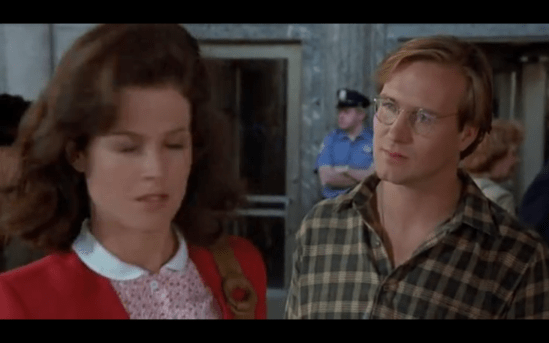
Daryll, a New York City night shift janitor and decorated Vietnam war veteran, becomes obsessed with beautiful female reporter and wealthy socialite Tony Sokolow. When Daryll claims to be a key witness to a murder of one his business building’s high profile tenants, a once in a lifetime opportunity opens up to meet Tony when she’s assigned to cover the murder and as Daryll pours his heart out to the reporter, he’s also torn by his claim that could place his war buddy friend Aldo, a hapless former employee of the recently deceased and the prime suspect in the murder investigation, in jeopardy even more. Is Aldo the killer or is the mystery much deeper, tied to a world unforeseen by Daryll whose working in the depths of the building’s janitorial confines?

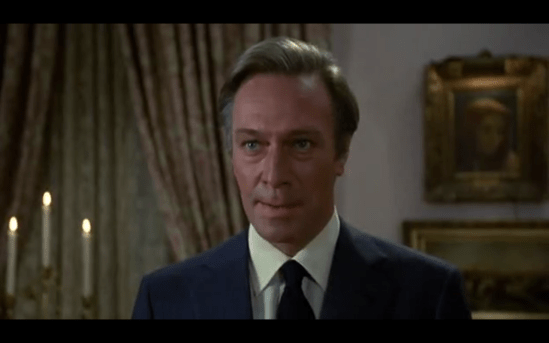
Hot off from her success from Ridley Scott’s “Alien,” Sigourney Weaver goes from sci horror-thriller to mystery-thriller and alongside her is up and coming co-star William Hurt in Peter Yates’ 1981 mystery drama “Eyewitness.” The film sparks a string of obsession suspense features that would span a decade and firmly place the genre into a popular notoriety among audiences who couldn’t get enough of the peeping tom debauchery. A hefty roster of talented actors also co-star, some on the verge of stardom to the likes of Hurt and Weaver, including Christopher Plummer (“The Sound of Music”) in the prime of his career, the crazy eyes of James Woods (John Carpenter’s “Vampires”), an un-grayed Morgan Freeman (“Se7en”), Kenneth McMillan (“Dune”), “Mission: Impossible” television series’ Steven Hill, and Pamela Reed (“Kindergarten Cop”).

Performances all around are phenomenal as every actor and actress cultivates their character’s purpose in the story and you can surely experience the humble beginnings to some of the biggest A-list celebrities of today; however, Hurt’s performance was one of the only concerning factors. Hurt’s portraying a modest, perhaps slightly traumatized, Vietnam veteran with an afar obsession toward an attractive public figure and his presentation was overly awkward and certainly creepy too the point where I even felt embarrassed and uncomfortable. What made the situation more bizarre was the verbal and facial exchanges between Hurt and Weaver’s characters. Tony didn’t quite seem affected by the oozing creepiness this supposedly good man seeps from every pore of his skin and she, in fact, embraces his forward, if not crossing the line, affections that would certainly warrant a restraining order in today’s society. Maybe social interactions vary from generations and decades, but this type of relationship building dialogue and scenes didn’t produce the appropriate type of chemistry between Weaver and Hurt reducing the strength of their bond.

The Steve Tesich script strummed the strings reminiscent to my viewing experience of George A. Romero’s “Land of the Dead.” Yes, you read that correct – “Land of the Dead” – and what does this zombie horror film have in common with “Eyewitness?” Well, in the 2005 film about the continuous decline of humanity in a zombie apocalyptic world, Romero had written a social commentary about the separating of social classes where, even in a dying world, the rich stayed safe in their loft, sustaining an obsolete lifestyle, and the poor suffer below their feet living in the present, but in the end, anyone and everyone is fair game for being unprincipled and for the undead. Tesich’s script does the same without being lavishly upfront and without the hordes flesh eating zombies. Beneath the obvious murder mystery lies the merger of the classes as Dyrall and Tony eventually fall for each other, but their friends and family on either side condemn the relationship, making the statement numerous times that a janitor absolute can not fall for someone as wealthy as Tony. James Woods’ Aldo becomes just another example out of many where a court-martialed and discharged Marine with erratic behavior and struggling with living a middle class life becomes suspect number one in a murder case, but with a victim whose profession was international trading, the pockets might be a bit deeper and with a laundry list of ill-will individuals.

Signal One Entertainment releases “Eyewitness” in the UK for the first time on Hi-Def region B Blu-ray anywhere with a 1080p presentation in a widescreen 1.85:1 format. The video quality is far superior than, of course, it’s DVD revival with the restoration of much of the natural color tones without a hint of compression artefacts or obvious image or edging enhancements from the 35mm stock footage. The English LPCM audio 2.0 track is fair, full-bodied, and well balanced with really no issues, especially not with composer Stanley Silverman’s lively score. Signal One Entertainment certainly knows how to treat a classic film providing a slew of extra features including an audio commentary with director Peter Yates and film historian Marcus Hearn from 2005, an audio only conversation with the director along with film critic Derek Malcolm and another conversation with another film critic Quentin Faulk on a separate extra feature. Composer Stanley Silverman discusses his approach to scoring “Eyewitness” and there’s also an alternative VHS presentation of the film under one of the original titles “The Janitor.” Original trailers and TV spots round out this robust bonus feature cache. “Eyewitness” on Blu-ray is a must own with a clean and refreshing version of a this classic whodunit thriller from Signal One Entertainment!

Dutch Avant-garde is the Next Evil on the Butcher’s Slab! “Meat” review!
A young and beautiful butcher shop assistant succumbs to the middle-aged butcher’s sexual advancements and fantasies at the workplace after she catches glimpses his sorrow, but when the butcher ends up naked on the shop’s floor with his throat cut, the assistant becomes the number one murder suspect for an inspector who coincidently looks almost identical to the deceased butcher. As the investigation deepens into the assistant, the inspector’s solemn, solitary life blurs to an assimilation into the butcher’s and his suspect turns from being a prime target to being a crucial part of the his physical and mental altering integration into the dead butcher.

“Meat” is a powerful transcending film seismically barreling through a Lynchian structure consigned to provoke the consequences of unhappiness and the consequences of poor choices during unhappiness. Directors Victor Nieuwenhuijs and Maartje Seyferth have orchestrated a moderately expressionistic arthouse Dutch drama told in a spiraling sexual context. The meat in “Meat” and the sex in “Meat” clearly share a correlation, peppered as motifs from start to end, and the positive and negative dimensions of the two are so obscured that pinpointing the differences between them are impossible, but both are for sure the last hope for the butcher and his assistant Roxy to embody the essence of sex and meat for opposite reasons. Whereas Inspector Mann simply drags wholeheartedly through his existence, expressing his numbness toward his mundane job and harshly breaking up with his lover without an ounce of compassion. Its until the butcher’s case lands in his lap does the Inspector shows signs of life again.

If you notice that lead actor Titus Muizelaar’s dual roles have purposefully generic labels. The butcher is credited as just the butcher while the Inspector has a proper name, but the name Mann is just as indistinguishable as if the character was christened Guy. The synonym character was intended for blending, to blur their personas, and to transform one into another. To explore the transformation, “Meat” begins a parallel between the butcher who, in a metaphorical sense, has his cake and eats it too and the inspector painstakingly limps from one spot to another. A contrasting experience between the two firmly establish their individualities. Then, the film shifts gears midst a catalyst with the butcher’s mysterious death, forcing the female assistant, an uninhibited role performed uninhibitedly by Nellie Benner, to be the resilient gateway for the inspector. Third gear shifts into the inspector being more and more intrigued, if not extremely envious shown very subtly, by the butcher’s seemingly unchained facade. Each character emits an expressionless stature with a deep-rooted ugliness burrowed inside and each desire a change in their turmoiled lives, whether it’s sustaining love, seeking love, or able to love in order to battle every aspect of oppressive depression.

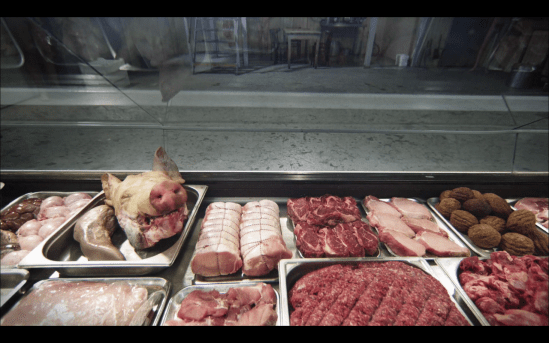
The uncomfortable open and intimate relationship between the butcher, Wilma Bakker’s Tiny, and the shop owner and the psychosexual workplace harassment involving the enthusiastic, video-documenting assistant filets the juicy bits from the bone with numerous innuendoes and explicit carnal exhibitions taking brazen residence within the animal blood stained walls of the butcher’s small meat market. You’ll never look at steak, pork chops, and leg of lamb the same way again! Only when “Meat” transitions into that second gear does the erotica becomes less erotic and more forced and horrifically exploitive. Scenes of undisclosed rape and of blatant genitalia speak upon that aforementioned correlation of raw meat and sex; no choice is given to the cow when the cow is killed and slaughtered for the cow’s delicious beef and the same can be said in sex as it’s taken without much consent and it’s being reaped for the benefit of others.

Graphically infrasexual and skewed beyond simplicity, “Meat’s” refreshingly loaded with unpleasantries and basted moistly with an outer layer of perversion that drips into an oven of thriller surreality. The Artsploitation team lives up to the moniker by, after being long overdue, crafting a home video release of 2013’s “Meat” aka “Vlees” onto DVD and on digital home video. The digital screener provided for review doesn’t give much insight into the audio and video qualities or speak to the testament of the special features. However, “Meat” is a phenomenal film that’s well-aged and ready to be rubbed, tenderized, devoured in all senses of the meaning.