After Death is When Things Get Really EVIL! “One Dark Night” reviewed! (MVD Visual / Blu-ray)

Good girl Julie wants to join a The Sisters, a small high school club ran by three girls, one of who is the ex of Julie’s boyfriend.  Out to prove to herself and to The Sisters she’s willing to go the distance being fun and reckless, Julie subjects herself to The Sisters’ initiations, even the more cruel ones set by her boyfriend’s spiteful ex.  When the last initiation involves staying locked in overnight at a mausoleum, The Sisters will go beyond the limits in trying to scare her out of pledging, but the death of a bio-energy telekinetic practitioner with a cryptic occult past is freshly stowed away in one of the mausoleum’s coffin crypts and in death, he is more powerful and dangerous than when alive.  Trapped, Julie and The Sisters are terrorized by his power as he seeks to transfer his malevolent energy into one their bodily vessels. 
A PG rating back in the pre-1990 was also an abstract concept.  “Clash of the Titans.” “It’s Alive.”  “Jaws. “ “Prophecy” (the one with the spirit bear, not the Christopher Walken film).  These are a handful of titles that were MPAA rated PG approved, but contained nudity, bloody kills, and not to forget to mention some terrifying visuals that’d make anyone piss their pants.  “One Dark Knight” also fits into that category as the 1982 teen horror from “Friday the 13th Part VI:  Jason Lives!” director Tom McLoughlin set his sights toward a R-rating with the mindset that his detailed scenes of decay and rotting corpses and a face blistering the flesh to the skull would surely be slapped with the 17 years or older rating.  Low and behold, the ratings board thought otherwise, surprising McLoughlin and his co-writer Michael Hawes (“Family Reunion”) with a parental guidance rating that my 7 and 4 year old could sit in on without me fearing theater security or, even worse, the mind control hypnosis and repetitive nurturing elements of today’s movies and shows that don’t make a lick of common sense or brandish any artistic heart. McLoughlin’s ‘One Dark Night” has plenty of heart and plenty of floating dead bodies in this Comworld International Pictures production with “Out of the Dark” director Michael Schroeder producing and Thomas P. Johnson as executive producer.

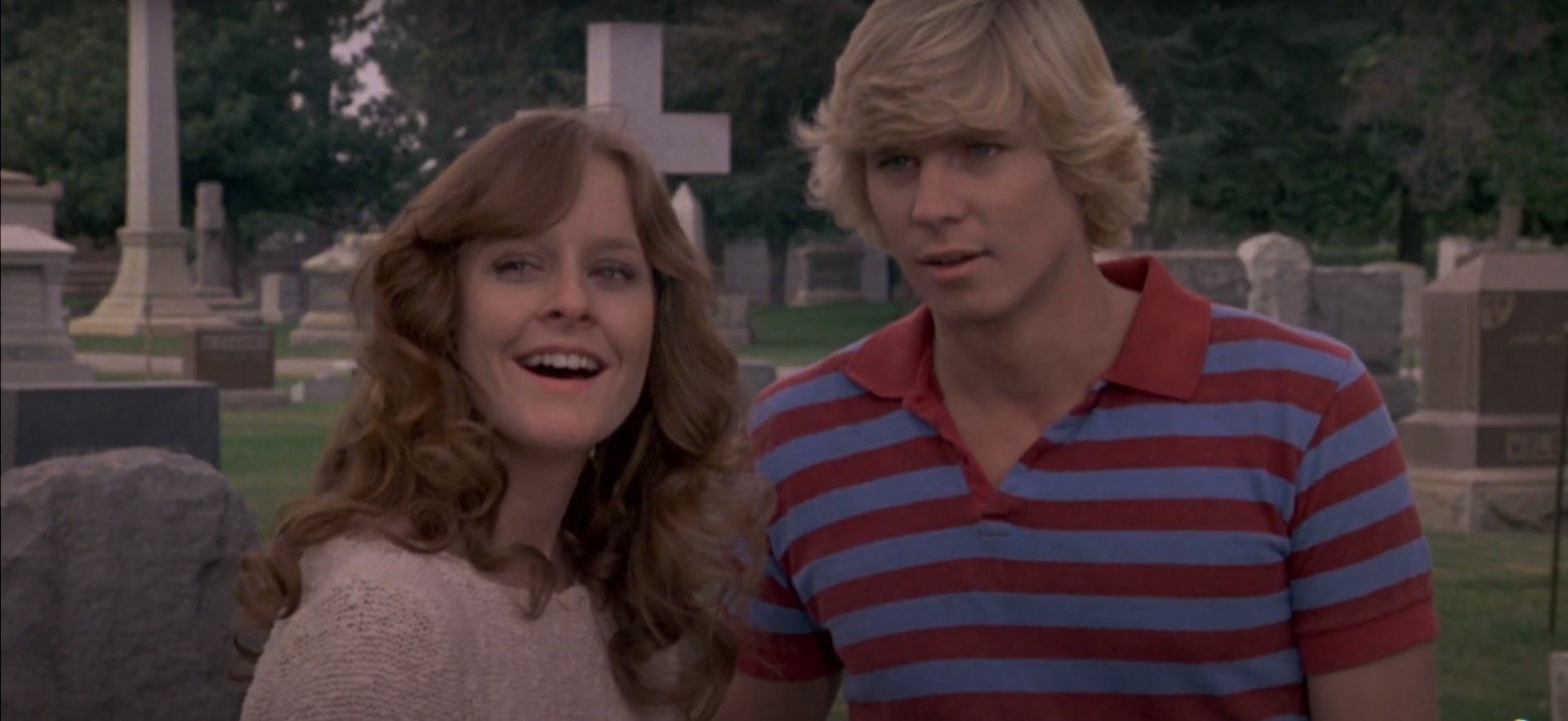
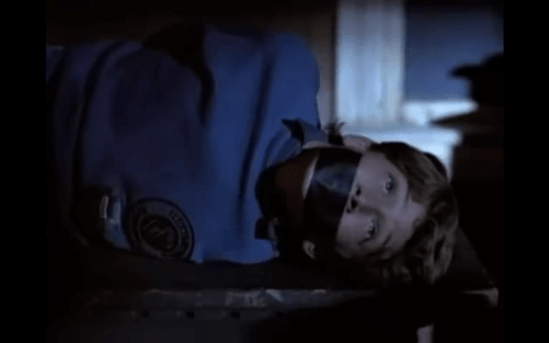
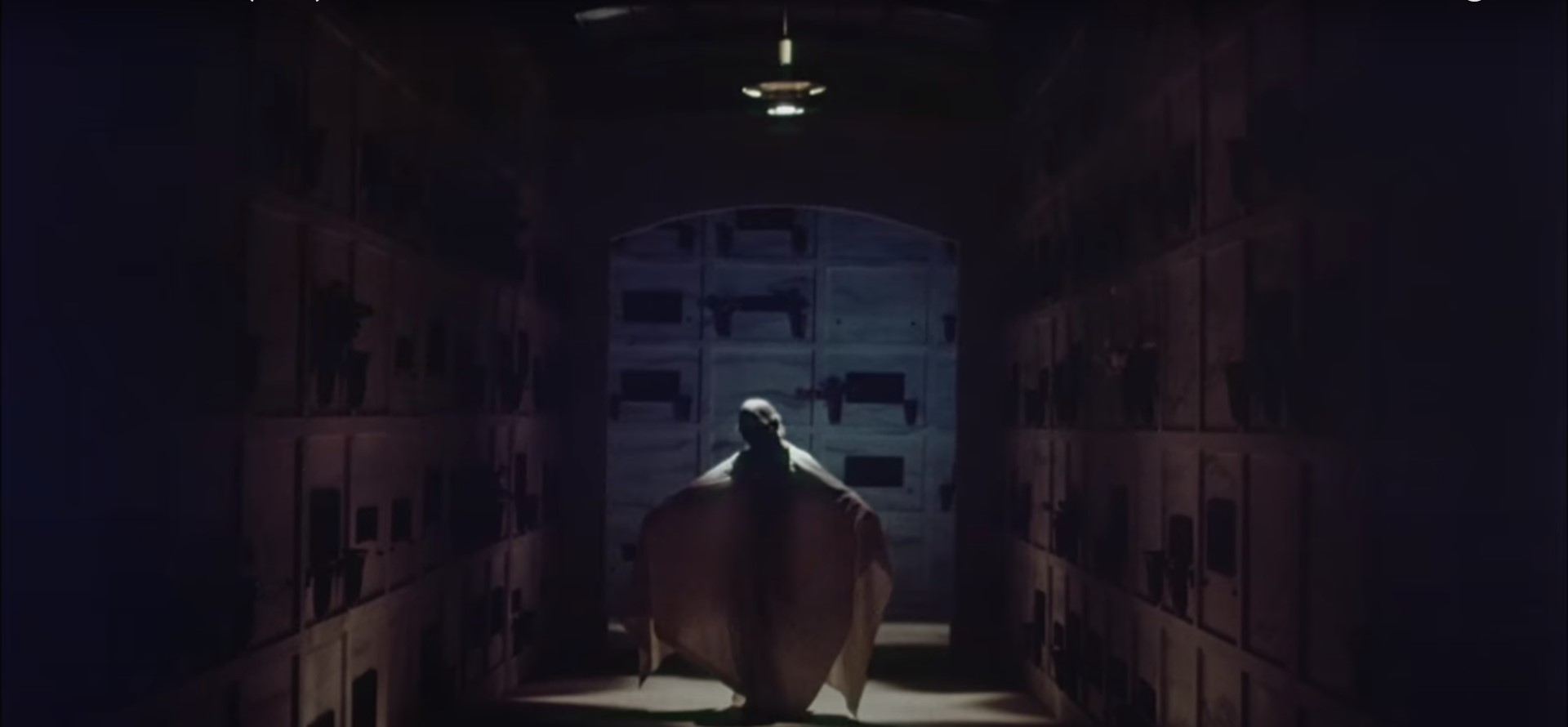
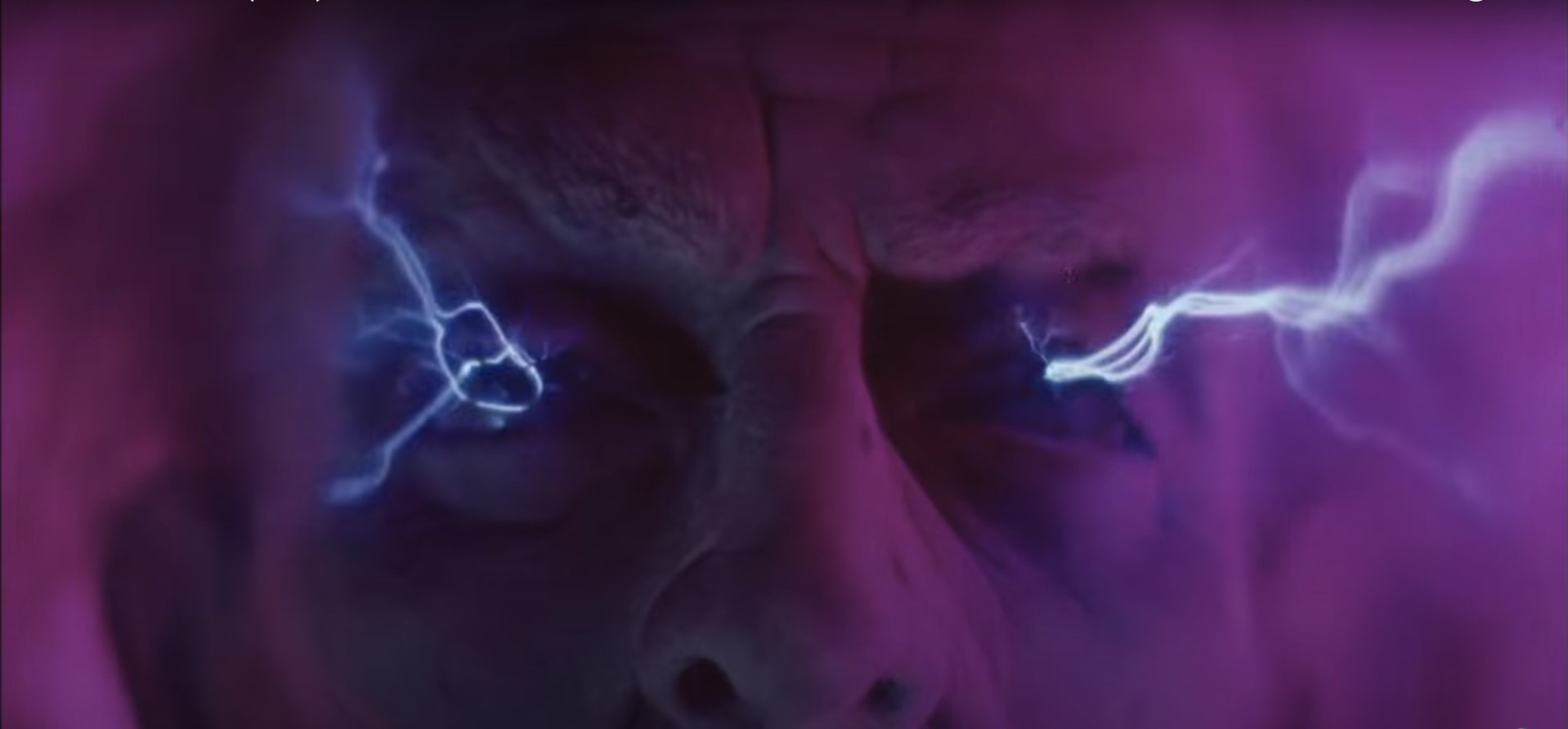
Before hitting the sequel and remake circuit with “Psycho II” and “Body Snatchers,” Meg Tilly broke onto the scene as “One Dark Night’s” leading lady as the amiable Julie whose looking to shake her good girl image. The little sister of “Seed of Chucky” and “Bound” star Jennifer Tilly takes the role by the reins by undulating her fear and determination to do what The Sisters initiate her into completing. The Sisters is comprised of renowned voice actress and “Pee-wee’s Big Adventure” costar Elizabeth Daily, Leslie Speights, and lead by Robin Evans as Carol, the spiteful and venomous ex-girlfriend of Julie’s now jock boyfriend (and Christopher Reeves lookalike in my opinion) in David Mason Daniels. You know what they say about love triangles they? They always lead to psychopathic, telekinetic psychics reeking havoc in a mortuary. Luckily for Tilly, Speight, Daily, Evans, and Daniels, psychopathic, telekinetic psychics are not real and neither is the person who plays the Karl Rhamarevich aka Raymar character! You see, the opening is the post-death scene of Raymar whose lying dead under a coroner’s white sheet along with six beautiful women stuffed into a corner closet in his oddly tatterdemalion apartment. The next time we see Raymar is in his casket, wide open, wide eyed with blue lightning summoning to animate the dead from the mortuary crypts; yet, Raymar is played by a dummy in the film created by Tom and Ellis Burman (“Star Trek” franchise in various capacity and “Scrooged”) and Bob Williams (“The Terminator”) who mold Raymar after the contours of Christopher Walken – second time Walken has popped up in this review! The more interesting casted parts, whose characters don’t do diddly squat in the film, is Adam West (“Batman”) as Raymar’s daughter (Melissa Newman) level-headed husband and The Predator himself, the late Kevin Peter Hall, in a minor appearance before becoming the man behind that one ugly son of a bitch mandible mask. You also actually get to see how tall Hall was in his prime.
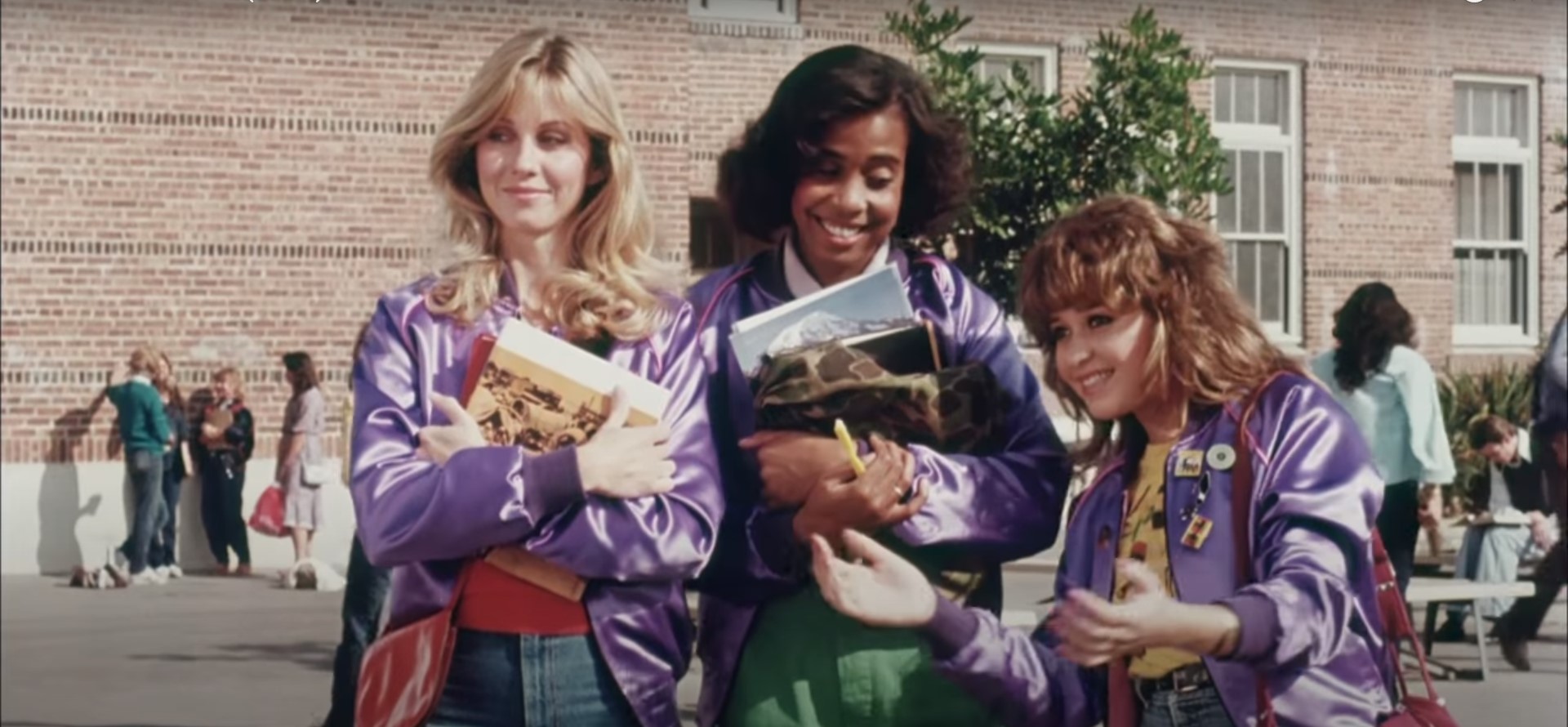
“One Dark Night” flirts with being this strange horror that blends teen suspense and shenanigans with gothic horror with pseudo-science deviltry sushi wrapped into a Euro-horror roll. I kind of love it. I’m one of those horror fans who avoid trailers like the plague and try not to read synopses on the back cover, going into every viewing with complete ignorance, total unbias, and good attitude. I didn’t even know Meg Tilly was in “One Dark Night” for Christ sake! As the 90 minute runtime ticks down, I’m curious to where McLoughlin starts to take this film that doesn’t seem to quite get into the horror portion of Raymar’s show-stopping comeback. McLoughlin and Hawes hype up the love triangle with Carol’s bitter acrimony and Julie’s adolescent need to not be a one-note complexion all the while Steve desperately needs Carol to cease and desist any and all torturous hazing attempts, but there’s still this itty-bitty connection still tethered between the two that also causes Steve to two-time his new, more benevolent, girlfriend. In the end, I can confidently say that Steve is a good dude, a guy who double downs on a girl like Julie who can’t seem to get it through her thick skull that she doesn’t need to prove anything to three dimwits with sheeny club bomber jackets. I can tell you who isn’t a stand up guy – Raymar. Kudos to McLoughlin and his crew for creating one evil son of a bitch villain without there ever being a palpable proverbial man behind the mask to bounce off a projection of fear and contention. The evil Raymar practice was so intensely evil it was beyond our dimensional comprehension and broke the mold of death with the abilities to animating the dead among other things. “One Dark Night’s” slow start leads to a not to be forgotten survival terror against an army of the harnessed dead.
Raymar isn’t the only thing brought back from the dead, but also “One Dark Night” as MVD Visual, under the MVD Rewind Collection, strike a deal with Code Red to utilize their OOP transfer and bonus materials for a new re-release Blu-ray hitting retail shelves this Tuesday, August 24th! The 1080p high definition transfer is presented in a 1.78:1 aspect ratio speckled nicely with natural, pleasant looking reel grain. Like the Code Red special edition release, plenty of details shine through the delicate rendering that can be image wispy at times. Loads of superficial damage – frame scratches, edge flare ups, rough editing cuts, smudges – can’t go unnoticed, but these blemishes don’t hinder much as the scenes are more transitional during the setup to the big mortuary finale. What differs from Code Red’s DTS-HD 2.0 mix is thee English language LPCM 2.0 mono mix that still lightly treads with subdued effect, much like the Code Red release. Dialogue can sound muffled with popping landing just under the surface and bubbling up during dialogue scenes. Still, the audio track stands it’s ground by clearly rendering every dialogue, effect, and soundtrack without question. English subtitles are also available. You want bonus features? You got’em! Interviews with director Tom McLoughlin, actress Elizabeth Daily, actress Nancy Mott, cinematographer Hal Trussell, production designer Craig Stearns, producer Michael Schroeder, and special effects crew member Paul Clemens are all individualized for maximum recollection tidbits and factoids. There’s also audio commentaries by McLoughlin and Schroeder as well as McLoughlin and co-writer Michael Hawes. Plus, we also graced with McLoughlin’s director’s cut, a standard definition, unfinished, work print version in a 1.33:1 aspect ratio that shows the director’s true take on the narrative before producers ultimately decided to go another route…behind his back nonetheless. Behind-the-scenes footage, Paul Clemens photo gallery, and original theatrical trailer round out the disc bonus content while the physical release comes with a retro-take card board slipcover, reversible cover art, and a collectible mini poster inside the case liner. If you’re a fan of Euro-horror, “One Dark Night” embodies the very soul of the Lucio Fulci and Michele Saovi supernatural archetype sewn seamlessly into an inescapable and hopeless dance with the gnarly energies of the stoic dead.

Pre-order “One Dark Night” on Blu-ray at Amazon.com!

Early Bill Paxton EVIL in “Mortuary” reviewed! (MVD Visual / Blu-ray)

The tragic swimming pool drowning of Dr. Parsons might not have been an accident as determined by the police.  At least that is what his daughter, Christie, believes and she is for certain her mother has some involvement in the so called accident.  Plagued with nightmares followed by a stint of sleepwalking a month after her father’s untimely demise, Christie tries to maintain a semi normal life as a high school student romantically involved with boyfriend Greg Stevens.  Meanwhile, Greg’s best friend disappears after the two trespass onto local mortician Hank Andrews’s storage warehouse.  Christie and Greg unwittingly become embroiled into sinister intent by a masked and caped ghoulish killer stabbing victims with a detached embalming drain tube and at the center of it all is Hank Andrews and his son Paul’s family morgue that processes and possesses all the dead’s secrets. 

Before Wes Craven’s “Scream” mega-franchise turned caped killers revolutionary cool with meta-crafting horror tropes of the genre slasher, there was the little known “Mortuary” that perhaps paved just a slab of keystone for the Ghostface Killer who has become the face of slasher films for more than 20 years, much like Jason Voorhees or Michael Myers back in the 1980s and early 90s.  Written and directed by the Baghdad born filmmaker, Hikmet Labib Avedis, credited under the more westernized stage name of Howard Avedis, the 1983 film nearly had all the hallmarks of a peculiar macabre dance that skated around the slasher sphere.  “Mortuary” had seances, pagan rituals, a shrouded murderer, and, of course, the embalming of dead, naked bodies that are the inevitable, natural, mortality reminding entities in movies regarding morgues.  The late director, who passed away in 2017, cowrote the film with wife, producer, and actress Marlene Schmidt who had a role in every single piece of his body of work.  “Mortuary” was self-produce by the husband and wife filmmakers under their Hickmar Productions company and by grindhouse producer Edward L. Montoro (“Beyond the Door”).

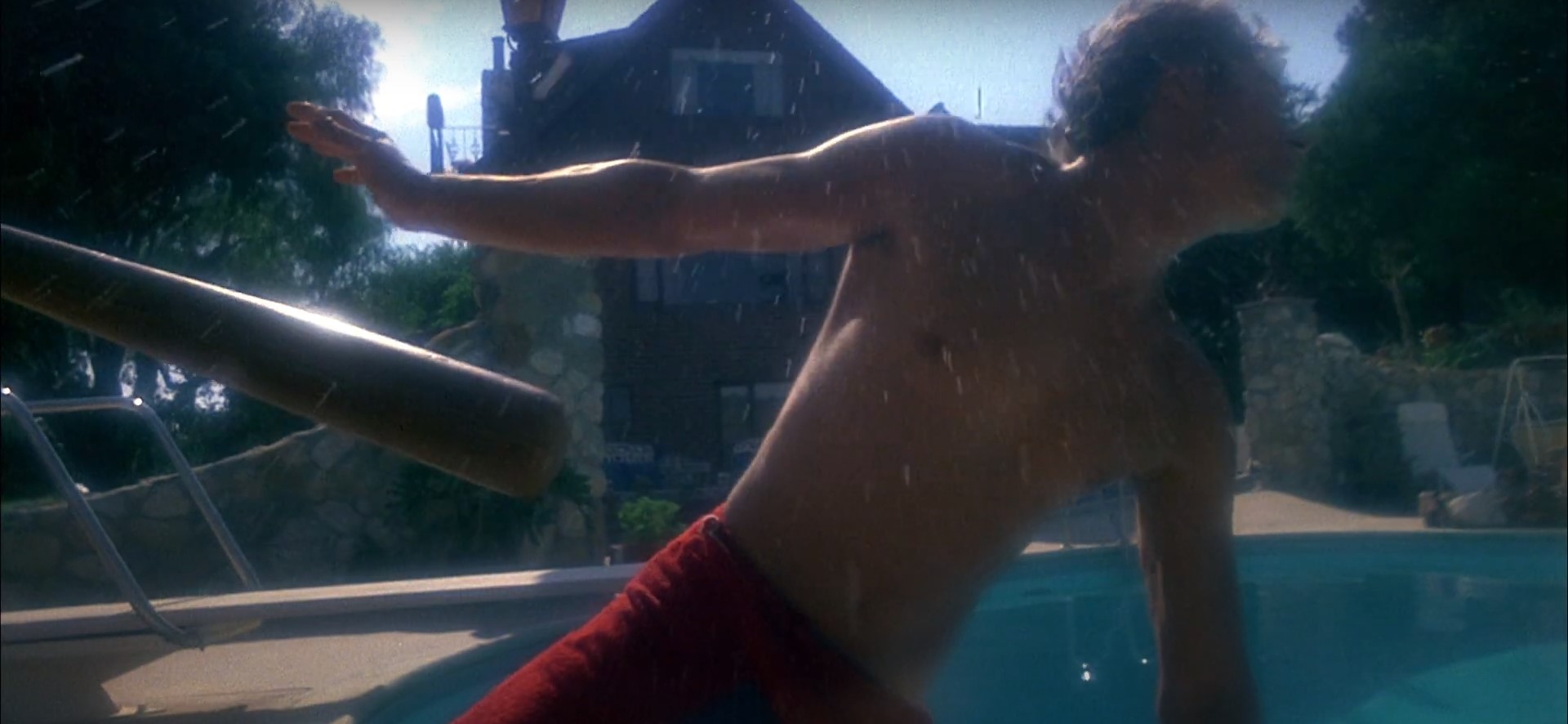
Though the post-credit opening scenes begins unscrupulous enough with Greg Stevens, played by television soap opera star David Wysocki whose credited as David Wallace, and his best friend Josh (Denis Mandel) stealing tires from Josh’s ex-employer, morgue owner Hank Andrews, the late “Day of the Animals” and “Pieces’s” Christopher George’s last cinematic role, because of being fired without being paid for his services, “Mortuary” inconspicuously moves from Stevens’ infringing on local law to surround itself more aligned with Stevens’ girlfriend Christie Parsons who feels more like a backseat character upon introduction.  Yet in a flurry of exposition with her mother, Christie, who is played by “Mom” actress Mary Beth McDonough, circles back and ties into the opening credit scenes of an unknown man being bashed over the head with a baseball bat and falling into his pool.  We learn that the man is Christie’s father whose death has been rule an accident (no evidence of baseball bat related injuries? Was evidence collecting really that low-tech in the 1980s?), but Christie begs to differ as she point blank accuses her mother, Christopher George’s life co-star Lynda Day George, being involved in his poolside death.   While performances statically hover inside the wheelhouse of teen horror with Greg and Christie seemingly unaffected by the mysterious incidents happening all around them until someone literally is grisly murdered in their adjacent bedroom, a fresh-faced Bill Paxton (“Frailty”) inevitably steals the show with this enormous presence on screen as Paul Andrews, the town’s mortician loony son working for his father as an embalmer.  Paxton’s zany act borders “Mortuary” as either a diverse trope horror with an awkward outlier character stuff into the eclectic mix or a seriously unserious bluff of being a serious horror film – see what I did there?  Paul listens to Mozart on vinyl, has an obsession for Christie, and likes to prance and skip through the graveyard as a son broken by his mother’s unhinged suicide.  “Mortuary” rounds out with Curt Ayers (“Zapped!”), stuntwoman Donna Garrett (“The Puppet Masters”), Greg Kaye (“They’re Playing With Fire”), Alvy Moore (“Intruder”), stuntman Danny Rogers, Marlene Schmidt, and Bill Conklin as a walking contradiction as a beach town sheriff wearing an unabashed cowboy hat like a sorely out of place rootin’-tootin’ lawman from the West complete with country draw lingo. Also – don’t miss the bad nude body double used for McDonough when Christie is lying on the morgue slab.

Now, I’m not saying “Mortuary” is the sole inspirational seed that sowed the way for the “Scream” franchise, as I’m sure many, many other iconic classics inspired Kevin Williamson, but, in my humble opinion as an aficionado about the genre components and how they’re all connected by a few or many degrees of separation, “Mortuary’s” villain could be the long, lost ancestral sperm donor responsible for the origins of Ghostface.  The purposeful movements and actions align very closely in a parallel of deranged defiance and floaty black and white costumes.  However, “Scream” is just packaged nicer as “Mortuary” continuously drips all over the place like a three scoop ice cream cone on a hot summer day.  Containing Avedis’s arc on Christie was nearly impossible as each act jumps and focuses on someone entirely different while also exposing the killer blatantly without even trying to misdirect or repel any kind of suspicion.  It was as if Avedis and Schmidt swung for the fences with a convoluted giallo mystery plot but couldn’t figure out how to build that into the narrative without drawing from and drowning in exposition and that’s how the cards came crashing down by unfolding with talking head pivotal plot points that steered to a rather quick, yet pleasant, climatic head of a total mental meltdown that’s much more cuckoo than Billy Loomis and Stu Macher will ever be. 

If you didn’t score a copy of Scorpion Releasing’s limited edition release of “Mortuary” on Blu-ray, then sing the praises of second chances with this Scorpion Releasing Blu-ray reissue through the MVD Visual Rewind Collection line. The all region release is presented in a high definition, 1080p, widescreen 1.78:1 aspect ratio of the Scorpion Releasing AVC encoded transfer on a BD25. Quality-wise, the release delivers the perhaps the full potential of a cleaned up 35 mm restore with no sign of cropping, edge enhancing, and a healthy amount of good grain, but there are noticeable gaffes with select scenes that seemed to have missed or left out of the restoration all together, reverting back to the rough, untouched image. Coloring, skin and objects in the mise-en-scene, come out lively, naturally, and without a flutter of instability with transfer damage at a minimum. Probably the most surprising is the original 2.0 mono LPCM track. The English language mix does the job without climbing the audiophile corporate latter, leaving in the wake a soft dialogue that’s a struggle to get through if you’re not wearing headphones. Depth seems a little slim, but the range keeps progressing nicely that often feeds into the late John Cacavas score. Cacavas operatic film score is bigger than the movie itself, often grandiose the Gary Graver one-note cinematography. The overexposed ethereal flashback has slapped redundant fatigue plastered all over it but, then again, the film is from the 80’s. Option English subtitles are available. Special features include only an interview with John Cacavas from 2012, from the original Scorpion Releasing print. Two upsides to the MVD Visual release are the cover art mini-poster tucked inside the casing and the added cardboard slip cover that resembles a tattered VHS rental tape slip box complete with a faded Movie Melt yellow caution sticker, a Be Kind, Remind sphere sticker, and a Rated R decal. If you’re a big Bill Paxton fan, “Mortuary” reveals another shade of talent from the late actor. Other than that, the Howard Avedis production often haphazardly stumbles bowleggedly to a giallo-errific-type ending made in America.

EVIL Trifles With a Vindictive Obsessed Cop in “Split Second” reviewed! (MVDVisual / Blu-ray)

Global warming has taken a toll on the Earth’s polar ice caps in 2008 with cascading amounts of water flooding around the world bringing knee high waters to coastal cities.  London is hit hard with drenching sewer overflows and coastal run overs that result in an over infestation of rats to storm the streets, back alleys, and even resident homes, carrying a harmful disease in their occupation.  However, something else compounds the rat plague that slashes at random victims, tearing their hearts out violently from their chests without ever leaving a witness except for one, a rogue and paranoid detective Harley Stone whose partner was slain in one of the deadly attacks and himself marred by the killer. Partnered with a new hot shot know-it-all detective following the murders, an obsessed Stone confronts his haunting traumas as he continues to pursue the inhuman perpetrator who has a psychic connection to Stone, personally toying with the on-edge officer, and has kidnapped his girlfriend as bait.

Even though 2008 has come and gone now almost 12 years ago, Tony Maylam’s 1992 actionized-creature feature “Split Second” still holds water just like the rising tide pools on the streets of London.  “The Burning” director, Maylam, helms, with the finishing touches of the final sequences directed by Ian Sharp after Maylam’s sudden departure, a fast paced and snarky script penned by Gary Scott Thompson as one of the writer’s very first big budget outputs from nearly 30 years ago that was followed up with major studio films, including a little project you may or may not have heard of, “The Fast and The Furious” mega franchise.  Before nitrous suped-up cars hot-rodding on asphalt, jumping high speed trains, and flying off cliffs in a lap strap of criminal activity luxury, Thompson created a formidable, heart-devouring beast that became the trap-setting, trophy-hunting predator and the teeth-snapping, chest-bursting xenomorph all in one package to symbolize the irreversible and ignored effects of an overpopulated, warming planet.  “Split Second” is a production of Challenge Film Corporation and produced by Muse Productions with Chris Hanley, Laura Gregory, and Keith Cavele serving in a producer role.

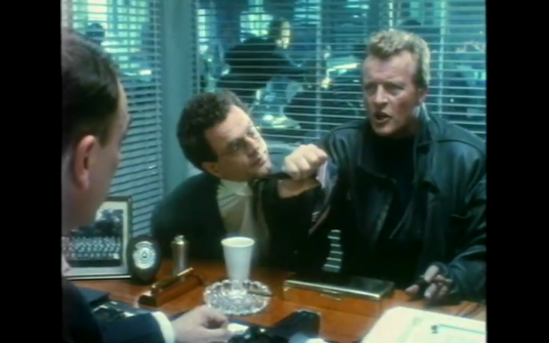
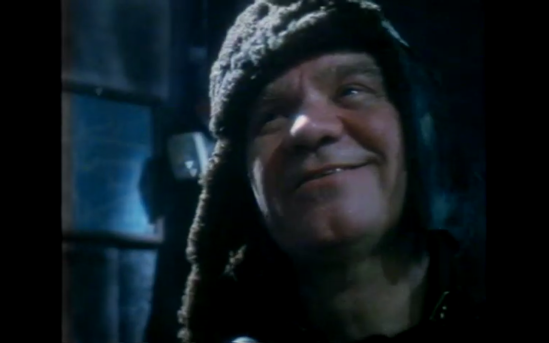
The Netherlands’ very own Rutger Hauer sheds his nice guy exterior for Harley Stone’s shell-shocked, rough and tough outer shell.  The late “Blade Runner” and “The Hitcher” actor brings a certain cinematic coolant to “Split Second’s” overheating fringe of disproportionate action and science fiction horror, a lop-sidedness typical of a Rutger Hauer production, by being larger than life in the little aspects that add to the dimensions of the scene, making every moment famished for Stone’s next eccentric and animated move.  Stone is partnered with an equally vigorous Detective Dick Durkin who starts out as a cultured drip of criminal activity and an astronomical proficient before quickly blooming into the same gritty mirror image of Stone.  Credited as Neil Duncan, the current vocational voice actor Alastair Duncan has a natural dynamic with Hauer despite their asymmetrical careers and endures an incredible character arc successfully turning Durkins’ relatively square image – though debatable with smart, good looking, and gets sex every day swagger – into a Stone acolyte after witnessing the human threatening existence of an unnatural ferocious monster.  The female love interest didn’t seem to fit the “Split Second’s” gentle steampunk lace and zany character scheme with Kim Cattrall as Stone’s estranged girlfriend, Michelle McLaine.  As much as love the “Big Trouble in Little China” actress’s late 80’s to early 90’s career, the girlfriend role feels sorely plopped into the film for the sake of having a love interest as much of the character is illuminated through exposition with McLaine being the wife of Stone’s former partner stemmed from her and Stone’s affair and then lingers her subsequent alienation from the rogue cop despite an inextinguishable flame between them. As Cattrall provides the sexiness in the city of London, McLanie iss aesthetically airy without tangible substance other than kick in the pants motivation for saving. “Split Second” rounds out with the late Pete Postlethwaite (“The Lost World: Jurassic Park”), Alun Armstrong (“Van Helsing”), Stewart Harvey-Wilson and “Scoorged’s” Michael J. Pollard as London’s the rat catcher.

“Split Second” is an early nineties junket spiraling with flashy facets of easily digestible, entertaining chewables that continuously hits all the right flavor sensations in terms of acting, dialogue, production design, creature design, and cinematography. The bonkers script and equally as bonkers visual concept inserts an extremely likable brazen world of the future in the form of a dank, or danker, London under one or two feet of water; in every moment Stone or Durkin hit the streets, they’re essentially swimming in brown street liquid and the overall effect places a blanket of filth glazing over my eyes and secreting out of my captivated body is a cold spine-shivering chill that’s immersive to Stone and Durkin’s slushing around. Stephen Norrington, who went on to direct “Death Machine” and “Blade,” slapped together a fairly effective creature design despite the creature rarely being in full exhibition and for very good reason. A brief flash of razor sharp fingers, a quick dash of unearthly skin, and the gruesome aftermath in it’s wake evolved a better rendition of the creature in our minds than perhaps the actual resulting appearance with result that tacked on one big mysterious allure that doubled down coinciding with the principle characters who also has never seen the killer before. “Split Second” is constantly suspended in action with little down time to reflect on the theme of global warming and it’s life-changing choking effects that not only rushes thousands of gallons of water onto the streets and increase the survivalist rat population up to nearly impossible control levels, but also tampers with the balance of astrometric forces, bringing evil to the world in the form of a heart-eating devil to the surface when astrology deemed the moon in position for such an event and that’s also perhaps the downside to Tony Maylam’s film. The monster bares little backstory to sink one’s teeth into and raises an immeasurable amount of unanswered questions relating to the fate that intertwined Stone into the creature’s inner sphere of extrasensory perception, the origins of the creature and it’s genetic makeup, and the relationship between it and the cult correlations.

A melting pot of feculent and bloodshed pother, “Split Second” arrives onto a high definition Blu-ray courtesy of 101 Films and on MVDVisual’s MVD Rewind Collection banner. The region free, R-rated feature is presented in 1080p with a widescreen, 1.85:1 aspect ratio with a newly 4K scan complete with restoration and coloring grading from the original 35mm negative. The inviting image, with adequate grain and a cigarette burn here and there, basks mainly in a steely blue among other primary colors rearing up while thick with a brightly contrasted neo-noir shadow wrung through. Skin textures are consistently and continuously glistening with sweat setting on top of the natural coloring and the facial follicules present a rather sharp image, making this release the best looking transfer to date. The English language 2.0 LPCM stereo mix doesn’t let up with a robust mix of forefront dialogue, a balance of range and depth, and a pulsating cheesy-action soundtrack Stephen Parsons and Francis Haines. English subtitles are optionally included. The heft bonus features package includes exclusive content such as an audio commentary by action film history Mike Leeder and filmmaker Arne Venerma, a new conversation entitled “Great Big Bloody Guns!” between actor Alastair Duncan and producer Laura Gregory, a “Call Me Mr. Snips!” interview with composer Stephen Parsons, a “Stay in Line!” interview with line producer Laura Borg, a “More Blood!” interview with creature effects designer Cliff Wallace, and a “Shoot Everything!” interview with cinematographer Clive Tickner. But, wait, there’s more! Also included is the original making of feature with stars Rutger Hauer, Kim Cattrall, Alastair Duncan, Michael J. Pollard, writer Gary Scott Thompson, original behind the scenes feature with effects creator Stephen Norrington and other cast and crew, the “Second Split” Japanese cut includes the deleted scenes and built in Japanese subtitles, 7 promotional TV clips, U.S. VHS home video promo, theatrical trailer, and a MVD exclusive reversible sleeve with artwork from The Dude Designs, cardboard slipcover, and mini-poster insert. The difficult decision to determine Rutger Hauer’s best work can be daunting as the man is King Midas with every project he touches, but “Split Second” reveals now more than just being pure gold with this MVD Rewind Collection Blu-ray release that’s a must own, must have, must see, and a must collect physical release of the rundown of a monster-run amok, neo-noir, steampunk, action-comedy-horror….in a nutshell.

Own this Rutger Hauer classic “Split Second” on Blu-ray!

All a Broken Family Needs to Mend is a Demented EVIL Backpacker! “Mind Games” reviewed! (MVD: Rewind Collection / Blu-ray)

***Note: the following screen caps are not from the MVD Blu-ray release.

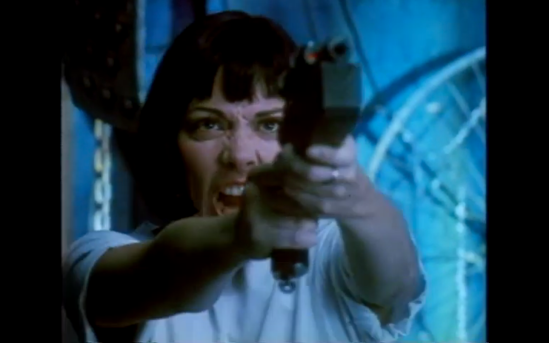
On the surface, the Lunds are picturesque of everything that represents the perfect family. Under the surface, Rita and Dana Lund can barely skim the surface with their marriage dangerously ebb and flowing toward sharp, jagged rocks. In an effort to save their relationship, they take their preteen son on a RV camping trip along the coast line of California to try and rekindle their affection for one another. In one of their trip’s initial stops, a hitchhiker named Eric befriends Dana and the boy; they’re fondness for the charismatic and young Eric is so great that he’s invited to ride along with the family on their vacation. Rita’s suspicions of Eric are blinded by her immense loathing for Dana, suppressing Eric’s true maniacal, psychopathic behavior as he infiltrates the Lunds to conduct his only psychological behavior experiments by shifting the boy’s jovial persona, exploiting Rita’s sexual regression, and further alienate Dana from his family.

As if a fable that warns the dangers of picking up hitchhikers no matter how friendly and beautiful they appear to be, “Mind Games” dug into the psyche and had continued the trend of violently unstable roadside travelers that yearn to harm the hospitable, the compassionate, and just the plain old lonely. In Bob Yari’s first of two directorial efforts, the 1989 “Mind Games,” also once titled as “Easy Prey” is a thriller from the mind of screenwriter Kenneth Dorward and co-produced by screen actress turned financier Mary Apick, teaming up with Bob Yari after their work together on the sovereign nation standoff drama, “Checkpoint,” under the MTA/Persik Production Company banner. As the idyllic project for a low-budget thriller with a limited cast and barely any special effects required, “Mind Games” wound up being the first entry for the MTA/Persik affair that sought to stir conjugal strifes with outsider influence and how sometimes the grass is not always greener on the other side.

For an independent film with such a small, sharpened cast, well known actors from the 80’s step into the humblings of lesser grandeur, starting with Maxwell Caulfield. The young, promising star from the sequel to John Travolta’s “Grease” had his career nearly derailed with the critically panned big budget “Grease 2”, but luckily for horror genre fans, the English born actor channeled his talents toward such films as “Waxwork II” and “Sundown: The Vampire in Retreat.” Yet, “Mind Games” was essentially his second break into the film business that opened doors for the former titles and being the unhinged hitchhiker Eric couriered a necessary change from his stage performance to his ability to be warped-minded person looking through the eyes of a totally different and charmed individual. The role absolutely challenges the actor who, from analyzing his performance across the screen, finds breaking in the role more difficult than presumed. Edward Albert is a name you might not remember, but his face will strike some chords as “The Galaxy of Terror” actor steps into the self-deprecating husband role of Dana. Dana is just one of those individuals worth slapping across the face to wake them up and Albert amplifies his unintentional waning from his wife and child with such dismissal and disassociation, I, myself, found Dana’s lack of courage to be unsettling, but his rouse-less attribute fades slowly into man searching, if not clinging, for what’s left of his life. Caught between Eric’s snarky sensationalism and Dana’s lofty air is Dana’s angst wife, Rita, played by “Shadowzone’s” Shawn Weatherly. The blonde hair, blue eyed former Baywatch beach lifeguard sure knows how to be a wild card, an unknown friend or foe in this mental game of chess, as Rita staggers between hating to being extremely amicable with her husband, Dana. This is where Dana and Rita’s son, Kevin, fits in as the deciding factor pending the successfulness of Eric’s testing. Matt Norero didn’t have nearly the extensive career as his co-stars, but deliveries some great, if not zealous, scenes and cold-hearted glares that break up the sometimes monotonous tone of “Mind Games” would routinely find itself stuck.

To frankly put it, “Mind Games” bares the prosaic essence of a run of the mill thriller with a thin strip of riveting tension to cling onto. The film impresses comparably with a cheap suspense novels you’ll find multiple copies of collecting dust bunnies on Dollar Tree shelves where the paperwork backs lavished in a cheap bait title and cover art only provides a quarter of the entertainment value of its marketed worth. However, for a low budget production, Yari manages to pull off impressive aerial shots, eerie dim lit atmospherics of a fog machine heavy night scenes, and tack on flashes of so bad, it’s good meme worthy moments – i.e. the garbage day kill scene in “Silent Night, Deadly Night: Part 2” to reference what I mean. The score is conducted by “Night of the Comet” composer David Richard Campbell with an uncharacteristic upbeat and happy-go-lucky number weaving in and out of the film’s storyline, and coarsely out of place during the RV stop-a-long montage that proceeds after setting up Dana and Rita’s turbulent marriage and Eric’s understated malevolencies, but rather speaks to the overall spirit of the film that’s a rated-R labeled PG-13 thriller, hard on the language, but soft on the violence with more of an implied application of offscreen kills and virtually no blood from an anemic plotline.

Still, “Mind Games” can be considered a cauldron of cynicism and now that the release receives the royal treatment with a full HD, 1080p special collector’s edition Blu-ray from MVD’s Rewind Collection label spine #21. The retrograde cardboard slipcover harnesses a powering transfer that supplies vitality into the well-preserved 35mm source material and presents a 1.78:1 aspect ratio. Perhaps the best this transfer looks to date, a plush matte that’s pleasing and without the drab bleakness that typically coincides. Natural grain remains upon a softer side delineation that’s not heftily indistinct and, in fact, adds to the glow of the product’s decade. The English LPCM 2.0 stereo audio mix has inviting qualities, but taper more on the lossy side of the spectrum. The soundtrack is powerful, especially on “The Writing on the Wall” single by Raven Kane. Dialogue is clear and untarnished, the range is adequate, and the depth is sound. No audio or video hiccups or blights to note nor any dubious enhancements detected. Option English subtitles are available. Special features are aplenty including a new MVD exclusive, retrospective look at the Making of Mind Games that clocks in at 108 minutes of interviews with director Bob Yari, producer Mary Apick, and stars Maxwell Caulfield, Shawn Weatherly, and Matt Norero. Also included a featurette on the producing career of Bob Yari who helmed award winning films such as “Crash,” and concludes with the original theatrical trailer, a reversible sleeve with alternate art, and a collectible mini-poster in the insert slot. “Mind Games'” message to the world is never knowing how good you have something until nearly being ripped from your hands. Director Bob Yari finagles the point across with an unexceptional joyride, but a solid first film from an indie startup hungry enough to take a chance on a practical psychological thriller.

“Mind Games” looks gorgeous on Blu-ray! Check it out from MVD!

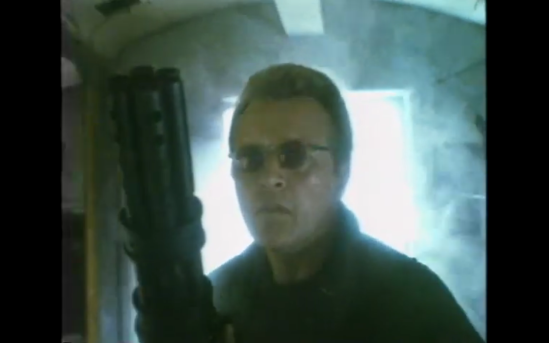
One Tough Cop Taking on Evil Cyborgs! “Nemesis” review!


In the year 2027, enhanced humanistic cyborgs virtually run the planet with the renowned L.A.P.D. being no exception. Alex Rain, one of L.A.’s finest brute cops, is partially cyborg himself, but the essence of his soul remains human intact while his synthetic flesh cloaks the icy machine beneath. After tracking down suspected cyborg terrorists and almost losing his life in the struggle to stop them, Alex questions his dwindling humanity, leading him down a path of unfulfilling revenge and botched smuggling before his former employer, the L.A.P.D. commissioner named Farnsworth, tracks him down and uses deadly coercion to force Alex as a pawn in dangerous covert mission. The burnt out cop is thrusted back into the fray of his former life when Farnsworth orders him to retrieve data from the treacherous female cyborg, Jared, who was once Alex’s partner and lover, before she hands over the sensitive information to a group of cyborg terrorists who call themselves The Red Army Hammerheads. With a micro bomb implanted near his heart as insurance, Alex has no choice but to accept the assignment before detonation in 3 days and with his time running out, finding Jared isn’t the problem as Alex comes to realize that deception has convoluted the stakes and nothing is who or what they seem.

Albert Pyun’s 1992 cyberpunk action-thriller “Nemesis” is an explosive-heavy, science fiction existentialism film never before seen, or even aware of, by this reviewer, but the ground-worked narrative has remained a constant piece of foundation in being the byproduct of inspiration extracted from other cyberpunk films of its kind, such as “Robocop,” “Blade Runner,” and “The Terminator.” “Nemesis” has a presence much to the tune of another film, “Cyborg,” starring John-Claude Van Damme and that inclination would inevitably make a world of sense when the awe-striking epiphany lands that Pyun also directed that film, also utilizing some of the same actors for his early 90’s cybernetic dystopian feature. In reviewing Pyun’s credits, the assumption can be made that the filmmaker has a sturdy hard-on for the intertwining of mankind and machine as not only did the director write and direct “Cyborg” and helmed “Nemesis,” but went on to be a part of, whether director, writer, or producer, of four more “Nemesis” sequels with a fifth being produced and shot, but scrapped in post-production due to Pyun’s flailing mental health. Rebecca Charles fed the scribal beast as “Nemesis’” screenwriter, along with penning “Nemesis 2: Nebula” and “Nemesis 3: Time Lapse.”

Alex Rain is a cold cut character, sliced thick like a cool cucumber on top of a hard to wedge salad. Rain’s iciness symbolizes his downtrodden humanity status and with each part of his body shattered from destruction, he becomes one step closer to being an automaton with eye brows. B-movie action star Olivier Guner essentially make a big career breakthrough with “Nemesis” as his sophomore feature. Guner’s military background suitably solidifies his physique as a workaholic cyborg cop while also presenting a rough cut speech impediment that’s very straight forward and without emotion. Some would say that Gruner’s approach fits his half-human, half-toaster oven character and I would say that would be correct. The 80’s and 90’s saw a crowded entry list of action stars, including Jean-Claude Van Damme, Chuck Norris, Steven Seagal, Sylvester Stallone, Arnold Schwarzenegger, and many others in various degrees of success – and Olivier Gruner became one of those faces that had since then been lost over the years; Gruner’s performance in “Nemesis” lacked pizazz which could have been the contributing factor to his success, but the monotonic, unflattering one-liners and blank face stare didn’t spark any fires on top of his average muscular frame. His performance, to keep with the fire motif, didn’t provide the oxygen, a combustible, or a flammable source to quickly set ablaze a trail for semi-popularity amongst his peers and that’s where “Nemesis” falters in entertainment value. Comparatively, “Trancers” franchise actor, Tim Thomerson, is full of range and vigor as an concealing Commissioner Farnsworth. Thomerson, in his early 40’s at the time of filming, displayed an impressive physicality to his role, keeping up nicely with his onscreen rival. Farnsworth, from the get-go, reeks of desperation when pressuring Alex to do his bidding and Thomerson really nails the part and can switch on the proverbial dime as an egocentric field operative when chasing Alex through the jungles on the Hawaii set. The night and day performance is a stark contrast between the two actors. What’s mostly disappointing about “Nemesis’” cast that favorable characters come and go; some the characters a pinned with terrific actors such as Shang Tsung himself, “Mortal Kombat’s” Cary-Hiroyuki Tagawa, as the leader of The Red Army Hammerheads and the late, great Brion James (“Red Heat”) chirping a lousy German accent of the Commissioner’s right hand man. The cast has many other recognizable names that, again, come and go, including a strung out looking Merle Kennedy (“Night of the Demons 2”) as Max Impact, Marjorie Monaghan as the algorithmic beauty Jared, Vincent Klyn (“Cyborg”) as a disposable bodyguard, an extremely fit and nude Deborah Shelton (“Body Double”), voice actor Nicholas Guest (“Dollman”), brief cameo by Jackie Earle Haley (“Watchmen”), a fresh faced version of “The Predator’s” Thomas Jane, and Thomas Jane’s bare ass.

The financial backing was obviously designated for a particular department in the “Nemesis” workshop and that department was special effects. Explosions, rotoscoping, stop-motion, sculpture, implosions, practical effects and makeup are just the tip of the iceberg. Frayed wires and eye ball cannons are the elegant touch that makes “Nemesis” a cult favorite and bring substance to a clunky storyline and divisively dynamic acting. However, not all the specials are pinpoint precision and grounded by reality. The one scene that stands above the rest when Farnsworth is hot in pursuit of Alex and Max and he’s shelling off rounds of a shotgun, standing relatively still, blasting away without moving the barrel around to compensate for his prey’s length of distance gained or even when they decided to make quick pivots in direction. Somehow, the rounds hit very close to Alex and Max and that’s not all, they even explode like a single stick of TNT. ACME must have had a hand in the special effects department because the scene sure was loony. Yet, the implosion of a monolithic silo was uber-impressive, well-executed, and really ritzy for the silver screen.

Imperial Entertainment’s “Nemesis” infiltrates onto another home video release, a region free, dual DVD and Hi-Def 1080p Blu-ray format release, from MVDVisual under their MVD Rewind Collection series. Sheathed by a slick, retro-grade slipcover with familiar art, reminiscent of the now decade old Sterling DVD release, the special collector’s edition provides two aspect ratios, an anamorphic widescreen 2.35:1 and a widescreen 1.78:1. This MVDVisual Release has stellar detail in the texture and in framing that are exhibited in various tint shades, such as yellow and blue, and eventually cough up toward a more natural look into the second act when Alex reaches the rough neighborhood of Shang Loo, Java. Even though the visual compositions and mold work doesn’t pop with color and are a bit fuzzy, “Nemesis” is a product of it’s time, the early 1990’s and you can’t fault Pyun’s film for that. The English 5.1 surround sound is beautiful. So beautiful and potent, in fact, that you can actually understand Olivier Gruner’s mumbling, putting dialogue for all characters right into the front row while offering a stimulating range and depth of ambience sound, an unlimited variety of explosions, and plenty of miscellany cyborg hubbub. Other language are available, including French, German, as well as English in 2.0 stereo and there are English and German SDH subtitles available The Blu-ray bonus features include new interviews with producer Eric Karson and director Albert Pyun, “Nemesis 2.0” the director’s cut with Albert Pyun audio commentary, and original theatrical trailer. The DVD is the director’s cut and also includes the Japanese cut with Japanese subtitles burnt-in. Bonus features for the DVD include introductions by the director Albert Pyun and star Olivier Gruner, an afterword by Albert Pyun, a behind-the-scenes featurette, an interview with star Olivier Gruner, the making of segment involving the hefty special effects, stunt work, and visual effects, a featurette entitled “Killcount,” a behind-the-scenes photo gallery, TV spots, Key Art Photo gallery, and, top it all off, a mini-poster inside the casing. Inside a killer definitive, two-format and disc set from MVDvisual, “Nemesis” hones in on the existentialism notion of what being human actually means to each and every one of us through the bombardment of gun fights and jumbo explosions on top of a conglomerate cyborg coup that peaks with hard bodies and even harder viewer contemplation.