An Evil Backyard Barbecue in “Garden Party Massacre” review!


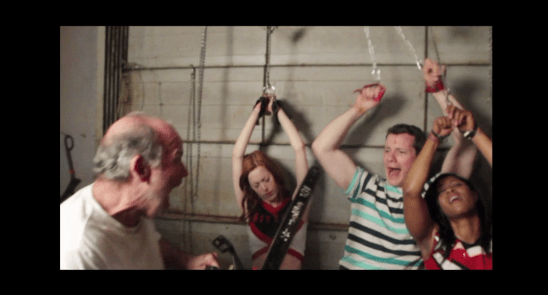
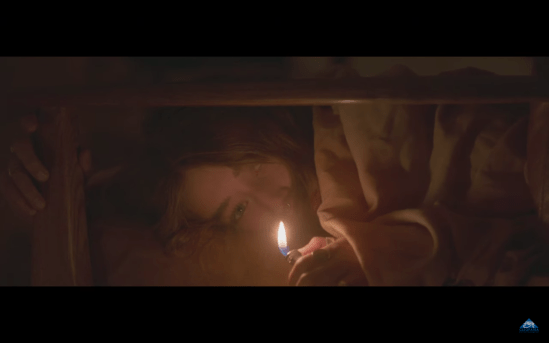
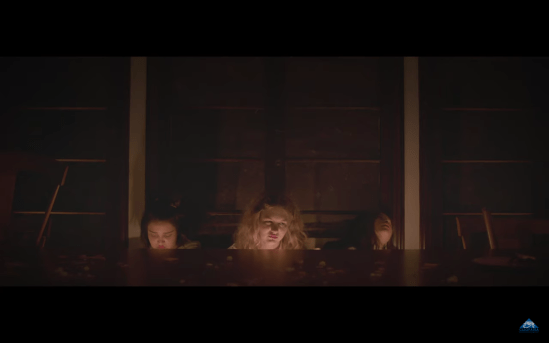
Caleb and Addison are having a party with a small gathering of friends, and a few enemies, to enjoy a hotdog cookout in their charming garden backyard. Caleb only has one strict stipulation that all cell phones be prohibited in order for everyone attending to live in the moment. Things seem to be proceeding relative well: the beef and vegan wienies are grilled to perfection, the wine flows freely to and fro, and a love triangle arises for a possible romantic outcome for a pair of singletons. What small party doesn’t expect is a pickaxe wielding manic strolling through their backyard and crashing the festivities. With one person dead and the rest trapped inside the house, a wide range of survival hypotheses begin to kick in, squashing the idyllic soiree into panic frenzy molded by a very tall, very deranged house circling murderer.

Gregory Blair’s “Garden Party Massacre” is the 2017 horror-comedy that takes progressive comedy back a decade when material was simpler, straight forward, and where satire reigns supreme from casual conversation. Blair, who not only directed, but also penned the script, is one of those recognizable names and faces entrenched into the independent film grid with credits like 2013’s “Ooga Booga” and, directing one of Its Bloggin’ Evil’s personal favorites, “Deadly Revisions,” starring Bill Oberst Jr so this will be our second PIX/SEE Productions film coverage. “Garden Party Massacre” has been on this reviewers radar for about three years now and Blair’s sophomore feature film takes a lighter approach to horror that’s more beneficially cliché, designed to be safe in the story, and still able to provide generous humor. Just as quirky as it’s titled, “Garden Party Massacre” won’t be an aggressive avalanche of bodies and blood to consume so the highly squeamish audiences can sit and tolerate the sludge-fast bloodletting to nearly the credits with a steady amount of Gregory Blair etched absurdity to push those horror-intolerants forward.

Caleb and Addison extend beyond a couple’s normal range of quarreling. Their verbally combative relationship breaks hyperbole levels on the most mundane and trivial things couples argue over. Andy Gates (“The Blessed Ones”) and Nichole Bagby hash it out as two estranged lovers at each other’s throat that becomes a candy coated resonation of the very real reality of relationship woes. They’re each joined by a pair of friends that have previously established a relationship with them as part of their character’s background. David Leeper plays Wesley, a gay friend of the couple who also is on the Caleb’s softball team, who is perhaps the most rational character in the pack and brings another teammate to the party, Lincoln, as a possible match to his testosterone desires. Gregory Blair goes full on fool with Lincoln’s thick skull persona and the writer-director is spot on as also co-star in his role. The other established friend is Reena, a role presided by fellow “Dead Revisions” star Lisa Hart who has rash moments of exaggeration, but the timing is good for her character who serves as the odd woman out of the group. Then, “RoboWoman” herself, Dawna Lee Heising, enters the picture as Melanie, the obnoxious friend with a hankering for Lincoln’s man meat, and Heisings brings her delectable indie-horror presence to the folding table and lawn chairs! Other garden partygoers includes Matt Weinglass and Marv Blauvelt (“Snake with a Human Tail”).

“Garden Party Massacre” lampoons traditional genre tropes, highlighting the flaws and exaggerating their characteristics, and director Gregory Blair purposefully intended on constructing this fun and bubbly example of how silly the situational elements can be and, sometimes are, despite the pickaxe psycho lurking around outside and the whole neighborhood turning upside down when the sudden zombie apocalypse comes spilling into their backyard like spilt lemonade. Blair pokes fun in a homaging kind of way and that’s quite endearing. However, the character dynamic became stale faster than day old bread as scene-after-scene was nearly all about bashing the other person. Someone comes up with a plan and judgement rears an ugly head. Someone heeds a warning and, again, ridicule rolls right off the tongue. After one receives their fill of colorful raillery, Lincoln’s blockish guilelessness becomes the drug of choice and a root for character.

SGL Entertainment and MVDVisual layout the picnic for “Garden Party Massacre” onto an all region DVD presented widescreen 16:9 aspect ratio. Imagine presentation has all the digital pros and without any night shots, the digital noise has virtually no ground to flicker. Coloring and skin tones looks natural, aside from the obvious blue-ish green makeup of the zombies, and didn’t catch really any distortions to note. The English language stereo 2.0 surround sound favors the dialogue fairly well, upfront and with authority, but the ambience tracks, such as the birds chirping especially, are intrusive at times. There’s faint feedback at times during screaming moments. The runtime clocks in at 70 minutes and includes extras such as a music video to the film’s trashy-punk theme song, which is sung by “Constantine’s” Peter Stormare oddly enough, and trailers. “Garden Party Massacre” is the recipient of 9 film festival awards, including Best Comedy and Best Film, and rightfully so considering being a purposeful caricature mockup of horror well executed by Gregory Blair and crew.

Garden Gnomes and Killer Psychos in “Garden Party Massacre!” Buy at Amazon.com

Satan’s Evil Indestructible, Hairy Servant! “Beast of the Yellow Night” review!


At the tail end of the second great war, Philippines based U.S. army deserter and Japanese sympathizer, Joseph Langdon, runs for his life as the Philippines police and guard track him down through the jungle for committed heinous acts that not only include treason, but also rape and murder. Exhausted and dying from his wounds, Langdon will do anything to stop the process of pain and death, including making a deal with Satan himself. In exchange for saving his life, Langdon commits himself to eternal servitude at the malevolent pleasures of Satan by inhabiting various souls and bodies through the decades and extracting the latent evil from his interactions with people, but Langdon finds himself again exhausted and exacts free thought and a rebellious stance against his master after inhabiting an American business man and given back his own face. The Dark Lord, as amusing as he wicked, bestows upon Langdon the ability to transform into a flesh hungry man-beast whenever his desires boil to the surface and he becomes the most wanted man in the Philippines, but how can they stop a monstrous fiend they can’t kill? The answer lies solely with the damned Langdon himself.

Rarely does a horror film birthed from the Philippines reach my critical virtual desk and, fortunately, “Beast of the Yellow Night” lands smack-dab in my lap as an absolute jewel from the early 1970’s from writer-director Eddie Romero. The 1969 “The Mad Doctor of Blood Island” director, who’s heritage is Pilipino, had visions of grandeur for his large scale features that stem from an infinitesimal budget, but with enthusiastic energy from former musician and beach party, teen heart throb John Ashley, the duo cofounded their theatrical finance company, Four Associates Ltd, to produce their very own horror feature films straight out of the Philippines which “Beast of the Yellow Night” was one of first to be released, if not the very first to be produced. Additional funding was provided by a little known distribution company, New World Pictures, jointly founded by the genre-setting Corman brothers, Roger and Gene, and thus forth “The Night of the Yellow Beast” was built upon a rich and solid cult foundation that began a Philipino-film circuit conversely well-known in the U.S. and put Eddie Romero on the proverbial map of relatively unknown and granular cult directors while providing a branching out of yet another successful credential façade for John Ashley that doesn’t involve country music or being just another pretty face in the beach party moviegoer crowd.

If you haven’t guessed by now or if you’re just as dense like myself, John Ashley also stars in his co-produced creature feature and Ashley, who goes without saying that he stands in his own rite, is also the Paul Naschy equivalent of the Philippine Islands with his all hands on deck attitude toward filmmaking and being the man behind the gnarly man-beast makeup that more than likely takes hours to apply. His performance as even tempered Joseph Langdon is a stark contrast from the wild and vicious beast with a flesh appetite and knack for mauling that herd this film into the werewolf category according many descriptive plots, summaries, and reviews, but “The Night of the Yellow Beast” actually resembles more of a Dr. Jekyll and Mr. Hyde familiarity as Langdon doesn’t transform when the full moon is high, but rather at the whims of his tormentor, in this case it’s Satan rather than an ill-fated elixir, and then he morphs more rapidly and explosively during exhilarating and endorphin stimulated moments like intimacy to further exacerbate his dreadful curse on Earth. Langdon and beast Langdon are befriended by a blind, long-tooth ex-con, Sabasas Nan, played by “The Big Bird Cage’s” Andreas Centenera and Centenera captures the gentle nature and extended wisdom of a man at the tail end of life and looking to right the wrong for his past mistakes. Sabasas Nan is similar to the blind man in the tale of Frankenstein that doesn’t judge, become frightened, or even shun the ugly shell of a monster, but though visionless, both blind men are able to clearly see into the soul of what used to be once a man. “Beast of the Yellow Night” also stars leading lady Mary Wilcox (“Love Me Deadly”), Leopoldo Salcedo, Eddie Garcia (“The Woman Hunt”), Ken Metcalfe (“TNT Jackson”), and labeled as the Filipino Peter Lorre, Vic Diaz (“Black Mama White Mama”) as the pot-belly Satan and Langdon’s mischievous master.

Eddie Romero’s deep and intellectual script sticks out amongst the fray of time lapse and post-skirmish makeup effects that teeters “Beast of the Yellow Night” on a B- to C- movie. Not that the special and makeup effects were completely awful or subpar by any means, but the directing filmmaker pushes the boundaries to scribe the pull strings of a man’s soul, really digging into the anguished flesh of redemption and mankind’s mortal coil, which puts a lightly coated dampening on Langdon’s transformations from man-to-beast that hasn’t yet reached the Paul Naschy level of editing and progressiveness toward his horror films. In fact, the “Yellow Beast’s” effects are merely one step below that aforementioned level. However, the beast is no wolf of any sorts, but nor it isn’t a man in a cheap leathery or latex rubber mask that materializes a rather mangled, mangy beheld fiend with razor sharp canine teeth shown through a ferociously hungry and breathy-snarling maw set below equally ravenous eyes that yearns for the blood of man. For 1971, the effects are exceptionally marvelous, but Romero’s script just blows the practicalities out of the water being ahead of its time and sorely overshadow the effects work.

MVDVisual and VCI Entertainment proudly gift to us “Beast of the Yellow Night” onto 2-disc all region DVD/Blu-ray home video. Produced from a 2K scan of the original 35mm negative, VCI Entertainment’s widescreen, 1.85:1 aspect ratio presentation in full Metrocolor is mondo cult cinema exhibited on a high level and despite some blotchy patches, the corrected coloring and cleaner picture are by far the best we’ll ever see while still sustaining a healthy amount of beneficial cinematic grain. The prologue has coloring issues with about 20% of the right side of the film strip in sepia harboring in sepia town, but becomes corrected after the title and credit sequence. The English and Tagalog, the national language of the Philippines, mono audio track has lossy bite that’s expected and yet, still maintains ample dialogue track and a solid and balanced in range ambient track. Optional English subtitles with SDH are also included. Bonus features include a 2018 commentary track by writer and filmmaker Howard S. Berger and the head of Mondo Digital, Nathaniel Thomspon, old and insightful video interviews about John Ashley and the Filipino films of the 19870’s with Eddie Romero, Sam Sherman, Patrick Wayne, Peter Tombs, Eddie Garcia, Gloria Hendry, Sig Haig, and Jan Martin, a Remembering John Ashley featurette that includes interviews with wife Jan Ashley, filmmaker Fred Olen Rey, Steve Stevens, and Andrew Stevens, original theatrical trailer and TV spots. Plus, a thorough inner liner essay from Howard S. Berger that goes examines “Beast of the Yellow Night” and the films of that era that are a metaphor for much, much more. “Beast of the Yellow Night” is a simple message cause and effect. If vileness becomes you, then villainy will forever run fluidly through your icy veins in this Eddie Romero and John Ashley monstrous picture that pulls at the tattered strings of a downtrodden soul.

Amazon has it on sale, now! Go Go Go!

Evil is an Oily Bullshit Artist! “The Greasy Strangler” review!


Ronnie, the owner of a Disco walking tour, works and lives alongside his hectored son, Big Brayden. Their disheveled and bigoted relationship becomes upended by the enticing Janet. With big eyes and an endless amount of sexual drive, Janet swoons the virginal Big Brayden that urges him to become his own man against a criticizing father, but when Ronnie sees an opportunity to swoop in and steal Janet under his son’s nose, the proclaimed disco king of Los Angeles ups the charm and bed’s Janet with little resistance. A back-and-forth ensues between a hopeless, if not hapless, romantic and his sexually aggressive, A-typical personality father for top dog. Meanwhile, those who even cross Ronnie in the faintest ends up brutally murdered by an inhuman killer lathered completely in grease, dubbed The Greasy Strangler, and the aberrant love triangle just might be related to the recent spike in deaths at the hands of the oleaginous murderer!

Just one big corn ball of engrossing black comedy horror, “The Greasy Strangler” is a one of a kind Jim Hosking directed film of abnormal quality and sensational crude storytelling of a father and son rivalry to rekindling with a greased up suited killer in between to connect them. Co-written with Toby Harvard, “The Greasy Strangler” marks the fourth project between Harvard and Hosking and the turnout is laugh out loud funny. The penning and pair filmmakers write scintillating characters with socially disapproving norms accepted in a cinematic universe that can only be imagined by the disturbed. “The Greasy Strangler” is the Tim Heidecker and Eric Wareheim version of a Wes Anderson film that can only be described as grotesque in content with an unflattering dry, if not something bathroom, humor and will not likely be accepted by the majority of popcorn audiences as their typical brand or cup of lard lavished tea. The horror element to all of this is a greased up manic strangling tourists and shearing the heads off blind car wash owners, but very much has a backseat the dynamic between Ronnie, Brayden, and Janet.

“The Greasy Strangler” revolves around the special relationship between father and son, Big Ronnie and Big Brayden. The disco passionate and pathological storytelling-embellisher Ronnie has an immensely rock solid hard on for any and all things that are greasy, oilier the better, and cathartically browbeats his adult aged son to the point of nowhere being near the parent of the year for years to come. “The Video Dead’s” Michael St. Michaels has an absolute screen presence. The Doc Brown hair and a wiry frame complete the compiled shell of a man to which a flaming ball of disgruntled and disillusioned kinetic and emotional energy calls home. Michaels’ oozing and brazen confidence equals Ronnie’s slimy thirst for internal and external grease addiction. Ronnie supports his 40-year-old something son, Brayden, ever since his wife parted ways for a fellow with ripped abdominal muscles, as Brayden would frequently state. Brayden’s the epitome of what a 40-year-old virgin should look like and not how Hollywood depicted the persona with Steve Carell. The stringy, greasy hair, unkempt physique, and a personality that’s stagnant with naïve humility, Sky Elobar (actor in the upcoming Tony Todd starring film “Candy Corn”) envelops himself as the big man child that is Big Brayden who doesn’t have much self-worth in life until a forward young woman, on one of Ronnie’s Disco Walking Tours, enchants Brayden with flirtatious eyes. Those eye below to Elizabeth De Razzo, the actress who portrayed the subjugated Stevie’s baby mama on Danny McBride’s “Eastbound & Down,” as Janet, the Rootie-Tootie Disco Cutie that causes an upheaval between Ronnie and Brayden’s already ragged relationship. From the HBO comedy series to the “The Greasy Strangler,” Razza has a knack for off-color comedy, exploiting routinely awkward circumstances to Janet’s advantage that wedge the father and son apart and amusing herself as a selfishly sexual and shameless monkey wrench. The remaining cast of colorful character actors include Gil Gex (“Dangerous Men”), Abdoulaye MGom, Holland MacFallister, Sam Dissanayake, and Joe David Walters.

Distasteful visuals enfilade the eyeballs that include one head-to-toe greased up strangler, two half naked speedo-sporting father and son duo, and three overly grotesque, if not a toon like whimsicality of genitals, but don’t worry, Ronnie’s mongoose-sized penis, Brayden’s shrimpy penis, and Janet’s afro-tastic bush are 100% prosthetics. The trade is with that is the actors are practically half nude for about half the film with Big Ronnie dangling his artificial junk from the spinning brushes of the drive-in car wash to the antiquated funky disco dance floor. In all honesty, the prosthetic take a backseat to the ingenious quirky comedy from Hosking and Harvard and with all the oddball body language, the bizarro back and forth banter, and witnessing Michael St. Michaels in a crude suit of grease is special enough.

MVDVisual and FilmRise present “The Greasy Strangler” onto a full HD, 1808p, special director’s edition Blu-ray in a widescreen, 1.85:1 aspect ratio format. Shot with an Arri Alexa camera, the digital image is super crisp and benevolently engrossing despite the explicit content of the narrative. Hardly any digital noise and colors pop with full flavor. The English 5.1 Dolby Digital track is prime steak, utterly tender when chewing and overly filling when done. Dialogue is balanced at the forefront while ambient tracks are equally subdued in tandem. Andrew Hung’s complete “The Greasy Strangler” score, a genetic makeup of nerdy synthesizing discordance, could be rendered as an upstaging character in itself. Extras on the release include an audio commentary with director Jim Hoskins and stars Michael St. Michaels and Sky Elobar, cast and crew interviews about the zany narrative and their opinions on the the zany characters, and the theatrical trailer. Kooky, full frontal, and the most unique best film I’ve ever seen, Jim Hoskins’ “The Greasy Strangler” has a bold and uninhibited cast full of character and full of oldfangled taste that dovetails with a too cool for school attitude and doesn’t give a horse shit about its unconventional cinematic discourse and anatomy. A must, must see cult classic!

Check Out and Own One of the Best Films of 2016! Seriously!

One Tough Cop Takes Out the Failing System’s Trash! “Vengeance: A Love Story” review!


Fourth of July. A holiday that celebrates the birth of the United States of America becomes the physical and psychological dismantling of a widowed mother named Teena who is viciously attacked while taking a woodsy shortcut home with her young daughter, Bethie. Beaten nearly to the end of her life and dragged to a vacant boathouse, Teena is gang raped by each of her four assailants and while Bethie managed to free herself from her attackers, the child is helpless as she witnesses her mother’s near-death assault. Bethie’s testimony and positive ID of the rapist is a seemingly slam dunk win for prosecutors that will hopeful open a slither of recovering hope for Teena, but when the accused parents hire an expensively sharp attorney that spins and attacks Teena’s character that night, the case quivers on the edge that leans more toward a non-guilty verdict. Detective John Dromoor, who found Teena unresponsive after the assault, had previously met with Teen and was familiar as a humble, energetic, and friendly acquaintance, but now seeing the single mother struggling to cope not only from her rape, but through a justice system that’s feasibly flawed, the Desert Storm, Purple Heart veteran embarks onto a covert, vigilante path to rid the world of justice elusive scum.

“Vengeance: A Love Story,” inspired by the novel with an edgier, yet more shocking title, “Rape: A Love Story,” written by Joyce Carol Oates, provides the foundational narrative for the Nicholas Cage produced and Johnny Martin directed 2017 dramatic thriller that’s quintessentially an alternate model of rape-revenge of inherent brutality and toxic judicial bureaucracy challenged by moral renegades defending the decency with lethal force. Penned by John Mankiewicz as his only non-TV related project, “Vengeance: A Love Story” is not like “Live Free or Die Hard” or an “Independence Day” in the sense that’s not a 4th of July type film, granted those two aforementioned films are plump with large scale action and though Johnny Martin is a stunt man turned director, his third feature film, set in upstate New York near the Niagara Falls, doesn’t regale tales from his previous trade that includes stunt work in “Zombieland” to “Se7en” and many, many more.

The introduction of detective John Dromoor staked out in his undercover squad car with a partner whose planning to pop the question to his girlfriend with a diamond ring. As his partner proudly displays the marital finger token, Dromoor is all business; in fact, Dromoor is all business, all the time. Reserved like Catholic deacon and deadly with firearms, Dromoor doesn’t have time to crack a smile and shows little emotion even when being a proxy of vigilante justice for an friendly acquaintance. “Mandy” star Nicholas Cage doesn’t rightly fit this role. The charismatic and eccentric actor runs through John Dromoor sedated with horse tranquilizer symptoms of stultified sluggishness, but when the moment strikes, like a rattlesnake latching on in a blank of an eye, the killer charisma of rugged resilience comes to the forefront, a quality Cage portrays well, and with vengeance in the title, should have reared up and lasted more often to let the very fervid fiber of the word sink in. When Dromoor meets Teena for the first time in the bar, prior to attack, romance seemed to beguile them between Dromoors lack of personality and Teena’s giddy, if not superfluous flirty radiance as she provides him her call me digits, but there was no romance, or at least no more romance provided, afterwards. Straying not so far from her cheerleader pepped character in “The Cabin in the Woods,” Anna Hutchison douses herself in a familiar upbeat tempo that quickly burns out when her character becomes the victim of gang rape scene. The wake of that scene challenges Hutchison to be more than just a pretty face, but an emotionally and physically battered woman suffering from traumatic stress and slut shaming. Hutchison’s goes through the various stages of trauma and the powerful relevancy has more staying power than the whole Dromoor vengeance byproduct, sending Nicholas Cage’s retribution into more of a subplot gray area. The remaining cast includes Talitha Eliana Batemen (“Annabelle: Creation”), Deborah Kara Unger (“Silent Hill”), Joshua Mikel (“Last Shift”), Rocco Nugent (“Dracula: The Impaler”), Joe Ochterbeck, Carter Burch, and “Miami Vice’s” very own Don Johnson as the hot shot prick lawyer, Jay Kirkpatrick.

Having coursed through the film’s various themes of rape, shaming, and the malfunctioning legal system, one more important theme inherently stands out with real pertinent clout issues. While two suspects, who are brothers, are arrested by Dromoor and his public servant colleagues, their venomous mother pursues hellfire guidance from a priest of the Catholic faith and as the father offers his spiritual insights, which is harmlessly conventional within the priest’s parameters, he also provides contact information for an expensive lawyer who represents the ill repute. Layers upon layers of thick symbolize can be extracted from the brief allegory, like an onion being unraveled toward a rotten core, unveiling the lengths and means of religious impurities. The fact that this priest knows of and has contact information for a powerful defensive attorney really speaks to Joyce Carol Oates’ deep-seated opinions rolled up in a single brilliant scene, but that’s where the momentum unfortunately ceases. There’s a schlepped through court hearing that’s entertaining enough and Dromoor’s barbaric rogue undertaking of the law that dishes out cold-hearted kills, but aspiration to convey more substance loses steam, the editing is systematically chunky, and Dromoor has this weird dynamic with Teena and her daughter that feels unintentionally stalker-ish and predatory. Yes, Dromoor protects and serves with unauthorized capital punishment, but without providing a deeper context of his purpose to what really motivates him to do what he’s doing, the act of retribution impressions another pressed upon imposition toward a mother and daughter’s prolonged anguish and feels more gross than justified.

FilmRise and MVDVisual distributes “Vengeance: A Love Story” on a full HD, 1080p Blu-ray presented in a widescreen, 1.85:1 aspect ratio, and the digitally shot video remains untarnished by nature or, lack of, age. No compression issues with the image quality and colors are super vibrant with a wide range of hues to take absorb. Skin tones, night scenes, and even the minimal visual effects address pinpoint consistency throughout. The English DTS-HD 5.1 surround audio track favors a strong, upfront dialogue track leveled with score and ambiance. The surround sound quality, when suitable, explodes through the channels with evidently solid range and depth. Runtime is 100 minutes and there are no other bonus features other than the film’s trailer, which has been consistent with FilmRise distributed releases. Nicholas Cage’s usual droll is riding the pine in “Vengeance: A Love Story” as if the Academy Award Winner wasn’t being paid enough to speak or act madly so he mentally sat this vendetta thriller out; however, the story has meaningful aspirations and the violence, though fleeting, is spiteful and merciless, framed around with tactless pacing, gratuitous macho shots, and circumstantial, at best, motivational retribution.

Click Above to Purchase the Blu-ray!

Bank Robbers Find Evil in “The Vault” review!


Leah and Vee, Two estranged sisters, their knee deep in debt brother, Michael, and a couple of money hungry hired hands take siege of an old bank to score a half a million dollar payday. With hostages bagged and tagged, security cameras disabled, and no outside communication to the police transmitted, the situation and plan seems to be going smoothly, but when the actual pay load is lighter than expected, desperation takes over and panic overwhelms when the prospect of load sharks will seek to take more than just fingers for payment. A more than helpful assistant bank manager is eager and willing to share information about how to obtain the 6 million dollars in an archaic vault beneath the upper levels just as long as nobody gets hurt, but the heist’s meddling into the basement’s vault stirs a malevolent evil force and their fates will be sealed inside an unsafe repository.

The 2007 “The Signal” director, Dan Bush, directs and co-writes 2017’s “The Vault,” a supernatural thriller co-written by “The Reconstruction of William Zero” scriber Conal Byrne. Tense and polished, “The Vault” has the makings of a velvety heist film that holds up formidably strong, setting up a hostage situation after a well-executed pilferage involving zesty characters with dire complexities that drive them to villainy. The opening credits provide glimpses into the duration along with associative theme, much along the same lines as Victor Salva’s “Jeepers Creepers” that scores the Harry Warren and Johnny Mercer’s jazzy “Jeepers Creepers” track from 1938 that inspired fear before the arrival of The Creeper. “The Vault” uses a song 30-years junior to “Jeepers Creepers” with Tommy James and the Shondells’s psychedelic pop track, “Crimson and Clover.”

The sisters could be exemplary examples of fire and ice; Vee’s hotheaded obstinacy and violent tendencies makes her a volatile wildcard whereas Leah’s calm, cool, and calculating measures maintain their heist from derailing into violent panic. Their estrangement boils from a tiff about Leah’s loyalty to her family as Vee burgeoningly bludgeons Leah and her their brother, Michael, that Leah will skate soon after their escape, leaving the family one-third complete yet again, but Leah being involved in this heist, coming to her brother’s aid from her possible story bred locale of South America, or wherever she might have been, has Michael questioning Vee’s steadfast position. “Orange is the New Black’s” Taryn Manning is a natural born roughneck on screen and Vee is no stretch from her Pennsatucky character on the Netflix hit comedy-drama. Manning opposites Clint Eastwood’s piercing round-eyed daughter, Francesca Eastwood, whose a complete badass in her own rite. The two actresses might be short in stature, but Manning and Eastwood effectively symbolize large personalities in “The Vault” to the point where no other character can come close to competing with them, not even James Franco as an assistant bank manager with an all-too-happy to help personality. Franco, who sports a sweet stash and wavy dark hair, provides a steeliness shroud around his character, whose credited as Ed Mass in the credits, but never specially mentioned by name. Mass is a pivotal character to the story and, if analyzed thoroughly, can be unsurprisingly figured out with relative ease, but the who, what, and why are vital questions that go unfortunately unanswered. Scott Haze rounds out the four main roles with Michael, the gentle brother to Vee and Leah whose deep in debt with collectors who have already diced off one of his fingers. Haze, who has worked alongside “127 Hours’” star in a number of films such as “The Institute,” “Future World,” and “In Dubious Battle” to name a few, doesn’t have much interaction with Franco, but is more a satellite in his own regard becoming the protector of his two more than capable sisters. Supporting cast includes Q’orianka Kilcher as lead teller, “Day of the Dead: Bloodline’s” Jeff Gum as bank officer, the late Keith Loneker as a shotgun toting cohort, Michael Milford as the safe cracker, and “Traffic’s” Clifton Collins Jr. as the shady detective Iger.

Initially, Dan Bush played his cards right setting up the pre-heist all the way through the locking down the bank and all bank employees and customers are bound and gagged. Conal Byrne’s characters spill enough backstory to water our mouths, eager to know more about the angst between the two sisters, the lopped off finger of their brother Michael, and how the turmoil between the robbers is spurred and transitioned to resolution with the introduction of the helpful assistant bank manager and his helpful information about more money in a dank, dark basement vault. At this point, the salivation is intense when only tidbits of bank’s frightening phantasms are given that place the ball on the tee, stomach high, ready to knock the living daylights out our hapless and woebegone thieves, but the surefire, can’t miss swing tops the ball that scuttles in and out of bounds. The second and third acts are a completely clunky with abrupt and disjointed storytelling involving a copout exposition on the bank’s wretched backstory that ultimately leaves that important Ed Mass character hanging out in the pointless wind. Near the tail end, the film just didn’t feel complete, bordering dangerously in choppy filmmaking waters without a woolly and unexplored antagonist at the helm and Bush can’t quite pull all the end strings together to tightly knit a harrowing climax, vacating character substance with disingenuous plot twists.

MVDVisual and FilmRise introduce “The Vault” for the first time on a full HD Blu-ray home video. The widescreen, 2.39:1 aspect ratio, presentation is a great digital asset that favors a night and day conception. Ground level on the bank is pure daylight or exact lighting that vibrant and clear, not a lot of noise, and no observation of aliasing. In the basement, the abyss like somber darkness doesn’t fade away any details, but in all fairness, the haunting figures in the dark are nearly saturated with creeping ill-lit blackness. The English Dolby Digital 5.1 and stereo 2.0 audio tracks evenly set the dialogue and ambient tracks with diverse depth, but with the 5.1 surround sound and basement dwelling apparitions that indirectly cause explosions, the range didn’t embark through the varying to and fro levels appropriately and, thus, impresses a lackluster lasting impact. FilmRise has been quite a bust for bonus content lately and “The Vault” is no different with only the theatrical trailer attached. “The Vault” has sturdy initial framework of agitated vehement characters and a clouded venomous basement, teasing the prospect of two powerful rams running to tangle horns, but, without warning, the narrative unfairly falls to pieces as if one of the male sheep decided to swerve last minute before the game of chicken came to a crash and morbid curiosity becomes sorely deprived of cinematic lethal misgivings.

Buy “The Vault” on Amazon.com