EVIL Has an Unbreakable Glass Ceiling. “The Five Rules of Success” reviewed (Ambassador Film Group / Digital Screener)

Upon his release from a long prison stint, a man incarcerated into the system since a young boy tries his hand succeeding in the outside world.  Alone with no family or friends for support and looking to keep his nose clean, he designs his own set of rules for success, including responsibly checking in periodically with his hardnose parole officer and saving up enough money and knowledge working at a restaurant to open his own.  When the path seems clear and everything seems to be falling into place for his chances as success, societal temptations gnaw at him as negative influencers tempt to steer him astray and his own goals try to illicitly fast track his efforts.  Will he fall into crooked society’s trap or will he persevere to reach his aspirations? 
Hard knocks.  That’s the simple, raw core theme of Orson Oblowitz’s “The Five Rules of Success.”  The 2021 crime-thriller is the third directorial from the “Corbin Nash” co-producer, but the second penned script following his debut, a seedy L.A. underbelly thriller “The Queen of Hollywood Blvd” from 2017.  The story is the first for co-writer Christian de Gallego who steps out of his international sales executive role to put his ideas onto paper.  As compelling as any story could be mirroring the struggles of a downtrodden ex-con in a society that browbeats and takes advantage of those on good intentions to rebuild, “The Five Rules of Success” is also a visual quest of imagery and color, produced and distributed by the Ambassador Film Group with de Gallego producing and Apurva Patel as executive producer. 

Stepping into his lead man shoes debut is Santiago Segura (“47 Meters Down,” “Scream: The TV Series”) playing the mastermind behind the five rules of success as X, as in X could be anybody.  However, X couldn’t have been more invested into than what Segura put into the story’s character as a man left to his own devices, without support, without a comforting presence, and without much guidance.  Segura’s range is limited to a monotone stare and tough guy attitude that never wavers or breaks and you have to wonder what X is fighting for to make his ambitious dream a reality?  Where does his determination root?  The fact that there is an absence in a grounding, sobering symbol all the more makes X more susceptible to the deeper end of society’s morality pool.  Along his rise up from the ashes, X meets colorfully sordid individuals feeding off his vulnerability due to either being on probation or stereotyped as being inclined to be favorable toward criminal activity…you know, being released from prison and all.  He’s befriended by Danny (Jonathan Howard, “Godzilla:  King of the Monsters”), a drug using goon who works alongside X at his father’s restaurant.  “Crocodile 2:  Death Swamp’s” Jon Sklaroff plays the stark contrasted Greek immigrant father, restaurant owner, and disappointed father to Danny.  Sklaroff and Howard couldn’t be more adversarial as a hardworking immigrant father who struggled to get to where he is today and a silver spoon fed son throwing his life away with riffraff, drugs, and as the restaurant’s cook.  The relationship formed between X and Sklaroff’s character is the wishful dreaming that X couldn’t be the son he never had and all X has to do is be patient and listen to a little friendly advice.  A more brazen and mysterious obstacle in X’s path is his parole officer, Emma, whose uppity authority holds X’s freedom in the palm of her hand played by Isidora Goreshter.  The line is blurry whether Emma has either the hots for X or is secretly a sadist and Goreshter offers to uphold that inscrutable presence with unscrupulous tactics. 
One way to crave out the meaning behind Oblowitz’s film is to not be standing high-and-mighty on greener pastures.  “The Five Rules of Success” sensationalizes real time problems with our prison system and the after effects of walking out a free man after years, if not decades, from a life that’s all you know to a life you know nothing about.  X’s past burdens him immensely as flashbacks, denoted in literal quick flashed cuts, of the downward spiral turning point in his childhood find their way into his determined route to success.  Ultimately, the past and present are one in the same where society sees not a boy, not a man, not a person, but a criminal and how we as a society be contemptuous of former convicts released back into our soicalled perfect public community.  There’s parallelism between each chaptered rule and the downward progression he sustains in his associations with the wrong people that start to twist his mindset, his rules, into the very unlawful reprehensible activities he tries very hard to avoid. Oblowitz does a nice job detailing X’s habits as a loner, working out his pent up frustrations by exercising, shadow boxing, and refining his rules, but the root of all evil is hard to ignore as cold hard cash, easy money for one of Danny’s illicit jobs, begins to lay out the possible steps to skip in order to fulfill his own ambition.  Despite the momentary monotone mishandlings from Segura, the story is well-written and mostly well played out with some scenes more intense than others with the subject material as you begin finding yourself rooting for the ex-con and booing the very society you yourself live in scot-free. 
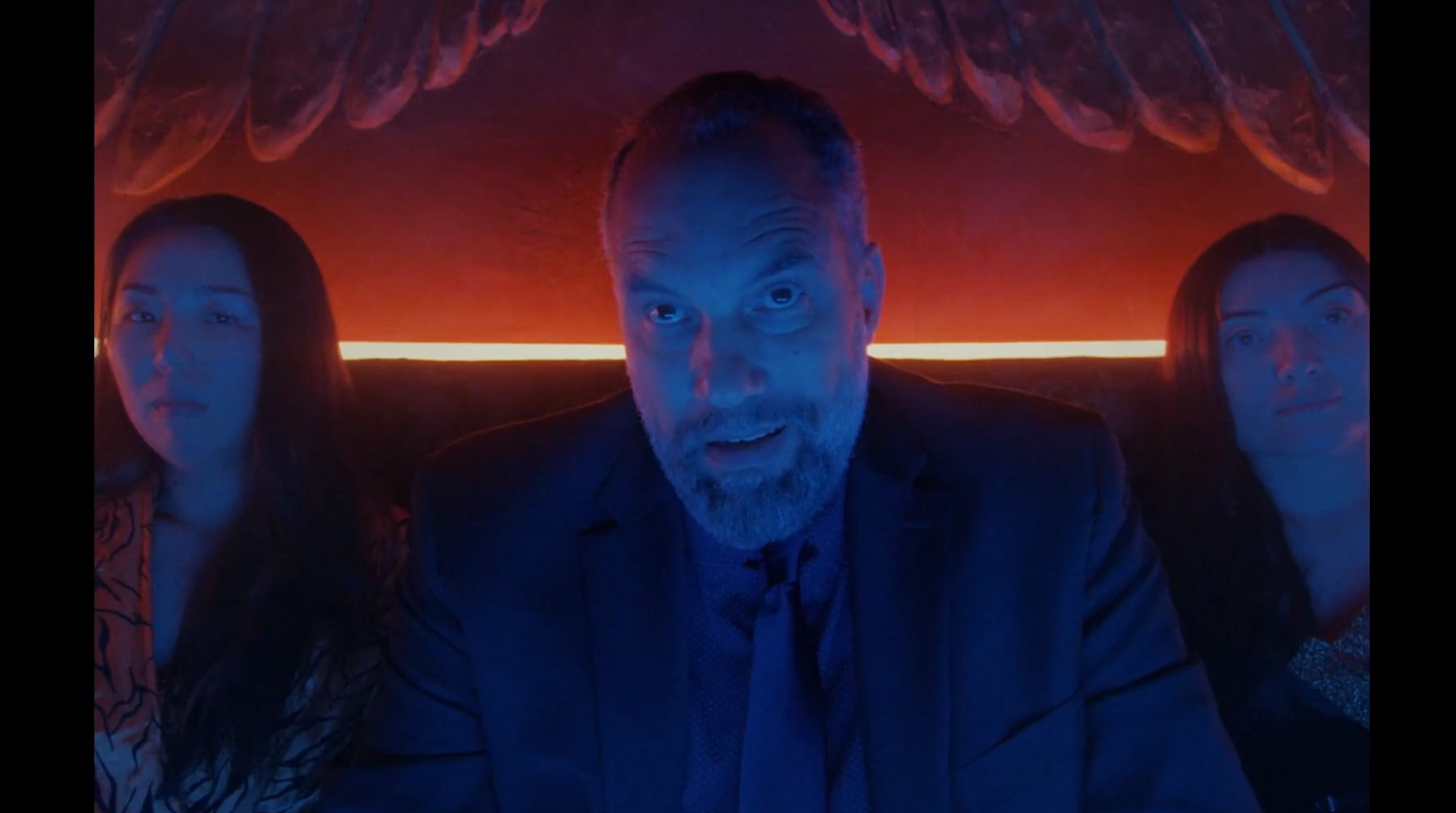
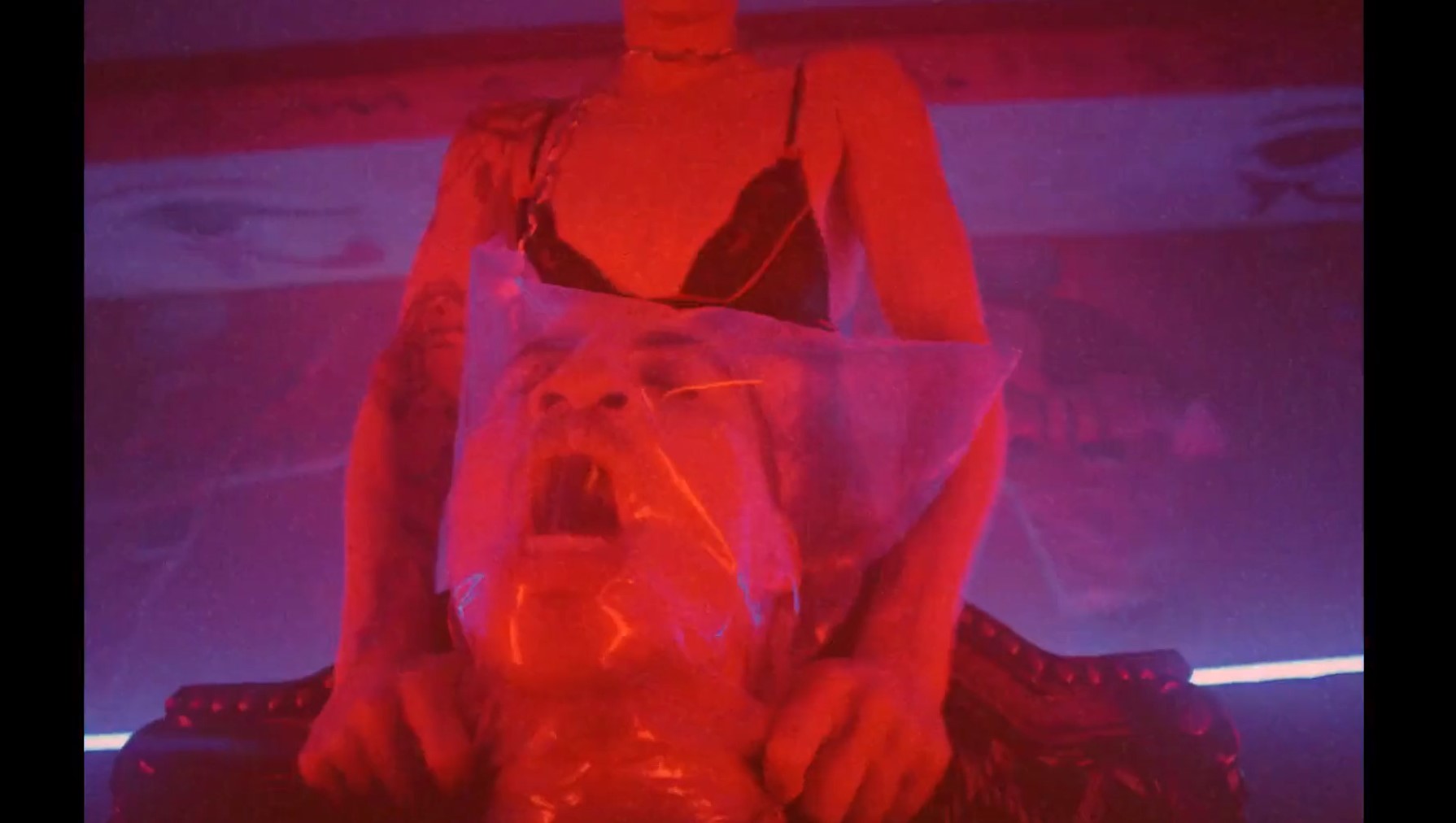
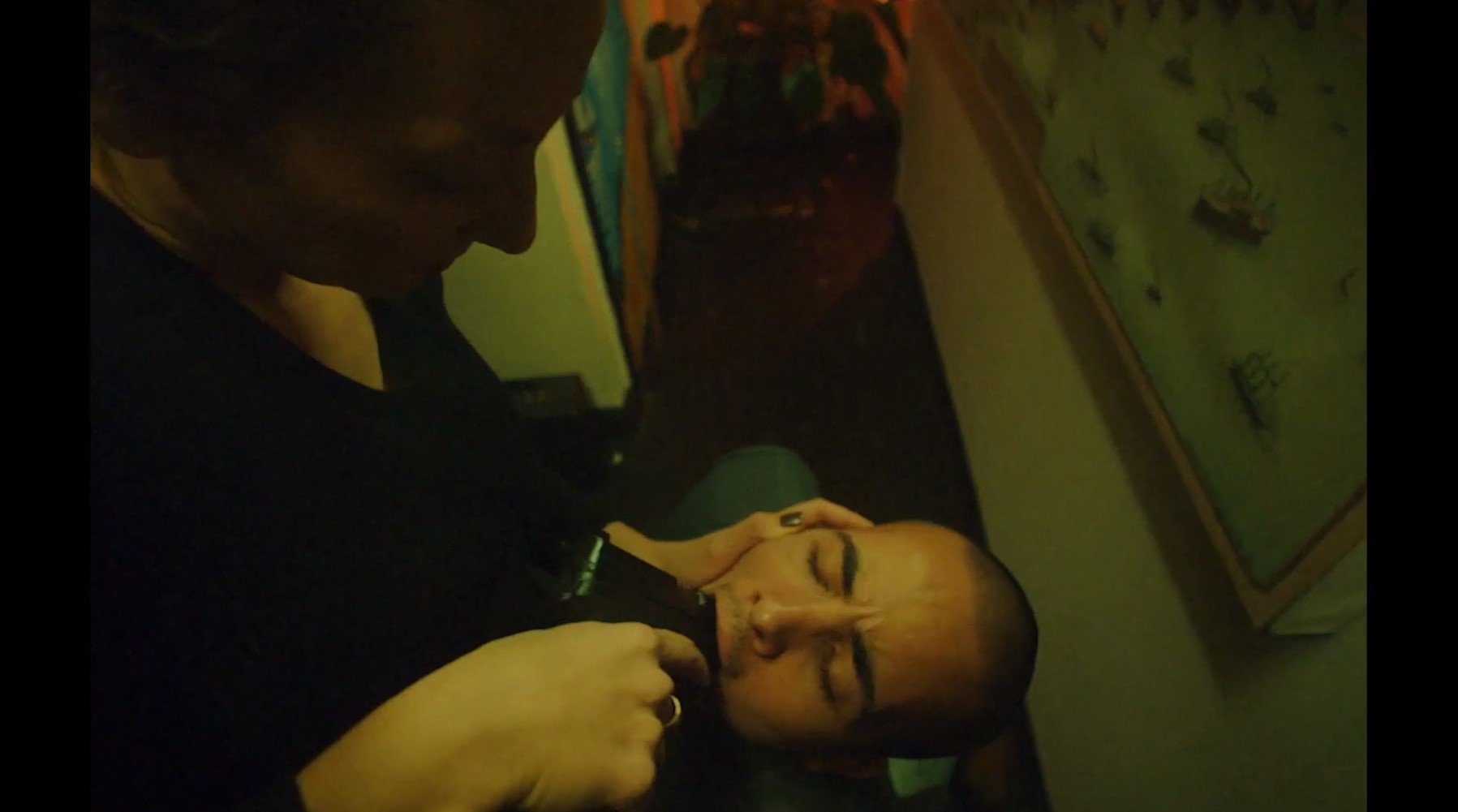
Clocking in with a runtime at 83 minutes, “The Five Rules of Success” symbolizes the ups and mostly downs in the here and now game of chutes and ladders.  Having been released last month, July 30, be sure to check out the unrated feature available for purchase on your preferred platform of either iTunes or Amazon released by the Ambassador Film Group.  Oblowitz doesn’t just write-and-direct the film, but he also serves as cinematographer dabbling in a Kafkaesque arranged world with hints of tint, hints of different lenses, hints at overexposures, hints at strobe, and more.  Nearly every scene is comprised of a different shooting technique or editing visual that may or may not possibly induce a seizure as forewarned during the preface.  Stylistically, I can only compare and describe “The Five Rules of Success” as this:  Stanley Kubrick’s “2001:  A Space Odyssey” meets Darren Aronofsky’s “Requiem for a Dream.”  As far as extras go, there’s a quaint, no major dialogue memorandum scene after the end credits that speaks to vicious circles and permanency.  For a L.A. shot film that has more technique than bite, “The Five Rule of Success” is a success of an auteur’s written storytelling as well as the visual understanding of just how to tell that story in a surrealistic context. 

Rent or Buy “The Five Rules of Success” on Prime Video!

Mar and Scar is EVIL’s Sullied Handiwork and is Also Its Undoing! “Hanger” reviewed (Blu-ray / Unearthed Films)

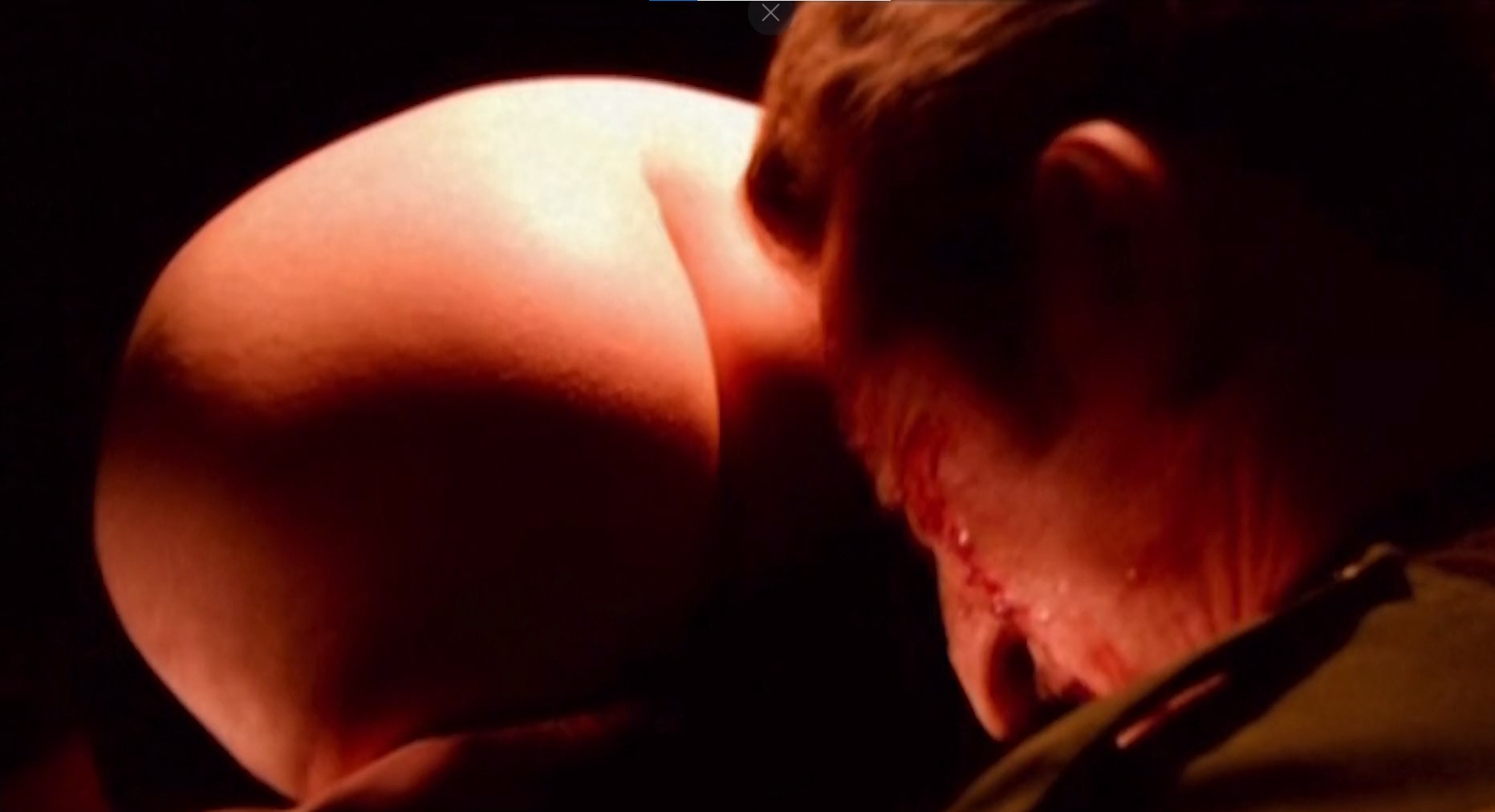
Pimp Leroy likes money.  He likes money so much he stop anything and anyone from coming in between him and cold hard cash.  When Rose, his star prostitute, becomes knocked up and she carries the baby into the later terms, Leroy sees that baby as just another obstacle keeping him from dollar signs and performs a back alley abortion on Rose that results in her death and the newborn mauled by the close hanger used to pull him out.   Fast forward 18 years later, the disfigured boy Hanger, named after tool used to extract him from the womb, falls under the wing of his supposed father, one of Rose’s more admirer, only known as The John, and together they seek revenge for Rose.  In the meantime, Hanger is secured a job at the local recycling center where he is befriend by fellow outcast Russell and as The John ignites war against Leroy that spills into every prostituted infested corner of the streets and into the recycler center.

First off…Man, do I miss Ryan Nicholson.  Secondly, “Hanger” is one of the most depraved films I’ve seen in a long time.  Probably the most depraved amongst the credits of the “Gutterballs” and “Collar” writer-director who has left his mark on the sometimes bland indie horror scene with the craziest content that has become the epitomizing taste of Unearthed Films.  Nicholson cowrote the vulgar comedy-exploitation with Patrick Coble in their second feature story collaboration following their 2004 work on the Nicholson brutal rape-and-revenge directed tale “Torched.”  Rape and revenge, plus a whole lot of sleazy, scuzzy, and sordidness, doesn’t buck the Canadian filmmaker into doing something more political correct as the auteur is too well versed into capturing the base layer muck under his Plotdigger Films production banner in Vancouver, British Columbia  “Hanger” is financially produced by Nicholson and Coble and along with Wolfgang Hinz, Stephanie Jennings, and Michelle Grady.

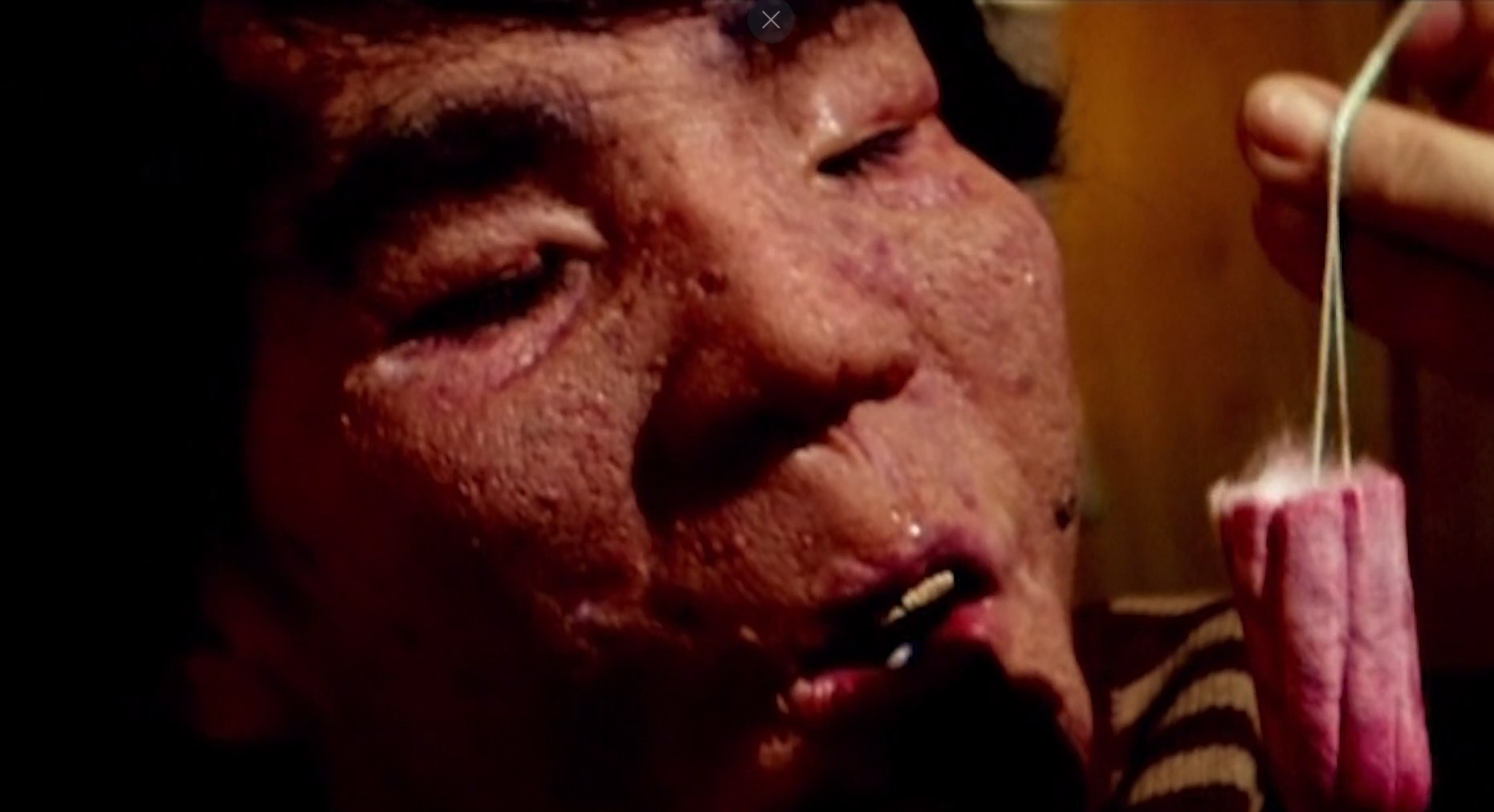
Needing no stamp of approval, “Hanger” would not have been as unpleasantly intoxicating if it wasn’t for the cast.  Each and every character beneath “Dick Tracy”-like prosthetics come to life with their own identifiable quirks and putrid personalities with perhaps the headliner in the tamest role being played by genre icon and scream queen Debbie Rochon (“Tromeo and Juliet,” “Model Hunger”).  Troma’s most famous gal isn’t the only Troma-head to be in Nicholson’s film with a guest appearance by Troma co-founder Lloyd Kaufman as Melvina the Tranny who has her willy kissed the stove-top burner.  I know what you’re thinking – Rochon and Kaufman is in anything is a must-see film!  I couldn’t agree more, but “Hanger” really lives and breathes on the more prosthetic-heavy performances of Nathan Dashwood, Wade Gibb, Dan Ellis, and, especially, Alastair Gamble as Phil.  Also known as Philthy, Phil is also a recycler on the look out for unemptied beer bottles for any kind of alcohol fix he can get his filthy hands on and Gamble really develops the ins-and-outs of the character’s mannerism and style and the “Gutterballs” actor does the role so well that Phil will forever be imprinted into your cerebral character catalogue for the rest of time.  I also couldn’t get enough of Wade Gibb’s Russell who gives the ethnic Chinese man a high-pitched voice and an insatiable hankering for porn and bad jokes.  Russel also has a penchant for trashed picked used tampons the administrative secretary at his job bins when she’s cycling through and after her late night self-pleasures, Russell can’t help but to blather on and on about her to his new friend Hanger, play with domicile explosiveness like TNT by “They Came From the Attic’s” Nathan Dashwood.  Candice Le (who is an uncanny Laura Prepon lookalike), Nadia Grey, Stephanie Walker, Rochelle Lynn-Jones, Susan Arum, Michelle Grady, and Dan Ellis who stars as Rose’s revenger-advocate, The John.

Ryan Nicholson passed away come two years ago come October due to brain cancer. From that condemned mind came some of the most vividly depraved characters, gratuitous gravities, and sweet, lip-smacking gore that just rolls into the place. “Hanger” is no exception; in fact, “Hanger” is probably Nicholson’s magnum opus considering all of the aforementioned descriptors. Obviously, pleasantries is not in Nicholson’s vocabulary with a storyboard progression rock hard on revenge, sex, and a recycling center full of a variety of perversions. Nicholson had a knack for obtaining real locations without having to build sets, one of his more cost-efficiency attributes to appreciate, and the recycling center where Russel, Hanger, and Phil worked was an actual true business, but the way Nicholson shoots the scenes, and with the other exteriors, is masterful in only allowing the audience to see what he wants you to see. Background details are tenebrously obscured as he highlights the basic necessities to convey what to focus on in relation to the characters. These characters are terribly invasive to the point where you can almost smell how they look and the need for a shower after some of their atrocities is well justified as this fetish theme of unsolicited bodily insertions goes over and beyond the borders of comfort. I still can’t get Alastair Gamble’s Phil out of my head. Rubber dicks, fart jokes, racist obscenities, trannies, voyeurism, masturbations, mutilation -“Hanger” has a lot of sin to be unapologetic for as it reeks lowlife war to the max. If desiring a little extra something-something, the Unearthed Films release comes complete with a second version of the film, XXX-rated cut, that’s not available on previous North American releases, such as with Vicious Circle unrated release. Where “Hanger” stumbles is with the narrative that divides like a cell into two rather different narratives after the initial coat hanger botched abortion. Though The John talks a good game and amps Hanger up for vengeance, the ex-military prostitute connoisseur goes for Leroy alone while Hanger and Russell burgeon their unusual friendship with trash-picking tampon diving and just hanging out. With the narrative more so focused on the latter, don’t expect “Hanger” to be round-the-clock carnage from start to finish.

Continuing their distribution of all Nicholson’s Plotdigger Films, Inc. catalogue, Unearthed Films 2-disc collector’s edition Blu-ray of “Hanger” is a must own and a must see for any fans of Unearthed Films’ gory longstanding pedigree and of Ryan Nicholson.  A warning about ghosting and compression artefacts precedes the film that is presented in a widescreen 16:9 aspect ratio, informing views of the unstable picture quality due to the nature of the recording equipment, but for the most part, the worst ghosting and compression issues are in the first scenes of the motel with Debbie Rochon and Lloyd Kaufman.  The controlled contrasting, comprised of limited lighting, a reduction in color, and perfect shadow placement, adds another flavor to “Hanger’s” squalid and vulgar character exteriors by accenting scenes with a post-apocalypse or slum living discomfort.  Details can get a very graphic, explicit, and fleshy as prosthetic organs ride that ambiguous seesaw and the prosthetics overall are extremely unique and memorable under the creative eye of Life to Death FX artist Michelle Grady.  The English language Dolby Digital 5.1 sound mix has ample fidelity despite the self-manipulation of voices and appropriations of cultural accents.  Dialogue is clean and prominently lucid.  Personally, the soundtrack is not particularly my favorite of a compilation of heavy rock and hardcore bands, such as Bison, Nomeansno, Spread Eagle, and Grass City and The Invasives, but do fit right into Nicholson’s scheme and personality.  The 2-disc set comes jampacked with over 16-hours of extras including a commentary with director Ryan Nicholson, Behind the Stoma:  The Making and Taking of Hanger with cast and crew interviews, a video diary-esque of Lloyd Kaufman’s single-day shoot entitled Enough Dope to Hang Yourself With:  On the Set with Lloyd Kaufman, a blooper reel, deleted and additional scenes, photo galley, Debbie “Rose” Rochon’s simulated sex tape “Black on White Bred” with pimp Ronald Patrick “Leroy” Thompson, the Colostomy Bag Edition aka the XXX-rated version of the film, trailer, and a second disc that’s nothing but outtakes.  The scene in the Colostomy Bag Edition, I believe, is just a minor penetrating cut-in scene more than likely not related to any of the actresses in the cast.  The Unearthed Films release is not rated and clocks in at 90 minutes (regular edition) and 91 minutes (Colostomy Bag Edition). The characters alone are worth “Hanger’s” price of admission but Unearthed Films delivers a sweet, comprehensive 2-disc collector’s set for this gore-soaked and grotesque little film.

A Must Own 2-Disc Collector’s Edition of Ryan Nicholson’s “Hanger” Available at Amazon

The EVIL Peruvian Whistle of Death! “Face of the Devil” reviewed (MVD Visual / DVD)


Deep inside the Amazon jungle of Peru, seven friends getaway from university life by staying at a remote riverside resort.  No cell service.  No nearby towns.  The resort shelters an idyllic retreat for those looking to escape the mundane routine of the real world, but the jungle is also home to an indigenous evil entity, some may even label it the Devil.  Better known among the locals as el tunche, the trickster spirit prays on innocence and the naïve, psychologically tormenting with a foreboding whistle indicating it’s nearby presence.   With no help in sight and nowhere to hide, the jungle comes alive with an ear-piercing whistle that seeks to swallow the seven vacationers to their doom. 

To some extent, horror lives and dies by permanency of myth and legends, cultivating inspiration from ancient, as well as new, mythical beasts and spirits and spin them into entertainment macrocosm or, perhaps, even to just simply to share the rarity of knowledge and heritage surrounding the tales.  If in American mountaintop forests bigfoot roams inconspicuously around populated areas, breeding enigma and scaring children around campfire stories, then in South American, el tunche does much of the same instillations for the Peruvians who inhabit their legendary fiend, preying on delinquent youths, in the dense jungle.  Outside of Peru or maybe even South America, el tunche is not globally known, but for one Peruvian film from 2014, local lore becomes broaden beyond confining borders and creeps right into our home video media players.  Director Frank Pérez-Garland helms the maligning mythos with “La Care del Diablo,” aka “Face of the Devil,” from a Vanessa Saba screenplay set in the ominous jungles of Peru plagued by a wandering and whistling evil spirit searching for those lost among the tall trees and foliage.  Peruvian based Star Films and La Soga Producciones spearheads the production located on set of an ecolodge in the uncommercialized area of Tarapoto just North of Lima and serving as producers are Gustavo Sanchez (“The Green Inferno”) and Varun Kumar Kapur. 

“Face of the Devil” is a hyper localized narrative that’s fully contained inside the jungles of Peru as well as a casting all Peruvian actors with zero other nationalities appropriating roles for a mythological tall tale extension that rightfully needs to be expressed by native filmmakers.  As such, you won’t recognize a face amongst the cast unless you’re eyeballs deep into South American cinema.   The film opens with a dream sequence of a young girl staring at her towering mother’s weird, unholy behavior that ends with her mother, played by writer Saba, quickly reaching out for child and abruptly awakens from the dream is Lucero (Vania Accinelli).  Lucero’s nightmares become an important reoccurrence, like an omen, that doesn’t seem to upset the college freshman despite the nightly fright, but other aspects upset her father to the point where he yells at her for wanting to go on a trip with her friends, signifying a quick trip into unspoken complications sanctioning Lucero’s mother death that worries the same fate may also fall upon his daughter.  Before we know it, a reluctantly agreed to Lucero is river boating with her six friends:  couple Mateo (Nicolás Galindo) and Fabiola (Maria Fernanda Valera), Camila (Alexa Centurion), Paola (Carla Arriola), Pablo (Guillermo Castañeda), and new boyfriend Gabriel (Sergio Gjurinovic).  The friends are seemingly full of life, love, and fun but the dynamic turns only slightly complex with love triangles that only go as far as being the butt of the weekend’s jokes.  The characters do very little in the story, splashing around in what seems to be an unreasonable number of ecolodge pools for most of the time while playing spin the bottle, truth or dare, skinny dip, or just make fun of each other because, as a trope bylaw, that is what college-age kids do to spark tensions and cause divisions, and I find the characters and their portrayers to be uninspired to do or be more that invokes the frisky wrath of el tunche.  Javier Valdez and Ismael Contrearas bookend the cast of characters as two polarizing stances on dealing with otherworldly spirits by either being cautions and frightened as Valdez is with Lucero’s papa or embrace the spirits for self-purpose as it is with Contreras who plays the resort owner. 

“Face of the Devil” has all the properties of an European-fried and campy-peppered supernatural kill tally, drawing elements from the jungle cannibal subgenre sans the cannibals and the teen slashers sans the slasher.   Instead, el tunche is an all but forgotten myth lost over time through the generations until “Face of the Devil” calls to mind the cautionary dangers of cultural wise tales for naïve and disrespectful youth who wind up on the deadly end of el tunche’s mean streak.  Saba’s script incorporates more than just your average urban legend come to life tale with a Diablo-sized pretext to why el tunche all of the sudden decides to besiege upon this particular group of vacationers.  Per the legend, el tunche gobbles up those lost in the jungle thicket, but Saba and Pérez-Garland’s religious context direction, including the motifs of the trinity cross and bodily possession, has the good-natured Lucero, infected by her mother’s randomized demonical occurrence, be the proximity key to el tunche’s unleashing.  Good versus evil also becomes strongly painted in the latter half of the narrative and is affixed to the lore’s distinctive construct.  The further Lucero is led from a path of spotless geniality, from her overprotective father, the more she experiences nightmares and the closer she is coming face-to-face with the malevolent forest entity feeding off her tarnished past.  Sadly, “Face of the Devil” weans off from nurturing el tunche into a singular idea with the entity depicted as, but limited to, an invisible presence, a black oil spill in the water, a pulsating yellow glow, or as Anna Gonsalves says in “Predator,” the jungle came alive and took them.  Even the current DVD release represents el tunche as a Lovecraftian-like creature with tentacles coiling out of the jungle river water and enclosing around a bikini-cladded sex symbol with a tattooed vagina – provocative!  Yet, inaccurate.  There are no tentacles and no woman with vagina ink.  “Face of the Devil” struggles with character motivations, sending boyfriends off into the woods without tools or guidance to find help, leaving the story to fend for itself solely on a slap-dashed gory ending that’s a little too late in salvaging the ferocity of one of Peru’s most mythical phantasmas. 

Like aforementioned, the DVD cover is a tad misleading, enticing with sex and tentacles topped with DEVIL in a big red font.  Now, you can go in eyes wide open with your own copy of “Face of the Devil” distributed by MVD Visual in collaboration with Jinga Films and Danse Macabre.  The single layer, single sided, region free DVD5 is 77 minutes presented in a widescreen 1.78”1 aspect ratio. Reason behind discerning the storage format to be a DVD5 is evident in the compression issues that clutters the picture with artifacts, leaving highly noticeable splotches to shake details to the core. There’s also the use of the vapid gray tint insipidly squashing any color and life from the lush green jungle Pérez-Garland finds himself extremely lucky shooting inside. Watching “Face of the Devil” felt cinematography akin to an episode of “The Handsmaid Tale” or “The Walking Dead” where a bland overlay masks more than just brightness and beauty of natural hues and light. The Spanish audio mixes have two lossy options – a 5.1 surround and a 2.0 stereo. Switching between the two, the 5.1 obviously has a little more robust soundtrack during the cacophony of jungle augury. Snakes hissing, bat clicks, the comprehensive soundbites of other animals in audio vibrational flight combined with the intense whistle, like a diluted train whistle, has ambient staying power to be the most effective element to el tunche’s death harbinger presence. Dialogue is less robust but prevalent and the English subtitles synch well without error. As far as special features, nothing beyond that of the static menu and there are also no bonus scenes during or after the credits. The opening title card credit sequence is about as artistic as the film allows itself to be only to then dwindling into pedestrian territory. Set in the Peruvian jungle deemed to be a major waste of location perfection as much of “Face of the Devil” buoys chiefly poolside with the cheap Dollar Store adhesive tape barely coupling a connection between local legend and the Devil in this wet behind the ears teenager-in-danger yarn.

“Face of the Devil” available on DVD at Amazon.com

Early Bill Paxton EVIL in “Mortuary” reviewed! (MVD Visual / Blu-ray)

The tragic swimming pool drowning of Dr. Parsons might not have been an accident as determined by the police.  At least that is what his daughter, Christie, believes and she is for certain her mother has some involvement in the so called accident.  Plagued with nightmares followed by a stint of sleepwalking a month after her father’s untimely demise, Christie tries to maintain a semi normal life as a high school student romantically involved with boyfriend Greg Stevens.  Meanwhile, Greg’s best friend disappears after the two trespass onto local mortician Hank Andrews’s storage warehouse.  Christie and Greg unwittingly become embroiled into sinister intent by a masked and caped ghoulish killer stabbing victims with a detached embalming drain tube and at the center of it all is Hank Andrews and his son Paul’s family morgue that processes and possesses all the dead’s secrets. 

Before Wes Craven’s “Scream” mega-franchise turned caped killers revolutionary cool with meta-crafting horror tropes of the genre slasher, there was the little known “Mortuary” that perhaps paved just a slab of keystone for the Ghostface Killer who has become the face of slasher films for more than 20 years, much like Jason Voorhees or Michael Myers back in the 1980s and early 90s.  Written and directed by the Baghdad born filmmaker, Hikmet Labib Avedis, credited under the more westernized stage name of Howard Avedis, the 1983 film nearly had all the hallmarks of a peculiar macabre dance that skated around the slasher sphere.  “Mortuary” had seances, pagan rituals, a shrouded murderer, and, of course, the embalming of dead, naked bodies that are the inevitable, natural, mortality reminding entities in movies regarding morgues.  The late director, who passed away in 2017, cowrote the film with wife, producer, and actress Marlene Schmidt who had a role in every single piece of his body of work.  “Mortuary” was self-produce by the husband and wife filmmakers under their Hickmar Productions company and by grindhouse producer Edward L. Montoro (“Beyond the Door”).

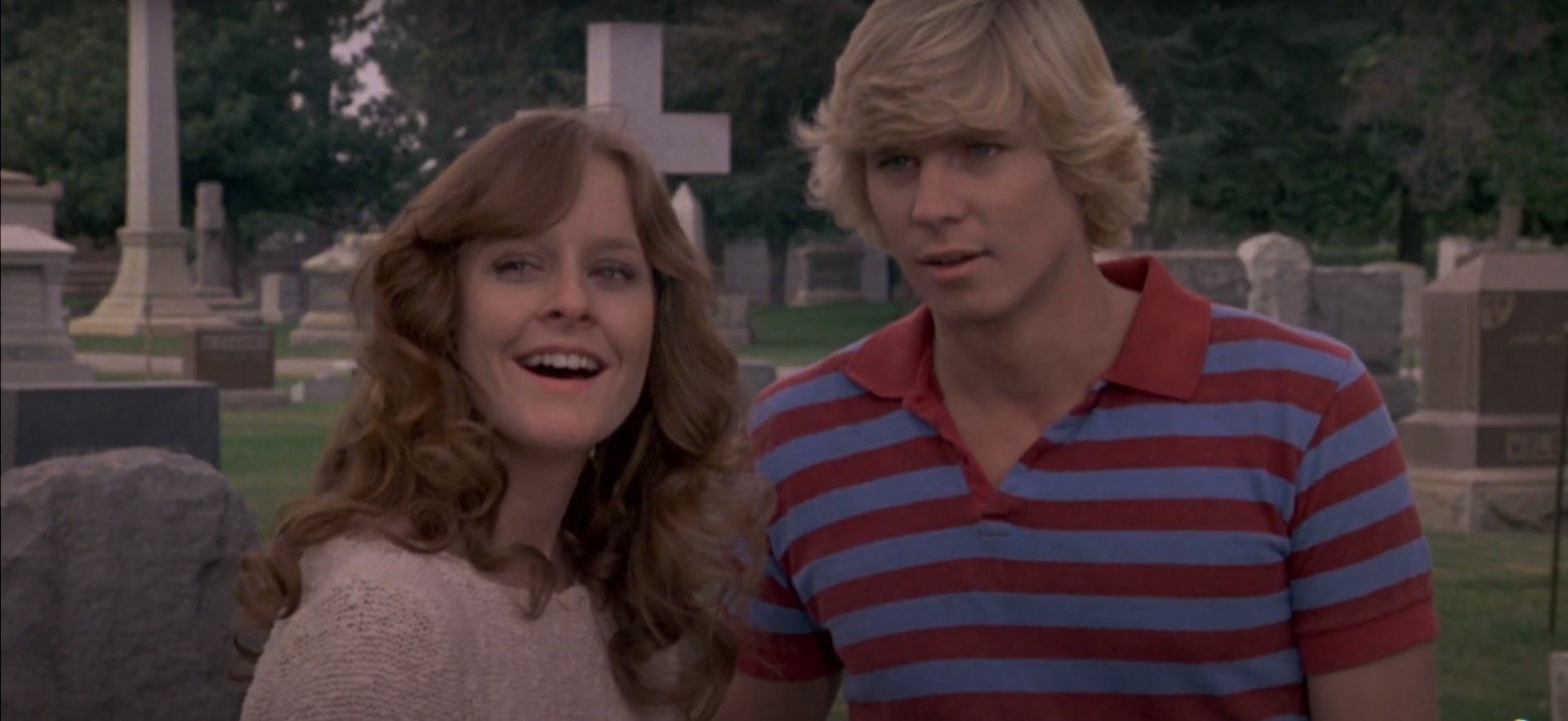
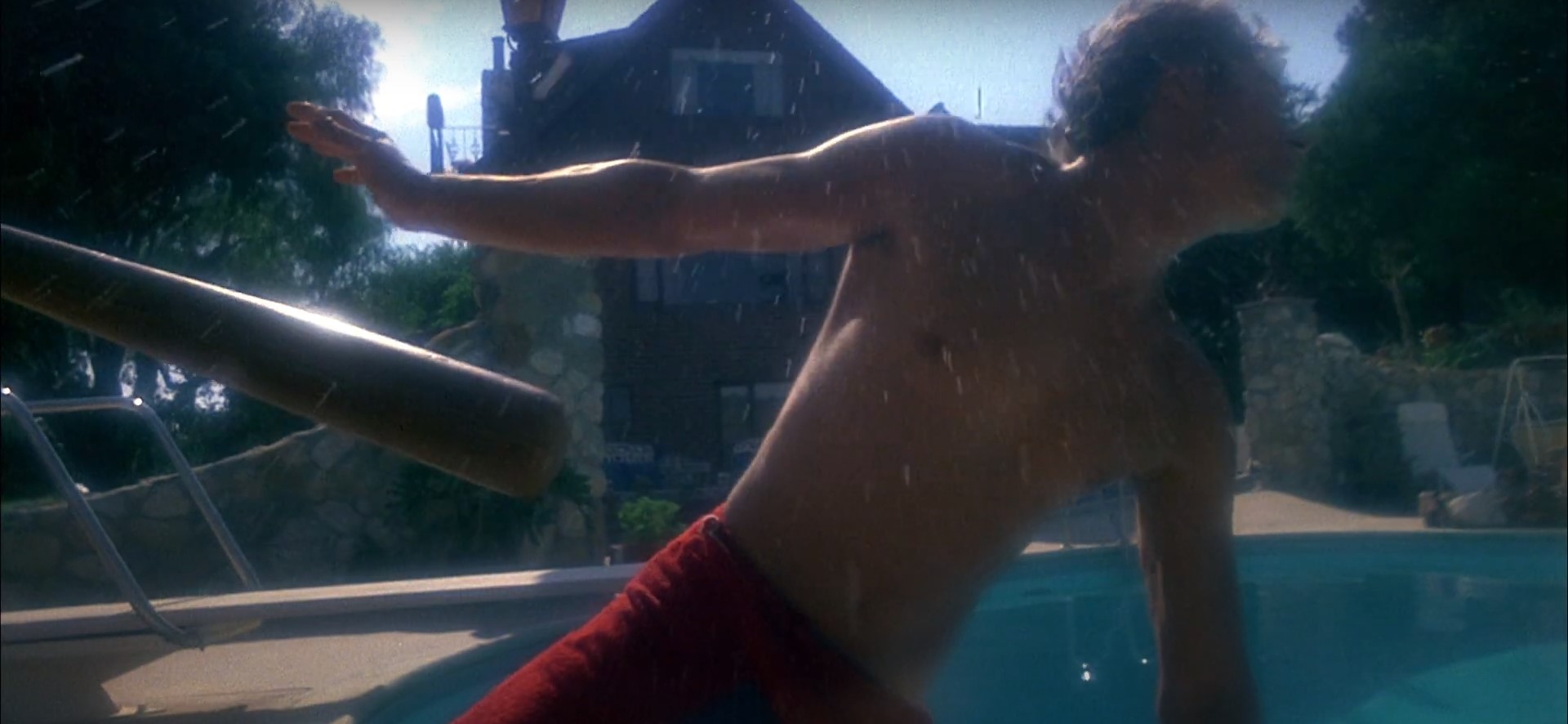
Though the post-credit opening scenes begins unscrupulous enough with Greg Stevens, played by television soap opera star David Wysocki whose credited as David Wallace, and his best friend Josh (Denis Mandel) stealing tires from Josh’s ex-employer, morgue owner Hank Andrews, the late “Day of the Animals” and “Pieces’s” Christopher George’s last cinematic role, because of being fired without being paid for his services, “Mortuary” inconspicuously moves from Stevens’ infringing on local law to surround itself more aligned with Stevens’ girlfriend Christie Parsons who feels more like a backseat character upon introduction.  Yet in a flurry of exposition with her mother, Christie, who is played by “Mom” actress Mary Beth McDonough, circles back and ties into the opening credit scenes of an unknown man being bashed over the head with a baseball bat and falling into his pool.  We learn that the man is Christie’s father whose death has been rule an accident (no evidence of baseball bat related injuries? Was evidence collecting really that low-tech in the 1980s?), but Christie begs to differ as she point blank accuses her mother, Christopher George’s life co-star Lynda Day George, being involved in his poolside death.   While performances statically hover inside the wheelhouse of teen horror with Greg and Christie seemingly unaffected by the mysterious incidents happening all around them until someone literally is grisly murdered in their adjacent bedroom, a fresh-faced Bill Paxton (“Frailty”) inevitably steals the show with this enormous presence on screen as Paul Andrews, the town’s mortician loony son working for his father as an embalmer.  Paxton’s zany act borders “Mortuary” as either a diverse trope horror with an awkward outlier character stuff into the eclectic mix or a seriously unserious bluff of being a serious horror film – see what I did there?  Paul listens to Mozart on vinyl, has an obsession for Christie, and likes to prance and skip through the graveyard as a son broken by his mother’s unhinged suicide.  “Mortuary” rounds out with Curt Ayers (“Zapped!”), stuntwoman Donna Garrett (“The Puppet Masters”), Greg Kaye (“They’re Playing With Fire”), Alvy Moore (“Intruder”), stuntman Danny Rogers, Marlene Schmidt, and Bill Conklin as a walking contradiction as a beach town sheriff wearing an unabashed cowboy hat like a sorely out of place rootin’-tootin’ lawman from the West complete with country draw lingo. Also – don’t miss the bad nude body double used for McDonough when Christie is lying on the morgue slab.

Now, I’m not saying “Mortuary” is the sole inspirational seed that sowed the way for the “Scream” franchise, as I’m sure many, many other iconic classics inspired Kevin Williamson, but, in my humble opinion as an aficionado about the genre components and how they’re all connected by a few or many degrees of separation, “Mortuary’s” villain could be the long, lost ancestral sperm donor responsible for the origins of Ghostface.  The purposeful movements and actions align very closely in a parallel of deranged defiance and floaty black and white costumes.  However, “Scream” is just packaged nicer as “Mortuary” continuously drips all over the place like a three scoop ice cream cone on a hot summer day.  Containing Avedis’s arc on Christie was nearly impossible as each act jumps and focuses on someone entirely different while also exposing the killer blatantly without even trying to misdirect or repel any kind of suspicion.  It was as if Avedis and Schmidt swung for the fences with a convoluted giallo mystery plot but couldn’t figure out how to build that into the narrative without drawing from and drowning in exposition and that’s how the cards came crashing down by unfolding with talking head pivotal plot points that steered to a rather quick, yet pleasant, climatic head of a total mental meltdown that’s much more cuckoo than Billy Loomis and Stu Macher will ever be. 

If you didn’t score a copy of Scorpion Releasing’s limited edition release of “Mortuary” on Blu-ray, then sing the praises of second chances with this Scorpion Releasing Blu-ray reissue through the MVD Visual Rewind Collection line. The all region release is presented in a high definition, 1080p, widescreen 1.78:1 aspect ratio of the Scorpion Releasing AVC encoded transfer on a BD25. Quality-wise, the release delivers the perhaps the full potential of a cleaned up 35 mm restore with no sign of cropping, edge enhancing, and a healthy amount of good grain, but there are noticeable gaffes with select scenes that seemed to have missed or left out of the restoration all together, reverting back to the rough, untouched image. Coloring, skin and objects in the mise-en-scene, come out lively, naturally, and without a flutter of instability with transfer damage at a minimum. Probably the most surprising is the original 2.0 mono LPCM track. The English language mix does the job without climbing the audiophile corporate latter, leaving in the wake a soft dialogue that’s a struggle to get through if you’re not wearing headphones. Depth seems a little slim, but the range keeps progressing nicely that often feeds into the late John Cacavas score. Cacavas operatic film score is bigger than the movie itself, often grandiose the Gary Graver one-note cinematography. The overexposed ethereal flashback has slapped redundant fatigue plastered all over it but, then again, the film is from the 80’s. Option English subtitles are available. Special features include only an interview with John Cacavas from 2012, from the original Scorpion Releasing print. Two upsides to the MVD Visual release are the cover art mini-poster tucked inside the casing and the added cardboard slip cover that resembles a tattered VHS rental tape slip box complete with a faded Movie Melt yellow caution sticker, a Be Kind, Remind sphere sticker, and a Rated R decal. If you’re a big Bill Paxton fan, “Mortuary” reveals another shade of talent from the late actor. Other than that, the Howard Avedis production often haphazardly stumbles bowleggedly to a giallo-errific-type ending made in America.

EVIL Has Layers. Colorful, Beautiful, Red Dripping Layers. “No Reason” reviewed! (Unearthed Films / Digital Screener)

On the verge of moving from her quaint apartment, Jennifer begins her morning caring for her son, Nico.  Throughout the morning, her complex neighbors come knocking at her doorstep with unusual behaviors, even so with the mailman who apathetically leaves her bathroom a mess after requesting an urgent need to use the toilet.  After leaving Nico with an elderly woman in an adjacent unit to do some light shopping, Jennifer comes home her son and neighbor not answering the door and figures they went out for a while.  As time passes and her anxiety builds, Jennifer decides to soak in a relaxing bath but when she falls asleep, she awakes amongst a pile of dismembered bodies, subjected to ultra-violent video recordings of the neighbors who she saw earlier, and a masked maestro of anguish to help Jennifer regain life purity through pain.  Through the layers of suffering, the ugliness Jennifer has to endure to survive and find her son might be an awakening she will forever regret. 

From the violence saturated mind of German auteur Olaf Ittenbach comes a battle of conscious, a gore waterlogged vision, in his 2010 blood-shedding shocker, “No Reason.”  Now, I may be over a decade late to the party on this title, but Unearthed Films has brought a newly remastered, fully uncut Blu-ray to physical and virtual retail shelves, reviving the “Legion of the Dead” and “The Burning Moon” filmmaker’s title from the North American grave as the Intergroove Media DVD has been out of print for a long time, and kicking my ass into high gear with diving into the surreal expressionism, splayed into every nook and cranny, of deviated behaviors and splintered thoughts.  “No Reason” is a production of Ittenbach’s IMAS Filmproduktion studios and co-produced by German SOV splatter film connoisseurs, Michael Nezik and Ingo Trendelbernd.

Like Alice traversing a macabre-cladded hell on Earth wonderland is Irene Holzfurtner as the confused lost soul Jennifer  More or less fully naked and bloodied half the story, crossing through portals of layered perdition in order to find her son and saving grace, Holzfurtner has insurmountable perplexity hung across her character’s face in the midst of being plopped into bedlam, taking the character on a journey pain, torment, and enlightenment bare ass naked and covered in blood in a metaphorical rebirth.  Overseeing Jennifer’s trial and tribulations into being brought back reborn as it were is a sadist donning a crude Cthulhu mask and strapped tightly into a medieval BDSM attire who speaks in riddles and verse to sermonize his cathartic guidance.  Markus Hettich towers a monolithic man of pain and pleather, calmly exercising his shrouded authority a healthy amount of sadism, masochism, and sadomasochism in order to undress the falsehood of Jennifer’s split spirit.  Hettich pins an ideal Devil-like antagonist, rupturing through the connective tissues of the psyche with a lingering omnipresence that delivers shivers down the spine.  Mathias Engel, Alexander Gamnitzer, Andreas Pape, Annika Strauss, Ralph Willmann, and Hildegard Kocian make up the supporting cast who are most cooperative being exploited by the violence and nudity that accompany their ill-fated roles of humiliation, torture, and inevitable gruesome death.

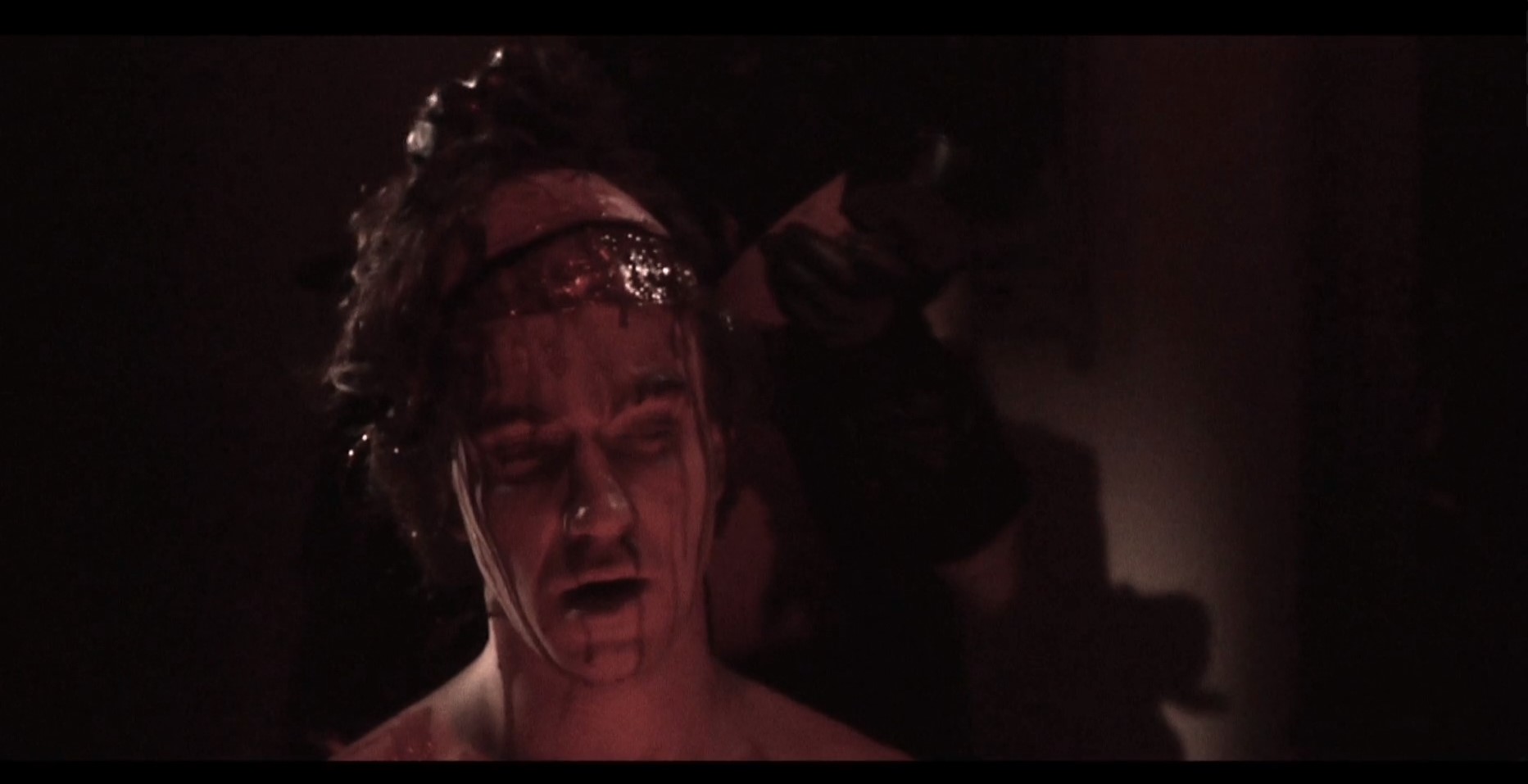
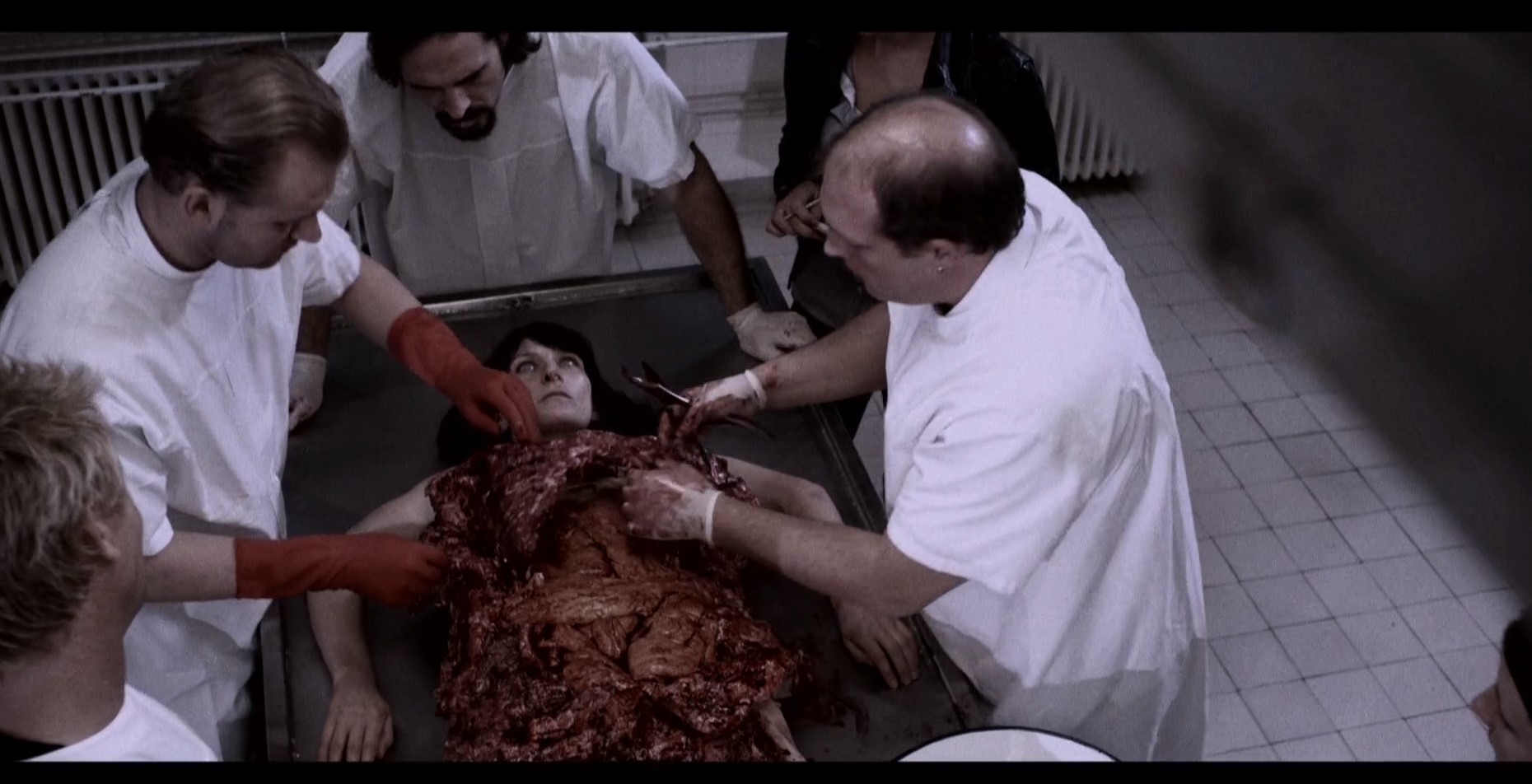
Ittenbach obviously brings the gore but the controversial director, who has sparked backlash for glorifying violence, brings a beaming arthouse allure to his “No Reason’s” gargantuan bloodletting.  Layered with multi-colored conjectures point to the unhinged state of a mind, Jennifer endures unspeakable anguish in layers encoded with red, green, and blue, each specifically engineered by the masked man to trigger a response when testing Jennifer’s will; a will to what end is something you’ll need to watch the film to understand.  What I can tell you is that each color stage bares a horrific theme – red is simply the spilling of innocent blood, green is feminine dominance symbolized by BDS&M (a running motif throughout) where uninhibited women urinate on men (explicitly shown), castrate by oral sex, and divulge themselves with lots of male body disfiguration through whips, chains, and other large dominatrix toys, and blue is filled with mutants who are just as ugly on the inside as they are on the out.  Completing each stage costs Jennifer bodily harm as a reparation for staying on the path of enlightenment, the white layer.  With a little money behind the project, Ittenbach’s able to accomplish some fantastically brutal scenes with fleshy prosthetics and I, personally found the intro credits to be insanely power in it’s composition despite the simplicity of it.  Where “No Reason” buckles is the crux of Ittenbach’s artistry with the parable that borders nonsensical guff.  I’m not going to lie, “No Reason” is difficult to follow from the pre-opening credit epilogue home movie montage of Jennifer and her parents frolicking on the grass, praising Jennifer’s smarts at such a young age, to the post-opening credit opening of a naked and bloody Jennifer holding a detective hostage, to the surreal cerebral journey through a timeless purgatory horror house Jennifer finds herself trapped, the segues, if any, often feel omitted and we’re left to assume the rest. 

The brisk 76 minute runtime perfectly balances the right amount of abstract story and gore and, now, “No Reason” has a better reason for your attention with Unearthed Films’ new scan of an uncut Blu-ray release! The May release is presented in a high definition, 1080p, widescreen 1.76:1 aspect ratio. I can’t comment too much on the audio and visuals as a digital screener was only provided, which means there were no extras accompanied with the screener as well. “No Reason” is the first collaboration between Ittenbach and director of photography, Axel Rubbel. The pair went on to work on Ittenbach’s “Savage Love” two years later, but Rubbel has more of an imprint with Ittenbach’s candy-coated eye-popper gorefest with a kaleidoscope of blushes a tinged aberrant from the normal blacks, reds, and browns that blotted onto gore and shock films. The release will include two German language audio track options, a 5.1 surround sound and a stereo 2.0. Both should include English subtitles and, if the Blu-ray is anything like the digital screener, the subtitles are synched well with the dialogue and, from what I can tell, are grammatically error free. My abnormal brain can choke down the free-for-all soul-damaging ultra-violence and gore charcuterie board and Olaf Ittenbach’s “No Reason” fits that bill with a wide berth of exhibited atrocities while also coming up for air by attaching a misdirection substance behind the graphically lurid details of skin ripping from the muscular tissue and flesh lacerated to shreds by a cat-o-nine tails to ease us into the tumultuous mind of a psycho’s path.

“No Reason” available on Uncut Blu-ray!