Edna is EVIL According to the “Reform School Girls!” Reviewed!


After being apprehended for robbery, underage Jenny is sentenced to 3 years at Pridemore reform school where she immediately clashes with an iron fisted dorm administrator named Edna and her intimate inmate enforcer Charlie Chambliss. With a few friends on the inside, Jenny’s group becomes the target of Edna’s biased infraction system and Charlie sets her domineering sights on breaking the girls’ wills into submissive followers. The school is controlled by an equally sadistic, evangelically abusive Warden Sutter and Jenny’s multiple attempts at reforming the reform school with the assistance of a sympathetic psychologist staff member, and even her attempt to escape, have failed with torturous consequences. As Edna tightens her grip, Jenny and the girls seethe more violently as the weeks pass up to an inevitable uprising, snapping the young girls’ spirits when enough is enough.

Wet, wild, and womanizing, Tom DeSimone’s 1986 satirically women in prison film, “Reform School Girls,” is a cavity invasive good time all around! DeSimone, who also penned the script, has a revolutionary background as a male gay porn filmmaker, but made the crossover into cult genre films after his successful runs with “Chatterbox” featuring exploitation starlet Candice Rialson and “Hell Night,” starring “Exorcist’s” Linda Blair. Yet, “Reform School Girls” is hardly separation from the director’s once moonlit experiences other than the cast is almost entirely made up of beautiful, naked women showering together and when they’re not fully nude and wet, they might as well be wearing nothing while cladded in skimpy outfits and lingerie as a few characters copulate insinuatingly instead of explicitly. The only thing DeSimone was probably uncomfortable with was his last two WIP features, “Concrete Jungle” and “Prison Girls,” as they struggled to find an appreciative audience and thus “Reform School Girls” was constructed to be a mockery of the whole WIP market, exploding it violently, and sensationally, with the genre tropes that, ironically, skyrockets this film’s cult success.

The incarcerated characters offer a wide variety of individualities that are ultimately filled by big personalities themselves. Sometimes, those personalities come with a little head scratching questions. Such is the case with lead actress Linda Carol who isn’t the headliner of the “Reform School Girls,” but she’s certainly one of the main leaders, Jenny, of an imprisoned pack. Born in 1970, Carol had to be no more than 14 to 16 years of age at filming and was cleared for a number of nude scenes, especially around other nude women, but Carol had fire in her performance; in fact, the cast from specified roles to the undesignated titled roles were all highly stimulating in their presence and demeanor. When first entering dorm 14, teased hair and underwear was the unofficial name of the scene that spoke about the genre of the decade in a matter of a few minutes. This is where we meet Charlie Chambliss, a buff, scantily-cladded, totalitarian gang leader of dormitory 14, played fluorescently by rocker Wendy O. Williams. The then mid-30-year-old Williams was a bit of a duck out of water in a role that was for a teenage girl, but the front woman of The Plasmatics was awfully charismatic, brash, and a real illustrated performer who exaggerated dramatics to the next welcoming level in her knee high platform boots. While Williams had sexy hot-to-trot flair, Pat Ast leisurewear offered nothing more than a dull white coat over matron garb, but Ast punctures through anything matriarchal and goes full blown maniacal as dorm keeper Edna. Ast goes over the top and beyond with a love to hate – scratch that – kill character. If you think the evil that embodies Charlie and Edna ends there, you’re wrong! “The Howling II: Your Sister is a Werewolf’s” Sybil Danning’s apex of evil, Warden Sutter, struts around the school like a German commandant with a soapbox of vile and wretched women in a perverted Biblical sense and mastermind behind the abusive culture at Pridemore. The cast concludes with Charlotte McGinnis, Sheri Stoner, Denise Gordy, Laurie Schwartz, Tiffany Helm (“Friday the 13th: A New Beginning”), Darcy DeMoss (“Friday the 13th Part VI: Jason Lives”), and Winnifred Freedman.

Shooting from the hip on first viewing impressions, “Reform School Girls” is nothing like we’ve ever seen before. Sure, we’ve all see women in prison films, from “Big Bird Cage” to even making an argument on Netflix’s “Orange is the New Black,” and we’ve also see cheeky 1980’s comedy that if made today would be grossly lambasted with politically incorrect protestors. Yet, DeSimone’s satire take undercuts the stern nature of the WIP genre with great flamboyancy toward institutional exploitation and the ugly invasive issue of sodomy and rape that the themes can be easily pushed aside without so much of an inkling of consideration. Explosions, gunfire, skimpily dressed women, shower sequences, bitter tongue and cheek, and anything and everything that was omitted from grindhouse market place in this film constructs a smoke and mirrors effect that pivots sharply before getting ankle deep into the issues, no matter the severity just as long as Pat Ast crunches her face into a luffa shape and appoints a barely clothed inmate to a mandatory cavity search and the viewers would be just as captivated.

Umbrella Entertainment and Lakeshore Entertainment release the International Cinevision and New World Pictures production of “Reform School Girls” on a PAL 4 region DVD, presented in a widescreen, 1.77:1 aspect ratio; a slightly cropped version of the original film format. Whatever is cropped out is too trivial and the image picture supplies a palatable presentation with bold hues and bare, but naturally colored, skin tones, despite some fake tanning. One noticeable fleeting moment of an 35mm stock cigarette burn in the upper left corner of a scene, but in-and-out in a blink of an eye. The stereo 2.0 Dolby Audio mono track has balance that singles out the robust dialogue against a leveled down ambient and score recording. The range is good amongst all the reform girl chatter in the dorm rooms. A handful of shower and bathroom scenes have some muffled echoed moments, but the discord in these moments is still extremely low. Surprisingly, there isn’t one single bonus material on this disc, not even a static menu as the film goes right into play feature mode. “Reform School Girls” makes light of wretchedness, revels in the fun of unsavory fraternizing, and is unapologetic of a carnal and wicked tone on and off the screen, harboring one hell of a women in prison cinematic guilty pleasure.

Umbrella’s DVD is available for purchase at Amazon.com!

Ancient Aztec EVIL in the Heart of U.S. “American Mummy” review!


A group of anthropology university students discover the remains of a mummified corpse in a New Mexico desert. A dig site is erected and weeks go by as they unearth the entirely wrapped skeleton out from a shallow grave inside a small cave. The work week wraps up and only the weekend crew stays behind to maintain a presence of study and security at the excavation area, but when one of the students, obsessed with notorious legend of Lord Tezcalipoca, performs a primordial blood ritual with the mummy, the student releases hell on Earth when blood tainted by Lord Tezcalipoca become his blood hungry servants and willing acolytes. The skeleton weekend team has to piece together the carnage before rendering themselves helpless against the vehement and poisonous blood of an once almighty Aztec autarch.

Based off the factual historical figure, Tezcatlipoca, that’s TezcaTlipoca which is left out in the film, who was one of the deities in the Aztec religion. In Charles Pinion’s “American Mummy,” Tezcalipoca has a backstory that reflects the “smoking mirror” God as evil divinity and will one day resurrect from his resting place to lay claim to all. Though listed as a 2014 film, the San Fran cannibal “We Await” director, Pinion, actually shot “American Mummy,” also known as “Aztec Blood,” back in 2011 in California and wasn’t released until approximately three years later in 2014. The director pens the script with “Adventures in Pornolands'” Greg Saleman and, together, the duo bring the inverted Aztec lore soiled in blood and wretched with horrible havoc on the land of the free.

“American Mummy,” from the beginning, conjures up, through perhaps it’s own ominous blood ritual, the final girl trope used in many previous horror films prior to, but Pinion and Saleman do their due diligence in building in many other characters who could, with a sliver hope, be the ones left standing by the end of the ordeal. However, from the beginning like mentioned, we can all count on Becca being the survivor to tell the tale of the Mummy madness. Played by “Dick Night’s” Jennifer June Ross, Becca is an obvious shoe in for saving as she bares the least skin. That’s right. “American Mummy” follows all those slasher rules laid out by Randy Meeks in “Scream.” Those who give a little peek-a-boo to their private parts, Carmen (Esther Canata of “Hired Gun”), Connie (Erin Condry), and even the faculty staff who sits around in a mini-kimono for lengthy scenes, professor Jensen (Suziey Block from another Aztec horror – Aztecsploitation? – film “The Aztec Box”), all put their I’m a survivor of an Aztec deity cards into question. The male cast, well, no a lot of hairy backsides to speak about, but their blatant cowardice and slow-witted qualities might as well put them out to pasture. They round out the cast with Aidan Bristow (“All American Zombie Drug”), Aaron Burt, Jack Grimmett, Rudy Marquez, Peter Marr, Rigo Obezo, and even Greg Saleman as the Russian scientist Dr. Lobachevsky in his best Russian language.

In continuing my reign of beating dead horses, I’ve sure I’ve mentioned that mummy films are few and far in between. These types of undead ghouls, though classic, are not the it undead go-to films. Zombies and vampires reign supreme in that department, churning a feature film out every 10 seconds or something like along those lines. To put in simply, “American Mummy” was an anticipated treat from a genre teeter on the edge of literals mortality, but Pinion’s entry is about as desiccated as the genre itself for at least the first two acts that drown out in heaps of abysmal performances, an effortless progression, and a first act that’s peppered with nudity, which is not necessarily a bad thing. No? However, by the climatic end, I ended up enjoying “American Mummy’s” schlocky and immensely gory posture in a very zero to 60 in 1.8 seconds way. I’m not talking infinitely bloody, but Pinion has a splatter third act that can spellbinding despite the obvious technical goofs that give his movie magic secrets. Also, a healthy amount of background research offers a bit of positive authenticity. The burial mask is beautifully faithful and Tezcatlipoca was an Aztecan God.

“American Mummy” comes courteously from Wild Eye Releasing, Tom Cat Films, and MVDVisual onto a not rated, limited edition triple formatted DVD, Blu-ray, and Blu-ray 3D release! Despite being listed as an all region Blu-ray, the playback is locked on region A for those will region adjusting players. Perhaps the first 3D picture to be shot with a pole cam, the image, without 3D glasses, will be an eyesore. Unfortunately, “American Mummy” does not include a pair, you’ve been warned. If by chance you don’t have a stockpile of 3D glasses, have no fear, the 2D version is available on both formats. The lossy English language DTS-HD Master Audio 2.0 frailly packs little punch. The uncleaned dialogue suggests bad mic placement and the distortions run rampant through the dialogue mix while the losing much girth muffled by the soundtrack. Topped with shameful cheap foley, the audio expectation was little more than just a simple let down for a film shot in 3D. Bonus features include a miscellanea behind the scenes, a few outtakes, promotion videos, and the official trailer. I think the lack of 3D glasses is the stinger here. Simple bloodshed gratification saves “American Mummy” from being a widely cursed dreck dumpster fire of a film, but don’t embalm, dry-up, and wrap Charles Pinion’s film for entombment in haste, the filmmaker does have some blood he’d like to spill.

Tom Cruise Couldn’t Stop an Aztec Curse! Buy it over at Amazon!

The EVIL of True Norwegian Black Metal Roots Out the Posers! “Lords of Chaos” Review!


Euronymous, an Oslo teenager hellbent on launching true Norwegian Black Metal, shapes his band Mayhem with edgy publicity stunts that invokes the calling of Satan and being an anarchist against the moral norm to make his brand renowned around the underground music world in the late 1980s. As his fame flourishes with creating ungodly music, owning and running a music store, and helming his own record label, Euronymous continues his crusade agasint the establishment, but the lines blur when his messages of hellfire become unforeseen reality. Suicide, arson, violence, and coldblooded murder push Euronymous to the limits of his own soapbox inactions, leaving him open for the possibility of being overthrown by his own acolyte metalheads.

To prepare myself for Jonas Åkerlund’s biographical thriller, “Lords of Chaos,” I immersed myself into Jason Lei Howden’s 2015 black metal horror film “Deathgasm” as precursor preparation into the intense and unforgiving metal macabre genre. Whereas “Deathgasm” is a balls to the weed whacker splatter film of the pissed off demonia kind, “Lords of Chaos” is a polar horror feature with factual roots. Åkerlund’s, who directed Mads Mikkelson in Netflix’s “Polar” and has an extensive history in directing music videos for various artists, draws inspiration for the 2018 film from his own experience in a Swedish Black Metal band, Bathroy, from the late 80’s. The Grammy award winning music video director creates beauty out of the horrific true life event, unidealized nearly entirely without much speculation that faithfully puts to picture a misanthropic tragedy in a bone-chilling manner.

From “Signs” to “Scream 4,” Rory Culkin has remained on the actors-to-watch radar and is most certainly, our favorite Culkin to watch on the screen. In “Lords of Chaos,” Rory plays and narrates the story as Øystein “Euronymous” Aarseth, the guitarist and creator of Norwegian Black Metal band, Mayhem. As if written stars, Euronymous surrendered to Rory Culkin’s performance and Rory Culkin became Euronymous. The eerie synonymous blurred identities that catapults Culkin to be admired amongst his peers and his worked beloved. Opposite Culkin is Emory Cohen as Kristian ‘Varg’ Vikernes, former Mayhem bandmate and convicted murdered of Euronymous. Cohen is bitterly intense with a historical figure whose committed arson and homicide and the New York City born actor uncomplicated approach to a complicated character had a natural phenomena about that would spook your soul from your body. Culkin and Cohen fed off each other’s energy to an explosive dynamic too good to be stagecraft. Another highlight from “Lords of Chaos,” though rather story line brief, is Val Kilmer’s son, Jack Kilmer, as Per Yngve Ohlin aka Dead. Kilmer tackles a depressed introvert and, in one opinion, nails the mental deficiency metalhead who was ordained to take his own life with great savagary showmanship. The film also costars Sky Ferreira (“Green Inferno”), Valter Skarsgård, Anthony De La Torre (“Johnny Gruesome”), Jonathan Barnwell, Sam Coleman (“Leatherface”), and Lucian Charles Collier.

If not paying attention, “Lords of Chaos” will slip under the radar since most audiences are conditioned to subsidize shiny cinema productions that make you feel all warm and cozy inside and spark wander and induce marvel and amazement. Åkerlund’s film will not send those sorts of puppy dog tingles down your spine. Many biopic films about ill-fated tragedy don’t do well with the general population; “Auto Focus” comes to mind with Greg Kinnear and Willem Dafoe. Critics eat up the inherent black dramas like Cookie Crunch and “Lords of Chaos” exudes madness and misery through deep seeded vigor for fame and principle. Åkerlund deserves nothing but our admirable applause for delivering an unadulterated visualization of literal mayhem from soup to nuts.

Umbrella Entertainment releases onto DVD home video “Lords of Chaos,” a co-production from Gunpowder & Sky, 20th Century Fox, Vice Films, and Insurgent Media. Presented in a widescreen, 1.85:1 aspect ratio, Umbrella Entertainment’s picture quality is exemplary in it’s natural, yet supernatural-like surrealistic manner in a clean digital presentation. Pär M. Ekberg’s depiction is hard-edge elegant and haunting with recreations of and the intertwinement of actual photos of Euronymous, Varg, and Dead. If you’ve seen “Polar,” you know Åkerlund and Ekberg brush stroke a fine line between reality and graphic novel much the same as “Lords of Chaos'” allegory. The English language Dolby Digital 5.1 surround sound mix has high level attributes with clean and perceptible dialogue, a vast range of ambient noise, and a killer black metal soundtrack worth banging your head to. No bonus features accompany this title. “Lords of Chaos” is a heavy story that needed to be told and feels very much like a part of Åkerlund, an extension of himself through his past brought forward to illuminate the blackness in us all derived from the power of metal with a psycho-psychology that’s industrial-built.

Lords of Chaos available at Amazon.com

Two Undisciplined Girls Do EVIL in the Netherlands! “My Nights With Susan, Sandra, Olga, & Julie” review!


After years with struggling with fame, Susan finds solace in an idyllic and solitude Netherlands’ farmhouse near the waterfront. Her peaceful lodging transforms in a youth hostel as she welcomes three refuge women – Sandra, Olga, and Julie – and one man – Albert – into her life and in exchange for a place to stay, Susan embraces the company after her entanglement with loneliness. Despite Sandra and Olga’s sex-crazed psychopathy and an unhinged Albert’s voyeuristic habits, Susan has been able to maintain an even keel quality of life. That’s until the handsome Anton shows up. His arrival stirs the nest of sexual desires and has Susan questioning her reclusive lifestyle. Anton’s presence also riles up Piet, a crazed women living in a shed on the outskirts of the farmhouse. To make matters more complex, Anton becomes mixed into a murder mystery involving a dead American. Was it the mischievous sexual delinquents Sandra and Olga? Or did the wild Piet finally snap her moral conscious?

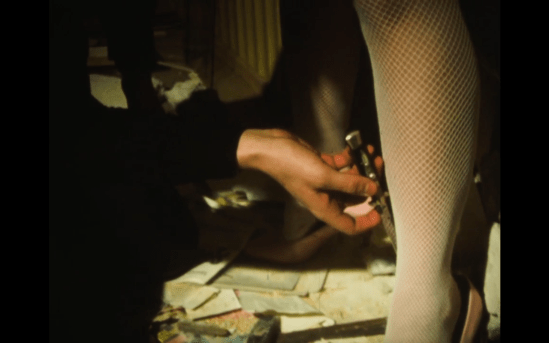
During the height of the 70’s sexual revolution, the Dutch seize the opportunity to piggyback their own free love films. Pim de la Parra’s 1978 “My Nights with Susan, Sandra, Olga, & Julie is an epitome example of the Dutch sex wave genre that shares the tantalizing groping, succulent squeezing, fornicating spooning, and …well, you get the idea. Originally titled as the longwinded My Nights with Susan, Olga, Albert, Julie, Piet, & Sandra (whew), this film is the last production of Pim de la Parra’s Scorpio Films from a script co-authored between Parra, Harry Kumel from Belgium, David Kaufman from America, Charles Gormley from Scotland, and Carel Donck from the Netherlands in a melting pot of cultural creativity. “My Nights with Susan, Sandra, Olga, & Julie” sizzles the screen with nudity in characters just walking around or riding on a child’s rocking horse stark naked that’s ostensibly organic for a story beginning with cold blooded, arbitrary murder.

Before partying the circumstantial matron of a youth hostel, Netherlands’ Willeke van Ammelrooy was Eva in “Frank & Eva,” another film by Pim de la Parra. She was also Alicia in “Blue Movie” director Wim Verstappen’s “Alicia” and also played Mira in Fons Rademakers’ “Mira.” As the evidence provides, Ammelrooy is very experienced as the leading lady role, portraying three titular characters from 1971-1974 by post-humorously acclaimed Netherland directors. Yet again, Ammelrooy plays a titular character in Susan, a country cloistered luminary seeking to be a forgotten face, but Ammelrooy steely performance of a woman pretending not to be hiding secrets is a fascinating insight into a character’s personal shielding; however, when Anton, “Wet Dreams’” Hans van der Gragt, their hot and cold dynamic creates a formidable hard love rigidity influenced by forces internal to Susan and external forces from those her immediate life at the farmhouse. Olga and Sandra have more intoxicating behaviors that run the story amok and what’s more interesting about the actresses, Franulka Heyermans and Marja de Heer, is that they’re amateur actresses according to Pim de la Parra. Cold and, yet, lively, Heyermans and Heer have mountainous ration and serve Parra genuinely. Marieke van Leeuwen, Serge-Henri Valcke, Jerry Brouer, and Nelly Frijda round out the small cast.

Pim de la Parra’s influences stem heavily from Alfred Hitchcock. The filmmaker implements voyeurism and the wrongfully accused that are essential to the Hitchcockian style. I also find it hard to believe that on the first day of shooting on Hitchcock’s birthday, August 13, that Pim de la Parra’s first scenes are that of birds on a beach. Coincidence or a little salute to the master of suspense, either way, the now retired filmmaker unifies a harrowing score with birds and a beach to not only by respects to Hitchcock, but also sets the tone of the film of an erotic thriller with blotches of dark comedy strewn in.

Cult Epics proudly releases “My Nights with Susan, Sandra, Olga, & Julie” onto a new high definition two-disc Blu-ray/DVD combo set. Presented in a widescreen, 2.35:1 aspect ratio, in a 1080p transfer from the original 35mm print, preserved by the Eye Film Institute in Amsterdam. The original print is nearly pristine with a palatable amount of stock grain and with only a minor amount of film wear. No observations of border enhancing or sharpening that would dilute the bona fide quality. The Dutch DTS-HD 2.0 Master Audio track nicely accompaniments the film with depth and range and the Dutch dialogue upfront and present and the very Hitchcock-esque soundtrack by Elisabeth Lutyens (“The Skull”) provided a perfect suspense drive score in her last composer post. Supplements includes an introduction by Pim de la Parra, poster and photo video gallery, Scorpio Films’ shorts that includes “Heart Beat Fresco,” “Joop,” and “Joop Strikes Again,” and Scorpio Films’ theatrical trailers. Cult Epic’s region 1 DVD and the all region Blu-ray release favors another Dutch sex wave cinema flavor with just modernization of an intertwinement of erotically charged lust and lives with repulsive and deadly temperaments and with Pim de la Parra at the helm, you’re going to get primo framing and angles sure to captivate.

Purchase by Clicking the Blu-ray Cover!

Bikini-Cladded Revenge on a Small Time EVIL Crime Syndicate! “Rondo” review!


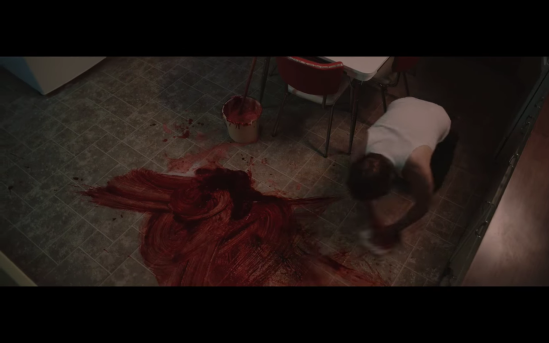
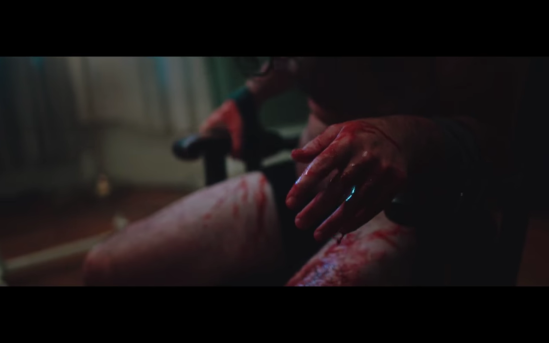
Disturbed and dishonorably discharged Paul finds solace at the bottom of a glass bottle. As Paul falls deeper into dire depression with drugs, the drink, and cigarettes, Jill, his sister, lays down some ground rules while he crashes on her couch. At her advice and insistence, Jill schedules a psychological appointment for him and the doctor recommends sex as a release and not just any old sex, but the behind-the-doors, underground, Freak-a-leak kind of kinky encounters. Paul joins two other men in a high rise condominium, receiving instructions on how to treat and mistreat an affluent man’s wife, but Paul becomes the witness to an organized murder party and flees for his life, barely escaping the clutches of his captors, and returning home to his sister Jill to tell her everything. The only problem is, the killers know his address and now their business becomes a family affair loaded with straight razor slashing, crowbar bashing, and automatic weapon firing mayhem.

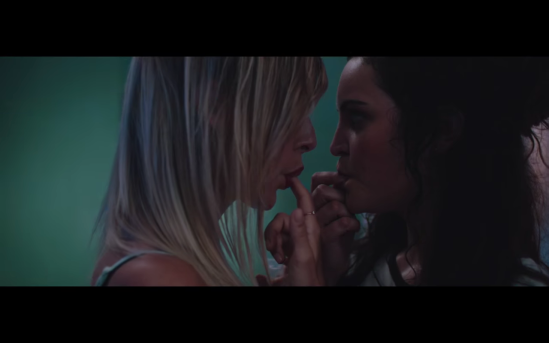
“Rondo” is an icy revenge thriller with bullets and blood galore from writer-director Drew Barnhardt. The “Murder Loves Killers Too” director reinvigorates a pulp noir approach into the independent film market that invokes woman power through all sorts of masculinity muck. Breanna Otts and Gena Shaw flourish as the anti-leading lady by wielding large assault rifles and being the kingpin of killers amongst a bunch of kneeling and broken men. “Rondo” is also about family, believe it or not. Whether bound in endless love or broken beyond repair,the theme of taking care of your own blood comes to the forefront, but before you go showing your kids, “Rondo” takes family to hell and back and then back to hell again for a rough ride of riveting vileness and hard-on revenge.

“Rondo” doesn’t necessarily have a lead character. In act one, the voice over utters over the pitiful existence that is Paul (“Galaxy of Horror’s Luke Sorge) who, at the persistence of his sister, tries to step outside the path of destruction by stepping into a sex den at the advice of a radical, and very pregnant, psychologist. The voice over is curiously used since pertaining to the fact that the narration, provided by Steve Van Beckum, becomes nearly Paul’s inner monologue by the end of his tenure. Act two transitions into a father and daughter reunion and then revenge plotters. No voice overs accompany the two, but Jill (“Westworld” and “SWAT” actress Breanna Otts) and her father Sam (“Rage of the Mummy’s Michael Vasicek) have an exposition fest involving what ifs and to dos. Sam felt to be a wasted character; an escaped VA patient returning to his children for revenge that doesn’t quite grow from there. On the other hand, Jill extends into act three as the sole protagonist and her thirst for vengeance is clunky and clanky, stirring up a halfcocked plan in the belly of the beast that happens to work in her favor and in our favor too as Otts ends up in lacy underwear in an episode of boobs and bullets. “Rondo” rounds out with Ketrick ‘Jazz’ Copeland, Reggie De Morton, Gena Shaw, Kevin Sean Ryan, Grant Benjamin Leibowitz and introducing Iva Nora in her first role and first nude scene.

Conceptually, Barnhardt’s tale of ravage savagery rouses out from the cobwebbed conventional anecdotal pathways and while “Rondo” might be a tale that’s rarely been told, apprising the plot into maturity bid Barnhardt with a far more difficulty, leaving to squash the answers to far more questions at the roll of the end credits. One of the more puzzling questions is why does the voice over only narrate for Paul? Kicking off with a voice over that explains Paul’s downtrodden life, then transitioning quietly into Paul’s inner thoughts, and then disconnected completely that literally leaves a punctuation question mark hover just over our scalps. There’s also the question of how deep this criminal organization roots in society? How did Cassie, wife of the barbaric boss Lurdell, get to assimilate herself into positions of power to influence poor souls to become meat for the grinder.

Artsploitation Films distributes an American bloodbath with “Rondo” onto DVD home video. The not rated release is presented in a widescreen, 1.77:1 aspect ratio, and despite some banding, the picture quality spruces a fine package with natural lighting and little-to-no filter use. The Dolby Digital 5.1 Surround Sound pitches perfectly without some much of a hiccup. Range and depth are fine, though the film isn’t necessarily a heavy hitter with action, and the channels are level amongst the LFE gun blasts in the cap your ass finale. Bonus features include a director’s commentary, deleted scenes, selected music commentaries with composer Ryan Franks, and an exhibition of the gritty pulp cover art and lobby cards set to a musical score. “Rondo” is a cult indie classic through the venomous teeth of white-collar Americanisms and a torrent of human immoral inclination that relentlessly shows no mercy scene after scene.

Own “Rondo” on DVD today!