Sometimes, The Choice Itself is EVIL. “A Woman Like Eve” reviewed! (Cult Epics / Blu-ray)


Eve is a stay at home mother of two who ensures the house is in tiptop shape and that dinner is promptly on the table for her working husband, Ad.  When Eve has a break down at the Mother’s Day family dinner table, Ad purchases her a train ticket to enjoy France’s sun and sand with her best friend, Sonja.  There she meets an alluring woman, Liliane, living freely and humbly in a commune.  An attraction flourishes between them after Eve returns to home to the Netherlands and can’t stop thinking of her time with Liliane.  Soon, they become romantically involved with Liliane travelling back and forth from France and that sets the stage for conflict as Ad discovers his wife’s yearning desires for Liliane to horrid and confusing for their young children not to mention also their marriage.  Eve is caught in the middle between the woman she desperately wants to be with who still lives in the commune and her children she can’t deal to part from in a tug-a-war of emotions wrought by a failing marriage, society perceptions on lesbianism, and damaging court room battles for children custody.

When thinking about the history of LGBTQ+ films and the filmmakers behind them, director Nouchka van Brakel’s “A Woman Like Eve” should be at the top of any film aficionado’s list despite flying, unjustifiably, under the radar for decades as the Dutch film makes a profound statement with, at the time, unmapped gender fluidity of the 1970’s timeframe that included the women liberation movement that sought to free domesticated women from the limitations of household responsibilities, it cracked the barriers on what constitutes as healthy union between two people, and dove into the intricate internal struggles of a keystone person being pulled between two very different lives of family dynamics.   Co-written alongside Judith Herzberg, the 1979 romance drama, natively titled “Een vrouw als Eva,” has a very different kind of evil than the werewolves, vampires, zombies, serial killers, and ghosts typically showcased in our reviews and that is those narrow-mindedly frighteningly submerged in antiquated traditions peered through the perspective of a feminist director in Brakel.  Matthijs van Heijningen, who produced Dick Maas’s elevator-horror “The Lift” and also Brakel’s prior work on “The Debut” and later work on “The Cool Lakes of Death,” produces the Dutch tale under his indie banner, Sigma Pictures.”

“A Woman Like Eve” would not have been as provocative with thickly layered nonconformist and spirited topics without the compelling performance of the film’s two leading ladies in Monique van de Ven (Paul Verhoeven’s “Turkish Delight”) as Eve and  Maria Schneider (“Last Tango in Paris” costarring Marlon Brando).  Van de Ven captures a woman tormented by not only what “proper” society, society being her friends and family, tells her to be, but also distresses going against the grain of her innate guilt and nurture for her two small children during a time of emotional transition that impels her to pursue a relationship with not just any other person but another woman.  That other woman being Liliane, an established outlier of what’s considered normal as a lesbian living how she wants in an outskirts commune, and while Schneider’s performance treads lightly through what should be mountains of emotions, especially in a role that has a foundation of someone been out of closet, doesn’t care what anyone thinks, and has tethered a line of security to her soul fulfillment center, Liliane still maintains as the steady constant that never wavers from who she is and what she wants.  Toss in the German born and “A Bridge Too Far” actor, Peter Faber, and you can see the gunpowder burn for miles in tense and uncomfortable discourse when Eve confides into Faber’s character, Eve’s husband Ad, about her proclaimed love for another woman and then we witness Ad patronize her with what he calls an epidemic of woman independence and shrugs her true feelings like scraping foods scraps from a dinner plate and into the trash. Faber can get downright ugly with the homophobic bigotry that begins to carousel Eve’s ebb and flow of having any kind relationship with her separated husband until justice system proceedings for children custody. Marijke Merckens, Renée Soutendijk, Anna Knaup, Truus Dekker, and Mike Bendig round out as the support characters caught is the web of Eve’s love affairs and legal issues.

Feminist filmmaker Nouchka van Brakel depicts tremendous themes of a woman’s status in what could have been a universal position for women all over the globe. Seen as only housekeepers, dinner makers, and children bearers or caretakers, women were placed at a standstill after suffragists fought for the right vote at the turn of the 20th century but that fire inside them stayed lit and you can see that with Eve in the opening scenes as she’s longing and looking for something more than to be a house wife. She eventually obtains something more with love for Liliane, the second theme Brakel implements extends upon unfettering women is with lesbianism. Lesbianism is shown to bring down shame upon family, friends, and even just society in general as Eve was offered no solace from those she had a prior relationship with after coming out, a choice seen as a radical and an integration part of that women’s independence movement. Brakel wanted to explore uncharted passion between woman and woman and, in doing so, lifted the curtain on on various foremost concepts that are still…still being talked about today where inequality in the workplace through sexism and salaries still wage a battle of the sexes and homosexuality is still too taboo for even the modern day system. “A Woman Like Eve” has surely inspired and been of homage in more modern pieces, such as “Blue is the Warmest Color,” and should be exhibited more educationally on it’s abundance of relatable themes and not just be another work of unseen cult fiction but be rather a praised film of realism based on nonfiction.

To watch Eve toil in her new life is like climbing Mount Everest; it’s a long, arduous journey with challenging, sometimes spirit crushing, obstacles to overcome in order to reach the top, but once above the cloud, the tooth and nail fight for what’s finally yours and yours alone can be worth it. Unfortunately for Eve, her cumulus glass ceiling is poignant. “A Woman Like Eve” importance is shamefully overlooked and that’s why I’m grateful Cult Epics has brought Brakel’s film, for the first time, on DVD and Blu-ray in North America. Basing this review off the Blu-ray release, clocking in with a 103 minute runtime, the newly restored high definition transfer from the original 35mm print, shown in 1.66:1 aspect ratio, looks respectable from a moderately preserved transfer. An occasion scratch and some real delineation issues with night scenes factor in only little impact when the story is shot mostly in bright daylight and is well light all around with lots of natural grain. No cropping, compression artefacts, or enhancing was detected and the coloring appears very natural without any overcorrecting or mistakes in the primary or secondary hues. The new Dutch/English/French language DTS-HD master audio 2.0 renders dialogue clearly and positioned as the foremost track with a solid sync with the error-free English captioning. There’s a slight lower key hum throughout and some crackling and popping but none of those are a hinderance to the viewing. As far as bonus material, the region free, unrated release contains a 2020 interview between Brakel and film journalist Floortje Smit at the Eye Filmmuseum, a poster and still gallery, and the theatrical trailer on a dual-layered disc. The limited edition package includes new and original cover art on a reversible case sleeve. Probably seen as antiquated celluloid, I see Nouchka van Brakel’s LGBTQ proud and woman empowering film, “A Woman Like Eve,” as historical treasure dug up by Cult Epics, carefully spit-shine restored, and encapsulated forever on physical media for all to enjoy.

Purchase “A Woman Like Eve” on Blu-ray or DVD

Classy Brothel Girls Bring Dirty EVIL Secrets to “Madame Claude” reviewed! (Cult Epics / Blu-ray)

A high end Paris brothel ran by the influential Madame Claude sends the most beautiful and sophistical women to wealthy and powerful dignitaries all over the world to satisfy their most sexual desires.  Her lucrative business becomes a governmental target seeking to collect back taxes on the illicit business.  However, the French government is the least of her worries when a playboy-aspiring rake and amateur photographer snaps photos of Madame Claude’s clients in compromising situations that can be ruinous to their status.  The CIA becomes involved when unscrupulous business dealings involving an American and Japanese companies connect to Madame Claude and her potentially persuasive young women after rumored photographs put the Madame Claude in the middle.  Two governments, big businesses, a jet setting brothel, wealthy socialites and a nosy photographer become involved in lies, secrets, and the potential for murder.

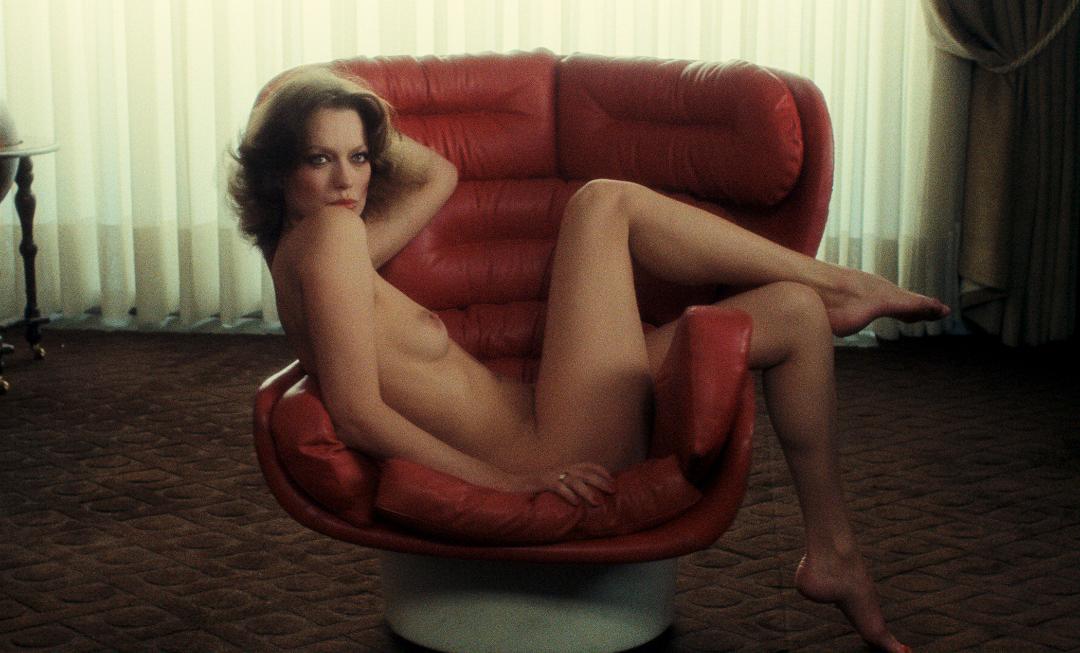
Part biography, part fiction, “Madame Claude,” also known as “The French Girl,” is the 1977 released erotic and political thriller based off the real Madame Claude, Fernande Grudet, as her life of prostitution management and scrutiny unfolded before the public eyes in the mid 1970’s.  Erotically and elegantly sexy with gorgeous women groomed into lust and ensnared into the lion’s den of exchanging powers, “Madame Claude” became the third film from the immensely successful erotic French director, Just Jaeckin, following 1974’s “Emmanuelle” and 1975’s “The Story of O.”  Jaeckin, pressured by his financiers to continue his success in the highly sought eroticism, returns to the randy genre, but this time with a story to his liking, one that is embroiled in the background of a bribery scandal involving aerospace company, Lockheed, at the heart of it. From a script by crime-action writer André G. Brunelin, based off the book of memories of Madame Claude by Jacques Quiorez, Jaeckin splices visual elements of each story together to form not only an arousing sexual lamination but also a cloak-and-dagger tenser of a film. Shot primarily in Paris, with minor shoots in the Bahamas and Washington, D.C., especially the scenes on the faux White House, “Madame Claude” is a production of Orphée Arts of Paris with Claire Duval on as executive producer.

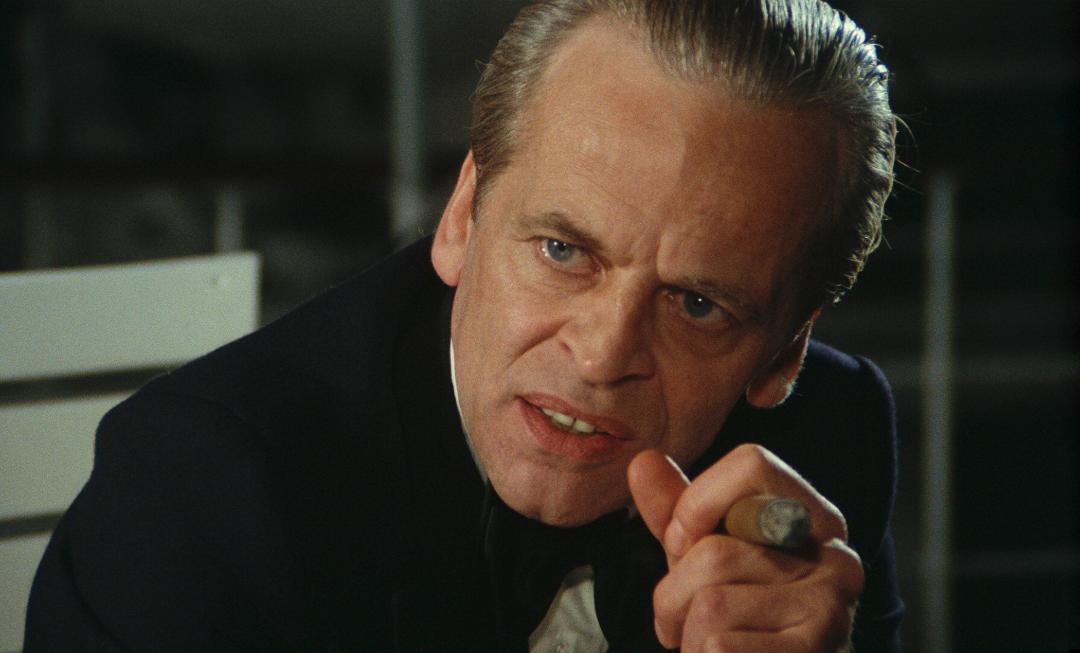
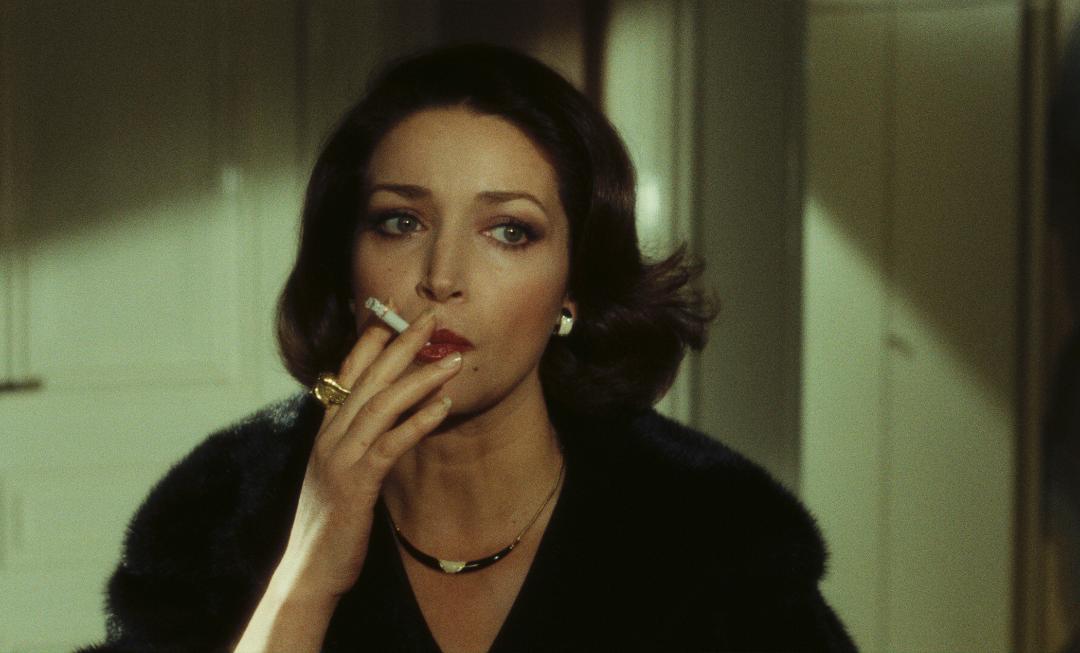
While the titular character is the obvious centerpiece, Jaeckin mingles the characters around each other in a game of espionage chess toward the endgame of checkmate. Keystone to everyone’s problems is Madame Claude, played by renowned French actress and early onscreen sex object, Françoise Fabian, who previously had roles in the paranormal pubescent horror, “Expulsion of the Devil,” a more comedy-friendly brothel film, “Holiday Hookers,” and among many other films predating 1977, but not until later in Fabian’s career did show rocket to success, playing older, more aligned, women that strongly championed feminism, such as portraying “Madame Claude” who used sex as a means to gain control and power of men, and pushed it to the brink of the era’s cinematic limits. “Horsehead’s’ Murray Head plays the photographer schmo, David Evans, making Madame Claude’s life complicated. An about town ladies man, Evans goes to each of Claude’s girls one-by-one and, for some reason or another, they invite the handsomely charming, but brutish, amateur porn photographer into their bedrooms, sleeping his way into blackmail scheme that will bring down the most powerful brothel head in all of Paris while also lining his pocket with not only money but power among the socialites who treat him like the village idiot. Head’s nails down the fast-and-loose aspect of Evan’s personality that treats his stratagem like a game he’s already won, but when the government agencies come knocking on doors, Head about faces Evan’s waggish incompetence to a frightened man looking around every corner for danger. It’s wonderful to see Head interact with Klaus Kinski (“Nosferatu the Vampire”) and Marc Michel as a ridiculed subordinate in an examination of social status as Kinski and Michel flaunt expensive taste and lavish orgies in lieu of decency, but it’s Murray Head, playing the fool with cemented proof that would put all them of into shame, as the aspirer to their life of luxuries. The beautiful Dayle Haddon (“Cyborg”), Vibeke Knudsen-Bergeron (“Spermula”), and Ylva Setterborg stun in just a handful of the very elegant, and very naked, women acting as Madame Claude’s international bound employees. Other cast of characters in “Madame Claude’s” game of lies and spies include Robert Webber (“Death Steps in the Dark”), Jean Gaven (“The Story of O”), François Perrot, André Falcon, and Maurice Renot.

Following his films “Emmanuelle” and “The Story of O,” Jaeckin’s “Madame Claude” strays into an atypical kind of formulaic eroticism downplaying the sexual excursions and discoveries for a more typical crime drama affair. Jaeckin’s directorial abilities can take you on an exotic tour around the world and onto the fleshy planes of some of the most gorgeous and provocative women to ever grace the screen. Yet, “Madame Claude” trims substantially the skin with a more precise execution to be more of an oil lubricating the machine rather than the gear that actually operates the mechanism to entail sex as a misused tool for motivation and bribery. These scenes of fleeting eroticism outright shine Just Jaeckin’s proclivities with mirrored reflections and becoming lost in the entanglement of sexually enflamed bodies and these scenes outright shine Jaeckin’s intent on delivering a corkscrew crime drama with double-dealings, wiretapping, and counterintelligence gathering as what unfolds isn’t clearly delineated between Madame Claude, David Evans, the French and U.S. Governments and the Lockheed scandal that actually becomes sidetracked at times by the infiltrated sex-training of Madame Claude business as the brothel head has to train an alternative misfit new girl and send her to the Bahamas work trip shortly after a quick one-night-stand initiation with one of the Madame’s trusted former beaus. We wholeheartedly become more intrigued and fascinated with Madame Claude’s feminist principles, recruiting subjugated women to use their sexuality to dominate and become wealthy in the process. In more than one scene, Madame Claude flaunts self-admiration in transforming star-crossed girls into young women fortune bound with their promiscuous ways. Madame Claude’s murky backstory caresses her complexities of anti-man without detail delving into the turning point catalyst that made her become who she became to be, an affluent Madame, other than a seemingly emotionally and controllably invalidating romantic experience with a long time friend and business companion, Pierre (Maurice Renot).

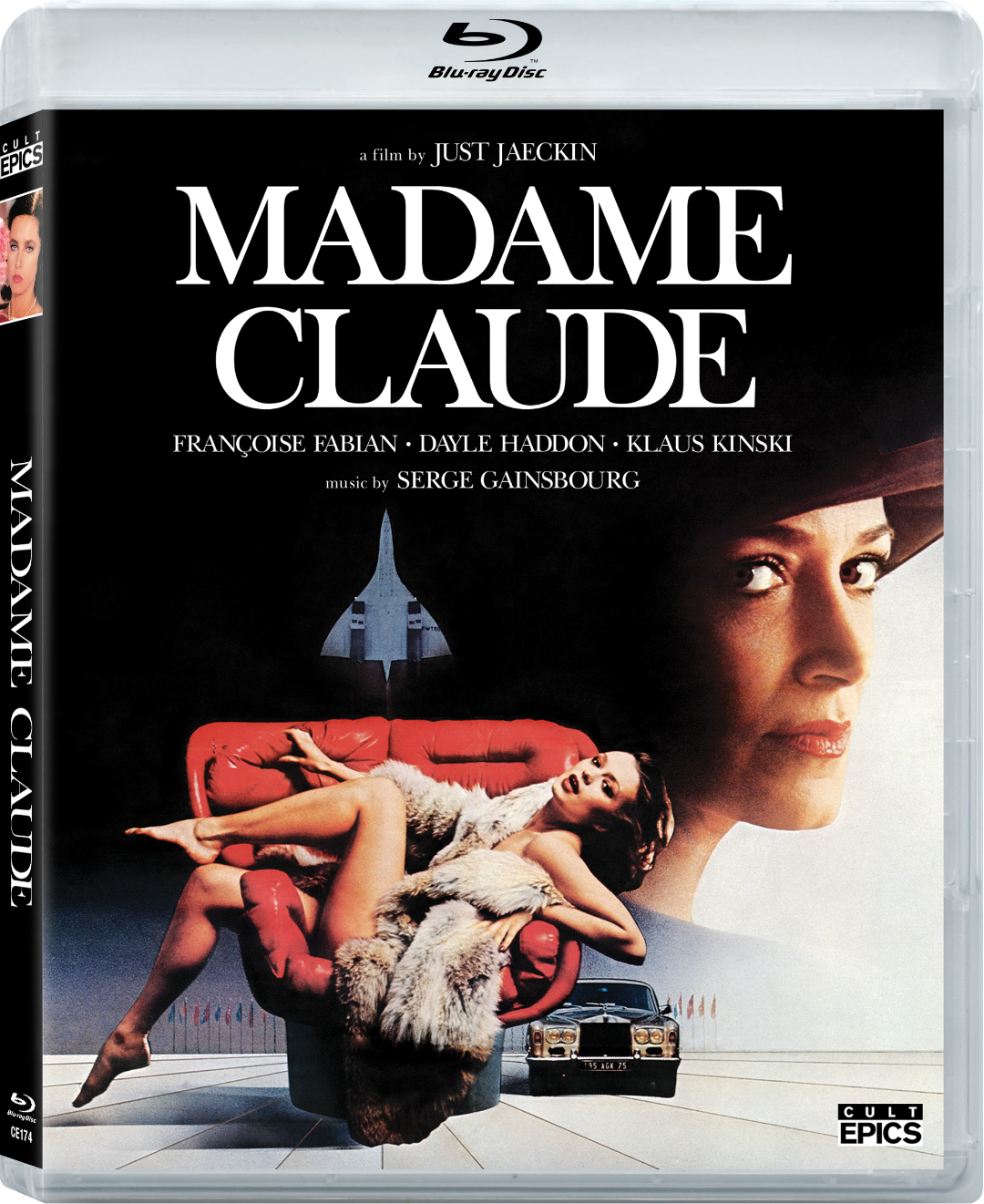
Cult Epics sustains another forgotten classic into a celebrated Blu-ray release with a new 4K HD transfer of “Madame Claude” from the original 35mm negative, supervised by the original cinematographer, Robert Fraisse. Housed on a BD50, the region free release maintains the impeccable coloring under Fraisse’s soft glow with no cropping or undue enhances that tries to put out fire with gasoline and, aside from a discolored yellow-greenish, translucent stripe, perhaps a loose film roll, during the opening scene, the image quality is clean and pleasing in it’s natural 35mm grain. The English and French language audio tracks come with three options: LPCM 2.0 mono, DTS-HD Master Audio 2.0 mono, and a Dolby Digital 2.0 Stereo. The DTS-HD Master Audio had the highest marks, slightly topping Dolby Digital stereo with a little more gusto in the pipes. Audible dialogue is clean and forefront, but the engineered dubbing laid over Murray Head and, even, the self-dubbing of Dayle Haddon can be off-putting at times when actors’ voices seem to not be sharing the same vocal space with others on screen. French composer Serge Gainsbourg’s lounge, yé-yé score tuned into that erotic soufflé of light and airy pop music that can be often dreamy with singsongy female vocals, complimenting the softer, sexier side of Jaeckin’s film while also playing into period melodies of the 1970’s. Cult Epics always has down right with resurrecting obscure erotica for not only quality sake but also to arm the hell out of the releases with bonus material. Included with “Madame Claude” is an audio commentary by Jeremy Richey (author of the upcoming book entitled Sylvia Kristel: from Emmanuelle to Chabrol), a high definition, Nico B. produced interview with director Just Jaeckin from 2020, the vintage French theatrical trailer, a promotional photo gallery, and Cult Epics previews. Not the most sensual film shot by the renowned maestro of venereal visuals, Just Jaeckin explores his versatility by acclimatizing familiarity with new horizons surrounding brothel delights with shadow games and the new 4K Blu-ray from Cult Epics is the one, and only, way to experience it all in “Madame Claude.”

Cult Epic’s “Madame Claude” on Blu-ray. Available at Amazon – click the poster!


Love. A Complicated EVIL. “Me You Madness” reviewed! (STX Entertainment / Digital Screener)

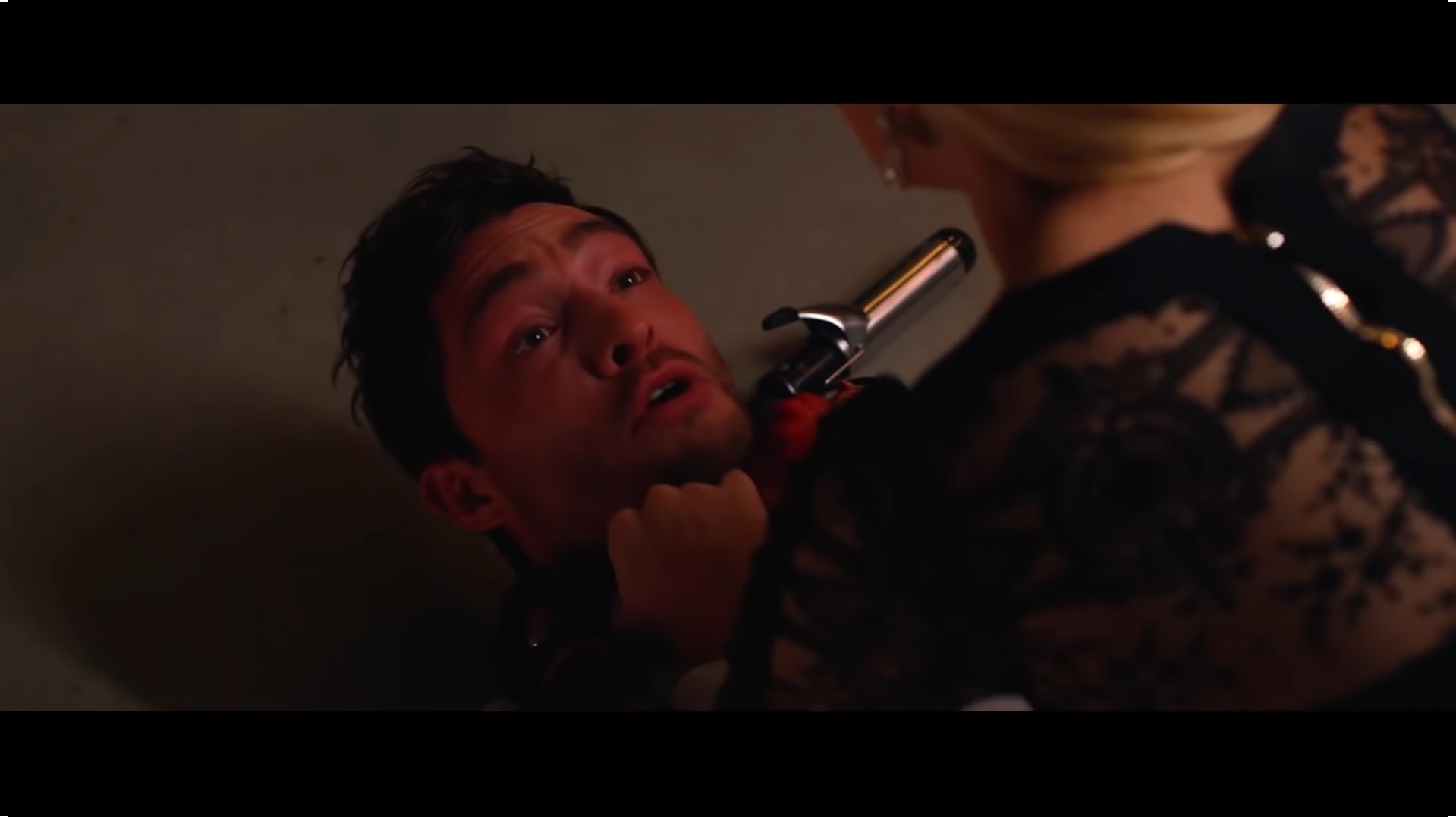
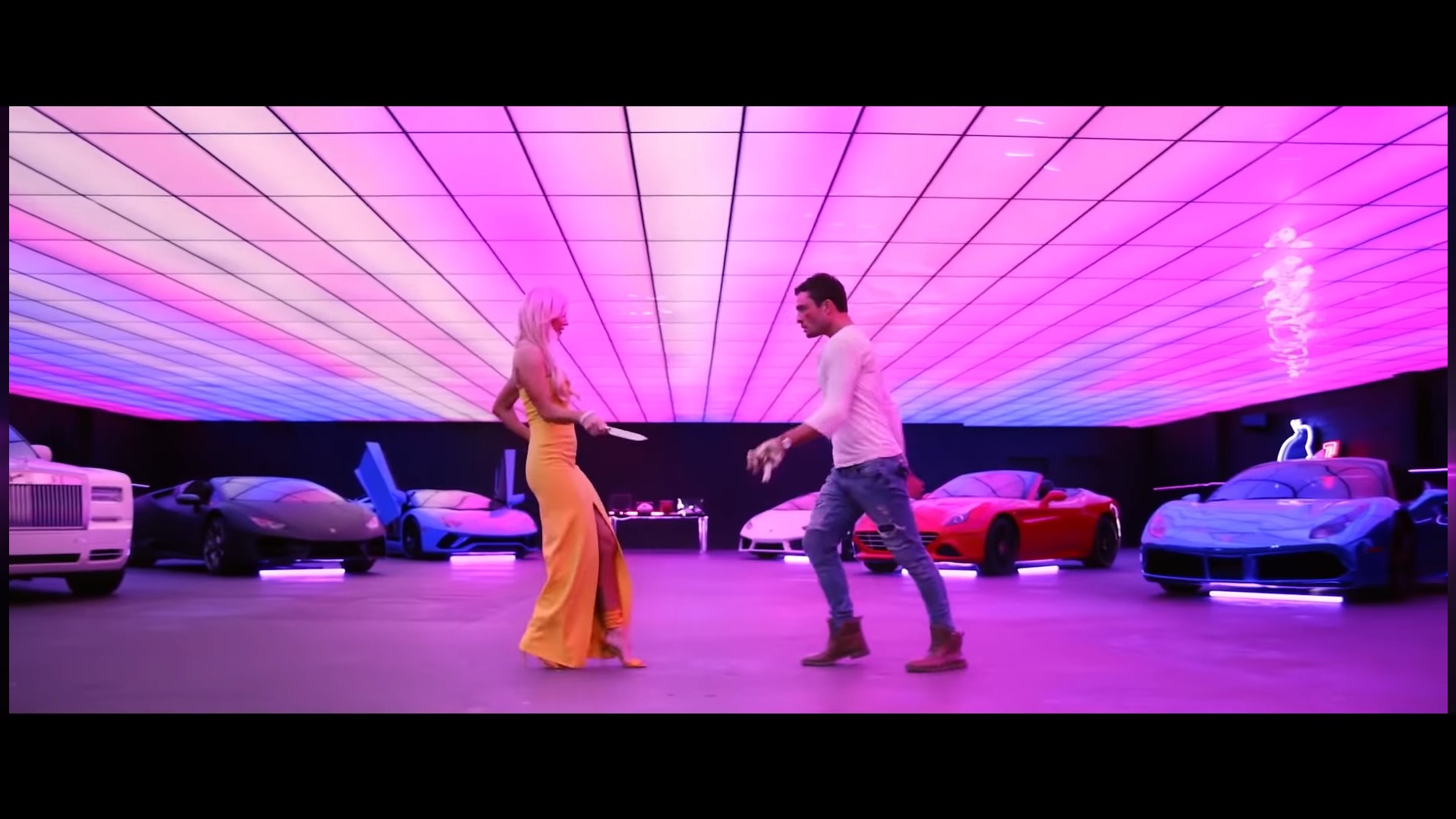
Catherine Black, a materialistic and narcissistic hedge fund businesswoman, prides herself on expensive fashion, a healthy appetite for wealth, and a keen appreciation for 80’s music.  There’s also one little other aspect of Catherine’s life that excites her immensely, she’s a total sociopathic serial killer and cannibal who gets off on inviting the detrimental to society to her Malibu home for the slaughter.  When petty thief Tyler thinks he’s pulling a fast one over the megalomaniac by casing her lavish home full of luxurious jewelry, cars, and décor, he’s actually walked into a trap set by murderess.  Toying with her prey before springing her trap, a typically emotionally detached and cold Catherine begins to feel something for not only Tyler’s ruggedly handsome looks but also for his down to Earth knowledge of the world around him, but upon his discovery of her freezer full of preserved dismembered body parts, a love and hate cat-and-mouse game ensues as Catherine and Tyler battle it out between either their individual survival or to pursue the sensation of madly falling for each other. 

A hyperbolic whirlwind in how opposites attract to the new wave tune of an 80’s soundtrack with a glitzy siding of the modern macabre, “You Me Madness” visually defines the coined idiom to be crazy in love.   The debut dark comedy of 2016’s remake of “Cabin Fever” and “The Midnight Man’s” actress, Louise Linton, introduces the Scotland native not only as a director, but also as a screenwriter, penning “You Me Madness’s” unflinching admiration to homage music, films, and their clichés and incorporate them into a fiercely funny comedy that sows unusual seeds of love.  Shot primarily on location in Malibu, set atop of a promontory in and around the sleek modern Ed Niles’ glass-and-steel architecture of the marvelous Henman House, that lists with a hefty price tag of nearly ten million dollars in today’s housing market, and has been the backdrop as Johnny Rico’s family home in Paul Veerhoven’s 1997 authoritarian war on the bugs, “Starship Troopers.”  Linton’s Stormchaser Films serves as the production company with financial backing from Christopher Rush Harrington (“Dead of Winter”), Jijo Reed (“Deadly Famous”), and Christelle Zeinoun.

If I didn’t know any better, I would say “Me You Madness” is the riley, subconscious projection of Louise Linton who not only directs and writes the film but also leaps into to the star role as the self-absorbed Catherine Black.  It is my opinion that Linton’s desire to be a filmmaker stems from her love of moves, especially from the 1970s and 1980s, from the slew of references deliberately spoken throughout to either bring attention about and to avoid the overused tropes all together or a story structure style to galvanize the, sometimes historically ridiculous, long lineage of serial franchises like with “Texas Chainsaw Massacre” when Catherine wields a chainsaw and stops to quickly turn toward the camera to harp about the series longevity.  But, in any case, Linton is wonderful as the powerful corporate sociopath saturated in elegance and is near impervious in breaking her principles about stylish perceptions whether be her designer made outfits during kill mode or keeping red wine, and blood, of her Italian-purchased sofa…or is it a couch?  Linton is opposite the sweet, yet skillfully crafty, innocence radiated from Ed Westwick as conman Tyler Jones.  The British born actor steps into an entirely lighthearted, yet dark, role that’s undoubtedly different from his previous cache of disconsolate films of “Children of Men” or “S. Darko,” the sequel to “Donnie Darko,” with stories of gut-wrenching dread and a general sense of uneasiness throughout.  Despite having a black-comedy tone, “You Me Madness” evokes Westwick to gleam with hopeless love for a smart and beautiful woman undeterred by her then wanting to then needing to kill him because he knows too much about he in spite of her feelings for him.  As you see, the coupling dynamic in this Catherine Black and Tyler Jones show is tremendously complex and both actors are able to reach that level of radical commitment of killer zany passion but only to a limited extent.  Linton terribly overshadows Westwick’s dry, almost deadpan, manner that leaves Tyler feeling unworthy of pursuit because here you have this beautifully intelligent and aggressively possessive woman with Linton’s grand presence coming to life on screen over everyone, and everything, in the film and in strolls a rather silent and express soft Westwick that doesn’t quite fit the bill. 

What I found to be thoughtful and carefully worked was Catherine Black’s image from the male perspective.  Like I said, Catherine is a power-hungry, manipulative, and material-driven narcissist but also beautiful, elegant, and well-versed at stratagem, but this larger-than-life character isn’t demeaning to women as a whole nor is she degraded by the, essentially, the one man in this story with her.  Most rape-revenge or women with a cause narratives inflict a barrage of choice nasty descriptors, such as cunt or bitch, toward the heroine or anti-heroine because she’s battling back against the man or men who’ve wronged her or a loved one. Linton further moves away from the odious layers of destruction lamina by stylishly beefing up the neon effervesce exterior and glam lifestyles of the rich and famous hyperextended upon with a love of an 80’s music soundtrack complete with 80’s arbitrary dancing with Ed Westwick jumping, kicking, swaying, and hypersexualizing dance moves around the Black’s house to the omnipresent soundtrack that includes bands Yello, New Order, The Pointer Sisters, A-Ha, The OJ’s, and Thompson Twins just to name a few. Linton also adds a meta touch where the main characters can turn and narrate directly at the audience to narrate their thoughts.  The unlikely of couples Tyler and Catherine have a relationship that’s being sewn together during their deadly love skirmish right before our eyes as the Catherine led audiences with a narrative disclosure of her confined world seeps into Tyler’s unguarded bubble to the point where he can now turn to the camera and speak to the audience that forms a stronger bond between them.  Yet, “Me You Madness” doesn’t quite have that perfectly coursed transition from enemies to lovers with a story that starts to become lost in itself from being built up strongly by Linton establishing, overtly, Catherine Black’s dark lifestyle choices and the kill scenario plot on this street smart thief to then watering down Catherine’s intense resolute that peters into a shoulder shrug of giving up and in to Tyler after a ferociously hellbent to cut his throat and Hannibal Lector him for dinner.

“Me You Madness” starts off hungry like a wolf film that gets physical with a smooth criminal but turns into a total eclipse of the heart that’s addicted to love and is never gonna give you up!  “Me You Madness” hits video on demand services Valentine’s weekend, releasing February 12th, distributed by STX Entertainment (“Hardcore Henry,” “The Boy”). The 97 minute duration is a celebration of enriched love more powerful than money, fancy things, and diabolical desires while also contributing playful banter and dazzling with the overkill of a voluptuary femme fatale. Ray Peschke’s cinematography grasps the “Miami Vice” vibe. Peschke’s can be on both sides of the coin with a sterilizing bright white of elegance to then flip around into a drug-fueled, kind of smoky robust color variant scene chosen carefully from a broad palette to accentuate the mood. Obviously, going full neon is important too and with Catherine’s dark room spin class, you get that rich fluorescent coloring when all riders are adorned in wearable glowsticks and a neon light illuminates their light colored clothing. Since “Me You Madness” is a brand new film opening right into the video on demand market, there were no bonus materials with the feature nor were there any extra scenes mid-or-after credits. Often wordy to be an adjunct of pop culture name-dropping, “Me You Madness” still renders as a beautifully shot, sybaritic-inclined film that slightly misses the intended mark of connection and love, but does take us out of our dreams and down the lane of playful nostalgia and frivolous fun.


Watch “Me You Madness” on Prime Video! Click the poster to watch!

And We All Thought Puppy Mills Were EVIL! “Breeder” reviewed! (Eureka Entertainment / Blu-ray Screener)

Avid and accomplished equestrian, Mia, yearns for a child of her own with husband Thomas as the clock on her ovaries continues ticking into her 30s, but something keeps her husband from digging himself out of a sexually frustrated trench, causing strain on their marriage.  Mia thinks his imperative financial venture, a collaboration alongside ruthless businesswoman and unorthodox scientist named Ruben, has made him sexually reclusive being wrapped up in a delicate investment of reversing the aging process that could crumble at any time, but when a beautiful and youthful neighbor goes missing after frantically showing up bloodied at her front door, Mia follows her trail to an abandoned candy factory where Ruben holds hostage young women for her violating biohacking experiments.  Becoming caged herself at the mercy of Ruben, Mia, and the rest of the women, are left to the sadistic and misogynistic whims of Ruben’s henchmen, the Pig and The Dog, in between the good doctor’s examinations. 

What happens when the powerful elite, using wealth and influence, circumvent ethical red tape in order to receive medical advancements as soon as possible?  Director Jens Dahl and screenwriter Sissel Dalsgaard Thomsen explore that radical and illegal biohacking ideology with an intense and extreme feminist view in their 2020 released, invasively graphic, horror thriller, “Breeder.”   Hailing from Denmark, not too many extreme films come out of the Nordic country, but taking a cue from their German neighbors from the South with a sexual and age dysphoria viscosity, “Breeder” takes an urban legend-esque approach to age defying that’s more Countess Bathory than anything Aveeno facial creams could ever manufacture in a story based on biohacking blended loosely with the French folklore of Bluebeard where an affluent man has an obsessive habit in murdering his wives, one after another, per director Jens Dahl.  “Breeder” might not be that black and, well, blue with a tough love message and an illicit theme of subversive genetical achievements produced by Peter Hyldahl, Amalie Lyngbo Quist, Penelope Bjerregaard and Maria Moller Christoffersen of Beo Starling (Beofilm) production company.

Leading the pack of caged, exploitered women in this human puppy mill comes with a hefty price of compromising positions and uncomfortable scenarios. The 32-yeard old actress, Sara Hjort Ditlevsen, plays an age appropriate Mia whose coming down to her last straw when coming to her husband’s inability to commit to their teetering marriage, but Mia comes with a twist in that she never gives up, achieving her end goal even if that means strapping on her riding boots and stirrups, dropping her panties, and digging those spurs into her hind parts while masturbating just to release the sexual tension. Ditlevsen gives a gradual fuming performance gaslit by the abusing sustained by the sadistic misogynist, monikered The Dog (Morten Hoist) who, in appearances, has the visual looks of a greasy Bill Oberst Jr. Jackson Pollock’d from a Mads Mikkelsen portrait and has the temper to match. The Dog and his partner, The Pig, played by Jens Anderson in an unbalanced contrast to the The Dog’s screen time, are harnessed and weaponized by a mad scientist role that was originally intended for a man before screenwriter, Sissel Dalsgaard Thomsen, had an epiphany that her feminist script was playing right into that systemic, male dominant, structure. Instead, the role was flipped, in gender only, and performed by “Wild Witch’s” Signe Eghom Olsen. Olsen gives a chillingly cold performance in Ruben’s contradictory indifference for life by snatching youth and beauty from young women, those who spite Ruben just by the mere fact of their innate good genes and healthy reproductive system, and selling the epitome of their stolen essence to the highest, or oldest, bidder in an age-reserval scheme. Ruben does have another motive with self-preservation as her rare genetic makeup makes finding a genome match nearly impossible, but she slays away a lot of women and a lot of infants in order to unearth her type. Anders Heinrichsen, Eeva Putro, Elvira Friis, Eja Rhea Mathea Due, Oksana Kniazeva, and Sara Wilgaard Sinkjær round out of the cast.

One of the “Breeder’s” core themes is the power one holds over another, but absolute control is not a singular reoccurring motif as power ebbs and flows from one character to another in a rolodex of examples that include Thomas’s financial control of Ruben’s rebellious operational decisions, The Dog’s inhumane dominance over captive women he loathes, and, on the receiving end, an enslaved woman’s embracing of a submissive, masochistic posture to The Dog’s punishing sadism, but control can be fleeting as seen in many movies yet proved to be in an abundance in Dahl’s “Breeder” with plot points that overturn sovereign power through a pendulum sway of brute, bloody force and hostage exploitation ugliness.  One bizarre recurrent through the cat and mouse power struggles is urination.  Yup, bodily fluids make an appearance, but go beyond the one-time shock value affect with three, count them three, acts of peeing in which two scenes reflect dominance as the powerful relieve themselves all over the, at that time, docile weak as a dog would when marking his claimed spot in the yard.  “Breeder” continues the varied questionable character tactics when primary plot turning points fail to impress plausible reactionary needs; an example would include when Ruben uses Thomas’ affection for Mia to control his unpredictable behavior, but the obsessed mad scientist, not to be bested by losing her financial support, lets Thomas run freely around her private abandoned factory of horrors which allows Thomas to become a monkey wrench in her biohacking laboratorial machine.  The same easy street escapes run rampant throughout and is even unintentionally spoofed when one women is able to escape not once but twice The Dog and The Pig’s rigorous grasps, taking “Breeder’s” serious new wave extreme a level down to a sickly stage of story blunders with rough draft written characters and scuffle.


If golden showers are not the extreme go-to for brutal survival horror, “Breeder” offers a variety of acrid amenities from stapling lips together to a trash can full of dead, dismembered babies and is homeward bound in the UK on Blu-ray from Eureka Entertainment under the company’s Montage Pictures banner.  Available February 15th, 2021, the first 2,000 prints of the Blu-ray will come with a limited edition O-card slipcase.  If you’re not a physical media aficionado (…loser.  J/K), “Breeder” will also be available digitally and will be presented in the film’s original aspect ratio of 2.35:1.  The Danish language DTS-HD MA 5.1 audio mix will be accompanied with optional English subtitles.  Since this review is based off a Blu-ray screener, I will not go into depth with the audio and visual conditions, but the cinematography work is from the sophomore feature of Nicolai Lok.  Behind the camera, Lok’s settles on a drab color schemes of mostly black and grey of a sterile environment, with the Lindberg house or inside Ruben’s medical popup tent, along with hard yellows, like mustard, to accentuate the rust and grime in closeups to medium shots within the tight confines of the abandoned candy factory turned into an unsweet meat market, but uses a fisheye lens on the regular to the effect I couldn’t pinpoint other than to fishbowl dysphoria an already narrow area. The end result made scenes unnecessarily warped for the viewers already stomaching a large amount of women battering. The special features included an October 2020 answer only interview with director Jens Dahl and screenwriter Sissel Dalsgaard Thomsen discussing in depth the reason they wanted to make this film. “Breeder” opens with Mia prancing her horse Karat and she inner dialogues how they move in tandem, but she questions the pecking order of master and prisoner between them knowing for certain she’s Karat’s jailor and that translates perfectly into her own subhuman treatment as a branded and caged animal for the pleasure of others; however, this type of depth thinking begins to rotate the hamster wheel but, as soon as momentum picks up on those tiny legs of collusion and betrayal, a gradual limp slows that hamster’s endurance with not enough plot developmental pallets to digest in order to keep up the effort.

Sit Back. Relax. And Wank Off to EVIL’s “Live Feed” reviewed! (Unearthed Films / Blu-ray)

While on vacation in China, five friends traverse the local festivities and drinking holes, relaxing in the surroundings of an alien culture of their getaway destination, but when one of them accidently bumps into a depraved Chinese Triad boss, they believe to have nearly escaped a localized international incident with the help of a Japanese vacationer who seems to know quite a bit about this particular Triad boss.  To blow off steam, and to blow off some loads, the friends patron the Venus Theater, a sleazy porno theater offering 1-hour couples VIP rooms.  Their short-lived, and short-comings, visit turns into a terrifying nightmare of broadcasted kill rooms as they find themselves trapped inside the theater owned by the Triad boss for his personal snuff cinema experience and fine dining of cannibal cuisine.  Fried dong and balls are 100% MSG free. 

With a Ryan Nicholson directed film, you never know just what to expect.  From our reviews of the Vancouver native’s work, his teen slasher “Famine” was an angsty disappointment, his destitute slaughterhouse “Collar” collided technical gaffes with sordid satisfaction, and his most renowned direction on the bowling-themed retro-slasher, “Gutterballs” displayed a primal brilliance that rolled one hell of a strike down the lanes of indie filmmaking, but the late, great gore hound filmmaker always lit up our screens with a single reoccurring theme – flashes of red.  Lots and lots of red blood that is!  The blood geysers and gushes in heaps in Nicholson’s 2006 release, the written and directed, “Live Feed” that touts SOV violence in an arcane snuff style.  Co-written with his father, Roy Nicholson (“It Waits”), the self-taught, special effects prodigy bursts onto the full length feature scene with an introductory exploitation and survival horror full of ambition, insane effects, and a narrative bred specifically for fountaining blood.  Self-funded under Nicholson’s Plotdigger Films, the ”Live Feed” legacy continues to output interest in the gore and snuff subcategories with updated home video distributed releases throughout the years, keeping the resourceful, twisted humor filmmaker alive and well in our hearts and collections. 

The story revolves around five friends, or more intimately, the hapless stars of a snuff theater production, who are not the most chaste or morally concerned individuals finding themselves center stage because of their wanton whims and uninhibited fortes.  Out of the touristy Americans in a given the impression of being a strange and sordid foreign land, one of them quickly becomes established as the primary beacon of hope as an unassertive wiser in Emily played by Taayla Markell in her first lead performance.  Though their long history makes for easy persuasion into participating, from a distance, in their lewd behaviors, Emily’s hemmed in around familiar perversities derived from her good friends and even her finance.  Mike, a muscular, drug-fueled blowhard develops his crass charisma from “Stan Helsing’s” Lee Tichon, Mike’s current and former girlfriends, Sarah and Linda, in tinge of tattered relationships by Caroline Chojnacki and Ashley Schappert, and Darren, Emily’s douchebag, philandering fiancé played by “Skew’s” Rob Scattergood, lead Emily astray from her own self-preserving inner voice when their arrogance and laxed attitudes place them in hot water with a sadistic Triad Boss.  Stephen Chang fills in the gangster roll with a plastic energy that’s over-the-top and absurd just like the two women who hang off each side of his arm in hackneyed fashion, offering very little to outshine as a sadistic megalomaniac.  Luckily for the out-of-towners who are soon-to-be-goners, they coincidently meet the conversant Miles Nakamura (“Mortal Kombat: Legacy’s” Kevan Ohtski) who round houses his way through a torrent of bad guys to save his newfound American friends, but for what reason goes over our heads other than the potential guilt of knowing he left them to their demise.  Greg Chan, Mike Bennett, Ted Friend, Colin Foo and introducing boner-fide stripper, Charlene McCulloch, with an in your face pole dance rounding out the cast.   

Whether in a stroke of good luck or an ill-timely misfortune, Eli Roth’s highly popular and profitable “Hostel” was released a year earlier in 2005 and while Nicholson’s surely cantered behind that gore porn locomotive in the early 2000’s that sauntered a path for many filmmakers to make unbridled torture and tits productions in the wake, “Hostel” undoubtedly provided some hinderance by scraping some of the shock value from off the sticky theater venue floors of “Live Feed.”  The characters were also nothing to write home about, or in this case, to write highly about, as the circumstances that churn the dynamics amongst their closed circle friendship don’t dissolve until well onto the cusp of being dismembered and thus becoming a moot investable or relatable venture that was, in a way, still crawling for the finish line with spotty payments on Darren and Emily’s acute about-face relationship, the only turbulent character context that saw contentious action.  Yet, there is wonder why “Live Feed” even attempts to brittle or outright break the bonds between friends and lovers in a film that’s all about the blood, about the blood, no trouble, as I channel my Megan Trainor phrases that probably sounds better in my head than in my review.   Unless Emily and Darren’s woes play later into the story, as a point of significant break from the other or in a glimmer of salvaging something between them, the purpose is purposeless and the blood should pool together the entire snuff narrative without an emotional hiccup.  Speaking of blood, the effects between Jason Ward (“American Mary”) and Ryan Nicholson couldn’t have been better executed with a pliable, tangible, and free from visual imagery arsenal at their fingertips with prosthetics upon prosthetics of grisly skirmish matter.

“Live Feed” has it all:  cannibalism, decapitations, sex, bondage, medieval torture, kung fu, snakes, pole dancing, barbecued penis, sword play, a “Big Trouble in Little China” old man Lo-Pan lookalike, and gallons of spattering blood.  All of the above now arrives uncut and uncensored onto an Unearthed Films Collector’s Edition Blu-ray release.  The region A BD50 presents the transfer in a widescreen, 1.85:1 aspect ratio, enclosed with various formatted styles from the poor resolution of SOV to a full-bodied and unstrained digital playback lit up with vibrant neon lightening by director of photography, Sasha Popove, to create an illuminating florescent color splay of a universal Asian urban district.  The sundry of styles can be weighty on the sequences that challenge what should be natural segues into the next scene, but the format choices, from mostly handheld vantage points, interrupt the flow with a nonsensical fluidity.  Unearthed Films amassed a legacy-stamping amount of extra content with a commentary with Ryan Nicholson and cast, a making-of segment entitled “Behind the Blood” which is geared toward being a tell-all on how they spun and produced “Live Feed’s” fruition, a return to the Venus Theater location with a low-key walkthrough of scene locations and you get a little X-rated show during a live project run, deleted scenes, alternate scenes and ending, the video feed footage, photo gallery, trailers, and a short film entitled “Womb Service” of the softcore feature playing background of the feature story. There’s also an “Adult version” of “Live Feed” in the bonus material that includes the original runtime feature but with edited in hardcore footage; however, personally, did not notice any sultry inserts. Maybe they’re brief and missable…? In the experience unravelling Ryan Nicholson’s work, “Live Feed” is the filmmaker’s second best movie with wholehearted intention to jazz it up with as much blood and exploitation as possible and his loss, as a person and an exorable filmmaker with room for ghoulish growth we’ll never experience, stings to this day.

“Live Feed” blu-ray now on sale at Amazon.com. Click the cover to go to Amazon.