Isolated Between Mountains, EVIL Rises Out of the Refuge. “Lycan Colony” reviewed! (Visual Vengeance / Blu-ray)

“Lycan Colony” available on Blui-ray Collector’s Edition!

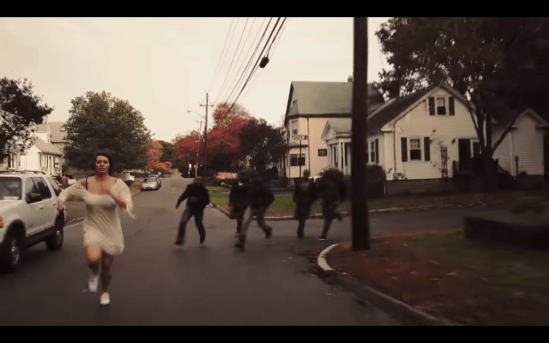
A big city surgeon on the mend of an alcohol problem and two siblings searching for their father who disappeared in the mountains hunting a mysterious big game find themselves in a small town inhabited by an ancient werewolf tribe.  Mostly seeking a peaceful way of life, many of the werewolves have tamed their inner beast to live normally isolated from their human neighbors to avoid bad blood and fear-driven conflict, but a rogue faction of werewolves has tasted human flesh, transfixing them with an insatiable need to hunt and feed on human outsiders who have uncovered the small town’s truth.  On the verge of the Equinox where every lycanthrope resident will transform into the primal versions of the beast, a select few have been able to conquer not losing their humanity as they team up with trapped, arsenal-ready humans and the eldest werewolf who is half witch to squash the evil werewolf population for good. 
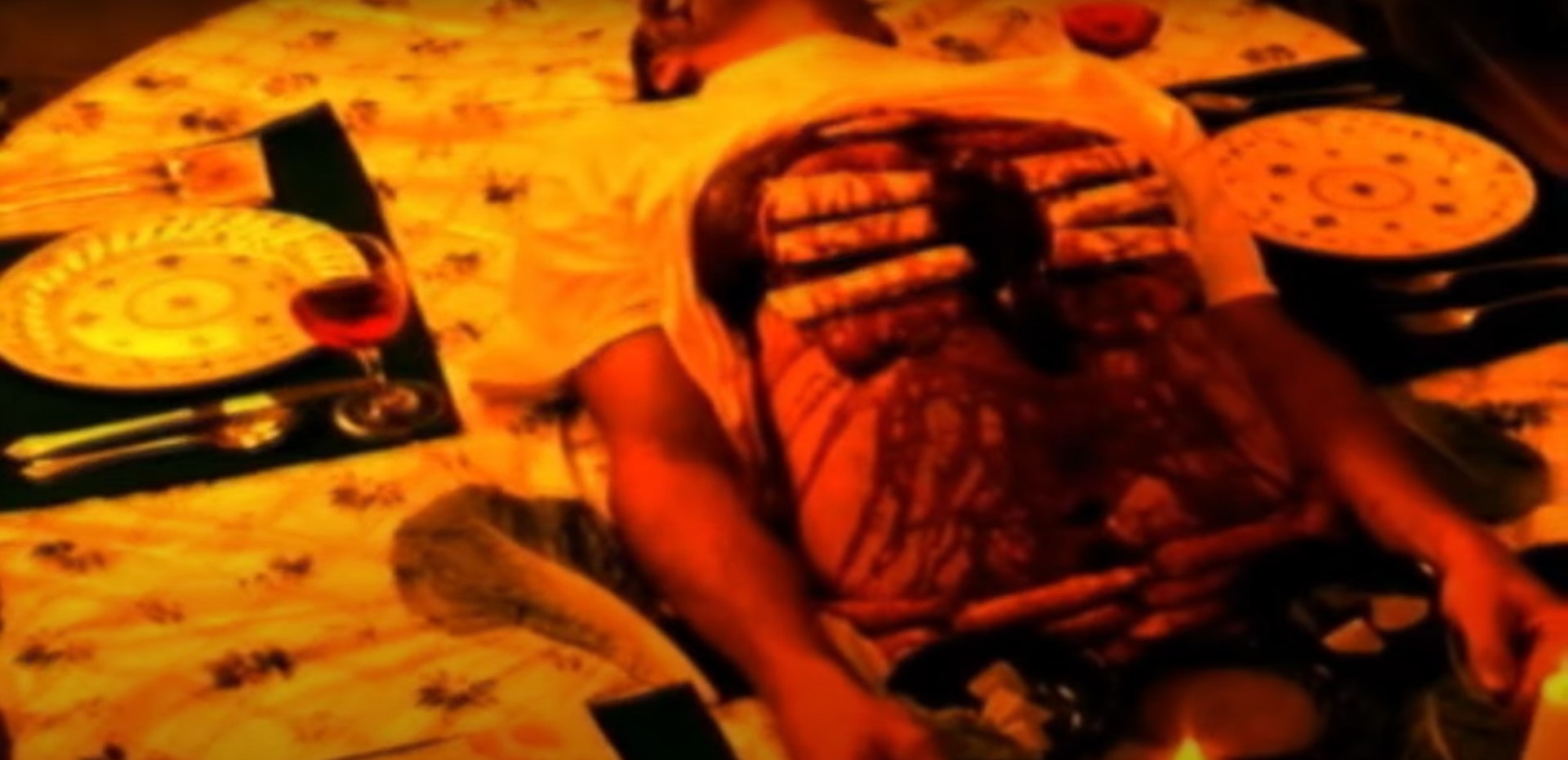
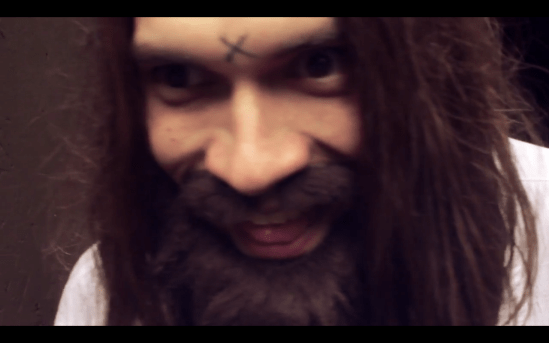
In the rural areas of New Hampshire 2006, Rob Roy tries his creative hand at making a movie, writing a script ingrained with his personal affinity for fantasy and werewolves, with the action-packed, shot-on-MiniDV camcorder thriller “Lycan Colony.”  Roy’s first attempt is ambitious to say in the least with a vim and vigor narrative with a visual and practical effects heavy ornament that Roy single-handily constructs all himself learning all the tricks to the trade as he goes.  What ultimately results is initially a colossal flop of technical mishandlings, bad acting, and rushed final products, but in recent years nearly two-decades later, “Lycan Colony” has been revived with a second chance by fans of the so bad, it’s good sect who, like the evil werewolves in the film, have tasted blood and want more.  Rob Roy self produces the film under his Wits’-End Entertainment company.
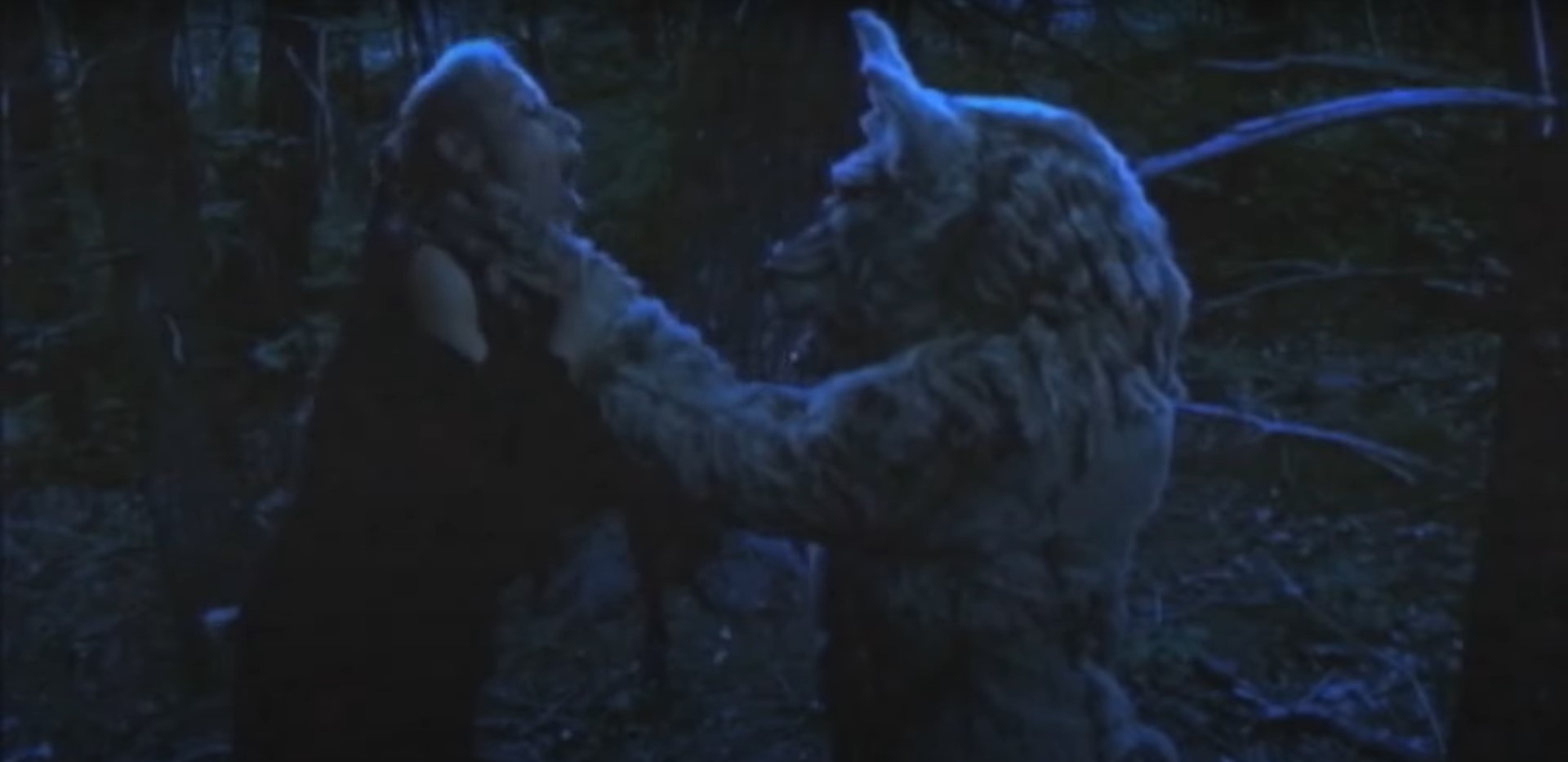
In producing a movie yourself, with your time, money, equipment, and the little know-how of the process, Rob Roy casts mostly family, friends, and newcomers in his New England werewolf film.  Both of the director’s sons make it into the picture with the older Ryan playing the mistakenly werewolf bitten teenage son of Dr. Dan (Bill Sykes), the surgeon, and Roy’s youngest, Jacob, as a presumed pup running for his life from hunter Sgt. Roger Allen (Paul Henry) as we see in the preface opening.  Though an important piece to some aspects of the story, such as Stewart’s creaturized adolescent transfiguration to help Dr. Dan and wife Sandy (Kadrolsha Ona Carole, “Attack of the Killer Chickens: The Movie”) understand and cope with their now lycanthropic son, Roy’s boys are not the centralized characters as the narrative awkwardly pivots from building up Dr. Dan’s choppy family dynamics and his alcoholic mishap substory to more nondescript kickass and chew bubblegum action of good versus evil as the missing Sgt. Roger Allen’s offspring, the commando-suited daughter Russ (Gretchen Weisiger) and the bad werewolf killed yet risen to the ranks of being a good lycanthrope Doug (Bill Finley), team up with the eldest wolf-witch  and spiritual liberated Athena (Kristi Lynn, “Hypnagogic”) and David (Sean Burgoyne) who can control his beast side with hero pose mediation and tribal chants.  As you can tell, it all becomes disturbingly clear as mud on what exactly we’re bearing witness to, but the “Lycan Colony” burghers flesh out with Sophia Wong, Steve Pascucci, and Libby Collins.

There’s nothing inherently wrong with Rob Roy’s good wolf pitted against bad wolf with man trapped in the middle story.  Throw in some subtle themes of alcoholism juxtaposition where the mountain water tames the beast with hints of silver nitrate and Dr. Dan’s post-career predicament that sends him to AA meetings and also themes of puberty or some kind of other rite of hormonal passage and “Lycan Colony” can work as an action-fantasy with a strong horror element.  The problem lies in the ambitious undertaking for a first-time filmmaker with more gung-ho carpe diem than actual experience and Roy will be the first one to tell you, as heard in bonus content interviews, his goal is to go big and not limit himself with a tightknit narrative with little-to-no special effects.  To the detriment of “Lycan Colony” however, that mentality of thinking took a three-month shooting-script down to a mere three weeks, rushing the final product to the point of using a blue screen for the nearly the entire third act in a real shoddy piece of VFX compositing.  Transpiring on screen resembles similar to the early days of 2D fighting video games with its mix of antiquated motion capturing technology, practical effects, and digital matte but while those traits appear raw, lifelike, and add that certain je ne sais quoi that makes it so attractive, for “Lycan Colony,” the effect miscarries for its time in what is a laughable imbrication.  For some, “Lycan Colony’s” campy crust will be a holy grail to obtain; one could compare Roy’s film to Dave Wascavage’s “Suburban Sasquatch,” another Visual Vengeance, early 2000s, revived flick that had similar rough-cut visuals.  For others, like me, what comedy rises to surface is digestible, the rest of the movie might make you sheepishly queasy. 
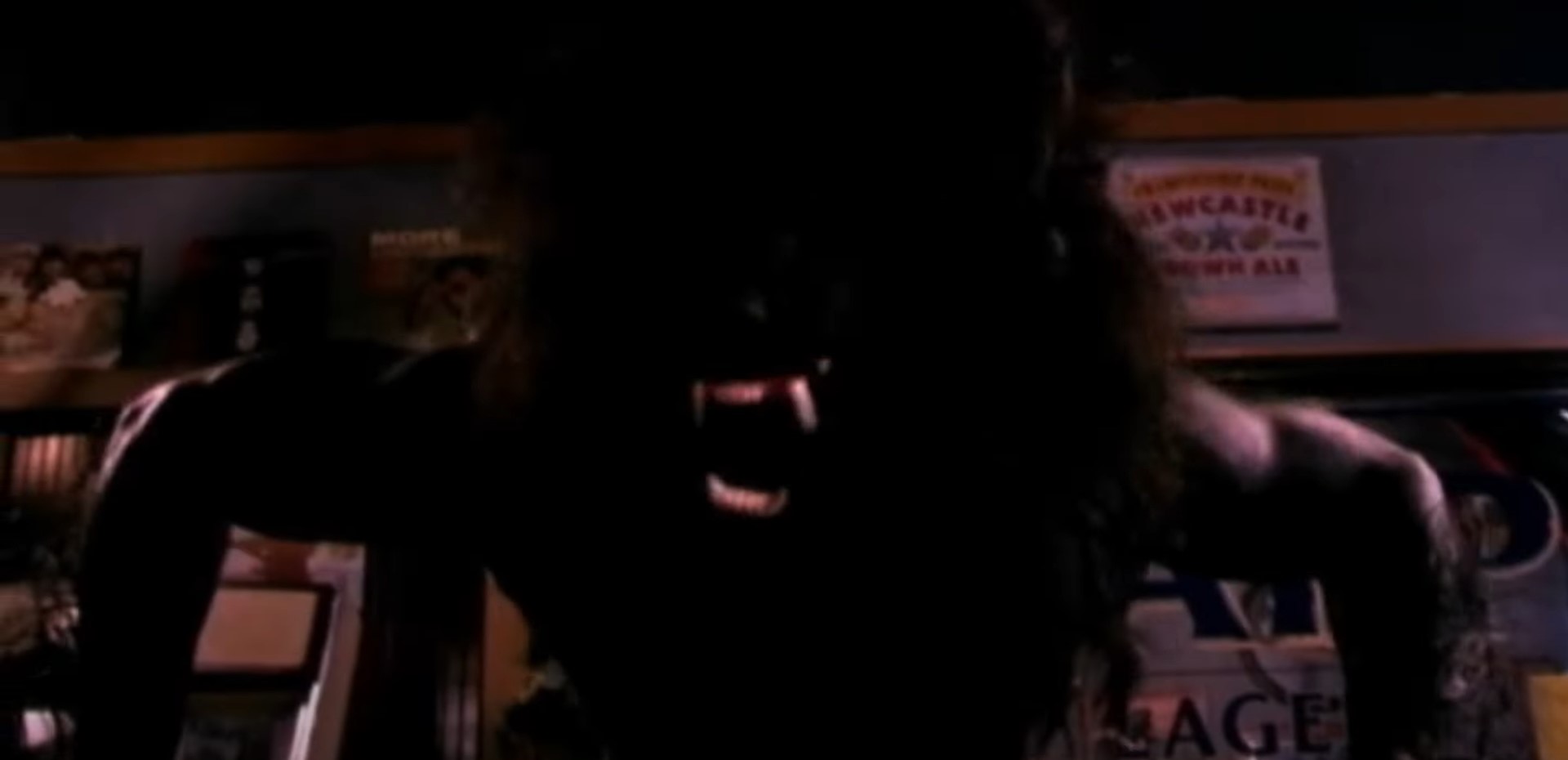
For the first time on Blu-ray, “Lycan Colony” has become a part of the Wild Eye Releasing’s Visual Vengeance tribe.  The AVC encoded, 1080i upscaled, BD50 is presented in a full frame 1.33:1 aspect ratio, sourced from an original tape shot on a Panasonic DVX100 MiniDV at 24fps.  Safe to say nothing will outshine celluloid, millimeter film or even today’s digital cameras as that period of time where videotape made a stand offered a rival format with cheaper costs and comparable picture quality; yet videotape, as with “Lycan Colony,” squeezes the resolution combined with matted visual effects, making inaccurately distanced composite look even more compressed.  Details suffer through the compression of MiniDV’s interference noise, undersaturation, and vertical tape impression lines seared into a few frames.  The undersaturation lies the biggest concern leaving behind darker tones that keep the image popping with color, rendering the entire scheme more overcast even when not exposed to rough gel lens which is used quite often in various Crayola hues.  The English lossy Dolby Digital stereo 2.0 has enough strength to get around and get through with a tenuous dialogue track complicated by the not truest of fidelities on likely the onboard camera mic and by the boxy echoes of a blue screen stage, likely Roy’s garage.  Stock file notes give the full body suited lycanthropes enough growling canine bite and the gunshots are awarded cacophonous explosivity, solidifying a decent range of sound, but there are missed or asynchronized effects against the action with brief seconds of delayed catchup or just plain omission.  Boxy areas eradicate the depth, especially in the whole third act when the last battle is held in the woods but is mainly a blue screened forest, so the compounding loss of milieu affects atmospheric track greatly.  Visual Vengeance’s track record on delivering new special features has not gone unnoticed and the trend continues with “Lycan Colony” with a new interview with director Rob Roy.  Also included are two commentary tracks:  one with director Rob Roy and a second with B&S About Movies’s Sam Panico and Drive-in Asylum’s Bill Van Ryn.  A second version of the film is a full Rifftrax version, a blooper reel, the “Lycan Colony” music video, original trailer, and the Visual Vengeance trailer round out the release’s ancillaries.  The colorful Stephen Gammell-esque, presumably pastel, front cover illustration greatly over exceeds expectations but is nonetheless phenomenal full-moon imagery on the cardboard slipcover and also dichotomizes the style on the translucent Amaray Blu-ray case’s cover art depicting a scene from the film of a hungry wolf behind the alcohol-decked bar.  And also true to Visual Vengeance, the release is jammed-packed with inner goodies, such as a New Hampshire Forest Scent air freshener, retro VHS Sticker sleeve, a 3-page pamphlet with essay from Sam Panico with color picture, and a folded mini-poster of the Blu-ray cover art.  Not also to neglect to mention is the reversible cover art with the original one sheet art.  The Visual Vengeance release comes region free, unrated, and has a runtime of 90-minutes. I’m extremely happy for the appreciation and newfound love director and enjoyer all-things-werewolf-fantasy Rob Roy is receiving for his resuscitated escapism but, for me, “Lycan Colony’s” jerry-built and doesn’t come anywhere close relieving the so good, it’s bad itch in Roy’s filmmaking first pass done on the cuff. 

“Lycan Colony” available on Blui-ray Collector’s Edition!

Flesh Combustible EVIL Ore in “Primal Scream” reviewed! (Dark Force and Code Red / Blu-ray)


In the future of 1993, a privatized and powerful mining corporation is extracting a newfangled element cleaner and more abundant than any other energy source known to mankind, but the element, known as Hellfire, is also the most dangerous as it causing the human body to spontaneously ignite the internal organs in a heap of electro-combustion, searing the body from the inside out. A private detective is hired under the pretense of an affair scandal but becomes intertwined in a power struggle to harness complete control of Hellfire that leads from explosive skirmishes on a mining station on Saturn to the many charred bodies scorched by the unforgiving Hellfire on Earth and the investigator is caught in the middle behind a veil of cloak and dagger criminal conduct, searching for answers and the truth.

A gumshoe narrative with a caustic boost of flesh destroying flair, “Primal Scream” is the 1987 independent science fiction action epic from first time filmmaker William J. Murray and an equally tenderfoot crew buckling down for their inaugural ignition into full-length feature film space. More recently familiar with Murray’s work on the Jersey shore thriller, “Exit 0,” as the director of photography, the writer-director got his big start helming “Primal Scream,” also known originally as “Hellfire,” a planetary, melodramatic perusal also set in New Jersey, shot primarily on location in Atlantic City. The title change from “Hellfire” was the brainchild of the distributor who bought the rights to the film, claiming “Primal Scream” as a more marketable title, but with a name like “Hellfire,” the spaceship models, web of lies, and evil corporations detective story would have garnered an audience. “Primal Scream” is a production financed by a movie theater concession stand franchisee, Howard Foulkrod, looking to be a part of movie-making team.

Before working with Murray in “Exit 0” as a heedful bed and breakfast front desk attendant with a pervading cocksure attitude, New York born Kenneth McGregor first and foremost collaborated with the filmmaker on “Primal Scream” as a washed up police officer turned private dick Corby McHale that became McGregor’s debut lead role in the low-budget sci-fi feat. McGregor could carry the weight on such a profound role that required physicality from a browbeaten scoundrel that could attract young new love as well as re-attract his former affairs. However, I wasn’t especially sold on McHale’s love interest, Samantha Keller, who came off strong toting up a lip-giving and gritty female officer who has history with McHale. Sharon Mason dons the role with her lanky, on the gaunt side, appearance that could have elevated the role in a incongruous, yet positive, light, but Mason withers down to a lovestruck puppy besotted with McHale back in her life, losing that salt of the Earth edge that keeps her sharp in repelling the scum around her as a beat cop. Jon Maurice was a real presence on screen as a weary and angry captain on the force and maintains a mutual respect for his former office and friend, McHale, though doesn’t look it. In his only credited acting role, Maurice has the towering posture of “Dawn of the Dead’s” Ken Foree or “Candyman’s” Tony Todd with a resonating voice, a gospel actor, and compliments McHale’s unkept and insouciant façade. Rounding out the cast is Julie Miller, Stephen Caldwell, Edward N. Fallon, Joseph White, and timeless showman Mickey Shaughnessy in his last performance before death.

I find difficulty in thinking of one single aspect in where “Primal Scream” doesn’t deserve admiration. Do I think “Primal Scream” is a flawless attempt of a gargantuan dystopia of escapism? Not at the least, but for a pressurized, first time director, William Murray, his equally untried crew, and a cast of novice actors, the space ship model and pyrotechnics-laden gumshoe narrative palpitates wildly with tremendous heart for the amount of other intrinsic details that went into the feature, like the video phones and the ultramodern everyday vehicles, that didn’t produce a sensory overload of futuristic adornment and kept a practical milieu of face-to-face gambling bookies (location was set in Atlantic City after all) and ballistic projectile weapons despite a significant advancement in space travel. Hell, there’s even a sleek unrivaled-looking DeLorean in the first moments of the movie as a cherry on top. Granted, “Primal Scream” is set in 1993, nearly a decade outlook from production, and maybe undershot a realistic timeframe for interplanetary mining base construction. Another thing unclear is the story’s plasticity, murkily prefaced with a drop-in climax that is then refocused on the beginnings of Corby McHale’s seemingly diminutive hired involvement that leads to corruptive strife and dislodging of greed for the better of mankind. While trying to maintain a belief in the systemic universe the characters live in, the scenes are told through McHale as noted in the climatic introduction, but there are a few scenes outside that perspective box and don’t make filmic sense to the storytelling core. Ambitiously executed, “Primal Scream” dotes on films, such as “Blade Runner” or “Brazil,” of an Earth dystopian future and challenges us to totally recall our affection for the practical movie making magic.

In what I consider an odd release for Dark Force Entertainment and Code Red, I have to remind myself that William Murray’s “Primal Scream” is an oddity film with rich background and ludicrous-speed potential all around and makes a grand, high-definition Blu-ray debut distributed by MVDVisual. The region free release is presented in anamorphic widescreen, 1.78:1 aspect ratio, from a rather preserved source. The picture maintains a stable course throughout with some flare ups of scratches, blemishes, cigarette burns, and omitted frame jumps that were nearly inherent with 35mm productions. Yet, the coloring is excellent and balance with no diluting edge enhancements or cropping. A forced English language DTS-HD Master Audio 2.0 stereo mix is a palpable mix that is clear and unfractured by distortions. There remains a constant, low-toned crackle and hum throughout the approx. 85 minute runtime, almost as if it’s electronic interference, but the mix maintains a par score that offers beveled depth and a resounding range of bombastic explosions and the snap, crackle, pop of skin being corroded and cooked by Hellfire. Special features include an audio a new commentary by director William Murray and crew as well as the same group in a Making of “Primal Scream” featurette “Made A Movie, Lived to Tell,” showcasing current interviews recollecting 30 years ago their experience in making, and surviving, their first movie. Also included is the “Hellfire” 1981 promo reel. “Primal Scream” is more down to Earth than it is pew-pewing in the inky expanse, paralleling the dangers of new and unexplored elements and mining procedures, such as fracking, with a sleuth story rigmarole to save man from not only destroying their corporeal selves, but also destroying their souls from corruption.

Own Primal Scream on Blu-ray today!

Nihilism Brings Out the Evil in All of Us! “The Vicious Sweet” reviewed!


Popular B-movie scream queen, Tyler Phoenix, just walked out belligerently from the latest screening for her new schlocky horror film. Fed up with worrisome managers, pressuring producers, and hot-headed directors, the leading lady glazes over her career as the past creeps back into her life, sourly affecting the platonic, one-sided relationship with her boyfriend. Tyler’s downward spiral toward the depths of depression and frustration attractively consider suicide by pills, but when Tyler awakes, she finds herself handcuffed to a bed with a mysterious masked man looming over her. What the man wants is unclear to Tyler, but one thing is absolute, he’s an adoring fan of hers who seemingly knows more about Tyler than she knows about herself. Hours seem like days, days seem like weeks, and weeks seem like months as Tyler is continuously drugged and asked personal questions about her past and about the disparage campaign to capsize her life. Tyler begins to hallucinate and can’t tell what’s real or not as she confronts internal demons while being completely forthcoming to her dangerously devoted captor.

“The Vicious Sweet” captures visceral surreal existentialism from Sub Rosa Studio’s own Ron Bonk in the shoes of writer and director. The 1997 thriller is a cinematic blend of psychological horror, self-deprivation, and coming to terms with one’s own identity. All shot on analog video and on a micro budget, Bonk’s able to depict dreamlike scenes hauntingly and pragmatically without the assistance of costly visual effects that often cheap in appearance on video transfers. Shot in Syracuse, New York, “The Vicious Sweet” could be set anywhere, USA and with locations that set the main characters in close knit quarters for nearly most of the 90 minute runtime, the “House Shark” is able to fashion an under the radar overwrought mystery. Though the SRS Cinema retro DVD cover is lustfully tasteful with an illustrative Tyler Phoenix handcuffed to the bed and in her underwear, “The Vicious Sweet” isn’t about abduction for sexual exploitation. Yes, one scene does represent the DVD cover; however, Bonk’s story tickles the frayed and blurry realm of the mortal coil that can push the limits of not only the story, but also Bonk’s ability to explore that plane of existence that inhibits zombies, large rat-faced looking creatures, and the intangibility of time.

Tyler Phoenix whirls as an angsty actress with a chip on her shoulder and a metaphorical duffle bag full of internalized secrets. Sasha Graham straps herself right into the role, exhorting all the right kinds of anger and cynicism into her seemingly successful character’s career. Graham has seen her fair share of mid to late 1990’s lowballed b-movie films, such as having a substantial role in “Polymorph” directed by “The Dead Next Door” director J.R. Bookwalter and in “Bloodletting” helmed by the “Witchhouse” screenwriter Matthew Jason Walsh, but “The Vicious Sweet” marks the debut of leading lady, a true scream queen role, and Graham wears it well. She’s complimented by the debut performance of the late Bob Licata as the mysterious tormentor who goes by the name of Grimaldi, one of the performers from Phoenix’s early, short-stinted porn career. Grimaldi, who repeatedly notes, is a part of Phoenix and, for a lack of a better term, symbolizes the actresses betwixt past and present on a conscious level of trying to make sense of all that’s entangled in that screwed up and complex mind of hers. Licata, in regards to his character, is cold and consistent, playing the act of a passionately solemn and unpredictable serrated fan hellbent on trying to expose Tyler Phoenix’s true self. “The Vicious Sweet” also stars Jason Wicks, Theresa Constantine (“Bloodletting”), Jeffrey Forsyth (“Gut-Pile”), Al Marshall, Steve Wood, and Jeff Jones.

The story progression through Tyler’s figuratively personal hell hardly goes stagnant despite, for most of the her status, being manacled to a bed for relentless interrogation. Tyler’s put through a variant ringer of drug induced hallucinations and cerebral caprices and much of the credit, alongside Sasha Graham, should go to writer-director Ron Bonk who is able to translate from script to screen his vision. Contrary to the restraints of a SOV production, the creativity of Bonk’s camera work in masking, in more ways than one, Grimaldi’s stoic façade and centralizing Tyler’s and her experiences is evocative , the antiquated practical effects are still appositely poignant, and the diverse content holds “The Vicious Sweet” to a larger scale than the finances suggests. I’m not trying to elevate Ron Bonk’s film up to being the Holy Grail of low budget horror held in the vibrancy of limelight, but in my opinion, to dismiss the appreciation for producing something out of nothing would be a tremendous disservice to all auteurs. “The Vicious Sweet” leaves us with an open for interpretation perspective that somehow manages a jaw-dropping mound of shock and perplexity, nothing short of the likes of Christopher Nolan’s “Inception” ending.

The SRS Cinema DVD home video release of Ron Bonk’s “The Vicious Sweet” is presented region free, 1.33:1 aspect ratio from a S-VHS Betacam SP, that mostly result with black bars on each side of your 16:9 HD television. The limited edition Blu-ray is marketed as remastered, but the DVD image quality is awfully poor from the analog master transfer and doesn’t seem to have a smidgen of touch up where marco-blocking artifacts and aliasing run rampant. What also doesn’t help matters is the faded coloring and the blacks nearly void of any shape of definition as if you’re in a bright room and the light is shutoff and nothing but a blurry black void is present between the light and the time you’re eyes can adjust. The English language lossy 1.0 uncompressed mono track is frail and shaky, but still manage to push through without an obfuscate obstacles. Dialogue cozily lies low on the audio totem pole and the range and depth lack during more fantastical moments of zombies and monster swarming about. Bonus features include a director commentary, a director and Sasha Graham commentary, and SRS Cinema trailers. The best DVD feature, along with the film itself, is the illustrated, VHS letterbox DVD cover of the aforesaid Tyler Phoenix beautifully bound to the bed with candles lit by her table side and dressed scantily with a nice Please Be Kind, Rewind cherry on top. Despite the technical woes, “The Vicious Sweet” remedies the longstanding misinformed notion that independent b-horror movies are a hack and burden to the cinema fuselage with vast imagination and sturdy ambition.

The Vicious Sweet DVD is a must buy!

Evil Is Unearthing from a Bigotry Bunker! “Honky Holocaust” review!


In an alternate universe, Charles Manson didn’t get incarcerated for his heinous cult murders. Instead, the sect creating and drug taking Manson goes deep underground with his acolytes after committing a vile crime that becomes the foundation of a nationwide race war. Manson’s followers preach hatred and distain for the blacks and rape their own white women to produce an inbred underground white community. When Manson falls ill and dies a violent and horrible death, he leaves behind a sole child, Kendra Manson, in the most intolerant racist hands of Dan who raises Kendra with a flood of mind altering hate for non-whites. When Dan receives a subconscious message from Charles Manson to surface from the bunker and rule the world with white supremacy, they’re met with a surprise that black people are the majority and whites, known derogatorily as albis, are the lower, socially mistreated class subjected to the same race discrimination during Charlie Manson’s above Earth reign. Separated from her bunker family, Kendra becomes lost in what she perceives as an upside down world, but has is opened her eyes to the real subject matter on race?

“Honky Holocaust” is without a single doubt a Troma masterpiece. Director Paul McAlarney’s shocking bizarro world of racial social commentary is just not another run-of-the-mill message of inequality, but an contemplative insight of role reversal. The mirroring of the nastier portions of race discrimination from 1950s to 1980s has been set in the present day and extends beyond the usual racist America regions, that are typically Mississippi or Alabama, with the film set in San Francisco; perhaps the most tolerable and friendly city in the world set in the most liberal state that is California. While McAlarney’s spews the carnage and the vulgarity that’s very Tromaville worthy, the Boston director has written a thought provoking concept that’s masked in dick jokes, sex and drugs, and a girth of gory practical effects.

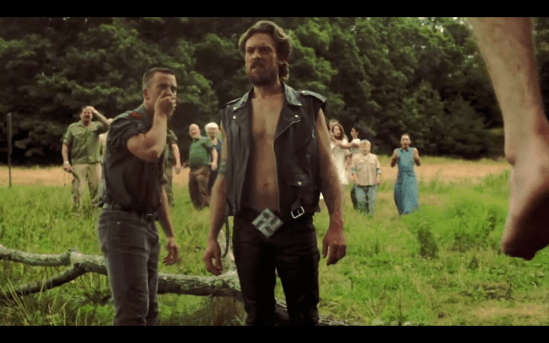
Maria Natapov takes the lead with her misadventure role as Charles Manson’s bunker daughter, Kendra. Natapov acts dumb and plays stupid when face-to-face with the very race her character’s been bred to hate for more than 30 years while maintaining Kendra’s naivety through the heat of racially tension moments. The restaurant scene comes to mind that’s a real eye opener in where Natapov walks amongst a barite group of black patrons and the scene sells the powerful reversal with Natapov’s unflinching performance. “Honky Holocaust” has a romantic side when Kendra comes under the safe haven wing of the racially suppressed Lucius, played by softly charming Constantine Taylor, and they team up to stop Kendra’s stepdad Dan, a role fitting for the film’s producer Lucas Fleming. When Flemings on screen, racist ooze just seeps from his portrayal of Dan, even if Dan didn’t sport a gaudy swastika belt buckle. Other characters pop in and out, some memorable, some not. Krisoula Varoudakis, Mauricio Viteri, and Thomas Delcarpio costar.

McAlarney’s 2014 offensive exploitation amusement ride starts gnarly enough with the director going through a monologue about how to make a film surrounding racism; all the while sitting on the can. Through his comfortable exposure of his manhood and the exaggerated flatulence filling the audio air, he painfully yells into a microphone about the birth of his idea as he discharges chocolatey waste into the toilet and sends off an unforgettable farewell by reaching behind him, scooping up some backside waste, and licking it into his mouth with the statement, “that’s some good shit” quickly following. McAlarney has successfully set the tone for “Honky Holocaust.” Troma’s renowned celebration of their bread and butter of tasteless cinematic garbage (which Its Bloggin’ Evil adores) certainly incorporates this social commentary gem, but McAlarney is more than what meets the eye. Beyond his thought provoking story, McAlarney has a talented production eye. With a micro budget being filmed mostly in the streets of San Francisco, McAlarney was able to construct an alternate reality and leaving behind a flawless perception that whites are truly the scum of the Earth. I’m not totally onboard the McAlarney train, however, as I became a bit lost in the character development near the end, especially with Kendra Manson, but I did like the path the character took, mowing down and massacring the primeval in order to rebuild a better future for all.

Troma Entertainment and CAV Distributing proudly introduces Bloddy Hammer Films’ “Honky Holocaust” on high-definition Blu-ray via a MPEG-4 AVC encoded 1.78:1 aspect ratio. The image quality is a mixed bag as none of the quality is consistent, familiar to other early grindhouse imitated features, but the unbalanced hues and, sometimes, lack of popping colors battle back and forth for quality domination. Early on, noticeable aliasing can be caught during the lynched scene, leaving less defined objects and creating chaos in the pixels. As the film progresses, outlines and textures get better, more consistent. The dual channel LPCM audio mix suffers horrible as the dialogue track is sorely underfoot with the ambient LFE overlaying place it’s robust boot right on the dialogue’s neck. Soundtracks are inconsistent as well, being too loud for comfort or being too loud for the rest of the implemented tracks who become lost. Bonus features have substance with a “Behind-The-Scenes Honkumentary” that’s a twitching handheld camera look at some of the film’s best scenes, deleted footage labeled “exterminated scenes,” and a video containing director Paul McAlarney pledging his allegiance to Tromaville. There are the usual Troma bonus pieces about protecting the environment and the film’s theatrical trailer along with Troma’s president, Lloyd Kaufman, giving his usual satirical introduction. The obscenities in “Honky Holocaust” mingle regrettably well with story’s racial social inequalities in a chaotic melee, pointing out the senseless violence and asinine nature in social jest. Paul McAlarney knew what he was creating from within the belly of the beast of his darkest comedy, even if the punk parader’s LSD-inspired trip through hell seems misconstrued on the surface.

“Honky Holocaust” available now at Amazon.com!

Evil Goes Silent! “The Unspoken” review!

vlcsnap-00009
In September of 1997, the Anderson family vanished from their remote home on Briar road, leaving behind scores of scattered blood, a lynched dead body, and a house keeper in mental shambles. Seventeen years later, Jeanie and her son Adrian move into the Briar home with the legendary and infamous reputation for being ghastly haunted. Living on hard times with her father being laid off from the region business, Angela reluctantly accepts a good paying caretaker position for Adrian at the notorious Briar home. When a local drug runner gets wind that his stash’s repository is no longer vacant, a dangerous game of retrieval pits the desperate small time dabblers against a supernatural force living inside the home that puts Angela, consequently, in the middle of a terrifying standoff.
vlcsnap-00010
Sheldon Wilson. A name that’s under the horror radar for most horror fans, but for this particular reviewer, this particular fan, Sheldon Wilson has had a major influential role in bringing a wealth of horror to my life. The director’s 2004 film “Shallow Ground” was the first domino piece to fall that a started landslide of independent horror cinema to come flooding into my presence and opening up my world, my eyes, to the many facets of the genre. I fell hard for “Shallow Ground” that led to the foundation of a grand and glorious horror collection that would be acknowledged Rob Zombie, who’ve I’ve heard, has an extensive film collection. Wilson’s latest venture “The Unspoken” has reminded me that horror can live in the restraints of the past and can be bold with an unforeseen twist.
vlcsnap-00014
Now, “The Unspoken” epitomizes the very definition of generic titles, but the premise goes far beyond being geriatric with similarities, but not on the same elaborate scale, to the 2012’s “The Cabin in the Woods” by exploiting the genre’s familiar tropes but shifting, at the very last moment, to an ending that’s well received and a breath of fresh air. From the Wilson films that I’ve experienced, his story structure is orchestrated in a detailed manner making the subtleties pop with saturated intensity. With “The Unspoken,” Wilson’s indirect jump-scare style is very much engrained and effect goes without diluting the entire film as some, examples such as some of the recent Halloween films, have done in the past to the point of tiresome and ungratifying.
vlcsnap-00017
A satisfying cast genetically makes up the captivating story with young and upcoming scream queen Jodelle Ferland in as the lead role of Adrian’s desperate caretaker Angela. Ferland has quite the stint in horror starring in such memorable films as the recently referenced “The Cabin in the Woods,” “The Messengers,” and as the young child in 2006’s strong video game adaptation of “Silent Hill.” Ferland possesses that scared and innocent persona and she leaves nothing on the table when forcing to battle against a supernatural danger that can animate a decaying, jaw-severing dog corpse. Pascale Hutton, Anthony Konechny, Chanelle Peloso, Lochlyn Munro (Freddy Vs. Jason) and a passing-through role for “The Hitcher” remake’s Neal McDonough as a local sheriff rounds out the rest of the “The Unspoken” cast. Sunny Suljic, who portrays the unspoken Adrian, solidly performs as the creepy and mute, Damian resembling child even with his bad young Elijah Wood haircut. Together, the ensemble plays their respective roles with as much as earnest as the next film with more of the focus on Angela and Adrian throughout with supporting characters driving much of the storyline, funneling toward a surprising catalytic event.
vlcsnap-00019
For the majority of the film, “The Unspoken” meets the harsh criteria fans need and desire from their horror films with some solid practical effects, no CGI effects, a story-driven plot, and a haunted house full of good scares with tidbits of blood and gore in between them all. There’s even a little nod of respect for the “Amityville” series. Only insignificant character underdevelopments raise a few unanswered questions about situations perhaps more pertinent to the motivation of the story such as the forbidden relationship between Angela and best friend Pandy which floundered a bit out of place within the confines of the plot and went stagnant when more about the Briar home became revealed or when Pandy’s more-or-less boyfriend Lutheran and his drug scheme goes through the sharp blades of a blender.
vlcsnap-00015
The Lighthouse Pictures produced and Arrow Films UK distributed paranormal disturbance feature “The Unspoken” hit retail shelves and online markets September 5th. I’m unable to review video and audio quality with a region 2 DVD-R and there were no bonus material available from the static menu. However, Wilson’s film fairs with a sharp and clean appearance without the bedazzling of a Hollywood budget; the director’s use of the slow panning method and focusing on unsettling camera angles to transform an ordinary mountain home into a menacing dark presence doesn’t require much touchup in order to terrify audiences. If you’re a fan of quiver inducing, nail biting horror with a good M. Night Shyamalan twist at the end, “The Unspoken” will leave you completely terrified and utterly speechless.