Screenland’s Bright Lights Can Turn One Lonely Man EVIL! “Hollywood 90028” reviewed! (Grindhouse Releasing / 3-Disc Blu-ray and CD)

“Hollywood 90028” 3-Disc Collector’s Edition Can Be Preordered Here!

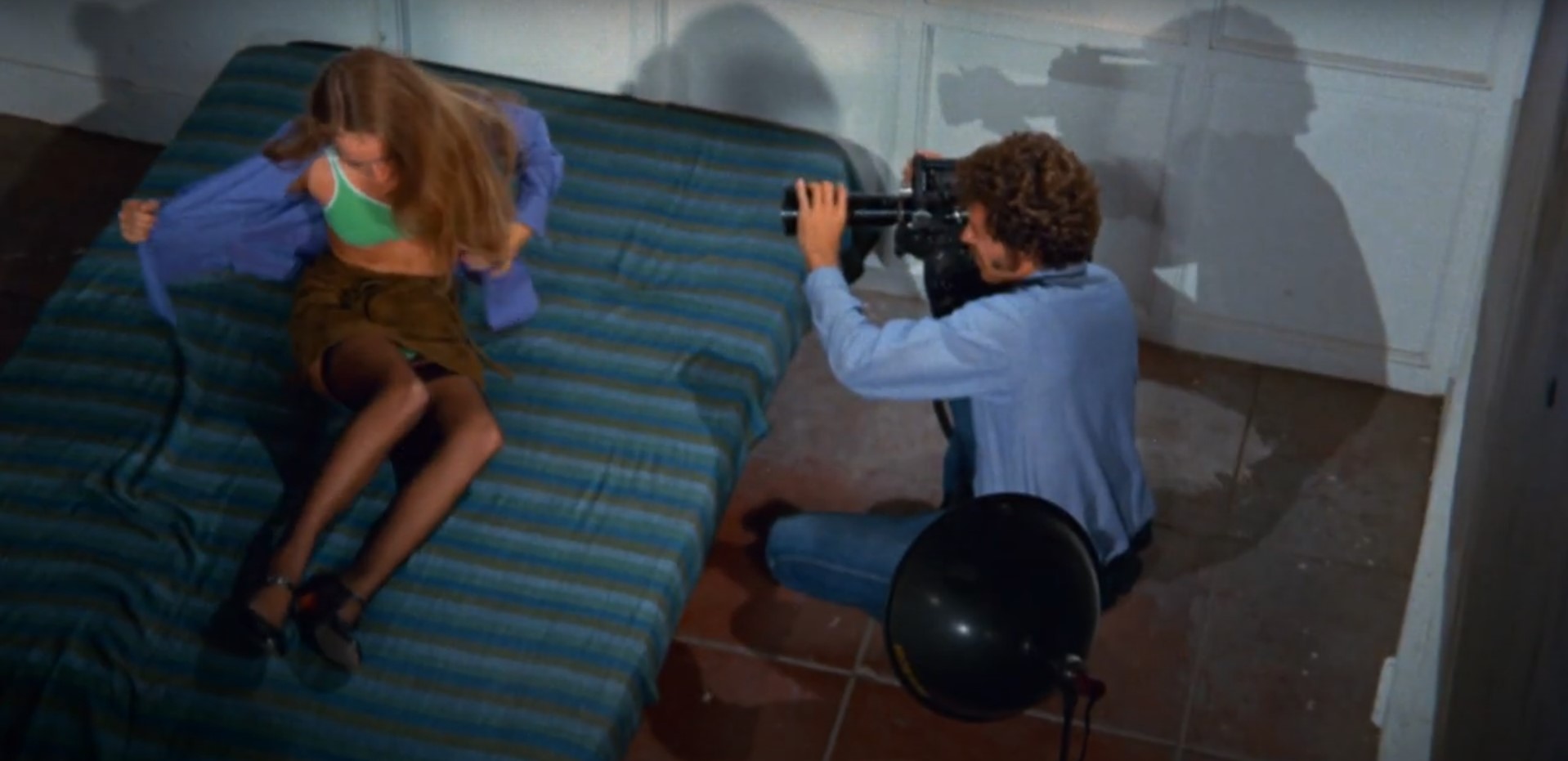
Having moved West from a small Ohio town a few years back, photographer and video cameraman Mark found himself stuck shooting nudie reels for a low-budget porn producer.   A solitary life lends Mark more freedom then most to wonder about and driver around on the streets of Hollywood with ambitions for a legit job of shooting regular material that doesn’t humiliate him.  Troubled about his childhood past involving the death of a younger brother and with his frustrations within his video film capturing vocation, Mark finds himself in the company of young, attractive women who find him easy to talk to and attractive as well, but when Mark reaches a limit, aberrant thoughts take over and he strangles them to death.  When he meets starlet Michele on one of his shoots, Mark believes he’s found the woman for him, one that can relieve the pressures of life and work with nothing more than her beauty.  For Mark’s abnormal mind, love at first sight might not be that easy.
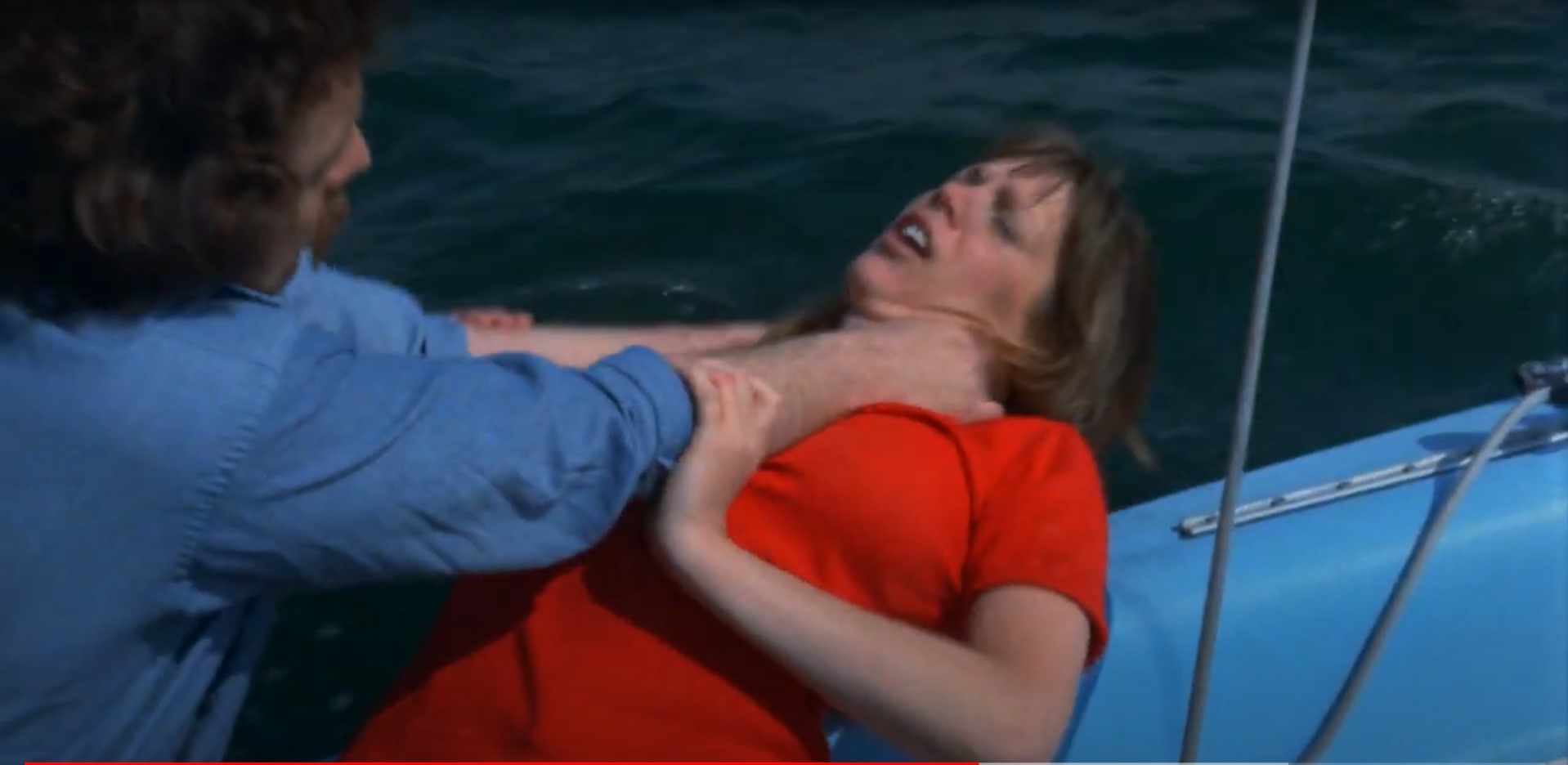
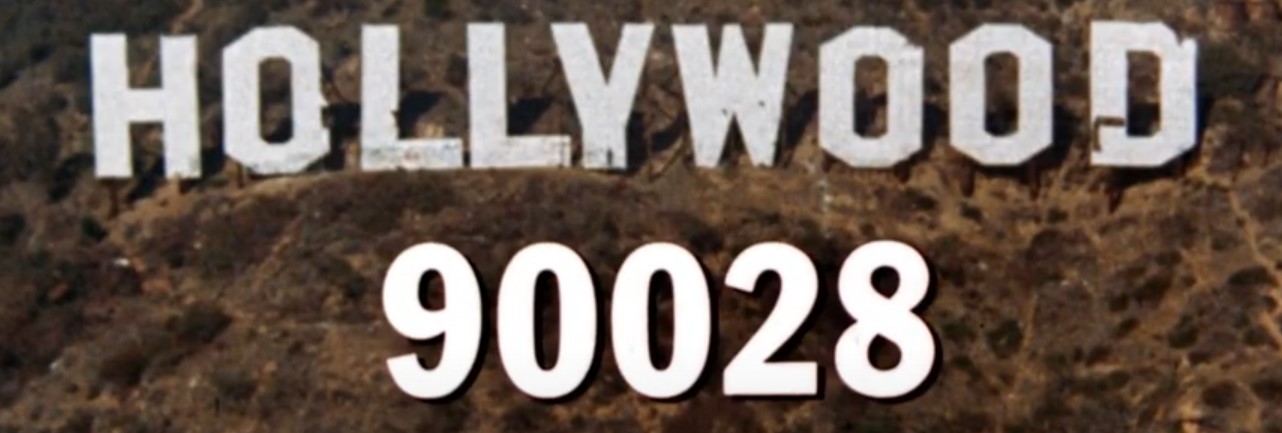
Writer-director Christina Hornisher tackles trauma induced behavior and the Hollywood pull of small-town aspirations chasing dreams in the drama-suspenser character piece of “Hollywood 90028.”  Hornisher’s debut feature film released in 1973 also became her only feature credit as a director who supplied arthouse substance but also embodied a different kind of substance, the grueling confiscation of hope for work, stardom, and love, perhaps even sliding into a bit of escapism, as the bright lights of Hollywood draw the flies to the flame.  Shot on location in and around the Hollywood, Los Angeles area that also had scenes fillmed directly at and underneath of the self-referential hillside Hollywood sign landmark before the iconic, globally recognized attraction had been fenced-off with visitation restrictions post-film in the 1980s and further protected with security systems in the mid-1990s.  Hornisher also self-produced the film which was also known under alternate titles as “The Hollywood Hillside Strangler,” “Twisted Throats,” and “Insanity.” 
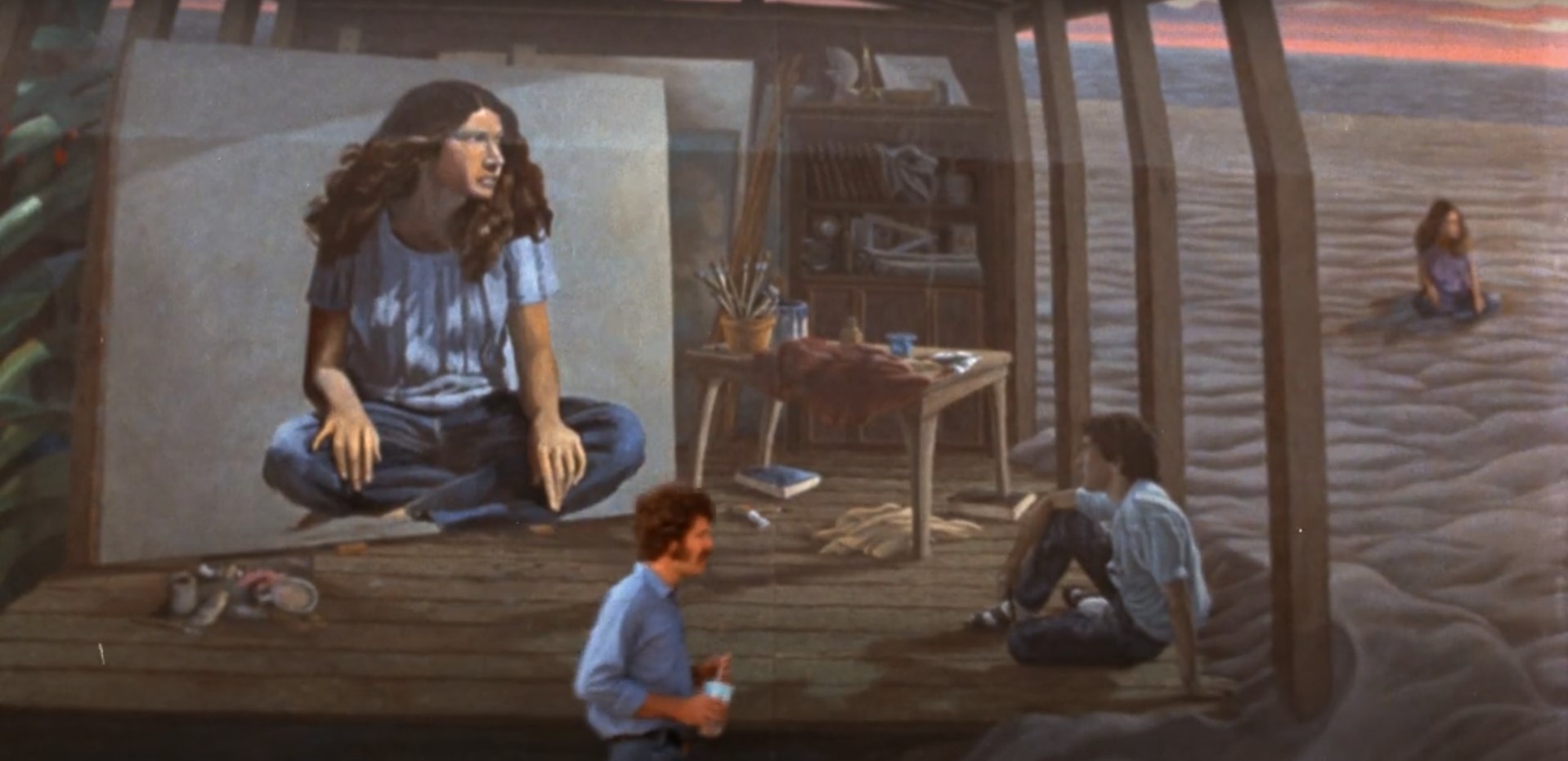
Christopher Augustine, who would also have a part in “The Doll Squad” of the same year, played Mark the calm and restrained pornography cinematographer and editor.  Not as sleazy as his title, Mark’s reserved nature doesn’t stop him from photographing and working diligently on splicing film without completely cutting off from the world but does make him quiet, observant, and intriguing, or so does Michelle thought.  Michelle’s a smalltown girl who moved West to work in the fame industry who soon finds herself being financially forced out of legit paying gigs for more sordid, sleazy work.  Played by Jeannette Dilger, who would actually have a role in the adult film “Young, Hot ‘n Nasty Teenage Cruisers” a few years later, she would spark chemistry with the mustached Augustine that allows their Mark and Michelle to fall in love that isn’t amorously glamorous but has innocent notes of flirtation and a lot of walk-and-talk realism onscreen relationships tend to omit.  Hornisher determines Mark to be the centerpiece of her character study.  Every scene caters to Mark’s interactions with Michelle, his professionalism with sleaze producer Jabol (Dick Glass), and the two other women he meets and eventually strangles.  Where Hornisher isn’t her best is in the building up of Mark’s suppressed sociopathic behavior, stemmed from a brief opening montage of a preteen Mark and his large family that implies his involvement in the accidental death of a younger brother, with ever delicate triggering that doesn’t solidify calling back to his aggressive-resulting trauma.  “Hollywood 90028” cast rounds out with Dianna Huntress, Beverly Walker, Kia Cameron, Ralph Campbell, Melonie Haller and Gayle Davis.

Though her first feature credit, Hornisher had the makings of a competent, auteur filmmaker.  “Hollywood 90028” evaded the conventional narrative structure and one-trick pony photography with more arthouse ambition that saw not only panning and tracking in her cinematic cache, but a stunning and incredibly quick finale zoom out from the Hollywood sign of smooth drone quality but completed in 1973 with a helicopter soaring over the Hollywood district.  Use of spliced-in cells of modeled sex representation as well as sign denotations of the character’s dialogue and thoughts, a kaleidoscope lens utilized during an intimate love scene, and the greater use of off-screen dialogue over on-screen conversating creates a thin layer of psychological realism in contrast to the actual realism between Mark and the rest of the characters.  Mark’s sullen display of emotions throughout the story culminates with his unconscious destructive demise after finally expressing a sliver of elation with Michelle but that’s also when he realizes that his tragic past and present psychosis will never let him go and will destroy anything that tries to replace it.  In one theory, Hornisher might have kept Mark in the same clothes throughout most of the picture to depict a deranged mental image; his constant choice of clothes is a hangup that can’t be let go for sharp-eyed viewers who wish he’d change out of his denim, long-sleeved shirt and denim jeans.  Unlike Mark’s unchanging denim statement, Hollywood in Hornisher’s film is a city captured in time; much like the Hollywood sign had gone from an area of loitering to now protected from the public, the fornicated fleapits and the colorful and character-building structures of Hollywood have long since been razed and rebuilt into the more glamourous, if not still snakebitten, Hollywood you see today. 
Grindhouse Releasing has gone the extra mile in not releasing a standard version of “Hollywood 90028” with standard fare and a rink-a-dink, barely passing muster transfer, but releasing a definitive chef-d’oeuvre of this lost Christina Hornisher film.  The new 4K restoration created from the original 35mm negative makes a statement that they underrated, underappreciated and the underbelly of indie cinema will not be ignored and, instead, be celebrated in retrospect, recoloring, and painstaking supervision in the efforts of all areas of rejuvenation.  The 3-disc, Blu-ray and CD set has an AVC encoded, 1080p high-defintion, 50 gigabyte capacity on the feature disc.  Presented in anamorphic widescreen 1.85:1, the Grindhouse Releasing restoration gives “Hollywood 90028” a fresh coat of paint on a precise saturation spectrum and illuminates details from the limitations of untouched, processed 35mm triacetate.  The original negative appears to have survived the test of time with barely perceptible, thin vertical scratches that were more sporadically sparse than a nagging nuisance.  Grain’s healthy and natural looking in the overlap and the contrasts levels clarify stark delineation and depth, attributing to finer details on textures and skin tones when mostly interior scenes.  Exteriors lose some definition because of the natural lighting and contrast levels typically lower to more create deeper shadows and amalgamation between object and background.  Video bitrate decodes a nice low 30s Mbps. The back cover does not provide explicit specs for the audio but my setup picks up the English language mix as a DTS-HD master audio stereo (the menu setup states mono) is the adequate acquaintance to the visual elements with an ADR dialogue recording, that to note has nothing to do with the release’s presentation, does feel detached in some regard to the visual character temperament despite its well-preserved clarity and projection, but the real star of the audio makeup is the Basil Poledouris (“RoboCop”, “Starship Troopers”), remastered by Jussi Tegelman soundtrack that is a delicate and absorbing mix of piano, wind-instrument, and percussive that reflects Mark’s wondering loneliness and reserved longing as well as introducing jazzier sax and guitar tracks for livelier montage moments.  Suddenly, we’re thrust into string-laden, semi-dark and low-tones for Mark’s buried spiraling. English subtitles are available.  Grindhouse Releasing had some so bonus content they added a second disc with the first containing audio commentaries with film enthusiast Marc E. Heuck, the film’s editor Leon Ortiz-Gil, and cult and porn director Tom DeSimone who attended UCLA with Hornisher, the original, unrestored, X-rated alternate scenes, Christina Hornisher’s experimental 16mm short films, cameraman outtakes, still galleries, radio spots and trailers under the “Hollywood Hillside Stranger,” the “Hollywood 90028” trailer, and the Grindhouse Releasing coming attractions.  The second disc contains retrospective interviews with stars Christopher Augustine, Jeannette Dilger, Gayle Davis, and editor Leon Ortiz-Gil in a near feature length making-of, a theater presentation discussion with Christopher Augustine, and a Tom DeSimone retrospect on Christina “Tina” Hornisher.  The third disc, a soundtrack CD of Basil Poledouris eclectic composition, is 17-tracks deep and comes in a customer sleeve inside the beautifully illustrated and tactile slipbox.  Instead, a slightly larger than normal Blu-ray Amaray case without the Blu-ray logo with the original poster art as primary cover with the new slipbox art on the reverse side.  The Blu-rays set on top of each other, staggered, on the right side while the left houses a 24-page booklet filled with color pictures, poster art, and historical, anecdotal, and analytic context essays from Marc E. Heuck, David Szulkin, Richard Kraft, and Jim VanBebber.  Grindhouse Releasing’s region free “Hollywood 20008” hits retail and online stores November 26th and has an 87-minute runtime under it’s not rated package

Last Rites: Grimy Tinsel Town sets the backdrop and insidiously swirls inside the mind of the forefront encased and bejeweled inside a Grindhouse Releasing special that’ll never have you look at Hollywood the same again.
“Hollywood 90028” 3-Disc Collector’s Edition Can Be Preordered Here!

DCU Can’t Handle this EVIL! “Swamp Thing” reviewed! (MVD Visual / 4K & Blu-ray)

“Swamp Thing” on 4k / Blu-ray Combo!  Now Available on Amazon.com!

A top-secret government project in the Louisiana swamps concern the combination of aggressive animal genes into plant DNA to result in creating super food for the potential famine and overpopulated future.  Agent Alice Cable becomes assigned to the project when her predecessor is unexpectedly devoured by a gator and becomes acquainted with the passionate head scientist, Dr. Alec Holland.  However, the government isn’t the only interested party in obtaining a formula when a faction of cutthroat mercenaries invade the swampy compound in the name of Arcane, a mastermind sociopath looking to hold the fate of the world in his hands.  Storming the compound with force, all the government agents are slaughtered except for Cable who managed to escape while Dr. Holland suffers a tragic accident of combusting with his volatile formula during the attack.  Believed to be dead, Dr. Holland returns transformed into a half-man, half-vegetal thing with superhuman abilities.  Now, Arcane is after him with Cable trapped in the middle. 

Having success in the grisly rape-revengers and mutant-cannibals section of his career in the 1970s, Wes Craven tussled with creating and securing another hit film to pay the ever mounting bills.  Before “A Nightmare on the Elm Street,” one of two biggest titles that have gone synonymous with the director’s name, the other being “Scream,” Craven dived into a DC Universe project before the DC Universe ever existed as such with the script adaptation and the helming of “Swamp Thing,” a vegetational anthropomorphic superhero inhabiting elemental powers, such as regrowth and superhuman strength.  What Craven originally scripted may not have been the same as the finished product on screen but the 1982 captured audiences attention and created lifelong fans of an underappreciated hero still germane to what is now a large universe of revitalized superheroes films and television shows.  Film in and around Charleston, South Carolina in the Cypress Gardens doubling as deep South everglades, “Swamp Thing” is produced by long time DC films coproducers Benjamin Meiniker and Michael E. Uslan as their first DC superhero venture as a Melinker-Uslan production and distributed by Embassy Pictures and United Artists.

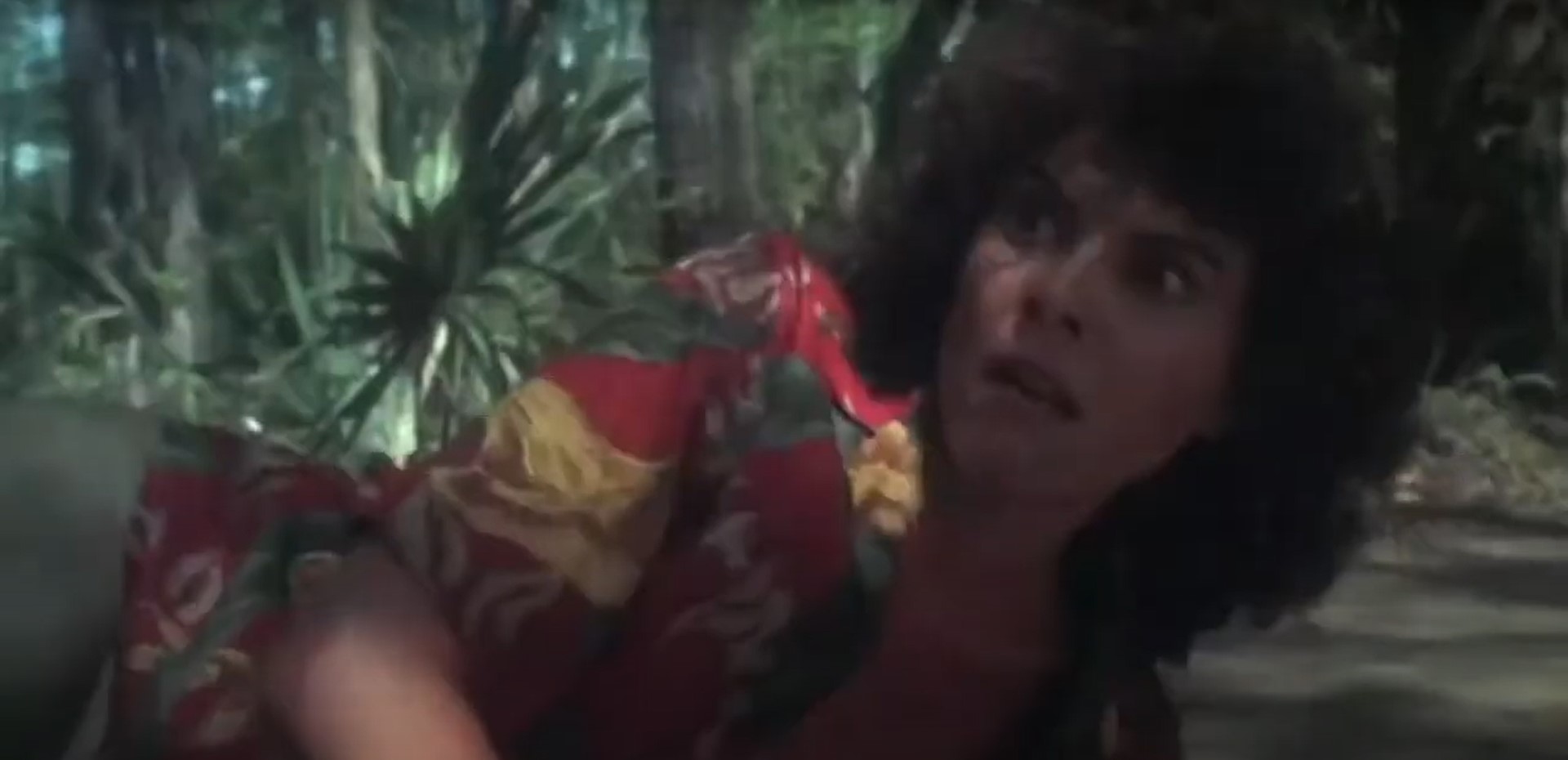
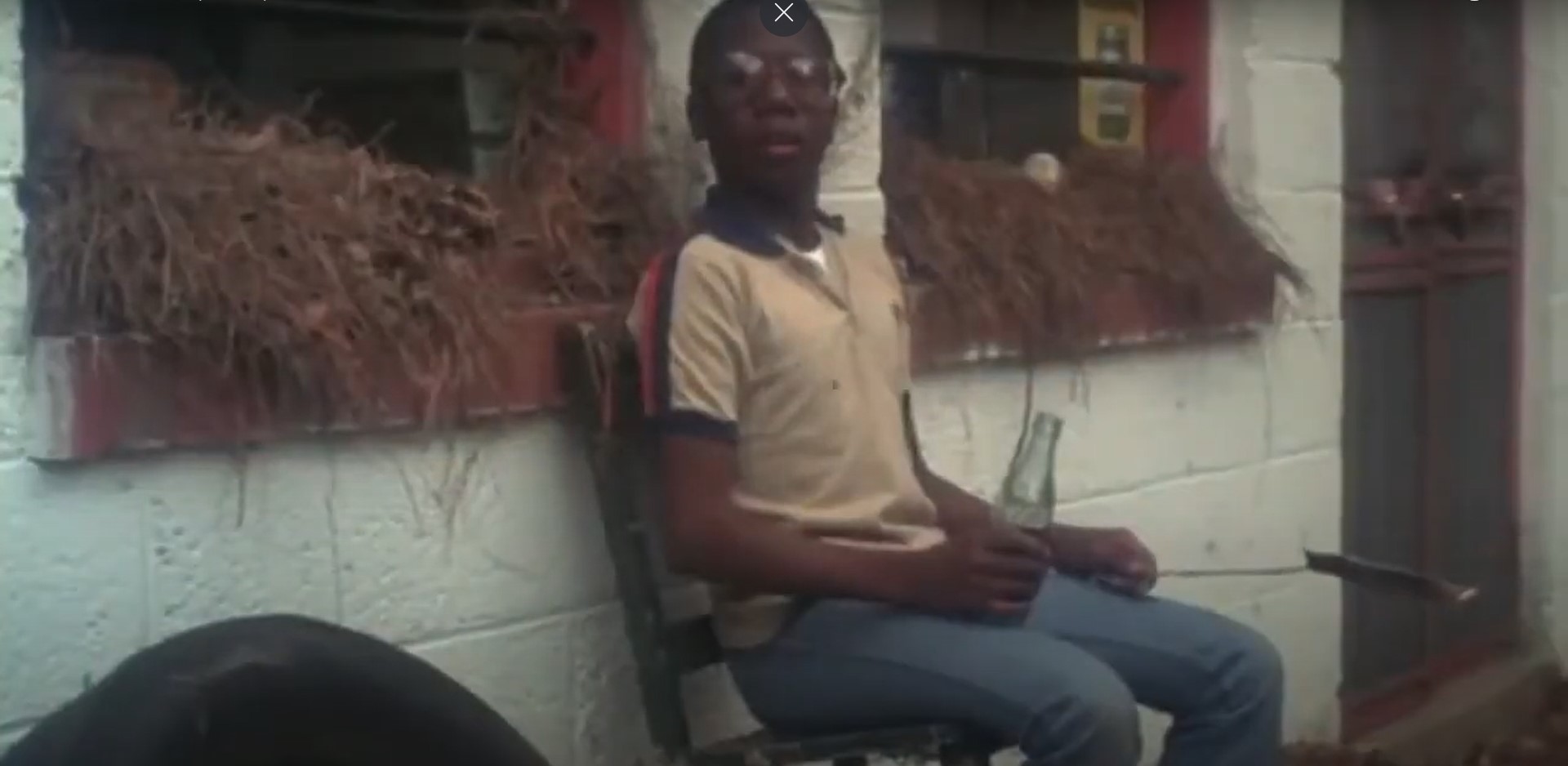
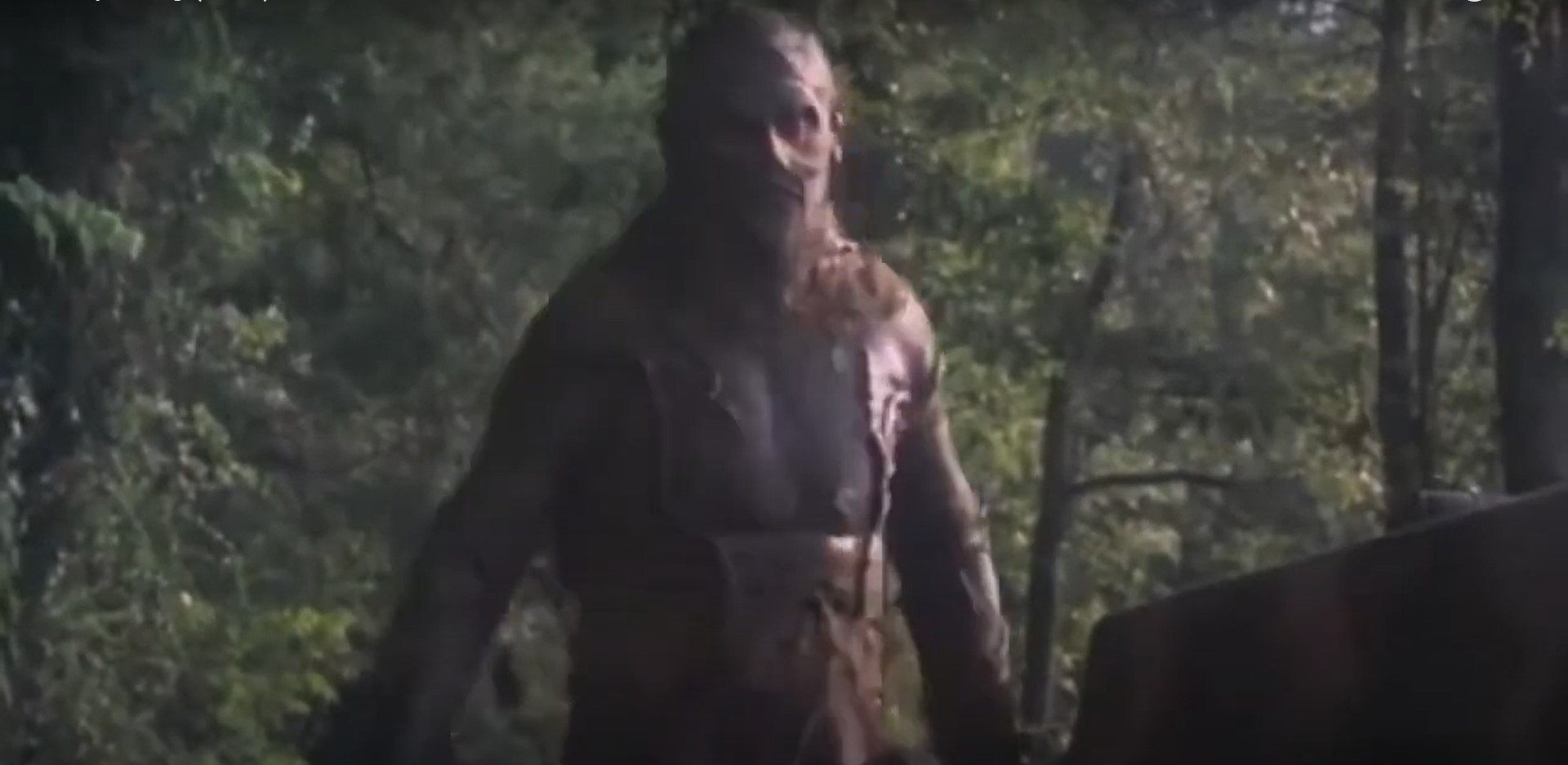
The question of who would bring this monolithic human-hydrangea?  Answer:  Dick Durock.  The 6’5” former Marine Durock was not afraid to jump into character skin, no matter how hairy, tight, or otherwise uncomfortable it might have been.  Durock may not have been the face of Dr. Alec Holland, played by genre cult actor Ray Wise (“Robocop,” “Twin Peaks”) before succumbing to transformational injury and rebirth, but the Indiana born actor certainly became the face of “Swamp Thing” throughout a decade with the sequel and the subsequent television show.  Durock captures not only the strength but also the humanity of the superhero in this origin story, a feat hard to accomplish for a man in a skin-clinging green and bulky suit.  Not to diminish Ray Wise’s performance by any means as the charismatic Wise is charming, passionate, and invested into making his Dr. Jekyll jive with the soon permanent Mr. Hyde to come, but as titular principal, Durock becomes the face of foliage on steroids.  Before solidifying herself as a scream queen, a young Adrienne Barbeau would have more difficulty in her Alice Cable role reflected in having some kind of feelings for essentially the same character in two versions played by different actors.  Yet, Barbeau beats the buggy Carolina heat as well as the differentiate obstacles by being a kickass government agent able to handle herself around the frighteningly new swamp creature and Arcane’s goon squad.  Before he was a James Bond villain in “Octopussy,” Louise Jordan donned the arrogancy of a tyrannical thinker yearning for the unique powers of others.  Jordan’s quite pretentious as the unrelentless Arcane and that makes the actor be the quintessential antagonist but I would not say his performance places his character in complete rivalry as “Swamp Thing’s” archnemesis.  Something is missing from their dynamics within their broad encounters that make the struggle appear impersonal and distant.  Even when Arcane ingests the formula and turns into a werewolf-like beast and the two superpowers clash, I wouldn’t label their conflict personally intertwined.  Perhaps Alec Holland and Alice Cable’s pre-mutation passion wasn’t strong enough or Swamp Thing’s deep-seeded desire for Alice wasn’t rooted well that makes Arcane just whither like a sun-beaten plant without water.  Another character that’s beaten into the ground is Ferret played by David Hess (“The Last House on the Left”) as head mercenary without any real power or absolute authority over his men, turning Hess more into like Tracey Walter in Tim Burton’s “Batman” but not as cool or as likeable.  “Swamp Thing” cast rounds out with Nicholas Worth (“Darkman”), Don Knight (“Death in Space”), Nannette Brown (“My Boyfriend’s Back”), Al Ruban (“1,000 Shapes of a Female”), Mimi Craven (“Last Gasp”), Karen Price, and Reggie Batts as the unlikely best child character in all of the film as an interesting and lone gas station attendant with hilarious, deadpan wisecracks. 

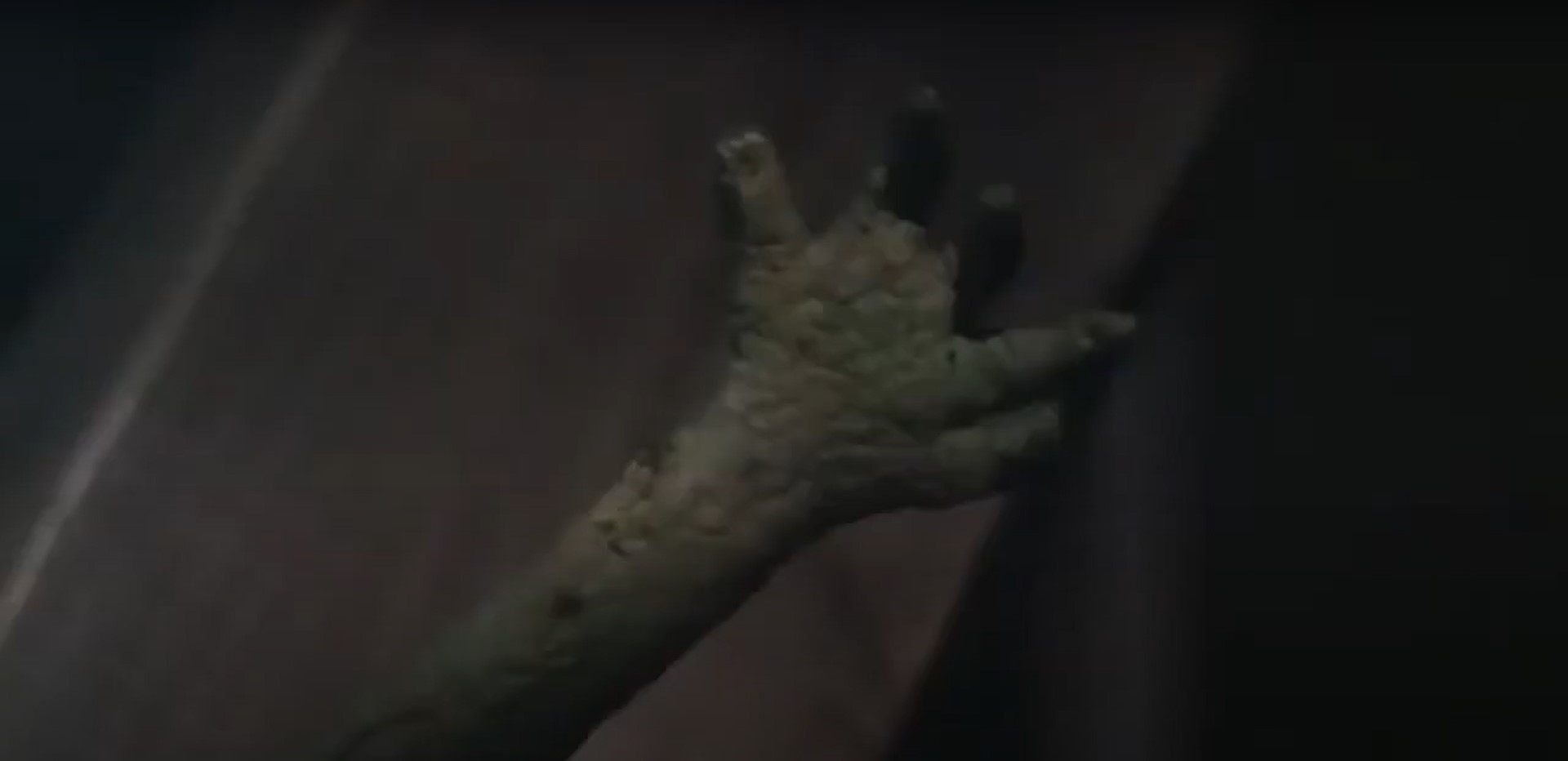
“Swamp Thing” may not be the first comic book superhero to be pulled from the DC lined colorfully illustrated and action-packed pages and adapted to the big screen but what separates the mucky-dwelling plant hero from the other is he’s cape-less, without ray guns and jetpacks, and appears as a monstrous humanoid rather than a regarded normal looking servant of justice as with Superman, Batman, or Wonder Woman.  “Swamp Thing” intrigues viewers with their own internal conflict stemmed from a foundationally laid idea that mutant creatures or unnatural monsters are inherently bad guys.  “Swamp Thing” becomes a part of that trailblazing group of grotesque good guys with hearts of gold.  Yes, the 1982 feature hasn’t held up over time with some of the low on the totem pole creatures suits and makeup I’ve seen, even with the agreeable Swamp Thing suit showing the rubbery creases and fold overs when Dirk Durock has to hold an object; however, to balance out the cut-rate features, special features picks up the tab with stunt boat chases, invisible pull wires, and a man set on fire that’s intense.  With a slashed budget, Wes Craven scripts on the fly to churn out a watered down but still flavorful cinematic origin story that’s full of heart and humanity and partly carried by the sweat and endurances of an eclectic cast and a handful of popcorn action patches.

“Swamp Thing” emerges from out of the muck yet again and onto a 2-Disc 4K/Blu-ray combo set from MVD Visual’s Rewind Collection label, specially marked as the first release on the LaserVision Collection.  The restored 4K UHD Dolby Vision is presented in 2160p and in a 1.85:1 widescreen aspect ratio on a BD100 while the Blu-ray is presented in 1080p high definition with the same aspect ratio on a BD50.  Each format presents two cuts of the film – a PG version and an international Unrated version – both of which have collated from various cuts of the film, resulting in some impressively rich grading that offers refreshed saturation levels of a lusher swamp environment.  More of that richness is conveyed through the UHD with providing deeper tones to make the swamps isolate and swallow characters while also have a sense of being alive amongst the hazy, knee-high fog, opaque waters, and thick vegetation.  Black levels look fine with the amount of grain that can vary from scene-to-scene but not compression issues to talk about on both spectacular approached formats.  The 4K offers a remastered DTS-HD MA 2.0 mono, which is same as on the Blu-ray, that unjustly limits “Swamp Thing’s” audible potential.  Dialogue has some deficiency projecting with all the tracks transmitting through a single channel that’ll force the up arrow on the volume setting or require a punchy soundbar or headphones to get to a clearer understanding of what characters are conversing.  The intrinsic ambience would have been better suited for multi-channel network to extract everything the swampy milieu had to offer, plus punchier fights, but if not an audiophile, these tracks will ultimately sate a viewer’s goal.  Range decently enough limps through despite the surround sound as we receive enough explosions and barrages of bullets to check that box, but depth struggles through the audio layers.  Both formats also include a Spanish language mono track and optional English subtitles.  Special features vary across the two releases with the UHD having limited extras due to storage but what is included is the PG version, the Unrated International version that includes Adrienne Barbeau’s topless scenes, an archive commentary with writer-director Wes Craven moderated by commentary director Sean Clark on both versions of the film, commentary with makeup artist William Munns moderated by Michael Felsher of the commentary/documentary conducting Red Shirt Pictures, also on both versions.  The Blu-ray contains the same extras above plus another Red Shirt Pictures’ interview with Adrienne Barbeau Tales from the Swamp, an interview with Reggie Batts Hey Jude, a discussion with Len Wein, the creator of “Swamp Thing,” the featurette Swamp Screen:  Designing DC’s Main Monster, the featurette From Krug to Comics:  How the Mainstream Shaped a Radical Genre Voice, photo galleries, and theatrical trailer. This must-own set, that caters to paying homage to the Laserdisc, comes retail green 4K Ultra HD snapper that in holds the 4K and Blu-ray on each side of the interior wall. The exterior features an illustrated encirclement of the main players – Dirk Durock and Andrienne Barbeau in comic character – on a single-sided front cover, sheathed inside a cardboard O-slip cover with the same cover art. Both disc presses also represent the original Laserdisc art. The insert contains a folded mini poster of the slipcover design. Two version, one release headline both the 91-minute PG and 93-minute Unrated version of the film with the entire package region locked in A. I may have finally watched Wes Craven’s “Swamp Thing,” but I won’t be the last as I highly recommend this stellar launch into ultra high-definition territory with the original quagmire superhero.

“Swamp Thing” on 4k / Blu-ray Combo!  Now Available on Amazon.com!

Forcing Conformity on EVIL is a Violent Cause. “Murder in a Blue World” reviewed! (Cauldron Films / Blu-ray)

“Murder in a Blue World” now available on Blu-ray!  Purchase a Copy Here at Amazon.com!

Nurse Ana Vernia lives in an authoritarian, dystopian world where she just received a commendation for her work, but beneath the archetype of a scrutinizing society seeking to acculturate deviants by way of involuntary electroshock treatments, Ana moonlights in her own violent behavior as an act of mercy. Under the pretense of disguises, Ana seduces men aberrant to the social norms, returns them to her luxurious mansion, sleeps with them, and to then only murder them with precision before they can be subjected to imperious judgement for being different. All the while, societal dissentient David, an exiled member of a brutal gang, witnesses Ana’s exploits and infiltrates her home, her life, to garner incriminating evidence in order to blackmail her for money, but when David is tracked down for his former gang and beaten to near death, he comes ironically under the care of nurse Ana who plans to fix David before his fate before the electroshock treatments.

Get ready to dial high on voltage on the social commentary scale, “Murder in the Blue World” is a fascinating, dystopian look at social disorder. Heavily influenced in more ways than one by Stanley Kubrick’s “A Clockwork Orange,” the Eloy de la Iglesia 1973 picture was once entitled “Clockwork Terror” in the U.S. to ride the lucrative coattails of Kubrick’s symphony to violence. Also known in other parts of the world as “To Love, Perhaps to Die,” “Satansbrut” (“Satan’s Fiend”), and “La clinique des horreurs” (“The Clinic of Horrors”), Iglesia’s original penned script and title actually “Una gota de sangre para morir amando” (“A Drop of Blood to Die Loving”), co-written with José Luis Garci (“El Teroso”), Antonio Artero (“El tesoro del capitán Tornado”), George Lebourg, and Antonio Fos (“Panic Beats”). The Spanish film goes internationally by many monikers but has one objective and that is to counter the dictation of free-thinking individuals with violence. “Murder in a Blue World” is produced by José Frade under his self-titled production company, José Frade Producciones Cinematográficas S.A.

“Murder in a Blue World” is so much so in the Stanley Kubrick wake, the film stars Sue Lyon who played the titular character in Kubrick’s “Lolita.”  More than a decade later, the “End of the World” and “The Astral Factor” actress enters another emotionally lacerating role of a woman, a nurse, sworn to do no harm who sees that a quick euthanization is the only possible mercy she can offer to spare societal downcast souls from a fate far worse than death in a cold and cruel condemnatory world.  Lyon’s excellent in curating her different disguises and looks, taking on a variety of personas with subtle mannerisms despite how comical or implausible they may appear on screen, such as the idea of being an old, gray-haired woman.  Lyon is fair and small in stature compared to her male counterparts but commands the screen with her confident approach to Ana’s advantageous beauty and eroticism that can turn a gay man straight apparently.  Former gang member David shares her ideology to an extent, to the extent of capitalizing off her nightly murder for mercy escapades in order to survive on the street alone.  Christopher Mitchum, son of the late Golden Age of Cinema actor Robert Mitchum (“El Dorado,” “The Longest Day,” “Scrooged”), plays the nihilistic gangbanger with aversion to any or all rules that tell him how to think.  Mitchum’s impressive motorbike skills are utilized for an impressive chase sequence that incorporates ramp jumps and car crashes at a high speed velocity, a talent Mitchum and film producers utilized often in his other credits, such as “Sumertime Killer” and “Big Jake.”  Lyon and Mitchum don’t have much screen time until later in the story but their interactions are playful, flirtatious almost, but in a predator-prey kind of way and we’re not really sure which-is-which in that shifty relationship.   French actor Jean Sorel (“A Lizard in a Woman’s Skin”) rounds out the three-prong principal characters as a diehard representative of the authoritarian body and a potential love interest for Ana.  Playing Victor Sender, a neurologist experimenting on the criminally insane with electroshock therapy and working at the same hospital as nurse Ana, Sorel is the epitome of the calculating stability and clean-cut coldness of the ruling class that’s doesn’t see what they’re doing to be a unjust, cruel, or even a problem at all. “Murder in a Blue World” rounds out the cast with Ramón Pons (“Scarab”), Charly Bravo (“The Cannibal Man”), Alfredo Alba, Antonia del Rio, Domingo Codesido Ascanio, and Fernando Hilbeck (“The Living Dead at Manchester Morgue”).

On the surface, director Eloy de la Iglesia carves a rib right out of Stanley Kubrick’s “A Clockwork Orange” with themes of exquisite, unprovoked violence sparked by the very basis of rebellion against authority. Not to also forget to mention the elaborately dressed gang of four, the electroshock treatment that aims to cure the criminal cerebrum, and the dystopian, futuristic guild with hints of fascism. “Murder in a Blue World” is a mixture that’s two-third post-Kubrick and one-third part pre-Paul Verhoeven, the latter reaching into fascist imagery as well as extreme commercialism that has surely inspired the “Robocop” and “Starship Trooper” director. Blue wellness drinks and panther-primitive men’s underwear are just a few the commercials fabricated for Iglesia’s coloring of an influential culture as the filmmaker uses the motif to symbolize and parallel brainwashing that becomes more severe when the government attempts to force a cure for criminality down incarcerated individuals’ throats. Even David announces to the world in multiple scenes how he doesn’t care what others think and he’s a free thinker. Homosexuality, prostitution, and physical imperfections suggest master race ideology amongst the domineering class hierarchy. Those who Ana seduce, as well as David, struggle in poverty and are considered inferior though not explicitly mentioned in the story. Iglesia integrates his trademark graphic violence, closeups of stabbings and throat slitting, but only really visualizes post-third act climax to keep more of an implied violence, off screen, and quickly edited to maintain an unclear vagueness of what’s right and what’s wrong in what Ana’s accomplishing.

A phenomenal companion piece and second bill to Stanley Kubrick’s “A Clockwork Orange,” Eloy de la Iglesia’s “Murder in a Blue World” finds Blu-ray love with a high definition, 1080p release from the genre film eternizing Cauldron Films. The Blu-ray debut is a 2K restoration of the 35mm transfer that has held up fairly well over the decades to only show pockets of wear and tear. Presented in a widescreen 2.40:1 aspect ratio, there’s no edge enhancement or digital noise reduction to clear out the natural stock grain, leaving the picture quality with more texture. Skin tones are, for the most part, natural and popping color grade doesn’t stray too far from its integrity until one brief scene goes full Oompa-Loompa orange before reverting back to normal. Light scratching is common throughout but not obtrusive to the viewing. Two audio options come with the release, an English dub dual mono and a Spanish dub dual mono. Since the cast is comprised of American, French, and Spanish native actors, neither track appears attractive from a lip-reading and audio-hearing perspective. Preferably, I went English dub as Sue Lyons and Chris Mitchum monopolize the lion’s share of screen time. There’s quite a bit of hissing and popping on the single channel output that can render dialogue almost indistinct but passes with a D+. The English subtitles synch well and show no sign of inaccuracy or grammatical issues. English SDH captions are available as well. Special features include a 2008 archive interview with Chris Mitchum, an interview with dubbing guru Ben Tatar Dubbing in a Blue World, a video essay read by Spanish Gothic film and literature scholar Dr. Xavier Aldana Reyes who dives into the themes and constructs of Iglesia’s film, audio commentary by film historian Kat Ellinger, the VHS cut of “Clockwork Terror” in 720p standard definition, and image gallery. The physical release comes in a clear Blu-ray snapper with a colorfully illustrated cover art that is reversible with one of the more notable and beautifully shot scenes on the inside. With a runtime of 97 minutes, the release is region free and is unrated. “Murder in a Blue World” receives a gorgeous Blu-ray restoration and debut as it’s an eclectic work of inspired and pioneering visual art from one of Spain’s most individualist directors.

“Murder in a Blue World” now available on Blu-ray!  Purchase a Copy Here at Amazon.com!

A Stop-Motion EVILscape of Totalitarian Hell! “Mad God” reviewed! (Acorn Media International / Blu-ray)

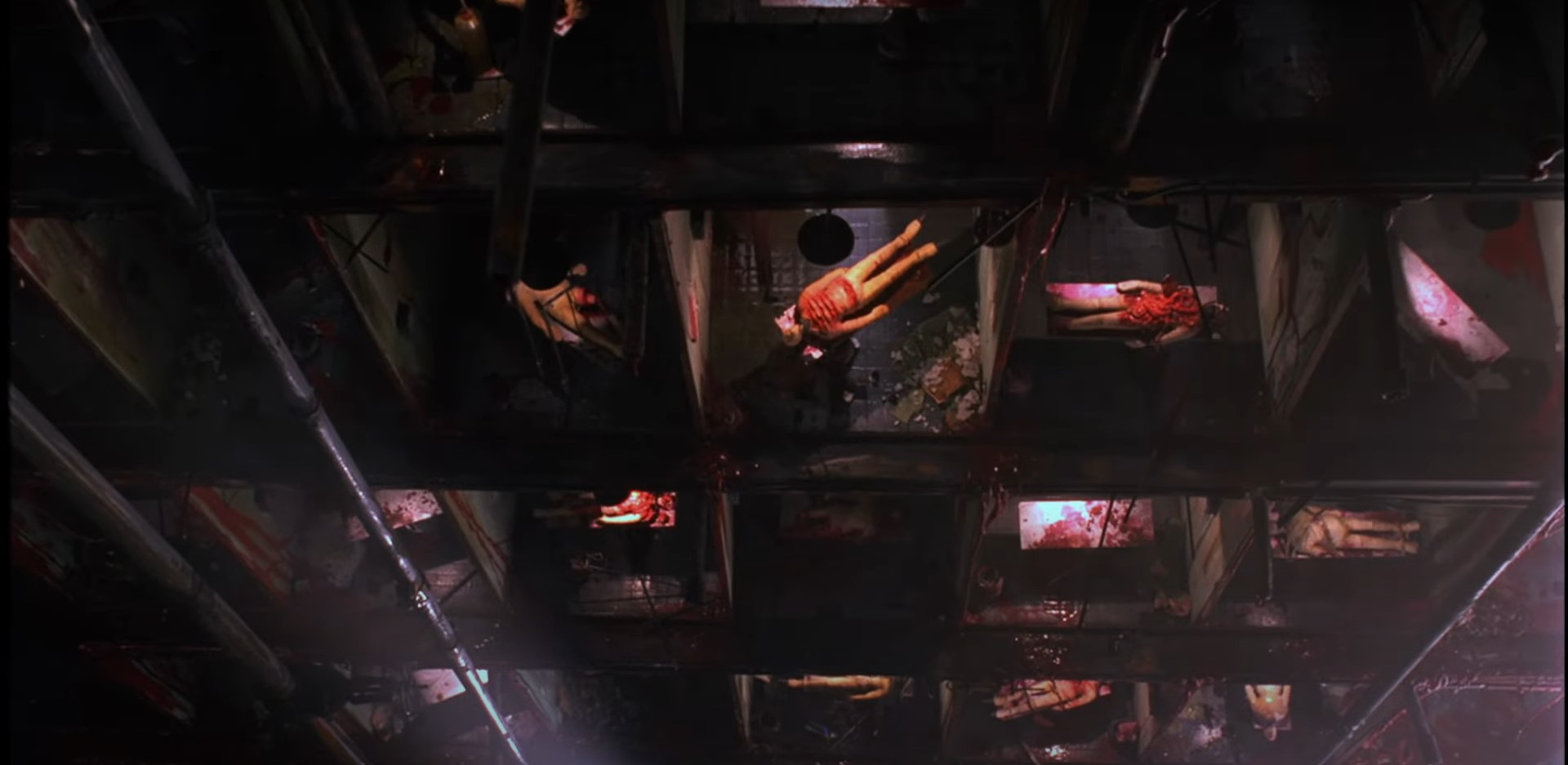
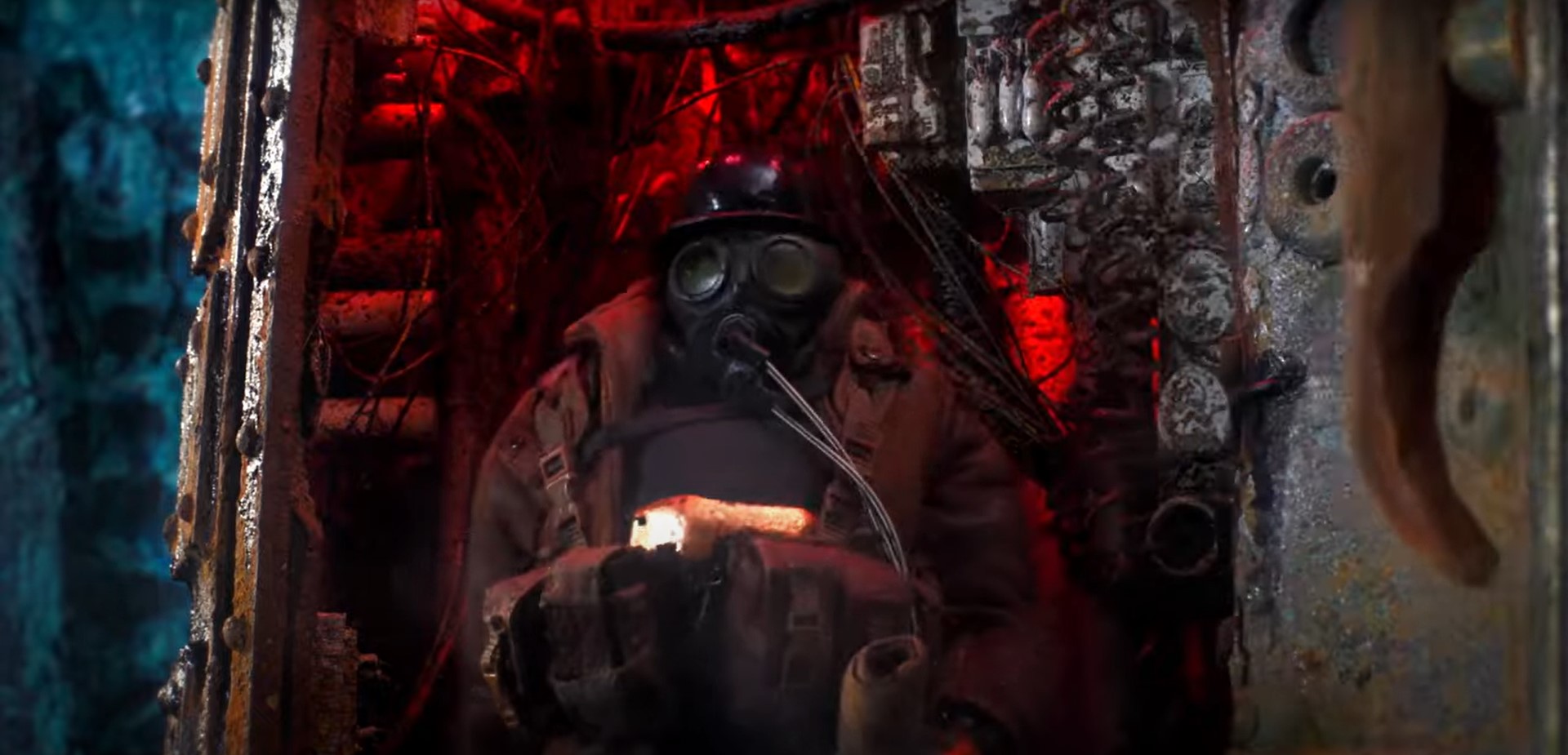
Descending from above into the depths of grotesque terror and suffering, The Assassin steps out of the drop pod with a gas mask, industrial armor, a suitcase, and a crumbling map.  Bearing witness to the surrounding horrors – cruel experimentations, enslaved beasts, tortured manufactured slave laborers, dog-eat-dog atrocities – The Assassin sallies forth, descending deeper into the primordial pit.  The missioned at hand is to set an explosive charge that will eradicate out the ruinous, oppressive filth that aims to corrupt the everything, but there the darkness won’t be so easily wiped away and The Assassin must stay in the shadows and out of sight or else become a tortured fixture in the fray. 

“Mad God?”  More like mad genius!  Phil Tippett’s 34-year, stop-motion, pet-project “Mad God” is the purest Hell I’ve ever seen.  Tippet, famed stop-motion and puppeteer effects artist responsible for the iconic visual effects and stop motion work in fan films such as the original “Star Wars” saga and the “Robocop” franchise as well as cult favorites “Howard the Duck,” “Piranha” and “House II:  The Second Story,” started “Mad God” in 1987 that become more of an ambitious project than originally thought and once the 1993 saw a computer generated effects revolution with a little prehistoric dino-disaster film called “Jurassic Park”, a film Tippett also did work on as dinosaur movement consulting supervisor because of his expertise on the short “Prehistoric Beasts,” the gifted animator had shelved “Mad God” for about 20 years with the though a newer, shiner, computer-driven animation would be the next best thing studios would ardently desire. This two-decade span gave Tippett time to outline objectives and really expand upon ideas of how “Mad God” should look and feel when conveyed. Tippett co-produces the film with Jack Morrissey under Tippett Studios and presented by IFC Midnight and AMC’s Shudder.

Just because “Mad God” is dialogue-less doesn’t make the “Mad God” voiceless. All around, in every scene, is a disturbing commentary or an unhinged metaphor bred mostly out of the animatable inanimate, but there are some live action performances weaved into the mad tapestry of monstrous titans and despot of cruelty. The most clearly discernible face of the lot comes from a director, “Repo Man” and “Sid and Nancy” director Alex Cox to be more exact. Cox plays the long nailed and regime-driven “Last Man,” representing divine leadership of a modest, dieselpunk heaven above a more organic and grotesque hell-type world. Only on screen for perhaps a total of 5-to-10 minutes, Cox grunts and gestures with precision articulation to give off a fair and just ruler impression. Niketa Roman plays the next real person to have some substantial screen time. Less of an actress and more of an animator by trade, with credits including “Blade II,” “Jurassic World,” and “Star Wars: Episode IX – The Rise of Skywalker,” Roman finds an expressive talent in her striking, heavily made-up eyes overtop a surgical mask and gown when whisking away one of the Assassin’s souls to be studied and experimented on by a broodingly ethereal entity. Other micro-performances include minor roles of tortured monkeys, various iron-cladded Assassins, witches, and gnomes from Satish Ratakonda, Harper Gibbons, Arnie Hain, David Laur, Chris Morley, Anthony Ruivivar, Tucker Gibbons, Tom Gibbons, Hans Brekke, and Jake Freytag.

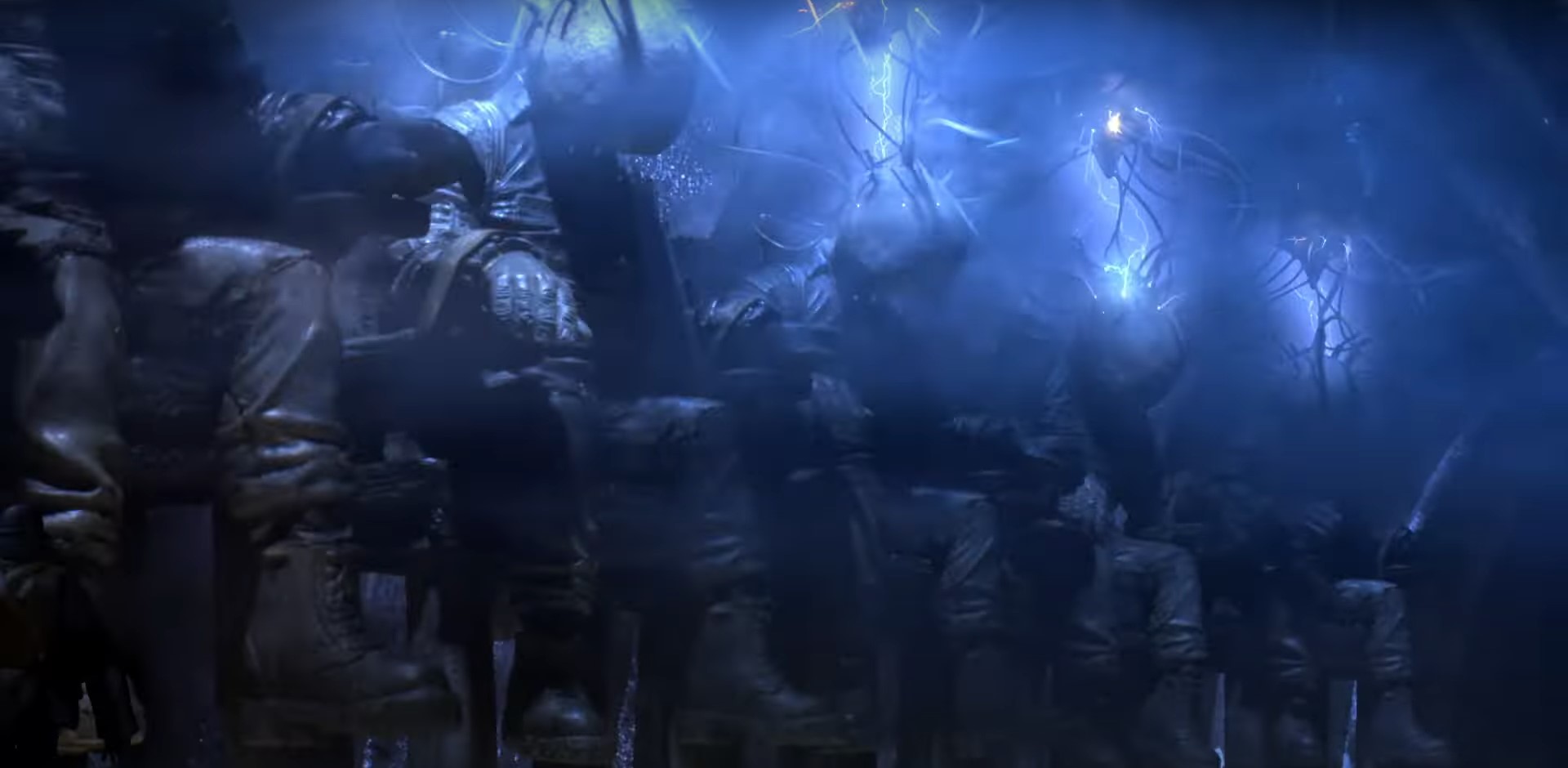
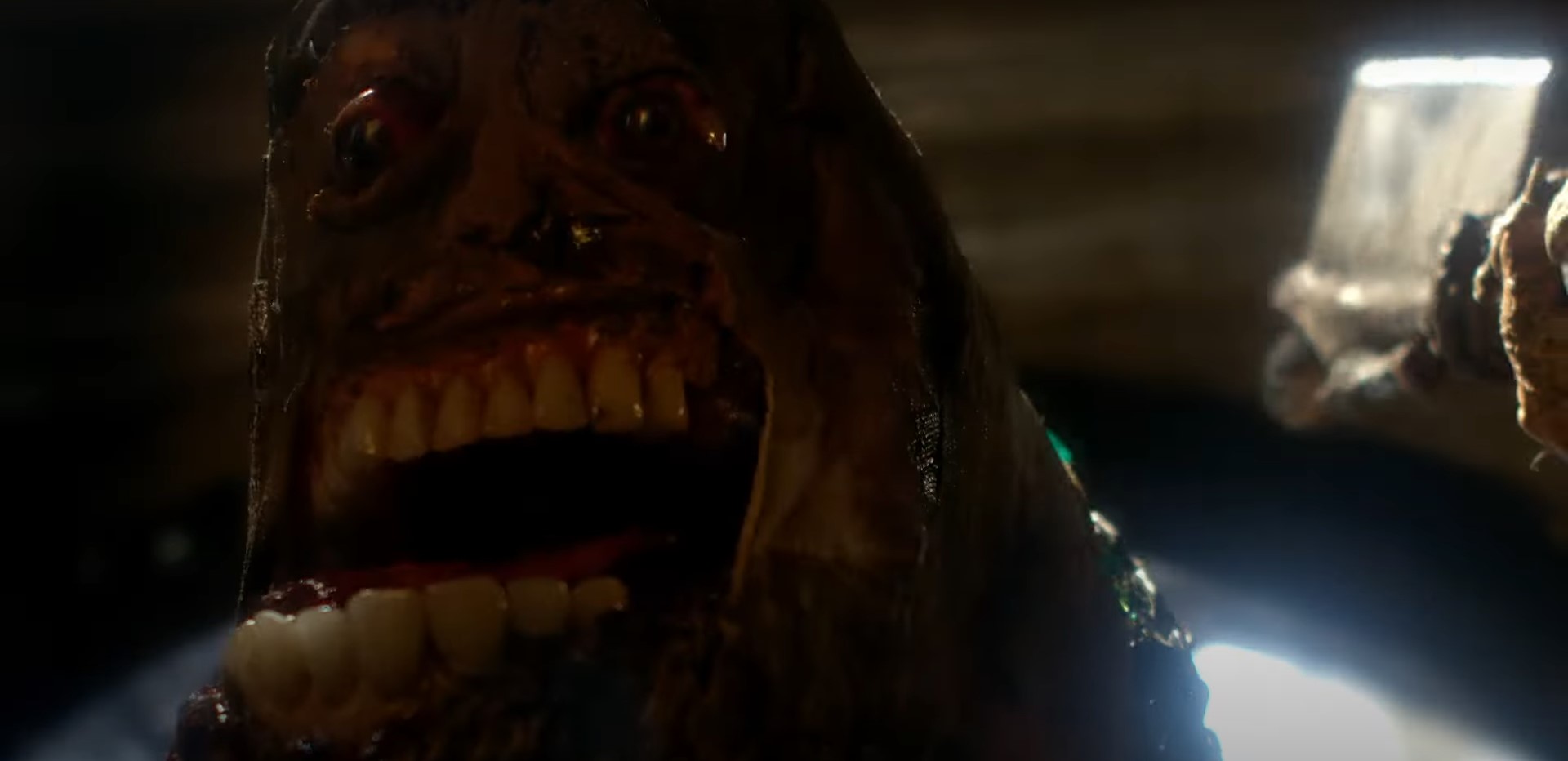
“Mad God’s” possibilities and interpretations are endless. Phil Tippett pulls from a motley of inspiration that includes, but is not limited to the fantastical, sometimes hellish, paintings of Hieronymus Bosch, the wacky, often gonzo animation of Tex Avery, the stop-motion titans of Nathan Juran’s “The 7 Voyages of Sinbad, and Dante’s Inferno. The mind is a deranged and wonderful creator of the macabre and of the aberrant and as a receiving device, the mind can also, if opened up enough, accept such visceral visuals of bowel fluids being jettisoned out by electric shock and into the mouth of an organic machine that manufactures fibrous, lumbering humanoids for slave labor. Like lemmings in a way, these exploited shadows of human beings will succumb under their own demise or at the gnarled and unforgiving hands of their master’s gargoyleish work-whippers. “Mad God’s” eye for detail is greatly disturbing to see cities in monolithic cities and cultures in ruins, the composite depth between foreground and background action in one scene reminds me a lot of older works like “The Neverending Story” or “Clash of the Titans” that create a vast scale with smaller objects, and the playful irony of a nightmare netherworld being commanded over by a baby’s babble doesn’t nearly seem to a stretch from the truth. As the multiple Assassins trek through the chaos and the insanity, an overwhelming sense of life is meaningless scores the landscape as there isn’t an ounce of compassion or empathy to be had or displayed for any of the malformed creatures and wretched humans. A laborer is crushed by a stone – no biggie. A cute and cuddle animal is attacked and whisked away for food storage – all in the day of cruelty. A man is stripped of his armored gear, injected with a mysterious substance, and prepped for exploratory surgery – all for show in front of a live clapping and cheering audience. The only compassion I can make sense is the Assassin’s mission to blow up this God-forsaken world of eternal suffering to restart the heart. Madness grinds bones, fillets spirits, and crushes souls in Phil Tippet’s Godless underworld and can haunt you even while you’re awake.

A surreal stop-motion wonder and excruciation, “Mad God” brings all the horrors of the subconscious mind to the surface with a high-definition, 1080p Blu-ray. The region 2, PAL encoded release from UK distributor Acorn Media International presents Tippet’s tour de force in a widescreen 1.78:1 aspect ratio and the image is purposefully varied to exhibit different strokes of craft as students would assist Tippet with contrastive topographies to carve out an apocalypse-riddled world that’s in a state of a violet retrogression. Tippet and Tippet Studio visual effects artist, Chris Morley, pivot to “Mad God’s” cinematography appearance with brooding, darker tones that illuminate and are erratically sparked with warm neon glows or brilliant voltage streaming through highly conductive bodies. Some earlier scenes from the late 80’s have natural grain from the 35mm stock and then later, more recent scenes have a cleaner, sleeker look with the digital recording. The Dolby Digital 5.1 surround sound mix has an all-embracing range, mostly with sudden and alarming blazons of guttural roars, unnerving baby babble, elongated zaps and shocks, and the indistinct yips and yaps of a mad world, that sustains on a line of being lesser than crisp, which might be contributed to the inexact capture of depth as sometimes all sounds casts like from inside the reverberations of a fishbowl. Descriptive SDH subtitles are available. Bonus features include audio commentary with Phil Tippett and “Pan’s Labyrinth’s” Guillermo del Toro, cast & crew commentary, an interview with Phil Tippett, “Mad God’s” various painter, cartoonist, animator, and psychology inspirations, the making-of “Mad God,” Maya Tippett’s Worse than the Demon – Phil Tippet’s daughter’s 12-minute thesis documentary of her father’s 34-year passion project journey, Academy of Art & “Mad God,” a behind-the-scenes montage, and a behind-the-scenes photo gallery. “Mad God” has a runtime of 84 minutes and is UK certified 18 for strong violence and gore. A motion picture diorama of Phil Tippett’s neoteric psyche, “Mad God” is wrath wrapped in heart and soul, two descriptors not topmost on the surface but are meticulously integrated into every frame of pain, suffering, and despair.

EVIL is Always the Quiet Ones. “Forced Entry” reviewed! (Dark Force Entertainment / Blu-ray)

“Forced Entry” on Blu-ray Available from Amazon.com and MVDShop.com

On the outside, Carl is a mild-mannered and a bit of a simpleton who works as a mechanic at the corner gas station.  On the inside, Carl’s an unstable, sociopathic rapist and murderer with chauvinistic patriarchal tendencies.  His grisly exploits rock the small New Jersey town but as life continues on so does Carl’s misguided perception that the women who cross his path want him.  As a mechanic and a rapist, Carl continues in getting his hands dirty even when the exceptionally beautiful housewife, Nancy Ulman, drops off her husband’s car for repairs.  With Nancy’s husband out of town, Carl creates an unfounded fantasy of being the one and only that can please her right.  As his obsession swells, Carl’s pushed over the edge into a no-turning back captive scenario by holding Nancy bound and hostage in her own home as he attempts irrationally and violently his case for bestowing his flawless companionship to her. 

Throughout nearly the entire history of cinema, the adult industry has remade blockbuster film titles into triple X spoofs.  “Beverly Hills Cox,” “The Penetrator,” “Clockwork Orgy,” and “Forrest Hump” are a few titles that come to mind.  But have you ever heard of a porn remade into an actual movie?  Of course, there’ve been a few biopics surrounding controversial cog players of the adult industry machine, such as with mainstream biopics that expose the lives of starlet Linda Lovelace of “Deep Throat” with Amanda Seyfried as the titular character and the notoriety of porn filmmakers Artie and Jim Mitchell in Showtime’s “Rated-X,” starring real life brothers Charlie Sheen and Emilio Estevez.  Never in my existence on this tectonic plate shifting Earth have I’ve ever bear witness to a porn being remade into a film marketed on retail shelves to the general public.  That’s the backstory behind Jim Sotos’s 1976 debut feature “Forced Entry” based off Shaun Costello’s 1973 stag film of the same name and starred that “Deep Throat” connection with Harry Reems as well as Reems costars Jutta David (“Sensuous Vixens”), Nina Fawcett, and Laura Cannon (“The Altar of Lust”).  Also known more uncommonly as “Mr. Death” and “Rape in the Suburbs to more commonly as“The Last Victim,” Henry Scarpelli adapted the script out of the X-rated context but kept much of the aggressive themes, changing the gas station attendant from a Vietnam shell-shocked maniac to delusional maniac stemmed from abusive mother issues.  Sotos and Scarpelli also serve as producers under the Kodiak Film production company. 

“Forced Entry” stars a then fresh faced Tanya Roberts.  The late “A View to a Kill” Bond girl and “The Beastmaster” actress received her start as the slightly frustrated, but overall pleasant, housewife Nancy Ulman who must fight for her life when Carl, under the wonderfully wild and violent guise of “Heated Vengeance’s” Ron Max, breaks into her home to fulfill his ferocious fictious fantasy.  The contrast Nancy and Carl is extremely key to “Forced Entry’s” modest success as the story plays out in both perspectives with more lean on Carl with a far more interesting mindset, internalizing monologues of desires and anger.  While Tanya Roberts is hardly stimulating on screen as routine wife and mother, concerned a little on her husband’s sudden indifferent behavior, she exhibits a stark normalcy that makes Carl’s actions flagrantly deviant with the anticipation that Nancy will be too submissive or afraid to fight back.  Ron Max is no David Hess but instills a disturbing, looney bin creeper who, most frighteningly of all, could be your neighborhood grease monkey mechanic.  Like Roberts, another yet-to-be-famous actress has her brief moments of screen time as Carl’s hitchhiker victim.  “Robocop” films’ Nancy Allen finds herself riding shotgun with a serial murder-rapist even before going face-to-face with the telekinetic prom queen, “Carrie,” in a blink and you’ll miss her thumb lifting and chitchat-disparaging segment to give Carl more depraved depth.  Billy Longo (“Bloodrage”), Michael Tucci (“Blow”), Vasco Valladeres (“Bad”), Robin Leslie, Frank Verroca, Brian Freilino and Michele Miles.

Color me easily impressed by the novelty of the basis of a porn plot being transposed into a more accessible outlet for audiences.  Pushing that novelty aside, “Forced Entry’s” plot is simply stitched together to make Carl this really bad guy by fashioning situations that indulge his impulses – a stranded woman motorist out in the middle of nowhere, a female hitchhiker talking back to him in his own car, a girl with high cut shorts pumping gas station air into her bike.  Though often disjointed in the story’s framework and for some reason, Carl’s face is initially pointlessly concealed for the broken down motorist attack, helpless moments like these, plus the crazed internal monologuing rationalizing his actions, pushes Carl’s chances of being stopped next to nil with audiences.  How will a happy homemaker, trapped in her own home, be able to survive crazy Carl?  That’s where the story really begins with the first moment he laid eyes on Nancy and as he rolls out the imaginary carpet of playing house with her, we begin to see how attached he becomes to the idea as he strays away form his normal off-the-cuff methods that has served him well until this point.  Much of the shock value comes from the climatic finale that determines Carl and Nancy’s fate with a slow-motion shot full of cacophonous screaming to bring a definitive effect to an unexpected turn of events.  “Forced Entry” is more Spinell “Maniac” than it is Hess “Last House on the Left” but not as well-known and has unformulaic structure that strolls too comfortably between the lines of shocking consternation.

Dark Force Entertainment and MVD Visual distributes this notable unconventional remake onto another Blu-ray home video, but this new and improved version of the film that includes nearly additional ten minutes of footage into the original 73-minute director cuts of the previous 2019 Dark Force Entertainment prints under the Code Red label. This longer version adds back in more of the sexually graphic material and is 1.85:1, anamorphic widescreen, presented in a 2K scanned transfer with a 1080p output from the original 35mm negative material of the US theatrical release. Granted, some of that footage, such as the snatching of the bike girl, is nearly impossible to discern much beyond an unrefined image. The coloring throughout is inconsistent and unstable with clear fluctuations in hue flickers and a few scenes early in the film suffer from conspicuous wear damage. However, I suspect this transfer to be the best of the best to date and is not all a waste of viewing space with much of the image holding up strong. The single audio option is an English LCPM 2.0 mono is not the cleanest with clearly noticeable crackle and static throughout and overtop a muted dialogue track. Tommy Vig’s (“Terror Circus”) score nabs more support than the others in the audio output. Special features include the full-length 88-minute VHS minute version from standard definition video so don’t expect the highest resolution if you’re looking for more sordid footage in an essentially quantity over quality version. The blue snapper case does have a limited edition stark black and yellow/orange cardboard slipcover. The new scan runs at 83 minutes in length in the region free and rated R Blu-ray (updated from the original PG rating when reexamined by the ratings board…go figure). Not just another rape-revenge notched into the controversial subgenre’s hole riddled belt, “Forced Entry” agitates suspicion in the most harmless of unsuspecting, quiet-natured nobodies as it only takes one to be the filthiest troublemaker hidden right under our trusting, naïve noses.

“Forced Entry” on Blu-ray Available from Amazon.com and MVDShop.com