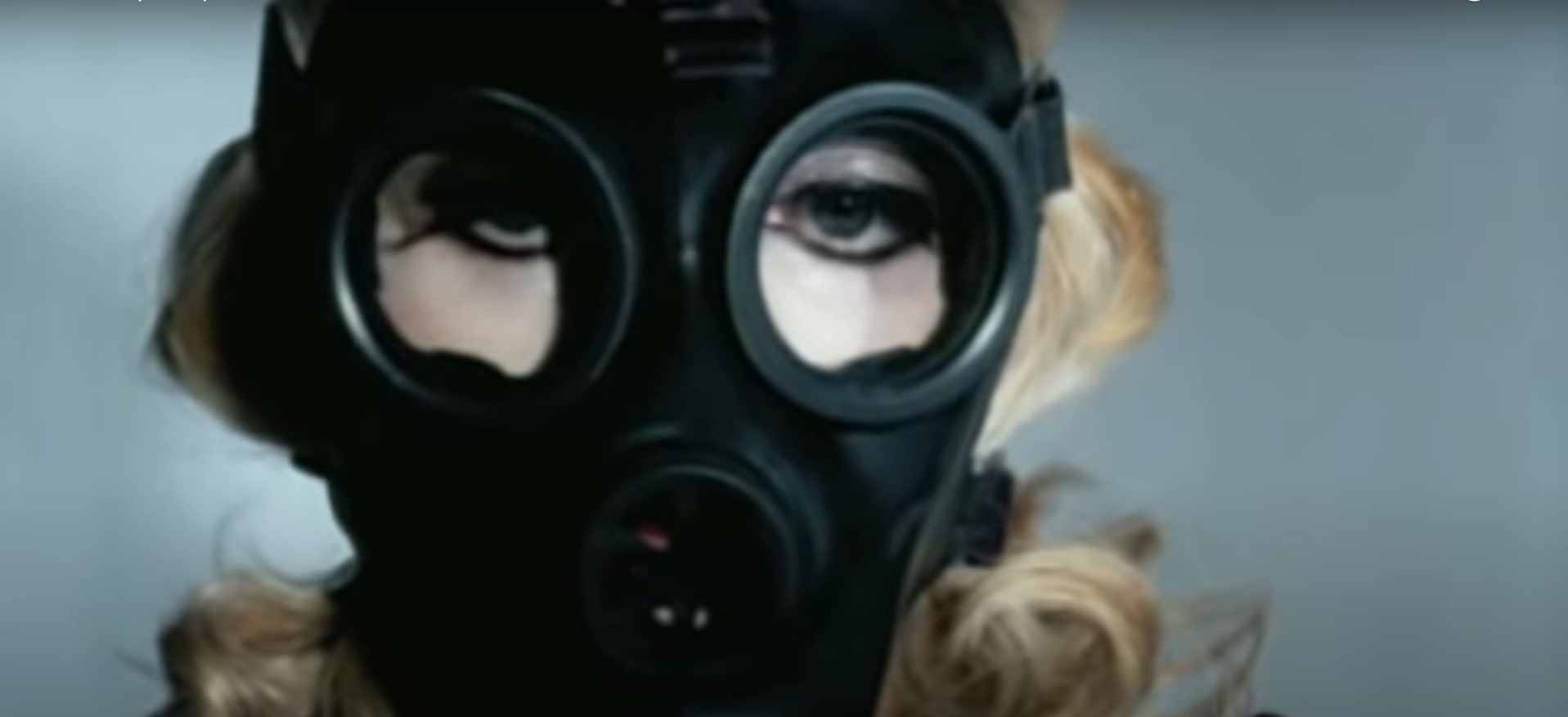
A Boy’s Imagination Can Conjure Up EVIL Death and Sex. “Viva La Muerte” reviewed! (Radiance Films / Limited Edition Blu-ray)

“Viva la Muerte” Limited Edition Won’t Be Around Long. Grab Your Copy Here!

At the peak low of the Spanish Civil War, naïve adolescent boy Fando doesn’t understand what is happening between the Catholic-blessed fascist takeover of his country nor exactly why his father was arrested and what has since happened to him.  He stumbles upon letters written by his mother suggesting that she had something to do with his sudden arrest because of his parents’ rival principles paralleling their nation’s bloody conflict of dividing beliefs.  Fando asks his remaining family questions, especially pelting his mother with detailed inquiries, about his father, death, and the fascist opposition, and while he’s lives under the draconian rule of a fascism reality and his family who abides it closely, the inquisitive boy intersperses his new, complex reality with his own way of comprehending, filling in the blanks with his vivid imagination of childish macabre, oedipal maturing, and an uninhibited interpretation of the evolving revolution surrounding him.   

“Viva la Muerte,” aka “Long Live Death,” is the 1971 surrealistic war horror from then debut filmmaker Fernando Arrabal.  Arrabal, who went on to modest yet esteemed career with such arthouse films such as “I Will Walk Like a Crazy Horse,” “Car Cemetery” and another Spanish Civil War set drama “L’arbre de Guernia,” also wrote the film that cemented his contributions to the surrealistic performance art movement known as the Panic Movement.  Though Arrabal was born in Spain and tells the story of the Spanish Civil War, the filmmaker had lived in France where the movement’s genesis began solely as street shock performances alongside fellow filmmaker Alejandro Jodorowsky (“El Topo”) and writer/actor Roland Topor, the latter had penned the novel of inspiration for what would be Roman Polanski’s “The Tenant.”  Eventually, the Panic Movement slid into cinemas and the French production/language “Viva la Muerte” was designed to not only exhibit chaotic, childlike account of the Spanish Civil War but also shock audiences with bizarre imagery.  Isabelle Films and S.A.T.P.E.C. fund the film under the producing credits of Hassene Daldoul and Jean Velter.

What better way to express an arthouse film than with arthouse performances from a blend of European actors and actresses from the French and Spanish territories.  “Viva la Muerte” couriers a perception through the eyes of a preteen child, a young boy of approx. 10 years of age, in Fando played with infatuation innocence and a model of child-to-adult growth in Mahdi Chaouch.  Fando’s virtue through the Spanish Civil War becomes shaped by not only the sudden loss of his father but also the quick onset of maturity being left and lifted as the man of the house.  Fando slips into a mix of fantasy and disdain for his mother, played by Spanish actress Núria Espert, surrounded and shaped by a political conflict climate as he interprets every statement she makes regarding his father’s irresolute fate between imprisonment and execution and every desirably suggested aspect of her action that drives him to internally create visuals of sex and death.  In the effect of one’s different self is the subtle infusion of the aunt whom Fando lives with for a while, a role by French actress Anouk Ferjac (“Hallucinations sadiques”) and mirrors the mother in appearances and in the same taboo risking amorous ways that creates thick, nearly line-crossing, sexual tension between adult woman and male child, especially topped by its incestuous nature.  Unknowns Jazia Klibi, Jean-Louis Chassigneux, Suzanne Comte, and Ivan Henriques as Fando’s dissident father round out the cast with a sense of authenticity for real world conflict. 

Arrabal’s “Viva la Muerte” becomes a beaconing example of merging stern reality with liberal imagination.  Though starkly apposition in film styles and surreal contrasts against the backdrop of a new world and bleak order of a fascism regime, reality and fantasy do blend to a degree as Arrabal sought to have one and the other bleed into one another to evoke questions of motives and symbolize with child caricaturizing the authoritarian oppression.  The overtly sexual fantasies of a naked mother and aunt in the presence of the boy can be egregiously sensed outside the dreamlike context with paused moments of starring and awkward touching.  Same can be said about Fando’s father’s demise as the boy goes through an array of grotesquely creative possibilities regarding father’s fate with most often being death and while Fando is spoon-fed lesser punitive measures by his mother, the chances of the father being alive after being arrested are likely zero based off earlier graveside executions of military firing squads for those with strong ideology opposition.  Fando’s mother plays a hefty role in his deadly, warped thoughts and just not sexually either as her role in his colorfully constructed explanations pin her as the chief executioner after reading her letters to the church about his dissident behavior.  Catholicism, or rather the Church, plays a huge role in shaping young Fando’s personal arc.  Religious imagery of his mother as the virgin Mary, a priest blessing fascist swords before battle, and also the same priest having his manhood violently removed and fed to him represents a way to explain how Catholicism has essentially failed stand against the violence to which, later exhibited in the story, molds Fando as a trouble instigator or rebel in his Catholic nun run school for the Church’s complicity in his father’s death.  Fando’s rejection of the Church confirms his character’s growth from the story’s beginning of his extreme self-penancing and opposition to such aberrant thoughts; thoughts that are not just sexual in nature but also incline themselves to be dirty, literally, with skin-covering mud and scat in playful mirth to signify enjoyment equates to being sinful and filthy.  Arrabal really does give you lots to unravel and the panic really starts to set in, hence his Panic Movement.

Limited to 3000 copies, “Viva la Muerte” arrives to the U.S. on its first Blu-ray release here in the States from Radiance Films.  The beautiful, new 4K restoration scan, with the collaboration of director Fernando Arrabal, pulled from the best elements of the original 35mm negative, 35mm French sound negative, and 35mm interpositive negative fathoms a rich spectrum of a diffused color palette on the AVC encoded, dual layer, BD50, presented in a high-definition 1080p and in the original European aspect ratio of 1.66:1.  Reality scenes are grounded by natural lighting, brighter contrast of the mountainous desert landscape, and a thorough macro-examination of the details and textures that pop the imagery between the grandfather’s bloodletting scene on the shaved portion of his fibrous head to the wet-slick and soapy naked Fando as he stands to get scrubbed down in the bath.  Blacks are solid without signs of a weaker compression encoding.  The surreal imagery switches gears, harshly, from 35mm film to an interlaced videotape, changing and reducing the quality down significantly but with the tape image is heavily colored in mostly primary colors to denote an artful way of imaginary explanations in Fando’s head.  No other issues arise from the video portion, retaining Radiance Films’ attention to detail and respect intact for their culturally valuable and extensive catalogue.  The French language uncompressed LPCM 2.0 mono track fairs well from a virtually damage free preservation.  A slight background hiss or hum can be found as the only audio blemish to note.  ADR dialogue is clean and clear throughout and with usually any post dialogue recordings there’s a bit of enclosed reverberations that don’t synch well with the scene that should sound airier.  Optional English subtitles synch fine and are error free with seemingly proper translational grammar.  Special features include an audio discussion between Projection Booth podcast’s Mike White, esoteric and horror film writer and former Video Watchdog contributor Heather Drain, and filmmaker-writer Jess Byard whom provide commentary overtop of the feature but not in synch with watching feature, a feature-length documentary on Arrabal by French novelist Xavier Pasturel Barron that contains interviews with friends, family, and fans of the director, an exclusive interview with cinema historian David Archibald, a new cut trailer from Radiance, and an image gallery.  Radiance continues to impress with the encoded special features and, not to be outshined, the physical features are also a bright light that reflects the essence of the Panic Movement with a clear, a millimeter thicker Amaray presenting the yellow and red background with provocative character imagery at the center that speaks the sex and death motif.  The reverse side has the same color scheme mixed up with an illustration of one of the characters displayed infamously in the film.  The insert contains a 35-page color booklet, bounded end-to-end with the strange and uneasy drawings of Fernando Arrabal, with a 1976 Arrabal interview by film critic and historians Peter Brunette and Gerald Peary and an exclusive essay from Sabina Stent.  Transfer notes as well as a complete cast and crew acknowledgement bookends the booklet’s main courses.  The disc is pressed in a solid, canary yellow with black lettering for the title.  Radiance’s 66th title comes region free release has a runtime of 88 minutes and is not rated. 

Last Rites: War is hell. For Fernando Arrabal, war is ambiguous and surreal. Radiance spotlights every ambivalent corner of Arrabal’s “Viva la Muerte” to light up its anti-nondescript digestion of one boy’s survival of his own maturity during a post-war fascist scrub, a task none too simple to undertake much like Arrabal’s storytelling.

“Viva la Muerte” Limited Edition Won’t Be Around Long. Grab Your Copy Here!

This Spy’s Sex Serum Will Drive Men EVILLY Mad! “Blue Rita” reviewed! (Full Moon Features / Blu-ray – DVD)

Own “Blue Rita” on Blu-ray and DVD Combo Set Today!

Misandrist Blue Rita owns a high-end gentlemen’s cabaret.  Her renowned nightclub is also a front for espionage activities.  With the help of a Bergen, her handling, and her right-hand club manager Gina, she’s fed male targets that are affluent and powerful to kidnap and torture to extract sensitive intelligence information.  As a side hustle, a perk that comes with exploiting the naked and chained up men in her underground boxed cells, Blue Rita uses her chemical powers of seduction to sexually torture her captives into withdrawing their bank accounts dry.  When new girl Sun is hired in to not only titillate the nightclub client with her erotic Pippi Longstocking performances, the Blue Rita pledger works her first mission to reel in a wealthy, international boxer as the next target but Sun’s own conflictions collide with Rita’s sworn hate for all men, cracking the door open ajar just enough for Interpol and the Russian intelligence agencies to try and undermine Blue Rita’s confrontational spy operations. 

What’s renowned most about eurotrash filmmaker Jesus (Jess) Franco is his diverse contributions to the European and American movie-making markets.  Though most of his work is regarded as schlocky, beneath the sleaze and sordidness is a carefully calculating psychotronic director.  True, Franco may not be famously esteemed as, let’s say Martin Scorsese or Steven Spielberg, but his infamy should not be ignored amongst the present company of similar filmmakers like Tinto Brass or even Roman Polanski.  One of the late Franco’s few spy game theme films, “Blue Rita” is a hot house of sleaze and deceit, written by the director.  Filmed in Germany with German actors and actresses, the film went under the original title “Das Frauenhaus” translated as “The House of Women,” referring to the Blue Rita’s distaste for men and keeping an all-femme fatale, and mostly nude, workforce for her clandestine affairs.  Elite Film is the production company with Erwin C. Deitrich (“Love Letters of a Portuguese Nun,” “Swedish Nympho Slaves”) producing.

Much like Franco’s diverse dips into a variety of subgenres, “Blue Rita’s” cast is also quite an assorted lot in talent from sexploitation, horror, and the XXX industry.  The German production also garnered not just homefield advantage with German actors but also lured into the fold some of the French cast cuisine to spice up the affair.  Martine Fléty is one of those French foreigners, embodying the lead role of Blue Rita.  An adult actress of primarily the 70s, “Blue Rita” became Fléty only titular role but wasn’t her last Jess Franco feature, having continued her X-rated run with the director in “Elles Font Tout,” “I Burn All Over,” and “Claire.”  Either half or entirely naked for the entire narrative, Fléty’s comfortability bare-bottom relays power in her performance as an unwavering femme fatale agent that has men begging for sex and begging for their very lives.  Back then, the lines blurred between porn and sexploitation, often times melding into European coalescence hitting the same marquee theaters until it’s eventual separation.  Esther Moser (“Around the World in 80 Beds,” “Ilsa, The Wicked Warden”), Angela Ritschard (“Jack the Ripper,” “Bangkok Connection”), Vicky Mesmin (“Dancers for Tangier,” “Love Inferno”), Roman Huber (“Girls in the Night Traffic,” “Sex Swedish Girls in a Boarding School”), Olivier Mathot (“Diamonds of Kilimandjaro,” “French Erection”) and Pamela Stanford (“Sexy Sisters,” “Furies sexuelles”) rode, among other things, that fine line between grindhouse gauche and the taboo and certainly do well to incorporate both traits in Franco’s equally indeterminate genre film.  German actor and one of the principal leads Eric Falk (“Caged Women,” Secrets of a French Maid”) too dappled between crowds as a tall, dark, and chiseled chin but the actor chiefly sought limelight in sexploitation and as the haughty boxer Janosch Lassard, who karate chops at lightning speed, Falk adds to “Blue Rita’s” sexy-spy thriller.  Opposite the titular vixen is “Wicked Women’s” Dagmar Bürger who, like the rest of the cast, have crossed paths in a handful of exploitation exciters.  Bürger has perhaps the least built-up character Sun as she’s subtly folded into Blue Rite’s innermost circle without as much as a single ounce of doubt in her character, perhaps due in part to Bergen, Blue Rita’s handler, was once Sun’s direct-to, but Sun becomes the impetus key to everything falling apart at the seams and her role’s framework feels unsatisfactory just as her crumbling infatuation that’s more arbitrary than motivationally centric.

“Blue Rita” doesn’t necessarily broach as a film by Jess Franco whose typical undertakings are coated with sleazy gothic and historical context.  The 1979 feature, set around the extraction of international intelligence data by way of chemical approach, not terribly farfetched considering how the CIA once used LSD as a truth serum, is about as sordid and sexually graphic as any Jess Franco film gets but brings about a futuristic air laced with not just super cool spy gadgets and weaponry, to which there are really none to speak of as an example, there lies a more ultramodern verge upon unseen in much of the earlier, Spanish-born director’s work.  A futuristic holding pen with a capacity no bigger than an industrial-sized washing machine with a descending spiked barred ceiling, a hyper-aphrodisiac goo that makes men so horny it puts them on the edge of insanity and death, and the sleek, contemporary sex room with translucent furniture and stark white walls all in the routine hustle and bustle of Paris, France. “Blue Rita’s” contrarian patinas add to the film’s colorful charisma of avant-garde stripteases and a black operations nightclub, two of which combined play more into the “Austin Powers” funky 1970s ecosphere rather than in the high-powered espionage world of James Bond, the Roger Moore years.

For the first time on Blu-ray in the North American market, Full Moon Features puts out into the world a fully remastered, high-definition, 2-disc Blu-ray and DVD set. The AVC encoded, 1080p, BD25 entails picture perfect image quality that sharpen “Blue Rita” with greater resolution in comparison to previous DVD versions with full-bodied color, in setting tones and in body tones, and a contour-creating delineation that establishes depth and texture better, presented in a widescreen 1.85:1 aspect ratio. Not flawless mind you with soft spots rearing up every so often in the variety of interior and exterior, organically and inorganically lit scenes but there’s distinct contrast that delivers a recognizing lighting scheme that deepens the shadows in the right places without signs of an inadequate compression, especially on a single layer Blu-ray, and the Full Moon release retains natural grain with no DNR or other image enhancements. The release comes with two audio options, a lossy Dolby Digital 5.1 and a French Dolby Digital 2.0 Stereo, both of which have a horrendously acted burned-in English dub of not the original actors’ voices. Banal dub does take the quality of Franco’s dialogue down a good peg or two, which the original dub track was likely spoken in native German and some French judging by the cast list nationalities and where the bigger distribution market was for the planned; yet, though the dialogue is verbose and ploddingly straightforward to make do, losing some of the depth in the process, the quality is voluminous to ensure no mistake is made in underemphasizing the story’s outline when necessary. Ambience and other design markers hit more than well enough to sell the surroundings and the action to make those qualities palpable. English subtitles are option but not available on the setup; they will have to added in per your setup’s options. The Blu-ray extras come with a rare photo gallery, an archived interview with Chris Alexander with Peter Strickland discussing Franco circa 2013, and a vintage Jess Franco Trailer Reel. The DVD houses a different set of special features, separate from the Blu-ray’s, with Slave in the Women’s House interview with Eric’s Falk plus the DVD also offers Eurocine trailers. Those interested in supplementary content will be forced to pop in both discs to fully abreast of all bonus material. What’s eye-catching about the Full Moon Feature’s release is the erotic front cover on the cardboard O-slipcover, sleekly illustrated for your kink and perversive pleasure. The Blu-ray Amary inside has a NSFW story still of Dagmar Bürger walking down a spiral staircase in the buff. The same Dagmar Bürger image graces the DVD cover while a new illustrated luscious lips are pressed on the Blu-ray disc opposite side. There is no insert or booklet included. The region free release has a runtime of 78 minutes and is not rated.

Last Rites: The late Jess Franco may have a cache full of sleaze in his repertoire, but the director had a sense of panache and intensity that’s sorely underrated outside his fanbase. “Blue Rita” shows Franco’s range, stylistically and genre, and Full Moon’s sultry release is now high-definition gold in the color blue.

Own “Blue Rita” on Blu-ray and DVD Combo Set Today!

EVIL Explains EVILThings! “Mansplained” reviewed! (SRS Cinema / DVD)

“Mainsplained” on DVD. Do You Need Me to Explain It To You?

Middle class professional Sara has just been mansplained how to be better at her job.  Numb by the experience, the humiliating moment eats at Sara’s sanity like a nagging drip of a leaky pipe.  In fact, drip sounds of a leaky sink invade her mental space as she nonchalantly places a towel and bucket under the constant dribble.  When her boyfriend Ryan comes home, his exasperation is triggered by Sara’s acute indifference and he breaks up with her, mansplaining in bullet points the reasons this relationship has failed.  Her blank stares send him off only to return later at the behest of his sister to make amends, but when he notices the leak and starts to mansplain and nitpick her solution, even though she called a plumber, the fed-up Sara stabs him in the eye and hides his body in the closet.  When the plumber arrives and begins mansplaining and making gross advances, she stabs him as well and hides his body in the closet.  Sara descends further into madness as the mansplaining and the dripping continue, and continue, and continue….

Mansplaining.  The newly conjoined word, that’s combines man and explaining is defined as a man condescendingly explaining a process or a subject they, themselves, know little about and assume the knowledge extent of the other person is less than their own, was officially added to the U.S. dictionary in March of 2018 during the height of the #MeToo movement.  Evan Jones, the man responsible for write and directing the substandard classics “Death Toilet” and its numerous killer commode sequels, is now behind “Mansplained,” a bareboned, indie psychological thriller self-described as Roman Polanski-esque and inspired from a story concept by SRS Cinema’s Ron Bonk who also produces the derogatory pejorative term and wokeness themed film alongside Jacobs’ microbudget production company Anhedenia Films.

One aspect of microbudget is a micro cast.  Not only is Evan Jacobs the writer, director, and producer, the filmmaker with 52 directorial projects under his belt since 1995 also dons four different characters mansplaining to Sara, played vacantly by Angelique Flores, to show masculinity similarity as well as to save a little mullah on the production bottom line.  Jacobs in multi-roles wouldn’t be so much of an issue if there putting in more variety of persona; instead, Jacobs just puts his own off-camera fundamentals into each role, rehashing the same guy, with the same inflections, with the same gestures, and with the same face and bald head.  Perhaps that carbon copy plays into the formula of a faceless man creeping into Sara’s one bedroom apartment to tell her how it is and how it should be.  I would like to think that’s how Evan Jacobs conveys this story but without any other real indicator that’s the vehicle we’re supposed to be taking a ride in, we’re still stuck at the curb waiting for our elucidation Uber to arrive.  As Sara, a woman internally cracking under ignorant male chauvinism, Flores is given no lines nor direction to do anything but to stay virtually silent with a 1000-yard stare.  Even when at a boiling spillage point where stabbing is the only way to mute mansplaining, there’s no fire in Flores’s eyes nor any searing-red anger people sometimes go blind to when up to their eyeballs in fury.  Sara stultifies about her apartment, looking out the window, looking the drip under the sink, meandering around the square footage, and this goes on for the allotted runtime.  “Mansplained” rounds out the cast with an experienced bunch typecasting themselves as various media talking heads, mostly men in newscasters, vloggers, etc., roles, with Clint Beaver (“Woods Witch”), Erica Dyer (“Macabre Mountain”), Brandon Farmer (“Amityville Apocalypse”), Francis Erdman (“Yule Log”), Paul Bradford (“Amityville Karen”), Rudy Ledbetter (“Night of the Tommyknockers”), and Jeffrey Wolf (“Motorboat”) with Lindy Hartsfield and Erin Hickman providing the telephone voice and physical presence of Michelle in a mixed up of associations with Sara.

To be honest, “Mansplained” is a slog which is more Polanski-lite than Polanski-esque.  The channeled madness Sara displays only nibbles the bait of being in the deluge of mansplaining by what is, essentially, the same person in her eyes and even the titular mansplaining comes off slightly feeble, never pushing the condescending boundaries of Sara’s limits and is more repetitive nonsense than patronizing prodding.  Without Sara reacting or trying to get a word in edge wise against Evan Jacob’s motor-mouthing salvo, a one-sided approach to a two-person dynamic renders the madness useless and impotent, especially when there are no other devices to support it.  Only in the very end does sanity crack open for us to peer into Sara’s disturb nature but even that moment of clarity has its legs cut out from under it, erasing the acrid accumulation of Sara’s stoically murderous, pent-up rage from the past hour in a quickly summed up way of an unexpected twist-like ending.  The periodic splice-ins of news reporters, vloggers, podcasters, and the like plant seeds of the philosophical sense around objective and subjective views, posing questions and raising awareness as if speaking to the audience watching the movie rather than to drive the characters in the story.  What Jacobs set out to accomplish was woman empowerment over condescending men in an enough-is-enough, kill-the-man way but what results is more the opposite with the heroine cracking under the bombardment of man’s sexist spew, succumbing to a catatonic and deranged state as she’s unable to handle the pressure. 

Produced by Ron Bonk, it comes to surprised that the home video rights would fall under Bonk’s SRS Cinema, a safe haven distributor for DIY indies.  The DVD is a MPEG2 encoded, standard definition, dual-layered DVD9, plenty of format space for adequate compression outcome as the bitrate maintains an average of 7.7Mbps.  Yet, the not as sharp quality stems from commercial grade video equipment that’s jittery, possible motion blur with the handheld and compounded by the slow-motion frame rate for stylistic effect and doesn’t produce finer details in the electronics’ finite capabilities.  Aside from some flashbacks and inner thoughts denoted by black and white imagery, “Mansplained” stays the natural color course without any strategic lighting to jazz up the appeal.  The English language Dolby Digital 2.0 mono has no complains inside a one location set with no vigorous action.   Overlaid telephone and podcast conversation audio, dripping/leak soundbites, and the brooding, discordant string soundtrack clearly come through with in-frame recording being very satisfactory, like ASMR satisfactory, in the minor, around-the-apartment hubbub as well as the dialogue albeit the audibly innate elbowroom echo.  There are no subtitles available.  Special features include a feature audio commentary with Evan Jacobs going into the genesis of the idea and his explanation for his methods and style choices, a 22-minute making-of featuring interviews with Evan Jacobs, Angelique Flores, and Lindy Hartsfield with crew including cinematographer Mike Hartsfield, “Mansplained” rehearsals that’s chiefly a PJ’ed Evan Jones acting alone in his residence, and the trailer.  The standard DVD Amaray case carries no ancillary material with the disc that has the same disc art as the DVD front cover, photoshopped with a maniacal Evan Jacob’s face grinning ear-to-ear between the opening of a chained lock door. The feature has a runtime of 74 minutes, comes not rated, and the SRS DVD has a region free playback.  Too much ambiguity on the table and not enough production value trumps the underlying expression as we actually need to be “Mansplained” to fully understand the endgame. 

“Mainsplained” on DVD. Do You Need Me to Explain It To You?

When That Sexy Roommate Turns Out to be an EVIL Hexing Hag! “Don’t Let her In” reviewed! (Full Moon / Blu-ray)

“Don’t Let Her In” on Blu-ray from Full Moon Features and Distributed by MVD Visual

Young artist couple Amber and Ben live downtown in a spacious single floor loft.  To afford rent and earn a little extra cash on the side, they decide to sublet a portion to Serena, a beautiful, and recently single, new age jewelry bowl artist who crafts old age product.  Some would say Serena’s craft is witchcraft as the alluring artist is actually being inhabited by an ancient, malevolent demon.  As she settles into her new abode, Serena slowly works her way between Amber and Ben, seducing and bedding both for her reasons to prolong a legacy on Earth.  When Ben is suddenly whisked away for an unexpected rock tour, Amber finds herself cornered by the demon in human skin and, to her on the pill surprise, pregnant because of Serena’s daily bewitching manipulation and incessant satanic chanting.

As a part of the new Full Moon lineup of 2022, principal Full Moon filmmaker Ted Nicolaou, the mastermind behind “TerrorVision” and the longstanding director of the “Subspecies” franchise, returns with another vision of terror, a beautifully demonic roommate from Hell, in “Don’t Let her In.”  Shot entirely on location at the historic Nate Starkman and Sons Building in Los Angeles, home to an array of productions from inside Paddy’s Bar of “Always Sunny in Philadelphia” to appearing in a handful of iconic horror series, such as “Candyman:  Day of the Dead” and “Wishmaster 2:  Evil Never Dies,” the 1908 erected factory is said itself to be haunted, adding to the miscreant charm of a shapeshifting fiend plaguing the innocence of a young couple.  Charles Band, like all of his productions, serves as chief producer and executive producer with the cannabis friendly Nakai Nelson, this side of the century Full Moon Feature producer with credits such as the “Evil Bong,” “Weedjies,” and a pair of more recent “Puppet Master” films to her name. 

“Don’t Let Her In” has an intimate cast comprised of four actors who have to pull in different, varying levels of character dynamics and frames of mind depending on how Serena’s orchestrating of the strings upon her marionette subjects favor in or from her dastardly ambition.  At the center is first time Full Moon actress Lorin Doctor as the pleasantly chic but unpleasantly succubus-like Serena who wants more than just a place to sojourn from an ex-boyfriend.  Serena is the kind of role where you have to applaud Doctor for not only pulling off grimacing in the shadows and being able to keep up the rhythms and beats of complex chanting but also be comfortable in the facial prosthetic makeup and make like a troll for a creepy crouch walk in a backwards reel speedup effect.  Kelly Curran and Cole Pendery are also newcomers to Full Moon’s world of strange and unusual T&A horror as the loft-residing couple Amber and Ben.  Curran and Pendery make up for an okay, downtown twosome with hints toward a checkered past of philandering that’s irritated by Serena’s provocative presence, but that’s doesn’t quite blossom into more of an issue as Amber is quickly eager to just go with the flow without being too bothered by the prospect that Serena and Amber did the bedsheet whoopee next to Amber as she slept.  The four and last character Elias Lambe is by far the most lacking in development and substance as an important piece of Serena’s puzzle that quickly becomes shoved under the rug.  Austin James Parker plays the part that’s mostly standing outside the building on the street corner looking gothically mirthless rather than ominous and before realizing how Lambe fits into the narrative, the long haired, trench coat-cladded, vampire-esque backstory is quickly snatched away with not a morsel left of his bigger part as suggested.

“Don’t Let Her In” is a refreshing addition to the Full Moon feature line that maintains a lot of hallmarks of the company, such as heavy use of body prosthetics, an expensive veneer on an indie budget, and, of course, nudity.  Though many other audiences draw comparisons to “Rosemary’s Baby,” Nicolaou relates only a smidgen in the story alone without the Roman Polanski pin drop suspense of subjective narration.  Instead, Nicolaou embodies Full Moon’s quirky and special effects greased terror fried to a familiar taste all fans have known from the past 40 years and that’s not terribly a bad thing.  “Don’t Let Her In” feels like an original piece of storytelling, much like “Castle Freak” or  “The Dead Hate the Living,” that detaches itself from Charles Band’s obsession with miniature maniacs, but Full Moon has no shame in telling us we’re still watching one of their films, gratuitously plopping easter eggs of their films all throughout “Don’t Let Her In” (i.e. Poster artist Amber’s current project, a rendering of “Corona Zombies,” and “Castle Freak” playing on the television set as Amber and Serena spend an evening as a pair of winos).  Serena’s demoness rat-faced makeup does appear stiff and inane at times, but the way Nicolaou mostly presents Serena in true form is through a blend of quick-sufficient editing, a manipulation of lens and pace, and the to-and-fro from the human façade that ultimately makes rodent Serena become scary Serena when accompanied by Charles Band’s strike of forte notes when not being melodiously carnivalesque.

Lesson here, kids, is to always background check you potential roommates because they might end up being a demon. Happens all the time. Fortunately, Full Moon Features delivers the entertainingly sapid “Don’t Let Her In” onto Blu-ray home video, presented in region free and a widescreen 1.78:1 aspect ratio. Full high-definition and 1080p resolution, this release has a strong, robust presentation in favor of Nicolaou’s often in your face with evil style despite the single loft location. The fact that this Full Moon feature is toned down from the usual moody, tenebrous gothic style shows a bit of range can be good for the collection. There are two available audio options: a 5.1 surround sound and a dual channel 2.0 stereo. If you want more fluff to your sound design, the 5.1 offers extra street ambiance while characters converse, sawing through the dialogue with car horns, traffic, and other urban outdoor racket as if they’re living right in the middle of Times Square. Yet, all outdoor scenes show little car or foot traffic that makes this fluff foolish. The dialogue is otherwise clean and Charles Band’s soundtrack interposes pizzazz and dread in this brawny audio output. Bonus features include a “Don’t Let Her In” behind-the scenes with snippet interviews from director Ted Nicolaou, actresses Lorin Doctor and Kelly Curran, and producer Nakai Nelson and rounding out with an array of Full Moon trailers. “Don’t Let Her In” has vim and vigor for an indie guise horror that’s erotic as it is fun surrounding a small cast and single location; yet there is also an evoking pathos in its decimation of young, naive artists and couples with career ending consequences.

“Don’t Let Her In” on Blu-ray from Full Moon Features and Distributed by MVD Visual

A Child’s Toy Masks a Hidden EVIL! “Kaleidoscope” reviewed!


Just released from prison after 15 years and living alone in a high capacity apartment building, Carl is anxious to finally go onto a date after a long time of solitude. Mild-mannered and quiet, he manages to strike up a date with an uncultivated young woman named Abby who takes a strange, if not alluring, interest in Carl’s humble lifestyle, but when his estranged mother, Aileen, arrives back into his life, Carl’s seemingly perfect date comes crashing down into millions of pieces and old feelings of hate and urges for substance return to a warping fold. The lust and youthfulness he feels for Abby is replaced with fear and anger as reality bends on the verge of breaking as the past and present collide to an unfathomable finale.

The first thought that pops up about director Rupert Jones’ 2016 film, “Kaleidoscope,” is to instantly relate this film to the Dutch sex wave film, Wim Verstappen’s “Blue Movie,” because of a major structural similarity that’s important to both films, is essentially an inanimate character, and is a looming presence despite the “Blue Movie” being an erotic film and “Kaleidoscope” a suspenseful psychological thriller. Both movies feature a monolithic motel-esque apartment building complex in which both house the feature character, a former inmate, and the complex becomes part of the story where as Michael in “Blue Movie” runs his pornographic business and Carl interacts with the building as an obstacle to hurdle or a contributing factor to his problem. “Kaleidoscope” marks Rupert Jones’ sophomore feature directorial and his debut as the credited writer that lightly placed notes of hinting at a Roman Polanski picture.

Toby Jones is sorely an underrated actor. The versatile supporting English actor has been underused since non-fictional performance of Truman Capote in “Infamous” that was crudely undermined by the late Seymour Hoffman’s titular role in “Capote” of nearly the same year more than a decade ago. However, Jones maintains a presence both in Hollywood and the indie circuit with the latter honing in on a film about a man with severe mother issues and Jones nails a browbeaten and tortured soul performance perfectly. The mother issues come courtesy of “Hot Fuzz’s” Anne Reid as a intrusive and sickly, yet superior matriarch to Carl’s whimpering passiveness. Reid’s somehow manages to pull off being manipulative and sweet in one single persona and bespoke the relationship between mother and son with the mixing water and oil. In the middle of Carl and his mother’s love-hate dynamic is a third person of an unequivocally different persona, making a trifecta of clashing personalties. Abby, played by Sinead Matthews (“A Serial Killer’s Guide to Life”), brings a little jovial pleasantry to a dark cerebral tale. Rounding out the cast is Karl Johnson, Joseph Kloska, and Cecilia Noble.

So how does a child’s toy factor into Carl’s descent into madness? The cylinder device creates optical illusions, usually in a colorful spectrum and mirroring pattern that refract when spun in a circular motion and looking at a light source to illuminate the effect. The experience is fantastical and Carl, browbeaten by not only the criminal system, but also by his family, uses it as a means of escape, an allegorical path of avoiding darkness in his life and a way to advert the melancholy that is his existence. Even his date with Abby is a gloomily skewed as she has ulterior motives to further push Carl to a metaphorical breaking point. Yet, he’s at peace with his assumed childhood toy in the handful of scenes he’s using it which recalls the image of his father; a joyful moment that’s ironically the sore point of most of his tribulations. The Kaleidoscope could also symbolize seamless duality as Carl has difficult establishing what’s real and grasping the hardline of time. Rupert Jones subverts linear and conventional storytelling magnificently to not only put Carl in a twisted world, but also throwing the viewer into chaos along with him.

Sparky Pictures and IFC Midnight presents Rupert Jones’ psychological asphyxiation thriller and Stigma Films production of “Kaleidoscope” onto UK region 2, PAL DVD home video. The DVD image is presented in a widescreen, 1.78:1 aspect ratio, on a DVD9 and the digital quality, like always, is a unfathomable well of picturesque with crisply defined shades of black combined with some variant lighting techniques to tell Carl’s current mood. “Kaleidoscope” touches more on the natural skin and coloring, but does use some dry yellow tinting and some visual effects to embark on the once penitentiary patron’s mental break journey. The English language Dolby Digital 5.1 surround sound audio mix has multi-channel sensitivity utilizing all channels to jar the senses even more and to, seemingly, weaponize Mike Prestwood Smith’s chaotic score to take the state even further. Dialogue has supremacy and clarity. Bonus features includes a standard array of extras in the cast and crew commentary, trailer, photo gallery, and storyboards. “Kaleidoscope,” like in the toy’s changing patterns, shatters hope only to rejoin it back together to then shatters it again in Rupert Jones’ heated and confrontational tale of mirthless character and taxing parental abuse affecting one soul’s chances of normalcy and redemption into society even in the face of societal kickbacks.