Return Home to Discover Dad’s An EVIL SOB! “The Abandoned” reviewed! (Unearthed Films / Limited-Edition Blu-ray)

Don’t Be Left Behind. Get Your LE Blu-ray Copy of “The Abandoned” from Unearthed Films

Marie Jones never knew her parents.  Born in Russian, raised in the London, and now lives in the U.S., the low-budget movie producer receives news from a Russian estate notary providing her details on her murdered mother back in 1966 and her existence entitles her to the isolated family farm.  Unable to resist the urge to find out about her mysterious past, Marie travels to her parents’ dilapidated farm settled on an island encircled by a river.  There she meets Nicolai claiming to be her twin brother and that he also, after a similar call from the notary, felt pulled to their family home on the verge of their upcoming birthday, but they’re not totally alone.  Trapped on land that won’t allow them to leave, Marie and Nicolai run into their undead doppelgangers that impel them to dig into their family history and uncover the gruesome truth to what happened to their mother.  All the while, the house around them rewinds back in time before age and weather have taken a toll and the souls living in what was once a home return to bring the family back together again.

A past drawing near story stretching from 1966 and 2008, “The Abandoned” is a haunted house, supernatural, and circular tale that bears down a forlorn ancestry nightmare onto ensnared curious lineage wanderers, bringing them back into a vicious cycle of a family history that should have been left alone.  “Aftermath” and “Genesis” short film director Nacho Cerdá tries his hand at less necrophilia and gore for more daring, open-to-interpretation horror with the Karim Hussain (“Subconscious Cruelty”) original script with some rewrites and sprucing done by “Dust Devil” and “Hardware’s” Richard Stanley.  Filmed in Bulgaria to double as the scenic landscapes and to use the country’s looming, enveloping trees as another margining aspect of being trapped, “The Abandoned,” initially title as “The Bleeding Compass” on Hussain’s original script, is produced by Julio and Carlols Fernández, Kwesi Dickson, Stephen Margolis, and Alexander Metodiev under Castelao Producciones, Filmax International, and Filmstudio Bojana with Future Films’ Carola Ash and Albert Martinez Martin serving as associate producers.
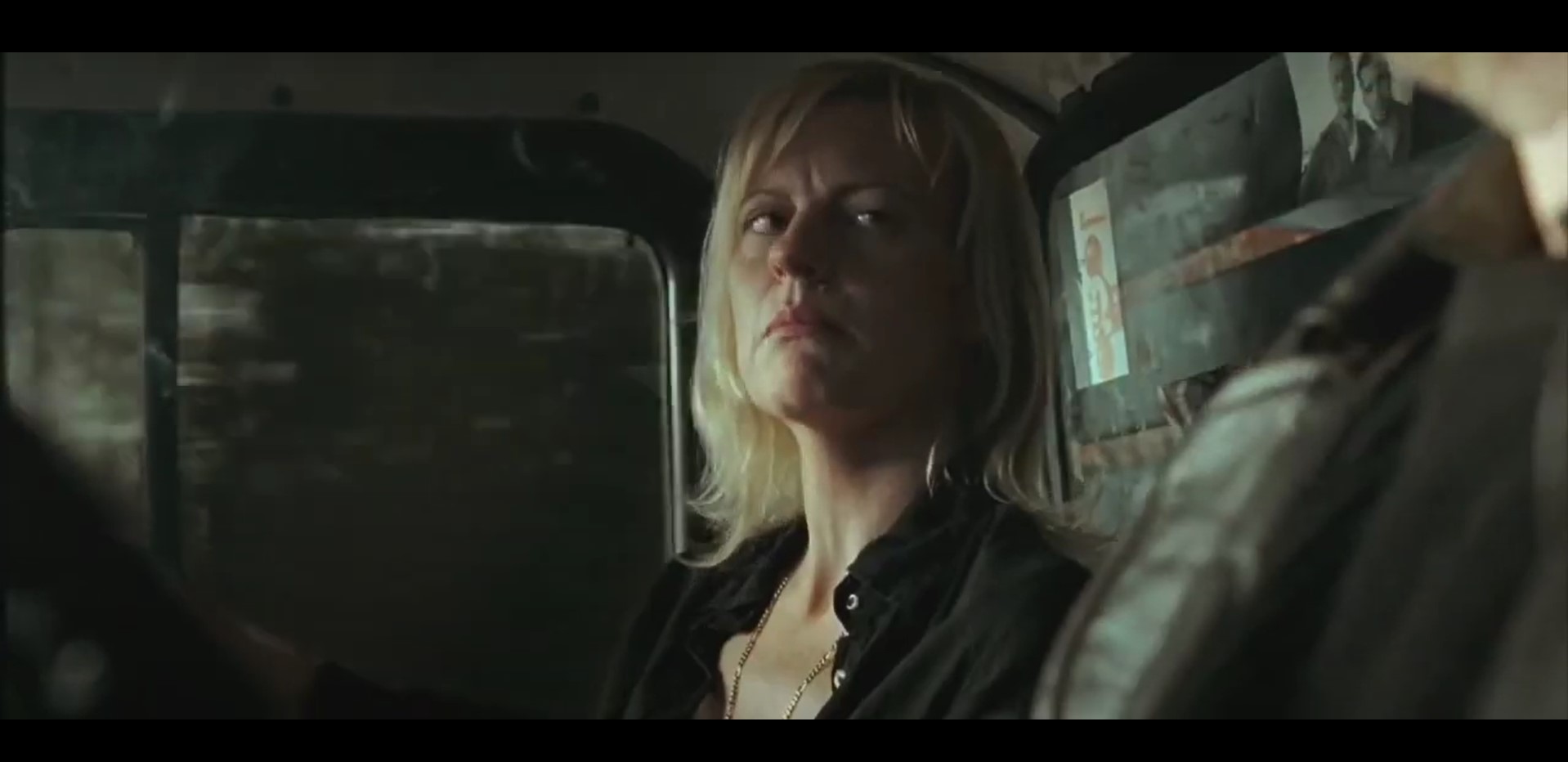
“The Abandoned’s” modest budget regulates casting to, at that time, relative unknowns for the U.S. market but certainly not an experienced lot between English actress Anastasia Hille (“Snow White and the Huntsman,” “Martyrs Lane”) and Karel Roden (“Orphan,” “Hellboy’) playing reunited brother and sister Marie and Nicolai who have not been together since infancy.  Separated at the demise of their mother, Marie and Nicolai have undoubted hesitation to their relation, especially both are met by grisly versions of themselves in the old family homestead.  The double versions of themselves represent a dual life, one connected to their current path, and one connected to their past, and Hille and Roden play into that theme with fortitude and fear in how the past haunts their characters connected to a shadow world in a very “Silent Hill” way.   Hille brings complexity to Marie’s own troubled relation with her daughter, a character we don’t necessarily see physically on screen, but we understand through phone conversations and brief interactions with Uncle Nicolai that the foundation the mother-daughter relationship stands on is shaky and that pushes Marie to pursue the truth about her own mother to avoid that disconnection with her daughter.  For Nicolai, Roden instills a more tragically inclined façade without overcompensating with tremendous evidence in the loss of a woman he loved, aside from their matching tattoos, and his melancholic state is staid by the newfound opportunity to discover his past until unless it also becomes his downfall.  Again, we’re back to the past should stay dead, or in the past.  Hille and Roden underpin “The Abandoned” and its ghostly enigma with brief interjections of supporting ancillaries in Valentin Ganev, Carlos Reig-Plaza, Paraskeva Djukelova, and Marta Yaneva. 

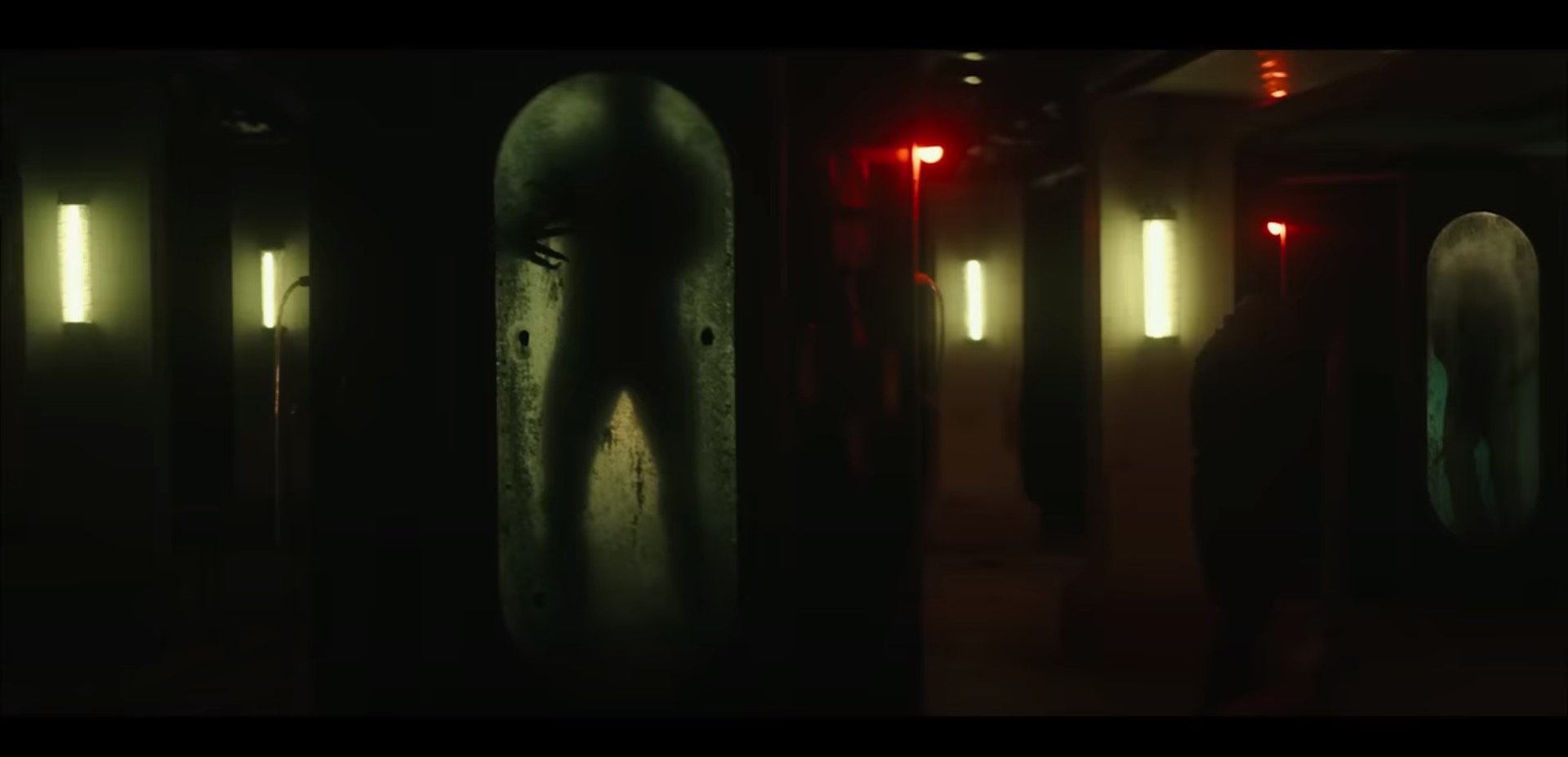
“The Abandoned” is one of those circular narrative stories working toward a revelational end, one that likely won’t be pleasant.  An endless loop of trying to leave Marie and Nicolai’s childhood home only for them to be brought right back into the same room from which they started lend into a couple of preconceived notions of their ringlet wretchedness, both in circumstance and in life, and that being either they’re already dead and in a purgatory or their grieved existence has warped them into a psychological break when returning to a decaying land left in the memories of the heinous death of their mother.  Both theories incorporate a supernatural element where time reverses and, coinciding with the twins’ upcoming birthday, a clock ticks down that will bring the family whole again, this time in the afterlife if the unnatural powers to be have anything to say about it.  That’s the definitive beauty of “The Abandoned’s” open air forbidding allegories with the more than one interpretational rivulets spreading in different directions, shaped idiosyncratically by Marie or Nicolai’s life.  What helps the impervious fate outcome of the principals is that “The Abandoned” also has strong, poignant visuals as a foothold into keeping audiences intrigued on what could be a slippery slope of symbolism.  A mix of practical and composite effects, done amazingly through the editing process, sell duality on every layer as if we’re experiencing two worlds during a collision and waiting with anticipation for one to engulf the other. 

Unearthed Films brings “The Abandoned” home on a limited-edition Blu-ray home video. The AVC encoded, 1080p high-definition, BD50 capacity houses plenty of breathing room for the claustrophobia details to writhe within. Middle-to-higher contrast levels that throw out good shadows without being extremely inky, there’s spectrum discoloration from blotchy-banding, suggesting a good encoded transfer that deciphers more details rather than squeezing everything in under a lossy codec. Range of the darker graded feature does favor a generous bluish green for the interiors while natural light swarms and illuminates into the exteriors, brighten up Anatasia Hille’s already blonde enough hair to almost pure yellow. Fine details pervade over much of the duration, only relinquishing details for dark, cavernous moments to scare up apprehension levels. The English DTS-HD 5.1 and the PCM 2.0 give viewers lossless fidelity and flexibility with audio setups. I preferred the stereo with robust dual channel dialogue; however, the 5.1 showed signs of directional awareness – rustling of leaves, ghostly voices, etc. – through the back and side channels. Dialogue is prominent and clear on both audio options and free of intrusion and interference. English and Spanish subtitles are optionally available. Special features include an abundant of new material exclusively produced by and curated from Unearthed Films, including new, individual interviews with director Nacho Cerdá, screenwriter Karim Hussain, and screenwriter Richard Stanley; there are also new furnished for this release alternate endings that more so involve Marie’s daughter, deleted and extended scenes cut for timing and flow, and outtakes. Archived bonus content has a Making of featurette, location vision in “The Abandoned’s” den, a featurette of Nacho Cerdá: The Trail of Death that looks at the director’s earlier horror inspirations of his trilogy of death shorts, The Little Secrets of Nacho Cerdá goes further into the director’s insights for his varied take on “The Abandoned” story, Nacho Cerdá has a conversational horror discussion with friend Douglas Buck, director of 2006’s “Sisters,” promotional and storyboards gallery, trailers, and a BD-ROM storyboard collection. The limited-edition release has a lissome cardboard slipcover with original poster art of the blood-crying doll from “The Abandoned” on the front. Inside, a standard Blu-ray Amary case has the same cover art image that’s also pressed on the disc. There are no inserts included. The rated-R release has region A playback only and a runtime of 99 minutes.

Last Rites: A step back from the gore and revulsion, Nacho Cerdá is able to scare stiff with “The Abandoned,” a dead and buried family abstrusity squaring the score for lost time by reversing time to welcome back those left living, and Unearthed Films’ limited-edition release is the best version to date that deserves a warm homecoming for its icy, taciturn atmosphere.

Don’t Be Left Behind. Get Your LE Blu-ray Copy of “The Abandoned” from Unearthed Films

What Russian EVILS Lie Beneath in “The Lair” reviewed! (Acorn Media International / Blu-ray)

“The Lair” Has a Deadly Secret!  Blu-ray Now Available!  

Royal air force Captain Kate Sinclair is shot down over the arid planes of Afghanistan.  Swarming with Taliban insurgents and her command officer killed, Sinclair takes shelter in an old, abandoned Russian bunker from the Russian Afghanistan invasion of the 1980s.  What she stumbles into is an experiment lair housing numerous stasis chambers and dark secrets.  Sinclair manages to barely escape with her life when one of the creatures inside the capsules is released, tearing to shreds her well-armed pursuers.  Rescued by a ragtag team of U.S. military outcasts based in the middle of nowhere as peripheral punishment and joined up by a trio of British special forces in the area, the Captain attempts to warn her rescuers what’s out in the desert only to be on the receiving end of a monstrous invasion that sees the slaughter of nearly everyone in camp, including the camp commander.  Miles from anywhere and not enough supplies to withstand another attack, those soldiers left alive band together to stage their own last stand assault on the creatures’ Russian bunker lair to ensure hostile eradication.

Acclaimed horror director Neil Marshall (“Dog Soldiers”) returns to his roots with a claustrophobic, high-energy, and violent creature feature known as “The Lair.”  Having experienced underwhelming success with the fiery Dark Horse antihero “Hellboy” remake in 2019, Marshall returns to independent scene for the 2022 released film having been shot in the barren lands of Budapest, Hungary to create the illusionary Afghanistan territory backdrop.  Marshall co-writes the script with “The Lair” star Charlotte Kirk, a reteaming affair from Marshall’s last feature “The Reckoning” from two years prior in which Kirk also produced and starred.  Also returning from “The Reckoning” and into the producer’s chair is Daniel-Konrad Cooper along with “Infinity Pool” producers, Jonathan Halperyn and Daniel Kresmery, and “Lords of Chaos’s”, Kwesi Dickson in this Shudder exclusive collaboration from Rather Good Films, Scarlett Productions Limited, Highland Film Group, and Ashland Hill Media Finance with Neil Marshall and Peter Shawyer’s private equity investment group, Ingenious Media, providing financial support.

Star Charlotte Kirk and Neil Marshall have a seemingly natural rapport that has transposed well from their collaboration on “The Reckoning” to the “The Lair,” crossing subgenre that involve the equivocal occult to a more plainspoken physical presence of foreign experiments gone wildly bloodlust.  Instead of being hunted by a 17th century witch hunters just for being a woman saying no to man, Kirk steps into a role of authority as military captain with loads of smarts and adept at close combat as she’s being, once again, chased by predators, but these uber-predators are unearthly, unremorseful, and ugly.  Marshall provides just enough character backstory for understanding the stakes and strengths of each of them but to reach a little more into their history might have been key to stronger motivations and for something to prove in not just being jarhead screwups.  Sinclair finds commonality and sympathy from Sgt. Tom Hook (Jonathan Howard, “Godzilla:  King of the Monsters”) who bears the guilt of losing men in battle and punishes himself to do better.  Psyche profiles for each soldier makes them rise above being flat by providing depth of flaw but what is vexing and irking about each, and this element may very well be intentional as an international thespian bout of poking fun, is the cast is nearly all British playing Americans with stereotypical drawls, ebonics, and punctuating southern accents so overexaggerated it’s downright sickening to hear, like watching a bad old war film, but what’s even worse and what drives a sharp claw talon into the inane heart of trite-tired audiences is the group slow walk before embarking into the battle of no return.  Again, this might be the work of intentional satire.  Some accents are gargantuanly worse than others, such as with “Titanic 666’s” Jamie Bamber’s pirate-patched Major Roy Finch and the Mark Arend’s Carolina-born Private Dwanye Everett.  From there, the elocution grades get better with less cliché but not by much with a cast rounding out of Leon Ockenden (“The Reckoning”), who I couldn’t understand because his accent was so Scottish-ly thick, Troy Alexander, Mark Strepan, Hadi Khanjanpour, Kibong Tanji, Adam Bond, Harry Taurasi, and Alex Morgan.

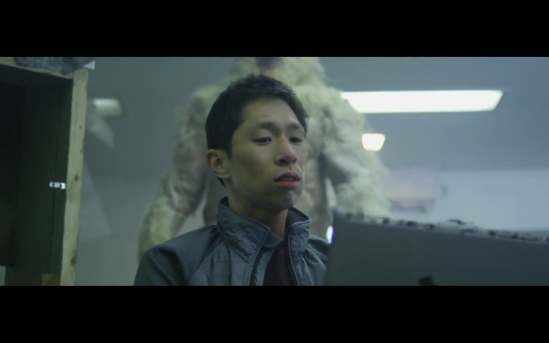
Neil Marshall not only returns to his horror origins but he also returns to the heyday of prime practical effects with inset creatures of a spliced appearance between the build, the dark full body achromia, and the facial configural layout of Marvel’s extraterrestrial antihero Venom with the eye-less, tongue-lashings and grabbings of Resident Evil’s staple adversaries, the Lickers.  Obvious a man in a prosthetic suit, the simplistic, brawny-framed humanoid basks in nostalgia despite being in a modern day movie, pining for the days when large or small men in full body, head-to-toe, terrifying imagery suits were the antagonists of our youthful nightmares while also providing the cast something to act against for a more realistic and rancorous on screen rendezvous.  The smaller scale production limits Marshall’s possibilities with his Kevlar-fleshed and razor-toothed creatures but the veteran director sells every act of “The Lair’s” story with trenchant action with hardly any downtime to catch one’s breath in between because the next blood-laden blitz rollout is upon us in a blink of an eye.  Between the action, the anomalous characters, and the pulsating, downbeat synthesizer score that courses through its veins, “The Lair” leans itself toward being a callback to the late 80s-early 90’s last stand dogfight subgenre and you can’t one second cease your attention for a director who appreciates the narrative surprise more than anticipated predictability.

Become lured into “The Lair” now on Blu-ray home video from Acorn Media International, a UK distribution subsidiary of RLJ Entertainment.  The AVC encoded, 1080p high definition release is presented in a widescreen 2.35:1 aspect ratio.  The BD25 offers sold flexibility for a film with hefty amount of night shoots and action as potential compression problems seem to stay at bay without any severe noticeable banding, blocking, mosquito noise, etc., however, the details are quite flat with a smoother finish, often in the blur of the fast camera workflow and editing because of the action sequences, leaving depth on characters, as well as in the scene, at arm’s length with monocular vision.  The warm hint of chartreuse embedded grading offers industrials color tones with a rich grit of oxidized bunker steel.  Don’t adjust your audio dial on the release’s English DTS-HD Master Audio 5.1 surround sound track, the dialogue only sounds wonky because its deliberate Americanized dialect set at the forefront and prominent amongst the audio layers which has significant range and depth with explosions, rapid gunfire from different calibers, and the guttural growls of the creatures that echo nicely through the rear and side channels when under the bunker or even affixed in a slightly decreased volume of its form in the attack of the basecamp.  There were no interference blights with the audio track, such as hissing, popping, or other discernible issues.  Special features included only a making-of featurette with clipped interviews during the shoot with director Neil Marshall, actors Charlotte Kirk, Mark Strepan, Jamie Bamber, Jonathan Howard, Leon Ockenden, and others regarding their admiration for the project in different aspects.  Acorn Media’s physical release comes in a slightly larger Blu-ray snapper, typical of the UK releases, with the cover art featuring an up-close and personal look at the creature’s ugly mug.  The same art is also on the disc with no insert inside the snapper case.  The release comes region B locked with a runtime of 97 minutes and is certified 15 for strong gory violence, language, and threat.  If you can stomach the fatuity at times, “The Lair” is a fast paced and staunch creature feature with a bunker full of gore.

“The Lair” Has a Deadly Secret!  Blu-ray Now Available!  

At 42,000 Feet, EVIL Can Hear You Scream! “Row 19” reviewed! (Well Go USA / Blu-ray)


Don’t Miss Your Connection For “Row 19” on Bluray!  

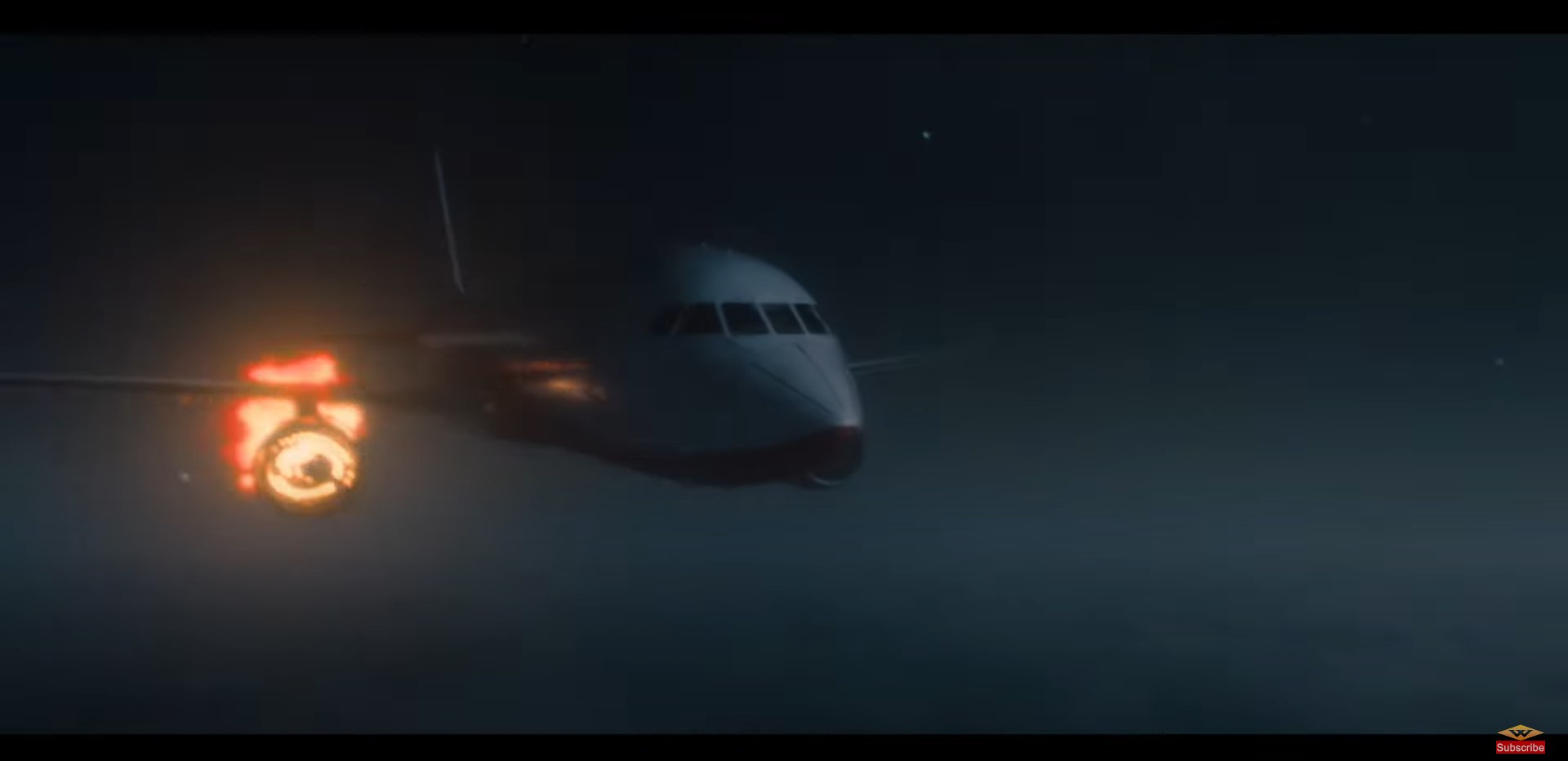
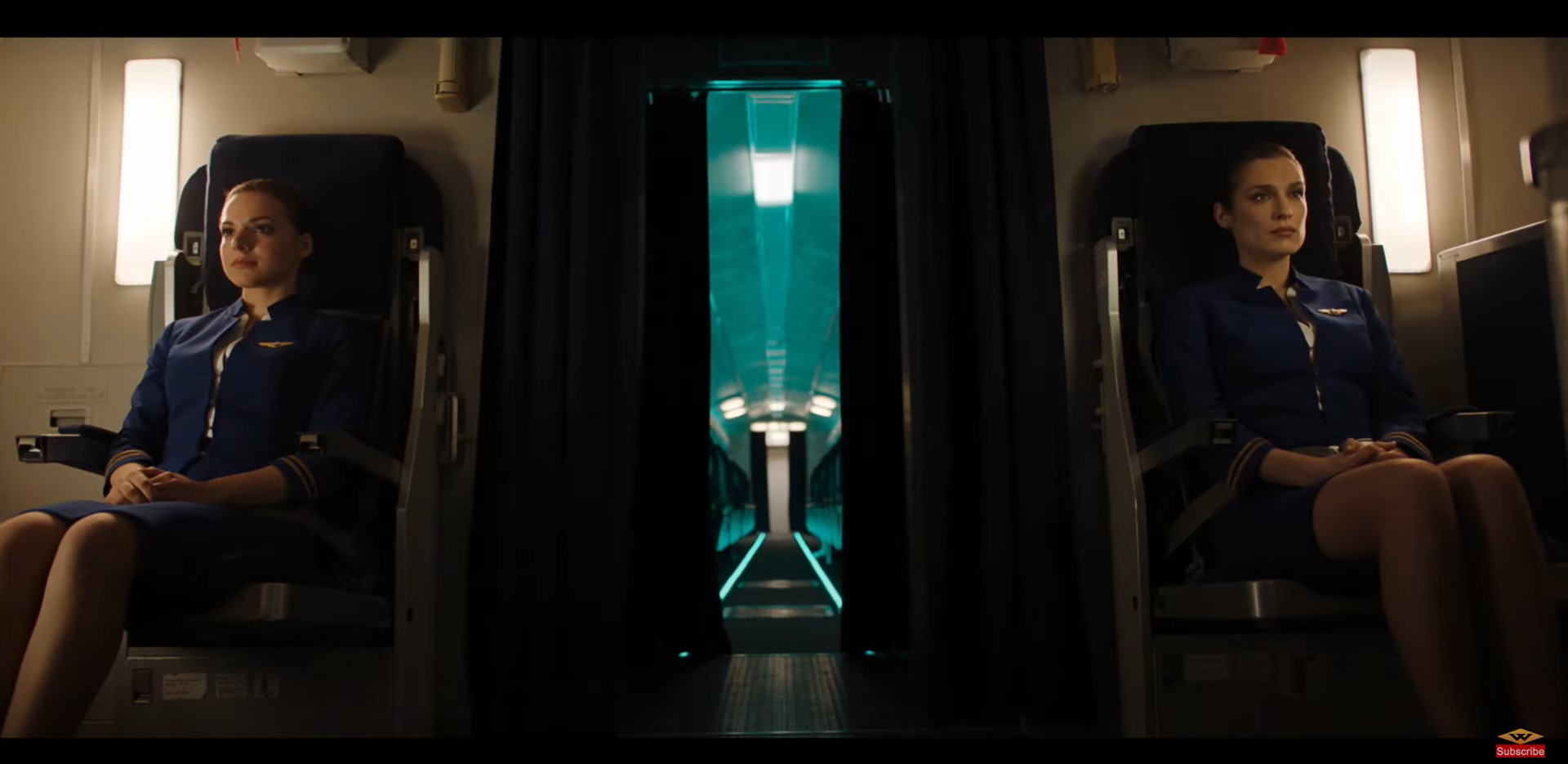
Young Katerina survives a deadly commercial plane crash that killed her mother.  As the only survivor to miraculously to alive, she becomes the center of the public and media attention over the next 20 years.  Now as a grown woman with a young daughter of her own, around the same age of her deadly tragedy, Katerina is about to embark on a plane for the first time to visit her mother and though past feelings leave her tense and scared, her daughter and her being a psychologists help soothe her fears…to an extent.  The late-night flight during a snowstorm leaves half the cabin empty with only a few passengers and the flight dwindles the numbers even more when passengers begin to die off in mysterious random misfortunes.  Lines blur between reality and the past for Katerina who’s about the relive the worst day of her life. 

I consciously realize that all things Russian is likely on everyone’s blacklist at the moment with the unfounded war Ukraine, but anything not created by the authoritarian Russian governing body could be, more-or-less, independently controlled by the people of Russia who are, again more-or-less, against the bloody and unnecessary Putin-fueled conflict outside their country.  So, when I sit and analyze Russian native Alexander Babaev’s latest film, a mile-high horror known as “Row 19,” I’m objectively looking at the artist and his craft rather than the possibility of a stalwart countryman just doing his propaganda duty for the motherland.  In fact, there’s none of that latter statement present in Babaev’s paranormal 2021 thriller that touches upon regret and facing fears, penned in the debut feature film screenplay by James Rabb. “Row 19,” or “Ryad 19” and, in South America, “Passenger 666” is the high-flying, dark mystery of the air film from multiple production studios in KIT Film Studio (“Mermaid: Lake of the Dead”), Central Partnership, Monumental Film, and Red Media.

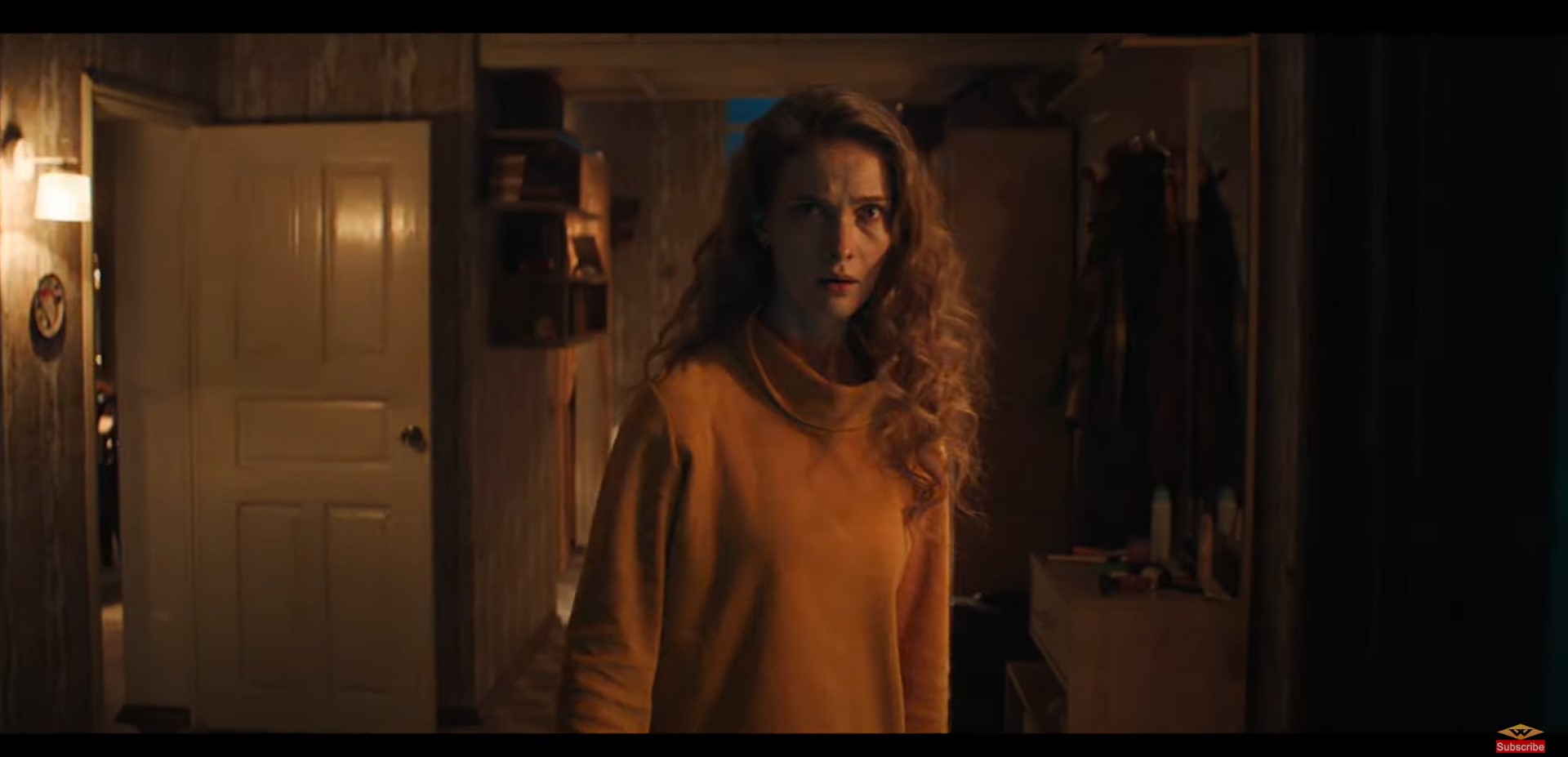
“Row 19” sets the stage with a handsome cast of ensemble characters boarding a sole frostbitten and nearly vacant plane bound for a destination that audiences know all too well will be a landing zone that is anywhere else, but the destination printed on their purchased tickets. A variety of character flavors is always a classic touch when elucidating an unexplained threaten situation. At the yoke is Svetlana Ivanova (“The Blackout”) playing the adult version of the Katerina who bested death being the only survivor of a deadly plane crash 20 years ago. Scarred not only on her leg but also in her head, Katerina vouchsafes herself into getting back on than massive flying steel horse with an internalized pep talk by way of her psychologist vocation who she also helps people with their own internalized issues. However, Katerina is not a very good psychologist when the cabin goes into a tailspin of unexplained death and disappearances. The impression from the film is that the script, at one point or another, had Katerina as a medical physician as she’s often called upon and looked toward by the other passengers to know what to do when a passenger faints or another passenger is burnt to a crisp. She also doesn’t help the matter when she claims to be a doctor (and neglect to mention she’s a mind doctor. I believe that warrants a case for malpractice.). In the adjacent row is the hunky former combat news reporter Alexey (Wolfgang Cerny, “The Red Ghost”) who makes small talk with Katerina and her daughter Diana (Marta Timofeeva) and yet, the suspected sexual tension between them became never present and never materialized. Instead, Katerina and Alexey go back and forth on their mental blocks that causes drug use and shaky hand syndrome, a welcoming change to a rather routine love interest path that’s been overtrodden in other films in similar plots. However, there’s never a full understanding of Katerina’s role in this topsy-turvy spin through realities that only suggests that Katerina has a mighty will that can’t be contained even for her own good. Anatoliy Kot, Denis Yasik, Irina Egorova, Viktoriya Korlyakova, Ivan Verkhovykh, Anna Glaube, and Yola Sanko as the Witch (yes, there is a regular Baba Yaga-esque in the character list!) round out of the cast.

The sky is the limit with airplane horror as the concept of inescapable terror above the clouds can be the most frightening experience for not only acrophobia or claustrophobic individuals, but for average joe passenger looking to earn extra flyer miles on their fear membership cards.  We’ve seen zombies on a plane (traditional and Nazism), we’ve seen gremlins on a plane, and, hell, we’ve seen snakes on a plane.  Now, Babaev introduces the spell-casting witch confined to the rows of the tightly packed, small, and uncomfortable airplane seats and served the Salisbury steak with a side of rancid bag peanuts.  I can see why a witch would be pissed off as well.  However, there’s more than what meets the eye in Babaev’s witch that isn’t just on an obvious killing spree because her inflight cocktail was a little watered down or because of something a little more worthy of a massacre.  “Row 19” aims for misdirection in trying to get the audiences thinking one way by using sleight of hand but really a behind-the-scenes motive is kept in the dark for most of the runtime.  Babaev keeps the momentum fairly charged by setting up individual character personalities with just enough of a touch of odd behavior to make the atmosphere feel foreboding and keep interest in the next key scenes of story progression and at the climatic reveal is where the director’s momentum takes a nosedive, losing the altitude and the cabin pressure of smooth flight with a bow-wrapped-gift exposition that takes all the air of the suspension. 

Fasten your seat belts. Secure all lose items. Lift your tray table and lock it in the upright position. “Row 19” is about to take off and take flight on a Blu-ray home video release from Well Go USA Entertainment. The not rated, region A Blu-ray is presented in a widescreen 16:9 aspect ratio with a decompression of around 20-26 Mbps, rendering picture quality of this AVC encoded release better than expected from Well Go USA. Image is sharp, well-delineated, and abundant with the right amount of color, appropriately denoting flashbacks with a filtered color reduction with only the slightest of change by director of photography Nikolay Smirnov. The Russian language 5.1 DTS-HD master audio track is crisp and clear. A solid track, well-established, full-bodied fidelity track that hits all the right channels with the right balance. There is an option English dub as well as available English subtitles on the Russian track. The subtitles synch well, though fast, and are transcribe with no errors detected. The 79-minute feature comes with a static menu, scene selection, and zero bonus features, which is typically the case with these U.S. distributed Russian releases. “Row 19” is visualized phobic fear, a self-flagellation of trying to change the past with what ifs, and director Alexander Babaev instills a shadowy creepiness inside the cockpit of consternation, but stalls at the height of the film’s storytelling success with a wrap-it-up quick and loose ending.

Don’t Miss Your Connection For “Row 19” on Bluray!  

One Man Tries to Reclaim his Life When EVIL Suddenly Invades! “The Unthinkable” reviewed (Magnet Releasing / Digital Screener)

Out in the country of Vånga, Sweden, Alex endures his ex-military Father’s demanding and verbally abusive posture.  His only relief is spending time with Anna who is in a similar circumstances with her mother.  The two spend many of their days together amusing themselves on the church piano until Anna is forced to move away to Stockholm, leaving Alex to face his father’s wrath alone.  Alex runs away for his childhood home and, years later, becomes a popular piano recording artist influenced by his time with Anna.  When he returns to Vånga during a time of countrywide unrest to purchase that same church piano of his fond memories, Sweden comes under attack by an unknown force as major roadways out of the country have been blown to smithereens, every power station is the target for destruction, and the rain is contaminated with an airborne chemical that makes people lose their memories and become disoriented.  Alex has to reconnect with his father in order to save Anna, the love of his youth, to survive the unthinkable. 

An invasion on the scale that you’ve never seen blitzes with explosive stunt work and stunning visual effects.  Victor Danell’s action-drama “The Unthinkable” comes out of nowhere with a hard stop pivot of a love story turned survive at any cost as the film’s country of origin becomes warzone raided without mercy.  Under the original title “Den blomstertid nu kommer” in the native tongue, Danell directs and writes “The Unthinkable” along with co-writer and star Christoffer Nordenrot, though credited as their collective production group, as the two team up again after nearly a decade after working on the comedy “Soundcheck,” directed by Danell.  What started as a crowdfunded Kickstarter campaigned ended up being a multi-million dollar production and with such growing fascination amongst eager fans, the 2018 found more financial backing from the former Swedish cinema chain company, SF Bio AB, now known as Filmstaden and is presented as the first feature film of a filmic collective known as Crazy Pictures in co-production with CO_Made and Film I Väst.

As mentioned, writer Christoffer Nordenrot finds himself at the center of the story as Alex, a passionate pianist fighting back against well-armed, well-supplied unknown militant forces all the while processing a dam breaking flood from the rebuilding of shattered emotions when returning to his quaint hometown after abruptly escaping his overbearing father (Jesper Barkselius).  Socially awkward with an obsessive proclivity, but wielding an intellectual thought pattern, Alex appears to be a person likely on the spectrum, but bottles much of his emotions internally, biting his lip at every moment his father disparages him or his absconding mother. When his only friend in the world, a girl named Anna (Lisa Henni, “Haunted Evil Dead”) whose roughly the same age, is being pulled away from Vånga to live in Stockholm with her mother, Alex undergoes a rapid descension of one heart ache to another that leads to him able to flourish and exceed on his own as a new wave pianist, engineering a combination of electronic beats of sound machines with the simplicity of soul from the piano to arouse his repressed emotions for an grandstand audience. Alex finds his way back Vånga for personal gain, a childhood piano him and Anna shared making music over, and to attend the sudden death of his mother from a previous, individual attack in Sweden, but what he stumbles into is avoiding his father at all costs, being swept into a returned Anna’s radial allure, and, oh yea, a massive proclamation of war by an aggressive, chemical warfare and shoot-on-sight enemy of the Swedish people. This is where I find Alex to have a chip-on-his-shoulder complex unhealthy for everyone around him as he doesn’t look past the past and punitively causes discord with his father, who is trying to save not only the last standing power station in all of Sweden himself, but essentially trying to save his entire country, and Anna when Alex finds out she has a husband and child after an afternoon of rollicking in the hay and sharing various moments around town. Performance wise, Nordenrot might not be the action star of tomorrow in his character’s one note of early on narcissism and bad judgement, but challenges himself in the role by losing and gaining weight to accomplish years of age appearances from teenage boy to mid-30’s man and is good enough to swashbuckle against relentless military helicopters and a slew of men capping of M60 machine guns in his direction. Pia Holverson, Krister Kern, Alexej Manvelov, Magnus Sundberg, and Ulrika Bäckström round out “The Unthinkable’s” cast.

With a runtime of 129 minutes, “The Unthinkable” has a lot of story to tell with an ample amount, practically divided in evenly, imparted into two stories – one forgotten romance and family squabbles rekindled and the other a bombardment of annexing Sweden from the country’s own residents by deadly force. The pivot also never feels gradual as act one is all about teenage Alex and Anna growing more than just accustomed together despite lingering family troubles. Once completing the transition from boyhood to successful music man, an irksome sensation still nags in the back of Alex’s mind as he can’t find happiness in all of the boo-koo-bucks his albums and concerts afford him. This leads “The Unthinkable” into a territory of complete selfishness by waterlogging a Red Dawn offshoot concoction, teetering on speculation of Russian invaders eroding the memories in some aspect of chemical weathering, with Alex being one hell of a selfish guy and he’s the supposed hero of the story, but for the sake of me can’t explain his inabilities look past his father’s conspiratorial obsessions and anger issues, his muse’s moving on her with her life with a family after he fled his hometown, and he definitive choice of unable to live with the fact that she’ll never be with him despite all the adversity raining down upon him at the same moment he internally crumbles at his pent up emotions. Cynicism drives the story to a tainted sham ending that’s supposed to be touching and full of heartfelt sacrifice on the part of the hero, yet how can a hero commit himself to an irreversible without an inkling of danger against those he’s doing this for? I, personally, feel cheated by “The Unthinkable’s” character arc, but one thing is for sure is the seamless practical and visual effects action of top shelf quality. Between the great stunt work of remote control tractor-trailers to the computer generated helicopter crashes, reality and fantasy blur to the point where your brain can’t tell the difference. “The Unthinkable” excels in heart-racing action and thrills with narrow escapes from disasters.

An assault on not only the soul of the country of Sweden, but also on it’s people’s memory banks as Crazy Pictures’ spins Russian meddling into an extreme aggression with an epic imperious campaign in “The Unthinkable” that attacks the visual cortex with jaw-dropping affray. Magnet Releasing, a subsidiary of Magnolia pictures, presents “The Unthinkable” in a widescreen, 2.39:1 aspect ratio, and has made boots on the ground showings in theaters and on-demand this month on May 7th. Hannas Krantz, another member of the Crazy Pictures collective group, delivers the war at home on Swedish soil with hard lighting, greyly somber moments of confusion and fleeing, and yellow gunfire illuminated nights after an airy love story, basking in warm, inviting yellows and pleasing in comfortable locales, crumbles to harden our narrative hero. Krantz leaves just enough negative space for the VFX team to implement their movie magic in the makings of a clandestine assault. There were no bonus scenes during or after the credits. Becoming lost in “The Unthinkable’s” high powered effects can become enthralling when climbing the latter of every scene being just as intense and bigger than the last; however, Alex’s arc of a lovesick boy never fully exits from the grown up version of himself, thwarting any kind redemption and respect because of very unlikable and intense egomania.

Rent “The Unthinkable on Prime Video!

To Unearth a Lifesaving Plant, You Must Survive EVIL! “Yeti” reviewed! (High Flier Films / Digital Screener)

When a medical research team scouring the Himalayan mountains for a miracle plant that can cure cancerous cells disappears without a trace, a second team, armed to the teeth, venture up the harsh terrain to locate them and recover any evidence of the mythical plant dubbed the Yeti plant.  They discover the research station has been abandoned with examination equipment and notes left behind.  With a storm brewing and the topography jamming their radio signals, the only thing to do is push themselves to setup a triangulated perimeter in order to boost the radio strength and comb the mountainside for the plant before hunkering down from the storm, but little do they know that they’re being hunted by a primordial and fabled creature, the Yeti, stalking prey to protect his uncharted, stuck in time territory.

As the third film to be titled “Abominable” in the last 15 years, this particular 2020 creature feature on the ever elusive and mysterious Himalayan Yeti is helmed by the 2018 released scurrying little feet of those mischievously cursed “Elves” director Jamaal Burden might not be at the top of your search engine results, but if you search “Yeti,” you’ll see High Flier FIlms aims to detach from the previous moniker inhabitants.  Burden’s modestly budgeted, internationally shot, sophomore film returns the filmmaker right back into the mythic subhuman category with yet another timeless storybook creature living in legends slithered within the shadowy veil from a script written by J.D. Ellis (“The 13th Friday”) that’s of indie caliber with a touch of jaw-ripping, blood-sprayed snowy carnage in this post-Holiday, winter-horrorland super beast feature.  “Yeti” is the latest in a long line of horror schlock produced by Justin Price, Khu, and Deanna Grace Congo under Pikchure Zero production company and is filled in St. Petersburg, Russia. 

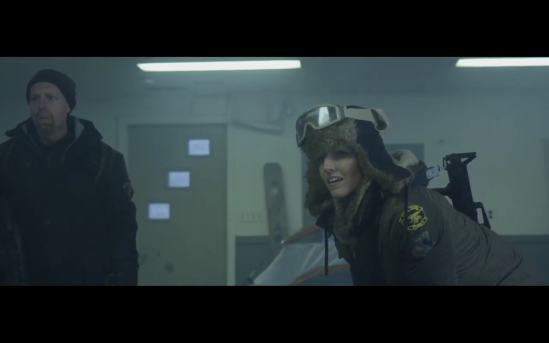
Confronting opposite the terrible Yeti is a cast of alien talent without so much as a recognizable genre name or face to anchor “Yeti’s” marketing success, beginning with Katrina Mattson in her debut lead performance as a young scientific assistant to the terminally ill-fated Dr. Helen whose played by Seattle born Amy Gordon.  The body of dialogue or visual communication didn’t flesh out Mattson’s assistant’s strong yearning to support Dr. Helen’s obsession in rooting out the never before seen Yeti plant other than stating she will do anything to help the Glioblastomas-doomed doctor by whatever means possible.  The disconnect in dynamic between the two supposed friends is not well established and completely melts away faster than the Himalayan snow on a Summery day when the two barely reunite after separating from the abandoned research station.  They’re each accompanied by a couple of mercenaries hired to be an armguard, for a reason why scientists needed M16 assault rifle toting ex-special forces types is beyond me, but actors Robert Berlin and Brandon Grimes serve as such, adding a tinge of military machoism that could have been amped up more against a Jason Voorhees worthy disappear and reappear act Yeti with the given inherent superhuman strength. Berlin wildly over performs at times just spouting out his lines as if reading off an instruction manual. Plus, his character is poorly developed as a money hungry Yeti hunter with an extremely naïve and arrogant personality to the point of yelling in the Yeti’s face when the Yeti is clearly not dead or incapacitated.  Victims pile up with the remaining cast becoming Yeti chow, including supporting performances from Justin Prince Moy, Magdaln Smus, Victir Ackeev, J.D. Ellis, and with Timothy Schultz passing as the scraggily titular abominable snowman.   

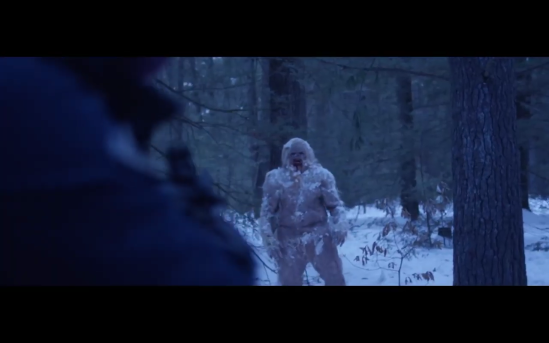
The reason why Burden’s “Abominable” might not be numero uno on your search engine results shouldn’t be total surprise, but even “Yeti” may not produced the same desired outcome.  Aside from not having any grade of star power attached to it, audiences will be awkwardly thrusted right into a perplexing point in the story of dropping us right into complication with a rescue team entering the abandoned Himalayan station and, from then on, a straight forward, uncompelling path of infinite chase with the ball incessantly in the Yeti’s corner trounces on any kind of hope or resistance for survival.  The man-in-a-suit Yeti and makeup effects are not too bad as an admissible effort for an indie production and what’s even more impressive is how Burden felt confident enough to actually show the creature. There have been Yeti, bigfoot, sasquatch, etc., films aplenty of that stray away from displaying much of the hairy beast, only providing glimpses of the large feet, ape-like hands, or fanged teeth to represent a presence, but for “Yeti,” the creature is proudly displayed in all it’s full glory despite being half hairless with patchy spots of snow-stuck fur. Joe Castro, an effects guru for off-the-wall horror for the past three decades with credits including “Night of the Demons III” and “Blood Feast 2: All U Can Eat”, created the Yeti suit while also dishes out some surprisingly decent gore effects that have a real palpable face mangling fetish and so bloody great. On the other hand, the visual effects and props are an abomination in themselves with obvious toy guns and lack of continuity and cause and effect visual effect givens.


Is “Yeti” another filmic miss on the missing link or can there a slither of entertaining gore with creature lucidity amid a trite script? I do think the latter in Jamal Burden’s “Abominable” from High Flier Films slated for a January 11th DVD release in the United Kingdom. Producer Khu is also the director of photography, using the steady and handheld cams to capture a heap of medium and closeup shots without seizing the opportunity to get a lay of the actual snow covered forest which the characters are heaving hot breaths in the frozen air. Khu does exude the fact of actual frigid conditions with the use of a bluish tint in every outdoor scene. “Rave Party Massacre’s” Matt Jantzen composes a tense-situated, industrial epic score that doesn’t fit “Yeti’s” marginal story structure and can be nearly rave-like and repetitive at times while overpoweringly robust. Sound design is another favorable aspect in “Abominable’s” chaos with a discernible range and depth, especially when working with crunchy snow and a lot of bulky clothing that can be heard rustling when characters move around frantically. Gore scenes are laced nicely with gooey, gushy sounds that can be tangibly slimy. There were no bonus material included with the digital screener nor where there any bonus scenes during or after the credits. The great Yeti adaptation still eludes our ever curious eyes as “Yeti” quenches a only blood thirst through an over-trekked, over-defiled snowy path of the subhuman subgenre.