One Man Tries to Reclaim his Life When EVIL Suddenly Invades! “The Unthinkable” reviewed (Magnet Releasing / Digital Screener)

Out in the country of Vånga, Sweden, Alex endures his ex-military Father’s demanding and verbally abusive posture.  His only relief is spending time with Anna who is in a similar circumstances with her mother.  The two spend many of their days together amusing themselves on the church piano until Anna is forced to move away to Stockholm, leaving Alex to face his father’s wrath alone.  Alex runs away for his childhood home and, years later, becomes a popular piano recording artist influenced by his time with Anna.  When he returns to Vånga during a time of countrywide unrest to purchase that same church piano of his fond memories, Sweden comes under attack by an unknown force as major roadways out of the country have been blown to smithereens, every power station is the target for destruction, and the rain is contaminated with an airborne chemical that makes people lose their memories and become disoriented.  Alex has to reconnect with his father in order to save Anna, the love of his youth, to survive the unthinkable. 

An invasion on the scale that you’ve never seen blitzes with explosive stunt work and stunning visual effects.  Victor Danell’s action-drama “The Unthinkable” comes out of nowhere with a hard stop pivot of a love story turned survive at any cost as the film’s country of origin becomes warzone raided without mercy.  Under the original title “Den blomstertid nu kommer” in the native tongue, Danell directs and writes “The Unthinkable” along with co-writer and star Christoffer Nordenrot, though credited as their collective production group, as the two team up again after nearly a decade after working on the comedy “Soundcheck,” directed by Danell.  What started as a crowdfunded Kickstarter campaigned ended up being a multi-million dollar production and with such growing fascination amongst eager fans, the 2018 found more financial backing from the former Swedish cinema chain company, SF Bio AB, now known as Filmstaden and is presented as the first feature film of a filmic collective known as Crazy Pictures in co-production with CO_Made and Film I Väst.

As mentioned, writer Christoffer Nordenrot finds himself at the center of the story as Alex, a passionate pianist fighting back against well-armed, well-supplied unknown militant forces all the while processing a dam breaking flood from the rebuilding of shattered emotions when returning to his quaint hometown after abruptly escaping his overbearing father (Jesper Barkselius).  Socially awkward with an obsessive proclivity, but wielding an intellectual thought pattern, Alex appears to be a person likely on the spectrum, but bottles much of his emotions internally, biting his lip at every moment his father disparages him or his absconding mother. When his only friend in the world, a girl named Anna (Lisa Henni, “Haunted Evil Dead”) whose roughly the same age, is being pulled away from Vånga to live in Stockholm with her mother, Alex undergoes a rapid descension of one heart ache to another that leads to him able to flourish and exceed on his own as a new wave pianist, engineering a combination of electronic beats of sound machines with the simplicity of soul from the piano to arouse his repressed emotions for an grandstand audience. Alex finds his way back Vånga for personal gain, a childhood piano him and Anna shared making music over, and to attend the sudden death of his mother from a previous, individual attack in Sweden, but what he stumbles into is avoiding his father at all costs, being swept into a returned Anna’s radial allure, and, oh yea, a massive proclamation of war by an aggressive, chemical warfare and shoot-on-sight enemy of the Swedish people. This is where I find Alex to have a chip-on-his-shoulder complex unhealthy for everyone around him as he doesn’t look past the past and punitively causes discord with his father, who is trying to save not only the last standing power station in all of Sweden himself, but essentially trying to save his entire country, and Anna when Alex finds out she has a husband and child after an afternoon of rollicking in the hay and sharing various moments around town. Performance wise, Nordenrot might not be the action star of tomorrow in his character’s one note of early on narcissism and bad judgement, but challenges himself in the role by losing and gaining weight to accomplish years of age appearances from teenage boy to mid-30’s man and is good enough to swashbuckle against relentless military helicopters and a slew of men capping of M60 machine guns in his direction. Pia Holverson, Krister Kern, Alexej Manvelov, Magnus Sundberg, and Ulrika Bäckström round out “The Unthinkable’s” cast.

With a runtime of 129 minutes, “The Unthinkable” has a lot of story to tell with an ample amount, practically divided in evenly, imparted into two stories – one forgotten romance and family squabbles rekindled and the other a bombardment of annexing Sweden from the country’s own residents by deadly force. The pivot also never feels gradual as act one is all about teenage Alex and Anna growing more than just accustomed together despite lingering family troubles. Once completing the transition from boyhood to successful music man, an irksome sensation still nags in the back of Alex’s mind as he can’t find happiness in all of the boo-koo-bucks his albums and concerts afford him. This leads “The Unthinkable” into a territory of complete selfishness by waterlogging a Red Dawn offshoot concoction, teetering on speculation of Russian invaders eroding the memories in some aspect of chemical weathering, with Alex being one hell of a selfish guy and he’s the supposed hero of the story, but for the sake of me can’t explain his inabilities look past his father’s conspiratorial obsessions and anger issues, his muse’s moving on her with her life with a family after he fled his hometown, and he definitive choice of unable to live with the fact that she’ll never be with him despite all the adversity raining down upon him at the same moment he internally crumbles at his pent up emotions. Cynicism drives the story to a tainted sham ending that’s supposed to be touching and full of heartfelt sacrifice on the part of the hero, yet how can a hero commit himself to an irreversible without an inkling of danger against those he’s doing this for? I, personally, feel cheated by “The Unthinkable’s” character arc, but one thing is for sure is the seamless practical and visual effects action of top shelf quality. Between the great stunt work of remote control tractor-trailers to the computer generated helicopter crashes, reality and fantasy blur to the point where your brain can’t tell the difference. “The Unthinkable” excels in heart-racing action and thrills with narrow escapes from disasters.

An assault on not only the soul of the country of Sweden, but also on it’s people’s memory banks as Crazy Pictures’ spins Russian meddling into an extreme aggression with an epic imperious campaign in “The Unthinkable” that attacks the visual cortex with jaw-dropping affray. Magnet Releasing, a subsidiary of Magnolia pictures, presents “The Unthinkable” in a widescreen, 2.39:1 aspect ratio, and has made boots on the ground showings in theaters and on-demand this month on May 7th. Hannas Krantz, another member of the Crazy Pictures collective group, delivers the war at home on Swedish soil with hard lighting, greyly somber moments of confusion and fleeing, and yellow gunfire illuminated nights after an airy love story, basking in warm, inviting yellows and pleasing in comfortable locales, crumbles to harden our narrative hero. Krantz leaves just enough negative space for the VFX team to implement their movie magic in the makings of a clandestine assault. There were no bonus scenes during or after the credits. Becoming lost in “The Unthinkable’s” high powered effects can become enthralling when climbing the latter of every scene being just as intense and bigger than the last; however, Alex’s arc of a lovesick boy never fully exits from the grown up version of himself, thwarting any kind redemption and respect because of very unlikable and intense egomania.

Rent “The Unthinkable on Prime Video!

Slavic Folklore EVIL Goes Full Amber Alert in “Baba Yaga: Terror of the Dark Forest” reviewed! (Digital Screener / Shout! Studios)


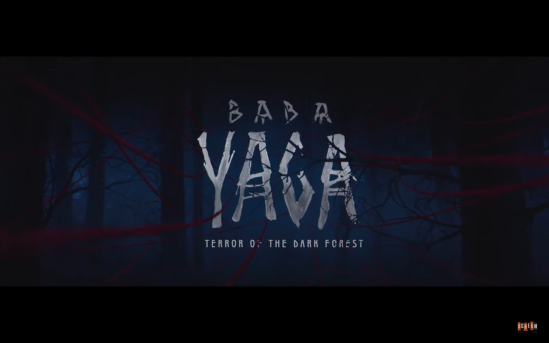
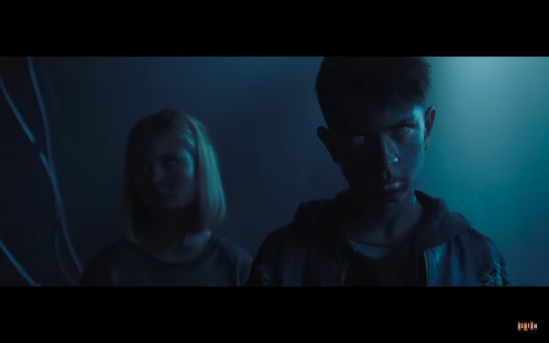
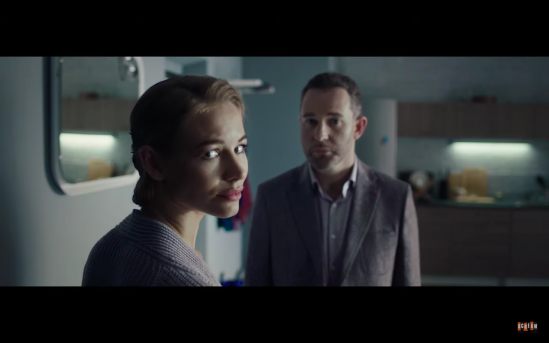
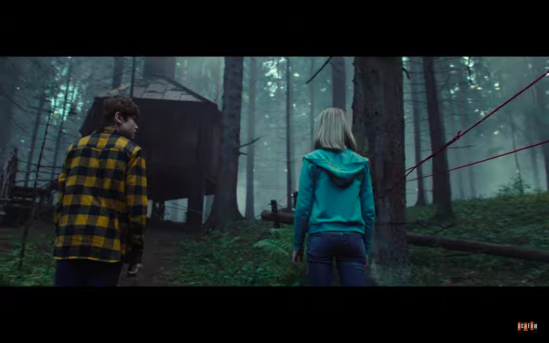
Still reeling over the loss of his mother, a disheartened Egor has moved to a new apartment on the forested outskirts of the city with his father, step mother, and infant half-sister. A nanny is hired for house upkeep and to look after him and his sister, but the nanny’s strange behavior borders hostility toward him while also bewitching his father with her beauty and charm. Since her hire, the nanny cameras alert Egor of movement in the nursey, projecting an unknown and disfigured woman in the room hovering over the baby. When his parents don’t believe him, there’s nothing more the older boy can do until his baby sister goes missing and his parents don’t remember her, as if she never existed. Egor, along with his friends, track down a man living in the woods who seems to have an inkling about the mysterious disappearances of children and why everyone forgets about them as he has experienced the loss of his daughter and can barely remember her. Based off the man’s ramblings, their search for Egor’s baby sister leads them to an old and abandoned power shack that serves as conduit to the world of Baba Yaga, a Slavic witch with the influencing ability in kidnapping and devouring children’s souls for power and Egor’s sister, along with the rest of the nearby children population, have been abducted to lure in the pivotal pure child to set her free into their world.

“Baba Yaga: Terror of the Dark Forest” is the second part of this unintentional two part Russian horror film appraisal following our extrospective look into Olga Gorodetskaya’s psyche serrating “Evil Boy” that just happens to have another protagonist by the name of Igor, but in this case, the spelling is Egor and, instead of a middle-aged doctor, Egor is a pre-teen boy with pre-teen issues – just to jazz it up a little. Also originally known as “Yaga. Koshmar tyomongo lesa,” the supernaturally Slavic folklore tale, directed by Snyatoslav Podgaevskiy (“Mermaid: The Lake of the Dead”), was released February in motherland Russia and is making a distributive second coming toward the States on September 1st courtesy of a collaboration between Shout! Studios and Leda Films. Penned by Podgaevskiey as well as Ivan Kapitonov and Natalya Dubovaya, the scribing trio pickup right where the wrote off form the gritty mysticism of fabled creatures beginning with “Mermaid: The Lake of the Dead” and into a classically frightening and morose villain salivating for juvenile souls spurred from one of the numerous variations of one of the more popular, if not grotesque, Russian mythological being. “Baba Yaga” is a production of the Cinema Foundation of Russia, Central Partnership Productions, Non-Stop Productions, and QS Films.

In much of the reverse from “Evil Boy,” Podgaevskiy’s “Baba Yaga” rocks the cradle in a “Goonies” approach with a condiment and courageous group of pre-teen, developmentally spongy, angsty, and hormonal driven children to solve the big bad witch mystery that not only afflicts the very lives of their brethren age group, but also the parental halfwits who have their minds erased like a chalkboard with nothing more than tiny dust particles to cling to to keep their missing children alive in their memories. From the visually powerful alien invasion thriller “The Blackout” (ItsBlogginEvil review here), Oleg Chugunov spearheads a trio of adolescents on the cusp of being witch-fodder. Chugunov plays Egor, a dispirited youth unhappy with his father’s remarriage to another woman and the target of bullies at his new school before becoming the chosen meal plan for Baba Yaga’s unholy escape for an ethereal world. Egor’s experience of an afterthought to a savior of child-kind isn’t represented well through Chugunov and how the character is written as Egor just falls into the “pure” child role without much explanation to why, staying flat on the personal growth scale for 113 minute runtime. Egor’s followed by a love interested in Dasha (Glafira Golubeva) and lead bully Anton (Artyom Zhigulin) who both have bouts with their parental caretakers; Dasha’s mother is a scorned beauty hellbent on controlling Dasha’s life form outside influences while Anton is a parentless brute with a guardian who is equally as callous as him, if not more. Svetlana Ustinova (“Hardcore Henry”) has two roles in this film and both are bad guys: Baba Yaga and Baba Yaga’s half-bird, half-human hench-thing. Ustinova shows immense range by fielding human to hybrid to full out witch qualities, inching the insidious intentions through the storyline that requires varying degrees of discourse with other characters along the way. The cast list rounds out with Aleksey Rozin (“Leviathan”), Maryana Spivak (“The Outbreak” TV series), Igor Khripunov (“The Bride”) and Marta Timofeeva (“Welcome to Mercy”).

Out of the two terror inducers from Russia, “Baba Yaga” inches out “Evil Boy” on the supernatural spectrum. Between Anton Zenkovich’s colorfully prismatic photography, Vlad Ogay’s sleek-straight and modernally tight architectural designs juxtaposed against a vastly rustic and chaotic woodland lore, and topped off with Podgaevskiy’s highly effective misdirection jump scares, “Baba Yaga” inveigles to a palatable lore horror invigorated by a two-timing enchantress with a sweet tooth for kid blood. Despite not being exact to the Baba Yaga’s tale, as the creature’s house is supposed to erected by actual chicken legs, Podgaesvkiy shoots a fear-laden heartstopper where anything can happen in any scene at any moment. Yet, something is indubitably missing from “Baba Yaga.” Perhaps, what’s missing is that meaningful message about rekindling that spark between parent and child, patching up the tears in the relationship that’s been strained by XYZ reason. Perhaps, what’s missing is the unsatisfactory ending of easily dethroning of a powerful and mighty mage. Perhaps, what’s missing is the explanation on why Egor is the key to Baba Yaga’s tyrannical freedom from cursed exile. I’d say all three contribute to the cause and not much, not even a wonderfully animated s storybook prologue depicting the phantasmal enterprise and downfall of Baba Yaga, could save the heartache in wanting more substance from the already loaded story but, then, we would be looking at another hour of runtime though its sorely warranted. In sum, “Baba Yaga: Terror of the Dark Forest” slips in a variant version dispersing a tingling tale of Russian folklore with stunning visuals and dutiful scares that ends deficiently and mediocrely.

Hide your children! “Baba Yaga: Terror of the Dark Forest” will be unleashed on VOD, digital, and on Blu-ray and DVD September 1st from Shout! Studios and Leda Films. You can look for it digitally or on-demand from the following providers: AppleTV, Amazon, VUDU, GooglePlay, PlayStation®, XBOX, hoopla, Fandango Now, DirecTV, Comcast Xfinity, Spectrum, Cox, Charter, and AT&T U-verse. Since the review is based off a digital screener, the A/V aspects will not be examined but the Scream Factory Blu-ray and DVD release will be region A/1, presented in a widescreen 2.35:1 aspect ratio, and will include a powerful Russian language Dolby Digital 5.1 audio mix with English subtitles and will also include a dubbed English Dolby Digital 5.1 mix. Unlucky for me, I had to screen the movie with the dubbed version. Lucky for you, I can confirm that though obvious, the dubbing isn’t horrendously overly-hyperbolized or too asynchronous. There were no bonus features or bonus scenes included nor none announced on the press release. Grab a bottle of Vodka, pop some Zefir candies, turn off the lights, and sink into an Eastern European mythos horror with Svyatoslav Podgaevskiy’s “Baba Yaga: Terror of the Dark Forest” that’ll scare the Ushanka right off your head.

Pre-order “Baba Yaga: Terror of the Dark Forest” on DVD or Blu-ray for Sept 1st release!

When The Earth Goes Silent, EVIL Begins to Conquer. “The Blackout: Invasion Earth” reviewed! (Shout Factory! / Digital Screener)


In a distant future, the entire Earth goes dark without warning. Communications are completely severed with no sign of life exists except for those scared and confused inside what is to be called The Circle of Life that has encompassed Moscow and other parts of neighboring countries. Reconnaissance teams venture out into the quarantine zones, discovering dead bodies as well as noticing people have gone missing. A month later, an outpost goes under siege by an army of bloodthirsty bears. These bizarre events go unexplained, leaving military jarred, and to find answers, seven teams are dispatched to various areas surrounding the outpost to locate signs of life. While the teams are scouting, an powerful alien reaches out to the outpost, warning them that Earth is in the middle of a four wave attack by his race looking for a new home. Before their 200,000 year trip ends with destination Earth, the last wave, 160 million mind-enslaved missing humans, will attack the Circle of Life at the command of the alien informant’s counterpart and it’s up to the ravaged scout team to band together to extinguish the extermination of mankind.

Nothing is more frightening than wiping out 95% of the world’s human population in the blink of an eye without so much of a sign of explanation. Welcome to “The Blackout: Invasion Earth,” which depicts just that very unfathomable scary episode of terra-loneliness and free-for-all, fear induced panic amongst the civilian population, tapping into the same vain of “The Day the Earth Stood Still” or “Arrival.” The big budget, Russian sci-fi action-horror, originally titled “Avanpost” or just “The Blackout,” is penned by television scriber Ilya Kulikov and directed by Egor Baranov. Released this past November in Russia, “The Blackout: Invasion Earth” touchdowns inside the North American market from genre distributor Shout! Studios come June 2nd, becoming a planet-sized contender for the biggest science fiction film of the year with relentless suspense, alien-on-alien hand-to-hand combat, and an encroaching bear blitz that can’t go unseen! The Moscow based TV-3 and Premier Studios serves as the production companies with studio heads, Valeriy Fedorovich and Evgeniy Nikishov, producing an estimated $4.3 million dollar film.

Unless you’re a no-life film buff whose up to speed with all the latest Russian thespians, many of us in the States will not recognize these Slavic actors; actors such as Aleksey Chadov, Pyotr Fyodorov, Artyom Tkachenko, or Svetlana Ivanova with no standing in the usual cache of domestic and international circle of ascertain identity that any joe can just look at a cast list and go, “aha!,” and put your index finger right on their name in recognition. However, if you look closer, you’ll unearth titles you might have heard of, such as “The Darkest Hour” (Pyotr Fyodorov) and Night Watch (Aleksey Chadov). Fyodorov and Chadov play Yura and Oleg, military comrades by circumstance who are pitted against an inexplicable and unknown occurrence. Though fighting the same war, the two friends contrast different backgrounds. Yura comes from a long lineage of military blood, but becomes somber in his soldier role as he suffers an immense loss at the moment of blackout and when he discovers love for a field medic, Olya (Svetlana Ivanova), his will to fight survives by a thread. Juxtaposed against Yura is the cab driver turned enlisted man Oleg whose only living relative, his dementia-malady mother, had survived the blackout and the event has given this man in a rut purpose and a fire lit inside him. Artyom Tkachenko plays the stoic alien savior with a nearly human form, all except the three slit vertical mouth, makes him deceptively trustworthy and Tkachenko eats into that cautionary persona of whether this being is actually assisting in saving the human race or angling his prey to work against an adversarial counterpart, Ra (lya Volkov) to gain dominance totality. Performances all around exact a fair amount of rigidness to them, but I blame the forced English dub that can seemingly thwart natural deliveries. The physical and range of action is choreographed with assiduity from the actors, making me believe root cause of the rigidness is certainly the dubbing. “The Blackout: Invasion Earth” closes out the cast list with Konstantin Lavronenko, Andrey Mezhulis, Artyom Markaryan, and Lukerya Ilyashenko.

“The Blackout: Invasion Earth” is a special effects juggernaut; some of the best, awe-inspiring visual effects I’ve ever witness has come from Russia, with love, that’s a projectile explosion of a thriller and, in true Russian fashion, a slew military grade heavy duty vehicles are heavily showcased through as if they’re on parade as modified tanks, BTR-70’s, and triple rotor attack helicopters for answers and rescue recovery. Being that the film is set in the future Moscow, Baranov didn’t oversell the evolution of technology and, in fact, made a stark contrast that hindered humanity still in the throes of a primitivism culture when up against otherworldly powers. Yet, there were still boots on the ground soldiers tossed into the meat-grinder that is the quarantine zone. Sure, there were some sentinel machine guns that shredded the enemy at the first sign of sensor, but despite all the flying gizmos, armed to the teeth choppers, and nifty gear, mankind had not strayed far into development. The stagnancy of man’s evolution became the highlighted theme as their deconstructed to being simply a virus that loves, hates, mates, etc. and without all that man has technically progressed throughout the years, man, itself, stays the same. The 160 million people caught in the blackout, turned into mindless slaves, and even before the war against an unknown force, rebellious and fearful groups pit brother against brother. The message suffers slightly from the cut-and-dry rigidness as aforementioned, but more so with the main characters with try to digest the alien’s, perhaps, too complicated plan of usurpation that has been 200,000 years in the works. While the story might be clunky and kind of claggy in the middle, the intensity clings to you from the moment of the alarming sound, troop mobilizing opening credits to to those BRT-70 trucks mowing down a horde of slaved individuals and never ceases with jaw-dropping, effects-driven cinematography to let you re-catch your breath for 128 minutes.

Witness mankind’s last stand against it’s first form in “The Black: Invasion Earth” being distributed on June 2nd by Shout! Studios onto DVD, Blu-ray, On-Demand, and digital streaming from these streaming services: AppleTV, Amazon, VUDU, GooglePlay, PlayStation®, XBOX, hoopla, Fandango Now, DirecTV, Comcast Xfinity, Spectrum, Cox, Charter, and AT&T U-verse. Since a digital screener was reviewed, the video and audio technical aspects will not be reviewed, but for the record, while the English dubbing is less desired and still hinders the story slightly, the dubbing isn’t all that terrible with crafty timing to stay in sync and maintaining some natural exposition deliveries. There were no bonus materials accompanying the release and there were no extra scenes during or after the credits. No bonus features were listed on the press release either. “The Blackout: Invasion Earth” bedevils with a population consuming reset laced with existential philosophies and the ups and downs of human nature set up behind the curtain of an impressive visual menagerie of brilliantly detailed special effects on the most grandest of scales.

Available on Blu-ray!

And Prime Video!!!

Medieval Evil in “The Last Warrior” review!


As a respected nobleman and the right hand soldier of his King, the fearless Lyutobor endured the misfortunate event of his wife and newborn son pillaged from his estate by the endangered Scythian assassins known as wolves. The assassins were hired to kidnap the nobleman’s family by an insider in an exchange to overthrow and kill the King to campaign a new leadership, but the King has other plans for his faithful servant; the nobleman has seven days to locate his family and to unearth the dastardly plot against his lord. Using a betrayed and captured young Scythian wolf named Marten as his guide, the pair journey through perilous terrain and murderous adversaries to the secluded Scythian camp. Lyutobor and Marten have to reluctantly rely on each other’s sacred and unwavering oaths and battle experience if they want to survive the cutthroat time where betrayals scathe more deeply and plots thicken.

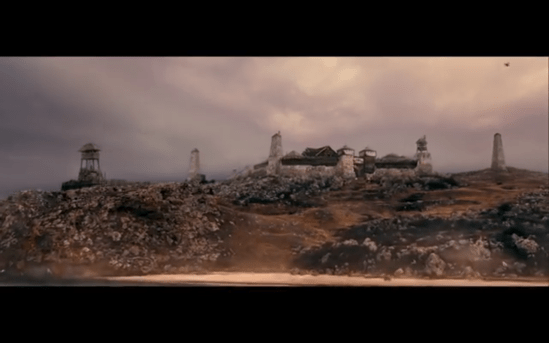
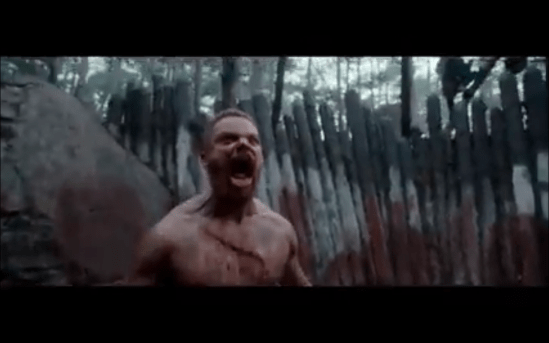
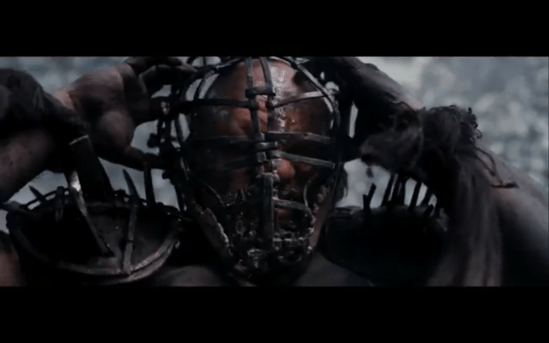
4Digital Media, through Sony Pictures Home Entertainment, presents “The Last Warrior,” a Russian epic fantasy from writer-director Rustam Mosafir and co-penned by Vadim Golovanov. Also known under the original Russian title as “The Scythian,” Mosafir’s feature is a perpetually violent medieval adventure, packed with action and oxymoronic imagery of a serene Eastern European landscape. Tremendously epic with some serious fight sequences, “The Last Warrior” has sword swinging teeth and long lasting narcotic impressions. Its as if the cold inflicted violence of Mel Gibson had middled and mingled with the surrealism action of “The Wanted’s” Timur Bekmambetov and had a child, that child would be “The Last Warrior, born through cauldron of Russian krov’ i ogon’ (blood and fire).

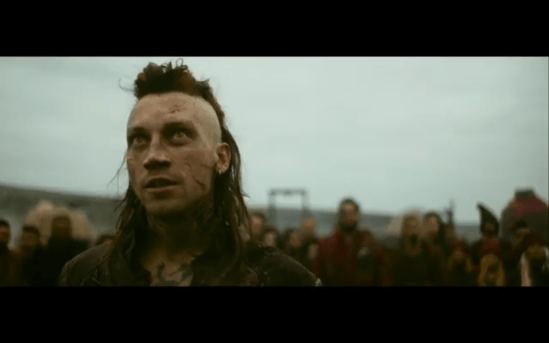
Aleksey Faddeev patrons his time as the last good solider that is Lyutobor. Faddeev simply acts upon an inextinguishable ferocity that’s flames within Lyutobor, seizing every moment like it’s the actor’s last chance to be the hero. Lyutobor’s a bit of a one dimension character, arching ever so gradually to embracing a clan he’s been taught to hate, but only because they didn’t rape or murder his beloved wife. Faddeev pulled the character off with ease; however, Marten has an interesting persona donned by Aleksandr Kuznetsov, sporting a mohawk, cranial tattoos, and an unlikely spartan physique that makes the bloodshot and wired eyed character quite spry and deadly. Kuznetsov bends his character’s will after a taking a sacred oath to his clan’s God. Gods are essential part of the story as every act, every event, or every course is in the interest or will of some sort of God. The cast rounds out with Yuriy Tsurilo, Izmaylova Vasilisa, and Vitaly Kravchenko.

“The Last Warrior” never ceases to degressive transitions, picking up one fight after another without much breathing room in between. The Russian epic fantasy is essentially a visual speed read and by the time ingestion sets in the one crazy, unforgettable moment, Mosafir uses it as a seque right into the next choreographed conflict. Mosafir’s brilliancy illuminates during long takes and optimal camera work that embrace the slipknot action and yet, the director can’t seem to find an equalization during the talking head moments that push the story along. The quickly fed motivation nearly suppresses the story; there are factions that needed more shepherding explanation such as the forest people and their hallucinogenic drug that can release a person’s inner anger bear like an animality in Mortal Kombat 3. After desperately drinking from the drug, Lyutobor’s bear emerges and when pushed, the nobleman can call upon the strength and ferocity of the bear to his advantage, but the concept goes as far as that without much explanation to Lyutobor’s inherence of what could be much rather a curse than a blessing. Watch out, little Lyutobor! Don’t make daddy angry or the bear will come out!

through Sony Pictures Home Entertainment, 4Digital Media presents “The Last Warrior” onto UK DVD home video that takes the oath of an August 20th release date. I’m unable to write up a full technical assessment of the DVD as I was provided with a screener. The screener had a forced dubbed English soundtrack with 15% of the Russian subtitles and no static menu, an atypical critique screener; however, the proper DVD release will have both the Russian audio track with English subtitles and the English dubbed version, which if the same as the screener is completely hilarious, off kilter, and just awful. I’m also positive there will be a static menu as well. To sum up Rustam Mosafir’s medieval fantasy would be to note that its speedy, stab-happy, and a no-nonsense. The sword play is notable, fight scenes are aesthetic, and there lies some neat visuals, but “The Last Warrior” fails to find a deeper purpose to counteract it’s surface level of the bizarre blood splatter in a chute of metal music and that’s where Mosafir will lose most of his well-versed audiences.