Caught in the Act, Evil Must Do Evil’s Bidding. “The Killer Must Kill Again” reviewed! (Rustblade / 50th Anniversary Blu-ray)

“The Killer Must Kill Again” on a restored, 50th Anniversary Blu-ray!

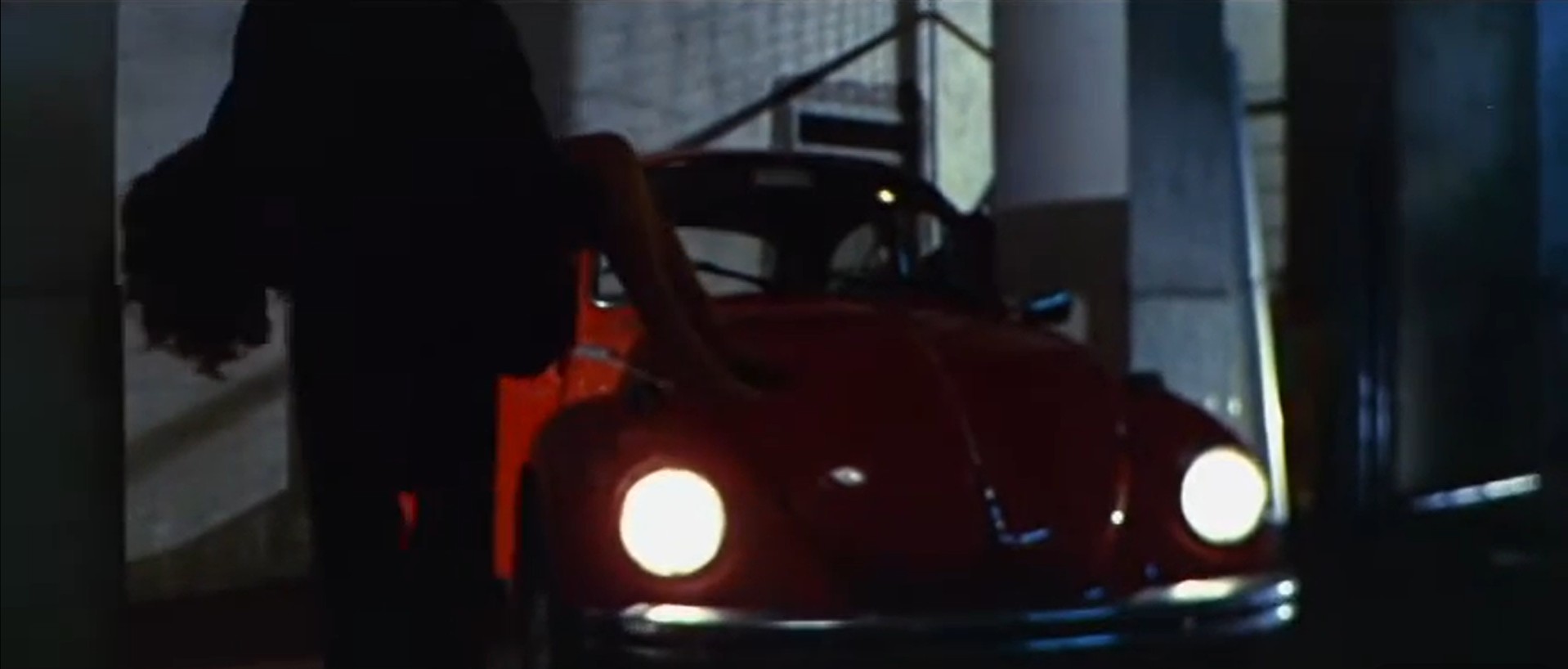
Giorgio and Norma’s hot-and-cold marriage takes a turn for the worse when Giorgio’s greed convinces him to plot her murder after she threatens to cut him off from her family’s money.  When Giorgio catches a sexually perversive killer in the act of dumping a young girl’s body in an isolated canal, he devises a blackmail agreement with the killer to murder his wife and falsely claim a ransom from her father to satisfy Giorgio’s gluttony.  Killing Norma was easy enough but after the killer brings the car around to put her body in the trunk, a young couple steal the car for an all-night joyride to the beaches of Seagull Rock, unbeknownst to them a dead body stowed in the trunk.  With the killer in pursuit of the couple and the police suspicious of Giorgio’s involvement of his wife’s disappearance, it’s only a matter of time before the killer must kill again.
“L’assassino è costretto ad uccidere ancora,” aka “The Killer Must Kill Again,” is a straying kind of Italian psychotronic film from the typical giallo overload being produced out the country between the 1960s and up to the early 1990s.  Released right in the middle in 1975, the film never enshrouds viewers in mystery with a blunt, clearcut case of who and who is not the villains, the victims, and the heroes.  “The Naked Doorwoman” and “Contamination” director Luigi Cozzi helms the script he cowrites with Daniele Del Giudice (“The Story of a Poor Young Man’) with an inclination of slipping darkly dry comedy into the fold of a cold and callous killer’s purview of an extorting mastermind’s bidding and the uncomfortable self-serving sexualized force thrust upon women, the dead and the living.  Sergio Gobbi (“Vortex”) and Umberto Linzi coproduce the GIT International Film, Paris-Cannes, and Albione Cinematografica coproduction. 

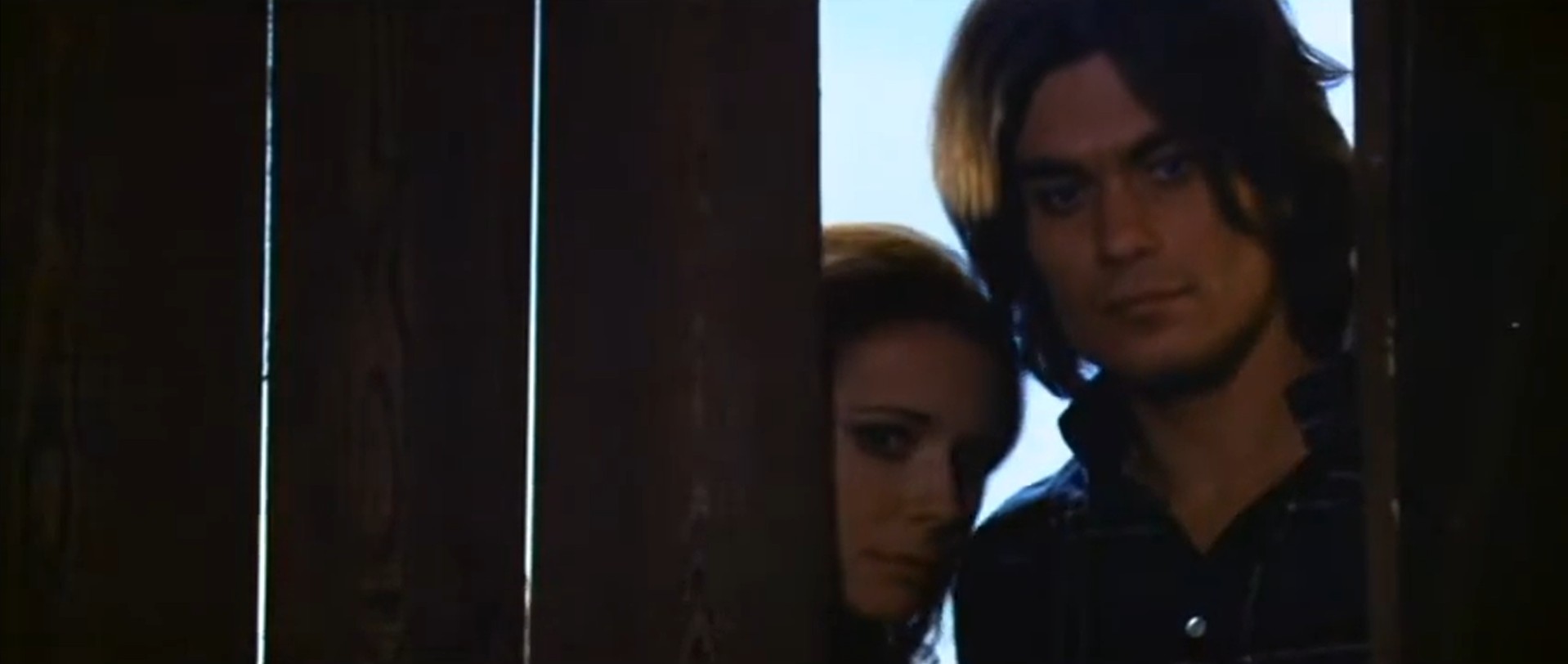
The cast is comprised of an ensemble lot and for an Italian production, there are hardly any Italian actors leading the charge.  Most of the principal cast hails from Europe, mostly Spain, and with a few outliers from France and even one from Uruguay in South America.  Each actor and actress have a rough fair share of screen time, preluded with the titular killer, played by Frenchman Antoine Saint-John.  Saint-John has a face for television, villainy television that is, with high cheekbones that create deep contoured shadows, a danger stare, and a round head with cranium hugging, short dark hair that make him distinct amongst his fellow castmates.  “The Beyond” actor’s heart put effort into a heartless role of the unnamed perverted murderer of young, beautiful women for unknown reasons and motivations.  That’s not the case for the opposite transgressor, the killer’s blackmailer Giorgio Mainardi who’s a scheming businessman and money leech off his wealthy wife (Tere Velázquez, “Night of 1000 Cast”), two reasons and motivations to put a kill contract on his wife.  “The Strange Vice of Mrs. Wardh’s” George Hilton dons the dapper swindler with trim suits, neat hair, and a handsome façade underneath his ugly intentions as he tries to fraud his wife’s ransom for himself.  Caught in the middle of this plot are two young lovers, who in themselves are not so innocent by stealing the killer’s car with a dead woman in the trunk.  Cristina Galbó (“The Living Dead at Manchester Morgue”) and Alessio Orano (“Lisa and the Devil”) are the couple Laura and Luca, two teens on a stolen car joyride to a distant beach front in order Luca to try and convince Laura to take her virginity.  While there’s ransom fraud, murderous plots, murdering, corpse disposal, and other heinous crimes, the most disturbing in the story is Luca’s pressuring to get into Laura’s pants and his means of satisfying his lust by picking up car stranded blonde (Femi Benussi, “Bloody Pit of Horror”) and cheating on Laura while she is raped when confronted by the pursuing killer.  The sleaze and skeeze level on Luca is beyond reproach and it really makes him more the villain than the actual killer who’s up two bodies by this point.  The principal cast can’t be complete without police presence and that is where Eduardo Fajardo (“The Murder Mansion”) steps in as the cool, suave, know-it-all-and-see-how-it-all-plays-out inspector, a cliched role of the time and even in today’s whodunit ventures.   
This crime giallo lacks mystery but makes up for it with rich characters, a sleaze-bag crime, and a little style from director Luigi Cozzi and cinematographer Riccardo Pallottini in their choice to visual effects to insulate the moment within a scene by matte narrowing the focus and using a sharp spherical lens to heighten the tension around the center focus with a semi-fishbowl effect.  Coupled with solid editing and great lighting for the night drive sequences between the two cars and it’s reflexive, subsequent chase, the story’s pace doesn’t rush into the more gushing violence and sexual subversion, effectively building up a pressure cooker of a confrontation between the killer and the kids that’s brilliantly edited in a taut juxtaposition that flips back and forth between the killer’s virtually explicit raping of Laura and Luca’s wanton encounter with a stranded licentious blonde motorist; both elicit wrongdoings, rendered around the crave of naked flesh, but they are from different perspectives with one being a clean cheat of carnality with another person and the other being a malicious rape of innocence yet both leave that sour taste of discomfort in the mouth but the edited design is about as sweet as it gets. 
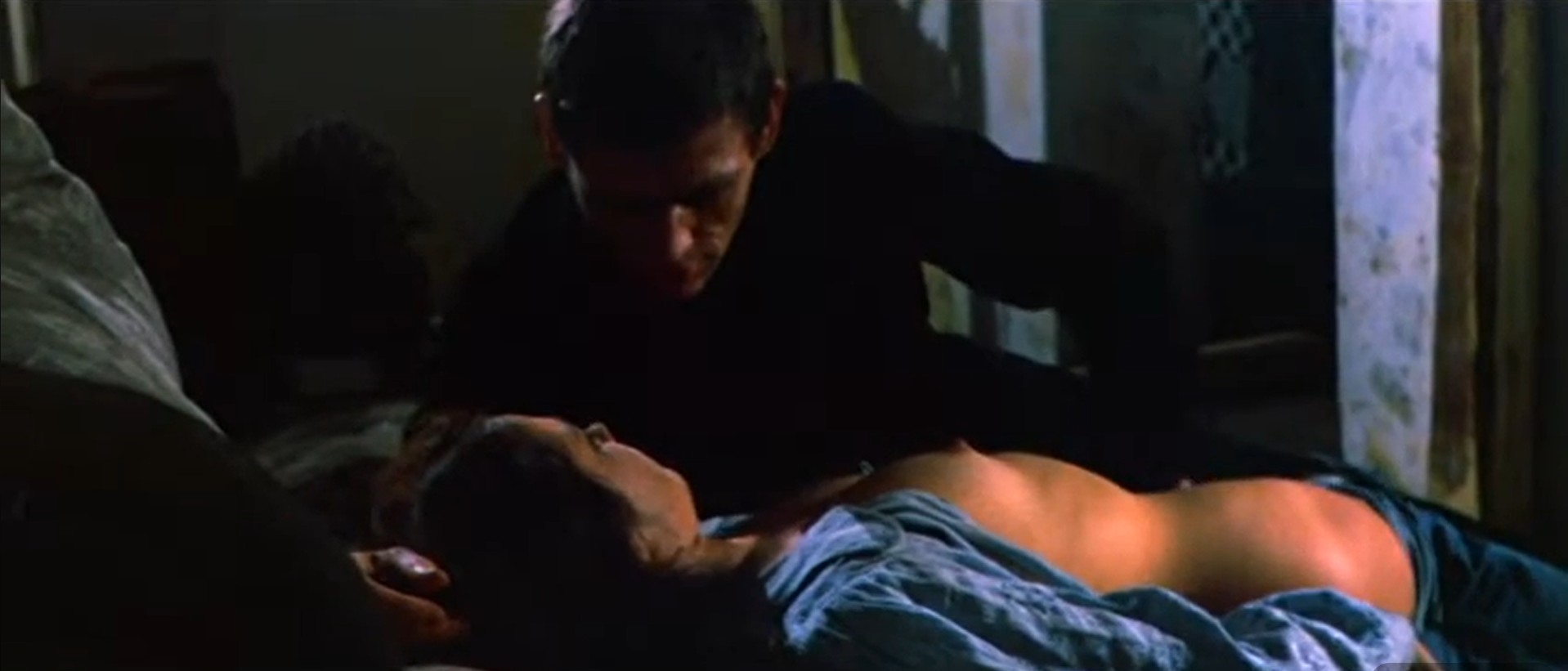
The Italian distributor Rustblade Records, under the movie release sublabel of simply Rustblade, release L’assassino è costretto ad uccidere ancora,” aka “The Killer Must Kill Again,” onto a new Blu-ray in its complete Cozzi’s original vision and is a restored transfer for worldwide audiences in association. The 50th anniversary Blu-ray is AVC encoded, 1080p high-definition resolution, on a surprising BD25. The BD25 is surprising because the restored picture quality looks phenomenal considering the capacity, retaining deep shadows, vibrant color palette, and no incongruous signs of compression artefacts. There is however some detail smoothing fragmented throughout depending on the interior or exterior scene. More of the opening moments between Giorgio and Norma look quite polished and intricate regarding textural skin and fabrics but a good number of moments appear to smear portions of the face, especially in Antoine Saint-John’s more distinct facial characteristics. Depth and range favor the bold with Cozzi able to obtain decent amount of space between objects within his stylized choices and the color spectrum, like many giallo films, is saturated with intensity. An Italian and an English 2.0 DTS-HD Master Audio are the reigning encoded audio choices, both of which are post-production ADR and both of which show the obvious synchronization discord. The English translation, as well as the English subtitles, contain generalizations of a perhaps more complex scripted dialogue intent. With ADR, dialogue clean and clear with present, defined space right in the front two channels but lacks milieu acoustics, depth, and little range with the action added with Foley. Nando De Luca’s lingering avant score blend single low-note guitar chords, resonating piano keys, and Theremin wooing lift up the story with ominous tension. The English subtitles appear accurate without any grammatical errors. Special features include an interview with director Luigi Cozzi, a film analysis by Federico Frusciante, a horror enthusiastic musician from Rustblade Records, film locations toured by Giallo Italiano, and the feature trailer. The 50th Anniversary Edition comes with two versions: a limited-edition DVD/Blu-ray Deluxe mediabook with postcards and a single disc Blu-ray. For this review, the single disc was provided in a clear Amaray case with double sided art sleeve of a giallo yellow and contrast shadowed illustrated composition of characters and the reverse side depicting two moments from the movie drenched with giallo yellow. Presented in widescreen 2.35:1 aspect ratio, the not rated, region free film has a runtime of 90 minutes.

Last Rites: A giallo unlike the rest, “The Killer Must Kill Again” is a perversion of greed, lust, and murder without virtuous players in a plot gone awry. Luigi Cozzi’s 1975 classic is a genre staple for fans old and young in this Italian murder shocker and Rustblade offers a new and improved, director approved vision that collectors will see to acquiring immediately.

“The Killer Must Kill Again” on a restored, 50th Anniversary Blu-ray!

EVIL’s Beauty is in Her Catwalk Madness! “Nothing Underneath” reviewed! (Rustblade / Blu-ray)

“Nothing Underneath” 40th Anniversary Blu-ray Available Here!

Bob Crane, a Wyoming park ranger, suddenly sees visions of gloved hands wielding long, sharp shears entering his supermodel, twin sister’s hotel room in Milan, Italy.  His  psychic experience with his sister sends him packing frantically to Italy, specifically to the Hotel Scala, where his sister, amongst many other gorgeous supermodels, reside when working in Milan.  Unable to locate her and without a sign of disturbance in her hotel room, her disappearance is seemingly nothing more than that – a disappearance – but an aging police detective, Commissario Danesi, is willing to investigate the disappearance which will be his very last case before retirement.  Without any leads, Crane and Danesi don’t have much evidence to go off of until another supermodel is brutally murdered in the same hotel and a pair of scissors is the forensically determined cause of death.  The once case of disappearance now turns into a murder investigation and goes deeper into the ugliness of the fashion world with a deranged killer targeting supermodels. 

Considered to be a prominent gem of the giallo genre but not entirely considered to be a full-fledged horror by the filmmakers is Carlo Vanzina’s “Nothing Underneath.”  Known natively as  “Sotto il vestito niente,” inspired by the title only written by Marco Parma, a pseudonym for journalist Paolo Pietroni, Vanzina cowrote the novel extraneous story alongside brother Enrico Vanzina (“Call Girl”), who are siblings more suited in the measures of comedic premises initially, and the prolific horror writer Franco Ferrini’s, whose screenplays of Dario Argento’s “Phenomena,” “Opera,” “The Card Player,” and amongst others, as well as Lamberta Bava’s “Demons”, gave the writer formidable cult status and creditability amongst the international horror fan base, not to forget to mention regular work and collaboration with a master of horror, Dario Argento.  “Nothing Underneath” is shot on location in Milan under the Faso Film productions with executive producer Raffaello Saragò (“The Witches’ Sabbath”) and producer Achille Manzotti (“Beyond Darkness”).

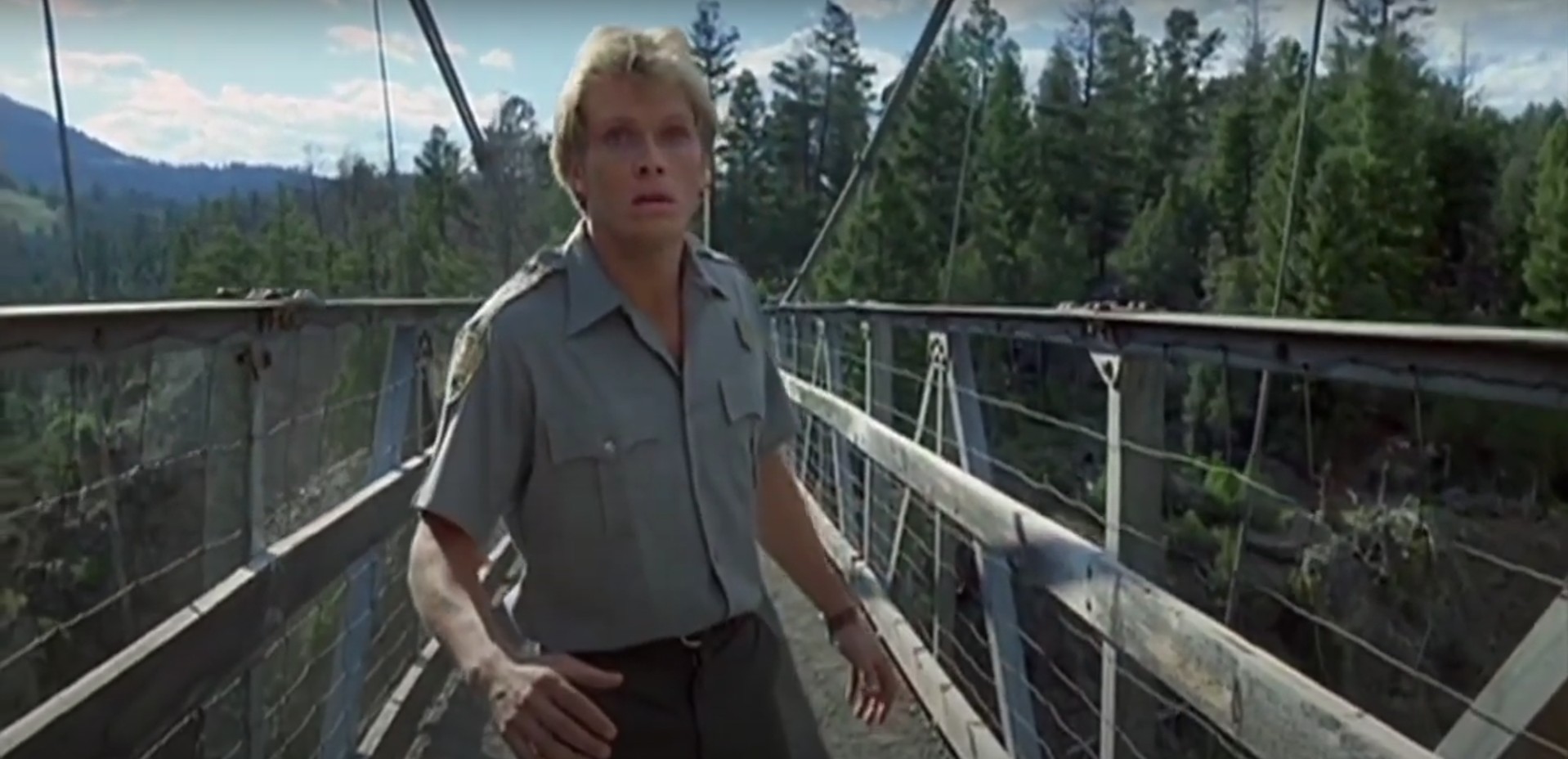
What’s interesting and more infrequent for this Italian production is that it’s entirely shot in English and not dubbed in post-production ADR.  Reason for this was for “Nothing Underneath” to be a synch-sound production with the image and to market it better internationally because of the main cast comprised of American and English actors.  The American actor, starring in his debut feature film, is Tom Schanley (“Savage”) as Wyomning park ranger Bob Crane and the way the story is structure really homes in Crane as the principal lead with a complete credit setup and character follow-through of the Yellowstone National Park.  Schanley’s blonde hair and muscular toned good looks embodies a likeness to his on-screen supermodel sister, played by Nicola Perring, who, as the story displays her, is not in the business of acting with very little dialogue and is only used for her short platinum blonde hair and thin figure for narrative form fitting.   The other native English speaker in a cooperative lead role is “Halloween’s” Donald Pleasence as an investigator on the verge of retirement.  Pleasence is no stranger to Italian cinema, seeing his fair share in the 1980’s psychotronic pictures, including Dario Argento’s “Phenomena” released prior.  The prolific British actor still manages to produce mountains of charm even in his most rubbish Italian accent as the long in the tooth comminssario eager to solve one more exciting, mysterious case and buddying up with young, handsome, and outdoorsy Bob Crane with twintuition.   The love interest falls upon real life model and Denmark native, then 19-year-old Renée Simonsen who is absolutely stunning with her looks and with her debut into acting in what is a significant role that involves a lot of screentime, a lot of dynamic and interactive dialogue, and does show some brief nudity with intimate sexual situations with Schanley.  “Nothing Underneath” has a roster that fills out with Catherine Noyes and Maria McDonald as Milan models, Paolo Tomei as a coke-head jeweler and model philanderer, Cyrus Elias as Comminssario’s Danesi’s assistant, and Phillip Wong as the peculiar fashion photographer Keno Masayuki.

“Nothing Underneath” isn’t a skimpy, loose garment with nothing going for it.  Instead, Carlo Vanzina offers more with his giallo by making it less giallo in terms of its cinematic style and with Pino Donaggio’s score which is in the style of, much like the rest of the filmed and narrative structure, a Brian De Palma erotic thriller.  With plenty of sexy sashaying from beautiful models, a balance between sex and sadism teeters as the alluring aspects of a promiscuously titled are dissected and interspersed with a long sheer psycho engrossed by a theme rarely explored and depicted, but certainly skimmed, during those times of 1980’s Europe and completely disconnected from Paolo Pietroni’s story with keeping only the fashion world and the murder mystery as core elements and adding a supernatural flavoring with the brother and sister telepathy.  Donaggio’s suspenseful brass orchestration and conduit synth-infusion score separate itself others in the subcategory that deploy synth-rock, haunting discord, and, perhaps, even a late 70’s swanky cop thriller piece typically layered alongside.  The composition, coinciding with the temporary expat cast as most giallo’s permit, often feels more westernized while still striking notes of unnerving tension and having collaborated with De Palma on “Dressed to Kill” and “Body Double” years prior, Donaggio imports those arrangement qualities for the Italian market and reaping success amongst the rest of the frayed giallo conventions. 

Italian boutique label Rustblade extends their release of “Sotto il Vestito Niente,” aka “Nothing Underneath” to the North American market with a new region free, 40th anniversary special edition Blu-ray release as well as releasing deluxe releases that come with accompanying limited edition lobby cards postcards, a polaroid, a poster, a colored vinyl, a book, CD soundtrack, a tote bag, and even, yes you’re going to read this correctly, underwear.  The standard release isn’t that supplementally sexy but does have great standalone supplementals in its AVC encoded, 1080p full hi-def, BD50.  The newly restored version stems from the original 35mm negative and presented in 1.85:1 widescreen aspect ratio.  The negative print looks to have been in pristine condition that rendered an impeccable transfer that fully provides depth and detail accentuated by well-adjusted and put together color grading that elevates the pop of the natural hues.  No signs of compression issues or smoothing over with sharp detail textures on skin and fabrics alike as well as the metallic shears having reflective qualities as it sheens and shines in mirrored property.  Two audio options are available, an Italian DTS Master Audio 2.0 Mono and an English DTS Master Audio 2.0 Stereo, the latter comes from the English living synch recording mixed in Dolby Stereo.  The English track is preferred here as its natural with innate reflections and tones of the actors on screen.  I noticed brief moments of Italian actors being English dubbed as a mismatch in the A/V synchronization as well as a disturbance in the aural consistency.  The dialogue track has prominence but has intermittent hissing and crackling, likely from the video-synch recording.  English, Italian, Spanish, and German subtitle are available.  Special features include interviews with co-writer Enrico Vanzina and composer Pino Donaggio, plus a film analysis by Francesco Lomuscio, the theatrical trailer, and a still image gallery.  For the standard packaging, the clear Amaray encasement has the supermodel in sheer and blood artwork used in previous DVD and Blu-ray versions and the reverse side as a still image with the opposite a black and red silhouette of shears and blood drop splatters.  The disc is pressed with the same cover art image.  Rustblade’s release is not rated and has a total runtime of 94 minutes.

Last Rites: Rustblade’s 40th Anniversary Edition Blu-ray of Carlo Vanzina’s “Nothing Underneath” is a great leap toward a go-to less giallo that’s tragically overlooked and underappreciated but ranks high above the bar and near the top sure to please in seduction and in murder.

“Nothing Underneath” 40th Anniversary Blu-ray Available Here!

Milan Has All the Best Short Film EVIL! “Drag Me To Fest” reviewed! (Rustblade / DVD)

Hurry! Grab the Limited Edition Copy of “Drag Me to Fest” Before Its Gone!

An outpatient nurse is requested by an old woman leaving by her lonesome.  Always forgetting and troubling eccentric, the humble nurse finds he’s in way over his head with a clearly unstable, possibly delusion woman, until the truth of her hidden secret unveils a web of horror.  A young couple looking to help a lonely farmer find themselves erecting a sheep fence as well as maintaining the upkeep of a strange rock formation known as a Tursemorkel that emits ooze out of black orifices and soon find the psychological and physiological energy from the Tursemorkel is more than they can withstand.  An elderly couple, tucked away inside their roadside camper trailer, whips up a finger-licking meaty stew made from all natural, locally sourced ingredients as they watch the nightly news’ top story of a missing person.  A man answers the doorbell and finds a package on his step, scratching and crawling out is a festering corpse eager to play with him.  A priest with an obsessive bug collection has him turnaround when a recently caught rare beetle toys with his mind.  Dafne, a young woman lost in another state of mind, is in the presence and in the arms of her own, personal demon. 

These bloodcurdling tales are the latest batch of horror shorts from the annual Milan, Italy hosted Drag Me to Fest.  The festival brings together Italy and international filmmakers to submit their unique brand of terror.  The 2024 lineup were submitted to the Milan collection in 2023, hit the festival the following year, and has now been compiled onto a home video release for North American audiences to enjoy and cower in teeth chattering fear under its namesake title, “Drag Me to Fest,” from Italian distributor Rustblade Records in association with MVD Visual, a subsidiary of MVD Entertainment Group.  Norway’s “Vevkjerring,” or “The Weaving” by Øyvind Willumsen and “Tistlebu” by Matthew Valentine kick off the anthology followed by Italian filmmaker’s Riccardo Suriano’s “Long Pig”, Julie Gun’s “Dafne is Gone,” and Jacopo Vismara’s “Il Coleottero” and finally rounding out with Japanese director Nori Uchida’s “For What the Doorbell Tolls,” all of which are self-produced.

Three countries, six distinct films, and all packed into the unusual side of ambiguously horrifying elements contained inside six short films.  Each character is curated to fit inside the narrative design, no matter how outrageous or avant grade the message is.  Willumsen’s “The Weaver” is a more straight forward, common structured horror of building up tension in an already uncomfortable situation of a friendly, living assisted male nurse Henrik (Fredrik Hovdegård) knocking on the doorstep of a haggard and kooky old croon named Gudrun, played devilishly and disgustingly by Isa Belle.  The next four episodes become a bit vaguer in their intentions of madness, purgatory, survival, and obsession that intends to either harm or transfigure into something beyond the dimensional standard.  “Tistlebu” aims to transfigure as a young city couple (Sascha Slengesol Balgobin and Sjur Vatne Brean) look to connect with nature and their curiosity, coupled by intrusive misuse and sexuality, toward an earthy pillar of energy inside a widow’s (Oda Schjoll) barn enraptures them into something more primordial, literally connecting them to an omnipresent natural world that’s much bigger than their insignificant need.  Uchida provides his own one-of-a-kind performance based immensely off Sam Raimi’s “Evil Dead” by playing not only the hero but also the decaying plaything that arrives at the hero’s doorstep in one’s mirrored rotting of loneliness.  “Il Coleottero’s” Don Antonio (Mimmo Chianese) has a crisis of faith that become sidetracked by his diligent hobby of entomology when his prized find, a rare beetle, suddenly disappears from his collection.  Chianese finds the balance between being a disenchanted priest and an anxious man hunting for the beetle that got away and that will eventually destroy him.  Julie Gun’s “Dafne is Gone” is more operatically finessed with interpretive dance between Dafne (Giulia Gonella) and a demon (Jason Marek Isleib) that’s completely absent of dialogue, stagecraft visualized, and characteristically naked to showcase Dafne’s descent into the Demon’s spellbinding movements.

The collected and presented works are not the highest dollar productions but do encase a prosthetic practicality as seen in Willumsen’s “The Weaver” with a shedding of an exterior layer into a more grotesque freak of nature while Uchida takes the tribute route using filleted flesh and milky contacts, along with LFE tones and grading, modulated vocals, to accomplish his own version of “Evil Dead” without the presence of Ashley Williams.  The others are not as cut and dry with their infinite interpretational insights that likely will speak more on a personal level than a glossy buttered popcorn one that requires little effort to absorb.  “Tistlebu” and “Dafne is Gone” entrench themselves in their respective unknown and modern art by providing very little in the one thing they both have in common, a shared sense of unsettlement.  There’s also an undertone of sexualism as if it equates to the very beast that entrances, which in these shorts is the Tursemorkel, which is a large surface growth that emits an allurement of safety and gratification, and, in comparison, to the demon, perhaps her own visceral demon, that frolics to breach Dafne’s temptation, drawing her closer to his own colorfully neon netherworld in a production of warmly dark euphemism.  “Il Coleottero” is perhaps the best understated undercurrent between the skepticism that plagues man and his faith.  Shot mostly naturally, tension is built on Father Antonio continuous deviations from his religious duties, distracted in his homilies and divine surroundings, by the mere fact of a lost beetle, a beetle, similar to the appearance of a Stag Beetle, that toys with him.  One could assume the beetle represents a test from God to challenge the priest’s diversification balancing his faith between realism against spirituality, to quote biologist J.B.S. Haldane, and I paraphrase, if the creator had made life, it must have been inordinate fondness for beetles because of their profound species diversity.

“Drag Me to Fest” has now hit DVD home video for the first time in its 3rd annual run with a limited edition to 500 copies courtesy of Rustblade Records, routed through the North American distribution channels of MVD Entertainment Group under their MVDVisual label.  The region free release, presented in a widescreen 1.78:1 aspect ratio, is encoded onto a MPEG2, upscaled 1080p, DVD5 with palatable average of image quality in its varying degrees of filming equipment, lighting, and technical know-how to get the intended look without suffering cinematography faux pas.  Compression wise can be a different story but, generally, “Drag Me to Fest” has an adequate presentation albeit a less-than-desirable color saturation, especially Gun’s “Dafne is Gone” that implements warm neon primary coloring in a high contrast, hard light emulsion.  Skin and pattern textures vary from short-to-short, but the delineation is there to not blend depth nor create solid, smoothed out surfaces.  Valentine’s “Tislebu” relies heavily on the rolling hills and greenery farmscape to enact its character qualities for an Earthy or terrestrial mystery important to the sentient and engrossing formation.  The Italian, Japanese, and Norwegian language Dolby Digital 2.0 Stereo offers a passable mix that doesn’t elevate the atmospherics or construct tension to the max but neither does it flounder or lay waste to the support of the shorts.  There’s not a profound amount of leveled depth or creative sound design to fabricate space as much of the dialogue and environment resides in the foreground, and the dialogue does render over clean and clearly with forced errorfree English subtitles, but the focus is primarily on moving the story in a matter of minutes for some of the shorts, leaving narrative devices, such as characters and the effects, to drive the story and its tension.  The DVD is a barebones released that does not come with any encoded extra content, but the slim, trifold jewel case does depict a grouping of cherry-picked ideas from the shorts in a green bath illustration from graphic artist Gonz and has individual taglines and color stills for each short.  The 92-minute anthology is unrated. 

Last Rites: Abroad anthology with a goal to highlight and amplify short filmmaker voices, “Drag Me to Fest” finishes up from the main screen and extends to home video for the first time! Rustblade and MVDVisual illuminate the cinema obscure for the general public and we’re all the richer for it!

Hurry! Grab the Limited Edition Copy of “Drag Me to Fest” Before Its Gone!