Who Dat? Dat EVIL! “Creature from Black Lake” reviewed! (Synapse / Blu-ray)

“Creature From Black Lake” on Blu-ray is Bigfoot’s Bestfriend

Two University of Chicago students interested in discovering the legendary creature bigfoot take a road trip down to Oil City, Louisiana where there have been multiple reports and sightings of a ape-like man wandering in the Bayou and even an attack on a local trapper, witness by the gruffy drunk, Joe Canton.  Met with stern resistance from the Oil City Sheriff Billy Carter and some reluctance from scared locals in the Bridges family after an mortal encounter with the beast that killed two of their family members, the students dig in and continue their swampy-laden search for bigfoot as well as finding the time to mingle with Louisiana women.  When they discover the mythical beast actually exists, nothing can stop them into catching sight of the creature or maybe even snaring it, not even the Sheriff’s threat of jail time if they don’t high tail it out of town could persuade their mania, but their expedition deep into the swamp and coming in proxmital contact with the aggressive primate outlier may prove to be a fatal mistake rather than a claim to fame. 
Having searched high and low for many years to review just any Bigfoot film that’s above average worthy has been a wearisomely long and arduous task.  A slew of movies dedicated to the big hairy fella have been nothing but a mockery, whether intention or unintentional, of the Sasquatchsploitation horror subgenre.  Instead of being subjugated to the countless, blasphemous modern tales of the mythical monster, I had to travel back in time to 1976 to retrieve what I’ve been searching for in the last decade or so.  The late J.N. Houck Jr’s “Creature from Black Lake” fulfills a great need with very little in its idiosyncratic cast and its obscure visibility of the creature that creates upscale mystery.  The based out of Louisiana “Night of Bloody Horror” and “The Night of the Strangler” director, whose father, owner of The Joy Theaters, already had an established footing not only in the movie business but also in the horror genre when helming a script penned by Jim McCullough Jr. as his first grindhouse treatment blessed by his father, producer Jim McCullough.  McCullough Jr. co-produces the film under the Jim McCullough Productions banner along with William Lewis Ryder Jr. serving as executive producer of the shoot shot on location in Oil City and Shreveport, L.A.
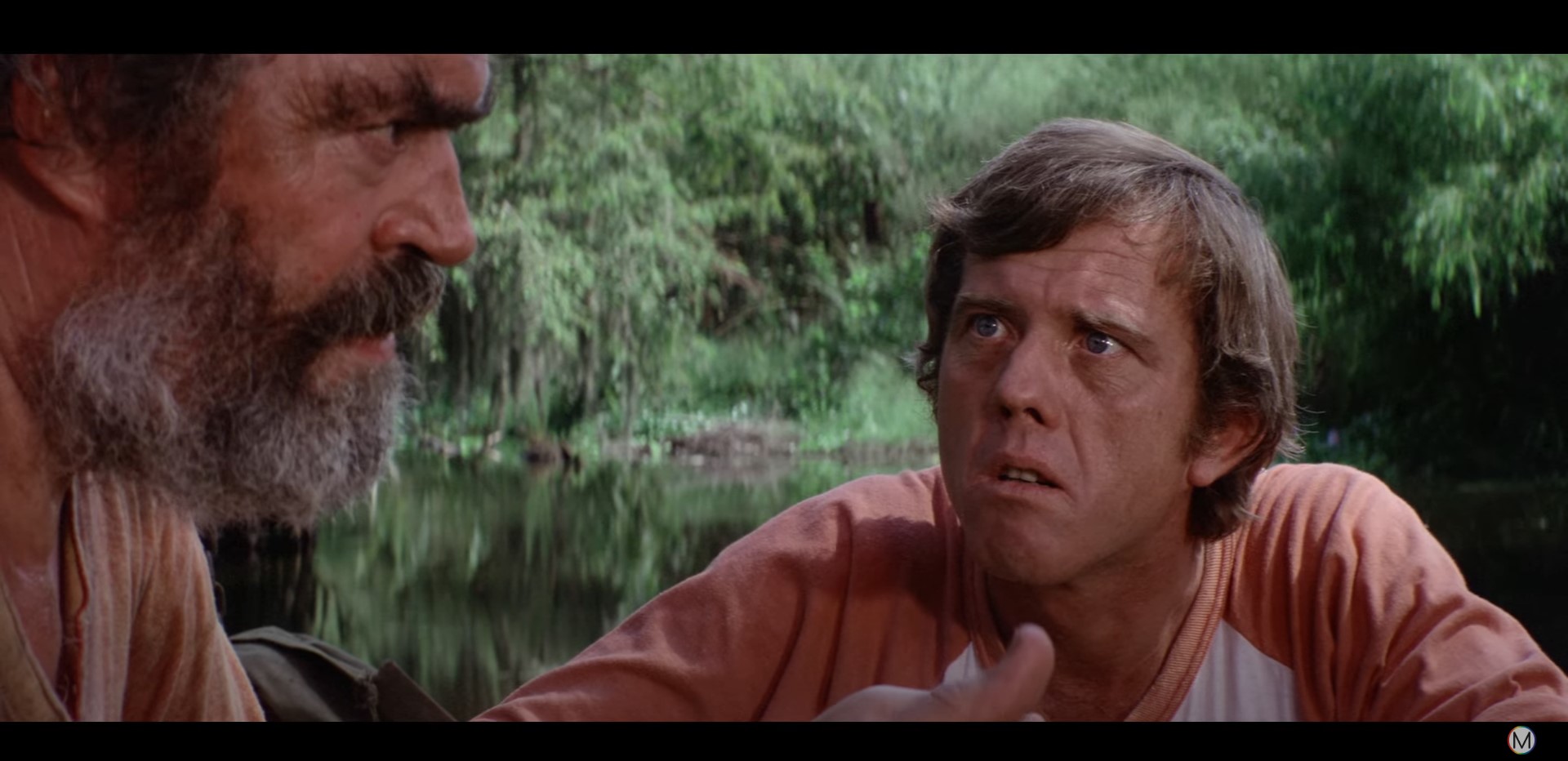
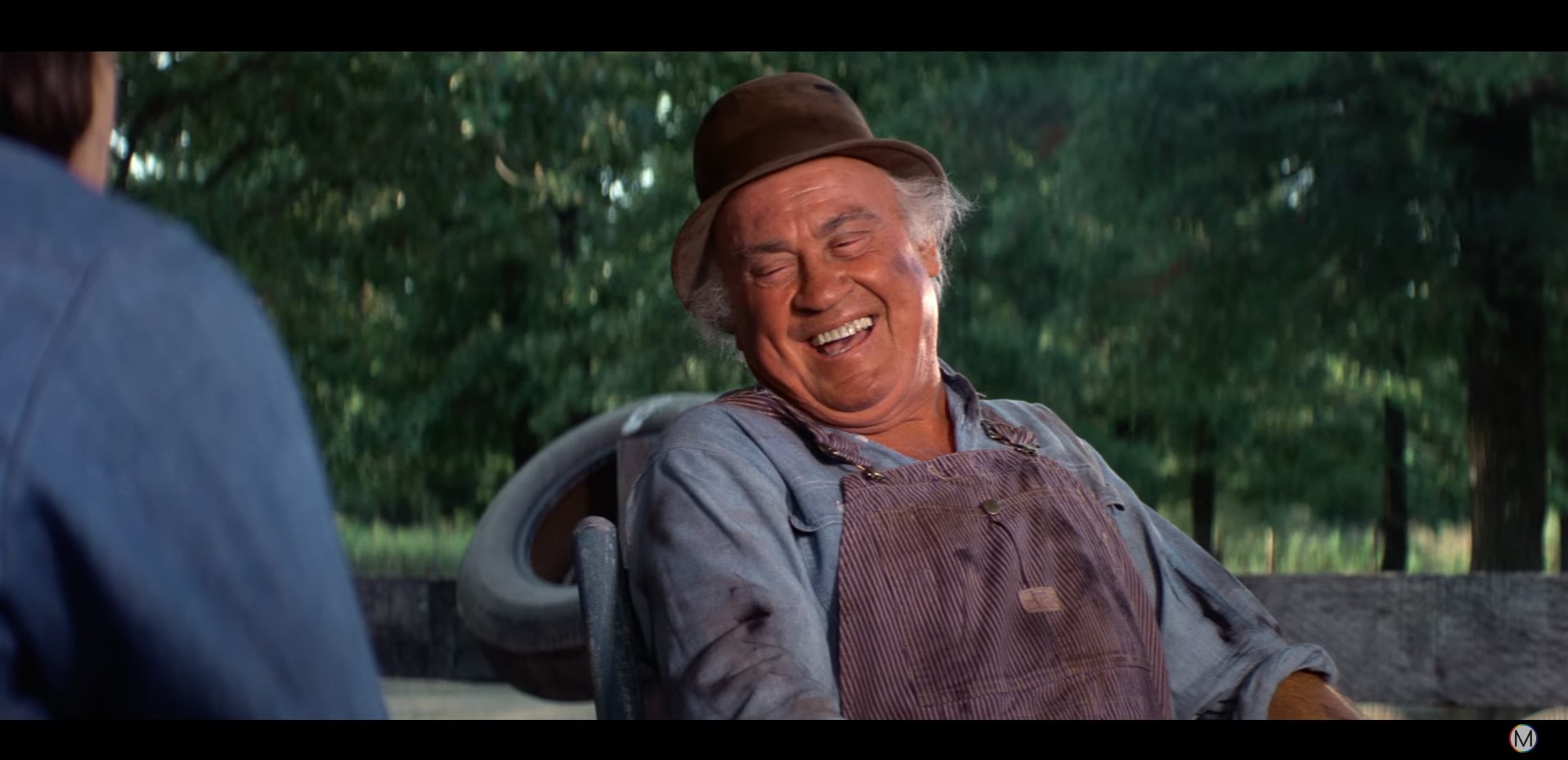
“Creature from Black Lake’s” cast is a distinctive assembly as aforementioned earlier.  Not only do they play their roles well by incorporating localisms where needed but they add a blend of intensity with chunky bits of comedy marbled through a storyline that’s half-anecdotal and half-present action. University of Chicago students Rives (John David Carson, “Empire of the Ants”) and Pahoo (Dennis Fimple, “House of a 1000 Corpses”) set course to Oil City, Louisiana where an indistinct creature is suspected to be in area based of science and suspected fish stories told by local kooks and drunks that turned out to be horribly true. Rives and Pahoo, who in McCullough script is constantly chaffed about his unique name but shrugs and deflects like he’s done it all his life, interview Oil City residents who believed to have bare witnessed firsthand the beast’s atrocities that has taken the lives close to them. These Bayou denizens are enriched by veteran actors with robustly created caricature personalities. Surly voiced with bulging, wild eyes, typecasted western actor Jack Elam had branched out from films like “Gunfight at the O.K. Corral” and “Once Upon a Time in the West” to play a similar grouchy character dwelling in the swamps as a trapper. Elam’s great a feigning an intoxicated mess as you can literally taste the alcohol sweat from his porous skin sheltered by an unkempt beard and a loose fitting crumpled up onesie that’s staple motif for any drunk Cajun or drunk cowpoke, so Elam was fairly comfortable in the role. Dub Taylor is another big old-timey name in the western genre and rarely saw horror as a place to call home. For Taylor, his role as Grandpaw Bridges gave the actor a chance to play an old hayseed complete with a solid effort in Cajun English. Taylor’s lively at times with an animated excitement but can turn somber and stern as soon as his character’s scorned and calls for a more serious tone. Compared to Elam and Taylor, youngsters Carson and Fimple pilfer very little from the veteran’s epic role characteristics but do fine in their own rite with carrying the hunt’s harrowing third act. Bill Thurman (“‘Gator Bait”), Jim McCullough Jr., Cathryn Hartt (“Open House”), Becky Smiser, Michelle Willingham, and Evelyn Hindricks round out “Creature from Black Lake’s” cast.
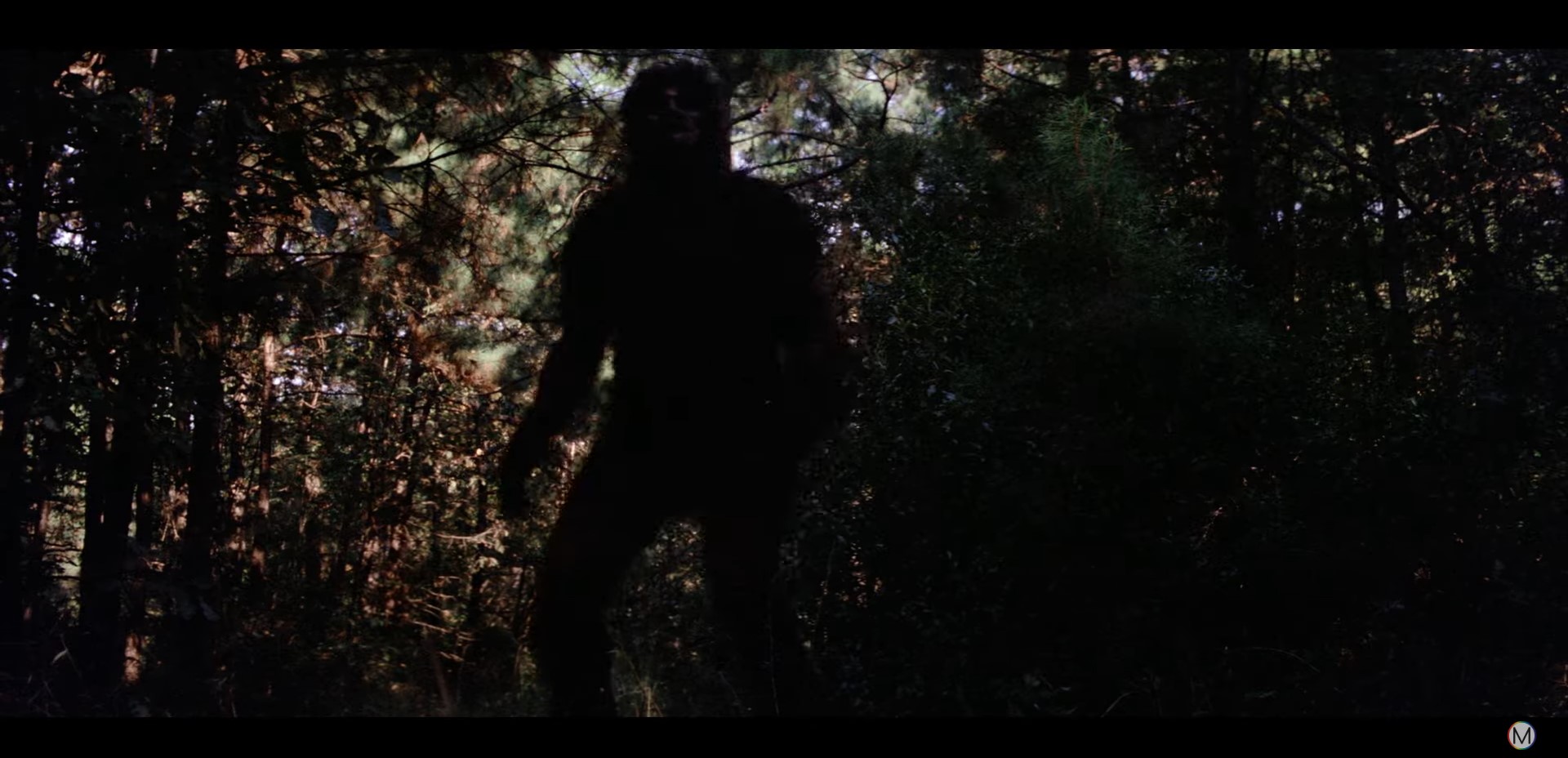
How could a 1976 bigfoot feature be more surprising and compelling than any modernized version? Well, one of the biggest pros to “Creature from Black Lake’s” success is Jim McCullough Jr.’s script that’s surprisingly well written by the first go-around screenwriter and while I’m not primarily speaking on behalf of the principal leads’ motivation or the slightly lack thereof, there lies more interest in the quick-witted dialogue and the blunt banter to keep Rives and Pahoo from being dullards and to keep the story from being a slog. Another aspect that is sharp as a tack is Dean Cundey’s cinematography that keeps the creature firmly in the shadows, producing that suspenseful and mysterious “Jaws” effect where we actually don’t see the shark until the third act. Cundey, best known for handling the cinematography on titles you might have heard of such as “Jurassic Park,” “Death Becomes Her,” and “Big Trouble in Little China,” made a name for himself first in grindhouse horror and exploitation of the early 1970s.  Cundey keeps the apelike creature shrouded from direct light, lurking mostly in the shadows with only a glimmer quickly streaking across the snarling face and an animalistic outline of its furred body and tall stature.  The full effect of bigfoot is never directly in your face or full in view which can be best at times depending on the look of the creature.  Cundey had partially designed the face of bigfoot and thus covering up perhaps his own shoddy work with how to film the titular antagonist of Black Lake.  Now, Black Lake is an actual lake in Louisiana but is about 100 miles SE of Oil City and Shreveport and likely used a combination of Big Lake and Cross Lake that were near the majority of shooting locations to serve as representation of Black Lake.  Where “Creature from Black Lake” struggles is with the Rives and Pahoo dynamic that barely tether’s to how their friendship, though diverse individually, becomes stronger up the end with a near death experience.  Pahoo’s a Vietnam vet and with his wartime experience, he’s the more on edged character out of the two suggesting an underlining PTSD theme when the creature’s roar and circling of the camp puts Pahoo into an eye-widening internal panic.  Rives is cool as a cucumber and is determined to prove something inexplicable in pushing forth and bagging a big hairy beast.  At times, contention flares up between them but is quickly extinguished with a simple sharing of homemade fireside baked beans to sate Pahoo’s ever ravenous stomach.  Their hot and cold amity and indeterminable mission into the Bayou shapes very unsatisfactory their resulting unbreakable bond that hints at something more than just friendship, as if there is metaphorical points of betrayal and forgiveness that makes their connection scar tissue stronger but are not clearly delineated.
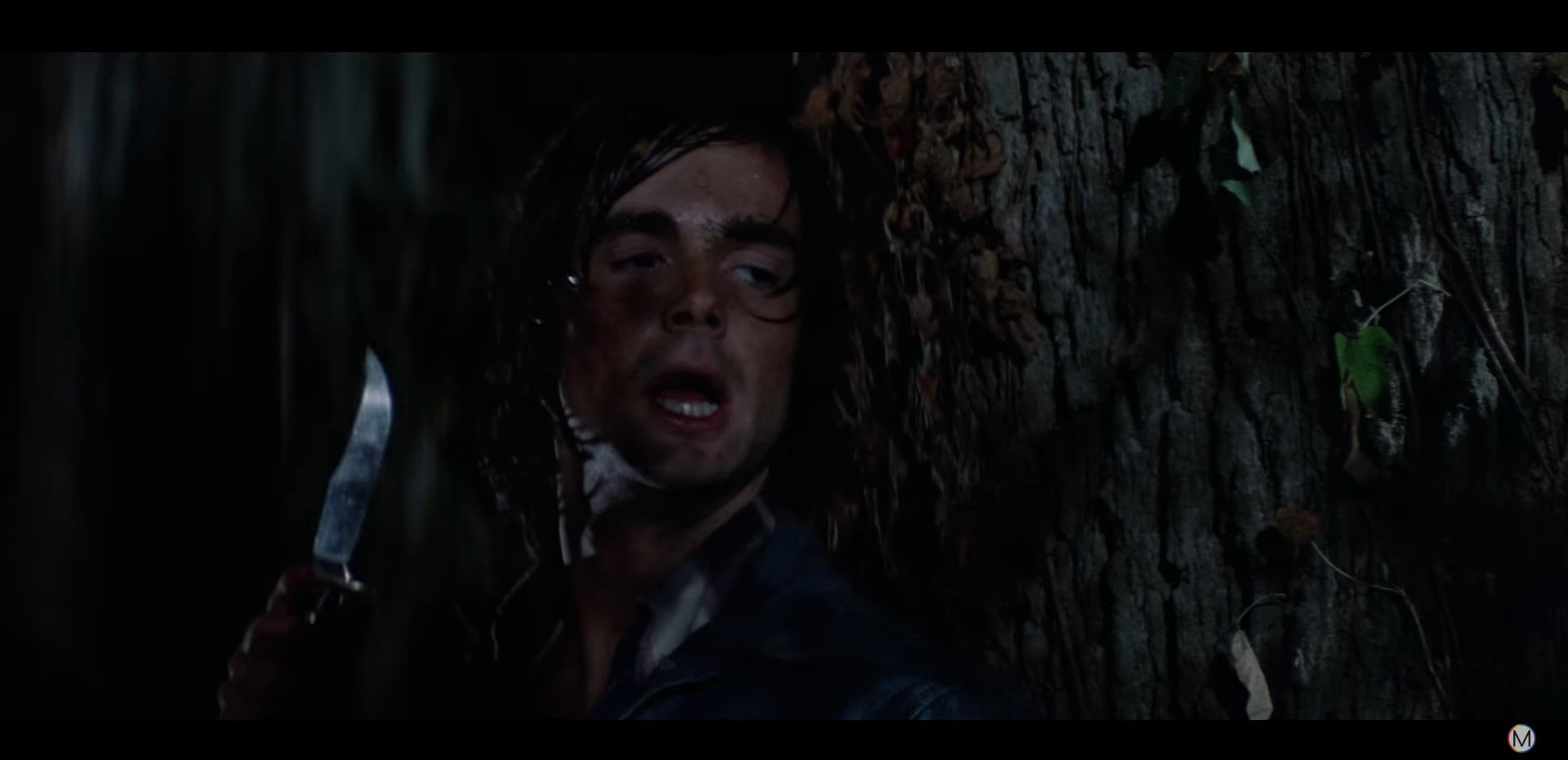
Finally!  A bigfoot feature that works mostly at every angle, is more than just palatable from a story standpoint, and has a formidable bigfoot presence that’s more than just a man in a monkey suit. Synapse Films restores not only “Creature from Black Lake’s” original widescreen 2.35:1 aspect ratio onto a high-definition Blu-ray from the dreadfully cropped VHS and TV versions but also restores the creature feature with a brand new 4K scan from the original 35mm camera negative. The result is phenomenal with a widow’s peak view and the grading is touch of tailored class that freshens the 46-year-old with new vigor. No instantaneous signs of compressions issues on the AVC encoded BD50 with inky black shadows and profiles that are sharp around the edges, never losing sight of image and never losing the quality. The Blu-ray comes with only one audio option – DTS-HD Master Audio 2.0 mono track. Not the best representation but perhaps the best that’ll get, some audio elements succumb to the production limitations, such as the stifled dialogue track early on in the film that leaves exchanges between Rives and Pahoo soft and scarcely perceptible. The dialogue issues alleviate as the story progresses, falling in line into an even keeled dual channel output. “Creature from Black Lake” has ample range between the booming closeup shotgun and rifle shots to the light tinkering of utensils and camping gear. We don’t receive much depth, not even with the creature’s roar as it thunders into much of audio space and overtakes everything else. Newly translated English subtitles are available. Bonus features includes an audio commentary with author/filmmaker Michael Gingold and film historian Chris Polliali, a brand-new featurette with cinematographer Dean Cundey Swamp Stories, the original theatrical trailer, and radio spot. The physical release comes in a blacked-out Blu-ray snapper, Synapse Films’ catalogue insert, and has Ralph McQuarrie illustrated cover art that’s an unmistakable masterstroke of his craft. The region free Blu-ray of “Creature from Black Lake” is rated PG and has a runtime of 95 minutes. If you’re on a quest to quench a midnight movie about bigfoot, journey no further as Synapse Films delivers one of the better, more comical and terrifying, Sasquatch movies of our time and in beautiful high definition!

“Creature From Black Lake” on Blu-ray is Bigfoot’s Bestfriend

EVIL Bigfoot is All About the Amputating and Mutilating! “Suburban Sasquatch” reviewed! (Visual Vengeance / Blu-ray)

“Suburban Sasquatch” On Sale Now at Amazon.com!

A mystical, murderous beast of lore has suddenly appeared in the woods of a small Pennsylvanian town.  Hikers, fishermen, urbanites, and even grandmothers are not safe from the carnage dished out by Bigfoot.  Sniffing around crime scenes is eager freelance reporter Rick Harlan to unearth the truth about the recent string of grisly attacks and make a name for himself as a journalist.  Harlan finds himself in the middle of a police coverup, a Native American woman-warrior, and one suburban playground where a phasing in-and-out Sasquatch can make a killing whenever and wherever.  The Native American, Talia, is destined to square off against the evilest anthropoid her tribe has ever faced, one that thirsts for blood and does the unspeakable with the women it abducts.  The story and clash of the century may be Rick and Talia’s last in this brutal man versus beast showdown. 

As an aficionado of the horror genre, I’m on what seems to be an eternal quest to unearth the best (I’ll even settle for just good at this point) Bigfoot/Sasquatch film that really can scare the pants off viewers while providing a good storyline and solid special effects for the hairy big guy. Is that so much to ask?  The next undertaking to flash across our eyes, like a brisk fur of man-beast in the forest thicket, is the classic SOV-shot and shamelessly spooled special effects endeavor that is “Suburban Sasquatch.” The 2004 Dave Wascavage film is the sophomore project for the writer-director, following up from his deadly fungi party comedy-horror, “Fungicide,” with a shot at the title for best-worst, or is it worst-best, Bigfoot movie in the early 2000s. Shot in my old stomping grounds of West Chester, Pennsylvania, the suburban setting is authentically captured in that piece of the Commonwealth state with sprawling neighbors that give wide berth of land between houses and plenty of parks and wooded areas to Sasquatch-suit tramps. Wascavage produces the film himself, while also wearing multiple hats in many other crew roles and creates the feature under the filmmaker’s very own Troubled Moon Films, a production company that prides itself on low-cost video production and storytelling in which Wascavage self-proclaims Z grade movie making results.

“Suburban Sasquatch” is a pendulum swing between character perspectives, disassociating any one character from being a main lead and focusing more on a group of principals that even includes the suburban sasquatch itself.  If focusing on the heroes of the story, or the hero-ish types, then Rick Harlan (Bill Ushler, “Viscera”), Talia (Sue Lynn Sanchez), and the two officers – John Rush (Dave Bonita) and Steve Parker (Juan Fernandez) – would be your best bet as the unorganized protagonists deal with the beastly menace in their own way.  The acting is forced and rigid all around but not entirely at the cast’s culpability.  The script is extremely breathy and scenes last too long by lingering exposition that resulted in the film’s too-lengthy 100-minute runtime, likely drafted as a shorter run film but dialogue was added to flesh out a full-fledged feature.  Even so, performances are blankly vanilla and, to be fair, that’s to be expected inside the low-budget market. Dave Weldon, Rush, Parker, and even director Wascavage himself enact Bigfoot’s posturing and behavior familiar to a mountainous silverback gorilla with wild cupped hands waving overhead and while this seems silly in the obviously cost-efficient makeshift suit packed with unnatural folds of the stomach, a bulging bosom, and a mouth that chews like a latex-fitted gumming grandmother, the trio make the best of Bigfoot’s monstrosity and hirsute lumbering to the point of knowing what you’re getting in a sasquatch for the rest of the film. It’s all about consistency, especially when four actors interpret the movements. Wes Miller, Dallas Quinn, Troy Stephen Sanders, Loretta Wascavage, Edward Wascavage, and David Sitborn, who I thought had the most natural dialogue in the entire story, rounds out “Suburban Sasquatch’s” mania.

Has “Suburban Sasquatch” become the Bigfoot film of my long-awaited dreams? Unfortunately, no. However, what the 2004 inexpensive picture offers is invaluable cabbalism that theorizes one reason why Bigfoot is only briefly caught out of the corner one’s eye, a peripheral phantom, with a phasing feature that allows Bigfoot to go in and out of reality. Like a good b-movie horror writer-director, Wascavage also capitalizes on the creature’s stature by not only arranging a towering comparison against his enemy and food but also by fabricating a big hairy foot, larger than man’s chest, to emphasize more on the beast’s epithet. In order to achieve the height, Wascavage uses easy, practical tricks to jumboize, such as playing with different depths, but Wascavage, in another one of his many hats, also attempts his hand at crude computer generated graphics that stretch beyond the images’ limits to achieve his desired effect. Pixelated and warped without any depth or any amount of smoothness, the cut and paste photoshopped animation is jerry-built “Monty Python” at its worst in a so bad its worth seeing phenomena and certainly priceless for internet memedom, especially when coupled with severed appendages doctored from the local Spirit Halloween flying in all different directions in a Bigfoot’s fit of animalism. A couple of slashing eviscerations, a head-popping decapitation, caricature arrows and tomahawks, attack crows, and a whole lot of thwacks summarize much of the monkey business violence “Suburban Sasquatch” unfurls and while not completely bottom-of-the-barrel terrible, translating better than most SOV post-work, this Bigfoot berserker extends the search for a better entry in the subgenre.

Much like the first three predecessors on the Wild Eye Releasing Visual Vengeance banner, “Suburban Sasquatch” receives a massive, special features loaded Blu-ray upgrade coming in catalogued at number four. Also, like the first three volumes, Visual Vengeance precautions viewers about the source material quality, an array of standard definition master tapes. The region free release is presented unrated in full-frame 1.33:1 aspect ratio and the picture quality fairs better than most SOV releases. While still heavy on the electrical interference with dancing pixels finding difficulty delineating the image, there is less tracking line obstructions and no macroblocking. Details are standard definition quality with softer details, more like smudgy, in the natural color tones and lighting. The English language lossy stereo audio mix has no punch behind unlike Bigfoot who comes out swinging like Rocky Balboa in every human encounter. I would take a wild guess and say the audio is more mono as every aspect from the dialogue to the soundtrack sounds muffled or muted, likely door to poor audio recording equipment and no boom mic, making the actors’ articulation often difficult to hear. Sound effects are the only mix that has any kind of stereo potency with an overboard variation of the impact or ambient sound that adds to “Suburban Sasquatch’s” slipshod satire. Optional English subtitles are available. But if you’re buying the release because you’re interested in the special features, then Visual Vengeance has you covered with a brand new 2021 audio commentary featuring director David Wascavage, a second commentary with Sam Panico of B&S About Movie and Bill Van Ryn of Drive-In Asylum, and a third commentary track, a RiffTrax episode special, that provides hilarious MST3K-like comedy throughout the feature. Other bonus material includes an archival behind the scenes featurette, the designing of the Bigfoot costume, outtakes, the so-called CGI making-of, an interview from David Wascavage, a behind-the-scenes image gallery, the original teaser and theatrical trailer, and other Visual Vengeance trailers. The physical release itself comes with a cardboard slipcover with artwork with new artwork, a reversible Blu-ray cover with the original artwork on the inside, a two-sided insert, retro VHS stickers, and a mini poster. All that is missing, beside the link, is the kitchen sink. To conclude, Visual Vengeance ample format and bonus material enrichment doesn’t take away from the fact that “Suburban Sasquatch” remains the trashiest sasquatchsploitation on SOV ever!

“Suburban Sasquatch” On Sale Now at Amazon.com!

They Went To Look For Their Parents. They Found EVIL Instead. “Feed the Gods” reviewed (MVD Visual / Blu-ray)


Brothers Will and Kris just lost their foster mother to a sudden stroke but the bereaving moment between their clashing personalities only lasts a minute of solace before they’re back at each other’s throats.  When Will finds a strange VHS tape in their foster mother’s last will and testament belongings, recorded in a remote mountain town, they witness their parents on the tape.  The brothers, along with the encouragement and accompaniment of Kris’s girlfriend Brit, travel to the small tourist-sparse town that seems to have been all but forgotten and abandoned by the local residents.  Instead of locating their parents, the strange, remaining locals hoodwink them in believing their quaint backwoods town is quiet and unsuspecting as they chain the brothers and Brit to a sacrificial pole then waiting until a town-terrorizing beast that craves an offering for the townsfolk’s freedom feasts upon them. 

Always on the hunt for a good, or at this point even a mediocre, bigfoot horror, coming across Braden Croft’s “Feed the Gods” seemed like an stimulating option that dabbled in quasi-bigfoot lore rather than a full blown assault of Sasquatch bombardment.  The 2014 Canadian film is written and directed by the “Hemorrhage” filmmaker as Croft stays steadfast in the thrills and chills genre.  The elusive bigfoot is not only hard to capture sight of in the deep forest undergrowth, but also difficult to find sight of in a coherent, well-made film without an inglorious narrative that doesn’t respect Bigfoot’s towering eternal myth and legend.  Hard to believe, I know, but the hairy humanoid has crumbled down to nearly a gutless pelt of its former big screen self.  Every rare blood red moon, a fiercely gory 2006 “Abominable” or a kid-friendly and effects driven “Harry and the Hendersons” comes to our salivating attention and scratches the itch until the next dumpster fire Sasquatchsploitation crapper.  Keep reading for how Croft’s “Feed the Gods” fairs amongst the fray on the Bleiberg Entertainment subdivision, Compound B (“Dahmer,” “Monster Man”), presented Random Bench (“Sisters of the Plague”) production.

Having a hand in producing “Feed the Gods” as well as having a lead role is Albert Wesker himself, Shawn Roberts (“Resident Evil” franchise), playing the half-wit older brother, Will.  Roberts’s simpleton performance can be amusing, even when dangling nonsense like his bad German swashbuckler accent, as he runs around half the film with barely any clothes on which I’m sure will give some audience a thrill that’s not horror related.  I prefer Roberts when he’s “Tucker & Dale-ing” bad guys left and coolly wriggles his way through the forest and cabins to save his more common sensed younger brother, Kris, played by Tyler Johnston.  Will and Kris constantly butt heads and Roberts and Johnston make good on the sibling rivalry effectively communicating verbally and in body language their characters’ unsatisfactory levels with each other.  Some character developments, for example Kris medicating to relieve stress, never properly fleshes out after Will and Brit discover the medicine bottle, bringing no turmoil to his relationship with the obviously pissed Brit (“Kingdom Hospital’s” Emily Tennant).  In fact, neither character grows beyond their already initially established selves, leaving a lot on the table to be desired.  Characters are interesting enough, the plight is there, the need for growth is there, actors have unearthed the personalities with an X-Acto knife and yet the narrative executive fails them, revving us up only to hit the brakes right when the light turns green.  We definitely gain more out of townsfolk in Emma (Britt Irvin, “She Who Must Burn”), Hank (Lane Edwards, “Mortal Remains”), Curtis (Edward Witzke, “The Predator”), and Pete (Aleks Paunovic, “Snowpiercer” television series) who have either root themselves as they are or struggle with a change of heart that innately arc the character completely.  Rounding out the cast is Tara Wilson, Christine Willes, Garry Chalk, Robin Nielson, and Bill Croft.

Well, my search continues for exceptional bigfoot tales of terror after my viewing of “Feed the Gods” raised a mountain of questions without sating the curiosity.  The story itself is interesting of a dilapidated and antiquated town, on the cusp of timeless ruin, are hostage to a wilderness beast that requires a human meal and for each sacrifice, a ticket is granted to a local to decamp the town, but who physically grants the ticket?  Who are the people enforcing the barrier around the town?  These are just a couple of examples that go unanswered against the backstory of the wild forest creature who was fed small animals by the natives long ago, but when the white settlers purged the land of the red plague, the beast starting devour the white man ever since.  “Feed the Gods” becomes a that classic tale of lifelong consequence where the sins of ancestors becomes the sins of their children, but there had to be this covert group, who we never meet aside from a mean ole rifle-toting farmer at the preface scene, that kept the townspeople in check for generations.  Death special effects are routine but soluble to digest and are well done, though too dark at times the locations are aplenty between cabins, caves, and forests, and, as said, the acting holds its own, but Croft’s story feels terribly unfinished with an acute cut to credits.  As soon as creature presents itself, a man in full furball suit complete with passable prosthetics and teeth, standing face-to-face with our heroes for the first time ever, the protagonists run away in separate directions and that is where the practically ends.  After you pick your jaw up off the ground in disbelief, you’re quickly try to piece together what, where, when, why and how of how Croft that this route was plausible enough to properly finish a film.  After scoping out the bonus content’s behind-the-scenes, even the creature designer Travis Shewchuk was taken aback by Croft’s sudden alterations to have a shadowy monster, silhouetted mostly in the dark, become brilliantly lit up in day sequences at the last minute and had to scramble to figure out how to make it work.  Adding another noticeable layer is the heroes and the revealed creature obviously never share the same scene with slapdash editing to make the appearance as such. 

Serve up “Feed the Gods” as your main course plated with Sasquatch mystery and with a side dish of buff Shawn Roberts in his underwear coming to you as a MVD Visual Blu-ray release on the distributor’s Marquee Collection sublabel.  The region free BD25 is presented in HD, 1080p, of a widescreen 2.35:1 aspect ratio.  For a 2014 film, the contrast between day and night scenes are, frankly, day and night with the darker framed action less than desirable discernibility. You really have to have every single light source completely turned off to spy the faint silhouettes. Day scenes settle for better but the high definition in the detail personally feels a little soft, feeding into more of upper tier standard levels of resolution experience with lush foliage surrounding. Picture is not bad, but it’s not great is the end message here. The English language DTS-HD Master Audio 5.1 surround sound mix bare little to separate itself from the other audio option, a 2.0 LPCM stereo. You hear the difference in a more vivacious, if not voracious, soundtrack, but the hike never extends beyond that to the dialogue or ambient tracks. Aside from the soundtrack that oversteps at times, dialogue is rather clean and clear. No apparent damage to either audio or visual aspects but that’s fairly expected with any digital playback. Special features include writer-director Braden Croft and associate producer-creature designer Travis Shewchuk on a feature overlay commentary track, a “Feed the Gods” behind the scenes featurette in HD which plays out reminiscently between Croft and Shewchuk, the original theatrical trailer, and reversible Blu-ray cover art. Call me jaded by my previous down in the dumpster Bigfoot film reviews, but “Feed the Gods” has none of that deity staying power to rise the Sasquatch game out of the pits of despair; in fact, “Feed the Gods” only adds more fuel to the fire in another pernicious hit to our mean and nasty, rarely lovable, man-thing, Bigfoot.

“Feed the Gods” on Blu-ray.  Click here to purchase at Amazon.com!

Evil’s Hairy, Foul-Smelling, and Big! “Stomping Ground” review!

StompingGround_Poster

Chicago based Ben and Annie travel to Annie’s small southern hometown in North Carolina over Thanksgiving weekend. Annie reunites with high school friends Paul and Jed, who have stuck with their southern roots and tease Ben for his sheltered city life. Ben discovers more about Annie’s past through her friends such as her and Paul being at one point in time an item in high school, her being a wild party animal, and that she actually believes in Bigfoot. Jed and Paul invite Annie and Ben to a deep woods camping trip where Bigfoot has been believed to be looming about; Ben doesn’t believe in Annie’s Bigfoot obsession, but tags along to keep Paul from purposely undermining their relationship in order too get close to his at one time girlfriend. When the four go deeper into the woods, attempting ddto meet up with a couple of other friends, they soon realize something is wrong and something has been following and toying with them, but is it really Bigfoot?

Finally, a well-made simplistic, yet terrifying story about the legendary Bigfoot that isn’t disgustingly mishandled when interpreted to the big screen. Cautiously optimistic with each Bigfoot inspired film, I’m always to be horribly let down by the sheer lack of monstrous intensity, heartfelt passion, and distinctive effects the big and iconic cryptozoological creature has been displayed over the years, or even decades in fact. I did think the William Dear family-friendly “Harry and the Henderson’s” would be the sole king of the Sasquatchsploitation genre, but here, right before me, under the careful and patient eye of director Dan Riesser is “Stomping Ground.” “Stomping Ground” is one part comedy, one part melodrama, and one part thriller rolled up into a three act film school archetype that gets it’s dirty sasquatch-ian claws into the viewer’s attention from start to finish.
SG10
The Riesser and Andrew Genser collaborated script strongly develops the four main characters in Ben, Annie, Paul and Jed. Ben is a complete fish out of water, seeking eagerly to fit into Annie’s southern habitat and be one with it’s rowdy and rugged natives, but can’t seem to grasp, what he considers, the oddball behavior of those living below the northern hemisphere. Annie is a girl with an elusive past, according to Ben, by not letting Ben into who she formerly was, a Bigfoot believing, let-loose party girl with a love for the ourdoors, until old habits start to emerge externally in her return back home. Knowing this about Annie and with a strong attraction to his former fling, Paul seeks to disintegrate Ben and Annie’s city-living relationship, cutting their opposite-attraction bind, and get her back at whatever means possible. Jed opposites life long friend Annie where he lives for the freedom of the sticks while never letting go the cockeyed belief that Bigfoot roams the local woods. John Bobeck as Ben, Jeramy Blackford as Paul, Tarah DeSpain as Annie, and Justin Giddings as Jed deserve a round of applause for believing, and showcasing those beliefs, in their characters because if there wasn’t such a heavy character development in the first two acts of “Stomping Ground,” there might not have been such a desire to give two-shits about any of the characters, placing them in the neutrality column.
SG15
Usually with any film about the big, hairy myth, the Bigfoot effects are either jerry-built or heavily CGI dependent that reveal more of a glossy feel aftertaste than a mangy, gritty animalistic and realistic one. Not many effects were used up until when the Bigfoot made an appearance so I wasn’t quite sure what to expect and, like I aforementioned, I’m always cautiously optimistic. When Bigfoot made the on screen debut in full visibility, the matted hair, begrimed skin, tall and broad stature, and an effects accomplished atrocious face was all combined to structure a well-crafted, finely-detailed animal that could pass for a real life Bigfoot sighting without a doubt. Though the scenes are brief and obscured at points, “Stomping Ground” has a Bigfoot contender that’ll top the makeshift giant gorilla suits some actors are placed into with very little touchups and the digitally implemented gargantuan that’s over exaggerate in appearance and abilities of the Bigfoot in those other films.

I wouldn’t be doing my job if I didn’t have a gripe or two about every film I review and there are a couple of issues that deserve expressing here, even if “Stomping Ground” is an independent favorite. Shot on location in North Carolina, the woods felt more like a national park than uncharted territory as a few trail markers were seen on trees and though not necessarily expressed that the woods were uncharted, wouldn’t that still leave the question why Bigfoot has been so elusive? Yes, a few background hints were dropped in the beginning about sightings, but nothing major really split the hairs to make North Carolina the Bigfoot sighting capital of the world. The circle seemed kind of small to just the group of three – Annie, Jed, and possibly Paul. Also, the film’s ending was a bit undercooked, leaving up the air the fate status of Ben and Annie and also of the Bigfoot too. The abrupt finale emerged right when the story was becoming more and more captivating and now I feel unquenched, I feel betrayed, and I feel unsatisfied with our character’s conclusions.
SG20
Anvil Entertainment and Irrational Films co-produced the project with independent distributor BrinkVision, who also distributed the praised “Evilution,” releasing the DVD and streaming Video On-Demand on March 8th. Don’t also miss the Theresa Tilly cameo, one of original ladies of Sam Raimi’s “The Evil Dead,” as she’s cast as Annie’s mother. Though we received only a streaming copy for review, “Stomping Ground” does include other extras such as audio commentary by writer-director Dan Riesser and Stars John Bobek and Tarah DeSpain, behind the scenes featurette, deleted scenes, and the film’s theatrical trailer. We can’t comment on the video or audio quality due in part to the streaming screener copy, but the our overall impression of the film’s quality is above par as no technical errors were discovered or noticeable. Its good to have Bigfoot looking good back on the screen again.

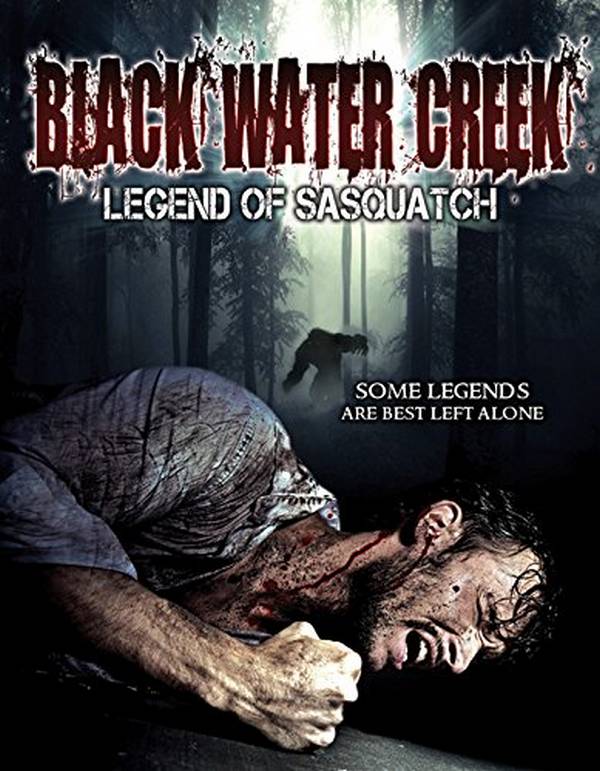
Evil Skips Big Foot Once Again. “Black Water Creek” review!

vlcsnap-2015-01-10-21h18m33s194

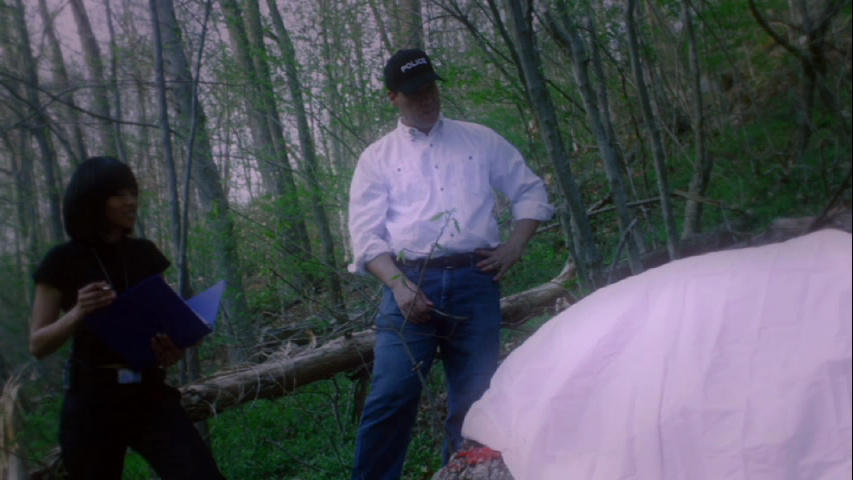
Sasquatch is withheld love. Once again. How can the eluding furry beast of the woods get the run around treatment every time being reduced to a cheap, half-assed horror project for amateur filmmakers? “Black Water Creek” doesn’t stray far from the same old, same old big foot bobbling. An on leave cop is reinstated to a cold case when a string of supposed animal attacks leave many dead and many questions unanswered. When the bodies pile up even more, the “animal attacks” are more than meets the eye.
vlcsnap-2015-01-10-21h16m04s235
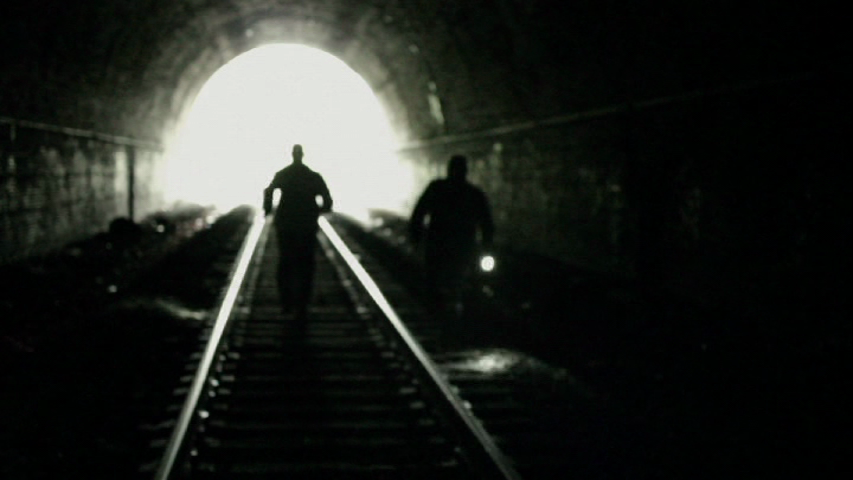
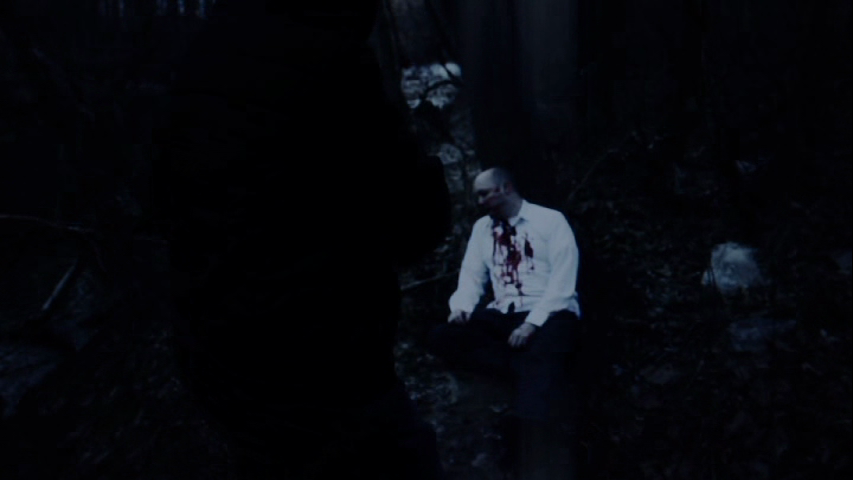
A shoddy, barebones costume with rubber fingers and stationary face expressions and lack of consistent video editing throughout “Black Water Creek” turns the film incoherent and nearly unwatchable. To finish you must be a masochist. Many characters come and go without explanation and the background ambiance seems to run long and leap onto other scenes that don’t warrant the ambiance. The storyline jumps without seamless cuts. And the deaths scenes are all implied and goreless even though many of the victims have been eviscerated and facially mauled.
vlcsnap-2015-01-10-21h17m21s237
There might be a good reason for the lack of quality costuming and the unclarity comes from the story that Big Foot might actually be a rouse for a backwoods drug dealing and smuggling operation. Big Foot is a disguise to take out the competition and to take out the also greedy drug connections in order to lessen the pot of splitting a $65 million dollar drug profit. Only the two detectives on the case, Shaw and Lisa, stay consistent with their story, but the character are dull, dense, and dreary. More like rookies than true detectives. Or Sasquatch is actually a serial killer as the end suggests that it may very well be the work on a serial killer hacking off faces.
vlcsnap-2015-01-10-21h18m05s160
As “Black Water Creek” progressed, I really wanted to push that off switch, but I powered on. Sucked up the aggravating editing and the hypnotic special effects. I tolerated the cheesy costumes and the implied deaths. I clenched my teeth at the video and audio imperfections and had high hopes for a knock your socks off ending. In conclusion, “Black Water Creek” holds no water, bares no teeth, and Big Foot has yet to be discovered on the big screen. Reality Entertainment’s “Black Water Creek” should have a warning label describing how much of the plot will be a convoluted mess. There are far better worse Sasquatch films out there than this shell of a movie.

Nudity Report

No nudity 😦

black-water-creek