The Apex Predator of the Sea is Now the EVIL From Beyond the Stars! “Space Sharks” reviewed! (Wild Eye Releasing / DVD)

Your Daily Dose of Sharksploitation with “Space Sharks” on DVD!

Interstellar scientists voyage home after discovering and retrieving a new species of shark and carnivorous plant from the planet Crypt-X.  When a rogue meteoroid field strikes the hull and sends their ship careening toward the Nevada desert, only one human survivor emerges from the wreckage to face off as the only resistance against a deadly combinational species of highly technological and predatory sharks and the piranha-like swarm of hungry vegetation.  At the same time, a group of recovering addicts are led onto a scenic desert trail for a spiritual nature hike while a conspiracy theorist, toyed with by clandestine organizations, makes his way west to locate the crash and uncover the truth connecting the space sharks with every other conspiracy theory known to man.  Man versus space shark versus killer plant in an extraterrestrial showdown on Earth’s terrain and only one will survive in what’s surely be a massive Government coverup.

Tornadoes whip man-eating sharks through the air in “Sharknado.”  Engineering virtuosos yet undead World War II Nazi soldiers ride monstrous, flying sharks to wreak havoc on modern civilization in “Sky Sharks.”  Now, outer space is no longer quiet and safe as a newly, deadly breed of predator is brought to Earth in “Space Sharks.”   Director Dustin Ferguson, a director with an oeuvre of low-budget horror going back as far as 2010, pens and helms the adjunct indie horror-comedy under his pseudonym of Dark Infinity and his latest is to infinity and beyond being right up there at the top of the schlockiest of sharksploitation.  Filmed and around Burbank California, doubling with no much likeness to the deserts of Nevada near the Grand Canyon, the team behind “5G Zombies” and “Amityville in the Hood” SCS Entertainment in a co-joint effort with Wild Eye Releasing, who also distributes the title, releases “Space Sharks” with Wild Eye Releasing’s founder Rob Hauschild producing and associate produced by Julie Ann Ream and Joe Williamson.

For all of roughly five minutes and a couple of lines of dialogue, Eric Roberts secures top bill on this what’s sure to be lost in the sharksploitation pit of nonsense.  The once formidable 1980s and 1990s star, and brother to the high-powered and elegant Julia Roberts, “Best of the Best” and “Runaway Train” star has ebb-and-flowed vertically between mainstream Hollywood films and the lowest-of-the-low indies.  “Space Sharks” is definitely in the latter category and doesn’t showcase much of Roberts’ given talent that has in recent years strayed to the more eccentric in a countless number of Dick, Jane, and Harry productions.  Longtime scream queen Brink Stevens is another familiar who you’ve might not even known existed in the film if it wasn’t for the credits.  Playing the nature hike leader but enveloped under the shade of a large sun hat, hidden behind large black sunglasses, and, too, with very little screentime, Stevens comes and goes like the snap of a finger.  Other cult film actors are added to this ridiculous recipe with Mel Novak (“Game of Death,” “RoboWoman”) and Scott Schwartz (“A Christmas Story,” ‘Café Flesh 2”) folded into a cheap, B-movie run cast batter of Ferguson regulars to give this tasteless schlock some spice.  If “Space Sharks” had to select a true principal lead, Allie Perez (“Amityville Emanuelle”) would be the closest as the lone surviving scientist with arms training to fend against the upright and muscularly athletic sharks while trying to make her way home to dad, Mel Novack, but tasked to protect desert lost civilians Nick Caisse (“Apex Predators 2:  The Spawning”), Traci Burr (“Death Bitch”), Janet Lopez (“Liza: Warden from Hell”), Ben Anderson (“Witchblossom”), Breana Mitchell (“Cocaine Couger”), Daniel Joseph Stier (“The Clown Chainsaw Massacre”), Christine Twyman (“It Wants Blood!”) and Joshua Mooney (“Axed to Pieces”) from being chum. 
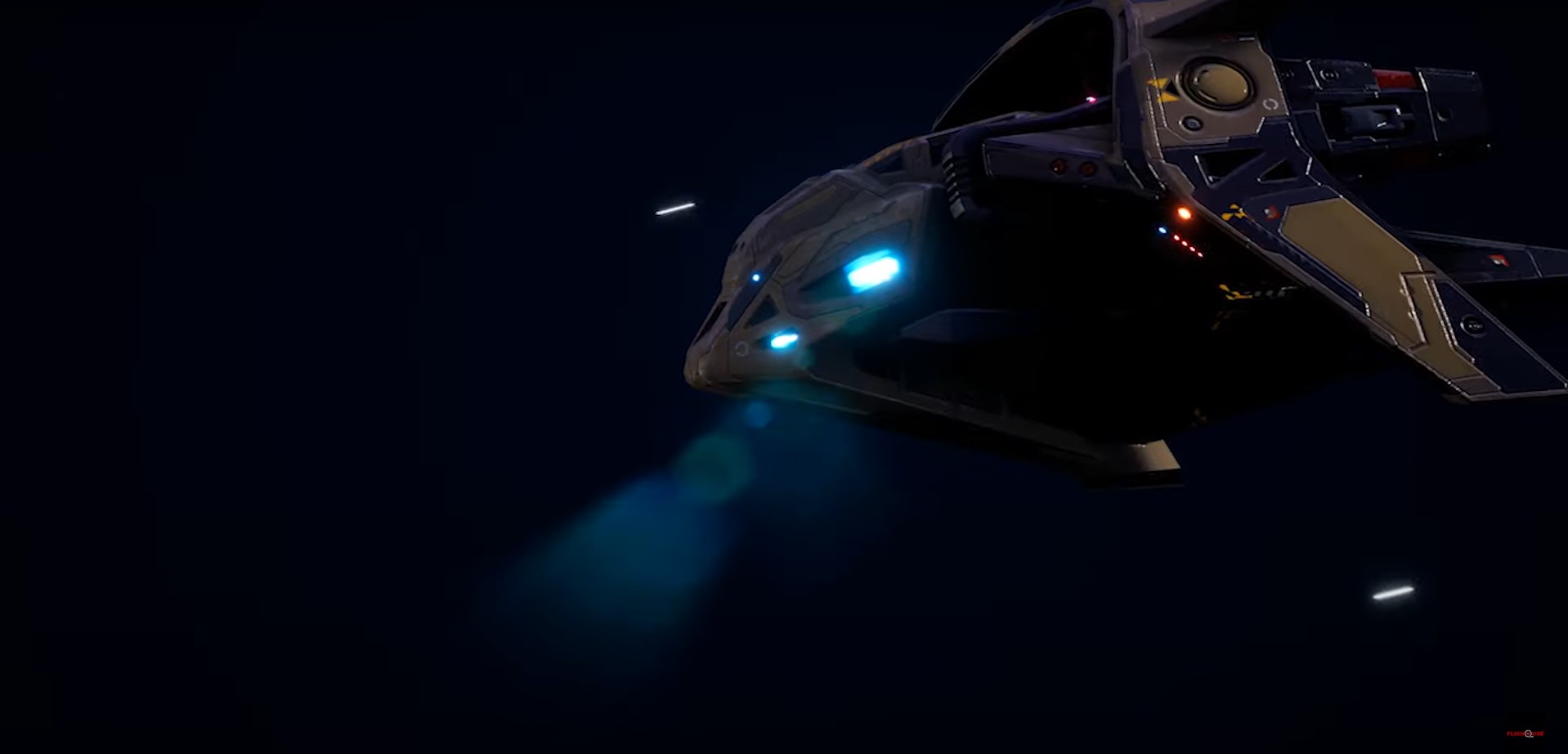
An “Alien” and “Predator” rip-off integrated into the multifaceted farce that has become sharksploitation.  As premises go, “Space Sharks” has a promising plotline of a newly discovered, extraterrestrial species of shark being returned to Earth for scientific, governmental weaponization or examination and then runs amok the desert when things go terribly South.  That story is far more lucid than previous low-rent, quick-produced features of a supernatural shark emerging jaws first out of a toilet bowel.  Also, the way the trailer was cut had “Space Sharks” perk ears of interest with a very similar appearance to “Street Sharks,” a mid-1990s Saturday morning, animated television series of muscular man-eaters that were half-man, half-shark heroes running around beating up bad guys on a weekly basis.  Then, we see the film and we were wrong, dead wrong.  “Space Sharks” is a half-cocked mashup of too much, too little of unwanted knockoffs and crisscrossing ideas.  Computer-generated designs of the brawny tech-sharks are not terrible for budget but do borrow quite an uncomfortable bit from our favorite jungle and urban hunter, the Predator, with heat vision, cloaking ability, and the methods of skinning and suspending corpses upside down.  The pull from “Alien” is more subtle with an opening credit title that comes about in the same gradual style as the Xenomorph films.  Ferguson is no stranger in his cache of flattery and audiences likely wouldn’t have minded the echoes that entail if it wasn’t for the nonsensical chasing of conspiracy theories, a space mission stemmed with little-to-no details, explanation of tiny alien sharks grown to be elite hunters, man-eating plants, giant spaceship crash that befell no concern, zero character developments, dynamics, and arcs, and a story edit too perfunctory to keep focus.  

“Space Sharks” invades retail shelves with a Wild Eye Releasing DVD. The MPEG-2 encoded, upscaled 1080p, DVD5 houses essentially the encircling feature presented in a widescreen 1.78:1 aspect ratio. The upscale barely registers with a mid-range decoding rate at approximately 5 Mbps. Textures are not as defined inside the context of tangible captured frames whereas any post-production object, computer generated with commercial animation software, is about as backwards realistic as an early 90s source coded video games, such as the blockiness, square-pegged Doom or Duke Nukem 3D. “Space Sharks” has an ungraded, unpolished overlay that leaves colors desaturated or muted and the compression seizes control with blatant aliasing issues when characters run around like free range chickens evading foxes. The long opening through galaxy is the best “Space Sharks” will get that exposes colors, multi-shaped object, and an ease of poorly rendered animation burden with a rather decent composition of visuals and soundtrack to kick off the film. The English language stereo 2.0 mix too rides that sliding scale of independent filmmaking with a low-frequency, heavily saturated audio mix that can’t harness and real in isolated elements, and without that even diffusion of sound, every exterior noise maker attaches itself to the dialogue and the intended ambient sound. Dialogue renders through anemically but has enough strength to be heard and intelligible, even if what’s scripted is not. English subtitles are not available. DVD unfolds as a feature-only product with an al carte selection of Wild Eye trailers that are usually on every Wild Eye home video releasing, special features withstanding. A time warping 70-minutes runtime has this just over hour long feature feel much longer in is unrated, region free format.

Last Rites: Simply put, if you’re looking to watch something jawsome, “Space Sharks” is more space junk and not worth going anywhere near its orbit.

Your Daily Dose of Sharksploitation with “Space Sharks” on DVD!

A Little Space Can Asunder the Strongest Bond. “Alien Love” reviewed! (Sector 5 Films / Blu-ray)

Its Not Strange Love, It’s “Alien Love” now on Blu-ray!

Ryan Van Hill-Song and his wife Sadie are a happily married couple despite their age gap.  Ryan’s ardent journey and dream to reach beyond the clouds and into space is on the verge of coming true while Sadie decides to take a break from the vocational rigmaroles of her young life.  Ryan’s NASA mission goes without a hitch except for a brief loss in communication with headquarters.  Upon his return home, Sadie notices a behavioral difference in her once loving husband who now acts strange in his own surroundings and around her.  Despite a few amorous encounters, Ryan becomes strangely obsessed with the extraterrestrial concept through alien themed movies, local artistic murals, and anecdotal accounts that are engrained into their home city’s culture.  As Sadie begins to suspect Ryan is no longer her husband after learning about her pregnancy, NASA agents move in to chase down Ryan and capture his true being.

Strap yourself in to blast off into the great unknown of extraterrestrial copulating with Simon Oliver’s 2024, Sci-Fi romance-drama, “Alien Love.”  The serial Australian documentary director puts a pause on the confluence of beings from the space frontier, the mysticism of the occult and supernatural, and historical contexts to land terrestrial blending-aliens amongst us, hiding under human skin as our family and as our lovers; in this case with “Alien Love,” as astronaut and husband Ryan Van Hill-Song with a concealed agenda.  The script, that presses themes of usual relationships and their potential inertia, is penned by the principal male lead, Nathan Hill, and Simon Salamon, both of whom are coming hot off the script press of their last feature “Lady Terror” from the previous year.  Hill dons the producer hat as well under his production company NHProductions with Sector 5 Films’ Warren Croyle footing and distributing the microbudget feature. 

Nathan Hill producers, co-writes, and stars in most of his pictures.  However, for “Alien Love,” the accomplished filmmaker breaks up the routine monotony by taking a backseat in the director’s chair to enhance focus on Ryan Van Hill-Song, the astronaut who returns to Earth and is not the same man who left his planet.  Aside from a few lines in flashbacks and a quick, laconic replies here and there, Hill mostly lounges about or takes a run while in character, leaving the brunt of the dialogue and emotional work in the hands of Ira Chakraborty, a model-actress in her full-length feature debut in the role of Sadie.  Ira carries the story that mostly just stagnates with scenes of Ryan’s wandering alien obsession and absence seizure indifference all the while Sadie frustratingly can’t decipher her husband’s acute loafing and lack of any kind of emotion in contrast to the flashback lovey-dovey affections.  The craftier part about this devolving dynamic is the theme it represents between fantastical expectations and grim reality, especially between two considerably different people on a collision course of marital decline.  Throw a baby in the mix, a more calamitous cocktail ensues.  NASA agents, supervised by Colonel John Smith (Edward Mylan), are on the hunt for the close encounter, and if you’re wondering what the hell is NASA is doing in Australia, well, let me school you on that there is a NASA deep space communication center in the land of Oz to allow seamless communications to spacecrafts when the Earth rotates.  The more you know…  “Alien Love” fills out the cast with Eleanor Powell, Demz Lato, Sam Ready, Chase Kauffman, John Robertson, Robert Rafik Awad, Ben Bramwell, Savita Bungay, Emily Farrell, and Dan Heubel.

Preboarding the “Alien Love” ship saw an audience collective view of similarities toward the Rand Ravich directed, Johnny Depp and Charlize Theron-starring “The Astronaut’s Wife,” and after soaring through “Alien Love’s” story, that general consensus is spot on as the Simon Oliver helmed, Nathan Hill production is a remake of the 1999 New Line theatrical release on a much smaller scale.  Going into the film knowing this, there ironically emerges less subjectivity because expectations were set and the cognitive ability to examine “Alien Love” for more than just a remake is formed.  The aforementioned theme of wedging differences between two people is characterized by the age gap and ambitions.  Ryan’s an older man, this fact is mentioned a few times early on, chasing a space dream and Sadie is somewhere 20-30 years his junior and judging with conversations with friend Abbey, Sadie is or was in university.  Love at first is healthy, vibrant, exciting, and hopeful like any first-time marriage but the gap, symbolized by Ryan’s change, becomes alienating, literally, and the once strong bond between the two lovers is now reduced to the occasional sex and just being in proximity of each other as interests change and connections become stale.  This unfortunate walk-through of life is told through the sensationalism of an alien inhabiting human form, but the message of marital decay is loud and clear with all the hallmarks of a souring union between two very different people.  When the alien does make the screen, the simplistic mask man works here with a decent alien archetype look without it being overly schlocky; however, the need more for more context is sorely missing as Oliver goes for more style than substance as the need for digital lens flares and art compositions unbraid the build of the story.

From Sector 5 Films comes “Alien Love” on an Australian Blu-ray home video.  The AVC encoded, 1080p high-definition resolution, BD-R has lossy picture quality simply because it’s a BD-R; however, the bandwidth appears to be adequate to suppress artefact issues and sustain a stable, reliable quality throughout.  Details and colors are generally soft, textures lack distinction, in what is more of a hazy aura veneer with muted colors and no dense shadows, over kneaded by warm pink and rich blue gels to heighten the dreamy affect.  Delineation works for the cityscapes and some handful of land planted with powerlines and towers coupled with interesting camera angles and work.  The only audio option is a lossy English Dolby Digital 2.0 Stereo mix that heavy on exposition and Jamie Murgatroyd’s mingling with epic soundtrack.  Dialogue layer has dynamic change depending on how cavernous rooms can be or if background ambience levels are higher that suppress vocal projection.  Overall design diffuses fine from a stereo output with clean and clear dialogue.  Special features include a feature parallel audio commentary with stars Nathan Hill and Ira Chakraborty, an interview with Hill and Chakraborty going over fan questions, interview with esteemed John Hipwell (“Lady, Stay Dead”), deleted scenes with commentary from Nathan Hill, a blooper reel, still gallery, and trailer. With the encoded special features packed with goodies, the Blu-ray design and package leans toward more standard fare with a traditional Amaray case with no inserts or other tangible accompaniments.  Primary cover art looks inexpensive, air brushed, and circa science films of the 1950s.  Disc is pressed with the same image.  The 75-minute feature comes unrated with region free playback. 

Last Rites: “Alien Love” will not be the knock-your-socks-off science fiction film of the year nor will it dazzle with awe-inspiring special effects. What Simon Oliver and Nathan Hill specialize with their latest film is storytelling of a disintegrating couple during alienating times, plain and simple, with a heavy emphasis on the plain and simple.

Its Not Strange Love, It’s “Alien Love” now on Blu-ray!

Cartagena’s Secrets are Mountainous EVIL Aliens! “Top Line” reviewed! (Cauldron Films / Blu-ray)

When Everyone’s Out To Get You, You Get “Top Line” on Blu-ray!

Washed up, alcoholic feature journalist Ted Angelo drinks himself into a stupor on the porticos of Columbia.  Having just been fired by his magazine editor for lack of content, Angelo scores big when led down the path of ancient tribal artifacts that proves the terminus of one of Europe’s famous new world explorers, rewriting history of the disappeared pioneer, but what he truly discovers is bigger, and more frightening, than history itself as he unearths a large alien spacecraft hidden within the Columbian mountains, big enough to enclose the explorer’s lost mast ship.  The discovery of a lifetime becomes the bane of Ted Angelo’s existence as he’s suddenly on a kill list and every organization, from the C.I.A., to the K.G.B., to former Nazis, is hunting him and wanting him dead.  Unable to trust anyone and nowhere to run and hide, the desperate writer is determined to expose the secret-to-kill-for to the world but not if the aliens have anything to say about it. 

Let’s talk about a film that is a bit of a smorgasbord with tapas plate tastings of just about every genre that exists.  That’s one way to serve the description of Nello Rossati’s “Top Line” with an inarguable action coating menu overtop the varietal lifeblood veins of science fiction, espionage, drama, parody, horror, and driven by a sensationalized historical context.  Directed under Rossati’s Americanized pen name, Ted Archer, and known alternatively as “Alien Terminator,” “Top Line” tries to appeal to western audiences with brazenly broad script cowritten by “The Woman in the Night” director and Roberto Gianviti (“Don’t Torture the Duckling,” “Murder Rock”) at the height of Italian ripping of popular American movies.  Filmed on site in Cartagena, Colombia, the Italian production was produced by Luciano Martino (“The Island of the Fishmen”) and productionally sanctioned under companies Dania Film, Reteitalia and the National Cinematografica. 

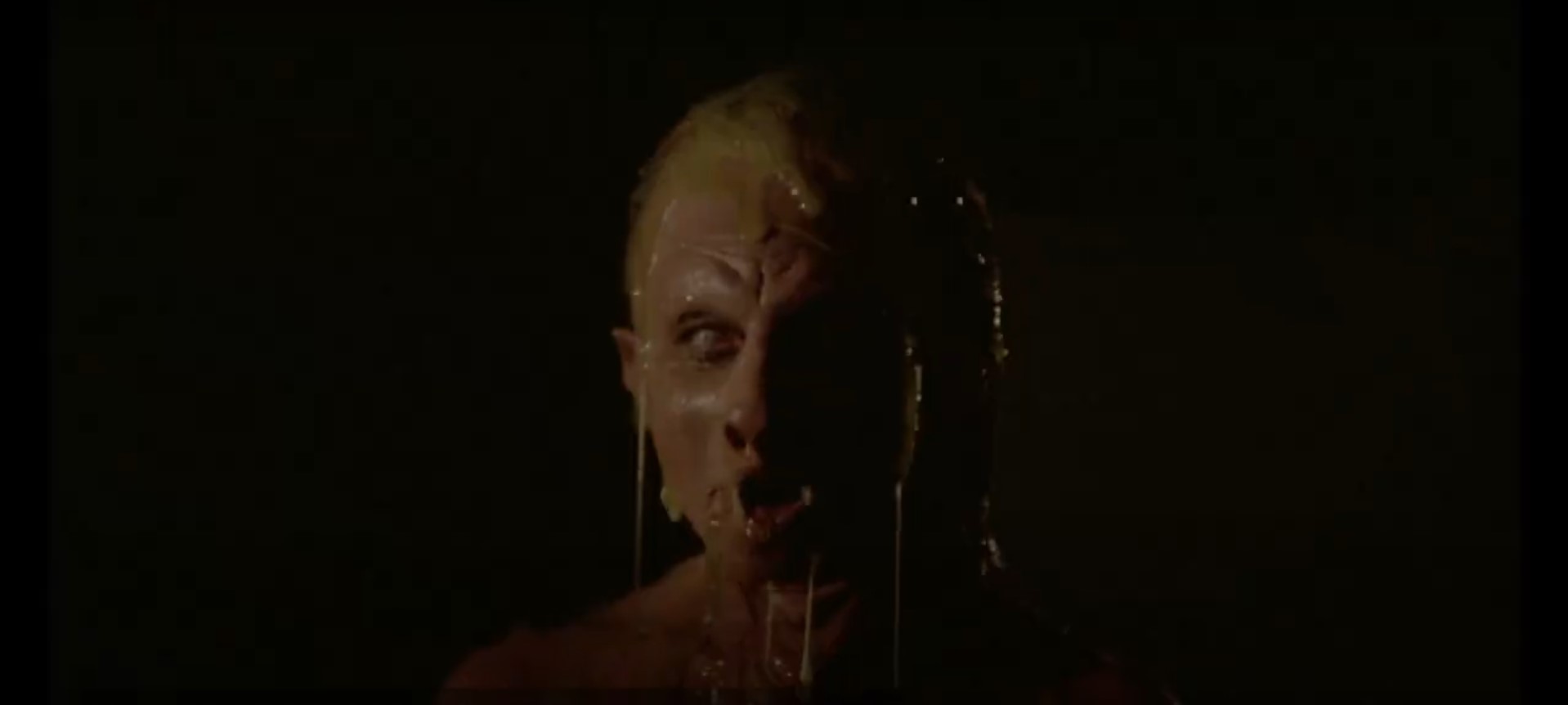
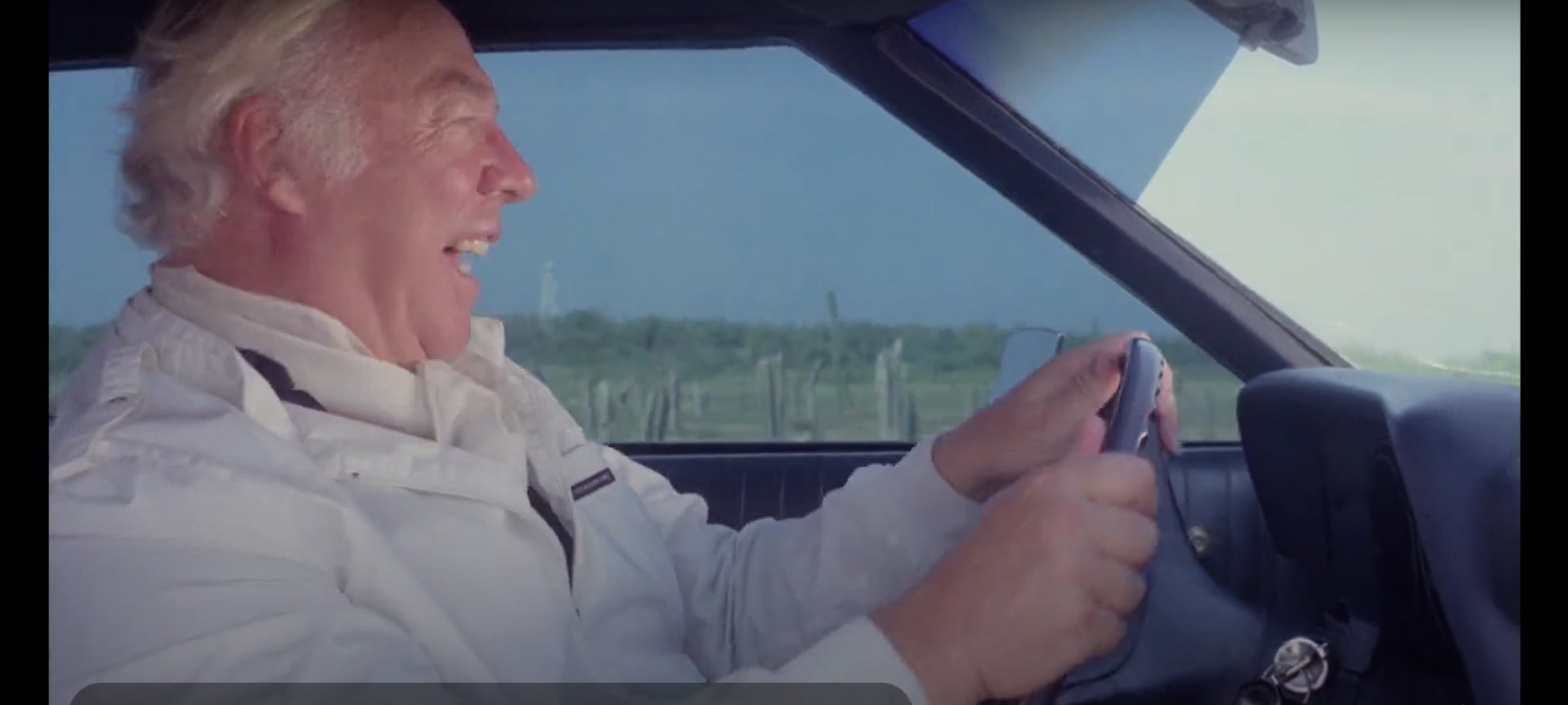
What’s likeable about Ted Angelo is he’s simply a writer.  He’s not a crack-shot, he’s not a world-class fighter, and he’s not one for conjuring up a complex master plan.  Instead, Ted Angelo is a flawed man under the influence of a bottle and is a low-level womanizer where the bedroom interests are more about local information than about the sexual activities.  Franco Nero (“Django,” “High Crime”) goes against his multifaceted ruggedness and muscular physique to be the more of an adaptable and instinctual hero that tries to make up for slouching about Columbia’s drink selection.  Nero’s the hero while Deborah Moore, of “Warriors of the Apocalypse” and daughter of former James Bond Roger Moore, tiptoes about the love interest trope after her character’s senior colleague, who is also Angelo’s good friend, is murdered in the plot and the two become intwined and more goal oriented in unearthing the reason in a minor ploy of revenge.  Yet, the trick is on them after discovering a U.F.O. right in their mountainous backyard and the hunt for their lives is on by a former Nazi and antiquities collector Heinrich Holzmann (George Kennedy, “Naked Gun”), a whole slew of clandestine organization spooks, and Rodrigo Obregón (“Savage Beach”) doing his best Arnold Schwarzenegger “Terminator” act as a large cybernetic man with a stoic and half-exposed face.  “Top Line” supporting cast includes William Berger (“Devil Fish”), Sherly Hernandez, Larry Dolgin (“Caligula:  The Untold Story”), Steven Luotto, Robert Redcross, and Mary Stavin (“House”) as Ted Angelo’s ex-blonde beauty editor girlfriend.

“Top Line” has one of those cinematic stories that’s all over the place pieced together by western inspiration like some sort of genre stitched together Frankenstein’s monster.  Unlike the flat top and bolt-necked creature born of electrical current and held together by suture and mad scientist sorcery, “Top Line” doesn’t have any hideous scars or an unfavorable attitude deterrent but what the Nello Rossati film does feature similarly are the monstrous best parts, such as unpredictability, a pendulum of excitements, and an everyone has grabbed their pitchforks and is out to get you sentiment.  “Top Line” is a wild, exciting, volatile ride set in the heart of a landscape and culturally showcased Cartagena and the ever game, Italian actor Franco Nero at the helm steering what at first appears to be an adventurous escapade of treasuring hunting and covert coverups in act one and two suddenly careens into an assault of astro-terrestrials forces to the tune of the fourth Indiana Jones film, “The Kingdom of the Crystal Skull, by crescendoing third act.  “Top Line” is just as theatrically thrilling without the whipcrackin’, fedora-wearing, family friendly archaeologist with multiple blood squib shootouts, a superb tongue-and-cheek car chase down winding mountainside road, and the hydraulics-driven special effects transfiguration your eyes need to see to below.

Cauldron Films proudly presents “Top Line” onto Blu-ray for the first time, the resulting 2K transfer sourced from the camera negative. The AVC encoded, 1080p high-definition, BD25 decodes a clean, color stable picture that feels organic around the diffused color scheme, and that palette pops without being artificially enhanced. Grain appears in check, natural, and consistent throughout. Presented in the original aspect ratio, a widescreen European ratio 1.66:1, does capture the grandiose of a 17th century exploration ship inside the cavernous mountain without a squeeze of the frame, providing more depth with the help of the art direction to visualize and construct an actual set. Textures, fibers, and other tactile s are limited around the jungle setting that does offer a nice leafy and lush setting that depicts a thicket of a developing country without just being a smear of the same color arrangement but outside of that, what does source de facto is sumptuous textural material. Two audio options are available to choose from with an English DTS-HD Master Audio 2.0 mono and an Italian DTS-HD Master Audio 2.0 mono. The Italian is done in post with ADR and has that nagging space between action and voice while the English track goes through less dubbing, or more exact dubbing, with Franco Nero, and other cast, having their voice heard in scene and in synch. The only issue concerning comes with George Kennedy’s dialogue which is dubbed to be more archetypical German of the Nazi-era; however, this route was not heavily travelled with very few lines being delivered by Kennedy, or rather Kennedy’s voiceover actor. Ambience travels amply and disseminates well for a single signal to travel through a stereo output and this jumps the eclectic range of action from the speakers to your ears. Granted, the action is very selective as you don’t every nuisance of jungle skirmishes and the other village landscapes, but there is enough and what’s not covered is often overlayed with Maurizio Dami’s tribal, tropical paradisio percussion and parallel synth with echoing vocal snips, such as whistling, and peppered with scene bytes – the chase sequence where the first batch of armed men running down Ted Angelo is audio composition gold. Special features on Cauldron’s standard Blu-ray contain an exclusive, new interview with lead man Franco Nero Black Top!, an interview with Eugenio Ercolani The Strange Case of Ted Archer, parapolitic researcher Robert Skvarla takes at examples of known alien sightings and speculations in Alien Terminated: The Alien Theories, an audio commentary by film historian Eric Zaldivar that includes interviews from Deborah Moore and Robert Redcross, and with additional insight on Italian cult films from actors Brett Halsey and Richard Harrison. The clear Amaray Blu-ray houses reversible cover art, both representing original artwork from the film’s release. The primary art is more adventurously exciting with Angelo’s arm wrapped around Moore and a rope, reminiscent of “Romancing the Stone,” while the interior cover plays to the science fiction side of the story, more “Terminator-y” to be exact. There are no inserts or other tangible items included. The 92-minute feature is presented unrated with a hard encoded region A playback.

Last Rites: “Top Line” is a top tier title with a little bit of everything for everybody that’s accentuated by a on-the-run Franco Nero performance with a new, gorgeous 2K transfer Blu-ray packed with special features from our friends at Cauldron Films.

When Everyone’s Out To Get You, You Get “Top Line” on Blu-ray!

Your Test Will EVILLY Hunt You! “Prey” reviewed! (20th Century Studios / Blu-ray)

The Hunt is On.  “Prey” Available on Blu-ray from 20th Century Studios!

Set in the Northern Great Plains of 1791, a young and fierce Comanche woman, Naru, craves to break conventional gender barriers as a tracker and hunter, separating herself from the assumed woman’s place in her tribe as a gatherer of medicine and food.  Naru tirelessly trains herself in the ways of the warrior and has become better than her male counterparts who often look down on her as an inequal; yet, she continues her pursuit to prove her worth not only to men hunting parties but also her own brother who, with all the love in his heart for her, doubts her abilities to meet and become victor over her tribe’s warrior test of hunting a predator that can hunt you back.  A big-game hunting alien with high-tech arsenal invades the land, tracking down the area’s biggest predators, and conquering them essentially his bare hands.  Naru comes face-to-face with the extraterrestrial predator that threatens her people but her cries of wolf fall on deaf ears until the tribe’s bravest war party is defeated and the nearby shrewish French fur trappers are slaughtered despite their gunpowder weaponry, Naru is all that is left between her people and a high-powered killing machine.

From a year and half after the success of its premier release on Hulu, “Prey,” the prequel to the highly popular “Predator” franchise has finally berthed onto the home video market.  “10 Cloverfield Lane” director Dan Trachtenberg helms what is essentially a primal and back to roots prequel with a screenplay penned by television writer-producer Patrick Aison set nearly 200 years prior to John McTiernan’s 1987 action-packed, science-fictional horror “Predator” starring Arnold Schwarzenegger battling a skull-trophy hunting alien with advanced and otherworldly armaments.  Though included as canon, “Prey” separates itself from the pack, especially from the string of “Alien vs. Predator” crossover and the 2018 Shane Black director “The Predator,” and not just in title alone but the title is certainly very significant with a focus on the developing heroine to become respected and an equal amongst the men of her tribe whereas the rest of the franchise focuses on the rudimentary conflict between the very best-of-the-best of tough man and a highly skilled, kill-efficient creature from another planet.  Original “Predator” screenwriters and brothers Jim and John Thomas return as executive producers alongside Ben Rosenblatt, Marc Toberoff, and Lawrence Gordon (“Predator”) with John Davis (“Predators”), Marty Ewing (“It”), and Comanche-Blackfeet American Indian Jhane Myers producing for production companies Davis Entertainment and Lawrence Gordon Productions with 20th Century Studios continuing its long history of distribution presentation of the game hunter. 

Much of the cast, as well as the crew, consists of people of indigenous people heritage, honoring First Nations with representation and authenticity.  At the very heart of the story, as the face of the principal hero, and as a young woman who unfortunately in this industry is the atypical-appearing action star is Amber Midthunder (“14 Cameras”) as Naru, a skilled hunter-tracker disparaged and scoffed at by most of her tribe for not following traditional suit.  Naru is an outsider thinking outside the box while still maintaining the traditions of her people, such as wanting to participate in the Kuhtaamia, a hunting rite of passage that leads to being a warrior.  Midthunder executes the character free from vanity but maintaining strength, courage, and quick thinking despite some inexperience which is a greatly adorned flaw to have in a grounded main character battling against the odds.  Naru is at odds with her younger brother Taabe, an adored and venerated hunter who wants to believe in his sister but edges more toward conformity or conventional ways.  Dakota Beavers tackles Taabe’s athleticism, showing no hesitation in battling the predator on horseback, while also softening the eyes and feeling compassion for his onscreen sibling handled a raw deal.  While Dane DiLiegro (“Monsters of California”) is no Kevin Peter Hall, the original actor donning the Predator suit in the first two films, the 6’8” former oversees professional basketball player fit into the large shoes of a new kind of a predator, one we haven’t seen on screen before, and giving the powerful alien creature a fresh take without breaking off too much of the character’s franchise stride and still being a monolithic monster of formidability.  “Prey” rounds out the cast with Stormee Kipp, Bennett Taylor, Michelle Thrush (“Parallel Minds”), Nelson Leis (“The Curse of Willow Song”), Mike Paterson (“Crawler”), Tymon Carter, Skye Pelletier, Harlan Blayne Kytwayhat, and Samuel Marty (“Don’t Say Its Name”).

From the very title, “Prey” is the analogous prequel and follow-up “Predator” story that strays away from the rough-and-tough, highly trained killers in harsh combat terrains and settings with overkill tech and firepower that blasts everything to smithereens path.  Instead, Dan Trachtenberg travels back in time, back when more primal and essential courses of survival were relied upon by grit and skill.  Even the predator is not as technologically advanced as his descending successors. Trachtenberg mentions in one interview that this particular predator, with a vastly different shaped head and having more low-tech gear, and I use that in the loosest of terms considering the predator’s technological advancements compared to 18th century man, may be from another hemisphere of his world, but I’d like to think this earlier version is more like earlier man prior to evolution, or else how can we explain the flintlock pistol connection with “Predator 2.”  This canonical link plus Taabe’s bordering cheesy throwback line, if it bleeds, we can kill it, give tribute to the acclaimed two films that paved the path to setup “Prey’s” success to stand on its own two monstrous feet being set not in a hot jungle, an urban heatwave, or in the midst of an alien race’s civil war or long historical combat with another race, but in the serene, idyllically raw landscape of Northwest America and that is faced with a lead hero we’ve never seen before in a Predator film.  Character driven elements provide a substantial arc in Naru’s story, encrusted by challenges, failures, and successes that make the Comanche woman worthy of the hunt. 

From its Hulu premier on July 22nd, 2022 to its at home, physical media release a year and change later on October 3rd, 2023, “Prey” has come home on Blu-ray home video from 20th Century Studios home entertainment.  The AVC encoded, 1080p, BD50 presents the film in a widescreen 2.39:1 that captures the vista survey with breathtaking sharpness in detail in the 4K scanned print, adding that ever-so-delicate crispness to each foliage-laden and mountainous range landscape.  Even the visual effects, such as a plain rabbit running from a wolf, the bear versus predator, or the deadly rattlesnake, had Its near immaculate rendering show every texturized detail albeit very minor clunky movements.  Color and lighting result in natural tones and sources except for the ashen dead timber sequence that reduces the saturation to make the added fog denser and provide an area of casualty when the predator comes to call.  “Prey” has an outstanding five language audio tracks to choose from:  An English DTS-HD 7.1 master audio, an English Dolby digital 2.0 descriptive audio, a Spanish Dolby Digital 5.1, a French Dolby Digital 5.1, and, for the first time ever, a Comanche Dolby Digital 5.1.  From one of the bonus feature’s deleted scenes, Trachtenberg’s voiceover commentary suggests, at one point in time, the dialogue was going to be fully Comanche, and some scenes, such as the deleted one on the Blu-ray, was filmed in the native tongue.  However, English was decided upon for the final product, but the full-bodied English DTS-HD 7.1 track is masterclass with great attention to extracting those detail elements, such as the serrating gore moments, the whizzing and blips of the predator’s gadgets, and the action associated between minor and major scuffles that build to “Prey’s” one-on-one climax.  Depth elements has space between background and foregrounds, channeling nicely through side and back setups, and the range is extensive in those aforesaid moments of detailed instances plus a few LFE moments of explosions and a thunderous ship landing and takeoff.  Dialogue is clean, clear, and prominent between the audio’s varied language blend of mostly English sprinkled with Comanche and French.  What’s missing from “Prey” that’s a staple through all of the “Predator” films is a rendition of Alan Silvestri’s iconic score, but that omission will likely feel more heartfully loss with diehard fans of the franchise.  However, composer Sarah Schachner’s (“Remains”) orchestra composition is of epic storytelling that pulls similar grand dramatics from another similar time period, Native American film, “Last of the Mohicans.”  English SHD, Spanish, and French subtitles are available to the feature only.  Bonus extras include an audio commentary with director Dan Trachtenberg, actress Amber Midthunder, cinematographer Jeff Cutter, and film editor Angela M. Catanzaro, a Making of Prey behind-the-scenes with cast and crew clip interviews and action footage, Prey FYC Panel with cast and crew discussion, and deleted scenes and alternate openings with a Trachtenberg commentary that explains why the scene was shot and left cut on the editing room floor as well as a visual storyboard of Naru and the predator in a chase in the treetops.  20th Centry Studio’s Blu-ray comes in a conventional snapper amaray with a rigid O-slipcover of Naru’s warpainted eyes overtop one of the original first key arts released of the film – predator in the background of the decaying timber forest ready to strike with its large wristblades as a Comanche warrior, presumably Naru, in a defensive crouch with tomahawk in hand.  The amaray’s front cover sports the same image.  Inside there is a NECA advert for a 7” figure of the feral predator with a matte red disc print with the title and the three target dots reflected in mirror.  “Prey” is rated R for strong blood violence, has a runtime of 100 minutes, and is surprisingly region free, a solid additional to anyone’s Predator film collection. Dan Trachtenberg is on to something here, guiding the extolled Predator toward a new, yet familiar path in what has become an exciting new beginning or pivot for the trophy hunting alien race just begging for the big screen one more time.

The Hunt is On.  “Prey” Available on Blu-ray from 20th Century Studios!

EVIL vs EVIL vs EVIL vs EVIL vs EVIL etc., “Bigfoot vs Krampus” reviewed! (Ruthless Pictures / DVD)

Merry Kirstmas to all!  “Bigfoot vs Krampus” on DVD!

With Christmas time approaching and the Illuminati forces on the retreat, the Allies are in high spirits. Space rough neck Van Helsing considers taking his relationship with Allied Forces leader Princess Kali to the next level. Unfortunately Satan is set to ruin the moment. From the depths of Hell, the wicked Lord Of Darkness summons the demon spirit of Christmas, Krampus to wreak havoc on the living. Upon hearing the news, the clone of magician Aleister Crawley joins forces with the reptilian form of General Stalin and the Illuminati to mount a Christmas Eve attack on the Allies forcing Van Helsing and Kali to take drastic action. With help from the rowdy space rouge Bigfoot, the Allied Forces bait a syndicate of monsters to help take down the fiendish Krampus and restore peace to the galaxy.

Usually, I write my own storyline synopsis for the physical releases I provide review coverage for as there’s something about firsthand accounts that interpret more clearly and is more detailed in story events than the tagline plot that can be misleading at times, whether be a false marketing ploy to sham potential viewers into watching or goes to the other extreme with a less-than-desirable summary of drab when really the movie is much more magical, but with the 2021 released “Bigfoot vs Krampus,” the bizarre synopsis is worth every word count calorie.  Coming off the heels of a decent bigfoot picture from 1976 (“Creature from Blake Lake”) and playing into the festive Christmas holiday theme with the anti-Santa folklore, I was fingers crossed and impossibly hopeful to be two-for-two in the Sasquatch saga that kills two birds with one stone in doing my duty watching holiday-horror.  Boy was I terribly mistaken.  “Bigfoot vs Krampus” is just a full-length computer-generated cog in the machine of writer-and-director BC Fourteen and is a part of his so-bad-they’re bad versus film lot of an unofficial science fiction, comedic and satirical saga of generally evil in nature icons facing off against one another….in space.  “Bigfoot vs the Illuminati,” “Bigfoot vs Megalodon,” and even “Trumpocalypse Now!” and “Trump vs the Illuminati” really speak the filmmaker’s political stance as well really speak volumes on the filmmaker’s wayward clashes of alternative universes that amalgamates characters from horror, sci-fi, folklore, and video games into battle beyond the stars cratered epic. From executive producer Tony Cliftonson and producer Randall Finings, both involved with “Tickles the Clown, another spinoff in BC Fourteen’s gonzo-galaxy epic, “Bigfoot vs Krampus” is a production and a presentation of indie distributor Ruthless Studios.

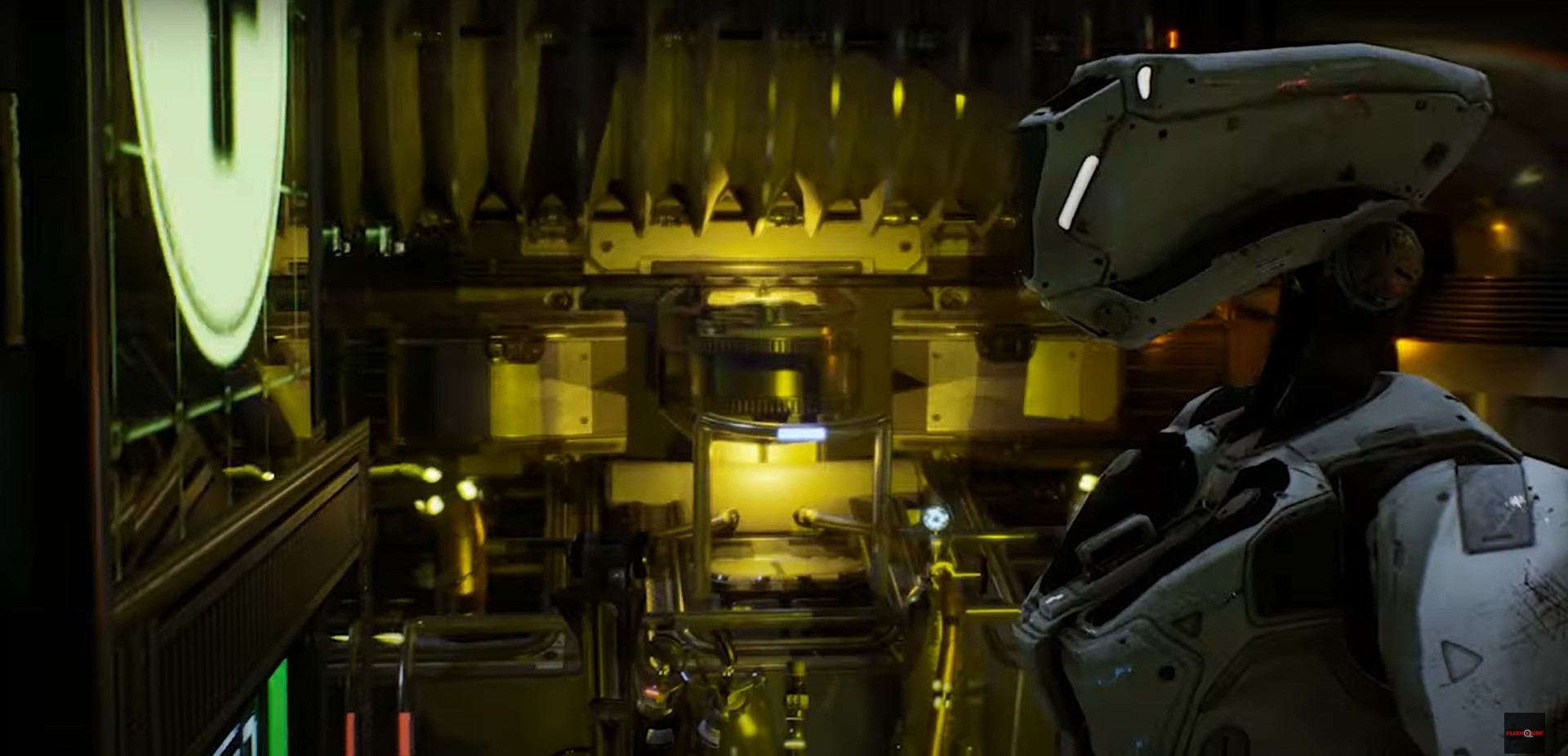
“Bigfoot vs Krampus” is total, 100% computer-generated graphics with only voiceovers to bring the highly kinetic, standing-in-place characters to resemble something that looks like life. BC Fourteen doesn’t stray too far from his regular voice talent as many of the same characters reoccur or popup randomly in this galactic gasbag of all talk and little action. When not voicing family friendly films, Marco Guzmán finds himself fouling the language barrier of space as he lends his vocals to the majority of principal leads and supporting char acters, such as the titular hairy primate Bigfoot who in the film sounds like a bastardized, sonorous, and raspy version of Fat Albert. Guzmán also voices another principal lead in Van Helsing, the 16th clone of the original vampire slayer. Known by his friends as V.H., Van Helsing looks less like a doctor with a stake and more like the Master Chief from Halo, never removing his helmet as he spews surefooted cockiness across the galaxy. Guzmán also voices the reptilian form of a reincarnated Joseph Stalin as well as the Egyptian sun God, Ra, who has ambiguous loyalties but can be useful to the allies as an all-seeing eye of the universe. Carli Radar voices humanities last hope and hero, Kali. The allied forces leader is pregnant with V.H.’s baby, a contentious sore point for Van Helsing who felt tricked into providing Kali a progeny, but has to become mankind and the illuminati, stereotypical green Martians with big black eyes and small mouths, last leader when the Illuminati’s Princess is destroyed by Krampus (who is oddly not listed as being voiced in the film’s credits), Satan’s partner in clinching power over the allies. The voice talent rounds out with Nate Trevors, Edson Camacho, Wes Bruff, Leslie Parsons, Simon Daigle, Carl Folds, Robert Forth, and BC Fourteen.

What do Bigfoot, Krampus, Megalodon, Clowns, The Terminator, Dummy Dolls, The Boogie Man, Werewolves, Satan, Anubis, Ra, and Jack Skeleton all have in common? BC Fourteen CGI’d their likeness into his…I don’t even know how to classify the film. I’ve had a run-in with a BC Fourteen film 8 years ago with 2014’s “Werewolf Rising” when the Pittsburgh, Pennsylvania-born filmmaker went under the name BC Furtney and aside from a stellar performance by the always captivating Bill Oberst Jr. and Irena Murphy baring a full moon going snout-to-nips with a werewolf, “Werewolf Rising received a mixed review but was still comprehensible with a start, middle, and an end. Though I stress the comedic and satire, a precaution must be instilled as the unfunny “Bigfoot vs Krampus” drags through the mud a trove of select horror and sci-fi pop icons in carbon copy tiny spaceships, flying around in a muddlesome mess, and rendered completely unnatural in an advanced resemblant version of the Goldsrc engine – you should see Bigfoot run down the ship’s corridors. If “Bigfoot vs Krampus’ were a series of cinematic story intercuts sewn together with gameplay axed entirely, I would believe it, and I’m sure, having spot check a few of the sequels, prequels, and spinoffs of the same caliber, that some animated scenes are recycled. There’s definitely recycling happening in this feature. If the war between the Illumanti-Humans-Bigfoot allied forces and every evildoer under the sun wasn’t thematic enough, the pseudonymous BC Fourteen throws in Van Helsing’s struggle with conscious as the cloned hired mercenary with legendary blood lineage skips town and on his baby’s mama because he does not feel appreciated in a fight that’s technically not his. The director also adds a subplot of Bigfoot checking in with old friend, and apparently cafe barista, Anubis to make sure the Sun Deity Ra isn’t fibbing about Van Helsing’s unexpected demise at the hands of Krampus. Everything does circle back around to an open-ended showdown for that next exposition heavy installment of intergalactic garbage made with no heart, no respect and very little effort.

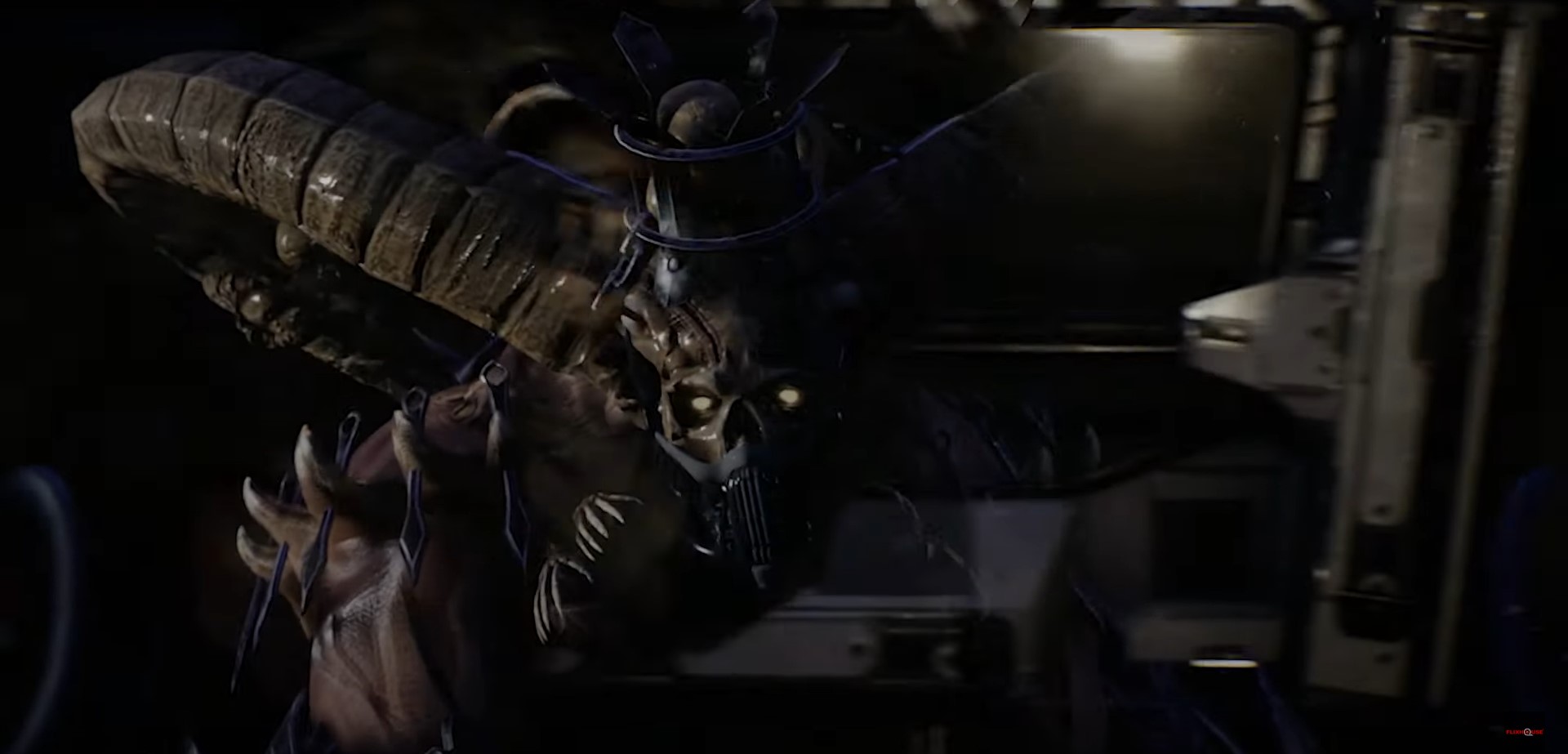
If the synopsis didn’t frighten you off from watching the film, text pulled word-for-word from the Ruthless Pictures’ DVD back cover, I surely hope this review left you with a bit of common sense prior to watching a cool and kitschy what if versus scenario. The Ruthless Pictures DVD presents the glossy computer graphics in a widescreen 1.78:1 aspect ratio. I will admit the animation provides here-and-there tactile moments, such as battle scuffs on robots or the ridges, grooves, and lighting on Krampus’s curled horns. All the animation looks about the same throughout, leaving a one-note taste that’s hard to wash out, but the at times, the CGI provides that nice ragdoll feel for humanoids Van Helsing and Kali and the lighting/shading does make appear more luxurious. Compression issues include background banding and splotches in darker spaces, but for the majority of the feature, those issues are limited. Though no listed on the DVD’s attributes, my players states “Bigfoot vs Krampus” has a single audio option – a Dolby Digital 2.0. For a science-fiction baster war, the lossy format is a lackluster that doesn’t surprisingly match all the other qualities, pushing out a mediocre 5-6Mbps average. Option English subtitles are available under the static menu. The DVD is a bare bones release with zero bonus content. The DVD is encoded region free and has a runtime of a merciful 70 minutes. Bigfoot films are back in the dumps again for this reviewer as “Bigfoot vs Krampus” is a flurry of insipidity and, the worst part of it all, it doesn’t add anything to the Christmas holiday horror subgenre with the Krampus module built-in for the sake of impersonating a something about as old as it’s folklore, a space invader.

Merry Kirstmas to all!  “Bigfoot vs Krampus” on DVD!