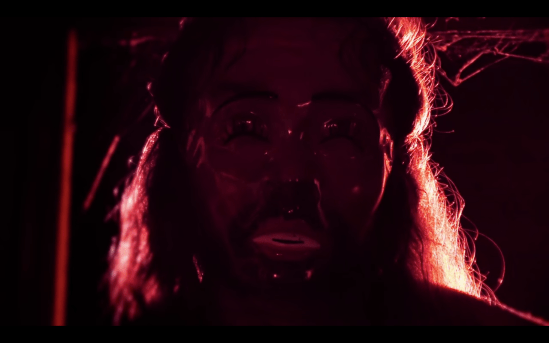
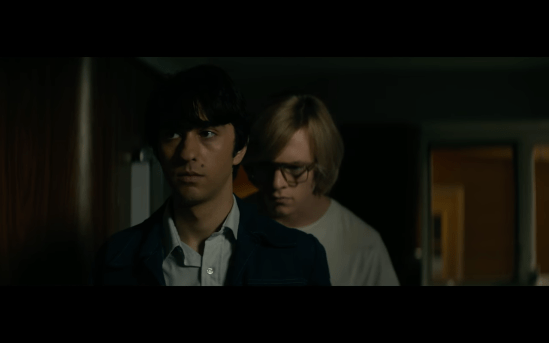
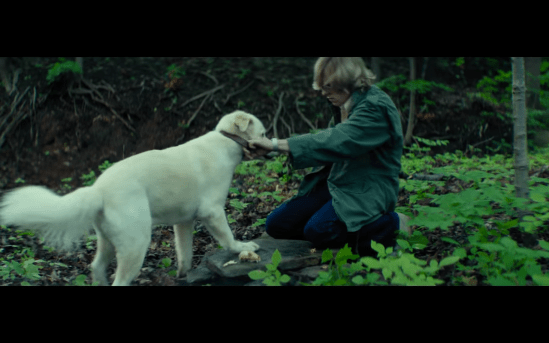
A serial killer with severe mother and father issues stabs to death beautiful young women in urban Arizona. Two detectives are hot on his trail, but when they begin to find his victims with nonidentical wound patterns, including bite marks on their necks, the detectives are thrown into a loop of ancient supernatural proportions. Another pair of seekers, vampires whom have lived for centuries, track down the same serial killer for one very specific reason – his blood. The blood is a certain and rare hemoglobin type needed to resuscitate their dying breed, but with the killer’s instability rendering him volatile and dangerous, turning him into one of the powerful undead becomes risky business for humans and vampires alike.

With the backdrop of the city of Tucson, Arizona comes an off plumb detective-crime thriller smack dab in the middle of a vampiric rebirthing with Brendan Guy Murphy’s unconventional modern vampire tale, “Blood Widow.” Directed by Murphy and co-written by Dominic Ross (who had a main role in the Ron Jeremy starring’s “Blood Moon Rising,” “Blood Widow,” which is also known as “Viuda de Sangre,” is Murphy’s first venture into full length feature films. The veteran actor has starred in such films such as “The Minstrel Killer” and the unbeknownst to all, 2012 follow up to Dennis Hopper’s “Easy Rider,” “Easy Rider 2: The Ride Home,” but to his directorial credits, only a couple of short films are listed, testing Murphy’s hand at the proverbial helm of a multi-branched story with hard-nosed detectives, deranged killers, and a desperate vampire faction. “Blood Widow” is a production of Brendan Guy Murphy’s Tucson based production company, MurphySpeaking Films.

Murphy steps into the villainous shoes of Keller, the disturbed serial killer with mommy and daddy issues who remains elusive from two of Arizona’s finest detectives, played by James Craven, who has been virtually cinematically silent since the early 2000’s, and Dallas Thomas. Keller troubling backstory is briefly visual in the aftermath of his rage resulting in his terribly abusive and estranged parents. Murphy and Ross poorly incorporate the effects of Keller’s horrendous maltreatment into his transformed character; a battering character flaw untapped for persona turmoil that ultimately subsides to Keller’s newfound powers that give him nearly unstoppable bloodthirst and debauchery. Craven’s detective Valentine and the original vampire duo, Lilith (debut performance by Melissa Aguirre Fernandez) and Slight (Hector Ayala), also suffered from feebly storylines that involves a cocktail of Craven’s alcoholism and on-the-job trauma and Lilith and Slight’s early 20th century bond during the violent prejudicial times of vampire inquisitions in New Mexico. Each backstory is only merely, and half-heartedly, touched upon to give just a morsel of the full character that can never entirely arc to either redemption and falter. Aside from that, performances all around are solid enough to be enthusiastic charged. James Craven is chin deep into being a defiant detective with an obsession for capturing a killer who has become an elusive and terrifying figment of subconscious stress and haunting visions. Audiences can, again only briefly, be pulled into detective Valentine’s grim existence, provided by Craven’s unsullied efforts. Cisiany Oliver (“Jessicka Rabid”) and Abdul Salaam El Razzac (“Terminator 2: Judgement Day”) co-star.

I keep returning to the title, over and over again, puzzled in trying to explain or articulate why the film is titled as “Blood Widow.” Nothing apparent and explicit comes to the presentation forefront or to the bio-gears of my mind that would make the first instance of vampire activity with Lilith, I assume, a widow. Lilith’s brief backstory confides no pain of loss or grief and the little evidence that supports the possible catalyst front might have inkling hints at her sexual orientation, a prejudice witch hunt which would result in bearing bereavement, even if it’s 80+ years strong. Lilith has an arbitrary flashback that exhibits the brutal staking of another woman in her group of suspected vampires in broad daylight, one of the select unconventional vampire motifs revamped for “Blood Widow,” and though Lilith and the rest in her group were denying every aspect of the claim, their elongated fangs were in clear view and didn’t necessarily assist in their defense. The slain woman could have been a possible lover perhaps, paralleling a symbolic labeled perversion of lesbianism, but the fact that all suspects were women is the only clue toward that theory. Again, this is all objective and circumstantial on my part, but I can’t pinpoint another reason for such a title. Lack of connection comes to be a reoccurring theme in “Blood Widow” that fails to materialize more contextual value toward the scenes, titles, and characters for beneficial storytelling and less inscrutable acts.

Ultimate power is laced in the blood, but what if that power is used for evil? That’s what the Indican Pictures’s distributed “Blood Widow” sinks it’s teeth into with a digital platform release and the promise of a DVD home video release soon again. Unfortunately, I was provided with a DVD-R screener, so the video and audio technical aspects will not be critiqued for this review, but the dialogue audio mix is in English and Spanish with English subtitles. Some bonus features were included, such as outtakes and the trailer. “Blood Widow” has a premise of a promising, independent contemporary vampire hook, but without enriching mythos and some sort of connective coherency, “Blood Widow” wobbles through the approach to an unsatisfactory finale.
Tag Archives: serial killer
The Analogies of the EVIL that Plagues Us. “Hole” reviewed! (Wild Eye Releasing / DVD)

Three peoples’ lives become coiled around the unfortunate state of death with each experiencing individual variations of the concept. The recently released convicted felon, Ed Kunkle, faces reality on the brink of insanity as his past demons vilify his temperament in the direction of total carnage. Befriended by Kunkle is Eve Adams, a single mother who struggles to cope with her infant son’s untimely murder that happened right under her watch. Assigned to the Adams Boy’s case is detective Bodie Jameson who struggles with own malevolent urges brought upon by the unsurmountable cases of grisly homicides that come cross his desk while he also tracks down a child killer. Their differences connect them, looking into their future to rediscover the past that molded their disheveled lives into fateful affairs with death.

Over the course of three years between 2007 to 2010, auteur filmmaker Joaquin Montalvan directed and assembled a gritty glimpse into the grubby windows of condemned souls with the 2010 released “Hole,” produced by his own independent production company, Sledgehammer Films, and co-written with his longtime collaborator and wife in life, Eunice Font. “Hole” is Montalvan’s third horror feature following 2002’s beleaguered with loneliness thriller “Adagio” and psychological horror, “Mobius,” which was released the year prior in 2009, plus also behind a string of documentaries. Montalvan’s an optically surreal storyteller basking in a rich and unorthodox story and color palette that revives originality bobbing in an heaving ocean of lemming horror.

“Hole” is comprised of showcasing three stories from three tormented lives. One of those lives, the mentally unfit Ed Kunkel, gorges on being the centric force that thrives the other two into a descendant hell. The late Paul E. Respass tunes into Kunkel’s manic polarity as a person who can be extremely mild mannered and pleasant then explode with caustic abrasiveness and ugly torture. Respass’s shoulder length, wavy hair, graying goatee, and iron contoured face gives him a Charles Manson appearance that goes good with crazy. Behind closed doors Repass’s Kunkle breaks with sanity slaughtering his mother lookalikes as a result of mommy issues, but when conversing with Eve Adams, Kunkle’s maintains an upright keeled temper. Teem Lucas, who like Respass has worked with Montalvan previous, subdues the abnormal imbalance with a normal person’s reactionary response to loss and heartache when Eve Adams copes with the murder of her young child. In the middle these two extremities, detective Bodie Jameson’s work seeps into his psyche, fluctuating between irrational and rational thoughts. Another actor in Montalvan’s corral, Jim Barile, who looks more like a 70’s hippie than a detective, has the hardest performance of them all of slipping into a terrifying unknown mindset while maintaining status quo in work and romantic relationships. Barile’s role isn’t well recieved, flying mainly under the radar with an underperformed and pointless conclusion to detective Jameson right and wrong affliction. Charlotte Bjornbak (“Camera Obscura”), Katherine Norland (“Cannibal Corpse Killers”), Alina Bolshakova (“Dead End Falls”), Dennis Haggard (“Cannibal Corpse Killers), Theresa Holly (“Legend of the Hillbilly Butcher”), Micki Quance, Gavin Graham, and Char Frost (“Someone’s Knocking at the Door”) co-star.

Right away, a strong sense of resemblance washed over me when viewing “Hole.” The lead actor, Paul Respass, and the overall texture felt already acquainted with my visual cortex nerves. My suspicions were justified and my sanity was cleared as I have seen “Hole” before in a later film entitled “Legend of the Hillbilly Butcher,” another Joaquin Montalvan flick featuring Respass as a delusional manic. Yet, “Hole” is one of those films that after the credits role, hasty judgements should be chewed on, reflected upon, and recollected for a second analysis. Hell, you might as well just re-watch it all over. The thing with Montalvan is is that his brand has trademark cognizance on such a level that even if “Hole,” released in 2010, and “Legend of the Hillbilly Butcher,” released in 2014, instinctually ride the same wave, they ultimately compare as individual projects with a distinct personality and artistic flair. For instance, “Legend of the Hillbilly Butcher” denotes more of an homage to early exploitation films and “Hole” puts more stake into societal system failures, even if borrowing from the likes of Ed Gein with the killer wearing a flesh mask and sewing up a fleshy garment. Both films hark about mental illness, but one glorifies the act for the sheer sake of carnage fun and the other considers it a collateral damaging symptom of a broken justice structure. Another difference to note is “Hole’s” three-way non-linear narrative that moves like the Wonkavator from “Charlie and the Chocolate Factory” in every way imaginable and can be daunting to keep up.

Out of the depths of obscurity comes “Hole” distributed on DVD home video by MVDVisual and Wild Eye Releasing under the Raw and Extreme banner. Presented in a widescreen, 1.78:1 aspect ratio, Montalvan and his D.P. R.T. Norland, brightly bedazzling with every shade of matte box and some slow motion, play the field utilizing various techniques to tap into Ed Kunkle’s disorienting madness. Using backdrops like the ghost town of Bodie and the spiritual sanctuary (or bohemian commune) of Salvation Mountain, Montalvan’s able to cast an aberrant vision out inside an independent means. There are some points of posterization, details are softer than desired, and blacks lose composition with blocky noise so there are some drawbacks to the encoding. The English language dual channel audio mix pairs about the same as the video with spliced competing facets that tend to offer come-and-go range and depth. Scream queen moments go into feedback mode during Ed Kunkle’s kill mode, losing the ideal quality via unsound mic placement. Dialoge is okay being on the softer side with some background noise being flowing in and out between the audio edits, emitting a static effect around the dialogue and then cut out when not the actors are not speaking. The bonus features are aplenty and informative with a Montalvan commentary track, an extensive mack of documentary that fine combs every pore of the film that includes interviews with cast and crew, Ed’s Journal segment conversing about the backstory on Ed Kunkle’s perverse family and killed friends portraits and souvenirs, as well as trailers. Bloodhounds will want more from Ed Kunkle’s shed of horrors, but what director Joaquin Montalvan has fashioned threads madness with a neglected mental heath system while polishing a a shiny three prong, moviegoer narrative with blood, body parts, and butchery.
Evocation of EVIL in “The Girl In the Crawlspace” reviewed! (ITN Distribution / DVD)

Jill escapes from the grip of a kidnapping-serial killer who kept her confined in a crawlspace under the house. Her courage brings lethal justice to the captor when the local marshal shoots and kills him upon confrontation. Jill struggles to reintegrate back into her local community in the aftermath, sleeping unconfined in the outdoors and withdrawing herself for social interaction, including from her weekly role playing game with friends. When Kristen moves back into her hometown from college, she aims to set up her therapy practice to assist families impacted by the serial killer as well as Jill by special request from the marshal, but Kristen’s rocky relationship with her substance abusive, off-Hollywood screenwriting husband on the mend drags out Jill’s much needed treatment. With Jill and Kristen preoccupied, they’re oblivious to the concealed threat that plots the next terrorizing exploit of kidnapping and tormenting young, beautiful women.

From under the grubby wooden floorboards to the strategic folding table of a role playing game, “The Girl in the Crawlspace” is the Midwest direct-to-video suspense thriller that tackles post-traumatic stress and marital strife while submersed in a looming trail left by a notorious mass murderer, written and helmed by first time director John Oak Dalton. Dalton, who has penned several low-budget grindhouse titles over the last decade and half, including titles such as “Among Us,” “Sex Machine,” and “Jurassic Prey,” returns once again to the genre with the repercussions of Podunk psychopath upon small town America, filmed in Indiana and release in 2018 hitting the ground running with film festival circuits. Indie filmmaker Henrique Couto, schlock horror director of “Scarewaves” and “Marty Jenkins and the Vampire Bitches,” signs on as producer, stepping back from his usual productional duties, and letting an occasional collaborator Dalton to completely engulf himself as the omnipotent auteur. Midwest Film Ventures serves as the production company, shot in Farmland, Indiana.

Erin R. Ryan has continuously sustained a low level hover on the indie horror radar after taking her in Dustin Mill’s “Bath Salt Zombies,” based on the Miami incident based on a naked man eating someone’s face induced by being high on bath salts, and the gooey-gory body horror, “Skinless,” that’s also a Mills production. Ryan expands her portfolio outside physical horror with Jill, a traumatized recluse derived from her abduction and torture, as a subdued component that’s contrary to previous roles, but Ryan capitalizes the opportunity of a scared kitten, recoiling from public gatherings, and slowly and silently emerging back into society while recalling chilling moments as the story progresses. However, there’s difficult pinpointing the head lead as the protagonist roles are shared between Ryan and depicted married couple, a pair of more Henrique Couto casted actors, in Joni Durian and John Bradley Hambrick as Kristen and her husband, John. Between the three, chemistry clicks better than cooking meth in a chemist’s unsanctioned laboratory and offer ample contention without the attending killer’s presence hanging over the whole town’s head. Rounding out the remaining cast is Chelsi Kern (“Scarecrow Count”), Joe Kidd (“Ouija Room”), Jeff Kirkendall (“Sharkenstein”), Clifford Lowe (“Scarecrow County”), and re-introducing Tom Cherry as the good old boy town officer, Marshal Woody.

With a title like “The Girl in the Crawlspace,” I would be remiss if I didn’t say there were some expectations of bodily torture, psychological terror, and teeth-clinching tension when sitting down to watch. The hype was high considering the post-after-post amount of positivity for “The Girl in the Crawlspace” on my Twitter feed. The catchy name and optimistic comments provided real temptation, but Dalton steers in another direction, the what follows in the state of everlasting shock and the reliving of moments seared into your psyche. The direction wasn’t as expected, but that’s necessary a bad thing. “The Girl in the Crawlspace” is exposition heavy with considerable amount of movie referencing peppered with some current event topics, such as the brief mentioning of killing of migrant children, throughout and continuously wanders off point, strolling more into Kristen and John’s crumbling marriage. Jill, the supposed centerpiece of the story, feels more like an afterthought, despite being the “girl” in “The Girl in the Crawlspace.” The cantankerous marriage supposedly jeopardizes those personally involved in Jill’s well-being as John exploits Jill’s idiosyncratic experiences from being a captive by turning them into inspirational junk food for his fading screenwriting career, but the catalyst incident doesn’t stick, becoming more of a weak opening for a more pronounced return of Jill’s haunting past.

From ITN Distribution and Mill Creek Entertainment, “The Girl in the Crawlspace” lands onto a not rated DVD home video release. The single layer DVD is presented in a full frame widescreen of an 1.78:1 aspect ratio. In a framing sense, Henrique Couto’s cinematography distinctly places small town in a spectrum view that highlights the soybean fields and farms, the rustic brick infrastructures, and the simplicities of a relaxed, old-fashioned town, using some drone shots to expose the green belt greenery. For an indie feature, the agreeable bitrate has a frank, clear image despite some consistent overexposure that softens details, especially on faces in the outside scenes. The Dolby Digital stereo 2.0 mix has also agreeable dual channel output. Some of the dialogue scenes suffer through an echo, but for the majority, the lines have clarity and unobstructed by ambient layers or the soundtrack. The depth discloses some distant ambiguities, such as in a train shot that’s not rendered in the background as it should, but the amount of range is palatable. English SHD subtitles are available. The only bonus features available on the release are the theatrical trailer and an commentary with producer Henrique Couto and director John Oak Dalton regarding their history together and going through the shot techniques as well as touching upon the actors. The road to recovery is paved in nightmares, psychological terror, and Midwest psychopaths in “The Girl in the Crawlspace,” but pitches away from the principal concern that turns second fiddle to one struggling screenwriter’s difficult assimilation into rural life while simultaneously rethreading a floundering livelihood and a tattered marriage.
Become Evil’s Best Bud in “My Friend Dahmer” review!

Senior year 1978, right before the start of his 13 year killing spree, Jeffrey Dahmer struggled to fit into the high school equation. Spending much of the time in his makeshift laboratory, dipping roadkill into jars of acid to retrieve the bones that were still intact, Dahmer didn’t have many friends to socialize his unbalanced behavior. His interest in dissecting animals and an unearthed fascination with the same sex drove him to stay in serene isolation, but when his parents, between the marital spouts and his father’s projections, pressure him to make friends, to live an active lifestyle, Dahmer reduces himself to being the class clown for acceptance, catching the attention of three students who befriend him because of his classless antics. Just as his life begins to form something that similar normalcy, the familiar urges overwhelm when he fantasizes about a young male doctor of sleeping with his fresh corpse. With the inkling to kill creeping to ahead, Dahmer drowns himself in alcohol while still maintaining what’s left of his friendship that suddenly feels more like his exploitation for the benefit of others.

What a hell of an origins story! “My Friend Dahmer” is the 2017 biographical docudrama from writer-director Marc Meyers that becomes the looking glass into the catalytic events, or even last moments of hope to reform, infamous serial killer Jeffrey Dahmer. The film is a visual adaptation of John “Derf” Backderf’s graphic novel of the title. Backderf was also one of Dahmer’s only friends in high school and relates his experiences through exaggerated illustrations of his graphic novel. With in the film, Meyers notably recounts the pages of the Backderf’s novel with a story that puts Dahmer justifiably at the epicenter that focuses almost entirely from Dahmer’s disturbed and warped point of view of inner body interest, homosexuality, and standards of social acceptance. Rarely, does Meyers stray from that structure in obtaining the external thoughts and opinions of Dahmer’s friends, and perhaps even enemies, who’ve made some sort of interaction, but being that the novel is a work of someone else’s non-fictional perceptions and not of Dahmer’s, Meyers puts weight forthright with Backderf’s opinion with the characterized Backderf interjecting here-and-there on accounts that significantly courses Dahmer’s actions.

Surely an eye brow raising casting choice, Disney Channel actor and Kids’ Choice Award winner Ross Lynch enters into a polarizing role that is the pre-monster of Jeffrey Dahmer and creepily channels in a powerful performance the embattled younger image of the soon-to-be murderer, cannibal, and necrophiliac. Lynch portrays Dahmer as a rare emission of emotion and almost frighteningly stiff or mechanically with hunched shoulders just below his wavy blonde hair that wrap around the large and rounded rectangle glasses. New York City born actor Alex Wolff picks up the graphite pencil to spun out probably Dahmer’s closest friend John “Derf” Backderf. Perhaps in a way, Backderf had manufactured a piece of Dahmer’s destined genetic makeup and Wolff lays in the guilt, and the fear, thick when around Dahmer near the end. Anne Heche (“Psycho” remake) and Dallas Roberts (“The Walking Dead” and “Mayhem”) become Joyce and Lionel Dahmer, Jeffrey’s parents. Heche and Roberts seize every on screen opportunity to lay into one another, a persistent and regular difficulty that stemmed between Joyce’s mental and physical heath and Lionel’s withering patience for his anxiety riddled wife. The cast rounds out with Vincent Kartheiser Liam Koeth, Tommy Nelson, and Harrison Holzer.

Aside from the retelling of Backderf’s recollections, “My Friend Dahmer” shoots scenes right inside what was once Dahmer’s actual home in Ohio. That bit of realism adds monumental flavor to enrich the inherently dark subject matter of how a young Dahmer was subjected to compounding blows to his psyche in the short timespan that was his senior year. From his father tearing down his makeshift laboratory and junking his precious dead animal experiments, to his mother’s divorce inducing schizophrenia, and to being the class clown in order to make friends, Dahmer couldn’t maintain control over his ebb and flow urges and Meyer effectively highlights these chapters in Dahmer’s frayed playbook of life that tipped the scales of unfavorable malice.

FilmRise and MVDVisual present “My Friend Dahmer” on a AVC encoded 1080p High Definition Blu-ray with a 2.40:1, widescreen presentation. Through a vista of small town quaintness, picture quality immensely defines a cold embrace of a softer, fluffier effect. The color palette strongly reflects the whitewashed and faded of the era. The English Dolby Digital 5.1 stretches the ambient with a film that doesn’t necessary pack an audio punch. The dialogue is rendered cleanly and the retro soundtrack is a boost to docudrama with clarity and pace. Bonus features are a bit thin for a non-fictional individual with humungous notoriety and they include a brief interview with star Ross Lynch, Behind-the-Scenes slide show, and a theatrical trailer. “My Friend Dahmer” revitalizes the feelings and the chills that washed over us who are old enough to remember Jeffrey Dahmer’s grim-storied apprehension and, yet, director Marc Meyers is able to strip Dahmer of his monstrosity for 107 minutes and make him simply human as a young man with everyday problems without a ounce of parental, professional, or friendship guidance, funneling to the notion that we all have a little Jeffrey Dahmer in us.
Evil Walks Among Us in “The Zodiac Killer” review!

Jerry is your average, everyday Californian man. He’s tall, handsome, and can hold down a good government job as a United States postman, but Jerry has another side to him. A dark side that’s hidden beneath a façade of apparent normalcy. His random acts of senseless violence and murder have Jerry a great advantage over the rest of society, especially the police, as he commits homicidal tendencies right under their noses without an inkling of a motive and stretching out his urges to kill days, weeks, and months a part under the guise of the notorious Zodiac Killer.

Based on the factual and claimed murders of Northern California’s infamous serial, director Tom Hanson helmed the thriller “The Zodiac Killer” and released his finished project in spring of 1971 when the serial killer was still very active. In a little history tidbit, Hanson had the idea to premiere “The Zodiac Killer” at the Golden Gate Theater in San Francisco in attempt to lure the Zodiac Killer to the screening by way of having patrons writing “what-ifs” as the real Zodiac Killer and then analyzing the handwriting to the letters the real killer submitted to the police and news outlets. Of course, the stunt didn’t work, but did bring about awareness of the prospect that everyday people – neighbors, gym teacher, mailman – could be a deranged, blood thirsty wolf underneath sheep’s clothing. In their first and only writing credits, Manny Cardoza and Ray Cantrell penned the script.

With a minuscule budget and a performance driven script, “The Zodiac Killer” could only speculate on the person behind the deaths and though in today’s filmmaking standards, some points in the dialogue and the action are awfully outdated in it’s rigidity and over exposition, but when getting down to brass tax and looking deep at the root’s message, the effective troubling performance by lead actor Hal Reed, as Jerry the Zodiac, transfixes viewers as the tall, handsome, and baritone-voiced actor bore an eerie on-off switch between pure good and polluted evil. Before knowing Reed’s true self, not every character was black and white as Hanson attempts to a lineup suspects, especially with a truck driver named Grover (Bob Jones) whom had a knack for pretending to be a wealthy businessman on his nights off in hopes to score naive bar tail. Whether flawed by design or by the obsolete nature of filmmaking, the curve ball attempt to throw the viewer for a loop doesn’t stick and for every second, Hal Reed is the titular maniac even if not proclaimed at first sight. Ray Lynch and “Invasion of the Bee Girls'” Tom Pittman round out the cast as the two police officers not hot on the Zodiac’s trail.

For early 1970’s, “The Zodiac Killer” is graphic, verbally and in imagery with an example being Jerry enthusiastically jumping up and down on a car hood while an elderly woman is pinned between the hood and the engine or Grover calling every single female character a “broad” or a “bitch” in the film; “The Zodiac Killer” certainly strikes a chauvinistic chord from a male’s point of view with not only Grover’s attitude toward women, but also portraying women as shrewd, powerless, and as sex objects. Culturally, this attitude toward women might have been accurate for the time period as well as many of the portrayed Zodiac attacks though numerous of the attacks were only claimed by the Zodiac and not actually confirmed. In any case, Hanson’s rendered theories are well thought out and entertaining in spite of their tragic background.

The American Film Genre Archive, Something Weird Video, and MVDVisual present “The Zodiac Killer” on a 2-disc DVD/Blu-ray set exhibited in the film’s original aspect ratio of 1.33:1, keeping the black bars on the right and left of the screen to preserve the format. The new digital transfer was scanned from the only existing 35mm theatrical print through to 4K resolution on a Lasergraphic film scanner and the image has a real clean look to it despite some minor print damage with horizontal scratches and burn flares. The print also suffers from a color degradation, voiding the coloring and replacing it was a washed look. The DTS-HD Master Audio 2.0 mono track has a mighty bite that’s surprisingly clean and clear despite the obvious low fidelity. Special features include an interview with director Tom Hason and actor Manny Nedwick, a commentary track with Tom Hanson, Manny Nedwick and the AFGA crew, and a tabloid-horror trailers from the AGFA archive. Also, the release has a sleek illustration with reversible cover and an inner booklet complete with the film’s tidbits, transfer information, and distribution company credentials. Plus, a bonus movie “Another Son of Sam” (1977) that’s been scanned in 2k from the original 35mm theatrical print. The Zodiac might have ceased a wrath of carnage and made a brazen exodus from California before being caught before his or her identity became known, but the killer’s notorious legacy lives on with this stellar release of Tom Hanson’s “The Zodiac Killer” and serves as a chilling reminder that vicious killers walk among us.