Do EVIL, Get Dead! “A Day of Judgment” reviewed! (Severin Films / Blu-ray)


1930s rural America – the dejected town priest resigns his congregational duties after failing the local townsfolk who have all but returned to the Church and reclaim their faith in the savior lord Jesus Christ and God.  On his exit of the town’s border, the priest crosses paths with a shadowy figure riding an austere wagon and holding a scythe.  A town full of heartless schemers, adulterers, swindlers, and murders have their unforgiving stories told that leave their fellow townsfolk, their friends, and even their families left suffering in their wake.  The shadowy figure tracks each sinning stray down to face retributing judgment.  The righteous and terrible punishments send the unsavable souls to an eternal existence in Hell.
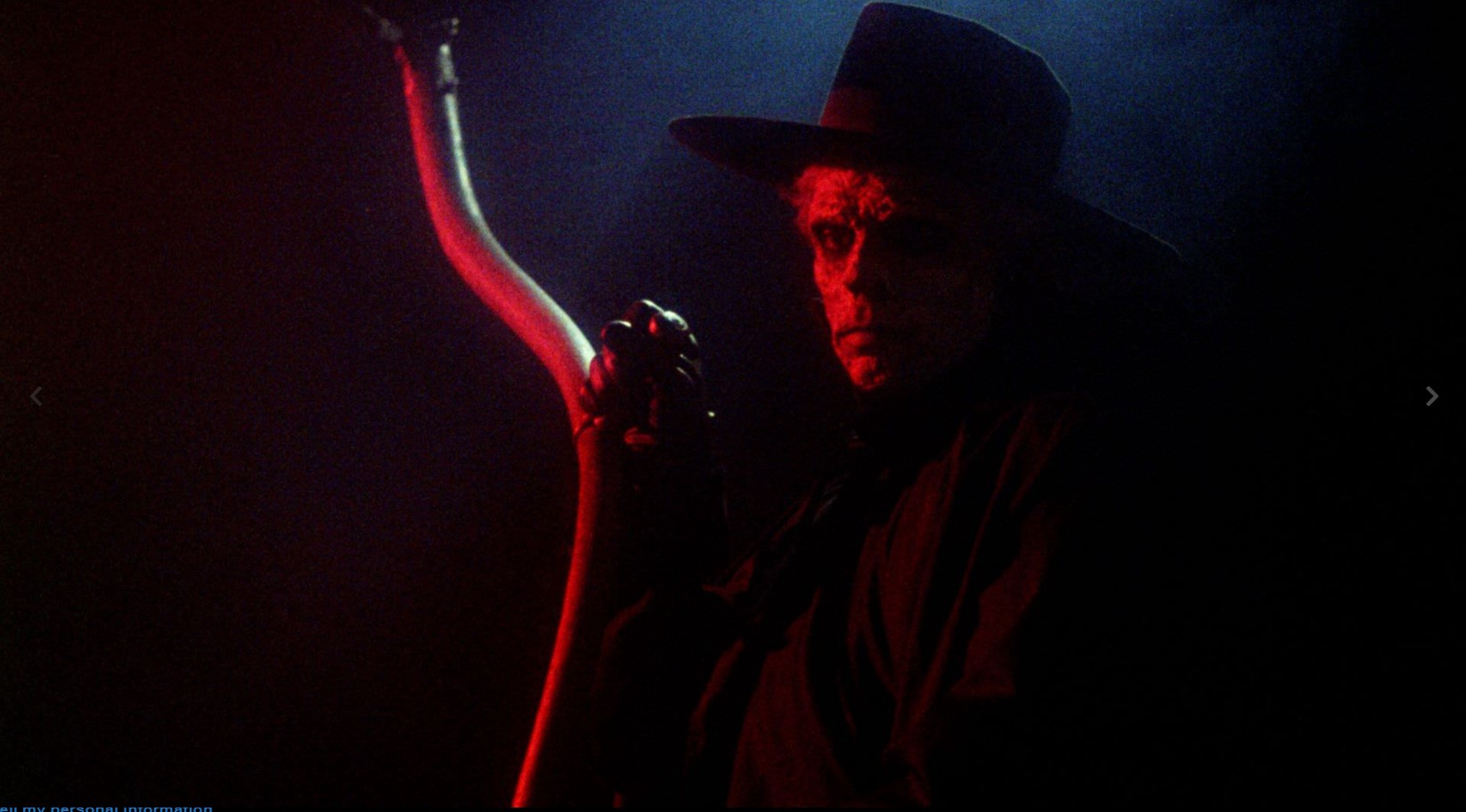
The Grim Reaper cometh. Screen cap courtesy of Severin.

What was once considered to be a Christian-centric educational project had turned into a Christian-centric damnation of horrors in the quasi-anthology “The Day of Judgment,” where the sinners of sin town deviate from the Godfearing path and into a vat of immorality and ungodly aberration.  “The Day of Judgment,” occasionally under the U.S. bootleg title of “Stormbringer,” is the one and only directorial from C.D.H Reynolds (aka Charles Reynolds), an academic educator turned briefly to film working under the legendary, North Carolina based Earl Owensby Studios that produced the 1981 released film.  The script is penned by Owensby Studios’ regular writer, Thom McIntyre, who inked the film between a pair of genre credits, including the incarcerated grindhouse actioner “Seabo,” also known as “Buckstone County Prison” a few years earlier and a snippy flick of a pack killer Rottweilers terrorizing a mountain resort in “Dogs of Hell” a couple of years later.   Owensby, obviously in regard to his own studio work, took part as the fire and brimstone tale’s producer along with associate producer and longtime “Power Ranger” director Worth Keeter curating the final touches as the creative architect of the script’s grimmest portions or more line as the assistant director of adding the bleaker, bloodier fates of the sinners.
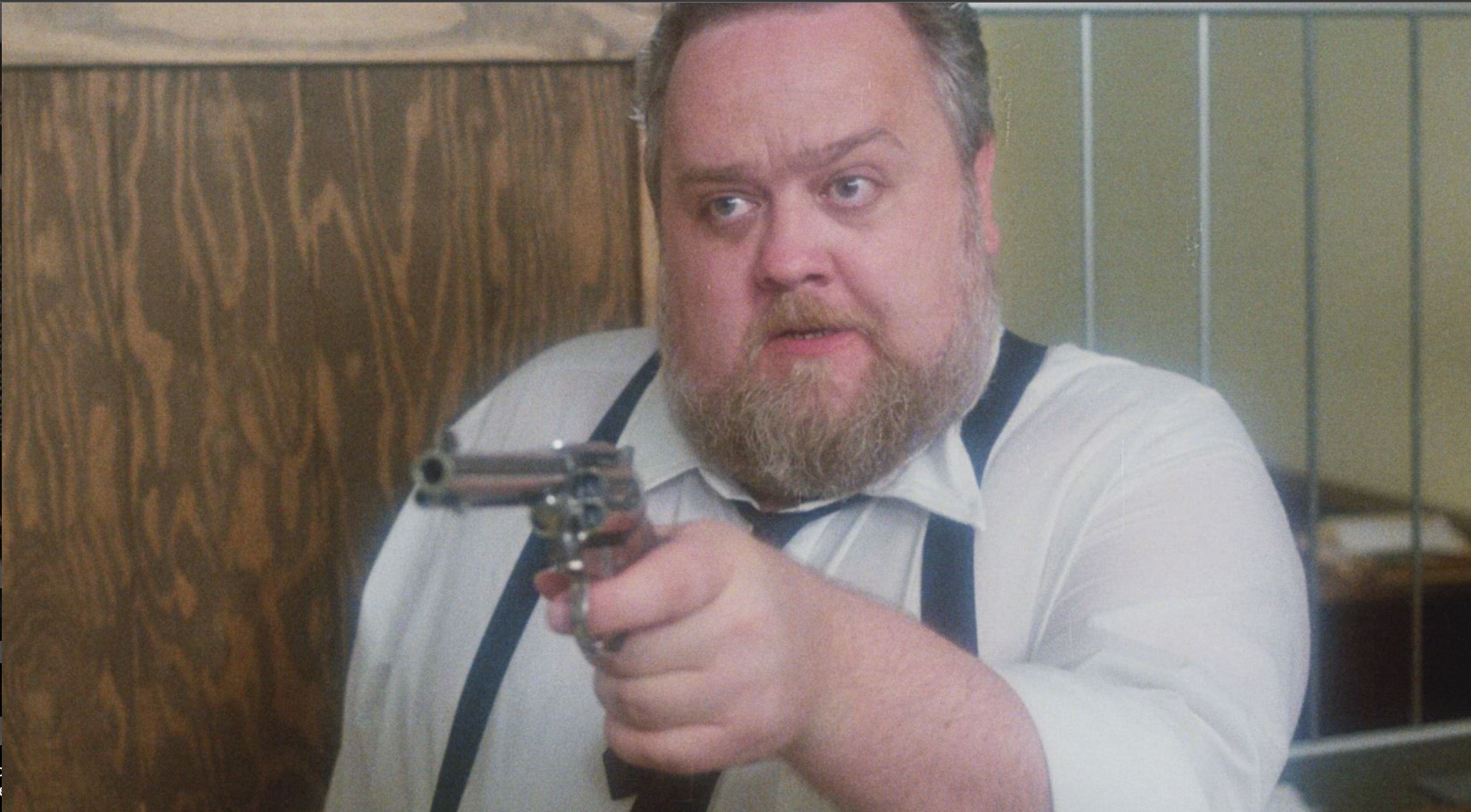
William T. Hicks. Screen cap courtesy of Severin.

“A Day of Judgment” has a non-linear anthology-like structure that swings back and forth between different character scenarios of wickedness.  You may meet one character at the very beginning of the story and don’t meet them again, until you’re already through having sent a good chunk, if not all, of the sinners to Hell in a handbasket.  But McIntyre hones in well on setting up nicely each character’s backstory, those who the priest crosses paths with as he exits the town and delivering their ultimate demise (with an assistant from Worth Keeter’s gloomier approach).  The director himself Charles Reynolds plays the crestfallen Reverend Cage in a classic expository preacher riding out of town and crossing paths with soon-to-be-troublesome townies in William T. Hicks (“Death Screams”) as a greedy and heartless bank owner, Careyanne Sutton and Larry Sprinkle (“Trick or Treat”) as man slaughtering, pretense adulterers. Toby Wallace as the hometown disparaging mechanic scheming to steal the family business out from his parents noses to sell, Helene Tryon (“Dogs of Hell”) as the frettingly kook and paranoid old lady poisoning the local children’s pet goat, and Brownlee Davis (“Wolfman” ’79) as the delusional and disgruntled former employee of his best friend looking for a finality in revenge.  “A Day of Judgment” had this weirdly transitional acting style for an 80’s released horror that resembled the Golden Age of cinema through the 1950s and 1960s where everything is loud and pronounced without much reflection, pause, or change in tone.  Though the style sticks out like a sore thumb, perhaps Reynolds made a shallow attempt to recapture the 1930s as which the narrative period is set.  The acting isn’t terrible but is more staged and reactionary to the course of events.  The cast rounds out with Carlton Bortell, Richard Dedmon, Inga Dennis, Denise Myers, Jerry Rushing, Harris Bloodworth and Fred Roland.
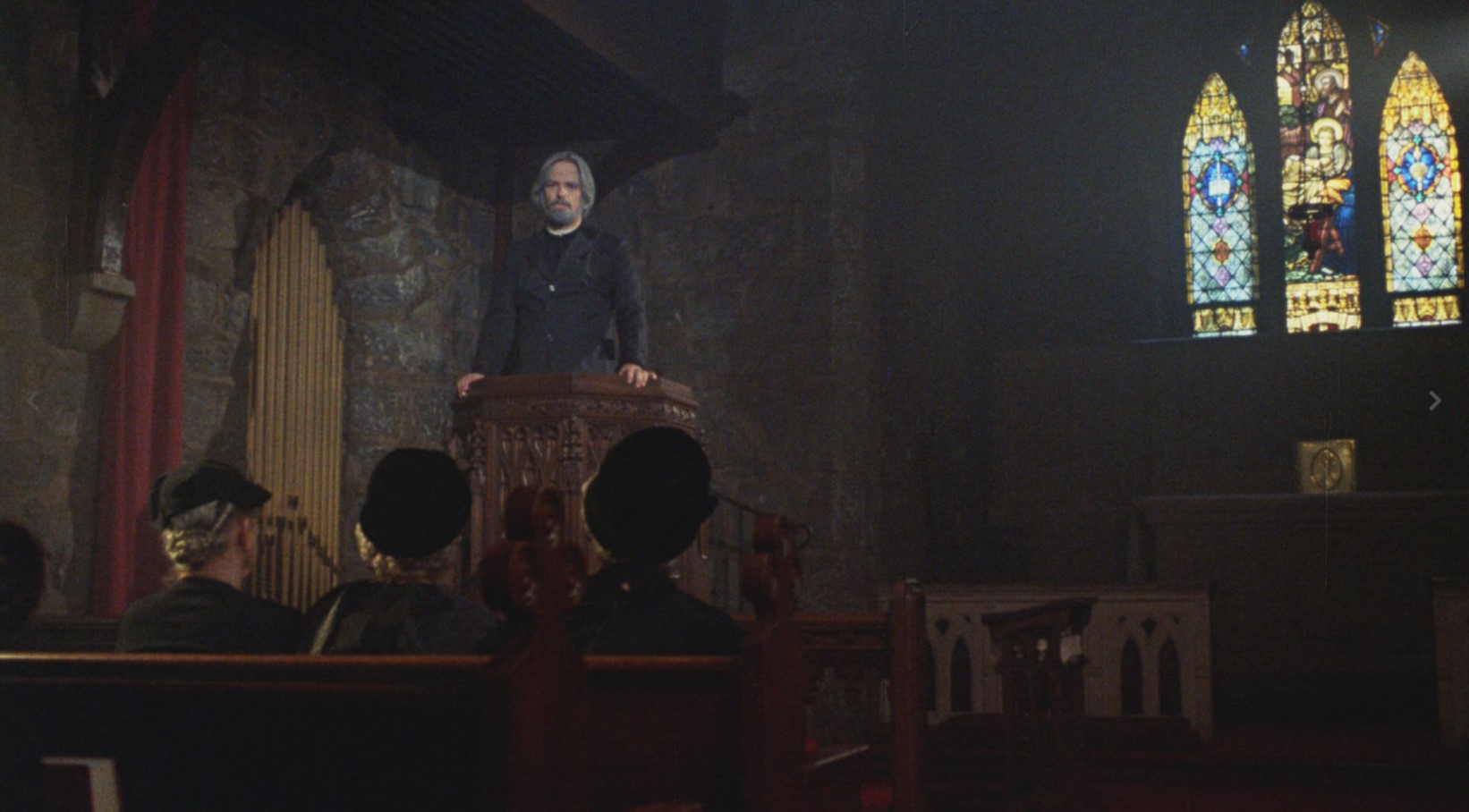
C.D.H. Reynolds as Reverend Cage. Screen cap courtesy of Severin.

Earl Owensby produced films were not known to be big box office hits as they coursed the grindhouse, drive-in theater circuits with relatively unknown talent nearly strict to the back pockets of the Owensby Studios and still meeting profitable margins on low budgets.  “The Day of Judgment,” which doesn’t feel like a grindhouse film, carried meager success by way of production design and wardrobes alone.  Give credit where credit is due with an Owensby film that can dole out a variety of era appropriate automotive roadsters and specific period garments for the illusion.  Some sets are dressed scarcer than others with lots of blank spaces and sparse knickknacks to build upon the 1930’s décor but the overall impression is quite effective, transporting one out of the 80’s and into the depression era the narrative frequently suggests.  I also favored the non-linear anthology of individual hell bound circumstances as that structure rendered “A Day of Judgment” as a whole rather than a pie sliced into six-even segments with a common core connection that, at times with other films, individual stories can feel untethered to the main theme.  In today’s times, “A Day of Judgment” is severely antiquated but the more “bleaker” character demises often landed with underripe special effects and a fair amount of cheesiness that’s a Loony-Toons illustrated representation of Hell that looks more like Wile E. Coyote’s Southwest American desert home.  I was anxiously awaiting the beep-beep of Roadrunner, speeding across the screen, and the drop an ACME anvil on top of the sinners’ melons. 
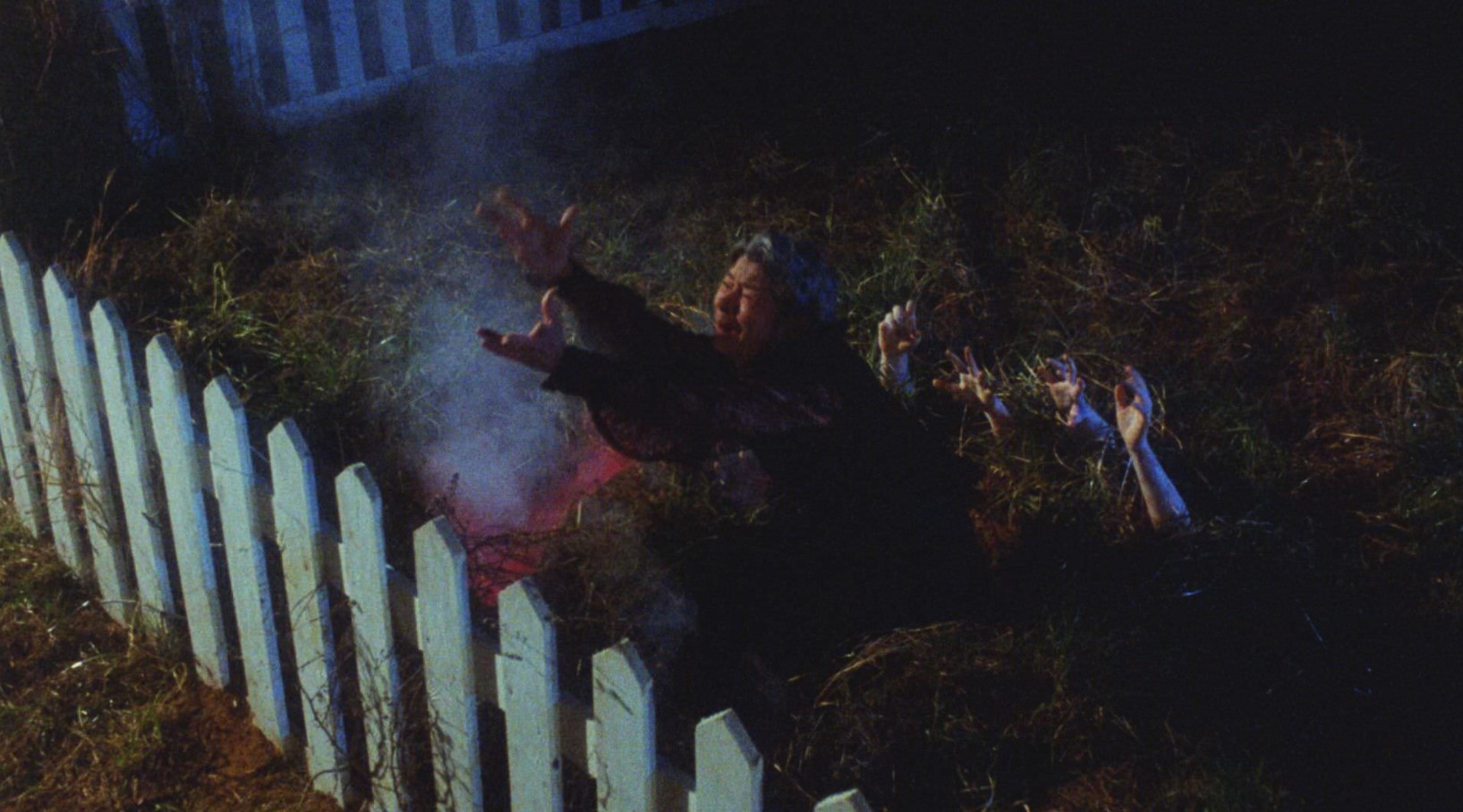
Helene Tryon being dragged to Hell. Screen cap courtesy of Severin.

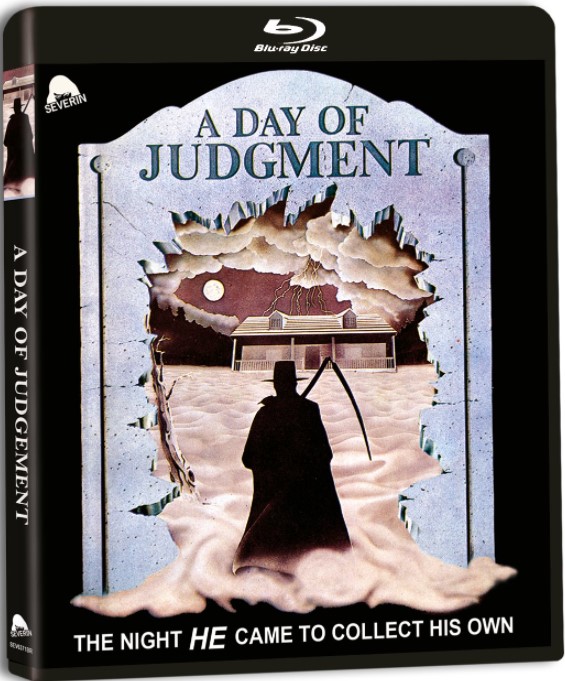
The overall message in “A Day of Judgment” is clear that sin and crime doesn’t pay, and the wrath of God’s retribution will come down hard in the form of a scythe.  Severin Films presents up a new Blu-ray, scanned in 2K of the original interpositive print now in full 1080p HD resolution of the widescreen 1.85:1 aspect ratio. Preserved pristine and having virtually no wear from age, “A Day of Judgment” is an amazing picture to behold for its first Blu-ray release with heightened resolution that extricates more details than possible than any other release can provide, especially when those other releases are the official VHS and DVD bootlegs. Here the color grading excellently pops with deeper hues of prime colors to provide more life into the death that’s onscreen. One thing to note about the release is the immense phosphorescence glow around whites and other lighter colors that can be eye-catchingly distracting when a piece of white paper becomes the main focus due to a conspicuous radiance. Other than that, the picture is clean, the grain is healthy, and no obvious signs of alterations to enhance the visual spectrum. The English language mono audio track, though emitting crystal clarity without any audio blemishes, is not terribly clear on whether Severin went with Dolby Digital or the DTS-HD. Other listings on the web offer up “A Day of Judgment” with a dual channel DTS-HD Master Audio while the back cover displays the Dolby Digital logo with a detached written description as a mono track, which coincides with Severin’s official site. With the film’s outmoded ingrained technology, Dolby Digital would be, to me, the obvious format that produces higher quality sound using a lower bitrate. Special features include a pair of new Severin exclusive interviews with British author Stephen Thrower of “Nightmare USA” in The Atheist’s Sins and snippet interviews from Worth Keeter and Thom McIntyre in Tales of Judgment. Final spec notes on the Blu-ray are a region free coding and has a runtime of 97 minutes. Stuck in stasis of prim and conservatism, “A Day of Judgment” has become this oddball labeled slasher of the 80s era that aimed to explore new and unusual stories and techniques on every avenue, but still leaves this impression of Bible-thumping Christian values that serve as a stern warning for all ye sinners!

“A Day of Judgment” on Blu-ray and DVD from Severin Films.  Click Here to Purchase at Amazon.com

EVIL Strikes at the Stroke of “Midnight” reviewed! (Blu-ray / Severin)

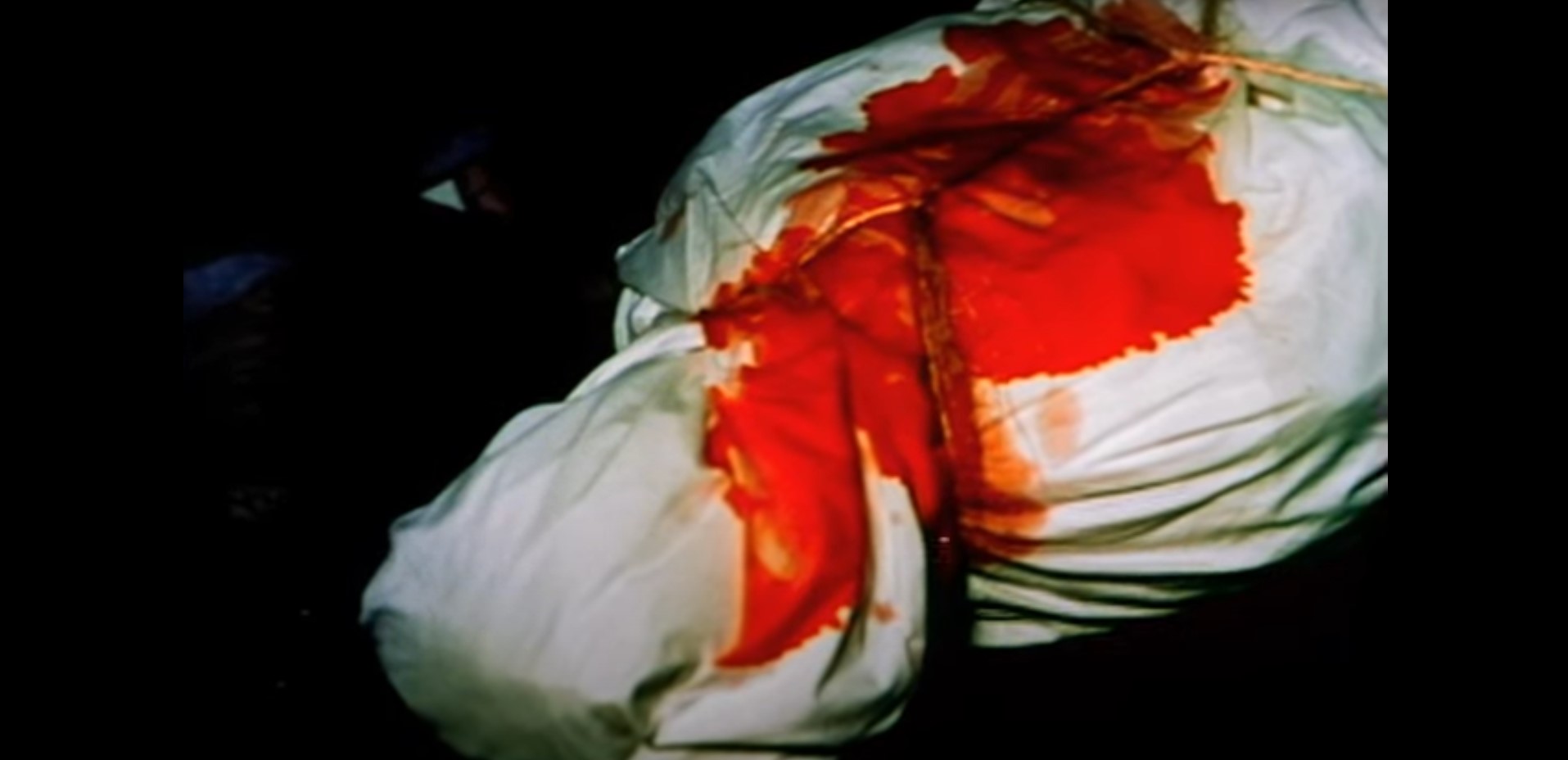
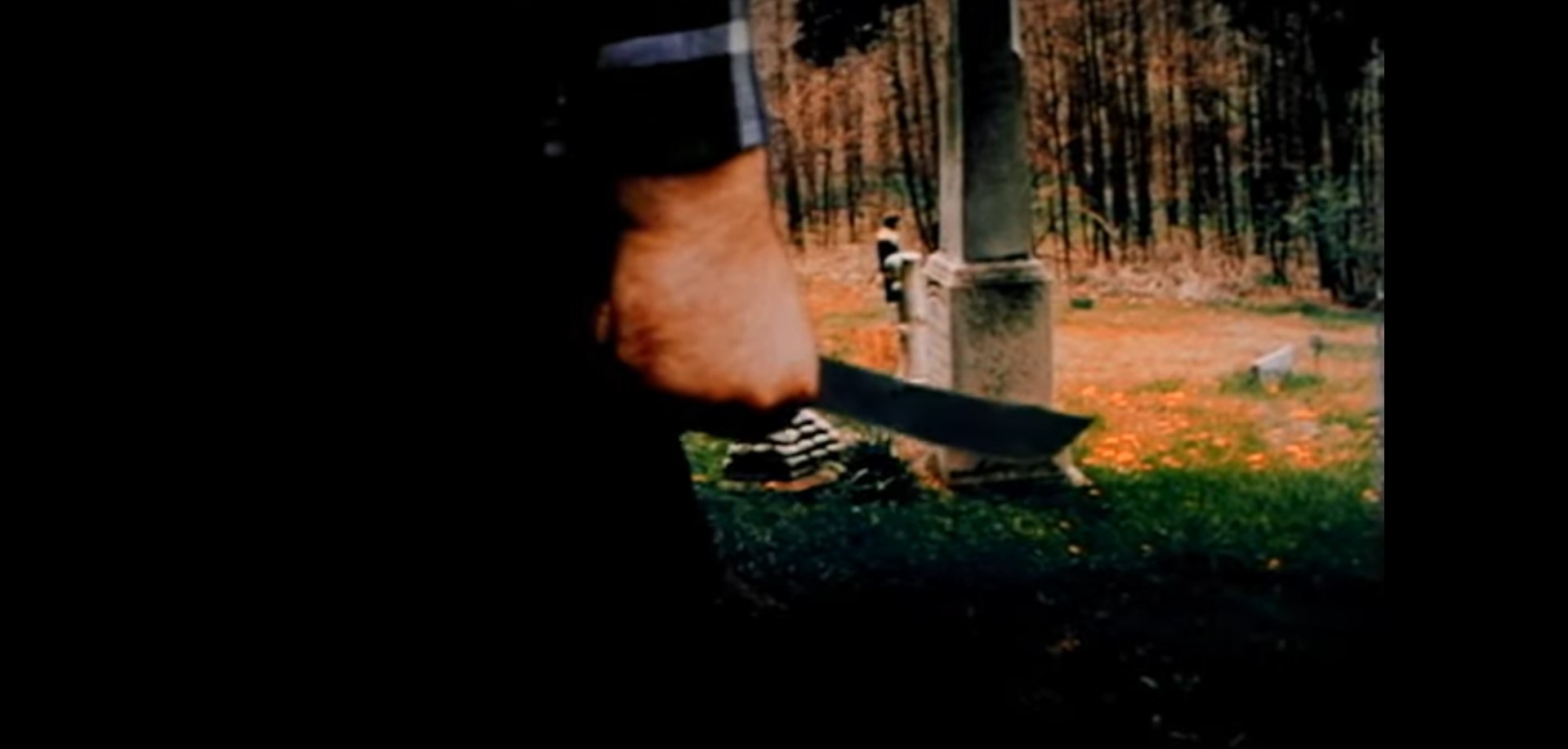
Teenager Nancy searches for forgiveness through reestablishing her faith in God after being dumped by her sexually active boyfriend.  When her alcoholic, police officer stepfather learns of the relationship’s abrupt ending, he moves in quickly to take advantage of Nancy while under the heavy influence of the bottle.  Escaping his grasp, she flles home and hitchhikes a ride with two men travelling South on a getaway from Pennsylvania to sunny Fort Lauderdale, but when facing trouble with small town local law enforcement after attempting to steal groceries, the three find themselves right in the middle of a Satanic cult’s sacrificial ritual that requires the killing of three women for eternal life, one a night at midnight for three days.  Held in a dog cage, Nancy anxiously awaits her turn at the bloodletting alter surrounded by the cloaked-cladded cult and their decomposing mother’s corpse  Praying to God to save her soul, little does Nancy know that her stepfather has tracked down her whereabouts, leading to a bloody showdown of one cop pitted against a family of satanic psychopaths. 

Based of his 1980 novel of the same title, “Midnight” is known to be John Russo’s heart-and-soul project that ended up suffering one mishap after another in the two years of its production and post-production until it’s final release in 1982.  Also known as “Backwoods Massacre,” the “Night of the Living Dead” co-writer Russo helms the low-budget occult slasher out from his usual stomping grounds in and around Pittsburgh, Pennsylvania.  “Midnight” showcases a story themed with a depraved sense of race intolerance for African Americans and all varieties of religious convictions to be innately false in an atheistic Russo viewpoint amongst a glorified surface level of enrapturing inhumane violence seasoned by brainwashing.  This West Pennsylvanian born and bred grindhouse exploitation found producers in  Sam Sherman and Daniel Q. Kennis of “Blazing Stewardesses” and “Blood of Ghastly Horror”) along with Donald Redinger under the now defunct Independent-International Picture Corp.

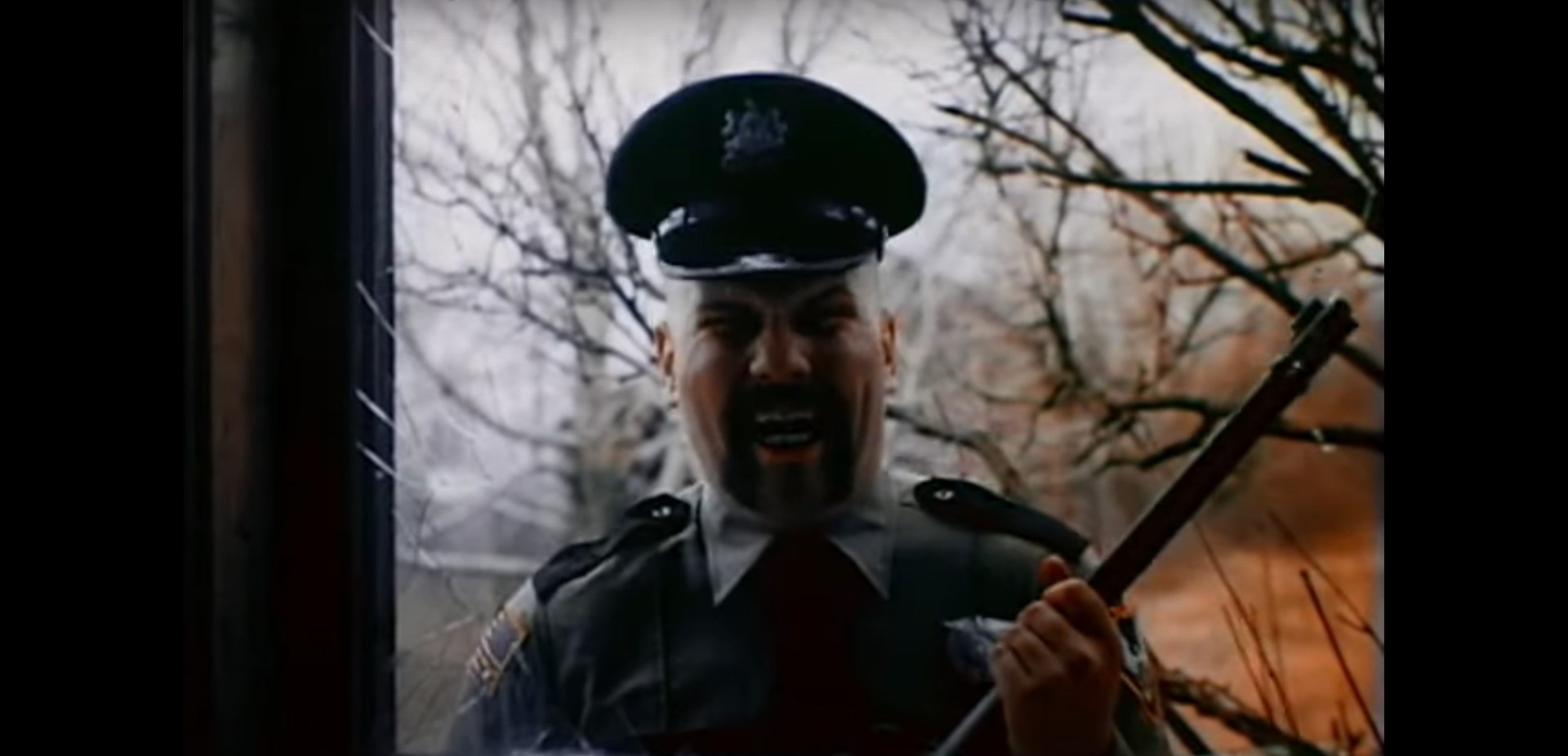
In a sea of smaller fish of Pittsburgh actors in “Midnight’s” casting tow is a larger and rougher around the gills grouper embodied by the singular Lawrence Tierney (“Reservoir Dogs,” “The Prowler”) in the Officer Bert Johnson role. Tierney’s no stranger to the horror genre, flaunting his thick New York tough guy accent that typically typecasts the veteran actor into authoritative roles. In being no exception, “Midnight” has Tierney playing a sleazy, alcoholic, police officer who winds up more-or-less unearthing sense in his old age and utilizing his skills for good to fully satisfy his character’s arc, but Tierney alone is wonderful to behold and easy to be disgusted by as he solicits his underage teenage stepdaughter with a perverted proposition. That stepdaughter, Nancy (Melanie Verlin), is the face of “Midnight’s” protagonist whose attempting to get back on track with God after a sinful bedroom relationship with an ex-boyfriend, but her plans are slighted by a brood of young Satanists keen on keeping their now long deceased mother’s irreligious convictions intact. David Marchick, George Romero regular Ted Amplas (“Day of the Dead” 1978, “Martin”), Robin Walsh, and the face of “Midnight” on many of the posters, Greg Besnack, size up as the Satanic terrible and merciless foursome. The cast fills out with Charles Johnson, John Hall, Bob Johnson, Lachele Carl, Jackie Nicoll, Doris Hackney, and Ellie Wyler.

After the success of a collaborated run with George Romero on a handful of projects, John Russo ultimately branches off to do his own creative output after their production company, Latent Image, brought on newcomers’ and the shared ideas on the direction of their company didn’t sit well with Russo – an irk that Russo still harps upon to this day, according to the special features’ new interview from the latest Severin Film’s release.  Yet, I digress into the review of “Midnight” that has feral narrative with an irregular plotted blueprint of teenager exploitation, racial injustice, and backwoods barbarians.  Somehow, Russo’s able to juggle his jotted down on a budget scrambler with a threadbare satanic family baseline that unsettlingly feels snagged in a randomizing generator spitting out scenes to see if they cohesively connect into the next.  Nancy’s traversing into the thicket of terror story cuts into and undermines more of the sibling’s unholy ritual, which the title “Midnight” becomes an important piece to the ceremony, with a subplot of the teen running away from a handsy stepfather and into the Mystery Machine modeled van-driving hands of a pair of cavalier friends on a road trip and then find themselves in an endgame of rotten luck with bad company.  The whole lead up to the two groups running into each other is suddenly dropped like a bad habit, forgoing much of the racial tensions, the youthful subverts, and even the attempt at pedophilia when the main, overarching theme of cult mayhem and religion inadequacies come to the forefront.  “Midnight” inarguably a gargantuan piece of good ole American hicksville victimization with some underappreciated manic performances by John Amplas and Greg Besnak, but there’s difficulty in shaking “Midnight’s” stark story division that leaves much to be desired.

“Midnight” is the particular video nasty that’s surpassing all of it’s other formatted counterparts with a Severin Film’s 4K scanned Blu-ray of the full uncut negative.  The 1080p Full High Definition, region free BD50 is presented in a widescreen 1.85:1 aspect ratio with a respectable color correction, but the correction sees unstable moments regressing near the cuts revealing the lifeless yellow tinge of unmastered quality. A right amount of grain, a great amount of detail, and hardly any damage to the thought-lost uncut negative proves Severin found buried treasure of the John Russo shocker. Two audio options grace the release with an English language DTS-HD 5.1 surround and an English 2.0 Stereo. While the 5.1 offers a more robust audio option of funneling individual tracks through their respective channels, I wouldn’t necessarily say “Midnight” has an overwhelming yield for audiophiles. Soundtrack comes across just enough to know it’s there, the dialogue is clean and unimpeded, but what unfolds out of clarity is the wonky foley ambience that just render solemn scenes silly. Severin offers up a new interviews under “Midnight’s” mediocre cult status with director John Russo – Making Midnight – as top bill in a lengthy discussion about his long career, his acquaintances including George Romero, and, of course, his recollections about “Midnight.” Other interviews include producer Samuel Sherman – Producing Midnight, actor John Amplas – The Midnight Killer, and special makeup effects artist Tom Savini – Small Favors – who barely remembers working very little on this film by providing pre-fabricated headshots and sliced throat prosthetics. An isolated score selection with audio interview with Mike Mazzei, an alternate title card for “Backwoods Massacre,” the trailer, and radio spot round out the bonus content inside the blackout snapcase. Prolific as John Russo may be in horror literature, filmmaking, and in legendary regards with his work alongside Romero, “Midnight” reflects poorly on his cinematic vocation and while many problems plagued production and post-production, Russo somehow managed to root out a passable working cut of crazed satanic panic.

“MIDNIGHT” available on Blu-ray from Severin!

Evil Rips through the Whitechapel District. “Jack the Ripper” review!


On the streets of London’s Whitechapel district, women are afraid to walk the streets alone at night and angry mobs have begun to turn their backs on the police’s ineptness on catching a killer. Jack the Ripper is what the people of London label the maniacal murderer who, with surgical precisions, guts his victims and leaves their lifeless bodies on the dark, dank cobblestone streets. Scotland Yard Inspector O’Neill is joined by his friend and American counterpart, a New York police officer named Sam Lowry, to hunt down and stop Jack the Ripper’s killing spree. Deeper into the investigation, the officers are informed that the suspect they track would have medical background with a skilled blade hand, but even with that information, Jack the Ripper alludes authorities. Lowry’s romantic involvement with a young woman named Anne Ford, whose under the ward of the notable Dr. Tranter, might be very connective tissue between the constabularies and the secretive medical society needed to crack the case of the notorious Jack the Ripper before he strikes again!

Jack the Ripper is a real and iconic villain that not only terrorized the streets of London, but had later graced the screen many times over from Bob Clack’s 1979 thriller “Murder by Decree” to the 2001 Allen and Albert Hughes gothic and graphic “From Hell,” starring Johnny Depp. Before the production of those films, before Jack the Ripper really had any kind of footprint in cinema, Robert S. Baker and Monty Berman directed the 1959 mystery-thriller “Jack the Ripper” from a screenplay by Jimmy Sangster and Peter Hammond based off the theory that Jack the Ripper had a medical practice history. Baker and Berman’s film hit the controversial market from right out of the gate with grisly and ghastly murders, for the circa 1950s, and bared topless actress frivolously to insinuate the lady drunkards, the showgirl dancers, and the lone walking women as ladies of the night. Prostitutes would have been burden the selling of an already certifiable X film from the BBFC and the MPAA. However, the filmmakers constructed alternate cuts, shorting the grisliness to just grim and sheathing bare breasts with articles of clothing in shot for shot censorship. Only on the continental, aka French, version does a truly uncut and complete film live to excite, but instead a complete feature, the unmolested scenes are only available on the bonus features of the Severin Films’ release. That’s not to say that the U.S. and British versions are a complete waste of time. The classic time is utterly timeless and gripping that offers up immense amounts of whodunit suspense, implied sensationalisms, and an adequate take on how incompetent law officials can be exhibited when politics and women are afoot. Plus, the U.S. version, bought and presented by legendary producer Joseph E. Levine, comes with a brassy score by Jimmy McHugh and Pete Rugolo. The British version, also known as more of the approved director’s cut of the film, is scored by Stanley Black.

Tall, handsome, and walking into another country like he owns the land, detective Sam Lowry is introduced at about 10 minutes in, standing at a bar and reluctant to be rough and tough with a mob ready to lynch him for potentially being the Ripper because of his inquiries. Lowry’s charming persona with the women, like the bar maiden and Anne Ford, are only offset by his complete incompetence to be a police detective. Lowry does absolute zilch investigation and, instead, goes out on a date with Dr. Tranter’s niece and makes snarky comments at a merciless, ready to judge horde of scared Whitechapel residents. American hunk Lee Patterson stands out amongst the gothic rich atmosphere to the point where’s he, like his character, is an outcast and Patterson’s talents could only take him so far into a gloomy, morbid narrative that was unwilling to accept his chiseled chin and starry eyes. Eddie Byrne fit the mold better than Petterson as the Scotland Yard Inspector at rope’s end with not only Scotland Yard, but also the rest of London. As Inspector O’Niell, Byrne, who went on to star in “Island of Terror” and “Devil’s Darkness,” humbly accepts his restraint as the Irish born actor takes a wallop from all sides and still remains calm, collective, and ever present on the task at hand with a character being beat from all ends of the spectrum. Anne Ford opposites Lowry as the potential love interest who has come of age, as she notes a few times, to takeover temporary responsibilities at the hospital where her uncle performs dire surgeries. Being oppressed by her own family and seeing London being ripped a part by its own people, Anne latches onto Lowry, an outsider, to find a connection or a release from sullen cloud that hangs over Whitechapel. Unfortunately, Betty McDowall is sorely overshadowed by many of “Jack the Ripper’s” formidable characters and that Anne is not wholeheartedly written though her character is important to the story. Even the showgirls sizzle in more ways than one than does McDowall whose kept in check by Lowry, doused with someone’s problems, and only given an allusion of her worth in a moment of fright. Ewen Solon (“The Curse of the Werewolf”), John Le Mesurier (“The Jabberwocky”), Barbara Burke (“Blood of the Vampire”), Denis Shaw (“Curse of the Werewolf”), Bill Shine (“Burke & Hare”), and Anne Sharp (“Murder on the Campus”) round out the cast.

“Jack the Ripper” is a classic, literally and physically. The scaled down sets of the Whitechapel area bring to life the tenebrous soil of 19-century London. The elegantly painted backdrops of tall mast ships enshrouded by synthetic fog paint an archaic picture of how movie magic has progressed over the decades. Attention to detail in the set construction and the flavor of time period customers brought a sense of authenticity that nostalgically harps on the once was that now only exists as recorded cinema history. “Jack the Ripper” casts a forgotten beauty in the barbarism. By today’s standards, “Jack the Ripper” would be written off as banal and uninspired by critics and audiences, but if you can imagine yourself in 1959-1960, Robert Baker and Monty Berman just blew your mind with onscreen taboos and in America, Joseph Levine’s technicolor blood scene, with a duration of only a few seconds, would be the viral talk of the town.

Severin Films presents “Jack the Ripper” onto a region free, 1080p Blu-ray for the very first time anywhere! Complete with two cuts of the film, the British and American version, Severin presents both in their released aspect ratios of a lossy standard 1:33:1 in the British version and 1.66:1 in the American version, both in B&W with a pop of technicolor in one scene in the American version. Severin’s transfer is perhaps the best we’ll see from an original print that’s laced with scratches, but a bit more light, or some brighter contrast, sheds some light in the inky corners while managing a rich appearance that’s not monochrome or sepia. The English 2.0 audio track maintains an equal quality with some static in dialogue and ambient tracks. Jimmy McHugh and Pete Rugolo’s brass-heavy score thunderously pack the scene that surely takes the lead amongst the tracks. Bonus features include snippets of the continental versions with the extended violence and nudity and the audio commentary with Robert S. Baker, screenwriter Jimmy Sangster, assistant director Peter Manloy is extracting and interesting helmed by horror historian Marcus Hearn. Also included is an interview with the author of “Jack the Ripper” The Murders of the Movies” Denis Meikle, “The Real Jack the Ripper” featurette, theatrical trailer, and poster and stills gallery. Exposed and disclosed, the various faces of Robert S. Baker and Monty Berman’s “Jack the Ripper” now have a hi-def upgrade and though a full continental version eludes this release, Severin provides the cliff notes in order to not overcook the same story a third time.

When Grief Strikes, Evil Gets Insane! “Beyond the Darkness” review!


The fiance of an orphaned villa owner named Frank dies in within their last loving embrace. Struck with immense grief, Frank digs up his fiance’s freshly packed corpse, injects her with embalming fluid, discards her major organs, installs glass eyes into her eye sockets, and processes her to be with him forever as a taxidermal doll laying in the bed next to him. Presumably behind Frank’s fiance’s untimely death is Iris, the family housekeeper who has an unhealthy obsession with Frank and his wealth, and when Frank instability goes beyond the means of all reason, an ill-tempered and mentally paralleled Iris swoops in to be Frank’s comfort, voice of guidance, and abetting culprit to Frank’s crimes as he can’t seem to stop killing young women in order to either replace or protect his adored doll and when a nosey mortician snoops around his residence, turmoil between Frank and Iris boil over in a heap of violence turned into a showdown of ill-fated and gruesome death.

“Beyond the Darkness” is by far beyond sick. Director Joe D’Amato (Aristide Massaccesi), one of Italy’s legendary video nasty filmmakers, reaches far into the darkest crevices of the criminally insane and exhibits every aspect of cold and brutal murder when the small window of opportunity and hope goes horribly wrong. The 1979 film shot in the Bressanone area of Italy exudes breathtaking countryside hills; so serene and peaceful that when Frank’s mind breaks and he crosses into an irreversible dark state, his frigid and murderous emotions make him a monolith that shadows the expansively green landscape. Tack on an equally demented housekeeper with a penchant for diabolical motives and the juxtaposition is no where near being level, creating this idyllic nightmare of taxidermy slaughter, a rancid deterioration of the mind, body, and soul, and a perversive obsession of inhuman replacement.

A baby faced Kieran Canter stars as the orphaned villa owner Frank Wyler who can’t handle one more tragic death of a loved one and Canter provides the blank stare, the outer shell of a spent and lost lover, despite his attractive attributes just like his the inner bones of his villa manor and speaking of juxtapositions, “The Other Hell’s” Franca Stoppi over achieves Iris’s internal and external ugliness. Iris, a seeming fixture of a puritanical matriarch in her dress and stature worn magnificently by Stoppi, uses manipulation and supernatural forces to gain power right under Frank’s already malfunctioning mentality. In the light, Frank and Iris are polar opposites, but they break bread together in the dark, feasting off each other’s malice. “The Beyond’s” Cinzia Monreale dons a dual performance as the corpse of Frank’s fiance and of her living sister. Monreale’s amazing performance in being such a still carcass struck a recall chord in me thinking of Olwen Kelly’s eerie portrayal of a slab table stiff in “The Autopsy of Jane Doe.”

Speaking of autopsies, when Frank begins his taxidermal procedures, surgically slicing down Cinzia Monreale’s freshly demised midsection, the attention to detail rapes the spine with chilling ferocity and though dated within the confines of the practical special effects from nearly forty-years ago, D’Amato’s controversial and unquenchable need for violence doesn’t hold back the gore, the guts, and the glory of chopping a British slag into pieces with a butcher’s knife and tossing her overweight remains into a cast iron tub-cauldron of skin-eating acidity only to have her partial face float up to the surface in a display of how far these vile characters are willing to entertain their pure evil. “Beyond the Darkness” lives up the title with the barbaric nature of the characters who clamp down their teeth and rip out the flesh of their, burn alive joggers in an industrial grade furnace, and store corpses like valuable baseball cards of your favorite major league players. Yes, “Beyond the Darkness’s” gold is worth it’s cinematic weight in gore.

Severin’s 2-disc Blu-ray and CD Soundtrack release of Joe D’Amato’s “Beyond the Darkness” is presented in HD 1080p 1.67:1 aspect ratio. The image quality is strong, unmolested, and rich with a vibrant color palette that gets ickier with every organ removed, every body part dismembered, and every shocking event unraveled. A dubbed English DTS-HD master and an Italian Dolby Digital dual channel mix are quite good, spanning out a brazen fidelity of leveled ranges and the Goblin soundtrack enriches every scene with gothic notes of progressive rock. Check out the CD Soundtrack “Buio Omega” (“Beyond the Darkness”): The Original Motion Picture Soundtrack to get an isolated experience of one of horror’s most fascinating scoring groups known worldwide. Bonus material is aplenty with a retrospect interview on the late Joe D’Amato entitled “The Horro Experience,” an interview with Actress Franca Stoppi entitled “The Omega Woman,” an interview with Cinzia Monreale entitled “Sick Love,” a live performance of “Buio Omega by Goblin, a visit to set locations, and the theatrical trailer. Severin completes a snazzy package and includes an plethora of auxiliary material for this ultra-violent video nasty that’s delivers the uncut and uncensored blood and nudity in a twisted 94 minutes of “Beyond the Darkness.”

“Beyond the Darkness” + Goblin on Blu-ray!

All Evil Wants is to Make Art! “Bag Boy Lover Boy” review!


Albert’s just another lowly speck among the multifaceted masses of New York City. The lonely street hotdog vendor barely scrapes by in what could be considered a life, earning next to nothing to keep him on life support in the city that never sleeps. To impress a beautiful girl, a girl of his dreams, Albert accepts a position offered to him by an eccentric photographer and hopes to learn about creating art with a single click of a photographic camera, but Albert becomes the obsessive fixation of the photographer’s next breakthrough exhibit. Albert’s simpleton nature and the photographer’s edgy intensity pushes the aspiring artist to lure women into offbeat modeling sessions in the away photographer’s NYC flat. When he can’t retrieve the inspirational art out of his models, a frustrated Albert goes to extreme lengths to ensure his art is performed to his particular, elementary taste.

“Bag Boy Lover Boy” is the 2014 inaugural feature film debut of director Andres Torres who is one of the few directors out of countless others able to resuscitate the compellingly frightful grit of New York City long ago. I’m talking about the era of pre-Rudy Guiliani New York City in the 1980’s where graffiti splayed walls and the blue fluorescent of dilapidated charm was present on every grid blocked street. Torres, along with co-writer Toni Comas, supplements one of a kind character personalities very appropriate to inhabit the sinister ladened Big Apple. Characters who aren’t dolled up or even genuinely beautiful. Those characters who are easy on the eyes don’t have the inner soul to match, residing in them an defect of some sorts that makes “Bag Boy Lover Boy” feel all too real.

Jon Wächter, a director-actor with behaviors not too alien to that of his character, centers himself as that very bag boy, lover boy of Albert, the awkward citizen with a one track mind and living to fulfill no dreams, hopes, or goals. Wachter owns his role by giving no hints of aspiration to fortune or achievement until Albert meets the cynical Ivan, appropriately casted with New York City-based actor Theodore Bouloukos, is able to hone in on the streets’ muckiest ground level and incorporate a Ron Jeremy charm that’s shrouded sleazy, but devilishly smart. Ivan draws out of Albert a simple interest, a hope to create art through photography, but Ivan has other, more prosperous, plans for the gullible nitwit as model in his own artwork. Albert’s mind focuses solely on photography and not modeling, placing Ivan in a rather haste position to con his centerpiece with poor words of self-worth advice and filling Albert’s head with misogynistic directions when Ivan goes through his rather rough motivational spiel during shooting gigs. Albert then can’t separate reality with his newfound dream that puts “models,” played by Teena Byrd (“Ninja Versus Vampires”), Sarah O’Sullivan, and Adrienne Gori, in harms path. Kathy Biehl, Karah Serine, Tina Tanzer, Marseille Morillo, and Saoko Okano make up the rest of the cast.

What I found most interesting in Torres film is Albert’s perception of himself. After a couple of, what he thinks are successful, shoots with the women he lures and drags up to the Ivan’s flat, Albert perceives himself as this eminent rockstar, exhibited very boisterously in a fantasy scene within Albert’s dingy one room apartment. What’s really ironic about the whole story is that Ivan honestly could deliver every bit of the wealth, women, and respect he promises to Albert and with these promises, he could obtain Lexy, the girl he hopes to win over, but with such a narrow mind, unable to go beyond to foresee a positive future, Albert self-destructs into infamy with only some non-permissive nudity polaroids to show for it. Torres and Comas Shakespearean-like comedic tragedy concept is a consistent conundrum for each and every one of us, not just the slow and low like Albert, but for us who think in the short term, despite whether what we accomplish now might not be a desire or may not be our sole purpose in life. Even peering into Albert’s erratic, overly-exaggerated, if not visually stimulating, mind stories are not to different from what perhaps the rest of us experience.

Severin Films presents the EXU Media production of “Bag Boy Lover Boy” for the first time on DVD and Blu-ray home video. The region free, not rated, gorgeously illustrated Blu-ray is presented in full HD 1080p. The image quality boasts vibrant colors and really exemplifies the naturally gross visual aspects of New York City streets. Various skin tones come out nicely unfiltered and untouched, especially the pasty Wächter and the olive skin of Tina Tanzer, with only brief moments of filters to accentuate subversive content. The dual channel English stereo isn’t half bad. Even though English is not Jon Wächter’s first language, the Sweden-born actor’s dialogue is clear and coherent. The rather mixed bag soundtrack and the Barbara de Biasi score have boastful fidelity and remarkable clarity. Extras include a meaty audio commentary from director Andres Torres, Theodore Bouloukos, and editor Charlie Williams, The Student Films of Actor Jon Wächter: “Got Light” and “The Never-Starting Story,” and the film’s trailer. “Bag Boy Lover Boy” is surrealistically realistic while being slightly exploitive and courageously risky. A satirical film with the proper fortitude to challenge our judgements about life and the paths chosen while leaving an uncomfortable aftertaste of profligate opportunities. Torres also leaves with us a film that we’ll never forget.

Buy “Bag Boy Lover Boy” at Amazon!