This 600 Horsepower Outboard Propeller Runs on EVIL! “Motorboat” reviewed! (SRS Cinema / DVD)

As Chief Brody Always Said, This Isn’t a Boat Accident!  “Motorboat” on DVD today!

Messiah Ward and his cult of followers once plagued the surrounding Lake Jude for years, conjuring black magic and death in order to appease their netherworld lord.  Ward’s evil is only matched by the goodness of a man of the cloth, but the pious risktaker is no ordinary priest but Messiah Ward’s very own brother, Father Thomas.  Taking matters into his own had to save the souls of his community, Father Thomas mercilessly guns down Messiah Ward and his acolytes, ending his reign of terror…or so he thought.  Two years later, a black and powerful phantom speedboat appears on the lake, killing those who dare enter its waters.  With the help of the local lake patrol officer Barney Rayl investigating the homicides, Father Thomas must serve as the wrath of God once again to stop his brotherly possessed motorboat from hacking up any more innocent swimmers and fishers with its deadly outboard propeller. 

I’ve seen my share of possessed combustible engine films with cars, trucks, and even a killer bulldozer.  Hell, I’ve even seen a rubber tire on a rampage.  Yet, I’ve never seen a killer boat movie until today and the Polonias are responsible for the slaughter on the seas with their latest indie schlocker, “Motorboat.”  The “Splatter Farm” and “Hellspawn” director Mark Polonia and his son Anthony team up for their fifth rudimentary, lowbrow lunge at hyper-micro budget horror, crowdfunded on Indiegogo for around $5,000, and shot in the fall of October ‘22 in and around Tioga county, such as one location being Hills Creek State Park Lake to be one of three locations in creating a larger lake setting.  “Motorboat” is created by Polonia Brothers Entertainment, executively produced by SRS Cinema’s Ron Bonk, through Indiegogo, and John Dagostino with Mark Polonia producing, and Elliott Monroe (“Evil Bong 666”) and Previn Wong (“Yule Log”) set as associate producers. 

Like many of the Polonia Brothers Entertainment, a cast of regulars return to indulge in the tightknit production family and to give their all in providing their best performances to make micro budgets like “Motorboat” come to filmic fruition.  In the roles of Priest and Harbor Patrolman are Tim Hatch (“Shark Encounters of the Third Kind”) and Jeff Kirkendall (“Sharkula”) who have once again found themselves working side-by-side on a Mark Polonia production.  Cemented more into exposition than action, Hatch and Kirkendall essentially get the job done with their extensive rapport and long history working together but as developing their characters, a Priest and a Harbor Patrolman could have well been a Lake Fisherman and  Pizza Delivery Man as the professions are laid waste to the script’s lesser defining ideals that are more clearly evident, such as a demon possessed motor boat offing people on and off shore.  Also, Hatch and Kirkendall, as well as much of “Motorboat’s” cast, aren’t very expressive, use little gesturing, and corner themselves with monotone deliveries, taking what should be shocking scenes or jump into actions with little reactionary energy and intensity.  That fairly sums up “Motoboat’s” cast as Messiah Ward is more like the 1958 Plymouth Fury in “Christine,” a motorized machine on a killing spree, with Michael Korotitsch briefly playing the character under a black or rubber mask during his corporeal scenes.  The remaining cast are essentially the racked up body count boat fodder with Polonia regulars Jamie Morgan (“House Shark”), Ken Van Sant (“Sharkenstein”), Dave Fife (“Doll Shark”), and Noyes J. Lawton (“Virus Shark”).

As you can obviously see by the cast’s previous film credits, which all involved Mark Polonia, the director has a healthy fascination with the predators of the ocean, augmenting and exploiting sharksploitation from a limitless thought-bubble of narrative concepts.  Surprisingly, “Motorboat” does not contain one single dorsal fin or rows of razor-sharp visual effects teeth.  Polonia may have deviated from sharksploitation but never got out of the water by keeping the tide still infused with blood.  Post-production blood effects, rain, and layered energy spirals are not the most skillfully composited integration but what Polonia always strives for is to make an entertaining film, to keep the viewers engaged, and could only hope that the his microbudget efforted effects, such as using a 1/16 scale RC boat as the Messiah Ward’s ship of slaughter, afforded him enough production value to eke by but how Mark Polonia, and I’m sure son Anthony also, very masterfully retains engagement for his microbudget movies is to not linger on a shot that can make the scene stale or monotonous.  Granted, you may roll your eyes on lower shelf quality, but you’ll still find yourself connected to the screen as cuts are made for different camera angles, such as over-the-shoulder, behind-the-back, master shots, closeups, mediums, there’s never a single take for a long period of time to avoid idle eyes and unstimulated neuron firings.  The story itself cruises along as combination of films like “The Devil’s Rain” and “The Car” leaving a fair amount of demonic or possessed destruction in its wake but can be trying at times piecing together the whole story behind Messiah Ward’s purpose and transition into either a speedboat or a demon driving a speedboat, an unclear specific of the antagonistic character, and this undercuts Father Thomas and Harbor Patrol Rayl endgame goal because we’re not exactly sure who or what they’re up against.  An innuendo term like “Motorboat” suggests lighter, more in a foreplay of intentions, but SRS Cinema and Mark Polonia are abreast in another way to turn the tide toward something far more terrifying on the waters!

The one thing you can always count on Ron Bonk and SRS Cinema to pull off are immaculately enticing cover arts to catch one’s eye and that is what we have here with “Motorboat” on DVD home video.  The 16×9 widescreen presented film is a MPEG-2 encoded DVD5 shot digitally with an overall clean finish. However, compressions issues do appear with minor jittery picture noise and minor banding with skin tones ungraded and appearing sometimes orange in the shot. Thrifty visual effects are you get what you pay for but doesn’t necessarily affect the watch if going in, understanding, and if a fan of the Mark Polonia fast and dirty chugalug of filmmaking. An English stereo 2.0 is wangled by the built-in camera mic that more than most the time doesn’t have too many issues with playback aside the varying and inconsistent dialogue levels despite being in the same scene as well as unable to filter an overwhelming lakeside ambiance. Post ADR was used to overlay a couple of scene dialogue tracks due to the crashing, wind-driven waves of lakeside conversing. As a whole, dialogue sums up pretty clear without serious hurdles. The two-channel speaker relays a punchy boat-toot audio byte that sounds like a Mac truck blaring its horn whenever Messiah Ward the “Motorboat” is cruising the waters and killing the people. There were no English subtitles available. Extras include an audio commentary track with director Mark Polonia who half the time soapboxes his trials and tribulations as well as champions micro-indie filmmaking while also diving shallowly into “Motorboat’s” background waters. The official trailer and other SRS trailers are also present. I’m always impressed with SRS Cinema front cover artwork as it’s very appealing, alluring, and is sometimes not truly accurate and for “Motorboat,” we have a half-submerged woman in distressed and reaching out for help in the foreground as a minacious boat barrel toward her from behind. Not insert inside and the DVD art is the same front cover image but cropped to just show the woman’s frightened, eyeshadow-streaked face. Region free with a rum-runner runtime of 75 minutes, SRS Cinema’s DVD comes unrated. “Motorboat” is pure Mark Polonia and if you’re expecting high-caliber horror, you’re going to need more than a life preserver to survive these chopping waters.

As Chief Brody Always Said, This Isn’t a Boat Accident!  “Motorboat” on DVD today!

Pandemic EVIL Is Just Not For Dry Land Only! “Virus Shark” reviewed! (SRS Cinema / DVD)


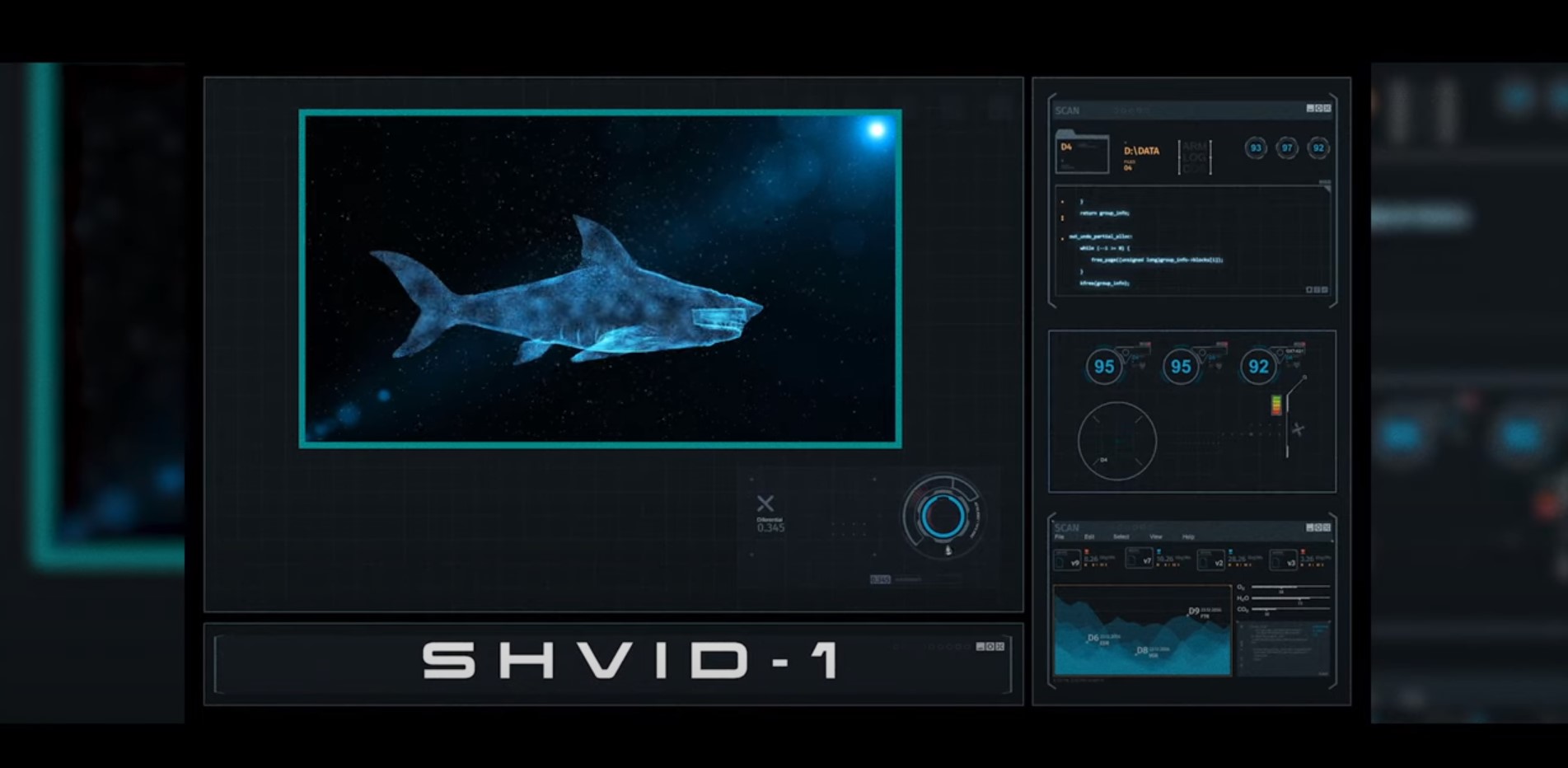
Deep at the bottom floor of the ocean is CYGNIS, a research laboratory retrofitted to be a race against the clock in finding a cure for a world devasting virus called SHVID-1.  Spread by infected oceanic sharks, a handful of shark attacks on unheeding beachgoers turns the world’s populace into mutated marauders and blood thirsty, zombified killers.  Running quickly out of time, the handful of scientists, a maintenance chief, and a security guard find themselves under pressure, literally, as the 30-year-old antiquated CYGNIS station is beginning to show signs of buckling under the ocean’s immense weight.  Factor in virus-mad sharks chomping at the station’s life sustaining systems and a betrayal by the project leader looking for cure glory in greed, a perfect storm brews 1000 leagues down overshadowing the severe global pandemic that has swallowed the world whole.  Survivors must surface topside with the cure before all hope comes crumbling down on top of them.

Okay!  I’m pretty sure director Mark Polonia parallels or exceeds my own unhealthy obsession of the sharksploitation genre with his own series of outrageous D-flicks dedicated to the gross profit of the monstrous shark rampage stigma seen in the Pennsylvania born filmmaker’s previous works in “Sharkenstein,” “Land Shark,” “Amityville Island,” “Shark Encounters of the Third Kind,” and the soon-to-be-released, the vampire and shark alliance, “Sharkula.”    Polonia’s latest, “Virus Shark,” is written by Aaron Drake and echoes the pro-Trump public ideology of willful ignorance in snubbing governmental official warnings about staying away from large crowds unmasked during the COVID-19 pandemic.  Polonia throws Megalodon-sized shade at partygoers and right wing conspiracists with SHVID-1, an obvious play on the real virus, and the sun and sand worshippers who venture into the shark infected and infested waters despite the recommended counsels to stay on shore.  Aside from the social commentary lampooning, the rest of “Virus Shark” is in shambles as a super low-end indie production from Polonia Bros. Entertainment and produced by SRS Cinema’s Ron Bonk. 

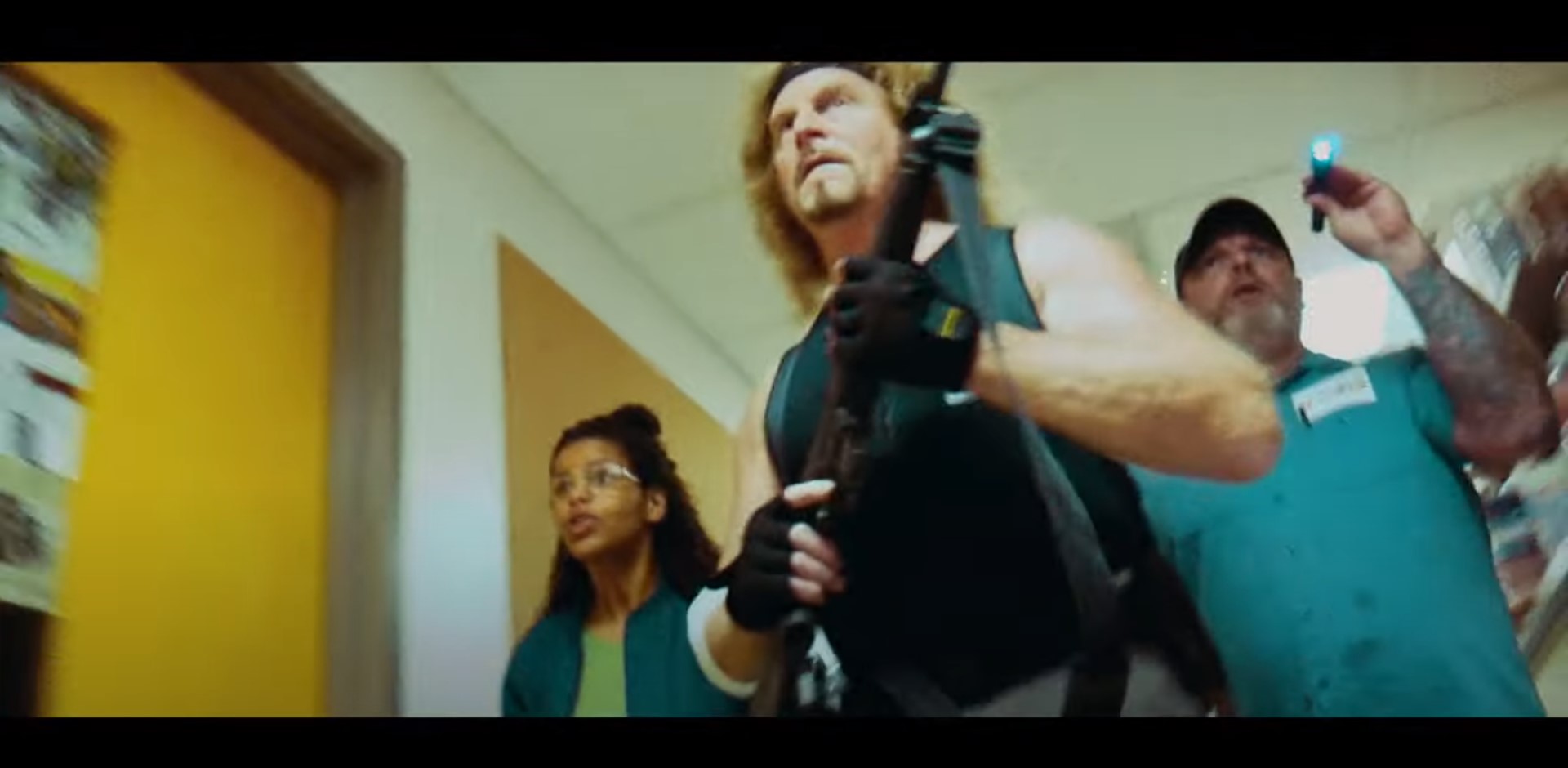
Served up as chum for contagious sharks are a troupe of regular independent staples beginning with lead actress Jamie Morgan entering her second bout with a killer shark after surviving another SRS Cinema gem, “House Shark.”  In the role of marine biologist Kristi Parks, Morgan is not free diving into the vivarium pens and wrangling or bareback riding the maneaters like “Deep Blue Sea’s” Thomas Jane; instead, the actress has a more meek stance as her limiting character transforms into a protective shield over mankind’s last known hope – a cure for the virus.  Fellow scientists Anne Satcher (Natalie Himmelberger, “Shark Encounters of the Third Kind”) and Gregory McLandon (Natalie’s real life husband, Titus Himmelberger, “Sharkenstein”) don the lab coats and spectacles to look the researcher part without actually seemingly doing anything of importance, or anything that makes sense anyway.  The team is rounded out with “Queen Crab” actors Steve Diasparra as the maintenance man Rickter D’Amato, an homage to Joe D’Amato who has helmed a trashy sharksploitaiton film himself with “Deep Blood” (read our recent coverage review here!), and the awesomely 80’s hairdo’d Ken Van Sant the dated commanded-cladded security guard and horn ball, Duke Larson.  Deliveries and any sense of conveyed emotions are a smidge above forced as if reading straight from a cue card.  The off camera stare has to be my favorite gaze into space moments, especially when an aggressive Great White beelines right toward them and the reactions are nothing more than a gaping mouth.  Van Sant wins top prize for at least giving a half-hearted attempt at empathy for a character completing a character arc.  “Virus Shark” fleshes out with Yolie Canales, Noyes J. Lawton, and Sarah Duterte who are also a part of the tight knit celluloid circle of deep-six cinema. 

Speaking of deep six, as in “DeepStar Six,” a semblance toward notable underwater horror films of the deep really do crest through “Virus Shark’s” stagnant flat surface.  Little bits of adulation toward “”DeepStar Six” with the jettisoned escape pod, “Deep Blue Sea” with the shark pool, and “Leviathan” with the topside communication sans Meg Foster sprinkle a blanket of welcoming derivativity amongst a cheaply endeavor.  When I say cheaply, I mean “Virus Shark” scrapes the bottom of the barrel with embarrassingly bad shark hand puppets, interior locations of the underwater sea lab are about as realistic as the innards of your run of the mill High School building, and every single gunshot is the same soundbite stuck on repeat, no matter the gun or the caliber.  I do admire the innovation at times.  An example I would pull would be the two miniaturized pincers matted on top of a live-action still frame used as hydraulic clamps to pickup the rather rigid shark figurine from the “pool.”  You can call it sloppy, but on a pea-sized budget, I call it thinking outside the box.  Much of the story felt underdressed, missing parts pivotal to the impelling actions that either progress cataclysmically or just drop off the face of “Virus Shark’s” malfunctioning sonar.  Under the table deals and sexual innuendos made between project head Dr. McLandon and topside liaison Shannon Muldoon are skimpy at best as well as Kristi Parks’ all for naught endgame to saving the world.  Everything seemed and felt pointless, senseless, and without merit that the “Feeders” and “Splatter Farm” director shouldn’t be totally judged by as we’ve seen much better on much lower budgets from Polonia who he and his late twin brother, John, have been around for decades making movies up until 2008 when John passed away.  Mark Polonia continues to carry the torch but the lack effort has seemingly been replaced with chugging out one scab film after the next to the tune of tone deaf gratification.

Wash your hands, wear your mask, and maintain a social distance of 6-feet from the television when swimming with the “Virus Shark,” that has beached itself onto DVD home video courtesy of SRS Cinema.  The unrated DVD is an AVC encoded single layer DVD-5 and presented in a widescreen, 1.85:1 aspect ratio.  The image quality appears relatively sharp without a hefty loss from compression, especially around the spectrum of low-cost effects that range from rigidly clean to absolutely warped and absurd, but what do you expect from a release that has the cameraman’s reflection visible in the shot and spells region with an extra I – reigion 0 – on the back cover?  Underwater sea lab shots filtered through an oceanic blue hue make due the illusion of a domed research station on the sea floor bed whereas the insides lack a production manager’s personal touch as much of the interior scenes look to be a school with an obvious swimming pool setting and many insipidly sterile hallways and rooms.  Extras on the 74 minute film include a commentary track and SRS trailers with no bonus scenes during or after the rehashed intro credits for the end credits.  The English language 2.0 mono track isn’t the peak of fidelity with the lossy audio compression and inadequate mic placement made apparent by the limited depth and range in  dialogue tracks.  The overlaid narrow foley remains on one level from start to finish finished by stock soundboard snippets.   As far as Sharksploitation goes, “Virus Shark” ranks near the bottom of the food chain.  Of course, there have been far worse killer shark films threshing in the genre pool, but the COVID parodied subaqueous actioner wades underneath the skills of Mark Polonia.

Get Infected by the “Virus Shark” on DVD Home Video!

Evocation of EVIL in “The Girl In the Crawlspace” reviewed! (ITN Distribution / DVD)


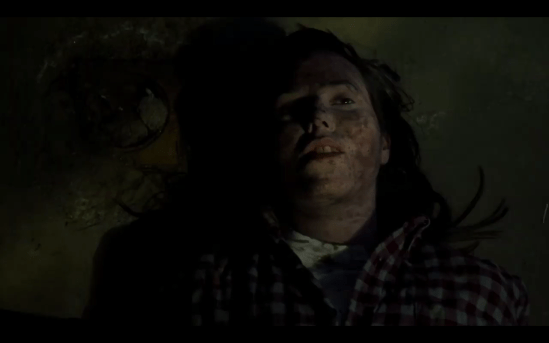
Jill escapes from the grip of a kidnapping-serial killer who kept her confined in a crawlspace under the house. Her courage brings lethal justice to the captor when the local marshal shoots and kills him upon confrontation. Jill struggles to reintegrate back into her local community in the aftermath, sleeping unconfined in the outdoors and withdrawing herself for social interaction, including from her weekly role playing game with friends. When Kristen moves back into her hometown from college, she aims to set up her therapy practice to assist families impacted by the serial killer as well as Jill by special request from the marshal, but Kristen’s rocky relationship with her substance abusive, off-Hollywood screenwriting husband on the mend drags out Jill’s much needed treatment. With Jill and Kristen preoccupied, they’re oblivious to the concealed threat that plots the next terrorizing exploit of kidnapping and tormenting young, beautiful women.

From under the grubby wooden floorboards to the strategic folding table of a role playing game, “The Girl in the Crawlspace” is the Midwest direct-to-video suspense thriller that tackles post-traumatic stress and marital strife while submersed in a looming trail left by a notorious mass murderer, written and helmed by first time director John Oak Dalton. Dalton, who has penned several low-budget grindhouse titles over the last decade and half, including titles such as “Among Us,” “Sex Machine,” and “Jurassic Prey,” returns once again to the genre with the repercussions of Podunk psychopath upon small town America, filmed in Indiana and release in 2018 hitting the ground running with film festival circuits. Indie filmmaker Henrique Couto, schlock horror director of “Scarewaves” and “Marty Jenkins and the Vampire Bitches,” signs on as producer, stepping back from his usual productional duties, and letting an occasional collaborator Dalton to completely engulf himself as the omnipotent auteur. Midwest Film Ventures serves as the production company, shot in Farmland, Indiana.

Erin R. Ryan has continuously sustained a low level hover on the indie horror radar after taking her in Dustin Mill’s “Bath Salt Zombies,” based on the Miami incident based on a naked man eating someone’s face induced by being high on bath salts, and the gooey-gory body horror, “Skinless,” that’s also a Mills production. Ryan expands her portfolio outside physical horror with Jill, a traumatized recluse derived from her abduction and torture, as a subdued component that’s contrary to previous roles, but Ryan capitalizes the opportunity of a scared kitten, recoiling from public gatherings, and slowly and silently emerging back into society while recalling chilling moments as the story progresses. However, there’s difficult pinpointing the head lead as the protagonist roles are shared between Ryan and depicted married couple, a pair of more Henrique Couto casted actors, in Joni Durian and John Bradley Hambrick as Kristen and her husband, John. Between the three, chemistry clicks better than cooking meth in a chemist’s unsanctioned laboratory and offer ample contention without the attending killer’s presence hanging over the whole town’s head. Rounding out the remaining cast is Chelsi Kern (“Scarecrow Count”), Joe Kidd (“Ouija Room”), Jeff Kirkendall (“Sharkenstein”), Clifford Lowe (“Scarecrow County”), and re-introducing Tom Cherry as the good old boy town officer, Marshal Woody.

With a title like “The Girl in the Crawlspace,” I would be remiss if I didn’t say there were some expectations of bodily torture, psychological terror, and teeth-clinching tension when sitting down to watch. The hype was high considering the post-after-post amount of positivity for “The Girl in the Crawlspace” on my Twitter feed. The catchy name and optimistic comments provided real temptation, but Dalton steers in another direction, the what follows in the state of everlasting shock and the reliving of moments seared into your psyche. The direction wasn’t as expected, but that’s necessary a bad thing. “The Girl in the Crawlspace” is exposition heavy with considerable amount of movie referencing peppered with some current event topics, such as the brief mentioning of killing of migrant children, throughout and continuously wanders off point, strolling more into Kristen and John’s crumbling marriage. Jill, the supposed centerpiece of the story, feels more like an afterthought, despite being the “girl” in “The Girl in the Crawlspace.” The cantankerous marriage supposedly jeopardizes those personally involved in Jill’s well-being as John exploits Jill’s idiosyncratic experiences from being a captive by turning them into inspirational junk food for his fading screenwriting career, but the catalyst incident doesn’t stick, becoming more of a weak opening for a more pronounced return of Jill’s haunting past.

From ITN Distribution and Mill Creek Entertainment, “The Girl in the Crawlspace” lands onto a not rated DVD home video release. The single layer DVD is presented in a full frame widescreen of an 1.78:1 aspect ratio. In a framing sense, Henrique Couto’s cinematography distinctly places small town in a spectrum view that highlights the soybean fields and farms, the rustic brick infrastructures, and the simplicities of a relaxed, old-fashioned town, using some drone shots to expose the green belt greenery. For an indie feature, the agreeable bitrate has a frank, clear image despite some consistent overexposure that softens details, especially on faces in the outside scenes. The Dolby Digital stereo 2.0 mix has also agreeable dual channel output. Some of the dialogue scenes suffer through an echo, but for the majority, the lines have clarity and unobstructed by ambient layers or the soundtrack. The depth discloses some distant ambiguities, such as in a train shot that’s not rendered in the background as it should, but the amount of range is palatable. English SHD subtitles are available. The only bonus features available on the release are the theatrical trailer and an commentary with producer Henrique Couto and director John Oak Dalton regarding their history together and going through the shot techniques as well as touching upon the actors. The road to recovery is paved in nightmares, psychological terror, and Midwest psychopaths in “The Girl in the Crawlspace,” but pitches away from the principal concern that turns second fiddle to one struggling screenwriter’s difficult assimilation into rural life while simultaneously rethreading a floundering livelihood and a tattered marriage.

Own “The Girl in the Crawlspace” on DVD

EVIL Wants to Feed Off Your Pain & Suffering in “Hotel Inferno” Reviewed!


Gulf War decorated soldier Frank Zimosa uses his particular set of skills as a professional contracted hitman. Frank’s current assign takes him oversees to a luxurious hotel to eliminate a couple of marks, a man and a woman, who are itemized as atrocious serial killers who’ve murdered over 150 people and Frank’s employer seeks to provide the same gruesome retribution in a certain kind of way – remove the brain the skull and the guts from the body. The relatively simple task for Frank turns into a fight for his life and his very soul as he finds himself trapped inside the hotel, owned by a secret organization swarming with putrefying acolytes of an ancient, fire breathing demon known as The Plague Spreader. Frank was ordered to kill to satisfy her pain and suffering hunger pangs, but his tenacious refusal awakens the demon who now hunts him, craving his pain, his suffering, his eternal soul for her own sated gratification and disrupts the organization’s creed to keep her dormant for the sake of humanity.

More, more, more! My internal fireworks outpouring and wanting more from a fire and brimstone gore forged finale from the action-packed first person view feature length horror film, “Hotel Inferno,” could not quell the embodied explosiveness wanting more from writer-director Giulio De Santi! Hailing from Italy, “Hotel Inferno” pulls little-to-no punches when dishing out uber-violence and non-stop carnage that invigorates the sensory and corporeal experience in the first installment of what’s called the Epic Splatter Saga that will total over six films. Two have already been produced with the third in production! De Santi, who is no stranger to the fervid gore film, teams his visual effects knowledge with long time, special effects collaborator, David Borg Lopez (“The Mildew from Plant Xonader”), and makes something shockingly beautiful that’s only been wrongfully teased in predecessors.

What’s also unique about “Hotel Inferno,” other than its first person perspective, is nearly the entire dialogue is layered with a voice over track. Unique as well as cleverly cool, we’ll touch on why later, faces with distinctive dialogue pinpoint main characters, but their faces are either shrouded by some sort of horror-esque mask, turned away toward another direction, or fed through a communication conduit, such as a portable television-radio device. Same goes with lead character Frank Zimosa whose vision never goes eye line with a mirror, never gaining a glimpse see his frantic mug, though Zimosa sounds like a chisel chin, hard-nose, angry-looking ass kicker, especially when voiced vehemently by Rayner Bourton. Playing the arch nemesis that’s quickly established and continuously prominent through duration is not the all-powerful Plague Spreader, but, in fact, the faceless Jorge Mistrandia. Donning the voice is English born actor Micahel Howe (“Solo”) who has one of the more sinister intonations amongst the few; an attribute that can be cool, calm, and inviting and can suddenly transform into a treacherous, malevolent, and vile performance that amplifies the intensity tenfold. Bourton and Howe are essentially the sole two main characters inside a melee of supernatural goons and goblins, amongst them in the cast is the introduction of Jessica Carroll who went on to do more voice work in video games and actors from De Santi’s inner film circle with Christian Riva and Wilmar Zimosa, who without a doubt was the moniker inspiration for Frank.

What sets “Hotel Inferno” apart from other splatter films? The first person shooter style, or FPS, video game structure is it! In literally the first of it’s cinematic kind, “Hotel Inferno” looks, sounds, and feels like a FPS from start to finish, a blended progeny from the ultra-violent horror survival games like DOOM or BLOOD; honestly, everything about De Santi’s film feels like a BLOOD rendition minus the shirtless, axe-wielding zombies and the robe hooded, tommy gun shooting cultists, though the rotting henchmen due speak in a high pitch dialect. Think about it. In BLOOD, a game built on a foundation of iconic horror, the anti-hero, Caleb, is a gunslinger against a unholy cult he once was a part of and then becomes his opposition. Same goes with “Hotel Inferno’s” own anti-hero Frank Zimosa, a hitman hired by an organization who then deceives him for nefarious reasons and then Frank has to blast his way out to save his soul. The story goes right for the throat, throwing Frank almost immediately into peril, and from room to room, layout to layout, the anti-hero has to slice through henchmen and ghastly demons in a very HOUSE OF THE DEAD kind of face-off, weaponizing everything against foes with armaments in the anterior of a cultish backdrop. Super. Fucking. Cool.

MVDVisual distributes Giulio De Santi’s “Hotel Inferno” onto DVD from the Wild Eye Releasing’s Raw and Extreme label. Presented in a widescreen, 16:9 aspect ratio, the Necrostorm produced “Hotel Inferno” engages the viewer into battle, but also invokes slight vertigo and turbid at times, especially the cave-like dungeon that’s almost absolute pitch-black. Again, atmospheric video games are much of the same regard for instant jump-scares and De Santi pulls that off here by not illuminating much of the scenes. The English language Dolby Digital 2.0 stereo audio track is in an opposing stratum to how the film plays out; doesn’t quite sync with the action as the audio track is an obvious track laid on top to emphasis how much “Hotel Inferno” is like a FPS storyline. There’s an array of depth and range from each tier Frank has to painfully endure and willfully live through. English and Italian subtitles are available. Bonus material includes a secret bonus film entitled “Hallucinations,” a rough cut SOV, direct-to-video supernatural gore feature from twin brothers John Polonia (“Feeders”) and Mark Polonia (“Sharkenstein”) and Todd Michael Smith (“Splatter Farm”). Giulio De Santi’s “Hotel Inferno” is only part one of the highly anticipated Epic Splatter Saga, with part 2 and 3 very high on my to-do list The blood splatter is in a doom of mayhem, will quench gore hounds from any walks of life, and reap the collective FPS gamer from their stationary consoles and blow their mind with the most seriously berserk action-horror of this decade. Crudux cruo!

Purchase Wild Eye Releasing’s “Hotel Inferno” today!