We Are All Just Playing Characters in an EVIL Movie! “Virtual Reality” reviewed! (Artsploitation Films – Kino Lorber / Blu-ray)

Believe Everything You See.  “Virtual Reality” on Blu-ray at Amazon.com

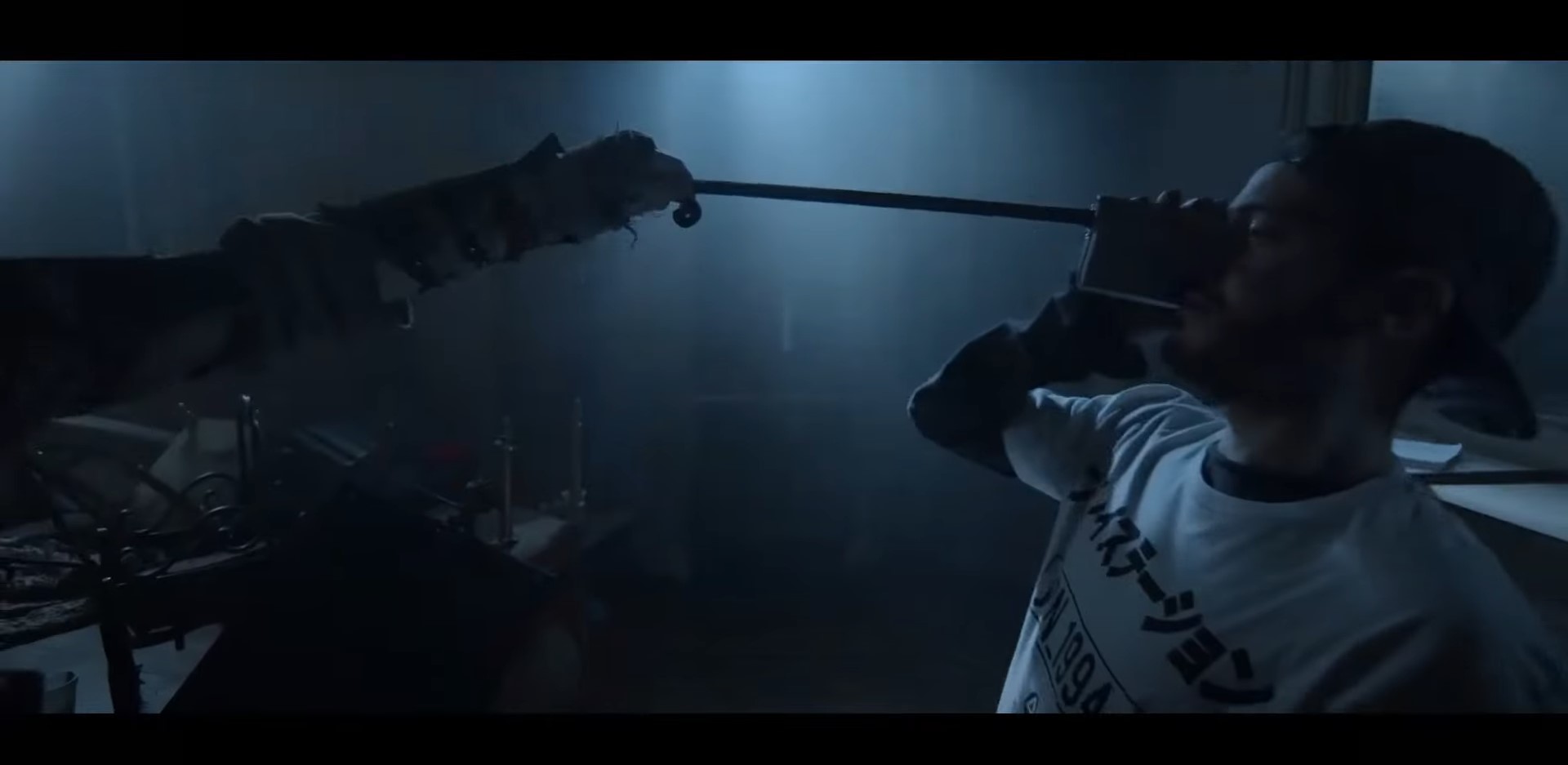
A horror movie about a supernatural Celtic killer has just wrapped production and goes into post.  The cast and crew what to succeed at all costs, not only in the movie but also in their stagnant careers.  However, the director, Matias, craves fame and legacy to the point of committing his soul to whatever it takes to cement his film in acclaimed success.  Matias and the arcane producer form a pact with a diabolical computer program and artificial intelligence that’ll bind their movie to esteemed infamy as well as bind their cast and crew to their characters.  When Matias invites select cast and crew to a private screening at his home, they realize the movie has scenes of their characters that weren’t shot during principal photography and that whatever happens to their characters in the movie, being chased by the Celtic killer, will happen to them in real life.  The only way to survive the movie is to last the full 90-minute runtime.
Hailing from Argentina, the South American country that brought us “Terrified” and the “Plaga Zombie” films, comes another tale of terror with the metaverse horror “Realidad Virtual,” aka “Virtual Reality.”  The 2006 “Director’s Cut” and 2009 “Breaking Nikki” shot caller Findling continues his traipse through psychotronic land with a story that couldn’t be more relevant today than if artificial intelligence synthesized the narrative itself out of binary ones and zeros.  The script comes from Findling and cowriter Lourdes Prado Méndez, an Argentinian romance novelist.  Having virtually no romance in “Virtual Reality” whatsoever, the 2021 film stretches Méndez’s range into crafting characters with a foot in two planes of existence while under immense fear and pressure to survive a supernatural slashening.  “Virtual Reality” is produced by Gabriel Lahaye under Lahaye Media, who has supported and collaborated on a number of Findling’s previous films, such as “Breaking Nikki” and “Impossible Crimes,” and is also a production of Wit Producciones, Cine Argentino, APIMA, FilmSharks, and INCAA of Argentina.

The story circles around a selectively small and independent film cast and crew finishing up a concluding scene of another to-be-forgotten horror movie by director, Matias (Guillermo Berthold), who has had multiple failed films before now.  Yet, the production team remains positive, hopefully the film with jumpstart careers as desperately expressed through the first act, especially with the film’s final girl star Guadalupe (Vanesa González, “Hypersomnia”), or Guad as she’s called by her friends, and her director’s assistant brother Pablo (Santiago Magariños).  Berthold plays the sneaky-sadistic director about as a well as most with a fervent penchant to do anything for his creative filmic art even if that means colluding with a shady, mysterious producer in César Bordón (“She Wolf”) whose performance’s obscured or lack of purpose is due in part to the character’s flimsy connection to the diabolical computer program.  Bordón can’t help but just be an inhuman human, violent by necessity instead of being violent with a purpose.  The producer seeks success for every single one of his films with a subsequent plotted course for the next idea – whether be a sequel or a brand new story – yet his connection to the network of evil of unexplained runes, sporadic pixilation, and artificial intelligent adaptations that can re-edit recordings into a new and inexplicable account of the story has been sorely severed in regard to understanding his background and his motivation of mortal sacrifice for movie fame.  Other connects that were left on the cutting room for, so to say, were between the siblings Guada and Pablo and their dying mother in what I suspect was an attempt to shove the sister and brother some sympathy, clearing the way for the two to be the unambiguously heroic duo, but the scene with their mother on her deathbed offered little-to-no compassion, producing a gelatinous lasting effect in what was a more visual one-off of two children spending the time they have left with their mother versus an incentive or arc scene that would hopefully rally up character expectations to look after each other.  “Virtual Reality” rounds out the cast with Frederico Bal (“Impossible Crimes”), Francisco González Gil (“El último zombi”), Sofia Del Tuffo (“Luciferina”), and Christian Sancho in a Johnny Depp inspired dressed part of a self-centered actor with a suspected pill addiction. 
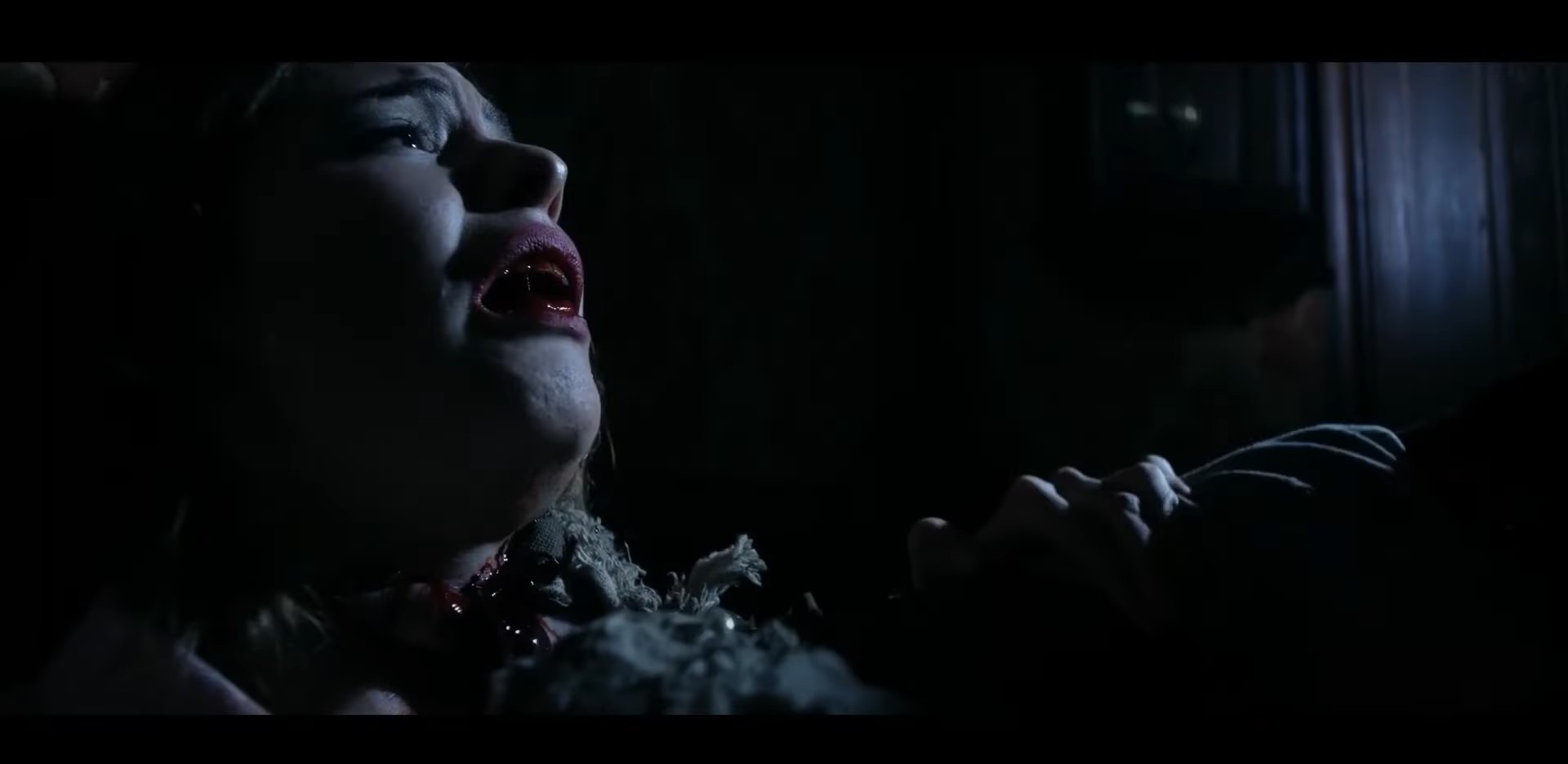
As far as plot designs go, “Virtual Reality” has an interesting concept that involves filming two different harrowing situations and joining them into one parallel plight with the actors reacting more to the events happening on the television screen, which in itself becomes living, breathing character of sinisterism, rather than what’s happening outside the box in the present.  Both realities are virtually live and in play for their very being and whatever happens in one, affects the other.  “Virtual Reality’s” state of duality, not only in character, but also in linear lines of an alternate universe with lifeline connections, is smart, fresh, and terrorizing to know that your life depends on an A.I. created character coursing through a maze for their very lives.  This mirror-meta-effect continues to evolve as the story plays out that leave survivors questioning reality and questioning their individuality of some higher force that has used them like some free-thinking avatar for filmdom fame.  This is where “Virtual Reality” starts to become complicatedly crisscrossing as instances of a distorted reality spiral down a rabbit hole of what we thought was true.  Findling is nonapologetic for his layered universes that spins and wraps a narrative around another in what is a show of forced fantasy subsisting in that gray area of reality.  The Celtic slasher storyline is just a sublevel to the story’s higher level view that defines greed and worth amongst people longings for more and also models itself to reflect that thin line some people cross between reality and fantasy, as foreshadowed early on into the film during the shooting of the final girl scene when method actor Julian gets into the headspace of his Celtic killer character and really starts to strangle Guada in a climactic moment.  By the finale, you’re comprehensible pencil might have wandered off the connective dot trail in trying to see the bigger picture of Hindley’s meta-movie but “Virtual Reality” is innovative tech horror that just requires a smidgen of tweaking to be impeccable.
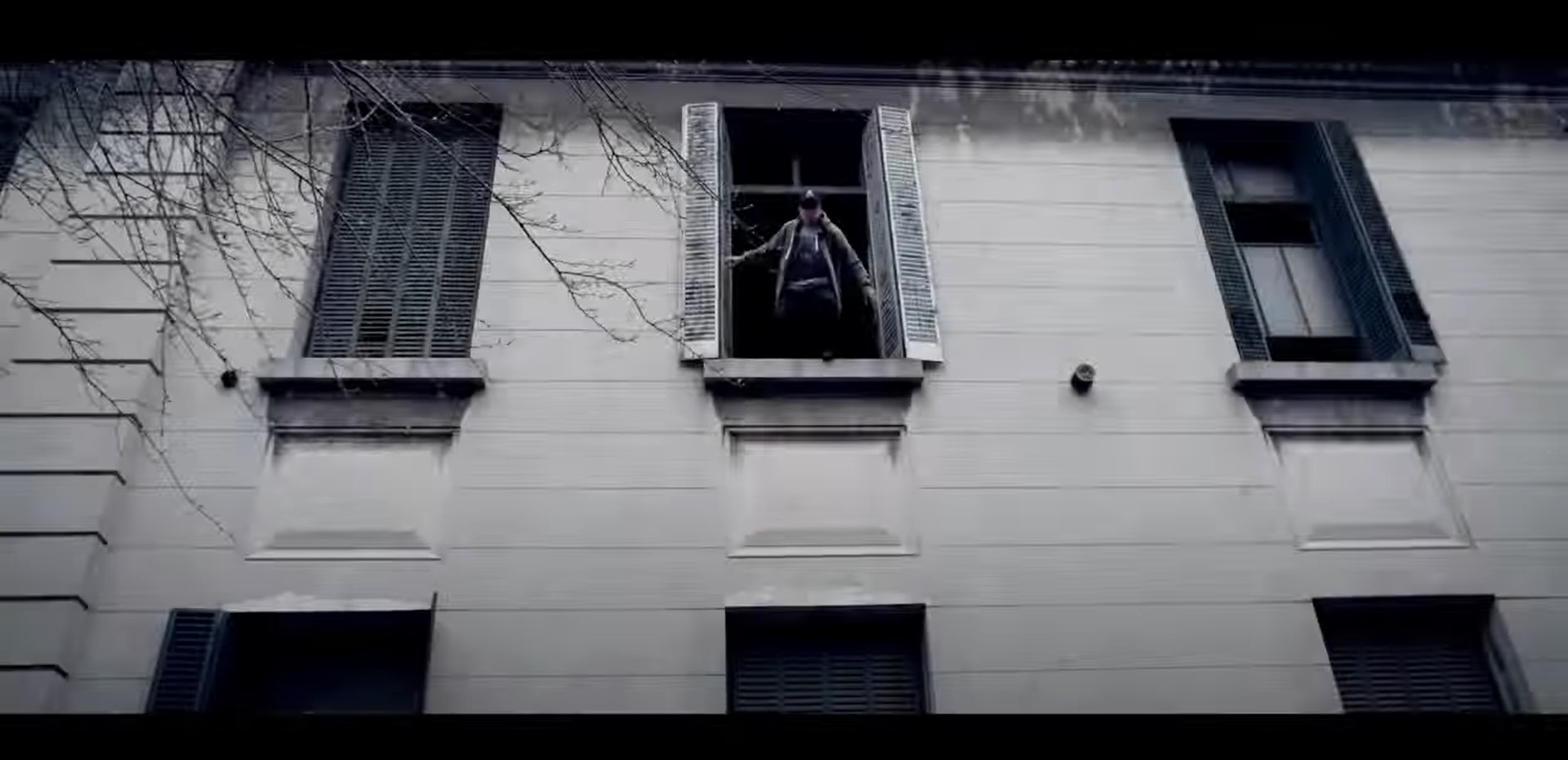
2020.  That was the last time I reviewed an Artsploitation Films title.  The long 3-year hiatus was due in part of King Lorber purchasing the boutique Philadelphia label that specialized in bringing independent global horror to the U.S.  Artsploitation Films and Kino Lorber continue that pursuit with Hernán Findling’s “Virtual Reality” from Argentinian now on a Stateside Blu-ray disc courtesy of the joint label.  The AVC encoded, 1080p High-Definition, BD25 is presented in a widescreen 1.85:1 aspect ratio.  Cinematically, the format storage is able to capture the true quality of the image with hardly any compression artefacts.  There’s not a ton of visual augmenting but what’s presented is a draining of color to a near black-and-white image with pigmented primary color lighting to give the scenes a dash of color that’s in contrast to the moderate-to-heavy in-movie, trope-heavy lack of lighting to create deeper shadows for that gloomy horror movie effect of interior trapped victims running for their lives in the dark.  Two Spanish language audio options are available on the release, a DTS-HD 5.1 Master Audio surround sound and a DTS-HD Master Audio 2.0. The 5.1 track has good balance between the ambient, soundtrack, and dialogue tracks albeit a little heavy on the score to clutter, at times, a clear exchange, especially when everyone’s yelling at the television set.  Other than that, no technical issues throughout the multi-channel output. English subtitles run at startup but can be turned off.  The unrated, region A encoded release has a runtime of 84 minutes but doesn’t come with a menu for special features; however, there is the film’s trailer and, if you stay tuned after the credits, there’s a bonus scene where you, the viewer, becomes the star of your own movie.  Artsploitation Films is back, baby!  Courtesy of Kino Lorber, “Virtual Reality” is barely tapped meta-horror, that has become all the craze nowadays, and Hernán Findling unboxes that fine line between real and unreal to only merge them together to be one and the same in a twisted interpretation of when art imitates life. 

Believe Everything You See.  “Virtual Reality” on Blu-ray at Amazon.com

The Apocalypse is Four EVIL Active Shooters and the Hell They Create in “The Dead Ones” reveiwed! (Artsploitation Films / Blu-ray)

Four errant students are ordered to do a summer cleaning of their high school after a terrible tragedy that has left the hallways and classrooms in shambles.  As they meander around the closed school doing more chatting than they are cleaning, a masked and armed group calling themselves The Four Horsemen chain the doors and windows, barring every means of escape, and snake through the school’s layout setting a plan in motion to deliver a macabre message to the campus grounds.  Something just doesn’t feel right when the students try to track down the masqueraders who move around more like specters with an eerie clamor of theatrics that’s becoming more and more eternally harmful the longer they remain inside the school. 

“The Attic Expeditions” and “All Souls Day:  Dia de la Muertos” director, Jeremy Kasten, has a new ghoulish, outcast teen horror on the verge of release with the American made, calamity surrounding “The Dead Ones,” entailing a theme of choice on the wrong side of deviancy when influentially steered by the negative forces of the besieging cruel society.  The script is penned by Zach Chassler on his fourth collaboration with director Kasten, following their efforts on the vampiric allegory for drug use “The Thirst,” “The Wizard of Gore” remake, and “The Theater Bizarre,” a horror anthology, in over a span of a decade’s time.  “The Dead Ones” presents a two-timeline parable with an inciting, yet disturbing, core involving every parents’ worst nightmare and America’s most disgraceful statistic, a high school shooting.  Sick-O-Scope Motion Pictures serves as the listed production company behind the film.

Detention attendees is comprised of four teenage outcasts who are also quasi-friends that seem to know each other well, but are personally rough around the edge, denoting more distinct tensions amongst their insoluble secrets.  In an introduction with the teens, we’re glimpsed into flashes of a nightmare images inside one of the teens’ head as their driven together to the school by their principal, Ms. Persephone, played by “The Thirst’s” Clare Kramer who is just as stunning as her in-story goddess inspired moniker.  Ms. Persephone’s passengers include the “The Dead One’s” core characters with a victim of relative abuse in Alice “Mouse” Morley (Sarah Rose Harper), a bullied nonconformist in Scottie French (Brandon Thane Wilson), an unhinged self-cutter in Emily Davis (Katie Foster), and an aggressive sociopath in Louis Friend (Torey Garza).  Performances are heavily relied upon as the cast of four are called forth by the story’s dual timeline where various plot points from two individual paths are needed to be crucially achieved for the unfolding to be organically ambiguous for it to converge in a blend of reality and, possible, damnation.  “The Dead Ones” round out the cast with Amelia Talbot, Michael James Levy, Shane Tunny, and “Dusk Till Dawn 2: Texas Blood Money’s” Muse Watson whose always a nice addition to any horror character set in an eviscerated and sleazy father figure role.

“The Dead Ones” is a film that’s always in a temporal flux, weaving back and forth between utter chaos of an active shooter situation in the normal light and the near totalitarian order saturated with an infernal hue inside a dislodged environment.  As the band of misfits reflect on their battered existence, one mentions, multiple times, his stint in Juvey while another can envisage the patterns to cut into her flesh, a bread crumb trail of hints and past misgivings lead them down a path of self-awareness, of remembering exactly how they landed into the ruined capillaries of the school in the first place.  Yet, “the Dead Ones” isn’t solely about paying for one’s sins, honing in toward more of a cause and effect choice for redemption, which begs an essential question, that goes slightly under the radar of Kasten’s direction, on whether the two timelines are rather parallel to each other instead of rendering past and present events?  It’s certainly one of those open ending conversations about what perils our souls could be fatefully curtailed under the corporeal spectrum by the choices we make while still living and breathing.  For myself, connecting with Kasten’s carnivalesque and ultra-sleek horror panache has been difficult to digest and become accustom to, especially with my own personal dissatisfaction with the remake of “Wizard the Gore” that starred one of my favorite eccentric actors, Chrispin Glover, but Kasten relishes an unorthodox methodology that goes against the traditional grain of filmmaking and while that usually isn’t the problem for him, or any director, to be discouraged from,  “The Dead Ones” ultimately tips over into the same disheartened gray area for one main reason – the editing.  “The Dead Ones” is edited by Maxx Gillman whose chief credits are on short films and documentaries, marking Kasten’s film Gillman’s debut into feature film market, but as like a good documentary editor, “The Dead Ones” is overtly choppy that cuts up the scenes in an egregious way, thwarting any sense of conveying emotions and shortening them to near nauseating back-and-forth cuts.  With a 73 minute runtime, the potential for lingering on the morose rhetoric or teetering compassion of the teens is lost and could have been stirred into their affixed affliction for a more targeted approach to their limbo circumstances. While timing might be less than desirable, Jeremy Kasten summons judgement for “The Dead Ones” to be convicted of unnerving decorum and executes psychological absolution with the tenderness of a Satan himself.

Surreal with a hard, open-hand slap of realism, the metaphysics of “The Dead Ones” shoots for an otherworldly life sentence as the September 29th release day for the Blu-ray and DVD is on the horizon courtesy of Artsploitation Films in association with Raven Banner. The Blu-ray was reviewed and is presented in high-def, 1080p with a 2.39:1, anamorphic widescreen, aspect ratio. The digitally recorded image is packed with visually popping nightmares under a slightly greenish warm tint while still propelling range into heavy fog, a seamless composite of scene transitions and matted visual effects, and copious amounts of rich shadows and shadowy characters. The overall tone of the “The Dead Ones” has a strong 90’s grunge manifestation with some CCTV black and white moments that would fit rightfully in before the turn of the century teen horror collective. The English language 5.1 DTS-HD master audio maintains clear dialogue pathways and a resounding, almost mechanical, score resembling that of an infernal machine at work. The ambient range and even a good chunk of the dialogue has a softer demeanor that sidesteps to the incessant score that would have rung about in Virgil’s Dante Inferno, as the school auditorium playbill show that’s transparent through the film. There is also optional Dolby Digital 2.0 audio. The bonus features include a special effects featurette of the special effects work by the late Elvis Jones, on one of his works with “The Dead Ones,” and his intern Jax Smith, a set tour with production designer Jeffrey Pratt Gordon to showoff his vision of hell, and two commentary tracks alongside the film with commentaries by the director, producer, and crew. Saving a soul damned to hell sounds like an enormous feat of only divinity interaction can accomplish, but Jeremy Kasten finds virtue in sinful acts, imbedding a safety net in the guise of a forked path, and opens an ingress to a putrid perdition for those under more severe scrutiny than just “The Dead Ones.”

Pre-Order “The Dead Ones” By Clicking the Poster!

EVIL Does a Little Bathhouse Wet Work in “Melancholic” reviewed! (Third Window Films / Blu-ray Screener)

On nights when a humble Japanese bathhouse is supposed to be closed for business, the lights remain illuminated, gleaming off the crimson covered ceramic tiles of Mr. Azuma’s bathhouse floors as body’s soak in a pool of blood.  The proprietor, Mr. Azuma, is in severe financial debt to Yakuza boss Tanaka who turns his meager business into a nightly slaughter house to dispose of Yakuza opposition or those just on the syndicate’s bad side.  When Tokyo University graduate, Kazuhiko, applies for a job as an attendant to see a girl who regular attends the bathhouse, the reserved model employee becomes enthralled with the disposing and cleaning up of the corpses, working alongside a couple of professional hitmen, Matsumoto and Kodero, but when the job he’s so passionate about requires him to be more hands on with the assassination assignments and the endless pressure from the Yakuza bares down on his colleagues and friends, Kazuhiko’s radical plan to eradicate the woes of his newfangled position just might mean his very life. 

Seiji Tanaka’s self-esteem building and identity attaining crime drama, “Melancholic,” might not reside as absolute horror, but any film involving the Japanese Yakuza is an unpredictable, Machiavellian expo worthy of every second.  Originally titled in Japan as “Merankorikku” or “メランコリック,” writer-director Tanaka retains a bloody disposition of the historically violently depicted Yakuza-storied narrative, but is asymmetrical with a converging love affair, complementary conflicting the dark and light with clarity of the centric character’s unintended double life into the criminal enterprise of cleaning a bloody bathhouse.  Based off Seiji Tanaka’s short film of the same title, “Melancholic” mops up as an immersive black dramedy from Seiji Tanaka as the filmmaker’s first credited feature film produced by One Goose production in association with Uplink and JGMP.

The story concentrates most of the effort around Kazuhiko, a graduate of the prestigious Tokyo University who doesn’t have a good job and lives with his pampering parents, fitted by Yoji Minagawa as a social misfit living on the outskirts of the Japanese mantra of diligence and integrity.  Minagawa bores out Kazuhiko’s diffidence, chocking up his damp disposition to the indecisions toward his future, that forces other characters to influence his choices, such a former high school classmate in Yuri with an effervescent performance by “Tag’s” (“Riaru onigokko”) Mebuki Yoshida.  Yuri’s infectious affection for Kazuhiko and her regular attendance at the bathhouse encourages Kazuhiko to apply and become hired for a cleaning attendant position alongside a blonde, and undereducated in comparison, counterpart in Matsumoto (Yoshitomo Isozaki), but to Kazuhiko’s surprise, his overqualified ego is shattered when he discovers that the bathhouse is a Yakuza place of execution and those all around him are more experienced in that trade, detonating a plume of black comedy, work place haughtiness that Kazuhiko has to balance with his personal relationship growing with Yuri.  Most of the exchanges are straight forward and culturally inflection heavy, especially when dire moments rear their heads, but some more compassionate and delicate scenes rouse through the overt inflections with Minagawa and Yoshida at the helm of their blossoming onscreen romance, adding to the stark contrast to the opposing narrative. Stefanie Arianne, Makoto Hada, Yasuyuki Hamaya, Takanori Kamachi, Hiroko Shinkai, Masanobu Yada, Keiji Yamashita, and Yuti Okubo fill out “Melancholic’s” cast.

“Melancholic” is a rather odd title integrated into the briefly pensive struggles of Kazuhiko to an intrinsic network of assassination gunplay and backstabbing knavery, offering little profound sadness and despair and more shrewd hostility when those in charge ask for an inch but take a mile out of the personnel pool. For a Yakuza film, Tanaka’s bath and butcher story has barely a budget to entertain technical action sequences in tight spaces, but the action is kept taut and intense and despite the lack of a Yakuza presence, with only one single boss representing an entire faction, the transposing of Kazuhiko’s personal and professional stations washes away much of budgetary concerns down the drainpipe as an irresistible curiosity to see how our hero softly stumbles through a sudden confluence of the two repelling paths will play out. Most audiences will overlook the comedy for a countless reasons as “Melancholic” up plays into the satirical rigors of the Japanese sullen humor. The fact that that the subject matter is also about mercilessly murder people in a bathhouse will undoubtedly pigeonhole the film with pre-labeled genre. Tanaka slips in gallons of subdued irony ripe for the complex circumstances hazardous to all bathhouse employees and their pryingly oppressive management.

The award winning Japanese film (aggregated wins from multiple Eastern Asian film festivals) “Melancholic” arrives onto a dual format DVD/Blu-ray from UK distributor Third Window Films, a loyal provider of extreme Asian cult and horror. Since the Blu-ray was a screener, the A/V aspects won’t be reviewed in it’s entirety and the specifications weren’t provided with the screener. Ryô Takahashi’s cinematic vision brings out the beauty in simplification without being ostentatious with camera angles or relying heavily on tint boxes; yet, the blend of steady cam and handheld tilts to the one side with the jitteriness of the handheld seizing the stage. Bonus features were included on the screener, including a behind-the-scenes of a documentary-style shot look at moments before, during, and after takes, a Q and A panel with the cast and crew, and the “Melancholic” short film. Seiji Tanaka’s breakthrough bloodbath, “Melancholic,” sounds more despondent than the dismal thought of a cold shower on a freezing day, but the heated ferocity rite into adulthood keeps this Japanese dramedy warm with tension and cozy with vortex humor.v

Purchase “Melancholic” on Blu-ray / DVD!

Evil Aliens, Zombies, Vampires, Cannibals, and a Nun with Guns! “Savage Creatures” reviewed! (ITN Distribution / DVD)


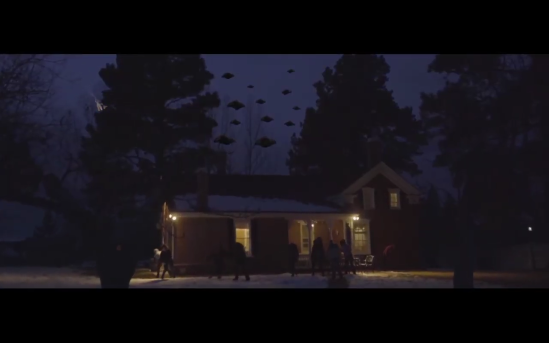
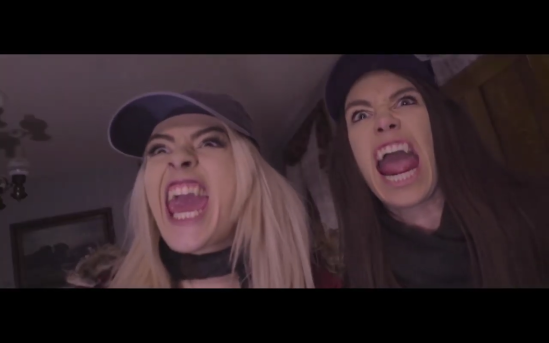
On God-fearing land, two young women drifters are shown compassion and hospitality by a religiously devout mother and son offering hot food, a shower, and a bed for the night. Their seemingly infallible generosity turns to violent deviancy as concealed motives of their cannibalism catches the women off guard that inevitably places the unsuspecting women literally on the chopping block, but the drifters are no ordinary, helpless prey but rather ancient vampires, wandering from one small town to the next, struggling to exist. Just when the bloodsuckers think the ordeal is over, a worldwide invasion of soul-sucking aliens aim to cleanse Earth of all inhabitants, turning those attacked by the beings into flesh-hungry crazies. Trapped inside the cannibals’ house, the vampires must save their human food source from completely being eradicated by an aggressive alien race with a conduit to possibly the Holy Father himself.

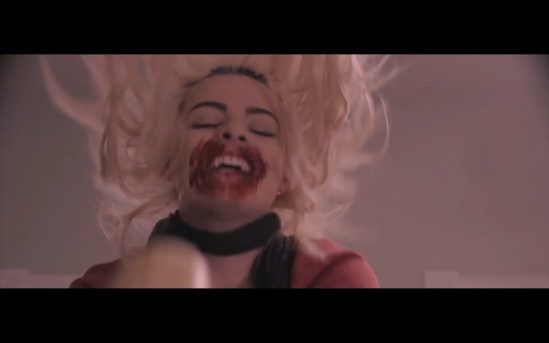
Talk about a full monty horror movie that has nearly everything but the kitchen sink! “Savage Creatures” is the 2020 released ambitious action-horror written and directed by Richard Lowry (“President Evil”) that serves up a platter of creativity ingenuity on a micro-budget while still outputting savagery, creatures, and an entertaining good time from start to finish. Lowry embodies inspired resourcefulness that reminisces the economically efficient horror credits of long time indie filmmaking entrepreneur Brett Piper (“Queen Crab”) and though serving as the filmmaker with many hats, composer, editor, director of photography, and visual effects, he also incorporates his own pleasurable schlocky devices as he shoots in the rocky rural regions of Pine Valley, Utah complete with isolated roads and mountainous views. The epically scaled “Savage Creatures” is a creature feature accomplished feat, try saying that ten times fast!

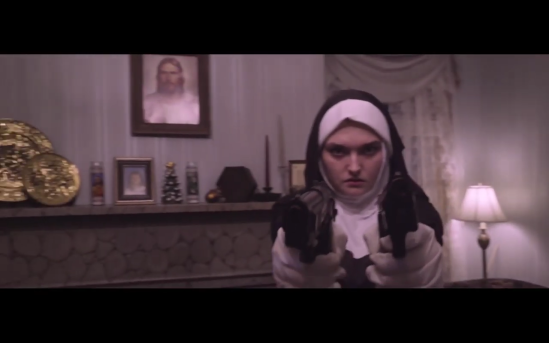
The two vampiric drifters, Rose and Ursula, serve as the story’s centralized characters played by Kelly Brook and Victoria Steadman respectively. Both actresses have worked with Lowry previously on his 2018 Armageddon-esque action-comedy, “Apocalypse Rising,” and familiar with his budgetary style, able to alleviate the pangs of severe funding limitations with some fundamentally respectable performances. Rose and Ursula are not only lovers, but lovers with a cavalier premise on life stemmed from the centuries of human evolving groundwork, shedding a light on questions that should be asked and pondered on in every day modern vampire story. The dynamic between Brook and Steadman strike the nerve sincerely with causal conversation, pressing upon their inevitable doom in between blowing off zombies heads and fragging flying aliens with crossbows as if they’re exacting some self-decompression through violence. Though Brook and Steadman are good and stable throughout, vet actor Greg Travis lands a the lauded performance of Father Cooper, a fanatical Irish priest on the run from the zombie horde. The “Humanoids from the Deep” and “Mortuary” actor goes full blown dogmatic with his theory of God being fed up with humanity and pulls off the extremely righteous and holy neurotic priest as an overboard affable character whose has to trust a couple of godless feminist vampires during apocalyptic mayhem. Rounding out the cast is Ryan Quinn Adams (“Before the Dark”), Cean Okada (“Bubba Ho-Tep”), and Kannon Smith as Sister Gigi, a mute nun with guns.

From the very beginning, “Savage Creatures” maintains a fiendish tempo of anti-heros and butchery. Even the soundtrack, though a relentless boor of stock action selection, plainly works to “Savage Creatures'” advantage one scene after another inside the scope of the sharp, periphery sublet moments to keep up with the breakneck pace. Lowdry’s sees little-to-no expositional sagging in the middle or on the bookends and diverts away from any hankering for a character story or background to fluff up worth-wild characters. With the exception of Rose and Ursula, who complain like boomers conversing upon reminiscing about the past on how easy times once were centuries ago to get away with murder before technology became an inconvenience, much of the cannibals, the priests and nun, and even the flying devil ay like aliens backstories don’t bubble to the surface. While typically these off the cuff details usually roll my eyes back into my skull to scour my brain for the minor moments in which I might have mistakenly missed something about a character backstory or just produce a hefty sigh of longing for more personal information on why this character does what they do, I found “Savage Creatures” uniquely isn’t symptomizing a distress of forgoing persona tell-all; instead, plays uncharacteristically to the obverse tune of an entertaining racket of head splitting, limb chopping, and with a hint of rampant gun akimbo.

Buyer beware! Don’t trust the cretinous DVD cover from ITN Distribution of appears to be Julian Sands from “Warlock” raging angrily with milky white eyes and standing over Cthulhu tentacles surrounding him in the foreground and silhouettes of bats are hovering over in front of a savior-esque crown moon in the background. Instead, trust your gut (or this review!) and see “Savage Creatures” on DVD home video presented in an anamorphic widescreen, 2.35:1 aspect ratio. Pine Valley, Utah never looked so picturesque in a clean transfer. The natural colors feel a bit faded and not as sharp that perhaps assists in blended Lowdry’s composited effects and practical creature design. The cabin night sequence has some noticeable banding, but isn’t a game changer. The English language Dolby Digital audio track is par for the course, running clean and clear dialogue, and satisfying a range of sounds. Depth’s tricky with Lowdry’s compositions that don’t hem neatly, especially when Rose and Ursula crossbow down aliens from a distance, the same cry of pain is utilized for each darted creatures, and the running stock soundtrack flutters in front and behind the gun play at times. DVD bonus material include a director commentary, behind-the-scenes with the actresses and crew, and a VFX breakdown, which I thought was neat to see how Lowdry layered his effects on a budget. Not listed as a bonus feature is the gag reel during the end credits. “Savage Creatures” enters 2020 as an all out brawl designed as a battle royal but with little bankroll; yet, director Richard Lowdry beats the odds, pinning out a win as the scathed champion of his latest apocalyptic caper!

“Savage Creatures” battle it out on DVD!

Evil Walks Among Us in “The Zodiac Killer” review!


Jerry is your average, everyday Californian man. He’s tall, handsome, and can hold down a good government job as a United States postman, but Jerry has another side to him. A dark side that’s hidden beneath a façade of apparent normalcy. His random acts of senseless violence and murder have Jerry a great advantage over the rest of society, especially the police, as he commits homicidal tendencies right under their noses without an inkling of a motive and stretching out his urges to kill days, weeks, and months a part under the guise of the notorious Zodiac Killer.

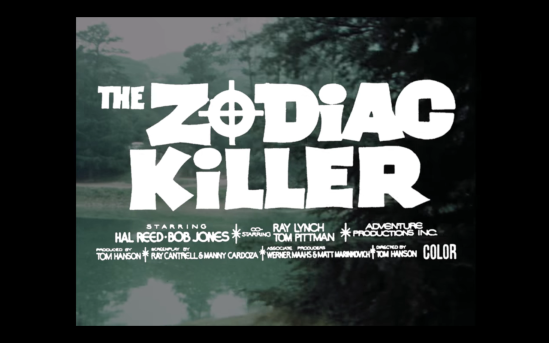
Based on the factual and claimed murders of Northern California’s infamous serial, director Tom Hanson helmed the thriller “The Zodiac Killer” and released his finished project in spring of 1971 when the serial killer was still very active. In a little history tidbit, Hanson had the idea to premiere “The Zodiac Killer” at the Golden Gate Theater in San Francisco in attempt to lure the Zodiac Killer to the screening by way of having patrons writing “what-ifs” as the real Zodiac Killer and then analyzing the handwriting to the letters the real killer submitted to the police and news outlets. Of course, the stunt didn’t work, but did bring about awareness of the prospect that everyday people – neighbors, gym teacher, mailman – could be a deranged, blood thirsty wolf underneath sheep’s clothing. In their first and only writing credits, Manny Cardoza and Ray Cantrell penned the script.

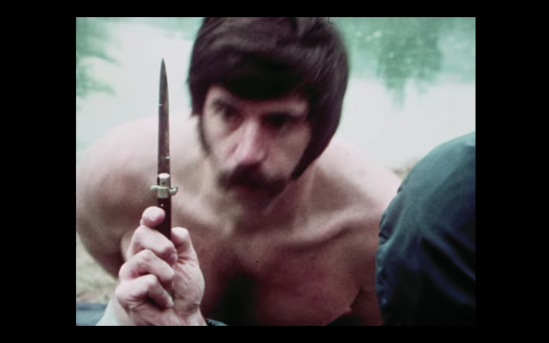
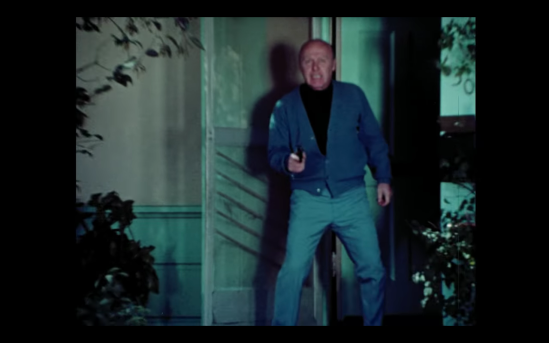
With a minuscule budget and a performance driven script, “The Zodiac Killer” could only speculate on the person behind the deaths and though in today’s filmmaking standards, some points in the dialogue and the action are awfully outdated in it’s rigidity and over exposition, but when getting down to brass tax and looking deep at the root’s message, the effective troubling performance by lead actor Hal Reed, as Jerry the Zodiac, transfixes viewers as the tall, handsome, and baritone-voiced actor bore an eerie on-off switch between pure good and polluted evil. Before knowing Reed’s true self, not every character was black and white as Hanson attempts to a lineup suspects, especially with a truck driver named Grover (Bob Jones) whom had a knack for pretending to be a wealthy businessman on his nights off in hopes to score naive bar tail. Whether flawed by design or by the obsolete nature of filmmaking, the curve ball attempt to throw the viewer for a loop doesn’t stick and for every second, Hal Reed is the titular maniac even if not proclaimed at first sight. Ray Lynch and “Invasion of the Bee Girls'” Tom Pittman round out the cast as the two police officers not hot on the Zodiac’s trail.

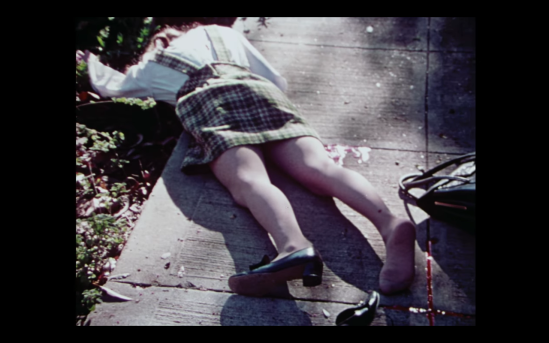
For early 1970’s, “The Zodiac Killer” is graphic, verbally and in imagery with an example being Jerry enthusiastically jumping up and down on a car hood while an elderly woman is pinned between the hood and the engine or Grover calling every single female character a “broad” or a “bitch” in the film; “The Zodiac Killer” certainly strikes a chauvinistic chord from a male’s point of view with not only Grover’s attitude toward women, but also portraying women as shrewd, powerless, and as sex objects. Culturally, this attitude toward women might have been accurate for the time period as well as many of the portrayed Zodiac attacks though numerous of the attacks were only claimed by the Zodiac and not actually confirmed. In any case, Hanson’s rendered theories are well thought out and entertaining in spite of their tragic background.

The American Film Genre Archive, Something Weird Video, and MVDVisual present “The Zodiac Killer” on a 2-disc DVD/Blu-ray set exhibited in the film’s original aspect ratio of 1.33:1, keeping the black bars on the right and left of the screen to preserve the format. The new digital transfer was scanned from the only existing 35mm theatrical print through to 4K resolution on a Lasergraphic film scanner and the image has a real clean look to it despite some minor print damage with horizontal scratches and burn flares. The print also suffers from a color degradation, voiding the coloring and replacing it was a washed look. The DTS-HD Master Audio 2.0 mono track has a mighty bite that’s surprisingly clean and clear despite the obvious low fidelity. Special features include an interview with director Tom Hason and actor Manny Nedwick, a commentary track with Tom Hanson, Manny Nedwick and the AFGA crew, and a tabloid-horror trailers from the AGFA archive. Also, the release has a sleek illustration with reversible cover and an inner booklet complete with the film’s tidbits, transfer information, and distribution company credentials. Plus, a bonus movie “Another Son of Sam” (1977) that’s been scanned in 2k from the original 35mm theatrical print. The Zodiac might have ceased a wrath of carnage and made a brazen exodus from California before being caught before his or her identity became known, but the killer’s notorious legacy lives on with this stellar release of Tom Hanson’s “The Zodiac Killer” and serves as a chilling reminder that vicious killers walk among us.

Buy “The Zodiac Killer” on Amazon Today!