Midnight Showing of the Lost EVIL Tape Will Be the Last Thing You’ll Ever See! “Transmission” reveiwed! (Jinga Films, Danse Macabre, MVDVisual / DVD)

“Transmission” Transmitting to Your Television on DVD!

A Santa Mira elderly man sits in a dark room with a glowing television illuminating his silhouette.  As he channels surfs through the night, amongst what’s being broadcast over the airwaves is a bible-thumping televangelist, a children’s puppet show, an 80’s teen romance comedy, a live local news broadcast of a hostage situation and a documentary on the investigation of the disappearance of notorious cult horror film director Frank Tadross Roth pursued by his granddaughter Rachel and her boyfriend.  Going deeper into Ross’s disappearance through archived interviews with the director and crew, on set raw behind-the-scenes footage, and the examination of Ross’s quest for an obscurely treasured videotape by an occult group, the director’s pursuit of, and his eventual unearthing, of the tape become the push for his last and recently discovered film Transmission, thought to have been lost in a building fire after his suspected involvement of the film’s lead actress murder.  Going back and forth between the channel programs builds a sinister, terrible dread that will soon be revealed to terrorize all those glued to the set. 

Late night television has never been so bodingly evil!  Channel surfing transmits an anthological approach between mockumentary and found footage in this uniquely crafted scrolling of boob tube terror entitled “Transmission.”  The 2023 horror is from writer-director Michael Hurst, the English director behind a pair of franchise sequels in “House of the Dead 2” and “Pumpkinhead 4:  Blood Feud.”  His latest venture takes twist to a whole new level different from his repertoire of linear independent horror with backlot dark legend surrounding an occult obsessed horror filmmaker.  Hurst also produced the film, his first in over a decade since 2017 with Andy Hurst’s (“Are You Scared?,” “Wild Things: Foursome”), alongside other self-employed filmmakers with the How to Kill Your Roommates and Get Away with It” producing duo Robbie Dias and Pat Kusnadi.  New Blood Productions serves as the production studio.

“Transmission” traverses in guile under TV guide pretenses of local channels, channeling the horror through the back and forth of unsettling, televised channels that have a familiarity of broadcast shows – sponsor subsidized children shows, perfunctory local news, and black and white sitcoms – but there’s more than what meets the eye.  The film uses recognizable genre names to get the message across with “Sleepaway Camp’s” Felicia Rose in her most vanilla action news reporter role, “Scary Movie’s” Dave Sheridan as an over-the-top protective father caricature in a teen romance comedy, and “The Road Warrior’s” Vernon Wells at the center of the amassing occult suspense as the missing notorious horror director Frank Tadross Roth.  Over the years, Wells’ performance has tapered to a subtle crawl of expression as if the veteran actor is now just running through the motions of the everyday hired gig that’ll headline his name, unlike his former wide-eyed and eccentrically villainous roles in “Commando” and “Innerspace,” but “Transmission” suits his stern act portrayed in video flashback as an occult maniac and peculiar director gripped by the search of an arcane, dark sect’s perniciously videotape.   Spearheading the effort to track down the filmmaker is his granddaughter Rachel, played by Nicole Cinaglia (“Death House”) with an inexplicable character shifting of gears from curiosity and intrigue from the documentary to the frantic and fearful ramblings of a paranoid hostage taker in the new story stemmed by her findings surrounding her grandfather’s disappearance.  There’s potential gap there in the lack of development, or rather the lack of acknowledgement overall, with Rachel’s parents as it’s just a grandfather and granddaughter affair without the recognition of those in between.  There’s also a gap in Rachel’s attained information about the sect, the videotape, and her grandfather’s endgame as she seemingly has more knowledge about the insurmountable otherworld evil on the horizon but how she got there is a few clicks short to fully bridge.  Sadi Katz, Del Howison, Marcella Di Pasquale, Ben Kaplan, Hunter Johnson, Raymond Vinsik Williams, Jennifer Nangle, McKensie Lane, Jessica Cameron, Charles Chudabala, Michael Glenny, Christopher Bryan Gomez, Ruby Reynolds, Ben Stobber, Mark Schaefer, and Robin Hill fill out the channel surfin’ cast of characters.

“Transmission” has a neat story structure built upon components with the premise being a movie inside a documentary while amongst a flipping through the broadcast waves that coincide with another movie as well as television shows, podium preaching, puppet skits, etc., to which is then wrapped up inside and latched onto another movie, a metanarrative with a preamble setup.  The Roth directed Transmission, presented for the first time on Malvolia’s spooky late night show (an Elvira rip) is a space horror off-brand for the filmmaker that mirrors vaguely the reality outside the boob tube but told through the Rachel Roth investigative documentary that builds the timeline pieces while flipping back and forth between the late night movie and the documentary as well as the scroll through every other broadcastings of paralleling programming in what feels like an antiquated prelude to the cable guide button on a tube television with depicted content that resembles much like what programmed over-the-air decades ago down to the very staticky outlines of porn stars expertly doing their fleshy vocational craft in snowy pixelations.  The edited series of a varietal shows creates an erratic unsettlement with an atmosphere churning over the idiosyncrasy content of what’s eventually to spoil or come to chaos by Transmission’s, or rather ”Transmission’s,” twist ending and what a fairly good twist ending it is, even with the slightly ham-fisted acting, by pulling off misdirection as you think you know where the finale is heading but the forces of evil seep through with a backup plan. 

Jinga Films, Danse Macabre, and MVDVisual present “Transmission” onto a MPEG-2 encoded, upscaled 720p (but upconverted on my player but since this title is shot digitally the image appears fairly good to begin with), DVD5 and presented in a widescreen 1.78:1 aspect ratio.  As stated, imagine quality has a fair amount of detail and intended panache interference amongst a broad range of different aesthetic styles and gels through the varied televised broadcasts from static and grain filters to colorless sepia, to filming scenes on television screens, and to other mock-electrical afflictions inside a digitally shot story truck to intermittently snap normality and cause a rising fear of curiosity amongst the TV goers.  Throughout the picture, there were no noticeable true compression issues with the picture.  Some scenes felt slightly stretched by that I chalked that up to filmmaker style when rendering various programming for the narrative.  Though not listed which format is used, the player registers an English Dolby Digital 2.0 Stereo.  With imitating the perspective of someone watching television, audio tracks are distinguished with a flat concave that elevates the pitch but disperse through a single channel.  Emitting through a dual channel stereo, the audio can discern potently through, providing clarity.  When looking at the perspective, we’re either the old man watching the television or when inside the show itself watching from the fourth wall in and subsequently the strength and tone change often quite a bit, creating a rich depth when done correctly.  English subtitles are optionally available through the moving menu.  The DVD is essentially a feature release but there are other Jinga Film trailers that include, “Iconic,” “Tonight She Comes,” “The Protos Experiment,” and this film, “Transmission.”  The DVD comes in a standard single, push-lock, black DVD case with single-side cove art that I personally found gratifying when considering the film as it speaks to the abnormal and drawing glow of a brightly illuminated television in place of a head on top of the shoulders of an opened-armed cultist with a pleasingly red and black contrast.  The DVD is pressed with the same yet cropped image.  “Transmission” has a R rating (no singled-out rationales but there is some language and nudity), has a runtime of 74 minutes, and is region free for all players.

Last Rites: There are no mixed signals from “Transmission’s” gradual rise to impending cosmic doom with an exceptional Lovecraftian twist to nightcap this Michael Hurst channel-hopping and ominous occult production.

“Transmission” Transmitting to Your Television on DVD!

Shelley Duvall’s Last EVIL Film. “The Forest Hills” reviewed! (My Way Pictures / Blu-ray)

“The Forest Hills” is now on Blu-ray at Amazon.com!

Set in the wooded Catskill Mountains, Rico returns home to his unsupportive and verbally abusive mother who has been recently diagnosed with terminal lung cancer.  A serious head trauma accident has made Rico disturbed, always on the verge of delusional destruction with a sanity dangerously hanging on by a thread.  After his mother dies, Rico’s fully embraces a longstanding idea that he is a werewolf, and another werewolf is stalking him.  Haunted by vivid, visceral nightmares of transformation, violence, and death at his own hands and the hands of others, Rico spirals down into madness while squatting in his concerned sister’s forest cabin.  Reaching out to friends, his sister, and prescribing caregiver, Rico can’t shake the feeling he’s being hunted, and his own transfiguration stirs his sanity into a swill.  Left on the brink of a total breakdown with no one concerned enough for his mental care, Rico’s violent and paranoid behavior sets the Catskills ablaze with an unthinkable killing spree. 

The very first film of Shelley Duvall in 20-years was subsequently her very last film after succumbing to diabetes and mental illness.  “The Shining” and “Time Bandits” actress made her much anticipated return to the silver screen, eager to get a sliver back of that limelight, in the psychological, lycanthropic horror “The Forest Hills.”  Scott Goldberg, director of “Dead End Massacre” and “Dying for Change,” wrote and helmed the scooped-up recovery project that was at one time more dramatic than horrific under the scattered eye of a dominating producer, or at least that is how the story goes per behind-the-scenes interviews.  “The Forest Hills” shares the same title with Goldberg’s 2007 short film that involves two horror bloggers diving into the truth of urban legend in Kentucky, but the extent of similar story DNA is connected by writer-director Scott Goldberg and in title only, which is also alternatively titled “Danielle’s Revenge.”  The crowdfunded project saw two indiegogo campaigns with a total of just over 33K support with Elliot Dreznick and Scott Goldberg producing under the Dreznick-Goldberg Productions banner in association with Scott Hansen with Digital Thunderdome (“Bad Candy,” “The Vord”).

While wonderful to see Shelley Duvall step back in front of the camera and not seemingly miss a beat putting on a performance face of a chain smoking, terminally ill mother, a character that’s not too far off from Duvall’s reality, she’s not the main lead nor is she even the headline that treks through “The Forest Hills.”  “Brainscan” and “Terminator 2’s” Edward Furlong owns that headlining spot with playing Rico’s best friend and head trauma therapy pal.  However, Chiko Mendez (“Pussy Kills,” “Sacrificial”) suits up, or rather strips down, as the internalized boiling Rico in a primarily shirtless role dance of wolf behavior, hysterical melodrama, and screaming, lots and lots of hyperbolic screaming.  Bordering juvenile behavior rather than someone with pitiful sniveling and wild confusion, Mendez’s rollicking act digs travesty plots of psychological impairment and is, basically, a half-naked Chiko Mendez running, screaming, and wildly howling or bawling for nearly the entire runtime.  Also casted are genre favorites hired to add more fanboy fuel to this quick-burning inferno with Felissa Rose (“Sleepaway Camp”), Dee Wallace (“Cujo”), Marianne Hagan (“Halloween:  Curse of Michael Myers”), and Stacey Nelkin (“Halloween III:  Season of the Witch”) sporadically peppered into the fold with a fraction of combined screentime in what surmises fairly soon as a bait-and-switch feature.  Many other unrecognizable faces interact more regularly with Rico that either passively help his condition, encourage the madness, or exploit his detachment from reality and that supporting cast includes Linda Flores, Anita Durst, Laurie Hamfeldt Mahoney, Wes Lee, Sondra Wymar, Jesse-Lee Lafferty, and Jeff McCarthy.

Boiling down “The Forest Hills’” core is determined by Rico’s reduction of rationality and audiences will have a front row seat, looking straight up and out through the eyes of a deranged man’s unpleasant visions and thoughts, but there is a 3rd party, omnipotent perspective audiences are also placed in when surrounded by the pleas and pains of Rico’s trials and tribulations to be helped and better as well as floating around in scenes where Rico isn’t present, such as with his concerned sister or in a few post-telephone exchanges with Edward Furlong.  This split view causes a neutralized purpose in the story, a confliction that stalls how we’re supposed to digest Rico’s downward degression, and the narrative just flatlines the rest of the way with Rico’s arc just lay to waste during a finale that doesn’t produce that twist moment or evoke any sympathy, compassion, hate, or any emotional baggage to weight against a flailing Rico.  The narrative is also non-linear, chaotically scattered, a surrealistically hallucinogenic of a feverish nightmare pushing Rico beyond the limits of his own sanity and pushes viewers limits beyond their concentration safeguards.  Not an easy story to follow or even to fundamentally keep up the parts at times, one can get easily lost in “The Forest Hills” by succumbing to its genre star hype. 

From My Way Pictures comes the home video debut of “The Forest Hills” on an AVC encoded 50-gigabyte BD-R with the telltale purple underbelly on the data side of the disc.  For a BD-R, picture quality is quite clear and free of compression artefacts with the ample capacity and a cinematography that’s one part nature light and one part key lighting, leaving most of the filmic sensationalism held to splice editing flashbacks and some well-done practical effects.  Blacks in the key lighting are deep and inky, blood has that nice rich dark Karos syrup amber coloring, and textures do come out nicely with the man in the werewolf kept smartly in the distant background or in the shadows.  The Blu-ray presents the feature in a widescreen 1.78:1 aspect ratio.  The English LPCM Stereo 2.0 is mostly centric on Mark Nadolski’s score, sprinkled with a soundtrack of few metal and hard rock bands, and a dialogue that checks the vital audio need boxes but, unfortunately, the score meets universal notes that blends into generic oblivion and the dialogue, though prominent above all, is soft within the layer composition.  A lackluster of ambient noise and action hinders “The Forest Hills” to be a better film with mismatched or off-timed audio bytes that don’t do the feature any favors. English subtitles are optional. Considering the capacity and the indie, crowdfunded budget, the My Way Pictures release has an abundance of special features that dive more into the backstory, background, and beyond, such as in Beyond Smodcastle, a featurette with director, cast, and crew about revamping the project from drama to horror after its premiere at the Smodcastle Cinema in New Jersey hosted by Kevin Smith (“Red State,” “Tusk”), Jordana’s Death:  Marianne Hagan takes a behind-the-scenes look at the school hallway demise of the Hagan’s character, The Forest Hills:  Deleted Scenes instills the final film’s cut moments into the special features, Angela’s Death:  Dee Wallace is the raw footage of the final moments of Dee Wallace’s character up against an unstable Rico, Rico’s Tumor is a behind-the-scenes final makeup look at Cory Dean Cowley as the metaphorical, personified, bloody tumor, Special Effects is more raw footage but this time of the werewolf transformation effect, an audio commentary by director Scott Goldberg, a second audio commentary with principal lead Chiko Mendez and the director, Goldberg’s Super 8mm short “Cartridges,” and the film’s original trailer.  Marketed with phenomenally illustrated artwork, though uncredited, of a similar werewolf howling in the middle of transition and of Shelley Duvall as if she’s cartooned right from a Beavis & Butthead episode and aside from advert insert of one of Sid Haig’s last films, “Hanukkah,” that’s about as physically pleasing the standard, unrated release comes.  The 80-minute runtime has region free playback and is available for purchase at MVDVisual.

Last Rites: “The Forest Hills” may be Shelley Duvall’s last cinematic mark on this Earth, but the themes of mental illness and passive succor, under the guise of werewolf dysphoria, are lost in this difficult to sit through, imitation film in the wake of her death that’s it better if the whole thing is buried and forgotten.

“The Forest Hills” is now on Blu-ray at Amazon.com!

All You Need to Protect You From Everything is a Pile of EVIL Socks! “Crust” reviewed! (Anchor Bay / Blu-ray)

Sean Whalen’s Debut “Crust” Now on Blu-ray!

Vegas Winters is a famous washed-up child actor now working at a laundry mat. Depressed from having been exploited during his career years, Vegas’s problems continue as an unkempt, middle-aged man still enamored with an ex-girlfriend who can’t stand the sight of his growth impotency and the news of his show’s revival that stirs up the past’s unwelcomed hubbub. Day-in and day-out, Vegas does the laundry mat rounds, collecting lost socks for his own personal use, whether be for blowing his nose, cleaning a blood lip, or masturbating into for his daydreaming fantasies, until one day the poor schlub is beyond humiliated and sheds a tear into his pile of used and unwanted collection of socks that turns the heap into his own personal protector he calls Crust. Murdering all who emotionally hurt or threaten Vegas, Crust becomes his best pal who has to vie with Vegas’s drunkard business partner and friend as well as his newfound girlfriend who’s infatuated with him.

Sean Whalen is one of the more underappreciated side characters in the last 30 years.  You know the face, but you may not know his extensive filmography.  Most of us horror fanatics adore Whalen in what was likely one of East coast born actor’s most notable roles from early in his career as the wall-crawling, good-hearted, inbred child named Roach from Wes Craven’s “The People Under the Stairs.”  From that film in 1991 to today, Whalen has run the genre gamut as a supporting actor in “Tammy and the T-Rex,” “Waterworld,” Rob Zombie’s “Halloween II,” as well as Zombie’s “3 From Hell” and a slew of other films, made-for-TV movies, and popping up in television series, including the U.S. version of CBS’s Ghosts pilot which I’m still sorely peeved he no longer continued the basement-dwelling, leprosy ghost role.  Now, we’re seeing a whole new side to our favorite side actor who steps into the lead principal role and, also, writes-and-directs his first feature length film with the 2024 comedy-horror “Crust.”  The indie film is cowritten with Jim Wald and is a production between Mezek Films, Moonless Media & Entertainment, Wicked Monkey Pictures, Stag Mountain Films, and the LLC, Crustsock Productions, supported by a crowdfunding campaign that generated nearly 100K dollars from over 600 backers.

A personal project for Whalen, “Crust” came to fruition as an allegorical metaphor for his own depression after a divorce and he plays Vegas Winters, a former child actor who left the industry after the success of his show due to those around him mistreating him or forgetting about him once the show success wore off.  Gloomy-faced, disheveled, and suppressively lethargic and explosively frantic when called for, Vegas is the epitome of depression while co-running a bland laundry with an alcoholic Russ, played by another horror-friendly, long-time supporting actor in Daniel Roebuck (“Final Destination,” “Terrifier 3”).  Audiences will feel for Vegas and his ultimate wish to be left alone as he sends his blood, sweat, tears, and amongst other bodily fluids, into the leftover socks of strangers, but audiences will also be delighted in his return to fervor materialized by a spur-of-the-moment, quirky laundry mat dance routine with his newfound cute-and-cuddly, stiff-sock creature, Crust. Like Daniel, Nila is too entangled in Vegas’s sticky-sock situation as his from-afar admirer turned quickly cemented girlfriend, played by Rebekah Kennedy (“Two Witches,” “Traumatika”), and there ensues the conflict when friend and girlfriend don’t know where they place or stand alongside a sock-monster. Roebuck and Kennedy manage to fiddle the strings of being the irresolute and concerned while not being a total antagonist to Vegas, who himself might not be 100% the hero of the story. “Crust” rounds the big hitting cast with “Sleepaway Camp’s” Felissa Rose and “Ferris Bueller’s Day Off’s” Alan Ruck along with William Gabriel Grier, Charles Chudabala, Ricky Dean Logan, Shawntay Dalon, and Zoe Unkovich.

Divided into laundry themed chapters, “Crust” is all about the depression and the stagnation that it entails. The creature Crust is that imaginary hope or need fabricated to pull one out of its depths and talons as a protector and a friendly companion to retreat into when the world around is threatening with a difficulty level of hard. Vegas is bombarded with down-in-the-dumps missiles being reminded of an unpleasant past, an ex that continues to belittle him, and an escape from reality that soon becomes an invasion of privacy. Whalen’s decision to shoot in black and white is a conscious one that eliminates colorful distractions to keep story focus around the characters, driving down the narrative nail into Vegas’s episodic progress that deepens to deprecating d, depths, and to keep blemishes with Crust’s marionette-ways to a bare minimum. That’s not to express that Crust is a mealy patchwork of loose socks and back felt for eyes. Crust construction might be simple in design but effective in applied personification with emotional swings, eyebrow moods, and hand gestures despite the obvious movement limitations that require multiple shots and cuts at different angles to sell its tearful autonomy and aggressive nature to protect. Remember, “Crust” is a comedy-horror with emphasis on comedy and while Whalen’s directorial debut comedy is fettered by a lighter shade of black, there’s a waving playfulness about it, such as Whalen and Crust’s spontaneous choreography, that provides a wake from the satirical black humor and completely submerge the story in surrealism with laughs and heart-wrenching moments.

One of the first, and hopefully many to come, titles a part of the initial Anchor Bay Entertainment revival by Umbrelic Entertainment cofounders Thomas Zambeck and Brian Katz, “Crust” hits the Blu-ray market with distribution assistance from MVD Visual.  The AVC encoded, 1080p high-definition, BD25 has the work cut out for it with the black-and-white presentation that allows for a better decoding bitrate, hovering around easily a high-20 Mbps.  Monochromic anamorphic widescreen 1.78:1 aspect ratio exhibits cleanly, clearly, and classically in a consistent contrast that balances situational light and shadow where appropriately.  Textures are dullened without color but the picture is crisp without showing fuzziness or compressed without blocky or bandy issue.  Not listed on the back cover, my player detects an English Dolby Digital Stereo 2.0 track.  More talkative than taking action, “Crust” delivers a fine digitally recorded dialogue track through a lossy Dolby compression that while isn’t as an exact replica, it is clear. Yet, dialogue’s separated from the pack, isolated from the caricature ambience of a laundry mat that has settles on a single wash or dryer sound, the exaggerated sounds of exterior paparazzi, and minor action sounds reach the upper audio layer hemisphere, diffusing into virtually the same foreground plane as dialogue rather medium-to-near range background in what is more of a production stemmed, Foley incorporated audio design.  Blu-ray’s bonus features include a Sean Whalen feature length audio commentary track, a Los Angeles premiere Q&A with Sean Whalen, Rebekah Kennedy, Daniel Roebuck, Felissa Rose, and William Gabriel Grier along with Crust puppeteer, Lisa Hinds, and two short comedies about Dorothy post-Wizard of Oz by many, many tragic years of alcoholism, sex, and delusional state of poor Dorothy, written and played by Whalen in “Dorothy:  50 Years Later” and “Dorothy 2:  The Bump and Run.”  Anchor Bay’s releases standard fair within a traditional Amaray case with the image of Whalen, or rather Vegas, the sock-monster Crust, and a trail of speckled blood in a back-and-white laundry mat with no tangible inserts and the same image pressed on the disc but digitally rearranged.  The region free release has a runtime of 102 minutes and is not rated.

Last Rites: Depression sucks, but “Crust” doesn’t in its sticky sardonic theme told simply in genericisms and broad grayscale strokes. Whelan’s first feature is first rate farce with fantastic puppet work and a Whelan, himself, best at self-deprecating his image for what’s good of the story, which is a morsel of his own.

Sean Whalen’s Debut “Crust” Now on Blu-ray!

This is Not Taylor Swift’s “EVIL” Hit Song. “Cruel Summer” reviewed! (Scream Team Releasing / Blu-ray)

“Cruel Summer” on Blu-ray Home Video!

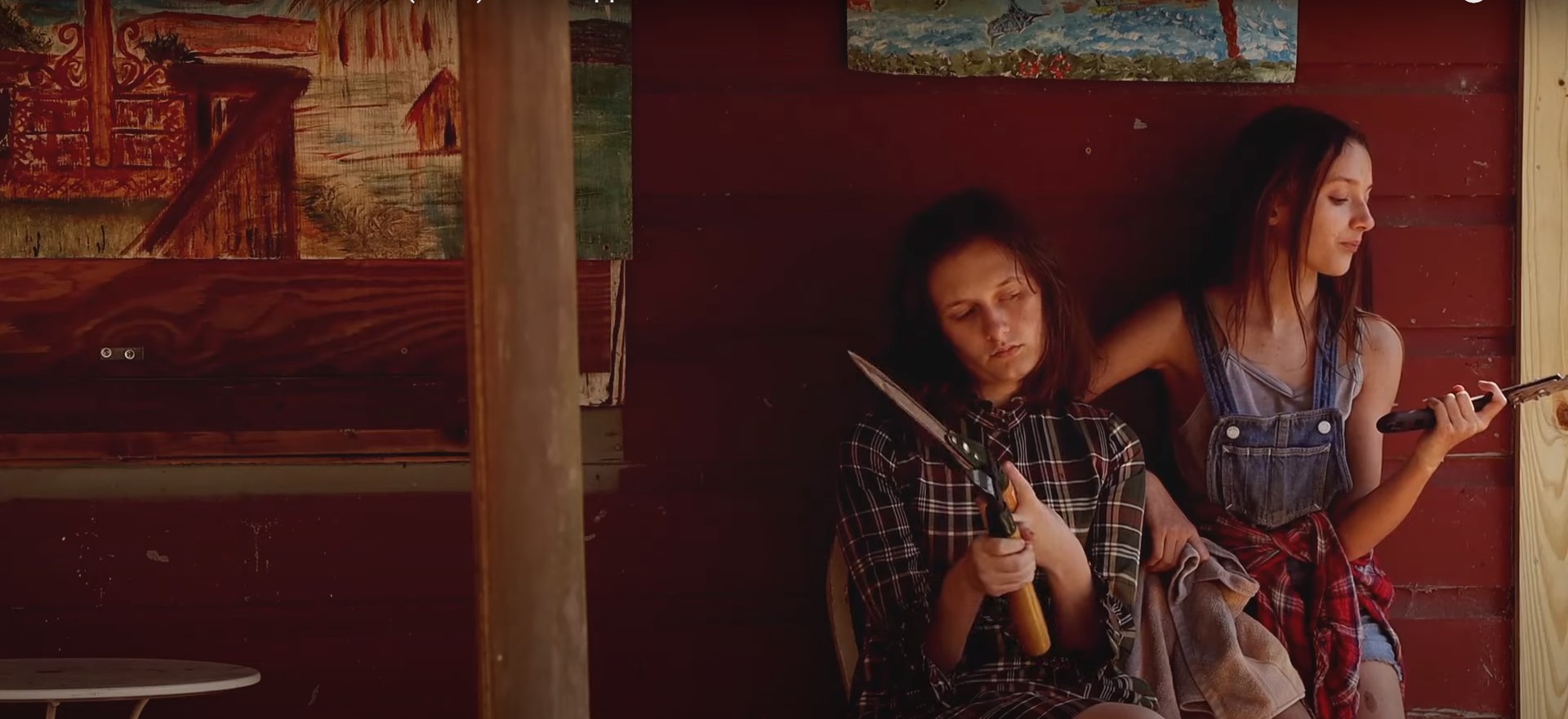
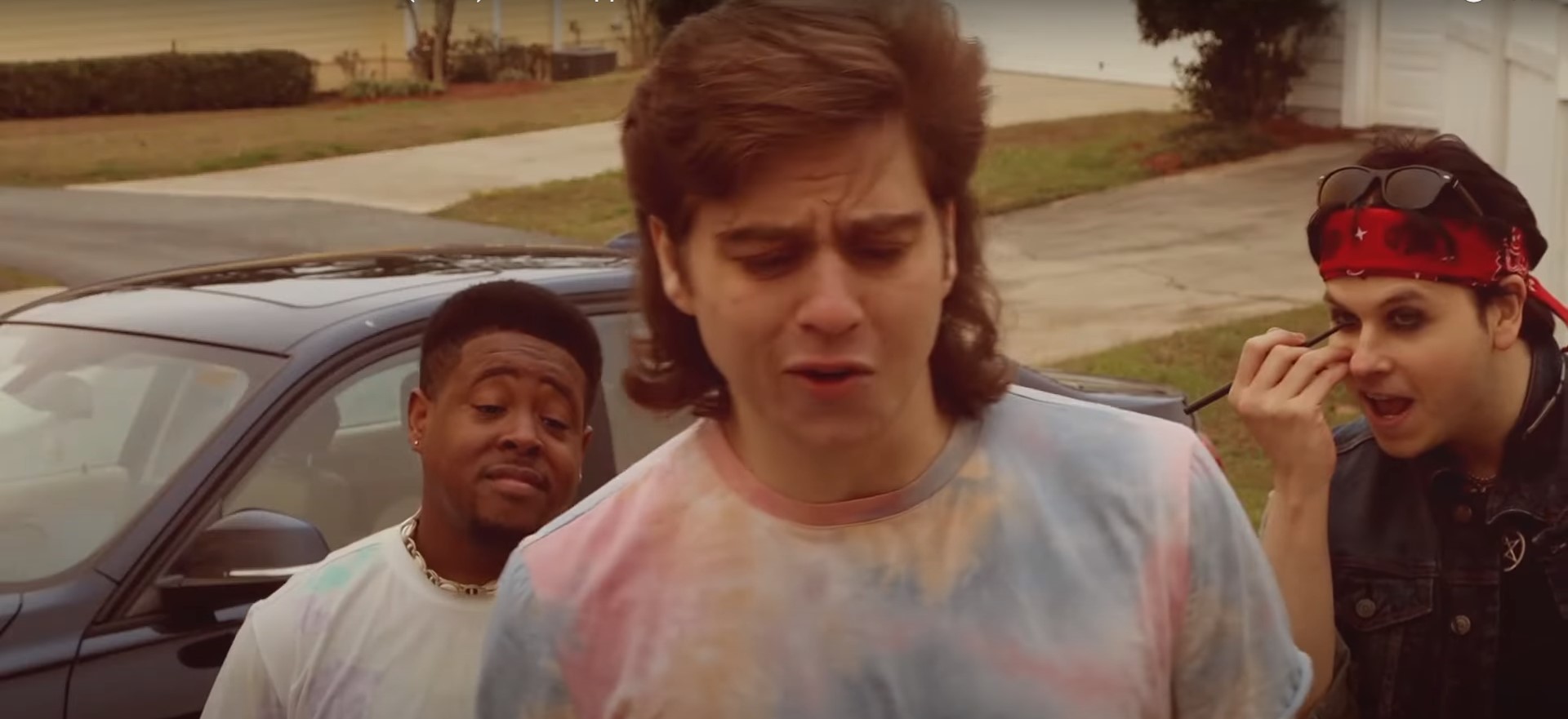
Heather and Felissa have planned the perfect weekend party for summer kickoff.  The custom invitations are set for their friends to cordially request their attendance for an 80’s themed murder mystery at Heather’s aunt and uncle’s cabin home.  Upon their arrival, the stock up on booze and groceries, fake knives and masks are in hand, and the game is about to begin, but little do they know, the surprises and terror in store for them are not manufactured by the rules of a party game.  A masked serial killer is heading straight for their night of fun and games, killing anyone who steps in his path, including other tourists, locals, and even the law enforcement called in to check on the party noise levels.  When friends suddenly disappear throughout the night, that strange feeling of derealization takes over and worry sets in that something other than being passed out from partying too hard has happened to them and that same fate will soon happen to them. 

Let’s face it.  All horror nowadays is rooted by the inspiration from horror long ago.   Originality has all but faded from the conceptual ideas, script pages, and in what the camera records.  Independent horror filmmaking is basically devotion digitized and the easily accessible equipment has turned every kid, who grew up watching Todd Browning, George A. Romero, and Dario Argento, into splintered, hackneyed versions of their favorite directors.  Most indies either follow similar formulaic narratives and styles or cast and cameo acting icons to draw upon homage or headlined sales, but for Scott Tepperman’s 2021 Indiegogo-funded slasher “Cruel Summer” there lies little effort in either department despite the film’s throwback claim.  The “Nightblade” and “Hell’s Bells” director based in Tallahassee, FL is not opaque with the 80’s obsession he integrates into his COVID production under his cofounded Los Bastardz Productions with Jim O’Rear.

If looking up “Cruel Summer” on IMDB.com or any other online movie database that lists the cast and the associated character names, a trend might pop out at you but might not be evident at first.  Since I personally try to avoid looking up or researching films or watch trailers to sideline any kind of preconceived biases, I began to pick up halfway through the runtime the correlation between all the character names in that they’re nods to renowned horror actors and directors.  Some examples include Ashlyn McCain playing principal lead Heather (as in “A Nightmare on Elm Street’s” Heather Langenkamp), Bridget Linda Froemming plays Felissa (as in “Sleepaway Camp’s” Felissa Rose), Harold McLeod II plays Tobin (as in “Saw’s” Tobin Bell), Will Horton plays Vincent (as in “House on Haunted Hill’s” Vincent Price), and Scott Tepperman plays Gunnar (as in “Texas Chainsaw Massacre’s” Gunnar Hansen.  There’s also references to Barbara Crampton (“Re-Animator”), Doug Bradley (“Hellraiser”), Robert Englund (“A Nightmare on Elm Street”), Tony Todd (“Candyman”), Linnea Quigley (“Night of the Demons”), Katheryn Bigelow (director of “Near Dark”), and William Lustig (director of “Maniac”).  While not an entirely novel idea to use genre names as characters, what’s wholly impressive is this scale of use but the characters themselves more-or-less dawdle without progressing the story or adding much substance.  Once the friends arrive at the house, not much else happens between them and no individual or group character arcs take shape and flesh out, leaving just potential fresh kills for a family of whack jobs with a loose tragic and traumatizing backstory with an incongruitous twist in family relations.  “Cruel Summer’s” cast rounds out with Jimmy Maguire (“Hell’s Bells), Paul Van Scott (“Shark Waters”), Jim O’Rear, H. (Hannah) Marie, R.J. Cecott (“House of Whores”), Keith Bachelor Jr. (“Survival of the Apocalypse”), Kim Casciotti (“I Dared You! Truth or Dare Part 5”), Ashley Casciotti, Abby Graves, and Aria Renee Kenney.

Not to be confused with the popular titular track by the teen enthralling, mega popstar Taylor Swift or the teenage angsty and melodramatic, anthological seasoned series of the same title that once starred Kevin Smith’s daughter Harley Quinn Smith, “Cruel Summer” has loose ties to the other two media consumptions with a rudimentary display of teenage complications that turns full blown slasher in a matter of minutes, ranking the indie horror as bottom shelf goods.  Cruelty lies within the character treatment in an unsatisfactory means to character’s life and/or their demise among a slew of plot holes galore, such as where are Heather’s talked about Aunt and Uncle who own the house?  Why are the killers suddenly interested in the house and the current occupants if they’ve been living next door or in the area all this time?  Is it just happenstance that the killers have imbedded kin in the group of friends travelling to this very house?  My head spins with questions that don’t play out with answers in what is truly a cruel movie that really doesn’t display the ostensible season of Summer with characters in unseasonal jackets, sweats, and flannel and staying in-doors to play in-door games.  Returning to what seems to be an epicenter of importance, the house feels keystone to the merciless slaughter, yet in the same breath, the explanation of executions doesn’t make much sense in the grand scheme of insanity cases, pulling the lynchpin on the narrative structure to have the story collapse on itself by relying on a cock and bull outcome in a slack climax.   

Scream Team Releasing, a distributor who I’ve praised the positive reviewed releases of “Dude Bro Massacre III” and “Rave,” is also home to “Cruel Summer” on Blu-ray home video.  The AVC encoded, high-definition, 1080p resolution BD50 maintains detail composure fairly well with a decoding bitrate average of 30Mbps albeit some fluctuation in the bitrate between exterior lit night scenes and the interior lit scenes.  “Cruel Summer” is more reliant on natural lighting where possible without hyper stylizing with color grading and misfitting CGI blood, resulting in a natural veneer that looks uninspired but adequate for the budget.  There is some minor splotching/banding in darker spots that is the extent of compression issues. The English language Dolby Digital stereo 2.0 mix has difficulty with sealing the rough-and-ready sound design when splicing multiple takes. Dialogue renders over nicely enough but the filtering out of extra elements, such as wind and echoes, that sneak into the recording and though a little background adds a bit of verisimilitude, there’s just too much start and stop audio files and there too intertwined within a varying levels of volume amplitude and varying levels of depth delineation, sometimes muffled or stifled to a softer mix. There are no subtitles available on this release. Bonus features include A Not-So-Cruel Summer featurette with cast and crew interviews, a glimpse behind-the-scenes that goes around scene setups and getting some background on what they’re doing at that time, an audio commentary with director Scott Tepperman going deep into every scene and their backstory with opinions on his cast but eventually Tepperman cuts out near the unveiling climax and he’s just silently watching the film with some snickering or sinus clearings to keep us aware he’s still there, Scott Tepperman, Jim O’Rear, and some of the cast’s Indiegogo crowdfunding campaign fundraiser spiel for a new kind of 80’s slasher, another Indiegogo proof of concept video and pitch, the cast and crew divulge their favorite slasher flick, the grindhouse trailer, and the trailer. The Scream Team Releasing is not rated, runs at a slim 78-minutes, and has region free playback. Don’t sweat over “Cruel Summer” in what is a lukewarm, low-budget slasher with little-to-no curb appeal and the only thing going for the Scott Tepperman feature is the filmmaker’s enthusiasm for 80’s horror which has seemingly been misplaced from the 80’s inspired film itself.

“Cruel Summer” on Blu-ray Home Video!

Pass or Fail Weekend is Evil’s Playground. “Camp Twilight” reviewed! (DarkCoast / Digital Screener)

On the verge of failing and having to repeat a grade, six students are given the opportunity to spend one technology free weekend at Camp Twilight with their homeroom teacher, Ms. Bloom, and principal, Mr. Warner, as chaperones.    Planned with a series of outdoorsy, bonding activities, the weekend will serve to boost their grades to the cutoff line for graduating and, for some, maintaining their spot on the high school sports teams.  A local urban myth has haunted the camp’s reputation based off a grisly scene of murders a few years back, but the revamped park now serves as a community safe zone overseen by three dedicated, and also quirky, park rangers:  Art, Bob, and Chief Tom.  On a weekend where none of the students wanted to attend, forced by the threat of academic failure, an ominous figure revives the camp’s notorious past as one-by-one campers, teachers, and park rangers fall victim to a hooded killer’s impulse for blood.

Summer camps and masked serial killers are as synonymous as the vast ocean is with the dreadful thought of man-eating sharks.  “Friday the 13th, “Camp Blood,” and “Sleepaway Camp” have made a fortune and a franchise off the backs of the hapless summer campers, hacking and slashing away at the pre-martial sex crazed, the love struck wimps, and the overconfident jocks to build a flawless, ultimate killing machine series.  Will director Brandon Amelotte’s debut slasher, a horror-comedy entitled “Camp Twilight,” claim stake in the genre being the next persevering serial killer franchise?  For starters, the USA-made, indie feature releasing later this month has a leg up with “Sleepaway Camp” scream queen Felissa Rose headlining a cast that also includes a few other genre favorites as well as co-written the script with Amelotte.  Shot on the grounds of the palm tree lined Markham Park, “Camp Twilight” trades in mountain bike trails, disc golf, and it’s outdoor weapons range for machetes, lots of machetes, and is a product of Rick Finkelstein and Brandon Amelotte’s Florida based Entertainment Factory productions and, also Amelotte’s, Pelican Films.

As mentioned, genre icon Felissa Rose ditches the awkward teenage camper from the finale traumatizing “Sleepaway Camp” for a hyped-up, goody two shoes high school teacher in Ms. Bloom.  The top billed Rose brings the energetic know-how of her fully present, larger than life, broad range persona who audiences will never know exactly where her character stands until it’s lethally too late!  Rose is joined by more fresh faced, incredibly automaton co-stars in the roles of the six students and principal, played by the executive producer Barry Jay Minoff.  Minoff and Rose are supposed to be a couple concealing an affair, hiding their lustful courtship very poorly around the students, but both roles are completely under written, unexplored, and unfulfilling in the grand scheme of their pivotal plot point.  Little can be said differently about the students with a range of interrelationship intricacies that tried to be fleshed out as psychological terror triggers in lieu of their already conventional teenage sensitivity struggles.  There are other cult genre vets alongside Rose but in minor, more cameo-esque roles.  Linnea Quigley (“Return of the Living Dead”), Camille Keaton (“I Spit On Your Grave”), and Vernon Wells (“Innerspace”) add more or less star power to the fold, supplementing virtually nothing to the narrative but campy slasher fodder for fans to gobble up.  More impressively is Dave Sheridan bringing forth a version of “Scary Movie’s” loveable dimwitted cop, Doofus, with Ranger Bob, adding a great deal of the substantiated comedy toward “Camp Twilight’s” campy ebb and flow.  Cougar MacDowall, Thomas Haley, Hayleigh Hopkins, Harris Sebastian, Dondre Tuck, Brooklyn Haley, and Steven Chase, with “Truth or Dare’s” Jessica Cameron and Sport’s Illustrated model-turned-film producer, Tracy Lear, filling out the troupe lineup.

I wish I could say that “Camp Twilight” is a campsite of entertainment, a paradisal slasher of genius design, offering up a new breed of deranged psychopathy to the likes we’ve never seen.  Unfortunately, I couldn’t make heads or tails out of Brandon Amelotte’s derivative and tired trope-laden slasher rippled with loose and forgotten subplots and characters while at the same time being a heap of longwinded exposition that still way after viewing can’t fully explain the turbulent core of the story.  I hate to knock anything Felissa Rose touches, but I would be doing an injustice and a disservice if I tried to play up a slack script that starts off picturizing a campy horror-comedy but plays out the third act with critical revelations without a hint of funny bone material. The kills follow the trend of a lighthearted horror comedy, albeit the pelting of F-bombs, with “Camp Twilight’s” holdall of off screen deaths, barely scratching the surface with on screen kills rendered only by closeups, and not particularly bloody, intense, or nearly as menacing by a black hooded killer in jeans creeping up on prey in a well-lit campground with lots of room to run. The same company, Entertainment Factory, behind the horror icon drenched disappointment, “Death House,” should have been a clue into “Camp Twilight” critical success, but much like the “Death House,” both films are a totality of mess.

Not a fan of the outdoors? Hate bugs, snakes, and all things that go bump in the night? Does your fear of an unclear, inaccessible toilet seize you up? DarkCoast has you covered with their digital release of “Camp Twilight,” arriving onto digital platforms come November 1st, 2020 – Day of the Dead. The release platforms will include InDemand, DirecTV, FlixFling, Vudu & Fandango. The A/V qualities will not be reviewed due to the digital screener provided for this new film release, but I will say much of the soundtrack sounds stock file-ish (and there is no composer listed which would be a dead giveaway) and the Adam Beck cinematography is too well-lit, benumbing any kind of intense emotions that would correlate with the action. There were no bonus features included with the release nor were there any bonus scenes during or after the credits. “Camp Twilight” plays into it’s own title as a dim denticulated slasher that’s far too breathy and far less spirited and so the question stands, will “Camp Twilight” be the next slasher hit to spawn a lengthy, decade spanning franchise? The answer is no.