One EVIL Deed Doesn’t Correct The First EVIL Deed! “Cannibal Man” reviewed (Severin / Blu-ray)

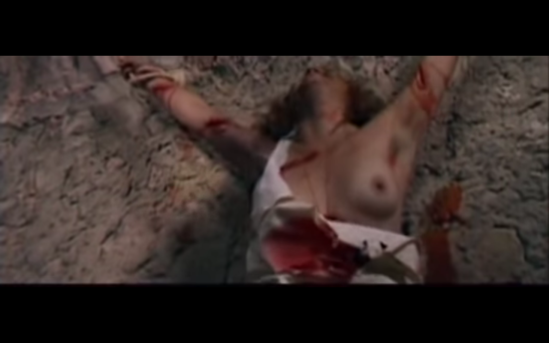
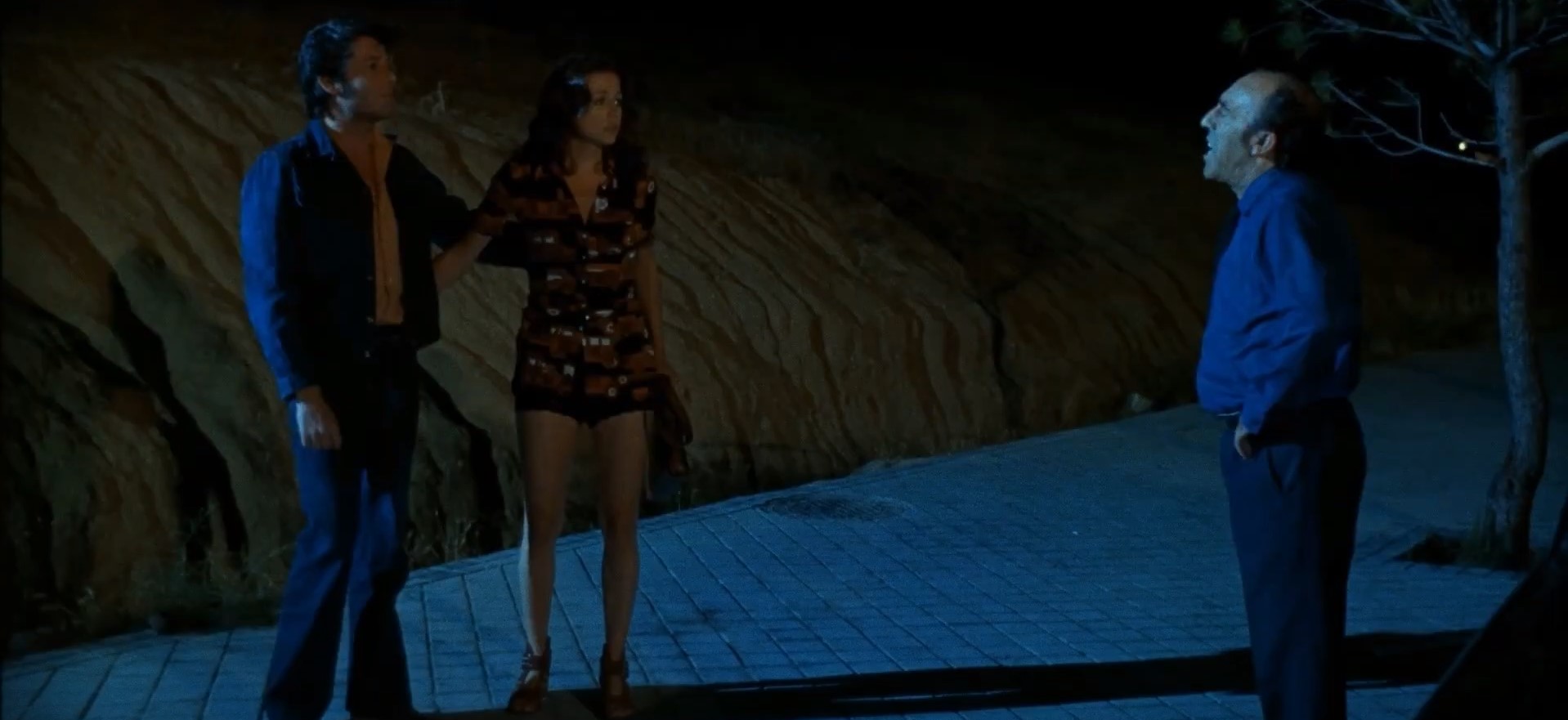
Marcos, a middle-aged abattoir worker, resists the pleas of Paula, his young girlfriend, to confess their self-defense killing of a taxi driver.  When Paula decides she’s inform the police without him, Marcos strangles her and stows her body in the bedroom of his outworn house.  The killing continues when loved ones come poking around to find answers about the disappearance or discover the macabre scene in Marcos bedroom.  Bodies pile up, the smell reaches decaying levels, and Marcos is plagued with nervous guilt.  Every day using his meat clever, he chops up bits and pieces of each victim and takes them to the slaughterhouse processing to rid the evidence and the smell, but no matter how many body parts he unburdens or how much fragrance he sprays, the sweet smell of death sticks with him. 
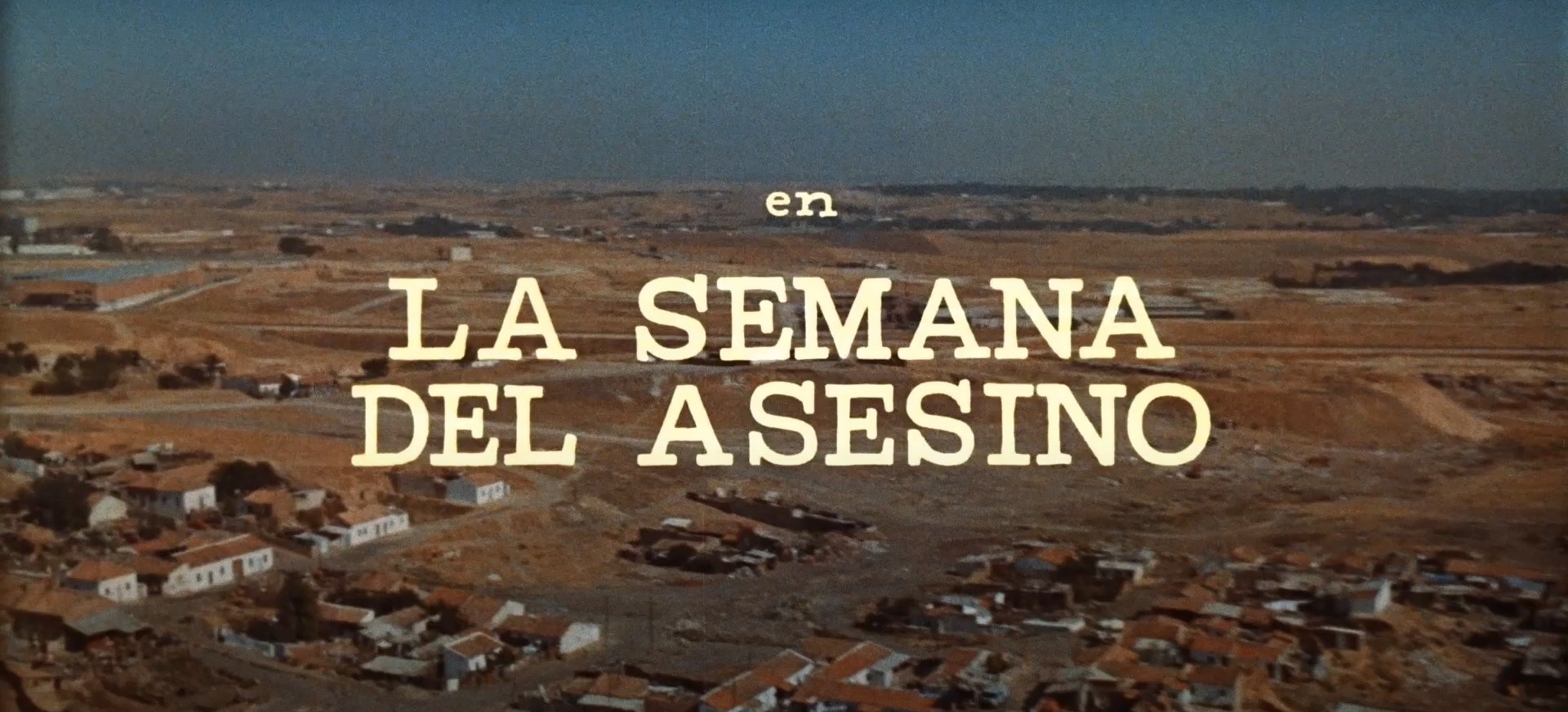
If someone would have said to me – you need to see a flick from Spanish director Eloy de la Iglesia – would you have ever guessed my first stop would be with his 1972 “The Cannibal Man” shocker?  To get to know a filmmaker’s directorial style and personal themes, the most gruesome horror can sometimes be a reflection into the soul of full disclosure because life, as most of us know from our own personal accounts, demons, and happenstances, can be ugly, nasty and unfair and can be cathartically expressed through film by a wretched shell navigating an undercurrent message to others.  That’s how Eloy de la Iglesia’s “The Cannibal Man” speaks to me.  Also known as “La semana del asesino,” or “The Week of the Killer,” as well as “The Apartment on the 13th Floor,” don’t expect an archetypical slasher and cannibal framework from this picture with many names.  “The Cannibal Man” is no “Texas Chainsaw Massacre” or similar to that of “Wrong Turn” as the film stands alone, conveyed as unsurmountable struggles of renewing oneself, a social commentary of class structures, and, also, dabbles in homosexuality suggestion.  Executive producer José Truchado, who also produced “Hundra” and had bit roles in Jesús Franco’s “The Mistress of Dr. Jykell” and “Killer Tongue,” finances the film under his self-titled production company and presented by Atlas International Film (“The Blind Dead Collection”).
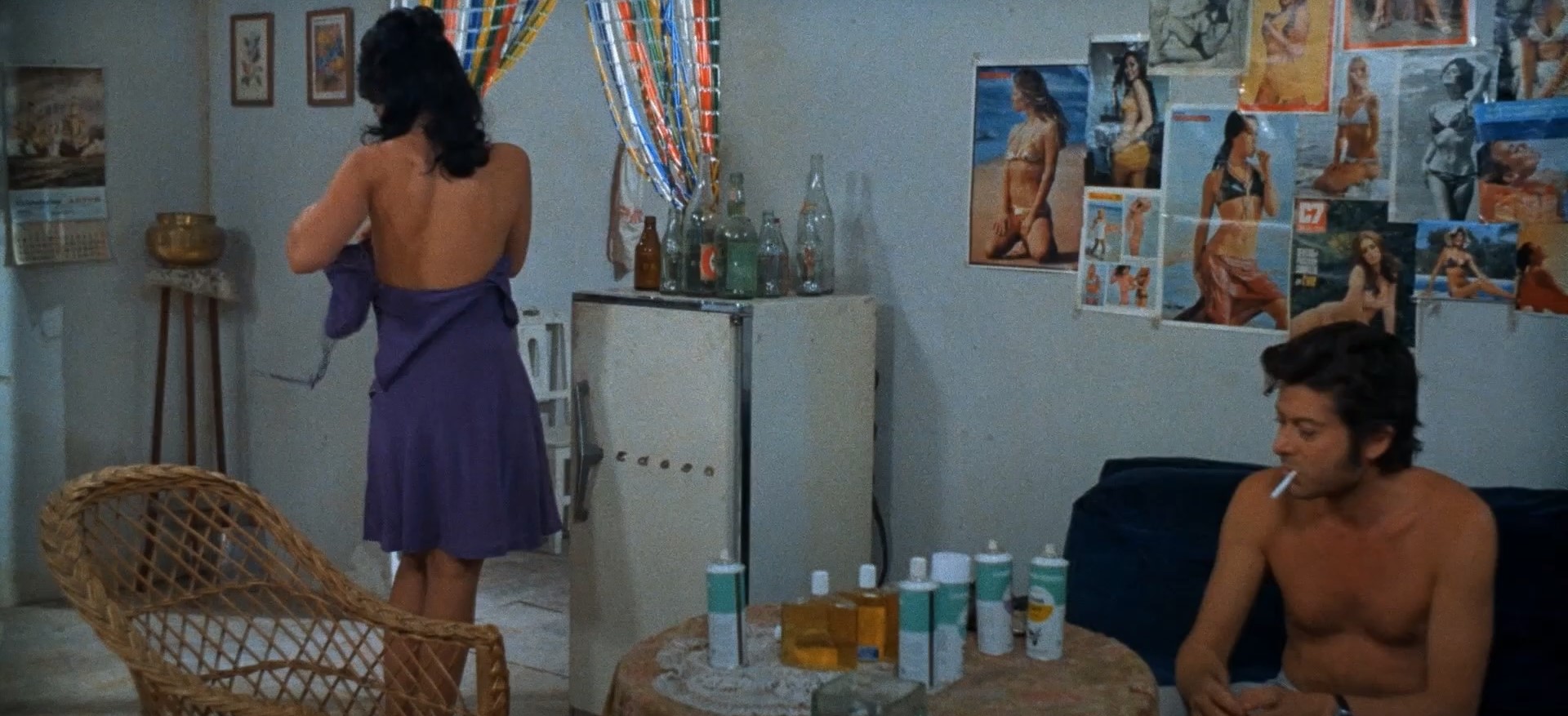
Looking to separate himself from strapping hunk typecasting and to show the world he can do more than just romantic comedies and action, the Madrid born Vincente Parra undertook a massive risk with the lead role Marcos, a meat processing factory worker in his, presumably, late 30’s to early 40’s with little education and social status who’s keeping company with a younger woman still living with and under the rules of her parents.  Let’s not to forget to mention Marcos’s grisly acts of murder and the homosexuality suggestions during his middle of the night rendezvouses with new best bud and neighbor Néstor (Eusebio Poncela, “The Death of the Scorpion).  Nothing sexual happens but the innuendo is there as, aside from his dog, the single bachelor Néstor often invites a tense Marcos out for a late night café visit, an afterhours swim at the local late night pool, and up to his swanky apartment where Néstor often watches Marcos from his high-rise balcony through Marcos’s makeshift skylight with binoculars.  Iglesia, who is gay, puts his own spin on the characters to allude to, and often over played as well, the two men as equally interested parties without ever having to speak a single word or make visible a single touch that would confirm otherwise.  Parra and Poncela couldn’t have acted better a disinterested-interested pair full of sexual tension and naïve foreplay.  Aside from the significant love interest characters from Vicky Lagos, who plays local waitress, Rosa, at the eatery Marcos patrons and “Night of the Walking Dead’s” Emma Cohen, Marcos’s girlfriend Paula, no other character have reoccurring scenes and are simply drafted as what should be major roles in the story to then be cut down by Marcos’s undervaluing psychopathy.  Charly Bravo, Fernando Sánchez Polack, Goyo Lebrero, and Lola Herrera fill in the rest of the cast list.
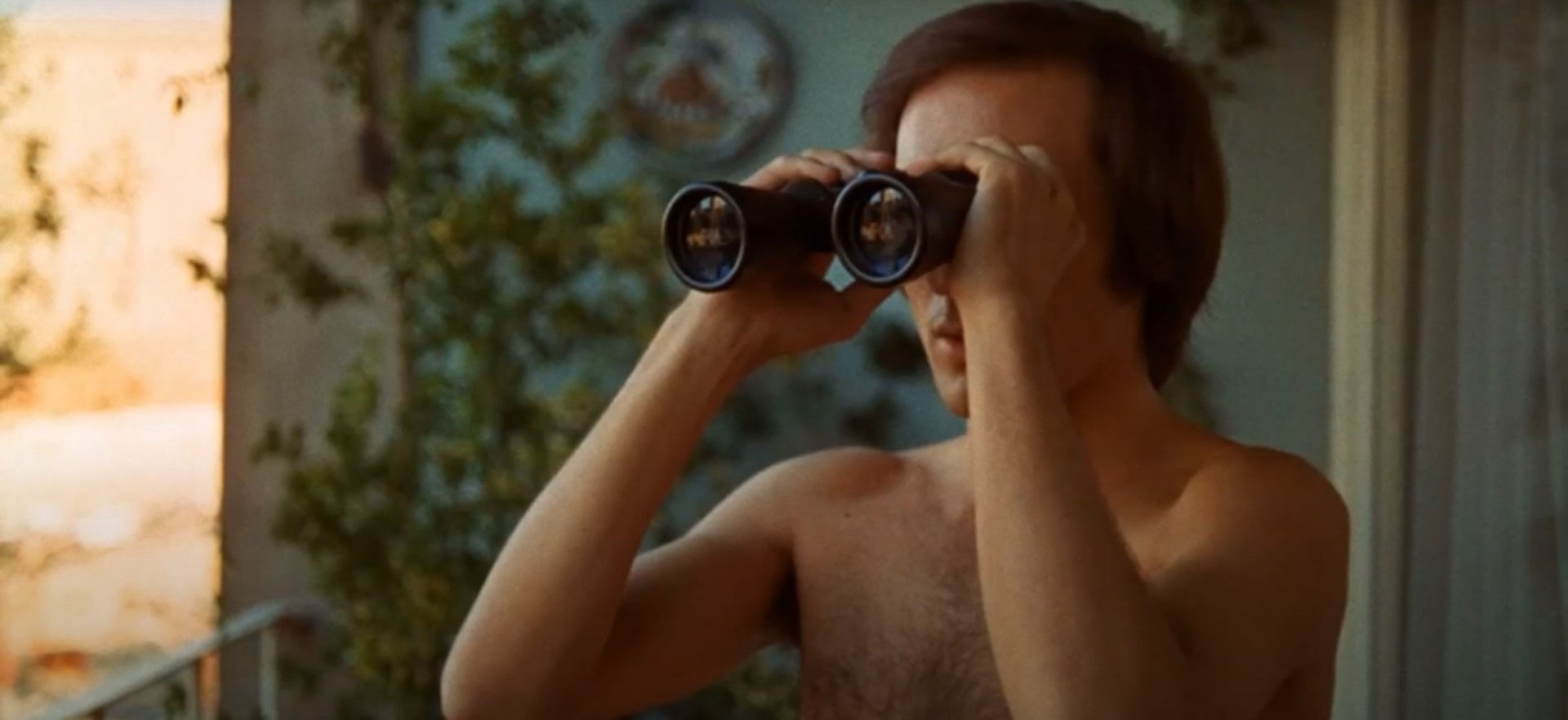
Strike out the slasher category for “The Cannibal Man” as Iglesia offers more than just a mindless, demented, hack’em up killer.  Behind Marcos brown eyes lies a reason of cold truth about his place in the world as a man who is ultimately and foremost stuck.  Stuck at a dead-end job.  Suck in his relationship with Paula.  Hell, Marco is even stuck living in a small bygone bungalow sticking out like a sore thumb right in the middle of new and wealthy high rise buildings.  He’s unskilled and uneducated, living in his brother’s house, and with no end to his personal wedging between his lackluster coursed life and his own short failings as a man until all that mediocre and mundane misery begins to ooze and shape into the one thing he tries to control – murder.  Even murder starts to spin out of control and heavy, burdensome guilt sets as seen in scenes with Néstor who’s choice of words perk up Marcos’s jumpy ears with fear of being caught.  Iglesia is a master at scene compositions that use audio cues, along with a jarring, tonal reversing soundtrack, to accentuate Marcos’s ascending paranoia as well as accentuating the scenes of the more period radical grasping social commentary on homosexuality and the unthinkable back-to-back-to-back-to-back murders.  Editor José Luis Matesanz also slyly cuts transitional scenes together in a stunningly seamless and crafty way that resemble close to Robert Wise (“Citizen Kane,” “The Andromeda Strain”) with harsh cuts that form a directional track and utilizes semi-abstract panning and reverse panning to fill in less significant gaps between the action.  Don’t expect a large amount of cannibalism in the story either.  Marcos isn’t gnawing on bones or baking a flesh brisket; instead, his act of cannibalism falls upon irony in that the bodies he tries to purge from his home ends up coming back to haunt him in more ways than one. 
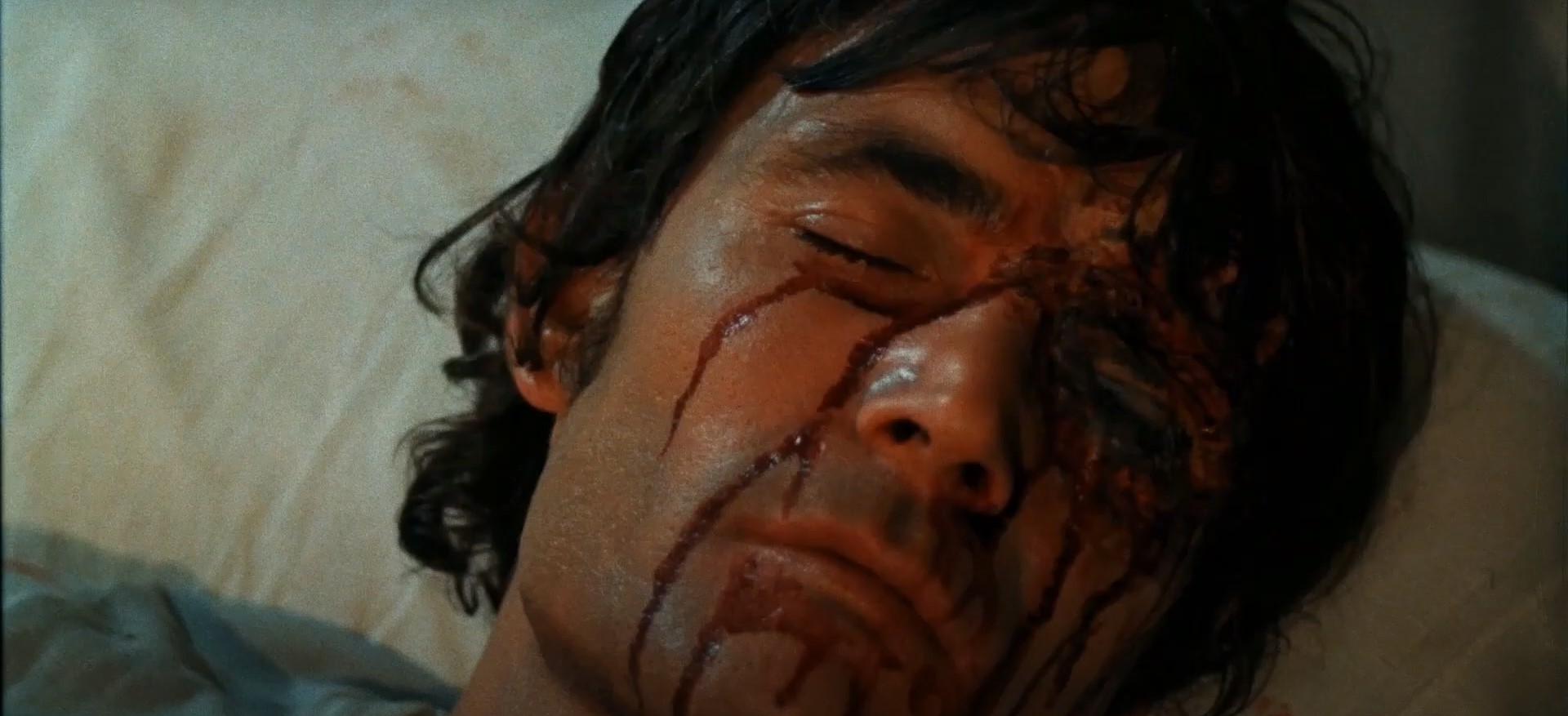
If you love obscure, foreign horror that sustains a fresh packaged air about it, in story and in a remastered transfer, I highly recommend checking out Severin’s newly scanned, region free Blu-day distributed by MVD Visual.   The BD50 comes with two versions of the film, the 98-minute international cut and the 107-minute Spanish version extended cut, newly scanned from the original 35mm negatives for the first time.  Both transfers have excellent picture quality, some of the best I’ve ever seen come out of Severin, presented in 1080p in a widescreen 1:85:1 aspect ratio.  Not a lot of age wear and tear on the either transfer with each cut having only minor and light scratches scarcely throughout.  There’s sufficient, natural grain in both versions, but the extended cut’s grain flattens up, looking coarser, in the extra scenes.  Coloring grade is gorgeous with natural looking skin tones and you can see the details were refined and redefined.  Both versions come with an English dub and Spanish language DTS-HD Master Audio 2.0 track with some back-and-forth forced English dub in those coarser grained scenes that make the flow unsettling.  Both versions render hearty range and fidelity with a strong dialogue track that syncs well with the option English subtitles, but slightly off sync with image unity.  Underneath the double-sided cardboard sleeve, Severin’s special features include Cinema at the Margins – a Stephen Thrower (author of “Beyond Terror: The Films of Lucio Fulci”) and Dr. Shelagh Rowan-Legg (author of “The Spanish Fantastic: Contemporary Filmmaking in Horror, Fantasy and Sci-fi” on director Eloy de la Iglesia, The Sleazy and the Strange – interview with Spanish film scholar Carlos Aguilar on director Eloy del la Iglesia, deleted scenes, and trailer.  An engrossing bodega of vile Euro horror is what “The Cannibal Man” presents as a first-rate cutthroat thriller from the shamefully underrated filmmaker, Eloy de la Iglesia.

Own “The Cannibal Man” on Blu-ray!  Buy at Amazon.com

Knights, Murder, Zombies…It’s an EVIL Smorgasbord! “Erotic Nights of the Blind Dead” reviewed!


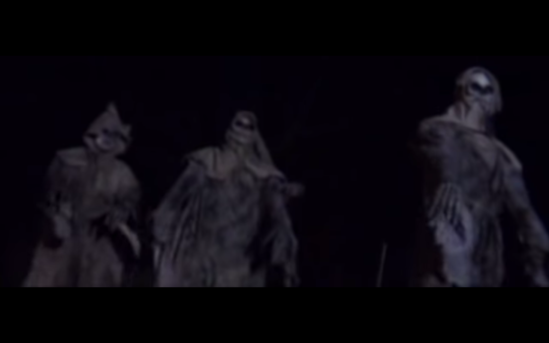
Buitrago, Spain in 1310, Templar priests set forth on a mission, wandering the countryside to root out evil witches for torture, flogging, and eradication, but what the priests kept secret from public eye is that the village women they were apprehending were actually innocent and used as a means for sacrifice. The sadistic, malevolent priests drank the blood of their innocent victims for eternal life. Fed up with the Templar priests authority, the village men tracked them down to a gruesome end as the vowed in the throes of death to return for revenge. Buitrago, Spain in 1976, the Templar Priest, decomposed to the bone inside their tattered and dirty ceremonial robes, arise from their shallow graves with a hunger for vengeance and feed upon the flesh and blood of unsuspecting outside partygoers under the moonlight night.

Baring a thin shred of anything approximating a resemblance to Joe D’Amato’s “Erotic Night of the Living Dead” and Amando de Ossorio’s “Tombs of the Blind Dead” from the 1970’s to early 1980’s is Vick Campbell’s “The Erotic Nights of the Blind Dead. Also known as “Graveyard of the Dead” or, in it’s original language, “El Retorno de los Templarios,” is the 2007 Spanish produced throwback to the gothic and erotic ghoulish horror genre that once widely flourished through Europe and parts of South America and has, more or less, been nearly forgotten admirably for decades. “Erotic Nights of the Blind Dead” marks Campbell’s feature and script debut that blends the gothic and the erotic for an entry into the soles (or souls, perhaps?) of considerable shoes to fill and the consensus is Campell’s a size 10 trying to fill out into a size 18 wide but leaving too much wiggle room for missteps.

Campbell, also known Vick Gomez, commissions mostly a Spanish cast of the unknown variety, starting off with Eloise McNought in her breakout performance as the troubled, young Miranda who has been sexually abused by her father and has, somehow, misplaced her husband. Miranda’s backstory has an equal amount of ambiguity as the rest of the cast with bits of family melodrama to piece together her obviously distraught mental state. McNought’s a budget actress at best as she sometimes looks right at the camera in the midst of intense scenes and Campbell has a knack for upskirt scenes with McNought which feels creepy and impertinent to the story. Miranda’s the searched figure for her brother Jorge, Albert Gammond. Gammond, who had a role in Campbell’s short “Violencia gore,” has less backstory as the estranged son of the family and when he arrives to 1976 Buitrago, out of nowhere, to search for his sister, the siblings tango the enigmatic dance of who, what, when, why, and how? Gammond’s few dialogue moments are eaten up by Jorge trying to convince a distressed Miranda he’s her brother and reminding them of the childhood songs they sang as kids. Thais Buforn, Rick Gomans, Anarka de Ossorio, Dani Moreno, Anthony Gummer, Julian Santos, and Jose Teruel co-star.

“Erotic Nights of the Blind Dead” flatters being as an economic version of an Amando de Ossorio “Blind Dead” film, which centers around the vile and wretched depravities of the ghastly Templar Knights ethos and while Campbell captures the essence of the Knights and their menacing macabre presence of soiled garbs and persistence, the attention to the rest of a, literally, non-story is hastily slapped together or stuffed with cinched time wasters. The first half hour involves nothing more than Templar Priests roaming the countryside, flogging with an endless crack of a whip those who they deem dissident. The Knights’ whip must be malfunctioning as it could not rip flesh or break the souls of man until well into the lashing that mercifully warrants an edit for some bloody, but still steadfast firm, scarring and sheered rags. I felt the floggers arm and shoulder pain with such extensive beatings. Next, the majority of the second act consists of Jorge pleading with his sister Miranda to listen to him and convince her about his brotherly love and bring her back home. At this point, flashbacks of her father’s lust for her are introduced to backstory Miranda’s despair; the smoking gun catalyst finally rears a father-daughter rape-incest ugly head in act three when the Templar Knights have resurrected for blood thirsty revenge and gives some context of Miranda’s blabbering incoherency in the middle of the dry Buitrago landscape; yet, Miranda’s daddy issues hardly explain why the Templar Knights have returned at this point in time and just want the undead Knights tend to accomplish with their revenge at hand. In fact, there’s no explanation given at all…they just return and rampage. Campbell extends upon the risible execution of an Amando de Ossorio film by inverting scenes that are the same shot just in reverse, utilizing a single ambient track over and over again on multiple scenes, and countering whatever shred of terror from the Knights with an easy way out of unexplained reasoning for their befuddling demise. Almost as if Campbell didn’t know how to end his film and gave up with a snap of his fingers. Who does he think he is, Thanos!?

“Erotic Nights of the Blind Dead” lands DVD home video distribution from MVDVisul and Wild Eye Releasing on their Raw and Extreme banner. More raw, then extreme, Vick Campbell’s gleaming debut homage offers no eroticism either on the region free, 70 mintue runtime title, but, rather, lingers over incest and whipped-bloodied breasts of slim illicit pickings and suggests the title was more a ploy against “Graveyard of the Dead” to gain buys. The picture is presented in a widescreen format, but suffers from horrible color banding and severe compression issues that nearly make this title indiscernible like an aged or scores of duplication VHS transfer. The Spanish language stereo track also has flaws with speckled quality and coarse feedback at times due to bad mic placement. As aforementioned with the repetitive ambient and score tracks, range and depth do not reside with these versions of the Templar Knights that are probably inundated in a violent anguish of the same loop of rattling chains and heavy breathing. To add salt to the audio wound, the English subtitles are riddled errors such as Obbey instead of Obey or Swete instead of Sweetie. Special features include a behind-the scenes segment of ho-hum production takes, deleted scene, and Wild Eye trailers. One thing I think might be interesting is actress and executive producer Anarka de Ossorio who, I can’t confirm, might have some relation to Amando de Ossorio; the idea would be neat if his legacy still lives on through his kin. A brooding atmosphere from beginning to end, “Erotic Nights of the Blind Dead” has little else to offer under a guise to link itself to legendary Euro-trash gold, but filmmaker Vick Campbell detrimental diegesis could tarnish the very jeweled films in which he attempts to honor.

Purchase Erotic Nights of the Blind Dead on DVD!

Evil Walks Among Us! “The Devil Incarnate” review!


In a time of Kings and nobility, a traveling beggar roams the open landscape. However, this man is no ordinary vagrant, but is the leisurely wary Devil reincarnated into the flesh, walking amongst mankind with one goal in mind: seeking pleasure by any means necessary. From pillaging to cheating and lust to murder, the haughty Devil has embarked on an oppressive journey as Mr. Leonardo, encountering all walks of life and swindling them of their morality and of their wealth. He’s joined by a young and poor servant boy, Tomas, as a traveling companion, schooling the God fearing lad in man’s corruptible virtues and exploiting their naïve or sinful nature. Though being a powerful immortal in true form, as man, the Devil can succumb to sickness, injury, and even death, but still maintains certain metaphysical abilities to provide an edge over those he bamboozles. In his mischievous encounters on Earth, Leonardo comes to realize that man might just be more immoral as the Devil himself when the Devil, in human form, can’t inflict as much havoc as the unscrupulous attributes of a profane mankind.

“The Devil Reincarnate” is worth it’s weight in ducats for all the Paul Naschy fans. Also known as “El Caminante,” not a literal translation with an interpretation as The Walker, the Paul Naschy starred, co-written, and directed film, under his birth namesake of Jacinto Molina, is a staggering approach toward the exhibition of humanity at it’s complete and utter worst in a cloaked slither of an Naschy anecdote that even the Devil couldn’t top man’s relentless and unremitting cruelty. Naschy’s pessimistic views, much which I’ve always agreed with, illuminate all that was, is, and will be wrong with human race and despite how barbaric and nasty his character, Leonardo, might be portrayed, Naschy manages to be essentially one of the only directors to make the Devil an anti-hero of sorts.

Paul Naschy is Spain’s most recognizable horror icon, recreating many of the iconic monsters and macabre films in his native land. Leonardo is a different sort of character for Naschy, one that doesn’t hide behind a mask or makeup, revealing a full-blown Naschy assortment of just him. As himself in Leonardo, he’s plays a terrible, down-right rotten bastardo who even belittles himself as a simpleton to lie and steal from wealthy aristocracy. Leonardo is smooth, skillful, charming, intriguing, and brutish much like I would imagine Paul Naschy would be in real life. Alongside Naschy, David Rocha portrays Leonardo’s servant companion, Tomas, and Rocha provides a youthful exuberance that translate to onscreen, giving Leonardo companionship, aid, and also assists in being the Devil’s experimental subject to see how long and how much the Devil can instill the dastardly advice and actions into the young man. “The Devil Incarnate’s” concupiscence fully enflames with some of Spain’s more provocative actresses such as Eva León (“Bahía blanca”), Adriana Vega (“The Night of the Executioner”), Blanca Estrada (“Horror of the Zombies”), and “Night of the Werewolf’s” Silvia Aguilar, whose bare rear-end is splayed on many of the film’s iconic posters and the limited edition Mondo Macabro Blu-ray cover with an upside down cross etched into her left butt cheek.

Honestly, “The Devil Incarnate” is exemplary of near perfection. Through the journeyman storyline, the performances maintain the highest caliber inside the realm of horror-comedy with Naschy at the helm, steering the multi-façade Leonardo with charisma, magnetism, and callous barbarity. Supporting cast complete Leonardo’s monstrous persona with pinpoint precision by shifting actors and actresses into diverse walks of life who then churn out comical, chilling, and overall controversial performances that spill into horror subgenre territories, like Nunsploitation for example. The powerful theme is an unfortunate, yet timeless blemish on human culture and society. Cheat, steal, and murder are the core elements conveyed by the filmmaker to suggest that the Devil doesn’t need to take form to stir up mayhem, but that there’s a little bit of the Devil inside us all to complete his bidding in a war against God. Story references the renowned biblical tale of Adam and Eve and the Devil’s temptation that ultimately curses the human race, bestowing upon them with original sin. There’s plenty of sin motifs to go around along with phallic notions through the Devil’s own wandering agenda that’s intertwined with leagues of potential disobedient individuals and shamed religious turncoats to paint a gloomy landscape of man’s most horrid shortcomings.

Mondo Macabro and CAV Releasing presents the unrated, non-limited edition of Paul Naschy’s “The Devil Reincarnate” onto a region free, 1080p, BD25 Blu-ray home video with a brand new 4k transfer from the film’s negative and displayed in a widescreen, 1.66:1 aspect ratio. For a negative from 1979, the transfer aims to please with hardly little-to-no damage or other deterioration flaws, no awkward cropping, and no tinkered enhancements detected. Coloring is flattering despite the hint yellowish tint. Some of the darker scenes lose sharp definition do to poor lighting, but there are breathtaking landscapes, especially when Naschy is strung up on the cross, with a vivid, natural aesthetic to the release. The Spanish Dolby Digital LPCM mono, at 24fps, with optional English subtitles packs quite a wallop with robust scuffles, clanking of swords, and a clear rendering of Ángel Arteaga’s zany and harrowing compositions. The extras include an introduction from Paul Naschy, exclusive interviews with costar David Rocha and Naschy’s sons, Sergio and Bruno Molina, a tour of Paul Naschy’s study and home, and exclusive audio commentary by Troy Howarth, author of various horror historical directors and moments in cinema. There’s no contest. “The Devil Incarnate” is, without a single seedling of doubt, the best film of Paul Naschy’s extensive body of work and it’s a film that reinstates an immense amount of melancholy into the soul when regression is setting in that human beings never have been and never will be better than the Devil himself.

Own it today! Click to buy at Amazon!

A Retelling of an Iconic Evil! “Apostle of Dracula” review!


While at a Spanish night club, Lucy meets a darkly tall and handsome gentleman who takes her back to his luxurious yacht and spends a romantic night with him inside his cabin on the sea. The next morning, Lucy suffers from a terrible case of amnesia, unable to recall where she’s met this mysterious man before or even remember her own past and as she relaxes in her hotel room after a soothing bath, a past life vision of herself entangled with her one night stand, otherwise known as Dracula, establishes her place amongst Dracula’s side as his undead love, but vampire hunters, Doctor Van Helsing and his faithful assistant Seward, are hot on Dracula’s scent toward his brooding castle in order to save Lucy from succumbing to Dracula’s cursed evil forever.

“Apostle of Dracula” is a Spanish retelling of the classic Bram Stoker “Dracula” tale, versed in Edgar Allan Poetry, and is directed and co-written by Emilio Schargorodsky. Also known more in other parts of the world as “Dracula 0.9,” Schargorodsky’s film boldly tiptoes through a minimalistic approach regarding the mythos of the legendary vampire that dabbles in some special effects when required and uncomplicated imagery that still relishes in wondrous imagery. The “Spirits of the Dead” poetic works of American macabre writer Edgar Allan Poe reinforces the Gothically garnished settings and costumes and heightens the gloomy sensationalism in Schargorodsky’s melodramatic horror soap opera that redesigns slightly Dracula’s origins and his infatuating love interest that isn’t Mina Murray.

Instead, Dracula’s focus is resuscitating the undead cursed life into Lucy dreamily and elegantly portrayed by model-actress Nathalie Le Gosles. Le Gosles has ghostly grey eyes that pierce vividly on screen through her Lucy Westerna performance that’s quite different than what audiences might be typically used to in the character. Lucy is the titular character, being the “Apostle of Dracula,” and Dracula (Javier Caffarena) spares no expense or time and effort in making Lucy his forever. Caffarena’s Dracula is very much overshadowed by Le Gosles’s beauty and performance as Caffarena’s acting experience before his freshman film only credits him in on other role in a short film directed by Schargorodsky, but Caffarena’s a busy body on this feature, delving into many facets from cast to crew as also one of the three co-writers and also donning not only the cape and fangs of the vampire but also creating a composing soundtrack, editing the film, and acting as a producer. In all honest, Paul Lapidus stole the show with his role as the most famous vampire hunter that was ever created – Van Helsing. Virtually embracing every facet of his time hopping character, along with the rest of the cast, Lapidus’s steadfast approach toward a more conventional Van Helsing relieves many anxieties of jumbling up Dracula’s mythology. Antonia Del Rio, Francisco Del Rio, Jose Luis Matoso, and Virginia Palomino round out the cast.

Schargorodsky’s indie Gothic Dracula feature is not immaculate; however, because Schargorodsky is an experienced photographer, a silver lining in his filmmaking playbook is his impeccable eye for cinematography. Whether in the framing or capturing the organic beauty of the landscape, Schargorodsky blends a dream with classic styles that had once scared the pants off people by incorporating shadow imagery that pays a dear homage to that of F.W. Murnau’s “Nosferatu” alongside Caffarena’s Dracula shaving his head and extending his fingers to be a lookalike Max Schrek. Captivating as many of the frames might be, the juxtaposition to the story doesn’t hold water as the story hops from one century to another without much regard for exposition. Lucy’s passionate yacht fling with a daylight walking vampire not only raises many vampire mythos questions, but also leads into Lucy displacing much of her memories of herself and her past. She then goes into a trance after returning to her hotel room, envision her great lineage self intertwined with Dracla and that story unfolds for a good portion of the film from the time Lucy’s bit to when Van Helsing and Seward interject at Dracula’s Castle. The story then returns Lucy’s back to present time where she then fights to urge to be a bloodsucker, but can’t stop her desires to be with her undead beau all the while a modern day Van Helsing and Seward, sporting sleek Secret Service-issues shades and wardrobe, seek to protect Lucy at all cost. Lost somewhere in the midst of the story is an important pice of the puzzle that goes unexplained.

Wild Eye Releasing MVDVisual present the 2012 “Apostle of Dracula” onto DVD for the first time in the U.S. The DVD, graced with a cover illustrating an unrelated naked female vampire crotched down and glaring outward, widescreen presentation sports a digitally shot transfer that fairly mediocre throughout despite soft details, faint aliasing, and spotty moments of digital noise during darker scenes. However, the worst technical aspect lies with the dialogue audio track that’s horrendously dubbed in non-optional English in such a flat, monotone voice that all the passion behind the actors is lost. If you watch close in the special features, clips of untainted portions of the film can be caught with the original Spanish track, bringing a whole new life into the scenes. There are no options to play the original language or even optional subtitles. Caffarena’s looming score comes out clean with subtitle details in the LFE emitting from Stereo audio which can be seen discussed on the bonus material about composing the score. Another special features contain a pleasant surprise with a never before scene interview with the late Jess Franco, who looked to be on his death bed, conversing his positive thoughts and praises on Emilio’s film that does have a faint resemblance to Franco’s work consisting of elements, but not limited to, the gothic, dream-like, and slightly sleazy. Bonus material comes full circle with Wild Eye Releasing trailers. Emilio Schargorodsky’s self-funded Dracula film proves any filmmaker can be a auteur without losing focus despite some flaws being on the grand stage of an iconic horror monster and while “Apostle of Dracula” flips the script on Bram Stoker’s telling of one of the greatest villains ever scribed, there’s something to be said for the multiple ways to skin a cat in this and still able to construct a solid story in this European horror.

Sit Back. Relax. Let Evil Take You For a Ride. “The Glass Coffin” review!


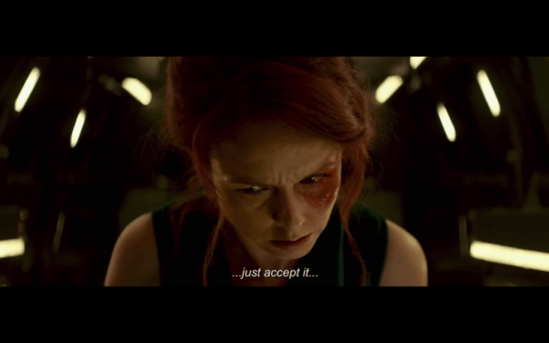
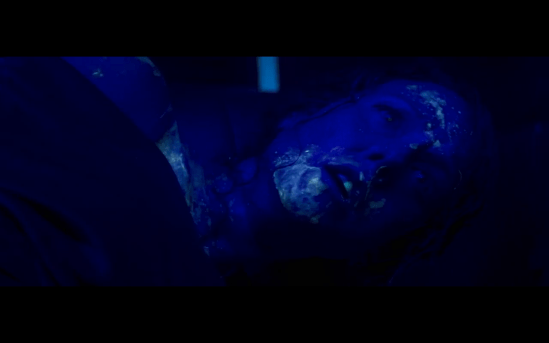
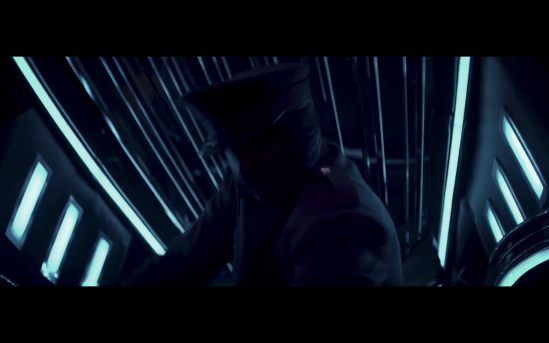
Her night was supposed to be a wonderful occasion of celebration, a night to showcase her lustrous career as an established actress, a night where she was set to receive her crowning lifetime achievement award, but when the gowned Amanda stepped into a luxurious, fully-loaded limousine, the night that was to be a collective jubilee of the last twenty-years of Amanda’s life will be turned into a terror ride of unspeakable acts in the name of pure hatred. Once inside, the limousine’s inescapable locks detainee Amanda as a voice behind a voyeuristic camera commands her every subversive move and a sadistic chauffeur uses pain to thwart any of Amanda’s attempts of refusal in on an interrogation on four hellish wheels.

“The Glass Coffin,” aka “El ataúd de cristal” is a 2016 Spanish thriller from first time feature film director Haritz Zubilaga and co-written with Aitor Eneriz. From the moment Amanda steps into the limousine built like a tank, Zubilaga’s film goes from zero to sixty in a matter of minutes with thick tension and high horsepower suspense. “The Glass Coffin” is a depraved film. This isn’t a sugar-coated stuck in a glass box Hollywood thriller like “Phone Booth.” Oh no. Zubilaga and Eneriz hitch your emotions on a tow bar and drag them through the filthy muck without as so much of a care. Is this a game like Jigsaw would construct in “Saw?” No traps or snares here, but there’s an ominous shroud of mystery behind Amanda’s captor that could certainly give Jigsaw a run for his money. “The Glass Coffin,” in fact, goes more in tune with Joel Schumacher’s “Phone Booth” when considering the villain. Well, more like a Eurotrash, alternate version of “Phone Booth” antagonist anyway because aside from deriving the guilt and the sin from Amanda, there’s a sleaziness about the captor whose presence becomes more and more gothic the closer we learn more about them on top of their already extreme methods in the right-the-wrong stance.

Very similar to most films with a slim-to-no cast, like the Ryan Reynolds’ thriller “Buried, “The Glass Coffin” fits the bill as a one actor film. Paola Bontempi stars as the targeted starlet Amanda and the Canary Islands born actress musters enough courage to accept such a punishing role where her character’s humility and pride stems from a base layered motivation in not wanting to become the masked Chauffeur’s punching bag. Amanda goes from high time to gutter low in an ugly show of stripping moralities and ethics in order to reveal one true self. A pivot does occur, turning the shredding of facade into plain and simple revenge that becomes the flashy bullet points of European horror and Bontempi changes with it in one fluid motion of character revival and redemption.

The diabolical game is, well, diabolical and sincerely rich in providing an attractive story, but the film doesn’t go without it’s problems. Whether lost in the Spanish translation or just simply unexplained, an opaque mystery clouds Amanda’s captors, especially with the maniac Chauffeur and his bizarre relationship with the planning perpetrator, that puts a sour afterthought into analyzing “The Glass Coffin.” The Chauffeur was one realistic element of an intriguing conglomerate that tipped the ice berg of sinister deplorability and I was yearning for more of that; instead the game turned, the plot transformed, and “The Glass Coffin” took an approach that routed far into left field. Not a bad route to take as, like much of Zubilaga’s film, the moment had me at an astonished state as the film continued to keep me guessing what was going to occur next.

MVDVisual and Synergetic Films distributes the Basque Films production, “The Glass Coffin,” onto DVD home video. Short in giving any sort of physical or emotion breaks, the 77-minute runtime feature is presented in a vibrantly engrossing widescreen presentation and while at times soft on the auxiliary background, the image quality is flashy and sharp surrounding Amanda. Darker scenes in the tail end lose quite a bit of definition that makes eyeing the moment difficult to capture. The Spanish 2.0 stereo mix does the job and profusely invigorates the voice behind the camera, a voice made of nightmares and all that horrifying in the world. The English subtitles sync well, but I spotted a couple of typos along the runtime. There are zero extras on this release and even though a smidgen of behind-the-scenes material would have been curious to view, the film is a simple bliss. “The Glass Coffin” arches over the niceties and lands right smack into obscenity to destabilize integrity in a cruel ride of exploitation. I wanted more, the unfiltered, fully unadulterated, story of Amanda and her polar opposite antagonist, but I’ll settle for the Cliff Notes version. For now.

A Must See! “The Glass Coffin” to purchase at Amazon.com!