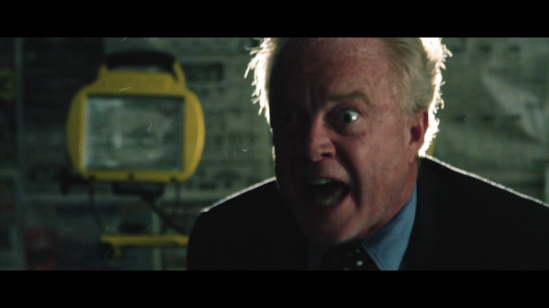
Fulci Turns Back Time to Bring EVIL Back from the Dead! “The House of Clocks” reviewed! (Cauldron Films / Blu-ray)

“The House of Clocks” Delivers Time as an Illusion. Blu-ray now available!

An isolated Italian villa becomes the looting target for three thieves looking for an easy score.  Villa residents, an elderly couple, are tricked into letting them into their estate adorned with elegant clocks of all shapes and sizes but as the plane unfolds it goes awry when the imposing grounds man arrives and both homeowners are killed.  Yet, the villa owners were no saints and no ordinary couple as soon as the husband’s heart stops, the clocks begin to move counterclockwise and that’s when the peaceful villa turns into a strange nightmare where time goes in reverse and those short and long dead come back to life with wounds miraculously healed as if it never happened.  As time continues to reverse, the thieves find themselves trapped inside the house and on estate grounds being hunted down by the merciless grounds man, but the skeletons in the elderly couple’s closet will soon resurrect and be thirsty for vengeance.

“The House of Clocks” is the Lucio Fulci made-for-TV movie that never saw the light of television programing.  Deemed too gory and violent for public broadcast, Fulci’s 1989 Italian film, to which he created the concept for and the screenplay treated by the duo team of Gianfranco Clerici  of “Cannibal Holocaust” and Daniele Stroppa of “Delirium,” was shelved for many years until it’s eventual home video release because, as you can tell just from the high-powered Italian horror names attached to the project, the finished film would certainly frighten those general audiences with easy turn-of-the-knob and bunny ear-antenna access.  Also known natively as “La casa nel Tempo,” was a part of a four-film horror special surrounding a theme of the houses of doom and was a production of Dania Film and Reteitalia production companies with “You’ll Die at Midnight” and “Delirium” producers Massimo Manasse and Marco Grillo Spina serving as executive producers.

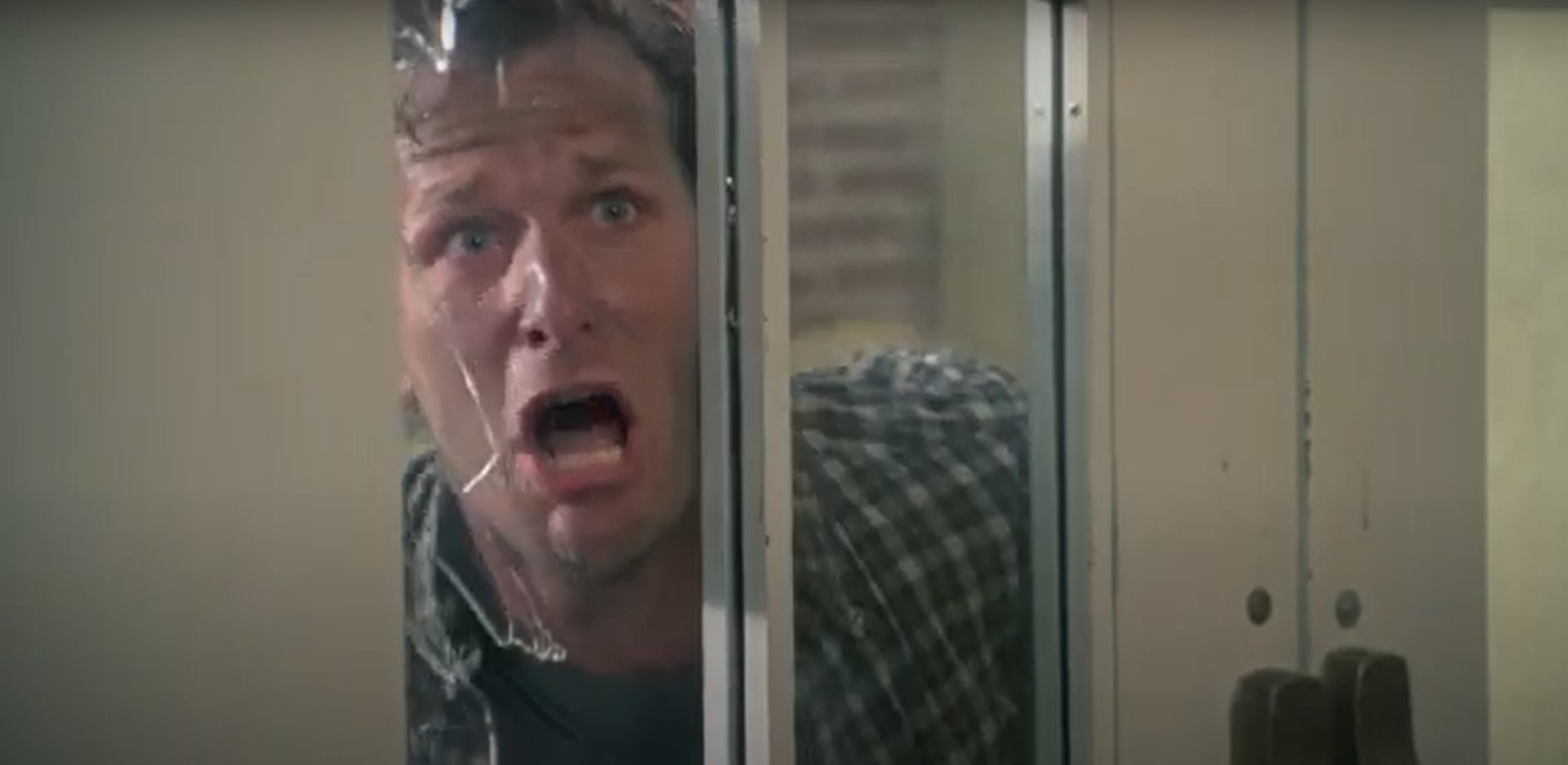
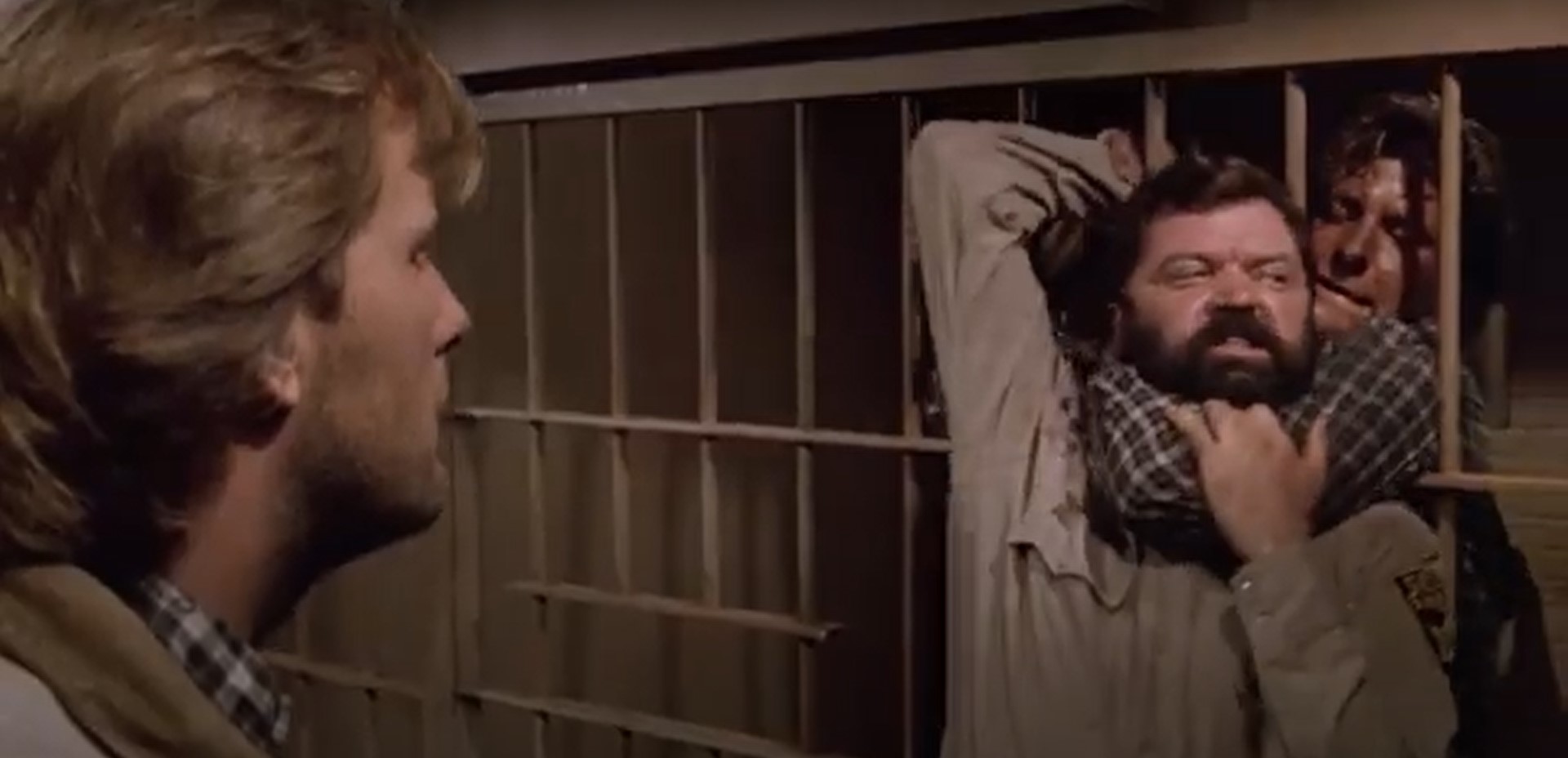
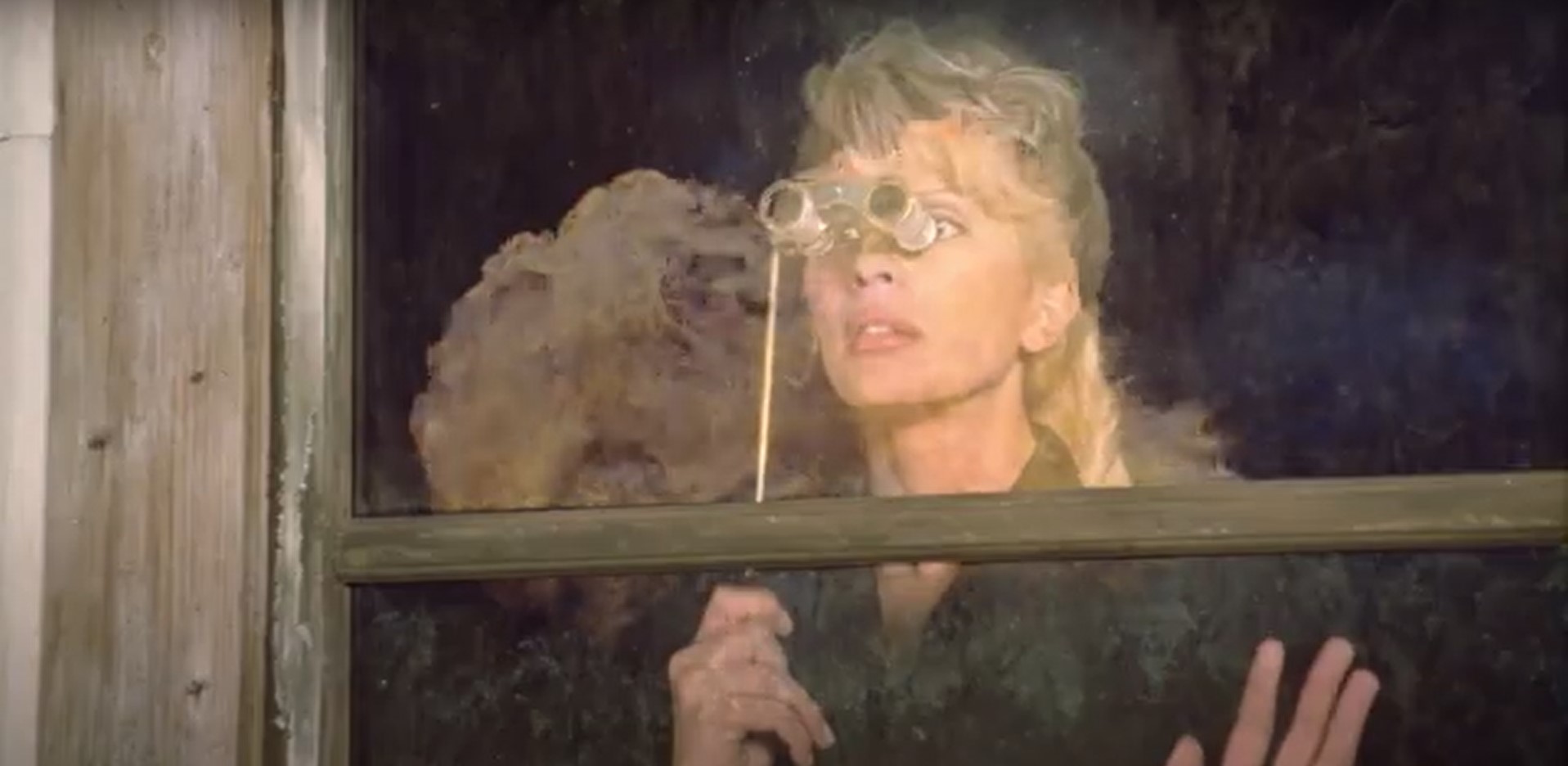
The film initially opens with Maria, the nosy for her own good housemaid, discovering two rotting corpses ostentatiously displayed in the villa’s chapel.  Why Maria (Carla Cassola, “Demonia” and “The Sect”) decides to snoop around is not explained but the act does start a chain events, leading up to elder Villa owners in Sara Corsini and her clock obsessed husband Vittorio, played by the role age appropriate Bettine Milne (“The King’s Whore”) and Paolo Paoloni (“Cannibal Holocaust”) in a lot more makeup and prosthetics to make him appear as an older man.  As mysterious senior citizens go, Milne and Paoloni are the malevolently cryptic under a façade of geniality, possessing and maintaining the corpses of their niece and nephew they’ve murdered in order to keep their wealth.  The backstory between the two pairs has vague clarity but there’s enough to keep the pistons pumping toward the crux of why the uncanny time about-face.  While, again, no sense of explanation on why time reverses, we’re under the assumption Paolo is essentially Father Time, a personification of the time concept represented as an old, bearded man with an hour glass and a scythe to represent a span from life to death.  When thieves Paul (Peter Hintz, “Zone Troopers”), Tony (Keith Van Hoven, “Black Demons”), and Sandra (Karina Huff, “Voices from Beyond”) put an end to the Corsinis, that is when time stops and reverses itself, affecting the once dead to return back to life, and creating a nightmare scenario for now three trapped thieves under the chase of not only the Corsinis but those also killed by the Corsinis as their deteriorating bodies rejuvenate into active flesh and bone as well as flesh and blood.  “The Beyond” and “Zombie’s” Al Cliver rounds out the principal cast and the overall cast with his menacingly evil, Corsini’s jack-of-all-trades grounds man with a scarred over eye and a double barrel shotgun to hunt down the thieves.

“The House of Clock’s” is quite an interesting concept without a durably designed reason for all the madnesses.  At its core, three thieves home invade an older couple for their valuable objects and accidently kill them in the process when the standoff goes bad.  With that oversimplified version of events, a hellish cog in the pocket watch gearbox links the old man’s ticker with the tons of tickers that adorn his villa home, causing a chain reaction of turn back the clock proportions to which audiences never receive a proper understanding and while this may bother a sample size few, most will find the story too weird, gory, and trepidatious tense to care in what becomes a fair-game free-for-all against all characters who don’t have an ounce of virtue.  The lot of thieves, schemers, and murders are all trapped inside time’s ill-reverse affect without a sign of slowing down and while it might seem advantageous at first for some, as time continues to revert, the worse the situation becomes as old adversaries emerge from their graves and tombs.  Fulci’s visualized gore also emerges through with the fantastic effects by Guiseppe Ferranti, including a high right through the crotch impalement.  Ferranti would also be behind the effects for two other the house of doom television movies.

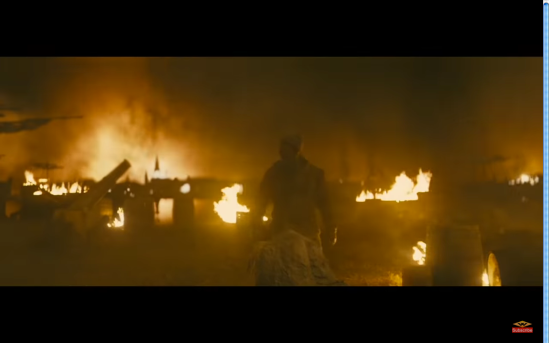
“The House of Clocks” may not have been safe for television but for a new Cauldron Films Blu-ray, the Lucio Fulci film fits right in and comes in the nick of time!  Restored from a 2K scan of the 35mm film negative, the AVC encoded, 1080p high-definition, BD50 offers a visually invigorated, audibly astounding, and special features saturated release that presents Fulci’s lesser known and once previously shelved work!  Presented in a European widescreen 1.66:1, color saturation is beyond reproach with a beautifully natural grading that pops textures and objects right off the screen, adding density and tangibility to each.  Disc capacity affords the codec compression with no artefact issues in the reproducing of the encoded image that nearly replicates an ideal exhibition and appearance of a made-for-TV movie, especially in the macabre moment where extra slimy ooziness of the decaying corpses or the perforation of the servant’s crotch area is as clear as clear can get without misinterpretation.  Skin tones aren’t flared and are naturally set within a healthy, though smoother, grain layer.  The release comes with two audio mixes – a PCM English 2.0 mono and a PCM Italian 2.0 mono.  Both tracks are produced from ADR and have been scrubbed with no issues of hissing or crackling.  There’s a brilliant touch of echoing within the estate to create reverberations and a range, open quality to the exterior dialogue.  Vince Tempera’s synth piano is a ticking measure of modified vocals and integrated milieu elements with a organ tone like quality that’s ghoulishly soft.  English subtitles are optional on both mixes.  Special features include a handful of new interviews from behind-the-camera with cinematographer Nino Celeste Lighting the House of Time, composer Vince Tempera Time and Music, first assistant director Michele De Angelis Working with a Master, FX artist Elio Terribili Time with Fulci, as well as unmentioned archival interviews with actors Paolo Paoloni, Al Cliver, and Carla Cassola.  There’s a parallel audio commentary with film historians and critics Eugenio Ercolani, Nathaniel Thompson, and Troy Howarth who regularly step in to commentate on Italian horror.  Graphic artist Matthew Therrien designs an illustrative composition artwork, pulling inspiration from the film’s most iconic and chaotic moments, while Eric Lee designs the titular logo sitting pretty dead center.  The reverse side of the cover art displays a rotting hand still from the movie.  The 19th title has a clear Amaray that houses a cropped version of the front cover image pressed onto the disc, which is region free, uncut, and has an 83-minute runtime.

Last Rites: Most people wish they could turn back time. For Lucio Fulci and his penchant for beyond death, going counterclockwise in “The House of Clocks” is more frightening and deadly as time can’t be owned and controlled. Simply put, there’s just no stopping the sands of time, forwards or backwards, for the past will catch up to you and the future is mercilessly uncertain.

“The House of Clocks” Delivers Time as an Illusion. Blu-ray now available!

Time Travelling Tourists Just Want to See the Spectacle of EVIL! “The Grand Tour” reviewed! (Unearthed Films / Blu-ray)

Unearthed Films Stopped a Disaster by Going Back in Time and Re-releasing “The Grand Tour” now on Blu-ray!

Widowed contractor Ben Wilson and his daughter, Hillary, are a many 2×4 and paint bucket deep into a renovation of a dilapidated inn on the outskirts of town. Haunted by his wife’s death violent death and reminded of it by an angry father-in-law, Ben tries his best to be the best father to Hillary that a single dad can be despite his urge to drink and forget about the horrors of that fateful day. Unexpected and eccentric guests arrive at his doorstep demanding to pay handsomely to stay at his unfinished inn, regardless of the condition, and eager to be present for the secret spectacle to come that makes his inn more desirable than all the amenities of the hotel in town. The guests’ odd behavior, strange belongings, and secret talk lead Ben to believe these so-called tourists are not from his time and that the spectacle their awaiting for is tragedy in the making.

For an extreme film label such as Unearthed Films, Jeff Daniels is not necessarily a headlined name I would see on the cover art. Nor, and more surprisingly so in this instance, would I ever have thought that a PG-13 rated film would be in the same assemblage of titles as “Slaughter Vomit Dolls,” “Philosophy of a Knife,” and “Christmas Cruelty.” Yet, here we are today, the year 2023, over two decades of extreme horror distribution, and David Twohy’s “The Grand Tour” has been released. The 1992 time-traveling clock-racer, that also went by other titles such as “The Grand Tour: A Disaster in Time” or “Timescape,” is written for filmic treatment by the “Riddick” franchise director, adapted from the novella “Vintage Season” by the husband and wife writing team, Henry Kuttner and C.L. Moore. “The Grand Tour” is a production of Channel Communications and Drury Lane Productions, the companies behind Brian Thompson starring “Nightwish” which became also another Unearthed Films’ vault release and is produced John A. O’Connor (“Steel Justice”) and Robert Warner (“The Return of Swamp Thing”).

“The Grand Tour” stars the aforementioned Jeff Daniels who at this point was coming off the phobic-inducing success of the itsy-bitsy film called “Arachnophobia.” Daniels brings the same family man charisma, sarcastic wit, and unnerved intensity to the widowed construction contractor Ben Wilson. The character of Ben Wilson is unbuttoned from the beginning with only nightmares of an accident involving a horse drawn sleigh and verbal tit-for-tats with his bristly former father-in-law concluding the death of his wife only a short time ago. Wilson’s marked as a drunk and a shirker though barely do we see only a slither of the former; instead, Wilson’s rather astute, loving, and fearless in his time of time designed duress. Perhaps, Wilson’s arc has already been puzzled together and Twohy only mirrors into his once shameful soul to showcase how much he’s learned and how far he’s come to be more than just an abashed single dad and though Wilson is unbuttoned from the beginning of the story, Daniels buttons up the role with nothing less of perfection. Wilson’s daughter Hillary is played by pre-“Jurassic Park” screamer Ariana Richards who solidified her round-eyed concerned, over-the-shoulder look first in “The Grand Tour.” Hillary becomes the crux torn between the loving father that Wilson’s portrayed to be and an overreaching grandfather, who’s also the town judge (George Murdock, “The Death Squad”), holding a longstanding and personal grudge with his daughter’s ambivalent death. The youngster is also the reason Wilson is willing to risk the perfect future to save an ill-fated past. “The Grand Tour” enlists a versed lot of talent to round out the cast with Marilyn Lightstone (“Heavy Metal”) as the voluble tour guide, David Wells (“Society”) as a tourist with a conscious, and Jim Hayne (“Sleepwalkers”) as a down-to-Earth bus driver caught in the middle just like Wilson. There’s also Nicholas Guest (“Dollman”), Time Winters (“Skinner”), and Anna Neill.

Temporal manipulating or time-travelling films will undoubtedly always have faults as time is a finicky thing, some films accomplish time loops better than others, but I personally feel that as long as the narrative is entertaining enough and the time theory isn’t ludicrously idiotic, all can be forgiven or overlooked on the stretched fabric of time and place concept that can have easily spotted loopholes.  “The Grand Tour” is one of those divertingly pleasurable narratives with calamity hanging in the balance, a central do-or-die performance, and theme that hits at the core of a numb human perspective when seemingly life is nothing less than perfect.  The script bypasses the whole negating physics of the narratives time-travelling and butterfly effect piece with Daniel’s character verbally damning the hypothetical’s inaccuracies in a fit of life- and time-saving panic to not hang up on the details and keep the story churning.  Twohy never offers too much too early when the intrusively eccentric inn guests appear without concern for their surroundings but are increasingly curious about minor, trivial things that when compared to the small town residents, people would take such things for granted, yet their curiosity isn’t exactly appreciation for the humbler things as it’s more of a naively morbid reflection on how who these well-dressed and fit-as-a-fiddle travelers call “bygoners” lived and died.  Historical catastrophes have become looking glass sideshows for the bored or how the event is termed as a spectacle is if the disaster is an extravagance performance for others to reap the benefit from its grim amusement.  Twohy pulls off the massive feat of catastrophe without the use of computer-generated imagery that we see heavily in his later films to create galactic worlds and creatures.  There’s composite motion paint work and diorama miniatures to create the illusion of a small town in turmoil that works just as well, if not better.  The whole “Grand Tour” package sells the sleight of hand devastation but also the intrinsic emotion and passion that follows it, or in this rewind the clock case, before it as well. 

Though I’m wigged out by the tame release from Unearthed Films, I’m still glad the out of print and sci-fi jarring “The Grand Tour” has booked an excursion back to the physical media outer rim!  A brand-new AVC encoded Blu-ray, released as the 11th cult classic under the Unearthed Classics sublabel, shepherds a new in-print North American option.  Sold as a Hi-Def release with 1080p, there’s honestly nothing that can be really done or to improve upon a Betamax 350 resolution by 480 pixels in a stretched 1.85:1 aspect ratio.  Certainly better video and audio quality compared to VHS, and likely the best quality “The Grand Tour” will ever be in to-date, the release remains a deficient for detail with blurry, soft-glowing traits.  The Blu-ray’s bitrate is also erratic, dipping as low as upper DVD, 8-11 Mbps, to shooting up as high as lower 20s which tells me the storage capacity of the BD25 likely isn’t enough to properly decode the film and, in certain frames, compression artifacts show with smooth surface, color blurring that eliminates sharper edges amongst other issues, such as faint banding and blocking nothing to really warrant discouragement. The English PCM 2.0 stereo mix is commensurable with the original Betamax audio recording and though soft around the audible gills, the dialogue, ambient, and soundtrack mixes satisfy the need but in case you need an English SDH option, the Unearthed Films’ Blu-ray has you covered with a well-synched and timed error-free translation. The special edition bonus features include the “Timescape” title sequence, production stills, various posters and one-sheet artworks, a new Lost in Time: Cannes promo discussion with Ed McNichol who worked on the pre-production Cannes promotional trailer with Jeff Daniels but isn’t available in the special features here, and Unearthed Classics trailers. The physical aspects of the release include a cardboard o-slip with a front image reminiscent of outside region 1 DVD covers of Jeff Daniels running between two periods in time. The slipcover sheaths a clear Blu-ray case with latch, the inserted cover art is the same slipcover but is reversible with a mockup of the Canadian released DVD cover. The disc print image echos the reversible cover art image. “The Grand Tour” is Blu-ray has a region A playback, clocks in at 99 minutes, and the film is rated PG-13. An obscure Jeff Daniels film lost in time, unable to reach back into the past for a new, refreshed release, is paradoxically meta in its own right but luckily for us, Unearthed Films has our best interests in mind while keeping the blood and guts at bay for only for a single, solitary stitch in time.

Unearthed Films Stopped a Disaster by Going Back in Time and Re-releasing “The Grand Tour” now on Blu-ray!

Time Travel to Stop EVIL via Astral Projection: Part II! “Mandao Returns” reviewed! (Indie Rights / Digital Screener)

With his powerful ability to astral project, along with the help of a motley entourage of friends and family, Jay Mandao saved multiple lives, some who are close to him, from his blood thirsty ex-girlfriend on Halloween night.  Two months later, days before Christmas, and now living in the scheming medium Cousin Andy’s townhome after his unrelated cousin Jackson set fire to his apartment, Mandao and Jackson float through life, sleeping in Cousin Andy’s living room and barely off the royalties of Mandoa’s father breakfast cereal line.   Dreams of his father, Raymond Mandoa, urging him to stop astral projecting as dark entities will discover him are reluctantly ignored when Cousin Andy connives a get-rich-quick opportunity to contact the recently deceased Aura Garcia, a well-known B-movie actress having died a few nights ago after a drug overdose, but as soon as the spiritual and time planes are disturbed, sinister plans of murder, from the living and the dead, deck the halls with a blood red Christmas.  

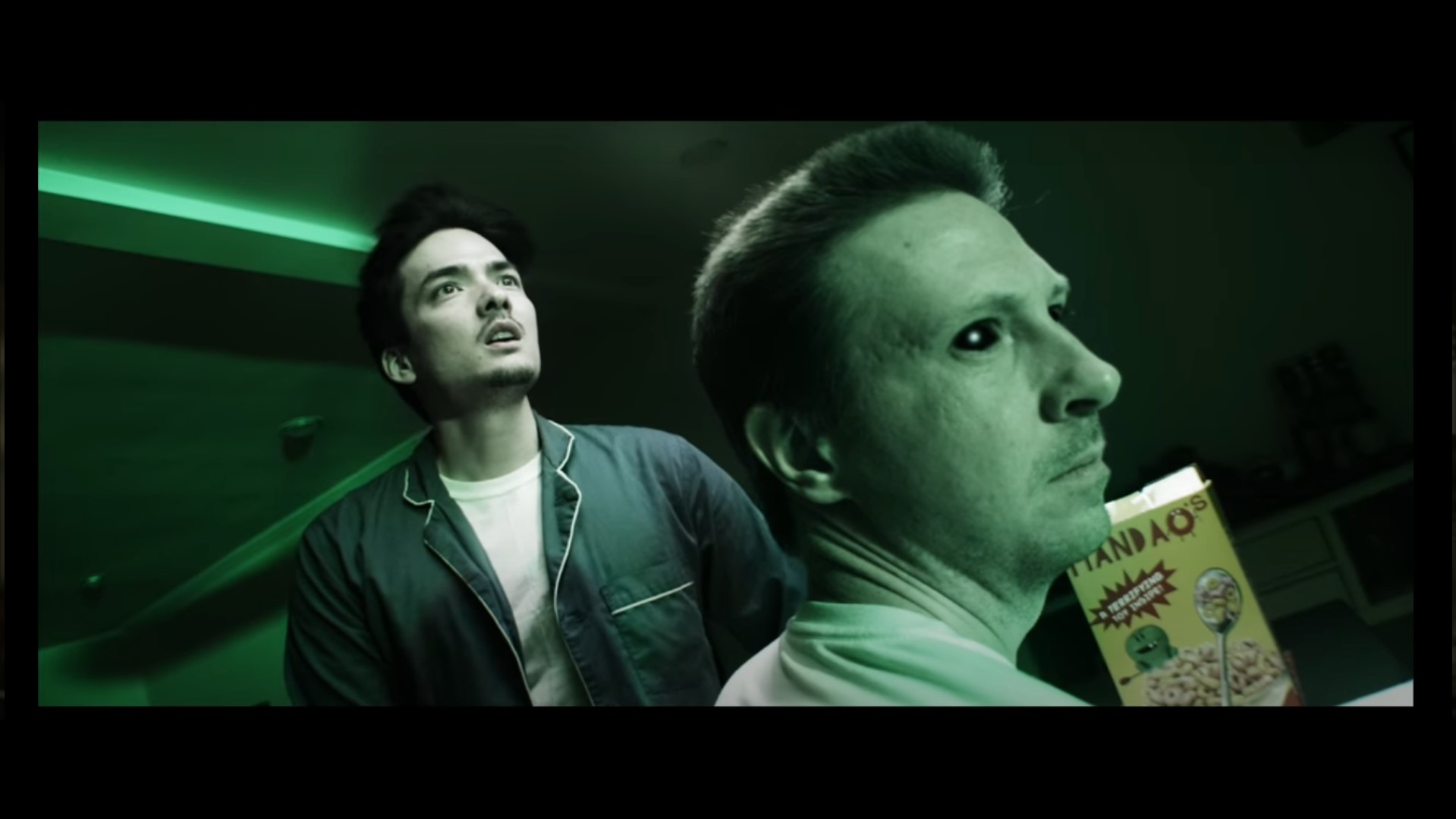
Mandao is back!  Or rather returns in a new scouring the astral plane misadventure entitled “Mandao Returns.”  When we last reviewed the Scott Dunn 2019 comedy-horror sleeper hit, “Mandao of the Dead,” an open ending left us salivating with a possible sequel under, what we know now to be a working title, “Mandao of the Damned” that promised exploring the nonphysical and paranormal realm’s mysteries and secrets that threatened Jay Mandao’s whole grain boxed-in existence, at least according to Mandao’s father, Raymond with a foreboding sign of inexplicable things to come.  The Kickstarter.com, crowdfunded modern cult favorite raised more than $26,000, doubling the first film’s budget, from approx. 250+ generous likeminded supporters within two weeks time that brought back four core characters essential to “Mandao of the Dead’s” grim, but lighthearted success to battle half-cocked the supernatural forces of evil.  Instead of a blood drinking cultist, a by-midnight death ceremony concretes stardom and greatness, but not if Jay Mandao has something to say about it.  “Mandao Returns” is a production of Scott Dunn’s Dunnit Films and distributed by Indie Rights.

Returning, obviously as stated in the title, to ensure the safety and well-being of those who incessantly annoy yet deep down care for him on a daily level is the hapless Jay Mandao, the titular hero played by writer, director, and story creator, Scott Dunn, along with Dunn’s wife, Gina Gomez Dunn, who steps back into a co-producer role for the sequel as well as stepping back into the shrewdly wild shoes of Fer, a close but no cigar Mandao love interest continuing to become mixed up in Mandao’s spiritual shenanigans while being a private driver for the Uber-equivalent Bum Rides.  Though blood is thicker than water, Mandao’s cousin-by-marriage Jackson oozes with dense innocence as Sean McBride reprises the daft role to another perfect tune of witless naivety.  Together, Mandao and Jackson arouse a likeable dynamic duo that becomes the keystone to both films’ success because without McBride’s timely childlike disposition, Mandao would just be a snippy and angsty loner and without Dunn’s subtly serious tone, Jackson would overrun the comedy-horror with one-sided gullibility.  With any sequel aiming to top its predecessor, the buddy comedy needed to be bigger and by adding the fourth returning character, Cousin Andy, as an important ingredient to the mix, Sean Liang adds a grounding hoodwinking conspirator that thrusts Mandao and Jackson into action on the astral plane field when the no-good antagonist, Aura Garcia, played by newcomer Jenny Lorenzo, becomes scorned in the spiritual world and takes heinous vengeance that not only involves Mandao, Cousin Andy, Jackson, and Fer, but also Garcia’s talent manager, Ted (Jim O’Doherty), in a sacrificial ritual gone terribly wrong. 

“Mandao Returns” is a smartly written script from creator Scott Dunn whose able to mold fallibly fascinating characters into unlikely heroes juxtaposed against a monumental occurrence much greater than themselves with the vast possibilities in the spacetime continuum.  Of course, the cinema flair to decorate the otherworldly dimensions with accessible ease and gloomy aesthetics faces speculation of existential questions of mindpower and life after death and the challenges the mechanics of the theory of metaphysics, but all that abstract mumbo-jumbo is pushed aside in order to make the “Mandao” films entertaining and for a good reason because when the script has colorful characters and a working narrative, “Mandao Returns” allows audiences to turn off rationality for approx. 71 minutes to enjoy a modestly produced Sci-fi comedy-thriller with a cast accurately in sync with each other’s methods.  The one thing I will say about “Mandao Returns” that I found to be a sore spot, despite still immensely enjoying, is that the story echoes eerily to “Mandao of the Dead.”  With a slight tweak to Mandao’s astral projection powers and trading in a different breed of villain, from point A to point B, from dynamics to outcome, everything seemed nearly identical to “Mandao of the Dead’s” narrative, delivering nothing distinctively new to the table to elevate the character’s fate and circumstances into unique, un-before-seen horizons.  Dunn comes close to challenging and upgrading the prior narrative by hinting something lurking within the spirit world was on the verge of closing in on Jay Mandao if he continues blindly using astral projection by the forewarning words of his father, Raymond Mandao, but slips out of that digressional stream to pit Mandao versus greenhorn cult acolytes looking for glam and glory by way of the gory and that, done in the Dunnit Films’ essence, is okay too.

As a quirky, out-of-body sci-fi thriller experience, “Mandao Returns” succeeds in succeeding as the sequel that brings the thrills and the laughter of far-fetched heroes ready to tear into the fabric of time to stop evil once again. The film comes to you from distributor Indie Rights and is available now streaming only on Amazon Prime so get your pandemic pants on aka comfy, stretchy pants, grab some movie style popcorn, and recline back to watch “Mandao Returns.” Experience the vibrant and wraithy-visioned glow cinematography of A.J. Young, returning from “Mandao of the Dead” as well as Dunn’s first film “Schlep” and another camping trip horror film, “Camp 139.” Young stays true to the films atmospherics with hard lighting a variety of hues and creating a story through the presence of shadows, working movie magic creating an opulent visual experience when really only working with about 25 grand. There were no bonus features nor extended credit scenes with this digital screener. One day, I’d like to see Scott Dunn and his Dunnit Films team work with a good chunk of budget cash and push the limits beyond the simplicities of the “Mandao” films, but until then, “Mandao Returns’ is disseminated with a whimsical awareness and fervent macabre that’s intent to please.

Watch “Mandao Returns” on Prime Video. Click the Poster!

Uncalcified Penal Glands and Designer Drugs are an EVIL Around-the-Clock Cocktail. “Synchronic” reviewed! (Blu-ray / Well Go USA Entertainment)

A new over-the-counter designer drug called Synchronic has been at the center of a string gruesome deaths in New Orleans.  Simultaneously, two best friend paramedics, Steve and Dennis, individually battle their own life-altering personal problems while responding to the grisly emergency calls.  With each horrific scene of Synchronic’s doing, Steve decides to take matters into his own hands by purchasing the remaining supply in all of New Orleans after Dennis’ teenage daughter mysteriously disappears after ingesting the drug.  With no leads on the missing girl’s whereabouts and after being visited by the time abstract ramblings of the chemist responsible for creating the drug, Synchronic’s harmful hallucinogenic properties have more tangible dangers than what meets the eye leaving Steve no choice but to pop one of the pills to understand where, or when, his friend’s daughter may have disappeared to.

I’ve said it once before and I’ll say it again, Aaron Moorhead and Justin Benson are visionary filmmakers with a penchant for the larger-than-life and otherworldly terrors.  From their directorial of a mind-bending death cult in “The Endless” to their producing hand in Jeremy Gardner’s lost love and creature feature, “After Midnight,” and Amy Seimetz deathly contagious, “She Dies Tomorrow,” under Rustic Films, the ambitiously talented duo returns with “Synchronic,” an anything but plain spoken, time-winding, Sci-Fi tale revolving around themes of redemptive purpose and grateful circumstances stitched by the uncanny temporal effects of artificial illicit drugs.  Lying somewhere between the cognitive warping psychedelic drug and feeling disconnected from the environment of a dissociative drug, “Synchronic” sojourns random grooves with the needle of time in a culminating enlightenment that now, the present, is a gift worth enjoying.     Along with Moorhead and Benson’s Rustic Films, Patriot Pictures, and XYZ Films bring to fruition the filmmakers’ biggest production yet. 

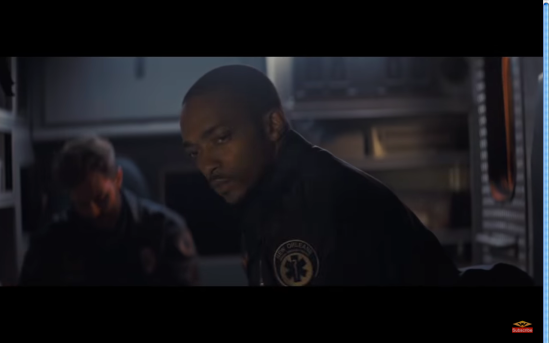
Like most of us during pandemic times, but not quite exactly like us who are working stressfully from home, is Anthony Mackie acting comfortably in his hometown of New Orleans, Louisiana.  The “Captain America” star temporarily hangs up Falcon’s wing harness to play lonely paramedic Steve frequented by his tragic past that has led him down a path of casual flings and an inability to attach to anyone romantically.  Opposite Mackie is Irish actor and “Fifty Shades of Grey” star Jamie Dornan as Dennis, a man kicking himself hard for marrying and starting a family too early in life that’s created a bizarre Prince and the Pauper dynamic where Steve and Dennis are envious on each other’s life.  Mackie is pitch perfect in the timing of a seemingly tailored-to-Mackie script that is funny as it is engrossing and thought-provoking.  “Synchronic” is truly the Mackie show with Dornan playing second fiddle as a compliment to Mackie’s more clandestinely troubled character who aims to upend and mend many wrongs in his life, including those of his best friend, and weaves in and out through the fabrics of time with Katie Aselton (“She Dies Tomorrow”), Ally Ioannides, Ramiz Monself, and Bill Oberst Jr (“DIS”).

Time travelling is a finnicky concept.  Lots of variables have to be ironed out in order to break the planes of chronological, set-in-stone, thinking and construe time as an infinite recording always available for repeat and playback.  Time travel is perhaps science fiction’s most powerhouse model, producing some of the most influential and staple films of the genre in our time that include “The Time Machine,” “The Terminator,” and “Back to the Future” that have carried out repeated viewings of admiration, a franchise legacy, and been the source of inspiration and remakes.  Plot holes and flaws in these films go without saying and are considered expected, but if filmmakers can get away with convincing audiences otherwise, then expect a blast from the past, present, and future.  Moorhead and Benson’s “Synchronic” has a gripping and cosmically vast story done in only one small corner of the world, the historically rich and diverse culture of New Orleans, and that isolating effect pressed upon by the distant and ominous unknown, a supremely niche and bracing style from the directors.  “Synchronic,” like time jumping films before it, has the anticipated plot holes in the mechanics of the designer drug’s side effects that are seemingly straight forward to the experimenting character only after attempting a handful of pill-popping jumps.  There are also no adverse butterfly effects stemmed from any of the Synchronic’s users.  You’ll find yourself lost in time over these questions that routinely shoot up other films to smithereens in the ole inconsistency corral thanks to Moorhead and Benson, along with the riveting and hilarious performance from Anthony Mackie, who suck you in with their relatable and humanizing story premised around Steve and Dennis’ life regrets mended by an eye-opening slight tear in the fabric of time to understand what you have now could have been a lot worse then.


“Synchronic” is stylish, Sci-Fi craftsmanship coming to you onto Blu-ray home video from Well Go USA Entertainment. The film is also available on DVD and digitally. Presented in 16:9 widescreen format, “Synchronic” barrages with a somber and slick, yet almost alien, plating over the Creole and double gallery architectures in a mesh of robust multicultural with the grimy slums, envisioned by director of photography, Aaron Moorhead, who, in part with Ariel Vida, the production designer, is able to capture era slithers native to Louisiana lineage. The Blu-ray comes with an English language DTS-HD master audio 5.1 surround sound that’s crisply makes distinct every track element defined by individual scenes. Jimmy Lavalle returns to collaborate with Moorhead and Benson once again to compose an unique compositional score that can only be described as driving nails into your soul while also being powerfully moving without being an echo out of inspiration. The release is rated R with a runtime of 101 minutes and comes with a fair amount of bonus features including commentary with Aaron Moorhead and Justin Benson, a making of featurette, a previsualization (a fancy word here for live-action storyboarding with a camera phone), a VFX breakdown (which is touched upon a lot in the making of featurette), a deleted scene, and an alternate ending that will doggone blow your mind! “Synchronic” is intense medication to repair a kindred friendship falling into disrepair in this literal mind-boggling must see it to believe it thriller. Expect more great things from Aaron Moorhead and Justin Benson to come!

Order “Synchornic” on Blu-ray by clicking the poster above!

Time Travel to an Evil Future! “Counter Clockwise” review!

vlcsnap-00001
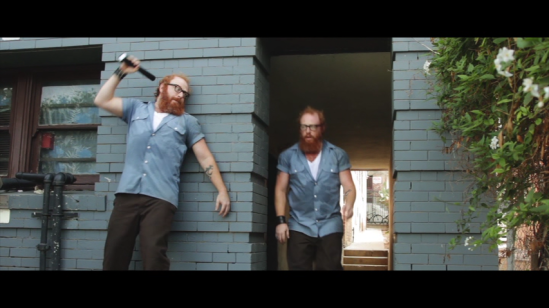
Ethan Walker is a brilliant scientific engineer, though he doesn’t look it with his long fire-hued beard and pot-belly midsection, but Walker, along with his colleague, believe to have accomplished the impossible: teleportation. When Walker decides to try his machine on himself, the realization of something terribly wrong overwhelms him. Walker didn’t invent a teleporter, he accidentally constructed a time machine, sending himself six months into a grim future where his wife and sister have been brutally murdered and he’s the sole prime suspect. The only way to make sense of the future and to solve the crime against him is to travel back to the past multiple times to unravel a sinister plot and stop the murder of those close to him.
vlcsnap-00002
To simply and conventionally tagline “Counter Clockwise,” George Moise’s 2015 directorial debut can easily be described as Terry Gilliam meets David Fincher. Part sci-fi thriller part dark comedy, the adventure of Ethan’s misadventures ingeniously signifies a harsh outlook on the saltiness of our predetermined universe while encountering outrageous and weird characters along the time warp. Ethan, no matter what he does or how he does it, has to use the accidental time machine to thwart the brutal death of his wife and sister and while his reasoning sounds fairly comical being the groundwork of what Albert Einstein calls madness, on-screen it’s rather heartbreaking and tragic to see this guy, an everyday looking joe, desperately attempt to deconstruct, from the unsolicited help of his future selves, a dastardly plot that will destroy everything he holds dear.
vlcsnap-00003
Penned also by George Moise, based off a story by brother Walter Moise, along with the film’s lead star, Ethan himself, Michael Kopelow, “Counter Clockwise” will change the way critics will perceive time travel storylines by not as a means of zipping back only once to change the forsaken past, but as a respawning Shakespearean tale of tragedy in order to continue to amend a hapless situation. A respawned Super Mario had more luck saving Princess Peach through the thicket of Koopa Troopas and the fire breathing Bowser. Though the character Ethan repeats his voyage, the way “Counter Clockwise” is written doesn’t convolute itself in the repetition, staging clues as a window into beyond the present and generating eerie and problematic, if seriously disturbed, episodes that doesn’t give Ethan a minute from tirelessly being objective. Combine those elements with George Moise’s neurotic direction and the result seizes to capture not only science fiction aficionados, but movie enthusiasts of every category in this genre-breaking feature. From the first moment of the opening scene, a strong familiar inkling of Ridley Scott’s “Alien” washes over you; the subtle hum of machinery, the slow panning from side-to-side, the very soft touch George Moise applies is uncanny and so endearingly respectful that the direction doesn’t feel like an absolute rip of Scott’s 1979 space horror classic.
vlcsnap-00004
Kopelow is the centerpiece that glues the story whole. As Ethan, Kopelow’s gentle giant approach is such a stark contrast to the surrounding darkness that has embodied nearly every other location and character, even his lip flapping, hard loving mother. Extreme opposite on the polar spectrum is voice actor Frank Simms as Roman, head of major corporation aiming to steal pioneered technology from Ethan at any cost. Simms’ talent has two settings in this film, hot and cold; his sound binary method works to composite a character so reasonably rational that when Roman snaps, a trickle of pee squeezes out and runs down your leg at his abrupt and menacing counter personality. The rest of the cast follows suit with pinpoint precision on their coinciding characters and even the eccentric cameo performances were otherworldly good from Chris Hampton’s relishing water fountain patron to Marty Vites one-eyed creepy landlord. Ethan’s landed in bizarre world that hums a very familiar tune in Terry Gilliam’s “Fear and Loathing in Las Vegas” while the amount of downbeat content spurs moments of gritty David Fincher thrillers, especially in one particular scene with the brawny New Jersey native Bruno Amato being the ultimate bad guy henchman by raping a dead woman for spite and for pleasure. The cast fills out with Devon Ogden, Kerry Knuppe, Joy Rinaldi, Alice Rietveld, and Caleb Brown.
vlcsnap-00006
The Sex Scene Crew production, “Counter Clockwise,” is not an effects driven project. The indie sci-fi film relies on the trio of coordination efforts in refined editing, camera angles, and practical effects to deliver the intended message. Like I said before, George Moise is neurotic, providing the attention and detail to every scene as if a climatic money shot. Value is placed in the story and in the direction rather than diluting and cheapening with overrated, big budget computer generated special effects that can snap a film’s heart and soul like a thin twig. The biggest effect comes in the form of a composite, placing two Ethans in the same scene and working action off each other. Even the time traveling sequences are a basic edit that’s well timed with simple lighting techniques, gentrifying low budget films more toward a respectable level of filmmaking.
vlcsnap-00007
Artsploitation Films’ DVD release of “Counter Clockwise” is an edgy rip in space time continuum sci-fi thriller presented in a widescreen 2.35:1 aspect ratio with Dolby Digital 5.1 surround sound audio option. Image quality pars well with modern releases and the same can be said about the audio, especially with the prevalent dialogue. Aside from conventional specs, Moise adds a sensory surplus to stimulate sight and sound hell-bent to strike an unnerving chord strummed simultaneously with providing an awesomely surreal effect. The DVD contains bonus features include “The Making of Counter Clockwise featurette, going behind the scenes of pre-production, production, and post-production. There are also five deleted scenes with commentary and a trio of commentary tracks that include the director, director and editor, and director and co-writer. “Counter Clockwise” is 91 minutes of time hopping suspense, packed with adversity and pitch black humor from start to finish and finish to start.

Click Above to Time Travel to Amazon and Buy this Title Today! (And not six months from now…)