EVIL, Over a Decade in the Making! “Profane Exhibit” reviewed! (Unearthed Films / Blu-ray)

“The Profane Exhibit” is Finally Here! Come And Get It!

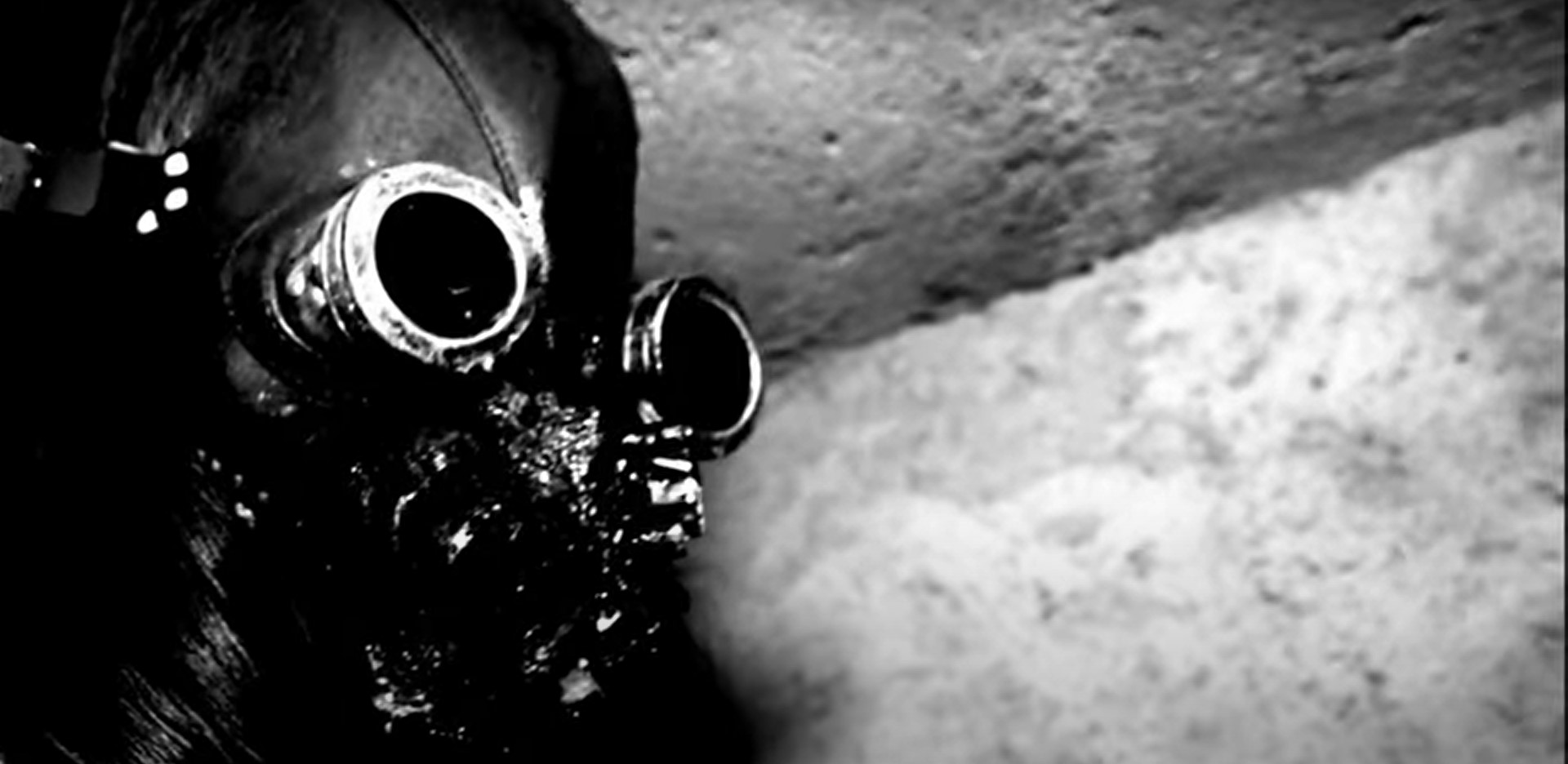
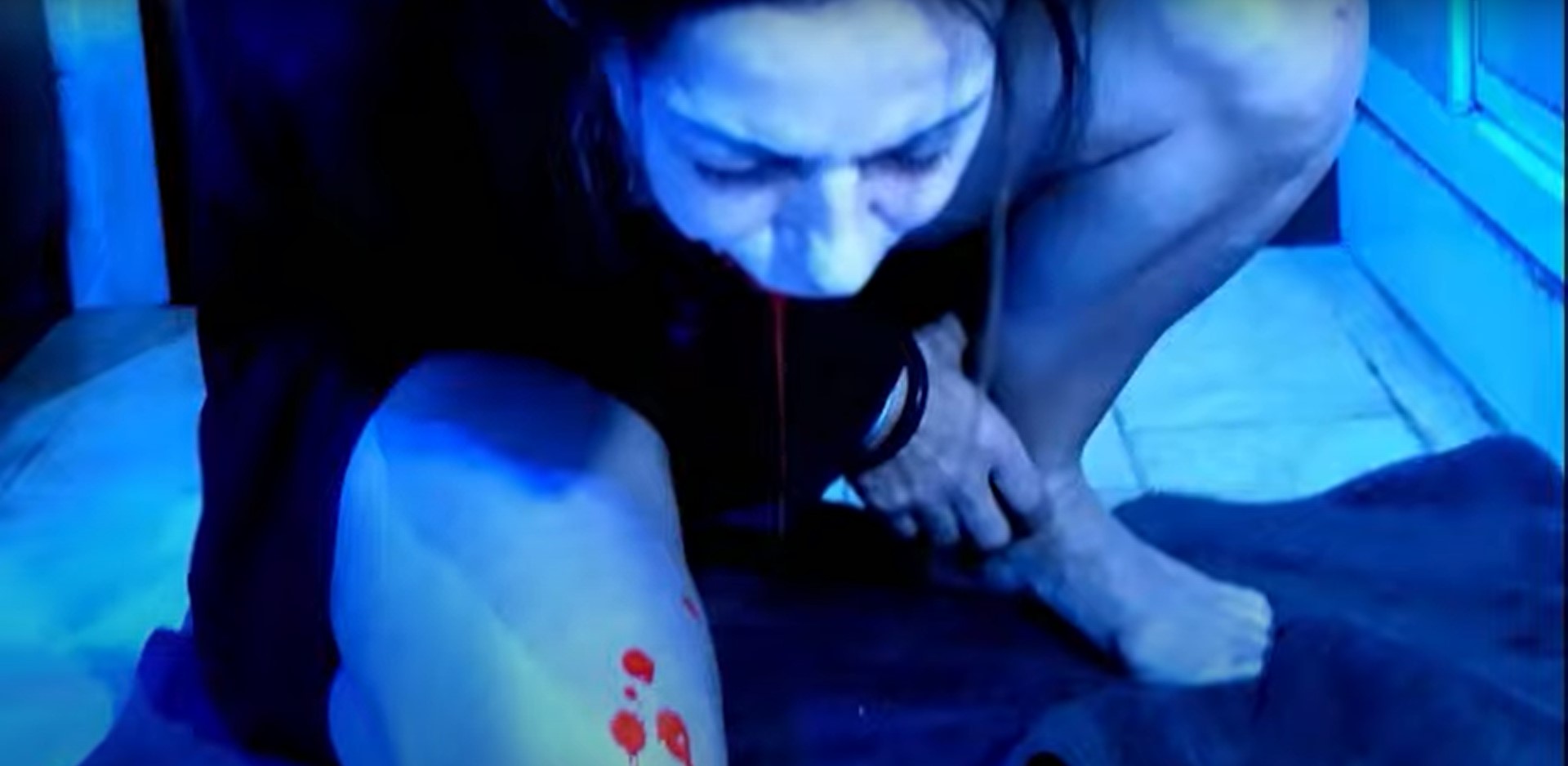
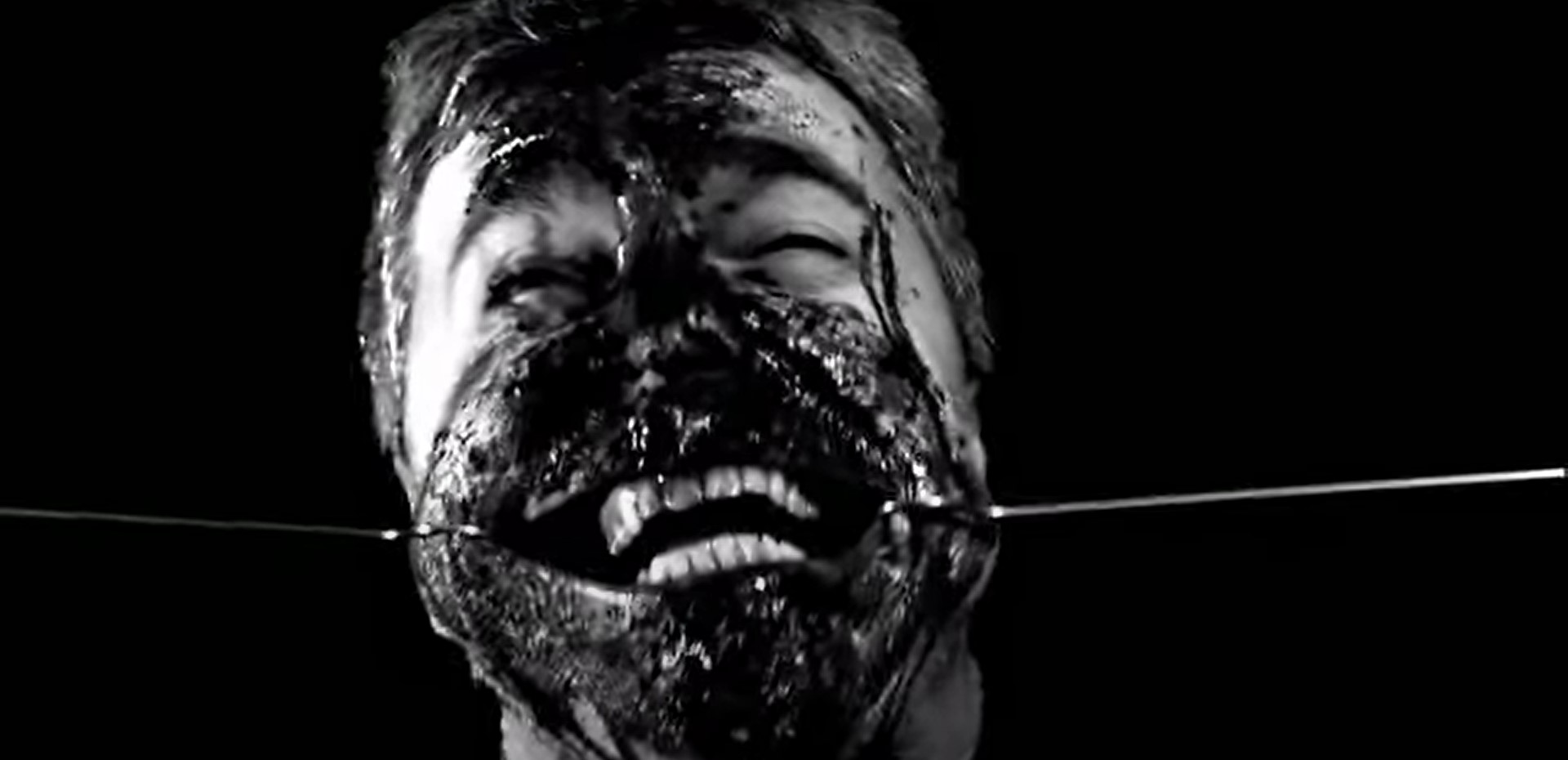
Forged, smelted, and baked from the fiery grounds of hell, 10 stories of bleak and utter horror crimson the soul with blood and pale it with terror.  Ten directors, ten stories, ten obscure unfathomable depictions tell of a draconian religious sister matron with a despotic rule over a child orphanage, a daughter held prisoner by her parents in her own home basement, a cult willing to sacrifice newborns for the sake of their demonic tribute, the Third Reich submitting to extreme measures to keep their ranks pure, a reenactment of a father and son’s unnatural skin-to-skin bonding, a nightclub’s underground bloodletting witchery, and more unnervingly bizarre ballads.  These tales of torment tatter the life force piece-by-piece until there’s nothing left to exhibit, nothing left of one’s humanity, nothing left of being human.  A cruel anthology awaits just beyond the play button, ready to shock, appeal, and maybe even stimulate the perverse, primal nature in us all.   

An anthology a decade in the making or, to be more specific, a decade plus one year in the making in the long awaited “The Profane Exhibit.”  The 10-short film anthology is the brainchild of Amanda Manuel that began principal production in 2013 and finally saw completion and release in 2024 after a slow slog of shoots, edits, and post-production this-and-thats to finally crossover the finish line.  Varying from micro shorts and to average length short films, the anthology employed 10 different in degree genre directors from all over the world to make the mark in what would become a manic syndrome of monsters, mayhem, and molestation.  Yes, we’re talking about some really gross things, some terrifying things, and some other abnormal, abstract, and abysmal things that could be happening right now in your nightmares, or under your nose.  Anthony DiBlasi (“Malum”), Yoshihiro Nishimura (“Tokyo Gore Police”), Uwe Boll (“Bloodrayne”), Marian Dora (“Cannibal”), Ryan Nicholson (“Gutterballs”), Ruggero Deodato (“Cannibal Holocaust”), Michael Todd Schneider (“August Underground’s Mordum”), Nacho Vigalondo (“Timecrimes”), Sergio Stivaletti (“The Wax Mask,”) and Jeremy Kasten (“Attic Expeditions”) helm shorts they’ve either written themselves or by contributing screenwriters Carol Baldacci Carli (“The Evil Inside”) and Paolo Zelati (“Twilight of the Dead,”).  Harbinger Pictures and Unearthed Films, who also premiered it’s at-home release, co-produced the anthology.

Much like the diversity of directors, the cast is also an assortment of aggregated talent that stretches the global gamut.  Popular and classic horror figures like Caroline Williams (“The Texas Chainsaw Massacre 2”) and Clint Howard (“Ice Scream Man”) play the normal couple next door conversating about politics, date night, and work while all the while they’ve locked their daughter away from the world and use her as daddy’s little sex slave in Uwe Boll’s “Basement,” depicting the normal and safe is actually abnormal and danger right in the middle of suburbia.  Others such as the underrated scream queens Monique Parent (“The Witches of Breastwick”) as a fully naked and willing “Goodwife” to her sadistic husband, Mel Heflin (“Queen Dracula Sucks Again”) donning a pig mask, naked by the way, in a rave club along with Tina Krause (“Bloodletting”), Elhi Shiina (“Audition”) and Maki Mizui (“Mutant Girl Squad”) finding happiness amongst death, and notable global genre actors Thomas Goersch (“Voyage to Agatis”) as the German father crippled by his son’s retardation, Dan Ellis (“Gutterballs”) as the hardworking husband who has everything but it all means nihilistically nothing, and Art Ettinger, the editor name and face of Ultra Violent Magazine doing his part with a bit patron part in the nightclub.  Mostly all listed have previously worked with their short film directors previously that denotes a sense of ease and expectation from their performances but that still makes their acts nonetheless shocking.  “The Profane Exhibit” also sees a few newer faces in the conglomerated cast with Christine Ahanotu, Tayler Robinson, Tara Cardinal, Mario Dominick, Witallj Kühne, Valentina Lainati, Josep Seguí Pujol, Dídac Alcaraz, and Stephanie Bertoni showing us what they can dish out disgustingly. 

Was the 11-year wait worth it?  Over the last months years, “The Profane Exhibit” received substantial hype when Unearthed Films announced its home video release, pelting social media with here it comes, get ready for it posts, tweets, and emails and for fans who’ve been following the decade long progress, director Amanda Manuel’s “The Profane Exhibit” does not disappoint as the content storyline harks back to the lump-in-your-throat, gulp-swallowing roots of general discomfort from an Unearthed Films release.  While it may not “Slaughter Vomit Dolls” level gross of upheaved bile and whatever was ingested moments before shooting, the filmmakers go deeper into the viscerally ignorant, ugly truths.  We’re not talking monsters or supernatural entities tearing Hell a new rectum, but “The Profane Exhibit” delineates the sordid nature of the human condition in an egregiously behavioral way that some of these ideas are not so farfetched.  A select few of the filmmakers incorporate surrealism into their shorts, such as with Yoshihiro Nishimura’s aberrant Mary Poppins, known as Hell Chef, replaces a spoon full of sugar with a bowl full of cooked human when turning a frown upside down of a young girl who just killed a man who she suspected tried to rape her.  The Geisha-garbed Hell Chef flies through the air holding up her Wagasa, Japanese umbrella, when her job is done.  Most others are grounded by realism with sadism being the primary culprit – “Basement,” “Goodwife,” and, to an extent, “Sins of the Father” and “Mors of Tabula.”  And then, there are shorts like the late, and great, Ruggaro Deodato’s “The Good Kid’s” that feels hackneyed and unimpressive coming up short amongst the others and makes one think if his name alone awarded the short a spot in Manuel’s lineup. 

In all, “The Profane Exhibit” delicately caters to the indelicate and is a visual instrument of visceral imagery curated for pure shock value. Unearthed Films’ Blu-ray release has finally arrived and is now in our bone-exposed and gory fingertips. The AVC encoded, 1080p high-definition, BD50 allows for dual-layer capacity for not only to squeeze in the 108-minutes’ worth of micro shorts, but allow for extended extras, deserving to fans who’ve waited years for this production to see the light of day.  Like any other anthology, a mishmash of styles but up against each other with the assemblage of different stroke directors and cinematographers but there seems to be no issues with compression, such as banding, blocking, aliasing, or any abundance of blurry noise, in the flexing widescreens aspect ratios of 2.35:1 and 1.78:1.  A good example of Unearthed Films’ codec processing is Deodato’s bridge scene; while I don’t care for the short all that much, the long shots of the bridge are nicely detailed in the nighttime, lit only be the bridge’s powered light poles, creating a downcast of warm yellow along a solid shadow-spotty bridge.  You can see and realize the stoned texture without even using your imagination on how it should look and that tell me there’s not a ton of lossy codec at work here.  An English, Spanish, Italian, and German mix of uncompress PCM 2.0 audio serves as the common output to be as collective and unified as possible.  No issues with hampered dialogue with a clear and focused track.  There dual channel quality is robust and vibrant, living up to Yoshihiro Nishimura’s surreal energy and a commanding Japanese tone while still finding voice prominence in other shorts, if dialogue exist.  Depth is fleeting without the use of a surround mix with an anthology that’s centered around the human condition rather than atmospherics, but I do believe Jeremy Kasten’s Amuse Bouche would have greatly benefited from the distinct gnashing, squirting, and smacking sound elements of a pig being processed to consumption in his wraparound.  English and Spanish subtitles are optionally available. Years of bonus content has been produced and collected for this special release which includes an audio commentary Director Michael Todd Schneider, Producer Amanda Manuel and Ultra Violent Magazine’s Art Ettinger, a world premiere interview with creator Amanda Manuel and short director Michael Todd Schneider at the Buffalo Dreams Fantastic Film Festival, a world premiere Q&A, a 15-minute mini documentary Ten Years Later with “Mors in Tabula” director Marian Dora, an extended short entitled “Awaken Manna” with introduction and discourse, PopHorror’s Tiffany Blem Zoom interviews select directors with Michael Todd Schneider, Uwe Boll, Jeremy Kasten, and showrunner Amanda Manuel, image gallery, and trailer. The 2024 release has a runtime of 110 minutes, is not rated, and is region free.

Last Rites: Worth it. That’s the bottom line for this long-awaited film imbuing with bottom-feeders. Unearthed Films returns to roots with rancidity and fans will find their bloodlust satisfied.

“The Profane Exhibit” is Finally Here! Come And Get It!

Sacrifice and Intestines Make Great EVIL Slashers! “Ikenie Man” and “Harawata Man” reviewed! (Wild Eye Releasing / DVD)

“Ikenie Man” Available on DVD Home Video!

“Ikenie Man”

Four university friends involved in a movie making club trek deep into the remote, phone service-snuffing forest eager to make their esteemed stamp on the slasher genre, or rather just the director does, as frustrations build between them, exploding furiously into an inability to find cohesive creativity, and their lead actress quits and walks off location in a fit of distaste for horror and their Prima donna director.  Idea and idea between the rest of crew of how to recoup their film from being a total failure and loss has been rejected by the nitpicking auteur looking for that novel concept to make him famous until he and the crew stumble upon a group of eight campers who all conveniently fit into conventional tropes of horror characters.  A plan quickly arranges to use their masked and knife-wielding movie villain to scare the unsuspecting campers with guerilla filmmaking tactics but there’s more to these seemingly innocent young campers than what meets the eye. 

A meta horror self-aware to all the necessary components that make a great horror movie becomes upended in a topsy-turvy tumbling machine of all the aligning mechanisms you thought you knew about a horror story.  Yu Nakamoto (“Phone of the Dead,” “Teacher! It’s a Slit-mouthed Woman!”) writes and directs the meta, self-deprecating, indie Japanese horror-comedy “Ikenie Man.”  Ikenie, translated literally to the word Sacrifice, is used to describe the in-story director’s deranged masked killer the direct himself portrays and finds himself at the sharp end of a knife, barbed wired baseball, razor edges of a chainsaw, and etc.  The 2019 released film is an open-faced hotdog of an absurd horror comedy, slathered with gory ketchup, and self-produced by the then 28-year-old, Hiroshima-born Yu Nakamoto as his sophomore short feature length film under his indie credited production company of Nakamoto Films. 

Also, Follow Up With “Harawata Man” on DVD Home Video!

“Harawata Man”

One year after the terrifying ordeal in the woods, the university movie club has evolved with the departure of the director and lead actress after graduation.  The two remaining members are joined by newcomers with an actor, actress, sound engineer, and camera operator to work on another masked slasher, titled “Harawata Man.”  When directed to meet up and shoot inside an abandoned manufacturing plant, the crew praises the location’s creepy atmospherics, but they run into another film crew shooting simultaneously on a project of their own.  Mistaken as the hired assistant crew members, they jump at the opportunity to work on a bigger-scale film until an actress is brought into the scene, sat in the middle of the room, and is bludgeoned to her actual death by the story’s plastic apron killer.  The opportunity of a lifetime just became a snuff film nightmare they can’t escape.

“Harawata Man” sequentially follows on the heels of “Ikenie Man” by taking place one year after the events of the first film and moving the setting from one genre-staple setting of the thick woods to the next best location of an abandoned factory.  Released the same year as “Ikenie Man,” one could deduce that both “Ikenie Man” and “Harawata Man” were shot essentially back-to-back with some down time in between productions and that might explain the mark of no return of some principal characters that didn’t, or couldn’t, appropriately fit into the new story, which would align with the absence of the titular “Ikenie Man.”  Harawata translates to the ever-delicate word Intestines describes the story’s small indie film crew’s killer who rips out the victim’s guts.  “Harawata Man” is a less meta than its predecessor film by relying more on its comedic context as another Yu Nakamoto Film production. 

_______

So, because I do not know the Japanese alphabetical language of hiragana, katakana, and kanj and there’s limited information on IMDB.com, as well as other referential sources, the cross reference of cast to characters is not obviously clear.  Instead, going through the character carousal to understand motivations and journeys has become a forced prudence.  “Ikenie Man’s” setup is an expositional setup from the indie filmmaking foursome to run through what us genre aficionados already know:  character tropes, emblematic motifs, and traditional character arcs, such as the rise of the final girl.  “Scream” had highlighted and called out the trade ingredients of recipe elements to make Grandma’s stew that much more appetizing to a new, inexperienced market of up-and-coming fans.  The franchise’s sequels to follow leaned into the rules of subsequential follow ups with each tweaking just a little to make them worthwhile.  Nakamoto flips the script for more campy devices into an un-genre-like routine that sees the virgin killed right away, the nerd is secretly a jock under his four eyes wear, and the only masked “killer” in the story turns out to be the unwilling hero.  “Harawata Man” takes a step back toward more familiar plot grounds of an independent film crew winding up into unfortunate chanceful circumstances and having to defend themselves against sociopathic snuff filmmakers.  However, it’s the way the misfortunate film crew becomes fortunately favored is how they use slasher rudiments to defends themselves that dips the toes of this sequel into the meta pool, taking on the role of maniacs and omnipresent killers who slice and dice with authority and the snuff filmmakers run, yell, and scream for their live becoming the hapless kill fodder.  Yûta Chatani, Maki Hamada (“Tokyo Gore Police”), Tomoaki Saitô (“Phone of the Dead”), Yasunari Ujiie, Yûko Gotô, Marie Kai, Tanabe Nanami, Tsugumi Sakurai, Sumre Ueno (“Ghost Squad”), Yû Yasuda (“Rise of the Machine Girls’), and Shigeo Ôsako (“Grotesque”) are the cast listed.

As far as Japanese gore films go, Nakamoto films are lite when looking at the niche genre as a whole, paling in comparison to such films as “Toyko Gore Police” or “Audition,” but that doesn’t stop “Ikenie Man” or “Harawata Man” from decapitation, severing, eviscerating, and perforating at will with fountainous blood splatter, one of the better absurd keynotes seen in gory J-horror that goes back to Japan’s samurai films of yore.  Gore certainly dangles the carrot of catching these films on either the preferrable home video or, dare I say it, Tubi, but Nakamoto refuses to make it the focal backbone of his films; instead, the story’s meta comedy goes hard with assurances toward every genuine horror fan out there will recognize Nakamoto’s admiration for the genre.  “Ikenie Man” and “Harawata Man” not only spoof horror but also adapt into a new breed of that line of thinking that reminiscent of how “Tucker & Dale vs. Evil” brought upon role reversals through character perception.  Plot paths switch to an unrecognizable gear, much like the films’ official synopses try to mislead with a generic framework, but these new directions still sate that blood thirst to keep interest, tone the black humor to be less wincingly slapdash, and keep the pacing fair, drive practical-effects with intent, and the intense horror-comedy upright in a saturated genre market.

Now available from Wild Eye Releasing is “Ikenie Man” and “Harawata Man” on DVD, encoded on a MPEG-2 compression DVD-5 with upscaled 1080p resolution. Curious enough, the opening company credits list both films as part of the Raw & Extreme sublabel but the physical cases list no such notation in what appears to be a regular Wild Eye Releasing title. Presented in a 1.78:1 aspect ratio, the uncredited same camera and unlisted cinematography process by Yu Nakamoto is used for each production with “Ikenie Man” using gel filters to get a nice wide variety of primary glow splashed along character faces during night and light fog sequences. “Harawata Man” forgoes a colorful visual tone for more key lighting in a darker, basement dwelling. Picture quality and detail from the digital capturing translates fine from original print to reproduction with adequate compression of a short feature film with virtually no extras encoded. A LPCM uncompress Stereo 2.0 lines both audio tracks with fair fidelity in a clean and prominent pitch-accented Japanese language, balanced between two very contrasting scores of an energetic synth and “Halloween”-esque piano tracks of “Ikenie Man” compared to the generic stock of hurried, lower keyed tones that pale against Nakamoto’s first score. Depth is good and the range of sounds, such as the ripping of the chainsaw or the thwacking of kicks and punches, have a mixed realism that plays into the comedy side of the horror-comedy. Between hectic moments, you can recognize the unfiltered growling of a generator in the background in “Ikenie Man” to be able to shoot in the woods, a little indie film audio easter egg to discern. English subtitles are forced on both Japanese tracks and while the pacing is good and there are no misspellings, you can tell the translator is not a native English speaker as the written grammar is more literal and unnatural. Only trailers grace both films’ bonus features, but each individual physical set comes with new original compositional poster art front covers from Japanese artist Kit Nishino, staying the tried-and-true course of Wild Eye Releasing’s outrageous physical media facades, as well as the reversible sleeve contains the original Japanese poster art. Both discs are pressed with their respective primary cover arts and there are no inserts included. The Wild Eye Releases are region free, not rated, and have brief, under 60-minute runtimes of 52-minues for “Ikenie Man” and 46-minutes for “Harawata Man.”

Last Rites: Yu Nakamoto’s small but mighty meta slashers make a good double bill, an on its head combo of a run amok head decapitations for the sake of playing the reverse card to mix things up on a respectable homage, comedy, and horror scale that gives Wild Eye Releasing’s “Ikenie Man” and “Harawata Man” more than just the self-referential mediocrity treatment.

“Ikenie Man” Available on DVD Home Video!

Also, Follow Up With “Harawata Man” on DVD Home Video!

When Machine and Man Merge, Which EVIL Will Emerge? “Re-Flesh” reviewed! (SRS Cinema / DVD)

“Re-Flesh” DVD Available Now to Replace Your Old Skin!  

In a dystopian future, machine and man have merged into an asymmetrical symbiosis where machine is preponderantly present to corrupt man’s benevolent humanity.  Such corruption removes compassion at the core level with the use of neurol inhibitors of technological ascendency over mankind in a gruesome, unpleasant fashion.  The exhibited process is exampled with a masked nurse pushing a wheelchair bound masked man down a dank and dark hallway and into a reprocessing room where he’s plugged with a cable attached to his arm.  From there, the man is fitted with a virtual viewfinder displaying five short reprocessing-to-repair files, transmitted before his eyes to incite organic machinery violence that’ll absorb and eradicate years of human psychological evolution.  Slowly through the images and videos of visceral excision does the man morph into an automaton of flesh, blood, and commingled organic cabling and mechanical veins that will render him resolved as biologically re-fleshed.

Japanese splatter punk Body horror inspired “Re-Flesh” becomes “Deep Web XXX” and “Suffering Bible’s” director Davide Pesca’s tribute to the very distinctive denaturalization of the man-machine mix cinematic movement from the unabashed narrative risktakers hailing from land of the rising sun, Japan.  Made popular by the likes of auteurs Shinya Tsukamoto and Shozin Fukui and cult favorites like “Tetsuo:  The Iron Man” and “Tokyo Gore Police,” “Re-Flesh” adds to the niche palate with an unconfined, Italianized take to ambiguate that blurry line between the soul and the soulless as man comes to terms with a terror-inducing technological takeover.  Writer-director Pesca’s underground anthological tale pits the human condition, it’s mortal coil if you will, up against the cold and heartless tech to create coded layers of neova carne, or new flesh.  Pesca and fellow coproducer Massimo Bezzati reteam after “Night of Doom” to collaborate the 2020 released production under their respective indie companies Demented Gore Productions and M.B. Productions.

The five-story anthology with the interweaving wraparound of a man being reprogrammed casts a lot of visual performances without the need for dialogue.  Dialogue is reduced to only a pseudo medical television advert or surgical endorsements for a better, prosperous life to eliminate human flaws, advancement in new, and improved, flesh, and can even cure homeless afflictions like drugs and addictions.  Pesca keeps a simplicity about his scenes by keeping sullying dialogue removed to just retain the beauty of body horror and a sonorously cacophonous industrial soundtrack.  Each story’s characters are also fairly simplified.  Without dialogue, individual complexities and depth remain shallow in what is “Re-Flesh’s” sole celebration of horror based cybernetic organisms.  This creates no emotional attachment to any of the characters being violated by fiber optic cables and experimentally operated on with crude animatronic gizmos, but Pesca does implant an imploration of at least one emotional response from his audience through gratuitous nudity on half of the female protagonists going through a rapture and ruination of bodily rape and mutate connected by inhumane sentient cybernetics.  Most of the women protagonists are half-naked women ensnared by the inescapable new world of merged new flesh but the tail end episodes dig a little deeper, perhaps even stretch the theme to the limits of cyberpunk horror, to where women are more than just ravaged victims.  “Re-Flesh” sees skin in the game from Alessandra Pellegatta (“Night of Doom”), Giacomo Clerici, Mery Rubes (“Rage Killers’), Reiko Nagoshi (“Devil Times Two – Quando le Tenebre escono dal Bosco”), Giulia Reine, Paolo Salvadeo, Amira Lucrezia Lamour (Devil Times Two – Quando le Tenebre escono dal Bosco), Alessandro Davoili (“Alice Was My Name”), Ivan Brusa (“7 Days, 7 Girls”), and Marco Cinque.

David Pesca is no stranger to short, gore-laden, underground films having been a featured segment director on a pair of anthologies in the last decade from “A Taste of Phobia” and “After Midnight.”  For “Re-Flesh,” Pesca doesn’t have to share the spotlight in his very own tech-themed, feature length compilation that narrates transmitted computer files as tech insidiously infiltrating our insubstantial innards.  The first three episodes revolve around phones and solitary women become enslaved to the devices with a link of invading their bodies with a foreign object, whether be adopted a virtual, grotesque pet to being the reason for infection that spreads throughout the body like a flesh-eating disease, to being beamed up and constrained for a thorough, if not sexual, examination of one of mother nature’s creatures.  I’m intentionally skipping the review of fourth short and head straight into the terminal episode that is more dystopian splatter punk than the others with an experimental bio-cybernetics company called Neo Vita, or New Life, ridding the world of lowlifes by module implants that turn them into society-controlled puppets.  Yet, all these stories are not terribly straight forward with the rub being the ambitious nature of interpretation and the fact there isn’t a dialogue track for most of the runtime.  Taking a step backwards to the fourth short, I found this particular short doesn’t fit “Re-Flesh’s” theme with a demonic woman damning three inert souls to a black void of pain and death.  Perhaps, a construal could be constructed to lay in code into the technology sequence strand, but the code would be a fractional stretch in comparison to the surrounding system.  As a whole, “Re-Flesh” may side more with gory sanguine than an illuminating story but does depict the scourged with a front row seat in this bloodcurdling network of body horror.

Befitting to be distributed on SRS Cinema’s Nightmare Fuel – Extreme and Unrated sublabel, “Re-Flesh” emerges as a bizarre aghast mix of tentacle erotica and technical dysfunction onto a 480p DVD, presented in a widescreen 1.85:1 aspect ratio.  Technical dysfunction also applies to the image quality.  Though combating some lossy compression issues, the standard definition resolution and budget filming equipment sustain a level of image softness under a desaturated color palette.  Depth and delineation range from hazily outlined to a complete wash out from the frame’s JPEG conversation.  Pesca operates under a wide-stylistic format that incorporates varied black-and-white schemes (a gritty B&W wraparound story compared to a more defined desaturated monochrome for the fourth segment), natural lighting, harsh gel lighting and tint, and green screen for CGI backdrops.  The English dub stereo 2.0 mix will obliterate your sound setup if not careful and without a subwoofer with a booming LFE industrial soundtrack that has produced an inherent crackle and since there is no in-scene dialogue or ambience, all of which is 100% done in ADR, the lower frequencies engulf the other channels that may pop in for phone effects or squishy surgery sounds.  “Re-Flesh” is an Italian film, but the cybernetic implant advert shot, originally spoken in Italian, is dubbed in a burned-in expeditious English dub that is what it is.  Bonus features include a promo and original trailer, a behind-the-scenes featurette entitled Backstage which is a look at some of the gory scene effects the first two segments, the short “Electric Dreams” which is an alternate graded version of the second segment, and other SRS trailers.  The traditional DVD snapper case comes with the illustrated front cover art of the man plugged in under a faux harsh white neon glow with the disc art containing the same art but superimposed with a red hue layer.  There is no insert inside the casing.  The unrated feature has a runtime of 72 minutes, more than enough time for this type of anthology, and has a region free playback.  A kitschy and schlocky graft of “Re-Flesh” will get under your skin, but this anthology quickly grinds gears toward a blue screen of death.      

“Re-Flesh” DVD Available Now to Replace Your Old Skin!  

Catalepsy EVIL Blended with Japanese Folklore! “Snow Woman” reviewed! (Darkside Releasing / Blu-ray)

Beware the “Snow Woman!”  She Just Might Just Leave You With the Cold Shoulder!  Amazon.com

Trekking up a mountain side are three male villagers hauling up a wooden casket.  Inside the casket is thought to be the malevolent Yuki Onna, the urban legendary beautiful snow woman spirit who roams the snowy landscape enticing men to their death.  Found seemingly dead and half naked amongst the village at the bottom of the mountain, this will mark the second trip up to the crag with her corpse that suddenly comes back to life.  Feared by the men, her casket is left abandoned and stranded atop of the icy, cold mountain yet the thing inside the casket isn’t a ghost, but rather a shunned woman, Yuki, with a thought supernatural evil power that’s actually a death-trance condition where her intense sexual climaxes render her unconscious and not breathing for long stretches of time.  Lodge owner Hyubei discovers her predicament firsthand after bedding the strange woman and the two use her condition to feign the killing of the “Snow Woman” when other persecuting-seeking male villagers coming calling for her head.

Many unusual, but still erotically stimulating, pink films have come across my desk for a professional review and for personal viewing.  Shintaro Sasazuka’s “Snow Woman” might be the goofiest, nonsensical one, and threadbare storied one yet.  Based off the Japanese folklore of Yuki-onna, various versions of Yuki-onna revolve around the freezing harm or death of children as well as succumbing those near the child to an icy grave.  For Sasazuka’s “Snow Woman,” the 2009 released adaptation follows more closely to the Ojiya region of Niigata Prefecture where a beautiful and mysterious woman sought out a man to marry for her own sensual desires only to dissipate into frozen droplets when forced into a bath.  While there’s no forced bathing in the film, the writer-director does pull inspiration of a woman immediately eager to please and marry the first man who doesn’t expel her permanently from companionship upon her climatic death-trance and is, in fact, more inexplicably inclined, aka an inkling of amorousness, to keep her around despite her unsettling disorder that locks their genitals together until she awakes from her stupor.  “Snow Woman” is produced by Takeyuki Morikakuo (writer of “Rika:  The Zombie Killer” and producer of “Legend of Siren XXX”) and is a production of the AMG vintage erotic catalogue.

“Tokyo Gore Police,” “Grotesque,” and JAV model actress Tsugumi Nagasawa stars in the folkloric titular role or Yuki. Nagasawa’s a bit all over the board, which is usually the case with all Japanese pink films, with her misjudged ghostly “Snow Woman” that loses all the pizazz when much of the mysticism is removed almost instantly when the immediate revelation of her sexual catatonic disorder renders her into a rigor mortis like state. Nagasawa doesn’t exactly sell the ethereal quality of the folklore of a presence able to float above sheets of snow without a trace left behind or burst into icicles surrounding heat. Yes, yes, I know pink films are strapped with very little cashflow, banking on the nudity and the bump-and-grind of exploiting popular and historical culture. Takishi (listed as Takashi on other platforms) Okabe opposites Nagasawa as the lonely lodger Nyubei who saves Yuki from an icy death by trying to charge her warmth and shelter. Okabe and Nagasawa fail to bring any kind of chemistry to the screen, romantically or sensually, that render themselves far short of saving this pink’s film vitality rebound on the home video market. The villagers who are seemingly more interested in destroying the Snow Woman as well as contemplating speculative conjecture on whether having intercourse with a monster is better than having intercourse with a woman who eats a lot is better. That whole section of the dialogue arc to the portrayed monster in the story, the Snow Woman, and when the virginal deft villager sees the Snow Woman for the first time, he immediately ravages her in a rape-eseque moment to prove no matter how monstrous she is he’s going to conquer by way of copulation. The other villagers round out with a cast in Takehisa Futagawa, Daisuke Tamaru, Horiken Fumio Yamamoto, Tetsu Teraoka, and Nami Uehara.

As mentioned, “Snow Woman” is considered a pinksploitation parody of a well-known folklore and as stated, the film’s financial support leaves much to be desired in the finish product to the point that there’s really not a story here to be told. Ostentatiously goofy without a morsel of A-for-effort lore or supernatural suspense to call a foundation, the struggle is inherently real to get through the entire film, a film that’s only approx. 1 hour long. The humor doesn’t stick and that would have flipped “Snow Woman” to a more advantageous experience coinciding with the one-on-one action that’s puts pink films on the erotica map. “Snow Woman” ultimately is a double flop on both fronts with the humor missing marks in its ultra-dry deliveries and miscued moments to the romping that’s not stimulating, titillating, or satisfying in the positioned choreography or character heterogeneity as a basic setup and cycle that inches toward only a chip of difference between the sexual scenes by adding the accompaniment of villagers with only the usual outcome results. The scenic views are actually pretty and breathtaking in see the snow-covered landscape with plenty of long and wide shots to capture Japan wilderness and while the location becomes only important in its aesthetic beauty, the b-roll footage never becomes important to the storyline as should with any Snow Woman themed media adaptation. I, personally, just wanted the characters to vamoose the lodge, or rather the overly large hut, that kept becoming the place of Yuki’s catalepsy trances because the location is the only interior location and gets old really quick.

For the first time, Shintara Sasazuka’s romantic-pink-comedy, “Snow Woman,” has a North American release from Darkside Releasing and distributed by MVD Visual. The region A coded Blu-ray release is an AVC encoded BD-R 25 presented in a widescreen 1.78:1 aspect ratio. There are two versions of “Snow Woman” available for viewing: the vintage version retains the Japanese orb of censorship around the nether regions and a newly restored version that basically means the removal of the those said orbs. Both transfers are identical in a clean and free from blemishes and damage eyesores. However, banding is a real issue that creates visible clear lines across a shade washed picture. The Japanese language Dolby Digital 2.0 soundtrack renders over quite well with discernable and clean dialogue, but the English subtitles are slightly out of synch and have at least one error that I saw. Special features include the original “Snow Woman” trailer, an erotic trailer reel that contains erotica and horror from select Italian productions, and a pink trailer reel that includes classic and modern pink films from PinkEiga. I guess in a world where pink films are outrageously perverse and can be downright sleazy and horrific, a necessity for balance would come in the form of goofy-romanticism and that’s what “Snow Woman” offers humbly by exemplifying passion and compassion as a cure for the mobbing disorderly and the ones with misunderstood disorders.

Beware the “Snow Woman!”  She Just Might Just Leave You With the Cold Shoulder!  Amazon.com