Another Cabin of EVIL in the Woods. “Exposure” reviewed! (Scream Team Releasing / Blu-ray)


Get exposed ot “Exposure” on Blu-ray at Amazon.com!

A rough patch in an abusive relationship opens up an opportunity for Myra and Owen to reconnect on a retreat at Owen’s family mountain cabin.  With wilderness for miles around, not a soul can disturb their serene getaway in retrieval what is lost in their relationship.  What they find is a biotic evil that has cursed Owen’s family once before and has returned to build a divide between the struggling lovers as a single, break-the-skin nip can transform anyone into a beastly monster.  Myra and Owen’s love for one another is put to the test when the monster blood insidiously begins to take over, leaving nearly nothing recognizable left behind the eyes. 
A complete monster movie bred out of the indie spirit with a callback to prosthetic practical effects that evokes a mental and emotion psychological theme around the durability of a relationship after being compromised by internal abuse and, possible, heredity mental health.  That’s the deep dive, suppositional story surrounding Austin Snell’s 2018 sophomoric feature film “Exposure” with a script penned by Snell and first-time screenwriter Jake Jackson.  “Exposure” is filmed in the wooded mountains of scenic Leadville, Colorado just outside the city limits of the quaint, stuck-in-time downtown where annual skijoring is a popular attraction right in the heart of town on mainstream.   Snell and Jackson produce the film alongside Clayton Ashley, who has worked as a gaffer on Snell’s debut feature “Erasure,” under their Kansas based LLC production company, Sunrunner Films.  
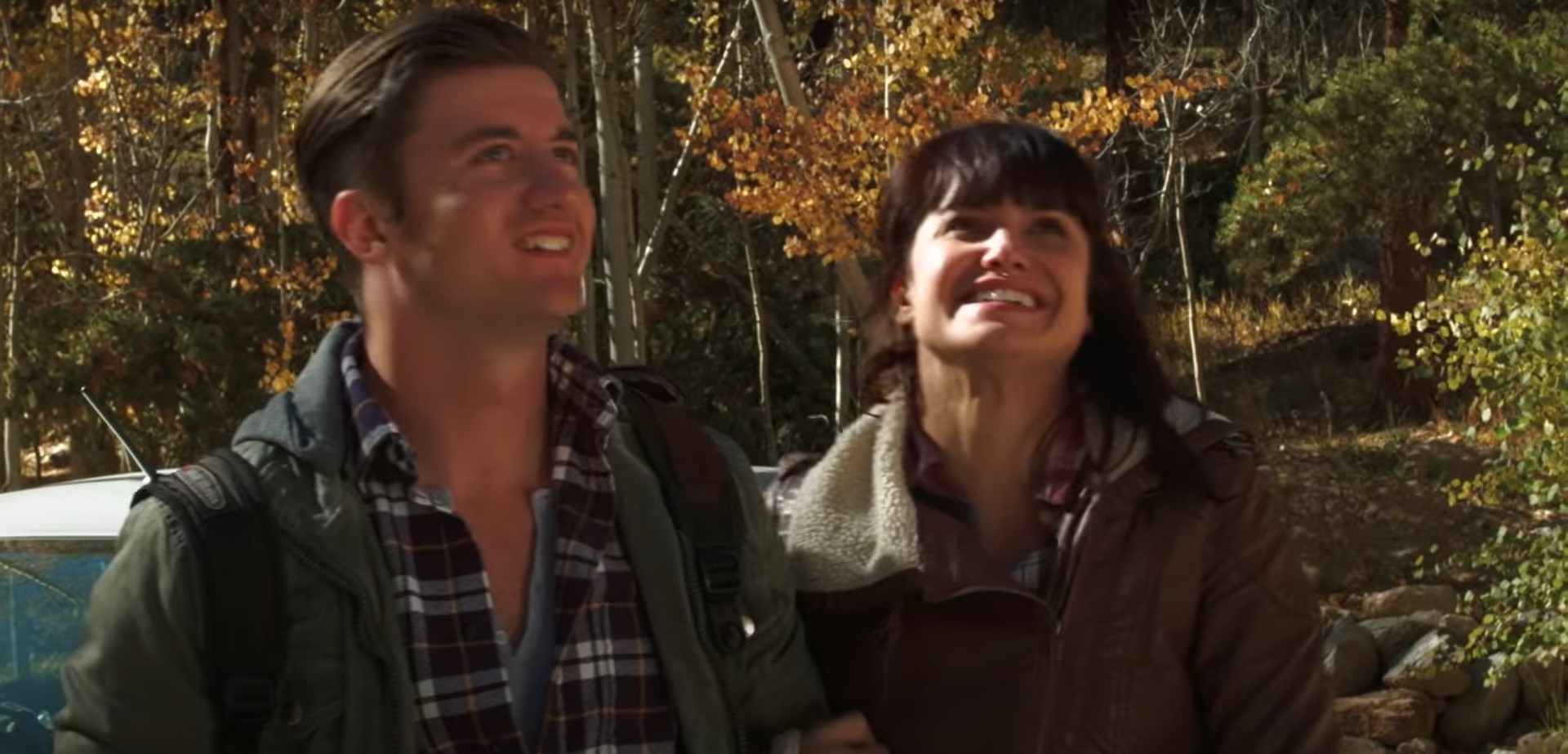
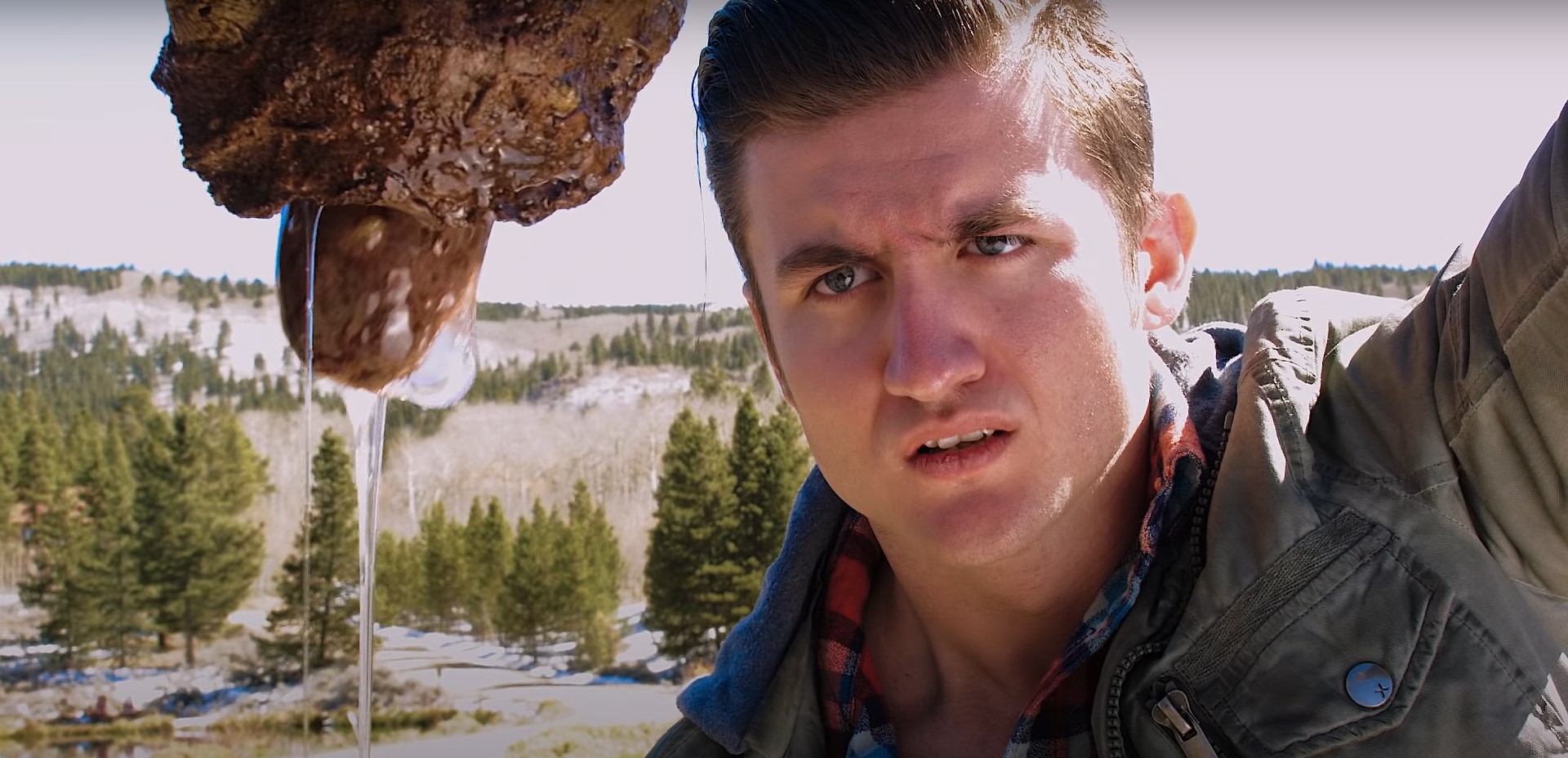
You can bet your lift ticket that the cast of “Exposure” is not strapping on skies and gripping to a rope for their dear life as a horse pulls the skier through the streets of downtown to go over manmade slopes and obstacles.  I wouldn’t think Snell would want to risk his four-person cast to such revelry actions that could result in injury.  Instead, a quiet, cabin-in-the-woods shoot leaves the actors to focus on the story at hand where a ingrained woodland evil infects and destroys an already bridle relationship between young couple Myra (Carmen Anello, “Zombie Beauty Pageant” and “I Am Lisa”) and James (Owen Lawless, “Hell Town”).  Anello and Lawless make a cute couple with some baggage hanging over their heads that is mostly implied rather than fully divulged and they sell well what their characters are struggling with, which is mainly trust.  Afraid of Owen’s temper, Myra is reluctant about moving forward in their relationship whereas Owen’s trust lies with Myra separating herself from an affair with a doting fling with a penchant for sending her sweet nothing texts she tries desperately to ignore.  I honestly don’t feel the immense love and hate tension in the room between Anello and Lawless who are more like best friends with an occassional spat than lovers going through a severe rough patch.  The more show of passion between them clings to the insincerity but that’s the high note for the connection between them.  Lynn Lowery (“I Drink Your Blood,” “The Crazies”) has a small role in flashbacks as Owen’s grandmother and Bruce Smith as the grandfather.
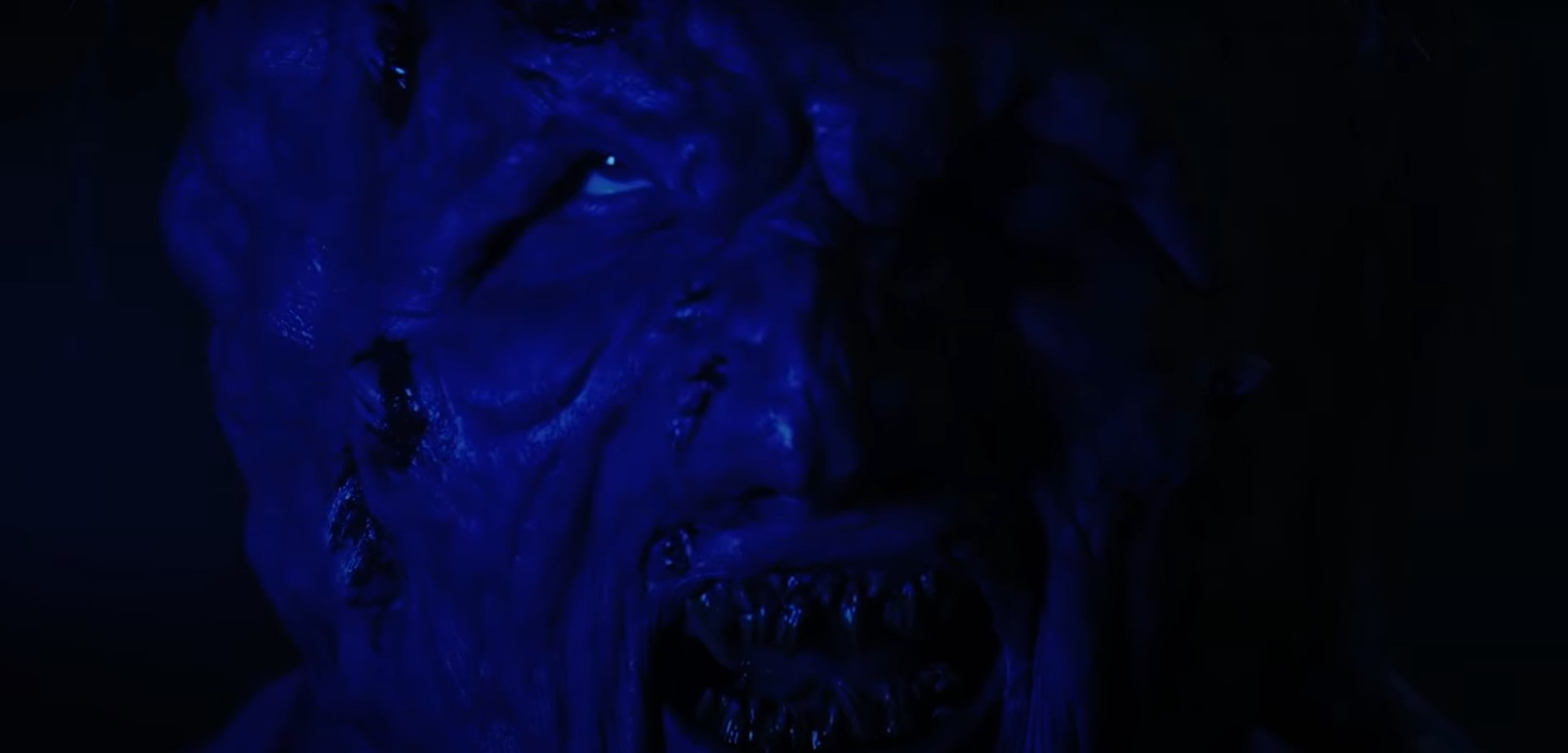
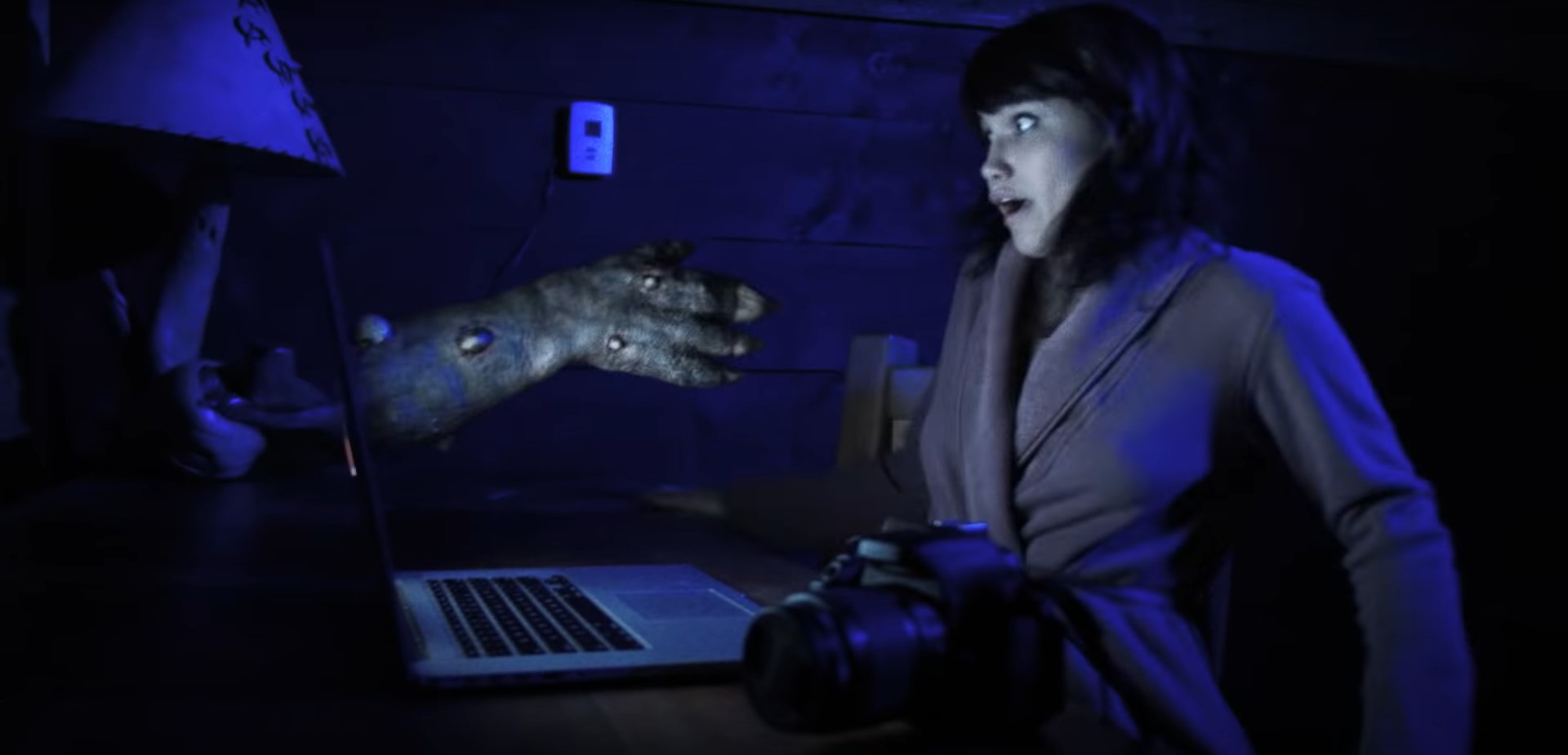
If you have already viewed Austin Snell’s “Exposure” then you likely know that the title is entangled in a double meaning. Perhaps even a triple meaning. Mountainous woods surrounded by frigid air with little-to-no help in sight leads to the vulnerability against the natural elements. In this case, the evil is the element, an unnatural one, that has laid claim to the area and sought the generational organic matter of Owen and Myra for its vile purposes – to spread its wickedness through the veins and mutate its victim into a hideous, baleful beast with a mind to match. The third meaning is more metaphorical as the term exposure can also be defined as the revelation of a typically bad thing that wasn’t clear before. In the film, Owen and Myra are going through a tough period in their romance with one of the inimical causes is Owen’s explosive and hurtful anger. Slithers of his masked morose behavior bubble to the surface in a motif view of just why they need to sort out the turbulent present in order for their possible future to resemble their merry past. The flashback story about Owen’s grandparents shed some light that what Owen may be going through is inborn, hereditary, and unchangeable; Owen’s reason and love mutates toward a gradual descent into monstrous behavior and that’s what the evil symbolically represents. Snell just happens to spin genuine relationship woes into an emblematic story with campy practical creature feature prosthetics and makeup. What most will dislike about “Exposure” is Snell’s true indie, natural approach to the special features that relies heavy on the cheesy, rubbery prosthetics and tangible tube and rod special effects without a lick of visual imagery for a smoothed over appearance. I applaud Snell for his raw, if not antiquated, choice that nods the throwbacks in the absence of contemporary conveniences.
For the first time on home video, “Exposure” makes a Blu-ray debut courtesy of Scream Team Releasing and distributed by MVD Visual. The not rated, NTSC region free, AVC encoded Blu-ray is presented in a widescreen 16X9 (1.78:1) aspect ratio. The 1080p, high-definition resolution looks pretty good and detailed, despite the heavy blue tint and gels, with negligible compression issues, especially with the heavy use of fog machine and a number of night scenes that don’t display noticeable banding or fuzzy/blotchy pixelation. The English language PCM 2.0 stereo audio provides a lossy amplitude that’s definitively detrimental to “Exposure’s” teetering success with audiences and the tracks don’t punch like that should for an atmospheric creature feature. The dialogue also sounds a bit boxy and artificial at times but, nonetheless, the dialogue track is still clear and discernible. Special features include cast and crew audio commentaries, a quick glimpse featurette into the behind-the-scenes of the special features, production stills, theatrical trailer, and retro VHS trailer. The physical Blu-snap case comes with reversible cover art, which, if you ask me, the secondary cover is the best with the illustrated, shadowy monster looming over a brightly lit heroine carrying a flashlight and a small axe. “Exposure’s” tribute veneer to the 80’s creature feature is spectacular without a doubt but lacks the energy to fully come to terms with its theme that’s become caught in the throes of a throwback rather than in the throes of relationship reconciling.

Get exposed ot “Exposure” on Blu-ray at Amazon.com!

Weekend’s Over. Tomorrow’s an EVIL School Day! “Monday Morning” reviewed! (MVD Visual / Blu-ray)

Pick Up a Copy of “Monday Morning” Now on Blu-ray!

At Oceana High School, you’re either one of the local kids or you’re nothing. That’s how the aspired musician Bobby Parker and his friends are treated when their parents are transferred into town to build a powerplant. Shunned, ridiculed, and bully, Bobby can’t seem to catch a break even when he steals the heart of Noreen Hedges, a popular local and the sister of most bigoted bully of them all, James. To James who has essentially the entire town behind his way of obnoxious, intolerant thinking, Bobby Parker is no better than scum and is unwelcome anywhere in town, even at the local waterhole called The Shandy. After sneaking into The Shandy to see Noreen, Bobby is left in a heap of trouble with the law when a near fatal accident lands one of the local girls, James’s girlfriend, in the hospital. Looking to teach him a lesson he’ll never forget, James and his lackeys bring a gun to school to scare him but when a teacher is shot and James finds himself holding hostage his homeroom class with the gun, he’ll need to prove his innocence to his narrow-minded classmates as well as the police with itchy trigger fingers.

Mondays are the worst. When you’re a teenager coming off a weekend, that bell ringing at the start of the week is worse than fingernails on a chalkboard. When you’re a teenager who’s constantly bullied by popular jerk and the entire prejudging town that only sees you as an outsider, Mondays could shoot anyone’s nerves. Shoot being the key word in Don Murphy’s 1990 release feature film debut, or rather his only feature film credit, “Monday Morning.” Also known as “Class of Fear,” the cult drama with a classroom shooting at centerstage of the narrative feels awfully relevant in today’s tumultuous time of school and mass shootings. Where the topical issue of gun control is on the edge of every Red and Blue politician’s lips. For Don Murphy, who went on to produce notable blockbusters such as the “Transformer” films as well as cult hits with “Apt Pupil” and “Natural Born Killers,” “Monday Morning” is just a movie without any kind of political or social commentary behind the surface. In fact, Murphy has stated that production was initially a student film that evolved, but the theme behind reality and fantasy are the same in that children-bullying-children can push fragile minds beyond a breaking point. First A.D. of “Caged Heat 3000” Sheila Lightfoot produces the film alongside Murphy as executive producer under the production banner Team Angry Filmworks, Inc.

Noah Blake, the son of child star turned accused wife-murderer Robert Blake, steps into the constantly ragged on shoes of ostracized struggling high schooler Bobby Parker.  Bobby’s a never-say-die, never-give-up good guy given a cruddy hand in life as he’s dealt blows not only by his school peers, but also by his father who throws him out of the house for not living up to expectations and even by his band of like misfit friends for being traitorous for trying to live outside the confines of his unwanted status.  Bobby’s an extremely likeable and evolving character to almost a fault as he walks into foreknowledge adversarial situations without so much a clue on how to handle unprovoked hostility other than head on.  Perfect in the role that’s aggravatingly inspirational on how everyone should be pigheadedly neutral and able to see the good in everything, the “Piranhaconda” actor Blake takes Bobby Parker by the reins and lets the character be a subject of unbridled victimization.  One of the more conspicuously unhinged and douchey performances, landing this actor on the opposite end of the spectrum in contrast to Noah Blake, goes to Brandon Hooper as pretty boy bully James Hedges.  You really want to just punch James square in his pointy nose because of his incessant nitpicking and tunnel vision on making a crusade out of tormenting Bobby Parker for being in the platonic presence of his girlfriend (Shannon Absher, “Blood Nasty’) and having a romantic relationship with his sister Noreen (Julianne McNamara, “Saturday the 14th Strikes Back”).  What’s curious about “Monday Morning” is its ability to drop Bobby Parker’s friends from the principal lineup, with the exception of Bobby’s ride-or-die bestie Bill (Karl Wiedergott, a “The Simpsons” utility voice actor) though initially saturating the narrative with their bickering and turn the attention more on the town’s chief of police, played by “Sorority House Massacre’s” Fitz Houston fitting into his usual typecast role in law enforcement, by introducing one of the classroom hostages as his son (Vincent Craig Dupree, Julius from “Friday the 13th Part VIII:  Jason Takes Manhattan).  Rickey Dean Logan (“Freddy’s Dead:  The Final Nightmare”), Marta Marin (“Mindwarp”), Nicole Berger (“American Cyborg: Steel Warrior”), Jason Lively (“Night of the Creeps”), Brian Cole (“Mortuary Academy”), Paul Henry Itkin, Annie O’Donnell, and Lisa Rinna round out the cast.

How writer-director Don Murphy describes his film is “The Breakfast Club” with guns.  Granted, Murphy’s firsts draft contained more angst as an angry student holds the whole class hostage at gunpoint for the near entirety of the story, but “Monday Morning” is more akin to “Pretty in Pink” with A gun, isolating teenage cliques, trying to overcome their pressuring biases, and exposing differences in social classes and mistook attitudes.  Most of the film is building up to the clinching climatic classroom moment with Bobby trying his damn hardest to be a bridge between the gaps in a “Romeo & Juliet” type relationship that connects spurned outsiders with the spurning locals.   “Monday Morning” is a very contained narrative with only a handful of locations, primarily Oceana High and The Shandy, grounding the scale to a much more condense and story friendly design that’s easy to follow and digest.  That design isn’t turf war central.  We’re not talking about an all-out war between the Jets and Sharks.  Murphy, who often co-credits the final script to another screenwriter, rains down a supercell storm cloud’s rain and lightning on the downtrodden outliers to garner a tremendous amount of sympathy and to really beam lasers of hate into the local louts that essentially becomes a turf war just from their perspective for fear of losing their lionization over Oceana and the town.  “Monday Morning” embodies that quirky 1980’s teen melodrama with a very real, very terrifying, and very present-day topic that bumps Don Murphy’s movie up into the cult category.

We all agree that Mondays suck, but “Monday Morning” is a Monday associated gem of a film that is now available on a high definition 1080p Blu-ray from Angry Films and MVD Visual as part of MVD’s Rewind Collection banner.  The new transfer, taken from the original camera negative of a European based filmstock, is presented in a widescreen 1.85:1 aspect ratio.  The transfer release is reasonably well-dressed in color, with an ever so slight teal or gray tinge, and a good enough, above average decompression rate around 28mbps.  The transfer does display flashes of damage that look very much like tracking lines, but also could be light exposure on the negative.  The audio remains at an English LPCM 2.0 mono and contain static throughout with hissing in portions of the dialogue; however, the tracks are relatively clean enough for discerning dialogue.  Bonus features include a high-def, near feature length interview with writer-director Don Murphy doing a deep dive into his background, the film’s backstory, and his recollection of events throughout his career, a high-def, 24-minute Don Murphy from 2019 that looks at the producing career of the filmmaker, and the standard definition VHS version (1.33:1 aspect ratio) of “Monday Morning” under the alternate title “Class of Fear.”  The physical release comes with a reversible case cover art with alternate “Class of Fear” and a collectible mini-poster insert housed inside a clear Blu-ray snap case with a cardboard slipcover of the same primary cover except with faux cover damage to resemble a worn-torn rental.  Both versions of the film run at 105 minutes and is rated R.  A timely release for “Monday Morning” as a film that’ll reexamined and rethought of from its original entertainment purposes to be said that the issue has long since been prevalent and in the back of our minds.

Pick Up a Copy of “Monday Morning” Now on Blu-ray!

EVIL Says, Victor Crowley Who? “Freak” reviewed! (Wild Eye Releasing / DVD)

Get Freaky with “Freak” on DVD at Amazon.com

Arthur Crenshaw – the name of a terrifying urban legend.  The story has it that the religious small town-born Arthur was malformed unlike anything anyone has ever seen and that the God-fearing townsfolk didn’t take kindly to his existed as Arthur was looked down upon as an abominable creation of Satan.  His parents, giving into constant community pressure, casted him out into the nearby woods to die alone.  Years later, campers would record that their food and supplies would go missing.  Some campers even went into the woods and never came out.  Present day, a group of campers reserve a campsite, seeking the thrill of the woods’ notorious backstory and for a little R&R on a quick weekend getaway, but the stories of the misshapen, monstrous Arthur Crenshaw are not just tarradiddles to give people the willies and for the youthful campers, a night under the stars has become a night of survival.

Looking for something different, unusual, and still carnage drunk in a disfigured, backwoods killer of a campy slasher?  Look no further!  Lucky Cerruti’s very own misunderstood reject Arthur Crenshaw is the type of “Freak” we’ve all been craving.  The 2020 American indie feature is the sophomore production from writer-director Cerruti who oversaw all the pre-, principle, and post- in the height of pandemic time.  The “Kindness of Strangers” filmmaker films “Freak” in New York’s picturesque Adirondack mountains surrounding the community of Ochiota and Cerruti’s able to capture a slither of the landscape beauty with the majority of shots constrained to closeups due to puppetry.  Yes!  Arthur Crenshaw is but a mere puppet with more than frightening features that makes him appear more alien than human.  “Freak’s” indie crew consists of James Bell on special effects with producers Matthew Sorensen, Kegan Rice, Jessica Fisher, Leslie Dame, and Robin Cerruti serving under multiple hats with cinematography, puppetry control, and creature design under directors Dead Vision Productions.

Consisting of mostly Adirondack local artists and actors, “Freak’s” casts yips with little bite to make Arthur Crenshaw’s wretched, hillbilly kill-monger. Unimpressive and uninspiring character buildups coupled with so-so first-time acting doesn’t exactly put one on edge for these unlucky campers’ survival. I realize that Cerruti attempts to parallel Crenshaw with the awkward tag-a-long little sister Jenna, played by independent painting artist Sasha Van Cott, by focusing on both of them being an outcast and misunderstood. Cott’s meek performance aligns with that element but the character, like the others, is terribly bland. Her brother Ryan, performed by independent musician Dorran Boucher, is portrayed as seemingly have little to do with Jenna in a big brother role that can be described as neither sympathetic or apathetic to his sibling and treats her more like just one of the friends, but encouraged by their parents to bring Jenna to socialize her into having…I don’t know what. Jenna does manage to have a spark with or soft spot for Ryan’s best friend Henry as she constantly sides with his oddball interest in the legend of Arthur Crenshaw. Her fascination keeps Henry interesting in a subconscious kind of way but the two are a mismatch from the start as he appears to be the cool kid or the jock trope of the group. “Freak” sacrifices up a platter of kill-fodder with throwaway roles by more feature film first timers in Annachristi Cordes, Hunter Wilson, Leslie Dame, Hope Stamper, and Lucky Currati in an intense introductory opener and Kent Streed as Arthur’s old man who gave a damn and one of the only principals to receive a proper personal history that provides depth and understanding.

“Freak” might have low marks in acting, but the self-labeled C-movie has straight up, grade-A kills. We’re not talking about a simple knife to the gut or a slice across the throat here. Arthur Crenshaw doesn’t quite know when to stop as that single slice turns into two slices, three slices, four slices, and on and on until the who head hangs barely on the sinew attaching the head to the rest of the body. You know when you’re dicing up chicken breast and that white tendon streaking through the raw white meat is so damn hard to cut through, it’s like that. There’s blood everywhere and then some. “Freak” is surprisingly and pleasantly gore-laden and that goes hand-in-hand with the antagonist’s physical existence as a rod puppet worked from behind under the guise of a green screen by creature designer and executive producer Matthew Sorenson. Sorenson’s visualization is quite the abstract concept in reality with reverse knee flamingo legs, essentially no torso, and a head with one big blue eyeball and snaggle teeth. Arthur reminds me a little of the aliens from the 1996 David Twohy alien conspiracy film “The Arrival.” Hell, he could have very well been a stand in. The puppet and the puppetry are quite crude but are profoundly effective, welcomely campy, and an ingenious way to make a horror film during pandemic pandemonium.

Wild Eye Releasing, along with distributor MVD Visual, get in bed with the “Freak” on region free DVD home video. The big question is is “Freak” considered a feature film since the runtime is only 52 minutes? Some would argue the not rated Lucky Cerruti production doesn’t make the cut. I would say so what? But I did find the short runtime does hurt the storyline that’s unable to beef up portions that severely lack substance, such as the campers. The DVD is presented in a widescreen format that doesn’t list the ratio on the cover but if I was a betting man, 1.78:1 aspect ratio. The digitally recorded video’s data decompresses are varying levels between from a high 4 to a low 7 Mbps as banding and digital noise inference sneak into on the low-lit scenes negligibly. The DVD lists the audio as stereo, but the release actually has an English Dolby Digital 5.1. In fact, for some reason, there are two of the same Dolby Digital 5.1 tracks without any metric differences available. Despite some crackling during the more intense audio moments, the audio tracks are pretty well balanced and keep most of the blights at bay. The bonus features include a nifty behind the scenes featurette that dives deep into creating “Freak” in a wholistic view, a directory’s commentary, and Wild Eye trailers. We want more of the “Freak,” more of Arthur Crenshaw, as the Lucky Cerruti and Matthew Sorenson have a goldmine of a cult slasher right at their fingertips as the potential next big backwoods franchise that’ll breathe new life into horror and provide the genre what it sorely needs and deserves. Now…where’s Part II: The Return of Arthur Crenshaw?!?

Get Freaky with “Freak” on DVD at Amazon.com

A 10-Year-Old Girl Pieces Together an EVIL Tragedy. “Martyrs Lane” reviewed! (DVD / Acorn Media International)

Purchase ACORN Release of “Martyrs Lane” on DVD

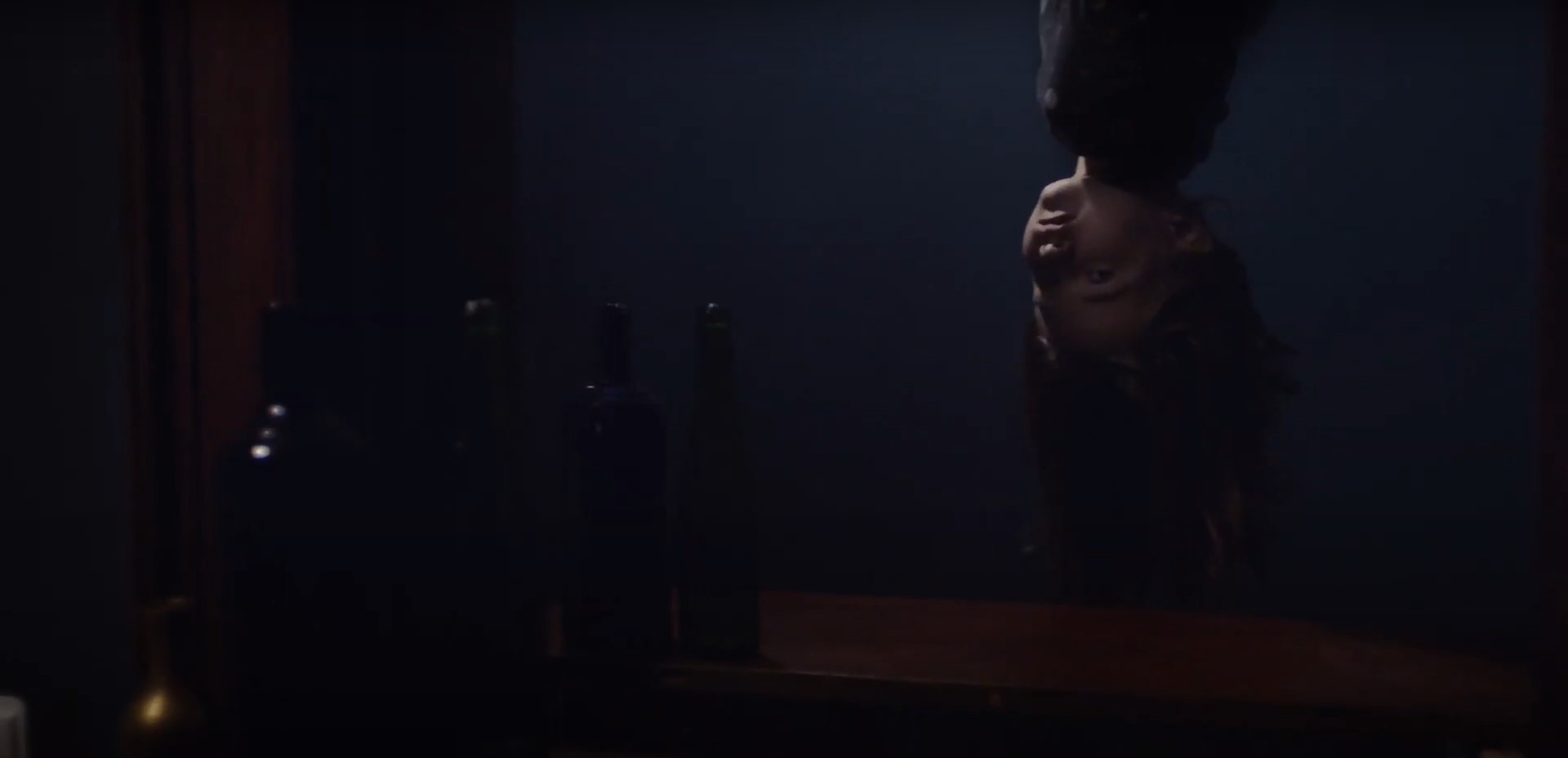
10-year-old Leah is a curious, quiet child, living in a vicarage household.  Her nightly nightmares surrounding her mother’s necklace locket and her mother’s stern conduct along with her constant obsession with her necklace locket leads Leah into an interest in the ornament’s contents.  Inside is a lock of hair and Leah takes it and loses a day later, sending her mother into a tailspin of anxiety.  That same night, a little girl knocks on Leah’s window and provides Leah momentary comfort and friendship until every visit after that, the little girl grows sicker and more ominously enigmatic in her play, providing clues and the whereabouts of thought-lost items that will open up the truth about the mystery girl’s identity as well as her family’s dark secret.

“Martyrs Lane” is a thoughtful and empathetic drama with supernatural delicacies surrounding complexities in loss and grief of bottled-up family secrets.  The British film is the third feature film, second in horror, for actress-writer-director Ruth Platt (“The Lesson”) who has commented that “Martyrs Lane” is a plucking of aggregated events from her own childhood woven into the very fabric of the story. Platt’s 2021 release is a fined tune extension upon her 2019 short of the same title that recasts the core principal roles from original actresses Indica Watson, Phoebe Lloyd, and the live action adaptation of “Beauty and The Beast’s” Hattie Morahan and turned the short into a 96 minute closed book feature about a scrutinized and consuming locket and a slowly decaying little girl playing two truths, one lie with the main character during bedtime hours who then has to unravel the mystery behind it all. Ipso Facto Productions’ Christine Alderson, who also produced “Valhalla Rising,” “Alpha Alert,” and even Platt’s original short film, produces “Martyrs Lane” alongside Katie Hodgkin and partly funded by the British Film Institute (BFI) in association with Sharp Films, Lypsync, and LevelK.

Recasting the short’s linchpin framework actresses took an audition to bring to light exactly the kind of talent Platt needed to express the different levels of somber ambivalence toward a family obviously struggling to deal with something more than just the day-to-day tasks. Kiere Thompson took over for Indica Watson as Leah in her feature performance debut and Thompson smashes a complex role and gains high marks on the voyeur scorecard as the youngest child who watches as her mother ebbs and flows in various states of anxiety while serving a milder, yet vastly different, dish of dynamics with the levity being around her vicar father and to be always primed to deal with her tormenting much older sister Bex (Hannah Rae). The best chemistry is between Thompson and age-appropriate counterpart Sienna Sayer, taking over Phoebe Lloyd’s role from the short as the strange visiting little girl. You can see two youngsters’ genuine play and natural innocence come through their smiling faces, wide eyes, and contagious giggles and when the winch of fear washes over them, called for by the story’s puzzling rising of events, mirthless moments are quickly produced, snapping us back into Platt’s eerie cold quandary. Hattie Morahan is replaced by Denise Gough as the mother Sarah and though her performance is fine, there just wasn’t enough of the mother’s side of the story to evoke a sense of empathy or sympathy and ultimately just falls into right into apathy even though Sarah is a pivotal piece to the theme. Catherine Terris, Charlie Rix, Donna Banya, Anastasia Hille, and Steven Cree as the vicar and Leah’s father rounds out the cast.

A blend between “Let the Right One In” and “The Babadook” but with less blood and less malevolent atmospherics, “Martyrs Lane” offers an imposing exhumation of a secret told in a way that doesn’t carry the sensation of something being hidden from Leah or even the audience in general.  Instead, Platt invests into the thematic subtleties with the bigger picture on the supernatural element of a strange, orphaned girl who knocks on the outside of Leah’s second story window, wearing dress up angel wings and is slowly deteriorating health wise with each passing night.  Yet, despite her appearance and reluctance at times, Leah’s peculiarly drawn to opening her window, letting her in, and even play childish games with her and tell jokes but soon those games become clues, near riddle-like, for Leah to push the envelope that link her mother, the locket, and this strange girl together.  Platt tacks on a silent and tenebrous after-hours backdrop during Leah’s sleepless nights and the stillness is greatly encroaching upon into the terror senses that you find yourself holding your breath and jumping at the breakneck editing aimed to momentarily scare you until a sigh of relief for when it’s over.  “Martyrs Lane” is externally melancholic and mood driven from outside Leah’s perspective as she, herself, internalizes and absorbs the emotions of others, studies them, and puts the pieces together to unravel the truth.

Ruth Platt’s “Martyrs Lane” is a wistful, and often eerie, entry into the creepy child subgenre. UK distributor, Acorn Media International, releases the Shudder exclusive-streaming film onto a PAL encoded region 2 DVD.  Presented in a widescreen 1.85:1 aspect ratio, there’s virtually no issues with the compression as even the night sequences retain the thick and obscuring black levels with almost unnoticeable banding, and it’s a clean dark too with balanced contrast to really home in on and define the shadows.  Details and textures are good for Platt’s dreamy-presented cinematic approach of slight overexposure and blur are more a stylistic attribute than an issue with the imagery.  I liked the tactile details in the loose strands of hair around Leah and the mystery girl that plays on their differences, and sometimes similarities, really well.  The English Dolby Digital 5.1 surround sound retains no significant issues.  Dialogue track perceives slightly muted or distant in some scenes and clarity, though free from audio blemishes, can be straining.  English subtitles are available.   Bonus features include a behind-the-scenes with snippets of interviews from Ruth Platt and the cast, an interview with Ruth Platt (which contains the same segments pulled for the behind-the-scenes), and a behind-the-scenes photo gallery.  The Acorn DVD is certified 15 for strong supernatural threat and injury detail.  In the end, “Martyrs Lane” is a dead-end road to melancholy, a family-affecting affair that peripherally chronicles not only one person’s struggle to maintain a slither of normalcy but also profoundly hits innocent youth who know nothing of the skeletons kept in the closet.

Purchase ACORN Release of “Martyrs Lane” on DVD

EVIL Won’t Let You Just Kill Yourself Even If You Wanted To! “Violator” reviewed! (WildEye Releasing / DVD)

“Violator” on DVD from Wild Eye Releasing and MVD Visual!

Desperate to track down her sister Naomi who becomes involved in an online social media forum about mass suicide, a woman’s investigation leads her on a train ride to a small village on the outskirts of the city.  There she meets Red Sheep, an internet handle for the mass suicide form greeter for those individuals seeking to give up their life willingly.  Returning her to the abandoned house where congregated patrons of their own demise wait for forum members from all over to gather before stepping into the afterlife, but the beneath the surface of simply drinking the Kool-Aid together is a wretched plan of death and self-inflicted suicide is not in the ill-fated stars for the group now sequestered in an isolated town. 

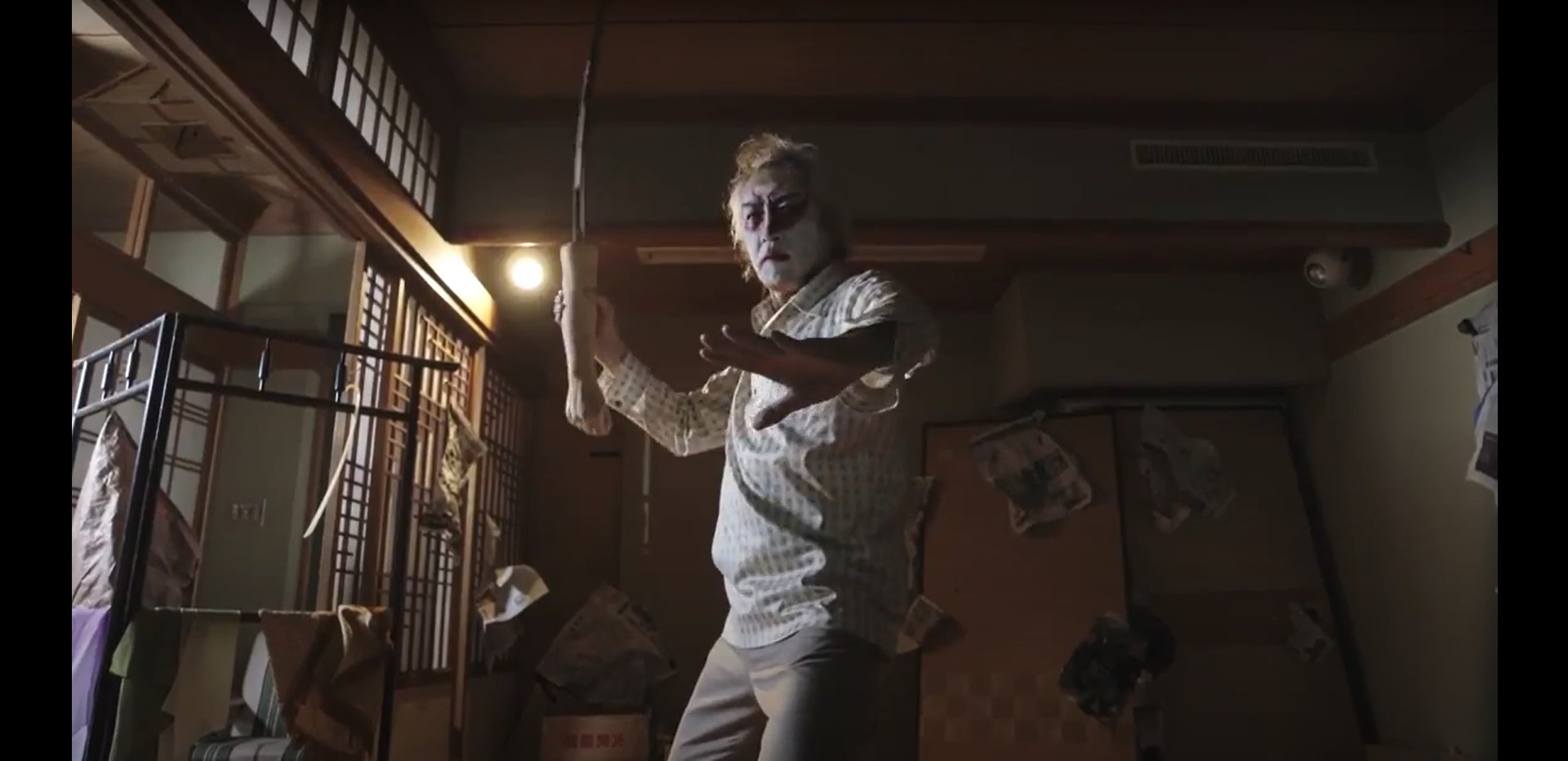
When the film is titled “Violator” and the very first images on the screen are flashing title cards, warning of violence and depravity from what you’re about to see, then a graphic intensity bar has been firmly set with the expectation that disturbing content is afoot.  The Japanese 2018 released horror-comedy comes from the cyborg-splattering mind of “Meatball Machine” writer-director Jun’ichi Yamamoto and is a continued part of the tokusatsu horror genre peppered with familiar Japanese motifs of mass suicide, samurai sword, oral fixations, and all with a pinch of Kabuki!  Yamamoto is no stranger to the Kabuki culture as he works in a callback scene and line from his 2008 actioner “Kabuking Z:  The Movie” into “Violator’s” evil eviscerating and executing entrapment.      

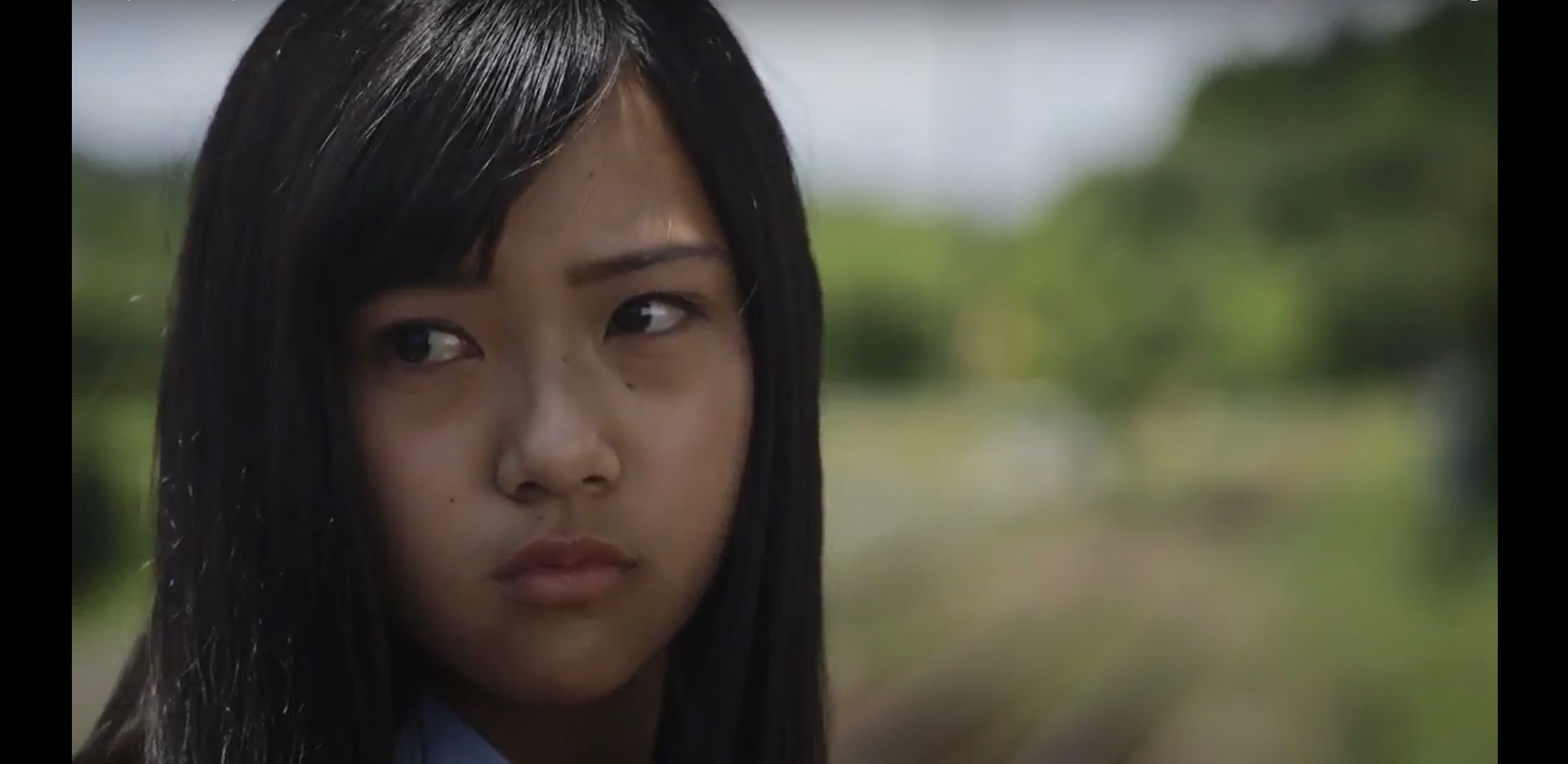
I wouldn’t call “Violator” aces in acting, but I’m not speaking to the general known fact that Japanese portrayals are often over-the-top exaggerated, and I’m referencing more toward the lack of selling the bizarre by any means possible.  The cast more than often feels like a rehearsal and robotic to the point where picking out cues can be almost a game.  Most of the cast are once overs or have a select history in the indie-tokusatsu market.  The biggest name in the film also has the shortest screen time with Nikkatsu Roman Pink film actor Shinji Kubo as the leader of the pact who lures lost souls to the abandoned house of doom.  Kubo doesn’t make or break “Violator,” but his character is pivotal in turn of events that alters the course of a few particular principals. Mai Arai plays the worried sick and searching woman tracking down her sister Naomi (Sora Kurumi) before she makes a grave suicidal mistake. Along the way, Arai’s character bumps into a mixed company of varying personalities revolving around their own death – one early 20-something young’un treats her suicide like the next cool thing, another ostentatiously can’t commit, and while another couldn’t be bothered by anything else surrounding her and plays it cool. The small village inhabitants are just as diversified and as quirky as the emotionally haphazard suicidals but with special, supernatural abilities to absolutely mess with their minds until satisfying their morbid, high-on-death munchies. Shinichi Fukazawa (“Bloody Muscle Body Builder In Hell”), Shun Kitagawa (“Prisoners of Ghostland”), Kanae Suzuki, Anna Tachibana (“Corpse Prison”), Ichiban Ujigami, and Rei Yatsuka round out “Violator’s” cast.

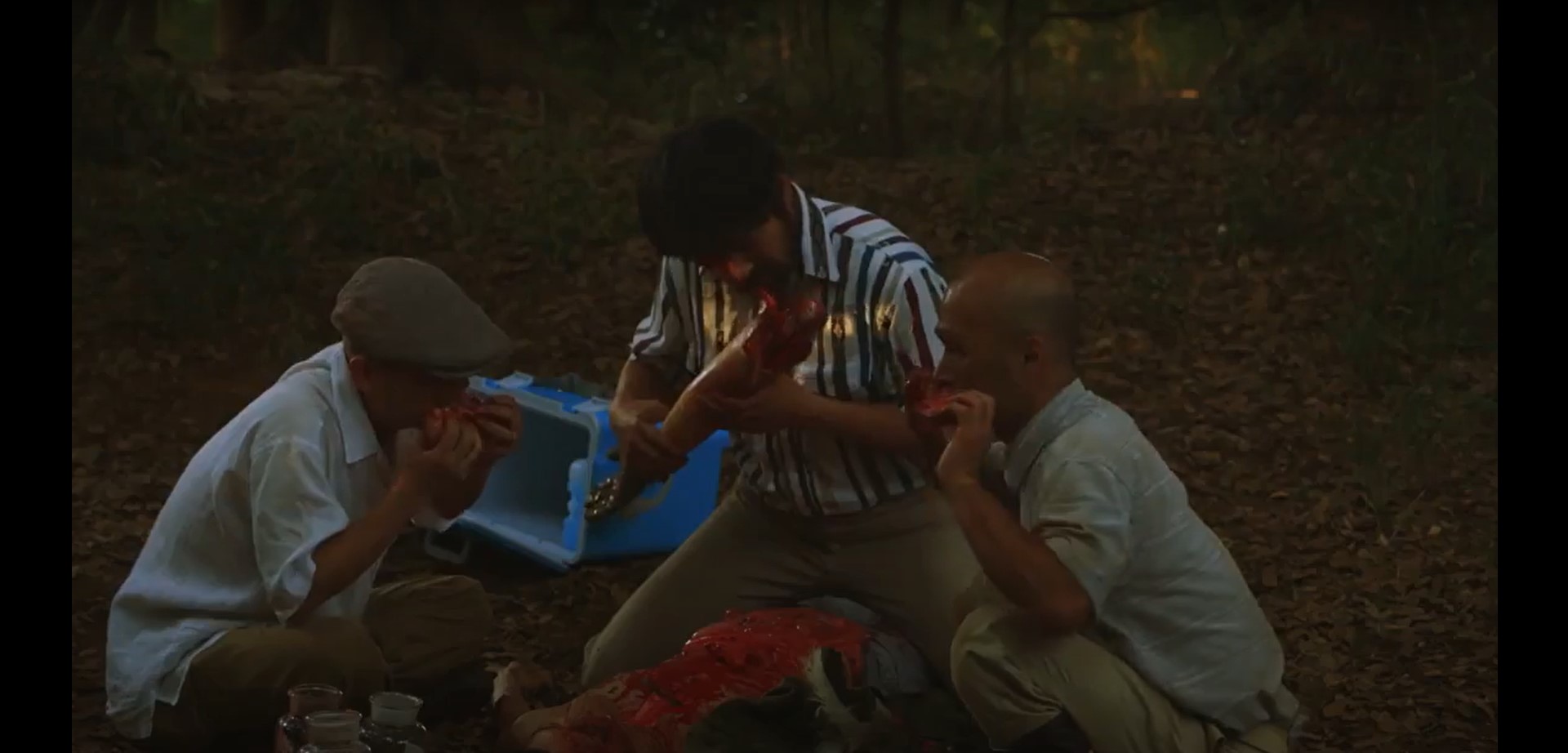
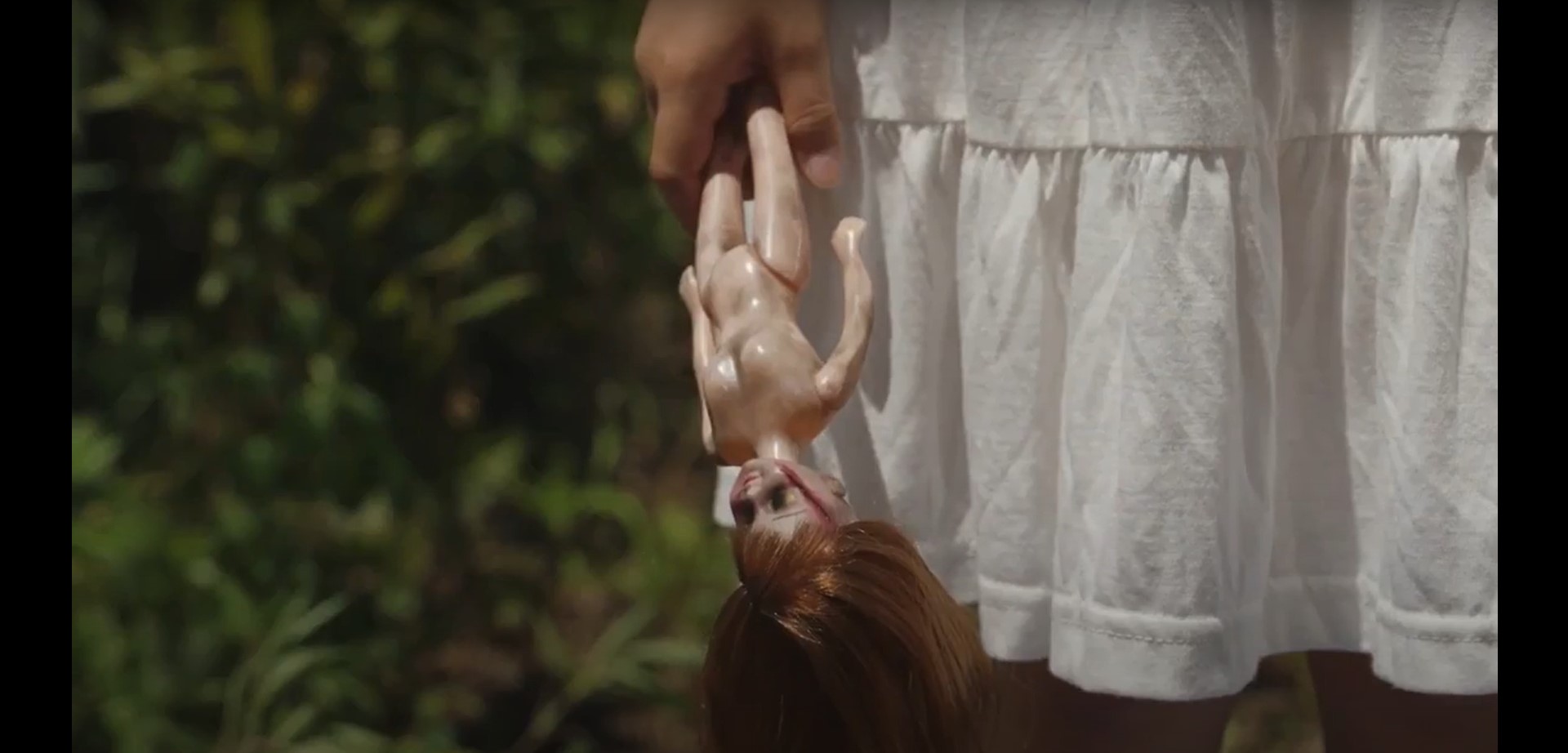
With a provocative title and a stern, flashing warning for taboo content, “Violator” starts off slow and continues so until about 3/4s into the film. Yamamoto glides not the sliced underbelly with murderous rage and profane callous through sexually and wicked means. No, Yamamoto builds each individual character, giving the what’s usually throw-away victims the time of day with a prolonged preface before their death that sets in who they are, what mindset they’re in, and, instead of just being collateral damage, what catalytic action becomes their ultimate undoing. By providing singular personalities, Yamamoto instills a breadth of subconscious care amongst the audiences that unintentionally react with the pangs of sympathy for the less naive during their demise to a straight up I’m glad they’re dead death because of their horrible unprincipled being and them dead makes the world a better place. Eventually, Yamamoto turns the keys to rev up the havoc as the death pact suicide squad disband into distinct, slasher-esque junctures to make good on the promise of building the character to give them a proper cutthroat curtain call and it’s about this time “Violator’s” pre-film turpitude caution actually applies with strange ritualistic kabuki decapitation, a virginal last-gasp cunnilingus before a protruding vaginal spear pierces through the skull, and a toy doll becomes a literal eye-opener for a suicide documentarian. Idiosyncratic in their own right, the kills are a violent spectacle that make “Violator” memorable enough to not forget it, but there’s far worse inflammatory material out there in the world of cinema that “Violator’s” handful of okay kills doesn’t exactly set off our internal omigod alarms.

“Violator” is the kind of off market brand and violence-laden film that fits like a glove with indie distributor, Wild Eye Releasing, in association with Tomcat Films (“The Amazing Bulk,” “Mansion of Blood”) and is perhaps one of the best releases out from the shlock usually produced from the latter company. With a muted colored and basic arranged DVD cover mockup that evokes every suspicion of an unauthorized release, I couldn’t love this cover any more than I already do with the promising depiction of a hysterical bloodbath and the singular moments represented in the collage of carnage and madness don’t stray away from the truth. The not rated DVD is presented in a widescreen 1.78:1 aspect ratio with a runtime of 72 minutes. DVD image quality is not terrible with a rate of decompression hovering around 6-7 Mbps, but still a little fuzzy in particular scenes with more than one character present and a in low-lit show production, that can hinder the viewing. The Japanese language PCM stereo track has no real flaw to speak of with a good synchronous English subtitle track and no detectable compression issues other than the lack of surround sound audio strength. The metal soundtrack also didn’t align, or rather clashed, with the mise-en-scene, added for just the sake of adding to make the story edgier. Bonus features include only a scene selection and trailers on a variable menu. Coy and different, “Violator” thinks outside the box with a simple supernatural revenge narrative that penetrates slowly at first but then really rams in the sudden disarray without a precautionary moment to lube up first.

“Violator” on DVD from Wild Eye Releasing and MVD Visual!