To Do EVIL or To Do Good? “Men of War” reviewed! (MVD Visual / Blu-ray)

“Men of War” are Men now in High Def! See It Here!

Living like a pauper on the frozen street of a snow Chicago, ex-special forces soldier Nick Gunar has no desire to return to his former life, but when he’s referred a mercenary job to visit an island off the South China sea, he’s assured by the man that referred him, his fatherlike former colonial, that there will be no bloodshed in his all for show and intimidation situation that needs more finesse than firepower.  His mission is to assemble a team and negotiate with armed persuasion to get the unwilling, combative locals to sign over the rights to a mineral rich underground cave system.   Gunar’s expected confrontation turns out to be a small village of unarmed men, women, and children, peacefully refusing to sign over their land for excavational exploitation of their ancestral home.  While Gunar weighs his morality, a second team lead by Gunar’s more ruthless brother-in-arms, Keefer, sets to make sure the job is completed one way or another. 
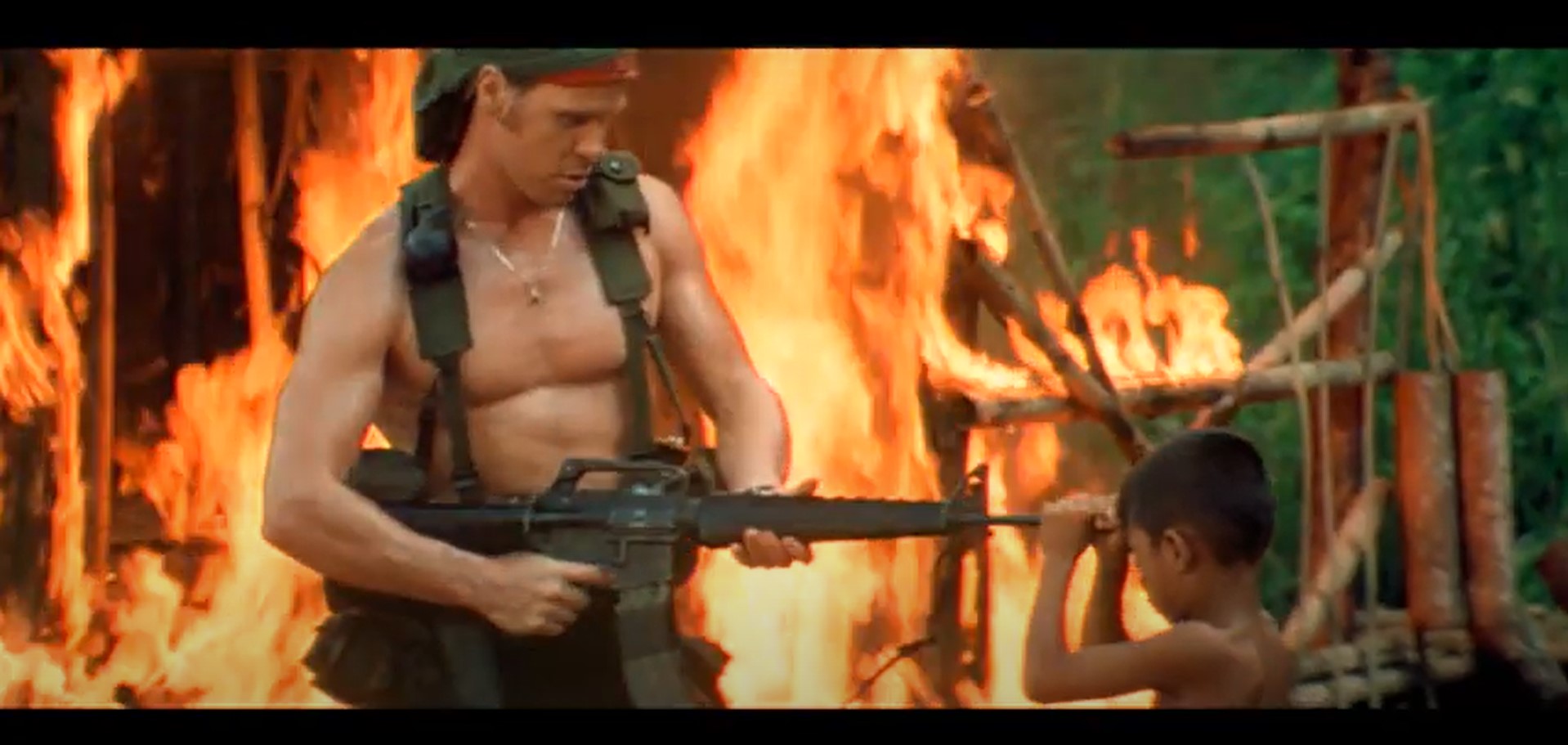
Set off the coast of Thailand, “Men of War” is the 1994 U.S. mercenary action film that induces the ethics and morality question of armed-to-the-teeth hired guns against a small village of mostly helpless residents going to sit with an honorable conscious.  Perry Lang, actor in such films as “Teen Lust,” “The Hearse,” and “Alligator” who then turned director in the early 90s, helmed his sophomore picture after directing Catherine O’Hara in “Little Vegas” four years prior.  “Men of War,” which had a working title of “A Safe Place,” is penned by a trifecta of writers in “The Howling’s” John Sayles, “Demon Knight’s” Ethan Reiff, and Reiff’s longtime screenwriting partner Cyrus Voris.  Seasoned writers and an upcoming director garnered studio funds by Moshe Diamant and Stan Rogow to take a chance on the abroad militant-action subgenre that was dwindling at the time of the mid-90s.  Mark Darmon Productions Worldwide, in association with Grandview Avenue Pictures, served as coproduction studios with Arthur Goldblatt, Andrew Pfeffer, and David C. Anderson producing.

The big name that attracted financial support and give the title a boost was Dolph Lundgren who, at that time, was one of the biggest action stars of the late 80s into the 90s with “Rocky IV,” “Masters of the Universe,” “The Punisher,” and “Universal Soldier” all under his 6’ 3” Swedish, muscular frame topped with blonde haired and gentle blue-eyes.  Lundgren tackles his next role as conflicted mercenary looking to get out of the game all together as former special forces soldier Nick Gunar.  Perhaps one of the more complex roles Lundgren has portrayed in his career, Gunar fights the uphill battle of a pressurized existence that always leads him back to what he does best, being a soldier of fortune.  Yet, the well-trained combatant’s heart has softened and changed to not be an elite killer anymore and his new mission, assigned to him by venture capitalist Lyle (Perry Lang) and Warren (Thomas Gibson, “Eyes Wide Shut”) and referred by Colonial Merrick (a true typecasted bad guy in Kevin Tighe of “K-9”), will put his trained tactics and newfound compassion to the test.  However, for obvious cinematic reasons, things will not go as smooth as Gunar obliviously hopes with nudges from a diversely skilled team of assembled gung-ho comrades, deceived by those he’s trusted, and antagonized vehemently by an unstable, former fellow special forces brother-in-arms Keefer, played by one of my favorite Aussie actors, the late Trevor Goddard (“Mortal Kombat,” “Deep Rising”).  Lundgren usually brings with his large and imposing self to the table with every role he slips into, but Gunar feels different partly because of two very different reasons:  Gunar lacks defining confidence and maintains the fierce façade to keep the assignment afloat under the aforesaid pressures, but Lundgren doesn’t look physically all there as he appears hunched over for a better part of downtime scenes.  “Jurassic Park’s” B.D. Wong plays the village wisecracking’ spokesperson Po who welcome Gunar and his team’s arrival with respect and with a little humor.  Wong’s cavalier style for Po works to cut tension and to showcase the natives as peaceful and unassuming but steadfast in their beliefs.  “Embrace of the Vampire’s” Charlotte Lewis, as Loki the the native island single mother and love interest to Lundgren, is the second credit name of the film yet has perhaps the shortest screen time of all the characters that fill out “Men of War” with Tony Denison (“Wild Things 2”), Tommy “Tiny” Lister Jr. (“The Fifth Element”), Thomas Wright (“Tales from the Hood”), Tim Guinee (“Vampires”), Don Harvey (“The Relic”), and Catherine Bell.
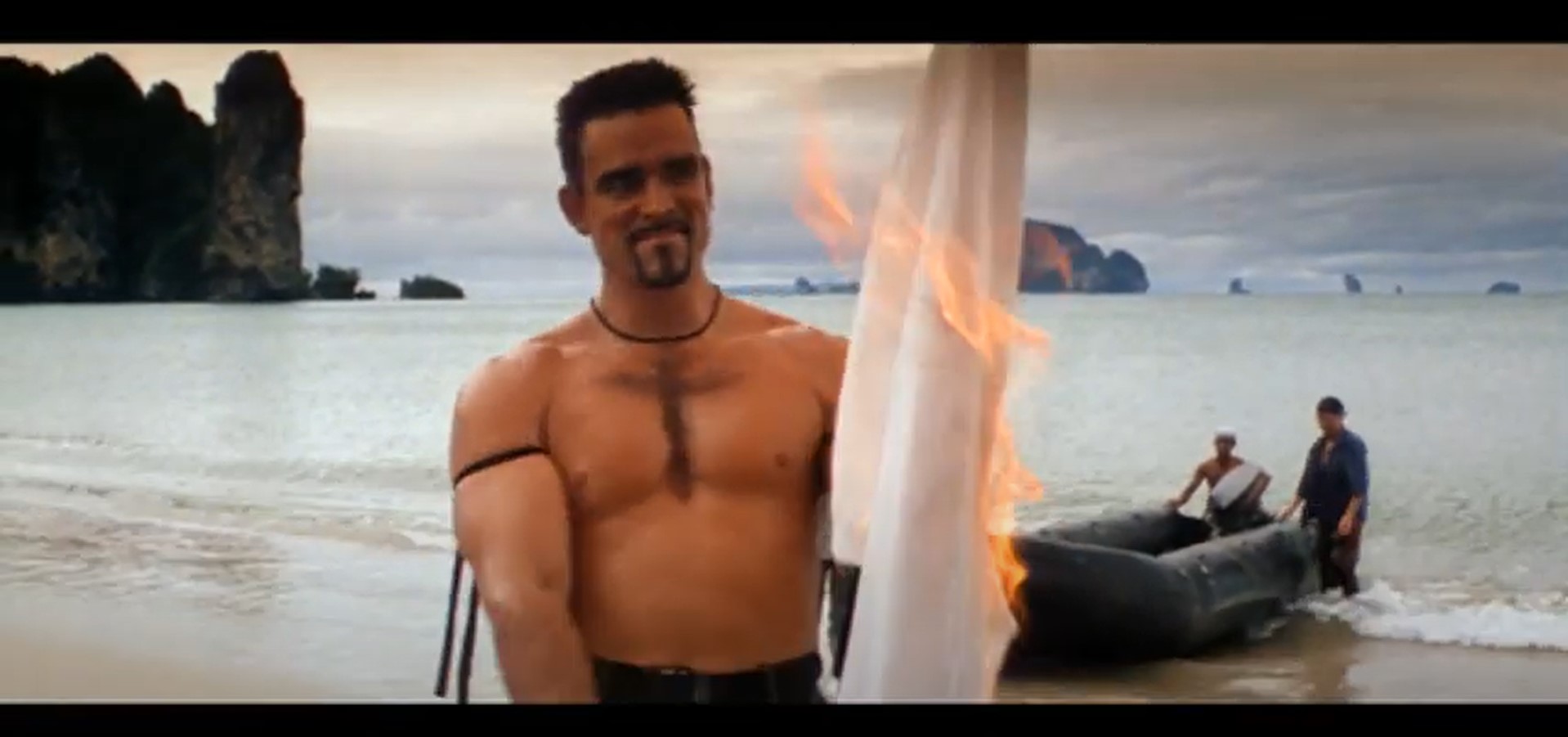
Cast ensemble of familiar faces makes “Men of War” easier to digest when considering the threadbare sensical plot.  If taking the trouble to hire mercenaries to negotiate the signature surrender of property, the company investors might as well have used extreme force instead of finesse as the good Colonial Merrick suggests to Gunar.  “Men of War’s” setup is not very sexy to establish a radical rational to plot against the native denizens, fast-forwarding and skirting through the first act’s purposed goal and recruitment of characters is sullied by that dilution of plot device.  The recruiting montage is what hurts the most that shows Gunar travelling across the globe to handpick past acquaintances for his team, but the history markers are not in place to establish characters behaviors, past or present undercurrents, or anything that really ties them together or tears them apart which eventually happens when a line in the sand is drawn.  Even Keefer’s neglected volatile bad juvenile behavior is crucified by zero backstory substance.  “Men of War” bravely relies on the future to flourish and does so quite well by creating a dichotomy between a paid duty and a moral deed, especially when falling in love with a native girl is involved.  Explosions, bullets, and various kinds of melee skirmishes rock the story’s intended searching for inner peace theme and there’s no shortage or pulled punches with the pyrotechnics or squib-popping gunplay.  Perry Lang and producers make no qualms about the product their peddling by offering a detonating spectacle on a wafer-thin plot to razzle-dazzle on the silver screen and that’s okay. 
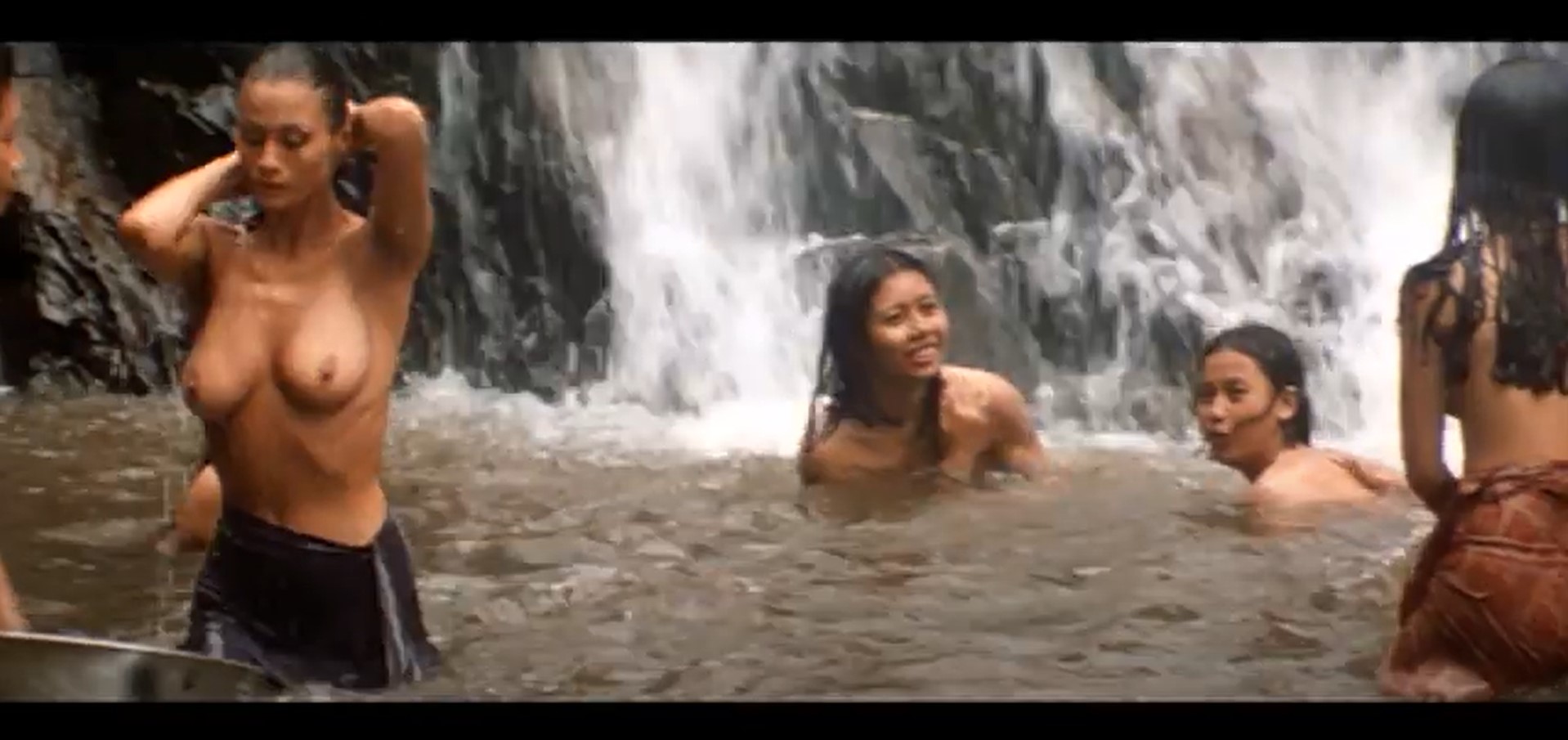
Coming in as title number 62 on the MVD Rewind Collection, a boutique banner for MVD Visual, is “Men on War” on a new Blu-ray release that’s an AVC encoded BD50, presented in a widescreen 2.35:1 aspect ratio and high-definition 1080p. This one looks pretty darn good for a 2K scan of a well-kept 35mm film. Picture retention shows just how clean as a whistle it is with no sign of a damaged original print. There also appears to be no issues with compression, such as banding or macroblocking, to gunk of visuals in what is a clean sweep of texturized objects from skin to fabric, even the island jungle setting has a rich green and a variety of sedimentary rock and soil to a real organic coloring that creates the tropical paradise around as seen on vacation brochures. When cinematographer Rohn Schmidt (“The Mist”) does go for more aesthetic, “Men of War” turns into panoramic escapism brilliant with warm colors and a composition too impressive for the likes of a picture teetering between being a B- and A-lister. The English language dialogue comes with two lossless audio options: A DTS-HD 5.1 surround sound and a LPCM 2.0. An explosive film requires free range fidelity and “Men of War” and its sound design package prowls the ambit of discharging and cannonading that hit fast and hard. Dialogue runs through-and-through clean and clear without interrupt or folly against it, as well as being layered properly to have heavy volley suppress the dialogue to a muffled scream. The score of Gerald Gouriet (“Grand Tour: Disaster in Time”) has a pretense of a militaristic stanza that wonders into an idealistic romance choon which downgrades to a pedestrian level at times but there’s also a hint, or even possibly sampling, of Alan Silvestri lurking in the mix from the score of “Predator” when Lundgren stealthily storm the beach with his team. A Spanish 2.0 stereo is available and English and Spanish subtitles are available for toggle. For the MVD release, Perry Lang provides a new, from his living room introduction. The remainder of the special features are archival pieces, such as An Unsafe Place: Making Men of War, a brief doc with Dolph Lungren enthusiast Jérémie Damoiseau going over the genesis of the film, raw footage and dailies from the feature, a photo gallery, and the theatrical trailer. If looking for tangible collectibles, you’re in luck because, like most of the MVD Rewind Collection catalogue, “Men of War” comes with a cardboard O-slipcover with printed faux VHS rental stickers and a mini folded poster of the slipcover image tucked inside. The clear Amaray Blu-ray mirrors of slipcover and has a reversible composition. Region free with a 103-minute runtime, the MVD release is not rated.

Last Rites: An ensemble of colorful characters spearheaded by the towering Dolph Lundgren and shot in the serenity beaches of Thailand lends “Men of War” to be a luxury good of the cinematic armament rhubarb and the presentational transfer by MVD, on their Rewind Collection, breathes fresh and favorable for a solid screening of campy chaos.

“Men of War” are Men now in High Def! See It Here!

A Boy’s Imagination Can Conjure Up EVIL Death and Sex. “Viva La Muerte” reviewed! (Radiance Films / Limited Edition Blu-ray)

“Viva la Muerte” Limited Edition Won’t Be Around Long. Grab Your Copy Here!

At the peak low of the Spanish Civil War, naïve adolescent boy Fando doesn’t understand what is happening between the Catholic-blessed fascist takeover of his country nor exactly why his father was arrested and what has since happened to him.  He stumbles upon letters written by his mother suggesting that she had something to do with his sudden arrest because of his parents’ rival principles paralleling their nation’s bloody conflict of dividing beliefs.  Fando asks his remaining family questions, especially pelting his mother with detailed inquiries, about his father, death, and the fascist opposition, and while he’s lives under the draconian rule of a fascism reality and his family who abides it closely, the inquisitive boy intersperses his new, complex reality with his own way of comprehending, filling in the blanks with his vivid imagination of childish macabre, oedipal maturing, and an uninhibited interpretation of the evolving revolution surrounding him.   

“Viva la Muerte,” aka “Long Live Death,” is the 1971 surrealistic war horror from then debut filmmaker Fernando Arrabal.  Arrabal, who went on to modest yet esteemed career with such arthouse films such as “I Will Walk Like a Crazy Horse,” “Car Cemetery” and another Spanish Civil War set drama “L’arbre de Guernia,” also wrote the film that cemented his contributions to the surrealistic performance art movement known as the Panic Movement.  Though Arrabal was born in Spain and tells the story of the Spanish Civil War, the filmmaker had lived in France where the movement’s genesis began solely as street shock performances alongside fellow filmmaker Alejandro Jodorowsky (“El Topo”) and writer/actor Roland Topor, the latter had penned the novel of inspiration for what would be Roman Polanski’s “The Tenant.”  Eventually, the Panic Movement slid into cinemas and the French production/language “Viva la Muerte” was designed to not only exhibit chaotic, childlike account of the Spanish Civil War but also shock audiences with bizarre imagery.  Isabelle Films and S.A.T.P.E.C. fund the film under the producing credits of Hassene Daldoul and Jean Velter.

What better way to express an arthouse film than with arthouse performances from a blend of European actors and actresses from the French and Spanish territories.  “Viva la Muerte” couriers a perception through the eyes of a preteen child, a young boy of approx. 10 years of age, in Fando played with infatuation innocence and a model of child-to-adult growth in Mahdi Chaouch.  Fando’s virtue through the Spanish Civil War becomes shaped by not only the sudden loss of his father but also the quick onset of maturity being left and lifted as the man of the house.  Fando slips into a mix of fantasy and disdain for his mother, played by Spanish actress Núria Espert, surrounded and shaped by a political conflict climate as he interprets every statement she makes regarding his father’s irresolute fate between imprisonment and execution and every desirably suggested aspect of her action that drives him to internally create visuals of sex and death.  In the effect of one’s different self is the subtle infusion of the aunt whom Fando lives with for a while, a role by French actress Anouk Ferjac (“Hallucinations sadiques”) and mirrors the mother in appearances and in the same taboo risking amorous ways that creates thick, nearly line-crossing, sexual tension between adult woman and male child, especially topped by its incestuous nature.  Unknowns Jazia Klibi, Jean-Louis Chassigneux, Suzanne Comte, and Ivan Henriques as Fando’s dissident father round out the cast with a sense of authenticity for real world conflict. 

Arrabal’s “Viva la Muerte” becomes a beaconing example of merging stern reality with liberal imagination.  Though starkly apposition in film styles and surreal contrasts against the backdrop of a new world and bleak order of a fascism regime, reality and fantasy do blend to a degree as Arrabal sought to have one and the other bleed into one another to evoke questions of motives and symbolize with child caricaturizing the authoritarian oppression.  The overtly sexual fantasies of a naked mother and aunt in the presence of the boy can be egregiously sensed outside the dreamlike context with paused moments of starring and awkward touching.  Same can be said about Fando’s father’s demise as the boy goes through an array of grotesquely creative possibilities regarding father’s fate with most often being death and while Fando is spoon-fed lesser punitive measures by his mother, the chances of the father being alive after being arrested are likely zero based off earlier graveside executions of military firing squads for those with strong ideology opposition.  Fando’s mother plays a hefty role in his deadly, warped thoughts and just not sexually either as her role in his colorfully constructed explanations pin her as the chief executioner after reading her letters to the church about his dissident behavior.  Catholicism, or rather the Church, plays a huge role in shaping young Fando’s personal arc.  Religious imagery of his mother as the virgin Mary, a priest blessing fascist swords before battle, and also the same priest having his manhood violently removed and fed to him represents a way to explain how Catholicism has essentially failed stand against the violence to which, later exhibited in the story, molds Fando as a trouble instigator or rebel in his Catholic nun run school for the Church’s complicity in his father’s death.  Fando’s rejection of the Church confirms his character’s growth from the story’s beginning of his extreme self-penancing and opposition to such aberrant thoughts; thoughts that are not just sexual in nature but also incline themselves to be dirty, literally, with skin-covering mud and scat in playful mirth to signify enjoyment equates to being sinful and filthy.  Arrabal really does give you lots to unravel and the panic really starts to set in, hence his Panic Movement.

Limited to 3000 copies, “Viva la Muerte” arrives to the U.S. on its first Blu-ray release here in the States from Radiance Films.  The beautiful, new 4K restoration scan, with the collaboration of director Fernando Arrabal, pulled from the best elements of the original 35mm negative, 35mm French sound negative, and 35mm interpositive negative fathoms a rich spectrum of a diffused color palette on the AVC encoded, dual layer, BD50, presented in a high-definition 1080p and in the original European aspect ratio of 1.66:1.  Reality scenes are grounded by natural lighting, brighter contrast of the mountainous desert landscape, and a thorough macro-examination of the details and textures that pop the imagery between the grandfather’s bloodletting scene on the shaved portion of his fibrous head to the wet-slick and soapy naked Fando as he stands to get scrubbed down in the bath.  Blacks are solid without signs of a weaker compression encoding.  The surreal imagery switches gears, harshly, from 35mm film to an interlaced videotape, changing and reducing the quality down significantly but with the tape image is heavily colored in mostly primary colors to denote an artful way of imaginary explanations in Fando’s head.  No other issues arise from the video portion, retaining Radiance Films’ attention to detail and respect intact for their culturally valuable and extensive catalogue.  The French language uncompressed LPCM 2.0 mono track fairs well from a virtually damage free preservation.  A slight background hiss or hum can be found as the only audio blemish to note.  ADR dialogue is clean and clear throughout and with usually any post dialogue recordings there’s a bit of enclosed reverberations that don’t synch well with the scene that should sound airier.  Optional English subtitles synch fine and are error free with seemingly proper translational grammar.  Special features include an audio discussion between Projection Booth podcast’s Mike White, esoteric and horror film writer and former Video Watchdog contributor Heather Drain, and filmmaker-writer Jess Byard whom provide commentary overtop of the feature but not in synch with watching feature, a feature-length documentary on Arrabal by French novelist Xavier Pasturel Barron that contains interviews with friends, family, and fans of the director, an exclusive interview with cinema historian David Archibald, a new cut trailer from Radiance, and an image gallery.  Radiance continues to impress with the encoded special features and, not to be outshined, the physical features are also a bright light that reflects the essence of the Panic Movement with a clear, a millimeter thicker Amaray presenting the yellow and red background with provocative character imagery at the center that speaks the sex and death motif.  The reverse side has the same color scheme mixed up with an illustration of one of the characters displayed infamously in the film.  The insert contains a 35-page color booklet, bounded end-to-end with the strange and uneasy drawings of Fernando Arrabal, with a 1976 Arrabal interview by film critic and historians Peter Brunette and Gerald Peary and an exclusive essay from Sabina Stent.  Transfer notes as well as a complete cast and crew acknowledgement bookends the booklet’s main courses.  The disc is pressed in a solid, canary yellow with black lettering for the title.  Radiance’s 66th title comes region free release has a runtime of 88 minutes and is not rated. 

Last Rites: War is hell. For Fernando Arrabal, war is ambiguous and surreal. Radiance spotlights every ambivalent corner of Arrabal’s “Viva la Muerte” to light up its anti-nondescript digestion of one boy’s survival of his own maturity during a post-war fascist scrub, a task none too simple to undertake much like Arrabal’s storytelling.

“Viva la Muerte” Limited Edition Won’t Be Around Long. Grab Your Copy Here!

One Man Tries to Reclaim his Life When EVIL Suddenly Invades! “The Unthinkable” reviewed (Magnet Releasing / Digital Screener)

Out in the country of Vånga, Sweden, Alex endures his ex-military Father’s demanding and verbally abusive posture.  His only relief is spending time with Anna who is in a similar circumstances with her mother.  The two spend many of their days together amusing themselves on the church piano until Anna is forced to move away to Stockholm, leaving Alex to face his father’s wrath alone.  Alex runs away for his childhood home and, years later, becomes a popular piano recording artist influenced by his time with Anna.  When he returns to Vånga during a time of countrywide unrest to purchase that same church piano of his fond memories, Sweden comes under attack by an unknown force as major roadways out of the country have been blown to smithereens, every power station is the target for destruction, and the rain is contaminated with an airborne chemical that makes people lose their memories and become disoriented.  Alex has to reconnect with his father in order to save Anna, the love of his youth, to survive the unthinkable. 

An invasion on the scale that you’ve never seen blitzes with explosive stunt work and stunning visual effects.  Victor Danell’s action-drama “The Unthinkable” comes out of nowhere with a hard stop pivot of a love story turned survive at any cost as the film’s country of origin becomes warzone raided without mercy.  Under the original title “Den blomstertid nu kommer” in the native tongue, Danell directs and writes “The Unthinkable” along with co-writer and star Christoffer Nordenrot, though credited as their collective production group, as the two team up again after nearly a decade after working on the comedy “Soundcheck,” directed by Danell.  What started as a crowdfunded Kickstarter campaigned ended up being a multi-million dollar production and with such growing fascination amongst eager fans, the 2018 found more financial backing from the former Swedish cinema chain company, SF Bio AB, now known as Filmstaden and is presented as the first feature film of a filmic collective known as Crazy Pictures in co-production with CO_Made and Film I Väst.

As mentioned, writer Christoffer Nordenrot finds himself at the center of the story as Alex, a passionate pianist fighting back against well-armed, well-supplied unknown militant forces all the while processing a dam breaking flood from the rebuilding of shattered emotions when returning to his quaint hometown after abruptly escaping his overbearing father (Jesper Barkselius).  Socially awkward with an obsessive proclivity, but wielding an intellectual thought pattern, Alex appears to be a person likely on the spectrum, but bottles much of his emotions internally, biting his lip at every moment his father disparages him or his absconding mother. When his only friend in the world, a girl named Anna (Lisa Henni, “Haunted Evil Dead”) whose roughly the same age, is being pulled away from Vånga to live in Stockholm with her mother, Alex undergoes a rapid descension of one heart ache to another that leads to him able to flourish and exceed on his own as a new wave pianist, engineering a combination of electronic beats of sound machines with the simplicity of soul from the piano to arouse his repressed emotions for an grandstand audience. Alex finds his way back Vånga for personal gain, a childhood piano him and Anna shared making music over, and to attend the sudden death of his mother from a previous, individual attack in Sweden, but what he stumbles into is avoiding his father at all costs, being swept into a returned Anna’s radial allure, and, oh yea, a massive proclamation of war by an aggressive, chemical warfare and shoot-on-sight enemy of the Swedish people. This is where I find Alex to have a chip-on-his-shoulder complex unhealthy for everyone around him as he doesn’t look past the past and punitively causes discord with his father, who is trying to save not only the last standing power station in all of Sweden himself, but essentially trying to save his entire country, and Anna when Alex finds out she has a husband and child after an afternoon of rollicking in the hay and sharing various moments around town. Performance wise, Nordenrot might not be the action star of tomorrow in his character’s one note of early on narcissism and bad judgement, but challenges himself in the role by losing and gaining weight to accomplish years of age appearances from teenage boy to mid-30’s man and is good enough to swashbuckle against relentless military helicopters and a slew of men capping of M60 machine guns in his direction. Pia Holverson, Krister Kern, Alexej Manvelov, Magnus Sundberg, and Ulrika Bäckström round out “The Unthinkable’s” cast.

With a runtime of 129 minutes, “The Unthinkable” has a lot of story to tell with an ample amount, practically divided in evenly, imparted into two stories – one forgotten romance and family squabbles rekindled and the other a bombardment of annexing Sweden from the country’s own residents by deadly force. The pivot also never feels gradual as act one is all about teenage Alex and Anna growing more than just accustomed together despite lingering family troubles. Once completing the transition from boyhood to successful music man, an irksome sensation still nags in the back of Alex’s mind as he can’t find happiness in all of the boo-koo-bucks his albums and concerts afford him. This leads “The Unthinkable” into a territory of complete selfishness by waterlogging a Red Dawn offshoot concoction, teetering on speculation of Russian invaders eroding the memories in some aspect of chemical weathering, with Alex being one hell of a selfish guy and he’s the supposed hero of the story, but for the sake of me can’t explain his inabilities look past his father’s conspiratorial obsessions and anger issues, his muse’s moving on her with her life with a family after he fled his hometown, and he definitive choice of unable to live with the fact that she’ll never be with him despite all the adversity raining down upon him at the same moment he internally crumbles at his pent up emotions. Cynicism drives the story to a tainted sham ending that’s supposed to be touching and full of heartfelt sacrifice on the part of the hero, yet how can a hero commit himself to an irreversible without an inkling of danger against those he’s doing this for? I, personally, feel cheated by “The Unthinkable’s” character arc, but one thing is for sure is the seamless practical and visual effects action of top shelf quality. Between the great stunt work of remote control tractor-trailers to the computer generated helicopter crashes, reality and fantasy blur to the point where your brain can’t tell the difference. “The Unthinkable” excels in heart-racing action and thrills with narrow escapes from disasters.

An assault on not only the soul of the country of Sweden, but also on it’s people’s memory banks as Crazy Pictures’ spins Russian meddling into an extreme aggression with an epic imperious campaign in “The Unthinkable” that attacks the visual cortex with jaw-dropping affray. Magnet Releasing, a subsidiary of Magnolia pictures, presents “The Unthinkable” in a widescreen, 2.39:1 aspect ratio, and has made boots on the ground showings in theaters and on-demand this month on May 7th. Hannas Krantz, another member of the Crazy Pictures collective group, delivers the war at home on Swedish soil with hard lighting, greyly somber moments of confusion and fleeing, and yellow gunfire illuminated nights after an airy love story, basking in warm, inviting yellows and pleasing in comfortable locales, crumbles to harden our narrative hero. Krantz leaves just enough negative space for the VFX team to implement their movie magic in the makings of a clandestine assault. There were no bonus scenes during or after the credits. Becoming lost in “The Unthinkable’s” high powered effects can become enthralling when climbing the latter of every scene being just as intense and bigger than the last; however, Alex’s arc of a lovesick boy never fully exits from the grown up version of himself, thwarting any kind redemption and respect because of very unlikable and intense egomania.

Rent “The Unthinkable on Prime Video!

War Brings All Sorts of EVIL. “Under the Shadow” reviewed! (Second Sight / Blu-ray)


Set in conflict of the Iran-Iraq war, the young and educated Shideh living in war-frightened Tehran becomes forced to succumb to patriarchal dogma after participating in a revolution against Iran’s standing principals. Her husband’s conscription sends his medical experience to the battle front while she settles into her role as a stay at-home mother to their young daughter and despite pleas from her husband, the stubborn Shideh will not vacate her apartment building home even when the threat of an Iraqi attack is imminent. When a dud ballistic missile crashes into the apartment about them, nearly breaking through their ceiling, the fear of a sinister presence circulates amongst the tenants that drives them one-by-one from the building with the prospect of an Iraqi attack to further motivate as a logical decider. An unsuperstitious Shideh remains until her daughter’s imagery whims and unwavering fever begin to form a more terrorizing atmosphere that even has her questioning the shadowy company of evil.

Not many horror films scare nowadays. “Under the Shadow” is not one of those films. The debut feature film of writer-director Babak Anvari posses a rare commodity of grueling fear set inside an already tense backdrop of the 1980’s Iran-Iraqi war. Anvari, the Tehran born Iranian nationality who was engulfed religiously in the culture, borrowed and rendered his from his family’s stories of supernatural pre-Islamic demons whisking through the wind toward those swimming in sorrow and fear; those demons were also labeled djinns. As a child born in the 80’s, Anvari had to rely and family to obtain a sense of the anxious air suffocating those taut by potential missle strikes as well as political and social punitive measures going against the grain. The UK based independent production company, Wigwam Films, financed the BAFTA winner for an Outstanding Debut by a British Writer, Director or Producer as well as receiving other nomination nods in other categories, serving as one of young production company’s shining stars early in the tenure.

Wrought by the explosive squabbles of two sovereign nations and incepted with archaic folklore, Shideh’s bound and torn between reality and the prospect of superstition, a role dutifully played by another Iranian born, Narges Rashidi, whose family moved to Berlin and she studied acting, scoring a minor role in the motion picture adaptation of the science fiction television series, “Aeon Flux,” and in the 2009 comedy-horror “Must Love Death.” Rashidi courts Sheideh approvingly with sincere strife over how women serving beneath men in 1980’s Iran as well as struggling to overcome that internal conflict as the mirror image of herself, meaning her daughter, when a phantom prowler is afoot. Portraying Shideah’s daughter, Dorsa, and the frequent link between the Djinn’s world and her own is Avin Manshadi in her debut performance. Manshadi’s round cheeks and doughy eyes set upon a physique stilling lingering some ounces of baby fat has little range, but most creepy kids and in creepy kid horror films rarely do. Rashidi and Manshadi fend well for themselves as the sole two characters cornered by war and Shideh’s personal vendetta against her country, her husband, and even her daughter to prove she isn’t useless as the motif lets on. “Under the Shadow” rounds out with Bobby Naderi (“Bright”), Aram Ghasemy, Soussan Farroknia, Behi Djanati Atai, and Ray Haratian (“A Girl Walks Home Alone At Night”).

“Under the Shadow” finds itself in a subgenre nearly all it’s own as the variety of djinn-horror anemically pops up every so often as an unpopular and uncoiled viper, unlike the antagonist powerhouses of zombies and ghosts that’ve reigned supreme over the last two decades, and though Anvari’s film shares little with Robert Kurtzman’s demonic djinn of 1997’s “Wishmaster,” “Under the Shadow” has more in common with the late Tobe Hooper’s last film, entitled simply Djinn, before his death. Both are built on the substructure of an Arabic/Muslin mythology, set on an apartment building locale, and exhibit the malevolency side of the djinn, but Babak Anvari accomplishes a great feat on his very first attempt – a stiffly frightening air of a phenomenally harrowing horror story. Anvari patiently stacks blocks of tension, one on top of another, without a hint of quivering throughout the acts and what’s more astonishing is that all the acts deliver different notes prosed to detail that secures a simmering, shivering plot. To praise Anvari more, the young filmmaker leaves nothing to chance by closing with an open ending for the mind to assemble information and interpret the events; a classic directorial tool used by some of the greats.

Shuttering in the dark has never been so delectable with “Under the Shadow” inside a packed, limited edition Blu-ray from Second Sight Films. The LE runs with only 2000 copies sheathed inside a rigid slipcover with covert art by science fiction artist, Christopher Shy. Global horror aficionados will rejoice to learn that the UK BD disc is region free and presented in a widescreen, 2.39:1 aspect ratio, that’ll be available February 10th. Unfortunately, Second Sight Films provided a DVD-R Blu-ray screener so I’m unable to speak upon the video and audio aside from what’s already been stated. I will say the subtitles were accurate and timely paced. There were special features on the disc, including segmented interviews with director Babak Anvari, lead actress Narges Rashidi, producers Lucan Toh and Oliver Roskill, cinematographer Kit Fraser along with an audio commentary Babak Anvari and Jamie Graham and Anvari’s short film “Two and Two.” Press release also mentioned the release includes a soft cover book with new essays from Jon Towlson and Daniel Bird plus behind-the-scenes photos and concept illustrations and a poster featuring new artwork. “Under the Shadow” must be watched in the dark, alone, and with the volume up, maximizing the crawling chill down the spine and raising all the micro hairs on every square inch of skin.

World War Evil! Frankenstein’s Army Review!

Amaray Wrap.EPS
Wolfenstein has come to life! What seemingly looks like a video game turns into a motion picture unlike any other. Other filmmakers have only half-assed an attempt to take the Nazi industrialization and combine it into cybernetic top secret warfare. A reconnaissance company of Soviet solders receive an S.O.S. transmission from an abandoned mining facility in the middle of nowhere behind enemy lines. The squad finds themselves in the middle of hell where soldiers are took apart and sewn together with machine parts creating a killer, monstrous army. These abominations are the work of the grandson of Viktor Frankenstein. What’s worse is that the soldiers are a part of a secret mission that will put their lives in more danger than the hell they’ve stepped into with Herr Doctor Frankenstein!

I was once in e-mail contact with the film’s director Richard Raaphorst many years back when he was trying to fund an on screen production for Worst Case Scenario. A project I couldn’t wait until the dream came true on the big screen. I waited and waited and waited. Only two promo reels were released and then the project just drifted off into the dead project pool and drowned out of existence. Raaphorst was inspired again, most likely, by his failed project to create Frankenstein’s Army and even using some of the monster nazis he was once going to input into Worst Case Scenario. I’m stoked that Raaphorst was able to see his creation in another, more profitable direction.

Speaking of nazi monsters, the creations where spectacular especially the creature “Mosquito Man.” Mosquito Man has blades on all fours and a drill for a mouth – pretty fucking frightening. There are also creatures with razor sharp blade fingers, cast iron maiden-chopping faces, slice and dicing propeller heads, and whatever your demented imagination can conjure. Frankenstein’s Army is an ultimate take on the Frankenstein legacy and spins it into the 20th century during World War II the most crucial and humbling time in the world’s history.
franksarmy2
Raaphorst chose to film Frankenstein’s Army in first person using the story of a soviet solder recording a documentary of the team’s reconnaissance mission and to show back home in mother Russia, to the socialist people, that their solders were happy and safe and brave in the face of the enemy. I watch a lot of movies and I stand by my personal decision that the first person use has been overused, abused, and old as a Roman shoe. In saying that, the first person works here for Raaphorst because we’re only given glimpses of the creatures leaving more to the imagination and probably so the audience can’t really see how bad the costumed nazi getups may have turned out.

Mosquito Man!

Mosquito Man!


Usually in screening the portrayal of any historical war, I can usually tell if a war’s historical accuracy is off or how I feel on how believable these characters can be in period piece. The Soviets soldiers felt like Soviet soldiers. The war felt like war. Saving Private Ryan is a good example of what I’m trying to convey where we, the audience, can empathize and experience the gruesome war with Tom Hanks and his band of brothers. That same sensation didn’t strike me when viewing Nicholas Cage’s Windtalkers which seemed to bastardized by Hollywood. Raaphorst had me in the dark, dank underground tunnels of these spooked Soviet lads and had me feel the fear in the face of patchwork humanoid creatures.
franksarmy1
I can’t recommend Frankenstein’s Army enough. The unique concept and the precision of execution should be a great draw for this film. More likely, Raaphorst’s film won’t win any major awards. Dark Sky’s picture presentation is clear. The audio suffers tremendously as much of the background noise drowns out the fake Russian accents. The extras are a little thing with a 31-minute “making of”, the trailer, a “creature spot” which displays the picture in a slide-show like feature. Raaphorst steampunk horror-thriller will keep you entertained and see what kind of man-machine construction will lurk around the corner, but the movie does feel like a video game with creatures hacking away at the camera while others stalk in the dark.

If you want to see Raaphorst Worst Case Scenario promo reels and see the similarities – see below.


Promo Trailer 1


Promo Trailer 2