

In September of 1997, the Anderson family vanished from their remote home on Briar road, leaving behind scores of scattered blood, a lynched dead body, and a house keeper in mental shambles. Seventeen years later, Jeanie and her son Adrian move into the Briar home with the legendary and infamous reputation for being ghastly haunted. Living on hard times with her father being laid off from the region business, Angela reluctantly accepts a good paying caretaker position for Adrian at the notorious Briar home. When a local drug runner gets wind that his stash’s repository is no longer vacant, a dangerous game of retrieval pits the desperate small time dabblers against a supernatural force living inside the home that puts Angela, consequently, in the middle of a terrifying standoff.

Sheldon Wilson. A name that’s under the horror radar for most horror fans, but for this particular reviewer, this particular fan, Sheldon Wilson has had a major influential role in bringing a wealth of horror to my life. The director’s 2004 film “Shallow Ground” was the first domino piece to fall that a started landslide of independent horror cinema to come flooding into my presence and opening up my world, my eyes, to the many facets of the genre. I fell hard for “Shallow Ground” that led to the foundation of a grand and glorious horror collection that would be acknowledged Rob Zombie, who’ve I’ve heard, has an extensive film collection. Wilson’s latest venture “The Unspoken” has reminded me that horror can live in the restraints of the past and can be bold with an unforeseen twist.

Now, “The Unspoken” epitomizes the very definition of generic titles, but the premise goes far beyond being geriatric with similarities, but not on the same elaborate scale, to the 2012’s “The Cabin in the Woods” by exploiting the genre’s familiar tropes but shifting, at the very last moment, to an ending that’s well received and a breath of fresh air. From the Wilson films that I’ve experienced, his story structure is orchestrated in a detailed manner making the subtleties pop with saturated intensity. With “The Unspoken,” Wilson’s indirect jump-scare style is very much engrained and effect goes without diluting the entire film as some, examples such as some of the recent Halloween films, have done in the past to the point of tiresome and ungratifying.

A satisfying cast genetically makes up the captivating story with young and upcoming scream queen Jodelle Ferland in as the lead role of Adrian’s desperate caretaker Angela. Ferland has quite the stint in horror starring in such memorable films as the recently referenced “The Cabin in the Woods,” “The Messengers,” and as the young child in 2006’s strong video game adaptation of “Silent Hill.” Ferland possesses that scared and innocent persona and she leaves nothing on the table when forcing to battle against a supernatural danger that can animate a decaying, jaw-severing dog corpse. Pascale Hutton, Anthony Konechny, Chanelle Peloso, Lochlyn Munro (Freddy Vs. Jason) and a passing-through role for “The Hitcher” remake’s Neal McDonough as a local sheriff rounds out the rest of the “The Unspoken” cast. Sunny Suljic, who portrays the unspoken Adrian, solidly performs as the creepy and mute, Damian resembling child even with his bad young Elijah Wood haircut. Together, the ensemble plays their respective roles with as much as earnest as the next film with more of the focus on Angela and Adrian throughout with supporting characters driving much of the storyline, funneling toward a surprising catalytic event.

For the majority of the film, “The Unspoken” meets the harsh criteria fans need and desire from their horror films with some solid practical effects, no CGI effects, a story-driven plot, and a haunted house full of good scares with tidbits of blood and gore in between them all. There’s even a little nod of respect for the “Amityville” series. Only insignificant character underdevelopments raise a few unanswered questions about situations perhaps more pertinent to the motivation of the story such as the forbidden relationship between Angela and best friend Pandy which floundered a bit out of place within the confines of the plot and went stagnant when more about the Briar home became revealed or when Pandy’s more-or-less boyfriend Lutheran and his drug scheme goes through the sharp blades of a blender.

The Lighthouse Pictures produced and Arrow Films UK distributed paranormal disturbance feature “The Unspoken” hit retail shelves and online markets September 5th. I’m unable to review video and audio quality with a region 2 DVD-R and there were no bonus material available from the static menu. However, Wilson’s film fairs with a sharp and clean appearance without the bedazzling of a Hollywood budget; the director’s use of the slow panning method and focusing on unsettling camera angles to transform an ordinary mountain home into a menacing dark presence doesn’t require much touchup in order to terrify audiences. If you’re a fan of quiver inducing, nail biting horror with a good M. Night Shyamalan twist at the end, “The Unspoken” will leave you completely terrified and utterly speechless.
Tag Archives: youtube
Evil’s One Kaboom Step Away! “Landmine Goes Click” review!
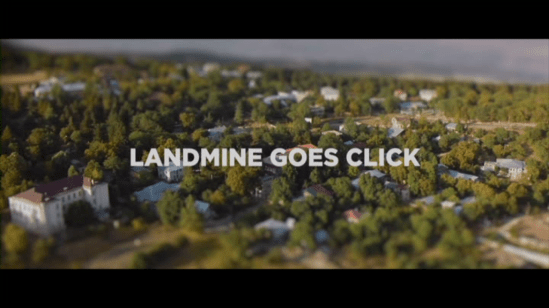
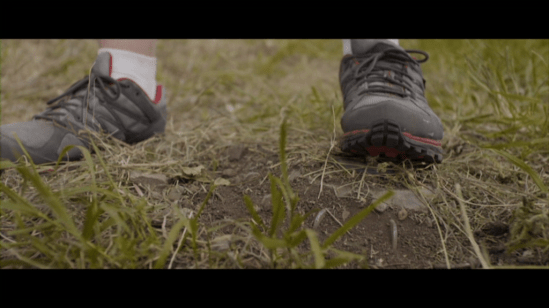
Three backpacking American tourists and good friends Daniel, Alicia, and Chris tour through the Georgian countryside, looking for that one last hurrah before Daniel and Alicia tie the knot. When the trip seems to be going well, Chris steps on an old landmine, leaving him grounded and motionless to the spot. The next series of events will determine their fate as an psychopathic local and his Rottweiler happen upon the frightened and helpless Americans. Caught in a maniac’s twisted game, their only chance for survival is to play by the local’s Machiavellian rules or otherwise take their own life-risking chances by stepping off the a shrapnel-exploding, flesh-piercing, life-ending mine.
“Landmine Goes Click” bares no one identity. The Georgian thriller from director Levan Bakhia cleverly abridges four genres together, resulting in one intensely merciless story of unfortunate and deadly circumstance intently set to destroy one’s emotions. Bakhia teams up again with writer Lloyd Wagner, both who’ve previously worked on heated horror chiller “247°F,” and are joined by Adrian Colussi to substantiate a story that’s dices through a range of plot subdivisions from thrilling and exploitive to revengeful and tragic.
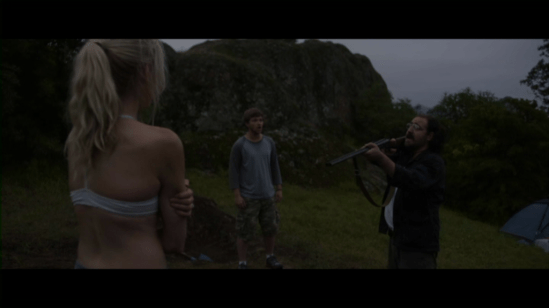
Kote Tolordava, the late Georgian actor who tragically died of a heart attack shortly after filming, defines the look and the manner of a sleazeball psychopath. A straggly comb over laid upon unkempt shoulder length hair with a stubbly five o’clock shadow that rests beneath a bushy Georgian bred mustache combined with an over extended gut stretching a bulbous silhouette in a white under shirt that’s covered with a breast opened, military-like navy colored coat sizes up Tolordava’s Iiya character as a harmless human joke, but pair that look with a loaded Remington, a muscle-laden Rottweiler, and a taste for taking advantage of the situation and you have a maniacal genius ready to reap the benefits of your misfortune. Tolordava’s wears Ilya’s clammy skin as if it’s his own, playing the local kook with a sadistic hard-on.
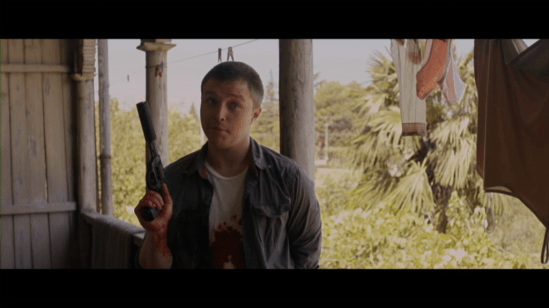
But Sterling Knight, as Chris, carried the film to a jarring conclusion, especially in the last acts. My initial reception of Chris was a big question, why does Chris, whose unable to move from the landmine, severely antagonize a creature like Ilya? Once the characters progress to a level of no return, to a level of depravity and maliciousness, understanding Chris was no longer an enigma and how Chris follows up with Ilya begs, absolutely begs, for retribution. Knight’s day and night performance tells tales of his acting talent. Don’t let the youthful face, the deep blue-eyes, or the Justin Beiber vocals fool you, Sterling Knight demonizes handsomeness.
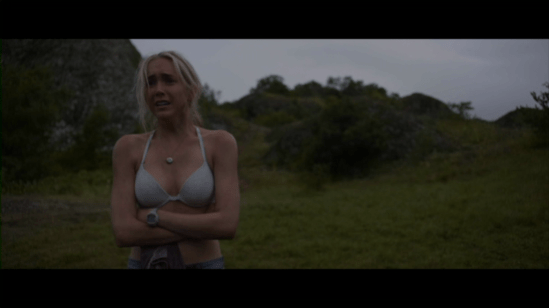
With Tolordava and Knight, Spencer Locke, K-Mart from “Resident Evil: Extinction” and “Resident Evil: Afterlife,” had the toughest role to be burdened with as Alicia being an object of affection for not one, not two, but three characters and, in two of characters’ cases, in a malevolent way. Locke’s scenes were the most difficult to gape at, but her character ends up being the driving force behind almost everything that happens, even to divulged information prior to the beginning of this film to which we are not privy. Alicia is essentially the epicenter that crumbles the foundations of lives around Daniel, Chris, and even Ilya and like an epicenter, Alicia becomes the butterfly effect that ripples devastation from a single event. Like I said, a role that bares a heavy burden.
Bakhia utilizes effects that can be easily overlooked. His use of miniatures of the Georgian countryside, compositing them with the live action motor vehicles, is a stunning visual, alluring to our minuscule selves in the world. Also, the director, I noticed, does many long takes by swerving the camera from side-to-side that may consist of a stationary position or even tailing to characters, obtaining individual reactions and letting the scene play out without as much as a single edit for a lengthy period of filming. My first experience with Bakhia at the helm isn’t spoiled with gaudy gore or an outlandish unrealistic script; “Landmine Goes Click” thoughtfully provokes our inner animal and is constructed and edited similar to the style of Oscar winner Martin Scorsese. No film goes without flaws as I thought some of the fade to black editing was oddly placed and the overlapping during genre transition didn’t settle with the mood at the time. However, I’m not a big fan of exposition, but I thought there was enough exposition to get us through on how Chris managed to step on a landmine and also to what really happened to Alicia. Any more footage would have been overkill, making the 110 minute runtime that much smoother.
“Landmine Goes Click” rightfully found a home as an Icon Home Entertainment Frightfest Presents. Spurred with volatile tension and a dynamically charged cast, “Landmine Goes Click” is the tip of the Levan Bakhia ice berg and watch out for more films from Sterling Knight, an actor that can steal a scene, or in this case, a movie right from under another talented actor Kote Tolordava. Since the disc sent to me was a screener, I am unable to review the audio and video qualities, but I can say that there wasn’t much bonus material aside from an introduction of the film by Frightfest’s Alan Jones and Paul McEvoy and the other Frightfest film trailers. Like a good concealed explosive device, “Landmine Goes Click” exploitatively shreds through your soul, cleaving barbed shrapnel to linger and rot in the confined spaces of psyche.
A Romantic Getaway Turns Evil! “The Perfect Husband” review!

Nicola and Viola attempt to escape their dismal past involving losing their child at birth, traveling to an isolated cabin in the woods to rekindle and reconcile their bitter relationship. Once there, Viola feels a menacing presence lurking amongst the trees ever since arriving. As the strain on their past and present union becomes nearly too much to bare, tensions overflow with jealously and bewilderment that turn the delicate situation into an explosion of violent behavior. A cat and mouse game of carnage and death follows the couple through the dark woods toward a bizarre and psychological ending that reveals the true nature of their disturbing affliction.

Director Lucas Pavetto’s “The Perfect Husband” is an Italian psychological horror film from 2014 starring “Nightmare Code’s” Bret Roberts and Gabriella Wright and based off Pavetto’s short film of the same title. Even though “The Perfect Husband” is an Italian birthed film from Italian production company DEA Films, “Il Marito Perfecto,” the Italian title of “The Perfect Husband, has a crew, aside from Pavetto hailing from Argentina, that maintains the country’s native ethnicity. London born Gabriella Wright, who masks her English accent very well, co-stars alongside the Alaskan-American Bret Roberts; both actors could certainly pass having Italian heritage with their olive skin tone and dark features elsewhere and with filming location set in Catania, Sicily, the actors fit right amongst the rugged and mountainous Sicilian landscape. Roberts has a low-raspy articulation that makes him seem always out of breath that transitions beyond the catalyst, but Roberts plays villainy insanely well. Wright maintains a cryptic temperament from start to near finish. However, the duo’s dynamic is quirky at best as the couple treat themselves more a boyfriend and girlfriend than husband and wife, which might be a product of the writing.
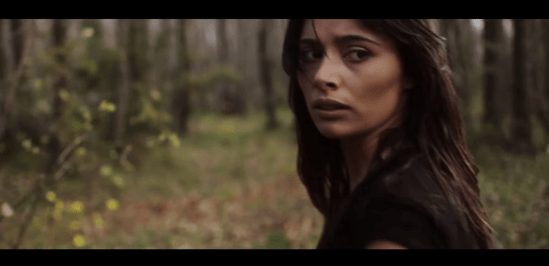
Lucas Pavetto and Massimo Vavassori go fairly formulaic with their script, writing about strife-stricken couple working out their marital issues alone in a remote cabin surrounded by a dense forest. The setup screams horror premise clockwork and attempts to shift gears after lengthy character development that takes some time to build into something concrete, or at least halfway tangible. The shift in disposition is, however, so rapid and so sudden with unwarranted ferocity, that the effect goes from a scale of a tense filled two to a run-for-your-life ten in a matter of microseconds. The series of events portray Bret Robert’s character Nicola as a jealous misogynistic ready to snap at any given moment while Viola’s mysteriousness and her unconscious readiness to break with reality puts an undisclosed strain on her psyche that what she experiences may or may not be real. A twist ending tries to fill in the Nicola and Viola omissions, but misses the mark that still leaves gaps here and there, especially conveying more about the events that took place at the refugee station between Viola and the Ranger, played by “Apocalypse Z’s” Carl Wharton. Perspective becomes surreal; a fantastic journey that terminates toward a twisted unveiling, leaves more questions than answers about Viola and Nicola prior to their weekend getaway.
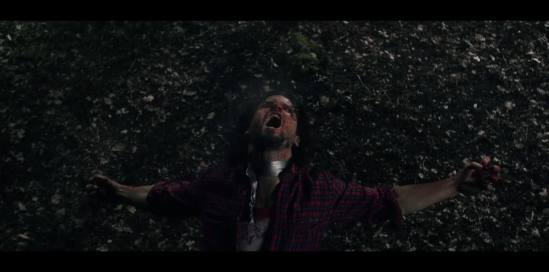
Plausibility. Probably “The Perfect Husband’s” fiercest enemy as the story tries to turn itself upside to throw the audience for a loop. The disillusion feels cheaply thrown together to try and wrap up, what could have been, a thoughtful psychological thriller and that’s where plausibility doesn’t formulate, frustratingly feeling like an square box with only three sides and a gap left carelessly open. I wanted to like “The Perfect Husband” because I thought the mayhem was present at the beginning moment of the snowball effect. Everything went down, fast and furious style, with unforgiving brutality that was surprisingly gory at times.
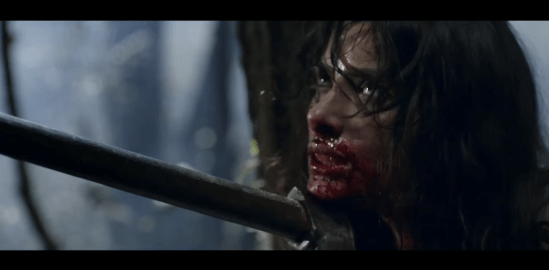
“The Perfect Husband” has been honored an unrated Blu-ray release in a 1030p transfer presented in a 2.35:1 aspect ratio from the ever bold Artsploitation Films. The video has a slight grayscale imbalance that contrasts scenes a bit heavily, but other than that minor issue, the image looks solid. The English 5.1 surround with optional English subtitles is also solid with a balancing the appropriate tracks. Bonus features include a behind the scenes segment that exhibits the takes of scenes in and outside of the cabin. The original short “Il Marito Perfecto” is included along with trailers for upcoming films from Artsploitation Films. Turns out “The Perfect Husband” wasn’t perfect, but raw, exploitive barbarity is a must see for any violent hound in need of a good scratch.

Own “The Perfect Husband” on Blu-ray. Available at Amazon.com!

Hither Cometh Evil! “The Witch” review!
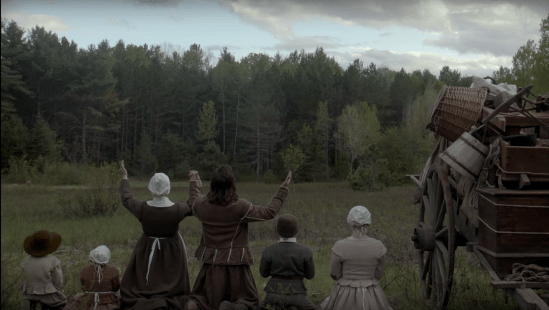
Set a few years after the 1620 arrival of the Mayflower ship, a faith-entrenched Puritan family becomes ostracized by a tightly knit plantation community and leave their home to settle near a woodland landscape. The family of seven build upon their quaint home, growing crops for food and for trade, but when the youngest child, an infant, disappears into the depths of the dark woods, the family slowly starts to unravel at the inexplicableness of their loss. The once tranquil and beauty of the woods dreadfully alter into a coven for dark and fear inducing figures that root themselves between the family binds, untying their sanity and faith that once held them close and separating them toward a Godless path of destructive witchery.
Writer-director Robert Eggers’s “The Witch” steps into a time machine and travels back in time to the New World era and delivers an American Folklore horror film that’s honestly genuine and deeply haunting. Eggers constructs a mood and tone stripped of comfortable commodities from the moment the family takes on the New World for the very first time away from the plantation. The isolation is immense, the tension is thick, and the cast and crew dynamic squeezes tight around the heart, ripping out every raw emotion and turning the display into a gut-wrenching performance. Eggers had done the appropriate leg work by researching various diaries, folklore tales, and recorded accounts of the time to achieve elaborate detail; even the dialect is true to the period.
The film’s devil worshipping namesake ghastly conjures a simple, yet legendary form. Without the use of glossy special effects, “The Witch” mesmerizes with practical makeup, slight of hand editing, and implied black enchantment while pulling at our internal sinful desires of the flesh, lust and deceit. Eggers kept the mainly nude Bathsheba Garnett in the shadows to give the menacing Witch a closing-in threatening appeal that corners an easy prey, such as children. The Witch’s power, a contractual perk with the devil, is vast and unholy that becomes a fierce antagonist to the family’s unnerving, yet powerless faith.

Eggers and his team uses a sepia visual to devoid much of the color as possible from a naturally bleak mid-17th century community style that’s more binary and cramped, setting the stage for doom and gloom. To continue with the adverse affect, an everlasting current of formidable abstracts are implemented for uneasiness. These signs of inauspiciousness can be as obvious as Ralph Ineson’s sonorous voice as the family’s patriarch and resonating religious leader William or can be as opaque as their corn crop turning suddenly rotten or the reoccurrence of a toying hare and an unsteady, long-horned goat named “Black Phillip, who may or may not be the devil himself.

In the midst of the family being torn apart, the eldest daughter Thomasin (Anya Taylor-Joy) desperately tries to keep her family together, but with her mother Katherine (Kim Dickie) in severe grief after the loss of her newborn son, Thomasin absorbs the blame and disdain from her mother. Thomasin’s abuse doesn’t end with her mother, which the story mainly touches upon with each of Thomasin’s parents and siblings, in one way or another, demeaning her. The oldest brother Caleb (Harvey Scrimshaw) under the spell of hormones repeatedly stares at his sister’s chest, lusting after the female form. Thomasin’s sibling twins Mercy and Jonas remorselessly believe her and label her a witch from the time of Samuel’s disappearance. Even her father, who stood up for her honor and her dignity when neither her mother or siblings would, eventually broke with a misguided view of trust. Thomasin’s world of faith, family, and, basically, everything she once believed in has been stripped away and without that barrier of ideals, a contract with the devil tempts her weakened will.
Lionsgate home distribution releases the horror sub-genre reviving “The Witch” on DVD and Blu-ray. This review covers the Blu-ray release that consists of a MPEG-4 AVC encoded disc that delivers a stunning high definition 1080p picture in a rare 1.66:1 original aspect ratio. The intentional reddish-brown coloring properly dates the era the film is set and the picture is detailed to display the grit, the dirt, and the muck that further enhances the foreboding of calamity. The DTS-HD Master Audio 5.1 is crisp and clear, favoring more on the shocking and slightly experimental soundtrack, but still manages to place the dialogue in the forefront, steering clear from the cacophony. Still, I found the dialogue hard to follow because of the puritanical dialect of that time. Bonus features include an audio commentary with director Robert Eggers, the featurette “The Witch: A Primal Folklore,” Salem Panel Q&A, and a design gallery.

Folklore horror hasn’t died just yet. In fact, the sense of a witchcraft resurrection is on the horizon, possessing now a new high profile inside the horror community that’s sure to pick up steam. Newcomer Robert Eggers puts new life into gothic, despondent horror with contrast characters living in a stark reality. “The Witch” will launch Eggers into horror orbit and keep Lionsgate as a friend to the genre.
If You Don’t Know Who You Are? Then Evil Does. “The Ninth Configuration” review!

An insane asylum located in the North West region of the United States attempts an experimental test to root out Vietnam soldiers faking signs of psychosis. A new commanding officer, a military psychiatrist named Colonel Kane, will take the lead of the experiment. But Kane’s methods are unorthodox and Kane himself seems distant from what’s expected from him, leaving the military patients, and even some of the personnel, wondering about his state of mind. Kane lets the committed soldiers live out their most outrageous fantasies and the further his practice plays out, the more that there might actually be something terribly wrong with the new commanding colonel.

“The Ninth Configuration” is the big screen adapted version of William Peter Blatty’s novel entitled “Twinkle Twinkle Killer Kane.” Blatty, who wrote the screenplay and directed the film, dives back into motion pictures once again after the success of another previous adapted novel; a little piece of work you may be familiar with called “The Exorcist.” In the span of seven years, Blatty was able to cast again the versatile Jason Miller, who had portrayed a much more serious Father Karras in “The Exorcist,” as one of the leading asylum inmates in “The Night Configuration.” From then on, the hired case was forming into a formidable force of method actors including Stacy Keach (“Slave of the Cannibal God”), Scott Wilson (The Walking Dead), Ed Flanders (“The Exorcist III”), Robert Loggia (“Scarface”), Neville Brand (“Eaten Alive”), George DiCenzo (“The Exorcist III”), Moses Gunn (“Rollerball”), Joe Spinell (“Maniac”), Tom Atkins (“The Fog”), Richard Lynch (“Invasion U.S.A.”), and Steve Sander (“Stryker”). This cast is a wet dream of talent.

What’s unique about Blatty’s direction of this film is the non-displaying of action and dialogue off screen. Whether it’s character narration, dialogue track overlay, or slightly off camera view, the spectator, for more about half the film or perhaps even more, isn’t being directed to focus on the current action or dialogue and this creates the illusion of hearing bodiless voices or activities, as if you’re part of the ranks in the mentally insane roster. Only until the truth or catalyst is reveal is when more traditional means of camera focus is applied.
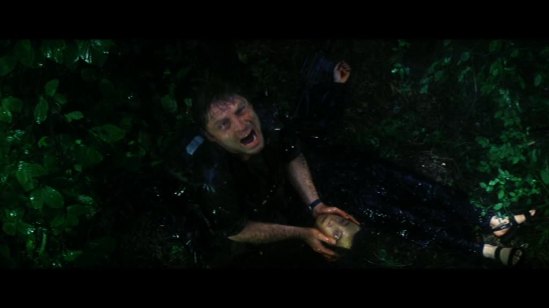
To make this technique work and to make it not become tiresome to the viewer, Blatty had to write some amazing dialogue and with him being a novelist and all, the dialogue was absolutely, 100 percent brilliant. Lets not also neglect to mention that with unrivaled dialogue, out of this world thespians must be accompanied to breathe life into the black printed words that are simply laying upon white pages. Scott Wilson’s and Jason Miller’s craziness is unparalleled while, on the other side of the spectrum, Stacy Keach delivers a melancholic performance that balances out the tone of the film from what could have been considered an anti-Vietnam war comedy at first glance that spun quickly with an unforeseen morph into a suspenseful thriller about the consequences of war PTSD and the affect it has on those surrounding.

Gerry Fisher’s cinematography encompasses the Gothicism of the remote Germanic castle to where every ghastly statue and crypt-like stone comes alive like in a horror movie. The setting couldn’t be any of an antonym for a loony-bin set. Even though the film is suppose to be set in North West America, the location used was actually in Wierschem, Rhineland-Palatinate, Germany at the medieval Castle Eltz and the story subtly explains how the castle came to be in “America.” To the opposition of such a barbarically beautiful castle, the score by Barry De Vorzon (The Warriors) in the first act into the second is playful, lighthearted, and childish in an appropriate story tone, but turns quickly sinister and angry during progression, building upon the revealing climax.
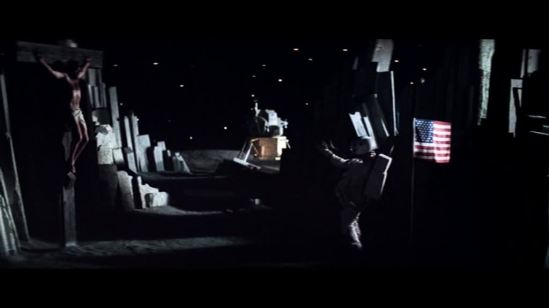
Classic film and TV distributor Second Sight brings this cult classic onto DVD and Blu-ray in the UK. Since this was a screener copy of the DVD, I’m unable to provide any audio or video technical comments, but the screener did include the generous amount of bonus material including interviews with writer-director William Peter Blatty, and individual interviews with Stacy Keach, Tom Atkins and Stephen Powers, composer Barry De Vorzon, production designer William Malley and art director J. Dennis Washington. There are also deleted scenes and outtakes and a Mark Kermode introduction. A substantial release for Second Sight and a fine film for any collection so make sure you pick up or order this Second Sight release today!
 It's Bloggin Evil!