Caught in the Act, Evil Must Do Evil’s Bidding. “The Killer Must Kill Again” reviewed! (Rustblade / 50th Anniversary Blu-ray)

“The Killer Must Kill Again” on a restored, 50th Anniversary Blu-ray!

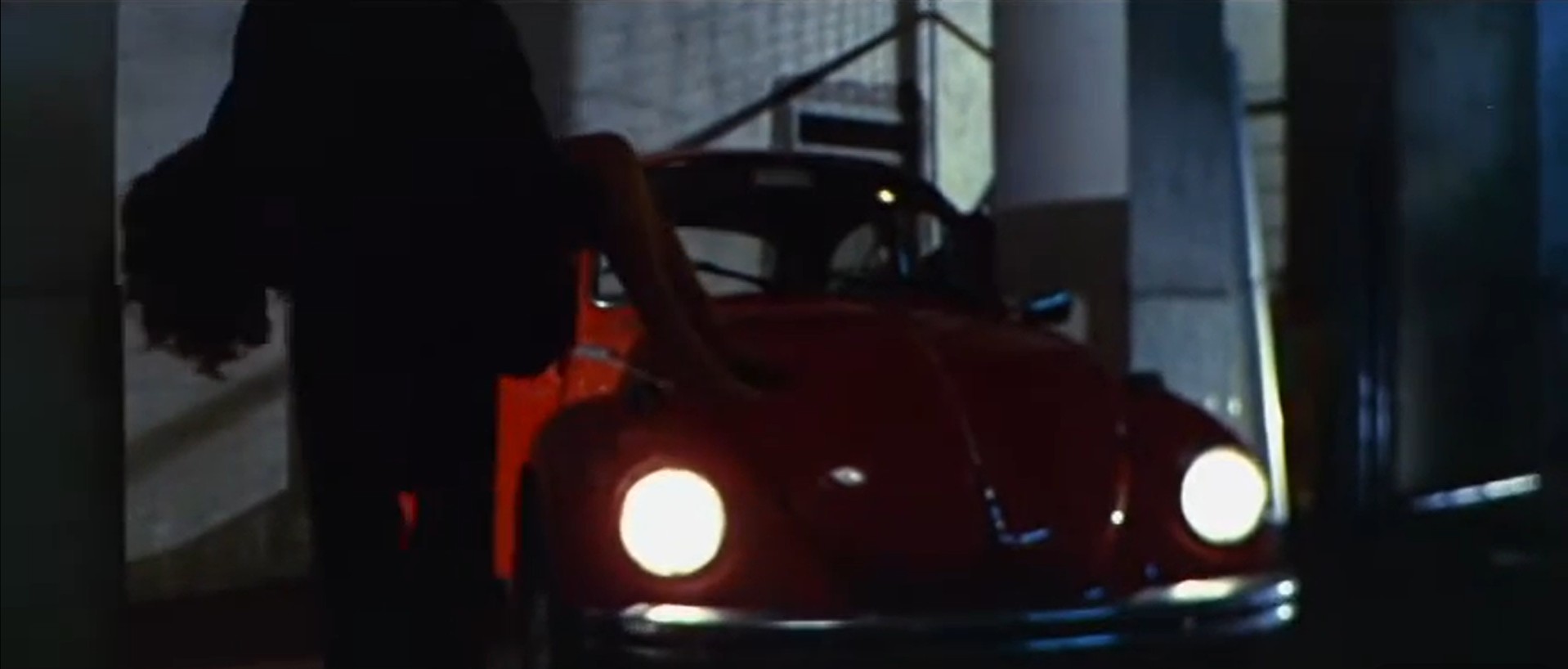
Giorgio and Norma’s hot-and-cold marriage takes a turn for the worse when Giorgio’s greed convinces him to plot her murder after she threatens to cut him off from her family’s money.  When Giorgio catches a sexually perversive killer in the act of dumping a young girl’s body in an isolated canal, he devises a blackmail agreement with the killer to murder his wife and falsely claim a ransom from her father to satisfy Giorgio’s gluttony.  Killing Norma was easy enough but after the killer brings the car around to put her body in the trunk, a young couple steal the car for an all-night joyride to the beaches of Seagull Rock, unbeknownst to them a dead body stowed in the trunk.  With the killer in pursuit of the couple and the police suspicious of Giorgio’s involvement of his wife’s disappearance, it’s only a matter of time before the killer must kill again.

“L’assassino è costretto ad uccidere ancora,” aka “The Killer Must Kill Again,” is a straying kind of Italian psychotronic film from the typical giallo overload being produced out the country between the 1960s and up to the early 1990s.  Released right in the middle in 1975, the film never enshrouds viewers in mystery with a blunt, clearcut case of who and who is not the villains, the victims, and the heroes.  “The Naked Doorwoman” and “Contamination” director Luigi Cozzi helms the script he cowrites with Daniele Del Giudice (“The Story of a Poor Young Man’) with an inclination of slipping darkly dry comedy into the fold of a cold and callous killer’s purview of an extorting mastermind’s bidding and the uncomfortable self-serving sexualized force thrust upon women, the dead and the living.  Sergio Gobbi (“Vortex”) and Umberto Linzi coproduce the GIT International Film, Paris-Cannes, and Albione Cinematografica coproduction. 

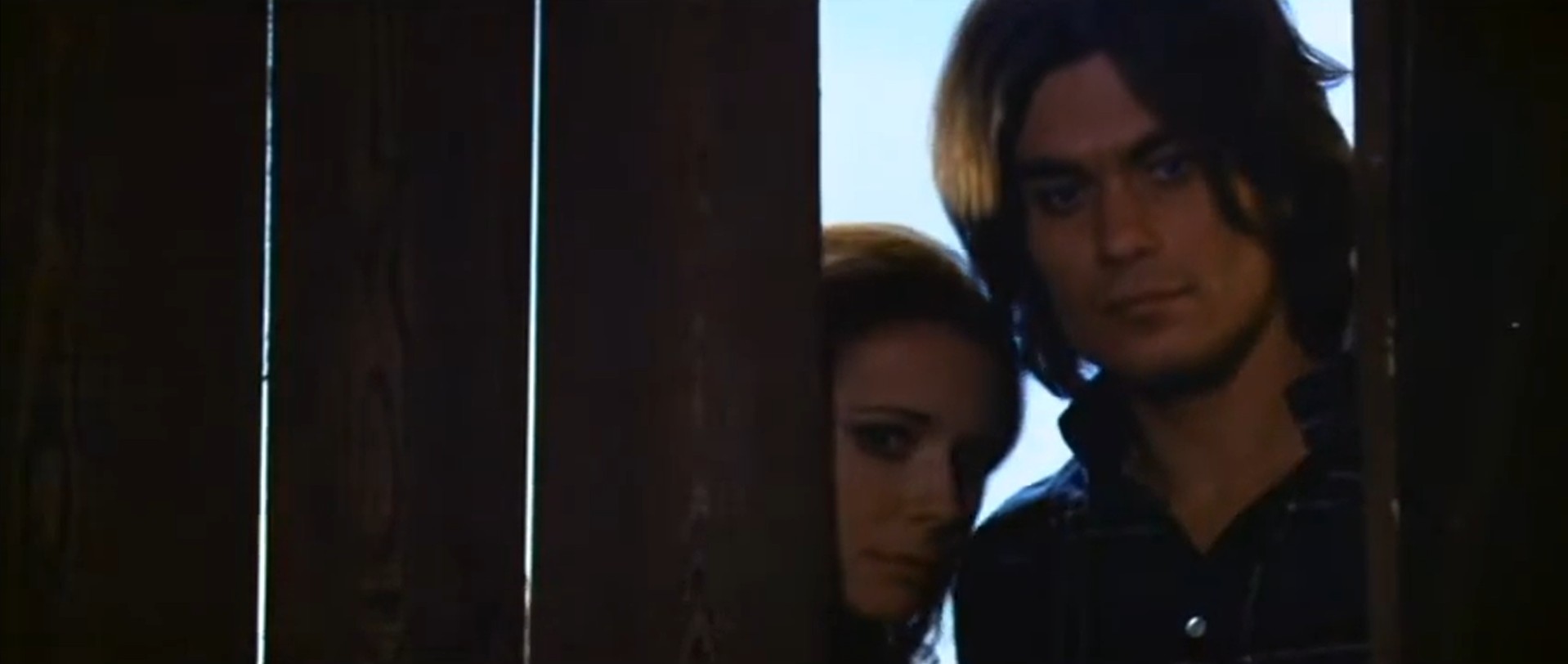
The cast is comprised of an ensemble lot and for an Italian production, there are hardly any Italian actors leading the charge.  Most of the principal cast hails from Europe, mostly Spain, and with a few outliers from France and even one from Uruguay in South America.  Each actor and actress have a rough fair share of screen time, preluded with the titular killer, played by Frenchman Antoine Saint-John.  Saint-John has a face for television, villainy television that is, with high cheekbones that create deep contoured shadows, a danger stare, and a round head with cranium hugging, short dark hair that make him distinct amongst his fellow castmates.  “The Beyond” actor’s heart put effort into a heartless role of the unnamed perverted murderer of young, beautiful women for unknown reasons and motivations.  That’s not the case for the opposite transgressor, the killer’s blackmailer Giorgio Mainardi who’s a scheming businessman and money leech off his wealthy wife (Tere Velázquez, “Night of 1000 Cast”), two reasons and motivations to put a kill contract on his wife.  “The Strange Vice of Mrs. Wardh’s” George Hilton dons the dapper swindler with trim suits, neat hair, and a handsome façade underneath his ugly intentions as he tries to fraud his wife’s ransom for himself.  Caught in the middle of this plot are two young lovers, who in themselves are not so innocent by stealing the killer’s car with a dead woman in the trunk.  Cristina Galbó (“The Living Dead at Manchester Morgue”) and Alessio Orano (“Lisa and the Devil”) are the couple Laura and Luca, two teens on a stolen car joyride to a distant beach front in order Luca to try and convince Laura to take her virginity.  While there’s ransom fraud, murderous plots, murdering, corpse disposal, and other heinous crimes, the most disturbing in the story is Luca’s pressuring to get into Laura’s pants and his means of satisfying his lust by picking up car stranded blonde (Femi Benussi, “Bloody Pit of Horror”) and cheating on Laura while she is raped when confronted by the pursuing killer.  The sleaze and skeeze level on Luca is beyond reproach and it really makes him more the villain than the actual killer who’s up two bodies by this point.  The principal cast can’t be complete without police presence and that is where Eduardo Fajardo (“The Murder Mansion”) steps in as the cool, suave, know-it-all-and-see-how-it-all-plays-out inspector, a cliched role of the time and even in today’s whodunit ventures.   

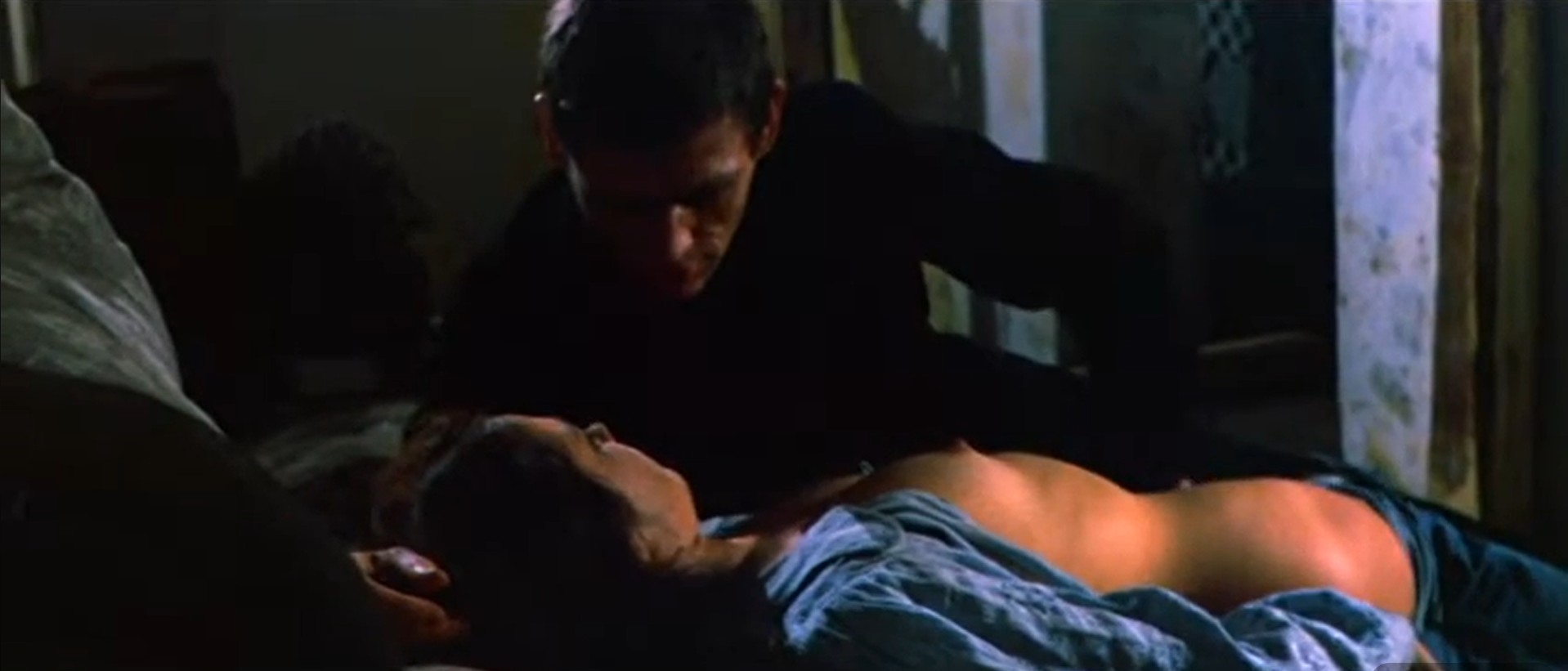
This crime giallo lacks mystery but makes up for it with rich characters, a sleaze-bag crime, and a little style from director Luigi Cozzi and cinematographer Riccardo Pallottini in their choice to visual effects to insulate the moment within a scene by matte narrowing the focus and using a sharp spherical lens to heighten the tension around the center focus with a semi-fishbowl effect.  Coupled with solid editing and great lighting for the night drive sequences between the two cars and it’s reflexive, subsequent chase, the story’s pace doesn’t rush into the more gushing violence and sexual subversion, effectively building up a pressure cooker of a confrontation between the killer and the kids that’s brilliantly edited in a taut juxtaposition that flips back and forth between the killer’s virtually explicit raping of Laura and Luca’s wanton encounter with a stranded licentious blonde motorist; both elicit wrongdoings, rendered around the crave of naked flesh, but they are from different perspectives with one being a clean cheat of carnality with another person and the other being a malicious rape of innocence yet both leave that sour taste of discomfort in the mouth but the edited design is about as sweet as it gets. 

The Italian distributor Rustblade Records, under the movie release sublabel of simply Rustblade, release L’assassino è costretto ad uccidere ancora,” aka “The Killer Must Kill Again,” onto a new Blu-ray in its complete Cozzi’s original vision and is a restored transfer for worldwide audiences in association. The 50th anniversary Blu-ray is AVC encoded, 1080p high-definition resolution, on a surprising BD25. The BD25 is surprising because the restored picture quality looks phenomenal considering the capacity, retaining deep shadows, vibrant color palette, and no incongruous signs of compression artefacts. There is however some detail smoothing fragmented throughout depending on the interior or exterior scene. More of the opening moments between Giorgio and Norma look quite polished and intricate regarding textural skin and fabrics but a good number of moments appear to smear portions of the face, especially in Antoine Saint-John’s more distinct facial characteristics. Depth and range favor the bold with Cozzi able to obtain decent amount of space between objects within his stylized choices and the color spectrum, like many giallo films, is saturated with intensity. An Italian and an English 2.0 DTS-HD Master Audio are the reigning encoded audio choices, both of which are post-production ADR and both of which show the obvious synchronization discord. The English translation, as well as the English subtitles, contain generalizations of a perhaps more complex scripted dialogue intent. With ADR, dialogue clean and clear with present, defined space right in the front two channels but lacks milieu acoustics, depth, and little range with the action added with Foley. Nando De Luca’s lingering avant score blend single low-note guitar chords, resonating piano keys, and Theremin wooing lift up the story with ominous tension. The English subtitles appear accurate without any grammatical errors. Special features include an interview with director Luigi Cozzi, a film analysis by Federico Frusciante, a horror enthusiastic musician from Rustblade Records, film locations toured by Giallo Italiano, and the feature trailer. The 50th Anniversary Edition comes with two versions: a limited-edition DVD/Blu-ray Deluxe mediabook with postcards and a single disc Blu-ray. For this review, the single disc was provided in a clear Amaray case with double sided art sleeve of a giallo yellow and contrast shadowed illustrated composition of characters and the reverse side depicting two moments from the movie drenched with giallo yellow. Presented in widescreen 2.35:1 aspect ratio, the not rated, region free film has a runtime of 90 minutes.

Last Rites: A giallo unlike the rest, “The Killer Must Kill Again” is a perversion of greed, lust, and murder without virtuous players in a plot gone awry. Luigi Cozzi’s 1975 classic is a genre staple for fans old and young in this Italian murder shocker and Rustblade offers a new and improved, director approved vision that collectors will see to acquiring immediately.

“The Killer Must Kill Again” on a restored, 50th Anniversary Blu-ray!

EVIL is the Will of the Gods. “Malpertuis” reviewed! (Radiance Films / Limited Edition Blu-ray)

“Malpertuis” Now Available at Amazon!

Jan, a young sailor returns home from a voyage to find his family home gone.  After getting into a scuffle with pimp at a night club, he’s knocked unconscious by a blackjack and wakes up to his sister Nancy taking care of him and in the bed inside the Malpertuis home of his draconian uncle, Cassavius, a wealthy, stern, and impatient man on the verge of death with terminal illness.  The sailor finds they’re not alone in the large labyrinth estate with peculiar relatives, nearby acquaintances, and longtime servants.  Before his death, Cassavius has his will read with everyone present bedside, announcing the distribution of the immense inheritance amongst the close assembly who’ve either worked and slaved hand and foot for Cassavius or have been on the outside clawing up into his good graces for their greed.  Yet, to receive their portion, they must abide by one stipulation:  they can never leave the Malpertuis.  Jan plunges himself into Cassavius’s unfathomable parting will and design, seeking to unearth Malpertuis’s warren secrets, but all a while, a killer begins to pluck away potential beneficiaries.

The 1943 gothic novel of the title by Belgium author Jean Ray serves as the film adaptation source for Harry Kümel’s 1971 gialli-like and surreal maddening “Malpertuis.”  Released in the U.S. as “The Legend of Doom House,” the Belgium and Dutch co-production creates phantasmic journey down the rabbit hole that unravels a mystery of pantheon proportions.  The “Daughters of Darkness” directing Belgium filmmaker helms the faultlessly fantastical adaptation and script by Jean Ferry, who would also collaborate with Kümel on “Daughters of Darkness” as well as pen original and adaptations of Franco-Italiano melodramas from “The Wayward Wife” to “The Foxiest Girl in Paris.”  Pierre Levie (1969 “The Witness”); and Paul and Ritta Laffargue (“The Mushroom”) produce the gothic and Greek movie under Artemis Film and Les Productions Artistes Associés.

“Malpertius” houses an international cast that ranges from the native English-speaking countries of Britain and America to the European republics of France, Belgium, Germany, and the Netherlands.  The biggest headliner out of the bunch, and perhaps the biggest drunk at the time too, is none other than “Citizen Kane’s” Orson Welles in the boisterous patriarchal role, Cassasvius, on the brink of death.  Welles commands the screen in his short lived but striking hard every note performance that simply overpowers an otherwise Eurocentric cast fashioned with off the wall characters.  The narrative circles around the ingenuous Jan freshly off the boat for a little R&R.  Played by Mathieu Carrière in one of his earliest performances of his copiously filled career that includes horror-based credits like “Born for Hell,” “Nurse Massacre” and “The Murdered Young Girl,” Jan refrains from mostly having a voice but rather actions his will to discover Cassavius’s secrets within Malpertius’s walls as well as extract his fellow beneficiaries aenigmas, such as why the lovely Euryale won’t ever look him in the eye though she’s destined to be his wife per Cassasvius’ will, his sister Nancy’s inexplicable need to leave Malpertuis with her lover, and Alice, one of three intrusive and gossipy sisters, with her cozy up urge to bed Jan while also sating the sexual desires of his greedy cousin and sneaky creep Charles Dideloo (Michael Bouquet, “The Bride Wore Black”).  All three women are played by a single actress.  Hailing from the UK, “The Violent Enemy” actress Susan Hampshire goes into complete incognito mode that disguises her physical attributes and character personalities with mere makeup and temperament tonal shifts too genuine to easily notice Hampshire being all three women.  Hampshire deserves much of the credit and earns a trifecta win by facing down the challenge without compromising character.  Perhaps a little unfair to single out Hampshire as such but the entire “Malpertius” cast deserves recognition for their titan acts, representing humanity-cladded divinity in the most simplistic of human limitation that none of them, apart from one being more recognizable against the others, can be pinpointed definitively who they’re roleplaying.  Charles Janssens, Jean-Pierre Cassel, Walter Rilla, Dora van der Groen, Daniel Piol, Sylvie Vartan, Jenny Van Santvoort, Jet Naessens, Cara Van Wersch, Fanny Winkler, and Bob Storm fill out the cast.

There’s nothing quite like a good film adaptation of a novel.  Author Jean Ray’s four-part narrative isolates characters more exclusively that delineates the individual storylines of the whole gothic affair inside , and outside in parts, of the crumbling Malpertuis estate.  The Harry Kümel and Jean Ferry vision set out to make “Malpertuis” cinematic by collapsing the subset storylines into a single perspective narrative bestowed upon Jan, who is also the main protagonist in Ray’s novel under Jean-Jacques Grandsire, but less involved in comparison to the film version.  This forces audiences to see through Jan’s eyes, a curious, naïve and perhaps good nature fellow, a nationalized sailor of sorts who cares more about his home and sister than the depravity of sailors on shore leave, and what Jan experiences is nothing short of exploitation, sexualization, and torment amongst Cassasvius’s most prized collection of heirs.  Which brings me to uncle Cassavius who is set up, through the remarks of his nephew Jan, as nothing more than a gruff and stern, ill-tempered man living in the gloomy prison-like structure that is Malpertuis, but Cassavius transforms in a postmortal light as no longer a wealthy grouch but as an omnipotent collector that instills a great power upon him albeit his once feeble condition that took his life.  His house is very much like himself, confounding, mysterious, and surreal now pact with peculiar beings that look, sound, and feel human, or at least to Jan, and in appearances to the audiences too.  There’s a theme of limitless power over power itself but with the caveat that everything must come to an end and “Malpertuis” has one Mount Olympus-sized end. 

What’s also definitive is the limited-edition Blu-ray set from Radiance Films.  A beautifully curated boxset encasing a dedication to the undervalued “Malpertuis” with a AVC encoded, 1080p resolution, BD50 set that’s presented in a 1.85:1 widescreen aspect ratio.  In the midst of Malpertuis’s dark corridors and staircases, its classically drab common rooms, and a bleakly deserted grayness to the seaport town that exemplifies the intentionally restored stark and severe grading overseen by director Harry Kümel, the 4K scan, compiled by the shorten Cannes cut and Kümel’s directors cut, depicts quite a bit of localized saturation that pops into play that creates stand out characters in tandem with their eccentric personalities.  There’s a meticulousness in the details that greatly heighten Malpertuis into a prison-like character, one that is personified holding the living, breathing characters into a stasis though they’re freedom to leave is unobstructed, the Lamplighter is a good example of this by appearing to be a near skin and bones, unkempt in appearances, and wailing in disquietude about Cassavius putting out the light, as if Cassavius himself was some sort of jailor and, in a way, he is.  No compression issue within the dim-lit black areas, the ruckus of various action, or any macroblocking during the decoding.  Though there is a language version somewhere in the world, Radiance Films supplies only the original Dutch ADR mono.  The post-production dialogue does have an asynchronous measure between picture and sound, especially between the non-native Dutch speakers, but the track is clear and prominent overtop a mysterious and unobtrusive Georges Delerue (“Platoon”) soundtrack, letting the actors and the action take the helm of the narrative with a low-toned menacing as well as hopeful score pieces that drive their curiosity and individual pecularities.  The diegetic dynamism denotes a defined design to be character driven rather than creating the immense suspense built by an edge of your score and omnipresent nondiegetic sounds.  The faultless and well-paced UK English subtitles are available and can be toggled.  Encoded special features include a 2006 audio commentary from director Harry Kümel and assistant director Françoise Levie, new interviews with Kümel and gothic horror writer Jonathan Rigby, an archival and behind-the scenes documentary on the making of the film with interviews Kümel, lead actor Mathieu Carriere, and director of photography Gerry Fisher, archival interviews with Kümel, Michael Bouquet, and Jean Ray with an archival featurette on Orson Wells and actress Susan Hampshire, Malpertuis Revisted takes audiences on location where the movie was shot with Kümel’s descriptions, the Cannes cut of the film, which is approx. 20 minute short than Kümel’s director’s cut and is viewable in the English and French language for selection, Kümel’s short film “The Warden of the Tomb,” and the trailer. Limited to 3000 copies, “Malpertuis’s” physical presence is palpable with a hard cardboard slipbox with Greek themed compositional artwork with a wraparound Obi strip denoting synopsis, bonus features, and technical aspects. Inside, a clear Blu-ray Amary comes primarily with a front and back still image cover given the artistic liberty treatment. The cover can be flipped from more traditional cover artwork, and all artwork provided is by Time Tomorrow. Heavier than the slipbox and the Amaray is the accompanying 78-page booklet with cast and crew acknowledgements, transfer notes and special thanks credits, and 2025 produced essays by Jonathan Owen, Willow Catelyn Maclay, Lucas Balbo, Maria J. Perez Cuervo, and David Flint. The region free release is region free and houses two runtimes with the main feature being the 125-minute producer cut and the Cannes cut, domiciling in the special features, clocking in at 100-minutes.

Last Rites: No one can top Radiance Films’ “Malpertuis” limited-edition Blu-ray set with its comprehensive insight into one of the more original adaptations surrounding Greek mythology, the harnessing and control of great, immense power, and the how that power is transposed and shaped into the human context where greed, sex, and love are the core contentions.

“Malpertuis” Now Available at Amazon!

EVIL Minds the Door! “Raw Meat” reviewed! (Blue Underground /2-Disc 4K UHD Blu-ray and Standard Blu-ray)

“Raw Meat” Its What’s for 4K UHD and Standard Blu-ray Dinner!

Young lovers Alex Campbell, an American studying abroad, and Patricia Wilson discover an unconscious man on the steps of a London metro subway station.  When they alert a beat cop and make their way back to the spot, the man had vanished.  Assuming the well-dressed man an alcoholic sleeping off a bender, David and Patricia move on with their lives while the police report comes across the desk of Inspector Calhoun, an eccentric investigator who recalls a recent string of disappearances surrounding the same London station.  Over the next few days, several more station related disappearances occur, forcing Inspector Calhoun to dig deeper into the mysterious circumstances involving a missing Mi-5 agent and three subway employees with David and Patricia his only witness to at least one of them.  When Patricia suddenly goes missing with her last known siting at the subway station, a concerned David explores the train tunnels that connect the last known whereabouts of all whom have vanished, leading him to a tragic history of collateral damage survival, long forgotten generational lineage, and cannibalism. 

London, England was the first to introduce the metro subway station to the world in 1863 with the Metropolitan Railway.  It seems only fitting that London be the setting for “Raw Meat,” a subterrain horror that integrates London’s metro history with the consequential hazards of an early underground railway, the insufficient costs that prove to be costly, and the pitied blamelessness of unthinkable survival from neglectful businesses.  Originally entitled “Death Line,” rebranded to “Raw Meat” for American audiences, the 1972 film is actually directed by an American, Chicagoan Gary Sherman, in his debut and would go on to helm “Dead & Buried” and “Poltergeist III.”  Based off an original concept form Sherman, one that takes the plausibility and some fact of workers being buried under a collapsed railway project and survive generationally living off the nourishment of each other in more ways than one, the script is penned by Ceri Jones and is a production of Harbor Ventures and Kanter-Ladd Productions with the late “Police Academy” franchise’s Paul Maslansky producing

I’m going to preface this character introduction with “Raw Meat” would not have been as entertaining if it wasn’t for the peak performance by a more eccentric Donald Pleasance in a pre-“Halloween” performance.  As Inspector Calhoun, Pleasence is fully in charge as an intimidating case investigator with a snarky wit, or as Christopher Lee’s MI-5 character put it, what a droll fellow you are in a stiff yet jab remark exchange interaction between the two British icons of a bygone cinema industry.  Lee’s role is only a fraction in comparison to Pleasance and would have been two big personalties too big for the meager production to contain.  Another staggeringly highlighted performance comes from an unknown in Hugh Armstrong’s portrayal of the subhuman cannibal whose fellow inbred family members have all left by deceased means, leaving him alone and the last of his kind with mumbling tunnel vernacular and unkempt open sores all over his body and face in a state of unhealthy living conditions.  Armstrong’s acted ungainliness renders the man a monster amongst society standards but also sheds a softer, compassionate light upon reflection of his forced position into a world he knowns no better about having grown up completely in the railway tunnels all his life, living off what he can scramble up which included human flesh and organs.  In contrast to Pleasance and Armstrong, David Ladd (“The Klansman”) and Sharon Gurney (“Crucible of Horror”) impress as middle ground, plain as can be, characters being two lovers in the midst of mystery, almost becoming history themselves when the man targets her to amend his loneliness in a gibberish mind the door effort to show her affection.  Normal Rossington (“House of the Long Shadows”) and Heather Stoney are the only two understated completely overstated in the film as Inspector Calhoun’s constant whips demands for bolos and tea.  James Cossins, Hugh Dickson, Jack Woolgar, Clive Swift, Gerry Crampton, Terence Plummer, and Gordon Petrie pull into the station as the remaining cast.

Hovering between the horrifying truth of early construction, underground railway accidents and the urban legend of trapped workers under tunnel collapses, Gary Sherman unearths middle ground terror somewhere in between the two with a plausible terror line narrative that not only instills recognition of the past and those who gave the ultimate sacrifice but also invites the nonfictional hunting-cannibal rising to the surface in search for food and, to an extent, companionship.  The cast elevates “Raw Meat’s” character efflorescence but there’s also other areas to illuminate its noteworthiness that take the film from out of the tunnel shadows as cinematographer Alex Thomson’s bleak tunnel aesthetic rouses filth and a sense of hardcore survival over a century.  The 7-minute tracking shot near the beginning, at the introduction of the cannibal’s tunnel home depicted with a decorum of decaying and freshly strewn corpses salvaged for their organic parts, is an astonishing backwards tracking shot without a blip of hesitation and lingering just enough to seed an unsettling undergrowth of grisly ghastliness.  The only drawback from “Raw Meat,” if looking for one or perhaps it’s not even a big deal, lies with the young couple Alex and Patricia.  It’s possible to stumble into a situation, as they did after coming off the last train for the night and crossing paths with an unconscious man on the staircase up to the surface; however, Alex and Patricia were not exactly looking for trouble or pursuing a follow up on the man’s health-and-wellbeing, God knows they argued over about their stance on helping ailed strangers in public, but they wind up having this off topic tangent about said contentious topic and rebuild the tumbled down building blocks of their relationship for a stronger bond.  Yet, lightning strikes twice in the subway tunnel and Patricia is whisked away by the tunnel ghoul in a second pure coincidental interaction that ignites Alex to make good on that stronger bond with Patrica by investigating her last known whereabouts.

Be a cannibal and consume “Raw Meat” on a new 4K UHD and Standard Blu-ray 2-Dsic combo set from Blue Underground. Restored and scanned in 4K 16-bit from the original uncensored camera negative with Dolby Vision HDR and presented in a widescreen 1.85:1 aspect ratio, “Raw Meat” comes from out of the near total blackout of tunnelling darkness of standard definition and poorly contrasted previous Blu-ray editions with a precision of delineating crafting brilliance, adding depth of separation between object and background.  The HVC encoded,2160p ultra high-definition resolution, BD66 was well aimed to squash any compression issues, leaving blacks black and textures coarse that nearly lift off the screen.  You can actually try and count the whiskers on Christopher Lee’s caterpillar mustache.  Colors have also improved and enhanced in saturation without being overly intensifying; “Raw Meat” thrives on the dank, dark world of not only the abandoned tunnel line but also the cold and sleazed London streets.  Alex Thomson’s tunnel life aesthetic musters an earthy and dingy frontage and coupled with some hard glowing red, yellows, and the subsequently mix orange, there’s a real harrowing subterranean tone in the man’s macabre ossuary home.  The 2nd disc standard Blu-ray is AVC encoded, 1080p resolution, BD50.  Blue Underground’s release offers multiple audio options, including a new Dolby Atmos mix alongside the already established DTS-HD 5.1, both rendered in English.  Toggling between both surround sound mixes, there’s little-to-no difference in the immersive experience.  Atmos provides an echoier shaft experience that can be heard as directionless whereas the DTS specifies the reverberating soundwave direction based on channel markers.  Mind the Door is certainly more accentuated as it lingers through the chambers just a little more ubiquitous and chillingly underscored.  With no crackling or hissing, dialogue is clean, clear, and robust that solidifies Donald Pleasance as a master of quick wit and blunt investigation tactics as well as the track cherishing the quality of all other players involved.  Some instances of dialogue are ADR, likely due to poor record quality, resulting in an artificial separation between the action frame and the post-production recording.  Train sounds play a supporting factor and are acutely integrated into the design of a makeshift substation construction from an abandoned platform.  The other audio options include an English 1.0 DTS-HD and a dubbed French 1.0 DTS-HD.  English SDH are available.  Disc 1 – the 4K UHD Blu-ray – contains two commentaries a 1) archived writer-director Gary Sherman, producer Paul Maslansky, and assistant director Lewis More O’Farrell and 2) a new critique and analyst commentary discussion from film historians Nathaniel Thompson and Troy Howarth.  Bringing up the UHD rear are radio/TV spots and various trailer cuts.  Disc 2 – standard Blu-ray – has all of the above on disc one plus an interview with writer-director Gary Sherman and executive producers Jay Kanter and Alan Ladd Jr. Tales from the Tube, an interview with star David Ladd, producer Paul Maslansky, and assistant director Lewis More O’Ferrall From the Depths, and an interview with the now late Hugh Armstrong, the cannibal tunnel man, Mind the Doors.  An extended poster and still gallery flesh out the standard Blu-ray’s supplemental content.  The classic poster art has been upgraded to a textile vision of blood red and half-naked men and women with blank chromium eyes within the embossed image on the slipcover and that extends to the sides and back of the O-slip.  The same illustration also graces the black 4K UHD Amaray as primary cover art, but this different variation has more natural coloring on the hair, tattered clothes, and skin tones on the white-eyed ghoulish faces.  The reverse side of the cover is the original “Death Line” titled cover art as seen on the old MGM DVD with the bearded man walking on the railway with a lit-up train to his back and a woman lying seemingly dead on the rails in front of him.  The Blue Underground release is Not rated, clocks in at 87-minutes, and is encoded to play in all regions.

Last Rites: A classic of subterranean horror, “Raw Meat” is much more than a broad line of cannibalistic terror. The new Blue Underground Ultra Hi-Def release illuminates the wretched state of being and the ugly truth of generational survival that provides a strange brew of compassion for the forced feral human who feeds on human flesh.

“Raw Meat” Its What’s for 4K UHD and Standard Blu-ray Dinner!

20-Years or More Incarcerated is No Match for Tenacious EVIL! “The Rapacious Jailbreaker” reviewed! (Radiance / Limited Edition Blu-ray)

Break From Your Cage With This New LE Blu-ray of “The Rapacious Jailbreaker”

Masayuki Ueda is nabbed after murdering a drug dealer’s girlfriend during a botched meeting.  Ueda faces a 20-year prison sentence for his crime but after being processed, nothing can change his mind nor his determination to escape.  Willing to sacrifice blood for freedom, Ueda escapes and visits his lover in Kobe for a quick conjugal stop and money only to be caught again when he returns, tacking on additional years to his sentence.  His next escape plan joins forces with two other inmates and, again, his route to freedom is cut short when a brothel visit, while laying low in his sister’s village, turns into a violent brawl with another patron and the authorities round him up in the aftermath, adding more years to his sentence.  While incarcerated, Ueda must kill rival gang bosses who threaten him.  By now, Ueda’s sentence is up to 40-years, and not to be defeated by the prospect of a long term sentence, Ueda has one more desperate attempt for freedom, putting his life on the line.

“The Rapacious Jailbreaker,” aka “Escaped Murderer from Hiroshima Prison” or “脱獄広島殺人囚,”is the crime black comedy from one of the Toei Company’s aggressively eclectic and paced directors Sadao Nakajima (“The Kyoto Connection,” “Female Ninja Magic”).  The prolific yakuza and exploitation filmmaker takes the Tatsuo Nogami (“Father of the Kamikaze”) script, centered on an incessant career criminal hellbent on not spending his days in prison, and runs with it, fashioning the smidgen stitchwork of a nonfictional individual into the post-War World II, American occupation of Japan and adds inner teetering and play-by-play thought narration and the always welcoming gallows humor amongst the exploits of a stubborn felon.  Gorô Kusakabe (“Hell,” “The Red Silk Gambler”) produces the production, which is part of an unofficial Sadao Nakajima trilogy along with “Shimane Prison Riot” and “The Man Who Shot the Don.

Hiroki Matsukata, a prolific yakuza actor from the 1960s to the 1980s with such credits as “Survivor of the Massacre,” “Dangerous Trade in Kobe,” and “Battles Without Honor and Chivalry,” breaks intermittently through the gang wars and boss-laden wall of tattooed violence and varying levels of respect that’s inked the individualized stories’ skin with “The Rapacious Jailbreaker” as the titular lead character under the character’s God-given name of Masayuki Ueda, a tenacious criminal personality type with yakuza-like transgressions of drug peddling and black market trade.  However, Ueda is not a criminal without honor, even if he’s a little rough around the edges, as his loyalties lie with those who are loyal to him: a fellow partner in crime he didn’t rat out, his suffering wife (Yōko Koizumi ), his sister Kazuko (Naoko Ohtani, “Apartment 1303”), and also those who help him escape, such as  Tatsuo Umemiya’s (“Spoils of the Night”) brazen law challenger Yuji.  Yuji and Ueda match well in traits, both eager to test and take risks going against a rather lax authority grain.  Aside from the opening montage of prison routines depicting minor torture from the guards, you don’t get the sense the prison guards have much domination or enough aggressiveness to match the kind of zeal the inmates have to either run a sneaky scheme or take them on toe-to-toe to get what they want, as we see with Yuji’s disgracing efforts against the warden in order to obtain rights that are quickly dismantled by the warden’s reneging, but at the cost of his humiliation.  Matsukata never wavers or deviates from Ueda’s singular drive, layering intensity overtop his thin film of civility with every additional time added to his sentence that eventually goes beyond four decades, but you can see it not only in Ueda’s resolute eyes but in Matsukata’s as well that nothing will stop him from escaping.  The film fills out with Hiroshi Nawa, Gorô Ibuki, Tatsuo Endô, Shigeru Kôyama, Hideo Murota, Harumi Sone, and Akira Shioji in various rolls of yakuza, fellow inmates, and those crossing Ueda’s path in the outside world.

Staying on the theme of Ueda’s loyalty, which is incredibly beyond reproach given his heinous crimes, there’s something to be said for his commitment to be free as a bird but also to the people who do right by him, no matter the circumstances. His wife pledges endless loyalty despite his flaws and felonies, his estranged sister welcomes him with food and shelter, and his opening criminal accomplice provides him a weapon before thanking him for not ratting when Ueda was apprehended by police. There’s an underlining code of respect and duty intertwining the utter most wicked and those blood relations in the field of collateral damage. Ueda’s responsibility for his actions never wanes, never deflects, and never becomes a weight of guilt as the only object, or maybe even obsession perhaps, on his mind is to escape prison and make quick, easy money. His loyalty does come at a fault when his trust reaches into the weeds, especially amongst those he’s already collided head-vs-head against, such as the former head of the black market beef butchers who turns on Ueda for false promises, but it’s in that one and only instance that everything becomes clear, much more to the audience than perhaps Ueda himself, is that in order to remain just out of arms’ length of the law, he must walk his path alone as depicted at the finale moments. The post-World War II American occupation time period has an interest facade to “The Rapacious Jailbreaker’s” context. In fact, the American presence is rarely present at all with Ueda feeling the squeeze mostly in-house within the Japanese penal system with the Americans only rearing their heads in obstacle of his escape attempts in a negative light: Ueda’s standoff against Japanese officers, who won’t shoot him surrounded by a crowd in fear and respect of bystanders, comes to a quick surrender when the Americans, who are perceived to shoot on sight no matter the circumstances arrive on the scene or when his fellow escapee tries attempts to befriend American forces in a military truck only to be runover and killed without remorse or even a slow down. These seemingly insignificant instances spoke volumes against the American occupation as a non-character in Ueda’s tale of total resistance that, one that either represents the American cold passive care of the Japanese under their rule or switch the ironfisted from Japan to America to favor a more lenient system of control.

Radiance Films’ transatlantic “The Rapacious Jailbreaker” lands in the U.S. for the first time on any format, and first on this particular format globally, with a new limited-edition, AVC encoded, 1080p high definition, 50-gigabyte Blu-ray. The dual layer allows for steady color timing and pristine picture quality image that’s leans into its attractively grained 35mm stock and presented in its original widescreen aspect ratio 2.35:1. The original print, transferred into HD from the Toei Company, is nearly faultless with only minor instances of vertical scratching around the theater scene in an otherwise near clean and clear element print. Nakajima’s lower contrast allows for softer coloring and the touch points on Radiance’s treatment showcase a more relaxed but harsh grayish blue with surrounding aspects from the prison’s hoary cement floors and walls to the prison’s steely cell bars and the prisoner’s blue attire. The uncompressed Japanese language PCM mono track offers clearcut dialogue and ambient markers with a clarity on both fronts that render an intelligible layered track without any compromising issue. Kenjirô Hirose (“The Last Dinosaur”) brings a 70’s cop-and-crime swanky score with undertones of traditional Japanese Hyōshigi, the striking of sticks to create that brief and stark crack sound. New translated English subtitles are available, pacing well and are error-free. Encoded special features include a visual essay by film critic Tom Mes and an audio commentary by yakuza film expert and Sadao Nakajima historian, Nathan Stuart. Radiance’s limited-edition set comes in a clear Amaray case with a reversible cover with original and new artwork, the latter commissioned by layout designer Filippo Di Battista (primary). Also included is an obi stirp with the release’s contents, technical specs, and film plot. Limited to 3000 copies, the release comes with a 23-page black and white booklet with stills, an essay Escape as Vocation by Earl Jackson, and a 1974 review by Masaharu. The 97 minute feature comes region A-B locked and unrated from the UK label.

Last Rites: “The Rapacious Jailbreaker” is hardboiled tough as nails while being a series of comedic follies that make this tenaciously titled story of one man’s pursuit of freedom a breakout hit.

Break From Your Cage With This New LE Blu-ray of “The Rapacious Jailbreaker”

With Fame Comes Absurd EVIL Exploitation. “A Tale of Sorrow and Sadness” reviewed! (Radiance Films / Limited-Edition Blu-ray)

Limited Edition Blu-ray of “A Tale of Sorrow and Sadness” Now Available!

To compete against a rival fashion magazine who found profound success after hiring a famous gymnast as their spokesmodel, an ambitious fashion company sees potential in amateur golfer Reiko Sakuraba with her beauty, grace, and a decent enough golf game.  The only problem is Reiko has not won a championship.  The fashion company representative and Reiko’s sport’s columnist writer/manager/boyfriend Miyake strike a deal to get intensely train and mentally exhaust Reiko to be the best by the next tournament.  When Reiko outperforms the tournament’s veteran players, she instantly becomes a fashion icon and celebrity that leads to her own show for the magazine, photoshoots, and a large house in the middle of the suburbs.  Miyake’s aloof behavior continues even after Reiko’s success and while he drives her back home, he hits-and-runs a woman form the neighborhood who blackmails and guilts Reiko into letting her into the rich and famous lifestyle.  Reiko’s mental health slowly declines as pressures mounts.

“A Tale of Sorrow and Sadness” is a tale of how the sudden rise of fame and fortune can quickly lead to world of hurt through inexperience, obsession, misguided love, abuse, and the day-to-day tasks that can even burden even the most common person.  The story also represents a dichotomy between fame and the mundane.  The 1977 Japanese surreal drama is helmed by Seijun Suzuki, a filmmaker once blacklisted by the head of Nikkatsu Studios after his film for the company, “Branded to Kill,” was deemed terrible by Nikkatsu execs, and rode the filmic bench for nearly a decade until his theatrical release of the Shochiku Ltd. Released production that allowed him the freedom for artistic expression.  Also concisely known as “A Tale of Sorrow,” the Suzuki picture is written by Atsushi Yamatoya based off manga by Ikki Kajiware and produced by Yoshiki Nomura, Kenzo Asada, and Tokuya Shimada.  

Yoko Shiraki steps into the tragic golf-cleated shoes of golfer-turned-spokesmodel Reiko Sakuraba who finds herself unknowingly being exploited as object of marketable objectification.  What’s interesting about Sakuraba is she’s totally alone amongst other adults in a real cutthroat and cruel way through her trajectory of success.  In the fashion world, the magazine representative behind the concept (Masumi Okada, “The Living Skeleton”) only wants her for her beauty and success, her boyfriend Miyake (Yoshio Harada, “Lady Snowblood 2:  Love Song of Vengeance”), and even an once starstruck housewife, Kayo Senba (Kyôko Enami, “Killer Whale”) who was struck by Miyake’s car and resents Reiko’s, blackmailing her way into the superstar golfer’s life by forcing her hand to relinquish all from her worldly possessions to her mind, body, and soul.  Shiraki gifts Sakuraba the fault of inability to say no with her innocence and naivety ravaged and exploited beyond the point of no return and beyond repair but Sakuraba clings to dear life, perhaps even sanity, because of tone person that too only reacts negatively around her but since their blood reaction is thicker in the watery connections manipulating her, Sakuraba’s hand is forced to do much all of the golfing and modeling hell for her adolescent younger brother Jun (Tetsu Mizuno), a smart yet reclusive boy with off screen aggression getting into fights with school bullies stemmed likely by his sister’s constant absence.  Sakuraba’s not only a slave to external obsessions of success, image, and greed but also a slave to internal obsessions with Mikyake who deprives her of the most basic primal needs for financial gain and for manipulative control.  Kôji Wada, Shûji Sano, Noboru Nakaya, sao Tamagawa, Tokie Hidari, and Jô Shishido co-star.

“A Tale of Sorrow and Sadness” is Seijun Suzuki’s tour de force return to feature films.  A linear narrative speckled with surrealistic doses creates an unsettling and bizarre atmosphere of strongarm manipulation on the unassertive character of Reiko Sakuraba.  Her raw talent is mined and minced without much consent and pushed past mental exhaustion and collapse in what is an all too true theme surrounding the early television era of celebrity branding with esteemed figures being puppets for large scale companies in order to sell their promoted products.  Money, image, and success steer the helm without any due remorse to the elegant centerpiece of the room, driving Suzuki’s social commentary to extreme levels of misappropriation of a human person with feelings and ambitions of their own.  Instead, Reiko’s meekness is measured by Suzuki’s fabricated milieu of mistreatment represented partly in a behavioralism of semi-surrealism – Miyake’s stoic aloofness, Senba’s brazen hijack of Reiko’s fame and wealth, and even Jun’s withdraw and reclusion are all good archetype of strange conducts illegitimizing Reiko as person.  She’s dehumanized so much so she stops whatever little rationality she had to begin with and becomes a vessel of command that allowed those around to walk all over her.  Suzuki’s suburban reach toward fame theme is satirical for “A Tale of Sorrow and Sadness’s” thin blanketing of dark comedy and the filmmaker often accentuates the moments with elongated sequences, randomized bits of eccentricity, and highly stylized contrasts of sex and violence as well as commercially sensationalized imagery versus Stepford wives’ expectations.

A bleak absurdist dream, “A Tale of Sorrow and Sadness” becomes rightly a part of the Radiance obscure, high level lineup with a new, limited-edition high-definition transfer Blu-ray release.  The AVC encoded, 1080p, BD50 receives the high definition transfer from the Shochiku Corporation, who currently distributes a fair amount of Anime and since “A Tale of Sorrow and Sadness” is adapted from a Ikki Kajiware’s Manga, the film fits right in, and is presented in by Radiance in the original aspect ratio of a widescreen 2.35:1.  Radiance’s image quality surpasses expectations as visually bold in a wide variety of contrasting colors, especially in primaries of yellow and reds juxtaposed against achromatic shades of brilliant whites and deep blacks.  The original print is beyond pristine with virtually no dust, dirt, scratches, or any kind of visual impediments in what appears to be a well-preserved 35mm reel.  Skin tones appear naturally organic and textures pop in their specific fabrics inside an overlay of natural stock grain for that bare-faced aesthetic of clear based film strip.  The Japanese uncompressed mono PCM audio, again, surpasses expectations with a diverse mix through a single output that creates excellent note individualism rather than an indistinct amalgam.  The omitted compression codec provides the original audio framework comfortably upholding against the test of time without a flurry of issues in the single layer.  Hissing, popping, crackling and other types of interference are kept either suppressed or to a bare minimal in another pristinely kept transfer.  ADR dialogue clearly affixes to the images with synchronous efforts being no worse compared to other films of the era out of Japan.  The newly improved English subtitles render without error, are compositionally more-or-less within syntax range of translation, and pace nicely throughout.  Special features include a new audio commentary by film historian and author Samm Deighan, a new interview with assistant editor Kunihiko Ukai, and the film’s trailer.  The clear Amaray case contains Sam Smith commissioned artwork on an obi-strip included reversible sleeve – primary cover composition is of a live still of exhausted Reiko Sakuraba lying next to a bunker with a spirally title font and the reverse cover is more NSFW with a partially nude Reiko with boyfriend Miyake portrayed in soft, dreamy glow.  The white and red disc is pressed with eye-pleasing contrast and the inserted 31-page color booklet provides cast and crew credits, essay “Sorrow, Sadness, and the Sweet Smell of Excess” by Radiance regular contributor Jasper Sharp, an archive essay “The Realisation of a Seijun Sizuki Film” by Atsushi Yamatoya, and the Blu-ray acknowledgements. “A Tale of Sorrow and Sadness” Radiance Blu-ray has a runtime of 93 minutes, is unrated, and since Radiance is a UK boutique label, collectors and film aficionados will get the best of both worlds with a region A and B playback.

Last Rites: Seijun Suzuki’s return to theatrical feature films with “A Tale of Sorrow and Sadness” is a remarkable comeback for the ages and the decade interruption didn’t even cause a missed step for his artistic expression of exploitation and consumerism control ruining young, raw talent which is a clear-cut archetype of sorrow and sadness.

Limited Edition Blu-ray of “A Tale of Sorrow and Sadness” Now Available!