When Men Want More, They Receive More… EVIL! “Red Sun” reviewed! (Radiance Films / Blu-ray)

“Red Sun” on Limited Edition Blu-ray from Radiance Films!

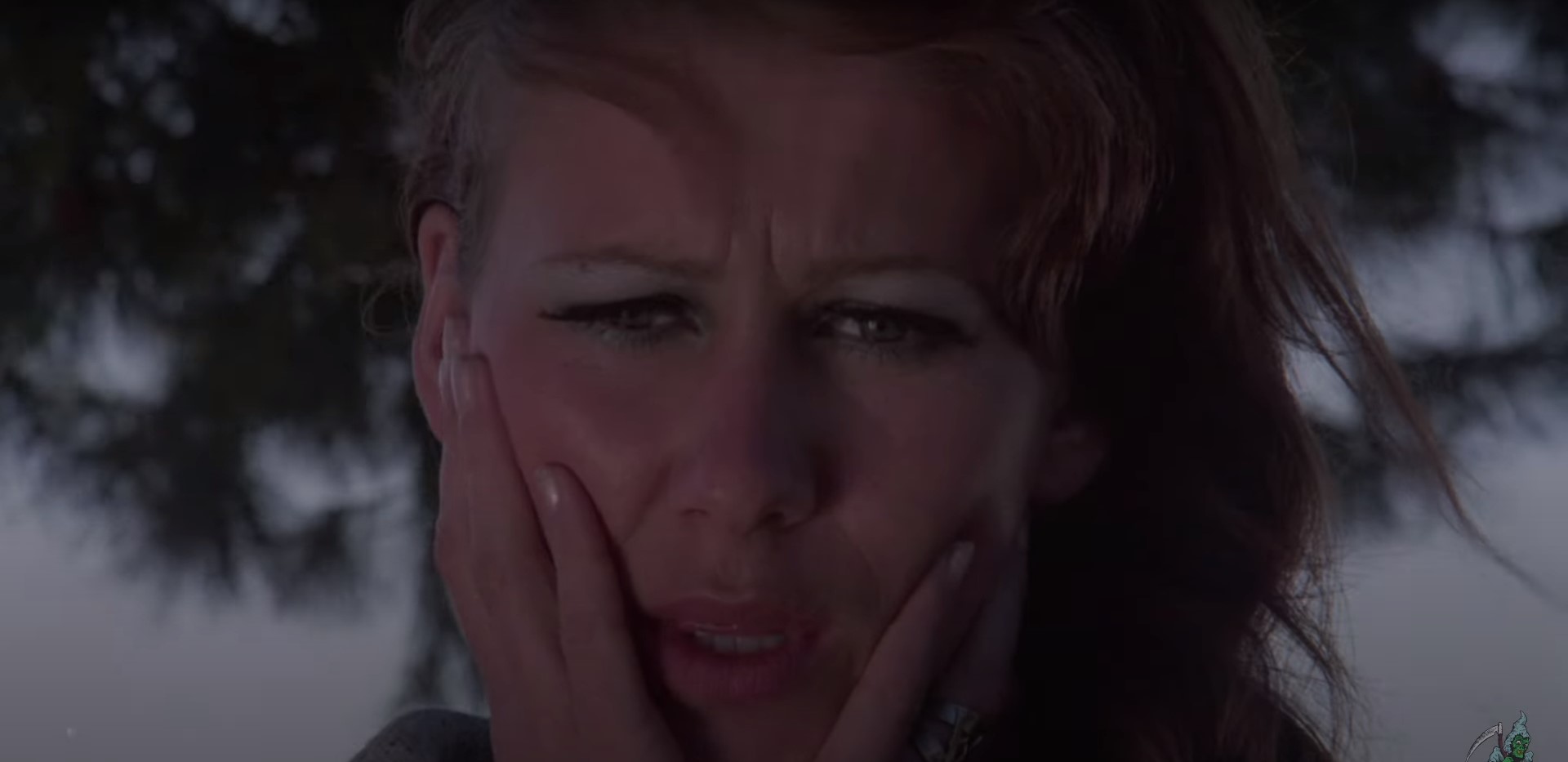
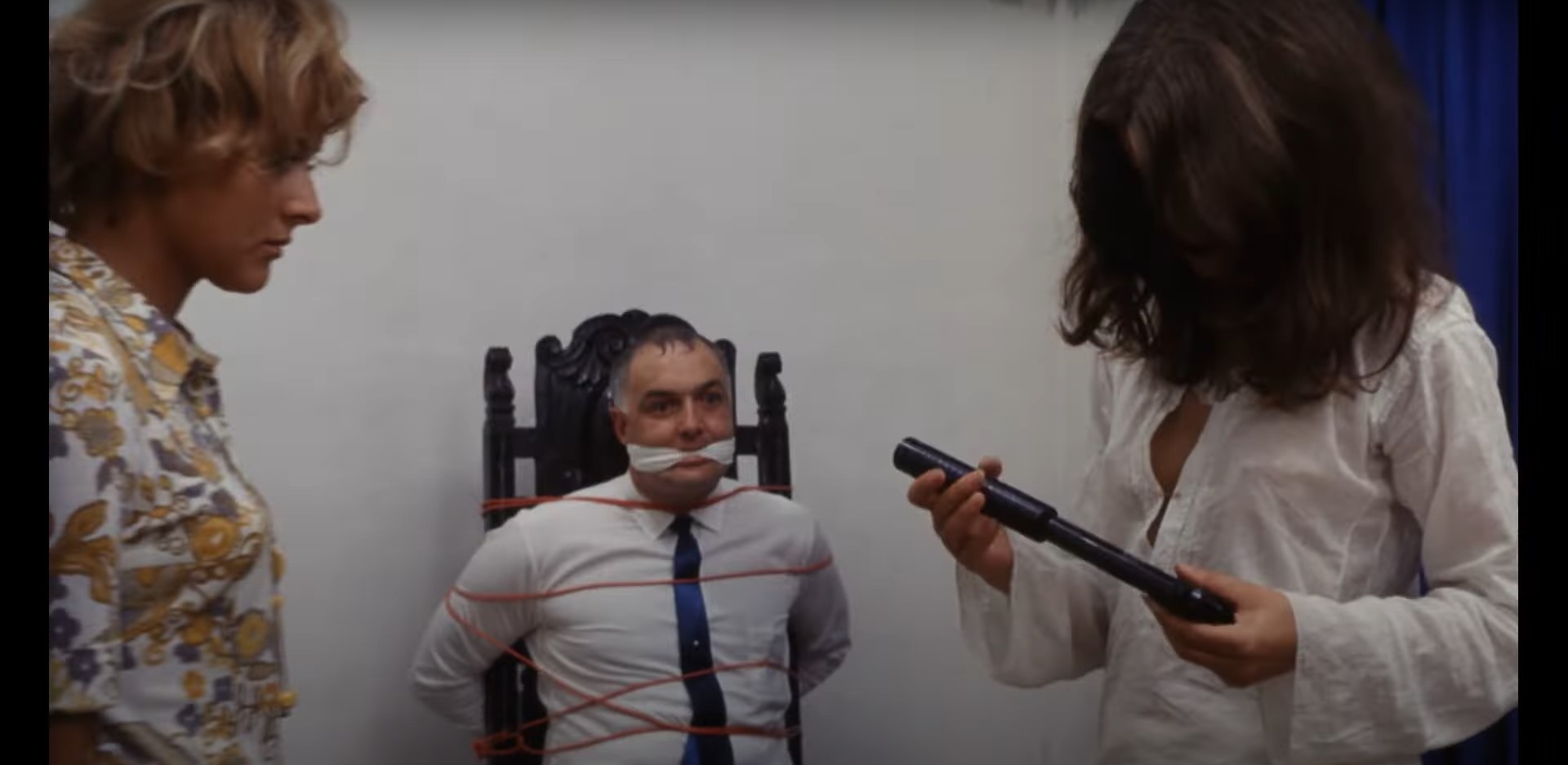
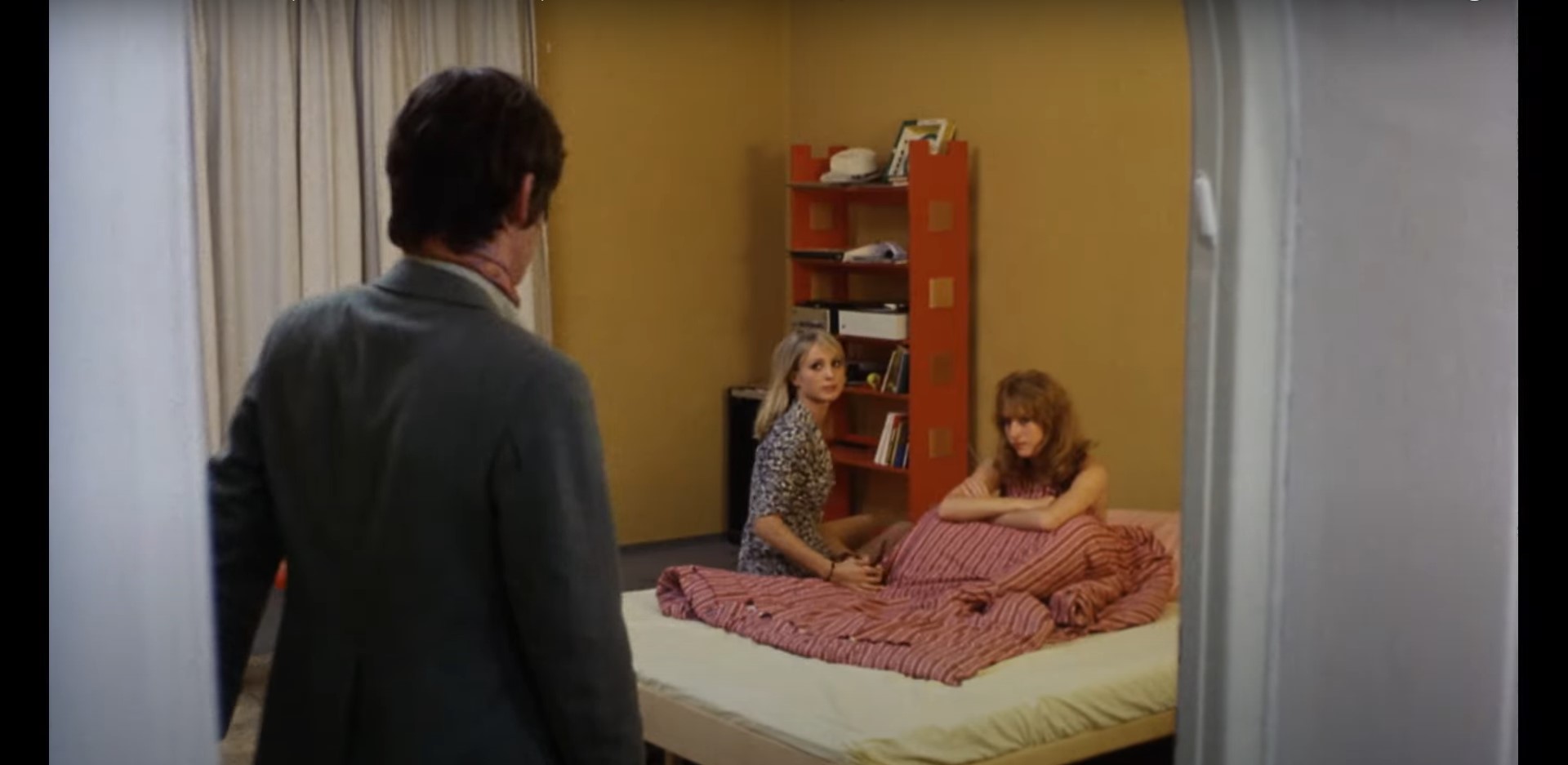
Peggy, Sylvie, Christine, and Isolde have made a mortiferous pact to lure wanton men into their spider’s web before snuffing them out. Armed with guns and homemade explosives, the four women find themselves strapped for cash but managing to get by with their all-in scheme to take out as many licentious men as possible. When the nomadic loafer Thomas re-enters Peggy’s life, she initially sees him as just another mark to relieve from the mortal coil, but Thomas’ uninterest in sexual desires appeal to Peggy’s compassion and care for the man she once loved who just happened to show up in her life one night. As the two become closer, Peggy’s accomplices continue their deadly ideology, working their individual johns, but Christine and Sylvie find Peggy slipping under Thomas’ beguiling draw, an affect she can’t seem to comprehend, and pressures Peggy to be thorough with Thomas to the bitter end.

“Rote Sonne,” or “Red Sun” translated into English, is the 1970 feministic crime drama from German filmmaker Rudolf Thome and penned by the late Switzerland born screenwriter, Max Zihlmann.  Thought-provoking as it is enticingly cold, “Red Sun” tears open a void between lust and violence that separates the sexes of scorned scars.   The pre-European Union film looks at feminism during a highly patriarchal Germany time, West Germany to be specific, when women rights were essentially molded and determined by men.  Wives relied heavily on their husbands to make decisions for them on a permissible granted condition and even some marriage-related abuse crimes we’re not punishable under German law.  Thome helmed a politically anti-conservative and socially anti-inequality picture during the second wave of German feminism of the 1960s with ironfisted and revenge-seeking protagonists as an active cell blending into cultural norm.  “Red Sun” is produced by the director as well as Heinz Angermeyer of Independent Film productions and is part one of our double bill look at radical feminism with Marleen Gorris’ “A Question of Silence” to follow.

At the tip of the cast spear is a Rudolf Thome regular, Marquard Bohm, having had roles in another of Thome’s empowering women feature “Supergirl – The Girl from the Stars” as well as the skin-laden “Detektive,” and the narrative’s focal character stirs confounding interest in that it revolves around a male principal of a women liberation-by-force feature.  As Thomas, Bohm is not a traditionally depicted German man but has all the some of the minuscular familiar qualities of masculine behavior.  Thomas loafs into to life of Peggy, played by fellow “Detektive” star Uschi Obermaier, and her cohort of conniving men eaters – Christine (Diana Körner, “Barry Lyndon”), Sylviie (Sylvia Kekulé) and Isolde (Gaby Go) – simply by being at the right place at the right time or visa-versa, depending on how you look at it.  For Thomas, his nonchalant leeching onto Peggy morphs into something more than just freeloading off of already strapped for cash Peggy and friends, becoming a distraction and an attraction from his previously failed relationship in Munich.  The role is in a mirror reversal of the then current German society with Thomas being a stay-at-home man, running errands at the behest of the woman Peggy as she goes to work and earns to keep their clandestine killing chugging along, but Thomas does what he wants, whether be spending Peggy’s extra cash on cigars or eating all the food in ladies’ fridge.  Opportunistically asserting his needs onto their, often inimical, hospitality, Thomas is the Peggy beloved free-range chicken strutting his stuff around other hungry, more axe-wielding, farmers that put the pressure on Peggy to nix him before he insidiously collapses their pact.  Under the “Red Sun,” the cast fills out with Don Wahl, Peter Moland, and Henry von Lyck.

Unfortunately, Thomas has inadvertently sowed the seeds of destruction within the four women, dividing the group’s cause and on what to do with Thomas.  The women are arranged in a spectrum range of how to handle their contested guest; Thomas has caught the eye of Peggy and Isolde, though active in certain measures of man-slaughter, refuses to partake in the act of killing altogether where Sylvie pushes back against her indifference amiability for Thomas to continue the good fight and Christine just flat out owns her oppositional stance to eliminate the man many would find lackadaisical and nocuous to their friendship and plans, like an usurping boyfriend coming in between two best friends.  What Thomas represents is the potential squash, or delay of, the feminist movement against an arrogant and authoritatively unfair patriarchal society and each woman is a different perspective and reaction to the measures of feministic movement.  “Red Sun” is also a tragic love story that pits rightful duty against the heart’s urges and Thome is able to fashion a path through the commentary to depict both views in a sad, yet heartful conclusion.  What Thome doesn’t do well is the appropriate stitching of time passed.  Perhaps through editing or the within the confined text of the script, what feels like weeks passed is actually only a handful of days, but Thomas’s comfort level is so ingrained, coupled with the brief mentioning of how long he’s been around, the comings-and-goings of time blend into one jerky story that can’t properly materialize a granular tone and “Red Sun” becomes a bit sun blind at times when trying to keep with the characters’ narrative.

“Red Sun” blazes onto a world debut, limited edition Blu-ray release from independent cult film distributor, Radiance Films. The AVC encoded, high-definition release has been scanned in 2K from the original 35mm camera negatives, supervised by director Rulfe Thome, at the Cinegreti Postfactory in Berlin as well as additional touchup restoration work to spruce up the dust, dirt, and scratches. Radiance Films’ presentation features a brilliant quality that has restored to void out any celluloid cankers. Grading appears natural and vivid under the breadth of the welcomed 35mm grain. Aside from a handful of faint vertical scratches here and there, this Blu-ray has none the worse for wear with compression issues as the transfer is stored on an ample BD50 to reduce any compression artefact effects. The original German language LPCM 2.0 mono track vivaciously keeps up with a clean, clear, and robust post-production dialogue recording. No major issues with hissing or popping though minor specimens rear their ugly audibles sporadically to a negligible outcome. Since ADR is used, depth is lost amongst the dialogue track, but the environmental ambience nicely courses through the output with a small explosion and episodic skirmishes to keep the range from being too concentrated. English subtitles are available and are well-synced, well-paced, and are grammatically sound from start to finish. Bonus features include an audio commentary track with director Rudolf Thome and Rainer Langhans and also two visual essays with film academics Johannes von Moltke, in German with English subtitles, on the subject of cultural and social influences on “Red Sun” titled Rote Sonne: Between Pop Sensibility and Social Critique, and Margaret Deriaz exploring the developments on the New German cinema, titled From Oberhausen to the Fall of the Wall. The physical attributes are just as enticing with non-traditional and clear Blu-ray snapper case with a thicket, 51-page color booklet insert featuring the 2022 Guerrilla girls: Radical Politics in Rudolf Thome’s “Red Sun” essay by Samm Deighan, an interview with the director, Letters to the German Film Evaluation Office by Wim Wenders and Enno Patalas from 1969, film review extracts between 1970 and 1991, and transfer notes and full package release credits. Sheathed inside the case is a reversible cover art with a Bond-esque prime cover of Uschi Obermaier in a white, short-skirted outfit holding a revolver in front of a shoreline red sun. Alternate, inside cover notes the original German language title “Rote Sonne” with the 3 of the 4 femme fatales posed around Peggy’s VW bug. The disc press art is perhaps the less exciting aspect with just a plain, off-white disc with red letter of the title. Radiance Films’ release comes region free, has a runtime of 87 minutes, and is not rated. Limited to 1500 copies should not stop a film aficionado from looking directly into the “Red Sun,” a highly provocative and pulpy thriller full of contempt and full of ambivalence curated to pack a punch on a new Radiance Films Blu-ray.

“Red Sun” on Limited Edition Blu-ray from Radiance Films!

Don’t Mess with Texas Unless You’re EVIL Going Up Against “Shanghai Joe” reviewed! (Cauldron Films / Blu-ray)

East Doesn’t Just Meet the West, It Kicks It’s Ass in “Shanghai Joe!”

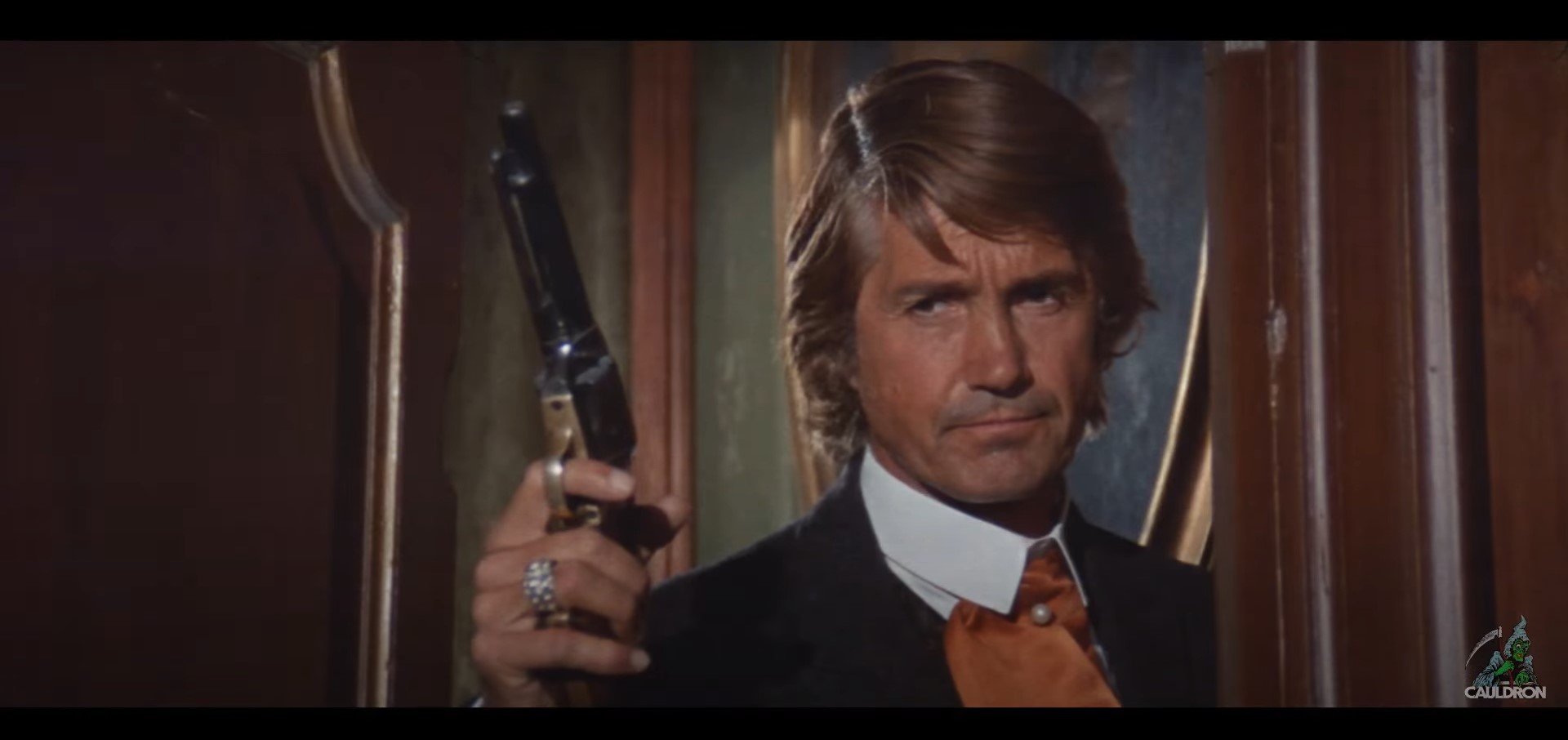
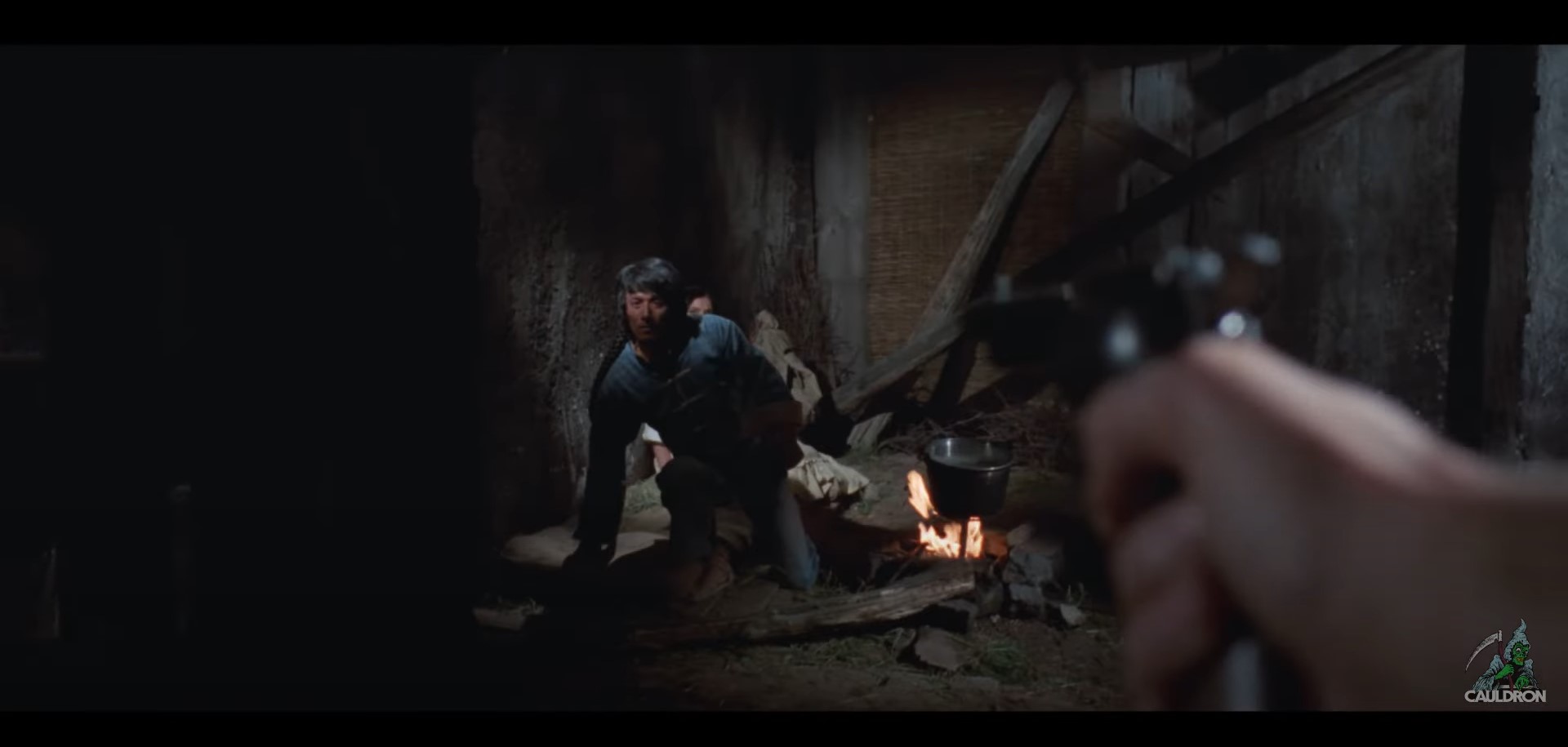
A Chinese immigrant arrives into San Francisco looking to begin a life as an American cowboy.  Met with extreme prejudice, he pushes forward to avoid the Western stereotypes of his race by taking a stagecoach to anywhere Texas in order to become a true-to-form Cowboy.  Mocking monikered Shanghai Joe, even in Texas Joe is met with bigoted resistance in every way and in every exchange with the locals despite his uncanny fighting, intellect, and horse-riding skills that are far superior to his meanspirited rivals who think of him nothing more than a dumb foreigner.  When Joe become inadvertently involved with human traffickers and slave owners of downtrodden Mexicans, Joe aims to set things right against an oppressive and murderous rancher named Spencer who runs the entire region.  Spencer knows his usual hired posse can’t match the supernatural abilities of Joe and hires out the $5,000 bounty to the four most cunning and ruthless killers that will seek Joe’s head as well as possibly commit other atrocities to him for the sole joy of it.

The sun rises on the dawn of the East Meeting the West with “Shanghai Joe” at the center   of subgenre.  The Italian made spaghetti western helmed by “Nightmare Castle” and “Nazi Love Camp 27” director Mario Caiano who exhibits what happens when an unstoppable force hits an immovable object as quick hands and feet of the Asian East combat with the quick gunslinging showdowns of the American West.  Penned by Caiano alongside Carlo Albert Alfieri (“Sodoma’s Ghost”) and Fabrizio Trifone Trecca, credited as T.F. Karter, “Il mio nome è Shangai Joe” or “The Fighting Fists of Shanghai Joe,” as the film is originally entitled in Italian, keeps true to the graphic and vehement violence that ultimately lacked from the U.S. Western and sought to bring a martial arts foreigner into the fold of brute and barbarity as Kung-Fu flicks were up-and-coming with the rise of Bruce Lee and the Italian wanted a piece of that cinematic success without having to spend a fortune of turning sets appear oriental when already built saloons, corals, and spittoons were a plentifully available from previous films.  Producers Renato Angiolini and Robert Bessi serve under the production companies Compagnia Cinematografica Champion (“Torso”) and C.B.A. Produttori e Distributori Associati (“Emergency Squad”).

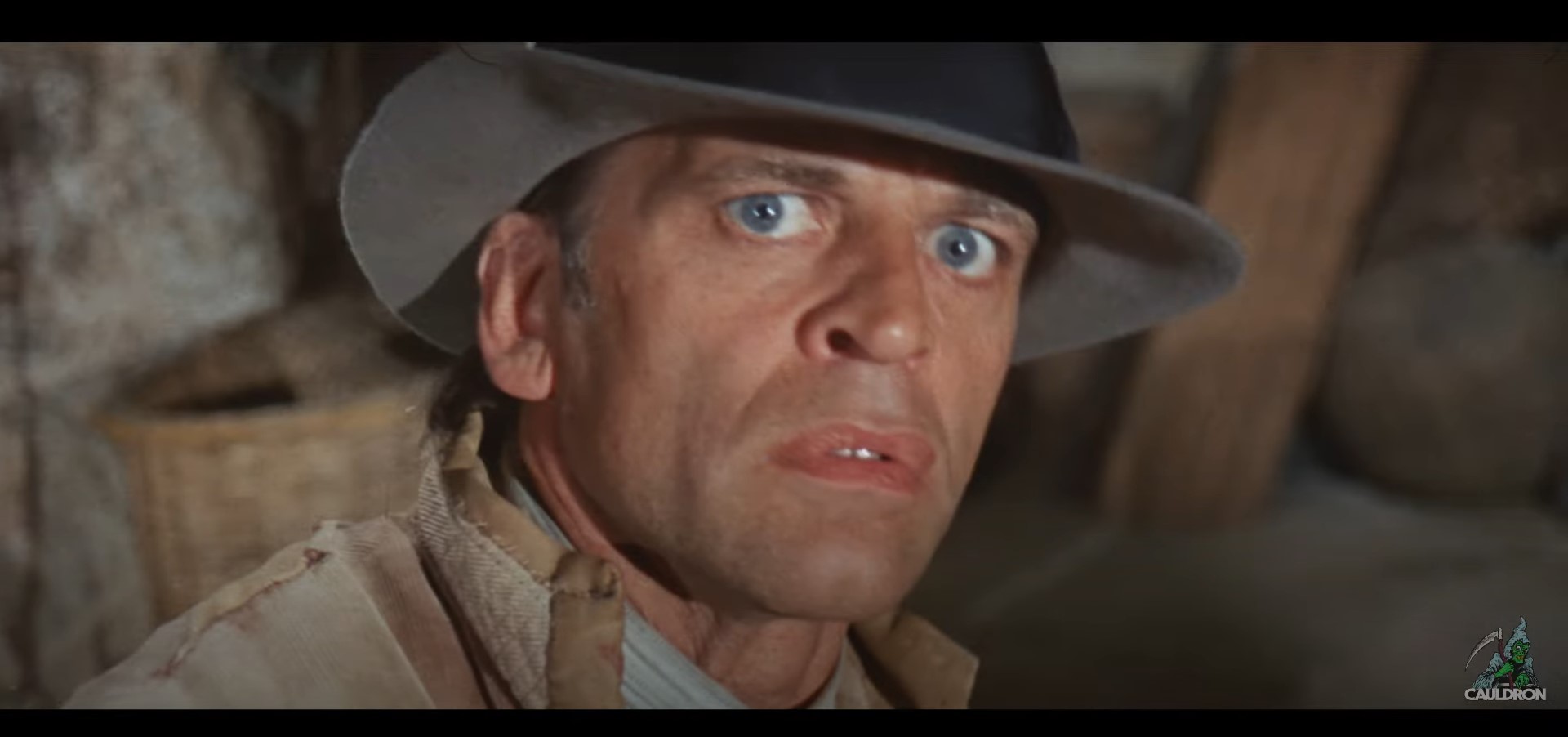
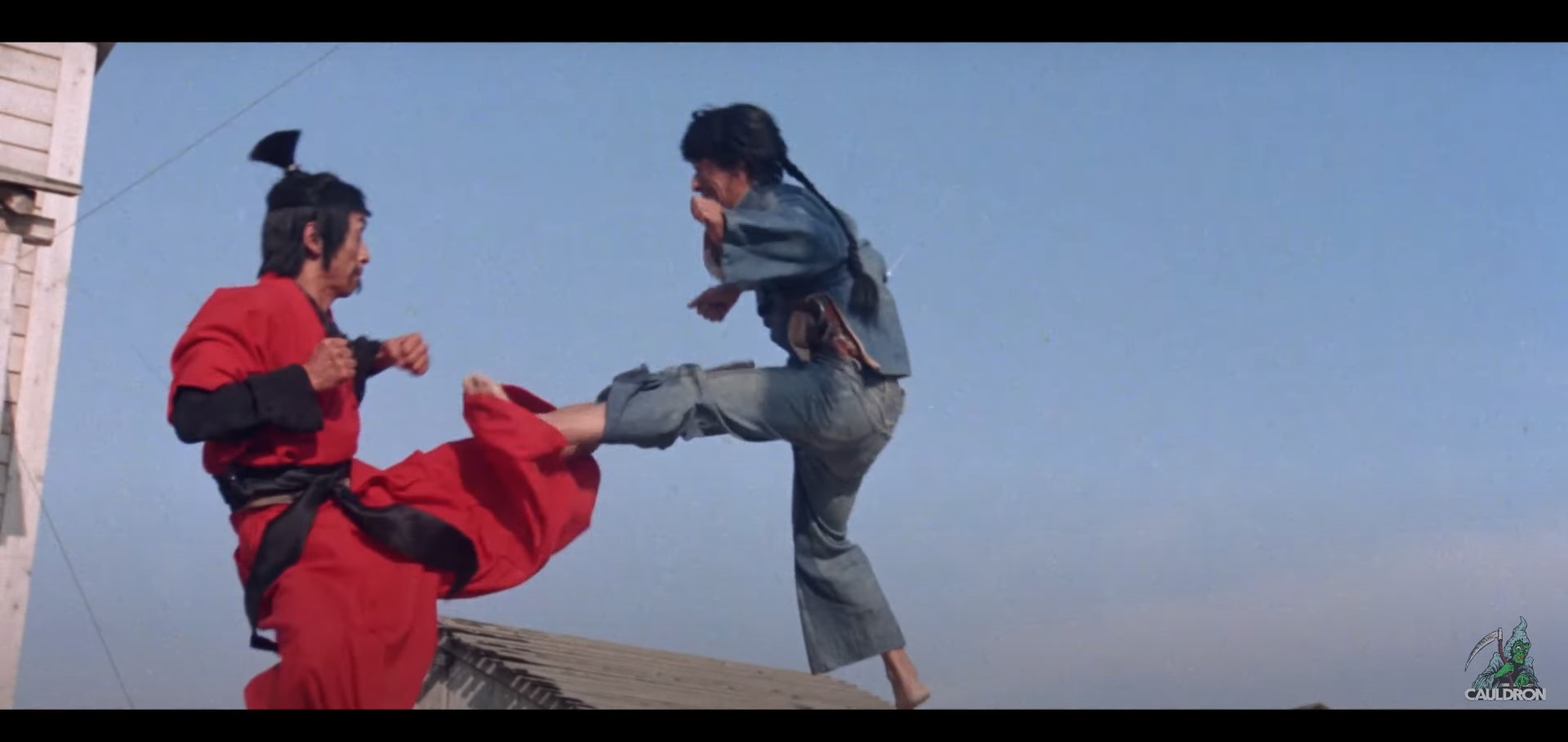
Leave it to the Italians to make a Western set in Texas and to have protagonist Chinese hero be played by a Japanese actor.  Performing under the stage name of Chen Lee, the Aichi, Japan born actor’s real name is Myoshin Hayakawa and he plays the role of Chin Hao, a nomadic Chinese immigrant, taught the rare fighting ways of an ancient martial arts, travels to America in hopes to reside in the American dream.  Lee’s certainly a presence on screen in his quiet and reserve composure but equally as self-assured and as competent to take on the worst-of-the-worst in the exploitative West where law has yet to reach it’s firm grasping hand.  Lee lands fight sequences with fierce finesse, though perhaps not on a Bruce Lee level, but does it so with his own distinct style of chopsocky flair with laws of physics breaking gliding through the air and tremendous accuracy in all areas of throwing weapons, even hyperbolizing his Yo-yo as a coconut splitting, head-cracking weapon.  When not wiggling his way out of impossible no-win situations with smarts and strength and when it comes to the interests of romantics, Chin comes to find solace being twisted into a paired fate with Mexican national Christina, played by Italian actress Carla Romanelli (“Lesbo”), after saving her father from being executed. As if destined to fall in love at first sight, the two outlanders are in each other’s embrace but before anything could be commutated by any sense of the term, head honcho rancher Mr. Spencer (Pierro Lulli, “Django Kill… If You Live, Shoot!”) hires out assassins to relieve him of a troublesome Shanghai Joe. The killers are just as colorful and individualizes as the titular character with quirky personalities and traits that make them indubitably daunting by their mere nicknames: Pedro, the Cannibal (Robert Hundar, “Cut-Throat Nine”), Burying Sam (Gordon Mitchell, “Evil Spawn”), Tricky the Gambler (Giacomo Rossi Stuart, “The Night Evelyn Came Out of Her Grave”), and Scalper Jack (Klaus Kinski, “Nosferatu the Vampyre). The eclectic bunch of Western-horror tropes level out Shanghai Joe’s uncanny abilities with their own big penchants for demise but the actors behind the characters also have bigger personalities, especially Kinski who is only in the film for a few scenes but is second billed in both before and after credits. “Shanghai Joe” fills out the cast with Dante Maggio, Andrea Aureli, George Wang, and another Japanese actor and martial arts master, Katsutoshi Mikuriya, as the showdown villain trained in the same ancient combat arts as Chin but turned his back against the teachings’ moral principles for his own greed.

Plot pointed by a series of bad case scenarios to showcase Shanghai Joe’s superior skillset as not only a fighter, but also an intelligent, almost con-like, mentalist as well as being good at just about everything else, the film is laced with repetitive derogatoriness from all races except white.  “Shanghai Joe’s” indelicacies, coupled with graphic, moderately bloodied violence, adds to the laundry list of idiosyncrasies of this unique old West spectacle.  The Caiano and team’s scripted narrative exacts the epitome of the label the Wild West where the unexplored, uncultured, and uncivilized country gives way to lawlessness and opportunity, especially the latter at the expense of others.  Joe becomes a beacon of moral hope, a foreigner who seeks, by way of a semi forced hand, to correct the system from within using his rare training only as a position of defensiveness or to right a terrible injustice.  Caiano has the eye to make a legitimate Italian spaghetti western that hits all the hallmarks and the director can also fashion a two-prong narrative with a unified purpose that builds up the hero first with a series of outlaw confrontations before immersing him into a rigorous roughhouse recruited by the rotten rancher.  While each face-off spars differently, Caiano letting the actors build upon and have fun in their villainy, the ultimately take the place of the tip of the spear antagonist, rancher Stanley Spencer, who doesn’t get what’s owed him by the roll of the end credits.  The high-flying combat wires, that you can plainly see during the air time fight sequences, and the personal and frame stylistic choices of the actors and Caiano tend to distract viewers from the unfinished business, concluding on a satisfactory note that what we just experienced was felicitously violent, engrossingly entertainable with appealing characters, and just waggish enough to provide levity amongst the harsh racism and the aforesaid brutality. 

“Shanghai Joe” is a must-have, must-see Italian Western for the subgenre aficionado and, luckily, Cauldron Films delivers the 1973 film onto Blu-ray for the first time ever in North America. The AVC encoded BD50 is presented in high definition, 1080p, with a widescreen aspect ratio of 2.35:1 of a 2K restoration scan from the original 35mm negative. Cauldron Films’ restoration is a labor of love for an atypical western of the obscure nature with a generous tactile intensification to bring the warm dust of the tumbleweed West down upon the anomalist Asian in a blue Tang suit and pants with a conical hat. A few and very faint scratches are the only issues observed that come and go as quickly as they came, but the there’s a nice richness to the coloring, a natural grain, and zero compression issues or unnecessary enhancements detected. The DTS-HD Master Audio 2.0 mono comes in two options – An English dub and an Italian dub. Preferably, I went with the English dub over the Italian despite “Shanghai Joe” being an Italian production. For one, Myoshin Hayakawa spoke English which you can tell by reading his lips so the English track paired better. Secondly, the Italian track is quite orotund to the point of losing some minor ambient detail as well as not feeling to be a part of the whole package team. Slight hissing at times during dialogued scenes but the clarity comes through with the decent dub pronunciations and the chopsocky ài yas are often repeated in the same audio tone and level in every evasive or attack flight by Joe but is not ostentatiously annoying. “Marquis de Sade Justine’s” Bruno Nicolai and his twangy score, channeling his best Ennio Morricone, has great purpose as “Shanghai Joe’s” main theme that rowels up and shapes Joe’s hero role. English and English SDH subtitles are available. The special features include an interview with Master Katsutoshi Mikuriya on how he was approached for the role and the martial artists also discusses the fight sequences in Samurai Spirit, film historian Eric Zaldivar puts together a visual essay with the topic East Meets West: Italian Style, an audio commentary by Mike Hauss from “The Spaghetti Western Digest,” the original trailer, and an image gallery. The physical portions of the release include a translucent Blu-ray snapper with a reversible cover art featuring two stylishly illustrative posters in contrast to the simple disc art of the red “Shanghai Joe” title set upon a black background. The early 70’s feature comes not rated, has a runtime of 98 minutes, and is region A locked. “Shanghai Joe’s” singularity scores high on the limited East meets West subgenre novelty but certainly aces as a versatile Kung-fu period piece with ridiculously good fight scenes, a handful of callously charming characters, and a disparaged hero, who embodies the good in all of us, you can gladly cheer for from beginning to end.

East Doesn’t Just Meet the West, It Kicks It’s Ass in “Shanghai Joe!”

The Death of a Daughter Leads Down to a Psychological Path of EVIL! “The Haunting of Julia” reviewed! (Imprint / Blu-ray)

Limited Edition of “The Haunting of Julia” Available at Amazon.com!

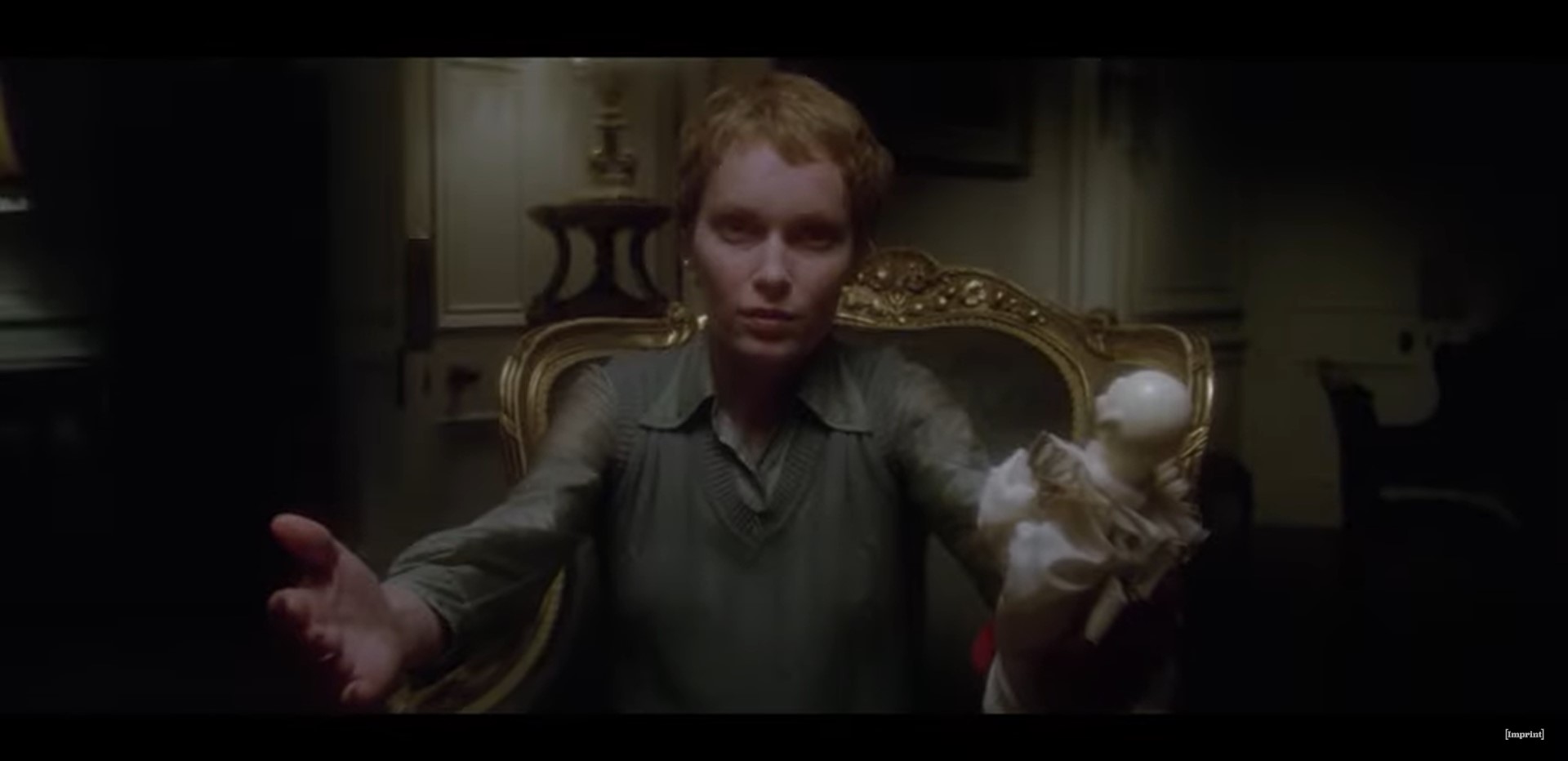
This morning was like any other as the Julia rustles up breakfast for her all-business husband Magnus and their lively vivacious daughter Kate, but when Kate violent chokes on a piece of apple and Julie performs a bloody, untried tracheotomy in a state of panic in order to save her daughter’s life, their lives are forever changed as Katie dies in Julia’s arms. For weeks, Julia’s melancholic depression commits her to hospital care. When she’s ready for release per the Doctor’s recommendation, Julia avoids returning to Magnus as their relationship was never a mutually loving one but rather a normal route connected by the presence of their daughter Kate. In order to restart her life, Julia separates from a controlling Magnus and purchases a magnificent London house only to then be plagued by ghostly occurrences she suspects is the work of her late daughter. What Julia comes to find out is the troubling history of her newfound home.

Mia Farrow solidified herself as a genre actress by starring in the archetype for films revolving around the prince of darkness, Satan, in 1968 with “Rosemary’s Baby.”  Unlikely seeing herself as a prominent woman of a notable rite horror, Farrow quickly understood her value in the genre as a complex female lead in the unsettling and gothic protuberance atmosphere style.  Nearly a decade later, Farrow stars in the Richard Loncraine directed “The Haunting of Julia,” similar only to the menacing supernatural child component but digs deeper in manipulative complacency, psychological guilt, and of that distorted reality created by the stout motherhood connection.  The “Slade of Flame” director set his sights off of Rock’N’Roll inspired dramas around the ugliness of the music industry and onto the filmic adaptation of the Peter Straub novel “Julia,” penned by the Dave Humphries and “Xtro” trilogy director Harry Bromley Davenport.  The joint United Kingdom and Canadian production, titled originally as “Full Circle” in the UK, is produced by Peter Fetterman (“The Exorcism of Hugh”), under Fetterman Productions, and Alfred Pariser (“Shivers”) of the Canadian Film Development Corporation. 

Mia Farrow’s distinct reactions and acting style very much engulfs the majority of horror experienced in “The Haunting of Julia,” as well as exhibited in “Rosemary’s Baby.”  The glassy eyed, long stares, the frightened, coiled emotions that swirl seemingly out of control, and the switch-gear ability to be strong and compliant in tense-riddled situations that just only involve herself in the scene.  While “Rosemary’s Baby’ and “The Haunting of Julia” may exact the same gothic aperture for child-themed horror and both are adapted literary works, “The Haunting of Julia” unfolds not in the anticipating of child birth but rather postmortem with the aftermath affliction of a child’s sudden and terrible demise that occurred in the frantic mother’s misguided embrace to take a knife right to her child’s jugular in hopes of dislodging an air denying obstruction.  This opening scene shocks us right into a grim framework that simultaneously divides trust and empathy for Julia as circumstances unveil what we might suspect all along, that Julia’s mental health suffered immensely.  What pushes Julia into undue stress is her controlling, dispassionate husband Magnus. Played by “Black Christmas’s” Keir Dullea.  Dullea pulls off the unsympathetic impassive father who just lost a child and can’t see the underlying psychological unrest his wife suffers.  In short, Magnus attempts to gatekeep Julia’s damaged psyche by trying to strong arm her back into normalcy, even going as far as manipulating Julia and his own sister Lily (Jill Bennett, “The Skull”) into slipping his foot into the door with a wife who fled from his grasp as soon as released from the hospital for essentially shutting down after their daughter’s death.  That toxic pressure is coupled with the seemingly unnatural incidences in her new home that clash her old life, chained to an unconsciously broken family, with her new life that seeks to decompress from a pair of diverse traumas.  “The Haunting of Julia” rounds out the cast with Tom Conti (“Blind Revenge”), Mary Morris (“Prison Without Bars”), Anna Wing (“Xtro”), Pauline Jameson (“Night Watch”), Peter Sallis (“Frankenstein:  The True Story”), Susan Porrett (“Plunkett & Macleane), Edward Hardwicke (“Venom”), and Sophie Ward (“Book of Blood”).

More or less forgotten by U.S. audiences due to no fault of the film’s own acclamatory measure or the audiences willing participation, the international produced “The Haunting of Julia” wasn’t publicized in the U.S. despite the two American leads – Mia Farrow and Keir Dullea.  Richard Loncraine’s film has incredible merit to the idea of a mother’s loss within the construct of gothic horror, which, in another aspect of unfathomable irony, resembled more closely to the American gothic style of the supernatural sequestered dark house.  Yet, this house is in London, wedged in like row homes, but as mentioned numerous times in the film, the house has distinction and grandeur that overlooks the buried ghostly history of the previous owners.  Julia absorbs the stories, filters through them, and comes to believe her own daughter is either trying to reach out to her or is hellbent on revenge for the amateur hour tracheotomy.  Loncraine does the phenomenal job of shocking our core with the early choking death scene of Julia’s daughter but once that dust settles, the pacing becomes more rhythmic to the point of building, slowly, Julia’s encounters with unknown forces that, at first, are just seemingly bizarre happenstances of left on bedroom plug-in radiators and playground visions of a girl that resembles her daughter cutting up another kid’s pet turtle.  These events play into their evident conspicuousness to push audiences deep into Julia’s mysterious milieu, officially sealing something isn’t right with the clairvoyant Ms. Flood’s scarred-screaming vision of a bloody child.  Julie become engrossed into learning the truth, eager to determine if that child is her late daughter and is fed tidbits of the house’s history that not only continues her own investigation but other research into other house tragedies that fork-split her presumptions.  As all this noise tornadoes around Julia, the stories, the occurrences, the deaths, viewers will never deduce to a reason closer to home, to Julia herself, until possibly too late at the end with a grisly open-ended finale that what Julia has been experience may have been done at her own forlorn hand. 

Atmospherically sound, undoubtedly creepy, and spearheaded by strong performances, “The Haunting of Julia” is the unspoken heroine of late 1970s supernatural horror – until now.  Imprint and Via Vision of Australia release a limited edition, high definition 1080p, 2-disc Blu-ray set with an AVC encoded BD50 of a new 4K scan transfer of the original 35mm negative. Presented in an anamorphic widescreen 2.35:1, the 4K scan is super sharp with virtually no compression issues on the formatted storage. Blacks, and negative spaces in general, are rich and void, despite Peter Hannan’s low-contrast and hazy surreal veneer that definitely plays into a psychotronic dreaminess. The resolution goes unaltered, and the natural grain maintains the original theatrical presentation for a revered 4k transfer. The English LPCM 2.0 mono track mix audibly delineates a viable one input split to make the dialogue and all other tracks comprehendible. Despite some slight here and there hissing, dialogue is amped up nicely for better resolved results that still remains mingled with the ambience in an all for one, one for all audio format. “Space Trucker’s” Colin Towns’s insidious and distinctly composed soundtrack reaches into the recesses of soul and strikes at the very nerve of fear with an unsettling score, perfectly suited for a mother drowning in the pitfalls of a supernatural sanctum. Optional English Hard-of-Hearing subtitles are available. The first disc special features include two audio commentaries – one with director Richard Loncraine and Simon Fitzjohn and the second, brand new, commentary with authors Jonathan Rigby and Kevin Lyons, new interviews with composer Colin Towns Breaking the Circle, cinematographer Peter Hannan Framing the Circle, and Hugh Harlow Joining the Circle, a new video essay by film historian Kat Ellinger Motherhood & Madness: Mia Farrow and the Female Gothic, the original trailer, and an option to play the film with either “The Haunting of Julia” or “Full Circle” opening title. The second disc is a compact disc of Colin Town’s 11-track score featuring 20 minutes of previously unheard music out of 60:52 of music. The limited-edition set comes with a neat lenticular cover on front of the hard box of what we assume is Julia’s ghost glaring at you from all angles as her eyes follow you. Inside is a clear Blu-ray snapper that’s a little thicker than your traditional snapper and comes with a built-in secondary disc holder. The cover art is simply Mia Farrow cowering outside the bathroom door but the reversible cover displays an original “Full Circle” poster as the front image. The disc arts are illustrative and compositions with the feature presentation disc the same as hard box lenticular without it being lenticular and CD pressed with Mia Farrow’s face in the background and a child’s cymbal banging toy in the foreground. Also in the hard box is a 44-page booklet feature an historical background essay by critic/writer Sean Hogan that has black and white and color photos and various poster art. The film, which comes in as Imprint catalogue # 218, runs at 97 minutes, is unrated, and, is assumed, for region A playback as it’s an Australian release – there is no indication on the package. “The Haunting of Julia” is Mia Farrow’s shining, yet lost effort post Roman Polanksi and is a remarkable look at subtle disconnection from extreme guilt when in every corner, every sign, is thought to be about your lost child.

Limited Edition of “The Haunting of Julia” Available at Amazon.com!


Is He an EVIL Vampire or a Just a Disturbed Young Man? “Martin” reviewed! (Second Sight / 4K UHD & Blu-ray)

Note:  Screen Caps do not reflect the Second Sight's A/V on this release.

“Martin” Limited Edition Second Sight Release Available at Amazon.com! 

Martin, a young man from Indianapolis and upon recently lost his mother, travels by train to Braddock, Pennsylvania where he’s greeted by his elderly cousin Cuda, an old world believer that Martin has been selectively plagued by the family curse of vampirism and will take Martin in under his roof to cleanse his soul of evil, even if that means destroying him.  Though he doesn’t believe in the vampiric superstitions and the movie depictions, Martin truly believes he’s an 84-year-old vampire and does kill young, beautiful women to intimately drink their blood.  Being reserved and shy gives Martin an advantage to observe his potential victims from afar after gaining employment working as a delivery boy out of his cousin’s shop.  Cuda’s granddaughter, Christina, believes her lonely cousin’s mental illness is being exacerbated by grandfather’s archaic and draconian beliefs, fostered by a family history based off tradition rather than science.  When Martin meets an interested housewife on one of his delivery runs, the need to consume blood trickles when sex enters the picture, but also induces slipups in his well-oiled drug and drink operation whenever the need to feed becomes too much.

By now, “Martin” needs no introduction.  The father of the flesh-eating zombie, George Romero, delivered a neo-realism take on the vampiric mythology nearly 50 years ago in 1977.  “Martin” became the writer-director’s first all around filmic success after being royally screwed by the Walter Reade Organization for having failed to copyright the prints on the trailblazing and timeless classic “Night of the Living Dead,” the reason why you see so many Tom, Dick, and Harry remakes, revisions, sequels, and such of the 1968 black-and-white film that introduced zombies as flesh eaters, and a pair of box office failures that kept Romer in severe debt until slipping into business bed with producer Richard P. Rubinstein, the associate producer for Romero’s “The Amusement Park” and who would collaborate with Romero as a producer for the next subsequent decade years.  Filmed on location in the societal and industrial crumbling Western Pennsylvania town of Braddock, “Martin” remains one of George Romero’s quintessential and provocative pieces of work outside The Living Dead series under Rubinstein and Romero’s The Laurel Group production company.

In the titular role is the introduction of John Amplas who was discovered by Romero after watching Amplas in a play and the entire lead principal was reworked to accommodate Amplas boyish youth.  Amplas is instrumental to Martin’s success in a handful of ways:  the Pittsburgh native knew how to properly slink in an unsuspecting manner, he also didn’t overbear scenes and costars with a larger-than-life presence and could dip into this awkwardly retrieved guilt for the premediated murder to fulfill a need that either’s supernatural or unnaturally mental.  Amplas could walk that thin line that keeps the audience wondering how much Martin says and does is actually true or a misconception because of mental illness and this is coupled nicely with Romero’s direction, splicing in black-and-white scenes of gothic-laden, theater-esque vampire flashbacks that could either be a delusional reality or a very real backstory to Marin’s cursed heritage.  Polarizing external family forces in his elderly cousin Cuda (Lincoln Maazel, “The Amusement Park”) and age akin cousin Christina (Christine Forrest) combat on an emotionally taut and verbal levels between their corresponding character qualities of superstition and science that parallel Martin’s eventual damnation or salvation.  The principal trio are tightly compacted to strain the dynamic with a back-and-forth debate over which truth is behind Martin’s troubles.  Romero pens a good case for both by never fleshing out a legitimate truth all the way through to the end; instead, it’s a battle of save Martin from himself who understands the problem, wants to deal with it, but barely takes up arms to combat or even face his issues.  Special F/X legend Tom Savini, pre-trademark inky black mustache and goatee, makes his debut role as Christina’s boyfriend Arthur who serves only as a device to pull reason away from the table in a conflicted measure to pressurize Christina’s capacity beyond the limits of also caring for herself.  Eventually, Christina has to make a decision and, ultimately, choses herself to save, leaving Martin to fend against a sternly superstitious and old world Cuda.  Sara Venable, Roger Caine (“Dracula Exotica”), Donaldo Soviero, Francine Middleton (“The Love-Thrill Murders”), and Elyane Nadeau make up the supporting cast.

George Romero, again, redefines, or in a more fittingly descriptive – revamps, classic horror villainy that replaces the supernatural element with a realistic approach to weave the very fabric of horror into possibility while still hinting at something beyond the limits of reason.  “There is no real magic.  There’s no real magic, ever!” says Martin about the theatrical stereotypes used to display vampires in attempt by Romero to disenchant us from the ideologized mythos, the habitual characteristics, and the physiognomies of what we consider to be a night bloodsucker.  During that scene between him and Cuda, the words are potently effective in disapproving myths about vampires, but the words are supported with fact as Martin casually debunks garlic, crosses, and sunlight as vampiric weaponry at the expense of humiliating and entertaining Cuda.  “Martin” is at the forefront of being an allegory for loneliness and is a driving reason for presumably the real vampire’s gruesome habit to slice open wrists and drink blood.  Martin only targets young, beautiful women and becomes intimate with them while they are limp under sedation.  When he meets an equally lonely Mrs. Santini, a depressed housewife on the verge of an emotional collapse, and the two embrace each other with comfort against what dispirits them; disinterested in stalking her, Martin’s need to kill dampens and Mrs. Santini unhappy marriage in nullified by the young who listens more than speaks.  Maturity and youth meld together in a moment of peace between them but their bond still shows micro fissures of incompatibility that puts doubts into Martin’s 84-year, carefully planned practice and also doesn’t save Mrs. Santini completely from her too-little-too-late despair.  Braddock, Pennsylvania, a small town sinking into the slumps of becoming forgotten, is a once industrious backdrop integrated as a metaphor for being a forsaken place where things go to die.  Martin is sent to Braddock to paradoxically be cared for by a cousin determined to destroy him because of a family curse that afflicts select generations in what can be perceived as butting of heads between the defiance of angsty youth versus the traditions of an older individual set in the world with their linear ways of thinking.  

As aforementioned, “Martin” is a cult classic from one of the most notable masters of horror and as a film, “Martin” can stand on its own two feet on any format.  However, with that being said, UK home entertainment distributor, Second Sight, celebrates this early George Romero razor-edged thriller with a definitive 3-disc, 4K and Blu-ray release jammed back with software and firmware bonus content that fans can really sink their teeth into for a lifetime.  The limited edition UHD and Blu-ray O-slip box presents a 4K and 2K scan and restoration of a 35mm duplicate negative (note:  not from the original 16mm source) that has been supervised and approved by director of photography Michael Gornick and presented in the Academy aspect ratio of 1.37:1.  Considering the blown duplicated source of a 16mm grade, the 4K UHD scan on the BD66 won’t live up to 4K potential, as some may expect.  There’s quite a bit of varying levels detail discernibility, some shots look better than others, but the overall restoration renders a better than it’s ever looked product with natural grain and damaged reduced to some blue stock flaring around the side and edges, especially during night scenes.  Shadows looked deeper than previous versions, meaning that tenebrism isn’t lost amongst a softer image but rather creates depth with the additional of better sharpened edges to outline objects between the light source  Some speckle debris filters through at times but not enough to cause major concern with the overall experience watching and enjoying the restoration that has HD enhanced grading to make blood that richer technicolor coral color used in my subsequent Romero “Living Dead” films up to “Day of the Dead.”  The Blu-ray’s 2K works just as well due to the scrappy source equipment of what the budget allowed, delivering a fine product of the best transposed transfer known to fan kind and beating out the Lionsgate’s warming grading with a cooler, more hardline detail and delineation picture. The massive release comes with three audio options – an English DTS-HD 5.1 surround sound, an English DTS-HD 2.0 stereo, and an English DTS-HD 1.0. Though Martin audiophiles will likely gravitate toward a multiple channel output, “Martin” is one of those select features that does better in a less-is-more return by not forcing the limited and stronger signals, such as the dialogue and Donald Rubenstein’s experimentally spiritual score, to encoding competition with the milieu ambient and boom recorded sound effects, that for the most part, are background support for the bigger, better one-two punch of clean, clear, and presently full dialogue and a consciously curated soundtrack to walk with Martin every step of his journey. There’s a pinch of popping and a low-emanating droning that very discreet and negligible that won’t affect the experience on bite…I mean bit. English SDH are optional. Bonus materials are what shape the Second Sight releases to be greatly desirable amongst fans as the company continues to produce high-quality encoded bonus features as well as carefully and professionally organized tangible items inside the box. Both 4K UHD and Blu-ray have the same encoded bonus features that include four audio commentaries of old and new. The two archived commentaries include George Romero, John Amplas, and Tom Savini in one set and the other with Romero, Savini, Richard P. Rubenstein, and Michael Gorrick. The new commentaries are with Kat Ellinger, editor-in-chief of Diabolique Magazine, and the second with the recently deceased film curator, Travis Crawford. A vintage 2004 documentary from the Lionsgate release is included in the set with remarks from Romero, Savini, Gorrick, Donald Rubenstein, and Christine Forrest along with a new documentary echoing much of the 2004 doc, in collaboration with Severin Films, with John Amplas, Michel Gorrick, and Tom Dubensky strolling through Braddock, which hasn’t seemingly changed from the depths of poverty, on a raining day recalling nearly every moment of production during principal photography. The new doc includes other insights from Forrest, Savini, Tony Buba, and Sarah Venable in what feels like a complete celebration and overview of their entire journey through Romero’s personal favorite film. Donald Rubenstein also has a new interview discussing his score and meeting and working with Romero on a positive level. The disc features round out with one of Tony Buba’s short films “J. Roy – New and Used Furniture” revolving around the town of Braddock and the trailer, TV and radio spots. The third disc is the CD form of Donald Rubenstein’s soundtrack laid out in 22 distinct musical numbers. The limited-edition exclusive contents include a rigid O-slip case with a simple, yet effective sterile while and red font color contrast with MADE IN U.S.A. augmented razor blood with vampire teeth and blood dripping from the bottom right corner and a blood dripping cross squarely centered on the back. Inside the slipcase, a thick 104-paged color booklet with new in-depth essays and insights from Daniel Bird, Miranda Corcoran, Heather Drain, Kat Ellinger, Andrew Graves, Alexandra Heller-Nicholas, Elena Lazic, Stephen Thrower, Jon Towlson, Simon Ward, Tony Williams and an interview with Tony Buba by Travis Crawford. The booklet also contains colorized, behind-the-scenes photos of production and numerous one-sheets, promotion poster and ads, and a beautifully, expressionistic illustrated front and back cover. Adam Stothard illustrates 5 character lobby cards, including John Amplas’ Martin, Christine Forrest’s Christina, Tom Savini’s Arthur, Lincoln Maazel’s Cuda, and George Romero’s Father Howard. All 3 disc arts are the same as the front cover the release and contained a trifold, punch-lock case in reverse colors of the slipcase. The 4K UHD is region free but the Blu-ray is confirmed region locked B so you’ll need a region free or region B player. The runtime clocks in at 95 minutes and is certified 18 for sexualized violence and sexual threat. Second Sight must be a Disney fan with their monstrous beast of a limited edition that is also a thing of beauty; “Martin” deserves every square inch of this physical and digital display of expressionistic vampirism of underrated performances and from the mind’s eye of a dauntless George Romero, unafraid to take risks, show blood, and understand the human condition.

“Martin” Limited Edition Second Sight Release Available at Amazon.com!