Beer Can Stuff Boots Give EVIL a New Height! “The Lost” reviewed! (Ronin Flix / Blu-ray)

Click Here to Purchase “The Lost” on Blu-ray!

Sociopathic teen-adult Ray Pye guns down two young women he suspects are romantically involved with each other and wants to feel the thrill of the kill for the first time with his two friends, Jennifer and Tim, as frightened, reluctant witnesses and abettors to his heinous crime.  Four years later, police investigation can’t pinpoint Pye as the culprit when the only surviving victim succumbs to her wounds after being in a coma all this time.  Pye, the slicked haired, pathological liar and assistant manager of his mother’s motel, continues his nice boy act as he peddles drugs and tries to woo any girl into bed while having a firm, feared grip on best friend Tim and girlfriend Jennifer to keep them in line.  As Pye chases after new women that enter in his world, the police continue their unofficial investigation, waiting for Pye to slip up and make a mistake but as his manipulation backfires and things don’t go his way, Pye’s already unstable nature morphs into an all-in, serial killer rampage and kidnapping of the three prominent women that have recently challenged his masculinity.

A real down spiral of machoism and growing up out of the adolescent fantasy world, “The Lost” is the 2006, loosely based biopic thriller inspired by real-life serial killer, the Pied Piper of Tucson, Charles Schmid interpreted from the book of the same title by late horror novelist Jack Ketchum.  This part II of our serial killer film review coverage, following the Robert “Willy” Pickton Canadian murders inspiring “Pig Killer,” “The Lost” bring us back to American murderers and is the first solo feature run for writer-and-director Chris Sivertson.   The father-son duo Mike and Lucky McKee, the filmmakers behind “May” and “Roman” co-produce “The Lost” alongside Sivertson and Shelli Merrill under the production company banners of Silver Web Productions.

To play Ray Pye, the actor must incarnate being on the edge of principles and be crazed to the point of no return.   For Marc Senter, Ray Pye was a means to break from minor television roles and star as a leading man defying principal conventions in being the best bad guy he could cook up.  Senter, who went on to be in credited roles of “Wicked Lake,” “Cabin Fever 2:  Spring Fever,” and “Old Man,” will forever be seen as the crushed soda can-filled boot wearing and greaser veneered Ray Pye as the boyish-looking Colorado native brings the ferocity, the energy, and the killer instinct of a high-strung teen teetering the line of losing it all.  Senter’s approach rides on insecure masculinity of being a short man showing teeth to appear larger than life and exacts a screen perforating fear that holds friends Jennifer (Shay Aster, “Ernest Scared Stupid”) and Tim (Alex Frost, “Elephant”) in a tail-between-the-leg stasis of his end all, be all despot presence.  Aside from the Ray Pye storyline, a trio of sub-stories add more development and substance to other principal characters, such as Tim and Jennifer hooking up dictated by them inching out from under Ray Pye’s reach, a washed out midlife Detective (Ed Lauter, “Cujo”), who was formerly on the Ray Pye investigation, and his romantic involvement with a Pye pursuant Sally (Megan Henning, “I Know Who Killed Me”), who is approx. 40-years the Detective’s junior that creates an intriguing, struggling dichotomy between love and appearance, and with the alluring Katherine Wallace (Full Moon regular actress Robin Sydney, “Evil Bong” franchise) in a love-hate, obstinate relationship with an absent psychotic mother and her fondness for Ray in who on some levels mirrors the same qualities as Katherine’s mother.  Michael Bowen (“Deadgirl”), Dee Wallace (“Cujo”), Tom Ayers (“Bloody Bridget”), Cynthia Cervini, Richard Riehle (“3 From Hell”), and to compound skin scenes, soft-core erotic starlets Erin Brown (aka Misty Mundae, “An Erotic Werewolf in London”), and Elise Larocca (“Blood for the Muse”) co-star.

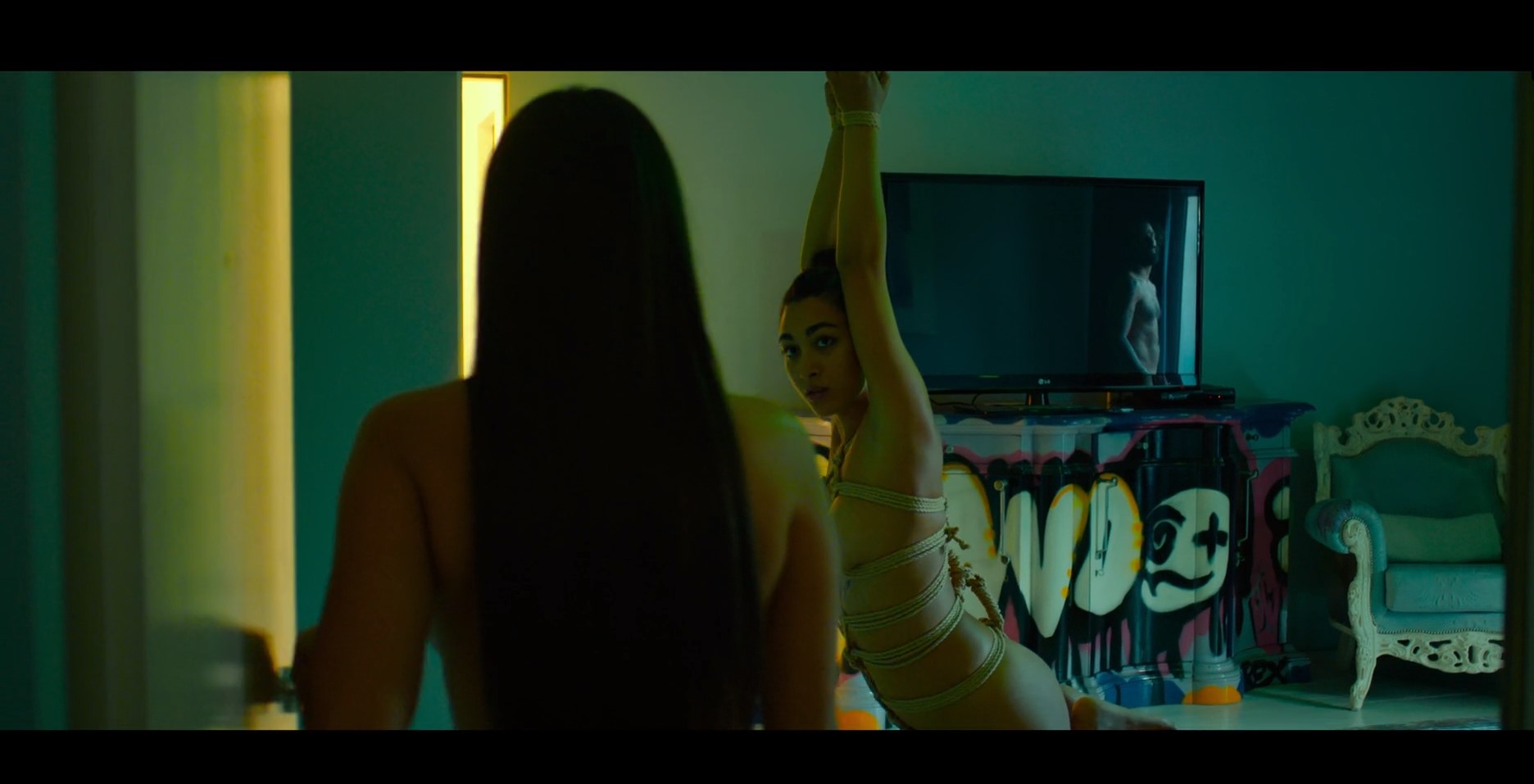
What first struck me about Sivertson’s “The Lost” is it doesn’t define a period in time.  Charles Schmid’s reign of terror coursed the span of a year in the mid-to-late 60s, which follow’s Ketchum’s timeline in the novel.  Yet, the books’ characters follow the movie’s scheme without clearly stating the years, stringing the connection between the three like step-relationships.  Pye’s greaser finish, drive-in burger joints, boxy-rectangle cars and VW Beetles, and a motel as one of the principal shooting locations float in the very essence of the title itself, as a Lost in time story that stretches the decades.  What’s not lost is the aggressive sexual nature that drives the nihilistic Ray Pye’s bedding scorecard by feigned compassion and romance; yet there’s plenty depth behind his sleazy cockiness that warrants more discussion into his problematic psyche, such as how he’s able to charm the pants of these women and how he’s able to keep those who fear him, close to him.  Sivertson’s unafraid to make a statement in “The Lost’s” sexuality with plenty of skin from a number of the principal actresses to the simulated sexual acts in and out the vein of style and in and out of Pye’s sociopathic tantrums that’s more self-doubting bullying than actual power.  At a young age, Pye aims high for machohood by the misguided dealings of the cards he’s dealt, augmenting himself with shoe stuffers and makeup to make him taller and more attractive.  “The Lost” is very much a deconstruction of masculinity mania in the way we see Pye’s worlds comes crashing down and he loses everything when his guard is down by one swift moment of real, tangible love with Katherine and the only way to gain back control, like a hissy-fitting baby, is to go berserk in a if I can’t have it, nobody will tear. 

Evil never looked so dapper as “The Lost” receives a new 2K remaster produced from a 4K scan of the original camera negative by the boutique label Ronin Flix.  The AVC encoded, 1080p, high-definition BD50 contains the presented anamorphic widescreen 2.35:1 film with pixel-by-pixel coherence exacting extensive details and chromatic fidelity.  What stuck out the most from the 4K scan was the night scenes blanked in near sheer darkness with minimal direction illumination from natural and unnatural lighting in a positive, well, light.  In night forest scenes, especially around the lake, objects are lost in the void of shadows, tenebrously covered in obscurity, and that’s accomplished and accentuated in the opening moments of Ray Pye’s debut double murder, creating a better illusion of reality rather than creating an illusion out of often folly fabrication of dark blue gels or immense random key lighting.  Textures are strong through, greatly defined by the delineating of edges on striking clothing, cars, and the amount of skin displayed.  Two lossless English audio options are available to select from:  a 5.1 DTS-HD Master Audio and a 2.0 Stereo DTS-HD Master Audio.  “The Lost’s” audio/video design produces a high fidelity and contains a blend of unprocessed and stylistic expression that stretch the audio range depending on the current Ray Pye Richter scaled mood.  Pye’s occasional rapid-fire rants are unmistakable and clear as the decoding unfolds every syllable without sounding seamless or garbled.  English SDH are optionally available.  Ronin Flix delivers new and previously owned special features.  New content like an audio commentary with director Chris Sivertson and Lucky Mckee serve as a trip down memory lane with new, pondered upon insights and recalled tales and new individualized interviews with principal actors Marc Senter, Robin Sydney, and Shay Astar in regard to auditioning, prepping for the role, and recalling their experience on the shoot expand more into “The Lost’s” attention and what it took to illuminate focus on the Pied Piper of Tucson.  A second, archival commentary with writer Monica O’Rourke moderating conversation with late novelist Jack Ketchum, audition tapes, outtakes, storyboard sequence, and the original “Jack and Jill” short film directed by Chris Sivertson fill out the special features.  A new front cover design, replacing the bland bullet hole-riddled and blood-puddled eyes cover on the Anchor Bay DVD and Blu-ray, on the trio of cardboard O-slipcover, translucent Blu-ray Amaray case, and disc art spruces up the Ronin Flix’s lifted release with a sense of hep threads and fatal knuckle sandwiches.; however, that’s about the extent of its physical beauty and tangible adjuncts.  The region free Blu-ray comes not rated and has a runtime of 119 minutes.  Marc Senter’s tour de force burns rubber, a ferocity of friction and perpetual anger sculps one of the best true-to-life silver screen villains from the last two decades. 

Click Here to Purchase “The Lost” on Blu-ray!

Travel to Mexico, EVIL Said. Cure my Cancer, EVIL Said. Let the Game Begin, I Said. “Saw X” reviewed! (Lionsgate / Blu-ray)

Become A Part of the Game in “Saw X” on 4k/Bluray/DVD

Having a finished a trial by fire game of rebirthing the morally bankrupt that has coined him notoriety as the Jigsaw Killer, a terminal ill John Kramer ceaselessly searches a cure in order to continue his work.  Meeting a fellow cancer therapy group member outside of session provides hope when John learns a radical new and unauthorized surgery and serum cocktail that is seemingly a miracle cure for cancer.  His desperation led inquiry lands him in Mexico where he meets a team of specialists prepping his next day surgery and just when post-surgery John Kramer believes he’s beaten cancer, Kramer realizes he’s been a victim of fraud that’s exploits the most vulnerable and desperate ill-fated people.  Now, a new game begins to test the con artists on how far they will go to live. 

Six years has passed since the last “Saw” sequel was released with the Chris Rock helmed tangent spinoff “Spiral” and 13 years has passed since the last time John Kramer was a part of the game in “Saw 3D.”  2023 marked the return of to the basics with no divergent story from the Book of Saw or fleeting three-dimensional gimmicks to feign tangible blood and body parts in the tenth feature length film of the franchise known as “Saw X.”  The original story-lined sequel also reengages director of “Saw VI” and “Saw 3D” Kevin Greutert to pick up where he left off with a prequel that explores more of Kramer’s more vulnerable side as well as explore the time in between “Saw” and “Saw II” and it’s now unveiled characters who were then shrouded from view, working side-by-side with John Kramer, many years ago.  The writing duo of Peter Goldfinger and Josh Stolberg return from to the franchise after “Jigsaw” and “Spiral” to pen the script for the Twisted Pictures and Liongsgate Production with franchise decision making team of Mark Burg and Oren Koules producing.

So what has Tobin Bell, the face and persona creator behind John Kramer, been up to since 2017’s “Jigsaw?”  Well, let’s just say the now 81-year-old actor has starred in a string of under-the-radar, non-theatrical films that can’t seem to break him out of his bread-and-buttered pigeonhole as a man testing people’s will to overcome by severe measure.  The past year’s dysfunctional family rollercoaster “Sleep No More,” Darren Lynn Bousman’s creepy Saudi Arabian horror “The Cello,” and even a stint of various roles through “The Flash” television series over the years in between have barely moved the needle amongst audiences despite the projects critical and public acclaim.  While it’s a shame Bell receives little recognition for other projects, seeing him return to the role that made him a household name amongst horror fans is a sign of relief knowing Tobin Bell can still draw in a crowd, stepping almost seemingly effortless into John Kramer’s shoes of controversial convictions and never losing a step to bring a cunning and complex antihero back to the big screen with more blood on this hands, literally.  Kramer is not the only familiar to return as Amanda Young comes into the fray prior to her coming out in – ***Spoiler Alert***- “Saw II.”  Shawnee Smith reprises the role donning an unflattering pixie cut that’s even shorter than her “Saw II” hairdo, which keeps true to the timeline, but what plagues both Bell and Smith for a prequel is father time that rears his ugly head on both actors who are not getting any younger to play supposedly younger versions of their characters from which they last portrayed them.  This applies especially to Shawnee Smith who resembles very little of herself from her last appearance in a “Saw” film.  Yet, this doesn’t stop both Bell and Smith to re-embrace their roles and add more layers to their already nuanced identities as John and Amanda ensnares new game players South of the border in Gabriela (Renata Vaca), Valentina (Paulette Hernandez, “My Demons Never Swore Solitude”), Mateo (Octavio Hinojosa, “Come Play With Me”), and Cecilia Pederson (Synnøve Macody Lund, “Haunted”). ”Saw X” co-stars Steven Brand (“Mayhem”), Michael Beach (“Deep Blue Sea 2”), Costas Mandylor, Joshua Okamoto, and Jorge Briseño.

What most will come to realize about “Saw X’s” series placement in time is the foreshadowed knowledge of when and where John Kramer and Amanda Young meet their demise. What can the writers and producers add to a prequel that will enthrall and cause apprehension knowing that the two biggest players in “Saw’s” franchise ultimately live at the end of this intermittent story that mainly surrounds Kramer’s desperation for a cancer cure? To enthrall is simple by adding new bad apples into new escapable blood-drawing, death-dealing traps inside a humanizing John Kramer footnote outside the core city games that intertwine, interweave, and intersect from the very first Saw to the very last Saw in 3D. To surface apprehension for our foretold survivors would take some creative effort. In comes Jorge Briseño playing an adolescent Mexican boy innocent in all of this die-cathlon caught in the wrong place at the wrong time. While the boy, Carlos, adds an X-factor to the dilemma, the fate unknown is relatively short-lived as the boy only becomes a noteworthy shake up of emotional twists between the game’s masterminds near the very tail end, leaving only the wills to struggle painfully as they face themselves in forced contrition. The games Kramer quickly rigs up after the disbelief of being scammed are as industrial medieval and terrifyingly tense as any other “Saw” but unlike the other installments where Jigsaw has planned and engineered meticulously each game, these new set of trap trials are quickly welded and mechanically put together in a blink of an eye, or at least it seems, with no real show for the time put into the turnaround from fraud to fear and that lack of attention can seriously dull “Saw’s” already serrated credibility. 

Saw X” arrives onto a 2-disc and digital combo set from Lionsgate home video.  The Blu-ray is an AVC encoded, high-definition 1080p, BD50 and the DVD is MPEG2 encoded, DVD9 and both formats present the film in a 1.85:1 widescreen.  Through the lens of franchise newcomer Nick Matthews, there’s a sense that the “Spoonful of Sugar” director of photography tries to reproduce some of the style of the first six of David A. Armstrong’s steely industrial color palette but emulating more of his own personal choices to match the out-of-the-city harsh blues and greys for more warmer tones, like mustard yellow, but those progressive hues establish in the second half after really teetering on a natural lens and a harsh saturating tints, such as when John Kramer enters the surgical cube and is bathed in a navy blue hue that eliminates details entirely but only for that tinted moment.  For the rest of the picture, details are grisly good with lots of medium-to-extreme closeups to detail out exposed anatomy of what makes “Saw” rotate so well.  Charlie Clouser returns to score the tenth film on an English Dolby Atmos mix with Dolby Digital TrueHD 7.1 and 5.1 Spanish and French options available.  A really potent and powerful recreation of fidelity scores well for Clouser who recaptures the original crescendo of the final twist while keeping an industrial discordance floating behind the storyline with rising volume during trap countdowns that never interferences with the range of sounds or depth between each of the character sand the traps and the characters.  Dialogue is clean as a whistle and balances perfectly on that serrated slack line of a chaotic countdown to one’s own demise.  English descriptive audio and English SDH are available with regular English, Spanish, and French subtitles also included.  Special features include an audio commentary by director Kevin Greutert, cinematographer Nick Matthews, and production designer Anthony Stabley, a Reawakening documentary that discusses how the prequel was actually “Saw 9” but was shelved for the Chris Rock produced spin-off and how the sequel evolves since it’s rejuvenation years later, there’s a drawing inspiration look into bringing the series to Mexico and all its unique culture and mythos, makeup department trap tests, deleted scenes surrounding more depth between Kramer and Amanda, and the theatrical trailer. On the outside features, a slightly embossed titled and eye-sucking trap victim grace the rigid cardboard O-slipcover, keeping true to most of the “Saw” theme traps in home video posters and home video art, with the traditional Amaray cover art sporting the same design without the embossing. Along with the digital code insert, the two discs are housed separated on each side of the case, both pressed with the same Aztecan-inspired circular saw. The Lionsgate release is locked on region A North American playback with a runtime of 118-minutes and is rated R for sequences of grisly bloody violence and torture, language, and some drug use. ”Saw X” breaks many of its own traits like set not in a city and doesn’t have an incorporated investigation parallel but, in the same breath, feels very much like a back to basics, not only in proximity to the original “Saw” story and with the return of familiar faces and characters, but also in John Kramer’s preadolescence in figuring out and shaping himself to what he would become as the notorious Jigsaw Killer. 

Become A Part of the Game in “Saw X” on 4k/Bluray/DVD

EVIL Wants Your Brain Fluid! “Vile” reviewed! (MVD Visual / Blu-ray)

These “Vile” Atrocities are now on Blu-ray!

What was supposed to be a relaxing camping trip amongst friends has turned into a torturous nightmare when four friends wake up to find themselves in the company of five strangers in a basement and learn they’ve all been kidnapped for a purpose.  Behind the illicit arrangement is an illegal drug manufacture whose formula is produced from the byproduct of the brain’s fear and pain induced chemicals.  With a 22-hour clock counting down from the first act of violence, the puzzled lot must fill a 100% quota before time runs out in order to be set free from the reinforced house they awoke in and the only way to do that is by hurting each other to fill the vials connected to the backside of their heads.  Framing a plan, a vote proceeds a numerical order of voluntary participation of torture, each contributing a fraction of the pain percentage needed to survive and be free, but egos, fears, and secrets cost them more than a few moments of unbearable pain.   

Before becoming Paramount Network’s golden nugget for creating the more recent acclaimed American television drama with shows like “Yellowstone,” “1883,” “1923,” “Tulsa King,” and “Special Ops:  Lioness,” Taylor Sheridan had first directed a small-time horror movie over ten years ago in 2011.  The title “Vile,” a play on words used to not only describe the cruel atrocities done from one character to another but also alluding to vial containers used to fill up with fear and pain fluid, is the brainchild of scriptwriters Eric Beck and Rob Kowsaluk.  Certainly, a different tone compared to hardnosed westerners and high-profile casted thrillers, Sheridan filmmaking roots from “Vile” mold his next stage directions of cruel character dynamics.  Beck produces the feature with Noël K. Cohan (“Into the Void”), Tina Pavlides (“100,000 Zombie Heads”), and Kelly Andrea Rubin (“Skeeter”) with presumably father Larry Beck footing some of the funding under the LLC of Vile Entertainment in association with Bosque Ranch Productions and Signature Entertainment.

An ensemble cast thrusts strangers into the throes of do-or-die but amongst the cast of characters, a delicate introduction of a core four put forth the wheels in motion of the sick extraction technique all in the name of drugs and profit.  The preliminary meet-and-greet of Nick (Eric Beck), Tayler (April Matson, “Primrose Lane”), Tony (Akeem Smith, “Holla II”), and Kai (Elisha Skorman) sets up love interests, Tayler’s secret pregnancy, Kai’s drug problem, and a playfully semi-morbid game of would you rather that foreshadows another choice pick of torture later the group has to contend with when joined with the other five test subjects – a dark and cryptic Greg (Rob Kirkland), a subtly anxious Julian (Ian Bohen, “5 Souls”), a selfish hothead Tara (Maya Hazen, “Shrooms”), a young and frightened Lisa (Heidi Mueller) and a level-headed Sam (Greg Cipes, “Deep Dark Canyon”). The variety of character provides varying shades of distrust, betrayal, and hope as factions form and convictions are about-faced, jostling those steadfast at first and solidifying principals for those teetering on the edge.  As whole, the cast works well together to provide adequate and satisfying suspicion as well as selling a particular attitude despite a couple of red herrings that are hidden really well within the framework. As individuals, lots of the dialogue pertains to self-explanatory states of the obvious that stick out like a sore thumb of colloquial filler with a story set in one location with the same nine people for approx. an hour long. ”Vile’s” cast rounds out with McKenzie Westmore and the unmistakable Maria Olsen (“I Spit on Your Grave 2: Deja Vu”) in a procedure-nothing televised head. 

As much as I disfavor comparing one film to another outside of sequels, series, or franchises, “Vile’s” voice is lost as an individual. Seven years prior, James Wan and Leigh Whannell began what would become one of the biggest contemporary horror franchises with “Saw,” spanning sequels through two decades, and concluding, thus so far, with this past year’s “Saw X.” What does this have to do with “Vile?” ”Vile” follows much of the same formula Wan and Whannel concocted in the earlier 2000s with a very to-the-manual approach of “Saw’s” collaring of individuals, media announcing a timed-task, and the players of the game have to hurt themselves, or others, in order to be set free. Fundamentally different with “Vile” has more to do pure greed and profit at the expense of those unfortunate to be in the path of profiteers whereas “Saw” forces transgressors into rebirth through pain and suffering. ”Vile” is also not as explicitly graphic with much of the torturous violence done out of sight, off screen, or in a blink of an eye. Nevertheless, the intriguingly staid premise takes the human condition to the limit and steps across the line of no return of committing what is self-destructively necessary to survive. Beck and Kowsaluk tweak the formula by a narrow margin but the manner of how the narrative plays out distances “Vile” to almost unitary means. For example, “Saw” almost always had a dual storyline that eventually converges with a shocking twist-tie conclusion. ”Vile’s” straightforward with a singular storyline that isn’t dichotomized with a parallel storyline, a periodization storyline, or any other type of storyline to be a crutch for the other, leaving audiences in the undivided present that’s an around-the-clock time crunch to live or die by the hands of themselves or at the mercy of others, and with a palpable enough twist that you’ll kick yourself in the chin for not predicting it ahead of time. 

“Vile” comes to Blu-ray from MVD Visual on the company’s Marquee Collection label. The AVC encoded, 1080p High-Definition, BD25 has the film presented in a widescreen 1.78:1 aspect ratio. Limited to a two-tone grading of steely blues and canary yellows, picture quality range has spasmodic bursts of interiority to agreeable presentations. More of the pre-ensnarement night scenes appear granulated by macroblocking, degrading the image to pre-high definition pixelated rate. Bitrate decoding jumps sporadically from mid-teens to mid-30Mbps, most likely due to an unstable data compression transfer. Compression appears better, though not flawless, later in the runtime with tighter contouring and a finer detail on a grungy, dirty, dilapidated house where the main set takes footing. The English Dolby Digital 5.1 and the uncompressed LCPM 2.0 are the available audio options, both of which lack commodious conviction with a suppressed volume. While the dialogue renders sufficiently with discernibility and clarity, much of the eye-averting torture sound design, the milieu audio, and even the rock-hard rock soundtrack retains an undeliberate lo-fi quality. English subtitles are optionally available. Special features include two deleted scenes that expand on more of the earlier character interactions, a behind-the-scene moment of director Taylor Sheridan mopping the kitchen set and singing, and the feature trailer plus other MVD Marquee Collection trailers. Tangible features include a cardboard O-slipcover, first pressings only, vaunting the nastiness to come and, again, appropriates a “Saw” cover with that nastiness of an extracted, bloody tooth in a pair of vice grip, a nod to the “Saw III” poster/home video art. The Amary case has reversible cover art with the original “Vile” artwork on the inside. The unrated, 88-minute MVD Marquee Collection feature has a region free playback. If “Saw” is deluxe imperial crab, then “Vile” is the suitable imitation equivalent with a steady pace of group-wrenching contrition and contempt that forgoes the games for straight up blunt force trauma. 

These “Vile” Atrocities are now on Blu-ray!

Playboy Discovers Vengeful EVIL’s Hidden BDSM Room A Little Too Snug. “Emanuelle’s Revenge” reviewed! (Cinephobia Releasing / DVD)

Emanuelle’s Revenge now on DVD from Cinephobia Releasing!

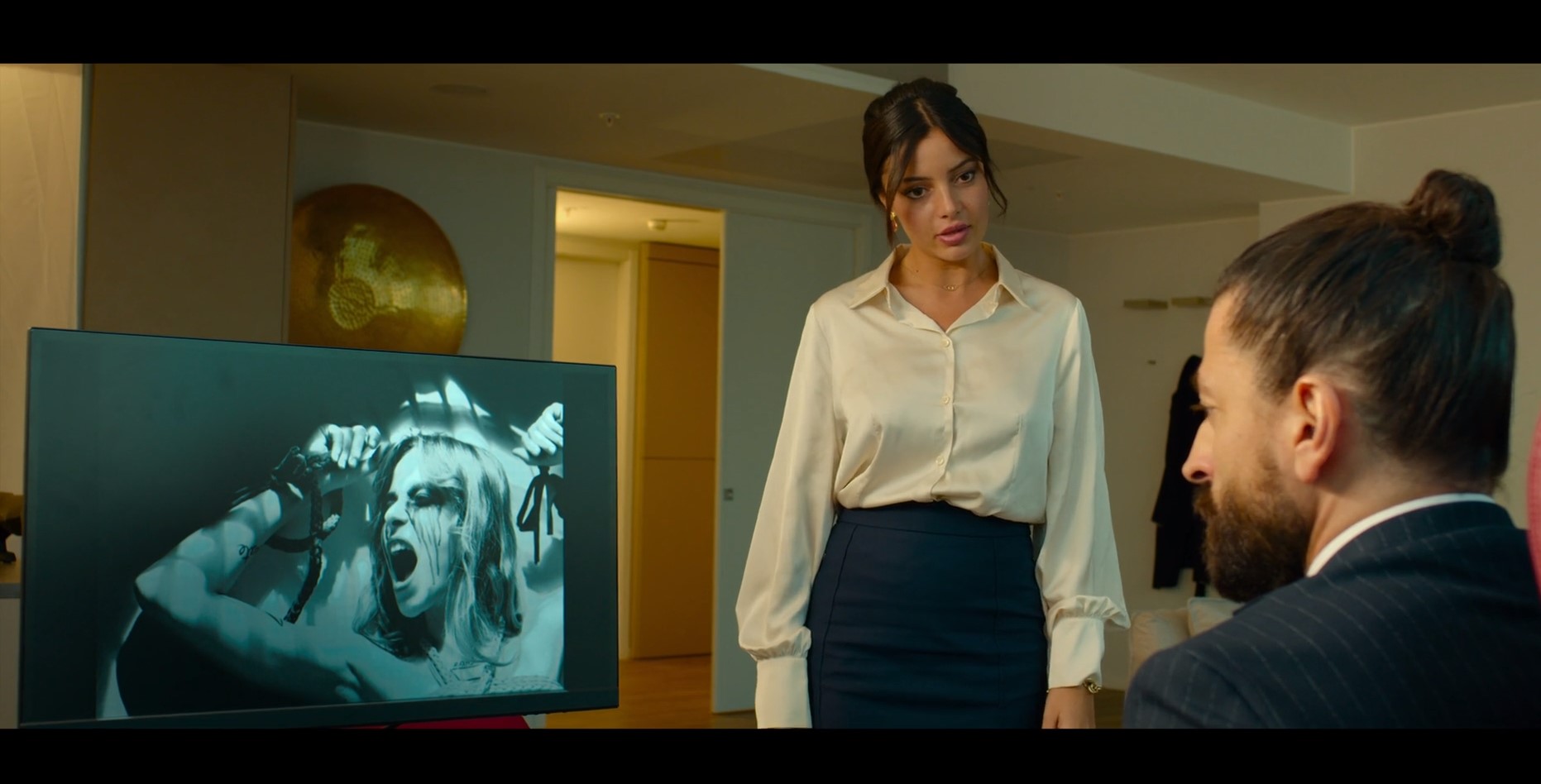
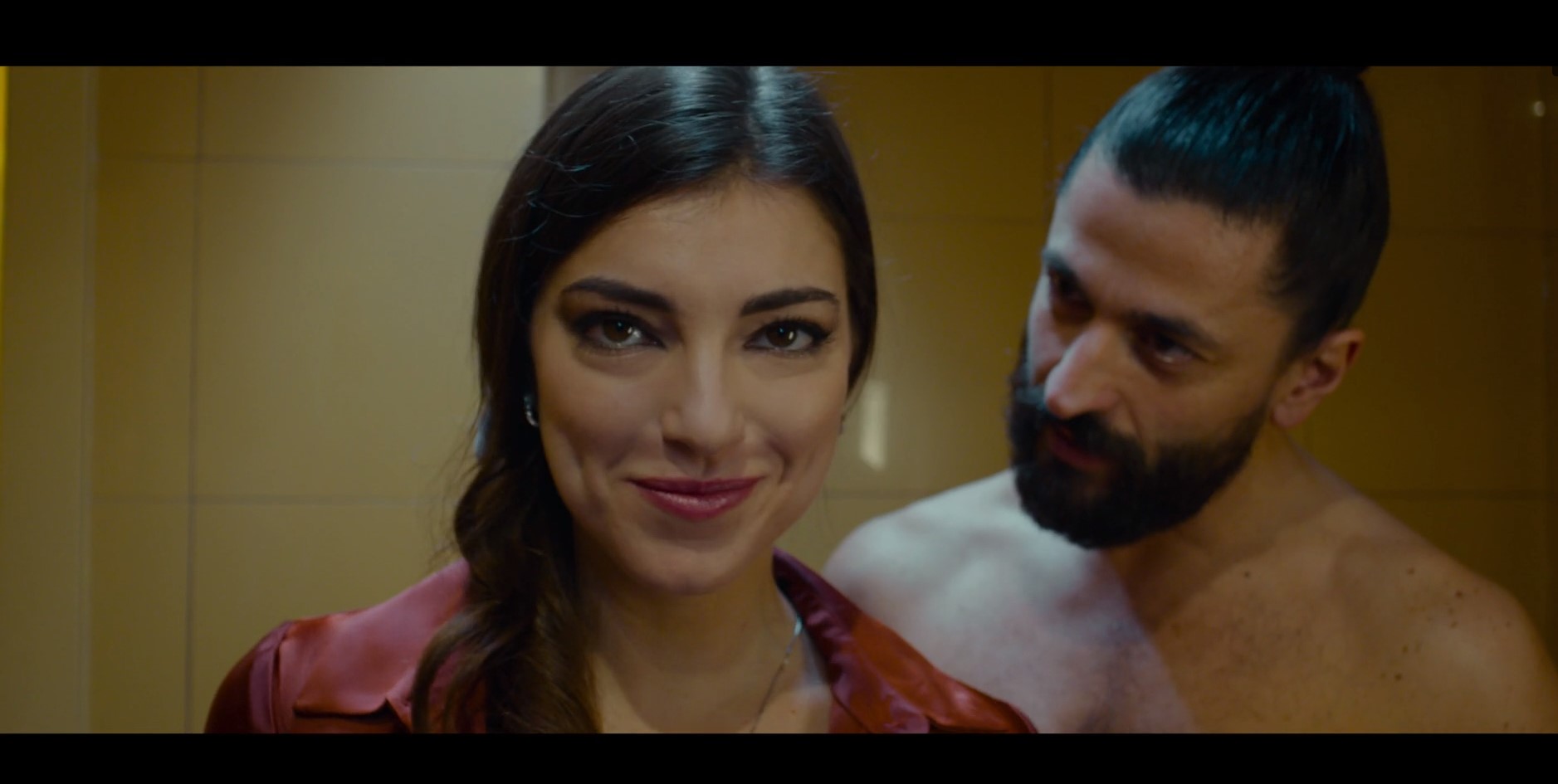
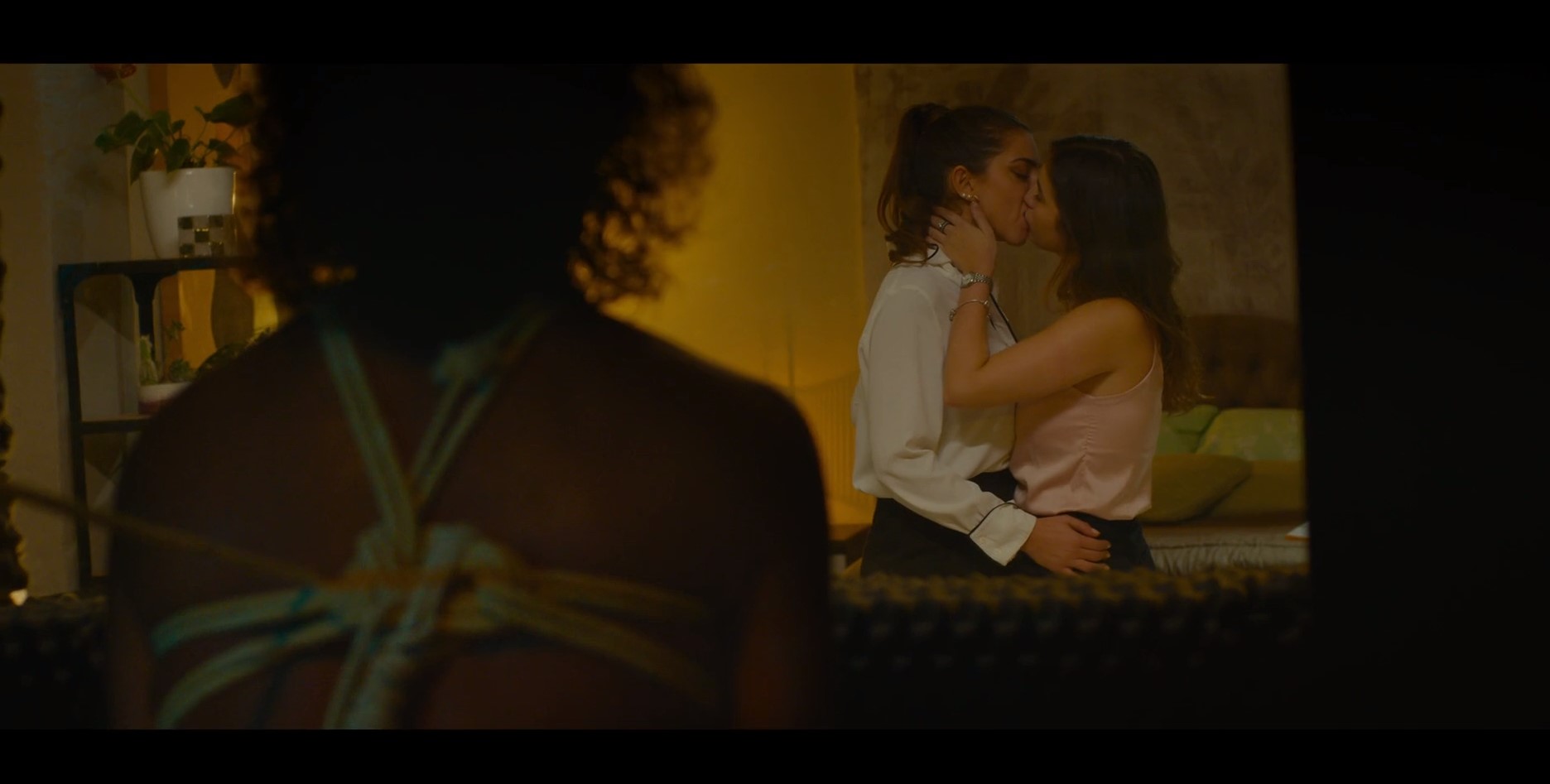
A wealthy businessman philanders his way through woman in a pursuit of satisfactory conquest.  The formidable challenge of bedding a hard-to-get woman arouses him and the chase is all that more thrilling and erotic.  His persistence and perfect man act pays off with up-and-coming model Francesca, but for the playboy, Francesca becomes another notch in his belt and quickly implodes Francesca’s romanticized relationship after a sexual tryst in the public eye.  A year later, he begins his surmounting quest again with Emanuelle, a renowned writer in a lesbian relationship.  The beautiful and darkly seductive woman catches his eye and the game begins as he uses every excuse to rendezvous with her despite the Emanuelle’s partner standoffish opposition, but as his tenacity appears to be paying off as she leads him on, awarding his constant charm with favorable kittenish returns, Emanuelle is actually leading him straight into the jaws of a deceitful plan.

Italian co-directors Monica Carpanese and Dario Germani are copiously inspired by the heyday of Italian Eurotrash cinema.  The actress-turned-debut director Carpanese has starred in a handful of erotic and horror thrillers of the prolific trashy filmmaker Bruno Mattei, such as “Dangerous Attraction” and “Madness,” while also having a principal performance in the 2022 sequel to Joe D’Amato’s notorious cannibalism film “Anthropophagus.  Her colleague Dario Germani is also the cinematographer for the spaced-out follow-up as well as establishing himself in the genre not as a filmmaker behind the lens but also a director with genre films under the belt with “Anthropophagus II,” a dissimilar lover’s anguish in “Lettera H,” and a snuff-slasher “The Slaughter.”  Carpanese and Germani’s next collaborating venture continues with another D’Amato influence mixed with the popular erotic series, and its tangent spinoffs, of Just Jaeckin’s “Emmanuelle” that has official and unofficial sequels spanning all through Europe with enticingly, titillating erotic stimuli and thrills.  Their explicit explication of the near 50-year-old sexy-laced franchise comes in the form of “Emanuelle’s Revenge.”  Dropping the second “m” along with the choice of similar story and title moves the film closer to being a remake of the Joe D’Amato “Emanuelle and Francoise,” aka “Emanuelle e Francoise” or “Emanuelle’s Revenge.”  Carpanese pens the Marco Gaudenzi and Pierpaolo Marcelli produced script under the production flags of Flat Parioli, Haley Pictures, and TNM Productions. 

“Emanuelle’s Revenge” is carried by a small, four-person principal cast and half that for peripheral players within a dual-timeline story that provides the same cat-and-mouse game but with different, yet shocking outcomes on both of them.  At the tip of the spear is playboy Leonardo played by Gianni Rosato.  Sporting his best bandholz beard and pony bun, Rosato’s aggressive entrepreneurship extends beyond the working stiff hours and into the extracurricular activities of hunting down and dominating the opposite sex to sate his kicks for kink.  As the primary principal, Rosata receives the screen time that digs further into Leonardo’s psyche and what’s revealed about Leonardo’s nature is obvious trouble with an aggressive flirtation to the point where his whole game is akin to a stalker, showing up unannounced where he knows his targeted woman will be, obtaining their property that he has no right to, and essentially sucking their face with really bellicose kisses that look like they hurt.  Okay, maybe the latter is more overzealousness on Rosata’s part but certainly adds to Leonardo’s alarming behavior to which women seem to be attracted to as if giving into the idea that women prefer bad boys.  Such as the case in the first narrative with Francesca, a promising model with a now sex-relationship smart attitude after a previous relationship went terribly wrong with revenge porn.  Played by Ilaria Loriga in her own credited role, the young actress isn’t quite the epitome of innocence but is understandably weary to fall in love again with the persistent Leonardo but with all the foretell warnings of a disaster in the making, Francesca’s penned as sorely naïve and having learned not one single lesson of her past relationship with promiscuous men.  A year later, in the second act’s story, Emanuelle strolls into the picture under the olive-skin and deep eyebrows of Beatric Schiaffino who bats enticing eyes of the titular character’s hidden agenda. Schiaffino’s crafts a demeaner starkly different against her previous year counterpart as Emanuelle’s coquettishness doesn’t refrain from the fact she’s already in a hot-and-heavy relationship and matching Leonardo’s hot-to-trot escapade with a come-hither that’s just out of his reach. If a rake beckons a game of amorous desire, then Emanuelle enacts a game of her own, one of a lure to lead the blind right into her spider’s web and Schiaffino properly tightropes pleasure and purpose to a somatosensory stimulation level. “Emanuelle’s Revenge” rounds out with Luca Avallone as Leonardo’s licentious friend and business understudy, Ilde Mauri as Emanuelle’s lesbian partner, and Miriam Dossena as Leonardo’s 20-something daughter who suddenly pops into play in the Emanuelle story.

Even though “Emanuelle and Francoise” has never traipsed across my eyes, from what I’ve read the Joe D’Amato and the coproduction of Monica Carpanese and Dario Germani share a lot in common, but the modern-day version of this sordid tale of lust and revenge sticks to the venereal veneer only whereas D’Amato engages a cannibalism and other ghastly horrors. “Emanuelle’s Revenge” seduces with melodramatics, frisky fantasies, and contemptible thralldom because of one man’s wandering libido, focusing tremendously on the building game of mostly pavalar rather than diving into shock value. The narrative begins with a suicide of Francesca, jumping half nude off a busy passenger vehicle bridge, and this segues into Leonardo’s assertive activity into Francesca’s life and so the tale’s non-linear format is already incredulously fated with tossed in opening scene just to grab attention. When following Leonardo’s uncomfortable pursuit, and uncomfortable henpeck kissing, of Francesca, the audience is just along for the ride up to the point of incident where they’re abruptly blue-balled by cut-to a year later without knowing why Francesca decided to throw in her life towel. The brain and our movie-watching experience eventually catchup with the fact everything will be explained at the climatic, but the format jars the assimilating process a tad. Throughout the narrative, there’s plenty of a T&A to go around as I believe nearly every actress with speaking lines drops at least her top, living up to the long history of “Emmanuelle’s,” or “Emanuelle’s” fleshy affluence and erotic elements. Considering the plot twist, Carpanese’s approach doesn’t compel any creativity into the mostly remade erotic-revenger and makes contact with formulaic properties that poison any kind of novel ideas that might have been indited in the inner story layers.

Arriving at number 8 on the spine for Cinephobia Releasing, “Emanuelle’s Revenge” is now on DVD, presented in a widescreen 2.35:1 aspect ratio. The MPEG-2 encoded DVD9 has a sleek look albeit tumbling through a bitrate spread of 5 to 7 Mbps. Some surface coloring suffuse, especially on skin where similar tones seep into the adjacent due to block boundary artifact, but the amount is very little and doesn’t sully much to render the picture an admixed wash in the lion’s share of soft lighting. Details are okay here with the stunning urban landscapes and more opened metropolitan venues, such as a rooftop party, opening up audiences to the chic levels of high society’s profanation of control and sex. The release offers two Italian language audio tracks: A Dolby Digital 5.1 surround and a 2.0 stereo. If asked, I would suggest less channels as they are redundant and useless and go for the 2.0 stereo as there’s not much frequential range in what is essentially a talking head film with an exposition driven narrative. Dialogue is clearly and cleanly stated overtop other audio layers with a powerfully boosted stock file soundtrack in parallel unison to the theatrics. English subtitles are optionally available and the error-free translations keep up with dialogue pacing. Only other Cinephobia Releasing film trailers, including “Brightwood,” “The Goldsmith,” “The Human Trap,” and “Amor Bandido,” are available bonus content. The black background front cover delineates deliciously Beatric Schiaffino as the titular Emanuelle sitting open robed, in thigh-high laced stockings, and on her wicker chair throne. This image reminds me of a mistake in this revealing scene with the very first image of Emanuelle sitting in the oversized back chair resembling closely the front cover image, but the subsequent scenes have her once flesh exposed chest to midriff covered up with censurable continuity. Inside the DVD Amary case lie no insert and the same provocative front cover Emanuelle image more centrally cropped down and blow up to emphasize the seductive siren. The not rated, 83-minute feature is limited to a region one playback. “Emanuelle’s Revenge” spices up the contemporary franchise with erotic entails, exorbitant egos, and illicit indecencies despite its sacrificing of pacing and organization for sleaze, skin, and a side dish of kink.


Emanuelle’s Revenge now on DVD from Cinephobia Releasing!

Crooked EVIL’s Fixation for Chocolate and a Childlike Girl Will be its Sole Destruction. “The Dead Mother” reviewed! (Radiance Films / Blu-ray)

“The Dead Mother” Lives on a 2-Disc, LE Blu-ray/CD Set from Radiance Films!

A botched burglary of an art restorer’s home leaves the art conservationist dead and her daughter wounded by a shotgun blast at the hands of apathetic criminal Ismael Lopez.  Years later, the daughter, Leire, has grown into being a young and beautiful simpleton at a mentally disabled clinic where the mute girl often recesses to a caretaker’s city home off clinic grounds.  By coincidence, the lifelong crook Ismael catches sight of her on the street and becomes obsessed with her witness of his past transgressions.  Conferring with his love-hate girlfriend and felonious partner Maite, the two decide to kidnap her while she’s off clinic campus and put her up for ransom after Ismael couldn’t bring himself to initially kill her but an increasing preoccupation for the chocolate-fond and childlike Leire within a stoic Ismael places an insidious jealously and enigmatic strain between him and Maite that tests that already turmoiled codependency of affection and survival.

Emotionally recrudescent with multiple intrinsic layers of tough guilt, incontrollable desire, and maybe even a pinch of forbearing responsibility that can be labeled cossetting at times, “The Dead Mother” is a beautiful film with unsettling undertones from Spanish filmmaker Juanma Bajo Ulloa.  The “Baby” director cowrite the “The Dead Mother” alongside younger brother Eduardo Bajo Ulloa, their second collaboration after hit success with the duo’s crime thriller “Butterfly Wings” two years prior in 1991.  The Spanish film is shot primarily in Vitoria, Spain with the backdrop of a near classic medieval architecture of urban city with old wooden interiors, high ceilers, and gothic qualities, providing a relative old world air to a tale of petty ideals and madness that disintegrates by the mere site of pure, ingenuous goodness. Under the private and state run production companies Ministry of Culture and Gasteizko Zinema, “The Dead Mother,” or “La Madre Muerta,” is produced by Fernando Bauluz.

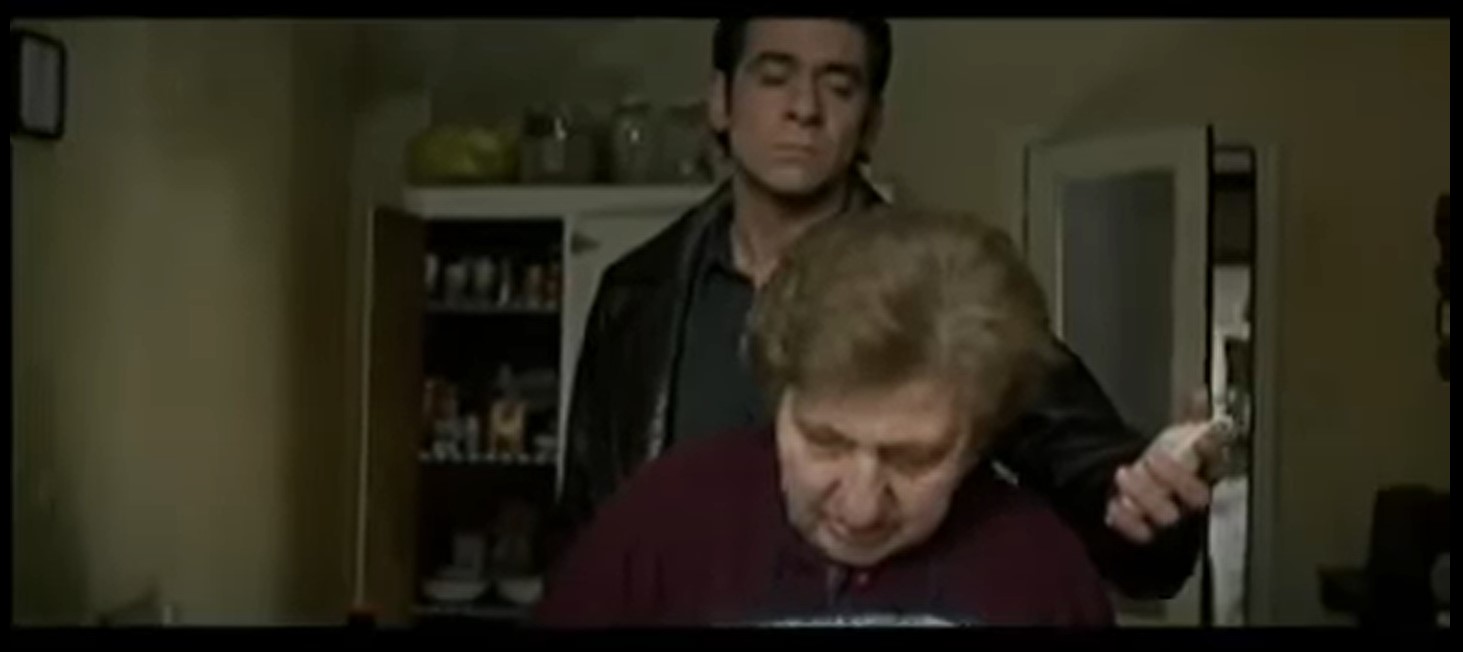
To obtain the intensity, the coldness, the unpredictable, the pitch-black humor, and the soft touch, Juanma Bajo Ulloa doesn’t hire a vocational dramatic.  Instead, the filmmaker chances actor just getting his feet wet the Spanish cinema with Karra Elejalde whose assortment of comedy and drama in his first years seasons him for the role of the reprobate Ismael Lopez, a coldhearted killer with a short fuse for anyone who defies or belittles him and, on the opposite side, can be pensive about his past and next steps in a haphazard way. Opposite Ismael is a devout partner/lover, equal in ruthless potential, yet happy, in her own way, to play house wife in their ramshackle, fly-by-night home.  Played by the Portuguese-born, Belgium-raised singer Lio, her stage name in lieu of Vanda Maria Ribeiro Furtado Tavares de Vasconcelos, the pop star, who still to this day floats between acting and singing, rivals Elejalde’s dark-and-light intensity within her own character’s amorous feelings for the petty crook and murder and would do anything to keep him, even if that means destroying what he adores.  And what does Ismael adore?  Ismael’s new fascination is with Leire, the once little girl who attempted to murder now all grown up, developmentally disabled, and beautiful.  While I can’t fault in any of “The Dead Mother’s” cast performances, I could not imagine Leire being portrayed by anyone other than Ana Álvarez (“Geisha”).  Exuding innocence in her eyes amongst a full-body vacuity, Lio might be the professional singer but it’s Álvarez who hits every note of amentia that constantly has us questioning how much of her facility is there, conscious of the bizarre love-triangle or the homicidal-involving abduction.  In the same breadth, a muted Álvarez talks with her eyes, her expressions, and her body language that subtly fidgets or does other under-the-radar subnormal behaviors to convey an unequivocal virtue starkly in contrast amongst her callous captors who enjoy playing house or even try to make her smile or laugh with jokes and play.  Eventually, the dynamic dissolves, like many love triangles do, between an advantageous perversion and deadly ultimatums that will result unfavorably for most.  “The Dead Mother” rounds out the cast with Silvia Marsó, Elena Irureta, Ramón Barea, and Gregoria Mangas.

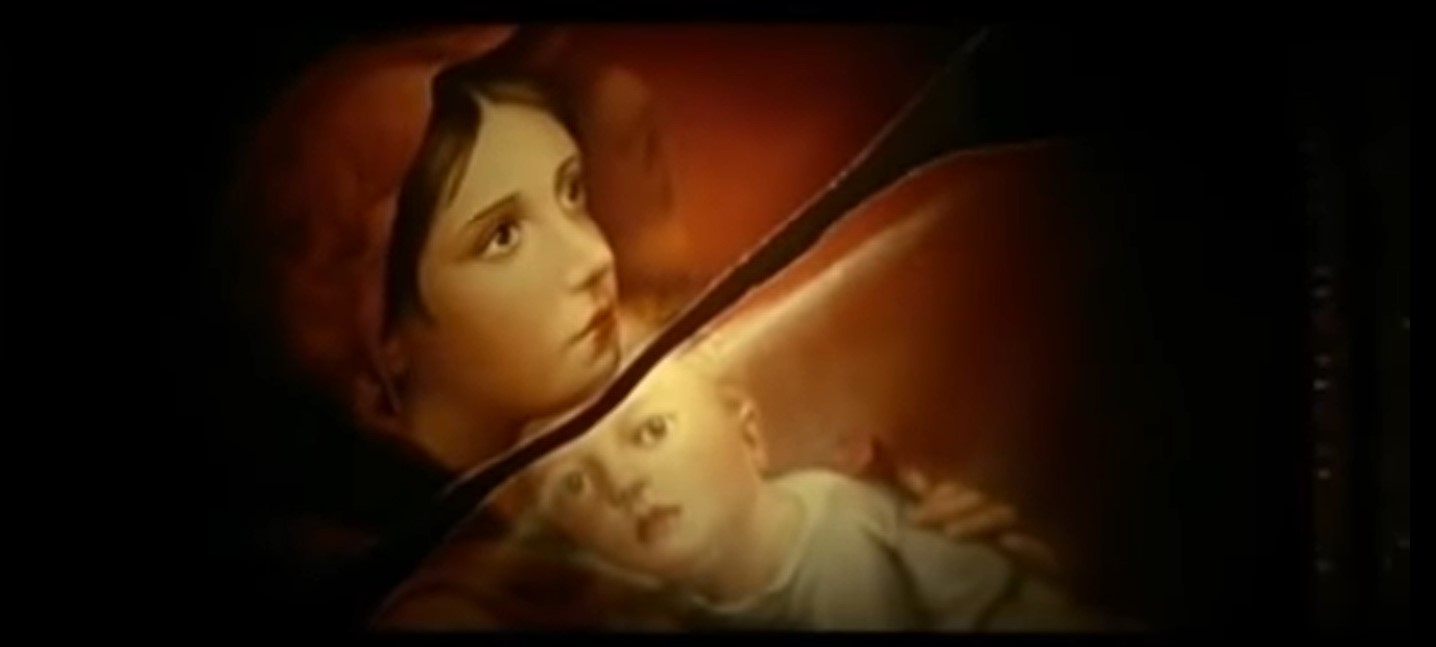
Ismael’s fixation toward Leire is so tremendously opaque without much exertion it’s difficult to understand the criminal’s ultimate motives, leaving audiences with a shrouded aftertaste of open interpretation.  Perhaps guilty from killing his mother all those years ago and nearly killing her, a wash of responsibility for her now placid and childish existence courses through him, driving him to do the bare necessity in taking care of her.  Another facet to Ismael’s curious interest is Leire’s inherent beauty despite her absent situational awareness.  His attempts to make the young woman’s empty expression become joyous with a smile fails, as if that blank-faced barrier keeps him from moving forward with something akin to being romantically involved.  In a couple of brief, uncomfortable viewing stints, Ismael gropes with the second time being passionately fondled by Maite in attempt to win over affection in what Maite believes is a duel between Leire for his attention.  Leire can be interpreted as a burden that has passed from the mother, hence the title, to Ismael, an assuming responsibility pseudo-father figure.  When Ismael kills Leire’s mother during the bungled burglary, a hint of a smile extends upon her face before the blood drips down her eyes in a fantastic POV shot by cinematographer Javier Aguirresarobe.  Supporting this theory is the Renaissance painting of mother and child with a tear in the canvas between them, a painting that Ismael lingers over for a few seconds while rummaging through the art restorer’s home.  The ambiguous nature of “The Dead Mother” only succeeds because of the confident performances and Juanma Bajo Ulloa’s august eye for the impeccable shots he wants and achieves. 

“The Dead Mother” arrives onto a limited-edition Blu-ray, to the tune of 3000 copies, from Radiance Films U.S. line.  The new 4K scanned transfer, restored from the 35mm negative and stored on an AVC encoded, high-definition 1080p, BD50, is presented in a widescreen 2.35:1 Cinemascope aspect ratio.  Juanma Bajo Ulloa oversaw the pristine cleaning of film strip defects and the new, frame-by-frame color grading at the Cherry Towers lab in Madrid, Spain.  The excellent work by the restoration company and Ulloa’s supervision of the process resulted in a naturally clean edged and detailed saturated transfer to rejuvenate the image with a fresh look.  The overcasting shadows and slate aesthetics with brilliantly hued low-key lighting suggest an immense lugubrious tone throughout, accentuated by the antediluvian structures. The Spanish language uncompressed 2.0 stereo audio absorbs what’s absent, which isn’t much, with an uninhibited, original fidelity of the dialogue, surrounding milieu, and the bordering whimsical string soundtrack by Bingen Mendizábal. There are no hints of hissing, cracking, popping, or fragmented damage of the audio track that persists on being punchy with every Ismael scuffle down to the very rustling of the chocolate wrapper in Leire’s chocolate-stained hands. While range is plentiful and natural, depth is not as utilized unless absolutely necessary, such as with the oncoming horns of the diesel trains in the trainyard or Ismael whistling between the pews of a decrepit church shot from the chorus balcony. English subtitles are available and optional. Special features on this limited-edition set include a Spanish audio commentary by the director with burned in English subtitles, The Story of the Dead Mother an archive behind-the-scenes featurette of retrospective interviews from 2008 and some raw footage of takes that’s, again, in the Spanish language with English subtitles, Bajo Ulloa’s short film “Victor’s Kingdom” aka “El Reino de Victor” from 1989 and now restored in a 4K scan, the film’s trailer, and photo gallery. Physical attributes impress within the clear, slightly thicker amary Blu-ray case that’s been conventional distribution use with Radiance Films in its near retro, austere facade. Sheathing a reversible cover of the original media artwork inside, the outside cover continues to remind me of its Arthur Fleck appeal with a doleful Ismael Lopez in his very best clown make up. Both discs, the Blu-ray and the CD soundtrack, are overlapped and locked in place pressed their respective black and creme coloring scheme. On the insert side contains a 35-page color booklet filled to the brim with captured film images, promotional images, and cast-and-crew posed pictures along with the CD track listing, cast and crew breakdown, and expressionism written pieces and essays by Eduardo Bajo Ulloa, Juanma Bajo Ulloa, Nacho Vigalondo, and Xavier Aldana Reyes. The unrated feature has a runtime of 111 minutes and his region free for all you worldly, cultured lovers of cinema out there. The mother might be dead but Juanma Bajo Ulloa’s converging of cynical odd behavior with the breakdown of status quo by a wicked curveball makes for a darkly cherub of Spanish filmmaking worth coddling in Radiance’s exceptional release.

“The Dead Mother” Lives on a 2-Disc, LE Blu-ray/CD Set from Radiance Films!