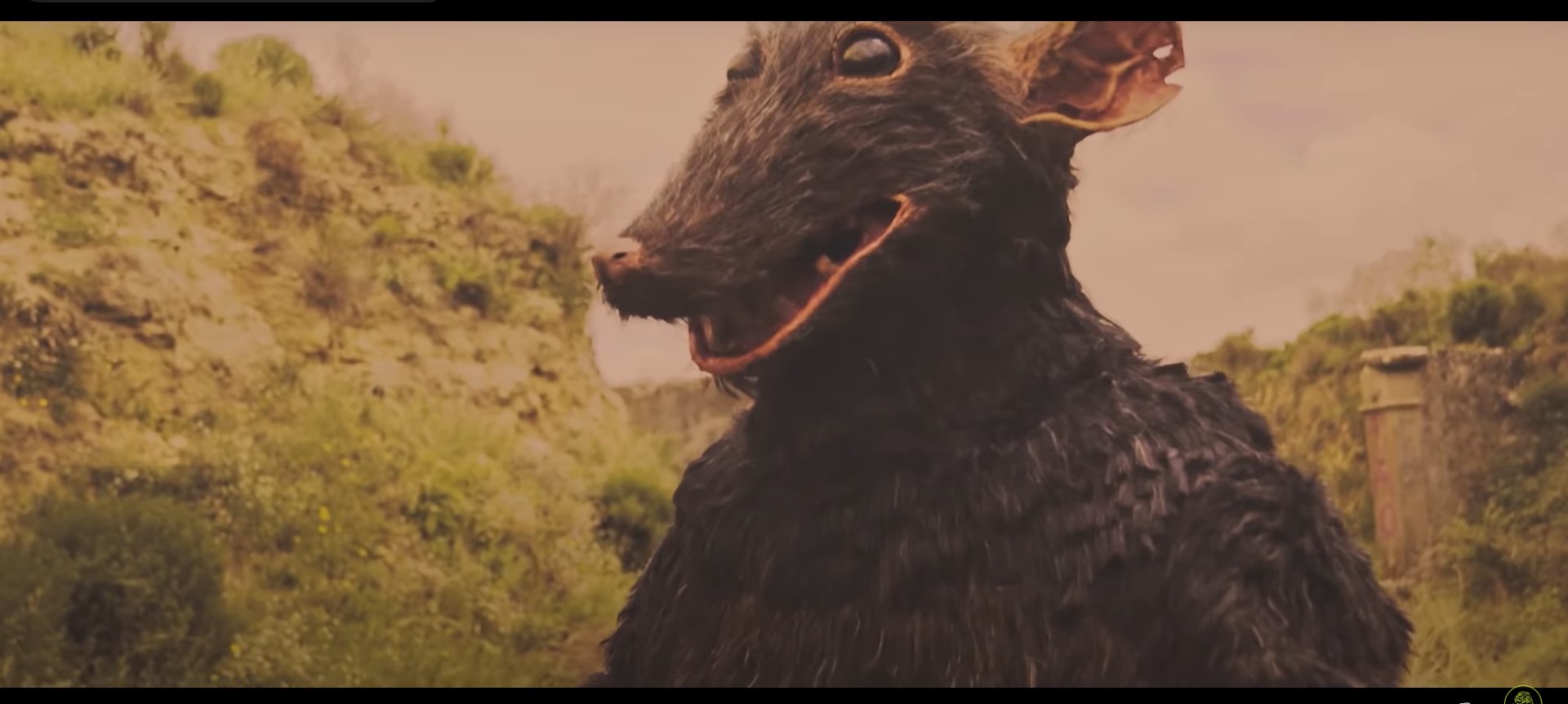
The Old EVIL Scorpion and the Frog Tale in “Drive” reviewed! (Second Sight / Screener)


“Anything Happens in that Five Minues and I’m Yours.”  Drive Limited Edition Boxset at Amazon.com!

A solitary mechanic and movie stunt driver offers his services as a getaway driver for illicit odd jobs.  He falls for his single parenting neighbor and as the two begin their romantic affair, her ex-con lover returns from prison to reintegrate back into her and their son’s life.   When ex-con trouble brews an inescapable situation involving ruthless gangsters calling in their favor for prison protection, the stunt driver involves himself with his moonlighting work but when things go terribly wrong and he becomes a target, everyone he knows and cares for are threatened by the mobsters.  War is waged in the fast lane between the mysterious stunt driver and Los Angeles most feared gangsters for the sake of an innocent mother and her child caught in the middle.

Around 2010-2011, when I first heard of Nicolas Winding Refn’s “Drive” starring “The Notebook” and “Lars and the Real Girl’s” Ryan Gosling, I thought to myself, why would I watch this quirky comedy-romance actor drive around in a run-of-the-mill stunt car action film?  Immediately, I wrote off the film penned by “The Four Feathers’” screenwriter Hossein Amini, whose now penning the stories and teleplays of a little Disney+ streaming series you may have heard of called “Obi-Wan Kenobi.”  I now admit it, as painful to my pride as it is, that I was so ignorantly wrong about Refn’s “Drive” that has turned out to be a cult hit present day and a really good and exceptional crime-drama that’s subtle on the dialogue, high on the graphic violence, and all-around superb performances.  The script is the filmic adaptation based off American author James Sallis’s novel of the same title, keeping the neo-noir intact under of guise of muscle car predilection, and is a produced by Gigi Pritzker and Chris Ranta of Oddlot Entertainment (“Buried Alive”), Jonathan Oakes and Gary Michael Walters of Bold Films (“The Neon Demon”), Marc Platt of Marc Platt Productions (“Wanted”), and Motel Movies (“Blue Valentine”). 

To be upfront, Ryan Gosling has never been a go-to movie star for me, personally, so there might have been some psychogenic bias blocker keeping me away from the film over the last decade.  However, over the years, my pallet has grown in diversity and in tastes, chiefly because of influences in my life, and so curiosity got the better of me in wanting to explore the story of and the craft of Ryan Gosling’s character in “Drive.”  The way Gosling portrays the lead, known only as either the Driver or Kid, heavily relies on expression with minimal dialogue and lets all his emotions be poured through his eyes and body language as well as his actions in an anti-charismatic sense that, in a good way, leaves the character unassuming but still confident.  Watching Gosling’s methodical flow through the role and while having a little knowledge of the neurodivergence, it’s not difficult to see that the principal character comes off as a person somewhere on the autism spectrum and doing some post-credits research, I’m not the only one who had the same thought.  Unsociable, quiet, lack of facial expression, and obsessed with routine, especially when moonlighting as a criminal getaway driver with a set of very specific conditions, are just some examples of his behavior that point in the autism direction.  When the driver meets beautiful single parent neighbor Irene (Carey Mulligan, “Shame”), that is when we start seeing him deviate from his isolation, from his routine, and become more complex with what was previously a non-existent life, but of course as life blossoms into something new and safe, gangster obstacles rear their ugly head and the criminal in him is forced out for a head on collision.  “Ex Machina’s” Oscar Issacs is the first hurdle as the recently release ex-con dragged back into unscrupulous dealings with unsavory organized crime that climb the latter to “Hellboy’s” Ron Perlman and “Taxi Driver’s” Albert Brooks, business partners who oversee the West Coast turf. Perlman is a natural tough guy, as we’ve seen in countless works stretching over numerous decades and I would have never pictured “The In-Laws” and “Finding Nemo” Albert Brooks to be the minatory type but he does in fact have a dark-twinkle in his eye and can extract the false sense of security out of people before he jabs a fork in their eye and slits their throat…wrist….guts….yeah, his character loves to knife others. The all-star cast rounds out with Bryan Cranston (“Godzilla”) as the Driver’s mob-connected boss-friend-agent and Christina Hendricks (“The Neon Demon”) in a lowkey accomplice role that makes a gruesome, unforgettable impact.

Speaking of “The Neon Demon,” a more recent Nicholas Winding Refn film, you’ll begin to absorb the Denmark-born filmmaker’s stylistic motifs between the two films involving lingering shots, graphic violence, and the integration of electro-pop tracks into an eclectic soundtrack. Many of the scenes convey an emotion through dialogue-less scenes and the soundtrack to contrast actions speak louder than words. However, there is one radical theory of mine that I believe has a firm foundation is that everything from point A to point Z in the story is all in the Driver’s fantasy world. I know “Drive” is a movie and the need to suspend belief is important but only to an extent and depending on the quality derived from the filmmaker. Refn’s a good filmmaker, we know this, but everything the Driver experiences pitches upon pure imagination when the truth is stretched to be in his favor for the length of the feature. First example – the Driver slams into the side of another car head on, but the headlights, front bumper, and ventilation grille are all clearly intact. Second example – a tense-elevator scene involving the Driver, Irene, and a mobster assigned to take the Driver out takes an improbable turn when the Driver turns to Irene, both bathed in the sudden appearance of a spotlight, and they kiss passionately for quite a while. The moment become the perfect opportunity for the goon to blow away his target. Instead, he lets them kiss and then a close-quarter fight ensues shortly after. Third example but not last – the Driver is nearly an unstoppable force with no background to who he really is or why he is in Los Angeles, but he fights like a hardened criminal and knows how to play the organized crime game, never really have bad hand in his deck of cards, and even is given an ambiguous “Shane” ending. So, I ask again, is the beautiful girl, the ripe for the picking off gangsters, and the prodigious skillset all in his head?

I’ve clearly misjudged Nicolas Winding Refn’s “Drive” to be pretty-boy, stock-story, waste of time. Though I’m still not convinced about Ryan Gosling’s acting, like a Supreme Court Judge nowadays, I’m overturning my naive judgement and calling “Drive” a true modern day cult film hiding in plain sight, receiving new life from Second Sight films with an UK limited edition 4K UHF/Blu-ray release as well as a standard 4K and Blu-ray release. Unfortunately, this review covers only a BD-R screener so commenting on the true quality of the image and audio will not be recorded, but release specs include a new 4K master produced by the original post-production company with Refn’s approval, the UHD is presented in Dolby Vision HDR graded by the film’s original colorist, audio options include a Dolby Atmos and a DTS-HD Master Audio 5.1 with optional English subtitles, and the 4K UHD are region free while the Blu-rays are region locked encoded on region B. Standard bonus features include a new exclusive commentary by director Nicolas Winding Ren and The Guardian critic Peter Bradshaw, a feature length conversation with Refn, editor Mat Newman, and composer Cliff Martinez reminiscing about their sudden post-theatrical career success with “Drive” when the film saw more success on video, Gutting a Getaway – a new interview with Mat Newman, and 3 Point Turns – a new video essay by Leigh Singer. The limited-edition contents include a premium box set with new Driver Scorpion artwork by AllCity, a 240-page hardback book with new essays by various authors, an exclusive interview with “Drive” author James Sallis hosted by Matthew Thrift, original storyboards, stills, behind-the-scenes photos, the original Sallis novel with new AllCity artwork as well, and 7 collectible art cards. What a massive, massive haul for the film that didn’t do great in theaters due to poor financial support by investors who saw the film as a failure. The film has a runtime of 100 minutes and is UK certified 18. Don’t be like me and neglect a chance to see “Drive,” a great piston-pumping and violently beautiful crime-drama paralleled love story that deserves our time, our attention, and everything including the kitchen sink Second Sight Films pumped into the tremendous limited-edition boxset that dropped this week for release!

“Anything Happens in that Five Minues and I’m Yours.”  Drive Limited Edition Boxset at Amazon.com!

The End of Days Runs on EVIL Fuel! “Wyrmwood: Apocalypse” reviewed! (101 Films / Blu-ray)

“Wyrmwood:  Apocalypse” – Z-Nation on Steroids!  Available at Amazon.

In a zombie apocalypse wasteland, the gaseous belching undead are used as the primary energy source, but the sight for a cure is still the goal for survival.  At least that is for boots-on-the-ground foot solder Rhys who lives in an isolated camp surrounded by the dead and ventures out to retrieve uninfected humans to bring them to the bunker-dwelling Surgeon General in hopes in discovering a cure.  After snagging a hybrid female named Grace who can control her turning by drinking single vial of blood, Rhys quickly learns that the Surgeon General and his armed entourage are experimenting to death the people he’s delivering to the bunker for their own selfish objectives.  Teamed up with Grace’s people – Grace’s sister Maxi, Barry, and Barry’s sister Brooke who is also a hybrid – Rhys is determined to no longer retrieve people but rather retrieve his soul from a group of well-armed maniacs while trying to not get eaten by the zombie hordes.

For someone like me, a film reviewer, whose fairly anal about watching a series, franchises, sequels, etc., in sequential order, I am stepping outside my comfort zone and out of my own convictions and into unknown territory by watching “Wyrmwood:  Apocalypse,” the direct sequel to Kiah and Tristan Roache-Turner’s 2014 Australian bloody zombie comedy-romp, “Wyrmwood” aka “Wyrmwood:  Road of the Dead”, before the first film.  While typically a no-no in my book, and very much likely in the rest of the filmic community, I like to live dangerously.  Any who, Kiah Roache-Turner sits once again in the director chair with the direct, follow-up sequel that picks up immediately where the other film left off or, I at least think so.  In reading the ending to the 2014 film, I see no mention of a couple of characters that are present at the beginning of “Apocalypse” and so I’ll be interested to watch “Road of the Dead” to see for myself how both films tie together.  The script is penned by Kiah and brother Tristan after fan support of the first film urged the filmmakers to do a sequel to their brainchild inspired by the blood-soaked and vaudeville slapstick horror of New Zealand and Australia – such as Peter Jackon’s “Dead Alive” aka “Braindead” and the Spierig brother’s “Undead.”   “Wyrmwood:  Apocalypse” is a Bronte Pictures production (“Out of the Shadows”) in association with Roache-Turner’s Guerilla Films and backed by the executive producer team of Todd Brown, Tim Nagle, Rhys William Nicolson, Sam Gain-Emery, Clement Dunn, and Maxime Cottray.

To make matters more confusing for someone like myself who hasn’t seen the first film, Tasia Zalar and Shantae Barnes-Cowan, nor their badass sisterhood characters Grace and Maxi, are listed in the cast of the first film nor are they in the short-lived teaser episodic series from 2017, causing a bit of disconnect for a nobody like myself who knows absolutely nothing of Wyrmwood universe when beginning the Roache-Turner series will the latest production. The “Uninhabited” Zalar and the “Frostbite” Barnes-Cowan quickly establish themselves as survivors devoted to each other by blood as their introduced rather quickly, harshly, and without background in the company of returning actors Jay Gallagher as Barry, described in the first film as a talented mechanic, and Bianca Bradley as the zombie hybrid Brooke who can control the regular horde of gas-chucking dead heads. Of course, being that a direct sequel, at least that’s how the Roache-Turner plays it, follows up 8-years later, some of the characters don’t quite look the same as when we first left them. For instance, Barry’s a little rounder and beefier and Brooke is, well, blonder. However, the bond between brother-sister is still strong and is even reinforced by Grace and Maxi’s relationship that blood trumps all. Another actor returns for the sequel but not toward the same character as Luke McKenzie adds to the theme of family by playing the avenge-longing brother of the first film’s antagonist known only as The Captain. Rhys (McKenzie) has more of a pure heart in contrast to his brother, or so we’re informed by returning characters, and becomes the unintended principal character amongst an ensemble cast by being the retriever, the deceived, and the reclaimer of his soul when he discovers the paramilitary survivors – The Doctor (Goran D. Kleut, “Alien: Convent”), The Colonel (Jake Ryan, “Out of the Shadows”), and the Surgeon General (Nicholas Boshier_) – are experimenting and killing captives for their own survival and grinding their corpses to make into anti-viral pills. There’s nothing bland about the Roache-Turner brothers’ character diversity and charisma as they each stick to a persona throughout the unfolding that quickly established who-is-who in the bad and good category.

“Wyrmwood: Apocalypse” is dieselpunk coated dead and delirium. With a definite George Miller approach and a zany-zombie gift of gore and gags, I can see where fans of the zombie genre can feel freer and more relaxed outside the confines of the somber-and-serious toned oeuvre of zombie films of the last two decades that has literally been beaten like a dead horse with a stick at every angle. The gonzo-gearhead carpet definitely matches the drapes in an outlandish universe where zombies are the Duracell and Diehard batteries of the future and while the story engrains a kindred theme and blood splatter fun, one element still guts me more than the multiple eviscerated entrails in the movie. Being a zombie movie of the flesh-eating kind, one would hope scenes of flesh-eating would be apparently present. Unfortunately, “Apocalypse” has zilch on zombie feasts. Though close in one scene where a big toe might be become an appetizer, in the end, there isn’t one bite of rotting teeth be pressed and puncturing flesh or viscera. What “Apocalypse” offers quite the opposite in where the dead are the exploited, utilized as a fuel source by feeding them beef and harnessing their oral gasses to drive vehicles and run high-powered miniguns or be under-the-influence of control by telepathic hybrids to do their bidding, aka suicide bombers or take the hits so the living can stroll in without garner so much as a scratch in a skirmish.

The final conclusion about “Wyrmwood: Apocalypse” is this, watch “Road of the Dead” first. Then, enjoy the rip-roaring and violent horror-action zomedy now available on an UK Blu-ray from 101 Films. The hard region B locked, AVC encoded Blu-ray is presented in 1080p, high definition, with an aspect ratio of 2.35:1. “Apocalypse” has the look of the early comic-book era style of pre-“300” Zack Snyder that hovers around the practical properties of “Tank Girl” in what’s fashioned together by the director of photography, and co-producer, Tim Nagle to appeal to a tactile of cold and grimy steel, sweet, and blood. The film uses very little visual effects which is mostly on the blood splatter, and you can tell the splatter is a bit off in having a waxy look to it. The decoding runs efficiently well to provide a clean picture through an edit heavy story. The English language audio mixes come in two options: a Dolby stereo PCM and a DTS-HD 5.1 surround sound. While there’s nothing wrong with the stereo PCM track that offers a clean and lossless recording, the 5.1 audio mix is a robust beast that channels every engine roar and isolates a zombie belch to be more inclusive for a viewer. If you’re in the mood for a longer sitting and bonus content, perhaps this 101 Films release is not for you as the runtime hits just above an hour at approx. 70 minutes long and just contains the feature and a scene selection. However, there is reversible front cover art. Easily, continuing the journey by working backwards in the Wyrmwood universe is worth the time as “Wyrmwood: Apocalypse” catapults the zombie into a new and unexplored rancid category of reverse exploitation in parallel with carnage, mayhem, and all of the anarchical above.

“Wyrmwood:  Apocalypse” – Z-Nation on Steroids!  Available at Amazon.

Smuggling EVIL Past the Revenue Men! “Night Creatures” reviewed! (Blu-ray / Scream! Factory)

The Marsh Phantoms are Coming to a Blu-ray Near You!

A savage pirate is left for dead on a remote island by his ruthless captain, a small village avoids taxation from the British King’s revenue men by smuggling French Brandy, and on the same village’s marsh land, ghostly skeletons ride into the night, placing the fear into wanderers with ghastly-glowing skulls and undead horses. At the center of it all is Dr. Bliss, the Romney Marsh village Vicker, who also heads the liquor smuggling ring in town and plays the King’s tax revenue soldiers as fools by misdirecting their attention to elsewhere and away from their illegal brandy run. Keeping up with a ruse that’s cracking at the foundation with one of Romney Marsh’s irresolute community leaders forces Dr. Bliss to think fast and stay on top of a smuggling operation at the constant brink of collapse, but a return of a familiar face stirs up conflict and the captain of the revenge men continues to push for the truth no matter the cost.

Peter Cushing is well-known for his solemn gothic horror roles in nearly a slew of countless Hammer films. An unequivocal and stoically determined vampire hunter, the intelligently disillusioned creature maker befallen by his creation, and a wizard sleuth with a nose for clues in tracking down murders are just a few of his linchpin roles for Hammer Productions that the English actor portrayed so very brilliantly in the company’s peak, and off-peak, years. Yet, one of his most pinnacle performances stem from one the lesser-known Hammer productions based off the English author Russell Thorndike’s anti-hero and swashbuckling novel “Dr. Syn” published in 1915. Known in the United Kingdom as “Captain Clegg” and “The Curse of Captain Clegg” because of legal rights issues with the Thorndike title and Disney (yes, that Disney!), U.S. audiences might recognize the Cushing film as “Night Creatures,” directed by a Hammer one-off in Peter Graham Scott (“The Headless Ghost”) and is written by Hammer vet Anthony Hinds (“The Brides of Dracula,” “The Kiss of the Vampire”) under his usual pseudonym John Elder with additional dialogue from Barbara S. Harper. John Temple-Smith produces the film under Hammer Film Productions

Though the cast, crew, and production company were bound not able to use “Dr. Syn” in the film that didn’t stop Peter Cushing in becoming Dr. Bliss, the peoples of Romney Flat’s very own Vicker who revitalized the small town and severed them from hefty taxation with a scheme of smuggling. Clearly, Cushing is in his glory, in his element of wide range, and can be seen as having a ball with playing a dualistic character in Dr. Bliss. Dr. Bliss bares no sign of being saintly stiff around the gills as any pious man might be portrayed and Cushing, at times, can be as rigid as they come in certain roles. Not Dr. Bliss though as a man playing the facade to hide behind-the-curtain his good intentions from those who want a piece of the pie for king and country. Opposite Cushing is “Never Take Candy from a Stranger’s” Patrick Allen as Captain Collier who trucks men by boat to land a surprise inspection after being tipped off about a possible smuggling ring. Allen’s cuts Collier from the clever cloth but the leader of revenge men is always one step behind his time as Pirate chaser and now as a fraud nabber. Another excellent act of thespianism in “Night Creature” is another Hammer household name in Michael Ripper (“The Curse of the Mummy’s Tomb,” “The Plague of the Zombies”) after a long stint of playing unnamed sidelined roles early in Hammer’s beginnings. Ripper has an unforgettable look with gravely gruff voice and a quick timed wit that makes him a pleasure every time he steps into the scene. Just coming onto the scene is Oliver Reed on the coattails of his success with “The Curse of the Werewolf” and though his role is purely supportive, his act as the love stricken and loyal to the smuggling cause son of the naive local squire and magistrate (Derek Francis, “The Tomb of Legeia”) who isn’t in on the scheme. “Night Creatures” rounds out the cast with Yvonne Romain (“Circus of Horrors”) as about the closest thing resembling a love interest, Martin Benson (“The Omen”), and Milton Reid (“Deadlier Than the Male”) as the Mulatto pirate exploited as a shackled hound dog to sniff out French Brandy…literally.

A swashbuckling, smuggling caper with notes of macabre imagery and a purloin-the-show performance by Peter Cushing stows “Night Creatures” away as one my favorite Hammer productions. Laced with characteristically grand production pieces and sets, mostly shot at Hammer’s Bray Film Studios, “Night Creatures” looks luxurious and feels expensive as pirate ship interiors, magnificent church hall, and haunting shots of a scarecrow with voyeuristic eyes propped on the countryside landscape elevate not only the story but also the rich characters brimming with complexity. Scott does a fine job sustain an ambiguous Dr. Bliss who, from our own suspicions, can be immediately pinpointed with a backstory that never falls in the pit of exposition. The true story behind Dr. Bliss is practically pressed, squeezed, tugged, and pulled by tooth and nail to finally be revealed to the audience and the moment is greatly satisfying when admission to something we all know is finally out in the open. While Dr. Bliss purposefully misguides the revenge men astray from his illicit activity, “Night Creatures” is also misguiding the audience with ghastly suspense in the existence of the Marsh Phantoms, a luminescent design of full body skeletal depictions on top of midnight cloaks and onesies, pulled off by special effects supervisor Les Bowie (“Paranoiac”) and his team to add a taste of horror to a rather subterfuge storyline of rebirth and sacrifice.

Now on a part of their Collector’s Edition line, Scream! Factory releases “Night Creatures” onto Blu-ray home video with a new 2022 2K scan from the original interpositive. The result is mostly immaculate with visualize details along the skin lines that makes every bead of sweat and every follicle more apparent to the eye. The release is presented in a 1080p high-definition transfer in what’s now labeled Univisium, an aspect ratio that is 2:1 (2:00.1), reformatted from the original 1.85:1 aspect ratio. Less than a handful of scenes display what looks to be posterization and a degrade in the scan, causing the scene to revert back to the original transfer for a split second. For this you receive a little more width that, ironically enough, homes better in on the focal image. The English language DTS-HD Master Audio mono mix has little to speak ill of as the dialogue, with a hint of continuous static, is greatly clean and clear, ambient track is balanced in range and depth, and you can follow every clashing note in Don Banks’ dramatically orchestrated score. Special features include a new audio commentary with film historian Bruce Hallenback, a new interview with Les Bowie’s special effects technician Brian Johnson, Pulp Friction with film historian Kim Newman on his take on the clustering mess of “Dr. Syn” film rights, Peter Cushing’s Changing Directions with film historian Jonathan Rigby mostly on Peter Cushing’s admiration for the role and his invested interest in playing the main role, a making-of featurette narrated by John Carson, The Mossman Legacy of film historian John Carson showcasing the lot of antique carriages crafted by the George Mossman company in Hammer films, a still gallery, and the original theatrical trailer. The unrated, 83-minute feature also includes a cardboard slipcover with new illustrated from cover art by Mark Maddox. Don’t let a claggy title like “Night Creatures” fool you! Though not the sexiest title, “Night Creatures” will enliven with the mystery of Marsh Phantoms, the suspense of the cat & mouse smuggling game, and the pure bliss on Peter Cushing’s face as he fully immerses himself into the role of his lifetime.

The Marsh Phantoms are Coming to a Blu-ray Near You!

EVIL Lights Up When Peeling Skin! “Human Lanterns” reviewed! (88 Films / Blu-ray)


Own this beautiful release from 88 Films of the “Human Lanterns”

Two respected and wealthy Kung-Fu masters have a long rivalry, trying to one-up each other at any cost even if that means stooping into their personal life to gain the most public admiration.  With the annual lantern festive approaches, to have the best and brightest lantern would sustain at least a year of gloating over the other master.  When a lantern maker with a retaliation mindset against one of the more boastful masters is hired to make his festival entry, the lantern maker exacts horrifying revenge by fueling their feud behind the scenes. Kidnapping beautiful women who are dear to each master and exploiting their soft delicacies for his crazed creations, the maniac lantern maker turns the village upside down, forcing the local constable into an impossible investigate into the village’s most popular residents when none of the evidence points to the other.

“Ren pi den long,” aka “Human Skin Lanterns,” aka “Human Lanterns” is a grisly Kung-Fu murder-mystery that’ll make your skin crawl right off from your body. The stylishly colored and ethereally varnished 1982 Hong Kong film is written-and-directed by Taiwanese director Chung Sun (“Lady Exterminator) that blended the likes of a giallo mystery into the well-choreographed martial arts mania with the profound Kung-Fu screenwriter, Kuang Ni (“The One-Armed Swordsman,” “The Flying Guillotine”), co-writing the script alongside Sun. While not as ostentatiously gory or as cinematically profane as the 80’s released Category III certified films that rocked Hong Kong audiences, and the censor board, with shocking, gruesome imaginary and content, “Human Lanterns” does sit teetering on the edge with mostly a tame Kung-Fu feature that quickly turns into the blistering carnage of a basket case, or in this a lantern maker, who uses hiding as a double entendre. “Human Lanterns” is a Shaw Brothers Studio production executively produced by the oldest of two brothers, Rumme Shaw, and, then new to the Shaw Brothers’ board of directors, producer Mona Fong.

“Human Lanterns” starred two the renowned names in martial arts films from the 1970s and well into the 1980s with “Fist of Fury” and “The Swordsman and the Enchantress’s” Tony Liu as the impeccably arrogant Lung Shu-Ai with a self-image to protect more than the women in his life and “Bloody Monkey Master” and “Return of the Bastard Swordsman” Kuan Tai Chen sporting a sweet mustache as Lung’s longtime rival, Tan Fu. Shu-Ai and Chen have really spot on, well-versed, fight sequences together braided into their play off each other’s character’s haughty personas. While behind the curtain of overweening and defiance between the two masters, Chao Chun-Fang unceremoniously sneaks into the fold by happenstance as Lung offers him money for the best lantern this side of the lantern festival. Lung and Chao Chun-Fang, played with a demented, idiosyncratic duality from Leih Lo (“The Five Fingers of Death,” “Black Magic”), another master in the art of fighting in his own style, have an inimical past…well, at least thought so by Chun-Fang. In a sword dual over a woman, Lung defeats Chun-Fang and purposefully scars him above the left eye, causing him the inability to look up, and while the lantern maker has stewed for many years, training all the while to be the best fighter, his tormentor Lung Shu-Ai has nearly all forgotten about the incident and found trivial enough to ask Chung-Fang to make him a lantern and offer him out for drinks for being old buddies of yore. However, this yard pulls the wool over the eyes of self-centered, the upper class, and the unruffled nonchalant as Chung-Fang takes advantage of the Kung-Fu masters naivety and uses the rival as a screen to cover up his kidnapping deeds of the women in their lives, played by Ni Tien (“Corpse Mania”), Linda Chu (“Return of the Dead”), and Hsis-Chun Lin. “Human Lanterns” rounds out the character list with a hired assassin in Meng Lo (“Ebola Syndrome”) and a competent but out of his league village constable in Chien Sun (“The Vampire Raiders”).

The look of “Human Lanterns” is often dreamy. No, I don’t mean dreamy as in gazing into the strong blue eyes of your tall and dark fantasy man. The dreamy I’m speaking of is produced by cinematographer An-Sung Tsao’s luminescence that radiates of background and the characters through the wide range of primary hues. Tsao’s colorful and vibrant eye doesn’t clash with the vintage era piece consisting of impressively detailed sets, a costume design plucked straight from the 19th, and hair, makeup, and props (which I’ve read some of the blades were authentic) to bring up the caboose of selling the completed package of delivering a spot-on period film. When Leih Loh dons the skull mask, an undecorated and unembellished human skull, with wild, untamed hair sprouted from every side of the eyeless mask, Loh transforms into a part-man, part-beast jumping, summersaulting, leaping, and seemingly flying through the air like a manically laughing ghost. The visual cuts petrifyingly more than described and if you add an extensive amount of Kung-Fu to the trait list, “Human Lanterns” has a unique and unforgettable villain brilliantly crafted from the deepest, darkest recesses of our twisted nightmares. “Human Lanterns” has a wicked and dark side that balances the more arrogantly campiness of Lung and Tan’s hectoring rivalry. When Lieh Loh is not skinning in his workshop or Lung and Tan are not bullying each other into submission, there’s plenty of action with the heart stopping, physics-defying martial arts that just works into the story as naturally as the horror and the comedy. With shades of giallo and fists of fury, “Human Lanterns” is Hong Kong’s very own distinctive and downright deranged brand of good storytelling.

88 Films lights the way with a new high-definition Blu-ray of the Shaw Brothers’ “Human Lanterns” from the original 35mm negative presented in Shawscope, an anamorphic lensed 2.35:1 aspect ratio that more than often displays the squeeze of the picture into the frame. One could hardly tell the upscale to 1080p because of the very reason I explained in the previous paragraph of the airy An-Sung Tsao façade that softly glows like bright light behind a fog. Nonetheless, the image quality is still stunning and vivid, a real gem of conservation and handling on this Blu-ray release. The Mandarin dubbed DTS-HD 1.0 master audio is synched well enough to the action for a passing grade. The foley effects, such as the swipes and hits, are often too repeated for comfort, but adds to “Human Lantern’s” campy charm. The newly translated English subtitles are synchronous with the picture and are accurate but, in rare instances, come and go too quickly to keep up with the original language. The release comes not rated with a run time of 99 minutes and is region locked at A and B. Why not go full region free is beyond me? Licensing? Anyway, special features include an audio commentary by Kenneth Brorsson and Phil Gillon of the Podcast On Fire Network, “A Shaw Story” interview with then rising Hong Kong star Susan Shaw who talks about the competitive and easy blacklisting Hong Kong and Tawain cinema market, “The Beauty and the Beasts” interview with in story brothel mistress played by Linda Chu often harping upon not wanting to do nudity despite directors begging her, “Lau Wing – The Ambiguous Hero” interview with Tony Liu that comes with its own precaution title card warning of bad audio (and it is really bad and kind of ear piercing) as the lead man really regales his time on set and in the industry between Golden Harvest Productions and Shaw Brothers Studios, and rounding out the main special features is the original trailer. The package special features is a lantern of a different color with a limited edition cardboard slipcase with new artwork from R.P. “Kung-Fu Bob” O’Brien, a 24-page booklet essay entitled “Splicing Genres with Human Lanterns” by Barry Forshaw accompanied by full colored stills, posters, and artwork by O’Brien, a double-sided fold out poster, and reversible Blu-ray cover art that can be flipped from the same, yet still awesome, O’Brien slipcover art to the original release art. The new 88 Films’ Blu-ray set conjures a renaissance satisfaction like none other for a highly recommended, genre-ambiguous, vindictive affray.

Own this beautiful release from 88 Films of the “Human Lanterns”

Surrounded by Aquatic EVIL, No One Can Escape “The Island of the Fishmen!” reviewed! (Full Moon / Blu-ray)

Check out the scantily-cladded woman encroached upon on “The Island of the Fishmen” Blu-ray!

A French prisoner ship sinks to the bottom of the Caribbean leaving only a handful of prisoners and the Left Lieutenant Claude de Ross, the ship’s doctor, stranded on a lifeboat for weeks until they a mysterious force drives them through the fog and crash them on the rocks of a seemingly deserted volcanic island. Only a few prisoners and the doctor manage to survive the wreckage, stumbling upon a ritualistic area of empty graves and abandoned artifacts of an island society. This is where the haggard and hungry men meet the beautiful Amanda Marvin on horseback and follow her through the island jungle to a clearing where the edifice of Edmond Rackham sits imposing on them. Having left his home country, Rackham settled upon this uncharted island, garnering local Caribbean inhabitants as servants, and being a greedy treasure hunter who might have just discovered the lost city of Atlantis. There’s only one problem, the city is surrounded by aggressive fishmen kept at bay by Amanda’s famed disgraced biologist father who has fallen severely ill, charting a course for the good doctor, Lt. Claude de Ross, to be unharmed in order to care for perhaps the only person who knows how to manage the wrath of the fishmen.

A swimmingly aquatic creature feature with an all-around gratifying men in costume pastiche, familiar to the style of “The Creature from the Black Lagoon,” in Sergio Martino action-adventure horror “The Island of the Fishman.” Also know under the revamped shots of “Screamers” aka “Something Waits in the Dark,” here we have the original film in all it’s natural glory from the director of “Your Vice Is a Locked Room and Only I Have the Key” and “Torso” director Martino from a script by Martino, Sergio Donati (“Orca”), “Slave of the Cannibal God’s” Cesare Frugoni who workshopped with Sergio Martino’s older brother, Luciano Martino, (“So Sweet… So Perverse”) on the original story. Some would also say that “The Island of the Fishmen” is also a crossbreed between H.G. Wells’ “The Island of Dr. Moreau,” H.P. Lovecraft’s “The Shadow Over Innsmouth,” and, aforementioned, “The Creature from the Black Lagoon.” The 1979 Italian production stars an international cast shooting along various locations in Italy and is produced by Luciano Martino under Dania Films and Medusa Distribution.

American, United Kingdom, and, of course, Italian come together to form “The Island of the Fishmen” cast that doesn’t stray too far away from their individual innate dialects. The most pompous is he Essex-born Richard Johnson’s sadistic and fortune hungry Edmond Rackham with a caricature of a voice that isn’t like anything in his performance in Lucio Fulci’s “Zombie.” As Rackham, the inflections reminisce of a British Humphrey Bogart mixed with a one Dick Dasterdly and so Johnson comes off a bit cartoony and overly dramatic compared to the film’s panache malnourished yet earnest hero in Italian actor Claudio Cassinelli (“Murder Rock,” “The Scorpion With Two Tails”) as Left Lieutenant Claude de Ross, a ship’s doctor who suddenly becomes the medical caretaker and leading guard over a lifeboat full of hardened prisoners, some who have blood on their hands. Franco Javarone and Roberto Posse play a pair of surviving convicts, especially two at odds on how they should treat their next in rank penal officer. Though being thrust into the oversight position, the Lieutenant doesn’t have to worry about his prisoners for too long as the island’s baleful environment with jungle death traps, poisonous water, voodoo priestess, a sadistic lord of estate, and mutant fish people swimming in circles around the island’s parameter and through the cut through waterways sees to their wellbeing. “Island of the Fishmen” does have a few predominant male figures of different caliber but there are also a pair of women inhabiting the island who, too, have counteracting roles. Bond girl Barabara Bach (“The Spy Who Loved Me”) became plagued by the ocean’s frightening fishmen only two years later as the captive dame of Edmond Rackham who holds her hostage as he pushes her father (Joseph Cotton, “The Survivor”) to continue with his mind control potion over the fishmen. Then, there’s Shakira. No, not the Brazilian singer-song writer with the hypnotizing booty shaker. This Shakira is a voodoo priestess, played by Jamaican actress Beryl Cunningham (“Dorian Gray”), who works for Rackham but ultimately envisions foreboding doom on the volcanic island. Giuseppe Castellano and Franco Mazzieri round out the cast.

A whole lot is going on in this film that from the surface seems, surfacing meaning the home video covers and posters, to focus chiefly on the hostile half-fish half-man creatures that bubble to surface, check out top side for any unwanted visitors, and quickly dispatch them before disappearing under the glassy waters of the Caribbean. I adore the design of the rather stiff but crudely convincing creature suits with buggy fisheyes, razor piranha like teeth, and cladded entirely green and scaley in a design by Massimo Antonello Geleng who by vocation was more a production designer with credits including this film along with “Cannibal Holocaust,” “City of the Living Dead,” “The Church,” and “Dellamorte Dellamore” to name a few. Yet, the fishmen were not a sole source of danger on an island that had a deadly schemer in Edmond Rackham, the motif of voodoo and jungle trap throughout, a volcano ready to erupt and engulf the island with lava, and the lost city of Atlantis as the grand epic finale that pivots this story on an acute elbow left that shows a mighty ambitious story on an Italian slim budget. To put it frank, Sergio Martino was able to put all the elements together into a cohesive, coherent plot with action, horror, exploitation, and mad science fiction albeit the story’s wild and diverging concepts.

Though many U.S. audiences know this film as Roger Corman’s highly altered, New World Pictures presented cut retitled as “Screamers,” Full Moon features releases the original oeuvre of Sergio Martino with a remastered Blu-ray release from the original 35mm negative. The 99-minute film is presented in a widescreen 2.35:1 aspect ratio that captures in perfect matte composition and frame the locational miniatures, such as the manor house or the underwater Atlantis temples, in a compression that doesn’t make the structures obvious fakes. Slightly tinged yellow, the overall color palette is renders out well enough to suit the release with a pristine transfer seeing no signs of real significant damage. The English language tracks come in two formats – a PCM 2.0 and a Dolby Digital 5.1 surround sound. The English-speaking actors have their original tracks intact while the Italian cast have their original dialogue re-dubbed in English for posterity on new releases such as this one. Dialogue, nor any of the corresponding audio tracks, show any signs of fidelity issues or damage, but do feel muffled, even on the 5.1 as if the sound was boost stifled and left with some of the channels lacking vigor. Aside from Full Moon trailers, the R-rated film rides solo on this hi-def release. “Island of the Fishmen” is a small film fighting hard to swim upstream and really does a number on many different levels regarding where the audiences should focus their attention on, but I can see why Roger Corman wanted to give Martino’s film a second run after a commercial flop with a new, gory scenes edited right into the heart of “Island of the Fishmen’s” flexible, cartilaginous bones. Despite Corman’s efforts, Sergio Martino’s unmolested, original reeling reel is the one and only catch of the day for this purist.

Check out the scantily-cladded woman encroached upon on “The Island of the Fishmen” Blu-ray!